Qoala raises $13.5M to grow its insurance platform in Indonesia

Online lending firms might be beginning to feel the heat of the coronavirus pandemic in Southeast Asia, but investors’ faith in digital insurance startups remains unflinching in the region.

Jakarta-based Qoala has raised $13.5 million in its Series A financing round, the one-year-old startup said Tuesday. Centauri Fund, a joint venture between funds from South Korea’s Kookmin Bank and Telkom Indonesia, led the round.

Sequoia India, Flourish Ventures, Kookmin Bank Investments, Mirae Asset Venture Investment, Mirae Asset Sekuritas and existing investors MassMutual Ventures Southeast Asia, MDI Ventures, SeedPlus and Bank Central Asia’s Central Capital Ventura participated in the round, which pushes the startup’s to-date raise to $16.5 million.

Qoala works with leading insurers including AXA Mandiri, Tokio Marine, Great Eastern to offer customers cover against phone display damage, e-commerce logistics and hotel-quality checks. The startup says it offers personalized products to customers and eases the burden while making claims by allowing them to upload pictures.

The startup maintains partnership with several e-commerce firms including Grabkios, JD.ID, Shopee and Tokopedia and hotel and travel booking firms PegiPegi and RedBus.

It uses machine learning to detect fraud claims. It’s a win-win scenario for customers, who can make claims easily and have more affordable and sachet insurance products to buy, and for insurers, who can reach more customers.

Qoala processes more than 2 million policies each month, up from 7,000 in March last year. The startup said it is working on insurance products to cover health and peer-to-peer categories. The startup, which employs about 150 people currently, plans to double its headcount in a year.

“As a relatively new entrant in the space we are delighted to partner with leading global investors whose tremendous thought leadership as well as operational experience will allow us to maintain our innovative edge. This truly demonstrates the ecosystem’s belief in what Qoala is trying to achieve — humanizing insurance and making it accessible and affordable to all,” said Harshet Lunani, founder and chief executive of Qoala, in a statement.

Kenneth Li, managing partner at Centauri Fund, said Qoala’s multi-channel approach has the potential to unlock Indonesia’s untapped insurance industry.

“Our thesis identified that Indonesia has a considerably low gross written premium (GWP) to GDP ratio in comparison to other emerging countries, coupled with the large growing middle class in need of more security in their financial planning which allows immense potential for the insurance sector to take off in Indonesia through innovative propositions,” he added.

According to one estimate (PDF), Southeast Asia’s digital insurance market is currently valued at $2 billion and is expected to grow to $8 billion by 2025. Last week, Singapore-based Igloo extended its Series A financing round to add $8.2 million to it.

NY attorney general calls out Amazon’s ‘inadequate’ COVID-19 measures and ‘chilling’ labor policies

The New York attorney general’s office reportedly sent a sternly-worded letter to Amazon telling the company that the measures it has taken regarding the COVID-19 pandemic “are so inadequate that they may violate several provisions of the Occupational Safety and Health Act,” and firing outspoken workers sends “a threatening message to other employees.”

The letter, not yet published but obtained by NPR (I’ve asked the NY AG for confirmation of the contents), is only informational and does not amount to legal action. But the wording is strong enough to suggest that legal action may be the next step.

While we continue to investigate, the information so far available to us raises concerns that Amazon’s health and safety measures taken in response to the COVID-19 pandemic are so inadequate that they may violate several provisions of the Occupational Safety and Health Act.

These are precisely the concerns brought up by many warehouse workers over the last two months, including Chris Smalls, who was fired in March after protesting the conditions at the facility where he worked.

In this midst of a pandemic, Chris Smalls & his colleagues bravely protested the lack of precautions that @amazon employed to protect them from #COVID19. Then he was fired.

I'm considering all legal options & calling on the NLRB to investigate.

Amazon, this is disgraceful. https://t.co/Cgu09LmwHL

— NY AG James (@NewYorkStateAG) March 31, 2020

Amazon says Smalls was not fired for riling up the workers. Yet reportedly at a meeting attended by Jeff Bezos, the company’s General Counsel suggested making him “the face of the entire union/organizing movement” before following with “our usual talking points about worker safety.”

(Amazon would not confirm or deny those comments took place when TechCrunch asked about them at the time, but did provide a quoted apology by the person who may or may not have said them.)

Two more outspoken employees were fired two weeks later for “repeatedly violating internal policies.” Naturally the usual talking points followed.

The NY AG’s letter said the office is looking into “cases of potential illegal retaliation,” and addresses this pattern as follows:

This Office has learned that many workers are fearful about speaking out about their concerns following the termination of Mr. Smalls’ employment. This is a particularly dangerous message to send during a pandemic, when chilling worker speech about health and safety practices could literally be a matter of life and death.

Amazon routinely protests that it is a paragon when it comes to labor, but is just as routinely contradicted by workers, like Smalls, who have experienced the reality of working at its warehouses.

Amazon issued its “usual talking points” to NPR as a response to the story, saying: “We encourage anyone to compare the health and safety measures Amazon has taken, and the speed of their implementation, during this crisis with other retailers.” The attorney general seems prepared to take the company up on that invitation.

Former Tesla and Lyft exec Jon McNeill just launched a fund that plans to spin out its own companies

Lyft’s former COO Jon McNeill has had a fairly storied career as an operator.  A Northwestern University economics major who worked at Bain & Co. out of college, he went on to start and sell five companies before being introduced in 2015 to Elon Musk by Sheryl Sandberg and spending 2.5 years as Tesla’s president of global sales and service.

He was apparently so good at his job that Lyft’s investors asked him to join the car-share company to help it. There, he helped build up the company’s management team, got it through its public offering, then decamped last year roughly four months after its IPO and just a year after he’d joined.

At the time, the move left some shareholders scratching their heads. It also drove down the price of Lyft’s shares. Now, McNeill says he had too many ideas percolating to stay. He has so many, in fact, that he just cofounded a business that will launch other businesses.

It’s called DeltaV — an engineering term for a change in velocity — and the idea is to formulate startup ideas, get them up and running, then when when they’re at the Series B phase of life, seek outside funding while hanging on to roughly 80 percent of each company.

It’s a tall order, but McNeill thinks he has the team to do it.

Along with McNeill, DeltaV was founded by Karim Bousta, who spent eight years with GE before joining Symantec as a vice president, where McNeill lured him away to Tesla, then brought him to Lyft as its VP and head of operations. (Bousta has also been working in recent months as an operating partner with SoftBank Investment Advisors.)

DeltaV also counts as a cofounder Sami Shalabi, who spent nearly a dozen years as a top engineer at Google after it acquired a company he cofounded called Zingku; Michael Rossiter, a business operations exec who, like Bousta, worked with McNeill at both Tesla and Lyft; and Henry Vogel, who has cofounded a number of companies and was among the first partners at BCG Digital Ventures, the corporate investment firm. (Vogel was also McNeill’s roommate when the two were college freshmen.)

As important, McNeill also thinks DeltaV has the structure needed to pursue the founders’ collective vision of investing in fewer companies that they themselves start and grow. Specifically, the five have rounded up $40 million from a dozen investors — mostly family offices — for an evergreen fund. What that means: investors are committing to allow them to recycle capital, rather than aim to return it after a certain window of time. (Most traditional venture funds, for example, have a 10-year-long investment period.)

Evergreen funds have never gained much traction in the venture world, even while — or because —  they alleviate expensive management fees. Still, there are precedents for what DeltaV is trying to do and, in fact, McNeil volunteers that they largely inspired what the team has built. Indeed, after spending time with tens of accelerators, incubators, and startup studios, McNeil says he walked away the most impressed with what two firms have created:  Sutter Hill Ventures in the Bay Area and Flagship Pioneering in Cambridge, Mass.

Both operate evergreen funds, and both have enviable track records. Since its 2000 founding, Flagship Pioneering has formed and spun out 75 companies and 22 of them have gone public since 2013 alone, McNeill notes. Meanwhile, Sutter Hilll, a much older outfit that also sources ideas internally, then tests them against the marketplace with the help of roughly 40 in-house engineers, has founded 50 companies, at least 18 of which have gone public. (Another, the cloud-based data warehouse company Snowflake, may be Sutter Hill’s next big win. It was valued at $12.4 billion when it most recently raised a round in February, and its CEO, Frank Slootman, suggested then that the company’s next financing event would likely be an IPO.)

We don’t know the ins and outs of how Flagship or Sutter Hill are structured, and it wasn’t McNeill’s place to tell us.

But for its part, DeltaV doesn’t collect fees. Instead, its investors own a stake of the company, alongside the founders.

Further, while evergreen funds often provide limited partners with the ability to exit or change their investment in the fund every four years or so, DeltaV doesn’t restrict them at all. Investors instead have board representation and will have a say in how much is recycled versus distributed, and can distribute or shares driven by their needs, without any set windows.

Whether the arrangement proves lucrative for everyone will take take years to know, of course. Our sense of things is that DeltaV itself aims to become a public company at some point.

In the meantime, it already has four startups in the works, including one that should be out of stealth mode by early summer and another that the firm hopes to introduce to the world this fall.

The first is a pricing and profit optimization service that aims to help e-commerce players better compete with Amazon. The other is an automotive service business. McNeill wouldn’t share more than that right now, though he adds that a separate idea — one that  revolved around the gig economy and the “future of work” — has been shelved for now, given the impacts of the coronavirus

It begs the question of why McNeill thinks right now is a good time to start DeltaV. He laughed when we asked about this earlier today. He said it was certainly a surprise. In fact, he and his cofounders firmed up their plans just in January and hit the fundraising trail roughly five weeks ago, just as the United States began to come apart at the seams.

But while it forced the team to change some of their priorities in terms of the companies that Delta V eventually hopes to launch, McNeill believes in the old adage that there’s no time to start a company like during a major downturn. As he told us on a call, “We’re actually accelerating a bit in terms of making much more forward progress,” particularly where it concerns the firm’s profit-optimization startup.

As McNeill explained it, he and his cofounders “want to make this a very long-term, durable business. We want to create dozens of companies over time.” They’re all operators who know a thing or two about repeatable processes, he added. Now, he said, they’ve just codified what they’ve been doing all along.

If you’re curious to learn more, McNeill has just written a bit more about starting DeltaV here.

A full-time VC & part-time ER doctor shares his thoughts on COVID-19

An emergency room physician for the past 12 years, Dr. Robert Mittendorff joined Norwest Venture Partners eight years ago as a healthcare investor; the firm invests in a number of healthcare startups, including Talkspace, which raised a $50 million Series D last year, and TigerConnect.

As the COVID-19 pandemic spreads, Mittendorff is spending his weekdays with portfolio companies and weekends working with Kaiser Permanente in San Francisco. While he notes that his medical colleagues are “bearing the brunt” of the pandemic by working full time, we wanted to hear from someone who has a foot in both the investing and the healthcare world right now.

In this interview, he discusses what he’s learned from both roles, how it has influenced his healthcare investments, and offers his predictions regarding which companies will fare the best in the future.

This interview has been edited for length and clarity.

TechCrunch: How did you get to where you are today?

Dr. Robert Mittendorff: So, my journey to being a venture capitalist at Norwest and investing in healthcare companies as well as an emergency physician was really a parallel set of paths that overlapped and that cross every once in a while and now usually on a daily basis.

I started off life as a biomedical engineer really focused on wanting to be on the side of innovation and on the development of technologies to help human health. I knew early on that I wanted to be on the business side [of that], but it was important for me to understand and really be deeply in touch with what it was like to be a provider.

The journey started out going to engineering school, medical school, and then business school in the middle of medical school. I trained at Stanford, which really exposed me to county hospitals, which are probably going to be the more challenging situations as the weeks go on here, and then to Kaiser Permanente. And then, of course, Stanford, I was exposed to San Francisco General and then the Santa Clara Valley Hospital. I always practice part-time following up so it’s been 12 years as an attending, practicing part-time as an emergency physician.

In the venture space I saw an opportunity to really help select entrepreneurs and markets to grow them to a higher impact state.

Netflix announces a new Michelle Obama documentary ‘Becoming’, due out May 6

Netflix and Barack and Michelle Obama’s production company have announced their latest film: “Becoming,” a documentary that follows Michelle as she goes on tour to promote her bestselling memoir of the same name.

Although the documentary was directed by Nadia Hallgren, it sounds like the film had extensive access to and input from Michelle Obama . After all, it was produced by Higher Ground Productions, the company the Obamas formed to create content for Netflix, Spotify and others.

And the announcement comes with a letter from Obama, in which she says this wasn’t just a standard book tour: “In groups large and small, young and old, unique and united, we came together and shared stories, filling those spaces with our joys, worries, and dreams.”

“American Factory,” the first film to come out of Higher Ground’s production deal with Netflix, won this year’s Oscar for Best Documentary Feature.

While Netflix and Higher Ground only announced the film today, it won’t be a long wait for its release — Netflix plans to launch “Becoming” in just over a week, on May 6.

Ben Horowitz, a16z general partner, is leaving Lyft’s board

Ben Horowitz, the co-founder and general partner of venture capital firm Andreessen Horowitz, won’t seek re-election to Lyft’s board, according to a document filed with the U.S. Securities and Exchange Commission on Monday.

Horowitz has served as a board director at the ride-hailing company since June 2016. His venture firm, which he co-founded with Marc Andreessen, was an early investor in Lyft . He will stay on the board until Lyft’s annual shareholder meeting scheduled for June 19. Horowitz’s plan to leave the board was first spotted by Protocol reporter Biz Carson.

Lyft is not planning to fill Horowitz’s board seat.

Horowitz could not be reached for comment. TechCrunch will update this article if he responds.

“We thank Ben for his longtime partnership with Lyft, including his four years of service on our board,” a Lyft spokesperson said in a email to TechCrunch. “During his tenure, Ben has helped Lyft achieve some of its most significant milestones, including our initial public offering in 2019. We wish Ben all the best as he continues his work as a pioneering investor and leader in the venture capital community.”

Horowitz serves on boards of 13 other portfolio companies, including Okta, Foursquare, Genius, Medium and Databricks.

Horowitz was selected to serve on Lyft’s board because of his extensive operating and management experience, his knowledge of technology companies and his extensive experience as a venture capital investor, the company said in a filing announcing the agenda for its 2020 annual shareholders’ meeting.

The annual meeting will be held virtually at 1:30 p.m. PT June 19, 2020. Shareholders and others can attend the Annual Meeting by visiting www.virtualshareholdermeeting.com/LYFT2020. Shareholders will be able to  submit questions and vote online.

During the meeting, Lyft plans to elect two directors to serve until 2023 and to ratify the appointment of PricewaterhouseCoopers LLP as its independent registered public accounting firm. Lyft co-founder and CEO Logan Green and Ann Miura-Ko, co-founder and partner at Floodgate Fund, are up for re-election as board members.

The company’s agenda also includes two measures to approve, on an advisory basis, the compensation of its named executive officers and the frequency of future stockholder advisory votes on the compensation of its named executive officers.

Oriente raises $50 million to continue building its infrastructure for digital financial services

Oriente, a Hong Kong-based startup that develops tech infrastructure for digital credit and other online financial services, has raised $50 million for its ongoing Series B round. The funding was led by Peter Lee, co-chairman of Henderson Land, one of Hong Kong’s largest property developers, with participation from investors including website development platform Wix.com.

Launched in 2017 by Geoff Prentice (one of Skype’s co-founders), Hubert Tai and Lawrence Chu, Oriente focuses on markets that are underserved by traditional financial institutions. The new funding will be used for growth in Oriente’s existing markets, the Philippines and Indonesia, and expansion into new countries, including Vietnam.

It will also be used to continue building Oriente’s technology, which uses big data analytics to help merchants increase sales conversions and lower risk. Oriente has now raised more than $160 million in equity and debt, including a $105 million round in November 2018.

While many large tech companies, including Grab, Google, Facebook, Amazon, Uber, Apple and Samsung, are looking at digital payments and other online financial services, they need the tech infrastructure to do so, and partners that can also help them handle regulations in different markets.

Oriente doesn’t compete with payment providers. Instead, it is “innovating credit as a service,” Prentice told TechCrunch, by building technology that allows offline and online merchants to launch digital credit solutions quickly.

Oriente “is the only company that is focusing on building an end-to-end digital financial services infrastructure,” he added, with services created for consumers, online and offline merchants, and enterprise clients.

For consumers, the startup currently offers two apps, Cashalo in the Philippines and Finmas in Indonesia, which it says has a combined 5 million users and more than 1,000 merchants. Services include cash loans, online credit and working capital for small to medium-sized enterprises.

Oriente says that in 2019, it saw a 700% year-over-year growth in transactions and served more than 4 million new users, while merchant partners had a more than 20% increase in sales volume.

Over the next few months, Oriente plans to expand its Pay Later digital credit feature and launch new growth capital solutions for small businesses that need financing. Oriente also has several partnerships in the works to expand its enterprise solutions for larger businesses and corporations.

In Vietnam, Oriente is currently beta testing a consumer platform similar to Cashalo and Finmas. It will offer online credit and financing, as well as other services in partnership with local companies.

Oriente has also started focusing on how to serve businesses during the COVID-19 pandemic, since many merchants are coping with revenue declines, loss of users and cash flow issues.

“Over the past few weeks, we’ve reprioritized our corporate strategy to focus on the top opportunities within each market. We have also taken various steps to rebuild our organizations for optimized operational and financial efficiency in line with current and forecasted market conditions and our more focused strategy,” Prentice said.

“Our aim is not only to mitigate anticipated headwinds on liquidity but to demonstrate that our business has the potential to overcome and outperform the market in a recession—unlocking value for all stakeholders for years to come.”

OMERS Ventures announces a new $750M fund for investing in North America, Europe

OMERS Ventures, the venture capital arm of the Ontario Municipal Employees Retirement System (OMERS), has put together a new, $750 million fund to invest in both Europe and North America.

The capital vehicle is larger than the group’s preceding European and North American funds combined. In 2019 OMERS Ventures announced a €300 million fund Europe-focused fund (TechCrunch covered its launch here), and the venture group’s last North American fund was worth $300 million back in 2017. The new $750 million is a hybrid, acting as both the firm’s Europe-focused capital pool and the source of funds from which it can invest in North American startups.

According to Damien Steel, a managing partner at OMERS Ventures, the firm invested about CAD$100 million from the original Europe fund, with the rest now reserved for follow-on investments; Steel told TechCrunch that he doesn’t anticipate that the full amount will be used for that purpose.

But the remaining differential is somewhat immaterial as the venture collective has a new, three-quarters-of-a-billion-dollars capital pool to put to work. According to Steel, OMERS Ventures has “consolidated [its] efforts and made a new transatlantic fund.” The firm’s hope is that the shared capital will lead to a more cohesive investing group than having two funds for different teams engendered.

OMERS Ventures expects to deploy around $200 million a year across Europe and North America, a pace that Steel says will be similar to preceding efforts.

The COVID era

I wanted to chase down what Steel and company are doing that’s different in the new era. Something new is a slightly different mindset concerning runway. Instead of the usual 18-month expectation between rounds, Steel told TechCrunch that expectations and planning are lengthening to 24 months or longer between capital events — enough cash to get through whatever the current downturn winds up becoming.

Happily for Steel and his firm, some OMERS portfolio companies are well capitalized, with the venture capitalist telling TechCrunch during a call that “that the companies [his firm has] invested in a have really benefited from the exceptional amount of liquidity that’s been available in the market over the last two years,” with some of their startups winding up “sitting on quite a lot of cash because arguably they raised too much in 2019 and 2018.”

The capital was cheap, Steel notes, so lots of companies took what was on offer. The result? Many startups heading into 2020’s recession have well-stocked bank accounts. Not all, of course, raised right before things got worse. The firms that didn’t may struggle.

Given that the new OMERS Ventures fund intends to invest both in North America and Europe, I wanted to know what’s different between the two regions today as the COVID-19 pandemic continues to drive economic havoc. Notable to me was the fact that Europe is doing as well as it is, with Steel noting that “the funding environment has remained more active in Europe than it has in the US.”

He’s seeing “healthy” activity in Europe around the Series A and B stages. It’s perhaps unsurprising, then, that Steel told TechCrunch that the startup valuation pressure it’s easy to find in the North America venture scene isn’t quite as tough in Europe. Steel noted that 20% and 30% drops in valuation multiples in American and Canada from prior levels are common, while in Europe “it’s definitely less than that.”

For founders that there’s new funds of scale coming together at all is likely welcome. OMERS Ventures expects to have closed eight deals from its new fund “within a month,” a quick pace given its age.

Disclosure: OMERS Ventures invested in Crunchbase, my former employer. 

Google medical researchers humbled when AI screening tool falls short in real-life testing

AI is frequently cited as a miracle worker in medicine, especially in screening processes, where machine learning models boast expert-level skills in detecting problems. But like so many technologies, it’s one thing to succeed in the lab, quite another to do so in real life — as Google researchers learned in a humbling test at clinics in rural Thailand.

Google Health created a deep learning system that looks at images of the eye and looks for evidence of diabetic retinopathy, a leading cause of vision loss around the world. But despite high theoretical accuracy, the tool proved impractical in real-world testing, frustrating both patients and nurses with inconsistent results and a general lack of harmony with on-the-ground practices.

It must be said at the outset that although the lessons learned here were hard, it’s a necessary and responsible step to perform this kind of testing, and it’s commendable that Google published these less than flattering results publicly. It’s also clear from their documentation that the team has already taken the results to heart (although the blog post presents a rather sunny interpretation of events).

The research paper documents the deployment of a tool meant to augment the existing process by which patients at several clinics in Thailand are screened for diabetic retinopathy, or DR. Essentially nurses take diabetic patients one at a time, take images of their eyes (a “fundus photo”), and send them in batches to ophthalmologists, who evaluate them and return results…. usually at least 4-5 weeks later due to high demand.

The Google system was intended to provide ophthalmologist-like expertise in seconds. In internal tests it identified degrees of DR with 90% accuracy; the nurses could then make a preliminary recommendation for referral or further testing in a minute instead of a month (automatic decisions were ground truth checked by an ophthalmologist within a week). Sounds great — in theory.

Ideally the system would quickly return a result like this, which could be shared with the patient.

But that theory fell apart as soon as the study authors hit the ground. As the study describes it:

We observed a high degree of variation in the eye-screening process across the 11 clinics in our study. The processes of capturing and grading images were consistent across clinics, but nurses had a large degree of autonomy on how they organized the screening workflow, and different resources were available at each clinic.

The setting and locations where eye screenings took place were also highly varied across clinics. Only two clinics had a dedicated screening room that could be darkened to ensure patients’ pupils were large enough to take a high-quality fundus photo.

The variety of conditions and processes resulted in images being sent to the server not being up to the algorithm’s high standards:

The deep learning system has stringent guidelines regarding the images it will assess…If an image has a bit of blur or a dark area, for instance, the system will reject it, even if it could make a strong prediction. The system’s high standards for image quality is at odds with the consistency and quality of images that the nurses were routinely capturing under the constraints of the clinic, and this mismatch caused frustration and added work.

Images with obvious DR but poor quality would be refused by the system, complicating and extending the process. And that’s when they could get them uploaded to the system in the first place:

On a strong internet connection, these results appear within a few seconds. However, the clinics in our study often experienced slower and less reliable connections. This causes some images to take 60-90 seconds to upload, slowing down the screening queue and limiting the number of patients that can be screened in a day. In one clinic, the internet went out for a period of two hours during eye screening, reducing the number of patients screened from 200 to only 100.

“First, do no harm” is arguably in play here: Fewer people in this case received treatment because of an attempt to leverage this technology. Nurses tried various workarounds but the inconsistency and other factors led some to advise patients against taking part in the study at all.

Even the best case scenario had unforeseen consequences. Patients were not prepared for an instant evaluation and setting up a follow-up appointment immediately after sending the image:

As a result of the prospective study protocol design, and potentially needing to make on-the-spot plans to visit the referral hospital, we observed nurses at clinics 4 and 5 dissuading patients from participating in the prospective study, for fear that it would cause unnecessary hardship.

As one of those nurses put it:

“[Patients] are not concerned with accuracy, but how the experience will be—will it waste my time if I have to go to the hospital? I assure them they don’t have to go to the hospital. They ask, ‘does it take more time?’, ‘Do I go somewhere else?’ Some people aren’t ready to go so won’t join the research. 40-50% don’t join because they think they have to go to the hospital.”

It’s not all bad news, of course. The problem is not that AI has nothing to offer a crowded Thai clinic, but that the solution needs to be tailored to the problem and the place. The instant, easily understood automatic evaluation was enjoyed by patients and nurses alike when it worked well, sometimes helping make the case that this was a serious problem that had to be addressed soon. And of course the primary benefit of reducing dependence on a severely limited resource (local ophthalmologists) is potentially transformative.

But the study authors seemed clear-eyed in their evaluation of this premature and partial application of their AI system. As they put it:

When introducing new technologies, planners, policy makers, and technology designers did not account for the dynamic and emergent nature of issues arising in complex healthcare programs. The authors argue that attending to people—their motivations, values, professional identities, and the current norms and routines that shape their work—is vital when planning deployments.

The paper is well worth reading both as a primer in how AI tools are meant to work in clinical environments and what obstacles are faced — both by the technology and those meant to adopt it.

Hackers publish ExecuPharm internal data after ransomware attack

U.S. pharmaceutical giant ExecuPharm has become the latest victim of data-stealing ransomware.

ExecuPharm said in a letter to the Vermont attorney general’s office that it was hit by a ransomware attack on March 13, and warned that Social Security numbers, financial information, driver licenses, passport numbers and other sensitive data may have been accessed.

But TechCrunch has now learned that the ransomware group behind the attack has published the data stolen from the company’s servers.

It’s an increasingly popular tactic used by ransomware groups, which not only encrypts a victim’s files but also exfiltrates the data and threatens to publish the data if a ransom isn’t paid. This new technique was first used by Maze, a ransomware group that first started hitting targets in December. Since then, a number of new and emerging groups, including DoppelPaymer and Sodinokibi have adopted the same approach.

The data was posted to a site on the dark web associated with the CLOP ransomware group. The site contains a vast cache of data, including thousands of emails, financial and accounting records, user documents and database backups, stolen from ExecuPharm’s systems.

When reached, a company executive confirmed to TechCrunch that CLOP was behind the attack.

“ExecuPharm immediately launched an investigation, alerted federal and local law enforcement authorities, retained leading cybersecurity firms to investigate the nature and scope of the incident, and notified all potentially impacted parties,” said ExecuPharm operations chief David Granese.

Since the outbreak of COVID-19, some of the ransomware groups have shown mercy on medical facilities that they have pledged not to attack during the pandemic. CLOP said it too would not attack hospitals, nursing homes or charities, but said ExecuPharm would not qualify, saying that commercial pharmaceutical companies “are the only ones who benefit from the current pandemic.”

Unlike some strains of ransomware, there is no known decryption tool for CLOP. Maastricht University found out the hard way after it was attacked last year. The Dutch university paid out close to $220,000 worth of cryptocurrency to decrypt its hundreds of servers.

The FBI has previously warned against paying the ransom.

Lost item finder Tile expands partnership with Comcast, as Apple’s competitor looms

Bluetooth-powered lost item finder Tile is expanding on its two-year-old partnership with strategic investor Comcast to help customers find misplaced items around their homes. The two companies first announced their intention to partner in early 2018, and later that year introduced a way for Comcast users to locate lost items using their Xfinity X1 Voice Remote. Now, Comcast is adding more set-top boxes and xFi Gateways into the mix as access points.

The companies announced today that select Comcast X1 and Flex set-top boxes as well as xFi Gateways will be able to work as extensions to the Tile network. Specifically, this includes the newer Xfinity devices like the xFi Advanced Gateway, and Xi5, Xi6 and XG1v4 devices, Tile tells us.

This means Comcast’s boxes can supplement or even take the place of the Tile mobile app in terms of being an access point used to look for a lost Tile device, when an item goes missing.

This could be useful for those who don’t have the Tile app installed on their phone, whose phone is not within easy reach or has run out of battery, as well as for those who just want the added convenience of having another way to search for their lost item.

Previously, Comcast Xfinity customers could use their X1 voice remote to see a Tile’s last-known location on the screen. Now, not only can Comcast users ring their Tile directly, the Flex set-top boxes and xFi Gateways can also work as finding extenders in the home.

Tile devices themselves come in a variety of form factors, including keychain or luggage dongles like Mate and the more powerful Pro, a Slim device ideal for wallets, and Tile Sticker for anything else — like laptops, bikes, tools, cameras and more. In the home, Tile devices are often used to find small items like car keys, purses or even a child’s favorite toy that’s always getting misplaced.

Alongside the support for Comcast boxes, the companies also updated the existing X1 remote functionality to include a new feature to directly ring missing items. Now, customers can say things like “Xfinity Home, find my keys” to have the Tile make its distinctive ringing sound so the lost item can be found.

“The average person spends about 15 minutes a day looking for lost items,” said Tile CEO CJ Prober, in a statement about the expanded partnership with Comcast. “We’ve been working with Comcast to alleviate this daily disruption. By allowing Comcast Xfinity customers to use their xFI Gateways and X1 and Flex set-top boxes as finding extenders, the Tile network becomes stronger and ensures users will quickly and easily find lost or misplaced items, bringing convenience to their daily routine,” he said.

Tile claims to now locate some 6 million items daily across 195 countries worldwide, with a 90% success rate in finding lost items. To date, it has sold 26 million Tile devices.

However, the company is preparing to face steep competition. Apple has effectively confirmed its plans to release a Tile competitor called Air Tags that are more deeply integrated into its iOS operating system and have special privileges that aren’t offered to third-party apps. Tile has gone on the offensive about Apple’s plans, arguing to Congress that Apple’s behavior is anti-competitive and needs regulation.

This month, Tile told a congressional panel that Apple has failed to live up to promises aimed at resolving their dispute, noting Apple did not reinstate the “Always Allow” background permission. This permission would allow Tile to compete on a more even playing field with Apple’s own “Find My” app, which doesn’t have to continually remind users that it’s using their location data like third-party apps do. Tile also spoke about how Apple planned to allow its own Air Tags to use UWB (ultra-wideband) for better location finding, but not open that up to competitors like Tile.

The fight for regulation will be a long-term battle. In the more immediate future, Tile’s partnerships are how it will continue to grow its customer base and device usage.

In total, Tile now works with over 20 partners across audio, travel, smart home and PC categories.

Stay-at-home order for 7 million Bay Area residents extended to end of May

A stay-at-home order for several San Francisco Bay Area counties will be extended through the end of May due to the COVID-19 pandemic, a decision that affects 7 million residents and thousands of businesses.

The Public Health Officers of the Counties of Alameda, Contra Costa, Marin, San Francisco, San Mateo and Santa Clara as well as the City of Berkeley said in a joint statement issued Monday that it will issue revised shelter-in-place orders later this week. The new order will ease some specific restrictions for what the health officers from the counties described as a “small number of number of lower-risk activities.”

The stay-at-home orders were set to expire May 3. Details regarding this next phase will be shared later in the week, along with the updated order.

The counties are home to thousands of startups and technology companies that includes Apple, Facebook, Google, Salesforce, Twitter, Tesla and Uber.

“Thanks to the collective effort and sacrifice of the 7 million residents across our jurisdictions, we have made substantial progress in slowing the spread of the novel coronavirus, ensuring our local hospitals are not overwhelmed with COVID-19 cases, and saving lives,” the health officers said in a joint statement. “At this stage of the pandemic, however, it is critical that our collective efforts continue so that we do not lose the progress we have achieved together.”

The public health officials said Monday that hospitalizations have leveled, but more work is needed to safely re-open communities and warned that “prematurely lifting restrictions could lead to a large surge in cases.”

The health officers plan to also release a set of broad indicators used to track progress in preparedness and response to COVID-19, in alignment with the framework being used by the rest of the state.

Indie.vc founder Bryce Roberts: Profitability is ‘more achievable than a Series A round’

Despite all evidence to the contrary, there’s more to building a startup than raising venture capital.

Founders are finding success without overly relying on VC dollars; some are even sharing profits with their respective employees and customers without the help of traditional funding and Silicon Valley power dynamics.

As some investors slow down their funding pace, it has become clear that profitability trumps funding and venture capital can only take a startup so far when the economy tanks and outside cash streams dry up.

In the Indie.vc portfolio, profitability is its driving force. In fact, its main criterion for funding is that a startup must be on a clear path to profitability with durable fundamentals like high gross margins or the ability to start charging for a product right away, as opposed to companies that need a significant amount of upfront investment for research and development.

Profitability, Indie.vc founder Bryce Roberts tells TechCrunch, needs to be a habit, and founders need to recognize that it’s not a switch they can just turn on. Startups looking to prioritize profitability need to start out as revenue-driven businesses that replace funding milestones with profitability goals.

“Genuinely, it’s not rocket science,” he says. “Profitability isn’t this crazy, elusive thing. It’s literally more achievable than a Series A round. It’s way more achievable than a Series B round. If you look at the kind of fall-off between those rounds, most entrepreneurs would be better off finding their path to profitability and scale.”

Indie.vc, which recently announced its latest batch of investments, advises founders to make sure they have what they need to be stable and then to create and measure value, Roberts says. That value, which differs depending on the company, must be quantifiable as some metric or revenue.

To do that, Roberts says founders should adopt a mindset where they’re focused on creating revenue opportunities, rather than cost savings. Indie.vc’s model also does not prioritize hiring ahead of growth, a strategy that seems to be working for its portfolio during the pandemic.

Understanding Duolingo’s quiet $10M raise

Earlier this month, edtech unicorn Duolingo raised $10 million in new venture capital from General Atlantic, per an SEC filing. With the raise, the online language learning platform accepted its first outside investor in almost three years. General Atlantic will take a board observer seat at the company, per Duolingo.

The company, which was last valued at $1.5 billion, says the round has increased its valuation, but it declined to share by how much.

General Atlantic has invested in a number of edtech companies around the world, like OpenClassrooms, Ruangguru and Unacademy. Duolingo said that General Atlantic’s global platform and experience with online education in Asia would help guide its own growth, specifically pointing to its plans to scale up the Duolingo English test.

The e-learning company last raised $30 million in December at that $1.5 billion valuation. To raise a smaller sum a few months later is uncommon. Historically, that type of raise could happen for a number of reasons: a company is accepting a later investment as part of the same funding round, it needs more cash and this is an easy way to raise it or the company tried to raise a new large round and failed to secure past $10 million.

So where does the language learning unicorn fit?

In Duolingo’s case, it said the $10 million was raised because it wanted to bring a new investor on, but didn’t need a massive amount of primary capital. Duolingo says it is cash-flow positive.

In the past few weeks, Duolingo launched a new app to help children read and write, passed one million paying subscribers for Duolingo Plus and disclosed that its annual bookings run rate is $140 million. The company also recently hired its first CFO and general counsel.

“Because our business has been growing very fast and we have more than enough capital, there was limited need for us to raise more primary capital. However, over the last year, we developed a relationship with General Atlantic,” the company said in a statement to TechCrunch.

Tanzeen Syed, a managing director for General Atlantic, said that Duolingo is a “market leader in the language learning space. Syed also said Duolingo has a “profitable, efficient business model while maintaining hyper-growth characteristics.”

Another key factoid here is that along with the $10 million, there was a larger secondary transaction, which occurs when an existing stockholder sells their stock for cash or to a third party, or to the company itself while the company is still private.

In this case, an existing investor in Duolingo sold a small portion of their existing stake to allow General Atlantic to have a bigger stake in the company.

The company declined to share the size of the secondary market transaction.

In light of this new information, Duolingo’s expansion to Asia, which has a robust market of English learners, welcomed one investor and lessened the stake of another.

Based on what we know, the transaction signals that a preexisting investor in Duolingo was looking for liquidity at a time where the public markets are tightening and private markets are pausing. And at a time when companies are staying private longer than ever before, secondary transactions are hardly rare.

Sometimes, however, secondary transactions signal a lack of faith from a preexisting investor in the company’s current trajectory.

Duolingo is full steam ahead on its goal to expand across the world — and now has new cash in the bank, and a new observer seat on the board, to prove it.

Josh Constine leaves TechCrunch for VC fund SignalFire

How do you leave the place that made you? You figure out what it made you for. TechCrunch made me a part of the startup ecosystem I love. Now it’s time to put that love into action to help a new generation of entrepreneurs build their dreams and tell their stories.

So it’s “TC to VC” for me. After 8.5 years at TechCrunch and 10 in tech journalism, I’m leaving today to join the venture team at VC fund SignalFire. I’m going to be a principal investor and their head of content.

I’ll be seeking out inspiring new companies, doing deals (when I’m eventually up to speed) and providing pitch workshops based on countless interviews for TechCrunch. Thankfully, I’ll also still get to write. We’re going to find out what founders really want to learn and produce that content to help them form, evolve and grow their companies. I’m doing my signature bounce & smile with excitement.

Where to follow my writing

You’ll still be able to follow my writing as well as my journey into VC on my newsletter Moving Product at constine.substack.com as well as on Twitter: @JoshConstine. No way I could just suddenly shut up about startups! If you’re building something, you can always reach me at joshsc [at] gmail.com

On the newsletter you can read a deeper explanation for why I picked SignalFire . I also just published the first real issue of Moving Product on how quarantine is “loaning” concurrent users to startups that will help the new wave of synchronous apps snowball to sustainability, plus commentary from top product thinkers on Facebook’s new Rooms.

Why I chose SignalFire?

I was drawn to SignalFire because it’s built like the startups I love writing about: to solve a need. Entrepreneurs need tactical advantages in areas like recruiting, where they spend most of their time, and expert advice on specific problems they’re facing.

SignalFire CEO and founder Chris Farmer

That’s why SignalFire spent six years in stealth building its recruitment prediction and market data analysis engine called Beacon. It can spot deal opportunities for SignalFire’s new $200 million seed and $300 million breakout funds while helping the portfolio hire smarter. Then SignalFire assembled more than 80 top experts, like Instagram’s founders, for its invested advisor network. Traditional funds need partners to exhaust their social capital asking for favors from friends to help their portfolio. SignalFire’s model sees its advisors share in the returns of the fund, so they’re sustainably motivated to assist.

SignalFire’s founder and CEO Chris Farmer was also willing to invest in me, figuratively. I’ve written about thousands of startups but I’ve never funded one. He and his team have offered to mentor me as I learn the art and science of investing. They also accept me for my opinionated, outspoken self. Instead of constricting my voice, the plan is to harness it to highlight new ideas and proven methods for building companies. I wrote this post on my newsletter with a deeper look at why I picked SignalFire and how its modernized approach to venture works.

What makes TechCrunch different

Of the 3,600 articles I’ve written for TechCrunch, this was the hardest.

TechCrunch gave me the platform to make an impact and the freedom to say what I believe. That’s a rare opportunity in journalism, but especially important for covering startups. TechCrunch writes about things that haven’t happened yet. There are often no objective facts by which to judge an early-stage company. Whether you decide to cover them or not, and the tone of your analysis, depends on having conviction about whether the world needs something or not, if the product is built right and if the team has what it takes.

If you rely on others’ signals about what matters, whether in the form of traction or investment, you’ll be late to the story. That means editors have to trust their writers’ intuition. At TechCrunch, that trust never wavered.

SAN FRANCISCO, CALIFORNIA – OCTOBER 04: (L-R) Snap Inc. Co-founder & CEO Evan Spiegel and TechCrunch editor-at-large Josh Constine speak onstage during TechCrunch Disrupt San Francisco 2019. (Photo by Steve Jennings/Getty Images for TechCrunch)

Eric Eldon, Alexia Tsotsis and Matthew Panzarino put their absolute faith in our team. That gave me a chance to write the first-ever coverage of startups like Robinhood before its seed round, and SnappyCam before it was acquired by Apple and turned into iPhone burst fire. My editors also never shied away from confrontations with the tech giants, like my investigation into Facebook paying teens for their data that caused it to shut down its Onavo tool, or my exposé on Bing suggesting child abuse imagery in search results that led it to overhaul its systems.

I met my wife Andee at a TechCrunch event. [Image Credit: Max Morse]

I’ll always be indebted to Eric Eldon, who gave a freshly graduated cybersociologist with no experience his first shot at blogging back at Inside Facebook. Editors like Alexia Tsotsis and Matthew Panzarino helped me develop a more critical voice without sterilizing my personality. And all my fellow writers over the years, including Zack Whittaker and Sarah Perez, pushed me to hustle, whether that meant pontificating on new product launches or exposing industry abuse. If my departure from journalism elicits a sigh of relief from the companies in my cross-hairs, I know I did my job. The TechCrunch business and events team have turned Disrupt into the tech industry’s reunion. I appreciate them giving me the chance to learn public speaking, from the most heartfelt moments to the cringiest. And really, I owe them the rest of my life, too, since I met my wife Andee at a Disrupt after-party.

Treating writing like a sport to be won kept me cranking all these years, and I’m grateful for Techmeme offering a scoreboard for extra motivation. I’ll unhumbly admit it’s nice to hang up my jersey while ranked No. 1. My gratitude to Jane Manchun Wong for furnishing so many scoops over the years, and to all my other sources. It’s been fun competing and collaborating with my favorite other reporters, and I know Taylor Lorenz, Casey Newton and Mike Isaac will keep a close eye on tech’s trends and travesties.

But most of all, I want to extend an enormous thank you to…you. To everyone who has read or shared my articles over the years. I woke up each day with a sense of duty to you, and felt proud to say “I fight for the user” like Tron. What makes this industry special is how the community refuses to treat it as zero-sum. We grow the pie together, and everyone knows their competitor today could be their future co-founder. That makes us willing to share and learn together. I believe no recession, correction or bubble-burst will change that. 

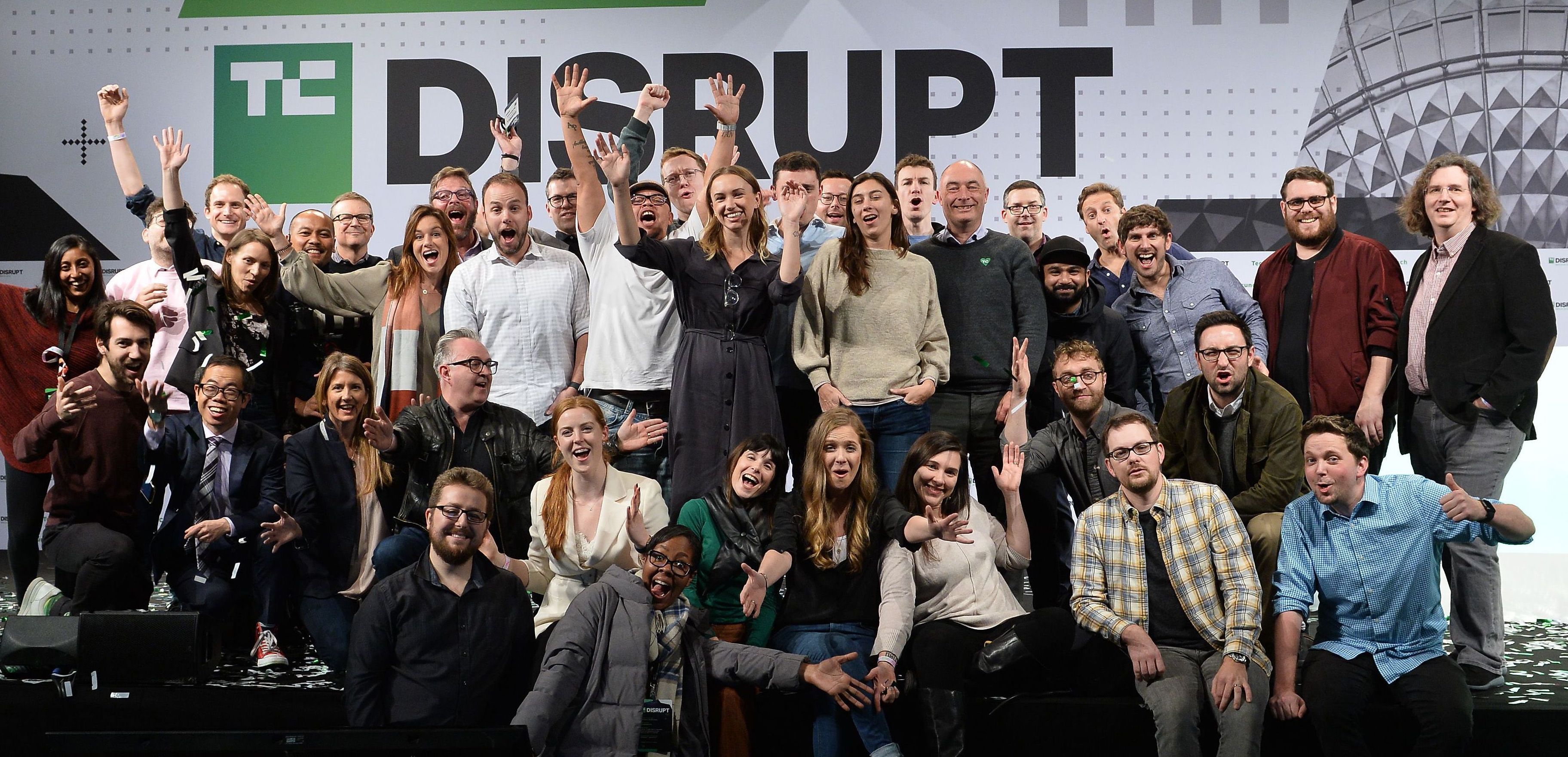
BERLIN, GERMANY – DECEMBER 12: Group Photo on stage at TechCrunch Disrupt Berlin 2019 at Arena Berlin on December 12, 2019 in Berlin, Germany. (Photo by Noam Galai/Getty Images for TechCrunch)

So I’ll leave you with a final thought that’s made my life so fulfilling: If you have the privilege or create the opportunity, turn your passion into your profession.

Specialize. Learn. Then make what you want. If you can find some niche you’re endlessly interested in, that’s growing in importance, and at least someone somewhere earns money from, you’ll become essential. Not necessarily today. But that’s the beauty of writing — it teaches you while proving to others what you’ve been taught. No matter what it is, blog about it once a week. In time you’ll become an expert, and be recognized as one. Then you’ll have the power to adapt to the future, however feels most graceful.

Personal news: It's TC to VC for me! I'm leaving TechCrunch to join SignalFire as a principal investor & head of content. I'm also launching my newsletter where I'm writing now: https://t.co/F7gvssC4Ky A "toast", to the future! pic.twitter.com/XRhDxdS5NF

— joshconstine (@JoshConstine) April 27, 2020

Keep up with my writing on my newsletter at constine.substack.com, stay in touch on Twitter, and reach out at joshsc [at] gmail.com