Publicist launches its marketplace for freelance PR and marketing

Founder and CEO Lara Vandenberg told me she created Publicist to support the ways in which the communications and marketing industry is changing — changes that are only accelerating due to COVID-19.

Vandenberg was previously senior vice president of communications and marketing at Knotch, and she told me, “More companies now are being better served by this flexible support, rather than being tied to these costly and rigid agency retainers.”

And at the same time, Vandenberg said there’s more freelance talent looking for work.

“As we’ve seen, more brands are continuing to downsize their internal teams, so a lot of people coming to the platform have either been furloughed or laid off,” she said. “This is really, really premium talent. I always believed that the industry was moving to project-based work.”

So she built an early version of Publicist while at Knotch, then left to focus on it full time. She launched a beta test earlier this year before the full launch this week.

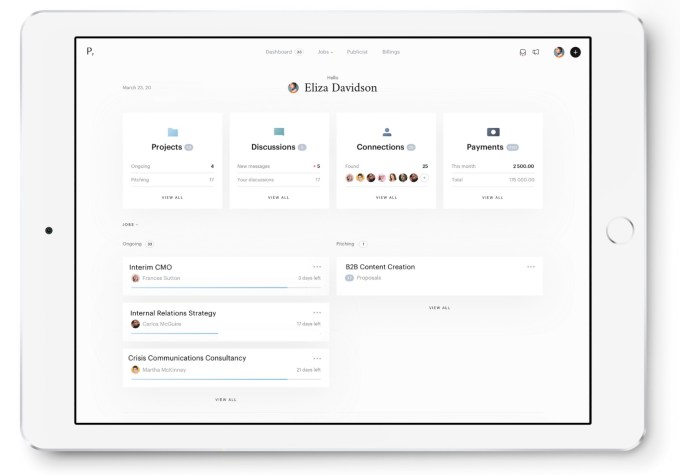
Publicist dashboard

Image Credits: Publicist

The goal is to help businesses find and hire freelancers for work like content creation, crisis communications, developing a go-to-market strategy or even hiring an interim CMO. Vandenberg said Publicist vets all the talent on the platform, and that those freelancers have worked for brands like Apple, Nike, Microsoft, IBM, Away, Glossier, Casper and Google.

“We have 350 skills on the platform, and I would say only about 10% of those are PR-related,” she added.

And Publicist isn’t just for establishing the initial connection between company and freelancer. It’s designed to enable the full collaboration process, with tools like video chat and screensharing — then the startup takes a 20% commission on payments.

Publicist is starting in North America, with plans to expand globally. Vandenberg suggested that some jobs (like crisis comms) probably require someone with local, on-the-ground knowledge, while others (like Amazon or Shopify marketing) are more geography agnostic.

Sonos debuts new Arc soundbar, next-generation Sonos Sub, and Sonos Five speaker

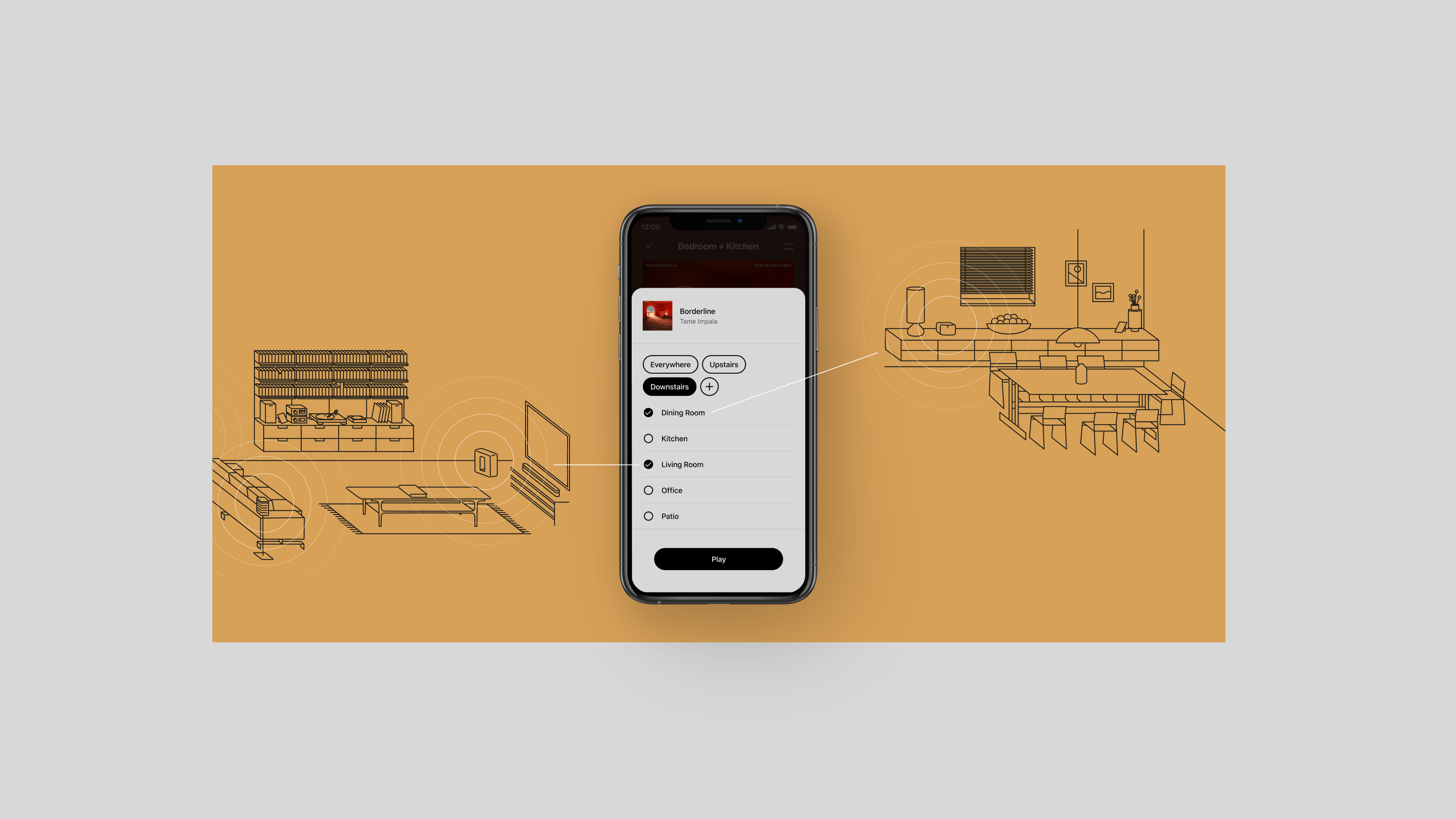
Sonos has introduced a trio of new hardware today, adding three new smart speakers to its lineup, including the Sonos Arc soundbar that includes Dolby Atmos support, as well as Sonos Five, the next version of its Sonos Play:5 speaker, and a third-generation Sonos Sub. All of these will require the new S2 app that Sonos announced it will release to customers starting on June 8, which will introduce higher-res audio, a new UI and more.

The new Sonos Arc retails for $799, while the Sonos Sub is priced at $699 and the Sonos Five will set you back $499; all three are available for pre-order directly via the Sonos website. They’ll start shipping and become available at retail globally beginning on June 10.

This latest generation of Sonos soundbar succeeds the Sonos Beam, one the first of Sonos speakers to include support for Alexa after the introduction of the Sonos One in 2017. Beam is a lower-cost option, more compact option, available for $399, whereas Arc is a larger soundbar that more closely resembles the Playbar and Playable speakers that Sonos previously sold. Arc seems designed to replace both, since neither currently appears on the updated Sonos website following this launch.

Sonos describes the Arc’s audio as “rich, realistic 3D sound” that emphasizes a “premium audio experience” with “crisp dialogue.” It’s also the first Sonos soundbar with Dolby Atmos support, which it manages using two new height channels that are designed to render all 5.1 channels accurately with room-filling qualities. When the signal isn’t a true 5.1 one, those are repurposed to help with low-end for better bass.

The new third-generation Sonos Sub has more memory and processing power than previous iterations, as well as a new wireless radio for connecting to the rest of your system.

Sonos Five, meanwhile, has the same acoustic design as the Play:5, but with more memory, pricing power and a new radio on board as well. It also now comes in a full white version, whereas the previous generation only offered a white face with a black body.

As mentioned, all three of these will work with the new Sonos S2 app the company is launching in June — but these speakers will only work with that app, because of the operating system updates the app includes, which brings improved security and support for better audio quality when streaming.

That S2 app is the future of the company, but it will come with some compromises for long-time Sonos users. The most important of which is that if you have older Sonos hardware, you’ll need to remain on the S1 network. Those devices include some of the oldest that Sonos makes, but it’s definitely dangling a carrot for upgraders here with this new lineup to convince them to retire those in order to upgrade to the new experience.

Peloton Q3 earnings show huge revenue and membership spikes

Peloton bested Wall Street’s high expectations, delivering a huge quarterly earnings report Wednesday that showed revenues climbing 66%. In after-hours trading, the connected fitness company’s stock bounced around rising and dipping below the stock’s previous all-time high.

The company posted total revenues of $524.6 million for the quarter, besting estimates of $488.5 million. The company detailed a loss of $.20 per share. Total members grew from 2.0 million in Q2 to 2.6 million in Q3, a 30% quarter-over-quarter increase. In March, the company announced it was extending the free trial period from 30 to 90 days for digital subscriptions not tied to the company bike or treadmill hardware.

The company sells a connected bike that retails for $2,245 and a treadmill that costs $4,295.

Peloton has proven to be one of the few public stocks to find an opportunity in the COVID-19 pandemic, as user growth surges due to gym closures and shelter-in-place orders. Peloton aimed to seize on the opportunity, boosting sales and marketing expenses by 53%, to $154.8 million in Q3.

The company has been negatively affected as well, being forced to close their showrooms and suspend production of live classes in their dedicated studios. In recent weeks, the company has shifted to at-home exercise classes live-streamed from their instructors’ homes.

For investors, the big question is how much of this growth they’ll be able to hold onto once the pandemic ends. Users with the company’s hardware are obviously much less likely to churn from digital subscriptions, but Wall Street will undoubtedly be watching to see how many of those free trial users convert post-lockdown.

Lyft shares rally 14% after it reports Q1 revenue growth of 23% to $955.7M

Fresh off of a large round of layoffs, Lyft reported its Q1 results this afternoon. The ride-hailing company disclosed that it generated revenue of $955.7 million in the first three months of 2020, up 23% from its year-ago Q1 revenue result of $776 million.

The company’s net loss of $398.1 million was also an improvement on its year-ago, IPO-impacted result. On an adjusted basis, Lyft lost $97.4 million, and its adjusted EBITDA result was a slightly better -$85.2 million. Lyft lost $1.31 per share in the quarter.

The company’s preceding guidance of around $1.06 billion in revenue and negative adjusted EBITDA of as much as $145 million now looks somewhat rosy in retrospect; investors’ final expectations for the company as detailed by Yahoo Finance included revenue of $897.9 million and a per-share loss of $0.64.

Investors rejoice

Shares of Lyft were up sharply in after-hours trading following its report. The firm’s revenue beat appeared to give investors hope that perhaps COVID-19 was not as impactful on its revenue as anticipated. Indeed, Lyft reported 3% more “active riders” in Q1 2020 than it saw in Q1 2019; revenue per active rider rose 19% YoY in the quarter. The combination of those two results led to its revenue gains.

Lyft cut nearly 1,000 employees last week, as many unicorns slashed staff levels in response to the COVID-19 pandemic and resulting economic disruptions. The firm also furloughed hundreds more to control costs.

After Q1 2020 Lyft remained well-capitalized, with $2.7 billion of unrestricted cash, according to its release, compared to Q1 operating cash burn of around $207 million. The firm has enough cash, it would seem, to weather a COVID downturn of several quarters.

What Lyft says on its call about the end of Q1 and what it expects in Q2 and beyond will determine if it can hold onto its gains. Let’s see what the firm has to say.

Update: In its earnings call, the company said that demand will remain limited for a lengthy period, and that it is seeing demand fall as much as 75%. In the immediate aftermath of the shared notes, Lyft shares continue to rise and are up 18.1% as of the time of this update.

Your iPhone will soon be able to tell 911 about your medical conditions and allergies

Got something in your medical history that first responders should know about if you call 911? Things like known drug allergies, or the medications you’re on?

The iPhone and Apple Watch will soon be able to share this information with first responders automatically (if you opt to let it do so).

When a user with this feature enabled calls 911, Apple will ping their location to determine if the local 911 dispatch supports “Enhanced Emergency Data” — a service the company first started building out a few years back to tell emergency services where you’re calling from. If it does, your Medical ID info (as set up in your Health app) will be shared with emergency services accordingly.

It’ll also work with the Apple Watch’s Fall Detection feature, which can automatically call 911 if it detects that the wearer has fallen and is now immobile.

The feature was rolled into the beta build of iOS 13.5 this morning, and Apple says it should ship to everyone in “the coming weeks.”

This is a super logical feature, and one that’ll almost certainly save lives. People are rarely in the calmest state when calling 911, and most people wouldn’t think to say “Oh, and hey by the way, I have an allergy to [medication here]” if they’re worried they’re about to pass out — and that’s something first responders really should know.

AR is the answer to plummeting retail sales during lockdown

Alex Chuang
Contributor

Alex Chuang is the managing partner of Shape Immersive, a leading VR/AR agency that drives innovation for the world’s top brands and enterprises.

As countries around the world face prolonged lockdown to prevent the further spread of COVID-19, retailers are among the hardest hit. Many have closed all their brick-and-mortar stores, resulting in furloughing of many employees.

The U.S. Census Bureau reported that retail sales during March 2020 were down 8.7%, the biggest monthly drop ever recorded since the Great Recession. Of the hardest-hit categories, clothing store sales were down 50.5% from February, furniture store sales were down 26.8% and luxury goods are expected to fall 31%.

Before COVID-19, physical retail was already decimated by e-commerce behemoths like Amazon, but now the sector’s fate seems sealed by the ever-increasing threat of the pandemic. A so-called retail apocalypse may seem inevitable, but in these challenging times, it is more important than ever to look at how technology can turn the tide.

How AR will transform retail in the next decade

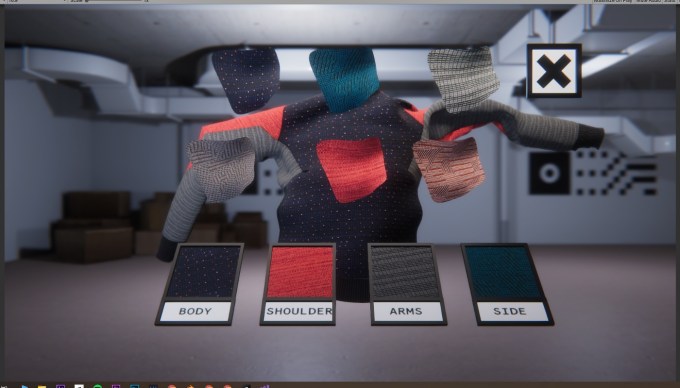
Imagine a future where consumers can virtually try on clothes that would fit them perfectly and they can purchase items confidently in the comfort of their own homes. Consumers will no longer need to choose different sizes because computer vision and scanning technologies would have already determined their perfect fit. These virtual clothes will also look so real that consumers will not be able to distinguish them from reality. Spoiler alert: This future is already here.

Virtual try-on is one of the most compelling use cases of augmented reality technology (AR), which arms consumers with the information they need to confidently make purchase decisions that will not likely result in returns for retailers. Retailers also can gain new insights into consumers’ buying patterns by tracking gazes, view history and time spent looking at a particular product. Retailers can even make the AR shopping experience more personalized by providing real-time feedback.

With more than two billion AR-enabled devices today and 100 million consumers expected to shop with AR this year, the technology is prime for adoption. Here are some examples of how the world’s leading retail brands are using AR to increase conversion, increase sales and decrease returns.

EA games on PS4 and Xbox One could be ‘upgraded free’ to next-gen console versions

2020 and 2021 will be one of the periodic transitional eras in gaming as Sony and Microsoft debut their shiny new consoles, the PlayStation 5 and Xbox Series X. To ease the process (and spur adoption of the next generation), EA may make its upcoming titles free to “upgrade” to your chosen console.

On an earnings call last night, EA COO Blake Jorgensen at the end of his remarks noted a possible effect on revenue “from the games we are launching for the current generation of consoles that can also be upgraded free for the next generation.”

EA declined to comment on the comment, but the meaning seems obvious enough. It likely refers to “cross-gen” games that will appear on both existing consoles and those set to debut later in the year. If you buy the next, say, “Battlefield” game on PlayStation 4, you will have the option to transfer it somehow to the PlayStation 5.

Exactly how this would work is not clear — there will almost certainly be some rigmarole involving deactivating the license on your old copy — but the effect is a positive and consumer-friendly one. People can buy a game, from EA anyway, safe in the knowledge that they can continue to play it even if they buy a new console. That hasn’t been the case, in general, before.

In fact, the whole transition is looking to be a relatively easy one: The new consoles will be backward-compatible with many games from the previous generation; services like online access and monthly free games will cross over; some hardware and accessories will be shared; built-in streaming options mean improved portability.

EA’s apparent commitment to cross-gen upgrades is among the first, though some publishers and developers have floated the idea or declared support for it, pending approval from the console makers themselves. The confirmation could trigger an avalanche of announcements as others hurry to assure gamers that they, too, will provide this option.

Sony and Microsoft are the ones left holding the bag here: While a sale is a sale for EA or Ubisoft, the console makers are under tremendous pressure to show their console launches are successful. (Nintendo, as usual, is pursuing its own agenda independent from the cadence of its rivals.)

Part of that strategy is high-profile next-gen exclusives that people save up to buy alongside the new consoles, providing revenue spikes and platform lock-ins. When a large amount of those sales occur earlier in the year, and technically for the previous consoles, it’s not a good look.

These policies have a way of evolving right up to and beyond the moment of release. Sony clowned so devastatingly on Microsoft’s confusing and limited game transfer policies at E3 2013, the outset of this console generation, that it affected the whole zeitgeist, boosting PS4 sales and forcing Microsoft to reconsider. (You can see me in the video of it; I’ve rarely heard a crowd so excited about something.)

It’s better to err on the side of liberality, it turns out. EA, which has routinely erred in the other direction over the last few years, hopes perhaps to curry favor in advance of a gaming market opening up in new directions. We’ll see if other companies follow suit.

TiVo enters the streaming market with a $50 Android TV-powered device, TiVo Stream 4K

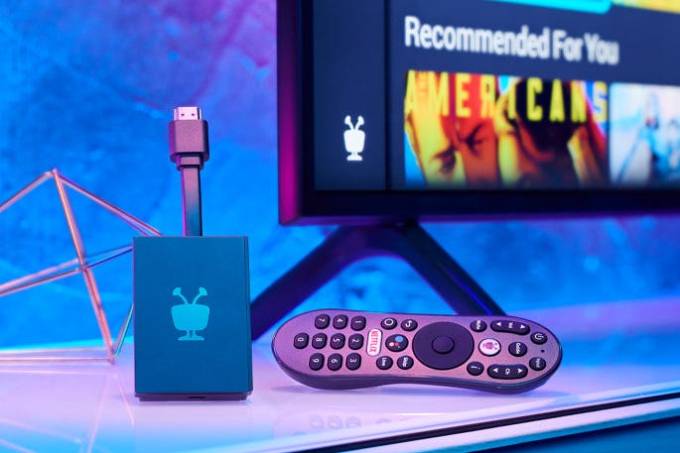
TiVo today is launching a new device, its would-be Fire TV Stick competitor known as the TiVo Stream 4K. First announced at the Consumer Electronics Show in January, this $50 Android TV-powered HDMI dongle is TiVo’s attempt to insert itself into the streaming media device market.

The new dongle arrives at a time when TiVo has largely lost its customer base to rivals like Roku, Amazon, Apple and others that have better catered to the demands of cord cutters. Meanwhile, TiVo’s own DVR for pay TV customers has slowly gone out of fashion as the cord cutting trend accelerated.

As the name implies, the new device supports 4K UHD, along with Dolby Vision HDR and Dolby Atmos. Chromecast is built in, too.

Thanks to its use of the Android TV platform, the TiVo Stream 4K also has access to thousands of Play Store apps for streaming, including Netflix, YouTube, Amazon Prime Video, Hulu, HBO, Disney+ and others.

But one thing it doesn’t have is a way to record live TV. Instead, TiVo has left that up to its partner Sling TV and that service’s Cloud DVR. The deal with Sling TV also offers integration that includes surfacing Sling’s content in universal search and through voice commands via the included Voice Remote.

The decision to prominently feature Sling TV could make a transition to a streaming device less awkward for first-time cord cutters who may miss the always-on nature of live TV and its linear programming guide.

The voice button on the remote can also call up Google Assistant, as on other Android TV devices, which means you can do more than search for content. The assistant can answer questions, too — like giving you the daily weather forecast, for example.

The TiVo Stream 4K also includes access to TiVo’s newer ad-supported streaming service, TiVo+ — its own version of Roku’s free movies and TV hub, The Roku Channel. TiVo+ includes access to thousands of hours of free movie and TV shows and 49 streaming channels across news, sports, kids, food, music and comedy.

Unlike TiVo devices that preceded it, the TiVo Stream 4K doesn’t require a subscription to continue to use its service. It’s just the one-time purchase of $49.99, which includes a seven-day free trial of Sling TV.

“At a time when viewers are streaming more than ever across a sea of platforms, TiVo Stream 4K integrates that content with recommendation and search features to make it easier to find, watch and enjoy the best news, entertainment and sports from today’s most popular services,” said Dave Shull, TiVo president and CEO, in a statement. “After an incredibly positive reception from media and the wider industry at CES, we are delivering on our promise to launch TiVo Stream 4K, which is symbolic of our company’s transformation from a well-loved DVR provider to a pioneer in the streaming market,” he said.

TiVo, of course, can hardly call itself a pioneer in a market where a number of streaming dongle devices already exist and have for years — including the Fire TV Stock, Roku Streaming Stick and Chromecast. Leading device maker Roku has also plugged nearly every hole in the market with a variety of form factors and feature sets from its low-end boxes and sticks to its high-end 4K player.

Meanwhile, TiVo has stuck around trying to reinvent its DVR for the era of cord cutting, with middling results. Its oddly designed BOLT-era box for cord cutters was eventually replaced with TiVo Edge, which comes in two packages — one for antenna users, another for cable TV subscribers. But the demand for watching and recording TV has dwindled, outside of the specific needs of live sports viewers.

With declining hardware sales and subscriber numbers, TiVo has turned its business to advertising, including its TiVo+ streaming service and with skippable pre-roll ads on DVR recordings. More recently, it has announced plans to merge with technology licensor Xperi in a $3 billion deal.

The TiVo Stream 4K will give it another way to put its ad business in front of more customers.

The device is available now via www.tivo.com/streamNOW.


Autotech Ventures raises more than $150 million with an eye on ground transportation startups

Autotech Ventures popped on the scene three years ago with a $120 million debut fund and a plan to invest in early-stage ground transportation startups. Now, with investments in 26 startups and a handful of exits, including Xnor.ai, DeepScale and Frontier Car Group, the venture firm is back with a new, bigger fund and the same strategy.

Autotech Ventures has raised more than $150 million in its second fund with capital commitments from both financial and corporate investors, including Volvo Group Venture Capital AB, Lear, Bridgestone and Stoneridge, as well as other vehicle manufacturers, parts suppliers, repair shop chains, leasing corporations, dealership groups and trucking firms.

The new fund brings the firm to more than $270 million under management to date.

While Autotech’s funds include institutional financial investors, it has largely focused on corporation.

“The corporate LP base is a key part of our strategy as a firm and a key differentiator for us,” Daniel Hoffer, managing director at Autotech, said in a recent interview with TechCrunch. “At a high level we provide capital, transportation market intelligence and access to large corporations in the industry, including our LPs. Startups really value those connections because we can accelerate their go-to market and their distribution channels in addition to providing greater access to other forms of business development and even M&A opportunities.”

The firm typically aims for the seed and Series A sweet spot. But it occasionally will participate in Series B and later-stage funding rounds, Hoffer said. Its new $150 million-plus fund will target early-stage startups in several sectors that fall under the “ground transportation and mobility” umbrella, including connectivity, autonomy, shared-use mobility, electrification and digital enterprise applications.

Autotech Ventures does invest globally, although the majority of its investments are in the U.S. Outside of North America, the firm has a proportionate interest in Europe and Israel, according to Hoffer.

Some of its notable investments include computer vision startup DeepScale (which was snapped up by Tesla last year), Lyft, used vehicle marketplace operator Frontier Car Group, Outdoorsy, Swvl, parking app SpotHero, Volta Charging and Xnor.ai, which Apple acquired in January.

Hoffer said the firm is sensitive to the well-hyped trends, such as autonomous vehicle technology, that everybody is chasing, but it also is interested in the more niche opportunities that people might be less aware of.

The COVID-19 pandemic, which has upended the shared mobility sector, ride-hailing and public transportation, has Hoffer and his fellow Autotech venture capitalists focused on logistics and supply chain visibility — two areas that have promise in this “COVID-oriented world.”

Autotech is also interested in overlooked opportunities, such as software that enables the industry to execute recalls, and even visibility into junkyard inventory, Hoffer added. The company also sees investment opportunities in “off highway” autonomous vehicle technology ventures, such as in mining and construction.

More debt, improving margins: How startups are retooling in the COVID-19 era

A new data set from Silicon Valley Bank (SVB) details how startups are reacting to the post-unicorn era as COVID-19-related disruptions upset the global economy and remake the risk tolerance of private investors.

What SVB’s new report shows is unsurprising: venture capital deal volumes are falling, startups are tapping existing debt capacities to add cash to balances while they still can and some upstart firms are curtailing spend to reduce unprofitability. The last data point comes via the lens of startups that recently raised, making the data more a snapshot of what companies that are successfully attracting capital may have accomplished with regard to improving profitability — the directional shifts are material regardless of that particular nuance.

Let’s briefly examine what the data says and what it tells us about the state of the startup market.

Spending less, borrowing more

Venture capitalists are pulling back, SVB data indicates. A chart from its Q2 markets report notes that the “SVB Deal Activity Index” had fallen from a rating of 160 in early March to just over 70 by mid-to-late-April. That staggering decline means fewer rounds are getting done and that there is less capital going into startups of all sizes.

Confluent introduces scale on demand for Apache Kafka cloud customers

We find ourselves in a time when certain businesses are being asked to scale to levels they never imagined. Sometimes that increased usage comes in bursts, which means you don’t want to pay for permanent extra capacity you might not always need. Today, Confluent introduced a new scale-on-demand feature for its Apache Kafka cloud service that will scale up and down as needed, automatically.

Confluent CEO Jay Kreps says that elasticity is arguably one of the most important features of cloud computing, and this ability to scale up and down is one of the primary factors that has attracted organizations to the cloud. By automating that capability, they give DevOps one less major thing to worry about.

“This new functionality allows users to dynamically scale Kafka and the other key ecosystem components like KSQL and Kafka Connect. This is a key missing capability that no other service provides,” Kreps explained.

He points out that this is particularly relevant right now with people working at home. Systems are being taxed more than perhaps ever before, and this automated elasticity is going to come in handy, making it more cost-effective and efficient than was previously possible.

“These capabilities let customers add capacity as they need it, or scale down to save money, all without having to pre-plan in advance,” he said.

The new elasticity feature in Confluent is part of a series of updates to the platform, known as Project Metamorphosis, that Confluent is planning to roll out throughout this year on a regular basis.

“Through the rest of the year we’ll be doing a sequence of releases that bring the capabilities of modern cloud data systems to the Kafka ecosystem in Confluent Cloud. We’ll be announcing one major capability each month, starting with elasticity,” he said.

Kreps first announced Metamorphosis last month when the company also announced a massive $250 million funding round on a $4.5 billion valuation. In spite of the current economic situation, driven by the ongoing pandemic, Confluent plans to continue to build out the product, as today’s announcement attests.

Facebook users are buying and selling pangolin parts, even though it’s illegal

In spite of their protected status under international laws, pangolins remain one of the most trafficked animals in the world — and at least some of that trade is taking place right out in the open on Facebook .

A new report from tech watchdog group the Tech Transparency Project details how Facebook users are engaged in the sale of illegally trafficked pangolin parts, even though the practice is illegal and prohibited by Facebook itself.

In one example, a public page of Facebook called “Pangolin Scales for Sale in Vietnam” advertised the sale of the forbidden animal products, asking potential buyers to send a message to the seller over WhatsApp or email.

Another public Facebook page, “Rhino Horns And Pangolin scales For sale In China,” was created in March and directed customers to “embrace our businesses like never before” in the wake of the coronavirus. Other pages offered the sale of pangolin oils. Most of these sites were hiding in plain sight, easily found by using basic search terms like the Vietnamese word for “pangolin” or even the phrase “pangolins for sale” in English.

Facebook’s own platform rules prohibit the sale of live animals as well as anything that “promotes, encourages, or coordinates the poaching of endangered species and their parts.” The company joined an anti-wildlife-trafficking coalition in March of 2018, but since that date reports have detailed the ongoing sales of everything from hornbill parts to tiger teeth through ads and direct sales facilitated by the platform.

Pangolins are again in the spotlight right now as the global scientific community searches for answers about the pandemic’s origins. Wild animals carry coronaviruses and can transfer those potentially devastating diseases to humans, as is believed to be the case with a Chinese bat population and the 2002 SARS outbreak.

According to new research, some pangolins carry coronaviruses related to the one that causes COVID-19. Most scientists believe the novel coronavirus likely originated in bats, but how the virus spread from bats to humans is a mystery researchers are still seeking to understand.

With funding from Indie.vc, ReadySet is scaling to meet the demands of a changing workplace

ReadySet, a diversity, equity and inclusion startup led by Project Include founding member Y-Vonne Hutchinson, has raised its first, and perhaps last, round of funding from Indie.vc.

“We were lucky enough to close our round right as the coronavirus was hitting and then shifted our business to doing remote stuff that offered connection,” Hutchinson told TechCrunch.

For the last five years, ReadySet has been sustaining itself off of revenue, and in the last year saw about $1 million in annual revenue. ReadySet makes money by offering consulting services to companies looking to create more inclusive workplaces and cultures. ReadySet has worked with companies like Salesforce, Airbnb, Amazon, GitHub, UCSF Health, Mailchimp, Medium and many others.

“We’ve been profitable the entire time we’ve been in business,” Hutchinson said. “But we wanted to be able to maximize our impact beyond in-person training services and doing stuff that felt a little more like product development that didn’t necessitate immediate revenue.”

ReadySet decided to take funding from Indie.vc because of the firm’s focus on startups that are profit-driven, she said. She also “didn’t want to give up a huge chunk of ownership in a firm I built from scratch.”

Indie.vc doesn’t take any equity upfront. If a startup in its portfolio raises additional money or sells, Indie.vc converts its investment to equity at a percentage decided on by the company. If the company never sells or never raises another round, Indie.vc gets a share of the company’s revenue until the firm makes 5x its investment.

“They weren’t interested in taking a big chunk of the business but were instead interested in helping us get more profitable,” she said. “For me, as a founder that has not been in the VC space, it’s been hard to be seen as a real entrepreneur.”

Indie.vc aims to be the last outside financing founders ever need to take. For Hutchinson, she said that could be the case.

“I don’t want to be the kind of founder that chases the next round,” she said. “I want to smartly leverage the funding and continue our profitability and do it at scale. I think some founders get stuck doing that and then don’t focus on the product.”

In light of these trying times amid the COVID-19 pandemic, ReadySet is investing more heavily in remote training offerings.

“We’re really sort of looking for ways we can resource companies trying to rethink digital interaction,” she said. “I also think a lot of people or some people think this is a blip on the radar and we’ll go back to normal. We don’t think that is necessarily going to happen.”

Despite these rocky times where many tech companies are laying off staff members and putting some on furlough, Hutchinson said some companies have doubled down on what they’re doing in terms of workplace culture.

In past recessions, where diversity, equity and inclusion has been seen as a ” ‘nice to have,’ there is an existential threat that has changed the way we live and the way we have to show up at work,” Hutchinson said.

People are now isolated or needing to take care of family, she says. Perhaps they’re drinking more and/or working through grief, loss and death — all of which are traumatic, she said.

“All of those issues actually implicate DE&I,” Hutchinson said. “We’re used to siloing it, but in reality, DE&I speaks to how people show up, how they feel included, how we support people and now, more than ever, that’s really important.”

Hutchinson says her clients are asking her more about mental health, belonging, childcare and bringing compassion into these trying times.

“A lot of tech companies don’t necessarily have strong management cultures,” she said. “Those gaps are now becoming really obvious to people. I think we’re all in a place where we’re trying to figure out how we adjust to what’s going on now. It’s about so much more than work right now. I would encourage companies, even if they don’t consider that to be DE&I, to think about how they’re treating their employees.”

Silver Lake to invest $747M in India’s Jio Platforms

Weeks after Facebook invested $5.7 billion in Jio Platforms, India’s top telecom operator, private equity firm Silver Lake is following suit.

Silver Lake announced on Monday it will be investing 56.56 billion Indian rupees (about $746.8 million) in Jio Platforms for about 1.15% stake in the Indian telecom network, giving it a valuation of $65 billion, a 12.5% premium to the value implied by the Facebook investment.

The Menlo Park-headquartered PE firm, which has approximately $40 billion in combined assets and committed capital, has invested in dozens of tech firms over the years including video game engine maker Unity, Skype, consultancy firm Gartner, Alibaba’s Ant Financial, and Chinese ride-hailing giant Didi Chuxing, several of it in recent weeks. This year, Silver Lake has invested in Expedia, Twitter (in which it invested $1 billion), Airbnb, Waymo, and ServiceMax.

Reliance Jio Platforms, which began its commercial operation in the second half of 2016, upended the local telecom market by offering bulk of 4G data and voice calls for six months to users at no charge. Jio Platforms, a subsidiary of Reliance Industries (India’s most valuable firm by market value), has amassed 388 million subscribers in the period, becoming the nation’s top telecom operator.

“Jio Platforms is one of the world’s most remarkable companies, led by an incredibly strong and entrepreneurial management team who are driving and actualizing a courageous vision. They have brought extraordinary engineering capabilities to bear on bringing the power of low-cost digital services to a mass consumer and small businesses population. The market potential they are addressing is enormous, and we are honored and pleased to have been invited to partner with Mukesh Ambani and the team at Reliance and Jio to help further the Jio mission,” said Egon Durban, co-chief executive and managing partner at Silver Lake, in a statement.

In a statement, Mukesh Ambani, who oversees Reliance Industries, said, “Silver Lake has an outstanding record of being a valuable partner for leading technology companies globally. Silver Lake is one of the most respected voices in technology and finance. We are excited to leverage insights from their global technology relationships for the Indian Digital Society’s transformation.”

In the company’s earnings call last week, Ambani said several firms had expressed interest in buying a stake in Jio Platforms, in which he has invested over $30 billion, in wake of the deal with Facebook.

Facebook said that other than offering the capital to Jio Platforms for a 9.99% stake in the firm, it would work with the Indian giant on a number of areas starting with e-commerce.

Days later, JioMart, an e-commerce venture run by India’s most valued firm, began testing an “ordering system” on WhatsApp, the most popular smartphone app in India with over 400 million active users in the world’s second largest internet market.

Classplus raises $9M to grow its Shopify-like platform for teachers and coaching centers in India

An India-based startup that has built a Shopify -like platform for coaching centers to accept fees digitally from students, and deliver classes and study material online has received the nod — and capital — from a number of high-profile investors.

The business-to-business startup, called Classplus, said on Monday that it has raised $9 million in its Series A financing round led by RTP Global, a prolific investor in early stage startups. Existing investors Blume Ventures, Sequoia Capital India’s Surge, Spiral Ventures, and Strive also participated in the round, said the two-and-a-half-year-old startup.

As dozens of firms bet on hundreds of millions of students — and their parents — to embrace digital learning apps, Classplus, also backed by Times Internet, believes that tens of thousands of teachers and coaching centers that have gained reputation in their neighborhoods are here to stay.

“We are serving these hyperlocal tutoring centers that are present in nearly every nook and cranny in India. Anyone who was born in a middle-class family here has likely attended these tution classes,” said Mukul Rustagi, co-founder and chief executive of Classplus, in an interview with TechCrunch.

“These are typically small and medium setups that are run by teachers themselves. These teachers and coaching centers are very popular in their locality. They rarely do any marketing and students learn about them through word-of-mouth buzz,” he said.

Rustagi described Classplus as “Shopify for coaching centers.” Like Shopify, the service does run a marketplace that offers discoverability to these teachers or coaching centers. Instead, it offers a way for these teachers to leverage its tech platform to engage with customers (in this case, students).

Classplus has on-boarded more than 3,500 coaching centers on its platform, said Rustagi, more than 500 of which started using the service in the month of April after Prime Minister Narendra Modi’s government ordered to shut down schools and other public gatherings in a bid to curb the spread of the coronavirus disease.

Coaching centers use Classplus to digitally communicate with students, deliver video classes and other study material, and accept payments. These coaching centers can engage with their students through Classplus’ mobile app and the website. “Joining the platform is as easy as signing up for a team collaboration app. The whole process takes less than 30 minutes,” said Rustagi.

“According to the Global Teacher Status Index by the Varkey foundation in 2018, India was among the top-10 in the world in respecting teachers, though was in the last-10 in paying them. Classplus is liquidating this imbalance by empowering tutors with full-stack mobile solutions, while maintaining and further improving the high reputation of tutors. We are happy to back the company with this important mission, and have Classplus as our first edutech bet in India,” said Kirill Kozhevnikov, a partner at RTP Global, in a statement.

The startup, which employs about 200 people, aims to have 10,000 coaching centers join its platform by the end of the year. It has a sales team and other members in about 70 cities in India currently. Classplus also plans to introduce additional features for coaching centers on its platform.