In a letter to Amazon, 13 AGs call for increased transparency and stronger worker protections

In an open letter to Jeff Bezos and Whole Foods CEO John Mackey, a coalition of AGs have jointly called on Amazon to strengthen protections for a strained workforce amid the COVID-19 pandemic. The letter, penned by Massachusetts state AG Maura Healey — along with attorneys general from Connecticut, Delaware, Illinois, Maryland, Michigan, Minnesota, New Mexico, New York, Oregon, Pennsylvania and D.C. — follows a similar note sent by the members in late March.

“Amazon and Whole Foods must take every possible step to protect their employees and customers during the COVID-19 pandemic,” Healey said in a release tied to the letter. “We again call on these companies to provide assurances that they are complying with state laws and federal guidance aimed at keeping essential workers safe during this crisis.”

In particular, the note addresses questions about sick leave, safety measures, Amazon’s policies around notifying workers and a recent string of high-profile firings. That last bit was enough to warrant a similarly themed letter from nine prominent Democratic senators, inquiring whether the company had fired employees in retaliation for whistleblowing around unsafe work conditions.

“Such conduct, if proven, may violate Section 11(c) of the Occupational Safety and Health Act [29 U.S.C. §660(c)], as well as laws in certain of our States that forbid retaliation,” the AGs write. “Even the perception of retaliation during this public health emergency can serve to silence employees who raise legitimate concerns about health and safety measures, and place those employees, their co-workers, customers, and the public at grave risk.”

The new letter takes the extra step of singling out the behavior of Amazon-owned Whole Foods. “We are concerned that our Offices and the public are learning of these serious developments through secondhand media reports, rather than hearing directly from Whole Foods,” the letter adds. “Accordingly, we request that Whole Foods provide a description of its policies and processes, if any, that relate to notifying consumers, the public, and public health authorities of serious COVID-19 developments at Company stores.”

Amazon has, of course, denied allegations of firing whistleblowers and insisted that it has taken the necessary action as employees continue to work through the pandemic. The letter closes by noting that both Amazon and Whole Foods “are seeing a significant increase in sales as well, as consumers rely even more on online shopping and buy more groceries as they stay at home.”

Facebook upgrades its AI to better tackle COVID-19 misinformation and hate speech

Facebook’s AI tools are the only thing standing between its users and the growing onslaught of hate and misinformation the platform is experiencing. The company’s researchers have cooked up a few new capabilities for the systems that keep the adversary at bay, identifying COVID-19-related misinformation and hateful speech disguised as memes.

Detecting and removing misinformation relating to the virus is obviously a priority right now, as Facebook and other social media become breeding grounds not just for ordinary speculation and discussion, but malicious interference by organized campaigns aiming to sow discord and spread pseudoscience.

“We have seen a huge change in behavior across the site because of COVID-19, a huge increase in misinformation that we consider dangerous,” said Facebook CTO Mike Schroepfer in a call with press earlier today.

The company contracts with dozens of fact-checking organizations around the world, but — leaving aside the question of how effective the collaborations really are — misinformation has a way of quickly mutating, making taking down even a single image or link a complex affair.

Take a look at the three example images below, for instance:In some ways they’re nearly identical, with the same background image, colors, typeface and so on. But the second one is slightly different — it’s the kind of thing you might see when someone takes a screenshot and shares that instead of the original. The third is visually the same but the words have the opposite meaning.
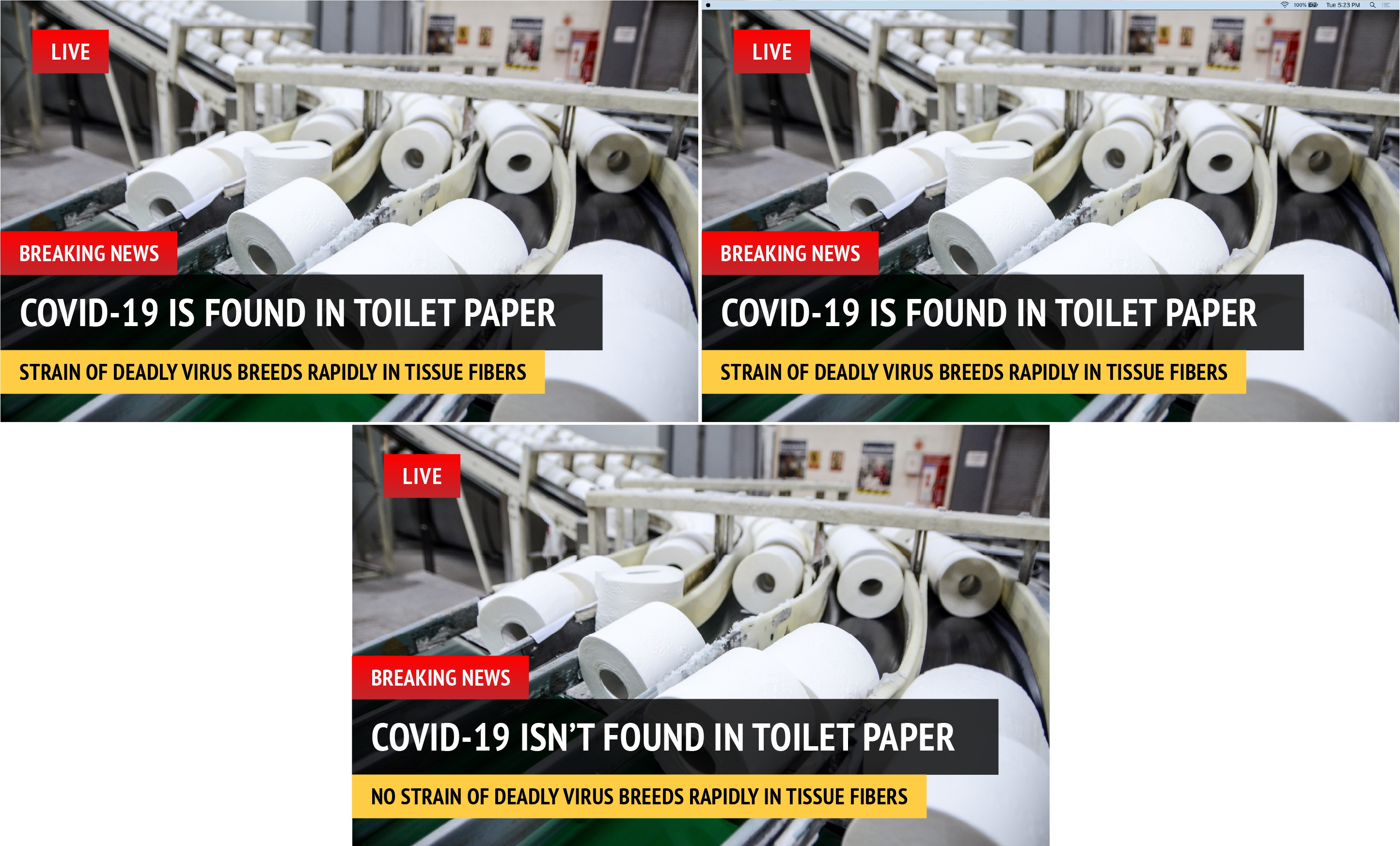
An unsophisticated computer vision algorithm would either rate these as completely different images due to those small changes (they result in different hashes) or all the same due to overwhelming visual similarity. Of course we see the differences right away, but training an algorithm to do that reliably is very difficult. And the way things spread on Facebook, you might end up with thousands of variations rather than a handful.

“What we want to be able to do is detect those things as being identical because they are, to a person, the same thing,” said Schroepfer. “Our previous systems were very accurate, but they were very fragile and brittle to even very small changes. If you change a small number of pixels, we were too nervous that it was different, and so we would mark it as different and not take it down. What we did here over the last two and a half years is build a neural net-based similarity detector that allowed us to better catch a wider variety of these variants again at very high accuracy.”

Fortunately analyzing images at those scales is a specialty of Facebook’s. The infrastructure is there for comparing photos and searching for features like faces and less desirable things; it just needed to be taught what to look for. The result — from years of work, it should be said — is SimSearchNet, a system dedicated to finding and analyzing near-duplicates of a given image by close inspection of their most salient features (which may not be at all what you or I would notice).
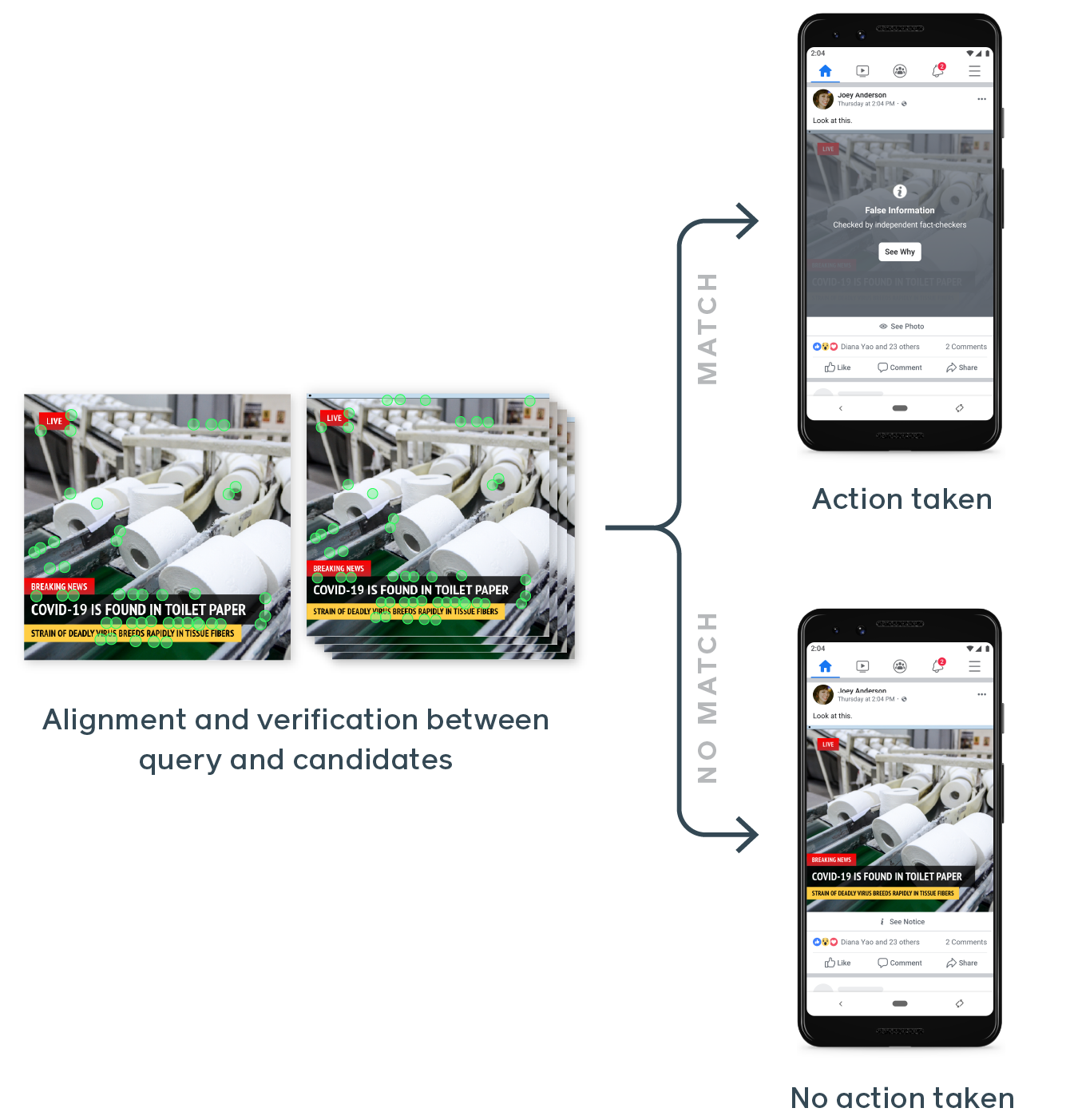
SimSearchNet is currently inspecting every image uploaded to Instagram and Facebook — billions a day.

The system is also monitoring Facebook Marketplace, where people trying to skirt the rules will upload the same image of an item for sale (say, an N95 face mask) but slightly edited to avoid being flagged by the system as not allowed. With the new system, the similarities between recolored or otherwise edited photos are noted and the sale stopped.

Hateful memes and ambiguous skunks

Another issue Facebook has been dealing with is hate speech — and its more loosely defined sibling hateful speech. One area that has proven especially difficult for automated systems, however, is memes.

The problem is that the meaning of these posts often results from an interplay between the image and the text. Words that would be perfectly appropriate or ambiguous on their own have their meaning clarified by the image on which they appear. Not only that, but there’s an endless number of variations in images or phrasings that can subtly change (or not change) the resulting meaning. See below:

To be clear, these are toned-down “mean memes,” not the kind of truly hateful ones often found on Facebook.

Each individual piece of the puzzle is fine in some contexts, insulting in others. How can a machine learning system learn to tell what’s good and what’s bad? This “multimodal hate speech” is a non-trivial problem because of the way AI works. We’ve built systems to understand language, and to classify images, but how those two things relate is not so simple a problem.

The Facebook researchers note that there is “surprisingly little” research on the topic, so theirs is more an exploratory mission than a solution. The technique they arrived at had several steps. First, they had humans annotate a large collection of meme-type images as hateful or not, creating the Hateful Memes data set. Next, a machine learning system was trained on this data, but with a crucial difference from existing ones.

Almost all such image analysis algorithms, when presented with text and an image at the same time, will classify the one, then the other, then attempt to relate the two together. But that has the aforementioned weakness that, independent of context, the text and images of hateful memes may be totally benign.

Facebook’s system combines the information from text and image earlier in the pipeline, in what it calls “early fusion,” to differentiate it from the traditional “late fusion” approach. This is more akin to how people do it — looking at all the components of a piece of media before evaluating its meaning or tone.

Right now the resultant algorithms aren’t ready for deployment at large — at around 65-70% overall accuracy, though Schroepfer cautioned that the team uses “the hardest of the hard problems” to evaluate efficacy. Some multimodal hate speech will be trivial to flag as such, while some is difficult even for humans to gauge.

To help advance the art, Facebook is running a “Hateful Memes Challenge” as part of the NeurIPS AI conference later this year; this is commonly done with difficult machine learning tasks, as new problems like this one are like catnip for researchers.

AI’s changing role in Facebook policy

Facebook announced its plans to rely on AI more heavily for moderation in the early days of the COVID-19 crisis. In a press call in March, Mark Zuckerberg said that the company expected more “false positives” — instances of content flagged when it shouldn’t be — with the company’s fleet of 15,000 moderation contractors at home with paid leave.

YouTube and Twitter also shifted more of their content moderation to AI around the same time, issuing similar warnings about how an increased reliance on automated moderation might lead to content that doesn’t actually break any platform rules being flagged mistakenly.

In spite of its AI efforts, Facebook has been eager to get its human content reviewers back in the office. In mid-April, Zuckerberg gave a timeline for when employees could be expected to get back to the office, noting that content reviewers were high on Facebook’s list of “critical employees” marked for the earliest return.

While Facebook warned that its AI systems might remove content too aggressively, hate speech, violent threats and misinformation continue to proliferate on the platform as the coronavirus crisis stretches on. Facebook most recently came under fire for disseminating a viral video discouraging people from wearing face masks or seeking vaccines once they are available — a clear violation of the platform’s rules against health misinformation.

The video, an excerpt from a forthcoming pseudo-documentary called “Plandemic,” initially took off on YouTube, but researchers found that Facebook’s thriving ecosystem of conspiracist groups shared it far and wide on the platform, injecting it into mainstream online discourse. The 26-minute-long video, peppered with conspiracies, is also a perfect example of the kind of content an algorithm would have a difficult time making sense of.

On Tuesday, Facebook also released a community standards enforcement report detailing its moderation efforts across categories like terrorism, harassment and hate speech. While the results only include a one month span during the pandemic, we can expect to see more of the impact of Facebook’s shift to AI moderation next time around.

In a call about the company’s moderation efforts, Zuckerberg noted that the pandemic has made “the human review part” of its moderation much harder, as concerns around protecting user privacy and worker mental health make remote work a challenge for reviewers, but one the company is navigating now. Facebook confirmed to TechCrunch that the company is now allowing a small portion of full-time content reviewers back into the office on a volunteer basis and, according to Facebook Vice President of Integrity Guy Rosen, “the majority” of its contract content reviewers can now work from home. “The humans are going to continue to be a really important part of the equation,” Rosen said.

US e-commerce sales jump 49% in April, led by online grocery

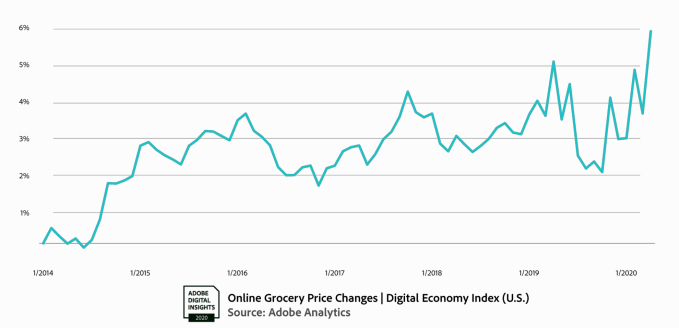
Online retailers are seeing Black Friday-like sales due to the impact of the COVID-19 pandemic on their business. According to new data from Adobe’s Digital Economy Index, U.S. e-commerce jumped 49% in April, compared to the baseline period in early March before shelter-in-place restrictions went into effect. Online grocery helped drive the increase in sales, with a 110% boost in daily sales between March and April. Meanwhile, electronic sales were up 58% and book sales have doubled.

The data comes from Adobe’s index of the digital economy, which analyzes more than one trillion online transactions across 100 million different SKUs. The company works with 80 of the top 100 U.S. online retailers to gather its data.

The numbers indicate that consumers are willing to spend on products that will help them manage the COVID-19 crisis. This includes, in large part, online grocery pickup and delivery.

Companies, including Amazon, Walmart and Instacart, have hired more workers to aid with the increased consumer demand across their retail operations. Instacart even became profitable for the first time, The Information recently reported, due to the surge triggered by the coronavirus outbreak. The company sold around $700 million worth of groceries during the first two weeks of April, up 450% over its December 2019 sales, the report said.

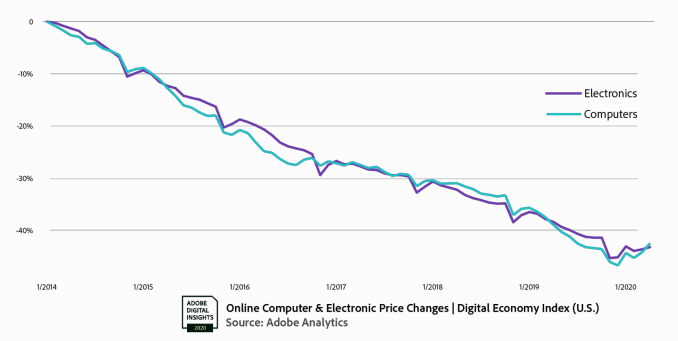
Meanwhile, the electronics category of online sales saw its first inflation in years. According to Adobe, online electronics prices have been experiencing deflation at a steady rate since 2014, but COVID-19 has led to electronics prices flattening.

Computer prices even crept up in April, due to rising demand. Plus, sales of audio mixers, microphones, microphone cables and other audio equipment jumped 459% in April as would-be podcasters and various creatives set up their home studios.

The overall electronics category also appears to now be on an upward trajectory. This may not end anytime soon, Adobe’s report cautions, as COVID-19’s impact on the electronics supply chain may continue for many months to come.

Meanwhile, consumers turned online to shop apparel in April, with a 34% increase in sales as prices fell. With no need to dress for work — either due to unemployment or new work-from-home policies — April saw the largest monthly drop in apparel prices in more than five years. While April typically sees average price growth of -2.9%, this April the growth was -12%. Prices fell even further as retailers looked to rally sales by clearing inventory earlier.

When consumers did shop, they not surprisingly shifted their purchases toward comfort items. April saw increases in things like pajamas (up 143%) and decreases in business apparel like pants and jackets (down 13% and 33%, respectively).

In addition to the growth in specific categories, April also saw sizable growth in “buy online, pickup in store” orders. From April 1 through April 20, these surged 208% year-over-year as people attempted to practice social distancing while shopping.

Adobe’s data comes alongside other reports that indicate a huge jump in online shopping in April.

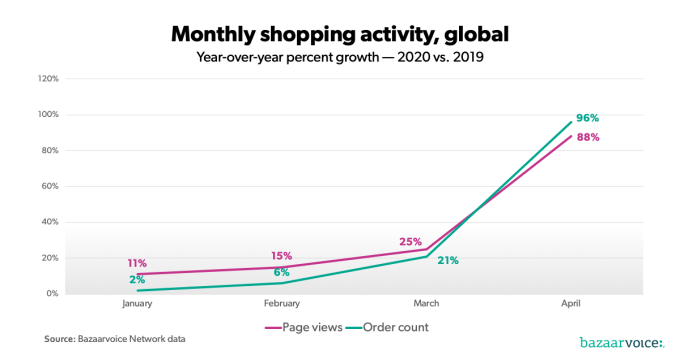
For example, Bazaarvoice’s data, based on its network of over 6,200 brand and retail sites, indicated that April was a much larger month for e-commerce than March. As consumers finished stocking up on essentials (like toilet paper, perhaps!) in March, they turned to online shopping for toys, games, entertainment, sporting goods and pet supplies in April in greater numbers.

Adobe’s report also found that e-commerce purchases of wine, beer, spirits and related accessories were up 74% in April, as consumers plowed through the COVID-19 crisis.

According to Bazaarvoice, April 2020 grew even faster than March across every indicator it tracked — including page views, order count, review submission and question submission.

March ended with a 25% year-over-year increase in page views, the report said, while April ended with an 88% increase. And March ended with a 21% year-over-year increase in order count, while April ended with a 96% increase. In addition, while browsing behavior like page views had outpaced purchasing behavior in March, that trend reversed in April.

The overall impact of the shift to online could be rising prices, Adobe warned.

“As online is absorbing the offline retail economy, some inflation is being observed for the first time in years, especially in categories that have consistently experienced online deflation, such as electronics,” said Taylor Schreiner, director, Adobe Digital Insights. “Americans are used to things getting cheaper online, but that trend may be ending, and online commerce may never be the same. It appears that COVID-19 has accelerated that process.”

Decrypted: Contact-tracing privacy, Zoom buys Keybase, Microsoft eyes CyberX

As the world looks to reopen after weeks of lockdown, governments are turning to contact tracing to understand the spread of the deadly coronavirus.

Most nations are leaning toward privacy-focused apps that use Bluetooth signals to create an anonymous profile of where a person has been and when. Some, like Israel, are bucking the trend and are using location and cell phone data to track the spread, prompting privacy concerns.

Some of the biggest European economies — Germany, Italy, Switzerland and Ireland — are building apps that work with Apple and Google’s contact-tracing API. But the U.K., one of the worst-hit nations in Europe, is going it alone.

Unsurprisingly, critics have both security and privacy concerns, so much so that the U.K. may end up switching over to Apple and Google’s system anyway. Given that one of Israel’s contact-tracing systems was found on an passwordless server this week, and India denied a privacy issue in its contact-tracing app, there’s not much wiggle-room to get these things wrong.

Turns out that even during a pandemic, people still care about their privacy.

Here’s more from the week.


THE BIG PICTURE

Zoom acquires Keybase, but questions remain

When Zoom announced it acquired online encryption key startup Keybase, for many, the reaction was closer to mild than wild. Even Keybase, a service that lets users store and manage their encryption keys, acknowledged its uncertain future. “Keybase’s future is in Zoom’s hands, and we’ll see where that takes us,” the company wrote in a blog post. Terms of the deal were not disclosed.

Zoom has faced security snafu after snafu. But after dancing around the problems, it promised to call in the cavalry and double down on fixing its encryption. So far, so good. But where does Keybase, largely a consumer product, fit into the fray? It doesn’t sound like even Zoom knows yet, per enterprise reporter Ron Miller. What’s clear is that Zoom needs encryption help, and few have the technical chops to pull that off.

Keybase’s team might — might — just help Zoom make good on its security promises.

Tony Hawk’s Pro Skater 1 and 2 are getting remade from the ground up

2020 sucks. Want to let your brain slip back to 1999 for a while? This news might help: Tony Hawk’s Pro Skater 1 and 2 are coming back, complete with a full-blown graphic overhaul, online multiplayer — and, yes, the song “Superman” by Goldfinger.

Here’s the announcement trailer, which does a great job of showing just how much better things can look 20 years later:

THPS 1 and 2 were originally published by Activision and developed by Neversoft — a studio that, sadly, is no longer around. These remakes, meanwhile, are being built by Vicarious Visions — a team that Activision acquired back in 2005, and is probably best known for its 2017 remake of the original Crash Bandicoot trilogy.

A return to THPS’ roots is probably the right move for Activision right now; the last title they managed in the series, THPS5, was a bug-ridden mess that was largely slammed by critics and fans alike. As long as they get the mechanics and “feel” of this one right, nostalgia-factor alone should make it work.

The two titles will be sold as one “Tony Hawk’s Pro Skater 1+2” package, and will feature every level and pro skater found in the originals — now in glorious 4K, with all of the 3D models and levels recreated from scratch. Also returning is most of the original soundtrack; licensing changes over the years prevent the remake’s soundtrack from being exhaustive, but most of the jams you remember should still be there.

THPS1+2 will be picking up a few tricks that didn’t appear in the series until THPS3 — perhaps most notable are reverts, which let you build absolutely massive combos and hit otherwise impossible scores.

Another big feature coming to the remakes that the originals lacked: online multiplayer. You’ll be able to play any level online with friends, or share levels you’ve pieced together in the “Create-A-Park” editor.

Tired of playing 1 and want to check out 2? Vicarious tells me you’ll be able to hop back and forth between the two titles pretty quickly, and that they’ve added a progression system that meshes the two together — so it’s less like playing two entirely separate games, and more like one game with two distinct halves.

Tony Hawk’s Pro Skater 1+2 is expected to hit PlayStation 4, Xbox One and PC on September 4th for $39, with pre-orderers getting access to the Warehouse level before the full game ships. Sadly, no mention of Switch support.

A Grubhub-Uber tie-up would remake the food delivery landscape

Earlier today news broke that Uber is pursuing an acquisition of Grubhub. The global ride-hailing giant is worth a multiple of the American food delivery service, making the tie-up financially feasible, provided that a palatable price can be found for both parties.

The Wall Street Journal broke the news; you can read TechCrunch’s coverage of the deal here.

The deal could shake up the large, if generally unprofitable American food delivery market, a space contested by Uber’s Uber Eats service, Grubhub, DoorDash and Postmates. The combination could create the largest food delivery entity in terms of sales, changing leadership in its market and perhaps reducing competition.

Let’s unpack the deal in terms of its cost, why Uber has to pay in stock, how large a combined Uber Eats/Grubhub entity would be compared to its competition and why adjusted EBITDA helps us understand how this acquisition could give Uber’s bottom line a shot in the arm.

An all-stock purchase?

In normal times, this deal would likely be a mix of cash and stock. However, in 2020, with Uber’s market position being what it is, it’s likely that this would be an all-equity transaction. Why? Because Uber needs to conserve cash at nearly all costs. Its only historically profitable division (ride-hailing generates heavily adjusted profits) is in the tank, with ride volumes down as far as 80% in April, compared to its year-ago period.

India’s contact-tracing app tops 100 million users in 41 days

As most countries across the globe scramble to build an app to trace the spread of coronavirus, India’s solution is growing at an unprecedented scale — despite being dogged by privacy concerns.

New Delhi’s contact-tracing app, called Aarogya Setu, has reached 100 million users in 41 days since its release. A representative at think-tank NITI Aayog told TechCrunch that this 100 million figure represents unique users — and not just those who had merely downloaded the app.

The app, available on Android and iOS, allows people to self-assess whether they have caught the infectious disease by answering a set of questions. It then uses this information to alert users if they have come in contact with someone who might be infected. (It’s also available for feature-phone users through an USSD system.)

Aarogya Setu, which means healthcare bridge in Hindi, also delivers updates on India’s testing efforts to fight the coronavirus pandemic and tips to stay safe.

But the app has also raised concerns from privacy advocates and security researchers. The app stores location data of users when they sign up and logs details of those who have reported facing symptoms of the disease. New Delhi has dubbed this as a feature — even as this centralization approach is in stark contrast with how smartphone vendors Apple and Google are tackling this.

Aarogya Setu is also not open source, which means that independent researchers can’t audit the code and find any flaws in it.

Ajay Prakash Sawhney, secretary in the ministry of electronics and information technology, said in an interview with Indian daily Business Standard that the government has not made the source code of Aarogya Setu public because it feared many will point to flaws in it and overburden the staff overseeing the app’s development.

“If I open up my source code, and say, some 50,000 people start criticizing it, raising issues every day, we will have to spend too much time reacting to those. We might do that for all in due course, but right now we are planning to open it up to some of the top cybersecurity experts in the country,” he said.

There are some other concerns, too. Singapore is relying on its contact-tracing app, called TraceTogether, for disease control but not using it to enforce lockdowns. Aarogya Setu, in contrast, retains the flexibility to do just that, or to ensure compliance of legal orders and so on, according to New Delhi-based digital rights advocacy group Internet Freedom Foundation.

Additionally, Aarogya Setu, which was launched as a voluntary app, is now mandatory for those who wish to travel with Indian railways. In Noida, at the outskirts of New Delhi, those found without the app installed on their phone could be fined or sent to jail, the local authority said earlier this month.

“Aarogya Setu is an important step in our fight against COVID-19. By leveraging technology, it provides important information. As more and more people use it, its effectiveness will increase. I urge all to download it,” a quote attributed to Indian Prime Minister Narendra Modi appears on the homepage of the app.

The confirmed coronavirus caseload in India, which ordered one of the world’s most stringent lockdowns in late March, has risen steadily in recent weeks. More than 71,600 confirmed infections have been reported to date, with about 2,320 confirmed dead.

In a televised address on Tuesday, Modi unveiled a $266 billion stimulus package to help the nation’s stalled economy recover.

SpaceX simulator shows you what it’s actually like to dock Crew Dragon with the Space Station

SpaceX has launched a new browser-based simulator that provides an idea of what it would be like to manually control the docking process of its Crew Dragon spacecraft, the first human-carrying spaceship the company has made. Crew Dragon actually docks with the International Space Station (ISS) fully autonomously, but astronauts are able to take over manual control, should that prove necessary, and this simulator provides what SpaceX says is the “actual interface” that astronauts would use in that instance.

The user interface for the docking process is surprisingly simple, given that it reflects the actual UI that astronauts would use on board Crew Dragon. It looks like what you’d expect to find in a virtual cockpit control in a space sim on an iPhone or iPad, which actually makes a lot of sense, as most of the control and information readout displays on board Crew Dragon actually are touchscreens.

There are directional arrows on either side, and you can control the orientation of the capsule, as well as its vertical and horizontal position, and toggle between making large or smaller movements in each case. Simple visual feedback in the central targeting reticle gives you an idea of what each control does, providing you a relatively easy way to figure out the control system on your own without much in the way of guidance. A simple help function lets you know that your main goal is to get all figures on the targeting reticle green, but otherwise the main thing you require to get docked successfully is patience.

While it’s mostly a fun way to distract yourself, it’s actually also a remarkable first-hand look at SpaceX’s approach to human-centred interface design when it comes to its spacecraft controls. This is very different from the interfaces you’ll see from archive footage taken from NASA’s Apollo or Space Shuttle program, and clearly has been influenced by the modern era of omnipresent touchscreen devices.

The proof of its efficacy ultimately depends on how likely it renders the pilot able to succeed with docking, however, so why not give it a shot and see if you can stick the arrival — NASA Administrator Jim Bridenstine said he managed it on his first try, but he is a former Air Force pilot, so it’s not like he was starting from scratch.

Twitter says staff can continue working from home permanently

Earlier today, Jack Dorsey sent an email to Twitter staff, notifying employees that they will be able to  continue working from home as long as they see fit. The CEO notes that Twitter was an early adopter of a work-from-home model, though — like much of the rest of the world — that push has been accelerated by COVID-19 stay at home orders.

Twitter confirmed the decision in an email to TechCrunch, noting:

We were uniquely positioned to respond quickly and allow folks to work from home given our emphasis on decentralization and supporting a distributed workforce capable of working from anywhere. The past few months have proven we can make that work. So if our employees are in a role and situation that enables them to work from home and they want to continue to do so forever, we will make that happen. If not, our offices will be their warm and welcoming selves, with some additional precautions, when we feel it’s safe to return. 

Beyond that, the company is also outlining its plans to resume in-person working arrangements and meetings for those who prefer that arrangement. While San Francisco Mayor London Breed announced on April 27 that the city would extend its stay at home orders through the end of May, Governor Gavin Newsom has already signaled the easing of some restrictions.

Even so, Twitter appears to be taking an understandably cautious approach toward returning to work — a luxury afforded to the company by the flexibility of remote work. Chief HR Officer Jennifer Christie lays out Twitter’s plans thusly:

  • Opening offices will be our decision, when and if our employees come back, will be theirs. 
  • With very few exceptions, offices won’t open before September. When we do decide to open offices, it also won’t be a snap back to the way it was before. It will be careful, intentional, office by office and gradual. 
  • There will also be no business travel before September, with very few exceptions, and no in-person company events for the rest of 2020. We will assess 2021 events later this year.

Obviously things are subject to change, though Twitter seems much more likely to push it back, if anything, based on the language. Other major tech firms, including Facebook and Google, have extended their work from home policies through the end of the year. Twitter’s approach is particularly accommodating for a company of its size. What that means for the future of Twitter’s San Francisco HQ and other offices, however, remains to be seen. 

Instagram adds new anti-bullying features, including tag controls, comment management tools

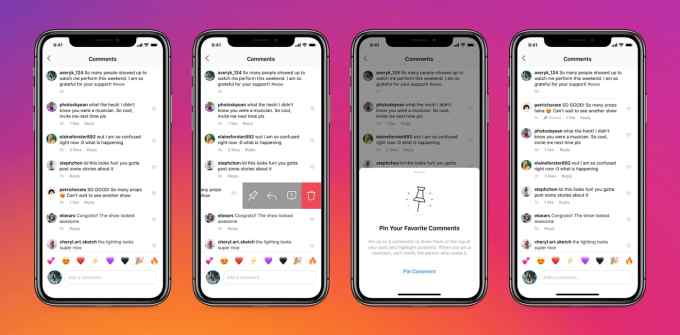
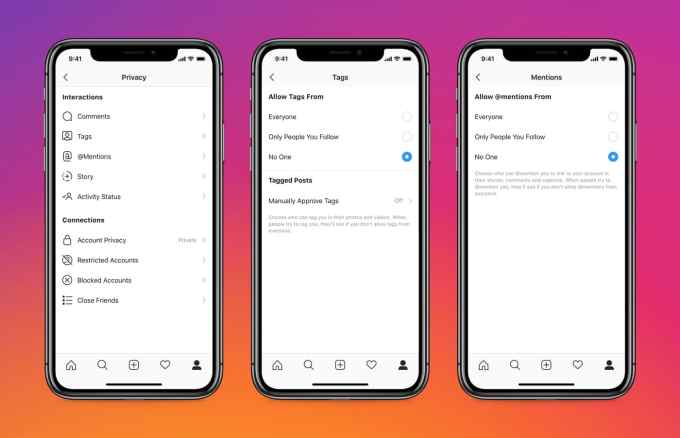
As part of its anti-bullying efforts, Instagram today announced a series of new features aimed at helping users better manage negative comments as well as highlight positive ones. It’s also adding new controls to manage who can tag or mention you on Instagram, which can be another source of online bullying.

The first of the new features for managing negative comments is specifically aimed at those who own or help run Instagram accounts with a large following. Being able to manage a surge of negative comments on these accounts can be difficult — especially in the case of a post that’s gone viral or a coordinated attack from online trolls or bots.

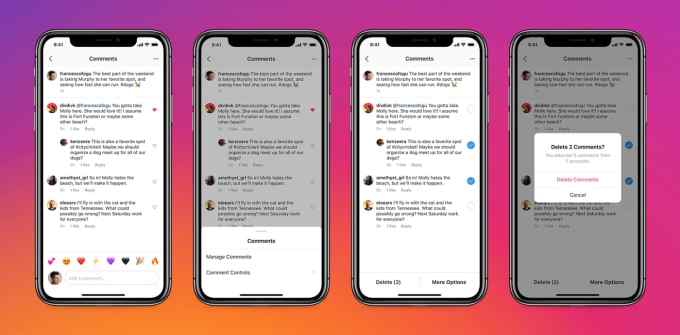
Instagram has been testing a new feature that allows account holders to delete comments in bulk and restrict multiple accounts that post negative comments. This could effectively silence those who regularly stalk high-profile accounts with the main goal of leaving negative or trolling remarks. The company says the early feedback from its tests has been encouraging, so it’s opening up the feature to Instagram users on mobile.

On iOS, you can tap on a comment, then the dotted icon in the top-right corner where you’ll choose “Manage Comments.” This will allow you to choose up to 25 comments to delete at once. If you tap “More Options,” you’ll also find a feature that lets you block or restrict commenters’ accounts in bulk. On Android, you’ll instead press and hold on a comment, then tap the dotted icon, and select Block or Restrict.

Another new feature, Pinned Comments, will soon launch as a test.

The idea here is to give Instagram users a way to amplify positive comments. This can help set the tone for the community and encourage more positive interactions, as a result. When the feature goes live, users will be able to select and pin a number of comments to the top of their comments thread, where they’re more easily seen.

While these features will put account owners in better control over their community, they may also have the effect of silencing valid criticism or any comments the poster simply doesn’t like. Twitter, by comparison, offers a way for users to hide replies they don’t like — but it doesn’t remove them from its platform. Instead, the replies are hidden behind an extra click, keeping them visible to anyone who knows where to look.

Instagram is also now rolling out a set of expanded controls that allow you to choose who’s allowed to mention or tag you in comments, captions or Stories. You’ll be able to select from “Everyone,” “Only People You Follow” or “No One,” for both tags and mentions. In addition, you’ll be able to toggle on or off an option that gives you the ability to manually approve tags.

The launch of the trio of new features comes alongside Facebook’s fifth edition of its Community Standards Enforcement Report, which details how well the company has been able to enforce its policies across its suite of apps.

For the first time, the report shared enforcement data for bullying on Instagram, noting that it took action on 1.5 million pieces of content in both Q4 2019 and Q1 2020.

The company also made improvements to its text and image matching technology to find more suicide and self-injury content on Instagram, it said. As a result, it increased the action on this content by 40% and increased its proactive detection rate by more than 12 points since its last report. The technology used to find and remove child nudity and sexual exploitative content was improved across both Facebook and Instagram, as well.

Dear Sophie: What’s the best option for international founders to expand in the US?

Sophie Alcorn
Contributor

Sophie Alcorn is the founder of Alcorn Immigration Law in Silicon Valley and 2019 Global Law Experts Awards’ “Law Firm of the Year in California for Entrepreneur Immigration Services.” She connects people with the businesses and opportunities that expand their lives.

Here’s another edition of “Dear Sophie,” the advice column that answers immigration-related questions about working at technology companies.

“Your questions are vital to the spread of knowledge that allows people all over the world to rise above borders and pursue their dreams,” says Sophie Alcorn, a Silicon Valley immigration attorney. “Whether you’re in people ops, a founder or seeking a job in Silicon Valley, I would love to answer your questions in my next column.”

“Dear Sophie” columns are accessible for Extra Crunch subscribers; use promo code ALCORN to purchase a one or two-year subscription for 50% off.


Dear Sophie:

I’m a startup founder in Israel looking to expand into the U.S. market. What is the best visa option for me and a key member of my executive team to come to the U.S. to establish a sales and marketing office there? I would like my spouse and children to join me if my spouse can also work in the U.S. Is that possible?

— Tenacious in Tel Aviv

Dear Tenacious:

Thanks for reaching out. Based on your situation, the E-2 visa for treaty investors and employees may offer the best option.

An underutilized option, the E-2 visa is ideal for startup founders and employees whose home country has a treaty of commerce and navigation with the U.S. Israelis became eligible for E-2 visas just last year, joining the citizens of 80 other treaty countries. For more details on E-2 visas for founders and employees, check out Episode 16 of my “Immigration Law for Tech Startups” podcast.

Telegram abandons its TON blockchain platform

Messaging service Telegram said on Tuesday it is abandoning its blockchain platform Telegram Open Network (TON) after a lengthy battle with the U.S. Securities and Exchange Commission (SEC).

“Today is a sad day for us here at Telegram . We are announcing the discontinuation of our blockchain project,” wrote Pavel Durov, the founder and chief executive of Telegram, on his channel.

A U.S. court made it impossible for the messaging service, used by more than 400 million users, to continue development of Telegram Open Network, he wrote in a blog post.

“How? Imagine that several people put their money together to build a gold mine – and to later split the gold that comes out of it,” he wrote.

“Then a judge comes and says: ‘These people invested in the gold mine because they were looking for profits. And they didn’t want that gold for themselves, they wanted to sell it to other people. Because of this, they are not allowed to get the gold.’”

“If this doesn’t make sense to you, you are not alone – but this is exactly what happened with TON (the mine) and Grams (the gold). A judge used this reasoning to rule that people should not be allowed to buy or sell Grams like they can buy or sell Bitcoins,” he added.

Today’s announcement comes as a surprise, as just last month Telegram had assured people that it would launch TON by April 2021 and offered investors a refund of $1.2 billion, a significant part of their investment, or 110% in a year after the supposed launch of TON.

Durov noted today that the U.S. court declared that Grams could not be distributed even outside of the United States, as U.S. citizens would have found workarounds to access the TON platform.

“Sadly, the US judge is right about one thing: we, the people outside the US, can vote for our presidents and elect our parliaments, but we are still dependent on the United States when it comes to finance and technology,” he added.

In late March, U.S. District Judge Kevin Castel of Manhattan issued a preliminary injunction in favor of the suit by the Securities and Exchange Commission to bar the launch of TON blockchain platform.

Telegram first floated the idea of TON blockchain and its cryptocurrency to investors in 2017. Benchmark and Lightspeed Capital, as well as several Russian investors, put up $1.7 billion in exchange for the promise of future Grams.

“I want to conclude this post by wishing luck to all those striving for decentralization, balance and equality in the world. You are fighting the right battle. This battle may well be the most important battle of our generation. We hope that you succeed where we have failed,” wrote Durov, cautioning people to stay away from independent versions of TON built by third-party entities.

“So be careful, and don’t let anyone mislead you.”

Waymo expands first external investment round to $3 billion

Waymo has added an additional $750 million to the $2.25 billion funding round that it first announced in March, bringing the total size of the financing (its first from investors outside of Alphabet) to $3 billion. The extension comes from new investors, including those managed by T. Rowe Price, Perry Creek Capital, Fidelity Management and Research Company and others.

The extension, like the original round itself, will be used by Waymo to invest in its workforce, product development and operating its Waymo One ride-hailing service, as well as its Waymo Via cargo and goods transportation service.

Waymo’s move to bring in external funding is seen as a way for the autonomous driving company to inject fresh capital into its program, as well as bring on new strategic partners, like Magna and AutoNation, which participated in the previously announced tranche. While the ongoing COVID-19 pandemic has resulted in a temporary setback when it comes to its testing and service deployment programs, Waymo notes in a new blog post from CEO John Krafcik that the crisis actually underscores the need for its technology.

“COVID-19 has underscored how fully self-driving technology can provide safe and hygienic personal mobility and delivery services,” Kracik notes in the post. “We’re grateful these partners share our mission to make it safe and easy for people and things to get where they’re going.”

Daily Crunch: LinkedIn doubles down on virtual events

LinkedIn adds new features to support virtual events, Elon Musk escalates his battle with Alameda County and Banjo’s CEO resigns after some disturbing revelations.

Here’s your Daily Crunch for May 12, 2020.

1. LinkedIn adds polls and live video-based events in a focus on more virtual engagement

Microsoft -owned LinkedIn announced a couple of big new feature updates that point to how it’s trying to play a part in virtual workplaces: It’s launching a Polls feature for users to canvas opinions and get feedback, as well as a tool called LinkedIn Virtual Events that lets people create and broadcast video events via its platform.

The Virtual Events products is a merger of two existing tools — LinkedIn Live and LinkedIn Events.

2. Elon Musk restarts Tesla factory in defiance of county orders

Tesla CEO Elon Musk said Monday that the company’s factory in Fremont, California is open and has restarted production despite a stay-at-home order issued by Alameda County. Musk said in a tweet Monday afternoon that he will “be on the line,” a reference to the assembly line at the factory where Tesla makes the Model X, Model S, Model 3 and Model Y. He added “if anyone is arrested, I ask that it only be me.”

3. Banjo’s CEO resigns after report details KKK ties in his past

After investigative reporting at OneZero revealed his undisclosed involvement in a shooting at a synagogue with KKK members at age 17, the CEO of surveillance startup Banjo will leave the company he founded. In a short blog post, the company announced a “change in leadership” and the resignation of its founder and CEO Damien Patton.

4. 4 edtech CEOs peer into the industry’s future

As millions adopt remote learning overnight, edtech’s reputation is changing — and investors are scrambling accordingly. We asked four entrepreneurs who have been working in this space to share what they think the next billion-dollar business will look like. (Extra Crunch membership required.)

5. Instagram Lite shuts down in advance of a relaunch

Instagram — which has always characterized the app as a “test” — is planning to take what it has learned over these past years to develop a new version of Instagram Lite. It’s unclear how far out that launch may be, but the new version is currently being built.

6. Former Tesla president and Lyft COO Jon McNeill on what both companies have gotten right and wrong

Jon McNeill spent two-and-a-half years as Tesla’s president, heading up global sales, marketing, delivery and government relations before heading to Lyft in early 2018. We talked to him about his experience at both companies and how he’s applying those learnings to his new startup studio. (Extra Crunch membership required.)

7. DispatchTrack, a last-mile logistics platform, raises $144M in its first-ever funding

DispatchTrack, which provides a platform for last-mile deliveries, has closed its first-ever funding. As a bootstrapped startup, it’s already grown to support more than 60 million deliveries per year.

The Daily Crunch is TechCrunch’s roundup of our biggest and most important stories. If you’d like to get this delivered to your inbox every day at around 9am Pacific, you can subscribe here.

Tesla sues Alameda County to force California factory reopening

Tesla filed a lawsuit Saturday against Alameda County in an effort to invalidate orders that have prevented the automaker from reopening its factory in Fremont, California.

The lawsuit, which seeks injunctive and declaratory relief against Alameda County, was first reported by CNBC. The lawsuit was filed in U.S. District Court for California’s Northern District.

Earlier Saturday, Tesla CEO Elon Musk tweeted that he was filing a lawsuit against Alameda County and threatened to move its headquarters and future programs to Texas or Nevada immediately.

Tesla had planned to bring back about 30% of its factory workers Friday as part of its reopening plan, defying Alameda County’s stay-at-home order. Musk was basing the reopening on new guidance issued Thursday by California Gov. Gavin Newsom that allows manufacturers to resume operations. The guidance won praise from Musk, who later sent an internal email to employees about plans to reopen based on the governor’s revised order. However, the governor’s guidance included a warning that local governments could keep more restrictive rules in place. Alameda County, along with several other Bay Area counties and cities, last week extended the stay-at-home orders through the end of May. The orders were revised and did ease some of the restrictions. However, it did not lift the order for manufacturing.

The lawsuit argues that by preventing Tesla from opening, the Alameda County is going against its own guidance.

“Alameda County has expressly recognized and publicized that “businesses may . . . operate to manufacture” batteries and electric vehicles,” the complaint reads. “Inexplicably, however, the Third Order as well as County officials have simultaneously insisted that Tesla must remain shuttered, thereby further compounding the ambiguity, confusion and irrationality surrounding Alameda County’s position as to whether Tesla may resume manufacturing activities at its Fremont Factory and elsewhere in the County.”

The term “third order” is a reference to a revised stay-in-place order issued by Alameda County.

On Friday, the Alameda County Health Department said Tesla had not been given “the green light” to reopen and said if the company did, it would be out of compliance with the order.

Read the full complaint here.

Tesla v Alameda County Comp… by TechCrunch on Scribd