Stockwell, the AI-vending machine startup formerly known as Bodega, is shutting down July 1

Stockwell AI entered the world with a bang but it is leaving with a whimper. Founded in 2017 by ex-Googlers, the AI vending machine startup formerly known as Bodega first raised blood pressures — people hated how it referenced and poorly ‘disrupted’ mom-and-pop shops in one fell swoop — and then raised a lot of money. But ultimately, it was no match for COVID-19 and the hit it has had on how we live.

TechCrunch has learned and confirmed that Stockwell will be shutting down at the end of this month, after it was unable find a viable business for its in-building app-controlled “smart” vending machines stocked with convenience store items.

“Regretfully, the current landscape has created a situation in which we can no longer continue our operations and will be winding down the company on July 1st,” co-founder and CEO Paul McDonald wrote in an email to TechCrunch. “We are deeply grateful to our talented team, incredible partners and investors, and our amazing shoppers that made this possible. While this wasn’t the way we wanted to end this journey, we are confident that our vision of bringing the store to where people live, work and play will live on through other amazing companies, products and services.”

We originally reached out after we were tipped off by someone who had received an email about the closure. Stockwell’s vending boxes were distributed primarily in apartment and office buildings, and it has been contacting those customers for the past week to break the news.

For what it’s worth, the building operator that was using Stockwell vending machines said it is actively in search of a replacement provider, so it seems it did get some use, but more pointedly it’s been very hard for the vending machine industry, where some distributors have seen business losses of up to 90%.

Stockwell’s closure is notable because it underscores how in the current climate, having a strong list of backers and a very decent amount of funding cannot always guarantee insulation for everyone.

As of last September, Stockwell had raised at least $45 million in funding from investors that included NEA, GV, DCM Ventures, Forerunner, First Round, and Homebrew. Its network had grown to 1,000 “stores”, smart vending machines that work a little like advanced hotel minibars: sensors detect and charge you for what you take out, and you use a smartphone app both to track what you buy and to pay for it.

As of last autumn, the company appeared to be gearing up for a widening of its business model, allowing its customers (building, office and apartment managers) to have a bigger say in what got stocked beyond the items Stockwell itself put into its machines, which included water and other beverages, savoury and sweet snacks, and a few home basics like laundry detergent and pain killers.

By December, it seems that McDonald’s co-founder, Ashwath Rajan, had quietly left the startup, and then as 2020 kicked into gear, COVID-19 took its toll.

First, consumers found themselves spending much more time working and simply being at home, going out less and bulk buying to minimise shopping efforts. That, in turn, had a big impact on the sustainability of business models based on casual, small purchases, such as the kind that one would typically make from vending machines like Stockwell’s.

Second, at a time when many are trying to minimise the spread of infection by wearing face masks, washing hands and minimising touching random objects, a big question mark hangs over the whole concept of unattended vending machines, and whether they can ever be properly sanitised. That’s impacted not only people buying items, but the workforce that’s meant to help stock and maintain these kiosks.

There have been some interesting twists in how the vending industry has handled COVID-19. Some are swapping out pretzels and Snickers and replacing them with PPE equipment, and others are finding opportunity in stocking them with healthy food specifically for front-line workers who have no other options and need quick but nutritious fixes during critical times.

But more generally, the vending machine industry has been hit hard by the pandemic.

The wider market in a normal year is estimated to be worth some $30 billion annually — one reason why Stockwell nee Bodega likely caught the eye of investors — but business has fallen off a cliff for many key operators.

The president of the European Vending Association, in an appeal in April to government leaders for financial assistance, said that business had dropped off by 90% and described COVID-19 as having a “devastating effect” on the sector. Difficult numbers for the Pepsi’s and Mondelez’s (nee Kraft) of the world, but surely the nail in the coffin for a young, promising AI-based vending machine startup that nonetheless some doubted from the word go.
Rocket Lab’s next mission could launch just weeks after the last one

Rocket Lab is creeping closer to its goal of weekly launches with its 13th commercial mission, nicknamed “Pics Or It Didn’t Happen,” which, if all goes well, will take off only three weeks after the last one.

“Don’t Stop Me Now” got to orbit successfully over the weekend, on June 13, and the next one is scheduled for July 3 — weather and other factors permitting.

Rocket Lab has eliminated the small sat waiting room for orbit. We’ve focused heavily on shoring up our rapid launch capability in recent years and we’re proud to be putting that into practice for the small sat community with launches just days apart,” said the company’s founder and CEO, Peter Beck, in a press release.

“Pics” will carry three different payloads from “ride sharing” customers:

  • Canon’s CE-SAT-1B will provide orbital imagery and test the microsatellite platform for mass production
  • Five of Planet’s new SuperDove Earth observation satellites (Flock 4V) will join their hundreds of colleagues in orbit
  • In-Space Missions’s Faraday-1 cubesat will demonstrate viability of its platform for startups looking to get their software into orbit quickly

New Electron rockets are being built every 18 days, but that doesn’t mean they can be launched that quickly, though there’s definitely enough demand. A lot more goes into getting to orbit than just standing a rocket on end and hitting a big red button.

This three-week gap may be extra-short, but it must be noted that last weekend’s launch was originally meant to take off months ago but was shelved due to the pandemic, then delayed again due to weather. So while this short turnaround is remarkable, it’s not quite sustainable just yet. Still, Rocket Lab expects monthly missions into 2021 and the cadence should only increase as the company’s new U.S.-based launch facility comes online.

US Commerce Dept. amends Huawei ban to allow for development of 5G standards

The United States Department of Commerce today issued a change to its sweeping Huawei ban. Proponents of the move note that the change in policy ought not be regarded as a softening on the government’s stance toward the embattled hardware maker, but instead is an attempt to develop more streamlined standards for 5G, along with the company, which has been one of the primary forces in its development 

According to the Department:

This action is meant to ensure Huawei’s placement on the Entity List in May 2019 does not prevent American companies from contributing to important standards-developing activities despite Huawei’s pervasive participation in standards-development organizations.

The change is designed to allow Huawei and U.S. to both play a role in hashing out the parameters for the next-generation wireless technology. “The United States will not cede leadership in global innovation. This action recognizes the importance of harnessing American ingenuity to advance and protect our economic and national security,” Commerce Secretary Wilbur Ross said in a statement. “The Department is committed to protecting U.S. national security and foreign policy interests by encouraging U.S. industry to fully engage and advocate for U.S. technologies to become international standards.”

The new  Bureau of Industry and Security (BIS) rule essentially allows companies to share information about technologies in order to develop a joint standard without requiring an export license. Beyond that, however, the DOC has no stated plans to ease up after placing Huawei on its entities list last year.

The Chinese smartphone maker was included in the blacklist over a litany of ongoing complaints, including its ties to national government, concerns over spying and alleged sanction violations with Iran. The move has had a profound impact on the company, including a severing of its ties to Google, which formed the software backbone of its mobile line through Android and a suit of included apps. Subsequent handsets, including the recently released P40 Pro+, have been shipped without the software on board.

In uncertain times, jump start your SEO

Eli Schwartz
Contributor

Eli Schwartz is a growth advisor and consultant who works with some of the web’s most prestigious companies to build scalable and sustainable SEO strategies.

As a result of the current economic volatility many startups and even established companies are proceeding with caution on paid marketing that is typically lower in the purchase funnel. Sales and funnel and buying behavior has changed and it is hard to have confidence in advertising models that used to work at the beginning of the year.

Therefore, this is an ideal time to develop or ramp up organic search engine optimization efforts. If you have not yet invested in SEO, these are the seven steps you can take immediately to get started.

1. Get your search data house in order

Tools to help you organize your search data include Google Search Console. These tools are geared toward helping you get the best type of search data possible by search traffic and performance for your website, as well as identifying issues that you can fix to improve your Google Search results.

Although there are beneficial tools available that show visibility, which helps you see who ranks on what, those work primarily for tracking competitors. To understand your own visibility as well as the keywords and pages that drive organic traffic to your site, Google Search Console delivers that data.

2. Conduct a technical SEO audit

The goal of a technical SEO audit is to find specific SEO issues that keep your website from ranking. These SEO issues could include things like a missing no-index tag, too many H1 tags, low value pages, 404 errors and duplicate content.

There are many SEO audit tools available that can help you catch these issues. With Google’s ongoing algorithm updates, a technical SEO audit can help ensure your website is optimized for these changes.

Apple says its App Store facilitated $519B in commerce in 2019

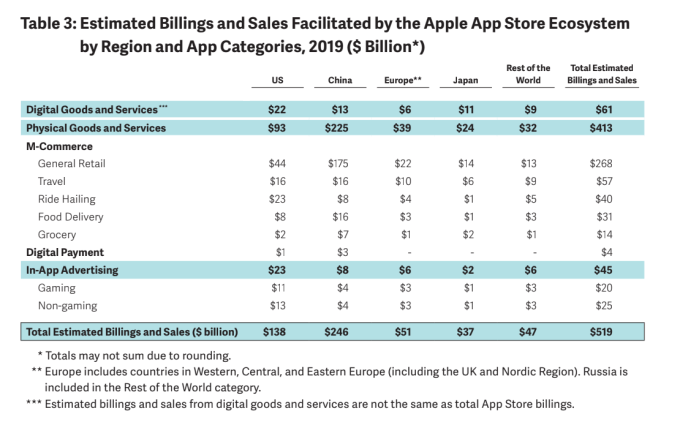
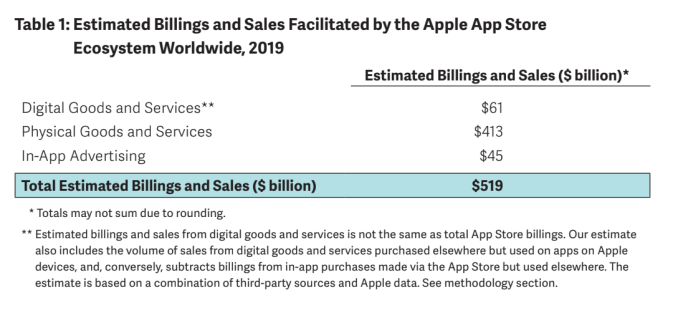
Amid increasing antitrust scrutiny by U.S. regulators, Apple announced an update on its App Store ecosystem. While the company normally shares some App Store metrics during its WWDC keynote, it’s today detailing the results of a new study that claims the App Store ecosystem facilitated half a trillion ($519 billion) in billings and sales globally in 2019. This is a new and broader figure than has been previously reported, as it includes all transactions the App Store facilitates, not just those on which Apple takes a commission.

The study, which was conducted by economists at the Analysis Group, is the first to attempt to comprehensively analyze the App Store ecosystem, which is now home to nearly 2 million apps. First launched in 2008, the App Store is visited by half a billion people every week across 175 countries. Collectively, users have download apps hundreds of billions of times to their devices. The Apple Developer ecosystem, meanwhile, supports 23 million developers.

The new study examines the wider world of transactions on the App Store. While Apple earlier announced it has made $155 billion in direct payments to developers to date, the study attempts to position those payments as a “small fraction” of the total when sales from other sources — like physical goods and services — are also included.

In other words, the study is taking into consideration the number of retail sales flowing through the App Store, like when you shop the Target or Best Buy iOS app, for example. Or when you book an Uber or order food from DoorDash or Grubhub.

The study notes that because Apple only receives commissions from the billings associated with digital goods and services, “more than 85% of the $519 billion total accrues solely to third-party developers and businesses of all sizes,” it says.

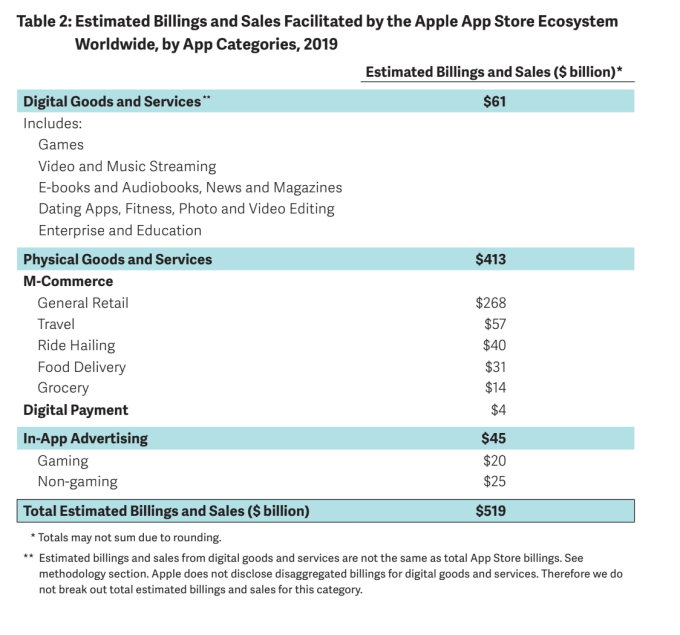
Here’s how the $519 billion breaks down, specifically.

The study estimates sales from Physical Goods and Services accounted for the largest share, at $413 billion. Within this category, M-commerce apps generated the vast majority of sales, and Retail was the largest at $268 billion. This Retail category includes brick-and-mortar stores like Target as well as virtual marketplaces like Etsy, but excludes grocery delivery services.

Other top M-commerce apps included Travel apps like Expedia and United, coming in at $57 billion. Ride-hailing apps like Uber and Lyft comprised $40 billion in sales. And Food Delivery apps, like Grubhub and DoorDash, made up $31 billion. Grocery Delivery accounted for just $14 billion — but remember that this study is focused on pre-COVID-era data from 2019.

Meanwhile, the billings from the Digital Goods and Services section reached $61 billion in 2019. This includes music and video streaming services, fitness, education, e-books, audiobooks, news, magazines and dating apps. The Games category was the largest within digital goods and services, but the study didn’t detail how much of the $61 billion was attributed to games versus the other apps. The lack of sub-category data is an interesting omission given that Apple sells games, a music streaming service, a video streaming service, audiobooks and e-books, and a subscription news service.

In-app Advertising Sales accounted for another $45 billion and 44% of that figure ($20 billion) was from advertising in games. Non-game apps that generated substantial in-app advertising sales are often free, like Twitter and Pinterest, while some offer subscriptions, like MLB.com or The New York Times, the study said.

The timing of the study’s release is not coincidental.

Along with Amazon, Google parent Alphabet and Facebook, U.S. House antitrust investigators have been pressing Apple to testify as part of the Judiciary Committee’s tech competition probe, Axios recently reported. Amazon is the only one of the four to have publicly confirmed its plans to participate.

For its part, Apple has been accused of running an anti-competitive app marketplace — one where its own services compete against rivals. Those competitors then have to pay Apple commissions for transactions the App Store facilitates. Apple also doesn’t allow other apps that sell apps, like the Epic Games Store. And it uses its favored status to wipe out competitors by launching similar products that can more deeply integrate with its OS — as it plans to do with its upcoming lost item finder, AirTags, which will work better than the current market leader, Tile, due to its first-party status.

In that light, it’s easy to see how this study is attempting to shift the narrative from one about how much Apple profits off developers — developers who are often now also competitors — to one that characterizes the App Store as one where business transactions flow freely. It paints a picture of industries that generate billions without Apple’s hand in the pot, so to speak.

But this ignores all the workarounds businesses have had to take to avoid Apple’s cut.

For example, Amazon, for years, has directed users to the web to purchase e-books, audiobooks and, until recently, videos. (The latter is only now allowing in-app transactions due to a special deal that was cut.) A number of top developers, including Netflix and Spotify, dropped in-app sign-ups from their apps in order to avoid the so-called “Apple tax.” Those that do the same will sometimes see a decline in subscribers, as a result.

The study characterizes these workarounds as developers’ “choice.”

The study is also notable for its examination of the geographic makeup of that $519 billion figure. It says the U.S. accounts for $138 billion compared with China’s $246 billion, for example. That’s followed by Europe ($51 billion), Japan ($37 billion) and then the rest of the world ($47 billion).

Of course, this study on the 2019 App Store arrives in the middle of the coronavirus pandemic, which will lead to a wildly different set of numbers for 2020 and beyond.

“The App Store…is the world’s safest and most vibrant app marketplace,” touted Apple in a release. “It helps creators, dreamers, and learners of all ages and backgrounds connect with the tools and information they need to build a brighter future and a better world,” it said.

Correction: An earlier version of this post said grocery delivery was $4 billion instead of $14 billion. The typo has been corrected. The chart was accurate.  

IoT solutions are enabling physical distancing

Tyler Cracraft
Contributor

Tyler Cracraft is an electronic engineer turned solution architect at Advantech who has more than a decade of experience working in the electronics technology industry.

If you’re a business owner or investor and are wondering about the long-term impacts of the COVID-19 pandemic on the business world, you’re not alone.

Today’s business leaders have been plunged into the deep end of telecommuting with little notice, and the way we do business has been impacted at almost every level. Travel is restricted, meetings are virtual and delivery of goods and even raw materials is being delayed. While some industries that depend on large gatherings are seeing extremely difficult challenges due to the pandemic, others such as the tech industry, see the opportunity and responsibility for innovation and growth.

As many states begin phased reopening, companies are trying to determine what the workplace and business environment will look like in a post-quarantine world. The first obvious step is the integration of personal protective equipment (PPE). Sanitization and face masks will become required and nonessential face-to-face meetings will be a thing of the past, along with shaking hands.

Additionally, relationship-driven careers such as sales and recruiting will have to find new ways to connect to be successful. Physical distancing rules will have to be established, which may include employees coming in alternate days while telecommuting the other days of the week to keep offices at reduced capacity. Large offices of 10 or more may implement thermographic camera technology for fever screening or other real-time technology-based health screenings.

One thing is for sure: IoT devices that enable physical distancing will become an integral part of reopening businesses, facilitating sales connections and embracing a different way of living.

Solutions for physical distancing

There are a variety of IoT devices available that can help business leaders successfully implement physical distancing in their offices. Thermographic camera technology coupled with facial recognition can create a baseline for each employee and then assist in determining if an employee has a temperature outside of their norm. Other remote health monitoring may also take place with healthcare providers, helping employees determine on a daily basis if they are well enough to go into work.

Color’s COVID-19 testing shows most who test positive had either mild or no symptoms

Echoing much of the existing data and research on the subject, SF-based Color released data today showing that based on its own testing program, most individuals who test positive for COVID-19 display either mild or no symptoms, including even running a fever. The results, taken from Color’s own testing of over 30,000 people to date across its California testing stations, shows that despite continuing efforts underway across the U.S. to reopen local and state economies, widespread testing is still key to any true recovery program.

Color notes that 1.3% of the people who it has tested have received positive results for COVID-19, and says that among those, 78% reported only mild symptoms or said they were asymptomatic — meaning they displayed no observable symptoms whatsoever. What’s more, only 12% had a fever  over 100 degrees, which is bad news for efforts to contain potential transmission of cases through measures like temperature checks at workplaces and shared use facilities.

Color’s data matches up with recently released information from the WHO that indicated as many as 80% of individuals who test positive display either mild or no symptoms. Color also shared more specific information about what symptoms those who did report said they had, with most saying they had a cough — though the most highly correlated reported symptom with an actual positive test result is loss of smell, making it a much better indicator of a positive test result than fever, for instance.

Other notable findings from Color’s testing, which includes testing San Francisco’s frontline essential workers in partnership with the city, include that most of those who test positive are young (68% are between 18 and 40) and that Latinx and Black communities showed much higher positive results on a per capita basis than either white or Asian populations. Color’s data in both these regards support results shared by other organizations and researchers, backing up concerns around who will be most negatively affected by any hasty and unconsidered reopening efforts.

T-Mobile hit by phone calling, text message outage

T-Mobile appears to be having problems.

Customers are reporting that they can’t make or receive phone calls, although data appears to be unaffected. Some customers say that text messaging is also affected.

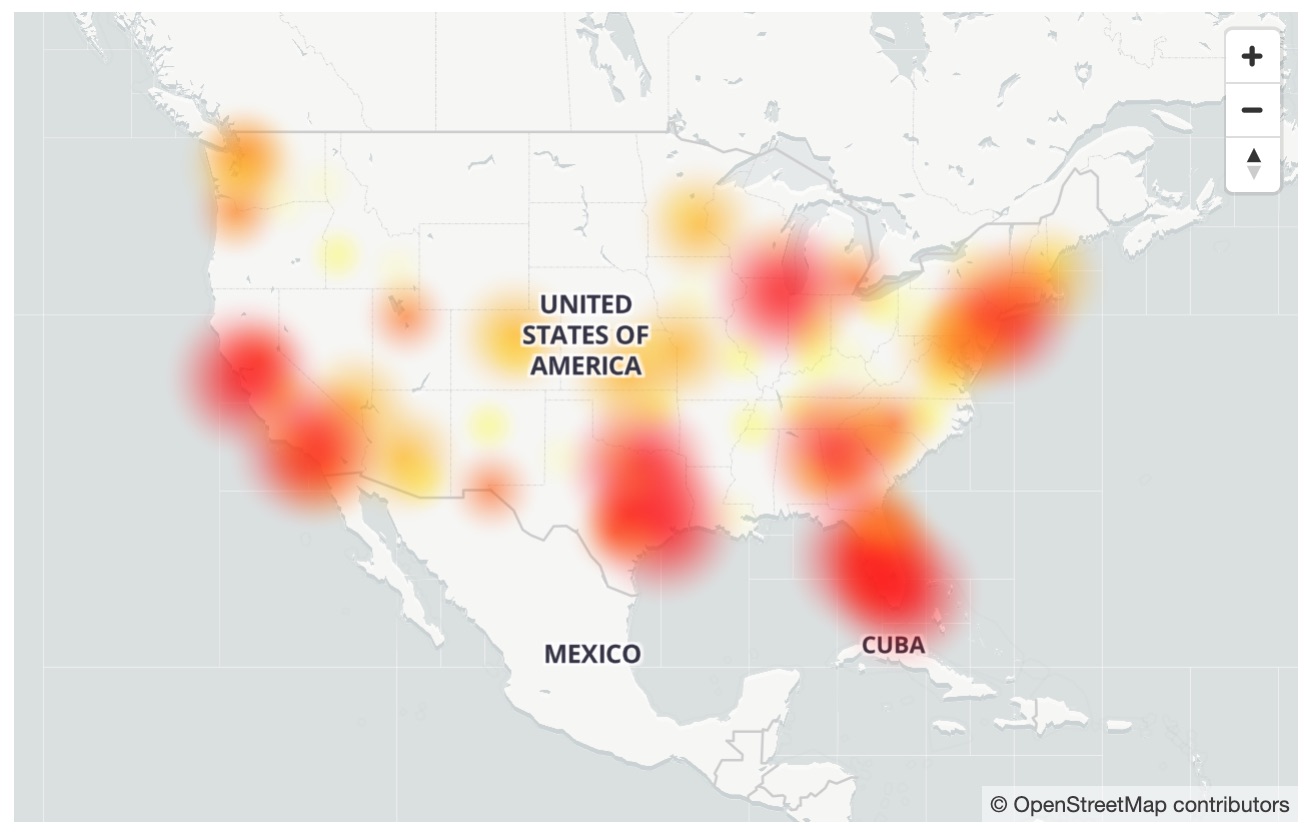
DownDetector, which collects outage reports from users, indicates that a major outage is underway. It’s not clear how widespread the issue is, but at the time of writing T-Mobile was trending across the United States on Twitter.

The outage appears to have started around 9-10am PT (12-1pm ET) on Monday.

DownDetector reporting outages across the U.S.

In our own tests in New York and Seattle, we found that making calls from a T-Mobile phone would fail almost immediately after placing the call. We also found that the cell service on our phones was intermittent, with bars occasionally dropping to zero or losing access to high-speed data.

In April, Sprint and T-Mobile completed its merger, valued at $26 billion, making the combined cell network the third largest carrier in the United States behind AT&T and Verizon.

A spokesperson for T-Mobile also did not immediately comment on the outage, but T-Mobile’s technology chief Neville Ray tweeted:

Our engineers are working to resolve a voice and data issue that has been affecting customers around the country. We’re sorry for the inconvenience and hope to have this fixed shortly.

— Neville (@NevilleRay) June 15, 2020

Others have reported issues on other networks. When reached, spokespeople for AT&T and Verizon (which owns TechCrunch) said their networks were operating normally. Sprint has not yet responded to a request for comment.

There is no evidence that the outage was caused by a cyberattack. Matthew Prince, chief executive at Cloudflare, a global content delivery network, said in a tweet that the company saw no spikes in internet traffic during the outage.

One wire report said Level 3, a major fiber network backbone that cell networks rely on for routing calls and messages, was experiencing an outage, which may have explained the network outages. But a spokesperson for CenturyLink, which owns Level 3, said that there was no current outage on its network.

Widespread cell networks outages are rare but do happen. In 2017, CenturyLink had a network failure that affected all major U.S. carriers and 911 emergency services that rely on the fiber network to route calls. In some U.S. counties, officials sent out emergency alerts to cell phone users to warn that 911 services had been disrupted.

Updated to note that carrier-dependent text messaging also appears to be affected; with AT&T and Verizon responses; with an update from T-Mobile’s chief executive; and with a statement from CenturyLink. An earlier version of this report incorrectly stated Neville Ray’s job title.

Marietje Schaake is ‘very concerned about the future of democracy’

Scott Bade
Contributor

Scott Bade is a former speechwriter for Mike Bloomberg and co-author of “More Human: Designing a World Where People Come First.”

In the ten years she spent as a member of the European Parliament, Marietje Schaake became one of Brussels’ leading voices on technology policy issues.

A Dutch politician from the centrist-liberal Democrats 66 party, Schaake has been called “Europe’s most wired” politician. Since stepping down at the last European Parliament elections in 2019, she has doubled down with her work on cyber policy, becoming president of the CyberPeace Institute in Geneva and moving to the heart of Silicon Valley, where she has joined Stanford University as both the International Director of Policy at Stanford’s Cyber Policy Center, as well as an International Policy Fellow at its Institute for Human-Centered Artificial Intelligence.

I spoke with her about her top cyber policy concerns, the prospects of greater U.S.-EU cooperation on technology and much more.

Can you tell me about your journey from MEP in Brussels to think tank in academia?

There were a variety of reasons why I thought a third term was not the best thing for me to do. I started thinking about what would be a good way to continue, focusing on the fight for justice, for universal human rights and increasingly for the rule of law. A number of academic institutions, especially in the U.S. reached out, and we started a conversation about what the options might be, what I thought would be worthwhile. [My goal] was to understand where tech is going and what does it mean for society, for democracy, for human rights and the rule of law? But also how do the politics of Silicon Valley work?

I feel like there’s a huge opportunity, if not to say gap, on the West Coast when it comes to a policy shop — both to scrutinize policy that the companies are making and to look at what government is doing because Sacramento is super interesting. 

So from a policy perspective, what areas of tech are you thinking about most?

I’m very concerned about the future of democracy in the broadest sense of the word. I feel like we need to understand better how the architecture of information flows and how it impacts our offline democratic world. The more people get steered in a certain direction, the more the foundations of actual liberalism and liberal democracy are challenged. And I feel like we just don’t look at that enough.

Ahead of WWDC, Apple’s Developer app adds Mac support, new features, iMessage stickers

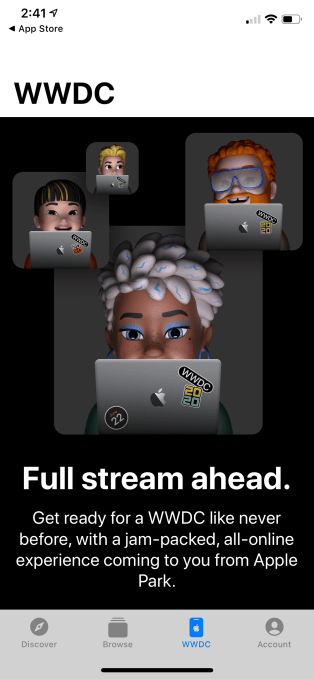
Ahead of Apple’s Worldwide Developer Conference starting next week, the company has today launched a new version of its Apple Developer App to better support its plans for the virtual event. Notably, the app has been made available for Mac for the first time, in addition to a redesign and other minor feature updates.

With the needs of an entirely virtual audience in mind, Apple has redesigned the app’s Discover section to make it easier for developers to catch up on the latest stories, news, videos and more, the company says. This section will be regularly updated with “actionable” content, Apple notes, including the latest news, recommendations on implementing new features, and information about inspiring engineers and designers, alongside new videos.

Image Credits: Sarah Perez

It has also updated its Browse tab where users search for existing sessions, videos, articles and news, including the over 100 technical and design-focused videos found in the WWDC tab. The WWDC tab has also been updated in preparation for the live event starting on Monday, June 22.

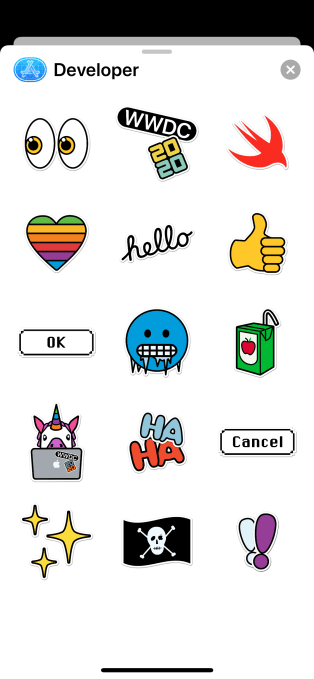
The redesign has added a way to favorite individual articles, in addition to session content and videos. Plus it includes new iMessage stickers along with other enhancements and bug fixes.

Image Credits: Sarah Perez

The app, which was previously available on iPhone, iPad and Apple TV, is also now offered on Mac.

“Over the last 30 years, developers around the world have been creating amazing apps that entertain, influence culture and change lives,” said Apple in announcing the updated app. “The Apple Developer app helps everyone stay current and learn about the newest technologies and techniques to make their apps even better.”

Apple had first introduced its Apple Developer app in November 2019, as an update for its existing WWDC app. The company explained at the time the app would make it easier for Apple’s third-party developer community to access key resources, like design articles, developer news, videos and more, instead of just its WWDC-related content. The new app was also aimed at helping connect developers in growing international markets — like India, Brazil and Indonesia — to Apple’s resources.

However, Apple didn’t at the time realize its Developer app would play as large a role as it now will, due to the coronavirus pandemic.

In March, Apple announced the cancellation of its in-person developer event in favor of an online version where all the session content would be shared as videos. Last week, it revealed the WWDC agenda, which includes virtual versions of its labs and an updated version of its Apple Developer forums, in addition to its Special Event and Platforms State of the Union keynotes. Much of this content will be housed in the Apple Developer app. But now it’s not supplementing the real-world event — it is the event. That means the app will have to remain stable and be ready for a large influx of developer use in the weeks ahead.

Microsoft moves its Windows 10 Insider Program from rings to release channels

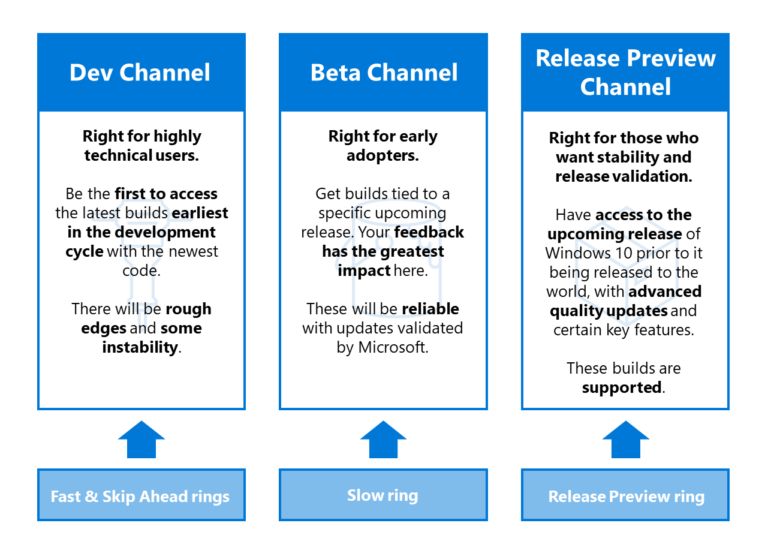
For the last few years, Microsoft has given Windows enthusiasts the ability to opt in to early release “rings,” with the choice to pick between “fast” and “slow” rings, as well as a relatively stable “release preview” option. Today, the company announced a major change to this program as it is moving to release channels, similar to what you’re probably familiar with from most browser manufacturers.

“We are transitioning and converting our current ring model, based on the frequency of builds, to a new channel model that pivots on the quality of builds and better supports parallel coding efforts,” writes Microsoft principal program manager lead Amanda Langowski in a blog post today.

She notes that the result of the ring-based system was that in the middle of 2019, for example, Windows Insiders were running builds from three different releases, depending on which ring they chose.

Image Credits: Microsoft

“As we continue to evolve the way we release Windows 10 and the diversity of Insiders we serve is greater than ever, it is critical that Insiders have a flighting option that is tailored to their needs,” she adds. “We believe the best way to do this is to shift focus from frequency to quality.”

So starting later this month, the “fast” ring will become the Dev Channel, the “slow” ring the Beta Channel and the “release preview” will now be known as the Release Preview Channel.

The Dev Channel is meant for users who want to get very early access to new features, which isn’t all that different from fast rings, but what’s important here is that this channel isn’t tied to any specific release. New features in this channel will make their way into releases once they are ready, whether that’s as part of a major update or a servicing release. Because of its unstable nature, Microsoft says this release is mostly meant for highly technical users.

As for the Beta Channel, the main difference here is that it is really the beta version of a specific release and meant for early adopters. And the Release Preview is exactly what you would think, and meant to test relatively stable builds before they get shipped to the wider Windows 10 user base (and with that, IT admins can also test those releases ahead of their release to a company’s employees, too).

If you’re part of the Windows Insider program, those changes will be automatic and start with builds that are set to launch later this month.

US attorney details eBay employees’ harassment campaign, including live roaches and a pig fetus

U.S. Attorney Andrew Lelling held a press conference this morning detailing ongoing investigations into a bizarre alleged cyberstalking campaign against a couple based in Natick, Massachusetts. Six former eBay employees face charges in connection with the events targeting a writer and her husband.

The targeted writer published a blog sometimes critical of eBay and other e-commerce sites. In apparent retaliation, executives and other staff members allegedly hatched a targeted harassment campaign that included setting up fake social network accounts and a string of upsetting deliveries that reads like the prop list from a “Hellraiser” sequel.

According to Lelling, “The boxes included: fly larvae and live spiders; a box of live cockroaches; a sympathy wreath on the occasion of a dead loved one; a book of advice on how to survive the death of a spouse; pornography mailed to their neighbors but in the couple’s names; a Halloween mask featuring the face of a bloody pig and a pig fetus that was ordered but after an inquiry from the supplier thankfully was never sent.”

Two former executives were charged this morning, along with four other employees; eBay acknowledged the situation in a press release this morning. The company was quick to explain that neither it nor any current employees have been indicted. Those involved have since been fired. EBay says it held off on addressing the situation publicly, so as to not interfere with the ongoing investigation.

From Lelling’s description, however, the situation appears to go even higher. He explained that the actions were not rogue. Instead, “the directive to do something about this goes pretty high up the chain within eBay.”

In fact, the situation appears to have played a role in Devin Wenig’s decision to step down from the company back in September. While not disclosed in the original announcement for the reasons mentioned above, eBay notes:

The Company noted that the internal investigation also examined what role, if any, the Company’s CEO at the time of the incident, Devin Wenig, may have had in this matter. The internal investigation found that, while Mr. Wenig’s communications were inappropriate, there was no evidence that he knew in advance about or authorized the actions that were later directed toward the blogger and her husband. However, as the Company previously announced, there were a number of considerations leading to his departure from the Company.

Learn how to give your brand a distinct voice from Slack’s Head of Brand Communications Anna Pickard at TC Early Stage

How do you give your brand a voice that feels authentic and unique? How can you communicate with users in a way that helps and engages without feeling weird or forced?

We’re thrilled to announce that Anna Pickard, Head of Brand Communications at Slack, will be joining us at TC Early Stage to teach us all that and more.

In her role at Slack, Pickard helps teams across the company figure out how to communicate with users in a way that feels unified and professional, but not overly canned or corporate.

In her TC Early Stage breakout session aptly called “A brand personified,” Pickard will share some of those lessons with the rest of us.

TC Early Stage is our brand-new, all-virtual event that focuses on helping new founders get exactly the information they need, straight from the experienced founders, executives, investors and lawyers that know it best. It’ll run from July 21 to July 22 and will feature over 50 breakout sessions on topics on everything from fundraising, to hiring your first engineers, to the tech stack you build your product on.

And because it’s all virtual, you don’t even have to go anywhere. Tune in and kick back in your pajamas. We won’t judge.

Pickard joins an outright incredible list of speakers presenting at TC Early Stage, alongside people like Sarah Guo, Jeff Clavier, Sophie Alcorn, Cyan Banister and Garry Tan.

One catch: each of the 50+ breakout sessions at Early Stage will be capped at just 100 people and will be filled on a first-come, first-serve basis. Buy your ticket today (starting at $199) and you’ll be able to sign up for any breakout sessions we announce, plus any we’ve already announced that still have room. Prices increase in two short weeks so secure your seat today!

If you want to know more about TC Early Stage, you can find everything you need to know — things like who’s speaking, what sessions to expect and more — right here.

Interested in sponsoring Early Stage? Contact us here.

Free money for startups? It’s possible with MainStreet’s platform for economic development incentives

Startups need money. State and local governments need startups and the employment growth they offer. It should be obvious that the two groups can work together and make each other happy. Unfortunately, nothing could be further from the truth.

Each year, governments spend tens of billions of dollars on economic development incentives designed to attract employers and jobs to their communities. There are a huge number of challenges, however, for startups and individual contributors trying to apply for these programs.

First, economic development leaders typically focus on massive, flagship projects that are splashy and will drive the news cycle and bring good media attention to their elected official bosses. So, for example, you get a massive, $10 billion Foxconn plant in Wisconsin tied to hundreds of millions of incentives, only to see the project sputter into the ground.

Then there is the paperwork. As you’d expect with any government application process, it can be arduous to find the right incentive programs, apply for credits at the right time and max out the opportunities available.

That’s where MainStreet comes in.

Its CEO and founder Doug Ludlow’s third company. He previously founded Hipster, which sold to AOL, and The Happy Home Company, which sold to Google. After that transaction, Ludlow went on to become chief of staff for SMB ads at the tech giant, where he saw firsthand the challenges that startups and all small companies face in growing outside of major urban hubs like San Francisco.

When he and his co-founders Dan Lindquist and Daniel Griffin first started, they were focused on what Ludlow described as “a network of remote work hubs.” As they were experimenting last November they tried paying people to leave the Bay Area, offering them $10,000 if they moved to other cities. The offer caused a sensation, with outlets like CNN covering the news.

While the interest from customers was great, what ignited Ludlow and his co-founders’ passions was that “literally dozens of cities, states and counties reached out, letting us know that they had an incentive program.” As the team explored further, they realized there was a huge untapped opportunity to connect startups to these preexisting programs.

MainStreet was born, and it’s an idea that has also attracted the attention of investors. The company announced today that it raised a $2.3 million round from Gradient Ventures, Weekend Fund and others.

Startups apply for economic incentives through MainStreet’s platform, and then MainStreet takes a 20% cut of any successful application. Notably, that cut is only taken when the incentive is actually disbursed (there’s no upfront cost), and there is also no on-going subscription fee to use the platform. “If you identify the credit that you’re able to use six months from now, we will charge you six months from now, when you’re actually getting that credit. It seems to be a business model that is aligned well with founders,” Ludlow said.

Right now, he says that the average MainStreet client saves $51,000, and that MainStreet has crossed the $1 million ARR run rate threshold.

Right now, the company’s core clientele are startups applying for payroll credits and research and development credits, but Ludlow says that MainStreet is working to expand beyond its tech roots to all small businesses such as restaurants. The company also wants to expand the number of economic development programs that startups can apply for. Given the myriad of governments and programs, there are hundreds if not thousands of more programs to onboard onto the platform.

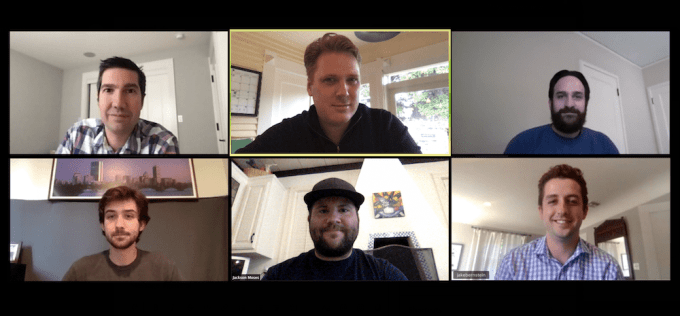
MainStreet’s team. Image Credits: MainStreet

While MainStreet is helping startups and small businesses, it also wants to help governments improve their operations around economic development. With MainStreet, “we can report back to cities and states showing exactly what their tax dollars or tax credits are being utilized for,” Ludlow said. “So the accountability is orders of magnitude greater than they had before. So already, there’s this better system for tracking the success of incentives.”

The big question for MainStreet this year is navigating the crisis around the COVID-19 pandemic. While more small businesses than ever need help navigating credits, state and local governments have suffered huge shortfalls in revenues as taxes have dried up and Washington continues to debate over what, if any aid, to offer. There’s no money for economic development, yet, economic development has never been more important than right now.

Ultimately, MainStreet is pushing the vanguard of economic development thinking forward away from massive checks designed to underwrite industrial factories to a more flexible and dynamic model of incentivizing knowledge workers to move to areas outside the major global cities. It’s an interesting bet, and one that, at the very least, will help many startups get the economic incentives they rightly have access to.

Outside of Gradient and Weekend Fund, Shrug Capital, SV Angel, Remote First Capital, Basement Fund, Basecamp Ventures, Backend Capital and a host of angels participated in the round.

FDA revokes emergency authorization for chloroquine and hydroxychloroquine in COVID-19 treatment

The U.S. Food and Drug Administration (FDA) has revoked an emergency use authorization (EUA) that it previously issued for chloroquine and hydroxychloroquine, two anti-malarial drugs also used in the treatment of chronic rheumatoid arthritis (via The Washington Post). These are the drugs that President Trump famously touted as effective in COVID-19 treatment, despite major concerns raised with the scientific validity of early medical investigations that showed they were potentially effective against the infection beyond the ongoing global pandemic.

Subsequent studies showed conflicting results, including when one team of researchers ended elements of its clinical study into the drugs’ use early due to excess fatalities. The FDA had issued its EUA for use of chloroquine and hydroxychloroquine in late March, prompting criticism from many in the medical and pharmaceutical research community since evidence seemed very mixed in terms of its potential efficacy and risks. Then following those deaths in that subsequent clinical study, it issued a statement of precaution regarding the use of the drugs.

The FDA grants EUAs in circumstances where it deems the benefits outweigh the risks of expediting a provisional authorization for the use of therapies and devices that haven’t undergone its full, rigorous approval process for drugs and equipment. The COVID-19 pandemic has resulted in the FDA releasing many more EUAs than is typical, especially as it pertains to testing equipment used for diagnostics of the infection and SARS-CoV-19, its preceding and causal virus.

Trump irresponsibly touted the value of chloroquine and hydroxychloroquine, and later professed to be taking the medicine himself as a precaution he wrongly believed would stave off infection. The drug’s supply subsequently experienced a number of stresses due to increased demand, which had potentially dire consequences for people with a legitimate need for its consumption due to conditions for which it is approved and clinically shown to be effective, including lupus and chronic arthritis.