In just three years, Columbus managed to exceed its goal of more than 3,200 new BEVs and plug-in hybrids.
Category: Tech news
hacking,system security,protection against hackers,tech-news,gadgets,gaming
How to Pick the Best Microsoft Surface Laptop or Tablet (2020)
If you’re having trouble figuring out whether to get the 2-in-1 Windows tablet hybrid or a traditional laptop, we’re here to help.
In Lockdown, Mathematicians Crack a Stubborn Geometry Riddle
The rectangular peg problem asks a seemingly simple question: Does a closed loop include the corners of every kind of rectangle?
Review: Food Network Kitchen App Is Long on Recipes, Short on Diversity
The cable-TV cooking channel’s Kitchen app is full of videos from celebrity chefs, but the lack of racial representation feels more glaring than ever.
Startups Weekly: US visa freeze is latest reason to build remote-first
Editor’s note: Get this free weekly recap of TechCrunch news that any startup can use by email every Saturday morning (7am PT). Subscribe here.
While the US tech industry relentlessly tries to do business with the rest of the world, this week it became further embroiled in national politics. High-skill immigration visas have been suspended until the end of the year by the Trump administration, precluding thousands of present and future startup employees and founders from coming to the US and building companies here.
Instead, the suspension is another accelerant to the global remote work trend that had already been a thing for many of us this decade, that has just been pushed to the mainstream because of the pandemic. For anyone trying to find great people to hire, the next funding check, or new markets, virtual solutions are often the only solutions available today.
Our resident immigration law expert, Sophie Alcorn, has been covering the issue in-depth this week, including an explainer about the crucial role of immigration in the economy for TechCrunch, and for Extra Crunch, an overview of what you can do if you’re affected. For subscribers, she also wrote about the impact of the Supreme Court overturning Trump’s termination of DACA.
On a personal note, our global editorial staff is looking forward to resuming our global events schedule as soon as possible regardless of these national political issues. We’re here for the startup world. In the meantime, here’s Alex Ames on how we’re connecting virtual Disrupt attendees this year.

Image Credits: Nigel Sussman (opens in a new window)
New York tech after the pandemic
The big industries and big-city amenities that have made New York City what it is are going to help power it forward even as more people and jobs appear to be heading away from city centers. At least that’s my takeaway from reading the 11 investors who Anthony Ha talked to this week in an Extra Crunch survey about the future of the startup hub. First, even if you can work from anywhere, millions of people will prefer that place to be New York — with the big-city housing supply, networking opportunities and amenities to attract people like before. Second, many key industries like finance, real estate, enterprise software, health care, media and other consumer products are not dying but being reinvented, and appear to be maintaining their centers in the city. Here’s Alexa von Tobel of Inspired Capital:
I’ve seen NYC grow into the powerful startup hub it’s become over the last decade, and I think that momentum will continue. Now that we’ve learned high productivity is indeed possible remotely, we expect to see companies maintain some element of a remote workforce within their broad hiring plans. But for startups in their earliest stages, I think there’s still a power to sitting side by side as you build a business. When founders are making their first hires and inking their first deals, NYC remains an incredible place to do that.
Some of those industry reinventions are more exciting than others. In a separate survey, Anthony talked to 5 investors who have tended to focus on advertising and marketing tech… the good news is that advertising and marketing costs are dropping and tech-driven efficiency is improving for the world. For founders in the space, though, the challenges have only grown as the pandemic has forced more ad budget cuts on top of shifts to the largest platforms. As John Elton of Greycroft put it:
Only the next technology breakthrough will provide fertile ground for the next wave of innovation, just as mobile and internet breakthroughs gave rise to today’s giants. Perhaps machine learning is that type of breakthrough, so we are looking at companies that use machine learning to dramatically improve what is possible in the space. The issue there is the scaled players are also very good at machine learning, so it may not be a technology that provides the same opportunity as prior disruptions.
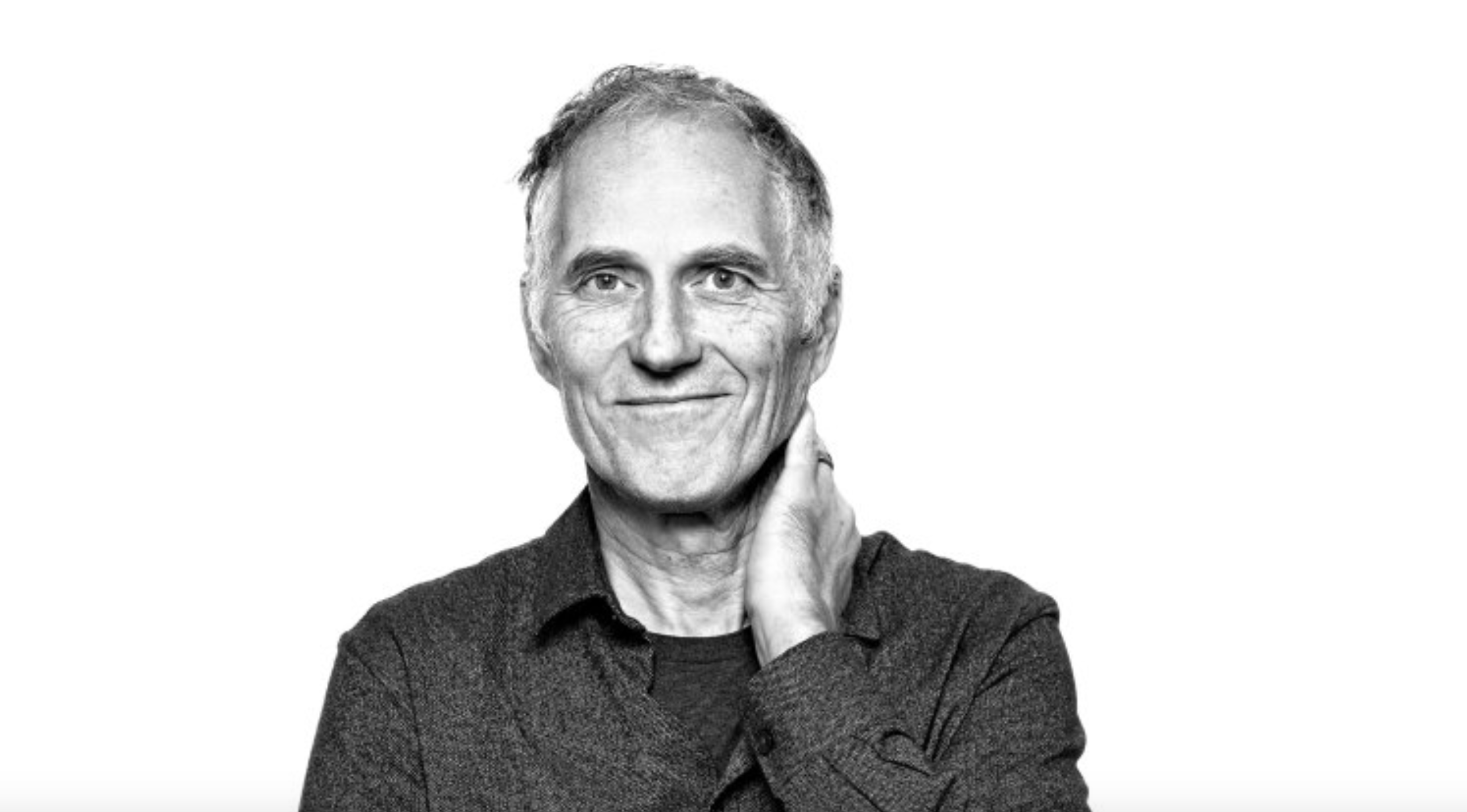
TIm O’Reilly
O’Reilly talks investing beyond the VC financial bubble
Tim O’Reilly has been going a different route from much of Silicon Valley in recent years. While his publishing company, series of conferences, essays and investments have helped to shape the modern internet for decades, he says that venture capital has gone wrong. Here’s more from an interview on with Connie Loizos on TechCrunch this week:
[I]’ve been really disillusioned with Silicon Valley investing for a long time. It reminds me of Wall Street going up to 2008. The idea was, ‘As long as someone wants to buy this [collateralized debt obligation], we’re good.’ Nobody is thinking about: Is this a good product? So many things that what VCs have created are really financial instruments like those CDOs. They aren’t really thinking about whether this is a company that could survive on revenue from its customers. Deals are designed entirely around an exit. As long as you can get some sucker to take them, [you’re good]. So many acquisitions fail, for example, but the VCs are happy because — guess what? — they got their exit.
His firm, O’Reilly AlphaTech Ventures, has instead been focused in recent years on funding founders who are creating a product that is valued by customers and generates sustainable cash flow, on terms that incentivize organic growth.
They wrote your first check
Last week we launched a new effort to highlight investors who were the first to back your big and (increasingly) successful idea. It’s gotten a great response so far. From Danny Crichton:
Well, the TechCrunch community came through, since in just a few days, we’ve already received more than 500 proposals from founders recommending VCs who wrote their first checks and who have been particularly helpful in fundraising and getting a round closed.
If you haven’t submitted a recommendation, please help us using the form linked here.
The short survey takes five minutes, and could save founders dozens of hours armed with the right intel. Our editorial team is carefully processing these submissions to ensure their veracity and accuracy, and the more data points we have, the better the List can be for founders.
Check out Danny Crichton’s full post on TechCrunch for answers to questions that we’ve gotten frequently so far.
Across the week
TechCrunch:
A look at tech salaries and how they could change as more employees go remote
Apple will soon let developers challenge App Store rules
China’s GPS competitor is now fully launched
GDPR’s two-year review flags lack of ‘vigorous’ enforcement
The Exchange: IPO season, self-driving misfires and a fintech letdown
Extra Crunch:
Four perspectives: Will Apple trim App Store fees?
4 enterprise developer trends that will shape 2021
Ideas for a post-COVID-19 workplace
Plaid’s Zach Perret: ‘Every company is a fintech company’
Volcker Rule reforms expand options for raising VC funds
Around TechCrunch
Register for next week’s Pitches & Pitchers session
Join GGV’s Hans Tung and Jeff Richards for a live Q&A: June 30 at 3:30 pm EDT/12:30 pm PDT
Airtable’s Howie Liu to join us at Disrupt 2020
Zoom founder and CEO Eric Yuan will speak at Disrupt 2020
How to supercharge your virtual networking at Disrupt 2020
#EquityPod
From Alex Wilhelm:
Hello and welcome back to Equity, TechCrunch’s venture capital-focused podcast, where we unpack the numbers behind the headlines.
This week was a bit feisty, but that’s only because Danny Crichton and Natasha Mascarenhas and I were all in pretty good spirits. It would have been hard to not be, given how much good stuff there was to chew over.
We kicked off with two funding rounds from companies that had received a headwind from COVID-19:
- Away raises new capital, reported to be $30 million to $40 million after revenue declines
- Sonder raises $170 million at a higher $1.3 billion valuation after seeing its hospitality business recover
Those two rounds, however, represented just one side of the COVID coin. There were also companies busy riding a COVID-tailwind to the tune of new funds:
- Hopin raised a $40 million Series A as its virtual events business accelerated
- DoNotPay raised an $18 million round at an $80 million valuation
But we had room for one more story. So, we talked a bit about Robinhood, its business model and the recent suicide of one of its users. It’s an awful moment for the family of the human we lost, but also a good moment for Robinhood to batten the hatches a bit on how its service works.
How far the company will go, however, in limiting access to certain financial tooling, will be interesting to see. The company generates lots of revenue from its order-flow business, and options are a key part of those incomes. Robinhood is therefore balancing the need to protect its users and make money from their actions. How they thread this needle will be quite interesting.
All that and we had a lot of fun. Thanks for tuning in, and follow the show on Twitter!
Equity drops every Friday at 6:00 am PT, so subscribe to us on Apple Podcasts, Overcast, Spotify and all the casts.
This Week in Apps: WWDC20 highlights, App Store antitrust issues, tech giants clone TikTok
Welcome back to This Week in Apps, the Extra Crunch series that recaps the latest OS news, the applications they support and the money that flows through it all.
The app industry is as hot as ever, with a record 204 billion downloads and $120 billion in consumer spending in 2019. People are now spending three hours and 40 minutes per day using apps, rivaling TV. Apps aren’t just a way to pass idle hours — they’re a big business. In 2019, mobile-first companies had a combined $544 billion valuation, 6.5x higher than those without a mobile focus.
In this Extra Crunch series, we help you keep up with the latest news from the world of apps, delivered on a weekly basis.
This week, we’re looking at the highlights from Apple’s first-ever virtual Worldwide Developers Conference (WWDC) and what its announcements mean for app developers. Plus, there’s news of the U.S. antitrust investigation into Apple’s business, a revamp of the App Store review process, and more. In other app news, both Instagram and YouTube are responding to the TikTok threat, while Snapchat is adding new free tools to its SDK to woo app developers. Amazon also this week entered the no-code app development space with Honeycode.
WWDC20 Wrap-Up

Image Credits: Apple
Apple held its WWDC developer event online for the first time due to the pandemic. The format, in some ways, worked better — the keynote presentations ran smoother, packed in more content, and you could take in the information without the distractions of applause and cheers. (If you were missing the music, there was a playlist.)
Of course, the virtual event lacked the real-world networking and learning opportunities of the in-person conference. Better online forums and virtual labs didn’t solve that problem. In fact, given there aren’t time constraints on a virtual event, some might argue it would make sense to do hands-on labs in week two instead of alongside all the sessions and keynotes. This could give developers more time to process the info and write some code.
Among the bigger takeaways from WWDC20 — besides the obvious changes to the Mac and the introduction of “Apple silicon” — there was the introduction of the refreshed UI in iOS 14 that adds widgets, an App Library and more Siri smarts; plus the debut of Apple’s own mini-apps, in the form of App Clips; and the ability to run iOS apps on Apple Silicon Macs — in fact, iOS apps will run there by default unless developers uncheck a box.
Let’s dig in.
- The iPad’s influence over Mac. There are plenty of iOS apps that would work on Mac, but making the choice an opt-out instead of an opt-in experience could lead to poor experiences for end users. Developers should think carefully about whether they want to make the leap to the Mac ecosystem and design accordingly. There’s also a broader sense that the iPad and the Mac are starting to look very similar. The iPad already gained support for a proper trackpad and mouse, while the Mac with Big Sur sees the influence of design elements like its new iPad-esque notifications, Control Center, window nav bars and rounded rectangular icons. Are the two OS’s going to merge? Apple’s answer, thankfully, is still “NO.”
Alexis Ohanian is leaving Initialized Capital
Reddit co-founder Alexis Ohanian is leaving Initialized Capital, the investment firm he co-founded in 2011 with Garry Tan, as first reported by Axios and confirmed by TechCrunch. The move comes weeks after Ohanian publicly stepped down from the Reddit board of directors, with Y Combinator president Michael Seibel taking his spot.
Ohanian launched Initialized Capital back in 2011 with a $7 million investment vehicle. Since then, the San Francisco-based firm has grown immensely and made early-stage bets in companies like Flexport, Instacart, Cruise, Coinbase and Codecademy. Most recently, it closed a $225 million investment vehicle in 2018, its fourth fund to date.
Ohanian is leaving Initialized Capital to work on “a new project that will support a generation of founders in tech and beyond,” the firm said in a statement to TechCrunch. According to the Axios story, Ohanian is leaving Initialized to work more closely on pre-seed efforts. On its website, Initialized details that many teams it talks to already have launched products and have a plan to earn revenue.
“We understand that products and business models evolve, but it’s good to see in a very concrete way how teams are able to ship products and work together,” the firm wrote. If Ohanian raises a pre-seed fund, it will be interesting to see how he changes this methodology.
Ohanian did not directly respond to a request for comment.
It’s worth mentioning that partner departures in venture capital are rarely crystal clear break-ups. As Initialized confirmed, Ohanian will remain involved in the firm’s existing investment vehicles and portfolio companies due to legal ties. It is unclear if Ohanian will remain on any board he is on. Ro, a company in which Ohanian has a board seat, did not immediately respond to a request for comment.
One big question is whether Ohanian’s departure would trigger a key-man clause in the firm’s limited partnership agreement. “Key-man” clauses, which are typical in limited partner agreements, require that certain designated people (typically the main partners in a firm) must stay continuously employed at a firm and be active investors. When a key-man clause is triggered, limited partners often have a variety of tools, ranging from control over new hiring to outright ending the investing at a fund, in order to protect their investment in a fund.
In this case, it would be surprising if Alexis Ohanian wasn’t a key man, as he is one of the leading general partners and a founder of the firm.
Ohanian stepped away from being involved in the day to day of Reddit in 2018, and recently left his board seat at the company following protests against police brutality. The co-founder urged Reddit to fill the seat with a Black board member. Reddit ultimately selected Y Combinator CEO Michael Seibel to fill the position.
Tan, the other founding partner of Initialized, helped YC grow in its early days and helped build the famed accelerator’s internal software system and late-stage funding program. “[Tan] will continue to lead Initialized Capital into the future, finding and funding great entrepreneurs as he has done for nearly a decade,” the firm wrote in a statement to TechCrunch. “Garry and Alexis remain committed to each other as long-standing friends and business partners. The firm fully supports Alexis in his future pursuits.”
Initialized Capital currently has $500 million assets under management and has backed over 200 companies to date.
Additional reporting by Danny Crichton.
Telegram to pay SEC fine of $18.5 million and return $1.2 billion to investors as it dissolves TON
Pavel Durov’s grand cryptocurrency dreams for his Telegram messaging service are ending with an $18.5 million civil settlement with the U.S. Securities and Exchange Commission and a pledge to return the more than $1.2 billion that investors had put into its TON digital token.
The settlement ends a months long legal battle between the company and the regulator. In October 2019 the SEC filed a complaint against Telegram alleging the company had raised capital through the sale of 2.9 billion Grams to finance its business. The SEC sought to enjoin Telegram from delivering the Grams it sold, which the regulator alleged were securities. In March, the U.S. District Court for the Southern District of New York agreed with the SEC and issued a preliminary injunction.
In May, Telegram announced that it was shutting down the TON initiative.
Announcing that TON was being shut down, Durov wrote:
I want to conclude this post by wishing luck to all those striving for decentralization, balance and equality in the world. You are fighting the right battle. This battle may well be the most important battle of our generation. We hope that you succeed where we have failed.
In its own announcement of the settlement, the SEC differed with Durov’s assessment of its actions.
“New and innovative businesses are welcome to participate in our capital markets but they cannot do so in violation of the registration requirements of the federal securities laws,” said Kristina Littman, chief of the SEC Enforcement Division’s Cyber Unit, in a statement. “This settlement requires Telegram to return funds to investors, imposes a significant penalty, and requires Telegram to give notice of future digital offerings.”
The argument from the regulator is that Telegram didn’t follow the rules. Had it worked with the regulator instead of launching the token offering without any oversight, the outcome might have been different, according to the SEC.
“Our emergency action protected retail investors from Telegram’s attempt to flood the markets with securities sold in an unregistered offering without providing full disclosures concerning their project,” said Lara Shalov Mehraban, associate regional director of the New York Regional Office. “The remedies we obtained provide significant relief to investors and protect retail investors from future illegal offerings by Telegram.”
TuSimple seeking $250 million in new funding to scale self-driving trucks
TuSimple, the self-driving truck startup backed by Sina, Nvidia, UPS and Tier 1 supplier Mando Corporation, is headed back into the marketplace in search of new capital from investors. The company has hired investment bank Morgan Stanley to help it raise $250 million, according to multiple sources familiar with the effort.
Morgan Stanley recently sent potential investors an informational packet, viewed by TechCrunch, that provides a snapshot of the company and an overview of its business model, as well as a pitch on why the company is poised to succeed — all standard fare for companies seeking investors.
TuSimple declined to comment.
The search for new capital comes as TuSimple pushes to ramp up amid an increasingly crowded pool of potential rivals.
TuSimple is a unique animal in the niche category of self-driving trucks. It was founded in 2015 at a time when most of the attention and capital in the autonomous vehicle industry was focused on passenger cars, and more specifically robotaxis.
Autonomous trucking existed in relative obscurity until high-profile engineers from Google launched Otto, a self-driving truck startup that was quickly acquired by Uber in August 2016. Startups Embark and the now defunct Starsky Robotics also launched in 2016. Meanwhile, TuSimple quietly scaled. In late 2017, TuSimple raised $55 million with plans to use those funds to scale up testing to two full truck fleets in China and the U.S. By 2018, TuSimple started testing on public roads, beginning with a 120-mile highway stretch between Tucson and Phoenix in Arizona and another segment in Shanghai.
Others have emerged in the past two years, including Ike and Kodiak Robotics. Even Waymo is pursuing self-driving trucks. Waymo has talked about trucks since at least 2017, but its self-driving trucks division began noticeably ramping up operations after April 2019, when it hired more than a dozen engineers and the former CEO of failed consumer robotics startup Anki Robotics. More recently, Amazon-backed Aurora has stepped into trucks.
TuSimple stands out for a number of reasons. It has managed to raise $298 million with a valuation of more than $1 billion, putting it into unicorn status. It has a large workforce and well-known partners like UPS. It also has R&D centers and testing operations in China and the United States. TuSimple’s research and development occurs in Beijing and San Diego. It has test centers in Shanghai and Tucson, Arizona.
Its ties to, and operations in China can be viewed as a benefit or a potential risk due to the current tensions with the U.S. Some of TuSimple’s earliest investors are from China, as well as its founding team. Sina, operator of China’s biggest microblogging site Weibo, is one of TuSimple’s earliest investors. Composite Capital, a Hong Kong-based investment firm and previous investor, is also an investor.
In recent years, the company has worked to diversify its investor base, bringing in established North American players. UPS, which is a customer, took a minority stake in TuSimple in 2019. The company announced it added about $120 million to a Series D funding round led by Sina. The round included new participants, such as CDH Investments, Lavender Capital and Tier 1 supplier Mando Corporation.
TuSimple has continued to scale its operations. As of March 2020, the company was making about 20 autonomous trips between Arizona and Texas each week with a fleet of more than 40 autonomous trucks. All of the trucks have a human safety operator behind the wheel.
Commenting platform Spot.IM becomes OpenWeb
Spot.IM, which offers a platform for publishers (including TechCrunch) to manage their user comments, announced this week that it’s rebranding as OpenWeb.
CEO and co-founder Nadav Shoval told me that the new name reflects a vision that’s far grander and more ambitious than the company’s initial product, a location-based messaging service.
“We all felt that this is the time to be proud of what we actually do,” Shoval said. “It’s about saving the open web.”
Specifically, Shoval is hoping to move more online conversations away from the big social platforms like Facebook and back to independent publishers. To illustrate this, he pointed to recent discussions about reexamining or revising Section 230 of the Communications Decency Act, a crucial legal protection for the big online platforms.
While you don’t have to take President Donald Trump’s complaints of Twitter censorship at face value, Shoval said the key is that “no one big tech company should control the conversation.”
To that end, the company has also unveiled an upgraded version of its platform, which includes features like scoring the overall quality of conversation for a specific publisher, incentivizing quality comments by allowing users to earn reputation points and even asking users to reconsider their comment if it appears to violate a publisher’s standards — OpenWeb describes these warnings as “nudges,” so you can still go ahead and post that comment if you want.
“We stopped focusing only on algorithms to identify bad behavior, which we’ve done for years and have become commodity,” said Ido Goldberg, OpenWeb’s senior vice president of product. “What we did here is, we put a lot of time into understanding how we should look at quality and scale in millions of conversations.”
A big theme in our conversation and demonstration was civility — for example, Goldberg showed me how OpenWeb’s nudges had convinced some users to adopt less incendiary language. But I argued that civility doesn’t always lead to quality conversations. After all, racist (and sexist and homophobic and otherwise hateful) ideas can be expressed in ostensibly polite language.
“For us, civility is the baseline,” Goldberg replied. “When things become incivil folks that want to [have a productive conversation] don’t want to be there.”
Shoval added, “There is no silver bullet for quality conversations.” He argued that OpenWeb is trying to encourage these conversations without being seen as “East Coast lefties who are censoring the internet” — a balance it tries to find by working with each of its publishers and being aware of different standards in different geographies. “What we want to do is a never-ending journey.”
Newzoo forecasts 2020 global games industry will reach $159 billion
Games and esports analytics firm Newzoo released its highly cited annual report on the size and state of the video gaming industry yesterday. The firm is predicting 2020 global game industry revenue from consumers of $159.3 billion, a 9.3% increase year-over-year. Newzoo predicts the market will surpass $200 billion by the end of 2023.
Importantly, the data excludes in-game advertising revenue (which surged +59% during COVID-19 lockdowns, according to Unity) and the market of gaming digital assets traded between consumers. Advertising within games is a meaningful source of revenue for many mobile gaming companies. In-game ads in just the U.S. drove roughly $3 billion in industry revenue last year, according to eMarketer.
To compare with gaming, the global markets for other media and entertainment formats are:
- Pay TV: $226 billion in 2019 (excludes streaming services)
- Publishing: $261 billion in 2017, of which books accounted for $121 billion
- Film: $101 billion in 2019 ($42.5 billion from box office)
- Music: $62 billion in 2017 ($30 billion recorded music, $6 billion music publishing, $26 billion live music)
- Board games and playing cards: $12 billion in 2018
- Podcasting: $863 million 2020 advertising revenue (there is no good data on subscription and live events revenue in podcasting, but it is fair to estimate it at a fraction of the total ad revenue figure)
Counting gamers
Of 7.8 billion people on the planet, 4.2 billion (53.6%) of whom have internet connectivity, 2.69 billion will play video games this year, and Newzoo predicts that number to reach three billion in 2023. It broke down the current geographic distribution of gamers as:
- 1,447 million (54%) in Asia-Pacific
- 386 million (14%) in Europe
- 377 million (14%) in Middle East & Africa
- 266 million (10%) in Latin America
- 210 million (8%) in North America
Luckin Coffee’s board is forcing out its chairman (also, chairman is forcing out the rest of the board)
Sometimes you just can’t get a [L]uckin’ break.
After announcing this morning that it is ending its fight to stay listed on Nasdaq, China-based coffee chain and delivery company Luckin Coffee announced in a filing with the SEC that it is requiring that its chairman, Lu Zhengyao, resign.
It also announced in its SEC filing that the chairman has requested the firing of independent director Sean Shao through a shareholders resolution, which will be voted upon at a shareholders meeting to be held on Sunday, July 5th.
My god.
It’s getting ugly at Luckin, which is struggling to turnaround in the aftermath of revelations of a $300 million accounting fraud that has seen its stock price plummet in recent months. Shao has been leading the board’s independent investigation over the accounting irregularity.
Now, at a shareholders meeting, the board will be up for grabs, with investors in the company (yes, there are still investors!) choosing who to keep and who to fire in a devolving case of corporate governance run amok.
In addition to voting on several current directors of the company, shareholders will also vote on installing two new independent directors, Zeng Ying and Yang Jie, who have longtime business and legal backgrounds.
We had previously known about the extraordinary shareholders meeting, but now the company has upped the ante, by voting to force out the chairman by July 2 — three days before the shareholders meeting is scheduled to take place.
Honestly, at this point, it’s impossible to say what comes next. But what I can say is that Luckin is currently trading down 54% at close this Friday, and is worth barely a few hundred million dollars — down from its peak market cap of over $12 billion. Whoever wins is going to own some truly empty cups.
The Exchange: IPO season, self-driving misfires and a fintech letdown
Welcome to The TechCrunch Exchange, a forthcoming weekly newsletter from the TC crew about startups, money, and markets. You can sign up for it here, and receive it regularly when it formally launches in a few weeks. You can email me about it here, or talk to me on Twitter. Let’s go!
In the last week there were 23 rounds worth $50 million in the world, according to Crunchbase data. The rounds were worth a total of $3.72 billion, with a median value of $80 million and an average size of $161.9 million. So in case you were under the impression that late-stage money was under threat, it’s not.
And it’s not hard to see why; with the public markets flirting with new record highs, late-stage startups are able to raise on the back of strong comps. High public valuations help late-stage startups defend their own prices as much as rising stocks can help direct venture investment to certain sectors at the earlier-stages of startup land.
It’s also a situation that can lead to a rash of IPOs, which we’re on the cusp of seeing. With Agora out this week to good effect, and Lemonade in the wings alongside Accolade, nCino, and GoHealth, things are heating up.
 This week The Exchange and TechCrunch more broadly tried to take on the matter, asking questions about Lemonade’s impending public offering, trying our best to explore the S-1 filings of nCino and GoHealth (two IPOs not from California or New York), parsing Accolade’s proposed IPO valuation after it reignited its march to the public markets, and working to grok Agora’s pretty solid IPO pricing.
But there was still more going on. Over on Extra Crunch and TechCrunch this week, we also chewed over Lemonade’s first whack at IPO pricing (down from its prior valuation) and what’s good about it (better than we’d expected), and talked about the host of companies that we are excited about seeing go public over the next few quarters and years.
What’s coming
There are reasons to expect more of the same going forward in terms of IPO density. Looking into Q3 — now just days away — there are some VCs who anticipate a tide of software IPOs as many unicorns try to get public before the election, and while valuations are super hot.
Redpoint’s Jamin Ball is of this view:
Buy side is rolling out the red carpet for SaaS! Wouldn't shock me to see a flood of SaaS IPOs in Q3. Zoominfo was the first offering of the year and it only happened in June. Crazy to see a 6 month hiatus (https://t.co/Bg1I3WxgBa was last before ZI) Lots of pent up demand!
— Jamin Ball (@jaminball) June 26, 2020
You can think of today’s public markets as a do-over for unicorns that should have gone public last year, but put it off. Or in racing terms, it’s a free pit stop for cars that made an error. But if you don’t get out while the getting is this good, what the hell were you waiting for? That’s the multi-billion-dollar question.
Money, markets, mistakes
Let’s catch up on the week’s biggest market news and how we feel about it. As always, we’ll lean toward the private markets but talk about public tech companies when they matter to the startup world.
Social companies took a hit late in the week after Snap, Facebook, and Twitter fell sharply was trading came to a close, after major advertisers like P&G, Unilever, and Verizon* decided that they might actually care what sort of content their ads are shown against. Bear in mind that this sort of ad-dollar yanking is not new; publishers have dealt with this sort of thing for ages. However, social tech companies haven’t taken as many hits from this as they might have over time. Welcome to reality, y’all. For startups? It’s not great for social startups that Facebook and Twitter are taking very public knocks. If they the startups wanted to raise new capital, that is.
SaaS startups — early and late-stage alike — should take heart that the recent spate of public SaaS earnings went pretty ok. There were some misfires, but it could have been worse. And with SaaS shares on the rise again, it’s a lovely time to be a SaaS company. Putting metrics on it, you can find over a dozen public SaaS companies that are worth more than 25x their next year’s sales. That’s insane.
Something we’re tracking is the pace of SaaS investing in 2020. So far, Crunchbase has 648 rounds for companies tagged as SaaS in 2020 through June 26, 2020. Looking at the same interval last year, it was 1,135. Dollars are down from $12.15 billion in the year-ago period, to $9.36 billion this year. Now, there is venture data lag there, but, all the same, it’s not precisely what we expected to see. Perhaps middle-tier SaaS startups are struggling?
The Zoox deal with Amazon shows how far private-market self-driving rounds valued startups ahead of reality. At one point self-driving engineers were the unobtanium of the labor market. Now, we wonder. Still, a $1 billion deal isn’t the end of the world for any company. For self-driving startups, it could mark the end of the good times in the sector, if we hadn’t already crossed the zenith and began a trudge towards its nadir.
Cybersecurity is still hot hot hot, as this week Salesforce poured capital into security startup Tanium. Tanium is now worth $9 billion. 2019 IPO CrowdStrike has been outperforming as a public company, making its sector look rosy at the same time. Some of that beneficence could be at play here.
Fintech is hard. Uber is backing out of its fintech push, it appears. Sure, every company is going to be a fintech company of sorts in time, but not, apparently, like this. Chime et al, rest easy, Uber’s downshift from its formerly frenetic fintech fight indicates that not every major company is going to be able to take a slice of this particular consumer pie.
And, finally, the excellent Kate Clark has notes on startup valuation trends: “The median valuation for Series C or later-stage financings increased to a new high of $120 million in the first half of this year, from $80 million for 2019, according to data provided to The Information by research firm PitchBook.” It’s still good times, we suppose.
There’s so much more to talk about in the worlds of startups, money and markets, but we have to stop here. This newsletter will come out every Friday once we get all the pipes linked up. So, go ahead and subscribe here (it’s 100% free) so that you miss precisely zero entries. Chat soon!
*Verizon owns Verizon Media Group, which owns TechCrunch, which, in turns, owns me.
Agora starts life as a public company by more than doubling to $50 a share
Shares of Agora, a China and U.S.-based “real-time engagement” API company, soared today after it went public.
Yesterday Agora priced 17.5 million shares at $20 apiece, up from its target range of $16 to $18 per share. The firm raised $350 in its debut, or around 10 times its Q1 2020 revenue and is now amply capitalized and has runway for effectively forever, given its modest cash consumption as an ongoing concern.
But while the debut was a success, seeing Agora’s share price rise as quickly as it did was not universally popular. Regular critic of the traditional IPO process Bill Gurley — a venture capitalist, so someone with a stake in this particular gambit — weighed in:
Pretty amazing that there is a financial exercise on this planet involving hundreds of millions of dollars where its OK to not even get to 50% of the actual end result. The process is so rigged/broken at this point. They missed by more than the original guess. #marketpricing pic.twitter.com/MqmmYRw3ZM
— Bill Gurley (@bgurley) June 26, 2020
Let me translate. Gurley is irked — rightly, to at least some degree — that as Agora opened at $45 per share, the company’s IPO was awfully priced. By that we mean that the company should have sold its IPO shares not at $20, but at $45, the value at which the market quickly repriced them.
As $45 is more than twice $20, its bankers “missed by more than [their] original guess.” Given the number of shares the company sold, the mis-pricing could be worth up to $437.5 million!
There’s merit to this argument, but it’s not as complete a slam dunk as it might appear. Chat with CEOs of public companies and they will tell you about how important it is to have steady, stable, long-term shareholders of their equity. Those you might, say, meet on a roadshow and get to invest in your IPO shares.
Those groups — the long-term investors that tech folks claim to love so dearly — are likely a bit more price conscious than the momentum traders eager to find upside in recent debuts. That is, folks more likely to hold onto shares for a shorter period of time.
So, if you want long-term shareholders, you may have to price you IPO under the price the market may initially bear once trading begins.
Still, holy shit $20 per share is not close to $45. Gurley has a point.
The future
Change may be coming. The Agora news rotates back to what the NYSE, an American exchange, is doing. Namely trying to come up with a way to let companies direct list (to just start trading, sans pricing or raising new capital), and raise capital. This gets rid of the issues that Gurley highlighted above. At least in theory.
Obviously, if that model becomes possible and long-term investors are willing to pay for shares in a slightly different manner, the new method will be far superior than the old for companies that are great. What sort of companies get burned from first-day pops the most? I reckon it’s the most attractive, or hyped companies.
The companies that would make the most attractive IPOs would use the new method, leaving — what? The detritus to go out the old-fashioned way? Signaling issues abound!
Anyway, it was a zany first day for Agora.
Airvet, a telehealth veterinary platform, just clawed its way to a $14 million Series A round
Telemedicine is becoming more widely embraced by the day — and not just for humans. With a pet in roughly 65% of U.S. homes, there is now a dizzying number of companies enabling vets to meet with their furry patients remotely, including Petriage, Anipanion, TeleVet, Linkyvet, TeleTails, VetNOW, PawSquad, Vetoclock and Petpro Connect.
One of these — a two-year-old, 13-person, LA-based startup called Airvet — unsurprisingly thinks it is the best among the bunch, and it has persuaded investors of as much. Today, the company is announcing $14 million in Series A funding led by Canvas Ventures, with participation by e.ventures, Burst Capital, Starting Line, TrueSight Ventures, Hawke Ventures and Bracket Capital, as well as individual investors.
The pandemic played a role in Canvas’s decision, as did a smart model, suggests general partner Rebecca Lynn, who says she has looked at many telemedicine startups over the last 11 years and that she fell for Airvet after using the service for the animals that live on her own small farm. Plus, she adds, “COVID has been a massive accelerant to adoption.”
We asked Airvet’s founder and CEO, Brandon Werber, to make the company’s case to us separately.
TC: Why start the company?
BW: My dad is one of the most well-known vets in the U.S. — celebrity vet Dr. Jeff Werber. We saw the impact that telehealth was making in the human world and wanted to bring the same access and level of care we get for ourselves to our pets. Since I grew up in the pet space, I know it intimately and recognized a lot of inefficiencies in the delivery of care and how vets have been unable to meet the evolving expectations of pet owners.
TC: How are you connecting vets with their pet patients?
BW: We have two apps. One is for pet-owners to download to talk with a vet, and one is for vets to download to organize workflows and talk to their clients. We do not usurp any existing vet relationships. Instead, we partner with vet clinics and enable them to conduct telehealth visits and simultaneously enable pet-owners to have access to vets 24/7, even if they don’t live nearby a vet hospital.
A huge portion of pet owners in the U.S. don’t even have a primary vet. For serious health issues like surgery, animals still need to go in-person, and network vets can even refer them. We’ve also seen Airvet used as curbside check-in, where pet-owners can chat and follow their pet’s in-person vet appointment via live video from the parking lot.
TC: I see there is a minimum charge of $30 per visit. How do you make this model work financially for vets?
BW: Vets view us as an additional revenue-generating tool on top of their base income. We don’t hire vets. Our network of 2,600+ vets are largely the same vets who use Airvet within their own hospital. They can decide at will, like an Uber driver, to swipe online to be part of the on-demand network and take calls from pet parents anywhere in the country to generate additional income.
TC: What have you learned from startups that tried this model before?
BW: All the startups that came before us are not consumer-first and are just focused on building tools for vets, so their platforms cannot be used by every pet owner. Instead, they can only be used by pet owners whose own vets use that specific platform, which is a tiny fraction of vets and therefore a tiny fraction of pet parents.
TC: Do you have ancillary businesses? Beyond these vet visits, are you selling anything else?
BW: For now, just the vet visits, which range from a $30 minimum to higher, based on the vet and specialty. Over time, we have plans and partnerships lined up to expand into other pet health verticals.
A projected $99 billion will be spent on pets in the U.S. alone in 2020, and for us, telemedicine is only the beginning.
TC: Does Airvet involve specific practice management software?
BW: No. We provide the workflow layer enabling vets to schedule virtual appointments, which will soon be able to be fully integrated with their existing systems and workflows.
TC: When a customer calls a vet for $30, is there a time limit?
BW: There is no time limit and cases will usually stay open for three full days, so pet parents can continue to access the vet via chat for any follow-up questions or concerns.
TC: Are you competing at all on pricing?
BW: Our goal is to work alongside the hospitals, not to compete with them or replace them. You can’t take blood virtually or feel a tumor or do a dental. People always will need to go to the vet.
What we want to do is help [pet owners] understand when [to come in]. The average pet parent only goes to the vet 1.5 times a year. A huge segment of users on Airvet have already connected with a vet six times more than that and save time and stress in doing so.
It’s not about competing for us, it’s about being the provider of care in between office visits [and helping] pet parents who have used our service ultimately avoid an unnecessary emergency visit.