US online grocery sales hit record $7.2 billion in June

Despite the slow reopening of the U.S. economy over the past several weeks, online grocery shopping is continuing to reach ever-higher numbers as Americans seem to be in no rush to return to the store. According to new research released today by Brick Meets Click and Mercatus, U.S. online grocery sales hit a record $7.2 billion in June, up 9% over May, as 45.6 million households turned to online grocery pickup and delivery services for a larger portion of their grocery needs.

This figure is higher than the $4 billion seen in March 2020, when the U.S. first went under coronavirus lockdowns. Since then, online grocery sales have been growing quickly — jumping to $5.3 billion in April, then $6.6 billion in May, as more consumers shifted their shopping to online services, grocery included.

The customer base for online grocery also grew from 39.5 million monthly actives in March to now 45.6 million as of June, the report found.

Remarkably, only 16.1 million customers were using online grocery as of August 2019, totaling then just $1.2 million in sales.

The growth isn’t just due to a large influx of new customers to online grocery, but also due to more frequent orders. Customers may be ordering from online services not only for their large “stocking up” trips, but also for those smaller grocery runs they would often do in between — to grab ingredients for their weekly recipes or to replace the more quickly depleted items, like milk, bread and other staples, perhaps.
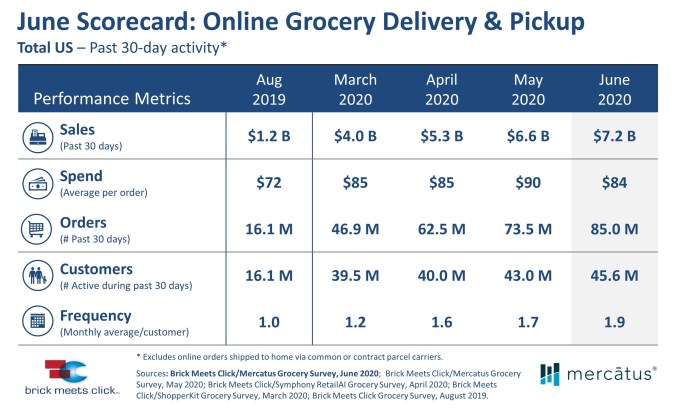
Image Credits: Brick Meets Click / Mercatus

According to the new research, order frequency ticked up from 1.7 orders per month for active households in May to 1.9 orders in June, demonstrating this increase.

In addition, more retailers, including independents, have added capacity for online order fulfillment amid the coronavirus pandemic to meet consumers’ changing needs. This has also resulted in an increase in sales as more customers are able to shop online and get a time slot for delivery or pickup.

Walmart Grocery in April even began pilot testing a way to offer two-hour “Express” grocery delivery service to customers who were willing to pay an upcharge. The company said this was a direct result of its newly added capacity aimed at serving its online grocery customer base. Instacart, meanwhile, added new features in April aimed at opening more delivery windows. And many retailers — including Amazon, Walmart, Instacart and Shipt, among others — have been hiring to help address the growing number of online orders.

When asked about their increased usage of online grocery in June, consumers reported fears of contracting coronavirus as their main concern, the report said. Specifically, 44% of households claimed they had “high levels” of concern about someone in their home being infected, up 2 percentage points from the prior month. This increase was also almost entirely driven by the 9% increase among shoppers in the over-60 age segment.

But on the downside, the increased choice in online grocery providers has made it more difficult for services to attract repeat usage, the data indicates. As of June, the likelihood of a shopper to use a specific online grocery service again within the next 30 days now sits at 57%. While this figure did grow by 1 percentage point since May, it’s still far below the pre-COVID 74% repeat rate seen back in August 2019. 

General interest in online grocery was also growing. Among both active online grocery shoppers and those not active, 32% said they were either “extremely” or “very likely” to use a service in the next 90 days — up 2 percentage points from May. The interest, not surprisingly, was strongest in households that had used an online grocery service in June, with 57% showing strong interest, compared with only 17% of the non-active households.

The data for the research was sourced from 1,781 U.S. adults in June (6/24-6/25), with responses weighted by age to reflect the national population of U.S. adults. The firms’ prior surveys also used a similar methodology, timing and sampling.

“Even though some retailers have seen sales decline within their respective business, the new reality of increased capacity across the market – and related greater choice (or options) for shoppers – means that all grocery retailers will need to accelerate their efforts to make shopping online even more seamless to thrive going forward,” said David Bishop, partner and research lead, Brick Meets Click, in a statement.

Here’s a list of tech companies that the SBA says took PPP money

The U.S. Treasury Department released Monday a highly anticipated trove of data identifying every company that has received a loan of more than $150,000 from the Paycheck Protection Program (PPP) — a list that includes some of the hottest names in the tech startup world, including Bolt Mobility, Getaround, Luminar, Stackin, TuSimple and Velodyne.

The data, which lists the names of companies that received small business loans over $150,000, was the result of a push for greater transparency around the loans. The list also provides the number of jobs that each company said it plans to retain as a result of the funds.

The PPP loans became available to help prop up companies affected by the COVID-19 pandemic, which has prompted local and state governments to issue stay-at-home orders and close non-essential businesses. The $2 trillion CARES Act passed by Congress and signed by President Trump, included PPP loans designed to provide a direct incentive for small businesses to keep their workers on the payroll. The Small Business Administration, which handles the applications, will forgive loans if all employee retention criteria are met.

As illuminating as this dump of data is, it may contain inaccurate information. Both Bird and Index Ventures have issued statements that counter information provided by the federal government.

“Bird was erroneously listed as a company that filed for a PPP Loan,” according to an emailed statement from Bird. “We did not apply for nor did we receive a PPP Loan. We decided as a company not to file an application as we did not want to divert critical funding from small and local businesses.”

Bird CEO and founder Travis VanderZanden tweeted Monday that Citi had started an application while it awaited the company’s decision on whether to formally apply. Bird told Citi it decided not to apply and the bank told the company the temporary application had been cancelled.

Bird spoke with Citi early on, but decided not to apply for PPP b/c the money was more deserved by small and local businesses. Citi will confirm this. Not sure how we made the PPP list, but we're investigating. https://t.co/81HUJLKy4o

— Travis VanderZanden (@travisv) July 6, 2020

Index Ventures confirmed it has not applied for or received a loan. Andreessen Horowitz, which was also listed in the PPP data, confirmed that it has not applied for or received a loan in a statement to TechCrunch.

Earlier today, there was an erroneous entry that Index Ventures applied for a PPP loan. We can confirm that Index Ventures did not apply for a PPP loan at any point. Our legal team is looking into why our name is listed and looking to correct it ASAP.

— Index Ventures (@IndexVentures) July 6, 2020

Below is a list of tech startups and companies, including some venture firms that received money, either for themselves or on behalf of portfolio companies, from the program. The story is developing and we’re seeking to confirm the loans with companies. We will update throughout the day.

$150,000 to $350,000 range

  • Stackin, which connects millennials to fintech startups, raised a loan. soThis loan is notable because the fintech company raised a $12.6 million Series B financing in May, is listed in the loan data. CEO Scott Grimes did not immediately respond to a request for comment.
  • OpenResearch, formerly named Y Combinator Research, plans to retain 0 jobs. The nonprofit company rebranded in May, and announced that it is operating independently from Y Combinator and will no longer be affiliated with the incubator. This renaming announcement came after the nonprofit applied for a PPP grant.

$350,000 to $1 million range

  • Bolt Mobility, a city micromobility upstart, plans to retain 18 jobs

$1 million to $2 million range

  • SquareFoot, a New york-based office real-estate upstart, got a loan. According to The Information,  CEO Jonathan Wasserstrum got $1 million to avoid cutting the staff amid real estate transactions slowing down due to COVID-19.  

$2 to $5 million range

  • Self-driving trucking company TuSimple plans to save 324 jobs. TechCrunch recently reported that this startup, which gained unicorn status in 2019, has hired Morgan Stanley as it seeks $250 million in new funding.
  • Yeezy LLC, a company owned by Kanye West, is listed and the money will retain 106 jobs.

$5 to $10 million loan range

  • Getaround, a peer-to-peer car sharing service, plans to save 448 jobs. In a statement to TechCrunch, Getaround confirmed the loan and said that the program “helped reduce the otherwise  severe impact on the health of our organization,” due to lockdowns and coronavirus restrictions.
  • Luminar, a lidar sensor company, plans to retain 341 jobs
  • Turo, a peer-to-peer car-sharing service, does not disclose the number of jobs that will be retained.
  • Velodyne, a lidar sensor company, plans to save 450 jobs.

Developing …

Update: A few of the job numbers were entered incorrectly and have since been corrected. 

As COVID-19 surges, 3D printing is having a moment

COVID-19 will be remembered for many things — most undoubtedly negative. There are, however, some silver linings among the horrors of the deadliest pandemic in recent memory. Among them, if the sort of human ingenuity that shines whenever the world is faced with a similar crisis.

The simple truth of the matter is the world wasn’t prepared for a virus of this magnitude. It’s something that’s played out in country after country, as the novel coronavirus has continued to devastate communities across borders.

In spite of early warning signs, many nations — the U.S. certainly included — were caught off-guard, lacking the proper personal protective equipment (PPE) and other necessities required to battle the virus for a prolonged stretch. For many, taking on COVID-19 has required improvisation and resourcefulness — both, thankfully, qualities found in good volumes among the maker community that helped give rise to 3D printing technology.

If you’ve followed the technology even in passing over the last decade, you’re no doubt aware how much time evangelists spend justifying the usefulness of 3D printing beyond the the confines of desktop hobbyists. The defensiveness is certainly understandable. Consumer 3D printing has all of the trapping of an overhyped boom and bust. The truth of the matter is that it simply wasn’t ready for the mainstream moment many investors and members of the press were ready to thrust upon it.

But even as desktop 3D printing companies begun to scale back or shutter at an alarming rate, the industry has continued to have success stories among those who have further innovated and targeted the right market. Formlabs jumps out amongst the desktop market, with Carbon presenting a success story on the industrial side of the fence. What unites both beyond innovation is a focus on real-world case uses.

Mercedes-Benz 2021 S-Class jumps on the giant touchscreen bandwagon

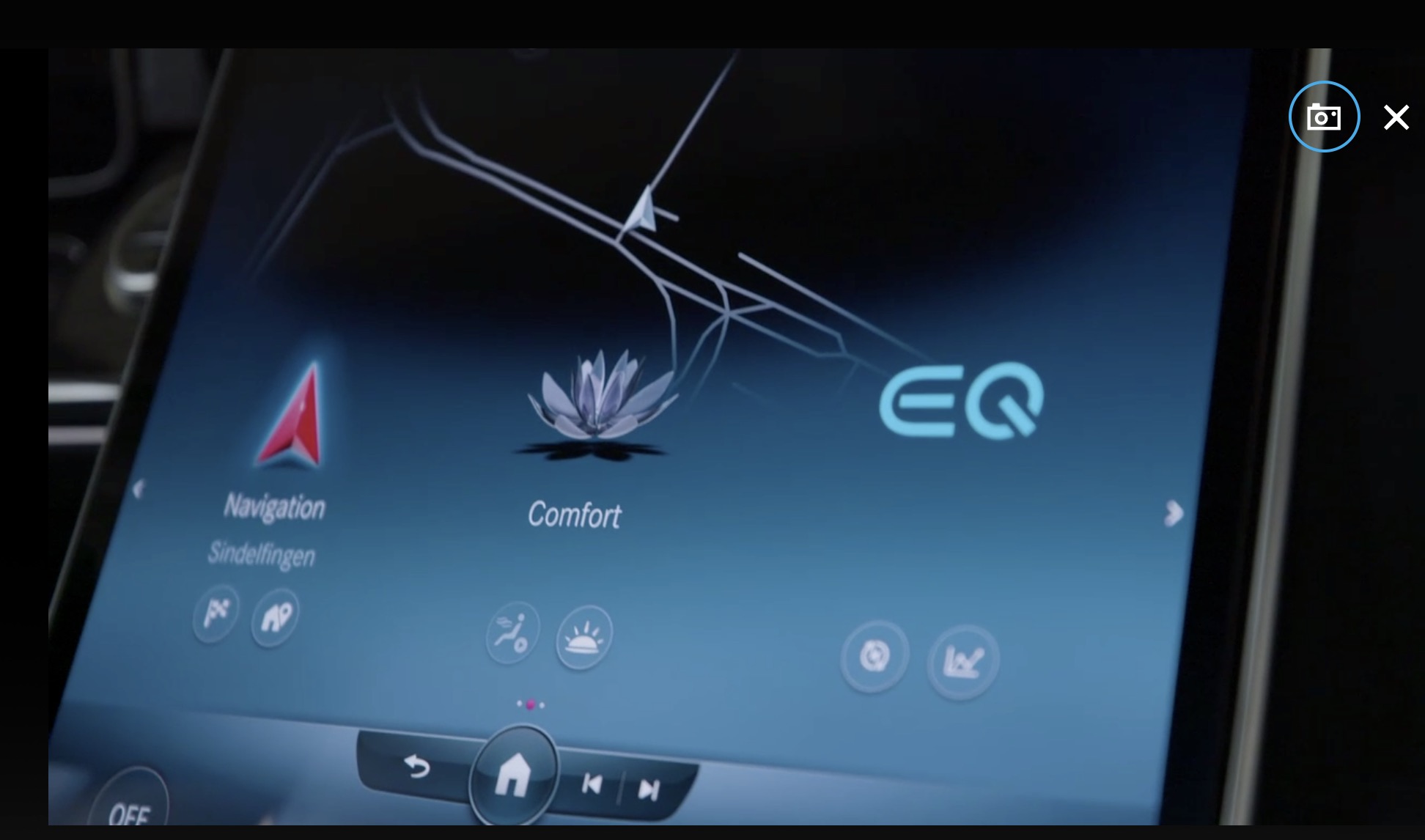
Mercedes-Benz sent out a teaser image and video Monday of its upcoming 2021 S-Class that hints at a sleeker interior that forgoes the bevy of physical knobs and toggles found in previous models in favor of a digital-centric design.

The teasers illustrate a movement in the automotive industry popularized by Tesla to incorporate large touchscreens in new models.

Little is known about Mercedes’ next-generation MBUX infotainment system, which will debut in the 2021 S-Class. It appears, based on Mercedes’ teaser image and latest video as well as leaked photos that a large portrait-style touchscreen will be the centerpiece of the new MBUX system. Mercedes didn’t reveal the size of the screen or what functions will be incorporated into it. However, it appears that the climate control functions are headed to the central touchscreen.

Mercedes S-Class interior

Image Credits: Screenshot/Mercedes

More information about the system and the S-Class is coming in just a couple of days. Mercedes-Benz will unveil the next-gen MBUX system at 5:30 a.m. EDT July 8 as part of a series of digital reveals that will give snippets of information on the 2021 S-Class. The other videos are set for July 29 and August 12. The world premiere of the S-Class is expected to be held in September.

The first-generation Mercedes-Benz User Experience or MBUX system was unveiled in January 2018 at the CES tech trade show and debuted in the automaker’s A Class hatchback. That was a departure for Mercedes, which has historically reserved its best tech for its highest-class models — the S-Class being the first vehicle to typically get the latest and greatest tech. Mercedes appears to be returning to that strategy with the new version of MBUX heading to the 2021 S-Class.

Mercedes S-Class interior screen

Image Credits: Screenshot/Mercedes

The next-gen MBUX will likely continue its emphasis on voice, if the video with Daimler board member Markus Schäfer is any indication. The 2021 Mercedes S-Class will also have a head-up display, according to the video.

Instagram Reels tested in India following TikTok’s ban

In the wake of India’s decision to ban TikTok and dozens of other Chinese apps over privacy concerns, Instagram has expanded its TikTok rival, known as Reels, in the region. The test in India also comes only days after Facebook announced its standalone TikTok clone, Lasso, would be shutting down on July 10.

In addition to India, Instagram Reels is live in Brazil, and as of recently, France and Germany. But an Instagram spokesperson hints the expansion may go even broader, without offering specific details.

Business Insider India was the first to report on Reels’ expansion in India, citing unnamed sources for the discovery. It says the expansion is still a “test.”

“We’re planning to start testing an updated version of Reels in more countries,” a spokesperson told TechCrunch, when asked about the feature’s arrival in India. “Reels,” they added, “is a fun, creative way for people to both express themselves and be entertained.”

Unlike Lasso, which had been its own separate app, Reels has been designed to be a feature within Instagram itself. Reels allows users to create and post short, 15-second videos set to music or other audio, similar to TikTok. Also like TikTok, the feature offers a set of editing tools — like a countdown timer and those that adjust the video’s speed, for example — that aim to make it easier to record creative content. However, Instagram doesn’t have the same sort of two-tabbed, scrollable feed, like TikTok offers, just for watching Reels’ content.

Following the launch of Reels last year in Brazil, Instagram updated the feature based on user feedback. Users said they wanted a space to compile their Reels and watch those made by others. To address these concerns, Instagram moved Reels to a dedicated space on the user Profile page and now features Reels in its Explore section, if they’re published by a public account. That gives Reels the potential to go viral by catching the eye of Instagram users who don’t yet follow the creator’s account. (Before, Reels had been only available to Instagram Stories, which limited their exposure.)

The arrival Reels is timely for a number of reasons. For starters, Facebook in June announced it had entered a global deal with Saregama, one of India’s largest music labels, which would allow it to license music for videos and other social experiences across both Facebook and Instagram. Facebook also has agreements with other Indian labels, including Yash Raj Films, Zee Music Company and T-Series. However, the addition of Saregama may have cleared the path for Reels, given the breadth of its content, which includes over 100,000 tracks like those from Indian music legends, plus Bollywood tunes, devotional music, ghazals, indipop and others.

But mainly, it’s ideal timing for Reels to come to India, given the country’s decision to ban TikTok.

The ban on Chinese apps knocked out TikTok from its largest overseas market, leaving a massive opportunity for Instagram to swoop in and pick up new users for Reels. Before its removal, TikTok had amassed more than 200 million users in India, which is a significant loss for the Beijing-headquartered video app.

But Instagram is not without competition for those users. Reuters recently reported a surge in popularity for other Indian video-sharing apps, like Roposo, Chingari and Mitron, for example. Roposo even saw its user base jump by 22 million in the two days after India banned TikTok, the report noted.

Instagram didn’t indicate when Reels would launch in other key markets, like the U.S.

(Updated 7/6/20, 1:30 PM ET to clarify India is considered a test market for Reels, as opposed to an official launch.) 


Sequoia announces $1.35 billion venture and growth funds for India and Southeast Asia

Sequoia Capital India on Monday announced it has secured $1.35 billion from LPs for two new funds as the storied venture firm looks to ramp up its investments in the world’s second-largest internet market and Southeast Asia.

The two new funds — a $525 million venture fund and a $825 million growth fund — will help the VC firm, which operates in India and Southeast Asia through one arm, more comprehensively serve the startup ecosystem in the region, said Shailendra Singh, a managing director at Sequoia Capital India.

“A fundraise represents a massive responsibility to deliver attractive returns to Sequoia’s Limited Partners, the majority of which are nonprofits, foundations and charities. We do this by partnering with outstanding founders who are building category defining companies,” he said.

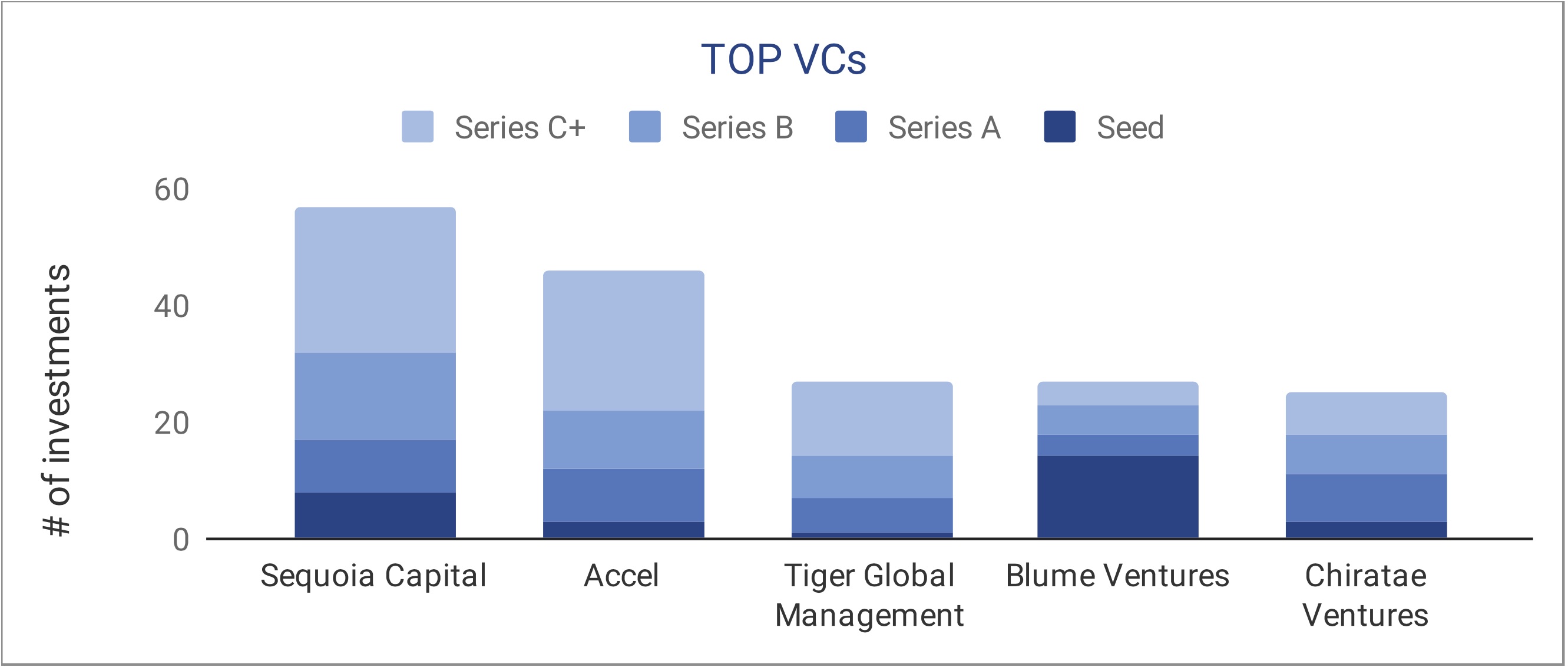
Sequoia Capital India, which roped in former Google India head Rajan Anandan and former Uber India head Amit Jain last year, made more than 50 investments in 2019, more than any other firm in the country.

Top VC firms in India last year based on the number of investments they made. Image Credits: InnoVen

The firm, which began investing in India 14 years ago, closed its last fund, of $695 million, for India and Southeast Asia in 2018. That was its sixth fund for the region.

The VC firm’s India and SEA arm has made several high-profile investments over the years, including in edtech giant Byju’s, which is now valued at $10.5 billion, ride-hailing giant GoJek, e-commerce platform Tokopedia, Singapore e-commerce startup Zilingo, and fintech startup PineLabs, online learning startup Unacademy, fintech firm RazorPay and Khatabook, which offers bookkeeping services to merchants. Last year, Sequoia Capital India sold most of its stake in budget hotel startup Oyo. It has backed 11 unicorns in India and Southeast Asia to date.

The new funds from Sequoia come at a time when several investors have lost appetite as the coronavirus pandemic disrupts businesses. The per capita income of Indians, which remains some of the lowest across the globe, has also not improved over the years.

“Due to frequent cycles of intense competition, startups in our region have struggled to grow rapidly with good unit economics, often posting very high losses for the scale of business. This has prevented very large profitable technology businesses in our region from emerging. To add to these challenges, startups in India do not have the benefit of a regulatory framework that allows listing on foreign exchanges like Nasdaq. In this market context, most startups have chosen to remain private, and raising capital has become a proxy for success,” said Sequoia’s Singh.

“We believe there is an opportunity to choose a different path. Our ecosystem has arrived at a fork in the road.”

Image Credits: Sequoia India

Last year Sequoia Capital India launched an accelerator program, called Surge, for early-stage startups. Since then about 50 startups have participated in Surge, which some analysts told TechCrunch has reduced Y Combinator’s appeal in the region.

Several venture firms have ramped up their efforts in India, where startups raised a record $14.5 billion last year. Much of the infrastructure is still being built in India, giving giants an opportunity to make early bets on what could become major firms in the future.

Tiger Global, which made an early investment in Flipkart, has written several checks in the past one year to Indian startups building business-to-business. So have General Atlantic, which recently made a sizeable bet on the nation’s top telecom operator Reliance Jio Platforms; Prosus Ventures, an early investor in top food delivery startup Swiggy; and Accel, which closed its sixth venture fund — of size $550 million — for India late last year.

That is great news for Indian startups that are currently facing challenges in raising capital from Chinese investors. Zomato, which counts Sequoia as an early investor, announced in January that it had raised $150 million in a new financing round from Ant Financial. The food delivery startup has yet to receive $100 million of that capital, Info Edge, another investor in Zomato, said in an earnings call two weeks ago.

Why investors are cheering the Uber-Postmates deal

This morning as the markets rally, shares of Lyft are up 3% while Uber shares are up 6%.

Why is Uber so far ahead of Lyft, its domestic ride-hailing rival that is suffering from the same economic impacts? It appears that investors are heartened that Uber has closed its Postmates acquisition after both firms danced around each other for some time, leading to all sorts of leaks that wound up being not coming true.


The Exchange is a daily look at startups and the private markets for Extra Crunch subscribers; use code EXCHANGE to get full access and take 25% off your subscription


This explains why Uber investors are excited about Uber’s Postmates buy; what about the smaller company is making Uber shares so buoyant? Let’s take a walk through the numbers this morning.

If we reexamine Uber Eats’ recent growth, contrast it to Ubers Rides’ own growth, mix in Eats’ profitability improvements along with Postmates’ own financial results, we can start to see why public investors might be heartened by the deal.

Afterward, we’ll toss in a note about how Postmates may provide Uber some narrative ammunition heading into earnings. This exercise should be fun, and a good break from our recent IPO coverage. Let’s get into the numbers.

Growth, losses

In case you are behind, Uber is buying Postmates for $2.65 billion in an all-cash deal. Uber estimated that it would issue around 84 million shares to pay for the transaction. At its share price as of the time of writing, the deal is worth $2.72 billion at Uber’s newer share price. For reference, that price tag is about 4.8% of Uber’s current-moment market cap.

To understand why Uber would spend nearly 5% of its worth to buy a smaller rival, let’s remind ourselves of the performance of the group that it will plug into, namely Uber Eats.

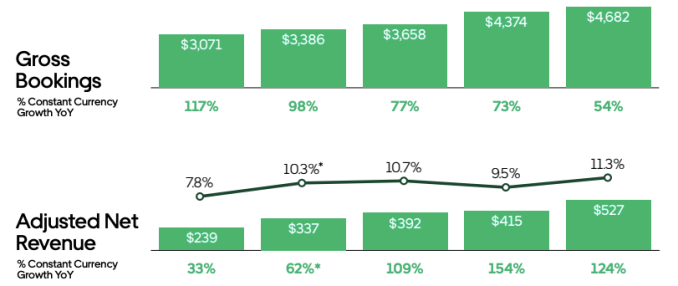
From Uber’s Q1 2020 financial reporting, the following chart will ground our exploration, showing how Eats has performed in recent quarters:

Via Uber’s financial reporting. Q1 2019 on the left, Q1 2020 on the right.

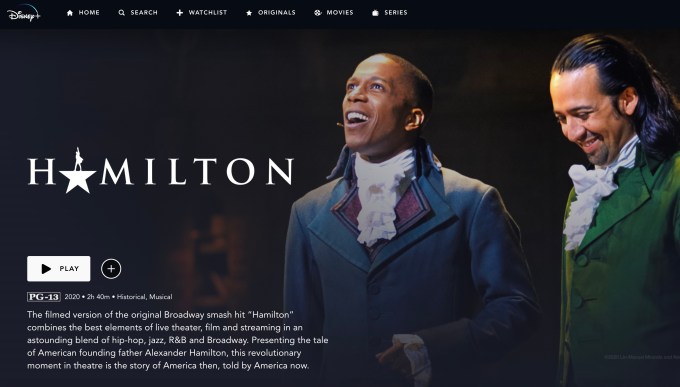
‘Hamilton’ gives Disney+ a holiday weekend bump in US, with app downloads up 74%

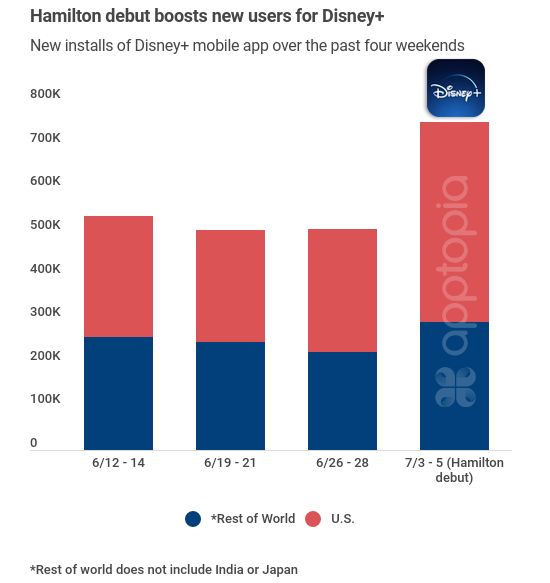
The much-anticipated addition of “Hamilton” seems to have paid off for Disney+. According to new data from app store analytics firm Apptopia, Disney’s streaming service saw a big jump in downloads over the July 4 holiday weekend in the U.S., following the worldwide debut of “Hamilton” on Friday, July 3rd. Between Friday and Sunday, that translated to over half a million new global downloads (752K+) for the Disney+ mobile app, excluding India and Japan. Some 458K+ of those downloads were in the U.S, the firm estimated.

These figures represent a 46.6% increase over the average seen during the previous four weekends in June (Friday through Sunday), Apptopia noted. But the numbers don’t include India or Japan as Disney+ is streamed via Hotstar in the former; and in the latter via a partnership with NTT Docomo through an existing service that later transitioned to Disney+.

Image Credits: Apptopia

The download figures also represented a 74% increase over the four prior weekends in June, in the U.S, indicating that a significant amount of interest in “Hamilton,” not surprisingly — given its “founding fathers” subject matter — comes from U.S. subscribers.

Notably, these downloads represent paid subscribers, not free trial users, as Disney+ ended its free week-long trial offering back in June. 

Rival firm Sensor Tower estimates a slightly different “Hamilton”-related bump for Disney+. During the week of June 29 to July 5, downloads spiked 64% over the week prior, Yahoo reported. Its preliminary estimates for July 3-5 put installs at 1 million across all available markets.

Image Credits: Apptopia

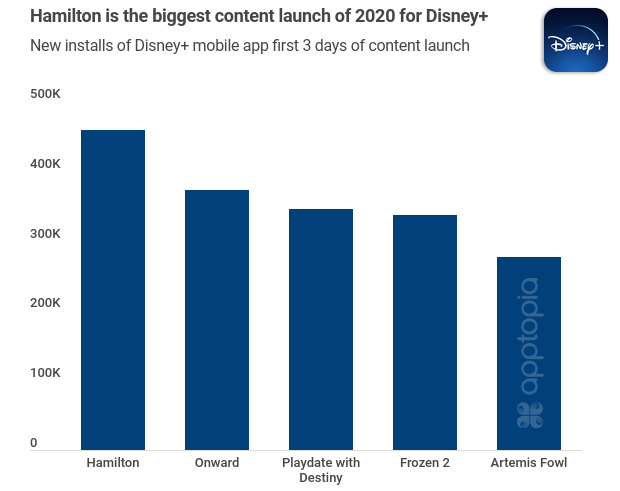
Apptopia also found that “Hamilton” represented the biggest content launch of all of 2020, so far, in terms of downloads. That means it also outpaced the streaming launch of “Frozen 2,” which arrived while consumers were under coronavirus lockdowns. It was also bigger than “Onward,” “Artemis Fowl,” and others, the firm found.

Image Credits: Disney

Of course, mobile download numbers don’t provide a full picture of how many signed up just for “Hamilton.” Many of the new Disney+ subscribers likely only signed up via a TV app and have yet to download the mobile companion.

If Roku’s online channel store offered a “top charts” section with rankings, we would have another window into Disney+ popularity given its status as a top streaming device and TV maker in the U.S. But it’s worth pointing out that Roku’s user base has given the Disney+ app a 4.3-star rating across 1,55,006 total reviews. For comparison, Netflix has 3,675,383 reviews — which shows how quickly the still relatively new service Disney+ is gaining on the market leader.

In May, Disney announced its streaming service had grown from 33.5 million subscribers as of March 28 to 54.4 million Disney+ subscribers as of May 4.

The service appeals to those who follow Disney’s top brands like Star Wars and Marvel, for example, but it’s also found a lot of growth among families who now more than ever need content to keep kids entertained amid the coronavirus outbreak, which has limited families’ usual activities and kept kids indoors.  At the $6.99 per month price point (or $69.99/yr), it’s one of the more affordable streaming services available.

Updated 7/6/20 3 PM ET: Apptopia revised its estimates this afternoon to indicate a larger increase of 74%, not 72.4% as the earlier headline stated. We’ve updated the article with its most recent data as well as the firm’s latest estimates on downloads. We’ll continue to update if newer numbers arrive. 

US tech giants halt Hong Kong police help

Facebook and Twitter have confirmed they have suspended processing demands for user data from Hong Kong authorities following the introduction of a new Beijing-imposed national security law.

A spokesperson for Facebook told TechCrunch it will “pause” the processing of data demands until it can better understand the new national security law, “including formal human rights due diligence and consultations with human rights experts.” The spokesperson added: “We believe freedom of expression is a fundamental human right and support the right of people to express themselves without fear for their safety or other repercussions.”

Facebook said its suspension will also apply to WhatsApp, which it owns.

News of the suspension was first reported by The Wall Street Journal.

Soon after, Twitter also confirmed it followed suit. “Given the rapid pace at which the new National Security Law in China has been passed and that it was only published in its entirety for the first time last week, our teams are reviewing the law to assess its implications, particularly as some of the terms of the law are vague and without clear definition,” said a Twitter spokesperson.

“Like many public interest organizations, civil society leaders and entities, and industry peers, we have grave concerns regarding both the developing process and the full intention of this law,” the spokesperson said.

Twitter said it suspended transfers of user data subject to Hong Kong demands immediately after the law went into effect.

Messaging app Telegram also reportedly said Monday that it will no longer process data requests from Hong Kong authorities.

Tech giants have long seen Hong Kong as a friendly outpost in Asia as a semi-independent city nation state, albeit under the control of Beijing under its “one country, two systems” principles. Hong Kong has far greater freedoms from mainland China, where government surveillance and censorship are widespread.

But the new national security law, imposed unilaterally by the Chinese government on June 30, effectively undermines any protections Hong Kong nationals had. The law removes provisions for authorities to require a court order before it can demand data from internet companies, like Facebook and Twitter.

One industry leader, who chairs the Hong Kong Internet Service Providers Association, said internet providers would have little choice but to comply with the new law.

The move is likely to put Silicon Valley tech giants — and other companies that follow in their footsteps — on notice with Beijing, which already has sweeping bans against some Western tech giants, including both Facebook and Twitter, on the mainland. WhatsApp is highly popular in Hong Kong, alongside Telegram and WeChat.

Updated with comment from Twitter.

Four views: Is edtech changing how we learn?

In the future, students might dismiss stories about weather-related school closures as folklore.

The COVID-19 pandemic compelled us to experiment with edtech, but it’s still unclear whether attending school virtually with a laptop at the kitchen table offers the same benefits as being in a classroom. One recent study found that only 27% of schools asked teachers to monitor student attendance and 37% were required to do 1:1 check-ins on an ongoing basis.

Can education in a post-pandemic world become more accessible, asynchronous and persistent? Or will our digital divide deepen existing inequities in our educational system?

To consider the issue, four TechCrunch staffers looked at the future of edtech and remote learning:

  • Devin Coldewey
  • Natasha Mascarenhas
  • Alex Wilhelm
  • Danny Crichton

Devin Coldewey: Gaming will transform remote learning, but stigma must be addressed

When I was a kid, we played SimCity in computer class once we’d finished our typing lessons, five-paragraph essays and so on. I always thought I was pulling a fast one by zipping through the assignments and getting straight to building my city, but the truth is I was learning just as much with one as the other. The game fooled me into learning about city infrastructure, taxes and other civic concepts that I probably would have fallen asleep learning had I been reading about them.

As a preschool teacher I found myself on the other side of this phenomenon, finding ways to impart learning on my little charges without boring them — and they were easily bored. It was always better to learn by doing, but kids don’t do anything unless it’s fun.

The pandemic isn’t just affecting higher education; Fourth graders and middle school kids are being thrown for a loop as well — not to mention their teachers. Gaming has to be part of the solution.

Our education system has a sort of built-in fun-to-learning ratio that gets smaller as the years go on, because many of the tools we use to teach core concepts are dated and static. There are a few “edutainment” products if kids are lucky enough to have the iPads or laptops to use them on, but not enough, and they’re plainly of a lower order than the real games kids play all the time. When a kid’s hobby is playing something like Fortnite or Breath of the Wild, does an algebra worksheet dressed up like a 2002 Flash game really seem like anything more than work?

Educational games are stuck on the idea of adding fun to old methods of teaching instead of rethinking how learning can be accomplished outside of those methods. Yet the possibilities of teaching using remote presence and virtual worlds are staggering.

A simple and laudable example is Ubisoft’s educational mode, present in its last two Assassin’s Creed games set in ancient Egypt and classical Athens. For all that they came up short as AAA games, these astonishingly detailed sandboxes offer an entire college course’s worth of anthropology and history; in fact, a special nonviolent mode exists just for exploring those aspects of the game.

Imagine telling a classroom full of 14-year-olds that their assignment was to play Assassin’s Creed for an hour a day, find something interesting, look it up and write a paragraph about it. Or build a functioning rocket in Kerbal Space Program. Or finish a set of puzzles in The Witness and list the hidden rules that govern them. Or work with three other kids to build a model of the school in Minecraft or Roblox .

Right now, that’s practically unthinkable (outside a few forward-thinking classrooms), partly because the culture around gaming is weird, toxic and few people take the medium seriously for educational purposes. But if remote learning is going to be part of K-12 education from now on — and we’d better plan for that — we need to meet kids where they are, not try to contort them into a mold cast a century ago.

It’s difficult to visualize because “real” games aren’t built for education except as a secondary consideration. But virtual worlds are becoming venues for more than competition, and embracing that from first principles, by involving educators and students to see what is needed and how those needs can be met, will be a fruitful path for the industry to pursue.

Minted’s Mariam Naficy will join us at TechCrunch Early Stage

At Early Stage, the first event of its kind from TechCrunch, entrepreneurs will have the opportunity to learn from some of the greatest minds in the tech world across categories like fundraising, scaling, operations and marketing. Alongside these VCs, lawyers, growth marketers, operators and recruiters, we’ll also be hearing directly from entrepreneurs who have charted their own course.

One such entrepreneur is Mariam Naficy, founder and CEO of Minted. Naficy is an early trailblazer of the e-commerce and crowdsourcing spaces, and a serial entrepreneur to boot.

Minted started as a marketplace for unique paper stationary, all the way back in 2007. The vision was to build out a platform that crowdsourced incredible, unique design into a single marketplace, elevating beautiful products and amplifying independent designers. Today, Minted sells wall art, stationary and home goods, and also sources design for other retailers and brands.

Independent designers on the platform hail from all 50 states and more than 100 countries, and their products have made their way to more than 75 million homes worldwide. The company has raised nearly $300 million from investors Norwest Venture Partners, Benchmark, TCV and Ridge Ventures.

At Early Stage, we’ll talk to Naficy about how she’s grown Minted over the years. From securing funding to using that funding, from scaling the community to scaling the team, everything is on the table.

Marketplaces are, historically speaking, incredibly hard to build, but Naficy is an expert on the subject. We’ll talk specifically about how to maintain that perfect balance between customer and creator all while growing at a rapid clip.

TC Early Stage (July 21 and 22) has so much to offer. The show will bring together 50+ experts across startup core competencies, such as fundraising, operations and marketing. Cyan Bannister is set to explain how to get an investor to say yes to your startup. Asher Abramson will be sharing how to create growth assets for paid channels, lawyers James Alonso and Adam Zagaris will share how to draw up your first contracts, and Priti Choksi is hosting a session on how to get a company acquired rather than selling.

The two-day show features more than 50 sessions, but don’t worry; attendees will get access to the videos on demand for all of them. What’s more, most of the speakers, who happen to be investors, are participating in TechCrunch’s CrunchMatch, our platform that connects founders to investors based on shared interests. 

Here’s the fine print. Each of the 50+ breakout sessions is limited to around 100 attendees. We expect a lot more attendees, of course, so signups for each session are on a first-come, first-serve basis.

Buy your ticket today, and you can sign up for the breakouts we are announcing today, as well as those already published. Pass holders will also receive 24-hour advance notice before we announce the next batch. (And yes, you can “drop” a breakout session in favor of a new one, in the event there is a schedule conflict.)

Get your TC Early Stage pass today and jump into the inside track on the sessions we announced so far, as well as the ones to be published in the coming weeks.

Possible sponsor? Hit us up right here.

Equity Monday: Uber-Postmates is announced, three funding rounds and narrative construction

Hello and welcome back to Equity, TechCrunch’s venture capital-focused podcast where we unpack the numbers behind the headlines.

This is Equity Monday, our week-starting primer in which we go over the latest news, dig into the week ahead, talk about some neat funding rounds and dive into the latest big news from the startup world. (You can follow the show on Twitter here, and myself here, if you are so inclined! Don’t forget to check out last Friday’s episode as well. All the cool kids are doing it.)

What a weekend! After some quiet, somewhat dull off-week periods, this weekend brought us twists and turns that were good fun. Most dealt with a possible Uber -Postmates tie up, so we wrote the show to talk about the transaction’s unconfirmed nature.

Then, it got confirmed. So, here’s the second edition of today’s Equity Monday, recast due to the deal’s official nature:

  • Uber will buy Postmates for $2.65 billion in an all-stock transaction. Uber shares were up this morning ahead of the open on the wings of the rumor — wings that beat even harder after the deal was confirmed. Uber investors seem pleased, for now, that after losing out on Grubhub their company has managed to buy a smaller player. Doing so may give Uber more leverage over restaurants and drivers, and boost Uber’s H2 2020 revenue numbers that will still be impacted by COVID-19 and its resulting economic impacts.
  • Q3 earnings don’t kick off for tech and other VC-backed companies for a bit, and heading into the week the public markets are up. Despite all the bad news. The inverse correlation between bad news (short-term, economic) and stock market gains is slowly moving from joke to sordid reality.
  • This week we’re keeping tabs on U.S. and Chinese economic data, the geopolitical situation in Hong Kong and the India-China border, and Q2 VC data as it comes out.
  • We also dug into three funding rounds this morning, detailing Scalefast raising $22 million, DigniFi raising $14 million and AirVet raising $14 million as well. More international rounds to come, we promise.

We wrapped this morning wondering if Postmates can provide a narrative boost to Uber, a company that isn’t going to have the best Q2 numbers in its history. With Postmates tucked under its arm going into the earnings call, Uber can double-down on its Uber Eats narrative, flash Postmates around the room and promise that Rides data will get better as well.

Perhaps that would be enough?

Equity drops every Monday at 7:00 a.m. PT and Friday at 6:00 a.m. PT, so subscribe to us on Apple PodcastsOvercastSpotify and all the casts.