Generative algorithms are redefining the intersection of software and music

What if you could mix and match different tracks from your favorite artists, or create new ones on your own with their voices?

This could become a reality sooner than later, as AI models similar to the ones used to create computer-generated art images and embed deepfakes in videos are being increasingly applied to music.

The use of algorithms to create music is not new. Researchers used computer programs to generate piano sheet music as far back as the 1950s, and musicians from that era such as Iannis Xenakis and Gottfried Koenig even used them to compose their own music.

What has changed are the improvements in generative algorithms, which first gained popularity back in 2014, coupled with large amounts of compute power that are increasingly changing what computers can do with music today.

OpenAI recently released a project called JukeBox, which uses the complex raw audio form to help create entirely new music tracks based on a person’s choice of genre, artist and lyrics. Meanwhile, tools such as Amazon’s AWS DeepComposer and ones released by the Google Magenta project are helping to democratize the ability for developers to experiment with deep learning algorithms and music.

With respect to commercial use, startups such as Amper Music, which lets users create customized, royalty-free music, are seeing businesses adopt computer-generated pieces for a range of use cases surrounding background tracks for videos, and record labels have started to play around with music written by AI.

As the technology and quality of computer-generated music matures, it will likely bring a lot of changes to the media industry from individual artists to record labels to music streaming companies, and present a slew of legal questions over computer-generated music rights.

Tilting Point acquires FTX Games and Plamee Studios’ assets

Game publisher Tilting Point announced today that it has made its third acquisition in eight months, buying games, key employees and “most of the assets” from FTX Games and Plamee Studios — both previously owned by Playtech, which will be focusing on its gaming and sports betting software moving forward.

Plamee previously developed Narcos: Cartel Wars, which has supposedly made $60 million in revenue since launch. FTX published Cartel Wars, as well as The Walking Dead: Free Casino Slots and Criminal Minds: The Mobile Game. Tilting Point has taken over operations for all three FTX titles, as well as a fourth that’s currently in development.

The financial terms of the acquisition were not disclosed.

Last fall, Tilting Point acquired Gondola, a startup that optimizes in-game offers and ads. Then it purchased the mobile game Star Trek Timelines earlier this year, hiring the development team to form a new gaming studio called Wicked Realm Games in the process.

CEO Kevin Segalla said he’s always seen acquisitions as a big part of the company’s “progressive publishing” model, in which the company is first hired to help developers with user acquisition and then develops a deeper business relationship over time.

“We were built to ultimately be in a position where we could acquire some of the studios that we’re working with,” Segalla said.

He added that he expects “more acquisitions down the pike for sure,” with Tilting Point particularly interested in acquiring games that have previously been “constrained in marketing spend” and “clearly are going to have longer legs.”

It sounds like studios acquired by Tilting Point continue to operate with a degree of independence while drawing on the larger company’s resources to grow and monetize their games.

“We truly value the developers’ independence,” Segalla said. “We specifically want to work to continue operating their business and help them accelerate their growth. A lot of development studios are recognizing that scale is becoming more and more important.”

Amazon Influencer Program opens to live streamers for broadcasting to Amazon Live

Amazon is giving live streamers a new way to earn commissions on purchases of products showcased in their streams. The company is today adding live streaming to its existing Amazon Influencer Program, which before today, allowed social media influencers to earn money by pointing fans to their favorite Amazon products through posts on Facebook, Twitter, Instagram and YouTube.

The Influencer Program quietly debuted in 2017 as a way for Amazon to capitalize on the growing trend of influencer marketing as a way to drive sales. The program itself is a step up from the Amazon Associates program, as it requires approval to join and gives influencers their own page with an Amazon URL to showcase their recommendations.

Though Amazon already catered to video creators through the program, the new live-streaming option is focused on its own Amazon Live service. A sort of modern-day version of QVC that streams directly on Amazon’s shopping site, Amazon Live launched last year as the retailer’s latest effort to attract consumers by way of live video.

On Amazon Live shows, hosts talk about and demonstrate products, much like they would do on home shopping networks. Underneath the video, a carousel guides consumers to purchase the items featured.

This service wasn’t Amazon’s first attempt at live content — the retailer pulled the plug on its earlier effort in live content, a short-lived “show” called Style Code Live that featured hosts with TV and broadcast backgrounds who brought in experts to talk beauty and style tips.

Amazon Live, however, isn’t narrowly focused on fashion and beauty. Instead, its content can cover a range of categories — like cooking, fitness, baby, home, auto, electronics, toys, pets, moves and TV, industrial and much more. There are also multiple live channels to flip through, unlike on cable TV shopping networks.

To broadcast to Amazon Live, video creators and now, influencers use the Amazon Live Creator app to live stream and chat with viewers as they show off the products to be shopped. On the Amazon Live homepage, fans can also chat with the host and one another in a Twitch-like side panel next to the live video.

You can see a few influencers’ streams in action, with early adopters Mirror & Thread, Beauty by Carla, The Deal Guy and BrickinNick already available on Amazon Live.

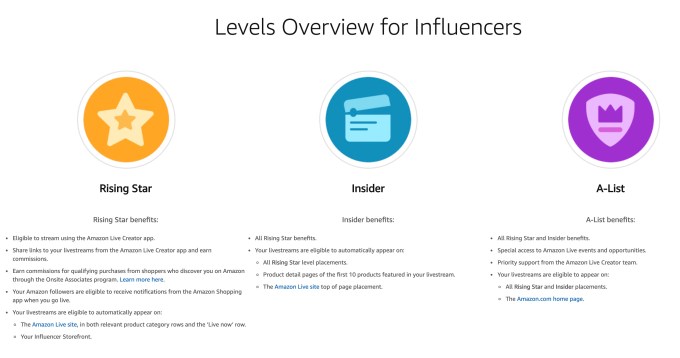
In addition, influencers who live stream on Amazon Live as a part of the new program will have their videos not only streamed on the Amazon Live homepage itself, but also on their own dedicated Amazon storefront. As they grow their fan base, they can move up levels from “Rising Star” to “Insider” to “A-List.”

Image Credits: Amazon

These tiers have various rewards and features. Rising Star, for example, offers paid commission on qualifying purchases through Amazon’s Onsite Associates program, while higher levels get to have their videos showcased on product detail pages in addition to their own storefront and Amazon Live. A-Listers also receive priority support and special access to Amazon Live events and opportunities, says Amazon.

“We’re focused on bringing customers fun and interactive shopping experiences, while also helping influencers grow their businesses on Amazon,” said Amazon Live Director Munira Rahemtulla, in a statement. “Livestreaming enables creativity, connection, and inspiration, and the opportunities are endless – we’re excited to introduce the Amazon Live Creator app to influencers and can’t wait to see what they’ll create for Amazon customers,” she added.

TechCrunch asked Amazon to clarify how influencers are compensated for their streams, given that today’s social media personalities have a number of ways to work with brands for profit — including through YouTube BrandConnect, Facebook’s Brand Collaborations and other programs, for example. The company has so far declined to provide further context, but we’ll update if that changes.

Gmail for G Suite gets deep integrations with Chat, Meet, Rooms and more

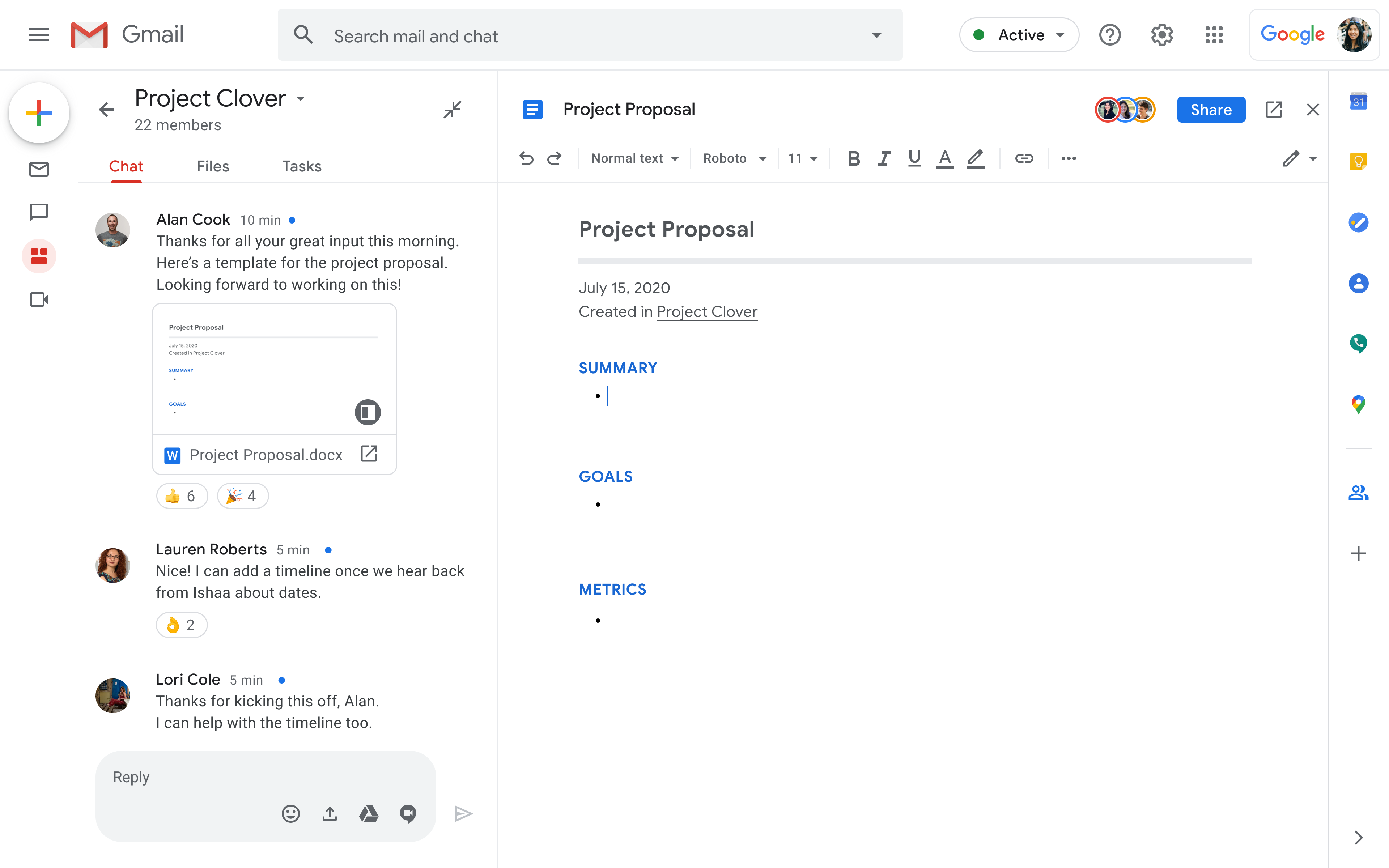
Google is launching a major update to its G Suite productivity tools today that will see a deep integration of Gmail, Chat, Meet and Rooms on the web and on mobile, as well as other tools like Calendar, Docs, Sheets and Slides. This integration will become available in the G Suite early adopter program, with a wider roll-out coming at a later time.

The G Suite team has been working on this project for about a year, though it fast-tracked the Gmail/Meet integration, which was originally scheduled to be part of today’s release, as part of its response to the COVID-19 pandemic.

At the core of today’s update is the idea that we’re all constantly switching between different modes of communication, be that email, chat, voice or video. So with this update, the company is bringing all of this together, with Gmail being the focal point for the time being, given that this is where most users already find themselves for hours on end anyway.

Google is branding this initiative as a “better home for work” and in practice, it means that you’ll not just see deeper integrations between products, like a fill calendaring and file management experience in Gmail, but also the ability to have a video chat open on one side of the window while collaboratively editing a document in real time on the other.

Image Credits: Google

According to G Suite VP and GM Javier Soltero, the overall idea here is not just to bring all of these tools closer together to reduce the task-switching that users have to do.

Image Credits: Google

“We’re announcing something we’ve been working on since a little bit before I even joined Google last year: a new integrated workspace designed to bring together all the core components of communication and collaboration into a single surface that is not just about bringing these ingredients into the same pane of glass, but also realizes something that’s greater than the sum of its parts,” he told me ahead of today’s announcement. “The degree of integration across the different modes of communication, specifically email, chat, and video calling and voice video calling along with our existing physical existing strength in collaboration.”

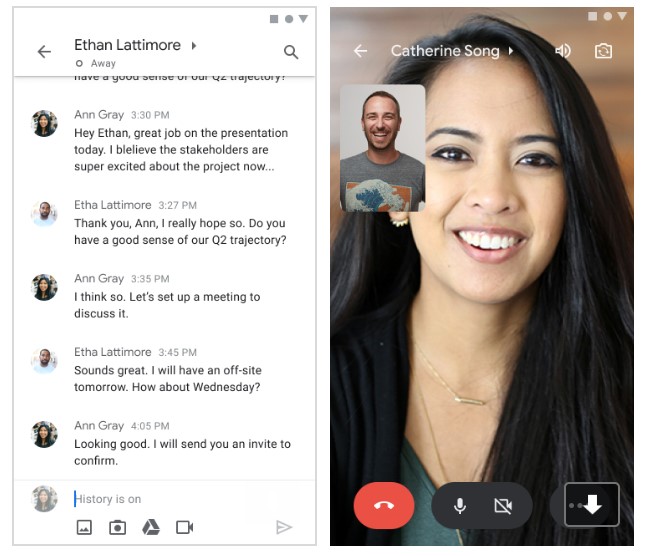
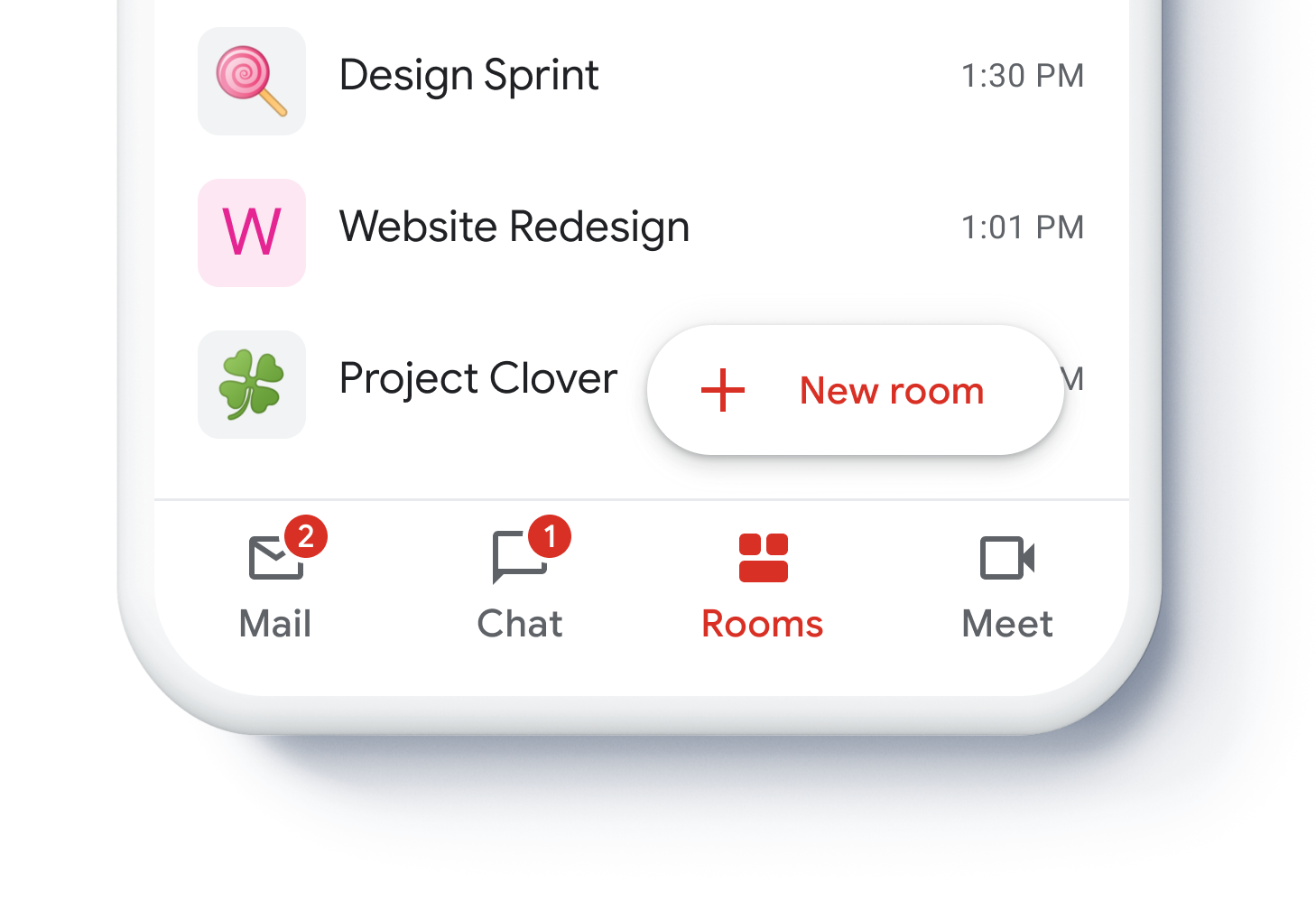
Just like on the web, Google also revealed some of its plans when it first announced its latest major update to Gmail for mobile in May, with its Meet integration in the form of a new bar at the bottom of the screen for moving between Mail and Meet. With this, it’s expanding to include native Chat and Rooms support as well. Soltero noted that Google thinks of these four products as the “four pillars of the integrated workspace.” Having them all integrated into a single app means you can manage the notification behavior of all of them in a single place, for example, and without the often cumbersome task-switching experience on mobile.

Image Credits: Google

For now, these updates are specific to G Suite, though similar to Google’s work around bringing Meet to consumers, the company plans to bring this workspace experience to consumers as well, but what exactly that will look like still remains to be seen. “Right now we’re really focused. The people who urgently need this are those involved in productivity scenarios. This idea of ‘the new home for work’ is much more about collaboration that is specific to professional settings, productivity and workplace settings,” Soltero said.

Image Credits: Google

But there is more…

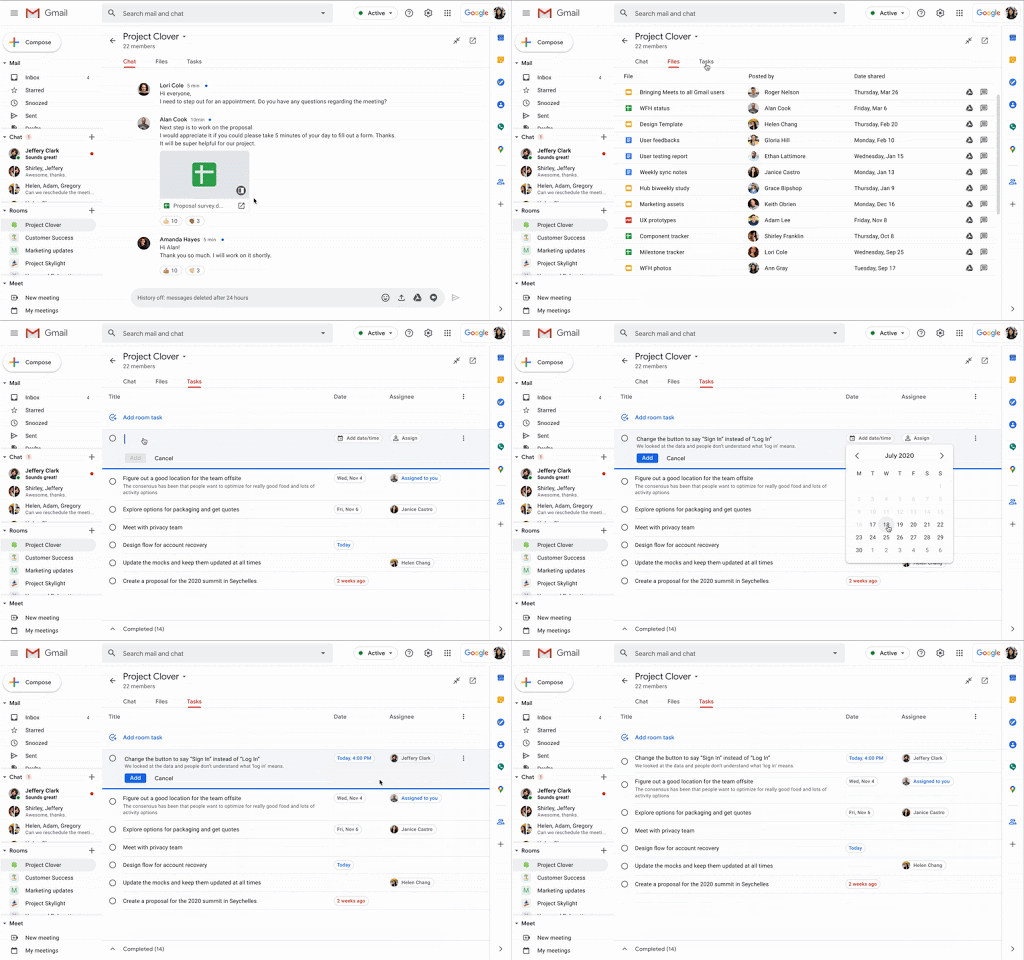
Google is also announcing a few other feature updates to its G Suite line today. Chat rooms, for example, are now getting shared files and tasks, with the ability to assign tasks and to invite users from outside your company into rooms. These rooms now also let you have chats open on one side and edit a document on the other, all without switching to a completely different web app.

Also new is the ability in Gmail to search not just for emails but also chats, as well as new tools to pin important rooms and new “do not disturb” and “out of office” settings.

One nifty new feature of these new integrated workspaces is that Google is also working with some of its partners to bring their apps into the experience. The company specifically mentions DocuSign, Salesforce and Trello. These companies already offer some deep Gmail integrations, including integrations with the Gmail sidebar, so we’ll likely see this list expand over time.

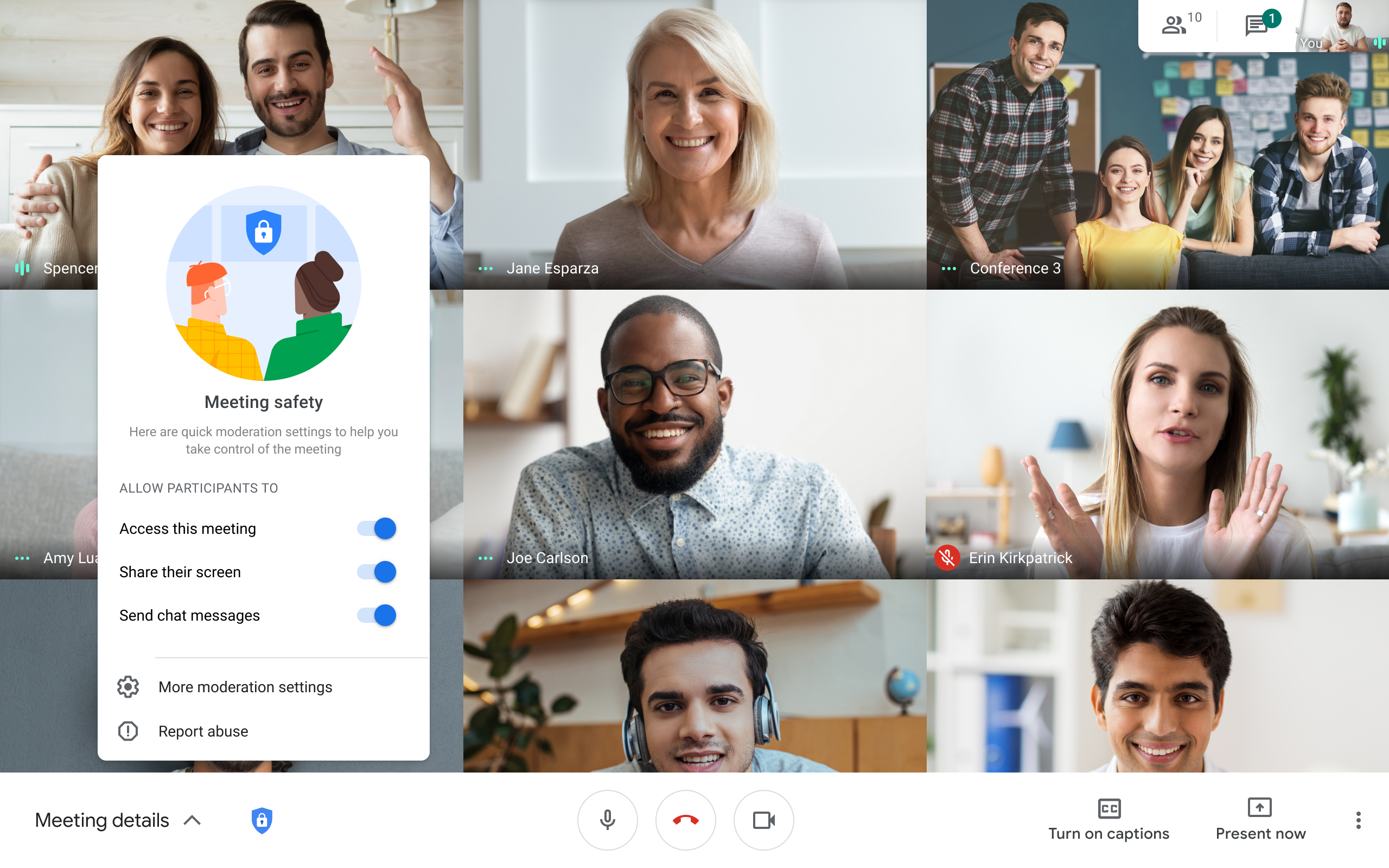
Meet itself, too, is getting some updates in the coming weeks with “knocking controls” to make sure that once you throw somebody out of a meeting, that person can’t come back, and safety locks that help meeting hosts decide who can chat or present in a meeting.

Image Credits: Google

Snap debuts a 13-week remote program to help developers create deeper Snap Kit integrations

Snap debuted its developer platform two years ago, and though it has amassed several hundred integrations inside third-party apps, the company is still looking to scale deeper relationships with the developers on Snap Kit.

Today, the social media company announced Yellow Collabs. The remote 13-week program allows companies to dive deeper into integrating their apps with Snap Kit with a number of instruction paths based on their interests in specific elements of the platform. Companies can choose to work with Snap around integrating with their apps with the entire Snap Kit platform, or dive deeper into Snap Minis, Dynamic Lenses, Scan or Snap ML feature verticals.

The company opened up applications for the new program today, which kicks off September 21 and runs through December 18 of this year.

Snap’s Yellow division had previously only been home to its small startup accelerator that invests in early-stage companies. The division, headed up by Mike Su and Alexandra Levitt, has debuted three batches of startups thus far and is currently readying timelines for their fourth batch.

While the Yellow accelerator hasn’t mandated that admitted founders integrate Snap Kit into their platforms, getting onsite assistance in doing so has been a sell for some startups in the program. Levitt tells TechCrunch that the accelerator was having to turn away applications from growth-stage startups, larger companies and nonprofits who had interesting pitches for Snap integrations but weren’t ideal fits for the accelerator format. Levitt hopes this new program can help ambitious developers get assistance in getting the most out of the platform, while “offering a closer relationship with the Snap team.”

“We hope this program can help bring in applications from companies that might not have been able to execute in a self-service manner,” Levitt says.

While program sits inside Yellow, Snap won’t be making any investments or receiving equity in the companies. Collabs aligns on the education element of the startup accelerator even it the goals are a bit different. It’s an interesting marriage, and also a sign of Snap getting more serious about driving deeper partnerships and forming earlier bonds with the companies on its developer platform.

How to do remote work right, from the teams that know it best

What are the most important things to get right about remote work? What needs to be prioritized?

With more and more teams being thrown headfirst into remote work, I spent a few weeks talking with some of the people who know the topic better than just about anyone: the founders and execs who’ve put countless hours into making remote work … work.

Some of these companies — like GitLab, Doist, Zapier, Mattermost, FlexJobs and YouNeedABudget — have been working fully remote since their earliest days. Others, like Twilio, had been partly remote for years but found themselves shifting gears to expand remote work to a team of nearly three thousand people.

Looking for the highlights? I’ve pulled out some of their tips and collated them below for easy reading. Want the full interviews? You can find those here:

Write down everything

It was probably the thing I heard most from all of these teams: Write. Things. Down. Make it a habit.

Outline your company values. Document decisions — and how decisions are made. Take meeting notes. Track project progress publicly, and keep roadmaps transparent.

Leaving the $3.2 billion portfolio he helped build at IndieBio, Arvind Gupta joins Mayfield to create the Genesis Consortium

Arvind Gupta, the founder and head of IndieBio, is leaving the accelerator whose portfolio he helped build into a $3.2 billion life sciences powerhouse, to join the venture capital fund Mayfield.

The move is a signal both of Mayfield’s increasing commitment to invest in a thesis around human and planetary health, and of the growing importance of bio-engineering in the world of emerging technologies.

“This goes with the focus at Mayfield on conscious capitalism and mending the planet and the development of solutions to address these human and planetary health issues,” said Ursheet Parikh, a partner at Mayfield who leads the firm’s initiatives around bio-engineering. 

As part of the move, Mayfield has committed to invest in SOSV, the holding company for a clutch of accelerators and venture funds that included IndieBio, and to collaborate with SOSV on the creation of the Genesis Consortium, an alliance of investment funds and corporate investors designed to back companies focused on bio-engineering for planetary and human health.

“This is a good time to expand the movement beyond the pre-seed level,” said Gupta in an interview.

From the accelerator to the A round

As part of the agreement, Mayfield has committed to invest $100,000 in all of the companies graduating from the IndieBio San Francisco accelerator. Po Bronson is taking over the leadership position at IndieBio, although Gupta will continue to act as an advisor to the accelerator, according to a statement.

For IndieBio and Gupta, the partnership with Mayfield is an affirmation of the six years of work that Gupta and his team have put in to accelerating companies focused on commercializing the technologies that have been developed to shape and reshape the basic building blocks of life.

In that time, he’s created a portfolio that’s worth, by some estimates, $3.2 billion and includes companies like Memphis Meats (developing cultured meat from animal cells), Geltor (developing novel proteins), Synthex (manufacturing new peptide therapeutics), Endless West (distilling alcohol from microbes), Prellis (developing organ tissue cultivation), NotCo (creating a new plant-based food brand), Catalog (using organisms for data storage), Tinctorium (recreating the dyeing process for blue jeans) and Mycoworks (using plants to make a leather replacement). 

Parikh said that the partnership between the two firms is another example of the ways new information technology advancements dovetail with the revolution in engineering biology. “All this cloud and artificial intelligence becomes a catalyst,” said Parikh. “It becomes about building the next generation of companies and [technology] platforms.”

At Mayfield that’s meant investing in companies like Mammoth Biosciences, a pioneer in the use of CRISPR gene editing technologies across a number of industries with an early focus on healthcare and life sciences. It has also meant investing in some IndieBio graduates like Serenity Bioworks and New Culture

Bioengineering is experiencing a bit of a boom these days among venture investors. Companies using the new technology have attracted investments from leading funds including Kleiner Perkins, Mayfield, DCVC, Khosla Ventures, Sequoia, SoftBank, Andreessen Horowitz and others. According to data from the research firm, SynBioBeta, startups focused on bioengineering have raised more than $12.6 billion in funding as of 2018.

Both Gupta and Parikh think those numbers are nowhere near enough if the companies developing these technologies are to live up to their potential and have the desired impact on industries as diverse as manufacturing, agriculture and food production, packaging and material sciences, and clothing and consumer goods.

Behind all of this, for Gupta, is the looming threat of a climate catastrophe. Reversing course on global climate change — or even just limiting the planet’s disturbing warming trend — will require a shift in consumer behavior that can be made through the development and commercialization of these bio-based technologies, Gupta said.

Image via Getty Images / KTSDESIGN/SCIENCE PHOTO LIBRARY

The Genesis Consortium 

It may sound like a Bond-villain scheme for global domination, but ideally, the Genesis Consortium will bring together a number of corporate partners and investment funds that focus on bio-engineering to collaborate on investments at a scale that’s needed to make the changes that Gupta thinks are necessary for industry.

The idea, to take a step back, is really about extending this movement,” says Gupta. “If you look at the amount of capital being deployed in human and planetary health it is a small part of investments compared to all of IT.”

What needs to happen is that investors need to realize that these are multi-billion-dollar industries that can be transformed using these technology platforms, Gupta said. They are also solutions for the existential health and planetary crises that the global population is confronting.

That’s why the firms are creating the Genesis Consortium. “We want this to be the announcement where we can go and have that conversation with strategic partners,” said Gupta. “I also want to make sure that corporates are involved… this is not just about money but strategic involvement.”

Already, some of the biggest food companies in the U.S. are turning their attention to the industry thanks to shifting consumer tastes, and are responding accordingly. “The Tysons of the world have seen that shift,” Gupta said. As consumers shift their minds and their dollars… all of the big corporates are thinking about how they stay ahead of this.”

Mayfield’s big bet on bio-engineering

In a blog post announcing Gupta’s addition to the Mayfield team, the firm talked about how it views the possibility of combining biological engineering with information technology.

“Five years ago, we saw that the ability to marry the engineering approaches of information technology with advances in biology creates a big opportunity for a whole new class of companies. We see a mutually reinforcing engineering biology innovation loop coming together that enables these companies,” wrote Parikh and Navin Chaddha, Mayfield’s managing director.

That loop begins with digitizing biology and quantifying the living state to create the data sets that cloud computing and machine learning can parse for insights. The reduced cost of full genome sequencing and the creation of CRISPR editing are ushering a new platform technology, according to Parikh and Chaddha, and Mayfield wants to get in early on that revolution.

Positioning itself as a firm that has seen the first wave of biotech innovations, the surge and cresting of information technology’s digital revolution and an early (and profitable) investor in sustainability, Mayfield is trying to contextualize this engineering biology as another shift in where technology is heading and how venture capitalists can capitalize on the changes.

As Mayfield’s leadership wrote in their blog post today:

These platforms in turn enable faster development of new applications, including new diagnostics and therapeutics, new materials, new foods, and environmental engineering. These new applications create demand for more enabling tech in digitizing biology and bio engineering platforms, completing the innovation loop. This loop is hitting critical mass for super-fast iteration because the cost for digitizing biology is trending to zero.

Solving the current twin challenges of human and planetary evolution presents the greatest entrepreneurial opportunity in history. Our mission at Mayfield is to partner with entrepreneurs leading this movement.

Leak reveals details of SpaceX’s Starlink internet service beta program

SpaceX’s Starlink service appears to be getting very close, as the company sent out requests for specific address information to anyone who has registered interest in its beta program this week. Now, a leak initially discovered via the Starlink subreddit (via Business Insider) has provided an early look at how the beta program will operate, and what is expected by SpaceX of anyone who takes part.

The hardware

Starlink service will require use of specialized hardware for reception and transmission of data to and from the Starlink constellation, as well as “a clear view of the Northern sky” to function. The hardware, pictured above, is a small satellite dish that SpaceX CEO and founder Elon Musk has previously described as a “UFO on a stick.” You can see it pictured above, and it doesn’t look that different from a typical satellite dish, though it’s hard to judge at scale from the images found on the Starlink servers.

Starlink will be providing this hardware to beta testers free of charge, and they’ll be responsible for installing it themselves. The kits include a power supply for the dish, along with mounting hardware designed to work with a person’s specific needs based on their dwelling. The website specifically instructs beta testers not to employ outside help when mounting their kit. Without a clear view of the sky, the FAQ notes, users won’t be able to get a good connection.

Many existing satellite internet service providers use dishes at point-of-use to enable the connection, but they typically work with installers to set it up for users. SpaceX might also go that route following the beta period, but it clearly wants to limit access during this pre-launch testing period.

Image Credits: Starlink

The service

Starlink service quality should be “high” when properly connected, but it also “will not be consistent” according to the company in the FAQ. That’s because SpaceX will be performing remote software updates and other network optimizations throughout the testing program, meaning it won’t be suitable as a solution for “gaming or work purposes,” according to the site text.

Starlink also notes that it will be monitoring all activity on the network during the testing period and forbids specifically “illegal activities” such as downloading or storing pirated materials, and that it reserves the right to “suspend or terminate” beta tester participation based on any such activity.

Users are allowed to cancel their participation at any time, and are encouraged to only install the hardware if they’re able to safely access an area suitable for doing so (so, if you’re in a shared dwelling like an apartment, that may limit your ability to take part).

Beta tester responsibilities

Beta testers are required to keep the details of their participation confidential, including things like network speed and quality, according to Starlink. They’re also expected to dedicate between 30 minutes and an hour per day to “testing the Starlink Services and providing feedback on a periodic basis,” with feedback delivered via “surveys, phone calls, emails and other means.”

Image Credits: Starlink

Starlink also specifies that participants be ready to send back their Starlink kits at the end of the beta period (at Starlink’s shipping cost), or at any time that it’s requested. The company also says that it will require credit card or debit information and will charge a “nominal fee” (which doesn’t seem finalized, but would range from $1 to $3 at setup, and then recurring monthly) in order to “test SpaceX’s ordering and billing systems,” but it notes specifically that the actual Starlink service is provided free, as well as the loaner hardware, for the duration of the test.

Starlink emailed potential beta testers saying to expect the private beta to kick off this summer, so it’s not surprising to see they already have assets and content in place to get it up and running for those invited to participate. If all goes well, the company hopes to expand that to an open beta, with initial coverage in the northern U.S. and Canada, and expand that to more geographies next year after additional satellite launches.

Here’s your chance to meet with Sequoia’s partners at TC Early Stage

TC Early Stage is kicking off on July 21 & 22, which is just a few short days away, and we’re excited to be able to gather the most prominent experts in marketing, contract building, hiring and funding to help early-stage founders succeed. Consider it our version of a founder masterclass, where you can arm yourself with the tools and perspective to keep your business growing. We are going to hit capacity soon and many of our most popular sessions are filling up. Register today to secure your seat for this one-of-a-kind event.

Just one of the sessions you might be able to attend as an early-stage founder is the Sequoia AMA, where you’ll hear firsthand from some of Sequoia’s partners, who are on the front lines helping founders build legendary companies from idea to IPO and beyond. You’ll be able to ask partners Jess Lee, Konstantine Buhler, Mike Vernal and Stephanie Zhan your most pressing questions, from how to seek capital and create an enduring culture to how to develop a differentiated product and make your customers love you.

This session is only available to founders registered for TC Early Stage — once you register, you’ll be sent a link to apply to participate in this private session during the event. Session applications end this Friday, July 17 so don’t wait — Register now!

WeWork’s chairman says it expects to have positive cash flow in 2021

After aggressive cost-cutting measures, including mass layoffs and selling several of its businesses, WeWork’s chairman expects the company to have positive cash flow in 2021. Marcelo Claure, who became WeWork’s chairman after co-founder Adam Neumann resigned as chief executive officer last fall, told the Financial Times that the co-working space startup is on target to meet its goal, set in February, of reaching operating profitability by the end of next year.

Claure is also chief operating officer of SoftBank Group, which invested $18.5 billion in the co-working space, according to leaked comments made by Claure during an October all-hands meeting.

SoftBank said in April that it would lose $24 billion on investments, with one of the main reasons being WeWork’s implosion last year. The company’s financial and management issues brought its valuation down from as much as $47 billion at the beginning of 2019 to $2.9 billion in March, according to a May report by CNBC.

In addition to the layoffs, WeWork sold off businesses including Flatiron School, Teem and its share of The Wing. Claure told the Financial times that WeWork also cut its workforce from a high of 14,000 last year to 5,600.

Neumann resigned as CEO in September, reportedly at the behest of SoftBank, over concerns about the company’s financial health and his behavior. Then the company postponed its IPO filing. The next month, SoftBank took ownership of WeWork as part of a financing package.

Claure is credited with orchestrating a turnaround at Sprint, cutting losses and increasing its stock price in 2015, three years after it was acquired by SoftBank. He has served as SoftBank Group’s COO since 2018.

Despite the impact of the COVID-19 pandemic, which forced many people to work from home, Claure said that companies have been leasing spaces from WeWork to serve as satellite offices close to where employees live. But he also said that revenues were flat during the second-quarter because many tenants terminated their leases or stopped paying rent.

China Roundup: Tech giants take stance on Beijing’s data control in Hong Kong

Hello and welcome back to TechCrunch’s China Roundup, a digest of recent events shaping the Chinese tech landscape and what they mean to people in the rest of the world.

This week, the unprecedented national security law descended on Hong Kong, changing the day-to-day life of the people there, as well as businesses across the board. The law has important implications for the tech sector, providing a litmus test of business sentiment towards China’s regulation over information. Google, Facebook, Twitter, Telegram, Zoom, Reddit among a roster of companies have come to voice their stance.

Resist, comply, avoid

The Hong Kong national security law that went into effect on July 1 is set to tighten Beijing’s grip over the city. A few provisions of the law directly request service providers to remove information or provide assistance to the police, as I wrote earlier. Here are what the tech giants are saying in response:

Facebook confirmed it has paused the processing of data demands from Hong Kong authorities until it can better understand the law, “including formal human rights due diligence and consultations with human rights experts.” Its spokesperson said: “We believe freedom of expression is a fundamental human right and support the right of people to express themselves without fear for their safety or other repercussions.”

Its suspension will also apply to WhatsApp, which it owns.

Twitter said it suspended transfers of user data subject to Hong Kong demands immediately after the law went into effect, and its teams are “reviewing the law to assess its implications, particularly as some of the terms of the law are vague and without clear definition.” It also said it has “grave concerns regarding both the developing process and the full intention of this law.”

Google said it suspended its reviews of data requests from the authorities. It added that it would continue reviewing government requests for removals of user-generated content from its services.

Zoom said it suspended its compliance with data requests from the Hong Kong authorities. “Zoom supports the free and open exchange of thoughts and ideas… We’re actively monitoring the developments in Hong Kong SAR, including any potential guidance from the U.S. government. We have paused processing any data requests from, and related to, Hong Kong SAR.”

LinkedIn, which is owned by Microsoft and runs a separate mainland beholden to Chinese regulations, said it is pausing responses to local law enforcement requests as it conducts its review of the law.

Telegram said it does not intend to process any data requests related to its Hong Kong users until an international consensus is reached in relation to the ongoing political changes in the city. Its spokesperson claimed it has not disclosed any data to the Hong Kong authorities in the past.

Signal, a competitor to Telegram in the realm of data encryption, tweeted a snarky comment: “We’d announce that we’re stopping too, but we never started turning over user data to HK police. Also, we don’t have user data to turn over.”

TikTok is in a dilemma. As a Chinese-owned company, it can’t choose to defy the Chinese government. On the other hand, it can’t afford more narrative about it being a tool of Chinese censorship. Instead of temporarily refusing data requests from the police like many foreign firms, which is regarded as a gesture of opposition to Beijing’s grip, the short video app decided to quit Hong Kong. It’s an easy business decision, as the city constituted only a tiny share of TikTok’s user base. Time will tell whether ByteDance will roll out a censored version of TikTok — Douyin — or leave the city of seven million people out.

Apple has long been criticized for its closeness to the government of China, where it has significant business. Last year, it pulled a map that pinpointed pro-democracy demonstrations in Hong Kong.

Following the enactment of the security law, Apple announced it is assessing the rules, adding that it does not receive requests for user content directly from the Hong Kong government and requires authorities to submit requests under a U.S.-Hong Kong legal assistance treaty.

Reddit, which counts Tencent as an investor, stated that its user information policy is independent of its backers:  “User privacy is a deeply embedded value at Reddit. To date, Reddit has not received requests for user information from the Hong Kong Government. As a matter of principle, Reddit does not comply with Government requests that have human rights implications and this will not change as a result of the new law. Our policies on protecting user information are in no way influenced by our investors, and any implication of such influence is incorrect.”

The list is not exhaustive and many aspects of the national security law await further explanation. We will keep tracking how other tech companies cope with the city’s new rules.

In response to tech firms pausing data compliance to the police, China’s Foreign Ministry Spokesperson Zhao Lijian tried to allay concerns in a statement:

“I recall what Deng Xiaoping noted in 1982 when he met with Margaret Thatcher, after Hong Kong’s return to the motherland, ‘Horses will still run, stocks will still sizzle, and dancers will still dance’ in Hong Kong. We have every reason to believe that as the Law is implemented, the foundation of ‘one country, two systems’ will be further strengthened, the Hong Kong residents’ fundamental interests and wellbeing will be better protected, there will be greater social stability and harmony, and ‘horses will run faster, stocks will be more sizzling, and dancers will dance more happily.’ We have full confidence in Hong Kong’s future.”

Elsewhere…

  • The U.S. threatens to ban TikTok over concerns that it could be used by the Beijing government as a surveillance and propaganda tool.
  • In a race to lead the global semiconductor industry, Chinese chip companies have fundraised more than twice as much in 2020 than in all of 2019.
  • The U.K. is poised to begin phasing out Huawei technologies in the country’s 5G network as soon as this year due to security fears. The decision reversed a previous plan to keep Huawei in the nation’s telecom infrastructure on condition of tight restrictions.
  • Weibo is becoming a closed ecosystem. The biggest microblogging platform in China announced it will only accept shortened links that it authenticates. Keeping a whitelist, it said, will help clamp down unsafe sites such as illegal gambling and porn services. Meanwhile, users worry this is a slippery slope that leads to another walled garden on the internet. The platform allows four types of short links, including a pre-select list of official websites operated by government branches, media, news portals, as well as business websites vetted and approved by Weibo.

Updated Reddit statement on July 13, 2020.

Qualcomm to invest $97 million in India’s Reliance Jio Platforms

Qualcomm has become the newest high-profile backer of four-year-old Reliance Jio Platforms, which has raised more than $15.7 billion in the past 12 weeks from as many investors.

On Sunday evening, Qualcomm Ventures said it will invest $97 million in Reliance Jio Platforms to acquire a 0.15% equity stake “on a fully diluted basis” in the top Indian telecom operator. Qualcomm said it will help Jio Platforms “roll out advanced 5G infrastructure and services for Indian customers.”

Reliance Jio Platforms, which competes with Bharti Airtel and Vodafone Idea in India, has disrupted the Indian telecommunications market by offering cut-rate voice and data plans. It has amassed nearly 400 million subscribers to become the top carrier in the world’s second largest internet market in less than four years of its existence.

Its dominance in the Indian telecom operator while maintaining an ARPU (average revenue per user) that match those of its rivals has made Reliance Jio Platforms — a subsidiary of Reliance Industries, India’s most valued firm — an attractive firm for a roster of high-profile investors. Facebook, Silver Lake, General Atlantic, Intel are some of the firms that have backed Jio Platforms at the height of a global pandemic. Jio Platforms has sold 25.24% stake in the firm during the period.

The digital unit for Reliance Industries also operates a number of digital services including streaming services for music, live TV channels, and movies and TV shows. Earlier this month, the Indian firm added a new service to its arsenal: A video conferencing service.

Steve Mollenkopf, chief executive of Qualcomm, said the firm believes that Reliance Jio Platforms “will deliver a new set of services and experiences to Indian consumers” in the future.

“With unmatched speeds and emerging use cases, 5G is expected to transform every industry in the coming years. Jio Platforms has led the digital revolution in India through its extensive digital and technological capabilities. As an enabler and investor with a longstanding presence in India, we look forward to playing a role in Jio’s vision to further revolutionize India’s digital economy,” he said in a statement.

Some investors have told TechCrunch in recent months that Reliance Jio Platforms’ owner — India’s richest man, Mukesh Ambani — and his closeness to the ruling political party in India are also crucial to why the digital unit of Reliance Industries is so attractive to many.

They believe that buying a stake in Jio Platforms would lower the regulatory burden they currently face in India. The investors requested anonymity as they did not wish to talk about the political tie ups publicly.

A person familiar with the matter at one of the 12 firms that has backed Reliance Jio Platforms said that the Indian firm is also enticing as globally companies are trying to cut down their reliance and exposure on China.

India, and the U.S., in recent months have taken actions to limit their reliance on Chinese firms. New Delhi last month banned 59 apps and services including TikTok that are developed by Chinese firms. Reliance Jio Platforms has interestingly yet to raise capital from any Chinese investor.

“Qualcomm has been a valued partner for several years and we have a shared vision of connecting everything by building a robust and secure wireless and digital network and extending the benefits of digital connectivity to everyone in India,” said Ambani in a statement Sunday.