FCC invites public comment on Trump’s attempt to nerf Section 230

FCC Chairman Ajit Pai has decided to ask the public for its thoughts on an attempt initiated in Trump in May to water down certain protections that arguably led to the creation of the modern internet economy. The nakedly retaliatory order seems to be, legally speaking, laughable, and could be resolved without public input — but the FCC wants your opinion, so you may as well give it to them.

You can submit your comment here at the FCC’s long-suffering electronic comment filing system, but before you do so, perhaps acquaint yourself with a few facts.

Section 230 essentially prevents companies like Facebook and Google from being liable for content they merely host, as long as they work to take down illegal content quickly. Some feel these protections has given the companies the opportunity to manipulate speech on their platforms — Trump felt targeted by a fact-check warning placed by Twitter on his unsupported claims of fraud in mail-in warning.

To understand the order itself and see commentary from the companies that would be affected, as well as Senator Ron Wyden (D-OR), who co-authored the law in the first place, read our story from the day Trump signed the order. (Wyden called it “plainly illegal.”)

For a bipartisan legislative approach that actually addresses shortcomings in Section 230, check out the PACT Act announced in June. (Sen. Brian Schatz (D-HI) says they’re approaching the law “with a scalpel rather than a jackhammer.”)

More relevant to the FCC’s proceedings, however, are the comments of sitting commissioner Brendan Starks, who questioned the order’s legality and ethics, likening it to a personal vendetta intended to intimidate certain companies. As he explained:

The broader debate about Section 230 long predates President Trump’s conflict with Twitter in particular, and there are so many smart people who believe the law here should be updated. But ultimately that debate belongs to Congress. That the president may find it more expedient to influence a five-member commission than a 538-member Congress is not a sufficient reason, much less a good one, to circumvent the constitutional function of our democratically elected representatives.

Incidentally, Starks may be who Pai is referring to in a memo announcing the commentary period. “I strongly disagree with those who demand that we ignore the law and deny the public and all stakeholders the opportunity to weigh in on this important issue. We should welcome vigorous debate—not foreclose it,” Pai wrote.

This may be a reference to Commissioner Starks’s suggestion that the FCC address the order quickly and authoritatively: “If, as I suspect it ultimately will, the petition fails at a legal question of authority, I think we should say it loud and clear, and close the book on this unfortunate detour,” he said. After all, public opinion doesn’t count for much if the order has no legal effect to begin with and the FCC doesn’t even have to consider how it might revisit Section 230.

Whatever the case, the proposal is ready for you to comment on it. To do so, visit this page and click, in the box on the left, “+New Filing” or “+Express” — the first is if you would like to submit a document or evidence in support of your opinion, and the second is if you just want to explain your position in plain text. Remember, this information will be filed publicly, so anything you put in those fields — name, address and everything — will be visible online.

To be clear, you’re commenting on the  NTIA proposal that the FCC draw up new rules regarding Section 230, which the executive order compelled that organization to send, not the executive order itself.

As with the net neutrality debacle, the FCC does not have to take your opinion into account, or reality for that matter. The comment period lasts 45 days, after which the item will likely go to internal deliberations at the Commission.


Daily Crunch: Microsoft-TikTok acquisition inches closer to reality

A possible Microsoft TikTok acquisition is causing plenty of drama, we review Google’s new budget Pixel and SpaceX’s Crew Dragon returns to Earth. Here’s your Daily Crunch for August 3, 2020.

Microsoft-TikTok acquisition inches closer to reality

This weekend, Microsoft confirmed reports that it’s in talks to acquire TikTok, the popular mobile video app currently owned by Chinese company ByteDance. It sounds like the outcome of those talks may ultimately have less to do with Microsoft and more with President Donald Trump.

“Following a conversation between Microsoft CEO Satya Nadella and President Donald J. Trump, Microsoft is prepared to continue discussions to explore a purchase of TikTok in the United States,” the company said in a statement. “Microsoft fully appreciates the importance of addressing the President’s concerns. It is committed to acquiring TikTok subject to a complete security review and providing proper economic benefits to the United States, including the United States Treasury.”

And indeed, Trump said today that he’s not opposed to an acquisition, but that “a very substantial portion of that price is going to have to come into the Treasury of the United States.” Meanwhile, Chinese internet users are calling ByteDance’s CEO a traitor.

The tech giants

Google’s budget Pixel 4a addresses its premium predecessor’s biggest problem — Brian Heater reviews the new $349 handset.

Facebook launches commerce and connectivity-focused accelerator programs — Facebook’s Commerce Accelerator will select 60 startups from the EMEA and LATAM regions, while Connectivity will feature 30 startups from LATAM and North America.

Adobe’s plans for an online content attribution standard could have big implications for misinformation — The project was first announced last November, and now the team has a whitepaper going into the nuts and bolts about how its system would work.

Startups, funding and venture capital

YC-backed Artifact looks to make podcasts more personal — Using professionally contracted interviewers, Artifact conducts short interviews with a person’s closest friends or family and turns them into a personal podcast.

Founded by a lifelong house-flipper, Inspectify is a marketplace for home inspections and repairs — Through the platform, buyers can instantly book inspections and receive repair estimates.

Mobile banking startup Varo is becoming a real bank — The company announced that it has been granted a national bank charter from the Office of the Comptroller of the Currency and secured regulatory approvals from the FDIC and Federal Reserve to open Varo Bank, N.A.

Advice and analysis from Extra Crunch

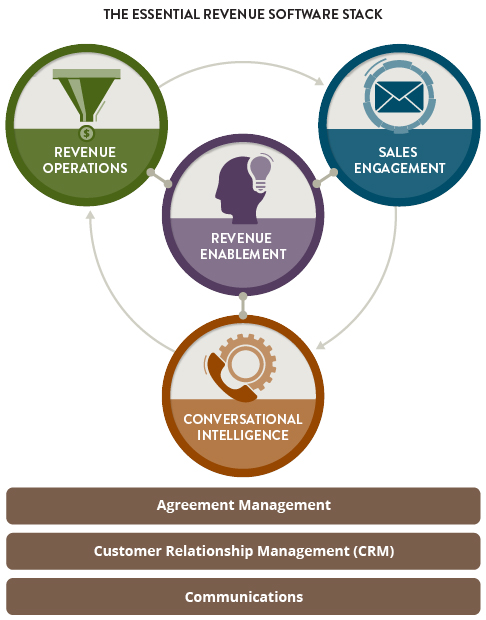
The essential revenue software stack — Tim Porter and Elise La Cava of Madrona Ventures outline the set of services used by sales, marketing and growth teams across their portfolio to identify and manage their prospects and revenue.

Is the 2020 SPAC boom an echo of the 2017 ICO craze? — Alex Wilhelm looks at two new pieces of SPAC news.

After Shopify’s huge quarter, BigCommerce raises its IPO price range — BigCommerce now intends to price its IPO between $21 and $23 per share.

(Reminder: Extra Crunch is our subscription membership program, which aims to democratize information about startups. You can sign up here.)

Everything else

SpaceX and NASA successfully return Crew Dragon spacecraft to Earth with astronauts on board — SpaceX’s Crew Dragon appears to have performed exactly as intended throughout the mission, handling the launch, ISS docking, undocking, de-orbit and splashdown in a fully automated process that kept the astronauts safe and secure throughout.

Original Content podcast: Netflix’s ‘Say I Do’ offers a wedding-focused twist on the ‘Queer Eye’ formula — I’m not someone who cares about weddings, but this show made me cry. Multiple times!

The Daily Crunch is TechCrunch’s roundup of our biggest and most important stories. If you’d like to get this delivered to your inbox every day at around 3pm Pacific, you can subscribe here.

EventGeek relaunches as Circa to help marketers embrace virtual events

EventGeek was a Y Combinator-backed startup that offered tools to help large enterprises manage the logistics of their events. So with the COVID-19 pandemic essentially eliminating large-scale conferences, at least in-person, it’s not exactly surprising that the company had to reinvent itself.

Today, EventGeek relaunched as Circa, with a new focus on virtual events. Founder and CEO Alex Patriquin said that Circa is reusing some pieces of EventGeek’s existing technology, but he estimated that 80% of the platform is new.

While the relaunch only just became official, the startup says its software has already been used to adapt 40,000 in-person events into virtual conferences and webinars.

The immediate challenge, Patriquin said, is simply figuring out how to throw a virtual event — something for which Circa offers a playbook. But the startup’s goals go beyond virtual event logistics.

“Our new focus is really more at the senior marketing stakeholder level, helping them have a unified view of the customer,” Patriquin said.

He explained that “events have always been kind of disconnected from the marketing stack,” so the shift to virtual presents an opportunity to treat event participation as part of the larger customer journey, and to include events in the broader customer record. To that end, Circa integrates with sales and marketing systems like Salesforce and Marketo, as well as with video conferencing platforms like Zoom and On24.

Circa screenshot

Image Credits: Circa

“We don’t actually deliver [the conference] experience,” Patriquin said. “We put it into that context of the customer journey.”

Liz Kokoska, senior director of demand generation for North America at Circa customer Okta, made a similar point.

“Prior to Circa, we had to manage our physical and virtual events in separate systems, even though we thought of them as parts of the same marketing channel,” Kokoska said in a statement. “With Circa, we now have a single view of all our events in one place — this is helpful in planning and company-wide visibility on marketing activity. Being able to seamlessly adapt to the new world of virtual and hybrid events has given our team a significant advantage.”

And as Patriquin looks ahead to a world where large conferences are possible again, he predicted that there’s still “a really big opportunity for the events industry and for Circa.”

“As in-person events start to come back, there’s going to be a phase where health and safety are going to be paramount,” he continued. “After that health and safety phase, it’s going to be the age of hybrid events — where everything is virtual right now, hybrid will provide the opportunity to bring key [virtual] learnings back into the in-person world, to have a lot more data and intelligence and really be able to personalize an attendee’s experience.”

What Microsoft should demand in exchange for its ‘payment’ to the US government for TikTok

In one of the crazier news stories (and in 2020, that is saying something), President Donald Trump said today during a media availability event that in order for the U.S. government to sign off on a potential Microsoft/TikTok deal, “a very substantial portion of that price is going to have to come into the Treasury of the United States,” based on my colleague Alex Wilhelm’s rough transcript.

That seems nearly impossible to actually execute in reality (corporations don’t just quote-unquote bribe the U.S. government to get their docs signed), but let’s actually take it at face value: Should Microsoft pay, and if so, what should they demand in any bargain with the U.S. government?

First and foremost, some context. ByteDance, TikTok’s parent company, has been valued at more than $100 billion. ByteDance owns a suite of apps, including TikTok’s China-focused and extraordinarily popular sister app Douyin, as well as Toutiao, an extremely successful news reader, so teasing out TikTok’s valuation by itself is difficult. Adding to the ambiguity is the regulatory chaos of the deal, and the fact that many big-pocketed buyers like Facebook are out of the running on straight antitrust grounds.

So let’s say for illustration that the price is at least $10 billion, if not tens of billions of dollars. How should Microsoft be thinking about a negotiation with the government here?

The overriding objective should be reducing Microsoft’s post-acquisition regulatory headaches. TikTok has well-documented privacy problems, which also involve teens — an area where regulations are acutely sensitive. When Facebook faced privacy problems on its own platform, it finally agreed to a settlement of $5 billion last year with the Federal Trade Commission to unify all the different cases and bring them to a conclusion. It also agreed to a set of restrictions as well as a monitoring mechanism to ensure compliance. TikTok (formerly Musical.ly) actually agreed to an FTC privacy settlement of $5.7 million last year.

On top of privacy, you have the export licensing issues from Treasury, data protection concerns on Capitol Hill due to the app’s China provenance and potential antitrust issues from Justice.

So, it’s time to cut a deal. Offer the U.S. government a beefy sum — perhaps even a few billion depending on the final purchase price — as a “settlement fine” in exchange for immunity to all claims regarding privacy, trade and antitrust regulations prior to TikTok’s acquisition. Perhaps have a setup where Microsoft has 180 days post-acquisition to clear up privacy issues, move data to presumably its own Azure cloud in the United States, and put in even better parental controls than TikTok has already introduced in the past few months.

Far from being an atrocious setup, this could massively limit Microsoft’s long-term liabilities, and also allow the company to avoid a lot of the escrow and holdbacks typical of large M&A deals, where an acquirer will not pay out the full acquisition price upfront lest future lawsuits bear significant costs.

It’s terrible for the president himself to get involved in such a matter in such a direct and indelicate way. But now that President Trump has opened the door — it’s actually perhaps not as bad of a path forward as it looks like at first glance. He has the power to push for an inter-agency process, line up all the government stakeholders and accept a level of immunity in exchange for a “fine.”

A settlement can’t solve every problem. TikTok, like all internet apps in the United States, is not just governed by federal law but also by state laws around privacy, such as the California Consumer Privacy Act. A settlement with the federal government may still conflict with relevant state laws. In addition, agreeing to a large payment in the heart of election season would be deeply controversial, possibly on both sides of the aisle.

Nonetheless, this deal is by no means typical, and no one should think it will have a typical M&A process. While few lawyers would recommend engaging with the federal government over what is effectively a strange form of highway robbery — there are decent fiduciary reasons to just pay the toll, acquire some liability protection and move on.

Extra Crunch Live: Join fintech legend Max Levchin for a live Q&A on August 6 at 4pm ET/1pm PT

We’ve got a great Extra Crunch Live chat coming up on Thursday, August 4, that you won’t want to miss. The one and only Max Levchin, is Silicon Valley icon and entrepreneur extraordinaire, is joining us to talk all things tech and fintech. You might know him as the CEO of Affirm, one of the hottest finance startups around right now, but he’s actually been a significant figure in tech in the Valley — and globally — for decades, making his name back in the first dot-com boom, as one of the co-founders of a little startup that you might have heard of called PayPal. Join us this week as we talk about all the many ways that fintech has evolved, what Levchin thinks about the current state of play, and what he thinks is coming next. ear from the one and only Max Levchin.

The magic happens in our next installment of our Extra Crunch Live series, on Thursday, August 4.

Extra Crunch Live is open exclusively to Extra Crunch subscribers. If you’re not already an Extra Crunch member, you can join here.

The EC Live format is a unique one for us at TC. It’s an hour-long conversation, and that allows us to take a deep dive, covering not only some of the biggest issues in tech, building startups and investing today but getting to the heart of them. At the same time, it’s a lighter format that’s actually fun to watch.

Taking the talk out of the formal, hushed, darkened rooms where you usually sit to listen to people get interviewed, we’re Zooming it and keeping it a little more relaxed, and we’re peppering the conversation with questions from you, the audience, throughout. See past talks with Sequoia’s Roelof Botha and Homebrew’s Hunter Walk for a taste of how this works.  (See the whole schedule of Extra Crunch Live talks here.)

Max’s current company, Affirm, is trying to bring something new to the world of financing payments, inking deals with a wide plethora of e-commerce sites to give shoppers a way to make interest-free payments in installments, based on a schedule that works for them, and signing up for the service in no more steps than it takes to make an ordinary card payment.

But because this is fintech — behind the scenes the real story is much more complex. Of course. Building these services today and building them 20+ years ago gives Levchin some amazing perspective on the challenges and opportunities of working with data. And it also has given him some critical insights into what consumers want and need, versus what they’ll actually use — lessons definitely pertinent to other financial services and e-commerce entrepreneurs, but actually just as important for other categories, too.

The “modern world” is a moveable feast these days: who would have thought in, say, January that the market conditions we face today would have shifted so drastically? All the more reason to continue the conversation and create more context to make better choices for your own business.

Join Max and me this week. We’re looking forward to it.

Extra Crunch Live is open exclusively to Extra Crunch subscribers, and so if you want to watch, join here. You can find the full details of the call below the jump!

Details:

Announcing Sight Tech Global, an event on the future of AI and accessibility for people who are blind or visually impaired

Few challenges have excited technologists more than building tools to help people who are blind or visually impaired. It was Silicon Valley legend Ray Kurzweil, for example, who in 1976 launched the first commercially available text-to-speech reading device. He unveiled the $50,000 Kurzweil Reading Machine, a boxy device that covered a tabletop, at a press conference hosted by the National Federation of the Blind

The early work of Kurzweil and many others has rippled across the commerce and technology world in stunning ways. Today’s equivalent of Kurzweil’s machine is Microsoft’s Seeing AI app, which uses AI-based image recognition to “see” and “read” in ways that Kurzweil could only have dreamed of. And it’s free to anyone with a mobile phone. 

Remarkable leaps forward like that are the foundation for Sight Tech Global, a new, virtual event slated for December 2-3, that will bring together many of the world’s top technology and accessibility experts to discuss how rapid advances in AI and related technologies will shape assistive technology and accessibility in the years ahead.

The technologies behind Microsoft’s Seeing AI are on the same evolutionary tree as the ones that enable cars to be autonomous and robots to interact safely with humans. Much of our most advanced technology today stems from that early, challenging mission that top Silicon Valley engineers embraced to teach machines to “see” on behalf of humans.

From the standpoint of people who suffer vision loss, the technology available today is astonishing, far beyond what anyone anticipated even 10 years ago. Purpose-built products like Seeing AI and computer screen readers like JAWS are remarkable tools. At the same time, consumer products, including mobile phones, mapping apps and smart voice assistants, are game changers for everyone, those with sight loss not the least. And yet, that tech bonanza has not come close to breaking down the barriers in the lives of people who still mostly navigate with canes or dogs or sighted assistance, depend on haphazard compliance with accessibility standards to use websites and can feel as isolated as ever in a room full of people. 

A computer can drive a car at 70 MPH without human assistance but there is not yet any comparable device to help a blind person walk down a sidewalk at 3 MPH.

In other words, we live in a world where a computer can drive a car at 70 MPH without human assistance but there is not yet any comparable device to help a blind person walk down a sidewalk at 3 MPH. A social media site can identify billions of people in an instant but a blind person can’t readily identify the person standing in front of them. Today’s powerful technologies, many of them grounded in AI, have yet to be milled into next-generation tools that are truly useful, happily embraced and widely affordable. The work is underway at big tech companies like Apple and Microsoft, at startups, and in university labs, but no one would dispute that the work is as slow as it is difficult. People who are blind or visually impaired live in a world where, as the science fiction author William Gibson once remarked, “The future is already here — it’s just not very evenly distributed.”

That state of affairs is the inspiration for Sight Tech Global. The event will convene the top technologists, human-computer interaction specialists, product designers, researchers, entrepreneurs and advocates to discuss the future of assistive technology as well as accessibility in general. Many of those experts and technologists are blind or visually impaired, and the event programming will stand firmly on the ground that no discussion or new product development is meaningful without the direct involvement of that community. Silicon Valley has great technologies, but does not, on its own, have the answers.

The two days of programming on the virtual main stage will be free and available on a global basis both live and on-demand. There will also be a $25 Pro Pass for those who want to participate in specialized breakout sessions, Q&A with speakers and virtual networking. Registration for the show opens soon; in the meantime, anyone interested may request email updates here

It’s important to note that there are many excellent events every year that focus on accessibility, and we respect their many abiding contributions and steady commitment. Sight Tech Global aims to complement the existing event line-up by focusing on hard questions about advanced technologies and the products and experiences they will drive in the years ahead — assuming they are developed hand-in-hand with their intended audience and with affordability, training and other social factors in mind. 

In many respects, Sight Tech Global is taking a page from TechCrunch’s approach to its AI and robotics events over the past four years, which were in partnership with MIT and UC Berkeley. The concept was to have TechCrunch editors ask top experts in AI and related fields tough questions across the full spectrum of issues around these powerful technologies, from the promise of automation and machine autonomy to the downsides of job elimination and bias in AI-based systems. TechCrunch’s editors will be a part of this show, along with other expert moderators.  

As the founder of Sight Tech Global, I am drawing on my extensive event experience at TechCrunch over eight years to produce this event. Both TechCrunch and its parent company, Verizon Media, are lending a hand in important ways. My own connection to the community is through my wife, Joan Desmond, who is legally blind. 

The proceeds from sponsorships and ticket sales will go to the nonprofit Vista Center for the Blind and Visually Impaired, which has been serving Silicon Valley area for 75 years. The Vista Center owns the Sight Tech Global event and its executive director, Karae Lisle is the event’s chair. We have assembled a highly experienced team of volunteers to program and produce a rich, world-class virtual event on December 2-3.

Sponsors are welcome, and we have opportunities available ranging from branding support to content integration. Please email [email protected] for more information.

Our programming work is under way and we will announce speakers and sessions over the coming weeks. The programming committee includes Jim Fruchterman (Benetech / TechMatters), Larry Goldberg (Verizon Media), Matt King (Facebook) and Professor Roberto Manduchi (UC Santa Cruz). We welcome ideas and can be reached via [email protected]

For general inquiries, including collaborations on promoting the event, please contact [email protected].

Trump calls TikTok a hot brand, demands a chunk of its sale price

Today the president appeared to bless the budding Microsoft-TikTok deal, continuing his evolution on a possible transaction. After stating last Friday that he’d rather see TikTok banned than sold to a U.S.-based company, Trump changed his tune over the weekend. TikTok is owned by China-based company ByteDance, which owns a portfolio of apps and services.

A weekend phone call between Satya Nadella, the CEO of Microsoft, and the American premier appeared to change his mind, leading to the software company sharing publicly on Sunday that it was pursuing a deal.

Then today the president, endorsing a deal between an American company and ByteDance over TikTok, also said that he expects a chunk of the sale price to wind up in the accounts of the American government.

The American president has long struggled with basic economic concepts. For example, who pays tariffs. But to see Trump state that he expects to receive a chunk of a deal between two private companies that he is effectively forcing to the altar is surreal.

To fully grok his take, we’ve roughly transcribed the pertinent few minutes of his explanation from this morning, when asked about the weekend call with Microsoft’s Nadella. It’s worth a read (bold highlights are TechCrunch’s):

We had a great conversation, uh, he called me, to see whether or not, uh, how I felt about it. And I said look, it can’t be controlled, for security reasons, by China. Too big, too invasive. And it can’t be. And here’s the deal. I don’t mind if, whether it’s Microsoft or somebody else — a big company, a secure company, a very American company — buy it.

It’s probably easier to buy the whole thing than to buy 30% of it. ‘Cause I say how do you do 30%? Who’s going to get the name? The name is hot, the brand is hot. And who’s going to get the name? How do you do that if it’s owned by two different companies? So, my personal opinion was, you are probably better off buying the whole thing rather than buying 30% of it. I think buying 30% is complicated.

And, uh, I suggested that he can go ahead, he can try. We set a date, I set a date, of around September 15th, at which point it’s going to be out of business in the United States. But if somebody, whether it’s Microsoft or somebody else, buys it, that’ll be interesting.

I did say that if you buy it, whatever the price is, that goes to whoever owns it, because I guess it’s China, essentially, but more than anything else, I said a very substantial portion of that price is going to have to come into the Treasury of the United States. Because we’re making it possible for this deal to happen. Right now they don’t have any rights, unless we give it to ’em. So if we’re going to give them the rights, then it has to come into, it has to come into this country.

It’s a little bit like the landlord-tenant [relationship]. Uh, without a lease, the tenant has nothing. So they pay what is called “key money” or they pay something. But the United States should be reimbursed, or should be paid a substantial amount of money because without the United States they don’t have anything, at least having to do with the 30%.

So, uh, I told him that. I think we are going to have, uh, maybe a deal is going to be made, it’s a great asset, it’s a great asset. But it’s not a great asset in the United States unless they have the approval of the United States.

So it’ll close down on September 15th, unless Microsoft or somebody else is able to buy it, and work out a deal, an appropriate deal, so the Treasury of the — really the Treasury, I suppose you would say, of the United States, gets a lot of money. A lot of money.

After Shopify’s huge quarter, BigCommerce raises its IPO price range

When BigCommerce, the Texas-based Shopify competitor, first announced an IPO price range, the numbers looked a little light.

With a range of just $18 to $20 per share, it appeared that the firm was targeting a valuation of around $1.18 billion to $1.31 billion. Given that BigCommerce had revenue of “between $35.5 million and $35.8 million” in Q2 2020, up a little over 30% from the year-ago period (and better margins than Shopify) its implied revenue multiple that its IPO price range indicated felt low.

At the time, TechCrunch wrote that “BigCommerce feels cheap at its current multiple,” and that if you added “recent market exuberance for cloud shares that we’ve see in other IPOs … it feels even more underpriced.”

Those feelings have been borne out. Today, BigCommerce announced a new, higher IPO price range. The firm now intends to price its IPO between $21 and $23 per share. Let’s calculate its new valuation, compare that to its preliminary Q2 results to get new multiples for the impending e-commerce software IPO, and figure how its most recent investors are set to fare in its impending debut.

Pricing

By moving its pricing up from $18 to $20 to $21 to $23, BigCommerce boosted its IPO range by 16.7% at its lower end and 15% at the upper end. At its new prices BigCommerce is worth between $1.38 billion and $1.51 billion.

SaaS securitization will disrupt VC’s biggest returns this coming decade

SaaS investing has been on fire the past decade and the returns have been gushing in, with IPOs like Datadog, direct listings like Slack and acquisitions like Qualtrics (which is now being spun back out) creating billions of wealth and VC returns. Dozens more SaaS startups are on deck to head toward their exits in the same way, and many VC funds — particularly those with deep portfolios in the SaaS space — are going to perform well.

Yet, the gargantuan returns we are seeing today for SaaS portfolios are unlikely to repeat themselves.

The big threat in the short term is simply price: SaaS investing has gotten a lot more expensive. It may be hard to remember, but just a decade ago the business model of “Software as a Service” was revolutionary. Much in the way that it took years for cloud infrastructure to take hold in corporate IT departments, the idea that one didn’t license software but paid by user or by usage over time was almost heretical.

For VCs willing to make the leap into the space, prices were (relatively) cheap. Investor attention a decade ago was intensely centered on consumer web and mobile, driven by Facebook’s blockbuster IPO in May 2012 and Twitter’s IPO the following year. While every investor was chasing deals like Snap(chat), the smaller population of investors targeting enterprise SaaS (or even more exotic spaces like, gulp, fintech) got great deals on what would later become the decade’s biggest unicorns.

The essential revenue software stack

Tim Porter
Contributor

Tim Porter is a managing director at Madrona Venture Group and invests in the areas of intelligent applications and SaaS, cloud native software, ML and data analytics and security.

Elisa La Cava
Contributor

Elisa La Cava is a senior associate at Madrona Venture Group, focused on intelligent applications, cloud-native software and the future of work.

From working with our 90+ portfolio companies and their customers, as well as from frequent conversations with enterprise leaders, we have observed a set of software services emerge and evolve to become best practice for revenue teams. This set of services — call it the “revenue stack” — is used by sales, marketing and growth teams to identify and manage their prospects and revenue.

The evolution of this revenue stack started long before anyone had ever heard the word coronavirus, but now the stakes are even higher as the pandemic has accelerated this evolution into a race. Revenue teams across the country have been forced to change their tactics and tools in the blink of an eye in order to adapt to this new normal — one in which they needed to learn how to sell in not only an all-digital world but also an all-remote one where teams are dispersed more than ever before. The modern “remote-virtual-digital”-enabled revenue team has a new urgency for modern technology that equips them to be just as — and perhaps even more — productive than their pre-coronavirus baseline. We have seen a core combination of solutions emerge as best-in-class to help these virtual teams be most successful. Winners are being made by the directors of revenue operations, VPs of revenue operations, and chief revenue officers (CROs) who are fast adopters of what we like to call the essential revenue software stack.

In this stack, we see four necessary core capabilities, all critically interconnected. The four core capabilities are:

  1. Revenue enablement.
  2. Sales engagement.
  3. Conversational intelligence.
  4. Revenue operations.

These capabilities run on top of three foundational technologies that most growth-oriented companies already use — agreement management, CRM and communications. We will dive into these core capabilities, the emerging leaders in each and provide general guidance on how to get started.

Revenue enablement

Register for Disrupt to take part in our content series for Digital Startup Alley exhibitors

There’s no better way to expose your early-stage startup to global opportunities — we’re talking thousands of potential investors, customers, tech journalists and other mighty influencers — than by exhibiting in Digital Startup Alley at Disrupt 2020. The Alley may be virtual this year, but the benefits of exhibiting are very real. More on those in a minute.

And, because supporting early-stage startup founders is our main jam, we’re offering an exclusive series of webinars in August to help exhibitors make the most of their time in Startup Alley. Want in? Simply purchase your Disrupt Digital Startup Alley Package now, mark your calendar and get ready to expand your empire.

Here’s some more details about our content series and the experts we’ve tapped to give advice and answer questions.

The Dos and Don’ts of Working with the Press

Date: August 12

Communicating effectively with the media is an elusive skill that every early-stage startup founder needs to master. And who better to provide pro tips than our very own TechCrunch writers and editors? Greg Kumparak, Anthony Ha and Ingrid Lunden will share their expertise and coach you on how to present your startup in the best possible light — and how to avoid sticking your foot in your mouth.

COVID-19’s Impact on the Startup World

Date: August 19

How can startups survive and thrive both during and after Covid-19? Panelists Nicola Corzine, executive director of the Nasdaq Entrepreneurship Center, and Cameron Stanfill, a VC analyst at PitchBook, will address that gnarly topic and offer tips you can take and adapt to fit your specific circumstances.

Fundraising and Hiring Best Practices

Date: August 26

In this interactive discussion — moderated by TC’s Natasha Lomas — panelists Sarah Kunst of Cleo Capital and Brett Berson of First Round Capital outline essential strategies for effective fundraising and for hiring the right people — right out of the gate.

Remember those very real benefits we mentioned earlier? Here’s how Felicia Jackson, inventor and founder of CPRWrap, described her Startup Alley exhibitor experience.

The connections I made offer long-term benefits. Investors willing to put forth capital, engineers offering tech expertise and manufacturers to help me streamline. Fostering these relationships will help me grow my company and my bottom line.

Digital Startup Alley offers an incomparable opportunity to showcase your tech and talent to the global startup community. Buy a Disrupt Digital Startup Alley Package, then join us for three exclusive webinars designed to help you build your business and tell your story. Opportunity — it’s there and yours for the taking.

Is your company interested in sponsoring or exhibiting at Disrupt 2020? Contact our sponsorship sales team by filling out this form.

Google signs up six more partners for its digital banking platform coming to Google Pay

Google is expanding its plans to offer digital banking services in the U.S. The company announced today it’s partnering with half a dozen more banks to offer digital checking and savings accounts to Google Pay users in the U.S., starting sometime next year. The new partners include Bank Mobile, BBVA USA, BMO Harris, Coastal Community Bank, First Independence Bank and SEFCU. They join Google’s existing partners Citi and SFCU, announced earlier, for a total of now eight banks lined up for the project.

News of Google’s big move into banking and personal finance through an effort known internally as “Project Cache” was first reported by The Wall Street Journal in November. Much like the mobile banking services offered today by a number of startups, Google will provide the consumer-facing front-end to the digital banking services it makes available, while the accounts themselves will be held by the FDIC-backed partner institutions.

However, unlike with mobile banking startups, which tend to note their banking partners only in the fine print, Google is giving the banks a co-branded experience. In addition, Google explains that by working with a range of partners from large, global banks down to smaller credit unions with deep community ties, it will be able to do a better job building products that meet its customers’ diverse set of needs.

“We had confirmed earlier that we are exploring how we can partner with banks and credit unions in the U.S. to offer digital bank accounts through Google Pay, helping their customers benefit from useful insights and budgeting tools, while keeping their money in an FDIC or NCUA-insured account,” a Google spokesperson says. “We are excited that six new banks have signed up to offer digital checking and savings.”

The company says it plans to add even more U.S. financial institutions over time.

Google today operates its digital payments service Google Pay and complementary Google Wallet product to serve its customers’ financial needs. But today, more consumers — and particularly younger people — are moving away from brick-and-mortar banking institutions to instead manage their money online. Apple already tapped into consumer demand for digital banking with the launch of its co-branded Apple Card credit card with Goldman Sachs. But it has not yet offered a full banking service, only Apple Cash — a service where you store your “cashback” credits from Apple Card use, payments from friends or the cash you transfer in from a connected bank.

Google’s plans are more extensive. Though it won’t host the bank accounts, it will be able to draw on data to offer customers financial insights and other budgeting tools. For the partners, the service gives them a way to market their brand to consumers in an increasingly mobile-first, online-only market.

“Being able to support our customers’ financial lives in more places where they’re spending their digital time is important to helping them be successful,” said Brett Pitts, chief digital officer for BMO Financial Group, in a statement about BMO’s partnership with Google. “Collaborating to launch this new BMO digital product accelerates our ability to deliver financial advice to our customers and is an innovative step in the evolution of how we serve them.”

For BBVA, the collaboration is another step forward for its BBVA Open Platform, which allows the bank to acquire customers by embedding its financial products within other apps and services.

“BBVA has focused for decades on how it could use digital to advance the financial industry, and in so doing, create more and better opportunities for customers to manage their financial health,” said BBVA USA President and CEO Javier Rodriguez Soler. “Collaborations with companies like Google represent the future of banking,” he added.

The accounts are expected to launch in 2021, several banks said in their announcements. Google has not provided a more specific time frame for the launch.

Reminder: Annual Extra Crunch members can save 20% on Disrupt passes

Calling all Extra Crunch annual and two-year members! Did you know that as a part of your membership plan, you can get a 20% discount on a Disrupt 2020 pass?

Disrupt is our largest and most ambitious event of the year. While it’s typically held in San Francisco, this year the event will be held online from September 14-18.

During the five-day event, you’ll experience non-stop online programming with two big focuses: founders and investors shaping the future of disruptive technology, and startup experts providing insights to entrepreneurs. It’s where hundreds of startups across a variety of categories tell their stories to the 10,000 attendees from all around the world. It’s the ultimate Silicon Valley experience, where the leaders of the startup world gather to ask questions, make connections and be inspired.

Check out the agenda for this year’s event here, and learn more about the different pass options here.

How to claim the discount as an Extra Crunch member:

  • You must be an active annual or two-year member of Extra Crunch.
  • Email our customer support team at [email protected] and request the Extra Crunch discount on a Disrupt pass. Please contact them from the same email address you used to sign up for Extra Crunch so it’s easier for them to find your customer file. 
  • Our customer service team usually responds in 24 hours, and they will provide a discount code you can use during checkout for Disrupt passes.

If you are currently a monthly Extra Crunch member and want to upgrade to annual to claim the 20% off discount on Disrupt, please contact Extra Crunch Customer Support at [email protected].

We hope to see you at Disrupt!

‘Made in America’ is on (government) life support, and the prognosis isn’t good

Intel and Boeing, two of the pillars of American industry.

Intel makes some of the most impressive chips in the world and has for decades, driving high-performance computing to its limits while supporting a company with a market cap today of $200 billion and supporting more than 110,000 employees. Meanwhile, Boeing remains a global leader in aviation despite retiring the 747, with $66 billion in revenue backing a market cap of $90 billion and hosting more than 153,000 workers.

Like pillars of classic Rome though, they exist merely as a shell of their former function. They are weathered, tired and crumbling, and it doesn’t seem likely that they can hold up the American economy the way they have over the past generation, nor keep the country on the frontier of innovation any longer in their critical industries.

Deindustrialization has swept through the United States for decades of course. It started with the easy stuff — textiles, consumer widgets, appliances — but the sophistication of export-driven economies like Korea, Germany, Taiwan, China, Thailand, Turkey and others has pushed more and more of the manufacturing stack overseas.

Now, even the absolute finest pillars of American exceptionalism in industry are under deep threat. Intel is in the worst position between the two. The company’s bombshell announcement that it is delaying its next-generation 7nm node and would also begin outsourcing some of its manufacturing caused waves on Wall Street, with the stock down nearly 20% in just two weeks. Analysts increasingly believe that Taiwan contract fab TSMC is taking a multi-year lead over Intel’s technology.

Meanwhile, Boeing had and continues to have that whole 737 MAX debacle since the plane model’s first crash in October 2018. That was debilitating enough, but then you add coronavirus and the global collapse of travel on top of it, and the company’s very prospects are looking quite a bit more endangered than anyone could have anticipated two years ago.

For the United States, the first step in ameliorating these slow-motion train wrecks has been the classic policy crisis tool of the bailout. Intel is maybe the most prominent example of America’s death in semiconductors, but it is hardly alone. So Congress is targeting the industry for heavy incentives to try to bridge the gap. Two weeks ago, Senator John Cornyn (R-TX) got widespread bipartisan support for his amendment to this year’s defense budget bill that would appropriate billions of dollars of funding and incentives to propel American chipmaking.

Meanwhile, Boeing sought a $60 billion government bailout, before finding a debt consortium of private investors to fund operations. Yet, Boeing gets a different kind of support from the U.S. government, given that a third of its revenues are from defense sales, which is obviously heavily driven by the Pentagon. A government bailout for the manufacturer this year is still not out of the question.

Smothering dollars on these companies isn’t going to change the rot that is spreading within. Both companies have transformed engineering-focused cultures to profit-driven maximization, while facing keen global competition that has chipped away at their advantages. Boeing is again safer than Intel — Airbus hasn’t been much better when it comes to innovation and bad strategic decisions like the A380, and China’s airframe manufacturer Commercial Aircraft Corporation isn’t really ready for prime time, although it is certainly progressing.

It’s not that industrial policy fails, it’s that American industrial policy seems flagrantly incompetent.

Taiwan has made semiconductor excellence a critical aspect of its national economy. Korea has made cultural productions like K-pop and K-drama a top government priority, now a massive growing global industry. China has perhaps most notoriously made supporting flagship industries a key bedrock of its economic development, to much success over the past three decades. And the list continues.

What’s the difference? In one word: strategy. In each of these successful cases, governments spurred the creation of new industries through incentives and policy changes, while ensuring that these industries built up differentiated intellectual property that would pay back those incentives in spades.

The United States on the other hand always jumps in with the handouts at precisely the wrong time. Rather than incentivizing the creation of new industries, it runs to the industries in decline and sprays that cash fertilizer across the weeds and deadwood.

While Congress spends billions to try to salvage the chip industry, the Trump administration announced a $75 million quantum computing initiative aimed at spurring America to the frontiers of advanced computing. While China is investing billions in 5G wireless technologies, America is offering hundreds of thousands of dollars to start rural test beds.

As an economic superpower, the United States has lived in a world where it was simply, by default, the best at whatever it and its citizens wanted to be. Industries could be fragmented, government policy could be out-of-whack, schools and universities could be horrifically inefficient in training, but none of that mattered since few other countries could compete across such a breadth of industry.

Today, plenty of countries can compete in manufacturing and cultural production. And not only can they compete, but they are willing to go all-in to ensure that they succeed in these endeavors. Taiwan is not great at semiconductors because of a random constellation of factors, it’s great because it pushed its entire economy, education system and government to prioritize its excellence on top of changes like the opening of the global economy and the rise of China.

Intel and Boeing still have a chance of course, they are still massive companies with cash and talent. Yet, one can’t help look at the history of every other collapsed manufacturing company in the U.S. and not feel a startling sense of déjà vu. We didn’t get it right those times — do we have it in us to do it right this time?