Uber reported its second-quarter earnings Thursday, and buried in the blizzard of less-than-rosy numbers is a stunning figure that illustrates how much the company has changed during the COVID-19 pandemic.
Uber’s delivery business — better known as Uber Eats — is now bigger than its original and core ride-hailing division, based on adjusted net revenue. Now, adjusted net revenue tells only a piece of this evolving Uber story. Income, or losses in the case of Uber’s delivery business, are also important.
Still, looking at the change of the past year, and specifically in the past two quarters, it’s clear that Uber’s strategy has shifted. And all eyes are on delivery.
Before digging deeper, let’s run a quick recap.
Uber’s reported net loss was $1.78 billion in the second quarter of 2020, down from a year-ago net loss of $5.24 billion. The company went public last year, resulting in various one-time, non-cash costs. The company’s net loss worked out to a loss of $1.02 per share. That was enough to beat analysts’ expectations of a $0.86 per-share deficit.
Uber missed on profitability in the quarter, but did surpass expectations on top line, posting more revenue than the $2.18 billion figure investors expected.
The shift to delivery
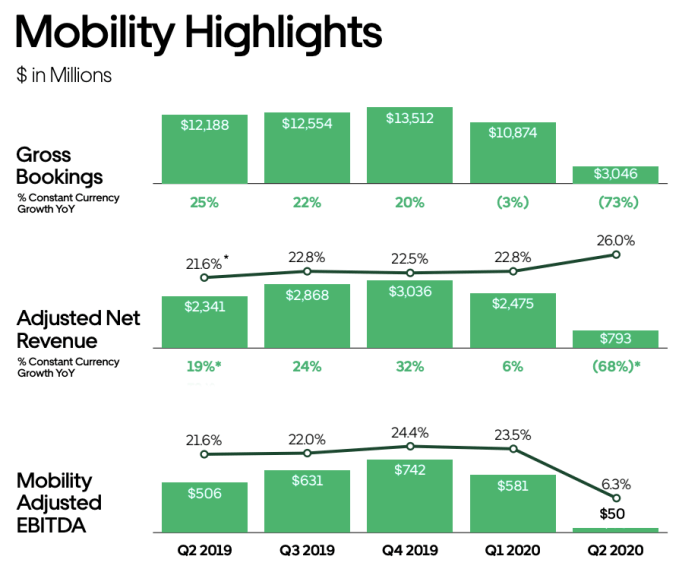
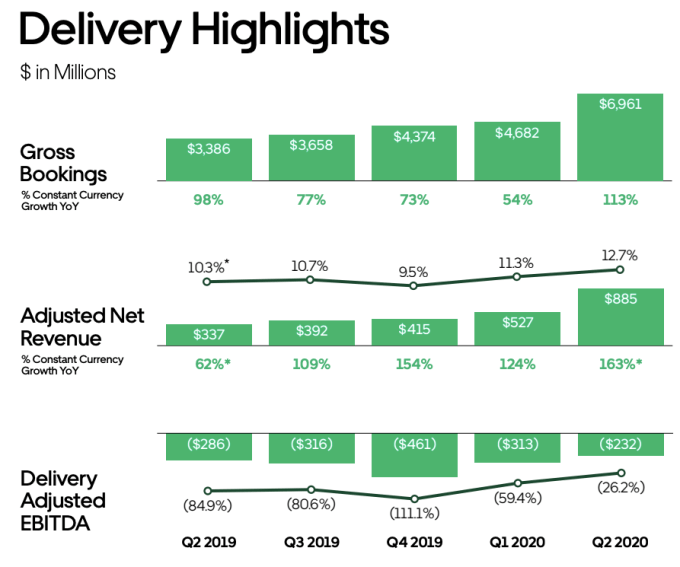
There are three key ways to weigh the company’s various businesses, of which only two are of material scale to Uber’s operating results, namely Mobility (ride-hailing), and Delivery (Uber Eats). Here’s how the pair stacked up in Q2 2020:
Delivery gross bookings: $6.96 billion
Mobility gross bookings: $3.05 billion
Here’s how those gross bookings results turned into adjusted net revenue:
Delivery adjusted net revenue: $885 million
Mobility adjusted net revenue: $793 million
And how those revenue results turned into adjusted profit, and adjusted losses:
Delivery adjusted EBITDA: -$232 million
Mobility adjusted EBITDA: $50 million
As you can see, Uber’s food delivery business is doing far more gross dollars in transaction volume. However, as Uber has a better take-rate (the portion of gross spend it gets to keep as revenue) with ride-hailing than Uber Eats, the two had far closer adjusted net revenue numbers. Here, again, Delivery beat Mobility.
When it came down to adjusted profit, Uber’s traditionally core business of ride-hailing generated the superior result, generating positive adjusted EBITDA, while delivery lost money using the same profit calculation method.
In Q1 2020, Mobility generated more gross bookings, adjusted net revenue and adjusted EBITDA than Delivery. In Q2, due to COVID-19 and its resulting economic impacts, two of the three numbers flipped. How fast the figures could change in the future if the market for ride-hailing recovers further is not clear. Today’s earnings call made it clear that Uber is more about bringing you food than taking you to the airport, and that’s a big change for the American company.
To be clear, ride-hailing isn’t going anywhere. It’s the dual focus of delivery and ride-hailing that Uber is counting on to get it through this rough patch of COVID-19 pandemic as well as fortify its revenue earning potential in more stable times.
“It’s become clear that we have a hugely valuable hedge across our two core businesses that is a critical advantage in any recovery scenario,” Uber CEO Dara Khosrowshahi said Thursday. “When travel restrictions lift we know the mobility trips rebound. If restrictions continue or need to be re-imposed our delivery business will compensate.”
Few could ever forget back in 2015 when security researchers Charlie Miller and Chris Valasek remotely killed a Jeep’s engine on a highway with a Wired reporter at the wheel.
Since then, the car hacking world has bustled with security researchers looking to find new bugs — and ways to exploit them — in a new wave of internet-connected cars that have only existed the past decade.
This year’s Black Hat security conference — albeit virtual, thanks to the coronavirus pandemic — is no different.
Security researchers at the Sky-Go Team, the car hacking unit at Qihoo 360, found more than a dozen vulnerabilities in a Mercedes-Benz E-Class car that allowed them to remotely open its doors and start the engine.
Most modern cars are equipped with an internet connection, giving passengers access to in-car entertainment, navigation and directions, and more radio stations than you can choose from. But hooking up a car to the internet puts it at greater risk of remote attacks — precisely how Miller and Valasek hijacked that Jeep, which ended up in a ditch.
Although vehicle security has gotten better over the past half-decade, Sky-Go’s researchers showed that not even one of the most recent Mercedes-Benz models are impervious to attacks.
In a talk this week, Minrui Yan, head of Sky-Go’s security research team, said the 19 security vulnerabilities were now fixed, but could have affected as many as two million Mercedes-Benz connected cars in China.
Katharina Becker, a spokesperson for Mercedes’ parent company Daimler, pointed to a company statement published late last year after it patched the security issues. The spokesperson said Daimler could not corroborate the estimated number of affected vehicles.
“We addressed all findings and fixed all vulnerabilities that could be exploited before any vehicle in the market was affected,” said the spokesperson.
After more than a year of research, the end result was a series of vulnerabilities that formed an attack chain that could remotely control the vehicle.
To start, the researchers built a testbench to reverse-engineer the car’s components to look for vulnerabilities, dumping the car’s software and analyzing the car’s internals for vulnerabilities.
The researchers then obtained a Series-E car to verify their findings.
At the heart of the research is the E-Series’ telematics control unit, or TCU, which Yan said is the “most crucial” component of the car, as it allows the vehicle to communicate with the internet.
By tampering with the TCU’s file system, the researchers got access to a root shell — a way to run commands with the highest level of access to the vehicle’s internals. With root shell access, the researchers could remotely open the car’s doors.
The TCU file system also stores the car’s secrets, like passwords and certificates, which protect the vehicle from being accessed or modified without proper authorization. But the researchers were able to extract the passwords of several certificates for several different regions, including Europe and China. By obtaining the vehicle’s certificates and their passwords, the researchers could gain deep access to the vehicle’s internal network. The car’s certificate for the China region had a weak password, Yan said, making it easier to hijack a vulnerable car in the country.
Yan said the goal was to get access to the car’s back end, the core of the vehicle’s internal network. As long as the car’s back-end services can be accessed externally, the car is at risk of attacks, the researchers said.
The way the researchers did this was by tearing down the vehicle’s embedded SIM card, which allows the car to talk to the cell networks. A security feature meant the researchers couldn’t plug the SIM into a router without freezing access to the cell network. The researchers modified their router to spoof the vehicle, effectively making the cell network think it was the car.
With the vehicle’s firmware dumped, the networking protocols understood and its certificates obtained and cracked, the researchers say they could remotely control an affected vehicle.
The researchers said the car’s security design was tough and able to withstand a number of attacks, but it was not impervious.
“Making every back-end component secure all the time is hard,” the researchers said. “No company can make this perfect.”
But at least in the case of Mercedes-Benz, its cars are a lot more secure than they were a year ago.
Send tips securely over Signal and WhatsApp to +1 646-755-8849 or send an encrypted email to: [email protected]
The company’s revenue fell compared to both the year-ago quarter (Q2 2019), and the sequentially preceding period (Q1 2020). Investors had anticipated Uber’s declines due to COVID-19, and the company had spent time earlier this year assuring the investing public that it had enough cash to get through 2020 no matter what.
In the second quarter, Uber saw gross bookings of $10.2 billion, off 35% compared to the year-ago period. This resulted in revenue of $2.24 billion, down 29% from a year-ago result of $3.17 billion. Uber’s net loss was $1.78 billion in the second quarter of 2020, down from a year-ago net loss of $5.24 billion. The company went public last year, resulting in various one-time, non-cash costs.
The company’s net loss worked out to a loss of $1.02 per share, ahead of an analyst-expected $0.86 per-share deficit. Uber missed on profitability in the quarter, but did surpass street expectations on top line, posting more revenue than the $2.18 billion figure investors expected.
Shares of Uber are off a little more than 4% in after-hours trading, following its earnings report.
A Q1 retrospective
Let’s take a look at how the financials stack up compared to the first quarter of 2020. In short: Not well.
Uber reported a Q1 per-share loss of $1.70 on revenues of $3.54 billion. The company lost $2.94 billion in the first quarter counting all costs. As noted above, Uber’s per-share loss in the second quarter fell to $1.02, while its revenue slipped to $2.24 billion; Uber’s top line therefore dipped 36.7% compared to the first quarter.
Digging deeper, Uber generated $737 million in ride-hailing trips in the second quarter, compared to $1.66 billion in the first three-month period of this year. Gross bookings were also down more than 35% from $15.78 billion in the first quarter compared to the second.
There was some rosier news buried in this blizzard of numbers. Uber’s Freight and Eats (which is now called Delivery) businesses lost money, although those losses narrowed from Q1 to Q2.
Uber reported that adjusted EBITDA on its “delivery” segment narrowed to a $232 million loss in the second quarter compared to a larger $313 million loss in the first period of the year. Uber Freight’s adjusted EBITDA was a $49 million loss in Q2, smaller than the $64 million loss reported in Q1.
A changing business
Uber’s quarter was a period of change. Compared to the year-ago quarter, the company’s Delivery business (formerly its Uber Eats segment) saw its adjusted net revenue soar 162% compared to the year-ago quarter. At the same time, its larger Mobility segment (previously its Rides business) saw its adjusted net revenue fall 66% compared to Q2 2019.
Uber’s ride-hailing business fell sharply as folks stayed home, while those same folks ordered lots more food. The bookings mix-shift to food delivery did help Uber staunch ride-hailing losses, but not completely.
Ride-hailing, once a key driver of profitability at the company, only generated $50 million in adjusted EBITDA in Q2, a heavily amended profit metric. That figure was off by $465 million compared to the year-ago period, and off $531 million compared to Q1 2020.
“Our mobility recovery is clearly dependent on the public health situation in any given area,” CEO Dara Khosrowshahi said during the Q2 earnings call. “Asia and India is in the recovery. We’ve seen gross bookings in Hong Kong and New Zealand at times exceed pre-COVID highs and European trends have also been encouraging.”
Meanwhile, the U.S. recovery is lagging. The company’s global geographic footprint remains a huge advantage, Khosrowshahi noted. He added that once cities do reopen, trips bounce back sharply.
While ride-hailing lost ground, the rising revenue footprint of Uber’s Delivery business posted slimmer losses than in the year-ago and sequentially preceding quarter. With an adjusted EBITDA loss of $232 million in Q2 2020, the company shaved off more than $50 million in losses compared to its year-ago adjusted EBITDA loss of $286 million; in Q1 2020, Delivery posted adjusted losses of $313 million.
Naturally those declines are largely outside of Uber’s control, but they do show the sharp impact that the global pandemic and ensuing shuttering of many economies had on the 2019 IPO.
Uber closed the period with cash (cash, cash equivalents and short-term investments) of $7.8 billion. That figure was $9.0 billion at the end of its first quarter.
SpaceX is getting ready for a third try at launching its tenth Starlink mission, after two prior attempts were scrubbed, first in June and then again in July. Meanwhile, SpaceX has accomplished a lot — including another launch of a GPS satellite, and returning astronauts Bob Behnken and Doug Hurley to Earth from the International Space Station aboard the Crew Dragon.
This Starlink mission attempt is scheduled for Friday, August 7 at 1:12 AM EDT (10:12 PM PDT on August 6) and will take off from Kennedy Space Center in Florida. There’s also a backup opportunity scheduled for Saturday, August 8 at 12:50 AM EDT (Augut 7 at 9:50 PM PDT).
The payload for this mission includes, predictably, Starlink satellites — 57 in total that will join the constellation already in low Earth orbit as SpaceX gets ready to begin its beta test, which it says will kick off this summer. Starlink aims to provide low-latency, high-speed broadband to customers who don’t currently have great access to that kind of connectivity, with a beta set to start in parts of the U.S. and Canada this year. The Starlink satellites on this flight are all equipped with a special extendable solar visor to prevent reflections from their radio surfaces from obscuring the night sky from Earth.
This mission also carries two BlackSky satellites, which is one of SpaceX’s customers through launch services provider Spaceflight. It’s the second time that SpaceX has carried another payload alongside its own Starlink satellites on one of these flights, showing its spacefaring rideshare business model in action.
The live feed for the launch will start around 15 minutes prior to launch time, so at roughly 12:57 AM EDT (9:57 PM PDT).
The world is changing quickly. It seems to be growing more complicated by the minute.
Throughout the centuries, humans have used storytelling to make sense of the world around them. That is perhaps more true today than it ever was, as we have access to more stories (via the internet) than we ever have in history. But with this proliferation, it’s critical that the very best storytellers — a diverse group of storytellers — have access to the broadest audiences.
Imagine Impact, a content accelerator founded and led by Tyler Mitchell, Brian Grazer and Ron Howard, aims to provide storytellers with the tools and access they need to reach as many people as possible. That’s why we’re thrilled to have Mitchell, Grazer and Howard join us at Disrupt 2020 on September 14-18.
Tyler Mitchell is a producer, writer and entrepreneur who has previously held the role of executive vice president at Imagine Entertainment, where he oversaw a slate of live-action films as well as launching Imagine’s animation division. He has also produced films in his own right, including “The Incredible Burt Wonderstone,” “Lucky Number Slevin” and “Maudie.” Producer and writer for prime-time shows “Kidnapped” and “My Own Worst Enemy,” Mitchell also has experience in the world of television.
Brian Grazer is an Academy Award, Golden Globe, Emmy and Grammy Award-winning producer, racking up 43 Oscar nominations and 198 Emmy nominations, winning Best Picture at the Academy Awards for “A Beautiful Mind.” He’s also a NYT bestselling author twice over and was named one of Time Magazine’s “100 Most Influential People in the World.” He co-founded Imagine Entertainment alongside Ron Howard in the 80s, and has now gone on to co-found Imagine Impact alongside Mitchell and Howard.
Ron Howard needs no introduction. The Academy Award-winning filmmaker has been a creative force in some of Hollywood’s most memorable films, including “A Beautiful Mind,” “Apollo 13” and “Splash.” Alongside his illustrious film career, Howard has also executive-produced a variety of award-winning television shows, including the Emmy-winning series “Arrested Development” and the HBO miniseries “From the Earth to the Moon.”
These three launched Imagine Impact two years ago to bring to Hollywood Silicon Valley-style mentorship, a model cultivated by Y Combinator and various VCs in the tech world. As Netflix democratizes storytelling through its global platform for talent, Imagine Impact offers a place to vet that talent from the outset and nurture it through to the networks, studios and media platforms.
Netflix and Imagine Impact struck a deal in June to identify and develop film ideas across four genres, through a global submission process, that they will bring to Netflix for production and distribution.
Imagine Impact vets submissions with both experienced readers and a natural language processing system that was developed internally at the accelerator.
Since the first Impact program, the incubator has accepted 65 writers and paired them with industry experts (such as A Beautiful Mind’s Akiva Goldsman. Thus far, 62 developed projects have come out of the process, with 22 being sold or set up with major studios, networks and/or streaming services.
We’re thrilled to have Mitchell, Grazer and Howard join us at Disrupt 2020 to talk about how they’re mixing Silicon Valley tech and mentorship with the traditional Hollywood creative process and what the future of storytelling has in store for us. Get your pass today to hear this fantastic session — you can even save a cool $300 in the process!
Ameya Updadhyay is a venture partner managing African investments at Flourish Ventures, He is based in London.
Accelerated by the pandemic and its economic fallout, the tale of retail challenger bank models across the world has been diverging. In the Americas, Albo, Chime, and Uoala have all reported record user numbers as consumers adapted to a “no-touch” economy. Aspiration and Varo announced successful equity fund raising rounds. In Europe, by contrast, Revolut had to lay off people, Monzo was forced to accept new funding at a 40% lower valuation and N26 had shut its U.K. operations already. What’s going on?
As always, market environment, business model, industry structure, and economics and regulatory context matter. The U.S. has a big domestic market with large, attractive customer segments: Millennials, for example, who have come of age after the financial crisis of 2008-2009 and rely on the debit card as their primary spending vehicle, unlike older and wealthier consumers, who leverage their credit cards. Or issues-conscious consumers, who want to align their savings and spending decisions with their broader values.
Chime has successfully tapped into the former segment, offering a free checking account with no hidden fees and attractive features such as an immediate crediting of paychecks, forgoing the 2-3 days float that mainstream banks benefit from at the expense of their customers. Aspiration is going after the green customer segment, with features such as planting a tree for any rounded-up debit card purchase or offsetting customer carbon footprint at the gas pump.
Average debit card interchange fees in the U.S. at 1.2% of transaction value are high enough to pay for the tech platform. Both Chime and Aspiration function essentially as bank accounts for the customers at the front-end interface but have been able to structure themselves capital-efficiently. Chime’s actual deposit balances are held by back-end banking partners. Aspiration’s core vehicle is a cash management account under a FINRA brokerage license, also administered by a bank partner at the back-end. Varo in the U.S. has been the exception to these capital-light models by pursuing a federal, deposit-taking bank charter from the get-go, which was approved after three years in early 2020.
Similarly, In Latin America, Albo in Mexico or Neon in Brazil target a younger, lower-income segment that is willing to make the challenger bank cards their primary spending vehicle, and the debit interchange fee is high enough to make the economics work.
This is not the case in Europe. With near-instant retail payment settlement among bank current accounts and under tighter regulatory caps, debit card interchange fees are much lower at 0.2% of transaction value. To pay for their platforms, European challenger banks need other sources of revenue. Many are betting on credit — that’s why a number of them, such as Atom and Tandem, acquired full banking licenses before launching, despite the costly and lengthy process. Others, like Starling Bank and Tide, have set their sights on the more lucrative SME banking segment.
By contrast, Monzo and Revolut started with a prepaid card before obtaining a deposit-taking bank license. Both have focused largely on the younger, affluent, cosmopolitan customer segment, who use them as a secondary service to pay friends, spend abroad (at favorable exchange rates) and set budgets. Only 20% of Monzo’s customers use it exclusively, most of the rest rely on traditional banks for their primary account, which may also be why it is difficult to get customers to pay for premium services. Discretionary spending in this target segment, which constituted a bulk of the transactions on Monzo and Revolut, collapsed during the height of the COVID crisis and shutdown, putting relatively more pressure on these two London-based challenger banks.
Asia, Africa and other emerging markets have not seen yet the emergence of challenger banks at meaningful scale. The Monetary Authority of Singapore is currently narrowing a shortlist of applications for digital banking licenses from a variety of players, including a consortium of logistics platform Grab and Singtel, as well as gaming company Razer. In India, open banking is emerging along the lines of distinctive user segments.
SME neobanking is the most advanced with the likes of Bankopen (Open Technologies). On the consumer side, startups are focusing on segments such as blue-collar workers or rural populations addressing pain points encountered with traditional banking such as small transaction sizes or low account balances and catering to needs such as domestic remittances or goal-based savings. In Africa, the first wave of digital banks, like Carbon and FairMoney are emerging in Nigeria.
These emerging market challenger banks will have to look carefully at the market conditions, possible target segments, a sustainable revenue source, the initial product offerings that could lead to engagement and rapid growth, and the regulatory structure that best supports the desired business model.
The acceleration of the world moving toward a “no-touch” economy has provided a new impetus. However, the economics challenge seems to be closer in nature to the European starting point rather than the American industry context.
Flourish Ventures has investments in Albo, Aspiration, Chime, FairMoney, Neon and Tandem.
Casa, a Colorado-based provider of bitcoin security services, is launching a managed service allowing customers to buy and hold their own bitcoin, rather than using an external custodian like Coinbase.
“With self-custody using Casa it’s impossible to be hacked and nearly impossible to have your bitcoin stolen,” wrote chief executive Nick Neuman in an email. “Leaving bitcoin on an exchange (e.g. Coinbase or many others) opens it up to theft; there is a long history of bitcoin theft and hacks from exchanges.”
Just last year, the major cryptocurrency exchange Binance was hacked and thieves made off with bitcoin that was worth $40 million at the time.
Before the upgrade with the new product offering, bitcoin traders had to buy their bitcoin at an exchange and then move their bitcoin off the exchange to increase security. They can now be secure by default using Casa, according to Neuman.
Bitcoin can now be purchased through Casa and deposited directly into a user’s wallet on the service where they control the funds. Casa never has custody of the user’s bitcoin at any point in the process, which the company said eliminates the risk of using an exchange.
“With the dollar declining in value and a new era of potential inflation on the horizon, consumers are naturally looking for a safe asset class that’s outside the turbulence of the existing financial system,” said Neuman in a statement. “Traditionally, if investors wanted the security and control of Bitcoin self-custody, they had to jump through multiple hoops to register with an exchange, deposit funds for trading, and then move bitcoin to their wallet. As new users begin their Bitcoin journey, they have a much simpler and faster option for buying and securing their first bitcoin with Casa.”
Lucia, a six-year old, hides from Zoom calls and has rejected every edtech tool from Seesaw to Khan Academy. She will spend all of first grade in quarantine.
Her mother, Claire Díaz-Ortiz, says her daughter fits squarely into the “distance learning death zone.” The idea is that younger children are too young to do distance learning solo, even with tools meant to make it easier. Here’s one kindergartner’s remote fall class schedule:
Just got this schedule for my kindergartner’s “distance learning” in the fall and would just like to say LOL FOREVER TIMES A THOUSAND pic.twitter.com/CXXzdbwUWa
“And unfortunately for my daughter, I’m a VC, not a Zoom mom,” Díaz-Ortiz said.
The impact of the distance learning death zone, as Díaz-Ortiz calls it, is one of the reasons why many wealthy families with young children are considering a new solution: learning pods.
Learning pods are small clusters of children within the same age range who are paired with a private instructor. Depending on a parent’s preferences, learning pods could be an in-home or virtual experience and be either a full-time school replacement or supplemental learning.
In recent weeks, the concept has taken off all across the country, from suburbs to cities. There’s a Facebook group for Boulder, Colorado school districts; organizers launched Pandemic Pod San Diego to “connect families looking for in-home, teacher-led learning groups.” Some households are offering teachers a retainer. Among working mom groupchats, pods are taking off as a sanity lifesaver, especially as childcare responsibilities fall disproportionately on women.
Looking for the best 4-6th grade teacher in Bay Area who wants a 1-year contract, that will beat whatever they are getting paid, to teach 2-7 students in my back yard#microschool
If you know this teacher, refer them & we hire them, I will give you a $2k UberEats gift card
Startups are pivoting to keep up with the demand for private teachers. But because of high costs, only affluent families are able to form or join learning pods, which may limit the model’s ability to reach scale while extending the existing digital divide.
I honestly can’t remember when I first started writing about the mobile creep in macOS. It has happened little by little, update after update. My earlier fears that it would fully surrender to the influence of iOS have thus far not come to fruition, but the iPhone’s operating system continues to be the clearest indicator of future desktop updates.
It’s clear, of course, why one of Apple’s OSes wouldborrow so liberally from another. The iPhone has been top dog at the company for well over a decade now, and continues to monopolize resources and serve as a proving ground for its most cutting-edge experiences. Even as the Mac braces for its most radical update in recent memory with the switch from Intel to custom ARM processors, the shadow of iOS looms large over Big Sur.
There are a million reasons why this year’s WWDC was a strange one. One of the more unsung instances was the surprise reveal that the next version of macOS would be 11.0. The fact was never explicitly mentioned during the keynote, though the number was flashed on screen during a demo. It certainly seems worth mentioning the first primary number upgrade in 20 years, but who can ultimately say why Apple does the things it does?
What we can say for sure is that Big Sur does, indeed, represent a big step forward in macOS’ evolution in a couple of ways. The first and arguably most important is the aforementioned hardware update. Those first systems are set to arrive toward the end of the year, likely in the form of new iMac and MacBooks. The second and arguably more symbolic is one of the more radical design changes in the operating system’s recent memory.
For those less familiar with the operating system, the design changes likely feel subtle. For those of us who basically spend all day, every day staring at the operating system, they’re unavoidable. Big Sir borrows liberally from the iOS design language. The familiar circle icons are gone, making way for the squircle variety you’ll find on the iPhone. As ever, it’s up to third-party developers to decide if they want to join in on the fun. Right now, my app folder is a mix of circles and rounded squares. There are fun little touches throughout, like this address on the Mail icon envelope:
Another iOS influence comes in the form of the push toward more translucence throughout the UI, most notably in the form of the menu bar, which is a closer match to the drop-down menus themselves. Those are larger, meanwhile, and offer a bit more room to breathe. Spacing in general is a big thing throughout the update.
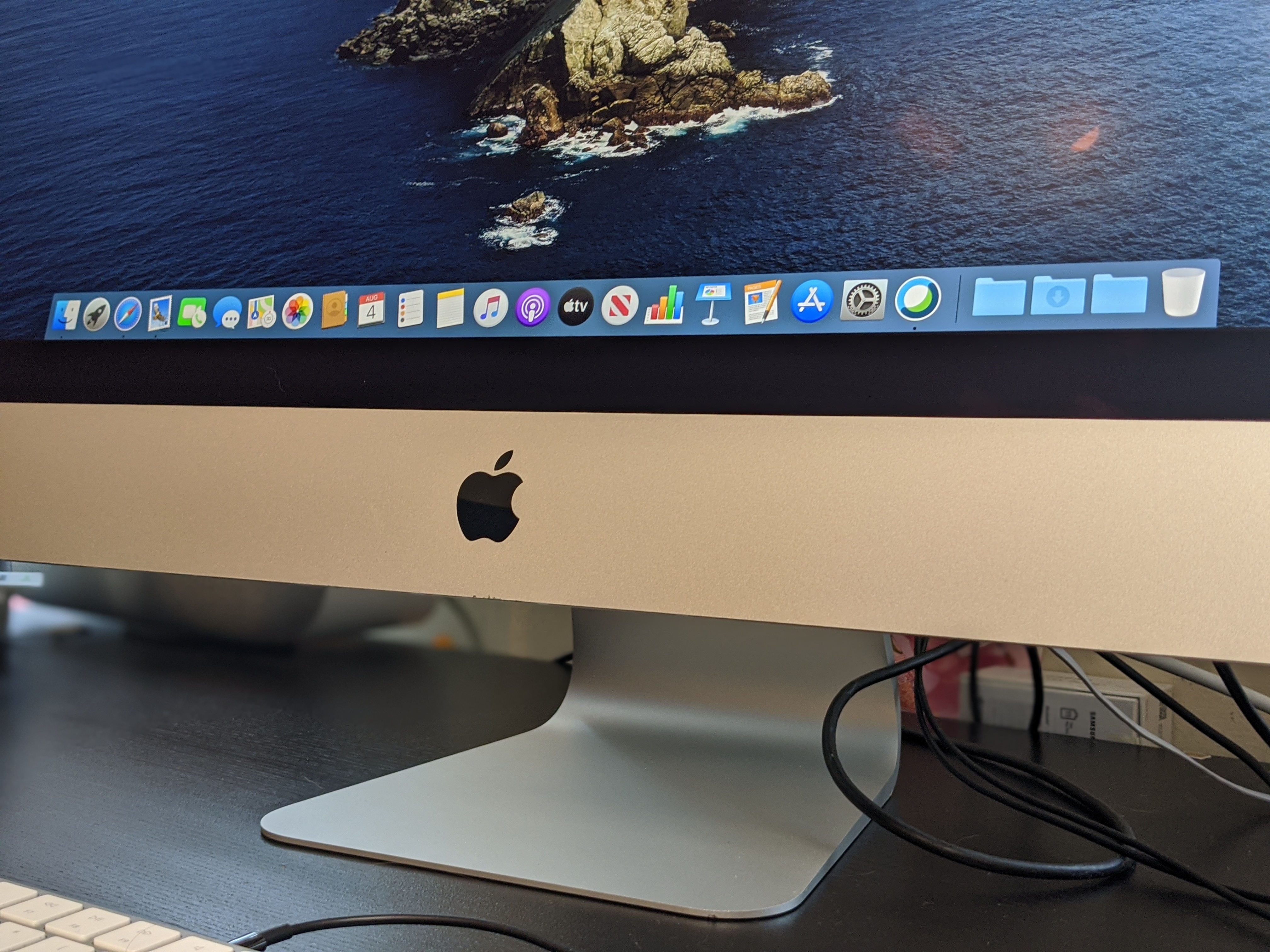
That includes the new Finder windows, which also adopt more translucent elements and rounded corners. The dock, meanwhile, hovers ever so slightly above the bottom of the screen. Default sound updates might take me the longest to get used to. I only discovered that while taking a screenshot for this review — the familiar camera shutter sound having been swapped out for a bit of a plunk. Not sure how I feel about that one, if I’m being honest.
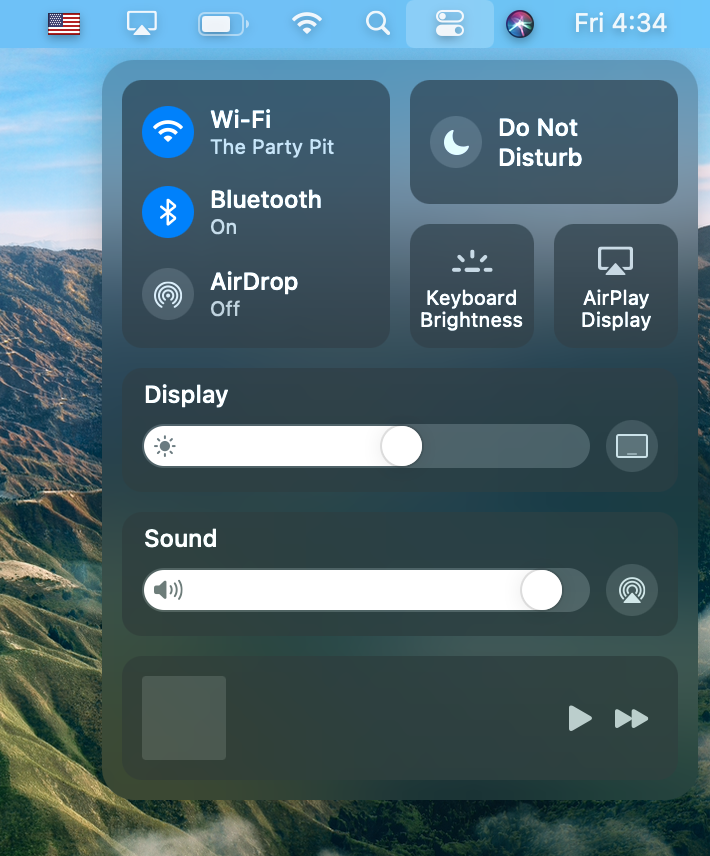
Perhaps the biggest update to Finder is also the most blatant lift from iOS. Joining other elements like Notification Center and Launchpad is Control Center. As with iOS, it’s a translucent drop-down menu that offers quick access to settings. Here it’s accessible by way of an icon in the menu bar, but every element here screams touchscreen. Seriously, the Display Brightness and Sound sliders beg to be adjusted by hand. A clear hint into plans for future Macs? Apple has long insisted that PCs and touchscreens are like oil and water, but there are some indications that the company’s stance could be softening.
Other control panel options include a Do Not Disturb mode, media playback, WiFi, Bluetooth and Airdrop. The available controls are customizable, and you can also drag an option off the panel and pin it to the menu bar.
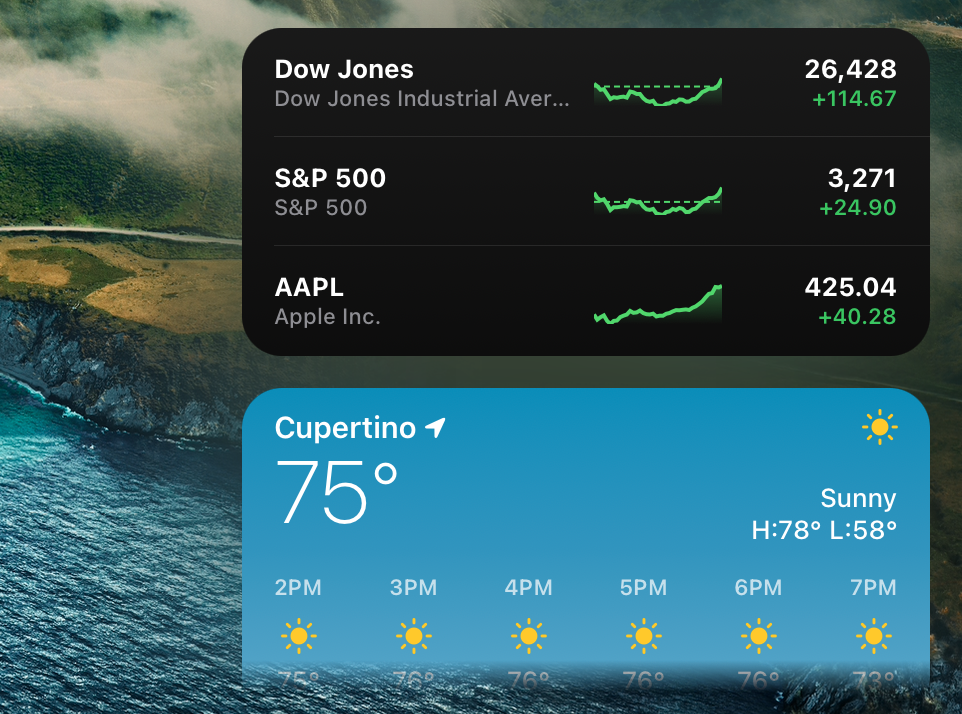
Speaking of the Notification Center, there’s an update there as well. It’s free-floating, like other new design elements, and features a lot more information options, including weather, stocks and calendar events, along with upcoming third-party widgets. Like the Control Center, it’s customizable, both in terms of content and widget size. Certain forms of content like emails and new podcasts can also be interacted with directly from the Notification Center.
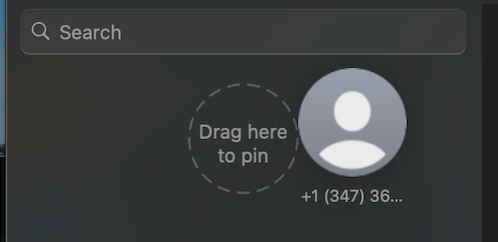
A number of updates to the Messages app itself are also worth noting here. Conversations can easily be pinned to the top of the list with a drag and drop. Group messaging has been beefed up, with the ability to comment on specific messages in line — a feature that’s simultaneously rolling out in iOS 14, as well. Specific members can be directly mentioned with an “@“ symbol and a photo can be set to designate the group.
Also of note is an improved search. Honestly, search has long been an annoyance on the desktop version of the app. Here it groups together links, photos and other highlights. There are a bunch of new message effects here, à la iOS, with things like balloons, confetti and lasers for celebration. Memojis can now be edited on the desktop, and Apple has also added Memoji stickers for quicker reactions.
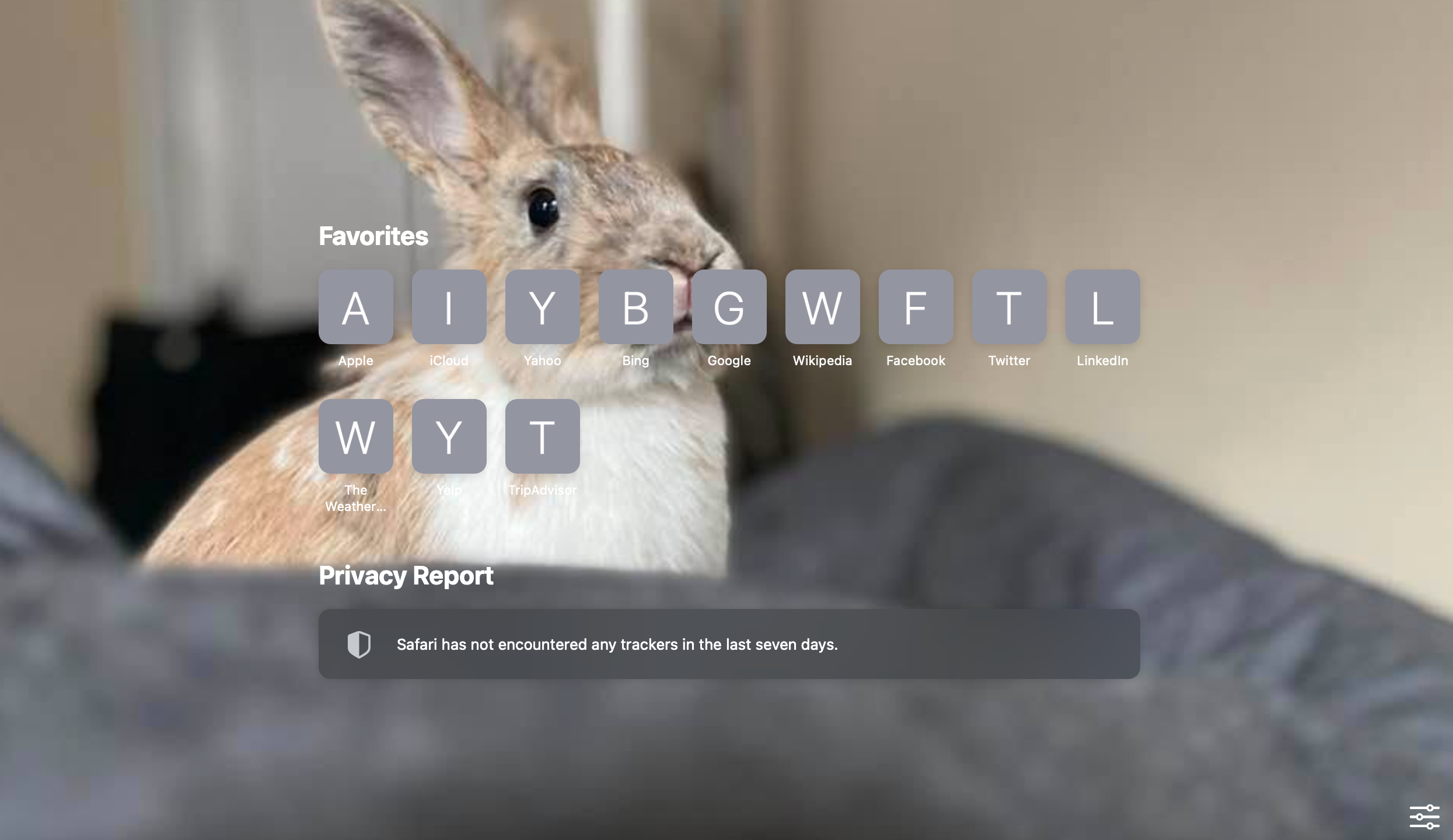
Safari always seems to get the most love in the updates. It’s clear that Apple really wants its browser to remain competitive with the likes of Chrome and Firefox. Key updates include the ability to set a background image and customizable start page, manually adjust favorites and support for more extensions.
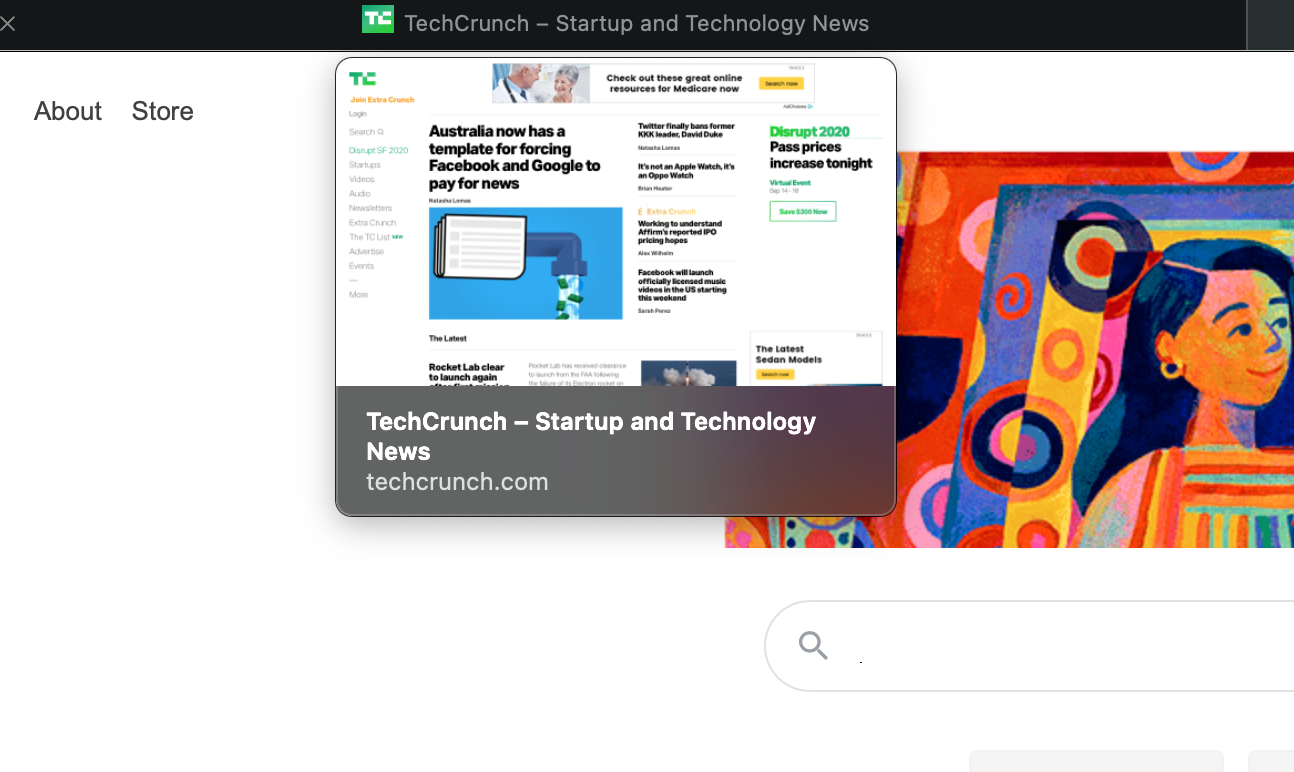
Tabs have been redesigned and favicon now appear by default, while hovering over a tab will show a preview of the hidden page — a genuinely useful addition. Rending speeds have improved and the company says the browser is overall more power-efficient than earlier versions. Apple’s also found another way to directly take on Google with the addition of a new translate feature that’s currently in beta with seven languages: English, Spanish, Simplified Chinese, French, German, Russian and Brazilian Portuguese.
A handful of new maps features warrant mention here. Look Around brings a new Street View-style feature, making it easy to get to where you’re going — or simply live vicariously in this time of immobility. Clicking “Look Inside” on select locations like airports and malls, meanwhile, will show you an overhead view of the indoor map. Cycling directions have been added to a handful of cities (they don’t quite appear to have rolled out for NYC on the beta I’m using), along with an Electric Vehicle direction feature that shows you the route with the most charging station access.
The Big Sur public beta is out today. The final version of the software is set to release this fall.
Ginger, a provider of on-demand mental healthcare services, has raised $50 million in a new round of funding.
The new capital comes as interest and investment in mental health and wellness has emerged as the next big area of interest for investors in new technology and healthcare services companies.
Mental health startups saw record deal volumes in the second quarter of 2020 on the heels of rising demand caused by the COVID-19 epidemic, according to the data analysis firm CB Insights. More than 55 companies raised rounds of funding over the quarter, even though deal amounts declined 15%, to $491 million. That’s still nearly half a billion dollars invested into mental health in one quarter alone.
What started in 2011 as a research-based company spun out of work from the Massachusetts Institute of Technology has become one of the largest providers of mental health services primarily through employer-operated health insurance plans.
Through Ginger’s services, patients have access to a care coordinator that is the first point of entry into the company’s mental health plans. That person is a trained behavioral health coach — typically someone with a master’s degree in psychology with a behavioral health coaching certificate from schools like Duke, UCLA, Michigan or Columbia and 200 hours of training provided by Ginger itself.
These health coaches provide the majority of care that Ginger’s patients receive. For more serious conditions, Ginger will bring in specialists to coordinate care or provide access to medications to alleviate the condition, according to the company’s chief executive officer, Russell Glass.
Ginger began offering its on-demand care services in 2016 and counts tens of thousands of active users on the platform. The company charges companies a fee for access to its services on a per-employee, per-month basis and provides access to mental health services to hundreds of thousands of employees through corporate benefit plans, Glass said.
More than 200 companies, including Delta Air Lines, Sanofi, Chegg, Domino’s, SurveyMonkey and Sephora, pay Ginger to cost-efficiently provide employees with high-quality mental healthcare. Ginger members can access virtual therapy and psychiatry sessions as an in-network benefit through the company’s relationships with leading regional and national health plans, including Optum Behavioral Health, Anthem California and Aetna Resources for Living, according to a statement.
“Our entire mission here is to break the supply/demand imbalance and provide far more care,” said Glass in an interview. “Ultimately we want Ginger to be available to help anybody who has a need. Being accessible to anybody, anywhere, is an important part of the strategy. That means direct-to-consumer will be a direction we head in.”
For now, the company will use the money to build out its partner ecosystem with companies like Cigna, an investor in the company’s latest $50 million round. Ginger will also look to getting government payers to reach more people. Eventually direct-to-consumer could become a larger piece of the business as the company drives down costs of care.
It’s also investing in automation and natural language processing to automate care pathways and personalizing patient care using machine learning.
The company’s $50 million Series D round was co-led by Advance Venture Partners and Bessemer Venture Partners, with additional participation from Cigna Ventures and existing investors such as Jeff Weiner, executive chairman of LinkedIn, and Kaiser Permanente Ventures. To date, Ginger has raised roughly $120 million.
Even as Ginger is working through the existing network of employer benefit plans and standalone insurance providers to offer its mental health services, other startups are raising money to offer employer-provided mental health and wellness plans. SonderMind is working to make it easier for independent mental health professionals to bill insurers, AbleTo helps employers screen for undiagnosed mental health conditions and SilverLight Health partners with organizations to digitally monitor and manage mental health care.
Meanwhile, other startups are going direct-to-consumer with a flood of offerings around mental health. Well-financed, billion-dollar-valued companies like Ro and Hims are offering mental health and wellness packages to customers, while Headspace has both a consumer-facing and employer benefit offering. And upstart companies like Real are focusing on providing care specifically for women.
With its funding round, Ginger is adding David ibnAle, a founding partner at Advance Venture Partners (AVP), which is the investment firm behind S.I. Newhouse’s family-owned media and technology holding company, Advance; and the digital health investment guru Steve Kraus from Bessemer Venture Partners.
“AVP invests in companies that are using technology to tackle large-scale, global challenges and transform traditional businesses and business models,” said David ibnAle, founding partner of Advance Venture Partners. “Ginger is doing just that. We are excited to partner with an exceptional team to help make high-quality, on-demand mental health care a reality for millions of more people around the world.”
With the launch of Android 11 getting closer, Google today launched the third and final beta of its mobile operating system ahead of its general availability. Google had previously delayed the beta program by about a month because of the coronavirus pandemic.
Image Credits: Google
Since Android 11 had already reached platform stability with Beta 2, most of the changes here are fixes and optimizations. As a Google spokesperson noted, “this beta is focused on helping developers put the finishing touches on their apps as they prepare for Android11, including the official API 30 SDK and build tools for Android Studio.”
The one exception is some updates to the Exposure Notification System contact-tracing API, which users can now use without turning on device location settings. Exposure Notification is an exception here, as all other Android apps need to have location settings on (and user permission to access it) to perform the kind of Bluetooth scanning Google is using for this API.
Otherwise, there are no surprises here, given that this has already been a pretty lengthy preview cycle. Mostly, Google really wants developers to make sure their apps are ready for the new version, which includes quite a few changes.
If you are brave enough, you can get the latest beta over the air as part of the Android Beta program. It’s available for Pixel 2, 3, 3a, 4 and (soon) 4a users.
Twitter is introducing new labels for accounts and tweets tied to government officials and “state-affiliated media.”
“Twitter provides an unmatched way to connect with, and directly speak to public officials and representatives,” the company wrote in the blog post announcing these changes. “This direct line of communication with leaders and officials has helped to democratize political discourse and increase transparency and accountability.”
However, Twitter suggested that these labels are part of a larger effort “to protect that discourse because we believe political reach should be earned not bought.”
When it comes to labeling government officials, the company said it’s focusing on those who represent “the official voice of the state abroad,” including “foreign ministers, institutional entities, ambassadors, official spokespeople, and key diplomatic leaders.” It’s starting with the five permanent members of the United Nations Security Council: China, France, Russia, the United Kingdom and the United States, with plans to add other countries in the future.
Twitter said these labels will not apply to “the personal accounts of heads of state,” because “these accounts enjoy widespread name recognition, media attention, and public awareness.” For example: President Donald Trump’s Twitter account has not been labeled, but Secretary of State Mike Pompeo’s account has.
Image Credits: Twitter
As for state-affiliated media, Twitter said that media organizations that maintain editorial independence despite government financing, such as the BBC and NPR, will not labeled.
Instead, the label will be reserved for “outlets where the state exercises control over editorial content through financial resources, direct or indirect political pressures, and/or control over production and distribution” — for example, Russia-backed RT. To identify these outlets, the company says it’s consulting outside experts, including members of its Digital and Human Rights Advisory group (part of Twitter’s Trust & Safety Council).
Twitter also said state-affiliated media will no longer receive promotion via the service’s home timeline, notifications and search. (This limitation does not apply to government officials.) The service had already blocked these groups from purchasing advertising after an incident last year in which China’s state news agency bought promoted tweets to portray pro-democracy protests in Hong Kong as violent.
Money makes the world go round, as the saying goes. But how and where we spend it are still very much up for grabs.
One person who has been pondering that question and providing answers very successfully is Max Levchin, and we’re very excited to have him as our special guest today on Extra Crunch Live, where we’ll be interviewing him as well as taking questions from the audience.
Levchin could not be more central to the story of Silicon Valley’s rise, and the rise of fintech, in the last twenty years. As one of the co-founders of PayPal, he’s been at the center of how we use the internet to send and spend money from its earliest days. As the CEO of Affirm, one of the hottest fintech companies around today, you can safely say he’s still in the game and winning.
But wait! There’s more! All that’s just part of Max’s fintech credentials. He’s also currently the chairman of health tech startup Glow, and his past roles have included chairman of Yelp and member of the board of Yahoo, and much more.
We are living in truly crazy times today, with the pandemic impacting every aspect of our lives, no less our tech lives. Max’s track record and his own story as an immigrant building huge businesses in America make him a very compelling person to weigh in on all of that. So please join us to watch, and participate in the conversation.
I’ll be in the interviewer’s chair, and I plan to grill Max on all things fintech and foundery — where financial tech startups are going, how they are faring now, what founders need to be thinking about and how to avoid big mistakes. I’m also really looking forward to what you, the audience, want to ask Max, too.
See you later for all the fun, Thursday August 6 at 4 p.m. EDT/1 p.m. PDT/8 p.m. GMT. The links are below the fold.
At its first virtual World Wide Developers Conference back in June, Apple unveiled a huge piece of news about the future of the Mac. After years of rumors, the company finally confirmed plans to wean itself off of Intel processors in favor of its own in-house ARM-based chips. Apple noted that the process would be a gradual one, taking around two years to transition the entire line.
It was a rare peek behind the curtain for the company, owing to the fact that it needed to prep developers ahead of the transition, even releasing a limited ARM-based version of the Mac mini to help kickstart the process. That kind of lead time can be tricky to navigate. While it noted that the first ARM-based Macs are set to arrive later this year, Apple’s road map still includes Intel systems — which it added it will continue to support for “years to come.”
Announced this week, the long-rumored update to the iMac falls into the latter category. The system will be one of the last Macs to sport Intel silicon. Apple’s not saying how many more are still left in the pipeline, but the desktop adopts the chip giant’s 10th-gen Comet Lake processors. The new device puts Apple in the somewhat tricky position of positioning the new models as the greatest thing since sliced bread, while acknowledging that the biggest change to the category in about 10 or so years is on the way.
We don’t know specifically when ARM-based iMacs are coming, of course. Various earlier rumors pointed at a refreshed Intel model this year, with a new version sporting Apple silicon in 2021. Things are further complicated by rumors surrounding the imminent arrival of a radically redesigned version of the all-in-one. For now, however, the iMac retains its familiar, iconic form factor.
Image Credits: Brian Heater
Of course, the truth of the matter is that not everyone is able, willing or even interested in waiting for a mystery refresh. That’s kind of the thing with consumer hardware. There’s always an update arriving down the road. At some point you need to bite the bullet, pull the trigger or whatever your chosen metaphor. And this is, indeed, a powerful and capable machine. Also, let’s not discount the current demand for PCs.
After a rough first quarter due to supply issues, demand of home laptops and desktops is on the rise as many office employees have come to recognize that remote work is going to very much be our reality for the foreseeable future. Keep in mind that Google recently moved its office reopening date to next July, and the company is very much a bellwether for the tech industry at large. If you’re going to be working from home for awhile, two things are essential: a nice office chair and a capable computer.
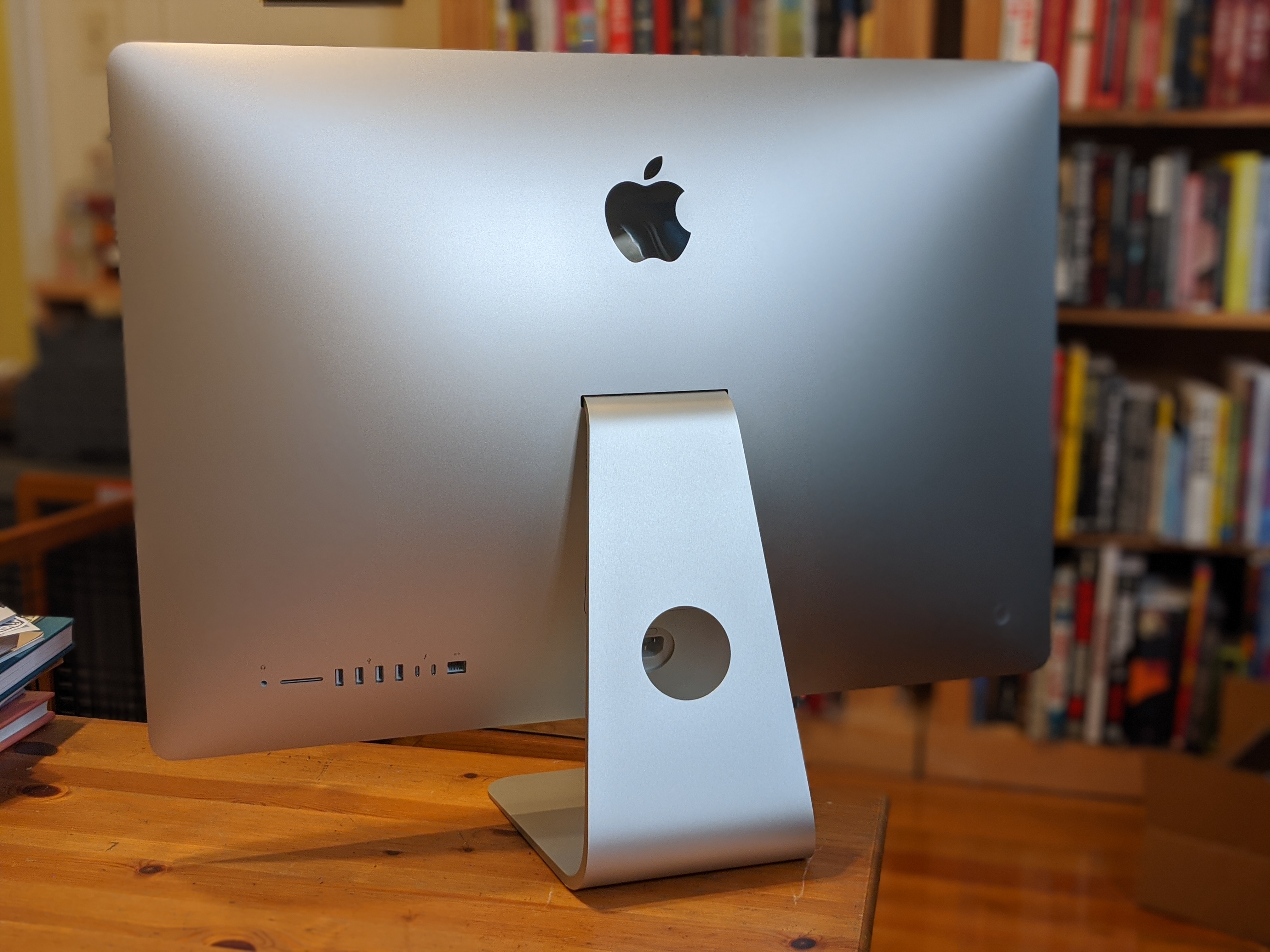
The first bit is a conversation for another day. The second, on the other hand, is most easily accomplished with an all-in-one, and all-in-ones don’t get much easier than the iMac. Seriously, I set up the new 27-inch yesterday, and it really is the definition of Apple’s promise to “just work,” right down to the gigantic power button on the back. I’ll also quickly add that the version Apple sent me as configured is way, way more than most office workers are going to require.
The model has a 3.6 GHz 10-Core Intel Core i9, 32GTB of RAM, the AMD Radeon Pro 5700 XT with 16GB of Memory, 1TB of storage and the nano-textured glass. I just ticked all of the corresponding boxes on Apple’s site and found the system that starts at $1,800 priced at about $4,500, not including the Magic Keyboard and Trackpad. In fact, this is precisely the spec level that blurs the line between the upgraded iMacs and the iMac Pros.
Image Credits: Brian Heater
Apple was, of course eager to point out the system’s potential for creative professions. And, indeed, the iMac has become an increasingly capable device over the past several years, and with the current configuration on the system I’m using, it’s easy to imagine this thing ending up in some music and even indie film studios. The line really saw a real expansion into the creative pro category when the iMac Pro stepped in to fill the absence left by the then-suspended Mac Pro line.
The non-Pro iMac line is well-positioned to appeal to the bedroom musicians and movie-makers, an increasingly broadening category in the age of COVID-19. Perhaps even more relevant, however, are the system’s teleconferencing capabilities. It seems unlikely that COVID-19 had a major impact on a device that had likely been in the pipeline for some time, but the new model does thankfully come with some features that will be welcome as Zoom conferences become an ever-increasing fixture in day-to-day work life.
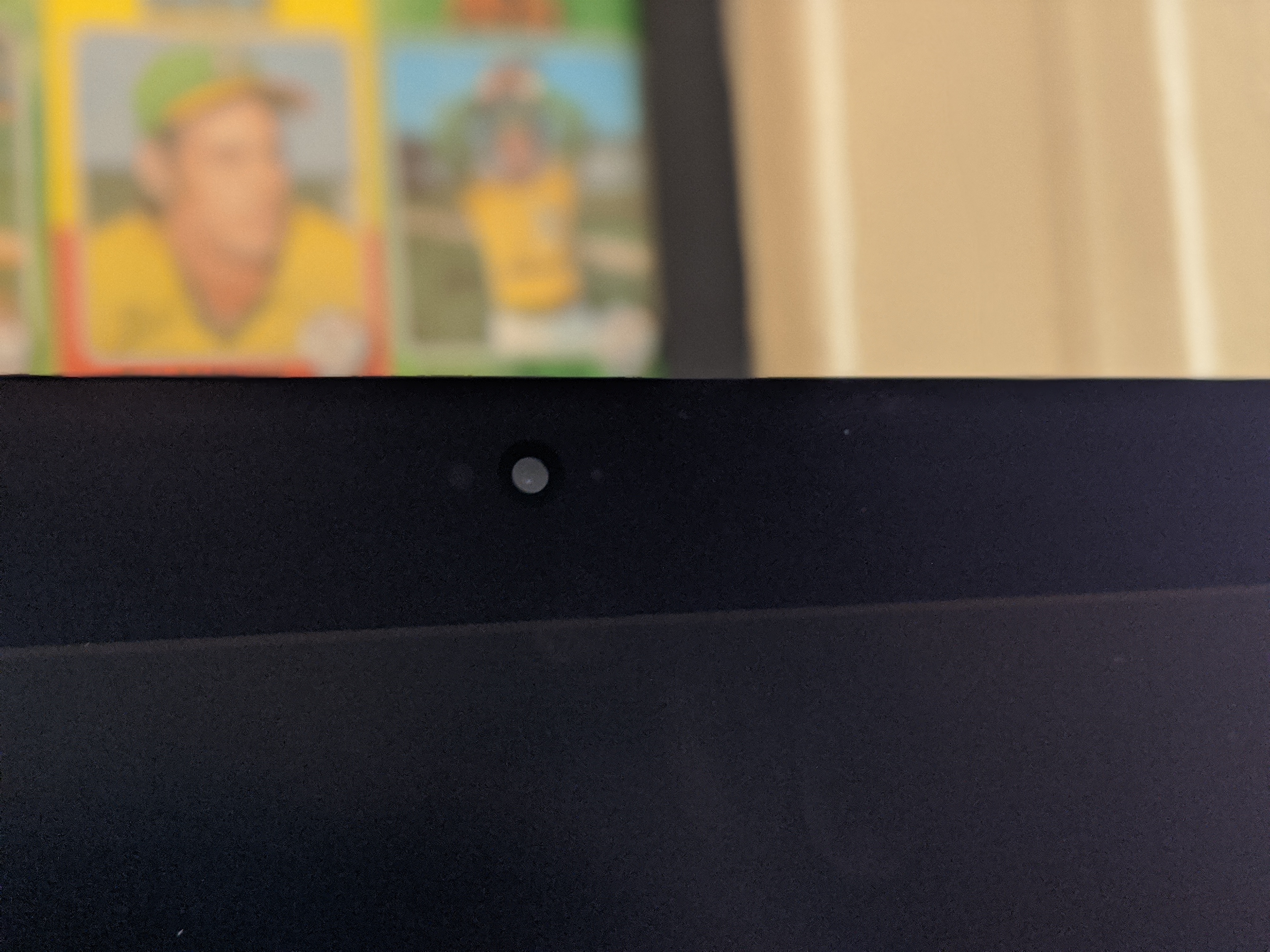
The biggest upgrade here is the move from the 720p camera to the 1080p one found on the iMac. As someone who’s been playing around with his home audio/video setup during the pandemic while TechCrunch enters the brave new world of virtual tech conferences, it’s something that I’ve had a keen eye on. I’ve been suggesting since the outset of the pandemic that the next generation of laptops and desktops are finally going to be getting serious about microphones and webcams, after years of letting smartphones lead the pack.
Image Credits: Brian Heater
I’ve upgraded my system ahead of our big Disrupt event in September to include an external camera and microphone. I recognize that these are both probably overkill for a majority of users. The above shot was taken with the iMac webcam. It’s a clear shot and more than acceptable for teleconferencing needs. The system sports a number of on-board sensors designed to augment the experience, including face tracking for better shot framing and increased performance in low light.
I would love to see some future upgrade that adds depth detection and a bokeh effect — preferably real, though something akin to the portrait mode on the iPhone could also work. Something that’s really dawned on a lot of us over the past several months is that we don’t necessarily want the world — or even co-workers — peeking into out homes at all times. In fact, the depth-of-field is the number one reason I’ve opted to upgrade to the aforementioned external camera.
The same can be said for the microphone. It’s clear and perfectly suited to teleconference. Above is a clip of me reading the first few sentences of White Noise (it’s the first thing that popped into my head, I don’t know what to tell you). Don’t mind the slurred speech (Bell’s palsy sucks, don’t get it), but the audio is perfectly suited for a Zoom call. In a push to appeal to creatives, the company notes that the mics — similar to the hardware found on the 16-inch MacBook can be used for things like scratch vocals. I would say the do the trick for a majority of things we need day to day, but if you’re going to be say, recording a podcast or voice-over work, I would seriously consider an external mic.
The speakers, too, fill roughly the same needs. They’re perfectly good for a teleconference, audio playback and even casual movie watching and music listening. As someone who’s slightly obsessive about music listening, I would likely invest in some external speakers to pair with the desktop in the home setting, but the computer audio is well suited for an office.
The display, on the the other hand, is downright stunning. It’s a 5K (5120 x 2880) with 14.7 million pixels. It’s a bright 500 nits, and the colors pop. This is the first time the company has brought True Tone technology to the iMac, using light sensors to adjust the screen to more true to life colors. It’s a nice addition, and it all leads to a screen that positively pops. At the end of a long day, I’ve taken to swiveling the iMac around and using it to watch movies from my couch.
Image Credits: Brian Heater
The other big new addition here on the screen front is the Nano-texture glass first introduced in the Pro Display XDR. I’ll quote Apple directly on that one: “Unlike typical matte finishes that have a coating added to the surface to scatter light, this industry-leading option is produced through an innovative process that etches the glass itself at the nanometer level.” More simply (and less marketingly) put, it’s a method for reducing screen glare that etches tiny nano structures in the glass instead of just adding a coating.
I’ve long felt that the Mac displays were too glossy for my liking and would happily move to nano-texture for all of my systems. The downside of the tech is that it seems to be prohibitively expensive. In the case of the 32-inch XDR, it adds $1,000 to the cost of the device. Here it’s an additional $500. In either case, it’s probably going to be far too pricey an addition for anyone who doesn’t absolutely need a glare-free system for work-related purposes.
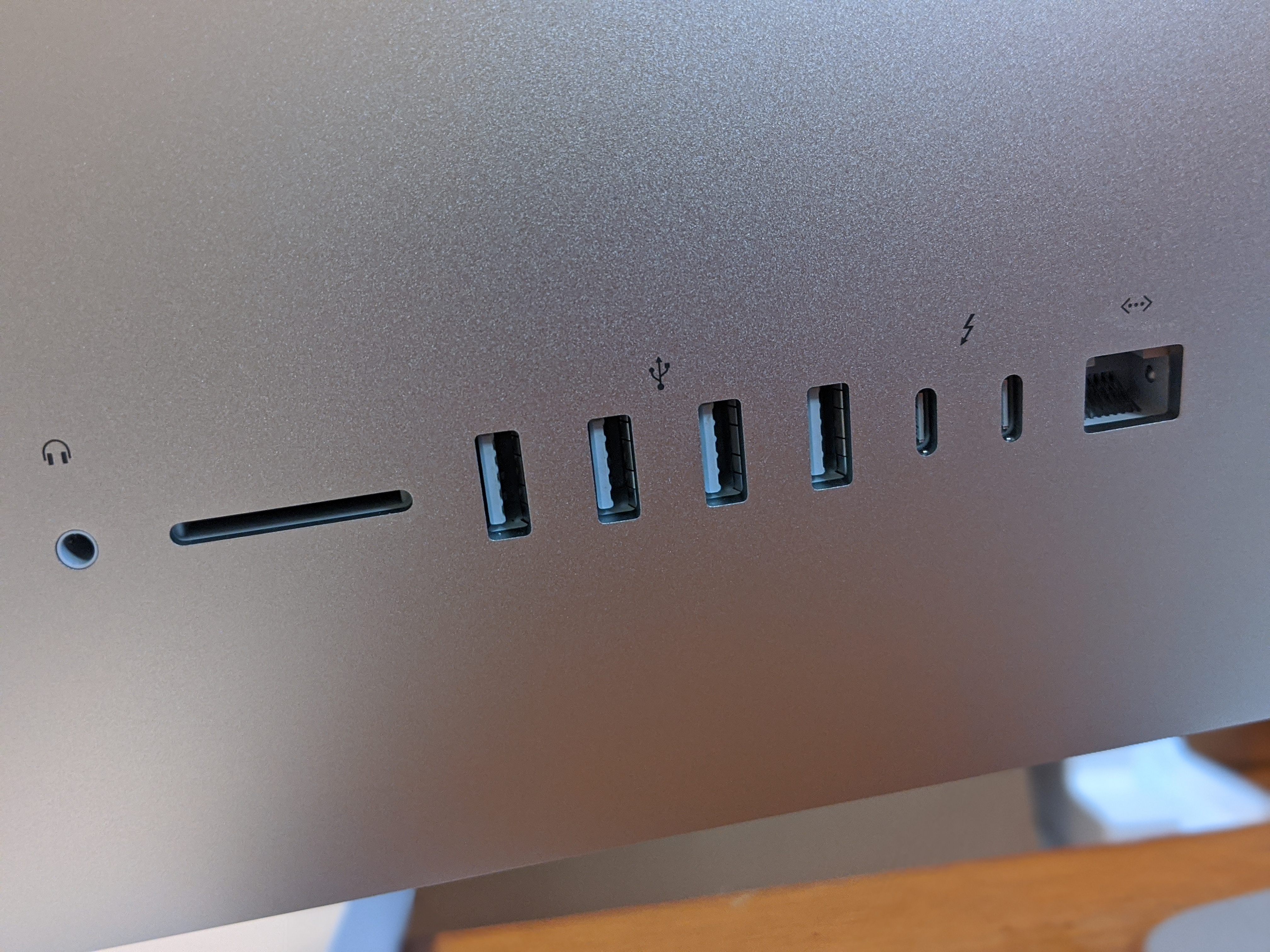
There’s a nice selection of ports on the back of the device. You get four USB-A (full-size USB ports) and two Thunderbolt 3/USB-C. I could have done with more of the latter, in an effort to further future-proof the system, but it’s a solid selection, none the less. There’s also a gigabit Ethernet port that can be upgraded to 10GB, for those who need to hard wire (another thing I’ve found necessary in this age of teleconferencing).
All in all, there are some really nice upgrades here. And it’s been fascinating watching the iMac upgrade into a truly capable machine. As configured with the unit Apple sent, you should probably be seriously considering the iMac Pro, which starts at $500 more (I mean, you’re already in for $4,500, after all, so what’s another few hundred dollars between friends). The upgrade will get you things like improved graphics, an improved thermal system, more power and more configuration options.
Image Credits: Brian Heater
The big open question mark here is what the future looks like for the iMac — and how long we’ll have to wait to see it. That is, of course, the perennial question for hardware upgrades, but it’s exacerbated by the knowledge of imminent ARM-based systems and rumors surrounding a redesign. The iMac has and continues to be a nice-looking machine, but it’s hard to shake the feeling that it could do with a redesign.
Likely both of these are still a ways down the road, however. And plenty of people who are in the process of setting their remote work stations will find plenty to look at with this easy-to-use all-in-one. It can be upgraded to sport some serious firepower and does good double duty as a work station and entertainment machine — the latter of which is great for a weirdo like me who doesn’t own a television.
The new iMac is available now, starting at $1,799.
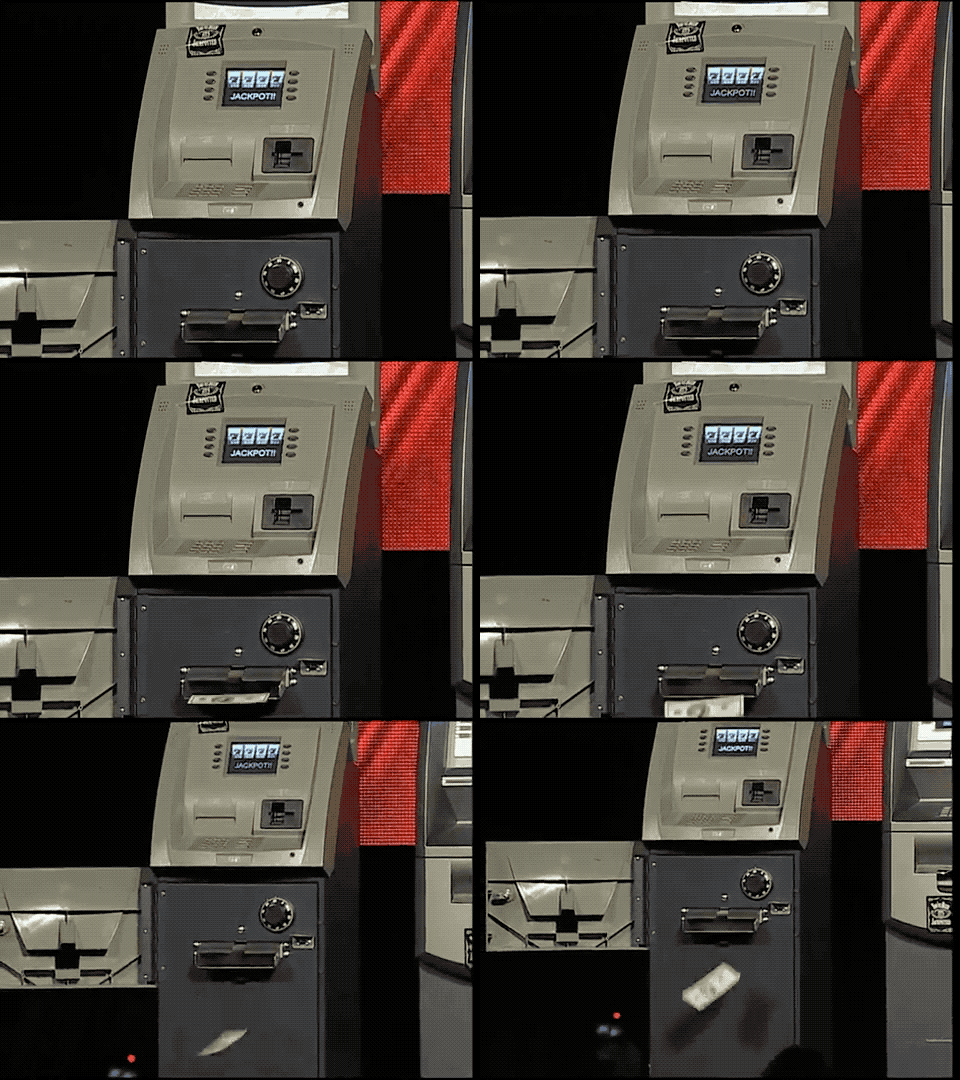
In 2010, the late Barnaby Jack, a world-renowned security researcher, hacked an ATM live onstage at the Black Hat conference by tricking the cash dispenser into spitting out a stream of dollar bills. The technique was appropriately named “jackpotting.”
A decade on from Jack’s blockbuster demo, security researchers are presenting two new vulnerabilities in Nautilus ATMs, albeit virtually, thanks to the coronavirus pandemic.
Security researchers Brenda So and Trey Keown at New York-based security firm Red Balloon say their pair of vulnerabilities allowed them to trick a popular standalone retail ATM, commonly found in stores rather than at banks, into dispensing cash at their command.
A hacker would need to be on the same network as the ATM, making it more difficult to launch a successful jackpotting attack. But their findings highlight that ATMs often have vulnerabilities that lie dormant for years — in some cases since they were first built.
Barnaby Jack, the late security researcher credited with the first ATM “jackpotting” attacks. Now, 10 years later, two security researchers have found two new ATM cash-spitting attacks. Credit: YouTube
So and Keown said their new vulnerabilities target the Nautilus ATM’s underlying software, a decade-old version of Windows that is no longer supported by Microsoft. To begin with, the pair bought an ATM to examine. But with little documentation, the duo had to reverse-engineer the software inside to understand how it worked.
The first vulnerability was found in a software layer known as XFS — or Extensions for Financial Services — which the ATM uses to talk to its various hardware components, such as the card reader and the cash dispensing unit. The bug wasn’t in XFS itself, rather in how the ATM manufacturer implemented the software layer into its ATMs. The researchers found that sending a specially crafted malicious request over the network could effectively trigger the ATM’s cash dispenser and dump the cash inside, Keown told TechCrunch.
The second vulnerability was found in the ATM’s remote management software, an in-built tool that lets owners manage their fleet of ATMs by updating the software and checking how much cash is left. Triggering the bug would grant a hacker access to a vulnerable ATM’s settings.
So told TechCrunch it was possible to switch the ATM’s payment processor with a malicious, hacker-controlled server to siphon off banking data. “By pointing an ATM to a malicious server, we can extract credit card numbers,” she said.
Bloomberg first reported the vulnerabilities last year when the researchers privately reported their findings to Nautilus. About 80,000 Nautilus ATMs in the U.S. were vulnerable prior to the fix, Bloomberg reported. We contacted Nautilus with questions but did not hear back.
Successful jackpotting attacks are rare but not unheard of. In recent years, hackers have used a number of techniques. In 2017, an active jackpotting group was discovered operating across Europe, netting millions of euros in cash.
More recently, hackers have stolen proprietary software from ATM manufacturers to build their own jackpotting tools.
Send tips securely over Signal and WhatsApp to +1 646-755-8849 or send an encrypted email to: [email protected]