CarbonChain is using AI to determine the emissions profile of the world’s biggest polluters

It was the Australian bush fire that finally did it.

For 12 years Adam Hearne had worked at companies that represented some of the world’s largest sources of greenhouse gas emissions. First at Rio Tinto, one of the largest industrial miners, and then at Amazon, where he handled inbound delivery operations across the EU, Hearne was involved in ensuring that things flowed smoothly for companies whose operations spew millions of tons of carbon dioxide into the environment.

Amazon’s business alone was responsible for emitting 51.17 million metric tons of carbon dioxide last year — the equivalent of 13 coal-burning power plants, according to a report from the company.

Then, Hearne’s home country burned.

In 2019 wildfires erupted that engulfed more than 46 million acres of land, destroyed over 9,000 buildings, and killed over 400 people and untold numbers of animals — driving some species to the brink of extinction.

Hearne, along with an old friend from his business school rugby days (Roheet Shah) and computer science and machine learning experts from Imperial College of London (Yuri Oparin and Jeremiah Smith), launched CarbonChain that year. The company, now poised to graduate from the latest Y Combinator cohort, is pitching a service that can accurately account for emissions from the commodities industry — which is responsible for 50% of the world’s greenhouse gas emissions.

The company’s services are coming at the right time. Countries around the globe are poised to adopt much more stringent regulations around carbon dioxide and greenhouse gas emissions. The European Union is slowly working toward passage of sweeping new regulations on climate change that are mirrored in the region’s local economies. Even petrostates like Russia are poised to enact new climate regulations (at least according to Russian officials).

What’s missing in all of this are ways for companies to accurately track their emissions and technologies that can adequately monitor how well emissions offsets are working.

CarbonChain tackles this problem by going to the sectors that are responsible for the largest percentage of greenhouse gas emissions, Hearne said.

“The world needs hard accounting and hard numbers of what commodities companies are producing,” said Hearne in a July interview.

To ensure that emissions reductions and regulations are working, regulators need to go after oil and gas and commodities and minerals producers, according to Hearne. “Those sectors are uniform and carbon intensive and that’s how you quantify them,” he said.

CarbonChain has built models for every single asset in the supply chain for these industries, according to Hearne. The company has created digital twins of every piece of equipment used in heavy industry. If CarbonChain can’t get the information about the equipment from the companies that use it, they go to the engineering firms that built the equipment or facility for the company.

“In order to get a number that doesn’t get laughed out of the room we have to go down to the aluminum smelter that has a power station right next to it,” said Hearne. “Ninety percent of its footprint is its electrical usage.”

According to Hearne, CarbonChain’s system is so precise that it can tell users how much carbon emissions are embedded in a cup of coffee or a glass of wine (which is two pounds of carbon dioxide for imported wine, by the way).

CarbonChain is already selling its services to commodities producers and carbon traders who are operating in existing carbon trading schemes.

So far, the company has received roughly $500,000 from the U.K. government and an investment from one of its (undisclosed) commodities customers.

But CarbonChain’s technology seems to have the most rigorous methodology of any of the companies that’s purporting to do emissions monitoring. Other startups purporting to provide carbon emissions data for companies include Persefoni, which raised $3.5 million for its solution, and another Y Combinator graduate, SINAI Technologies.

If the company can actually measure the embedded emissions of materials down to a single piece of rebar, it could have huge consequences for industry broadly.

The company also slots nicely into the trend of entrepreneurs with deep industry experience building vertical solutions based on the collection of massive data sets using machine learning.

Medical imaging startup Nanox closes at $21.70, up 20.6%, after raising $165.2M in its IPO

Less than a month after the Israeli medical imaging startup Nanox raised $59 million in funding and said it was close to going public, the company has now bitten the bullet. Today the company announced that it raised $165.2 million in an initial public offering. And after its shares were priced at $18 for its debut on the Nasdaq Global Market later today, under the NNOX ticker, it opened at $20.34, a small pop of 13% and closed out the day at $21.70, up 20.6% on its offer price.

The $18-per-share price was at the higher end of the range that Nanox had originally set in its F-1 form of between $16 and $18, and it gives Nanox a valuation of about $1 billion.

Nanox’s business is based around a vertical model: It has designed a cutting-edge, downsized scanner that aims to compete against larger and more expensive existing x-ray machines, with the first model called the Nanox.ARC. Nanox says the ARC comes in at 70 kg versus 2,000 kg for the average CT scanner, and production costs are around $10,000 compared to $1-3 million for the CT scanner. The technology, size of the system and price also mean that it can be used for more regular scanning as part of wider research efforts or clinical and diagnostic strategies.

Alongside this, it has built a suite of cloud-based services based around charging for scans, and subsequently handling and evaluating the images that are made on these, sold as Nanox.CLOUD. The hardware is made in partnership with large manufacturers like Foxconn (which invests in Nanox), while the services are sold to doctors and other clinicians and researchers.

Nanox noted in its F-1 filing that it plans to use the proceeds, along with existing cash, to manufacture “the initial wave of Nanox.ARC units planned for global deployment and investment in manufacturing capacities, shipping, installation and deployment costs of the Nanox System, and continued research and development of the Nanox.ARC, the development of the Nanox.CLOUD and regulatory clearance in various regions and sales and marketing expenses, general and administrative expenses and other general corporate purposes.”

Nanox is working on something very cutting edge, and potentially disruptive, with a lot of big companies already supporting that effort. (In addition to Foxconn, the company counts the likes of imaging giant FujiFilm and SK Telecom among its investors.)

But it’s also something of a gamble that it will all come together. The company has yet to get regulatory approval for its imaging machines in any market and it posted a net loss of $13.8 million for the first six months of 2020, up from $1.7 million in the same period a year before.

In its F-1 the company did not post any historical data on its revenues to date, but in July, Nanox CEO and founder Ran Poliakine told TechCrunch that the startup makes the majority of its revenues from licensing deals, providing IP to manufacturers like Foxconn, SK and FujiFilm to build devices based on its concepts.

Nanox noted in its F-1 that it introduced a working prototype of its Nanox.ARC scanner in February 2020 and, “if cleared, we plan to deploy the first Nanox.ARC in the first half of 2021,” it wrote. If cleared, it targets a minimum installed base of at least 1,000 Nanox Systems (which combines the scanners themselves and the various imaging services) for the second half of 2021, and a longer-term goal of 15,000 Nanox Systems by 2024.

But it also acknowledged that the spread of the coronavirus pandemic — one reason why there has been so much more interest in general in medical technology companies — has also been the cause of some of its delays in getting regulatory clearance.

Updated with opening and closing prices.

Unicorn rodeo: 6 high-flying startups that are set to go public

This week Airbnb announced that it has privately filed to go public, putting the famous unicorn on a path to a quick IPO if it wants. The recent move matches reporting indicating that the home-sharing upstart could yet go public in 2020 despite the collapse of the travel industry.


The Exchange explores startups, markets and money. You can read it every morning on Extra Crunch, or get The Exchange newsletter every Saturday.


But Airbnb is not the only venture-backed company of note that is looking to go public at the moment, or that has privately filed to go public. Indeed, so many unicorns are looking to get out the door in the next quarter or two, I’ve started to lose track of their status.

So, this morning, let’s gather a digest of each unicorn that has filed privately, is expected to debut shortly, or may go public in the next year or two. We’re talking Airbnb, Asana, ThredUp, Qualtrics, Palantir and Ant first (Update: And Affirm!), and then more loosely about the huge cadre of companies that could go public before the end of 2022, like UIPath, Intercom, and, sure, Robinhood as well.

Today is Friday, which means we can afford to take a minute, center ourselves and make sure that we’re ready for the news that next week will inevitably bring. So let’s have a little fun.

Upcoming unicorn IPOs

In order to keep this digestible, we’ll proceed in bulleted-list format. Starting with the biggest news, let’s remind ourselves of Airbnb’s decline and recovery, starting with revenue numbers:

  • Airbnb has filed to go public and is expected to raise capital in its debut. While its filing is currently private, the company likely wouldn’t kickstart the process this early in its recovery from COVID-19-related issues if it didn’t mean to follow through. So, we can anticipate a somewhat-speedy offering provided that things don’t change again. Airbnb’s Q2 revenue fell by at least 67% from $1 billion or more to $335 million in the period, per Bloomberg. So, the late-Q2 and Q3 rebound story are likely the strength that Airbnb intends to lean on when it does debut.

Trump’s official campaign app had to reset its rating after being trolled by TikTokers

An effort by TikTok users to troll President Trump’s official campaign app with thousands of one-star reviews appears to have had an impact — if not the impact the pranksters had wanted. In July, Bloomberg reported TikTok activists were flocking to the Official Trump 2020 app on the U.S. App Store to fill it with negative reviews. The prank’s goal was to get the app removed from the App Store by lowering its star rating. The plan was misguided, however, as it’s a common misconception that an app will be pulled from the App Store for having bad reviews. But the trolling has now led the Trump campaign to reset the app’s rating using the infrequently used “reset rating” feature Apple offers app developers.

The prank against the app had begun in retaliation to the Trump administration’s threat to ban TikTok from the U.S. market. Bloomberg reported a TikTok user, Juan Booker, posted a video for his 750,000 followers asking them to go leave one-star ratings on the Trump app to get it booted from the App Store. That post, and then many others like it, began to circulate on TikTok.

But the TikTok users were mistaken. The idea that you can downrate an app to get it removed from the App Store has become a popular urban myth. Apple confirmed to TechCrunch this is not how the App Store works, in reality. It said it will not pull down a one-star app because of its rating.

That doesn’t seem to deter the kids, though. In China, Wuhan schoolkids downrated a remote learning app on the App Store by leaving bad reviews, hoping to avoid virtual school during coronavirus lockdowns. U.S. schoolkids tried the same more recently with Google Classroom, also thanks to a TikTok meme.

In the case of the Trump app, the pranksters left reviews saying the app was glitchy and buggy or stole their personal information. They sometimes shouted out to TikTok in their reviews, as well.

Image Credits: Data via Sensor Tower

At the time of Bloomberg’s report, the Trump campaign said the TikTok users’ trolling effort hadn’t had any impact on the Trump app. “TikTok users don’t affect anything we do. What we do know is that the Chinese use TikTok to spy on its users,” a Trump campaign director, Tim Murtaugh, told the news outlet.

In reality, the extent of the trolling lowered the Trump app’s rating to the point where the Trump campaign made the decision to wipe out its rating history and start fresh.

Just before Bloomberg’s news report was published, data from app store intelligence firm Sensor Tower shows that the number of ratings for the app had jumped sharply from July 7 to July 9, 2020.

The app had about 20,500 one-star ratings on July 7, which spiked to 216,500 one-star ratings on July 9. The timing of that seems to coincide with Pompeo’s initial comments around potentially blocking TikTok.

The Trump app’s bad reviews peaked during the week of July 13 when it received  5,383 one-star reviews compared with 896 five-star reviews. The app saw its lowest star rating on July 11, at 1.2 stars.

It appears the trolling picked up again in August, as news of Trump’s executive order to ban TikTok made headlines. On August 10 and 11, the app received 490 one-star reviews versus 59 five-star reviews, for example.

The firm says the Trump app had never before wiped out its rating history. But it did so on August 14, 2020 on the U.S. App Store when it updated to its latest version.

The day before the ratings reset, the app was rated approximately 1.5 stars.

The ratings reset hasn’t seemed to stop the trolling. But as a result of the reset, the trolling no longer has as significant an impact now that all the older negative reviews aren’t being factored into the app’s summary rating.

On August 15 and 16, the app received 172 one-star reviews and 130 five-star reviews. Then on August 17 and 18, it received 161 one-star reviews and 162 five-star reviews.

As of the time of writing, the app has pulled itself up to a 3.9 rating, across 3,330+ reviews.

Typically, app publishers don’t want to reset their app’s summary rating because it means having to remove their app’s lifelong rating history and start over from scratch. It means even the app’s prior good reviews can no longer contribute to the summary rating the app displays on the App Store. The move is considered something of a last resort. It’s what a developer would use if it, for example, had released a buggy update and got slammed with one-star reviews for having a broken app and wanted a second chance with users after the bug was fixed.

Even Apple warns against using the feature unnecessarily. On the Apple Developer website, Apple explains how an app’s summary rating can be reset and when to use it.

“…We recommend using this feature sparingly,” Apple writes. “While resetting the summary rating can ensure that it reflects the most current version of your app — useful if an update addresses users’ previous concerns — having few ratings may discourage potential users from downloading your app. In addition, keep in mind that resetting your summary rating does not reset your app’s written reviews. Past reviews will continue to display on your product page,” Apple website says.

Of course, the Trump campaign isn’t likely concerned its official app won’t have enough ratings to confer legitimacy. It doesn’t have other apps also pretending to be the “real” version — a problem some other App Store publishers face. App publishers who are typically concerned with retaining their rating history are those aiming to give potential users an assurance that their app has been around for a long time and that it has a large user base, based on the number of reviews.

When the rating is reset, the ratings count starts at zero. This can sometimes be seen as a popularity metric, however, so Trump’s campaign probably didn’t pull the kill switch without some consideration.

This isn’t the first time TikTok users have tried to prank the Trump campaign. Thousands of TikTok users, along with K-pop fans, registered for tickets to Trump’s Tulsa rally in an effort to take away seats from Trump supporters. When it appeared the rally was under-attended, TikTok users and other online activists claimed credit. The Trump campaign disputed this, saying it had already weeded out tens of thousands of bogus phone numbers that were used for fake registrations.

While the results of these online pranks may not have the effect they intend, it’s worth noting what TikTok users are capable of achieving when their ideas go viral in the very app Trump is looking to ban. One wonders, though, if the TikTok pranksters of age will take their activism to the polls later this year.

The Trump campaign didn’t reply to requests for comment.

Cannabis dispensaries’ online sales are way up, and Dutchie, which connects them to their customers, is a major beneficiary

Dutchie, a nearly three-year-old, Bend, Ore.-based software company focused on connecting consumers with cannabis dispensaries that pay it a monthly subscription fee to create and maintain their websites, process their orders, and track what needs to be ready for pickup, has raised $35 million in Series B funding. The capital came both new investors Thrive Capital and Starbucks founder Howard Schultz, along with earlier backers, including Kevin Durant’s Thirty Five Ventures and the cannabis-focused fund Casa Verde Capital.

The money comes hot on the heels of Dutchie’s first major round of funding — $15 million that it closed last September — and suggests that the cannabis industry has fared better during the COVID-19 pandemic than people outside the industry might imagine.

We had a fast chat yesterday with the company’s cofounder and CEO, Ross Lipson, about the year that Dutchie is having.

TC: I’d seen recently that Dutchie has added contactless payments.

RL: Yes, when the pandemic hit, virtually all of our dispensaries shifted to a curbside pickup model. We built a solution that allows customers to select curbside at checkout, and also includes a way to notify the dispensary when they arrive and provides them information on how to locate their vehicle.

TC: A year ago, there were more than 30 states where cannabis was either medically legal or that had legalized the recreational use of marijuana. How has that changed?

RL: We now work with over 1,300 dispensaries in 32 markets. By comparison, a year ago we were only operating in 9 markets. Nationwide, 47 out of 50 states now allow some form of legal cannabis, and 2020 could bring full legalization in major markets such as New Jersey and Arizona.

TC. Can you put that into context? How many dispensaries are there in the U.S.?

RL: Dutchie processes 10% of all legal cannabis sales worldwide and powers over 25% of dispensaries. That’s more than 75,000 orders a day.

TC: You had 36 employees the last time we talked. What’s that number now?

RL: We currently have 102 employees and we aim to double our team by the end of 2021.

TC: Aside from helping dispensaries shift to a curbside model, how has the pandemic impacted your business?

RL: Virtually all states deemed cannabis dispensaries as essential businesses [once COVID took hold]. Many still had to comply with state laws and close their physical stores, though, leaving only one option for sales – online ordering. We saw dispensaries shift from about 30% of overall sales coming from Dutchie to upwards of 100%, and our business grew 600% in roughly one month.

Overall, we’ve seen a 700% surge in sales volume during the pandemic. We had to scale quickly to deal with six times the load on our technology.

TC: Think those numbers will shift around as some parts of the country open up?

RL: Dispensaries are poised to keep online ordering and e-commerce options available because it is part of what their customers now expect.

Pictured, left to right, above: Ross and Zach Lipson (Zach, Ross’s brother, is the company’s cofounder and chief product officer).

Hong Kong’s food e-commerce startup DayDayCook raises $20 million

The food blogging community in China is booming, and many creators have been cashing in big time by touting food products to loyal followers, a business model that has lured investors.

This week, Hong Kong-based startup DayDayCook announced that it has raised $20 million to expand its multifunctional food platform, whose users mainly come from mainland China. The company founded by banker-turned food blogger and entrepreneur Norma Chu offers a bit of everything: an app featuring recipes and food videos, cooking classes in upscale malls, and a product line of its own branded food products sold online, which makes up 80% of its revenues.

London-based Talis Capital led the funding round, with participation from Hong Kong’s Ironfire Ventures. The eight-year-old startup has raised a total of $65 million to date from investors including Alibaba Entrepreneurs Fund, the e-commerce giant’s not-for-profit effort to support young entrepreneurs in Hong Kong and Taiwan.

The selling point of DayDayCook products is their carefully crafted brand stories. Users first consume the content put out by the startup across social channels, and then they become customers of DayDayCook’s ready-to-eat or to-cook food packs, kitchenware, and more.

“We really believe in the content-to-commerce model,” said Matus Maar, managing partner at Talis Capital.

He went on to explain that as content creation becomes easier thanks to an abundance of mobile editing tools, “even one person in rural China can make amazing content that creates a huge following.” He was referring to China’s reclusive influencer Li Ziqi who rose to stardom by posting videos on Youtube and domestic sites about her rural self-sufficiency.

“That goes hand in hand with people not wanting to see content that is super polished or comes out of mega agencies. People on the internet want to see authenticity. They want to see people doing real things,” suggested the investor.

While there is a legion of food influencers out there, not all are equipped to build a money-making venture. Matus believes DayDayCook has all the pieces in place: suppliers, distribution, logistics, and shipment. By developing its private label products, the startup is also able to sell at higher margins.

Chu said her company has amassed 2.3 million registered users on its own app. Its paid users, ordering through e-commerce channels like JD.com and Alibaba’s Tmall, grew 12 times year-over-year to 2.2 million.

DayDayCook’s content has a wider reach, garnering 60 million followers across microblogging platform Weibo, TikTok’s Chinese edition Douyin, Tencent’s video site, and more. That may not seem like a lot in the influencer era — Li Ziqi herself has nearly 12 million subscribers just on YouTube.

At the first-ever virtual DNC, Democrats play it safe

The first all-virtual Democratic National Convention is in full swing, but don’t expect fireworks. The event runs through Thursday in a truncated-for-TV two hours a night that’s apparently not setting any viewership records, even with most Americans stuck at home.

It likely won’t come as a surprise to anyone who’s followed former Vice President Joe Biden’s unlikely rise to the top of the party this year, but this year’s unusual DNC doesn’t inject any interesting social media twists or pull off any amazing technical feats of virtual presence.

Like we saw in the race for the Democratic nomination, what works appears to have prevailed — even if it doesn’t excite. And if the week continues without any viral gaffes or technical failures, the Democrats’ big event will serve as a solid virtual baseline for comparison with next week’s sure-to-be-wild Republican nominating convention. The main objective of the nominating event this year seems to be making it through without any notable catastrophes, which in 2020 is actually a pretty lofty goal.

This year the DNC is being held in Milwaukee, Wisconsin, but nearly all of its speakers are being beamed in from elsewhere in the country. Musical performances from Leon Bridges on a rooftop and an oceanside Maggie Rogers broke up some of the stiffer portions, but broadcasts still abruptly cut away from them for commentary.

The DNC’s first night relied heavily on pre-recorded video, from effectively dramatic montages about a nation in crisis to Michelle Obama’s emotional appeal against four more years of Trumpism. Large chunks of the programming were pre-recorded — a wise move for avoiding technical glitches but one that considerably dampened the electricity. In spite of the format challenges, a handful of powerful moments still managed to stir emotions for the sofa-bound.

"George should be alive today.
Breonna Taylor should be alive today.
Ahmaud Arbery should be alive today.
Eric Garner should be alive today.
Stephon Clark, Atatiana Jefferson, Sandra Bland …

… So it’s up to us to carry on the fight for justice."#DemConvention pic.twitter.com/bZ7Nt4kn5J

— 2020 #DemConvention ?? (@DemConvention) August 18, 2020

In the first night’s early moments, the brothers of George Floyd, an unarmed Black man brutally killed by Minnesota police officers, called for the country to maintain momentum in the racial justice movement that followed their brother’s tragic death.

“We must always find ourselves in what John Lewis called, ‘good trouble’ for the names we do not know, the faces we’ll never see, those who can’t mourn because their murders didn’t go viral,” Philonise Floyd said, leading into a moment of silence.

The ever-fiery former Biden rival Sen. Bernie Sanders was another exception to the lull of a not-quite-live event. Addressing the nation live from a wood pile in his Vermont home, the senator warned of a dark future if the national slide into authoritarianism deepens through Trump’s reelection. “Nero fiddled while Rome burned,” Sanders said. “Trump golfs.”

.@BernieSanders is right: We must come together and defeat Donald Trump. #DemConvention pic.twitter.com/KA12s9rTle

— The Democrats (@TheDemocrats) August 18, 2020

Other moments managed to break through too. Michelle Obama’s words felt just as urgent and immediate as any live speech and are definitely worth watching. In another emotionally-charged moment, Kristin Urquiza, the daughter of a man who died from COVID-19, channeled national anger at the failed U.S. response to an epidemic that’s completely upended daily life and claimed more than 170,000 American lives.

“His only pre-existing condition was trusting Donald Trump,” Urquiza said of her father, her anger palpable.

"We have got to do everything we can to elect my friend, @JoeBiden, as the next president of the United States" – @MichelleObama #DemConvention pic.twitter.com/12Ri4MpNVj

— The Democrats (@TheDemocrats) August 18, 2020

While the first night of the DNC elevated the national protest movement against police violence and anti-Black racism, its second night lineup looks less inspired. But considering that Monday gave generous screen time to Republican John Kasich’s appeal against Trump, the convention’s focus on the center of the political spectrum likely won’t come as a shock.

In a weird moment for both tech and politics, Quibi CEO Meg Whitman, the Republican former chief executive of HP, made her own unlikely anti-Trump cameo.

“I’m a longtime Republican and a longtime CEO — and let me tell you, Donald Trump has no clue how to run a business, let alone an economy,” Whitman said. Tech didn’t have many other moments, unless you count the suitcase with the iPhone.

"I'm a longtime Republican and a longtime CEO – and let me tell you, Donald Trump has no clue how to run a business, let alone an economy." – @MegWhitman#DemConvention pic.twitter.com/UTvOKCKhjE

— 2020 #DemConvention ?? (@DemConvention) August 18, 2020

Between the lack of spontaneous moments and the scarcity of speakers further left, young and otherwise left-leaning viewers might only tune in for a few moments Tuesday. One of those is bound to be the controversially brief slot allotted to progressive star Rep. Alexandria Ocasio-Cortez, who will deliver one minute of prepared remarks. Tuesday will also feature Georgia’s Stacey Abrams, who ran for governor in 2018 and now continues her advocacy work with Fair Fight, her voting rights organization. Abrams won’t appear solo though — in lieu of a proper second night keynote, she’ll be joined by 16 other young rising figures in the Democratic party who will share the time.

Anyone wistful for Democratic eras gone by can watch former Presidents Bill Clinton and Jimmy Carter speak Tuesday along with former U.S. Secretary of State John Kerry. The DNC’s second night also looks set to dive a bit deeper into policy, with two segments refreshingly focused on Joe Biden’s plans for governing, one on healthcare and one on national security.

If you can stomach some prime-time politics in the midst of colliding national crises, catch up on the first night here or tune in tonight when the stream begins at 6PM PT below.

Persefoni launches with $3.5 million and a carbon accounting system for big business

Kentaro Kawamori and Jason Offerman, the co-founders of new startup Persefoni, which aims to make carbon reporting easier for large corporations, know a few things about carbon emissions.

The two men met at Chesapeake Energy Corp., an Oklahoma City-based energy company focused on oil and gas extraction that ranks as one of the biggest polluters in the world.

Kawamori, whose colorful career includes no more than two-year stints at companies including Accenture, Insight, SoftwareONE and Major League Gaming before ascending to the chief digital officer role at Chesapeake Energy, met Offerman at the energy company just as the company was helping the U.S. assume a dominant position in the oil and gas energy world.

Offerman, a longtime employee of the energy company, had spent 30 years in operations and enterprise resource planning before finding himself working under Kawamori. Together, the two men left to pursue entrepreneurial opportunities and linked up with a family office called Rice Investment Group, in late 2019.

Their timing proved to be fortuitous, as Chesapeake Energy was forced to declare bankruptcy less than a year later. But even as Chesapeake was hitting hard times, Offerman and Kawamori were ramping up their work on Persofoni, which was officially incorporated in January.

The company provides businesses with the equivalent of enterprise resource planning software to set up the scope of their carbon reporting based on established guidelines and provide a window into a company’s emissions profile.

While many companies have tried to pitch similar products in the past, they were working to overcome institutional inertia that had many companies convinced they could ignore their environmental impact. In the current business climate, that attitude is no longer acceptable to some of the major investors that companies rely on for liquidity in stock markets.

“Institutional investors are getting aggressive on requiring companies to disclose their sustainability metrics,” said Kawamori, who serves as Persefoni’s chief executive.

It’s not only institutional investors that are getting more stringent with their reporting requirements around sustainability. Kawamori expects that the European Union will pass tough regulations similar to the privacy requirements under GDPR to mandate clear reporting around emissions.

Investors backing the company include the Rice Investment Group, which led the round, with participation from Carnrite Ventures and some undisclosed angel investors. Daniel Rice, a co-founder and partner at Rice Investment Group, and a former oil and gas executive at Rice Energy, has joined the company’s board of directors.

While Persefoni uses standardized reporting metrics, the company’s software only enables reporting based on the criteria that companies establish for their metrics. These self-reporting mechanisms could obscure more than they reveal if company’s aren’t transparent about how they decide to measure their emissions profiles and what data they’re actually including in those measurements.

“Ultimately, Persefoni wants to make measuring and tracking every organization’s carbon footprint as ubiquitous as managing their financial performance,” Kawamori said in a statement. “Financial ERP systems did that for financial data decades ago and the same need to manage carbon inventories and transactions has emerged for organizations.”

Daily Crunch: SpaceX raises $1.9 billion

SpaceX raises a huge funding round, Apple launches new radio stations and we review the Samsung Galaxy Note 20. This is your Daily Crunch for August 18, 2020.

The big story: SpaceX raises its biggest round yet

The $1.9 billion round was disclosed in an SEC filing. Bloomberg had previously reported that the round was in the works and would value the Elon Musk-led space launch company at $46 billion.

This comes after SpaceX successfully completed the first-ever private human spaceflight mission to take off from U.S. soil. It’s also in the middle of what’s likely to be a capital-intensive process of deploying its massive Starlink satellite constellation.

The tech giants

Amazon will add 3,500 tech and corporate jobs across six US cities — The list of cities includes Dallas, Detroit, Denver, New York, Phoenix and San Diego, accounting for around 900,000 square feet of office space in all.

Samsung Galaxy Note 20 Ultra review — Brian Heater says it’s excellent hardware with a great camera, at a truly premium price.

Apple launches Apple Music Radio with a rebranded Beats 1, plus two more stations — The change more closely associates the station with the company’s subscription-based streaming music service, Apple Music.

Startups, funding and venture capital

Chamath Palihapitiya’s next big Hustle — The investor tells TechCrunch that he has acquired Hustle, a startup backed by Insight Venture Partners, Google’s GV and Salesforce Ventures.

Attabotics raises a $50M Series C for its warehouse fulfillment robots — The round was led by the Ontario Teachers’ Pension Plan Board, Canada’s largest pension plan.

Movable Ink raises $30M as it expands its personalization technology beyond email marketing — The company said it now works with more than 700 brands, and in the run up to the 2020 election, its customers include the Democratic National Committee.

Advice and analysis from Extra Crunch

The ‘right’ way to downsize — Isaac Roth shares what he’s learned from years of working with startups.

Despite booming consumer demand, VC interest in e-commerce startups falls in 2020 — While Q2 2020 was a bit better than Q1 for e-commerce VC results, it wasn’t much of a comeback.

How to diagnose and treat machine learning models afflicted by COVID-19 — The pandemic’s impact has been particularly significant on many machine learning models that companies use to predict human behavior.

(Reminder: Extra Crunch is our subscription membership program, which aims to democratize information about startups. You can sign up here.)

Everything else

Pandemic helped drive Walmart e-commerce sales up 97% in second quarter — Walmart’s investments in e-commerce, including online grocery delivery and pickup, are continuing to pay off.

Learn how COVID-19 has disrupted the startup world — Sign up today for an interactive webinar scheduled for August 19th at 1 p.m. Pacific.

The Daily Crunch is TechCrunch’s roundup of our biggest and most important stories. If you’d like to get this delivered to your inbox every day at around 3pm Pacific, you can subscribe here.

The journey of a kids book startup that tackles topics like racism, cancer and divorce

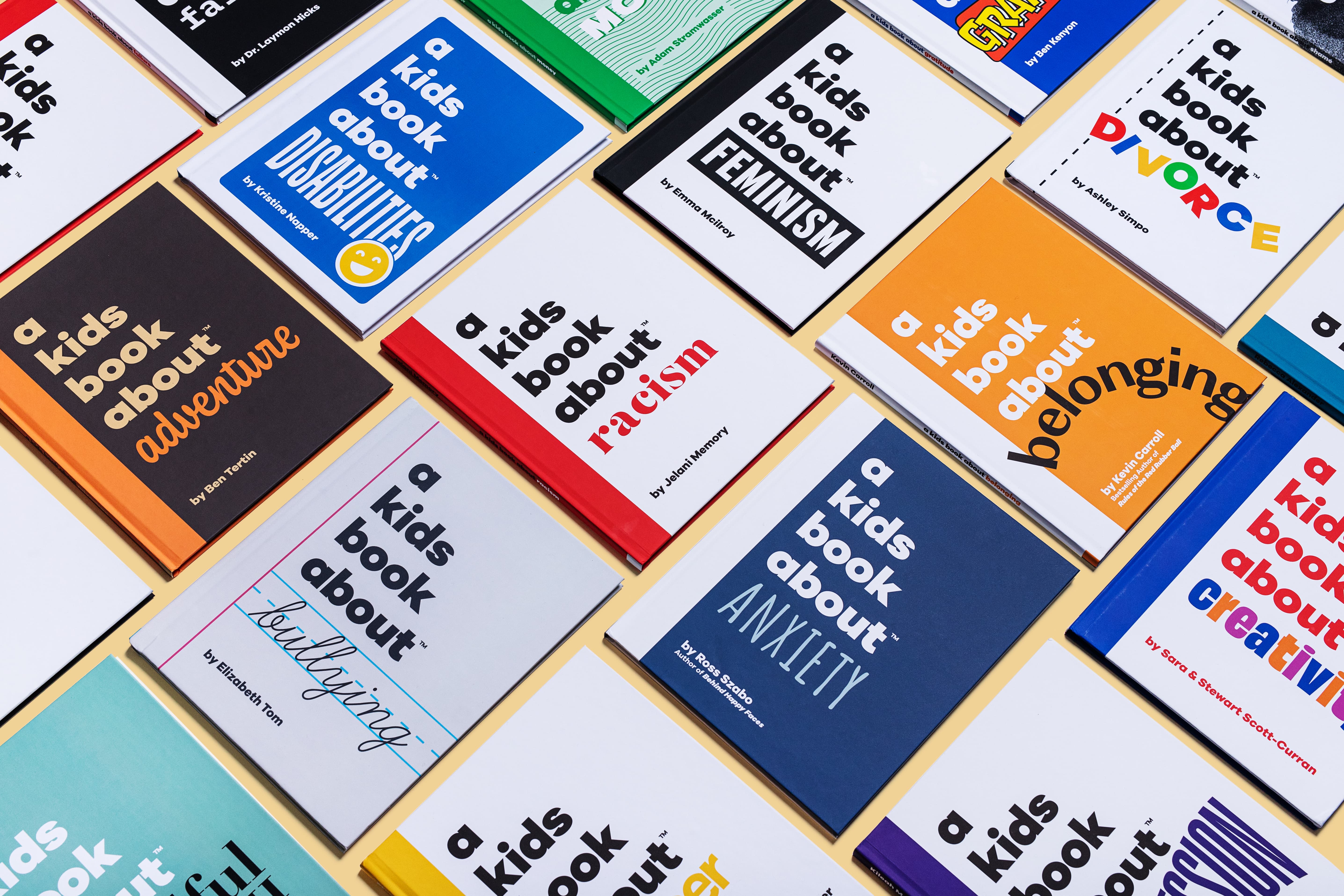
Jelani Memory, an entrepreneur and father, had been wanting to write a kids book for years. While in the midst of raising a Series B round for his startup Circle Media, he started to feel burned out and wanted to start doing something more creatively fulfilling, Memory told me. That’s what led Memory to create A Kids Book About, a book publishing platform to help parents tackle tough topics and conversations with their kids. Its first book was “A Kids Book About Racism.”

“It was really me as a dad trying to keep that conversation going with my kids, and my kids thought the book was cool,” Memory said. “And it caused them to ask all sorts of new questions that I hadn’t heard them ask before around the topic of racism.”

Memory then shared that book with friends and colleagues, who suggested he write more books about other topics.

“So that’s really when the seed was planted,” he said. “When you find yourself waking up in the morning thinking about something and going to bed at night thinking about it, and in the middle of your workday, when you’re supposed to be doing work, sort of obsessing over it, I just sort of intuitively knew that these books needed to exist — at the very least for my own kids — because I knew that some conversations really are too hard to have. And while I consider myself a pretty open dad and talk about a lot with my kids, some of those conversations are just too hard to bring up, or if you’re ready to bring them up, you don’t know what to say.”

That seems to have struck a chord with the masses. The day after George Floyd was killed by police, A Kids Book About did as much in sales at it had the whole previous month. And it didn’t slow down, Memory said. The following day, sales went up 2x, and the day after, went up another 2x and held steady. So, within the span of 10 days, A Kids Book About saw north of $1 million in revenue.

“And to be quite honest, we had enough inventory that was supposed to last us the rest of the year,” Memory said. But we sold out of every single one of our titles except for two.”

At a certain point in June, there were abut 50,000 books on backorder.

“Grownups were really stepping up to have these meaningful conversations with their kids,” Memory said. “And while our book on racism did really well, our customers are just remarkable and they were snagging our book on cancer and feminism and empathy and mindfulness. It was really cool to watch.”

A Kids Book About officially launched in 2019 with 12 titles released in October. Today, there are 25 titles available, with plans for more on the way. The startup is primarily a direct to consumer business with a “fairly unique and novel publishing model,” Memory said.

A Kids Book About writes all of its books via a workshop in a single day. The company brings in an author, talks through the vision and mission as a company and then co-writes the book with that author. A Kids Book About intentionally looks for folks who have not yet published books, though, there are authors on the platform who have previously published books.

“It just tends to be that if you’ve already published, you almost always are certainly a straight, white male,” Memory said. “So for us, we look for folks with a deep personal story and someone who knows their topic inside and out through their lived experience.”

a kids book about books

Image Credits: A Kids Book About

On the publishing side, A Kids Book About gives authors no less than 10% of the revenue from book sales, while traditional publishers may give around 6%, Memory said. It also takes, on average, 45 days to go to market, as opposed to 18 months in the traditional publishing world, Memory said.

When the COVID-19 pandemic hit, A Kids Book About realized it needed to tackle this topic. So it green-lit and created a book within four days with a social epidemiologist as a free e-book. The physical book is available on pre-order for next month.

Meanwhile, amid the massive social movement sparked by Floyd’s death, the company realized it needed additional books on the topic of race.

“While my book is a great conversation starter on racism, we realized there are a couple of others books we really need to make,” Memory said. “So we’re fast-tracking a book about white privilege that will come out this fall and a book about systemic racism as a way to sort of round out that conversation.”

Another untraditional aspect of the business is A Kids Book About’s approach to fundraising. Part of that process meant choosing his investors as much as them choosing him, Memory said.

“That means avoiding a lot of conversations, it meant saying no to some checks,” Memory said. “But it really meant going out and finding more Black and brown investors.”

Memory also sought out investors where this deal would be its first investment in a startup.

“That was really important that I wasn’t just taking accredited investors but making room for unaccredited investors as well, knowing that if the wealth loop just keeps going the way that it is, only people with money get to make more money,” he said.

A Kids Book About raised $1 million from a handful of seed funds, including Cascade Seed Fund, Color Capital and Black Founders Matter.

“And I can tell you, pitching a direct consumer kids book startup that tackles topics like cancer and racism is not super hot in the venture,” Memory said. “And being a founder of color, even as a second-time founder, you know, I can’t tell you how many folks recommended that I should talk to impact investors. And I was like, ‘I don’t think you understand what I’m doing here. This isn’t a charity.’ But it was very easy to avoid and say no to those investors.”

Overall, Memory said his business resonated pretty well with investors, with the exception of e-commerce or consumer-focused funds. Sometimes it came down to the investors not having a strong grasp on the publishing industry or to how new the business was, he said.

“I think most investors fancy themselves as risk takers, but I think investors are the most risk-averse on the planet,” Memory said. “And also, the game of fundraising really is about finding those true believers who really get what you’re up to. I am still a little bit amazed we raised $1 million for this business knowing that half of the money was raised right smack dab in the middle of quarantine lockdown in the pandemic. But, you know, I don’t think it hurt that we started to post just remarkable numbers. And a lot of those folks we were already in conversation with at the time. And by the time we were doing half a million every few days, I ended up saying no to quite a few investors who I either thought weren’t a fit for us or simply we didn’t have the allocation for.”

Private space industrialization is here

Mikhail Kokorich
Contributor

Mikhail Kokorich is CEO of Momentus, the first company providing in-space transportation services for satellites.

The universal glee that surrounded the launch of the crewed Dragon spacecraft made it easy to overlook that the Falcon rocket’s red glare marked the advent of a new era — that of private space industrialization. For the first time in human history, we are not merely exploring a new landmass. We, as a biological species, are advancing to a new element — the cosmos.

The whole history of humanity is the story of our struggle with space and time. Mastering new horizons, moving ever farther; driven by the desire for a better life or for profit, out of fear or out of sheer curiosity, people found ever faster, easier, cheaper and safer ways to conquer the space between here and there. When, at the beginning of the 19th century, Thomas Jefferson bought Louisiana from Napoleon, actually having doubled the territory of the United States at that time, he believed it would take thousands of years for settlers to populate these spaces in the center of the continent.

But after just a few decades, the discovery of gold in California mobilized huge masses of industrious people, created incentives for capital and demanded new technologies. As countless wagons of newcomers moved through the land, threads of railways were stretched coast to coast, cities and settlements arose, and what Jefferson envisioned more than 200 years ago was actualized — and in the span of just one human life.

Growing up in a small Mongolian village near where Genghis Khan began the 13th-century journey that resulted in the largest contiguous land empire in history, I acquired an early interest in the history of explorers. Spending many long Siberian winter twilights reading books about great geographical discoveries, I bemoaned fate for placing me in a dull era in which all new lands had been discovered and all frontiers had been mapped.

Little did I know that only a few decades later, I would be living through the most exciting time for human exploration the world had ever seen.

The next space race

In recent years, the entire space industry has been waiting and looking for what will serve as the gold rush of space. One could talk endlessly about the importance of space for humanity and how technologies developed by and for space activity help to solve problems on Earth: satellite imagery, weather, television, communications. But without a real “space fever” — without the short-term insanity that will pour enormous financial resources, entrepreneurial energy and engineering talent into the space industry, it will not be possible to spark a new “space race.”

Presently, the entire space economy — including rockets, communications, imagery, satellites and crewed flights — does not exceed $100 billion, which is less than 0.1% of the global economy. For comparison: during the dot-com bubble in the late 1990s, the total capitalization of companies in this sector amounted to more than 5% of global GDP. The influence of the California Gold Rush in the 1850s was so significant that it changed the entire U.S. economy, essentially creating a new economic center on the West Coast.

The current size of the space economy is not enough to cause truly tectonic shifts in the global economy. What candidates do we have for this place in the 21st century? We are all witnesses to the deployment of space internet megaconstellations, such as Starlink from SpaceX, Kuiper from Amazon and a few other smaller players. But is this market enough to create a real gold rush? The size of the global telecommunications market is an impressive $1.5 trillion (or almost 1.5% of the global economy).

If a number of factors coincide — a sharp increase in the consumption of multimedia content by unmanned car passengers, rapid growth in the Internet of Things segment — satellite telecommunications services can grow in the medium term to 1 trillion or more. Then, there is reason to believe that this segment may be the driver of the growth when it comes to the space economy. This, of course, is not 5% (as was the case during the dot-com era), but it is already an impressive 1% of the world economy.

But despite all the importance of telecommunications, satellite imagery and navigation, these are the traditional space applications that have been used for many decades since the beginning of the space era. What they have in common is that these are high value-added applications, often with no substitutes on the ground. Earth surveillance and global communications are difficult to do from anywhere but space.

Therefore, the high cost of space assets, caused primarily by the high cost of launch and historically amounting to tens of thousands of dollars per kilogram, was the main obstacle to space applications of the past. For the true industrialization of space and for the emergence of new space services and products (many of which will replace ones that are currently produced on Earth), a revolution is needed in the cost of launching and transporting cargo in space.

Space transports

The mastering of new territories is impossible to imagine without transport. The invention and proliferation of new means of moving people and goods — such as railways, aviation, containers — has created the modern economy that we know. Space exploration is not an exception. But the physical nature of this territory creates enormous challenges. Here on Earth, we are at the bottom of a huge gravity well.

To deliver the cargo into orbit and defeat gravity, you need to accelerate things to the prodigious velocity of 8 km/s — 10-20 times faster than a bullet. Less than 5% of a rocket’s starting mass reaches orbit. The answer, then, lies in reusability and in mass production. The tyranny of rocket science’s Tsiolkovsky equation also contributes to the large rocket sizes that are necessary. It drives the strategies for companies like SpaceX and Blue Origin, who are developing large, even gigantic, reusable rockets such as Starship or New Glenn. We’ll soon see that the cost of launching into space will be even less than a few hundred U.S. dollars per kg.

But rockets are effective only for launching huge masses into low-Earth orbits. If you need to distribute cargo into different orbits or deliver it to the very top of the gravity well — high orbits, such as GEO, HEO, Lagrange points or moon orbit — you need to add even more delta velocity. It is another 3-6 km/sec or more. If you use conventional rockets for this, the proportion of the mass removed is reduced from 5% to less than 1%. In many cases, if the delivered mass is much less than the capabilities of huge low-cost rockets, you need to use much more expensive (per kg of transported cargo) small and medium launchers.

This requires multimodal transportation, with huge cheap rockets delivering cargo to low-Earth orbits and then last-mile space tugs distributing cargo between target orbits, to higher orbits, to the moon and to other planets in our solar system. This is why Momentus, the company I founded in 2017 developing space tugs for “hub-and-spoke” multimodal transportation to space, is flying its first commercial mission in December 2020 on a Falcon 9 ride-share flight.

Initially, space tugs can use propellant delivered from Earth. But an increase in the scale of transportation in space, as well as demand to move cargo far from low-Earth orbit, creates the need to use a propellant that we can get not from the Earth’s surface but from the moon, from Mars or from asteroids — including near-Earth ones. Fortunately, we have a gift given to us by the solar system’s process of evolution — water. Among probable rocket fuel candidates, water is the most widely spread in the solar system.

Water has been found on the moon; in craters in the vicinity of the poles, there are huge reserves of ice. On Mars, under the ground, there is a huge ocean of frozen water. We have a vast asteroid belt between the orbits of Mars and Jupiter. At the dawn of the formation of the solar system, the gravitational might of Jupiter prevented one planet from forming, scattering fragments in the form of billions of asteroids, most of which contain water. The same gravity power of Jupiter periodically “throws out” asteroids into the inner part of the solar system, forming a group of near-Earth asteroids. Tens of thousands of near-Earth asteroids are known, of which almost a thousand are more than 1 km in diameter.

From the point of view of celestial mechanics, it is much easier to deliver water from asteroids or from the moon than from Earth. Since Earth has a powerful gravitational field, the payload-to-initial-mass ratio delivered to the very top of the gravitational well (geostationary orbit, Lagrange points or the lunar orbit) is less than 1%; whereas from the surface of the moon you can deliver 70% of the original mass, and from an asteroid 99%.

This is one of the reasons why at Momentus we’re using water as a propellant for our space tugs. We developed a novel plasma microwave propulsion system that can use solar power as an energy source and water as a propellant (simply as a reaction mass) to propel our vehicle in space. The choice of water also makes our space vehicles extremely cost-effective and simple.

The proliferation of large, reusable, low-cost rockets and in-space last-mile delivery opens up opportunities that were not possible within the old transportation price range. We assume that the price to deliver cargo to almost any point in cislunar space, from low-Earth orbit to low-lunar orbit will be well below $1,000/kg within 5-10 years. What is most exciting is that it opens up an opportunity to introduce an entirely new class of space applications, beyond traditional communication, observation and navigation; applications that will start the true industrialization of space and catalyze the process of Earth industry migration into space.

Now, let’s become space futurists, and try to predict future candidates for a space gold rush in the next 5-10 years. What will be the next frontier’s applications, enabled by low-cost space transportation? There are several candidates for trillion-dollar businesses in space.

Energy generation

Energy generation is the first and largest candidate for the gold rush, as the energy share of the global economy is about 8.2%. Power generation in space has several fantastic advantages. First, it is a continuity of power generation. In space, our sun is a large thermonuclear reactor that runs 24/7. There’s no need to store electricity at night and in bad weather. As a result, the same surface collects 10 times more energy per 24 hours than on Earth.

This is not intuitively obvious, but the absence of twilights or nighttime, and the lack of clouds, atmosphere or accumulating dust create unique conditions for the production of electricity. Due to microgravity, space power plants with much lighter structures can eventually be much less costly than terrestrial plants. The energy can be beamed to the ground via microwaves or lasers. There are, however, at least two major challenges to building space power stations that still need to be resolved. The first is the cost of launching into space, and then the cost of transportation within space.

The combination of huge rockets and reusable space tugs will reduce the cost of transporting goods from Earth to optimal orbits up to several hundred dollars per kilogram, which will make the share of transportation less than one cent per kilowatt-hour. The second problem is the amount of propellant you’ll need to stabilize vast panels that will be pushed away by solar radiation pressure. For every 1 gigawatt of power generation capacity, you’ll need 500-1,000 tons of propellant per year. So to have the same generation capacity as the U.S. (1,200 GW), you’ll need up to 1 million tons of propellant per year (eight launches of Falcon 9 per hour or one launch of Starship per hour).

Power generation will be the largest consumer of the propellant in cislunar space, but the delivery of propellant from Earth will be too economically inefficient. The answer lies on the moon, where 40 permanently darkened craters near the north pole contain an estimated 600 million metric tonnes of ice. That alone will be enough for many hundreds of years of space power operations.

Data processing

Centers for data computation and processing are one of the largest and fastest-growing consumers of energy on Earth. Efficiency improvements implemented over the last decade have only increased the demand for large cloud-based server farms. The United States’ data centers alone consume about 70 billion kilowatt-hours of electricity annually. Aside from the power required to operate the systems that process and store data, there is an enormous cost in energy and environmental impact to cool those systems, which translates directly to dollars spent both by governments and private industry.

Regardless of how efficiently they are operated, the expansion of data centers alongside demands for increased power consumption is not sustainable, economically or environmentally. Instead of beaming energy to the ground via microwaves or lasers, energy can be used for data processing in space. It is much easier to stream terabytes and petabytes from space than gigawatts. Power-hungry applications like AI can be easily moved to space because most of them are tolerant of latency.

Space mining

Eventually, asteroids and the moon will be the main mining provinces for humanity as a space species. Rare and precious metals, construction materials, and even regolith will be used in the building of the new space economy, space industrialization and space habitats. But the first resource that will be mined from the moon or asteroids will be water — it will be the “oil” of the future space economy.

In addition to the fact that water can be found on asteroids and other celestial bodies, it is quite easy to extract. You simply need heat to melt ice or extract water from hydrates. Water can be easily stored without cryogenic systems (like liquid oxygen or hydrogen), and it doesn’t need high-pressure tanks (like noble gases — propellant for ion engines).

At the same time, water is a unique propellant for different propulsion technologies. It can be used as water in electrothermal rocket engines (like Momentus’ microwave electrothermal engines) or can be separated into hydrogen and oxygen for chemical rocket engines.

Manufacturing

The disruption of in-space transportation costs can make space a new industrial belt for humanity. Microgravity can support creating new materials for terrestrial applications like optical fiber, without the tiny flaws that inevitably emerge during production in a strong gravity field. These flaws increase signal loss and cause large attenuation of the transmitted light. Also, microgravity can be used in the future space economy to build megastructures for power generation, space hotels for tourists and eventually human habitats. In space, you can easily have a vacuum that would be impossible to achieve on Earth. This vacuum will be extremely valuable for the production of ultrapure materials like crystals, wafers and entirely new materials. The reign of in-space manufacturing will have begun when the main source of raw materials is not Earth, but asteroids or the moon, and the main consumers are in-space industry.

The future market opportunities enabled by the disruption in space transportation are enormous. Even without space tourism, space habitats will be almost a two trillion dollar market in 10-15 years. Undoubtedly, it will lead to a space gold rush that will drive human civilization’s development for generations to come.

The final frontier

I studied in high school during the last years of the Soviet Union. The Soviet economy was collapsing, we had no sanitation in the house, and quite often we had no electricity. During those dark evenings, I studied physics and mathematics books by the light of a kerosene lamp. We had a good community library, and I could order books and magazines from larger libraries in the big cities, like Novosibirsk or Moscow. It was my window into the world. It was awesome.

I was reading about the flights of the Voyager spacecraft, and about the exploration of the solar system, and I was thinking about my future. That was the time when I realized that I both love and excel in science and math, and I decided then to become a space engineer. In an interview with a local newspaper back in 1993, I told the reporter, “I want to study advanced propulsion technologies. I dream about the future, where I can be part of space exploration and may even fly to Mars … .”

And now that future is coming.