Fondeadora is a Mexican challenger bank that just raised $14 million

Meet Fondeadora, a fintech startup based in Mexico City that wants to build a full-stack neobank. The company just raised a $14 million Series A round led by Gradient Ventures, Google’s AI-focused venture fund. Founded in 2018, the company already manages 150,000 accounts and is adding $20 million in deposits every month.

Mexico represents a massive opportunity for a challenger bank as many people still rely on cash for most of their transactions. Given that all countries are progressively switching to card and digital payments, it seems like the right time to launch Fondeadora .

Y Combinator, Scott Belsky, Sound Ventures, Fintech Collective and Ignia are also participating in the funding round.

“We launched the first crowdfunding platform in Mexico about 10 years ago,” co-founder and co-CEO Norman Müller told me. “About 50% of card transactions failed in the system.”

That platform was also called Fondeadora. After a deal with Kickstarter, Müller and Fondeadora co-founder René Serrano went back to the drawing board and thought about the problems they had while operating the crowdfunding platform. It became Fondeadora as we know it today, a challenger bank that wants to improve the banking experience in Mexico.

The team traveled across Mexico to find a bank charter that they could use. “We acquired the charter, it was owned by a group of tomato farmers in Mexico. Twenty years ago, the government gave about 10 charters to create financial inclusion,” Müller told me.

The company launched its banking service after that. You can open an account without visiting a branch. You then receive a Mastercard debit card. You can choose to receive notifications after each purchase, lock and unlock your card, send instant transfers to other users and more. There are no monthly subscription fee and no foreign transaction fee.

Up next, Fondeadora wants to democratize savings accounts. “Cash has a great UX and UI. You can touch it, you can store it in your drawer. But as a medium to generate income, it’s terrible,” Müller told me.

In the coming months, you’ll earn interest on your deposits in your Fondeadora account. “We’re investing in government bonds, it’s a very secure type of instruments. In Mexico, you can get 5% or 6% interest rate,” Müller said. The startup could allocate a small portion of deposits to medium-risk investments as well.

Image credits: Fondeadora

Kneron launches its new AI chip to challenge Google and others

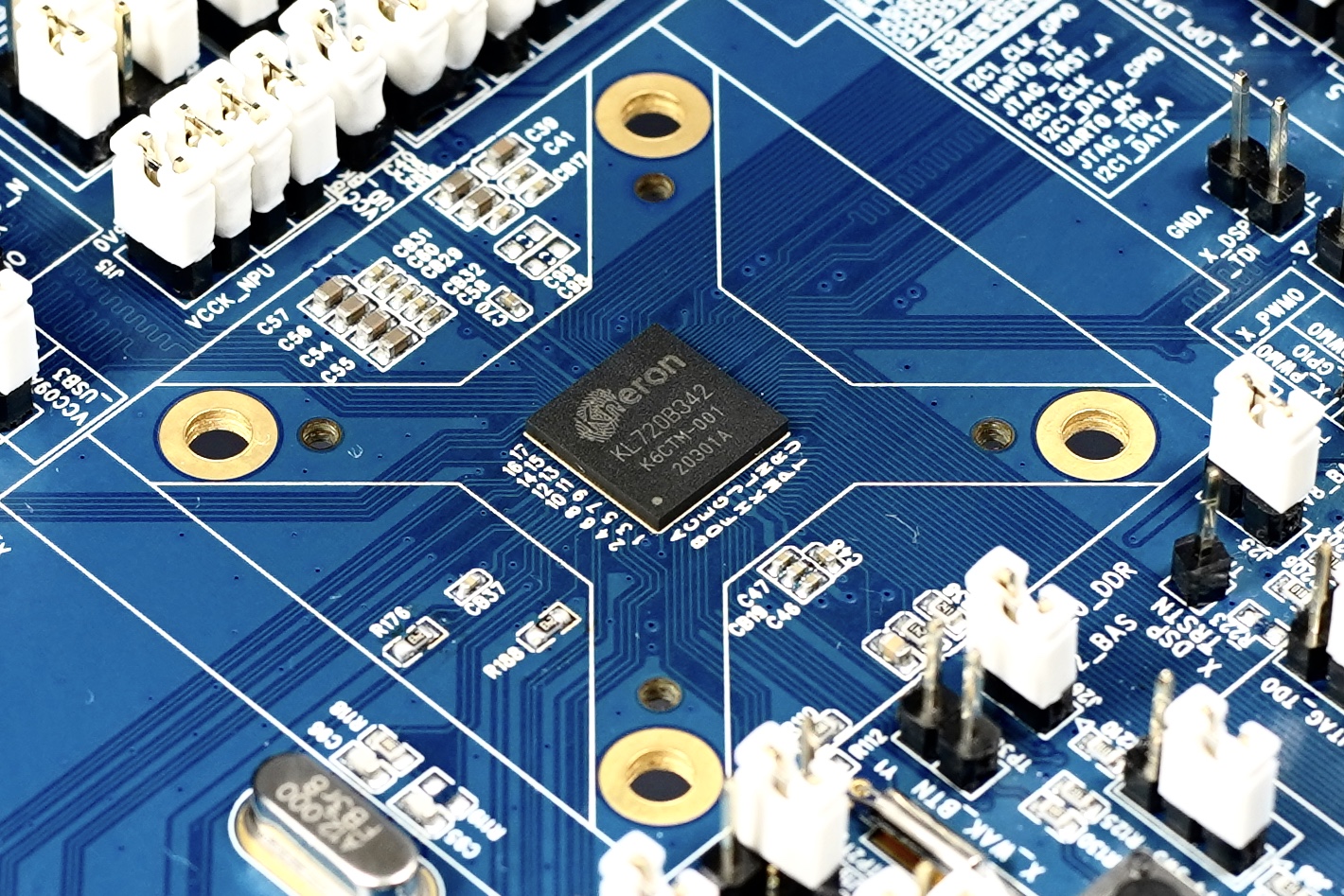
Fresh off a $40 million Series A round, edge AI specialist Kneron today announced the launch of its newest custom chip, the Kneron KL 720 SoC.

With funding from the likes of Alibaba, Sequoia, Horizons Ventures, Qualcomm and SparkLabs Taipei (as well as a few undisclosed backers), it’s worth taking the company’s efforts seriously, and Kneron has no qualms about comparing its chips to those of Intel and Google, for example. It argues that its KL 720 is twice as energy efficient as Intel’s latest Movidius chips and four times more efficient than Google’s Coral Edge TPU at running the MobileNetV2 image recognition benchmark.

Compared to its previous generation of chips, this updated version can process 4K still images and videos at a 1080P resolution. It also features a number of new audio recognition breakthroughs for the company, which Kneron says will allow devices that use its chips to bypass the standard wake words on other chips and have immediate conversations with the device.

Image Credits: Kneron

Overall, Kneron promises 1.5 TOPS in performance from its SoC, which uses an Arm Cortex M4 as its main control unit. The average power consumption for the full package is around 1.2W.

“KL720 combines power with unmatched energy-efficiency and Kneron’s industry-leading AI algorithms to enable a new era for smart devices,” said Kneron founder and CEO Albert Liu. “Its low cost enables even more devices to take advantage of the benefits of edge AI, protecting user privacy, to an extent competitors can’t match. Combined with our existing KL520, we are proud to offer the most comprehensive suite of AI chips and software for devices on the market.”

With KNEO, the company also offers an interesting networking solution for devices that are powered by its chips. With this, developers can create their own private networks and connect multiple sensors without having to route data to the cloud. That network uses blockchain technology to secure the data and in a bit of a twist, Kneron hopes to create a marketplace that will allow consumers to exchange or sell their data to buyers.

For now, though, the company seems to be more focused on the core hardware. That’s also an area where we’ve seen the competition heat up, with other well-funded startups like Hailo also recently launching their latest chips.

Chinese EV startup Xpeng Motors raises $1.5 billion in US public market debut

Chinese electric vehicle startup Xpeng Inc. raised $1.5 billion through an initial public offering in the U.S. as investor interest in EVs and clean energy outstripped concerns over escalating tensions between the U.S. and China.

The automaker, which is headquartered in Guangzhou, China and has offices in Silicon Valley and San Diego, said in a filing that it sold 99.7 million shares for $15 each, raising about $1.5 billion. The automaker had originally planned to sell 85 million shares with a price guidance of between $11 and $13.

Shares of Xpeng began trading Thursday on the New York Stock Exchange under the ticker symbol XPEV.

Xpeng had raised a total of $1.7 billion from investors, including Chinese e-commerce giant Alibaba and Xiaomi Corp, prior to its Wall Street debut. In July, the company said it had raised around $500 million in a Series C+ round to further develop electric vehicle models aimed at China’s tech-savvy middle-class consumers.

Moving to the public market gives Xpeng access to a far bigger pool of capital, which it will need to compete against an increasingly crowded EV marketplace in China. Xpeng faces competition from Li Auto, Nio, WM Motor and notably, Tesla, which began producing Model 3 sedans at its new Shanghai factory in December 2019.

Customers experiencing a new car at the Chinese automobile

SHANGHAI, CHINA – 2019/08/25: Customers experiencing a new car at the Chinese automobile manufacturer Xpeng or Xiaopeng Motors store in Shanghai. (Photo by Alex Tai/SOPA Images/LightRocket via Getty Images)

Xpeng has two electric vehicles on the market, the G3 SUV and the P7 sedan. Production of the G3 began in November 2018. As of July 31, Xpeng said it had delivered 18,741 G3 SUVs to customers.

Deliveries of the P7 began in May 2020. The company has delivered 1,966 P7 sedans — a direct competitor to the Tesla Model 3 — as of July 31. Xpeng is also planning a third electric vehicle, which will be another sedan, that will come to market in 2021.