Vibe introduces a remote collaboration solution that works with your favorite apps

A startup called Vibe, launching today at TechCrunch Disrupt Startup Battlefield, wants to make it easier for businesses to collaborate remotely. Its system, which combines a large interactive digital whiteboard and cloud service, allows users to host remote brainstorming sessions, client presentations, virtual trainings and more. Vibe also works with a large ecosystem of popular workplace apps, like Slack, Dropbox, Teams, Zoom, OneDrive, Chrome, Asana, and many others, allowing businesses to continue to use the tools they’re already invested in, instead of having to learn an entirely new workflow or switch apps.

The Bellevue, Washington-headquartered startup was founded in 2016 by a team looking for the ideal remote collaboration solution. Initially, they believed this would mean VR devices with headsets, but later came to realize that what they really wanted was a single tool that would serve as a platform for real-time collaboration.

Today, the Vibe system includes a 55-inch, 4K touchscreen device that integrates with third-party apps in full-screen or split-screen modes, allowing customers to videoconference, chat or use the apps while whiteboarding.

Users can also annotate on top of presentations, pictures and files from other apps, then save them into whiteboard projects. Vibe’s high-resolution rendering engine offers an unlimited canvas, low latency, and a cross-app annotation experience, the company says.

The Vibe board can also function as a second screen via screencasting or an HDMI cable while supporting annotation. The company’s cloud service for Vibe, meanwhile, is based on AWS.

Vibe promises low latency drawing response time of fewer than 7 milliseconds for sketching and writing, as well as a collaboration experience that lets participants collaborate across devices, including via their web browser, iPad or Android tablet, in addition to the Vibe board itself.

The product stealth-launched in late 2019 and has sold to over 400 customers so far. Vibe is officially launching to the public at TechCrunch Disrupt’s Startup Battlefield.

The company says many of its existing customers opted for Vibe so they can continue to use apps like Zoom and Slack, which aren’t integrated with Microsoft’s Surface Board, Google’s Jamboard, Samsung’s Flip, or Cisco’s WebEx brand boards.

This is an important feature for customers who need to work with clients over the apps their clients use, the company notes. It also helps Vibe sell to school system I.T. departments, as its open ecosystem means it’s easier for teachers, students, and admins to adopt its technology.

The board itself is $2,999 and doesn’t have any ongoing monthly or annual service fees. That significantly undercuts the competition. Google Jamboard today is $4,999, plus a $600 annual subscription; Cisco WebEx Board is $4,990, plus a $199 monthly subscription); and Microsoft’s Surface Hub is $8,999, plus an Office 365 Subscription.

The company tells TechCrunch it got to the lower price point by using an IR touch sensor instead of a P-CAP touch sensor to reduce 20% of the cost. The trade-off here is Vibe has worse palm rejection, but they believe it will satisfy most collaboration scenarios. In addition, the company customizes its OS and rendering engine to work on an all-in-one ARM chip instead of Intel-based Windows. The trade in this case is that users won’t need to buy an extra mini PC for Vibe to work with, but the performance could be worse in some scenarios.

The Vibe co-founding team has backgrounds in engineering, image processing, computer vision and supply chain logistics.

Vibe CEO Charles Yang is a serial entrepreneur who studied Computer Science at Zhejiang University, where he met his co-founders. Vibe VP Jian Zhao has a background in image processing, computer vision, multimedia, and machine learning, and spent five years at Microsoft as a software engineer after completing his PhD in computer and electrical engineering at the University of Kentucky.

Vibe CTO Jiulong Wang brings experience in distributed systems, architecting, debugging and performance tuning, and has spent time at Microsoft and Twitter as a developer. Vibe COO Susie Deng, who spent 11 years at BYD, utilizes her background in international economics and trade to tackle the supply chain and financial challenges to help bring the price of the Vibe whiteboard down.

Today, the company has offices in Hangzhou, Shenzhen, and Shanghai, China, in addition to its Bellevue HQ.

Vibe has raised funding from Cherubic Ventures, Unity Ventures, InnoLink Ventures, and Challengers Capital.

HacWare wants you to hate email security a little less

Let’s face it, email security is something a lot of people would rather think less about. When you’re not deluged with a daily onslaught of phishing attacks trying to steal your passwords, you’re also expected to dodge the simulated phishing emails sent by your own company all for the sake of checking a compliance box.

One security startup wants that to change. Tiffany Ricks founded HacWare in Dallas, Texas, in 2017 to help bring better cybersecurity awareness to small businesses without getting in the way of the day job.

“We’re trying to show them what they don’t know about cybersecurity and educate them on that so they can get back to work,” Ricks told TechCrunch, ahead of the company’s participation in TechCrunch’s Startup Battlefield.

Ricks, a former Pentagon contractor, has her roots as an ethical hacker. As a penetration tester, or “red teamer,” she would test the limits of a company’s cybersecurity defenses by using a number of techniques, including social engineering attacks, which often involves tricking someone into turning over a password or access to a system.

“It was just very easy to get into organizations by social engineering employees,” said Ricks. But the existing offerings on the market, she said, weren’t up to the task of educating users at scale.

“And so we built the product in-house,” she said.

HacWare sits on a company’s email server and uses machine learning to categorize and analyze each message for risk — the same things you would look for in a phishing email, like suspicious links and attachments.

HacWare tries to identify the most at-risk users, like those working in finance and human resources, who are more vulnerable to business email compromise attacks that try to steal sensitive employee information. The system also uses automated simulated phishing attacks using the contents of what’s in a user’s inbox already to send personalized phishing emails to test the user.

Email remains the most popular way for attackers to use phishing and other social engineering attacks to try to steal sensitive information, according to Verizon’s annual data breach report. These attackers want your passwords or to try to trick you into sending sensitive documents, like employee tax and financial information.

But as the adage goes, humans are the weakest link in the security chain.

Stronger security features, like two-factor authentication, makes it far more difficult for hackers to break into accounts but it’s not a panacea. It was only in July that Twitter was hit by a devastating breach that saw hackers use social engineering techniques to trick employees into giving over access to an internal “admin” tool that the hackers abused to hijack high-profile accounts and spread a cryptocurrency scam.

HacWare’s approach to email security appears to be working. “We’ve seen a 60% reduction in reducing phishing responses,” she said. The automated phishing simulations also help to reduce IT workload, she said.

Ricks moved the bootstrapped HacWare to New York City after securing a place in Techstars’ accelerator program. HacWare is seeking to raise a $1 million seed round, said Ricks. For now, the company is “laser focused” on email security, but the company has growth in its sights.

“I see us expanding into just trying to understand human behavior and trying to figure out how we can mitigate that risk,” she said.

“We believe that cyber security is an integrated approach,” said Ricks. “But first we definitely need to start with the root cause, and the root cause is we need to really get our people the tools they need to empower them to make sound cybersecurity decisions,” she said.

Amazon-backed Indian insurtech startup Acko raises $60 million

A young Indian startup that is taking on the country’s antiquated insurance industry with a digital-first product — and which has already received backing from global giant Amazon — today announced a new financing round.

Bangalore-based Acko said on Tuesday it has raised $60 million in its Series D financing round. Germany-based Munich Re, one of the world’s largest reinsurers, led the financing round, while existing investors Amazon, RPS Ventures and Intact Ventures, corporate venture arm of Canada’s largest property and casualty insurer, participated in it.

The new round, which brings Acko’s to-date raise to $200 million, valued the three-year-old startup at about $500 million (up from about $300 million last year), a person familiar with the matter told TechCrunch.

Acko develops and sells bite-sized auto insurance products (aimed at drivers and others in transportation-related scenarios). The startup expanded its catalog six months ago to provide healthcare protections that it sells to businesses and employers. More than 150,000 employees are already covered by Acko’s healthcare protection, the startup said.

Acko founder and chief executive Varun Dua told TechCrunch in an interview that the startup has amassed over 60 million customers and has issued over 650 million policies to date.

Offering a large catalog of bite-sized insurance policies is crucial for firms in India. Only a fraction of the nation’s 1.3 billion people currently have access to insurance and most can’t afford sizeable policies.

According to rating agency ICRA, insurance products had reached less than 3% of the population as of 2017. An average Indian makes about $2,100 a year, according to the World Bank. ICRA estimated that of those Indians who had purchased an insurance product, they were spending less than $50 on it in 2017.

“We’re excited to join forces with one of the leading digital insurers in India, as well as other investment partners, to help support Varun and his impressive team as they continue their journey,” said Oshri Kaplan, director at Munich Re Ventures, in a statement.

“As Munich Re Ventures’ first investment in India, we look forward to the positive impact that digitally native insurance solutions will have on the country with Acko leading the way.”

Acko sells insurance policies directly to customers or through partners such as Amazon, which entered the insurance space in the country earlier this year in collaboration with Acko. (Amazon currently accounts for only a fraction of the insurance Acko sells, people familiar with the matter said.)

Acko’s products have quickly gained popularity in India for three reasons. It does not rely on middlemen, who have proven to slow down innovation for the insurance industry at large, Dua explained. Having direct engagement with a customer allows Acko to offer more competitive and personalized policies, he said.

The second is Acko’s underwriting technology, for which it comb through a range of data points to assess whether someone is eligible for a policy, he said.

Acko has also made it easier for people to access policies and then claim them. As everything is digital, sign-up does not require any paperwork and making a claim is quick, too — factors that keep existing customers happy, Dua said.

Scores of startups and established banks in India have launched products to win this market. Paytm (India’s most valuable startup) and its co-founder and chief executive, Vijay Shekhar Sharma, announced in July they were acquiring insurance firm Raheja QBE for a sum of $76 million.

Dua, who has spent more than a decade in the insurance business, said he was not worried about the competition as the market is large enough.

The startup plans to use the fresh capital to scale its technology and data teams by at least 30% to 40%, Dua said. It also plans to use a portion of the capital to invest in branding to reach more customers, especially those living in smaller cities and towns in India.

The rest of the money will be used to finance the insurance policies. Unlike several fintech startups in India that work with banking partners to finance loans, current regulatory rules require insurance firms to underwrite risks themselves.

“We would love to be in a position where we always have a strong balance sheet,” Dua said. (Avendus Capital was the financial advisor to Acko for the deal.)

The fitness market doesn’t seem too scared by Apple Fitness+

Usually, Apple making a grand entrance to an entrenched market would spell doom for the players there, but when it comes to Apple’s latest digital workout service, it doesn’t look like investors are worried about Fitness+ killing the momentum.

Part of that may be that expectations were already priced-in to these stocks. The fitness play had been rumored by a report in Bloomberg last month, but few details were public of the service which was announced today and appears to echo offerings from Peloton and Fitbit, but fully leverage Apple’s Watch hardware.

Peloton was already having a great day, currently up more than 5%, though it took a brief hit during Apple’s Fitness+ presentation before rebounding. The stock is currently up a staggering 191% in 2020.

Fitbit’s share price was relatively unchanged in intra-day trading. The company launched a Fitbit Premium service last month, but its stock is flat from the beginning of the year.

Things didn’t look much different for the more entrenched fitness companies. Weight Watchers International, which has seen its share price nearly halved since the beginning of the year, was down less than 1% by time of publication, and Planet Fitness, which has had a rough year but is showing signs of recovery, was up nearly 5% at the time of writing.

Why so little movement across the board? Well, Apple is pressing forward on entering a number of digital markets in its services business at the moment, and that spread can mean less focus on dominating an industry. With its Apple One subscription bundling fitness on the higher-end tier, there’s always the danger that consumers won’t leave another subscription to join Apple, but already belonging to the Apple One will prevent them from looking at rival fitness services.

Underestimating Apple is never a wise proposition, but the company is in an unprecedented position as it looks to kickstart several digital services and, out-of-the-gate at least, they haven’t all been slam dunks.

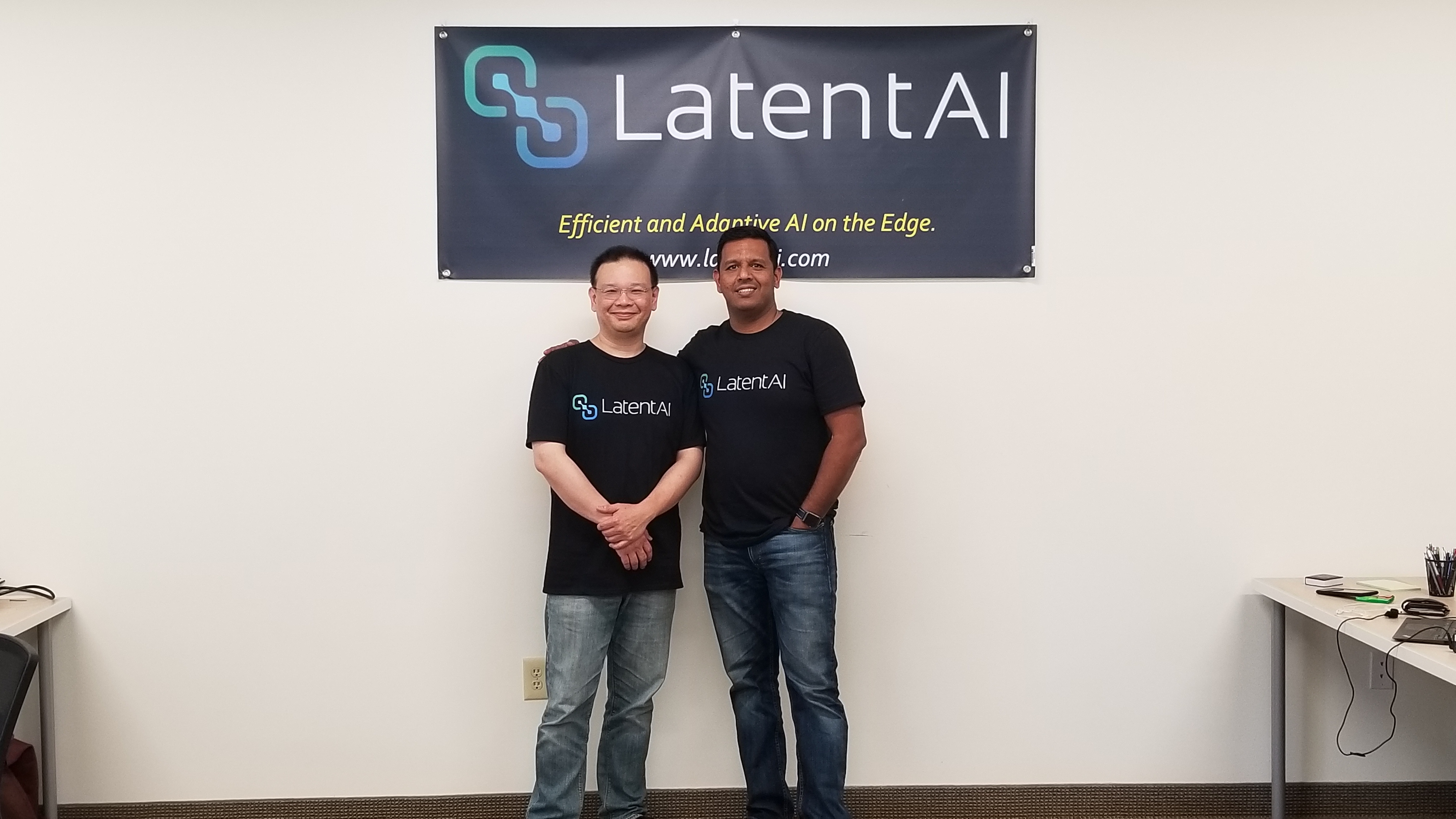
Latent AI makes edge AI workloads more efficient

Latent AI, a startup that was spun out of SRI International, makes it easier to run AI workloads at the edge by dynamically managing workloads as necessary.

Using its proprietary compression and compilation process, Latent AI promises to compress library files by 10x and run them with 5x lower latency than other systems, all while using less power thanks to its new adaptive AI technology, which the company is launching as part of its appearance in the TechCrunch Disrupt Battlefield competition today.

Founded by CEO Jags Kandasamy and CTO Sek Chai, the company has already raised a $6.5 million seed round led by Steve Jurvetson of Future Ventures and followed by Autotech Ventures .

Before starting Latent AI, Kandasamy sold his previous startup OtoSense to Analog Devices (in addition to managing HPE Mid-Market Security business before that). OtoSense used data from sound and vibration sensors for predictive maintenance use cases. Before its sale, the company worked with the likes of Delta Airlines and Airbus.

Image Credits: Latent AI

In some ways, Latent AI picks up some of this work and marries it with IP from SRI International .

“With OtoSense, I had already done some edge work,” Kandasamy said. “We had moved the audio recognition part out of the cloud. We did the learning in the cloud, but the recognition was done in the edge device and we had to convert quickly and get it down. Our bill in the first few months made us move that way. You couldn’t be streaming data over LTE or 3G for too long.”

At SRI, Chai worked on a project that looked at how to best manage power for flying objects where, if you have a single source of power, the system could intelligently allocate resources for either powering the flight or running the onboard compute workloads, mostly for surveillance, and then switch between them as needed. Most of the time, in a surveillance use case, nothing happens. And while that’s the case, you don’t need to compute every frame you see.

“We took that and we made it into a tool and a platform so that you can apply it to all sorts of use cases, from voice to vision to segmentation to time series stuff,” Kandasamy explained.

What’s important to note here is that the company offers the various components of what it calls the Latent AI Efficient Inference Platform (LEIP) as standalone modules or as a fully integrated system. The compressor and compiler are the first two of these and what the company is launching today is LEIP Adapt, the part of the system that manages the dynamic AI workloads Kandasamy described above.

In practical terms, the use case for LEIP Adapt is that your battery-powered smart doorbell, for example, can run in a low-powered mode for a long time, waiting for something to happen. Then, when somebody arrives at your door, the camera wakes up to run a larger model — maybe even on the doorbell’s base station that is plugged into power — to do image recognition. And if a whole group of people arrives at ones (which isn’t likely right now, but maybe next year, after the pandemic is under control), the system can offload the workload to the cloud as needed.

Kandasamy tells me that the interest in the technology has been “tremendous.” Given his previous experience and the network of SRI International, it’s maybe no surprise that Latent AI is getting a lot of interest from the automotive industry, but Kandasamy also noted that the company is working with consumer companies, including a camera and a hearing aid maker.

The company is also working with a major telco company that is looking at Latent AI as part of its AI orchestration platform and a large CDN provider to help them run AI workloads on a JavaScript backend.

Check out these Breakout Sessions at Disrupt 2020

We’re on the brink of the biggest Disrupt in TechCrunch history. It’s five days of education, exhibition, competition and connection that spans the globe. As you plan your schedule, keep this in mind: You’ll find some of the most insightful and downright interesting programming at Disrupt 2020 in our Breakout Sessions. And that, given our powerhouse agenda, is saying something.

Every Disrupt attendee can take part in the breakout sessions — they’re open to every pass level. Breakouts cover a range of topics and formats. You might watch startups pitch, attend a workshop or take in a panel discussion. No matter what, you’re bound to receive valuable insight that can inspire you and help your business.

Take advantage of our partners’ expertise and check out any (or all) of these breakout sessions. You’ll be glad you did.


Monday, September 14

11:00 am – 11:50 am

Sponsored by Adobe

How to Invest in Infrastructure to Deliver Experience 

Gabie Boko, Global VP Digital, Hewlett Packard Enterprise & Adobe VP of Platform Engineering, Anjul Bhambhri discuss digital transformation and experience delivery. 


12:00 pm – 12:30 pm

Sponsored by Taiwan Tech Arena

Taiwan Pavilion Pitch-off session 1

Featuring twenty startups in healthcare, IoT, blockchain, AR-VR, cyber security, E-learning, and green technology


Tuesday, September 15

9:00 am – 9:50 am

Sponsored by Silicon Valley Bank

Diversity as Disruption: Take action now to create a more diverse ecosystem

Recent events continue to demonstrate that change is not happening fast enough. How can we ensure the current social justice momentum is more than just talk? Guided by SVB’s recent research into the “4th wave of venture capital,” learn how three industry leaders are tackling the problem with real actions. By the close of the session, leave with tangible steps you can take today – whether as an individual or as a firm — to make a meaningful, move-the-needle impact in your organization.


9:00 am – 10:30 am

Sponsored by Taiwan Tech Arena

Taiwan Reception: Innovations and investment opportunities amid COVID19 Pandemics with Christine Tsai (500 Startups), Allan May (Life Science Angels)

Join Christine, Allan, Tico Blumenthal (Life Sciences Angels), and Laura Dietch (BioTrace Medical) to explore the investment and innovation framework in post-COVID19, and to discuss the driver of innovation healthcare amid the pandemic and economic collapse. TTA will also present the key anti-COVID19 innovative measurements in Taiwan to achieve the lowest infection rate around the world.


10:00 am – 10:30am

Sponsored by hub.brussels

Belgian Startup Pitch Competition

Hub.brussels invites you to join us for the 6th edition of our Belgian startup pitch competition.


12:00 pm – 12:30 pm

Taiwan Pavilion Pitch-off Session 2

Sponsored by Taiwan Tech Arena

Featuring twenty startups in AI solutions, softwares, big data, edge computing, and space technology


2:30 pm – 4:00 pm 

TC Include Reception sponsored by Sootchy

Sponsored by Sootchy

INVITE ONLY – TC Include kicks off this year’s founder cohort with organizational partners Black Female Founders, Female Founders Alliance, Latinx Startup Alliance and StartOut with remarks by Sootchy.


Wednesday, September 16

9:00 am – 9:50 am

Sponsored by Consulate General of Canada in San Francisco

“Grow North”: How Canada Empowers Investors and Founders

Come listen to a group of Canadian founders who will talk about their start-ups and how Canada has helped them grow and succeed globally.


10:00 am – 11:00 am

Sponsored by StartUp Bahrain

Bahrain: Your gateway to the Middle East and beyond

INVITE ONLY – With its supportive ecosystem, advanced digital infrastructure, flexible and pioneering regulations; rapid growth in funding opportunities and a liberal market, Bahrain is the ideal testbed for startups and scaleups to test their products and solutions before growing and expanding across the Middle East


10:00 am – 10:30 am 

Sponsored by JETRO

Japanese Startup Pitches

Come see the latest exciting technology and services coming from Japan.


11:00 am – 11:30 am 

Sponsored by KOCCA

Join Us to Watch Seven Amazing Startups from Korea

K-pop? K-Drama? K-Games? K-Entertainment? All startups with K-contents will show off during this Pitch Off


12:00 pm – 12:50 pm 

Sponsored by Envestnet | Yodlee

Making Data Meaningful for the FinTech Ecosystem

Open finance/banking represents a new era of financial data transparency. It brings an unprecedented opportunity for FinTechs to provide personalized guidance consumers need to improve financial wellness. Envestnet | Yodlee experts will discuss empowering the entire FinTech ecosystem with enriched financial data and insights, plus the future of open banking in the U.S.


Thursday, September 17

10:00 am – 11:30 am

Sponsored by Dassault Systèmes

Dassault Systemes’s 3DEXPERIENCE Lab Global Accelerator Program

INVITE ONLY – 3DEXPERIENCE Lab is Dassault Systèmes’s global innovation program that offers innovative startups free access to Dassault Systèmes collaborative Design, Engineering, Simulation & Data Intelligence solutions, along with mentoring, and marketing support for two years. Come; learn how the Lab selects, mentors and supports its startups!


10:00 am – 10:50 am

Sponsored by AppsFlyer

Advertising Disrupted: What User Privacy Means For Marketers

This session offers the unique opportunity to join a live recording of AppsFlyer’s industry podcast, Next in Marketing. Mike Shields, podcast host and former Wall Street Journal, Business Insider, AdWeek and Digiday editor along with guests (Brian Quinn, US President & GM, AppsFlyer and Ana Milicevic, Co-founder and Principal, Sparrow Advisers) will delve into the ecosystem’s pivotal privacy updates, including Apple’s IDFA opt-out and the impact of iOS 14 to measurement and attribution, as well as targeting in a cookieless world. You’ll also hear about the future of personalization post-regulations in this session that is sure to address the most pressing issues and headlines on the mind of marketers globally.


12:00 pm – 12:50 pm

Sponsored by KITE

It Takes An Ecosystem To Innovate: Startups, Corporations and the Connectors that Bring Them Together

Startups plus large enterprises can fuel each other’s growth and bottom line, whether it’s a partnership, investment or acquisition. But bringing the right ones together needs more than serendipity: it requires a dynamic ecosystem that includes consultants, accelerators and VCs (aka the connectors). We sit down with top leaders from around the ecosystem to learn how they discover innovative solutions — and get to outcomes — faster.


And for those who want to upgrade to a Disrupt Digital PRO Pass you can get access to these sessions:

Tuesday, September 15

10:30 am – 10:50 am

Sponsored by All Raise

Showing Your Work: VCs Investing in Diversity Share Their Secrets

More than 80% of venture capital firms don’t have a single Black investor and 68% of firms don’t have any female partners. As VCs across the country urgently seek to diversify both their investing teams and their portfolios, they could learn a lot from these amazing investors, who have made diversity a central part of their investing thesis from the start. Join us for a candid conversation about the power of investing in underrepresented founders and tapping into over $4.4 trillion in value. This panel will be moderated by Pam Kostka, CEO of All Raise featuring Sarah Kunst, Founder & Managing Director at Cleo Capital and Christie Pitts, General Partner at Backstage Capital who are both leading VCs who focus their investments on founders from underrepresented backgrounds.


11:30 am – 11:50 am

Sponsored by Toyota

Innovating with Fuel Cells

James Kast demonstrates how Toyota continues to navigate the innovation of fuel cells and the implementation across numerous industries.


That’s a mighty fine breakout lineup if we do say so ourselves. Yep, we’re tooting our own horn. Don’t let all that valuable expertise go to waste. Make sure you carve out time in your Disrupt schedule for insight and inspiration!

SoftBank could make, gasp, a profit on its expected sale of Arm for $40B

While the big deal we have been tracking the past few weeks has been TikTok, there was another massive deal under negotiation that mirrors some of the international tech dynamics that have plagued the consumer social app’s sale.

Arm Holdings, which is the most important designer of processor chips in smartphones and increasingly other areas, has been quietly shopped around as SoftBank works to shed its investments and raise additional capital to placate activist investors like Elliott Management. The Japanese telco conglomerate bought Arm outright back in 2016 for $32 billion.

Now, those talks look like they are coming toward a conclusion. The Wall Street Journal first reported that SoftBank is close to locking in a sale to Nvidia for cash and stock that would value Arm at $40 billion. The Financial Times this afternoon further confirmed the outlines of the deal, which could be announced as early as Monday.

A couple of thoughts while we wait for official confirmation from Nvidia, Arm, and SoftBank.

First, Arm has struggled to turn its wildly successful chip designs — which today power billions of new chips a year — into a fast-growth company. As we discussed back in May, the company has ploddingly entered new growth markets, and while it has had some notable brand successes including Apple announcing that Arm-powered processor designs would be coming to the company’s iconic Macintosh lineup, those wins haven’t translated into significant profits.

SoftBank took a wild swing back in 2016 buying the company. If $40 billion is indeed the price, it’s a 25% gain in roughly four years. Given SoftBank’s recent notorious investing track record, that actually looks stellar, but of course, there was a huge opportunity cost for the company to buy such a pricy asset. Nvidia, which SoftBank’s Vision Fund bought a public stake in, has seen its stock price zoom more than 16x in that time frame, driven by AI and blockchain applications.

Second, assuming a deal is consummated, it’s a somewhat quiet denouement for one of the truly category-defining companies that has emanated out of the United Kingdom. The chip designer, which is based in Cambridge and has deep ties to the leading British university, has been seen as a symbol of Britain’s long legacy at the frontiers of computer science, in which Alan Turing played a key role in the development of computability.

Arm’s sale comes just as the UK government gears up for a fight with the European Union over its industrial policy, and specifically deeper funding for precisely the kinds of technologies that Arm was developing. Arm of course isn’t likely to migrate its workforce, but its ownership by an American semiconductor giant versus a Japanese holding company will likely end its relatively independent operations.

Third and finally, the deal would give Nvidia a dominant position in the semiconductor market, bringing together the company’s strength in graphics and AI processing workflows along with Arm’s underlying chip designs. While the company would not be fully vertically integrated, the combination would intensify Nvidia’s place as one of the major centers of gravity in chips.

It’s also a symbol of how far Intel has fallen behind its once diminutive peer. Intel’s market cap is about $210 billion, compared to Nvidia’s $300 billion. Intel’s stock is practically a straight line compared to Nvidia’s rapid growth the past few years, and this news isn’t likely to be well-received in Intel HQ.

Given the international politics involved and the sensitivity about the company, any deal would have to go through customary antitrust reviews in multiple countries, as well as potential national security reviews in the UK.

For SoftBank, it’s another sign of the company’s retrenchment in the face of extreme losses. But at least for now, it has a likely win on its hands.

Elon Musk says Starship SN8 prototype will have a nosecone and attempt a 60,000-foot return flight

Elon Musk has shared some details about future testing of Starship, the SpaceX launch vehicle currently being developed by the company at its Boca Chica, Texas facility. Recently, SpaceX has completed short, 150 meter (just under 500 feet) test flights of two earlier Starship prototypes, SN5 and SN6 – and SN8, which is currently set to be done construction “in about a week” according to Musk will have “flaps & nosecone” and ultimately is intended for a much higher altitude test launch.

The prototypes that SpaceX has flown and landed for its so-called ‘short-hop’ tests over the past few weeks have been full-sized, but with a simulated weight installed on the top in place of the actual domed nosecone that will perch atop the final production Starship and protect any cargo on board. SN5 and SN6, which are often compared to grain silos, are also lacking the large control flaps on either side of the nosecone that will help control its flight. SN8 will have both, according to Musk.

This version of the prototype will also undergo the same early testing and its precursors, including a static fire and other ground checkouts, followed by another static fire before ultimately attempting to fly to an altitude of 60,000 feet – and then returning back to the ground for a controlled landing.

SpaceX is off pace when it comes to Starship development relative to Musk’s earliest, rosiest projections – but the CEO is known for overly optimistic estimates when it comes to timeframes, something he’s repeatedly copped to himself.

Rocket development is also notoriously difficult, so this first high-altitude flight attempt could just as easily go very poorly. SpaceX in particular has a development program that focuses on rapid iteration, and learning from earlier mistakes while building simultaneous development prototypes incorporating different lessons gleaned from various generations. And while it may not have made Musk’s crazy timelines, it is moving very quickly, especially now that the most recent prototypes have survived pressure testing and made it up into the air.

Is the vaunted cloud acceleration falling flat?

Welcome back to The TechCrunch Exchange, a weekly startups-and-markets newsletter. It’s broadly based on the daily column that appears on Extra Crunch, but free, and made for your weekend reading. 

Ready? Let’s talk money, startups and spicy IPO rumors.

Is the vaunted cloud acceleration falling flat?

This week we’re taking a look at the bad side of the cloud software market. In case you were avoiding the news over the last week, tech and software stocks are struggling. Not much compared to their 2020 gains, mind, but after months of only going up their recent declines have been notable. (As I write to you, the tech-heavy Nasdaq is headed for its worst week since March.)

The pullback makes some sense. Having watched SaaS and cloud valuations get stretched to historical highs, Slack’s earnings were an endcap on a good, but not-quite-as-good-as-expected set of results from public cloud and SaaS companies. 

As we’ve noted, most public software companies are not seeing their revenue growth accelerate. Some public software companies may be seeing their growth deceleration slow, but the number of public software companies actually accelerating in 2020 is tiny. The actually-accelerating group is Zoom, and maybe one or two other companies. 

Why is that, given all that we’ve heard about the presumably accelerating digital transformation? Slack earnings are a good explainer. The enterprise communications company’s recent filings explain that its COVID-bump has somewhat dissipated, while a number of COVID-related problems are persisting. 

Seeing recently risen valuations slip in the face of a lack of materially accelerated growth and some churn issues is reasonable. 

Does this matter for startups? Some. Public software valuations are still elevated compared to historical norms, which helps software startups defend their valuations and raise well. And there are plenty of startup hotspots as we’ve noted, including API-delivered startups enjoying time in the sun, as well as edtech startups that caught a COVID-related tailwind.

I am chatting with investors from a16z, Bessemer, and Canaan next week at Disrupt about the future of SaaS, collecting notes on the private-market side of this particular issue. So, more to come. But for now, I think we’ve seen the top of the peak and are now dealing more with reality than hype. Or, as public investors might say, the COVID trade has run its course and earnings will set the tone moving forward.

Market Notes

Moving on to market notes, a fintech stat, and some other bits of data for your consumption and edification:

A brief interlude: Disrupt is next week, you should come. You can enjoy it from the comfort of your couch. 

Various and Sundry

SaaS and cloud earnings continue to trickle in, which means I spent a good portion of my week talking to more execs at public companies. Short notes from Smartsheet, nCino and BigCommerce to follow, along with some final thoughts for your weekend.

  • On the valuations front, Smartsheet CEO Mark Mader told TechCrunch that “investors are thinking about how to balance historically high multiples with historically high potential returns in the space that’s still very young.” 
  • He added that no one doubts that cloud “is going to be the answer” to a lot of stuff, or that “people are [going to] change how they work,” but did note that cloud companies are not impervious to macro headwinds, because “cloud companies serve non-cloud companies,” and not merely companies in sectors that are excelling.
  • This fits neatly into our notes on Slack above. More on Smartsheet’s earnings here.
  • nCino had a good quarter, beating expectations and guiding well during its first public earnings report. However, like many other SaaS and cloud companies, it has lost some valuation altitude in recent weeks. It’s still miles above its IPO price, however.
  • I was curious about how the post-IPO period has been for the company’s CEO, Pierre Naudé, and his response was fun. Like all new public company CEOs, he made sure to note how quickly his team got back to work after the debut, but he also told The Exchange that he does now spend time that he used to invest in customers and “innovation” talking to analysts and investors. 
  • Being a public company, therefore, has time and focus costs that are worth considering, as we see so many tech shops approach the public markets.
  • And then there was BigCommerce, which went public quite recently. I got back on the horn with CEO Brent Bellm, wanting to learn a bit more about the current state of the e-commerce market. 
  • Here’s what the CEO had to say, lightly edited and condensed for clarity:

“I think it’s staying pretty hot. The surprising thing in the post-pandemic weeks was just how rapidly growth accelerated, and consumer and business adoption grew. We all kept saying ‘well at some point stores will reopen, and the growth rates will come back down.’ But the growth rates for actual sales running through stores continued to be very strong. You know, whether you look at our customer set, or [at] credit card data from Bank of America or others […] you can see quite clearly that e-commerce remains very, very hot. It’s a permanent change in behavior. Consumers have found a lot more places where they now like to buy online and reasons to like to buy online, and companies have found new and more effective ways to sell.”

  • This is probably a good reminder to turn our attention back to e-commerce when we get a chance post-Disrupt. 
  • And, finally, read Natasha on why rolling funds are blowing up, something that we talked about on the podcast this week.

That’s all the room we have. Hugs, fist bumps, and good luck.

Alex

Snowflake, Unity, JFrog move towards IPOs despite public market turmoil

Editor’s note: Get this free weekly recap of TechCrunch news that any startup can use by email every Saturday morning (7 a.m. PT). Subscribe here.

Warren Buffet is eager to invest in a money-burning SaaS unicorn that is about to IPO. Despite recent tech stock declines and growing fears of US election turbulence, this is one reason that Snowflake is on track to be one of the biggest offerings of the year. And it is not the only company defying the pandemic and newer problems in order to get out of the gate soon.

First, here’s Alex Wilhelm with more Snowflake filing details:

The $75 to $85 per-share IPO price target values the firm at between $20.9 billion and $23.7 billion, huge sums for the private company. Its IPO could raise more than $2.7 billion for the startup. Snowflake  was last valued at around $12.5 billion when it raised a Series G worth $479 million earlier this year.

Built into those valuation projections are two private placements of stock in Snowflake, $250 million apiece from both Salesforce,  the well-known CRM player, and Berkshire Hathaway, better known for its investment returns in the 80s and 90s, Cherry Coke and Charlie Munger’s humor. Jokes aside, the inclusion of Salesforce in the IPO is notable, but not a shock, but Berkshire taking part in the public market debut of Snowflake, a company with historic losses that are nigh-tyrannical, is.

Today, “epic growth, improving gross margins and dramatically curtailed losses” are factors that lure investors like Buffett, Alex concludes.

In other pre-IPO analysis this week, Eric Peckham takes a deeper look at Unity this week, updating a massive analysis he had done last year. Basically, the game engine creator could be more central to our online future than many seem to realize today:

Much of the press about Unity’s S-1 filing mischaracterizes the business. Unity is easily misunderstood because most people who aren’t (game) developers don’t know what a game engine actually does, because Unity has numerous revenue streams, and because Unity and the competitor it is most compared to — Epic Games — only partially overlap in their businesses….

For those in the gaming industry who are familiar with Unity, the S-1 might surprise you in a few regards. The Asset Store is a much smaller business that you might think, Unity is more of an enterprise software company than a self-service platform for indie devs and advertising solutions appear to make up the largest segment of Unity’s revenue.

In an accompanying analysis for Extra Crunch, he digs into the filing and maps out the bear and bull cases for the company. Some of the biggest issues he notes are that it is still fairly reliant on advertising (even though it wants a SaaS multiple) and it is continuing to lose lots of money on ambitious expansions. So this is probably not Warren Buffett’s type of frozen dessert, if you will. Risk-seekers and futurists, however, will want to try this free sample of the bull case:

Game engines are eating the world… A vast swath of entertainment and work activities already center on interactive content. Unity has demonstrated value and early adoption across numerous industries for a long list of use cases; it is on the precipice of entering the daily workload of millions of professionals, from engineers to industrial designers to film producers to marketers. Its Create Solutions division is on a path to becoming something of a next generation Adobe ($11 billion in 2019 revenue): A creative suite used by design, engineering, marketing and sales teams across industries.

As AR and VR technology expands into mainstream use over the decade ahead, Unity’s adoption will only expand further. The majority of AR and VR content is already made with Unity’s engine and Unity’s R&D is improving the ease of creating such content by less technical professionals (and students). This positions Unity to expand into key functions higher up in the tech/content stack of mixed reality by providing identity, app distribution, payment and other solutions across content experiences.

Elsewhere in our IPO coverage, Danny Crichton got the details about Palantir insiders accelerating their stock sales for Extra Crunch, and Alex dug into the fresh Sumo Logic and JFrog filings S-1 filings.

blank check SPAC

Image Credits: Lawrence Anareta / Getty Images

Two considerations of SPACs

Special purpose acquisition companies are a thing now for tech startups that want to go public, but are they the best thing? Here’s top seed-VC investor Josh Kopelman’s take, via an interview from this week with Connie Loizos.

On the one hand, just for fun, I made sure that we owned Lastround.com in case we ever wanted to launch our SPAC. [Laughs.] But it’s hard to know the true benefit of a SPAC. And I think that now that we’ve begun to see a market shift toward allowing direct listings with a fundraising component, you might see that as a far more viable and frequent fundraising or a liquidity device.

A fresh startup trend he’s more positive about is rolling funds (short-window raises for small very early investments, like the new offering from AngelList).

But back to SPACs. George Arison, cofounder and co-CEO of car-buying unicorn Shift, wrote a guest post for Extra Crunch this week about how he has approached taking his own company through a SPAC. Among other things, he says, private investments in public equity are not only good but essential:

There are some in Silicon Valley who think that raising a PIPE is a bad idea — quite frankly, this is patently false. A core reason why SPACs work today, and why they differ from the first generation of SPACs that often did not work, is because of the PIPE process. The PIPE period allows companies to raise more capital, to validate valuations, and it also creates a pathway to transition “special situations” investors to fundamental investors that you want as long-term shareholders.

A pause for Belarus, and PandaDoc employees

After Belarus-born PandaDoc CEO Mikita Mikado publicly supported opposition to his country’s dictatorship, state police raided the company’s large operation in the country and imprisoned four of its employees on spurious charges. As they fight for justice for their colleagues, and for the country’s political process, they’re planning to close operations in the country, and are joining with other startups to highlight the damage to the local tech scene. More about the movement in the subtitled video below:

Investor surveys: proptech’s future, Warsaw and more

We’ve been trying to understand what is really going on with real estate and proptech, given the various impacts the traditionally glacial sector has experienced lately (pandemic, remote work, retail issues etc.). On Tuesday we ran the second part of our most recent survey, focused on present and future opportunities. Here’s Clelia Warburg Peters, venture partner at Bain Capital Ventures, about making peace with real estate agents and focusing on financial and processing aspect that have not been disrupted in a very long time

Up until recently, the innovation in the residential space was all focused on disintermediating the real estate broker, and I think the most sophisticated entrepreneurs are increasingly understanding that service is a core component of a home sale… [T]he bigger opportunity is finding a way to leverage the position of the real estate agent (in whatever form) to sell affiliated products, including title, mortgage and home insurance or to innovate in those products themselves.

Elsewhere in survey work this past week, Mike Butcher checked in with investors focused on Warsaw and Poland, and is also looking for folks to talk to about the Vienna tech scene.

Around TechCrunch

Announcing the Startup Battlefield companies at TechCrunch Disrupt 2020

Meet the final round judges who will decide the winner of this year’s Disrupt Battlefield Competition

FaZe Clan’s Lee Trink, Troy Carter and Nick ‘Nickmercs’ Kolcheff are coming to Disrupt 2020

Drew Houston will talk about building a startup and digital transformation during COVID at TechCrunch Disrupt

Women exhibitors in Digital Startup Alley: Meet female-focused accelerators

Meet the TC Top Picks for Disrupt 2020

All the ways to meet someone and make connections at Disrupt 2020

Across the week

TechCrunch

How one VC firm wound up with no-code startups as part of its investing thesis

It’s time to better identify the cost of cybersecurity risks in M&A deals

Why established venture firms should court emerging managers

Apple lays out its messy vision for how xCloud and Stadia will work with its App Store rules

Viral article puts the brakes on China’s food delivery frenzy

Extra Crunch

How to respond to a data breach

Use ‘productive paranoia’ to build cybersecurity culture at your startup

What’s driving API-powered startups forward in 2020?

Slack’s earnings detail how COVID-19 is both a help and a hindrance to cloud growth

VCs pour funding into edtech startups as COVID-19 shakes up the market

#EquityPod

From Alex:

Hello and welcome back to Equity, TechCrunch’s venture capital-focused podcast (now on Twitter!), where we unpack the numbers behind the headlines.

The whole crew was back, with Natasha Mascarenhas and Danny Crichton and myself chattering, and Chris Gates behind the scenes tweaking the dials as always. This week was a real team effort as we are heading into the maw of Disrupt — more here, see you there — but there was a lot of news all the same.

So, here’s what we got to:

We wrapped with whatever this is, which was at least good for a laugh. We are back next week at Disrupt, so see you all there!

Equity drops every Monday at 7:00 a.m. PT and Thursday afternoon as fast as we can get it out, so subscribe to us on Apple PodcastsOvercastSpotify and all the casts.

Disrupt 2020 kicks off tomorrow — are you ready?

Happy Disrupt 2020 Eve, startup fans! It’s been a crazy mad dash to transform our annual flagship San Francisco event at Moscone Center into the first all-virtual Disrupt (thanks, COVID-19). Then again, going global seems an appropriate way to celebrate 10 years of Disruption. It all starts tomorrow with a pre-show session to explain how to access the different platforms we’ll use during the event — are you ready?

Wait, what? Did you just say you don’t have your Disrupt 2020 pass yet? Talk about a vinyl record scratch moment. Okay, don’t panic. You can still join your early-stage startup community and discover untold opportunities to build your business. Let’s break down the different pass options, access levels and current pricing.

Important note: Pricing for all passes increase tomorrow, September 13 at 11:59 p.m. (PT), so don’t drag your feet a moment longer. Choose and buy your pass right now.


Disrupt Digital Pro Pass ($345): You receive online access to all the programming on the Disrupt stage and the Extra Crunch stage. We’re talking live stream and replays on demand. Interactive sessions let you ask questions, participate in polling and engage with speakers. Your pass includes CrunchMatch to make virtual networking easy, organized, efficient and effective. It will come in handy as you find and meet attendees from around the world — and explore and connect with hundreds of early-stage startups in Digital Startup Alley — the show’s expo area. Meet the Startup Battlefield competitors and the TC Top Picks!

Disrupt Digital Pro Pass — Investor ($345): You receive all the features listed above and special opportunities to connect and network with the investor community. Plus, you receive a guide to the exhibitors in Startup Alley to simplify connecting with early-stage startups both during and after the event.

Digital Pro Pass — Students ($125), military personnel, active government employees and non-profit agency employees ($145): If you belong to any of the aforementioned groups, congrats, you qualify for a discount for full access to Disrupt 2020. Your pass provides the same level of access as the standard Digital Pro Pass but your status must be verifiable.

Disrupt Digital Pass ($45): You receive live access only to the Disrupt Stage, Breakout Sessions (workshops, product demonstrations, startup pitches, networking receptions) and access to the Digital Startup Alley expo area.

A multitude of ways and price points to make Disrupt 2020 accessible and to help you discover opportunities that can take your business forward to the next level and beyond. Get on board, buy your pass before 11:59 p.m. (PT) tomorrow night and save. We can’t wait to see where Disrupt takes you!

This Week in Apps: The App Store’s new rules, Epic’s battle continues, TikTok’s time is up

Welcome back to This Week in Apps, the TechCrunch series that recaps the latest OS news, the applications they support and the money that flows through it all.

The app industry is as hot as ever, with a record 204 billion downloads and $120 billion in consumer spending in 2019. People are now spending three hours and 40 minutes per day using apps, rivaling TV. Apps aren’t just a way to pass idle hours — they’re a big business. In 2019, mobile-first companies had a combined $544 billion valuation, 6.5x higher than those without a mobile focus.

In this series, we help you keep up with the latest news from the world of apps, delivered on a weekly basis.

Top Stories

App Store get new rules
app store icon 2

Image Credits: screenshot via TechCrunch

Apple on Friday released updated App Store Guidelines with the goal of clarifying how it will approach new technologies, like game streaming services, App Clips and widgets, in addition to better detailing its stance over how and when it will collect in-app purchases from certain categories of apps. The changes arrive at a time when Apple is battling in court with Epic over its requirements regarding the use of in-app purchases. The company is also seeing its App Store business scrutinized by regulators over monopolistic practices in the  U.S., E.U. and Australia, and elsewhere.

Among the most critical changes is the new rule that effectively permits game streaming services like Microsoft’s xCloud and Google Stadia. These services will now be allowed so long as each individual app that can be streamed has its own App Store listing offering a playable (even if a demo), experience. A separate “catalog” app can also be offered where users sign up and subscribe. Who wants to bet Facebook will soon use this new permission to its advantage with Facebook Gaming?

Other notable changes involve clarifications around in-app purchases, including exceptions for enterprise apps, app companions for some web apps and a rule that says one-to-one experiences (think: telehealth) aren’t required to use only IAP. Another rule says personal loan apps must spell out their terms more clearly and puts restrictions on the max APR.

Apple and Epic continue fight

The Apple vs. Epic battle continued to heat up this week. Epic tweeted on Wednesday that Apple will no longer allow Fortnite users to sign in using “Sign In with Apple” starting on September 11, 2020. That meant Apple was using its power to make sure that even those iOS users who already had Fortnite installed before the game’s ban from the App Store could no longer log in.

UPDATE: Apple previously stated they would terminate “Sign In with Apple” support for Epic Games accounts after Sept 11, 2020, but today provided an indefinite extension. We still recommend you prepare your accounts now for “Sign In with Apple” removal. https://t.co/T0Rq0tfrR7

— Fortnite Status (@FortniteStatus) September 10, 2020

Less than a day later, Epic announced that Apple decided to provide an indefinite extension on blocking players from logging in. However, the company warned that players should prepare their accounts for the eventual removal of “Sign In with Apple” support.

The move, if true, is another example of how Apple can use its ecosystem power to harm businesses, and ultimately its own customers — in this case, Fortnite players — in the process. As a result, iOS developers are beginning to realize that all the technologies Apple pushes them to use could become ways to control them, as Apple can easily yank them away the minute they cross the line. This move on Apple’s part (if true and not an exaggeration by Epic), could impact developers’ desire to adopt future Apple technologies.

If nothing else this whole battle between Epic and Apple has been really interesting watching Apple ruthlessly weaponize all the technologies that they spend all of WWDC talking developers into becoming totally reliant on.

— Eli Hodapp (@hodapp) September 9, 2020

Apple has the legal right to enforce the App Store terms that Epic agreed to, but doing so in the middle of multiple antitrust investigations around the world is surprisingly bold.

Plus, the approach Apple has been taking also comes across as incredibly petty — to the point that it’s burning through its own developer community’s goodwill in the process.

Watch your language, Apple.

Dev relations are at an all-time low as you continue to make statements to the effect of “Developers’ only value to our platform is IAP commissions.”

People buy the iPhone — you know, that hardware you make tons of money from — because of OUR APPS. pic.twitter.com/ns9Wdrz6ZT

— Marco Arment (@marcoarment) September 8, 2020

Developers are tuning into this courtroom drama, which this week includes Apple also suing for damages on breach of contract, and noticing the callous language Apple is using in its legal documents. As former Tumblr CTO and developer Marco Arment pointed (see above), people buy iPhone for its ability to run apps.

Ultimately, Apple needs a thriving developer community to succeed, so it’s not clear why Apple — which already offered a discounted commission to Amazon — won’t negotiate with other large players of significance, like Epic.

That said, Epic doesn’t come off too great in this fight, either. It has leveraged its own user base as a weapon, for starters, knowing that Apple would likely act aggressively and ban its app and maybe even worse. Meanwhile, Epic acts as if it’s on some great crusade against developer abuse, when really this battle is about Epic’s desire to keep more money. If Apple cut it Epic deal, it’s not like Epic would hold out until all other developers were treated fairly, too.

The tech monopolies would love nothing more than a battle of might, because they can muster a far larger fighting force.

They do not fear our weapons.
They do fear our ideas.

— Tim Sweeney (@TimSweeneyEpic) August 15, 2020

Still, Epic’s response to Apple’s claims that it wants a “free ride” makes a good point.

Epic has paid out $257 million in commission fees in two years’ time over in-app purchases that Apple doesn’t help to generate, beyond being the platform where they occur and the way they’re processed. Epic could have generated that money itself, via alternative payment mechanisms, if allowed. Apple gets its cut because it ties IAP to the App Store. And you can’t distribute to iPhone without the App Store.

Apple: Epic only looking for a free ride

Epic, according to Apple, has given Apple $257,000,000 in commission fees in two years over in-app purchases that Apple has no hand, act, part in, doesn't host on their servers, just for the privilege of existing on their OS. ‘Free ride’.

— Steve Troughton-Smith (@stroughtonsmith) September 8, 2020

Even Mark Zuckerberg this week suggested the App Store is a monopoly (isn’t that rich?), because of its control over the App Store.

“Well I certainly think that they have the unilateral control of what gets on the phones in terms of apps,” Zuckerberg said. “So, I do think that there are questions that people should be looking into about that control of the App Store and whether that is enabling as robust of a competitive dynamic,” he said.

TikTok’s time is up

Trump says TikTok won’t get an extension. The Beijing-based social video app still has only until September 20 to sell off TikTok’s U.S. operations in order for its app to remain in the country. The app will be banned if TikTok isn’t able to reach an agreement with a potential buyer before the deadline passes. And from the latest reports, it seems China doesn’t even want that to happen.

TikTok had run into new complications in recent days that would make a sale to Microsoft, Oracle or any other buyer more challenging. China introduced restrictions on the export of AI technology, which forced TikTok owner ByteDance to re-evaluate how it could even proceed with a sale. In light of the news, ByteDance began discussing possible agreements with the U.S. government that would allow TikTok to avoid a full sale of its U.S. operations. It’s not clear those have had any success, as Trump has said the deadline stands.

As it stands now, ByteDance will likely miss the September 20th deadline. And according to Reuters, Beijing would rather see the app shut down in the U.S. than a forced sale.

Despite TikTok’s troubles, which also include a ban in India, demand for the app remains strong. The app was the most downloaded non-gaming app in August 2020, according to Sensor Tower data. The company also this week revealed more about how its algorithm works, claiming it wanted to be transparent about its use of machine learning techniques and other technologies.

Weekly News

Image Credits: Apple

  • Apple to host an event on September 15, where it’s expected to focus on iPad and Apple Watch.
  • Android 11 makes its debut. The new OS was in public preview and will now roll out to select devices, including Pixel phones, to start. The updated OS is not a major overhaul, but offers several new consumer-facing features around messaging, privacy and smart devices. Built-in screen recording and revamped media controls are also included. (Frederic Lardinois/TechCrunch)
  • Android Go 11, meanwhile, now works better on budget devices, up to 2GB of RAM, up from 1.5GB in Android Go 10. (Steve Dent/Engadget)
  • Apple confirms the “Apple One” subscription bundle in its own Apple Music app’s code. The subscription will bundle Apple Music and Apple TV+. In higher tiers, consumers can bundle in other Apple services like Apple News+, Apple Arcade and iCloud. (Kyle Bradshaw/9to5Google)
  • Apple releases iOS 14 and iPadOS 14 beta 8 to developers, followed by a release to public testers. We’re getting closer! (Apple)
  • U.S. homebuying app installs grew 21% year-over-year in August, setting 2020 record. (Stephanie Chan/Sensor Tower)
  • Google and Apple’s app stores are being investigated by Australia’s competition watchdog. (Josh Taylor/The Guardian)
  • Apple agrees to meet with advertising coalition over iOS 14 concerns. The news follows last week’s announcement that the changes to IDFA were to be delayed. (Stephen Warwick/iMore)
  • Apple announces enhancements to sandbox testing. Developers can now test upgrades, downgrades and cancellations for subscriptions, as well as reset the introductory offer eligibility for a test account from Settings on devices running iOS 14 or later, and more. (Apple)
  • U.S. holiday shopping season on mobile expected to be largest to date, topping 1B hours on Android. (Sarah Perez/TechCrunch)
  • AppsFlyer launches an ad spend tool designed to help app marketers better budget. (AppsFlyer)
  • Ahead of Apple’s expected launch of AirTags, Tiles launches a subscription that reimburses for lost items. (Nicole Lee/Engadget)
  • PUBG Mobile Generates $500 million in just over 2 months, passes $3.5 billion in lifetime revenue. (Craig Chapple/Sensor Tower)
  • Smart banners in iOS 14 beta now point users to open stories in the Apple News app, at least for Apple News+ partners, not third-party publisher apps. (Mike Peterson/AppleInsider)
  • Developers behind popular mobile game Alto’s Adventure have started a new studio, Land & Sea. The team describes the first, yet to be announced, game as “an accessible, coming-of-age folktale set against an ancient pastoral landscape.” (Andrew Webster/Verge)

Funding and M&A

  • Groww, an investment app for millennials in India, raises $30 million led by YC Continuity
  • Lokalise raises $6 million to make it easier to localize your product
  • Curio, a curated audio platform for journalism, raises $9 million Series A led by Earlybird

Downloads

Poolside.fm

Image Credits: Poolside.fm

If you mashup feel-good summer music, ridiculous 80s-inspired imagery and retro tech, you’ll get the lighthearted and fun web radio service Poolside.fm. The service was already available on the web and, recently, as a Mac app. With the iOS launch, the team created a new design that references old mobile devices, like the Nokia 3310, and doused it in pink. It’s the most fun you’ll have with an app all week. Check it out via cellular.poolside.fm.

Google Maps returns to Apple Watch

Image Credits: 9to5Google (photo of Google Maps app)

But why? Google Maps first launched on Apple Watch in 2015 but was pulled two years later without explanation. Now it’s back, 9to5Google spotted this week. The new version doesn’t let you search for new locations from the Watch — you still have to use your phone. The app can then provide navigation instructions by car, bike, public transport or walking.

NewNew
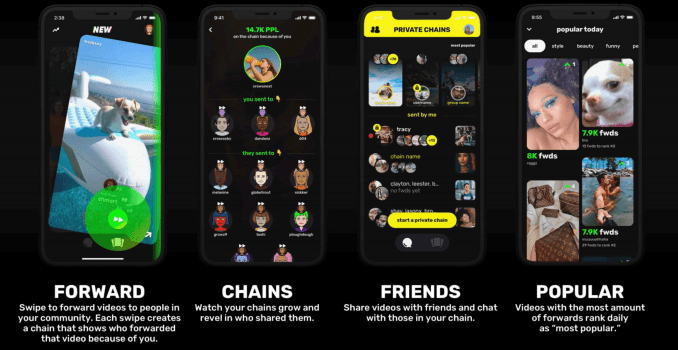
Image Credit: NewNew

Former Drake personal assistant Courtne Smith launches NewNew, a social network based on the video its users like and share. The app, a combination of TikTok and Facebook, allows users to create networks based on the videos, memes and images they’re sharing.

Original Content podcast: Disney’s ‘Mulan’ remake is fun, if you can forget the controversy

Disney’s live-action remake of “Mulan” comes with some serious baggage.

First, the film has drawn political controversy for its star’s statements in support of the action Hong Kong police against protestors, as well as the fact that “Mulan” was partly filmed in the Xinjiang region, where the Chinese government has held Muslim ethnic minorities in detention camps.

And although it’s less weighty, it’s also hard to escape the business context: “Mulan” is one of the first big Hollywood blockbusters (along with “Tenet”) to be released after the pandemic shuttered movie theaters around the world. Warner Bros. opted to release “Tenet” in theaters, while Disney is bringing “Mulan” to Disney+ with a hefty price tag of $29.99. (There’s still a theatrical release in some markets, including China.)

On the latest episode of the Original Content podcast, we acknowledge all of that context while also doing our best to discuss the merits of the film itself. It’s arguably the best of Disney’s live-action remakes, and it’s certainly gorgeous to watch, with some thrilling action scenes and beautiful landscape shots.

At the same time, Jordan argued that it doesn’t live up to the animated original, and we both agreed that the script can feel sleight and forgettable — particularly in the shadow of those real-world controversies. Plus, it’s hard to justify the current price, unless you’ve got kids who are eager to see it. Otherwise, you can probably wait until December 4, when “Mulan” becomes available to regular Disney+ subscribers.

Before we jump into our review, we also talk about this coming week’s virtual Disrupt conference.

You can listen to our review in the player below, subscribe using Apple Podcasts or find us in your podcast player of choice. If you like the show, please let us know by leaving a review on Apple. You can also follow us on Twitter or send us feedback directly. (Or suggest shows and movies for us to review!)

If you’d like to skip ahead, here’s how the episode breaks down:
0:00 Intro
0:31 Disrupt preview
6:33 “Mulan” review
35:10 “Mulan” spoiler discussion