Pakistan bans TikTok over ‘immoral and indecent’ videos

Pakistan has banned popular short video app TikTok, citing circulation of videos that it deemed “immoral and indecent.”

The move comes months after the South Asian country raised serious concerns about the nature of some videos on ByteDance’s app and the impact they posed on society.

Pakistan Telecommunication Authority, the country’s telecommunication authority, said in a statement Friday evening that despite the warnings and months-long time, TikTok “failed to comply with the instructions, therefore, directions were issued for blocking of TikTok application in the country.” The authority had received a “number of complaints from different segments of the society” over the videos, it said.

Some individuals in Pakistan, a nation with about 75 million internet users, told TechCrunch that the TikTok app and its website were already inaccessible to them.

“TikTok has been informed that the authority is open for engagement and will review its decision subject to a satisfactory mechanism by TikTok to moderate unlawful content,” said Pakistan Telecommunication Authority in a statement.

The move from Pakistan comes months after its neighboring nation, India, banned TikTok, Bigo and 57 other apps developed by Chinese firms over cybersecurity concerns. Prior to the ban, TikTok identified India — where it had amassed over 200 million monthly active users — as its biggest market outside of China. Like in India, TikTok is immensely popular in Pakistan, said Danish Khalid, an executive at Bykea, a Karachi-headquartered ride-hailing startup.

And then there is the U.S., the biggest market by revenue for TikTok, where the app’s future remains uncertain.

Join Yext’s Howard Lerman for a Q&A October 13 at 2 pm ET/11 am PT

Heading into the third quarter and earnings season, TechCrunch is excited to announce that Yext CEO Howard Lerman will join us for a live Q&A next Tuesday as part of our continuing Extra Crunch Live series.

The series recently hosted pairs of investors from Accel and Index Ventures and has hosted business leaders, from Mark Cuban to Roelof Botha. Lerman will be one of the few guests who is the CEO of a public company.

But Lerman is no regular public CEO — his company debuted at a TechCrunch event back in 2009, quickly raising capital after the pitch. Yext’s 2017 IPO was therefore an event of interest here at TechCrunch.

What will we talk about? There are a number of things that come to mind, but we’ll certainly get into the impact of COVID-19 on small businesses and how Yext is handling an uneven market. We’ll dig into search, a rising product and revenue area for the company, and how Yext has managed to broaden its product mix without diluting its focus.

We’ll also discuss what changes for a tech CEO heading into the public markets and what advice he might have for companies either considering, or actively going public in 2020. It has been a busy year for startup liquidity, pushing a great number of startups into the public sphere with varying results.

And we’ll riff on where Lerman is seeing the most interesting startups being built, along with your questions. As with all Extra Crunch Live sessions, we’ll snag a few questions from the audience. So make sure your Extra Crunch Live subscription is live and prep your thoughts.

Details follow after the jump. See everyone Tuesday!

Details

Below are links to add the event to your calendar and to save the Zoom link. We’ll share the YouTube link on the day of the discussion:

High-profile startup execs back Indian influencers platform CreatorOS

The advent of low-cost Android smartphones and the world’s cheapest mobile data has paved the way for millions of social media influencers in India to amass a following of tens of millions of users in recent years.

These influencers, also known as creators, share their daily vlogs, thoughts on a wide range of issues, and some engage with big brands to help sell their products to niche, loyal audiences. E-commerce giant Flipkart and scores of several other businesses today work with these influencers.

But India’s ban on TikTok, the Chinese short-video app that reached more than 200 million users in the country, in late June unearthed some of the biggest problems these creators face today: They are too reliant on a handful of platforms, and their work structure is not well organized.

A new startup believes it has built the platform to help creators assume more control over their work. And a number of high-profile entrepreneurs agree.

On Friday, Madhavan Malolan announced CreatorOS, a platform that enables creators to build, manage and grow their businesses. About 1,000 creators, including a number of short-film makers, teachers and consultants, have already joined the platform, said Madhavan, who co-founded the startup, formerly known as Socionity, in January this year. Prior to CreatorOS, he worked at a number of firms, including Microsoft.

“We believe that these creators will become an entrepreneur in the coming decade. So we are creating tools, connections and infrastructure that they will need to run their digital businesses. Currently, there is a lot of spray and pray happening on the creator’s part. They are producing videos in hopes that they go viral so more people in the industry discover them,” said Madhavan in an interview with TechCrunch.

The marquee tool on CreatorOS today is an app-builder that allows creators to build their own apps, push and sell their content in it and build their own communities. Madhavan said CreatorOS has overly reduced the efforts that need to go into building an app to simply drag and drop.

The startup said today it has also raised $500,000 from a clutch of high-profile names. Some of the angel investors include Phanindra Sama (founder and former chief executive of online ticket booking platform RedBus.in), Gaurav Munjal (co-founder and chief executive of online learning platform Unacademy), Kalyan Krishnamurthy (chief executive of Flipkart Group), Sujeet Kumar (co-founder of business-to-business marketplace Udaan), Vidit Aatrey (co-founder and chief executive of social e-commerce Meesho), Vivekananda Hallekere (co-founder and chief executive of mobility firm Bounce) and Alvin Tse (GM of Xiaomi Indonesia).

Madhavan said that the trust that so many established entrepreneurs showed in CreatorOS convinced him that he did not need to engage with VC firms yet and instead put the entire focus on serving creators. He said the ban on TikTok and how so many startups are trying to scale their short-video apps has created an immense opportunity for CreatorOS.

The startup expects to have more than 5,000 creators on its platform by the end of the year. It is working with creators to understand and build more features that would benefit them, said Madhavan.

Devialet announces wireless earbuds

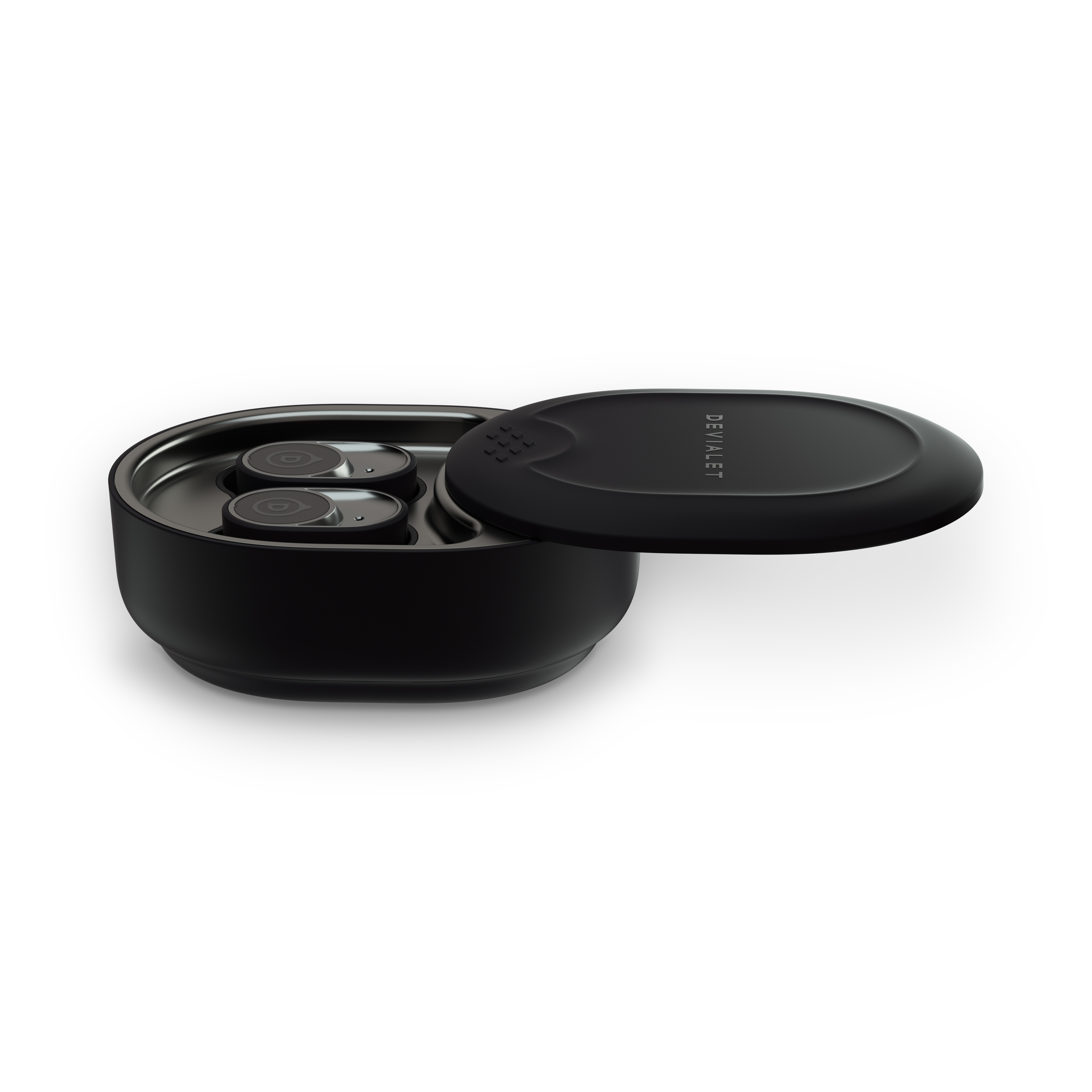
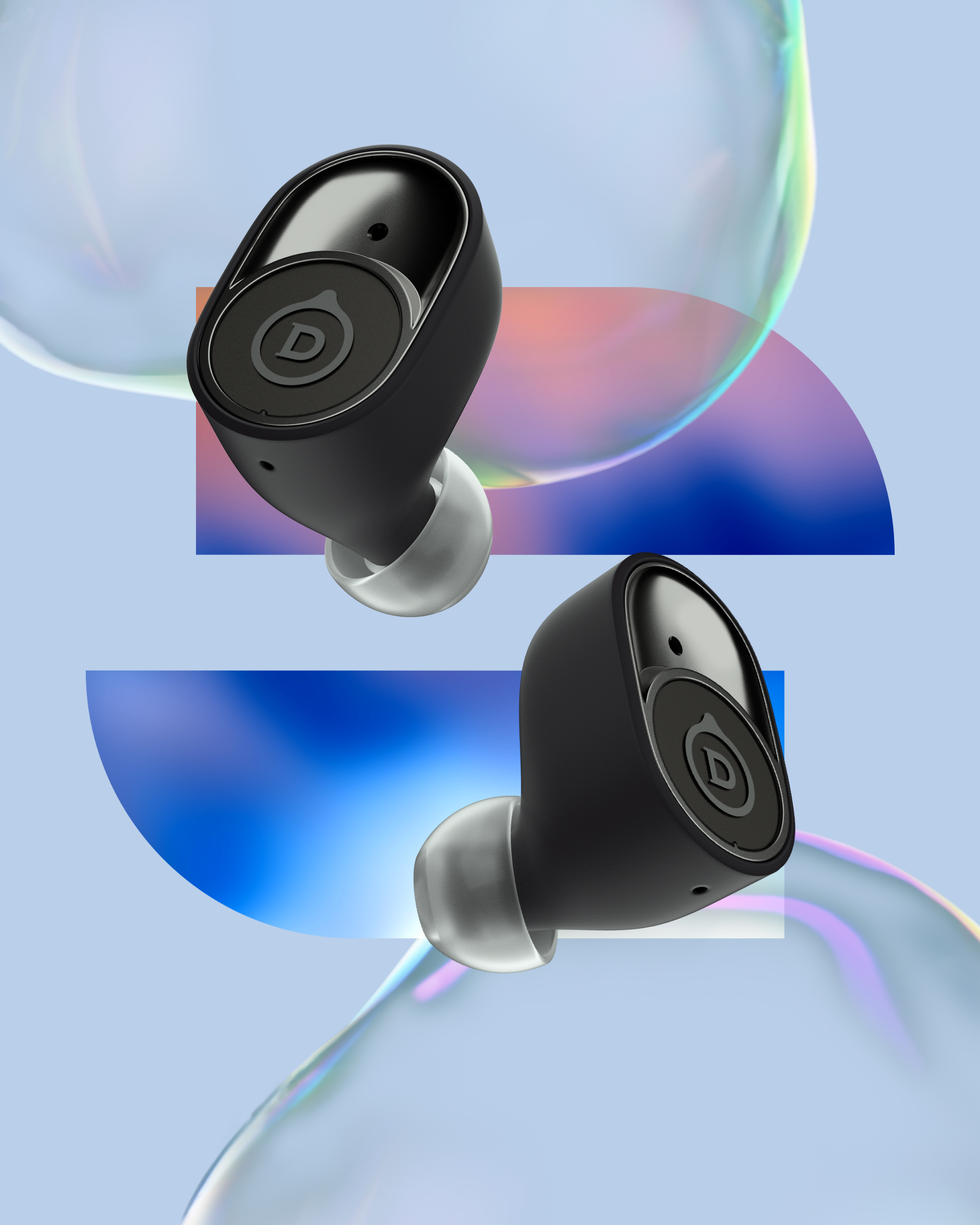
High-end speaker manufacturer Devialet is launching its first pair of earbuds. Called Devialet Gemini, the in-ear earbuds feature active noise canceling and cost £279 in the U.K. — they will be available in the coming weeks.

The Devialet Gemini are completely wireless, which means that there’s no cord between each earbud, like on Apple’s AirPods. The company has developed three new patents for the product.

They feature cascading decompression chambers, which means that they should stick in your ears and provide adequate pressure. In-ear earbuds require a good seal.

Image Credits: Devialet

There are two microphones in each earbud for the active noise cancelation feature and a dedicated microphone for calls and other voice interactions. Like on the AirPods Pro, there are multiple ANC modes. You can remove background noise altogether or activate transparency modes so you can hear what’s happening around you.

You can choose between three levels of ANC and two levels of transparency mode. The company is releasing a mobile app so you can control those settings. There’s also a touch button at the rear of the earbuds that you can use to control music playback, noise cancelation or voice assistants.

The earbuds automatically adjust the audio signal when the earbud moves. It uses a microphone to detect a change in frequency. The app can also tell you if you’re using the right tip for your ear.

The company promises eight hours of battery life without ANC and six hours with ANC activated. The case provides 3.5 charges and works with wireless chargers using the Qi standard or a USB-C cable.

Image Credits: Devialet

Hong Kong logistics unicorn Lalamove unveils foray into the US

Lalamove, an on-demand logistics service active in China, Southeast Asia and Latin America, has officially entered the U.S. seven years after launch.

As the COVID-19 pandemic keeps millions of Americans home, Hong Kong-based Lalamove believes it can seize the growing demand for delivery services in the country. It makes its debut in the Dallas-Fort Worth area, a major hub for distribution and logistics in the U.S. In days the service will launch in Chicago and Houston.

The startup was one of the first in Hong Kong to hit the $1 billion unicorn valuation mark alongside its archrival GoGoVan. Its business is multifold and highly localized, but essentially it works as an Uber for businesses and individuals that need to move goods within the city.

In China, where it’s known as Huolala (???), it primarily serves as a broker between shippers who need to send cargo and a network of truck drivers. In Southeast Asia, the business functions similarly with the addition of food delivery for restaurants, a crowded and cash-burning space. In the U.S., its fleet of sedans, SUVs and pickup trucks are available 24/7, allowing it to target customers spanning catering, retail, e-commerce, manufacturing and construction, with fees starting at $8.90.

“Delivery is essential, especially during the pandemic. But many local businesses don’t have or cannot afford in-house fleets, so we’re excited to work with businesses in the Dallas-Fort-Worth area to provide same-day, on-demand delivery services to their customers,” said Blake Larson, international managing director at Lalamove and formerly co-founder of Rocket Internet’s Asia-focused e-hailing startup Easy Taxi.

Like GoGoVan, Lalamove was founded by a Hong Kong entrepreneur who was educated in the U.S. Both companies have scored fundings from heavyweight institutions from China and elsewhere.

Lalamove’s investors include Hillhouse Capital, Sequoia Capital China and Xiaomi founder’s Shunwei Capital. Through a merger with China’s 58 Suyun, GoGoVan counts Tencent, Alibaba, KKR and New Horizon Capital amongst its backers.

The Hong Kong startup’s global expansion comes at a time when TikTok has stumbled in the U.S. due to its links to China. In the logistics startup’s case, a Chinese team operates the Chinese division Huolala, while separate international teams manage the overseas segments of Lalamove, TechCrunch understands. The core of TikTok’s challenge in the U.S. is the video app’s dependence on its Chinese parent ByteDance’s technological capabilities.

To date, Lalamove has verified and onboarded more than 500 partner drivers in Dallas-Fort Worth, with plans to add another 500 in the area by the end of this year. It’s also hiring for its regional operational office at a time when the U.S. is struck by widespread virus-induced layoffs, furloughs and slowdowns in hiring.

Lalamove claims it has to date matched more than 7 million users with a pool of over 700,000 delivery partners in 22 markets around the world.

India approves Apple partners and Samsung for $143 billion smartphone manufacturing plan

Samsung and three major contract manufacturing partners of Apple are among 16 firms to win $6.65 billion incentives under India’s federal plan to boost domestic smartphone production over the next five years. These companies had applied for the incentive program in August.

In a statement Tuesday evening, Indian Ministry of Electronics and Information Technology (MeitY) said these companies will be producing smartphones and other electronics components worth more than $143 billion over the next five years. In return, India will offer them an incentive of 4% to 6% on additional sales of goods produced locally over five years, with 2019-2020 set as the base year.

New Delhi’s move is aimed at significantly improving India’s manufacturing and exporting capacities and generating more local jobs. Around 60% of the locally produced products will be exported, the Indian ministry said. The companies will generate more than 200,000 direct employment opportunities in next five years and as many as 600,000 indirect employment opportunities during the same period, the ministry said.

The move is also a precursor to how the dynamics among major smartphone makers might change in India, the world’s second largest market, over the next few years. The inclusion of Foxconn, Wistron and Pegatron underscores how rapidly Apple plans to expand its local manufacturing capabilities in India. Wistron began assembling a handful of iPhone models in India three years ago, followed by Foxconn. Pegatron has yet to start production in India.

“Apple and Samsung together account for nearly 60% of global sales revenue of mobile phones and this scheme is expected to increase their manufacturing base manifold in the country,” the ministry said.

“Industry has reposed its faith in India’s stellar progress as a world class manufacturing destination and this resonates strongly with Prime Minister’s clarion call of AtmaNirbhar Bharat – a self-reliant India,” the ministry added.

Indian firms Lava, Bhagwati (Micromax), Padget Electronics, UTL Neolyncs and Optiemus Electronics have also received the approval. But missing from the list are Chinese smartphone makers Oppo, Vivo, OnePlus and Realme that had not applied for the program. Chinese smartphone vendors currently command about 80% of the Indian market. Samsung, which once led the Indian smartphone market, has faced intense competition from Xiaomi and Vivo in recent years.

Greycroft has rounded up $678 million in capital across two new funds

Greycroft, the New York and L.A.-based venture firm founded in 2006 by investors Alan Patricof, Dana Settle, and Ian Sigalow, has closed on two new funds totaling $678 million in capital commitments. One of those funds is its sixth flagship early-stage fund and it closed with $310 million dollars. The firm also collected $368 million in commitments for a third growth-stage fund that it will use to support breakout startups from its early-stage portfolio.

The venture fund invests between $500,000 and $10 million in a first check, and Greycroft will invest up to $15 million in a portfolio company over multiple rounds. Checks from its growth fund begin at $10 million and the firm says it will invest up to $50 million in any one company.

Greycroft now counts seven partners altogether across its two offices, including Settle and Sigalow.

Patricof, who early in his career founded the predecessor to Apax Partners, has since launched yet another new firm called Primetime Partners that announced a $32 million fund in summer that is investing in platforms and products for aging Americans.

The firm invests in both consumer and enterprise startups, with a heavier emphasis on consumer. Among the brands in its portfolio are Gwyneth Paltrow’s Goop, the consignment business The RealReal (which went public last year), and the dating site Bumble, which is reportedly gearing up for an IPO at an expected valuation of between $6 billion to $8 billion, as reported by Bloomberg.

The firm also recently co-led a $5.5 million Series A round for Sisu Cosmetics, a nearly two-year-old, Ireland-based chain of cosmetic clinics that’s expanding into the U.S.

Across its now ten investment vehicles, the firm has raised $2 billion altogether and has over 200 active investments.

Those investments are located in 23 states and 15 countries, including the Nigeria-based payment service Flutterwave, which closed on $35 million in Series B funding earlier this year, and Yeahka, a mobile payment and SMB lending provider in China that went public in June.

Greycroft’s most recent early-stage fund had closed with $250 million in 2018; its second growth-stage fund closed with $250 million in 2017.

Quarantine drives interest in autonomous delivery, but it’s still miles from mainstream

The prospect of truly zero contact delivery seems closer — and more important — than ever with the pandemic changing how we think of last mile logistics. Autonomous delivery executives from FedEx, Postmates, and Refraction AI joined us to talk about the emerging field at TechCrunch Mobility 2020.

FedEx VP of Advanced Technology and Innovation Rebecca Yeung explained why the logistics giant felt that it was time to double down on its experiments in the area of autonomy.

“COVID brought the term ‘contactless’ — before that not many people are talking about contactless; Now it’s almost a preferred way of us delivering,” she said. “So we see, from government to consumers, open mindedness about, maybe in the future you would have everything delivered to you through autonomous means, and that’s the preferred way.”

“If you looked up Postmates robots on Twitter or Instagram, people are always kind of questioning, what is this? What is it doing? Everything changed overnight with COVID, where people would see the robot and immediately understand, oh, this is for contactless delivery,” said Postmates VP of special projects Ali Kashani. “Everything suddenly made sense.”

He also explained how the seeming constraints of a robotic platform specific to food delivery made the engineering process, if not easier, at least naturally bounded by the data they’d collected.

“It’s kind of one of the advantages of being so close to the market, we can use data from our platform to drive certain decisions, because you don’t want to over-engineer you also don’t want to under-engineer,” Kashani said. “We actually developed simulations that would put robots in any location in the country on some date in the past. It would tell us, how many deliveries did this robot do? How many hours was it outside? How many miles did it travel? And it would use that information to decide exactly what kind of battery life do we need? Does it need to carry drinks? How many drink holders should it have to cover 99% of deliveries?”

Matthew Johnson-Roberson, co-founder and CTO of Refraction AI, noted that the pandemic has raised interest and demand, but also highlighted where things need to move forward in different ways.

“Obviously no one wants a global pandemic, but it has certainly energized this industry and put more attention on it,” he said. “Everybody is excited, oh, we’re going to have contactless delivery, it’s going to be great. But I think there are some real challenges that need to be addressed as an industry to get there. One of them is social acceptance, the other’s regulation. That’s starting to change because of COVID. I’m hopeful that this is an inflection point, and that we really do see more serious investment in this, but also widespread deployment, so it’s not a tech demo that you get to see once in one place, but it actually begins to take over some sizable bit of the market.”

Yeung also emphasized the need for the infrastructure that supports these autonomous platforms: “Thinking about the future, commercial launch, you need the dynamic routing, you need the dispatch system, you need the user interface, you need a tracking interface. We see great synergy for us to leverage for all sorts of autonomous applications.”

In discussing the danger of replacing human workers with robots, Yeung and Kashani were sanguine, suggesting like others in the robotics industry that there would be a shift in labor but it won’t kill any jobs. Johnson-Roberson disagreed.

“I think we are going to be replacing jobs, and we need to face that head on,” he said. “I think it’s important that we reckon with that, that a lot of these decisions, they have a long history of not thinking through what hte human consequences will be. So I’m an advocate for saying, look, we’re replacing jobs. Let’s think as a society: How do we address that? How do we deal with it? I think that we could live in a future with more just, fairer jobs with health insurance, more benefits. But I don’t think it is going to look how it looks today.”

Arm CEO Simon Segars discusses AI, data centers, getting acquired by Nvidia and more

Nvidia is in the process of acquiring chip designer Arm for $40 billion. Coincidentally, both companies are also holding their respective developer conferences this week. After he finished his keynote at the Arm DevSummit, I sat down with Arm CEO Simon Segars to talk about the acquisition and what it means for the company.

Segars noted that the two companies started talking in earnest around May 2020, though at first, only a small group of executives was involved. Nvidia, he said, was really the first suitor to make a real play for the company — with the exception of SoftBank, of course, which took Arm private back in 2016 — and combining the two companies, he believes, simply makes a lot of sense at this point in time.

“They’ve had a meteoric rise. They’ve been building up to that,” Segars said. “So it just made a lot of sense with where they are at, where we are at and thinking about the future of AI and how it’s going to go everywhere and how that necessitates much more sophisticated hardware — and a much more sophisticated software environment on which developers can build products. The combination of the two makes a lot of sense in this moment.”

The data center market, where Nvidia, too, is already a major player, is also an area where Arm has heavily focused in recent years. And while it goes up against the likes of Intel, Segars is optimistic. “We’re not in it to be a bit player,” he said. “Our goal is to get a material market share and I think the proof to the pudding is there.”

He also expects that in a few years, we’ll see Arm-powered servers available on all of the major clouds. Right now, AWS is ahead in this game with its custom-built Gravitron processors. Microsoft and Google do not currently offer Arm-based servers.

“With each passing day, more and more of the software infrastructure that’s required for the cloud is getting ported over and optimized for Arm. So it becomes a more and more compelling proposition for sure,” he said, and cited both performance and energy efficiency as reasons for cloud providers to use Arm chips.

Another interesting aspect of the deal is that we may just see Arm sell some of Nvidia’s IP as well. That would be a big change — and a first — for Nvidia, but Segars believes it makes a lot of sense to do so.

“It may be that there is something in the portfolio of Nvidia that they currently sell as a chip that we may look at and go, ‘you know, what if we package that up as an IP product, without modifying it? There’s a market for that.’ Or it may be that there’s a thing in here where if we take that and combine it with something else that we were doing, we can make a better product or expand the market for the technology. I think it’s going to be more of the latter than it is the former because we design all our products to be delivered as IP.”

And while he acknowledged that Nvidia and Arm still face some regulatory hurdles, he believes the deal will be pro-competitive in the end — and that the regulators will see it the same way.

He does not believe, by the way, that the company will face any issues with Chinese companies not being able to license Arm’s designs because of export restrictions, something a lot of people were worried about when the deal was first announced.

“Export control of a product is all about where was it designed and who designed it,” he said. “And of course, just because your parent company changes, doesn’t change those fundamental properties of the underlying product. So we analyze all our products and look at how much U.S. content is in there, to what extent are our products subject to U.S. export control, U.K. export control, other export control regimes? It’s a full-time piece of work to make sure we stay on top of that.”

Here are some excerpts from our 30-minute conversation:

TechCrunch: Walk me through how that deal came about? What was the timeline for you?

Simon Segars: I think probably around May, June time was when it really kicked off. We started having some early discussions. And then, as these things progress, you suddenly kind of hit the ‘Okay, now let’s go.’ We signed a sort of first agreement to actually go into due diligence and then it really took off. It went from a few meetings, a bit of negotiation, to suddenly heads down and a broader set of people — but still a relatively small number of people involved, answering questions. We started doing due diligence documents, just the mountain of stuff that you go through and you end up with a document. [Segars shows a print-out of the contract, which is about the size of two phone books.]

You must have had suitors before this. What made you decide to go ahead with this deal this time around?

Well, to be honest, in Arm’s history, there’s been a lot of rumors about people wanting to acquire Arm, but really until SoftBank in 2016, nobody ever got serious. I can’t think of a case where somebody actually said, ‘come on, we want to try and negotiate a deal here.’ And so it’s been four years under SoftBank’s ownership and that’s been really good because we’ve been able to do what we said we were going to do around investing much more aggressively in the technology. We’ve had a relationship with Nvidia for a long time. [Rene Haas, Arm’s president of its Intellectual Property Group, who previously worked at Nvidia] has had a relationship with [Nvidia CEO Jensen Huang] for a long time. They’ve had a meteoric rise. They’ve been building up to that. So it just made a lot of sense with where they are at, where we are at and thinking about the future of AI and how it’s going to go everywhere and how that necessitates much more sophisticated hardware — and a much more sophisticated software environment on which developers can build products. The combination of the two makes a lot of sense in this moment.

How does it change the trajectory you were on before for Arm?

Daily Crunch: G Suite becomes Google Workspace

Google rebrands G Suite, Apple announces its next event date and John McAfee is arrested. This is your Daily Crunch for October 6, 2020.

The big story: G Suite becomes Google Workspace

To a large extent, Google Workspace is just a rebranding of G Suite, complete with a new set of (less distinctive) logos for Gmail, Calendar, Drive, Docs and Meet. But the company is also launching a number of new features.

For one thing, Google is (as previously announced) integrating Meet, Chat and Rooms across applications, with Gmail as the service where they really come together. Other features coming soon are the ability to collaborate on documents in Chats and a “smart chip” with contact details and suggested actions that appear when you @mention someone in a document.

Pricing remains largely the same, although there’s now an $18 per user per month Business Plus plan with additional security features and compliance tools.

The tech giants

Apple will announce the next iPhone on October 13 — Apple just sent out invites for its upcoming hardware event, all but confirming the arrival of the next iPhone.

Facebook’s Portal adds support for Netflix, Zoom and other features — The company will also introduce easier ways to launch Netflix and other video streaming apps via one-touch buttons on its new remote.

Instagram’s 10th birthday release introduces a Stories Map, custom icons and more — There’s even a selection of custom app icons for those who have recently been inspired to redesign their home screen.

Startups, funding and venture capital

SpaceX awarded contract to help develop US missile-tracking satellite network — The contract covers creation and delivery of “space vehicles” (actual satellites) that will form a constellation offering global coverage of advance missile warning and tracking.

Salesforce Ventures launches $100M Impact Fund to invest in cloud startups with social mission — Focus areas include education and reskilling, climate action, diversity, equity and inclusion, as well as providing tech for nonprofits and foundations.

Ÿnsect, the makers of the world’s most expensive bug farm, raises another $224 million — The team hopes to provide insect protein for things like fish food and fertilizer.

Advice and analysis from Extra Crunch

Inside Root’s IPO filing — As insurtech booms, Root looks to take advantage of a warm market and enthusiastic investors.

To fill funding gaps, VCs boost efforts to find India’s standout early-stage startups — Blume Ventures’ Karthik Reddy says, “There’s an artificial skew toward unicorns.”

A quick peek into Opendoor’s financial results — Opendoor’s 2020 results are not stellar.

(Reminder: Extra Crunch is our subscription membership program, which aims to democratize information about startups. You can sign up here.)

Everything else

John McAfee arrested after DOJ indicts crypto millionaire for tax evasion — The cybersecurity entrepreneur and crypto personality’s wild ride could be coming to an end after he was arrested in Spain and now faces extradition to the U.S.

Trump is already breaking platform rules again with false claim that COVID-19 is ‘far less lethal’ than the flu — Facebook took down Trump’s post, while Twitter hid it behind a warning.

The Daily Crunch is TechCrunch’s roundup of our biggest and most important stories. If you’d like to get this delivered to your inbox every day at around 3pm Pacific, you can subscribe here.

Steps from the House’s antitrust report are too little, too late when it comes to big tech

The U.S. House Judiciary Committee has finally released its omnibus report  on its investigation into the monopoly powers held by Apple, Amazon, Alphabet, and Facebook and its findings will do nothing to stem the power of big tech.

For startups, the most relevant points are the potential solutions the committee proposes for addressing big tech and they primarily boil down to giving small companies the benefit of the doubt when they claim that bigger rivals are exercising monopolistic advantages — and prevent the kinds of acquisitions in the future that allowed these companies to reach the unassailable positions they currently occupy in their chosen markets.

The Committee asserts that in their core areas of business: search, ecommerce, social networking and mobile development platforms and applications, each of the companies is, indeed, a monopoly. And the committee argues that in the future judicial and legislative bodies should define down their definition of market dominance to give smaller companies more standing in cases where they challenge the actions of these large competitors.

Here’s the relevant passage from the report:

“To address this concern, Subcommittee staff recommends that Congress consider extending the Sherman Act to prohibit abuses of dominance.Furthermore, the Subcommittee should examine the creation of a statutory presumption that a market share of 30% or more constitutes a rebuttable presumption of dominance by a seller, and a market share of 25% or more constitute a rebuttable presumption of dominance by a buyer.”

The other interesting section — and the one that will likely prove most troubling for investors and startup founders who are looking to exit their businesses relates to how regulators should handle future mergers and acquisitions from big technology companies.

Here, the Judiciary Committee suggests that the default view should be to rule against transactions involving startups by established tech companies… which… yikes.

The report says:

“Since startups can be an important source of potential and nascent competition, the antitrust laws should also look unfavorably upon incumbents purchasing innovative startups. One way that Congress could do so is by codifying a presumption against acquisitions of startups by dominant firms, particularly those that serve as direct competitors, as well as those operating in adjacent or related markets.”

For the most part, it seems that the word from regulators is that they should have done more, sooner, to limit the power of big tech, but won’t go so far as to take steps that would actually limit the power of big tech.

Instead, they’re punishing entrepreneurs and pulling up the ladder behind the companies that have already achieved market dominance. And are making it tougher for any company to actually mount a realistic challenge through an M&A strategy of its own.

These regulations seem like they’ll make it harder for Snap to make strategic deals that could put it in more direct competition with Facebook (just a random example).

Furthermore, some of the most strategic acquisitions, which create the opportunities for anti-competitive behavior aren’t obvious. Facebook’s acquisition of Onavo, for instance, likely would never have gone up for review. It’s only thanks to reporting from publications like TechCrunch, that the misuse or abuse of the company’s technology was even revealed.

So, the result of all of the hours of testimony, millions of documents, and every other bit of labor that went into the investigation the results are simply — an exhortation for regulators to #bebetter.

Regulators do, indeed, need to be better. Congress should have done a better job when it would have mattered at all.

Facebook says it will ban QAnon across its platforms

Facebook expanded a ban on QAnon-related content on its various social platforms Tuesday, deepening a previous prohibition on QAnon-related groups that had “discussed potential violence,” according to the company.

Today’s move by Facebook to not only ban violent QAnon content but “any Facebook Pages, Groups and Instagram accounts representing QAnon” is an escalation by the social giant to clean its platform ahead of an increasingly contentious election.

QAnon is a sprawling set of interwoven pro-Trump conspiracy theories that has taken root inside swaths of the American electorate. Its more extreme adherents have been charged with terrorism after acting out in violent and dangerous ways, spurred on by their adherence to the unusual and often incoherent belief system. BuzzFeed News recently decided to call QAnon a “collective delusion,” another apt title for the theory’s inane, fatuous and dangerous beliefs.

Facebook’s effort to rein in QAnon is helpful, but likely too late. Over the course of the last year, QAnon swelled from a fringe conspiracy theory into a shockingly mainstream political belief system — one that even has its own Congressional candidates. That growth was powered by social networks inherently designed to connect like-minded people to one another, a feature that has been found time and time again to spread misinformation and usher users toward increasingly radical beliefs.

In July, Twitter took action of its own against QAnon, citing concerns about “offline harm.” The company downranked QAnon content, removing it from trending pages and algorithmic suggestions. Twitter’s policy change, like Facebook’s previous one, stopped short of banning the content outright but did move to contain its spread.

Other companies, like Alphabet’s YouTube product, have come under similar censure by external observers. (YouTube says it reworked its algorithm to better filter out the darker shores of its content mix, but the results of that experiment are far from conclusive.)

Social platforms like Facebook and Twitter have also made changes to their rules after being confronted with a willfully mendacious administration ahead of an election, about which the same administration has propagated lies and disinformation about voting security and the virus that has killed more than 200,000 Americans. The pairs’ work to limit those two particularly risky strains of misinformation is worthy, but by taking a reactive posture instead of a proactive one most of those policy choices have also come too late to control the viral spread of dangerous content.

Facebook’s new rule comes into force today, with the company saying in a release that it is now “removing content accordingly,” but that the effort to purge QAnon “will take time.”

What drove the change at Facebook? According to the company, after it yanked violent QAnon material, it saw “other QAnon content tied to different forms of real world harm, including recent claims that the west coast wildfires were started by certain groups.” In Oregon, where forest fires recently raged, misinformation on the Facebook platform led to misinformed state residents who believed that antifa — a term applied to those opposed to fascism as an unironic pejorative — were torching the state, set up illegal roadblocks.

How effective Facebook will be at clearing QAnon-related content from its various platforms is not clear today, but will be something that we’ll track.

Google’s new logos are bad

Google really whiffed with the new logos for its “reimagination” of G Suite as Google Workspace, replacing icons that are familiar, recognizable, and in Gmail’s case iconic if you will, with little rainbow blobs that everyone will now struggle to tell apart in their tabs. Companies always talk loud and long about their design language and choices, so as an antidote I thought I’d just explain why these new ones are bad and probably won’t last.

First I should say that I understand Google’s intent here, to unify the visual language of the various apps in its suite. That can be important, especially with a company like Google, which abandons apps, services, design languages, and other things like ballast out of a sinking hot air balloon (a remarkably apt comparison, in fact).

We’ve seen so many Google icon languages over the years that it’s hard to bring oneself to care about new ones. To paraphrase Sun Tzu, if you wait long enough by the river, the bodies of your favorite Google products will float by. Better not to get attached.

But sometimes they do something so senseless that it is incumbent upon anyone who cares at all to throw the company’s justification in its face and tell them they blew it; The last time I cared enough was with Google Reader. Since I and a hundred million other people will have to stare at these ugly new icons all day until they retire them, maybe making a little noise will accelerate that timeline a bit.

Sorry if I let myself prose a bit here, but I consider it an antidote to the endless design stories these almost without exception ill-advised redesigns always come with. I’ll limit discussion of how these icons go wrong to three general ways: color, shape, and brand.

Color

Color is one of the first things you notice about something, and you can recognize colors easily even in your peripheral vision. So having a distinct color is important to type and design in lots of ways. Why do you think companies go so crazy about all those different shades of blue?

That’s part of why the icons of the most popular Google apps are so easily distinguished. Gmail’s red color goes back a decade and more, and Calendar’s blue is pretty old as well. The teal of Meet probably should have just stayed green, like its predecessor Hangouts, but it’s at least somewhat distinct. Likewise Keep (remember Keep?) and a handful of other lesser actors. More importantly, they’re solid — except for a few that were better for their colors, like Maps, before its icon got assassinated.

There are two problems with the colors of the new icons. First is that they don’t really have colors. They all have all the colors, which just right off the bat makes it harder to tell them apart at a glance. Remember, you’re never going to see this big like in the image above. More often they’ll be more this size:
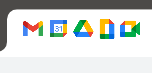
Maybe even smaller. And never that close. I don’t know about you, but I can’t tell them apart when I’m not looking directly at them. What exactly are you looking for? They all have every color, and not even in the same order or direction — you see how some are red, yellow, green, blue and one is red, yellow, blue, green? Three (with Gmail) clockwise and two anti-clockwise, too. Sounds unimportant but your eye picks up on stuff like that, but maybe just enough that you’re more confused. Maybe these would have been better if they all started with red in the top left or something, and cycled through. They don’t randomize the order of the colors in the main Google logo, right? Ultimately these little blobs just resemble toys or crunched up candy wrappers. At best it’s plaid, and that’s Slack territory.

At first I thought the little red triangular tabs were a nice visual indicator, but somehow they messed that up too. Each icon should have the tab in a different corner, but Calendar and Drive both have it on the bottom right. They’re different kinds of triangles, I suppose — that’s a freebie from trigonometry.

You’ll also notice that the icons have a sort of lopsided weight. That’s because against a light background, different colors have different visual salience. Darker colors pop more against a white background than yellow or the tiny bit of red, making the icons seem to have heavy “L” aspects to them, on the left in Gmail and Calendar, bottom left in Drive and Meet, bottom right in Docs. But in an inactive tab, the light color will be more salient, and those L’s will seem to be on the other sides.

Shape

This is a good segue into the shape problems, because the perceived shape of these icons will change depending on the background. The original icons solved this by having a solid shape unique to them, and the background didn’t really leak through. You have to be real careful about transparent parts of your design — positive and negative space and all that. If you surrender any part of your logo to the background, you’re at the whim of whatever UI or theme the user has chosen. Will these logos look good with a hole in the middle looking onto a dark grey inactive tab? Or will the hole be filled in with white, making it positive space when on a dark background and negative when on white?

Anyhow the issue with these icons is that their shapes are bad. They’re all hollow, and four of them are rectangular if you include Gmail’s negative space (and we do — Google taught us to). The general shape of a container is a perfectly good one, but at a glance four of them are basically just angular O’s. Do you want the tallish O, the pointy one, or one of the two square O’s with slightly different color patterns? At a distance, who can tell? They only now resemble the thing they’re supposed do if you look really closely.

Now that I think of it, those shapes really scream Office and Bing too, don’t they? Not great!
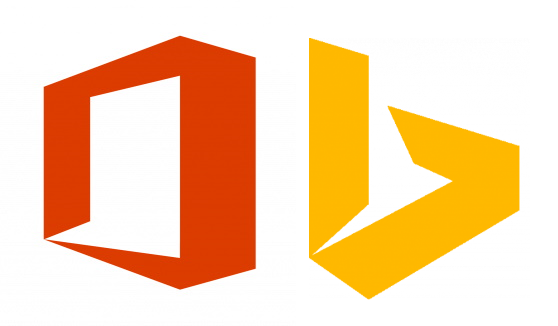
While we’re at it, the thin type in the Calendar’s open space is pretty anemic compared with the big thick border, right? Maybe they should have gone with bold.

And last, the overlapping colors make for trouble. For one thing it makes the Drive logo look like a biohazard symbol. But it adds a lot of complexity that’s hard to follow at a small scale. The original Drive logo had three colors, to be sure, and a little drop shadow so you’d see it was a Moebius strip implying infinity and not just a triangle (that’s gone too — so why keep the triangle?) — but the colors set each other off: Blue and yellow make green, two primaries and their secondary.

The new ones have all three primaries, one secondary, and two tertiary (if you count darkness as a color). They don’t help the shapes exist in any identifiable way. Are you looking through them? That doesn’t seem right. They kind of fold, but how? Are the strips these are made of twisting? I don’t think so. The shapes aren’t things — they’re just arrangements, suggestions of the things they once were, removed one step too far.

Brand

Google’s no stranger to throwing value in the trash. But you’d think that sometimes they’d recognize when they have a good thing going. The Gmail logo was a good thing. I have to say I preferred the old angular one when they switched to the rounded icon some years back, but it’s grown on me. The natural “M” shape of a the envelope is emphasized so well, and the red-and-white color is so instantly recognizable and readable — this is the kind of logo you hold onto for a long, long time. Or not!

The problem here is that now Gmail, which has essentially operated as its own, completely invincible brand for more than a decade (which is eons in tech, let alone tech logos), has been put on equal footing with other services that aren’t as trusted or as widely used.

Now Gmail is just another rainbow shape in a sea of very similar rainbow shapes, which tells the user “this service isn’t special to us. This is not the service that has worked so well for you, for so long. This is just one finger on the hand of an internet giant. And now you can never see one without thinking of the other.”

Same for all the rest of these little color wheels: You’ll never forget that they’re all part of the same apparatus that knows everything you search for, every site you visit, and now, everything you do at work. Oh, they’re very polite about it. But make no mistake, the homogeneous branding (for all its color heterogeneity) is the prelude to a brand crunch in which you are no longer just a Gmail user, you’re in Google’s house, all day, every day.

“This is the moment in which we break free from defining the structure and the role of our offerings in terms that were invented by somebody else in a very different era,” Google VP Javier Soltero told Fast Company.

The message is clear: Out with the old — the things that built your trust; and in with the new — the things that capitalize on your trust.