Official Kinect SDK Coming Soon

xbox360pc.jpg

Balmer let the world know during CES that Microsoft would be releasing an SDK for their popular Xbox 360 add-on the Kinect. Sources say that Microsoft may be preparing the release of the SDK sooner than they anticipated, in just a few months. “Sources familiar with the plans” told WinRumors that an official SDK and drivers are being prepped for a beta release “in the coming months,” potentially arriving with an upcoming XNA update dubbed the “Community Technical Preview.”

Ever since the release of the Kinect, hackers have been having a field day with it. Unofficial USB drivers for the Windows environment have already been developed and there are countless hacks out there from X-Ray vision to controlling World of Warcraft.

Now that Microsoft has acknowledged the popularity of the product and will be officially releasing the SDK maybe we might see another revolution in PC gaming, one that could rival the early 90′s.

tech.nocr.atOfficial Kinect SDK Coming Soon originally appeared on tech.nocr.at on 2011/01/19.

© tech.nocr.at 2011 |
Permalink |
Comments |
Read more in Gaming |
Add to del.icio.us |
Stumble it |
Digg this

Explore more in: , , ,


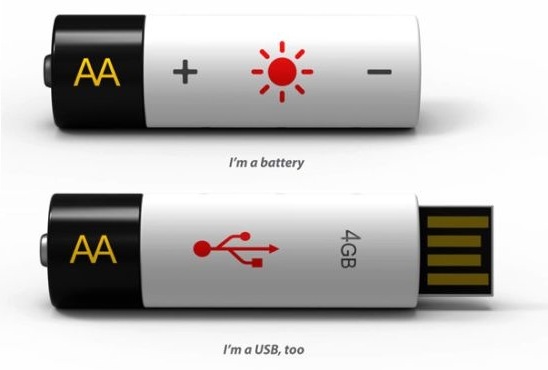
AA Battery / USB Flash Drive

usbAAbattery1.jpg

Are they batteries or are they USB flash drives? OR are they both? These clever batteries also double as USB flash drives. The neat thing is that they charge the battery side of the mutant while using the flash drive.

Now, the next time you need a flash drive you can reach for your batteries or the next time you need some batteries you can reach for your flash drives. I know, it’s like a modern day Spork!

At this point these are nothing more than a concept, a good one at that, but still a concept.

[Link via Yanko Design]

tech.nocr.atAA Battery / USB Flash Drive originally appeared on tech.nocr.at on 2011/01/19.

© tech.nocr.at 2011 |
Permalink |
Comments |
Read more in Gadgets |
Add to del.icio.us |
Stumble it |
Digg this

Explore more in: ,


U-Socket’s Now Shipping

usocket.jpg

For those of you who have been waiting patiently for their U-Socket’s to ship rejoice, they are on their way. FastMac’s U-Socet is a wall socket that offers your standard dual 110V outlets alongside dual USB ports to charge your multitude of gadgets.

For under $20 you can equip each outlet in your house with these valuable USB outlets. Imagine not having to cary around multiple USB bricks to charge your iPhone or Droid, simply plug the USB cable into any outlet and you are good to go.

The retail site says that delivery time is about three to four weeks. The sooner they can crack the big box home improvement store’s like Home Depot the sooner everyone will have USB jacks-a-plenty to charge gadgets.

[Link to U-Socket]

tech.nocr.atU-Socket’s Now Shipping originally appeared on tech.nocr.at on 2011/01/17.

© tech.nocr.at 2011 |
Permalink |
Comments |
Read more in Gadgets |
Add to del.icio.us |
Stumble it |
Digg this

Explore more in: , ,


Yet More PSP Phone Leakage

pspexperia.jpg

In probably the worst kept secret of 2010 and 2011 the Sony Xperia, or PSP Phone has seen more press time than any other product I can remember and it hasn’t even been officially announced or acknowledged yet. This isn’t new for Sony – remember the PSP Go or the PS3 Slim that hit the interwebs months before Sony announced them?

As we see in yet another video of the soon to be announced (we hope) Sony Xperia PSP Phone; it looks just the same as all of the other videos we have seen. The only difference is that this one is outside and not on some Chinese assembly line or in the basement of some blogger.

It’s no long hype Sony, everyone and their brother have seen this phone. Time to put up or shut up and give us some good Android/PSP goodness.

tech.nocr.atYet More PSP Phone Leakage originally appeared on tech.nocr.at on 2011/01/17.

© tech.nocr.at 2011 |
Permalink |
Comments |
Read more in Gaming |
Add to del.icio.us |
Stumble it |
Digg this

Explore more in: , ,


Steve Jobs Taking A Medical LOA

stevejobs.jpg

The almighty Steve Jobs, CEO of Apple, is taking an unexpected Medial leave of absence from the company he co-founded. In an email sent out to all Apple employees today Jobs said …

Team,

At my request, the board of directors has granted me a medical leave of absence so I can focus on my health. I will continue as CEO and be involved in major strategic decisions for the company.

I have asked Tim Cook to be responsible for all of Apple’s day to day operations. I have great confidence that Tim and the rest of the executive management team will do a terrific job executing the exciting plans we have in place for 2011.

I love Apple so much and hope to be back as soon as I can. In the meantime, my family and I would deeply appreciate respect for our privacy.

Steve

This isn’t the first time Jobs has taken a leave of absence due to his health, I just hope this is just a leave to get some rest and catch up on some reading. Tim Cook will head up the day-to-day operations and I’m sure Jobs will be in the loop of all the decisions and vision. Get well soon Steve.

tech.nocr.atSteve Jobs Taking A Medical LOA originally appeared on tech.nocr.at on 2011/01/17.

© tech.nocr.at 2011 |
Permalink |
Comments |
Read more in Mac |
Add to del.icio.us |
Stumble it |
Digg this

Explore more in: , ,


Reminder: iPod Nano Giveaway

nano_technocrat.jpg

Remember, we are giving away a shiny new iPod Nano to a random twitter follower/retweeter. All you have to do to enter is follow us at @technocrat_blog or re-tweet one of our tweets to be entered. One re-tweet per tweet (go ahead and try to figure that one out) per day and a follow will count.

Let me break it down for you; you can re-tweet any of our tweets once a day, multiple re-tweets of the same tweet per day won’t count. Following us also adds you into the mix, but un-following and re-following doesn’t count. Now that I have made a mess of the way the contest works you can read up on the full details here.

Good luck to everyone.

tech.nocr.atReminder: iPod Nano Giveaway originally appeared on tech.nocr.at on 2011/01/17.

© tech.nocr.at 2011 |
Permalink |
Comments |
Read more in Tech News |
Add to del.icio.us |
Stumble it |
Digg this

Explore more in: , , ,


EVO Phone With a Keyboard? Just Not Our Type

<< Previous
|
Next >>


evo_shift_f

<< Previous
|
Next >>

Anonymously texting your friends and colleagues with vulgar messages is quite amusing.

Such juvenile pranks are made all the more easy with the slide-out keyboard built into the new EVO Shift 4G mobile phone that was made available to Sprint customers this week.

It’s a bit smaller than its big brother, last year’s EVO 4G. But like that phone, the Shift is a speedy and functional Android workhorse. (Curiously, the brand-new phone runs Android version 2.2, even though Google released Android 2.3 weeks ago.)

When there’s no Wi-fi nearby, it lets you surf and stream at whopping 4G speeds wherever coverage is available. Best of all, it transforms into either a 3G or 4G Wi-fi encrypted hot spot with the press of a button.

We should probably mention that the phone makes and receives calls clearly, too. Not once did it drop a call during four days of testing. Also, I can count on one hand the number of times my first-generation EVO lost a call in the six months I’ve been using that device.

Of course, the big feature separating the Shift EVO from HTC’s other Android phones is the physical keyboard. It slides out from under the left edge and runs the entire length of the 4.6-inch-long phone. Thumbing dozens of unfriendly, work-inappropriate texts and e-mails was made simple by the spaciousness of the Shift’s keys.

Those tasks were not as easy or comfortable when using the stock, on-screen keyboard standard on the older EVO. I found myself typing more e-mail and texts on the Shift’s keyboard than on my first-generation EVO, a device I fell in love with months ago. In fact, it led to me divorcing my iPhone.

Still, during our testing, I often got annoyed when it came time to slide out the keyboard, regardless of the benefits of doing so. Frankly, I needed to use two hands — I couldn’t deploy the keyboard while standing in a crowded San Francisco subway, with one hand holding the phone and the other keeping myself upright. Maybe you can’t teach an old dog new tricks.

But here’s the bottom line for all the original EVO fanboys out there, including myself: Don’t consider the EVO Shift an upgrade unless you really miss a physical keyboard.

Frankly, there’s no comparison. The original EVO is a rock star, and the Shift is the drummer in its backing band. HTC has skimped on the goods and made too many compromises for a phone that’s only $50 cheaper.

The Shift’s screen is smaller by nearly half-an-inch. It’s a little bit crisper than the EVO, and the phone fits better in your jeans pocket, but you’ll miss the real estate.

The Shift comes with only a 2-GB microSD card — not even enough to carry my Eminem collection — and 2 GB of internal memory. The regular EVO comes with an 8-GB microSD card, although only 1 GB of internal memory. Both phones will house up to a 32-gig card.

The original EVO has an HDMI output and a rear kickstand. The Shift has neither.

Like its big brother, the Shift demands that you carry an extra, fully charged battery. The standard 1500-mAh battery on both devices will last about four hours when using the phone as a hot spot or pushing the limits of surfing and streaming content over 4G. Changing the battery takes only seconds, but while there are many cheap aftermarket batteries available for the EVO, you’re stuck using pricier name-brand batteries for the EVO Shift.

The Shift’s camera falls short, too. The big EVO sports an 8-MP camera with a dual LED flash, as well as a 1.3-MP front-facing camera for video-calling and conferencing. The Shift has a single-flash 5-MP rear-facing camera, and that’s it — no front-facing camera. Both phones do 720p video, however.

Both phones also run Android 2.2. They have the same highly functional HTC Sense user interface. But, unfortunately, they both sport the same nonremovable crapware like the NASCAR app, Sprint TV and a ridiculous app called Sprint Zone that hits you with spam messages from the Big S.

WIRED: Slide-out QWERTY keyboard is a texter’s dream. Software is stable and fast. The sharp screen makes reading tiny text easy. Smaller form factor sits better in your jeans.

TIRED: Keyboard is tough to operate single-handed. One wimpy camera means no videoconferencing. Battery life is less than awesome. Puny 2-GB microSD card is an affront to all that’s decent and wholesome.

Photos: Jim Merithew/Wired

See Also:

‘The Social Network’ Wins Golden Globe Awards For Best Picture, Screenplay, Director, Score

After being nominated for a number of awards at this year’s Golden Globe awards ceremony, ‘The Social Network’ nabbed Best Picture (in the drama category), Screenplay (Aaron Sorkin), Score (Trent Reznor), and Director (David Fincher).

Those are all significant categories for the awards ceremony, with the movie garnering more awards than most of the films nominated this year. Interestingly, Sorkin and the film’s producer Scott Rudin both thanked Facebook CEO Mark Zuckerberg in their acceptance speeches.

The movie had a fairlyBox Office run and received overwhelmingly positive reviews from critics.

The Golden Globes are known as an accurate reflection of what could come at the Oscars, so this is a big win for the movie, which was released by Sony Pictures. We’ll see soon if the movie will grab any Academy Award nominations.

You can read our review of the movie here.

Photo Credit/IMDB


Blog Fight Rules Of Engagement

Blog fights happen. Sometimes for attention, but most of the time because someone is really pissed off about something. And don’t count out big media, they jump right in too when they feel it.

No one’s ever written down any rules for blog fights that I know of. But there are some unspoken rules and guidelines.

Here are a few core strategies:

  • Only start a fight if you really believe in what you’re saying. Don’t start a fight just because you’re bored. It’s pointless. There needs to be an issue you really care about. The back and forth will help the truth get out.
  • Be direct and be clear. Have a position that you believe in. The world is black and white. If you see lots of grey, stay on the sidelines.
  • Generally you don’t start a fight with a smaller site unless they’ve done something really egregious. Fight up the food chain. Conversely, you have to ignore the countless jabs you take from the small guys. They’re just trying to get attention, or they have no idea what they’re talking about, or they’re just plain crazy.
  • Don’t engage in French-style military strategy by going half way and then surrendering. Robert Scoble does this all the time. He picks a fight and then he backs off completely when he takes return fire. If he didn’t feel strongly enough about the issue to begin with, there was no reason to jump in.
  • Most importantly, don’t just engage in fights you know you’ll win. You’re doing this to fight for what you think is right or correct, not score points. Sure, I take the easy wins when they’re handed to me, but I try not to take cheap shots even then. And I often engage in fights that I know I’m going to lose because I care about the topic. And I always know if I’m going to win or not before I even post. See Blogging And Mass Psychomanipulation.
  • In summary, don’t pander to the crowd. It’s pointless. If they love you they’ll hate you tomorrow anyway, and vice versa. Write what you believe and your head will stay in a good place.

That’s not it though. There are also unspoken rules of engagement. An ethical guide to a clean blog fight, if you will.

Last week I threw a few punches at Engadget, our sister site at AOL. They’ve been on our ass for a couple of years now. They have a major attribution problem, for example, and tend to just steal stories. They also get extremely petty, as evidenced by how they covered the CrunchPad story. More recently Engadget editor in chief Joshua Topolsky tried to kill our acquisition by AOL. And for some strange reason Engadget writers and editors tend to troll our comments pointlessly.

All of these things are facts. It’s a big pile of petty. I was going to let this all go, but now the NY Times says they’re going to write a story about the fight and want my comments.

After our acquisition by AOL I tried to bury the hatchet with them. I put on my big boy pants and I went out of my way to link to them, retweet them and generally say the past is the past. I suggested we work together on an internal call. We even invited them to participate in the Crunchies. Dead silence on their end, and the trolling continued.

So I took my shot. And then they fired back.

Not directly, though. They spoke off record to another blog. They denied ever doing anything to poke at us. They released parts of private emails out of context. Worst of all they brought “civilians” (non bloggers) into the fight. Etc.

In other words, Engadget is really good at being passive aggressive, but they really suck at a good clean blog fight. So here are some suggestions for the next time they find themselves in the middle of some mess they started. Basically this comes down to fighting your own battles, not using human shields, and generally making sure to play by some basic ethical rules so that when the fight is over, you can move on.

  • Fight directly under your own byline. If you want to respond, respond directly. Don’t hide under off record comments. Don’t want to use Engadget for the fight? No problem. You have your own blog and other choices. But blathering off record is just cowardly. See this Kevin Marks tweet (he’s often very critical of me) to understand what I’m saying.
  • Don’t lie. Just because the other side isn’t going to post proof of your actions doesn’t mean you should feel free to just deny actual facts. If you’re embarrassed of your behavior, that should be a sign that you’re in the wrong. Josh says he didn’t try to kill the AOL deal out of spite. He, I and a few other people know that’s not true.
  • Don’t bring civilians into the fight. In this case they trashed Heather Harde, our CEO. Heather has built quite a business out of TechCrunch over the last few years. She is one of the most effective executives and kindest people I know, and doesn’t deserve to become collateral damage in a blog fight. Also, the stuff they said about her isn’t actually true. Engadget also trashed AOL management, suggesting they were incompetent for not controlling me. That’s a weak counter argument.
  • Don’t pretend you’re more important than you are. Engadget made a big deal out of how big they are compared to us, how little we matter, etc. The truth is this. We did $10 million in revenue in 2010 (previously reported). They did all of $11 million, from what I hear (I don’t have access to their data, this is sourced). If Heather ran Engadget, she could get their revenue to $30 million or more in 18 months, based on our model and their page views.
  • In our big fight with the NY Times last year there was logs of communication in the background, and that helped contain the battle. Remember at the end of the fight we have to go on with our lives. That means there are certain places you don’t go in a fight. You don’t publish private emails, particularly just parts of them and out of context. Being able to communicate directly, even while fighting, is what keeps things civil. Once you break that trust, it’s gone forever. Engadget did exactly that. And now all email communication between us and the rest of our business unit has effectively ceased.

To sum up this section – if someone starts a knife fight with you, then walk away or pull out a knife and fight. Don’t just hire someone else to show up with a gun and call it a win. Truth matters. How you fight matters. Whether you win or lose is far less important.

That’s all I’m going to say about this particular fight for now. Hope this helped people understand how we approach these things, and what kind of behavior we expect from the other side.


A Twitter Snapshot Of The Tunisian Revolution: Over 196K Mentions Of Tunisia, Tweeted By Over 50K Users

After four weeks of civil unrest, the fall of the Tunisian president Ben Ali played out for all the world on Twitter this Friday, some dubbing it a “Twitter Revolution” like the election protests in Iran and Moldovia. Increasingly, collective events from TV shows to the World Cup to #lessambitiousmovies to the fall of dictatorships cause spikes in related conversation on the microblogging network which, with its broad media influencer adoption, has become the world’s eminent news amplifier.

Christopher Golda of Backtype (which does Twitter analysis) provided us with snapshot of Tunisa mentions on Friday January 14th. Not surprisingly the hashtag peaked at 28 tweets per second at 21:27:56 Tunisian time (20:27:56 GMT, 12:27:56 PT), a couple hours after the first reports that Tunisan president had left the country at around 9:30 PT. At the end of the cycle, total tweets mentioning Tunisia (including those using the #Tunisia hastag) were over 196K. Total tweets for #sidibouzid (the province where the protests started) were over 103K.

The total number of people mentioning Tunisia in tweets was over 50K, which was less than the 81K boasted by the recent #Lessambitious movies Twitter trend. Golda says this is probably because the latter was “more engaging, more participatory.”

According to Backtype, the top ten Tunisian related tweets were:

Voice of Freedom@Voiceoftunisia
Voice of Freedom

Tunisians too early for congratulations, we did not succeed yet. power is still in the corrupt RCD party. #sidibouzid #tunisia #jasminrevolt

January 14, 2011 10:53 am via webRetweetReply

Mona Eltahawy@monaeltahawy
Mona Eltahawy

Every #Arab leader is watching #Tunisia in fear. Every Arab citizen is watching Tunisia in hope and solidarity. #Sidibouzid.

January 13, 2011 10:39 am via webRetweetReply

Fouad Alfarhan@alfarhan
Fouad Alfarhan

الجزيرة تقول أن بن علي متجه لدولة خليجية! ريتويت إذا كنت سعودي وترفض تقذير وطننا بإستضافة فرعون تونس الفار #sidibouzid #tunisia #BenAli

January 14, 2011 12:40 pm via Twitter for iPadRetweetReply

Twitter@twitter
Twitter

Follow Tweets from Tunisia through search.twitter.com so that If you're in Chrome you can use Google's Auto Translate: http://t.co/QMmYNYH

January 13, 2011 1:50 pm via webRetweetReply

BBC Breaking News@BBCBreaking
BBC Breaking News

Tunisia's President Ben Ali steps down amid ongoing protests and leaves the country

January 14, 2011 9:52 am via TweetDeckRetweetReply

Sultan Al Qassemi@SultanAlQassemi
Sultan Al Qassemi

BREAKING NEWS: Al Jazeera Tunisian dictator Ben Ali has left Tunis and Tunisian Parliament Speaker Fuad Mbazaa has taken power

January 14, 2011 9:27 am via webRetweetReply

Dima Khatib ??? ????@Dima_Khatib
Dima Khatib أنا ديمة

I repeat. Situation in Tunisia is critical. Violence has spread amid chaos. Masked men like militias are attacking civilians #sidibouzid

January 14, 2011 2:40 pm via webRetweetReply

Breaking News@BreakingNews
Breaking News

Tunisian president Ben Ali has left country — @Alan Fisher of Al Jazeera reports http://bit.ly/fYZ7r3

January 14, 2011 9:33 am via breakingnews.comRetweetReply

BBC Breaking News@BBCBreaking
BBC Breaking News

Tunisia parliament dissolved

January 14, 2011 7:38 am via twitterfeedRetweetReply

CNN Breaking News@cnnbrk
CNN Breaking News

President of #Tunisia dissolves government. http://on.cnn.com/dRGcXP

January 14, 2011 7:27 am via webRetweetReply

It’s interesting to note that only three of the top tweets are from a mainstream media source (only one from the US), four (including @alfarhan’s) are breaking the news of Ben Ali’s departure and two are breaking the news of the dissolution of Parliament. The most retweeted account, @VoiceofTunisa with its 496 followers, was retweeted over 400 times.

The top sites being shared on Twitter relating to Tunisia were:

1. facebook.com
2. bbc.co.uk
3. guardian.co.uk
4. youtube.com
5. english.aljazeera.net
6. liveword.ca
7. nytimes.com
8. cnn.com
9. twitpic.com
10. news.yahoo.com

The fact that Facebook, like Twitter, sees an increase of activity around times of political change and facilitated communication between activists this time around explains its appearance at the top of the leaderboard here. More active international media like the Guardian, the BBC and Al Jazeera round out the top five. The first US-based traditional media source, The New York Times comes after the Liveword.ca blog at number seven.

Since we spend so much time on the sites ourselves, there is a tendency for bloggers and reporters to be myopic when it comes to the use of Twitter in mediating significant events. Because news about Tunisia saturated our Twitter streams, it can seem like Twitter played a crucial role in instigating the news itself.

And while the jury is still out on just how much tweets can influence something as monumental as the fall of a government, it is worth noting that the critical mass of Tunisia related activity on Twitter happened after Ben Ali fled.

Word cloud: Backtype


Yahoo Hasn’t Updated Their Oscars Site Since March 2010

There seem to be a lot of Yahoo properties that no one pays any attention to at all. We noted that Yahoo kept their Halloween content up past that holiday, for example. There was the Delicious snafu where a blog post saying the site wasn’t going offline was offline because the site had been taken down. Now, we’ve noticed, Yahoo’s Academy Awards site hasn’t been updated since March 2010.

This is despite the fact that Yahoo had a press push earlier this year: “Yahoo is doubling down on its awards show content this year,” says the article. It’s not just that the content has been pushed to Yahoo’s OMG site. There’s little on this year’s Academy Awards there, either.

Not a big deal. Not the end of the world. But this is a sign that there are Yahoo properties that have no staff assigned to them. Or worse, there are staff but they just don’t care at all about their jobs. And Chrysler, Yahoo’s exclusive advertising partner for the season’s awards show, must be wondering what’s going on.

The good news is that after this post Yahoo will quickly update their Oscars site. Well, tomorrow, after the weekend’s over. I mean Tuesday, after the holiday. Certainly sometime before next year.

Information provided by CrunchBase


Asmyco: Each iOS Device Has Downloaded More Than 60 Apps


Asmyco, the Helsinki-based app developer / industry analysis advisory firm founded and led by a longtime Nokia manager, has just published a new report on its blog with notewrthy data on the increase in iOS downloads by device.

The company reports that more than 60 apps have been downloaded for every iOS device sold. That’s up from 10 apps downloaded for every iPhone/iPod touch in 2008, says Asmyco. So how did the firm get to that number? As the Apple App Store approaches 10 billion total downloads, App downloads are increasing at a faster rate that iTunes music downloads (of course, not all iTunes users are getting their music from iTunes).

Asmyco then determined that around 30 million Apps are currently being downloaded per day. The firm then divided the cumulative apps downloaded by the cumulative number of iOS devices sold, which includes iPhones, iPads, and iPod touches. Asmyco says that from that equation, each iOS device sold has downloaded more than 60 apps.

Of course, much of this information is subjective, considering Apple doesn’t publicly update its total number of iPhones, iPads and iPod touches very often. And as more devices are sold, more Apps will be downloaded.

But the Asymco does raise an interesting trend-App downloads are growing at an alarmingly fast rate, overtaking digital music along the way. Last fall, Asmyco reported that iOS App download were set to pass the total number of music downloads by the end of 2010. The firm says that this happened yet, but it’s coming close. And Apps will reach 10 billion downloads in less than half the time it took songs (31 vs 67 months for Apps, says Asmyco.)


The Boy With The Unsold U.S. Rights: Ideas for Disrupting a Publishing Pain Point

On the face of things, I don’t have a huge amount in common with Stieg Larsson. For a start I’m not Swedish; and I’m not dead. Also, in the time it took you to read those last two sentences, Stieg Larsson sold more books than I did in the whole of last year.

And yet, if Larsson were still around, I feel sure there’s at least one area on which we’d agree (two if you count on the importance of training female Eritrean People’s Liberation Front guerrillas in the use of grenade launchers). And that’s the pain and frustration of trying to sell international rights to our books.

Back in 2008, Larsson was already a big success in his native Sweden. His debut novel, published in 2005, had already sold three million copies: a number made all the more impressive (or understandable, depending on your point of view) by the fact that he’d died the previous year. And yet despite this local acclaim – including several movie adaptations – the wider world remained blissfully unaware of his work.

Not that his publisher wasn’t doing its best to spread the word globally; it’s just that no-one outside the Nordic countries gave a damn: eight US publishers, and an equal number in the UK had turned down the opportunity to translate the work. In the end it was only after film companies started showing interest in a translation of the material that the English language rights were picked up by struggling London-based indie publisher Quercus for next to nothing.

[Disclosure: back in my days as a book publisher, we shared a lead investor and founding chairman with Quercus. He is no longer involved in either company. Also: he hates me.]

After a hasty editing job, Quercus went on to sell 2.3 million copies of the three books in the first 18 months,  saving the company from bankruptcy and turning mounting losses into profits of around $5 million in 2010. US rights were subsequently bought by Knopf who have since sold over 14 million copies, including a record number of electronic copies (Larsson was the first author to achieve over one million Kindle sales).

And yet all that success makes it all the more remarkable how close Larsson’s work came to never being published in the UK or the US (and missing out on maybe 20 million sales, and counting). Sixteen is a lot of publishers to be rejected by, and even Quercus’ founder recently admitted they probably wouldn’t have bothered buying the rights had Larsson been alive. Such is the crapshoot of international rights.

Again, I am no Stieg Larsson – but I can certainly grok how narrowly he snatched victory from the jaws of defeat (his untimely death notwithstanding). Later this year, readers in the UK, Australia, Hong Kong and almost any other country on the planet will be able to buy my new book: The Upgrade. Readers in the US: not so much.

Like Stieg Larsson’s trilogy, by my reckoning The Upgrade has been turned down by eight publishers in the U.S. Larsson’s publisher was warned by one British bookseller that “people don’t buy books by authors with funny names”; similarly I’ve grown accustomed to hearing the refrain from New York: “it’s a little too British for American readers”.

Back in 2009, I shared similar frustrations about my previous book; how despite having decent UK and International sales and a growing potential readership in the US, I’d failed dismally to find a US publisher. In the end I gave away the US edition of the book here on TechCrunch. Since then over 100,000 people have read or downloaded that edition it in its various forms.

I’ll be honest, I was expecting a slightly easier ride this time. Unlike its London-centric predecessor, the new book is basically a love letter to American women America with over half of it set in this country, across six states. Given all that, surely someone would pick up the US rights this time? But no. To paraphrase Oscar Wilde, one failed attempt to get published in the US may be regarded as a misfortune, two looks like carelessness. Maybe it’s just a crappy book.

So, what to do? Satisfy myself with the book being available everywhere except the country where I live? Perhaps. Wait patiently for an American equivalent of Quercus to come along and scoop up the rights for a pittance? Not going to happen; at least not while I remain alive.

No, surely there must be some clever technological solution to the problem? After all, technology is disrupting EVERYTHING, right?

Digital self-publishing seems an obvious avenue, especially with self-published authors like J. A. Konrath claiming five-figure monthly revenues from Kindle and iPad sales alone. I could even take a leaf – no pun intended – out of Cory Doctorow’s book and self-publish in print, particularly the kind of high-value special editions which Doctorow says provide the bulk of his profits. And yet, as I’ve written before, self publishing holds no real appeal for me: I love having a publisher, I love having an editor and I love having a publicist and marketing department working on my behalf (Quercus spent hundreds of thousands of dollars kick-starting sales of the Millennium Trilogy, including giving away hundreds of copies to London commuters to build word of mouth.) Cory Doctorow’s experiment in self-publishing has managed to produce a book that is stunningly beautiful, and has been hailed for various marketing innovations that put traditional publishers to shame. But Doctorow admits that the process has been exhausting, to the point where his health is suffering. I get a migraine just trying to complete a manuscript, without having to consider paper stock and cover art.

Similarly, giving away the book for free worked last time, but it seriously strained my relationship with my publisher, Weidenfeld & Nicolson. It also doubtlessly dented UK and International sales, which is unfair given the financial commitment W&N has made in those areas.

So what options does that leave? After several weeks kicking the problem around in my head – oscillating between frustration and determination – I’ve alighted on two possible disruptive solutions. As far as I can tell, neither of them already exists.

Disruptive solution number one: An online marketplace for the disposal of unsold international rights.

The truth is I’d gladly give my US rights away for free in return for a decent royalty upside and a promise of a reasonable marketing/promotional spend – but  there’s currently no place for me to advertise that fact. A platform for unsold rights – a kind of eBay for intellectual property – would solve that problem at a stroke, for me and for countless thousand other authors in my position. Authors or agents could pay a small fee to post a synopsis of their book, along with details of who has already bought the rights to other territories (a useful quality filter for publishers) and a summary of what price/guarantees they’d like in return for handing them over. Publishers looking for the next Steig Larsson could quickly scan the titles available for their territory, then snap them up for a pittance and the promise of a generous upside. Perhaps publishers could even pay a premium to view new titles before anyone else. In addition to territorial rights, the service could easily be expanded to sell rights according to media: ebook rights, print rights, even film or television rights. Given how many first time authors are choosing the self-publish electronically, the service could help successful ebook authors find print publishers for their work, and vice versa.

Disruptive solution number two: A traditional publishing / Kickstarter hybrid

Another solution would be for an established publisher to create a new hybrid imprint, aimed at giving established authors who remain unpublished in a particular market an alternative to self-publishing. What I have in mind is a blend of traditional publishing and Kickstarter. The publisher would acquire the ebook rights to a title for free, in exchange for a promise to publish and promote the book on the Kindle and iPad. Furthermore they would give a conditional commitment to publish a print edition of the title, based on a certain number of readers sign up in advance to purchase it. Again, I would gladly hand over the rights to my book for free knowing at least it would be professionally published and promoted as an ebook in the US. I would then move heaven and earth to encourage my various US-centric readerships (here on TechCrunch, on my blog, and in other publications) to commit to ordering an advance copy of a print edition. Once, say, 2000 people had made that commitment, the publisher would be obliged to print and distribute it, at very little risk to their bottom line. They would also commit to selling the print edition through Amazon and, if sales reach a certain point, through bricks and mortar book stores.

So there you go. If you’re a publishing entrepreneur and you see any potential in either of those ideas, feel free to run with them – you have my eager blessing. Just promise that if you build the rights selling platform you’ll let me know so I can put my own book on there. And if you’re a US publisher who thinks the second idea seems appealing then give me a call and… well… I’d be happy to recommend a brilliant forthcoming title with available US rights which could help you prove the concept.

I warn you though, apart from all the American stuff, it’s very British.


True Ventures’ Entrepreneur Force Pays It Forward To Budding Tech Leaders

In the midst of the implosion of the financial markets in 2008, True Ventures raised its second fund. Founder and partner Phil Black tells us that shortly after this raise in early 2009 (which he calls the “dark days in the financial world”), the fund’s partners were sitting at a meeting looking for innovative ways they could help jump start the tech economy. Inspired by President Obama’s 2009 inaugural address, True Ventures decided to launch their own program to encourage college students to work at early-stage startups, and to help inspire and educate the “entrepreneurs of tomorrow.”

Called the True Entrepreneurs Corps (TEC), the program places 12 undergraduate students in the fund’s early-stage portfolio companies. The internships take place during the summer in the San Francisco area and range in terms of focus, from technical coding to finance to marketing to business development. And TEC offers students a $3000 stipend for the summer.

In addition to the experience at the startups, the students also go through a weekly core curriculum from True Ventures that involves the financial components of founding and running a startup as well as guest lectures from seasoned entrepreneurs. Last summer, the intern class heard from SGN’s Shervin Pishevar, Kwedit’s Danny Shader, David Kirkpatrick and others. Students were asked to read and discuss Jessica Livingston’s Founders at Work, Tony Hsieh’s Delivering Happiness, and other relevant publications, to name a few.

After speaking to a few TEC alums, it’s easy to determine that these internships aren’t the average fetching coffee, making copies type of internships that most college students experience. Ali Shah, an engineering student at NYU, worked at video publishing site VodPod for summer and actually developed the company’s iPhone app. Shah says that after his experience at VodPod he either wants to work at an early-stage startup or start his own company following school.

Harvard student Amelia Lin worked at payments startup PayNearMe,mainly focusing on sales and marketing efforts at the company. Lin actually developed marketing cartoon videos explaining how PayNearMe’s technology works for consumers (you can see them here). SHe also helped develop the startup’s social media strategy. Like Shah, she’s inspired to work at a startup following graduation or start her own company.

What sets TEC apart is that the model is unique for venture firms, who generally offer in-house internship programs but don’t necessarily fund and coordinate internships and educational opportunities within portfolio companies.

For True Ventures, TEC, which is now accepting applications for its third summer program; is a way to pay it forward for both its portfolio startups and potential entrepreneurs and tech leaders. The benefits of the program is two fold. First, TEC offers college students a way to do substantial work at early stage startups while still being able to earn a few bucks over a summer. And True Ventures’ portfolio companies start building relationships with potential talent. Many of these startups would not be able to afford to recruit at colleges and/or compete with large companies like Google, Microsoft or even Facebook for talent.

As Black tells us, “we have a powerful platform and want to effect the startup ecosystem in a positive way.”


The Thin Wedge Of Quora

Editor’s note: Guest author Semil Shah is an entrepreneur interested in digital media, consumer Internet, and social networks. This is the second in a series of essays on Quora that he will post on TechCrunch. Shah is based in Palo Alto and you can follow him on twitter @semilshah

In 2010, a handful of mobile photo-sharing applications unleashed armies of handset users to snap pictures and instantly share them across multiple platforms and networks: Instagram growth exploded to become a Twitter for pictures; Picplz received generous funding, Path emerged from stealth mode, Occipital enabled 360-degree panoramic experiences, Foodspotting encouraged users to capture food images, DailyBooth positioned itself to focus on the front-facing camera, and World Lens translated signs from English language to Spanish. Photo-sharing features were also embedded into existing sharing services, such as Foursquare and Posterous. (This entire arc was captured in a discussion on Quora, “What explains the explosion in social photosharing entrepreneurial activity?”)

The act of taking and sharing pictures prompted many to label this a “key wedge” activity which companies could leverage in order to build out new social networks and new products or services, either around location, food, smaller circles of friends and family, and so forth. The wedge being used, in this case, is pictures as the first entry point into building something bigger. Hunch co-founder Chris Dixon laid out the theory and practice in this post.

Wedge activity isn’t just confined to social picture-sharing. What if, in the case of Quora, their “thin edge of the wedge” was interaction around Q&A activity?  What markets can that wedge help open up?

On the surface, the Q&A activity at the heart of Quora appears designed to engage users around interesting people, topics, and questions with strong incentives to contribute content, as well as to participate in voting, messaging, commenting, and sharing. As it turns out, Quora’s “thin wedge” is not so thin and has triggered a new class of content creators and is well on its way to successfully tackle the Q&A problem that has been attempted by nearly 30 different companies in the past.

But I believe this initial activity is just Quora’s thin edge of the wedge. The first arena the site has been successful in altering slightly is the concept of network blogging, all of which has been well documented by others—many times over. As the product matures and as contributors, consumers, and search engines crawl across the site looking for structured content, Quora could be slightly reorganized and positioned in a variety of new ways to challenge existing Internet products and services, many of which today are themselves large, multi-million dollar businesses. In no particular order, here is a list of markets where Quora could offer an alternative, leading all the way to the other edge—the thick edge—search.

  • Brand Management & Customer Service: A powerful yet somewhat under-reported feature of Quora is that while the individual user can follow topics (which include companies), those topics cannot in turn follow and message individuals. Instead, individual users who work for specific companies may act on behalf of their employers or clients on Quora and work with admins to manage the topic. For instance, you can follow the topic “TechCrunch” on Quora and interact with the 20,000+ individuals who follow the same topic. Today, a brand such as TechCrunch could engage parts of its audience through Quora, which currently allows for anonymity for those who pose and answer questions, but not for those who up/down vote or comment. It’s not hard to imagine a world where big brands have links to their Quora topic page on their homepage to interact with others. Quora offers brands a more civil forum to engage with users than Facebook, Twitter or other social networks without having to appear cute. Even if brands resist, enough influential Quora users could engage around a topic, such as customer service at Comcast, and create a situation in which Comcast would have no choice but to respond publicly. A few brands have already started, and this is likely to become more evident to the naked eye in 2011.
  • Social & Professional Networking (including Messaging): Facebook is ubiquitous and tries to capture all activity under one roof. LinkedIn is very structured. Twitter can be a social network, but its asymmetry creates noise if not managed correctly; at its core, it is a communications and distribution channel. Google will introduce something social in nature, but it will be a challenge to create a stir. In this world, Quora straddles an interesting middle line, somewhere between a niche network of users organized around topics and a full-blown social/interest network where a Quora profile becomes a sort of personal homepage or splash page, linking your audience with your other networks. In parallel, messaging norms could change. Email is considered “broken” by many who feel inundated by spam, offers, and long messages. Twitter’s forced character limit and asymmetric network presents a new model to manage inbound messages, where the user controls who has the right to message and where those messages must be less than 140 characters. Quora Messages, while open like Facebook, is clean, light, and loads fast, and is more secure than Twitter Direct Messages today. Facebook’s social inbox message aggregator may end up working for personal accounts, but may not satisfy the professional end, and that is a realm Quora could capture.
  • Endorsements, Reviews & Advice: By organizing people around topics and questions, combined with user identification and the ability for the audience to up/down vote contributions, Quora may also become a mechanism by which individuals and entities are publicly endorsed (or criticized). The identification system that Quora is built on, as well as incentives to contribute content, creates an opportunity for the site to act as a repository for timely consumer reviews of products (such as when the new Apple Macbook Airs were released) and services (“Is it worthwhile to buy Apple Care?”). Topics can be automatically created and collect relevant questions, where the user can search for the latest user reviews of new electronics, automobiles, and a host of other verticals.
  • Content Verticals and Syndication: Quora has been very successful at creating incentives for users to contribute content to its site. According to the site itself, content on Quora can be re-posted across the Internet, subject to a few conditions and controls, and must link back to Quora. One can imagine, over time, that the reviews (as collected above) can be repurposed on larger content verticals such as automotive, health, and finance.  These may come online in new ways through Quora and be redistributed via syndication to other sites.
  • Education: There are many ways Quora could invade the classroom, such as providing a complement to textbooks or periodicals, as well as classroom management software, group projects, tutorials, test prep, online collaboration tools, and so forth. Teachers and administrators could encourage students to ask and answer questions within defined topics and perhaps even within their own school topics, managed by the school itself. Where Google Wave failed as a collaborative solution, Quora may be flexible and simple enough to succeed. (One of the best answers to this type of use case was contributed by a Quora engineer, Tracy Chou: “How can I best use Quora as tool for the classes I teach?”)
  • Digital Media and News Discussion: As mentioned earlier, Quora has already proven itself to be innovative in the world of blogging. This contribution on its own is newsworthy and, as the successes of Tumblr and Posterous demonstrate, quite valuable. But, text blogging is just the tip of Quora’s iceberg. Quora users are already sharing external links and a few photographs, so more picture- and video-sharing could make it a stronger source for news. And, as the site becomes more robust and establishes its place as a hangout for discussions around news topics, it could continue to grow to be a major source for long-form and investigative journalism.
  • Expert Research and Analysis: The design and “feel” of Quora makes it possible to encourage individual experts to share sensitive information and insights. Private research organizations make a good profit conducting their own research and analysis for sale to large companies and governments. Gerson Lehman Group, for instance, is a $400 million per year business. While their reporting is deep and technical, one drawback is that in the process of research and writing, which takes time and focus, elements change within fields at a much faster rate. And, it’s costly. Research authors like Gartner and Forrestor charge premium rates. In certain instances, Quora could provide a novel alternative.

All of these scenarios are theoretical, and surely there are more opportunities I’ve missed. (Please add your own thoughts in comments, or chime in on Quora).  It could take many years for Quora to test these markets, if it ever does, and that will require the long-term commitment of Quora users to contribute content to the site in exchange for the opportunity to socially interact with others based on interests, to build reputations, and to collect endorsements. Over time, the content contributed to Quora will constantly be improved, refined, aggregated, and structured. Like a stone in a tumbler, the edges will get smoother. One effect of the tumbling and fine-tuning is that the site will become better optimized for search.

And, this is where the other edge of the wedge, the thick edge— will come into play. Search has undergone tremendous change and will continue to do so. The opportunities in new search methods are numerous and the future is exciting, but it’s also hazy with low visibility. We simply just don’t know how we’ll search differently, a theme which is at the root of many of the fascinating heavyweight fights going on in Silicon Valley. There may be room for more winners, and those winners will likely have figured out how to effectively segment their users according to a variety of factors and then, according to those segments, to create the proper blend of incentives to encourage the behaviors it needs to survive. For Quora, that formula may look something like this: Small segments of curious users who feed the system good questions; slightly bigger segments who contribute knowledge to the system in response; and hopefully an enormous segment that searches the Internet in a variety of ways and somehow end up on Quora for their answer.

Photo credit: Flickr/mtsofan

Information provided by CrunchBase