Social Q&A Goes Local With Crowdbeacon’s iPhone App

Social Q&A services are springing up everywhere because often search is too cumbersome or imprecise to answer our questions. This is especially true on mobile phones. A new iPhone app called Crowdbeacon attempts to answer your questions with a local twist. It is designed to answer questions about restaurants, shopping, services, and activities in your immediate vicinity. The answers come from other users, local experts, and business owners, as well as Foursquare tips and Yelp reviews.

Crowdbeacon reminds me a little of Aardvark, the social Q&A service that was bought by Google. When you join Crowdbeacon, it asks you what categories you want to answer questions about and it routes those questions to you. But it’s primary filter is your location. If you know a lot about antique shops, it will only send you questions about antique shops near where you live.

Business owners can also sign up to answer questions. If someone asks a question within six blocks of their store in one of their designated categories, they will receive it via push notification on their iPhones. Some will no doubt try to lure questioners into their stores and turn them into customers, but others will realize that simply offering up their knowledge can generate goodwill and good buzz.

To supplement the realtime answers from other users, Crowdbeacon will also surface related tips from FourSquare, reviews from Yelp, and shopping info from local shopping search engine Wishpond. Over time, the app will fold in answers from other APIs, including Twitter, OpenTable, and SinglePlatform.

It uses basic semantic analysis to place this information into different categories so that they can function as answers when called upon. It also forces you to choose a category before you can ask a question, which can be a little tedious.

Crowdbeacon is a bootstrapped startup was founded by Robert Boyle, who is an entrepreneur-in-residence at interactive agency Squeaky Wheel Media. He also helped launch Glassbooth, a non-profit website that tries to match people with the political candidates who share their beliefs. Competitors to Crowdbeacon include Loqly (iTunes link) and still-in-private-beta Localmind, which will let you SMS questions to people who are checked into a location on Foursquare.


Kampyle Transforms User Feedback Into Lead Generation

When I met Kampyle CEO Ariel Finkelstein last week, the first words that came out of his mouth were: “Can you tell me who the hell are these people that sit over there in the Valley and invent all these stupid terms like ‘Pivot’ … ?!” He then went on to tell me about the company’s most important product insight since launch and how it is changing their business.

When Kampyle launched three years ago, the company had a clear product vision: A platform for site owners that gives them an easy way to aggregate and then follow-up on user feedback. The idea was to combine ‘feedback analytics’ with traditional Web analytics. The theory went that by helping companies close their feedback loop, they could better understand and serve their users and customers. The theory became practice, and Kampyle has been growing in every KPI since.

This is when you would expect the story to take a twist with an unforeseen stick in the wheels. Except the opposite happened. Kampyle realized that all along, they were actually sitting on top of what could be a potential goldmine for their customers. The epiphany occurred when Kamyple began noticing that customers were employing user feedback as lead-generation.

The consequences were dramatic… This meant that Kamyple could completely revamp their sales strategy and pricing. From a nice-to-have feedback analytics product for Marketing departments, they could now market the product as a lead-gen tool for Sales departments. User feedbacks would be seen as ‘qualified leads’ with ROI dollar values attached.

Kampyle began rolling-out the lead-gen offering to pilot customers a few months ago. Finkelstein explained that 60% of users, on average, leave feedback along with their real contact details. So when such user feedback forms were funneled to sales teams, they were treated as qualified leads which converted at uncharacteristically high rates of 35-45%. One Kampyle customer, for example, saw conversions rates jump from 2.8% to 29% and average deal size increase by 220% compared to any other lead source used.

With the new focus on lead-gen, Kampyle beefed-up their product offering with some new features:

  • Feedback Form Library: For example a custom feedback form for PPC landing pages.
  • Tagging: Trigger words within feedback forms are used to transform regular leads to qualified leads.
  • Auto-response: Scripted responses, including time-based incentives and coupons.
  • API: Integration to Web analytics & CRM products, including SalesForce.

So did Kampyle pivot? My feedback: No, they simply evolved.


Information provided by CrunchBase


HTML5 Is An Oncoming Train, But Native App Development Is An Oncoming Rocket Ship

HTML5 versus native apps. It’s a debate as old as — well, at least three years ago. And pretty much since the beginning of that debate, there has been a general underlying current among the geek community that HTML5 is good and native is bad. Native is what we have to deal with as we wait for HTML5 to prevail.

But what if that never happens?

Let’s be honest: right now, most HTML-based mobile apps are a joke when compared to their native counterparts. It’s not even remotely close. In fact, you could argue that the discrepancy isn’t much smaller than it was three years ago. And considering that the App Store was only on the verge of launching at that point, in many ways, the discrepancy is even bigger. Just look at mobile games now, for example.

Developers often state their love of HTML5 and their commitment to it going forward. But many have no choice. Native app development is not only difficult, it’s expensive.

These days, if you’re going to do native apps, you at least have to support iOS and Android. That means at least two developers for each different language, and preferably more. And if your startup is big enough or hot enough (like Foursquare, for example), you’ll probably want to have apps for Windows Phone, Blackberry, and webOS as well (which, to be fair is largely HTML-based).

Talking to developers, this is the single biggest pain point on the mobile side of things. And many talk about HTML5 as the remedy. A number now choose to build an iOS app then settle on a web app for Android at first. Others do both iPhone and Android but only offer rudimentary sites for the other platforms.

But the fact that very few, if any, choose to go HTML5-only is telling. If we were anywhere close to the language being a unifier and savior, at least some would. We’re not close.

Let’s look at the debate from the perspective of the three hottest technology companies right now: Apple, Google, and Facebook.

Apple is basically all-in on native apps. Google is half-in on native apps, half-in on HTML5. Facebook is seemingly all-in on HTML5 (at least going forward).

Apple is very interesting in this regard. When the iPhone launched in 2007, the only native apps were the ones made by them. Developers were told to build web apps in order to get on the device. Who knows if Apple planned third-party native apps all along or if they pivoted when they saw the opportunity, but a year later, we had the App Store.

It’s the single reason there’s any debate right now.

Apple is now obviously native app all the way. But it’s on their own terms. When a developer makes an app that Apple doesn’t like in some way, they recommend that they make an HTML5 app to bring it to one of their devices.

It’s more or less a “my way or the highway” approach — it’s just a nice way of putting it. Apple is using the hype around HTML5 to their advantage here. They know that those apps can’t compete with their native apps, but so many people are so bullish about the future of the technology (and, to be fair, Apple seems to be as well at least on the Safari side of things) that Apple is able to play that to their advantage.

They might as well say, “you’re welcome to build an HTML5 app *snicker*.”

Google is significantly more gray with regard to their position.

At the past two Google I/O conferences, all we’ve heard about from the search giant is HTML5-this and HTML5-that. But their actions speak louder than their words.

Google has done some great work with HTML5 — some of their mobile web apps are quite good. In fact, they’re arguably the best web apps out there. But they too are nowhere near native app good.

And take something like their Jules Verne logo today — it utilized the iPhone’s accelerometer via the HTML5 baked into Safari to move around. Very cool. But would anyone have thought twice about it if it were a part of a native app? No.

It seems like Google is well aware of this native app/HTML5 app discrepancy. That’s why we’re seeing an increasing number of their once HTML-based apps going native. And it’s not only on their own Android platform, but on the iPhone as well.

And that’s not all. Recent reports underscore Google going a bit native app crazy. There’s apparently a big push inside the company to hire any good app developers that they can get their hands on. And they’re even offering for them to work inside Google as their own startups. Essentially, it sounds like the Googleplex is becoming an app incubator of sorts. One that pays a salary.

But wait, this is Google. Again, aren’t they supposed to be the main torchbearers of the HTML5 movement? Yes. But they’ve also been hedging their bet this entire time. That’s exactly why development of both Android and Chrome OS has continued totally separate from one another.

Chrome OS, an operating system built entirely around HTML5 is still very much in beta mode. Android, an operating system built entirely around native apps is exploding with growth. Which would you back right now?

And then there’s Facebook.

Speaking at the Inside Social Apps conference last month, Facebook CTO Bret Taylor made it very clear that HTML5 is a the key focus for the social network in 2011. He reiterated as much to me when I spoke with him afterwards.

In fact, Facebook is so committed to HTML5 that they’re going to be offering tools to their broad development community in order to help them bring their apps up to speed. Most significantly, this includes games, which are today largely based on Flash.

Taylor echoed the hardships that startups face with mobile development across several platforms these days. Facebook, while much larger than a typical startup, still works in relatively small teams. And while he said that structural changes would help in 2011, they too are betting that HTML5 is the ultimate unifier.

Facebook has an odd history in the mobile app space. When the iPhone first launched, they had easily the best mobile web-based app — which was developed by Joe Hewitt. When native apps were finally allowed, Hewitt built that as well, and again, it was clearly one of the best apps available (and the top downloaded app of all time for iOS).

Then Hewitt decided he was fed up with some of the App Store rules. So he stopped doing iOS work. The Facebook app stood neglected for quite some time. And while it’s better today, it still has the same basic look and feel of the app that Hewitt built.

Meanwhile, on the Android side of things, it has been a nightmare. The Facebook Android app has long been a joke when compared to its iPhone brother. Facebook keeps slowly improving it, but it’s still not as good.

On the tablet side of things, Taylor said the iPad was an unfortunate casualty of Facebook’s lack of mobile team structure leading up to that device’s launch. He spoke about the importance of having a tablet-optimized version of the service soon.

That seemed to indicate that this would be an HTML5-based web app. But I’ve heard reports from two different sources that Facebook has been internally testing a native iPad app in recent months.

Maybe they won’t release such an app. And maybe they take an HTML5-only approach to tablets. But I certainly wouldn’t bet against a native iPad app. And maybe one optimized for Honeycomb as well.

It sounds as if Facebook is all about HTML5 — except when native apps offer a better experience. Which, love it or hate it, is still always.

And such a stance is more or less the attitude that everyone with the necessary resources seems to have. And that’s the point. After all these months and years, we’re still debating the HTML5 versus native app thing — but it still has yet to be a contest.

Everyone seems to pay HTML5 plenty of lip-service. But look at their actions. Apple, Google, Facebook, and developers are all focusing on native apps, not HTML5 apps.

And look at the platform pipelines. Android is (finally) about to get in-app purchasing. iOS is likely to (finally) get a revamped Push Notification system with the next iteration of iOS. Android Honeycomb will offer developers a whole new set of tools and APIs. Both platforms are likely to expand quickly into NFC and everything that can offer.

All of that will be native app only. And that’s just the tip of the iceberg. It was actually Hewitt who said it best when he ripped the state of web development a new one last year with a series of tweets. The best was: “I want desperately to be a web developer again, but if I have to wait until 2020 for browsers to do what Cocoa can do in 2010, I won’t wait.”

If HTML5 is an oncoming train, native app development is an oncoming rocket ship. And everyone seems to know that’s not going to change anytime soon. Even if they don’t want to admit it, their native apps speak for them.

[photo: flickr/tom hilton]


R.E.M. Stands For R.E.M.I.X. (The SoundCloud Singles)

R.E.M.’s upcoming album Collapse Into Now is coming in March, but the band is already getting the buzz going with a little crowdsourcing experiment. A couple days ago, the album’s producer released some tracks from the song “It Happened Today” in files that can easily be imported into Garageband, the music mixing software that comes on new Macs. Fans are invited to remix the song and upload their new versions under Creative Commons license to SoundCloud.

The individual tracks were also released under Creative Commons license so that anyone can download and remix them as long as it is not for commercial use. Producer Jacknife Lee writes:

We ended up with over a hundred tracks with all the percussion, brass, three pianos, celeste, glockenspiels, vibraphone, eight acoustic guitars, two drum kits, bass synths, banjo, mandolin, dulcimer, electric guitars, bass and all the voices.

So far there are already 41 tracks. This one is the best so far, IMHO, and this one plays the vocals backwards How long before a band lets fans remix an entire album?

Information provided by CrunchBase


Valleywag’s Ryan Tate Publishes Photo of Zuckerberg’s House; Days Later, Stalker Shows Up

A few months back, I had a few harsh words for Valleywag editor Ryan Tate over his decision to pay a paparazzo for photographs of Mark Zuckerberg’s house and girlfriend.

Specifically I said…

GO FUCK YOURSELF. I mean, seriously, Ryan, how did you even write those words without slitting your wrists and bleeding out pure shame onto your copy of Pageviews For Dummies? Even if you accept that Facebook’s handling of user privacy was a misstep (which I don’t entirely), to argue that it’s analogous to following someone around with a camera all week and publicising his home address on the Internet just defies belief. Especially when that person is a billionaire who is more of a target than most for the assorted freaks and lunatics who slosh about online.

Tate himself was unable – or unwilling – to respond to my criticisms, or to offer any kind of defense for his actions. Instead he left it to his boss, Nick Denton, to reply. In an email, Denton wrote…

Zuckerberg is the Angelina Jolie of the internet. The media interest in him is undeniable. His lovers, friends and acquaintances — like those of any other celebrity — are caught up in the vortex. He has to make a choice; and they have to make a choice. And none of the choices — retreat from the public eye, abandonment of friendship — are palatable.

Indeed, rather than reining back his obsession with the Facebook founder’s whereabouts, Tate went all out.

On January 13th, he published a follow-up post (which I won’t link to) identifying Zuckerberg’s new address, complete with a photograph which clearly showed a house number…. (I’ve blurred the photo in the grab below.)

So what happened next? Yesterday Valleywag, with not one single word of self-awareness, published this story…

Quote…

Mark Zuckerberg Has an Actual Facebook Stalker

Facebook CEO Mark Zuckerberg has taken out a restraining order against an alleged stalker, a 31-year-old man named Pradeep Manukonda… Manukonda’s been trying to get in touch with Zuckerberg since January, showing up at Facebook offices, and, in once instance, at Zuck’s home in Palo Alto… Manukonda has been ordered to stay 300 yards away from both Zuckerbergs and Mark’s girlfriend Priscilla Chan until a hearing later this month.

According to TMZ, Manukonda showed up at Zuckerberg’s house on January 24th – eleven days after Tate posted its location online.

So there you go, Ryan. Q.E.D. Hope you’re pleased with yourself.


NYC Hack Is Back

There’s something happening in New York City. New York Tech Meetup just announced they will be presenting hack demo at every one of their sold out events, New York’s first Music Hackday is hitting this weekend and it will be quickly followed by Foursquare’s first hackday the weekend after. Did the TC Disrupt Hackathon prefigure a growing trend here in the Big Apple?

This past weekend Columbia students demoed their best hacks, concluding their week-long DevFest 2011. Students had a week of workshops from local startups like Foursquare, Aviary and Bit.ly. The results were team hacks for everything from Facebook-generated birthday cards to time-sensitive, class-based messaging systems. Demos were presented to an audience that included New York startup luminaries including Fred Wilson, Chris Wiggins, Dave Jagoda, Steve Jacobs, Justin Singer and Thatcher Bell. Here are some of our favorites from DevFEst 2011.

Highlights

CU Board – Moses Nakamura, Andrew Hitti, Ephraim Park, & Mark Liu. A brilliant and potentially disruptive (for better or worse) idea for the classroom. Modeled on the anonymous boards in 4chan, the idea is to create discrete, time sensitive, open chat rooms tied exclusively to a class and only for the duration of a class. An online, digital note-passing system of sorts that gives students a voice and instructors an unvarnished, real-time view of their lecture.

CU Generals – Jacob Andreas. Inspired by the university’s existing “assassins” game, Andreas created a mobile web implementation that allows for team play and ongoing campaigns. The game uses location services to ensure that users have to actually run around campus to play and win. Excellent UI and gameplay for one dev over a week, new users were signing up and playing while the demo was happening.

Campus Walkabout – Benjamin Ludman, Jordan Schau & Eli Katz. A smartphone web app to give guided campus tours, Campus Walkabout allows prospective students and family to go at their own pace and cater walks to their particular interests (e.g. the campus history tour or historic building tour). Allows for community generated content and would scale well to other campuses.

More great hacks

MatchU.me – Cole Diamond – A kinder, gentler HotorNot, students browse pictures and decide whether they want to be matched. If two people are matched they can facilitate a meeting.
Chinese OCR – Ben Mann – Chinese OCR is an Android app enabling you to take a photo of Chinese text and translate it quickly into English.
Tangible Ecards – Jason Chekofsky – Presented as wireframe sketches, Tangible E-cards is a simple idea – give facebook users a chance to mail real birthday greetings to their friends a week before their actual birthday.
HackBoard – Sid Nair & Kui Tang – An online web community to form and show off projects you’ve worked on.
Daily Focus – David Hu & Vivek Bhagwat- An online photo scavenger hunt and group querying system.
Zesty Markets – Howie Mao & Samantha Diamond – An e-marketplace platform for niche markets.


i/o Ventures Is Now Taking Applications For Its March 2011 Program

i/o Ventures, a workspace incubator that launched just over a year ago, is accepting applications for the start of its March 2011 program. The deadline for applying is February 21st and the program starts on March 15th. The five or six startups who pass muster can take a 4-6 month long spot in the i/o Ventures 7,000 square foor loft/coffee shop as well as $25,000 in seed money. Each of the companies in each class gives up around 8% of the company for the package deal.

The six companies in the last batch have all benefited greatly from being a part of the incubator, with two acquisitions and 4 financings between them: Damn The Radio was acquired by Fanbridge, SocialVision was a acquired by an undisclosed suitor, AppBistro raised around 700K from angels like Alfred Lin, Anomaly has raised a 500K round it will soon disclose more details about, Apprats has raised 400K from Dave McClure and other LA angels and Skyara is in the middle of financing a round.

Co-founder Paul Bragiel says that one of the benefits, aside from the space, of being an i/o Ventures-backed company is the repeated exposure to other entrepreneurs and investors, “Our opinion is that the most valuable thing is all the people they get to meet through us and working very closely on a daily basis with us four partners.”

Former Lefora and Meetro co-founder Bragiel joins partners like former Myspace Aber Whitcomb, BitTorrent co-founder and Yahoo corporate development exec Ashwin Navin, HotOrNot co-founder Jim Young at the accelerator’s helm.

You can read more about the first i/o Ventures demo day, here.


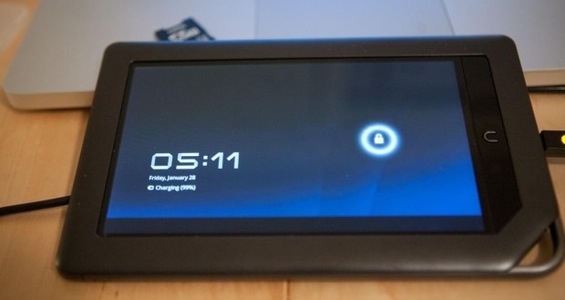
Android 3.0 Running On A Nook Colour

honeycomb_nook.jpg

The Android 3.0 (Honeycomb) SDK has only been released for a few days and enterprising hackers have already created a ROM for the Nook Colour. It’s not exactly fast, but it is a hack after all.

The crafty hackers combined the Nook’s kernel with the SDK to come up with a “zombie”. Hardware acceleration is a big part of getting Honeycomb’s UI to be nice and snappy and hacker dhoshman over at the XDA forums says that he will be working on it over the weekend.

I’d like to see 3.0 for my Elocity A7, and since I know for a fact they will only be releasing it in the upcoming A10, I sure hope someone smarter than me will put a ROM out for it.

If you haven’t seen all of the Honeycomb goodness yet, check out our sneak peek here.

tech.nocr.atAndroid 3.0 Running On A Nook Colour originally appeared on tech.nocr.at on 2011/01/29.

© tech.nocr.at 2011 |
Permalink |
Comments |
Read more in Hacking And Security |
Add to del.icio.us |
Stumble it |
Digg this

Explore more in: , , ,


The PS3 Has Been Pwned, Again

ps3_pwned_again.jpg

Wasn’t it just yesterday that we reported on the new firmware for the PS3 that was suppose to stop all the jalbreaking? Well it seems that we we can now safely answer the question of whether or not it would stop people from unlocking their units for good.

A few mere hours was all it took to pick apart firmware 3.56. Hacker Youness Alaoui (aka KaKaRoToKs) announced on Twitter that he had successfully unpacked the new firmware and published it’s signing keys, paving the way for people to create custom firmware based on 3.56 and allowing hacked PS3s to regain access to the Playstation Network.

And the cat and mouse game is-a-foot. No doubt that Sony will release another security fix in a few days and that will be hacked as well. This reminds me of the old satellite hacking days where the big direct to home satellite providers would change their keys almost daily. Not with the intent of stopping hackers since their keys had been cracked, but with the intent to annoy the average person to the point that they stopped doing it. Now that they keys are in the wild I think that Sony’s only chance to stop this will be with the release of the PS4.

tech.nocr.atThe PS3 Has Been Pwned, Again originally appeared on tech.nocr.at on 2011/01/29.

© tech.nocr.at 2011 |
Permalink |
Comments |
Read more in Hacking And Security |
Add to del.icio.us |
Stumble it |
Digg this

Explore more in: , , ,


Charatter Bear Regurgitates Your Tweets

charatter-bear.jpg

It can be a chore to keep up with your twitter feeds, countless hours of following people’s daily minutia can quickly chew up your day. This is where the Charatter bear comes in – it synchs with your Twitter account and reads back to you all of your incoming tweets and not on a small screen but out LOUD. How’s that for really annoying, especially if you follow 1000s of people.

The company behind the USB add-on says that sales are exploding. A simple app for your iPhone or PC translates all of your tweets into sound which is then sent to the Charatter bear. Although the novelty of the bear is cute, it can quickly turn annoying. Imagine a co-worker with this on his desk yelping out loud “LOL” or “WTF” every 20 seconds. If would easily drive you to destroying the poor USB bear.

If you lead a really lonely life and want a USB bear to keep you company (and drive you insane) you can pick up the Charatter bear for $28. You will also have to travel to an electronic retailer in Japan to pick one up.

tech.nocr.atCharatter Bear Regurgitates Your Tweets originally appeared on tech.nocr.at on 2011/01/28.

© tech.nocr.at 2011 |
Permalink |
Comments |
Read more in Gadgets |
Add to del.icio.us |
Stumble it |
Digg this

Explore more in: , , , , , , , , , , , , , , , , , , ,


Shinobi III On Your iPhone

shinobi127.jpg

I spent many an hour and many a quarter on Shinobi back in the day and now I can spend just as much time (but not as much money) playing it on my iPhone.

Sega has just released the great Genesis/Mega Drive classic to the App Store. The controls as great and the game play is responsive, not much more you can ask for really.

You can grab the iPhone version for $2.99 or you can also grab it for the Wii Virtual Console, The Sega Genesis Collection for the PSP & PS2, Sonic’s Ultimate Genesis Collection for the 360 & PS3 or on Steam.

tech.nocr.atShinobi III On Your iPhone originally appeared on tech.nocr.at on 2011/01/28.

© tech.nocr.at 2011 |
Permalink |
Comments |
Read more in Gaming |
Add to del.icio.us |
Stumble it |
Digg this

Explore more in: , , , , , , , , , , , , , , , , , , , , , , , , , ,


flipSYNC II Charging Fob

flipSYNC.jpg

I bet if you reached into your computer bag right now you could easily pull out multiple USB cables. You know what I mean, that birds nest of cabling consisting of multiple iPod/iPhone cables and USB mini variants.

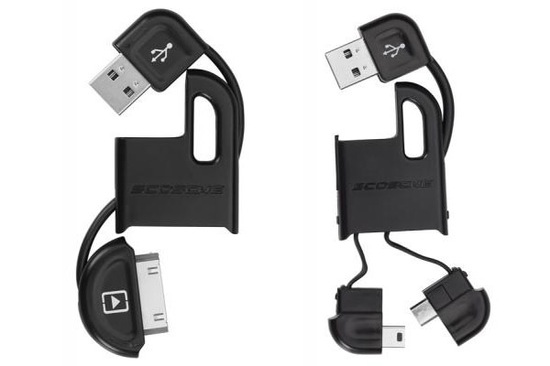
Scosche aims to change that for you with their flipSYNC II fob. Much like the key fob of a car, the flipSYNC is a USB cable that folds up nicely into a keychain fob.

2084.14638.600x400.IPUSBM2BK_keys.jpg

The currently offer two models; one with an iPod/iPhone 30-pin connector and one with dual miniUSB/microUSB. They are sleek, small, and durable and will run you $20 a piece. I already have a nice Lacie USB key on my key chain and will soon add one of these cool units.

[Link to flipSYNC II]

tech.nocr.atflipSYNC II Charging Fob originally appeared on tech.nocr.at on 2011/01/27.

© tech.nocr.at 2011 |
Permalink |
Comments |
Read more in Gadgets |
Add to del.icio.us |
Stumble it |
Digg this

Explore more in: , , , , , , , , , , , , , , , , , , , , , , , , , ,


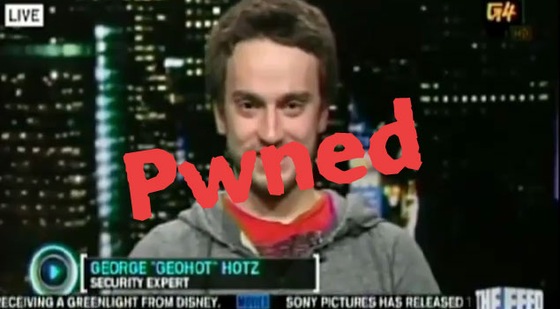
Sony 1 – Geohot 0

Geohot_pwned.jpg

Remember the decision from a few weeks ago where a judge didn’t think they had jurisdiction to decide on the fate of jailbreaker George Hotz, aka Geohot? Well, Sony has finally seen their day in court and has managed to win a restraining order against Geohot.

We all know that once you put something on the internet it lives forever; the restraining order against Hotz only prevents him circulating the jailbreak. Sony would have to go after every single person who has the keys up to have any chance of stopping the spread of their keys. They can’t be that stupid, can they? Of course not.
Sony also released firmware version 3.56 today. Will the new firmware bring us new goodies? Not a chance. The purpose of the upgrade is to put a stop to all of the jailbreaking that has been running wild. We have confirmed that the update does indeed prevent jailbreaking, the question that remains is will it do so for good. After all, we do remember the cat and mouse game that went on for years with the PSP modding community.

tech.nocr.atSony 1 – Geohot 0 originally appeared on tech.nocr.at on 2011/01/27.

© tech.nocr.at 2011 |
Permalink |
One Comment |
Read more in Hacking And Security |
Add to del.icio.us |
Stumble it |
Digg this

Explore more in: , , , , , , , , , , , , , , , , , , , , , , , , , ,


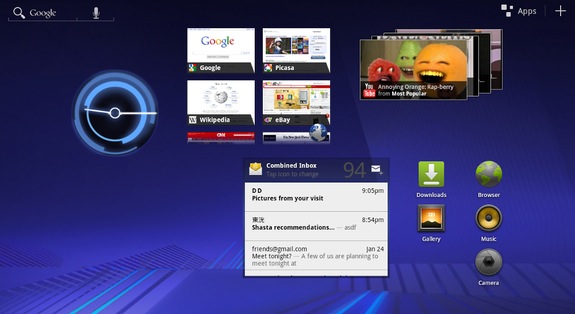
A Look At Android 3.0 – Honeycomb

Google gave everyone a sneak peak of the next version of Android (Honeycomb) at CES earlier this year. Today they released the SDK for the upcoming tablet geared OS. Here’s a look at what we all can expect from Honeycomb.

UI

main.jpg

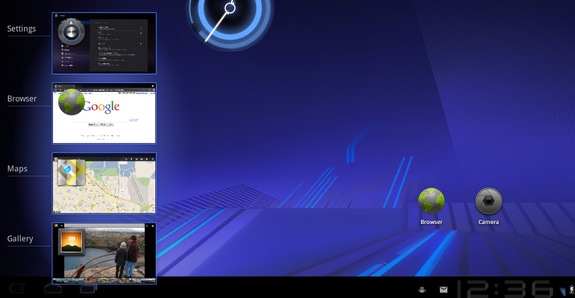
The biggest change is the UI. Older versions of Android weren’t geared towards tablets, Honeycomb changes all of that. You will now have more space on your home screen to accommodate more widgets and icons. As you can see from the image above, you will be able to fit all sorts of things on your home screen(s)

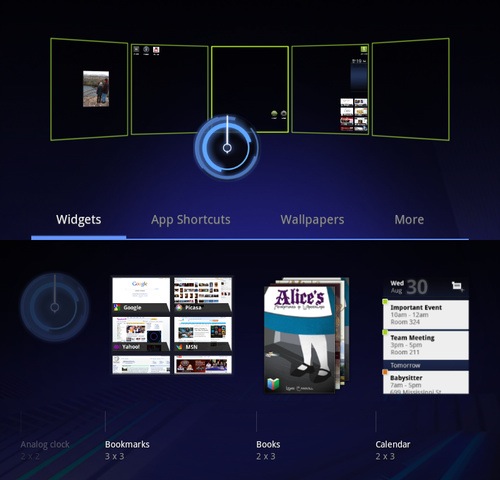
Home Screen(s)

android_3.jpg

The layout of the screens look much like older versions. There is a new 3D look to all of it that might cause problems with older hardware, the new Tegra 2′s should be able to handle it without much effort.

Notification Bar

android_3.0.jpg

The notification bar has been moved to the bottom ala Windows and they have added some new buttons that work like the capacitive hardware buttons on most Android devices. They have also added a recent apps button that will show you the current state of apps running the background.

Keyboard

android_4.jpg

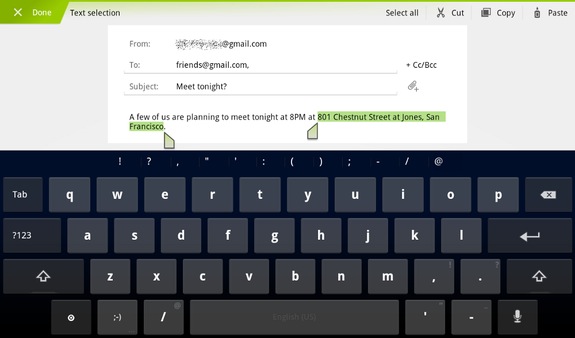
The new keyboard is a great improvement over the older iteration with larger reshaped keys. They also include keys like “Tab” which should make the transition for desktop users easier. Copy and Paste has also seen some change. Much like iOS, a long press will select a word and you can drag the selector to choose more text.

Over all it looks like a great improvement, especially if you are running 2.2 on a tablet currently (like I am). A welcome upgrade if I ever saw one.

tech.nocr.atA Look At Android 3.0 – Honeycomb originally appeared on tech.nocr.at on 2011/01/26.

© tech.nocr.at 2011 |
Permalink |
Comments |
Read more in Tech News |
Add to del.icio.us |
Stumble it |
Digg this

Explore more in: , , , , , , , , , , , , , , , , , , , , , , , , , , , , , , , , ,


Tiny Computer Looks More Like A Card Reader

pocket_computer.jpg

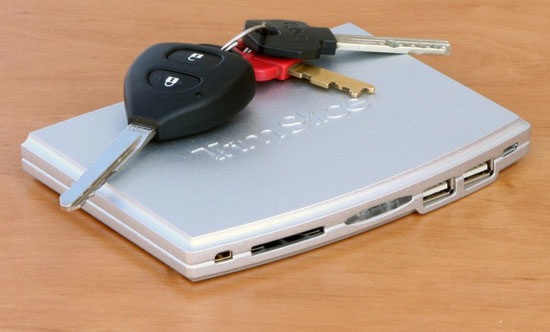
This is one small computer, actually it looks more like a memory card reader than a computer. Don’t be fooled by it’s incredibly small size, this thing is more powerful that my netbook. CompuLab’s TrimSlice packs one hell-of-a punch for such a small unit.

  • NVIDIA Tegra 2 Dual Core ARM Cortex A9 1GHz
  • Integrated ultra-low power GeForce GPU
  • 1 GB DDR2-800 RAM
  • ATA SSD (up to 64GB)
  • WiFi 802.11n + BT
  • DMI 1.3 full-HD + DVI (dual head)
  • Stereo line-out, line-in, 5.1 digital S/PDIF
  • 4 USB Ports
  • Serial Port
  • Full size SD and Mirco SD reader
  • The unit comes in a solid metal case that can take some abuse, doesn’t need a fan to keep it cool and uses only 3 watts of power. CompuLab will be gearing this unit to the HTPC market and hasn’t announced an OS for it yet, but I’m sure the modding community will jump all over this once it’s released. This would be great for a small server connected to your TV running something like XBMC or a MythTV frontend.

    No official pricing has been announced yet, but CompuLab is aiming for a sub-tablet price and it should be shipping sometime in April.

    [Link to TrimSlice]

    tech.nocr.atTiny Computer Looks More Like A Card Reader originally appeared on tech.nocr.at on 2011/01/25.

    © tech.nocr.at 2011 |
    Permalink |
    Comments |
    Read more in Gadgets |
    Add to del.icio.us |
    Stumble it |
    Digg this

    Explore more in: , , , , , , , , , , , , , , , , , , , , , , , , , , , , , , , , , , , , , ,