A Billion Dollars Isn’t Cool. You Know What’s Cool? Basic Human Decency

‘”Business!” cried the Ghost, wringing his hands again. “Mankind was my business. The common welfare was my business; charity, mercy, forbearance, and benevolence were all my business. The dealings of my trade were but a drop of water in the comprehensive ocean of my business!”‘A Christmas Carol, Charles Dickens

I know, I know. I’m old. Worse than that, I’m nostalgic. In the past few months, I’ve written about my love for fountain pens, and traditional publishers, and paper books, and handwritten letters, and live theater, and downtown Las Vegas. Those who follow me on Twitter will have read about my enthusiasm for the New York Times Crossword, and hotel writing paper, and socializing with friends sans mobile phones.

It’s cute to be the token Luddite at TechCrunch — but it’s also hugely disingenuous. I’m writing this stuff on Twitter, and on a hugely popular technology blog. You could cut the irony with a knife.

The truth is, I love technology. It’s rare that I dismiss or disparage a new gadget, app or company without trying it out at least once; and I certainly believe that – on balance – the more technologically advanced we become as a society, the better the world becomes.

And yet increasingly I wonder whether, for the sake of humanity, it might not be a bad thing if the earthquake comes and tips all of web 2.0 into the sea.

I should possibly explain.

The Internet — particularly “web 2.0″, with its communities and tagging and reuniting and friending and liking — was supposed to civilize us all. The idea was that by connecting the whole world through a variety of social networks and crowd-sourced standards of behavior (from reputation scores on eBay to Yelp reviews for dog walkers) – people would be driven to greater empathy for, and responsibility towards their fellow man. When Randi Zuckerberg sat on stage at DLD ’08 and told us the story of the Palestinian and Israeli children brought together through their joint membership of a Facebook group about soccer, we all shed a tear. Web 2.0 is working — it’s really working!

In the early days, the entrepreneurs behind these services really seemed to believe the gospel they were preaching. Anyone who has met Craig Newmark will testify that he lives and breathes customer service — turning down acquisition offers and obsessing over how his eponymous List can help connect communities in ways that enrich society. When they invented Google, Larry Page and Sergey Brin really did dream about making the world’s data easier to access. Jimmy Wales, for all of his fixation with personal celebrity, really is passionate about a free and open encyclopedia, and has turned down a large amount of personal profit to realize that dream.

At first, Web 2.0 seemed like a perfect two-way street. Brilliant entrepreneurs who genuinely wanted to change the world built services that we all wanted to use. They became rich, and our lives became better connected. We were all in it together.

Fast forward just a handful of years, though, and something has gone very, very wrong with that particular social contract. We users have kept our side of the bargain — dutifully tagging our friends in artificially-aged photos, and checking in at bars, and writing reviews of restaurants. We’ve canceled our newspaper subscriptions, and instead spend our days clicking on slideshows of “celebrities who look like their cats” or obsessively tracking trending topics on Twitter. We’ve stopped buying books published by professional houses and instead reward authors who write, edit and distribute their own electronic works through self-publishing platforms. We’ve even handed the keys to our cars and our homes to strangers.

On the face of it, the entrepreneurs have continued down the same track too: inventing ever more Disruptive companies to further improve the world, and in doing so enjoying multi-billion dollar valuations and all the trappings of fame and fortune. Even richer have grown the angels, super-angels and VCs who carefully nurture young entrepreneurs, molding them into the next breed of Mark Zuckerbergs and Sean Parkers, reminding their charges that “what’s cool” is a billion dollars — and that every new user acquired is another dollar added to their eventual high score.

And yet. AND YET. You only have to look at a couple of mini-outrages that bubbled up in the past few days to realize just how misaligned the interests of some entrepreneurs have become with those of the human beings they rely on for their success.

This time last week, the musical world mourned the death of Amy Winehouse. Almost immediately, the Huffington Post approved a post by unpaid contributor, Tricia Fox, entitled “Amy Winehouse’s Untimely Death Is a Wake Up Call for Small Business Owners“. We were all shocked, of course, by the callousness and cynicism of the headline — but we weren’t really surprised. We take it for granted now that the most popular online publications rely on search engine traffic for their survival. We know that, in many cases, “content” sites don’t employ editors to monitor what appears on their pages — and that those editors who are employed are encouraged to blindly approve any headline that name-checks a trending topic or two. Arianna Huffington talks a good talk about the democratization of journalism — but every so often we are reminded of the grimy truth: making money with online content is a question of attracting millions of eyeballs, whatever the moral cost.

An even more grotesque example of this was this week’s Airbnb scandal — the so-called #ransackgate (ugh).

Having been convinced by the company’s mantra of throwing open our doors to the world for monetary reward, a user by the name of “EJ” was shocked when a stranger comprehensively trashed her home. We’ll have to await the outcome of the police investigation to understand what really happened to EJ’s apartment, but what we know for sure is that Airbnb’s immediate, and subsequent, reaction was grotesque in its inhumanity. I’m not talking about the company’s initial apparent unwillingness to pay compensation — I’m talking about the behavior of the (unnamed) co-founder who wrote to EJ and asked her to remove her blog post about the incident, lest it affect the company’s ability to raise millions more dollars. From EJ’s blog

‘I received a personal call from one of the co-founders of Airbnb. We had a lengthy conversation, in which he indicated having knowledge of the (previously mentioned) person who had been apprehended by the police, but that he could not discuss the details or these previous cases with me, as the investigation was ongoing. He then addressed his concerns about my blog post, and the potentially negative impact it could have on his company’s growth and current round of funding. During this call and in messages thereafter, he requested that I shut down the blog altogether or limit its access, and a few weeks later, suggested that I update the blog with a “twist” of good news so as to “complete[s] the story”’.

Meanwhile, behind the scenes, we also know for sure that investors in the company leaned on publications like TechCrunch to stop reporting the story. Their ludicrous wail of protest: AIRBNB IS RUN BY NICE GUYS! IT’S NOT FAIR TO CALL THEM OUT WHEN THEY SCREW UP!

The question of whether Airbnb is run by nice guys is irrelevant. For all I know CEO Brian Chesky is a modern day Mother Theresa who had to break off his important work curing kitten cancer to deal with this growing PR nightmare. What’s relevant — and all too obvious — is that good old Brian and his co-founders stand to make millions, if not billions, of dollars from the success of Airbnb. His investors stand to make even more. That kind of wealth can easily drive the most saintly of us to behave in inhuman ways — to become so remote from reality and humanity that users like EJ become (at best) PR problems to be solved and (at worst) irrelevant pieces of data; eyeballs or clicks or room nights to be monitized in the pursuit of an ever greater exit.

And therein lies the real problem of web 2.0 — whether it takes the form of SEO-driven “news” or crowd-sourced accommodation. To make money — real money — at this game you have to attract millions, or tens of millions, of users. And when you’re dealing with those kinds of numbers, it’s literally impossible not to treat your users as pieces of data. It’s ironic, but depressingly unsurprising, that web 2.0 is using faux socialization and democratization to create a world where everyone is reduced to a number on a spreadsheet.

Sarah Lacy has written about how many of the current breed of silicon valley wunderkinds have been conditioned to behave like the movie version of Mark Zuckerberg, eschewing humanity and decency for personal profit and glory. Nothing either she nor I can write will reverse the trend — there’s simply too much money and power at stake. But that doesn’t mean we shouldn’t loudly call bullshit on those who use words like “disruption” and “revolution” and “democratization” as cynical marketing buzzwords simply to line their own pockets, only to retreat behind the barricades when the going gets rough. And it doesn’t mean we shouldn’t mourn a not-too-distant past where technology entrepreneurs created things to make the world a better or more interesting place, not just because they wanted to make a billion dollars.

And above all, it doesn’t mean we shouldn’t remind the current breed of entrepreneurs and investors that, in the final analysis, a billion dollars isn’t actually all that cool. What’s cool is keeping your soul, whatever the financial cost.


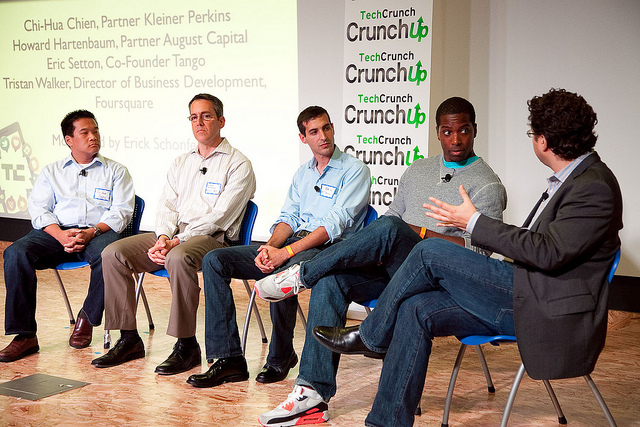
A Look Back On Our Mobile First CrunchUp And 6th Annual Summer Party At August Capital

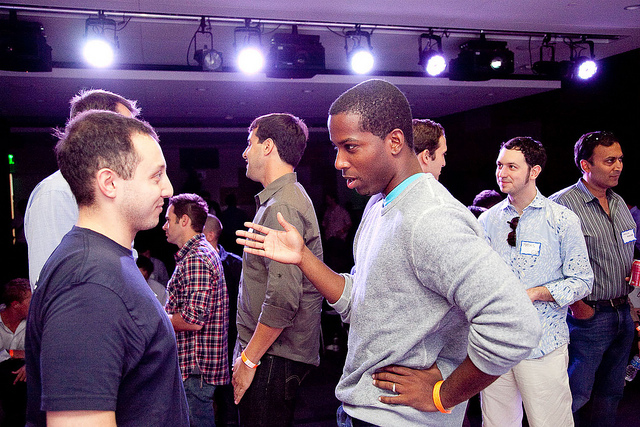
We had a blast yesterday at our Mobile First CrunchUp and 6th Annual Summer Party at August Capital. At our CrunchUp, we had some amazing speakers and special guests. Even Chamillionaire managed to make a certain speaker sweat and started a debate on why Android doesn’t have a decent phone.

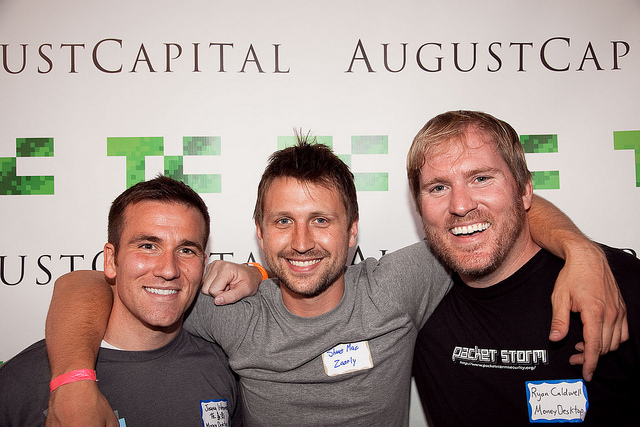
Later in the day, the drinks were flowing at August Capital and even Ron Conway was spotted enjoying a margarita or two. Our summer party was a huge success and we want to thank everyone who came. We hope you had as much fun as we did.


Mike Isaac@MJ_Isaac
Mike Isaac

Annnnd Chamillionaire takes the mic at #crunchup.

Shirley Hornstein@Shirls
Shirley Hornstein

+10 to @tristanwalker for making sure his kicks match the orange #crunchup after-party bracelets perfectly. Inside information? ;)

Harry McCracken@harrymccracken
Harry McCracken

Kevin Systrom of Instagram says that an Android version is "absolutely" going to happen. #crunchup


Here’s a deeper look at the CrunchUp:

A huge thank you to our sponsors who made this all possible. We couldn’t have done it without you. For more pictures, please check out our Flickr page.


Don’t Be Fooled By Vanity Metrics

Startups love to point to big growth numbers, and the press loves to publish them. We are as guilty as anyone else in this regard: one million downloads, 10 million registered users, 200 million tweets per day. These growth metrics can often be signs of traction (which is why we report them), but just as often they are not. It is important to distinguish between real metrics and what Lean Startup guru Eric Ries calls vanity metrics.

Vanity metrics are things like registered users, downloads, and raw pageviews. They are easily manipulated, and do not necessarily correlate to the numbers that really matter: active users, engagement, the cost of getting new customers, and ultimately revenues and profits. The latter are more actionable metrics. As First Round Capital’s Josh Kopelman recently advised on Founder Office Hours, “The real data is retention and repeat usage.” Startups that focus on the real metrics can make their products better, attract more customers, and make them happier.

It is important for startups to properly instrument the data they track so that they can get a handle on the true health of their business. If they track only the vanity metrics, they can get a false sense of success. Just because a startup can produce a chart that is up and to the right does not mean it has a great business. A mobile apps could have millions of downloads but only a few hundred thousand active users, or a freemium website might see exploding traffic growth but barely any conversions to paying users.

Many startups, of course, track one set of numbers internally and selectively share another set of vanity numbers externally with the press. The worst is when startups try to pitch us with raw growth numbers (we are up 400%), but without any context (400% from what, 1,000 users or 100,000?). We always ask for more meaningful numbers, but those are not always forthcoming.

The vanity metrics aren’t completely useless, just don’t be fooled by them. There are ways to back into real numbers from the vanity metrics. VC Fred Wilson blogged today about his 30/10/10 rule: 30 percent of downloads or registered users are active once a month, 10 percent are active once a day, and 10 percent of the daily users will be the maximum number of concurrent users. These are the patterns he is seeing in his portfolio companies and the startups pitching him.

Startups would be better off, however, reporting real metrics from the start. Vanity metrics can catch up to them, especially if those numbers do not correspond to the real numbers. Facebook is a great example of a company that focuses on the right numbers. Even in its college-only days, it would always talk about daily active users (the users who come back every day) and how fast it took them to take over a particular campus. If more startups would measure and share the right metrics from the start, the rest of us would focus on them too.

Photo credit: Skye Suicide


Gillmor Gang 7.30.11 (TCTV)

The Gillmor Gang — Danny Sullivan, Robert Scoble, Kevin Marks, and Steve Gillmor — covered the gamut between Google+ and well, Google+. The new social platform continues to delight and confound the early adopters in record numbers. @scobleizer remains optimistic that the search giant will roll out filtering features to cut down on the noise of squids, kittens, and well, Scoble comment farms.

@dannysullivan would prefer Google unleash the hounds of celebrity and brands, surprised as he and we are that the Plus team was caught flatfooted by the viral adoption of the field trial, or whatever Danny calls it. When we (Danny and I) started complaining about the lack of iPad support and Robert about the perils of high speed Scoble flow via the iPhone, @kevinmarks pointed out the ANdroid support sucked for tablets in general. All in all, much to look forward to and little or no competition from Facebook for Google to worry about.


Technology + Politics = Facepalm

Oh, how embarrassing. Earlier this week, Elizabeth May, the leader of Canada’s Green Party, took to her Twitter account and declared war on Wi-Fi. To think I very nearly voted for these clowns in our recent election. Lesson for my American friends: just because you find all the major parties unpalatable doesn’t mean that the fringe parties aren’t even worse. Meanwhile, can someone please get an environmental movement going that isn’t anti-science and anti-technology?

Give her credit: she did manage, with rare ability, to hit not just one but all of the “idiot politician talking about science/technology” notes: 1. Moral panic: “It is very disturbing how quickly WiFi has moved into schools as it is children who are the most vulnerable.” 2. Deluded citation of long-disproven theories: “It is one prevailing theory re disappearance of pollinating insects.” 3. Misleading deception that comes this close to outright lying: “The World Health Org lists EMF as a possible human carcinogen.”

Wait, what, the WHO called Wi-Fi possibly carcinogenic? Other so-called environmentalists seem to think so too. But no: it turns out that what they actually said (PDF) is: “The WHO/International Agency for Research on Cancer (IARC) has classified radiofrequency electromagnetic fields as possibly carcinogenic to humans (Group 2B), based on an increased risk for glioma, a malignant type of brain cancer1, associated with wireless phone use.”

The WHO was worried about phones, folks. Not Wi-Fi. And that was in May. Recently, a major study of the subject concluded: Regular users of mobile phones were not statistically significantly more likely to have been diagnosed with brain tumors compared with nonusers … The absence of an exposure–response relationship either in terms of the amount of mobile phone use or by localization of the brain tumor argues against a causal association.

But instead of backing away from her claims, Ms. May went ahead and doubled down on them. Hey, why let irrelevant things like facts and science get in the way of important stuff, like outrage and luddite paranoia?

Jon Evans@rezendi
Jon Evans

I hereby coin Evans's Law: Technology + Politics = Facepalm.

See also: “internets“; “series of tubes“; and the recent trend of Twitter protests, such as #fuckyouwashington and #OpPayPal. To be fair, Jeff Jarvis, who spurred the former, has a thoughtful, nuanced, and to my mind accurate perspective on the subject. But at the same time, it strikes me as exactly the kind of meaningless and inconsequential thing that Malcolm Gladwell was talking about when he pooh-poohed the role of social media in political change.

Now, I ultimately strongly disagree with Gladwell, but protests only matter if they grow into movements. Movements might use hashtags, but a hashtag is not a movement. Did any of the #fuckyouwashington or #OpPayPal tweeters start following each other? Was there any coordination? Or was it just a random and meaningless eruption, telling no one anything they didn’t know already? (“What? Many Americans are angry at Washington? Stop the presses!“) Anonymous claims that #OpPayPal resulted in the closing of 35,000 PayPal accounts. Even assuming that’s true, and that those were all active accounts (which seems unlikely) then their big protest has brought down less than 0.035 of 1% of PayPal’s total accounts. Big whoop.

That equation above cuts both ways, I’m afraid: politicians tend to be idiots about technology, and most techies aren’t very bright about politics. Which is really too bad—because each is thoroughly disrupting and transforming the other, whether they like it or not.

Image credit: Joe Mott, Flickr.


Benz’s Beauty Stretches Its Wings

<< Previous
|
Next >>


Moo

Photo by Chuck Squatriglia/Wired
<< Previous
|
Next >>

If and when I am ever filthy rich, I will own a Mercedes-Benz AMG SLS Gullwing. I will not care that its fuel economy is obscene and I will not care that it almost certainly costs obscene amounts of money to maintain.

There are many reasons for my decision, not the least of which is that it’s absurdly easy to drive the SLS criminally fast. The power is instantaneous, the handling is precise and the emotional and visceral response is off the charts. The SLS inspires such confidence at speed your grandmother would lose her license in it.

Yet as wonderful as that makes the AMG SLS, it is hardly the car’s biggest selling point. No, what really stands out are the doors and engine. Specifically, how the doors look and how the engine sounds.

Both can be described in one word: Fan-freaking-tastic.

I realize it is odd praising something so seemingly trivial as the doors and engine note, but they underscore the visceral appeal of the SLS. To open those gloriously grandiose doors or revel in the molten gurgling of a hand-built V8 is to know you’re driving something special.

Before we get to that, though, a little history is in order. The SLS is an homage to the 300 SL Gullwing, a masterpiece that was, by any measure, the first modern supercar when it appeared in 1954. In an age when even the best sports cars were a handful at the limit, the SL was fast, smooth and a joy to drive flat-out.

The SLS is all of those things. Few cars so beautifully blend luxury and performance in a package this engaging and rewarding.

The only reason it has gullwing doors is because they’re so damn cool. If that isn’t reason enough for you, then buy a Prius and be done with it because you just don’t get cars.

Now then. About those doors. They open upward, like the wings of a bird, something that always draws a crowd. People ooh and ahh. They point and snap pictures. They offer some variation of “Nice car” before invariably asking two questions, always the same two questions: “How much?” (A lot) and “How fast?” (Ridiculously).

No one ever asks, “Why?” That’s just as well, because the answer is, essentially, “Why not?” The SL had gullwing doors because its tubular steel frame required them. Nothing else would work. The SLS has an aluminum space frame and no need for such extravagance. The only reason it has gullwing doors is because they’re so damn cool. If that isn’t reason enough for you, then buy a Prius and be done with it because you just don’t get cars.

The rest of the car is no less impressive, even if it just sort of ends. The flaccid, rounded rear is a disappointing counterpoint to a front end more intimidating than SEAL Team 6. It’s as if the designers ran out of ideas once they got aft of the doors.

They can be forgiven though, because everything else works. The SLS recalls the classic sports cars of yore: long and low, with an aggressive stance and a hood that ends in the next zip code. Parking’s a bitch because you have no idea where the wheels are, and you’re so low that even gently sloped driveways scrape the spoiler with a grinding that sounds like a big check being written.

Of course, riding so low creates a subterranean center of gravity. That and an almost comically wide stance — those front wheels are 66.2 inches apart — keep the SLS flatter than last night’s beer through turns. Although the SLS is made of aluminum, it still a relatively big beast at 3,885 pounds. Most of the mass, including the engine, is between the axles, so the SLS doesn’t turn so much as pirouette. The back end likes to step out of line, but that adds to the fun. All manner of electronic nannies keep you out of trouble without being intrusive.

The handling is so responsive, so predictable, that the SLS encourages you to push harder than you might otherwise consider possible — or prudent. I lost count of how many times I caught a glimpse of the speedometer mid-turn and found myself at velocities that would give Condé Nast’s insurance agent an aneurysm.

But then, excessive exuberance comes easily when you’re playing with 563 horsepower and 479 pound-feet of torque. Acceleration is effortless in any of the car’s seven gears. If you simply must mainline all that power in one shot, activate the launch control system and hold on. The 6.2-liter V8 rockets you to 62 mph in just 3.8 seconds. Keep the pedal mashed another 7 seconds and you’ll reach twice that. Top speed is 197, though I’ll have to take Mercedes’ word for it.

Push the big red “start” button and the engine emits a roar that literally turns heads. Then it settles into a low idle, gurgling like Satan’s own cauldron.

The sound of the engine is no less intoxicating than its unrelenting power. To call it glorious is to undersell it. It barks. It gurgles. It snarls. It makes you shake your head and smile and thank Karl Benz for inventing the automobile because this, by God, is what a car should sound like. It is the sound every boy hears in his head as he says “Vroom! Vroom!” while pushing a Matchbox car.

Push the big red “start” button and the engine emits a roar that literally turns heads. Then it settles into a low idle, gurgling like Satan’s own cauldron. It’s a deep, primordial sound that builds to a metallic wail as the power comes on in a seemingly unending rush. Back off the throttle going into a turn and the engine pops and barks with such ferocity you expect to see flames shooting from the tailpipes.

Despite the barely contained rage of the engine and the ease with which it delivers eyeball-flatting speed, the SLS is remarkably happy tooling around town. While the sport, sport-plus and manual modes unleash increasingly unfettered performance, “controlled efficiency” mode reins it all in, keeping the car sedate if not quite docile.

For all its focus on performance, the SLS is remarkably practical. Well, as practical as a $203,000 car capable of ungodly thrust can be.

Getting in gracefully takes a bit of practice, but the interior is surprisingly comfortable. It’s deliciously appointed, though so understated as to border on dull even with the $4,500 carbon fiber trim package. The leather is softer than newborn kittens, the aluminum vents look spectacular and the optional 1,000-watt Bang & Olufsen stereo makes it sound like Thelonious Monk is riding shotgun. (At $6,400, it damned well better.) There’s even an anchor for a baby seat. My only complaint is the trunk is only slightly larger than the glovebox. Still, the SLS is so comfortable and composed around town you could commute in it if you could afford the gas.

Ah, yes. Fuel economy. If you must know, the feds peg it at 14 city, 20 highway and 16 combined. That’s about what I got racking up 766 miles driving all over creation one weekend. I would have felt guilty but, frankly, I was having far too much fun.

Now if you’ll excuse me, I have lottery tickets to buy.

WIRED Opulence and performance in an exotic you can actually live with. The harder you push it, the better it gets. Is there anything cooler than gullwing doors? No, there is not.

TIRED Slows shifts. Tiny trunk. The damned door buzzer gets mighty annoying when you’re driving with the gullwing doors open.

You Can’t Kill This Laptop

<< Previous
|
Next >>


Getac X500

Photo by Jon Snyder/Wired
<< Previous
|
Next >>

Traditionally, rugged laptops have required a military-grade surplus of tradeoffs. Typically this has meant lower-speed, older CPUs, tiny hard drives, a dearth of ports and even prior-generation operating systems installed.

Whether the manufacturers were reluctant to change configurations regularly or buyers simply didn’t care about performance is a mystery. Either way, you got a bulky and durable machine, but one that crawled along at the most basic of tasks.

That changes with Getac’s X500: A rugged laptop that, finally, has the tech chops to back up its MIL-SPEC cred. Certified for MIL-STD-810G and IP65 (your standard shock, water and fungus resistance) and “ready” for MIL-STD-461F (which covers electromagnetic interference), the Getac X500 is a handle-equipped, 12.4-pound slab of magnesium alloy and rubber with plenty of power under the hood.

Internally, the X500 is powered by a 2.67GHz Core i7 CPU, 4GB of RAM and a 160GB solid state hard drive. Integrated graphics, you say? No: The X500 springs for an impressive Nvidia GeForce GT 330M. The 15.6-inch LCD only provides 1366×768-pixel resolution, but it’s designed for outdoor viewing, giving it a blinding level of brightness. (In fact, it’s quantitatively the brightest display I’ve ever tested.) The display also features a (resistive) touchscreen: It works with your fingertip, but the included stylus is a better bet for accuracy.

Performance is off-the-charts stellar. The X500 turned in near-record marks on both general productivity apps and, shockingly, gaming framerates. That’s excellent news for our military readers: The X500 is just as good for killing actual insurgents as it is for virtual ones.

I also tested the X500’s rugged chops by dropping it several times, dousing it with water and even parking a Subaru Forester on it. Damage was never worse than surface scuffs and cosmetics: The pavement scraped up the underside of the laptop and shredded the rubber feet, but those appear to be easily replaceable and designed to take some punishment. The photos above were all shot after I rained abuse upon it, and as you can see, it doesn’t look battered or frayed.

Gripes, aside from the beastly size, are moderate. The fan is so loud and powerful that it blew papers off my desk from a distance of 18 inches. The touchpad is dismally unresponsive, making it one of the few times I actually preferred to use a laptop’s touchscreen to the traditional pointer.

Whether you’re out there in the field or find yourself playing the role of Chairborne Ranger, Getac’s latest has guts enough for the toughest of tasks. Of course, if the weight doesn’t give you a hernia, the price might. But since it’s likely being bought on Uncle Sam’s dime, well, what do you care?

WIRED Amazingly tough. Doesn’t skimp on performance. LCD viewable in everything short of direct sunlight. All ports protected under secure, but easy to use, snap closures.

TIRED Puny battery life — barely two hours — will not outlast forced march to Kandahar. No USB 3.0. Two serial ports but no parallel port? Come on, Getac! Hulk-inspired looks won’t exactly help you out with the ladies at Starbucks.

Sony’s Compact System Camera Has Enough Skill to Perform on Broadway

<< Previous
|
Next >>


NEX-C3

Sony Alpha NEX-C3. Photo courtesy of Sony
<< Previous
|
Next >>

The Sony NEX-C3 is an absurdly small camera considering what’s packed inside.

It’s hard to appreciate how tiny it is if you’re using it with the protruding zoom kit lens, which makes this slender camera look like a metallic toucan. It’s front heavy and a bit awkward, almost like it hasn’t fully grown out of puberty. Call it the Lea Michele of digital cameras.

You’ve got to hand it to Sony’s hardware designers, though. The Alpha NEX-C3, like its predecessors the NEX-3 and NEX-5, houses a DSLR-size APS-C (24×16mm) CMOS sensor inside a camera body that’s not much bigger than a smart phone. All these NEX models are so-called Compact System Cameras (CSC), a broad category of consumer-level cameras that accept small interchangeable lenses, but lack the mirror of a traditional DSLR. I shot with NEX-5 last year using an equally slender, 16mm f/2.8 lens and loved both the image quality and the great portability.

The new NEX-C3, which starts shipping next month, looks similar to its predecessors but is smaller — 4.3 inches wide, 2.4 tall and 1.3 inches thick. At just 8 ounces, it’s also lighter. Despite its more petite profile, the NEX-C3’s large sensor boasts 16.2 megapixels of resolution (up from 14.2MP on the older models) and a host of new features designed for photography novices who want to take pictures like the pros.

I got some early hands-on time with a final NEX-C3 camera at a Sony event last week where we shot a dress rehearsal of the long-running Broadway musical Chicago. Ideally, I like a lot more time with a camera before I file a review, but shooting the musical was more challenging than expected, especially considering we weren’t permitted to use any flash. Over the course of the day, I got a good sense of how well the NEX-C3 performs in difficult circumstances. Regular shooting conditions should be a walk in the park.

Though I would’ve liked to have tried it with the 16mm f/2.8 pancake lens or the brand new 30mm F/3.5 macro, I shot with it using the 18-55mm (f/3.5-5.6) kit lens, which helped me zoom in on the action happening on stage. Along with adding to the overall bulk of the camera — it’ll never fit in your pocket — the average aperture range and slow focusing speed of the kit lens made getting sharp shots of the kinetic song-and-dance numbers difficult.

But despite the tough stage lighting — all bright spotlights and colored gels — and the fast, choreographed dance movements, I was able to get a handful of nice photos of the performers. That’s impressive. Equally so was the NEX-C3’s ability to shoot relatively clean images at high ISOs in low light without a flash. I got excellent shots at ISO 1600 that had less noise than what I’d see with some entry-level DSLRs. This was all the more admirable considering the bump up in resolution means the pixels are smaller. At times, skintones were blown out from the bright spotlights, but with this camera and lens combo, that’s to be expected. (Some of this is fixable in Photoshop or by fiddling with the Exposure settings on the C3, which are listed simply as “Brightness” adjustment. More about this below.)

Beginning photographers will appreciate how Sony has tried to make the NEX-C3 comprehensible to those who don’t know the difference between an f/stop and a stop sign. Automated settings on the NEX-C3 let you adjust “background defocus” rather than changing the aperture. Instead of trying to figure out what the right White Balance or Saturation is, you can change Color from warm to cool or Vividness from vivid to soft.

While I liked all this in theory, I’m still not crazy about Sony’s interface to get to these adjustments. There are only a few buttons on the camera, and these are unmarked. To figure out what they do, you have to look at the corresponding menu. And, like the previous NEX models, the C3 is heavily menu-dependent, so you have to dig pretty deep to find the adjustments. Want to fiddle with the ISO? Patience, Grasshopper, patience. The same goes for changing modes; while there’s a blank command dial on back, it corresponds to a virtual model dial on the screen. Oy.

If you can decipher how to change settings — and can I pretty much guarantee that if I bought this for my mom, she’d have me on 24-hour tech support — there’s a lot to like in the NEX- C3 for beginning and even more advanced users.

Art filters are all the rage in digital cameras these days and the C3 has a bunch of them, which Sony calls “Picture Effects”: Pop Color, Toy Camera, Retro, etc. I used Pop Color and Toy Camera while shooting the performers in the dress rehearsal and liked the effects they produced: Pop pumped up the reds and saturated the dark colors but tended to further blow out the highlights. Toy Camera added some funky vignettes.

There’s also a decent Auto HDR feature that takes six shots at a time and scrunches them together into one image, which, theoretically, has a more balanced exposure. Worked pretty well. Even better is the 3-D Sweep Panorama, though I can’t vouch for the 3-D part since I don’t have a 3-D TV. The regular Sweep Panorama feature has been on Sony’s cameras for a few years now, however. It makes creating a expansive wide shot as easy as pressing a button and sweeping the camera in front of your face. Now this is a function my mom would love!

There are also some low-light modes including an Anti-Motion Blur and a Handheld Twilight feature which both combine six shots into one to improve image quality when shooting in the dark. For capturing the performers in Chicago, Anti-Motion Blur was the one to go with, since it raises the ISO to help freeze movement.

While the design of the NEX-C3 is similar to the previous models, it has some subtle changes, including a more curved body with textured ridges on the hand grip that make it easier to hold. There’s also a convenient tilting 3-inch LCD screen that helped me compose from tough angles while photographing the performers. Since I was sitting toward the front of theater at a low angle, all I needed to do was tilt the screen down and hold the camera over my head to get a straight-on shot.

As a video camera, the Sony NEX-C3 is pretty decent, offering a good 720p HD mode with quiet and accurate continuous autofocus that helped me track the dancers and singers as they Bob Fosse’d across the stage. A full 1080p HD mode would’ve been nice though.

WIRED Incredibly small and light, considering the large sensor and bevy of features inside. Excellent low light performance with DSLR-like low noise images at high ISOs. Tilting 3-inch LCD screen for composing over-the-head “Hail Mary” shots is helpful. Takes 400 shots on a single charge, so leave the battery charger at home. Comes in silver, black or pink.

TIRED Loses much of its portability with even a basic zoom kit lens attached. Too many menus to dig through to change functions. More experienced photographers may find the simplified settings condescending. HD video mode only goes to 720p.

Star Power: 4 Celeb-Endorsed Headphones Tested and Rated

Photo: Jens Mortensen

When it comes to celebrity endorsements, headphones are the new basketball shoes. It’s time to separate the sound from the noise.

<< Previous
|
Next >>


akg

1. AKG Q460

A man with 27 Grammys and a producing credit on the best-selling album ever knows a thing or two about sound. Plugging in these headphones from AKG’s Quincy Jones line proves it. Despite being the only on-ear model here, the 460s were the most versatile. Listening to Thriller—what else?—was as thrilling as ever thanks to the tight, punchy bass and meaty mids. But there’s enough dynamic range and nuance to make everything from Dizzy Gillespie to Daft Punk spring to life.

WIRED Detachable cable. Lightest headphones tested. Clever fold-up design and handsome hard-shell carrying case. Outstanding value.

TIRED Slightly flimsy build. Lacks the noise isolation of over-ear units. Instrument separation could be better. $169, AKG

Rating: 8 out of 10

<< Previous
|
Next >>

T-Mobile’s Svelte Slate Excels, 3-D Feature Excepted

The G-Slate eschews expansive dimensions in favor of an 8.9-inch screen made for ease of use. We needed only one hand in portrait mode, while all of our apps were within thumb’s reach for two-handed navigation in landscape. At just 1.37 pounds and half an inch thick, the LG-built unit feels comfortable either way. But while it nails the basics, the extras need work. We tried out the 3-D camcorder, but the 1950s-era red-and-blue glasses left us nauseated.

WIRED 15:9 aspect ratio great for viewing movies. T-Mobile’s HSPA+ 4G network flies. Tabbed browsing.

TIRED Junky glasses undermine 3-D video. Beta version of Flash for Honeycomb is far too sluggish for twitch-level gaming. $530 and up with two-year contract

Blade Runners: 4 Cordless Electric Razors Tested

Photo: Jens Mortensen

Giving yourself a close shave doesn’t have to feel like performing delicate surgery. We powered up these cordless electric razors to see which models make the cut.

<< Previous
|
Next >>


brawn

1. Braun Series 7

If you’re going to drag a motorized gadget across your face, it’s comforting to find one that underpromises and overdelivers. Braun advertises up to 50 minutes per charge from this foil shaver, but we regularly got more than 75. Although the three-head business end boasts a relatively small surface area, the oscillating middle head delivers 10,000 vibrations per minute. Translation: It’s just as effective as a bottle of Nair. But it’s also infinitely customizable; at the push of a button, for instance, you can dial down the power for lighter stubble.

WIRED Charging dock cleans, lubricates, and dries the blades. Foil holes never tugged, even on three-day stubble.

TIRED Buzzes like a fridge … with a chain saw inside. Dock display is almost as obtuse as Ulysses. $270, Braun

Rating: 8 out of 10

<< Previous
|
Next >>

Top-Grade Gear for Back-to-School

Photo: Jens Mortensen

Book bag? Don’t you mean laptop case? This back-to-school gear will help you make the grade in the digital age.

<< Previous
|
Next >>


booq_mamba

1. Booq Mamba Catch Bag

Ballistic nylon keeps gear safe and dry, the plush padded computer pocket can handle notebooks up to 15 inches, and a padded shoulder strap helps comfortably distribute heavier loads.

WIRED The 22 pockets keep you sorted. Smart zipper placement means pickpockets are out of luck.

TIRED Space is short; fits only two oversize textbooks. $150, Booq

Rating: 8 out of 10

<< Previous
|
Next >>

Wireless Surround Sound Brings the Sweet Spot to You

Photo: Jens Mortensen

The two biggest hassles with setting up surround sound: cables and calibration. The Aperion Intimus 4T Summit Wireless 5.1 system fixes both, with audiophile-friendly uncompressed streaming and ingenious sweet-spot technology. Where most wireless setups squeeze everything until Top Gun on Blu-ray comes out sounding like Airplane on VHS, Aperion uses the same high-speed frequencies as radar systems to stream audio in all its uncorrupted glory. Each individually powered speaker houses multiple amps and crossovers, so you can ditch the A/V receiver along with the cables. Place the speakers wherever you want and a hub unit (not shown) auto-calibrates it all. Then hit the MyZone button on the remote and the sweet spot shifts to wherever you’re sitting. You can hear it move.

WIRED Uncompressed 24-bit, 96-kHz audio. Sweet spot moves to you, not the other way around.

TIRED Line of sight required between speakers for accurate calibration. Seven power cords to plug in around the room.

The Isostick Makes A Mockery Of Optical Disk Hegemony

In the old days, you used to have to put something called “optical media” into a “DVD drive” to install software and operating systems. Those days are long over thanks to an odd little USB key called the Isostick.

Although the project doesn’t officially exist – it’s almost funded on Kickstarter – the IsoStick promises to allow you to load any ISO disk image from any computer just as if it were loading it from an optical disk. Why would you want to do this? Well, some computers can’t boot directly from a USB thumbdrive and the IsoStick solves this by masquerading as an optical drive first and a thumb drive second. Almost any PC will boot from an optical disk, which makes the Isostick so useful.

You can write multiple ISOs onto the FAT32 drive and a special selector lets you pick which one to load. This means you could keep multiple install images on one USB drive and install them as needed.

Write the creators:

The isostick is targeted at IT people, computer technicians, and geeks in general that are sick and tired of carrying around lots of discs that always get lost, broken, scratched, or just stop working. Often times you’ll have to update your discs with the latest patches or virus definitions or what-have-you. With isostick it’s a breeze, just drop the new iso on the flash drive and you’re ready to go!

$225 gets you a 32GB stick and some stickers while the cheapest model costs $125 for 8GB. If you’re unsure what you’d do with this, you’re probably not the target market but they’ve had $21,000 in pledges (out of a target of $25,000) so far, so it’s likely this has always been an itch that needed scratching.

Project Page


Pixeet: Full Panorama Photos With Almost Any Phone

Pixeet is a full, floor-to-ceiling panorama lens that works with almost any phone. It currently only supports iPhone but it will soon support Android and Blackberry devices as well.

How does it work? Well, you stick the lens right on the device and scan the room or space from left to right. The aluminum and glass lens picks up a full 360-degree panorama and then lets you post it to Pixeet’s own servers.

The lens will also work with other devices like digital cameras and webcams. It uses a magnetic ring that sticks to the device and holds the lens in place. There are plenty of these on the market but I think the more widespread compatibility is key here. The lens costs $50.

Product Page