Magic Numpad For Your Magic Trackpad

magic_numpad.jpg

If your like me, a member of the Cult of Steve, then you too probably rushed out to buy a Magic Trackpad the minute they were released. Since I don’t own an Apple desktop machine and work mostly on my MacBook Pro with a built in trackpad, purchasing one was, err, well stupid. Now, thanks to Mobee and their magical Numpad films you can breath some new life into that flat yet oh so sexy device.

For $29 you get a set of films that allows you to transform your Trackpad into one of three different numeric keypad layouts. Add in some software for enabling an on-screen calculator and setting macros you can be crunching spreadsheets in no time. The Magic Numpad is available for pre-order now and should be shipping this coming October.

[Link to the Magic Numpad]

tech.nocr.atMagic Numpad For Your Magic Trackpad originally appeared on tech.nocr.at on 2011/09/02. Reproduction of content not allowed without consent.

© tech.nocr.at 2011 |
Permalink |
Comments |
Read more in Mac |
Add to del.icio.us |
Stumble it |
Reddit

Explore more in: ,


Der Kritzler – The Drawbot

kritzler.jpg

Alex Weber of Hamburg Germany has created this awesome drawing robot. Der Kritzler (which means “the Scribbler” in German) is a super cool drawing robot that can lay ink down directly on a piece of paper or even a window as you can see from the video below.

Using some stepper motors, gears, pulleys, suction cups and other various parts Alex has put together a simple yet effective drawing robot. By the looks of the outline on his blog, it doesn’t look like that hard a project for all the weekend hacking warriors.

[Link to Der Kritzler]

tech.nocr.atDer Kritzler – The Drawbot originally appeared on tech.nocr.at on 2011/09/02. Reproduction of content not allowed without consent.

© tech.nocr.at 2011 |
Permalink |
Comments |
Read more in Hacking And Security |
Add to del.icio.us |
Stumble it |
Reddit

Explore more in: , ,


Alleged iPhone 5 Case

iphone5-case-comparison-4.jpg

The closer we get to a product refresh of iPhone hardware the more the rumour mills start turning. Italian Mac site Macitynet has what it claims is a case for the possibly upcoming iPhone 5.

If these are genuine pictures then we can expect a phone that is not only wider and longer but also thinner. Gone is the boxy design with a back that appears to taper on the corners. Volume buttons also resemble the forth-gen touch and the mute button has been moved to the right side.

The new iPhone is expected to be announced at Apple’s annual September music event with an actual release of October.

You can check out all the pics of the alleded case at Macitynet.

tech.nocr.atAlleged iPhone 5 Case originally appeared on tech.nocr.at on 2011/09/02. Reproduction of content not allowed without consent.

© tech.nocr.at 2011 |
Permalink |
Comments |
Read more in Mac |
Add to del.icio.us |
Stumble it |
Reddit

Explore more in: ,


Neo-Victorian Cell Phone

neovictorian_cell_phone_1.jpg

Are you no longer turning heads with your ultra-modern smartphone? Maybe not, since they are so common in todays society, so why not whip out this retro-styled gem.

What once started life as a Sagem X-5m cell phone is now this neo-victorian calling gem. It’s got a handmade wooden case and has been modified to use the brass buttons for dialling and the LCD screen has been set behind a green window which gives it a nice glow that fits with the design.

If you have $350 laying around you can pick it up off Etsy, just make sure your provider supports the GSM 900 / 1800 bands.

tech.nocr.atNeo-Victorian Cell Phone originally appeared on tech.nocr.at on 2011/09/02. Reproduction of content not allowed without consent.

© tech.nocr.at 2011 |
Permalink |
2 Comments |
Read more in Hacking And Security |
Add to del.icio.us |
Stumble it |
Reddit

Explore more in: ,


Crowd Buster Backpack

pepperspraybackpack-thumb-550xauto-69908.jpg

If you ever see someone coming at you wearing one of these I strongly suggest you turn around and run as fast as you can.

The Crowd Buster can blast pepper spray 150 feet in either a fine mist or the deadly pellet fire mode. Not only will this make you cry more than the day your puppy was hit by that car, but it will also tag you with a dye that sticks with you four up to 3 weeks; allowing whoever is using it to identify you weeks later.

Don’t get any crazy ideas for those family re-unions. It requires two people to operate and is only available to law enforcement.

[Via Law Enforcement Mall]

tech.nocr.atCrowd Buster Backpack originally appeared on tech.nocr.at on 2011/09/02. Reproduction of content not allowed without consent.

© tech.nocr.at 2011 |
Permalink |
Comments |
Read more in Gadgets |
Add to del.icio.us |
Stumble it |
Reddit

Explore more in: ,


Fetish: Fujifilm’s Forward-Thinking, Retro-Styled Rangefinder

Photo: Jens Mortensen

Underneath the sweet ’70s styling and “analog” controls, the Fujifilm FinePix X100 is possibly the most advanced rangefinder-style camera ever (yes, we know about the Leica M9), though not the most rugged. Look through the eyepiece and you’ll see the best of old and new: a digital heads-up display superimposed over a classic glass viewfinder. And since there’s no mirror to pivot up and out of the way like on an SLR, you can shoot with almost no shutter lag while never losing sight of your subject. The large 12.3-megapixel sensor also records 720p HD. Stay away from water, though; each of those cool analog dials sits atop unsealed circuitry.

Wired: Prosumer hardware in hipster packaging. Built-in flash, but the blazing-fast 35-mm-equivalent f/2 lens and maximum ISO of 12,800 mean you won’t need it much.

Tired: One lens only. Water-resistant? This camera isn’t even rated for use in humidity over 80 percent. Sorry, Florida.

Make It, Don’t Fake It, With This CNC Rig

Thinking about getting a CNC like the pros use? Computer numerical control rigs, which use rotating bits to carve shapes from nearly any material, are coming out of the machine shop and into the home, and Chinese-made models like this Tormach are getting cheaper and better all the time. Plus, this unit takes up less space than a fridge. We asked Jerry Blake, a retired aerospace-parts maker who is now a hobbyist auto-parts maker, to put one through its paces.

Tormach PCNC 770

The 770 uses an R8 spindle with a 5/8-inch, three-slot setup—a common standard that means most people who have manual drill presses will be able to use a lot of their existing tooling. Made in china brings the price to about a third that of comparable American-made mills, but it’s still robust and easy to use. The controller, which comes preconfigured with industry-standard Artsoft Mach3 software, works right out of the box. The 770 is a three-axis machine, but it comes with simple directions for adding the optional fourth axis, which allows for keyways and undercuts for full 3-D milling. There are some limitations, though. The 1-horsepower motor will feel anemic to anyone accustomed to 7.5-horse industrial units. More troubling: The tolerances can vary as much as 0.002 inch from day to day. It’s a great hobbyist’s machine, but nothing to bet your livelihood on.

Wired: Much cheaper than comparable models. Modular for easy transport. Runs off 110-volt outlets. Great online and phone support.

Tired: Slightly underpowered. Doesn’t hold tolerances with pro-level precision. $6,400 and up

Best Apps for Sports News Junkies

ScoreMobile

Addicted to betting? ScoreMobile has up-to-the-minute lines and even built-in fantasy leagues. Multidirectional navigation makes it easy to swipe from sport to sport. Video is crisp and loads quickly, with breakdowns of matchups and trends that might affect the spread.

Wired: Easiest in terms of adding teams and switching between sports. Coverage includes cycling, MMA, even cricket.

Tired: Video is mostly talking-head analysis; few highlights. (iOS/WP7/BlackBerry/Android) Free, ScoreMobile

Rating: 8 out of 10

ESPN ScoreCenter

The self-styled worldwide leader delivers slick design, lots of news, and more sports than comparable apps, including live text coverage. Narrow the focus with windows for your favorite teams, leagues, or sports.

Wired: Quick rundowns of top news. Live coverage has fastest refresh of the four.

Tired: Windows and then tabs within windows; it can get cumbersome. No video—from ESPN?! (iOS/WP7/Android) Free, ESPN

Rating: 7 out of 10

Fox Sports Mobile

Fox’s app is clean and easy to navigate, with news and scores for almost every major sport. Box scores are highly detailed, but streaming video is slow and lo-res, with few highlights.

Wired: Clean design combines ScoreMobile’s multidirectional browsing with the ease of ESPN’s layout.

Tired: Local tab features just 25 cities, missing such hick flyovers as Boston, New York, and Chicago. (iOS/Android) Free, Fox Sports Mobile

Rating: 6 out of 10

Sportacular

This offering from Yahoo Sports has an easily customizable interface with fun widgets, like a check-in function and an addictive “shake to show the odds” function for basic betting lines. Coverage of nonmajor sports is pretty limited, though.

Wired: News streams include non-US sources like the BBC. Trending tab highlights hot games.

Tired: Live text coverage is slow. Just four European soccer leagues. No video. (iOS) Free, Sportacular

Rating: 5 out of 10

The Setup: Guitar Gear to Take You From the Bedroom to the Stage

Photo: Jens Mortensen

Everything you need to shred like a pro, whether you’re in your studio apartment, a recording studio, or live onstage.

<< Previous
|
Next >>


gibson

1. Gibson SG ’61 Reissue

The SG’s famously horny design may be 50 years old, but it still kicks, bites, and curses like an angry kid. This reissue boasts the slim, fast neck and snarling pickups of the original but with updates like modern wiring and sturdier construction.

Wired: Lightweight mahogany body and neck. Gibson ’57 Classic pickups sound bright and hot.

Tired: Heavy, oversize headstock makes the otherwise feathery neck feel a bit unbalanced. Not a lot of sonic subtlety. $3,299, Gibson

Rating: 8 out of 10

Listen:

[dewplayer:http://www.wired.com/reviews/wp-content/uploads/2011/08/Gibson.mp3]

<< Previous
|
Next >>

New Takes on Slow-Cooking Tech

<< Previous
|
Next >>


Slow Cookers

There isn’t much you can do with a slow cooker that you can’t accomplish with a Dutch oven on a stove top. You still have to brown your meats and sauté your onions ahead of time. You still have to chop, dredge, and deglaze. But there is one important thing a slow cooker will let you do: walk away.

However, there’s more than just convenience going on here. Stewing meat for long periods over low heat breaks down collagen and other connective tissues. And those low temperatures make it pretty difficult to overcook your ingredients. Come home a bit late and you’ll still be greeted with delicious, fork-tender cuts.

So a slow cooker is the perfect piece of throwback gadgetry for the busy modern chef—which might explain why companies from All-Clad to the original Crock-Pot are constantly coming out with new takes on this 40-year-old tech. New models vary widely in price, functions, and features. Some heat the cooking vessel on all sides, while others heat only from the bottom. Basic cookers go for less than $30, while multiuse models, which double as griddles and steamers, can cost more than $200.

After testing several, here’s what we found: The most important feature of a slow cooker is what you put in it. When it comes to this category of kitchen gadgetry, low-cost and simple wins.

Buying Advice
If you already have a slow cooker, there’s a good chance it used to belong to your parents. Because older models consist of little more than a pot and a heating element, they tend to last forever. Newer designs with programmable electronics and other added features may wear out faster—especially units with nonstick metal pots. Those surface treatments can be damaged by metal utensils, eventually wear off, and can be toxic if they get into your food. Of course, stone pots will shatter if dropped. So before buying, it’s good to look into the availability of replacement pots; some manufacturers are better about that than others.

Glossary
Multiuse: Some slow cookers can also sear, simmer, boil, and even double as griddles. Others come with steam baskets and roasting racks. For small kitchens, they can pack a lot of functionality into a tight space.

Programmable: These aren’t DVRs. Programmable settings, on slow cookers that offer them, are generally limited to time and temperature. Handy but not necessary.

Steel vs. Stone: Traditional ceramic or porcelain pots are heavy, but they’re cheap and, with their low thermal conductivity, great at distributing and retaining heat. More expensive slow cookers boast metal pots, which are much lighter and often clean up better, thanks to nonstick coatings.

How We Tested
We carried, cleaned, and programmed. And we filled each pot with chuck roast, broth, carrots, and potatoes, then walked away for six hours. The results: Stuffed friends, lots of leftovers, and proof that there’s no reason to spend big on a slow cooker.

<< Previous
|
Next >>

Catch a Big Buzz From This Tiny Espresso Machine

Don’t let the name fool you. Although the word “pixie” is commonly associated with dainty fairies and forest sprites, the Nespresso Pixie isn’t some lightweight.

It’s a little espresso maker with a small footprint. Of course, a full-sized pro machine — the shining, hissing beast that belches steam as your bescarfed barista sweats over its many handles — will undeniably make better espresso than anything you can buy for less than a month’s salary. But as smaller machines go, the Pixie pumps out surprisingly tasty and well-structured shots of espresso.

Nespresso, the company that makes the Pixie, has a range of home espresso makers and coffee machines that utilize single-use capsules — little, prepackaged aluminum pucks with ground coffee inside. The Pixie is the smallest and least expensive of the lot.

Preparing an espresso with this thing is dead simple. Fill the 1-liter, detachable water tank. Place a Nespresso coffee capsule in the top chamber, pull down the silver handle, press the power button, wait 25 seconds for it to warm up, and press either the Espresso or Lungo button. Your drink is ready in 10 to 20 seconds. Chose from the 16 different coffee capsules, each with a different character and flavor (but not flavored). Most are expressly for the 1.35-ounce espresso, and four are dedicated to the taller 4.75-ounce Lungo style. Capsules are 55 cents each and come in boxes of 10.

Lifting the handle ejects the capsule into a used capsule container, which has room for 10 of them. But make sure you have a cup or saucer under the spigot, as the last savory drops of coffee inevitably drip out as you’re ejecting the capsule.

You’re out of luck if you want to add foamed milk for a latte, macchiato, or cappuccino. You’ll need a milk-foamer, which can costs as little as two bucks or as much as $100.

Of course, to make a cheap and light machine that still contains a 19-bar pressure pump means you have to use less-expensive materials. The Pixie uses simple ABS plastic for the housing and the cup support. The side panels (available in six colors) are a combo of thin aluminum and recycled ABS plastic. And that silver handle-latch is made of a metal called Zamak, a fancy name for zinc-aluminum alloy.

It’s being marketed as a “green” machine that saves energy — the Pixie shuts off automatically after it goes unused for nine minutes. But the clear plastic water tank is “green” for a different reason entirely. Made of an even cheaper grade of plastic, a film of green algae developed on the bottom of my test unit after a week. I’d advise you to empty the reservoir and put in fresh water every couple of days instead of just topping it off once in a while.

WIRED Drop-dead simple operation. You get the same results as with larger, more-expensive home machines. Plenty of coffee capsule varieties to choose from. Cup holder pops off to accommodate larger receptacles.

TIRED Plastic water tank develops algae on the bottom, if water is not changed frequently. Single use coffee capsules are biodegradable, but recycling locations are few and inconvenient.

Roundup: Wireless Streaming Speakers Tested and Rated

<< Previous
|
Next >>


Wireless Streaming

The promise is that listening to music will get easier. Hit Play on your wireless device and the audio comes out of your speakers—no cables or docks. Yeah, right. As is often the case, the simple solution has only added to the complexity, as tech behemoths and bit players square off in yet another format war.

At its most basic, the conflict breaks down into two camps: uncompressed and compressed—the former ostensibly delivering uncorrupted streams of music, the latter downsizing files to make them easier to move around.

Unfortunately, the definitions get terribly muddled. Terms like lossless, which would suggest raw audio, are often applied to formats that do indeed compress their streams (just not all that much). And some speakers built for uncompressed protocols like DLNA and Kleer have hardware limitations that don’t deliver on the full potential of those formats; it’s sort of like pulling onto the Autobahn on a moped.

In the end, it’s a three-part equation: Source file + streaming protocol + receiving unit = what you hear. We can’t do anything about what’s in your music library, but we can help you with the rest.

Buying Advice
If you’re dealing with puny 128-bit MP3s, which have already been so chopped up and reassembled there’s no saving them, a fast-and-dirty streaming standard like Bluetooth will be fine. AirPlay transmits at CD quality, so as long as your source files don’t exceed 16-bit/44.1-kHz, they won’t get compressed. But if you’re starting with high-bit files like WAV and AIFF and want to preserve that quality, you’ll need devices built for DLNA or Kleer. But you’ve also got to consider where you’ll be streaming. Bluetooth and Kleer, which beam directly between device and speaker, struggle with distance and walls. AirPlay and DLNA units communicate over Wi-Fi networks, which makes them better choices for larger homes.

Glossary
2.4 GHz: The radio frequency most commonly used in wireless consumer electronics like cordless phones, routers, and Bluetooth devices.

24-bit/96-kHz: A high-end method for encoding digital audio. Payoff for the larger file sizes—a single song can be 100 MB—is added clarity and dynamic range.

16-bit/44.1-kHz: A step down from 24-bit in terms of dynamic range. Often referred to as “CD quality.”

How We Tested
We selected one unit for each of the four formats we’ve discussed—AirPlay, DLNA, Bluetooth, Kleer—and set them up in a 950-square-foot apartment streaming rock, jazz, electronica, and hip hop from an MSI laptop, an Acer HTPC, an iPod Touch, and a Droid X.

<< Previous
|
Next >>

Razer Onza Xbox Controller Offers Gripping Gameplay

Inventing excuses after losing, dying, or in general just playing like crap is a time-honored tradition among gamers. We’ve heard them all — teammates who don’t pull their own weight, cheaters, tons of lag, screen glare, and worst of all, faulty or unresponsive controllers.

So here’s the bad news: Razer’s Onza TE will make covering up your ineptitude with hardware-based justifications even less tenable. But don’t panic. The good news is you might not have to make as many.

At just $10 more than Microsoft’s standard-issue wired controllers (and the same price as the wireless versions), the Onza TE is an undeniable value whether you’re a seasoned fragger or casual gamer. Yes, you’ll have to deal with a cord — Microsoft doesn’t license its wireless tech to third party peripheral makers — but at 15 feet, you should still have plenty of wiggle room from couch to console. In fact, like the rest of the controller, even that cord is thoughtfully designed. Made of lightweight, braided cable, it also comes with a quick release USB connector should anyone accidentally trip over it.

As for the controller itself, the first thing you’ll notice is that it has a drastically different feel then the standard Microsoft models. It’s not only lighter, thanks to the lack of a battery pack, it’s also slimmer and slightly more angular. Razer also coated the Onza TE with a rubberized, non-slip finish, ensuring that even Cheetos-stained fingers will maintain a firm hold.

But as with Razer’s other gaming peripherals, the Onza TE’s true appeal is in its ample opportunity for customization. To that end, both of the controller’s analog sticks have adjustable resistance rings, letting you tighten or loosen the amount of force needed to tilt them. You also get two separate, fully-mappable buttons located just above the triggers dedicated to whatever task you deem fit. (I was fond of mapping my reload button to right one).

Razer also threw in what it calls “hyper response technology” into its ABXY face buttons. This is actually just a fancy name for using mechanical switches beneath the buttons. And if you’ve suffered the mushy membrane switches that Microsoft uses in its standard controllers, the advantages will become immediately apparent. Not only is the depressing distance for each button much shorter, you’ll also get a satisfying click each time you do it. Even better? Those buttons are backlit.

The adjustable analog sticks also come in handy in multiple gaming situations. Dialing in the precise resistance when controlling the errant camera in L.A. Noire or loosening things up and adding a bit more precision as you’re aiming down your ACOG scope was simply a matter of twisting the rings on the analog sticks to the right or left.

Of course, none of this is to say the Onza TE will actually make up for lack of skill. But after using it for more than two weeks I can say it’ll make going back to any other controller nearly impossible.

WIRED Fantastic ergonomics and balanced heft. Mechanical switches under ABXY make for some great button mashing action. Super long 15-foot cable. PC compatible. Backlit buttons perfect for darkroom gaming. D-pad is divided into four distinct sections, giving you better control and accuracy in fighting games.

TIRED Slightly awkward placement of remapped “start” and “back” buttons.

Facebook ‘BandPage’ Creator RootMusic Raises $16 Million

root

RootMusic, the company behind BandPage, a platform that helps musicians make the most of their Facebook presence, has raised a Series B round of funding to the tune of $16 million after raising $2.3 million earlier this year.

The financing round was led by GGV Capital with new investor Northgate Capital and existing backer Mohr Davidow Ventures participating.

Since its launch – which was less than a year and a half ago – BandPage has grown to over 30 million monthly active users, making it the 6th largest overall app according to AppData.

Roughly 250,000 bands from all over the globe use BandPage to enhance their Facebook presence, as do artists such as Rihanna, Katy Perry, Arcade Fire, Bon Iver and Kanye West.


Company:
ROOTMUSIC
Launch Date:
1/10/2009
Funding:
$2.3M

The Music Experience made for Facebook – Listen, Share, Discover. Make the Move to BandPage on Facebook.

We founded RootMusic to level the playing field; we turn two days of…

Learn more


Colorio E-820: Epson’s New Photo Printer Is Portable, Comes With Display And Remote Control

E-820

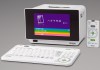
Epson announced [JP] the Colorio E-820 for the Japanese market today, a photo printer and wireless keyboard set somehow designed like a computer from the 1970s or 1990s (at least when looking at the top menu). The newest in a line of similar devices, this 5,760×1,440dpi inkjet printer is suitable for printing both pictures and postcards without a PC.

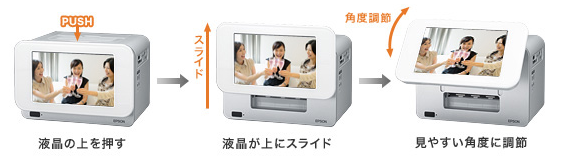
Users can create postcards by choosing between 1,055 different pre-set designs and use the 7-inch LCD screen (800×480 resolution) to check their works before printing them. The keyboard is for adding comments, greetings, etc. to the pictures and postcards.

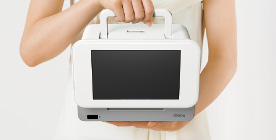
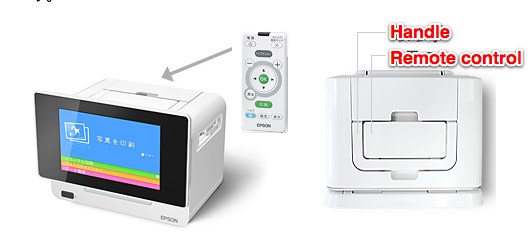
The device can be carried around using a handle and supports USB sticks, SDXC or microSDHC cards, xD-Picture cards and Memory Stick Pro cards.

Epson says the screen can be used as a digital photo frame, too (and throws in a remote control for that function).


The E820 is sized at 235×158×192mm and weighs 2.6kg. It will hit stores in Japan on September 15 (price: $718).