Unlimited Music Service MOG Launches A Desktop App For The Mac

Screen Shot 2011-09-08 at 4.23.15 PM

MOG, the all-you-can-eat streaming music service that competes with the likes of Spotify and Rdio, has some good news for Mac users: it’s just launched a native application for OS X, which is now available on the Mac App Store. You can download it right here (the service is free for 14 days, then costs $10/month, which includes access to the web and mobile applications as well).

The native Mac application will look familiar to anyone who has used the service’s recently-revamped HTML5 web app , because it’s based on the same code. It isn’t loaded with native Mac widgets, but it works well — everything feels snappy, and in my testing songs began playing in less than a second.

And there is one nifty feature that the web app doesn’t have: AirPlay support, which means you can stream your MOG music to an Apple TV or any speakers hooked up to an Airport Express (MOG says this is the first of the streaming music apps to offer this feature). The app also supports those media keys on your keyboard, as well as Apple Remotes.

Existing MOG users will be pleased with the app, but this release is particularly important for users debating between Spotify, Rdio, MOG, and Rhapsody. Each of these services offers large music libraries — so they tend to compete on offering better app support and user experiences.  Spotify and Rdio already offer native apps; now MOG can check that box as well.

Spotify does has one advantage over MOG and Rdio for the time being: it has a limited free version, though it’s invitation-only in the US.


Company:
MOG
Website:
http://mog.com/
Launch Date:
January 6, 2005
Funding:
$24.9M

MOG Inc. is a next-generation music media company founded in June 2005 by David Hyman, former CEO for Gracenote. MOG has one simple goal: to perfect your music-listening experience.

MOG’s…

Learn more


British Social Discovery Site Snog.com Looks To Build A Better Hot Or Not; Goes Viral (And Mobile)

Screen shot 2011-09-08 at 1.59.07 PM

The Web has been home to a fair number of questionable memes and websites over the years, really too many to mention here. One among them that you’re likely familiar with is “Hot Or Not”, the site that allows visitors to vote on photos of random people based on attractiveness. It’s not exactly high brow, but games like this have been around for years — in various incarnations. In the U.K., the theme gave rise to a popular reality TV show, called “Snog, Marry, Avoid” — the content of which you can probably guess based on the title.

The show is also the inspiration for a young British startup, called Snog.com, that has seen some serious viral adoption in the U.K. over the last six months. The startup was founded by Jonny Teeling and Will Peirce, two recent grads from Leeds University, who set out to create a social discovery site that offered a new spin on the old model, plus a way for young people to break the ice and interact without the awkwardness of traditional dating sites.

The idea was simple: Create a community that removes the daunting aspects of social interaction for young people, and make it easy for them to connect, meet, and maybe even snog. The co-founders rather obviously grabbed the concept behind Snog, Marry, and Avoid, brought it to an online audience (with enough to distinguish from the TV series as to avoid lawsuits), and, after an all-night coding session, the site went viral, recording 30,000 page views in the first two hours.

The story has a feel of Facebook’s early history, when Zuckerberg created Facemash, which attracted 22,000 views from Harvard students within an hour of being online. Of course, this is the problem that Snog.com has to confront: Facemash was only a precursor to the social network to rule them all, so the question becomes how to make sure Snog.com isn’t just a flash in the pan.

The site’s early viral activity almost immediately overloaded the servers, leading to more than a few hours of downtime. But, based on the early interest, the founders were able to raise a “six-figure” investment from Kevin Ham, the investor and former “man who owns the Internet”. The investment led to a team of developers, Amazon hosting, and an advisor well familiar with building popular domains; and since the early stumble, Snog has continued to surge. The founders tell me that the site is currently attracting more than 1.5 million pageviews a day, and users are spending an average of 20 minutes on the site per visit. What’s more, the site has pulled in over 260 million pageviews in all since January.

Clearly, Snog.com has struck an addictive chord for British teenagers, but there are many examples of early success in Web 2.0 that later find themselves hosting a plot in the Web graveyard. Snog therefore seems to be an interesting case study for how to build a social web business, maintain early interest, and make it something more than just another updated Hot or Not. (Granted, Hot or Not did sell for $20 million.)

As of right now, Snog.com users can either choose to ‘Snog, Marry or Avoid’ based on another user’s photos and a small “about me” (or profile) section. The site also incorporates social elements, too, encouraging users to follow other users they like, write public notes, or send private messages. The average age on the site is about 17, which is certainly a coveted demographic for advertisers (Snog’s main monetization model at this point), but also somewhat limiting. The founders don’t want the site just to become a glorified chat room for teens, it wants to create a social discovery platform — not another social network.

For starters, Snog has just released an iPhone app that offers users a gallery in which they can see top members and which of their friends are currently online, play with their user profiles, check their responses, send private messages, as well as a “Shuffle” setting that allows them to quickly browse — and, well, shuffle — through profiles.

Mobile is certainly an important piece of the puzzle, but it’s really an added feature, what’s more important is baking more significant components into the site’s structure that make it a social discovery platform based on more than just a user’s profile pic and silly bio.

Next, Snog plans to add more enhanced location features (for both web and mobile) that allow users to connect based on proximity, and hopefully take online flirting and connecting offline. Beyond that, the founders want to integrate users’ interest graphs into the site, allowing users to search for people with similar interests and demographics. The founders also plan to add “like, love, dislike” buttons across the site, which visitors can use to vote on statuses, specific photos, movies, books, cities, brands, etc.

Snog is an interesting site, to be sure, and the founders clearly have a vision to transform their site a community platform — not to mention that they want to make “snog” an international word. There’s potential for both, especially for the latter (thanks to Harry Potter), but other young web entrepreneurs would be smart to pay attention to what happens to the site over the next year — it should be an interesting litmus.

What do you think? Snog, marry, or avoid?


:
Website:

Learn more


Project Gutenberg Founder Michael Stern Hart, 1947-2011

gutenberg

In 1971, Michael Hart was given some operator time on a Xerox mainframe, and felt obligated to produce something worthwhile. Struck by an idea, he typed in, letter by letter, the text of the Declaration of Independence, from a copy he had been given on the fourth of July. He then attempted to send it to everyone connected to the mainframe, and narrowly escaped bringing the network (such as it was) down around their heads. An inauspicious start for Project Gutenberg, one of the most forward-thinking projects in the history of technology.

The basic principles of the web as we know it are embodied in Project Gutenberg. The idea of digitizing and making freely available the world’s information found its first real traction there. YouTube, iTunes, and Google Books of course are merely scaled-up versions of that first impetus, to take the written page and translate it to ones and zeros.

And in an age of copyright conflicts, patent disputes, and trademark bullying, the project is a sobering reminder that posterity cares very little for our vain squabbling.

Decisions made by Hart and his group of volunteers in fact not only predicted future markets and technologies, but looked beyond that pesky period when they’ll be used for profit and commercial purposes. Finding ways to monetize the works of others is a job for Amazon, Adobe, and Apple. Gutenberg was always about making as much literature as accessible as possible. That’s why the books are in plain ASCII (branching out more recently to a few other accessible formats), supported by everything from Amigas to iPads. It’s the internet in its purest form: the unfettered dissemination of information in the simplest and most open way possible.

The Project Gutenberg approach was the first, and it’s still the best. While companies and industries may cling like remora to the ark of progress, leeching what profits they can during periods of exclusivity and marketability, the direction we are moving is unchanged. Hart was a true visionary, and his eyes were on a more distant horizon than many who have come since.

Hart died in his Illinois home earlier this week. His industry, charity, and modesty will be sorely missed. An obituary has been posted here. Hart’s own history of the project can be found here.


Nike’s Mag Sneakers Unveiled, Due For Letterman Appearance Tonight?

BFTF-REVEAL_3

Nike made a legion of sneaker geeks’ dreams come true when they sent out their Back To The Future-themed invitations, but the official word has now come down from on high: the Nike Mag is real, and they’re all going on eBay tonight.

First things first: the Mags sadly don’t auto-lace. Aside from that, only subtle changes have been made from the original, film-friendly reference design, but it’s likely all for the sake of comfort. Retro-future aficionados will be glad to know that the tri-color, LA Gear-esque lights remain true to the original, as does the electroluminescent Nike logo embroidered on the side.

The limited-edition kicks will only be produced in a small 1,500 unit run, but hopefully that scarcity will up drive up demand a bit. While we normally enjoy a good deal around here, all of the proceeds will be going to the Michael J. Fox Foundation for Parkinson’s Disease Research. Speaking of the fantastic Mr. Fox, he’s currently scheduled to make an appearance on The Late Show with David Letterman tonight — the timing seems almost too good to be true, so keep your eyes peeled for a surprise appearance.

This reveal has been a long time coming for Nike fans, who have obsessively been tracking the shoe from the grassroots campaign that inspired everything to its more recent appearances.

One of the first big clues to the shoe’s existence came from an EA Sports interview with Tinker Hatfield, one of Nike’s most prolific sneaker designers. At about 13 minutes into the video, an assistant tosses Hatfield the shoe just after the interview changes focus onto Nike’s future. Video of a commercial being filmed in the style of the original film’s classic mall parking lot scene also popped up on YouTube back in June, making today’s announcement the culmination of a whole lot of work.


Twitter CEO On Google+: It’s Complicated

Screen Shot 2011-09-08 at 2.49.55 PM

Twitter CEO Dick Costolo held a press briefing at Twitter HQ this morning in order to talk about the Twitter’s path moving forward. Costolo indicated how important it was that Twitter focus if it wants to compete in today’s saturated social ecosystem, “We used to say if you don’t know where you’re going, any road will take you there,” he said, implying that was a bad thing.

When asked what he thought about Google+ after the talk, Costolo, who was briefly a Googler after the acquisition of Feedburner, said, “There’s no doubt that they’re going to draw in a large amount of users. You can’t not see that red notification alert on the sandbar,” he said, referring to the fact that you could basically advertise any product on the Google homepage and it would draw in a significant amount of people.

He said that Twitter takes a different route than current social contenders, preferring to pare down its services, “We’re thinking about how we can simplify the product even further. That’s what makes it different. [We’re looking] for what can we ‘edit’ out.” He said. “These other products are adding services and we are trying to simplify ours down.”

Costolo insisted that this simplification is needed if Twitter wants to achieve the ambitious goal of being available on over 2 billion devices, without the added benefit of being able to bundle with already existing popular products like YouTube and Android.

When asked about how an advertiser should view Twitter’s liberal pseudonym policy versus that of Google+ and Facebook, both of which require users to sign up with their real names, Costolo said that the primary difference between how the companies make money is that is that brands like Virgin America pay Twitter when someone, whether it be @bozo123 (his example) or @johnsmith clicks on a link. “We’re not wedded to pseudonyms. Other services are declaring that you have to use your real name, because it will help them monetize. We want to serve our users first.”

Costolo’s comments about Twitter’s simplicity are reminiscent of John Battelle’s observation about the service, “Twitter is a pencil. Facebook, on the other hand, is Photoshop. There’s so much you can do with it, the pencil function gets lost.”

So what exactly is so distracting about Google+, or for that matter Facebook? “You go to Facebook and there’s a 100 billion things to keep track of, ‘I’ve got to do a status update, I’ve got to look at a photo.’ Google is the same thing, ‘Oh I’m playing games and now I’m playing with Sergey and I’m hanging out,’” said event attendee and Search Engine Land blogger Danny Sullivan.

Sullivan went on,”If Twitter doesn’t want to be duking it out with Google+ and Facebook, not adding all those features perhaps keeps them out of that fray, or keeps them out of the comparison between Facebook and Google. That being said, Twitter did just add in Photos.”

Heh. Interestingly enough after the talk, Costolo complimented Sullivan on his beautiful photos of sunsets he posted on, where else, Google+. Be the pencil, Dick. Be the pencil.


Company:
Google
Launch Date:
July 9, 1998
IPO:

NASDAQ:GOOG

Google provides search and advertising services, which together aim to organize and monetize the world’s information. In addition to its dominant search engine, it offers a plethora of…

Learn more

Company:
Facebook
Launch Date:
January 2, 2004
Funding:
$2.34B

Facebook is the world’s largest social network, with over 500 million users.

Facebook was founded by Mark Zuckerberg in February 2004, initially as an exclusive network for Harvard students. It…

Learn more

Company:
Twitter
Funding:
$1.16B

Twitter, founded by Jack Dorsey, Biz Stone, and Evan Williams in March 2006 (launched publicly in July 2006), is a social networking and micro-blogging service that allows users to…

Learn more


Twitter’s Next Focus: Simplify And Unify All Interfaces

Screen Shot 2011-09-08 at 2.53.03 PM

During his sit down with the press today, Twitter CEO Dick Costolo offered up some good information. Some of it was in the form of stats, some was in their thinking on the business model (get this: occasional ads in the stream). But he also revealed something that was probably overlooked, but is important: the upcoming unification of Twitter’s various interfaces.

I had actually been hearing whispers about this for a few weeks now. Right around the time that Jack Dorsey ousted several product managers in one fell swoop, I was hearing this return to simplicity was going to the focus. And a part of that means creating #newnewtwitter to replace #newtwitter.

In talking about the “core product” today, Costolo noted that step one going forward was “simplifying the interface”. “We want Twitter to be dead-simple between different clients — you’ll see interfaces become more consistent,” he said. From what I’ve heard, this means an interface more like the mobile clients and less like the multi-pane views of New Twitter and the iPad app. That’s interesting since the iPad app influenced the web app. Now things may be headed back.

Twitter would like a way to have a nice, clean single stream of Tweets again, I hear. More advanced functionality would be handled in a tucked away but simple manner. Most importantly, the plan is to unify the controls and functionality across web, mobile, tablet, etc. One Twitter to rule them all.

You can get a glimpse into this thinking by visiting Twitter’s newer web apps. And all of this makes the pushback against third-party Twitter clients make even more sense. Twitter wants and needs to control the experience.

At the same time, Twitter is also focusing on a way to surface information that users may find important, but may not match a social graph. Costolo noted that during the recent Arab Spring uprisings, people were coming to Twitter to look for information, but would have to do so via a hashtag, and that was cumbersome to most. “We want to figure out an interface that captures the roar of the crowd, as well as the volume,” he said.

It’s also important to note that 40 percent of Twitter’s “active” users don’t actually Tweet. Instead, they lurk and browse. Costolo feels that simplifying the interface will help users like this, and there may be ways to get them more engaged by retweeting and replying at first, instead of explicitly Tweeting.

No word on when we may see #newnewtwitter, but I would imagine it will be sooner rather than later.


Company:
Twitter
Funding:
$1.16B

Twitter, founded by Jack Dorsey, Biz Stone, and Evan Williams in March 2006 (launched publicly in July 2006), is a social networking and micro-blogging service that allows users to…

Learn more


Google Launches A Slick Music Beta App For iOS — Web, Not Native

IMG_2221

Now that Google Music Beta has been out there for a few months, it’s time to focus on how to get people to use it. One key: mobile.

While Google launched an Android app for Music Beta alongside the initial unveiling at I/O this year (it’s baked into the Music app), iOS users were SOL. Not anymore. Today, Google has rolled out an app so they can get in on the fun as well. But it’s not a native app, it’s a mobile web one. And it’s still pretty slick.

While the app still has the Safari chrome around it, it functions smoothly. You can easily play all of your songs, search, shuffle, etc. Swiping left and right takes you between Artists, Albums, Songs, etc. The transitions are very well done.

The music even continues to play in the background when you exit Safari. And it can be controlled by the iOS music controls.

And yes, it all streams from the cloud. You can get to it simply by directing your iOS Safari browser at music.google.com.

I’ve asked Google if there are any plans for a native app as well. That will be key for travel, etc. I’ll update when I hear back.

Interestingly enough, while Amazon’s rival cloud music service works on iOS through the browser now, we hear there are plans of a native app…

Update: Says Google on the topic of a native iOS app, “we’re considering all options to bring the service to more people, but don’t have anything official to share.”

Click to view slideshow.


Company:
Google
Launch Date:
July 9, 1998
IPO:

NASDAQ:GOOG

Google provides search and advertising services, which together aim to organize and monetize the world’s information. In addition to its dominant search engine, it offers a plethora of…

Learn more


TechCrunch Disrupt Hackathon Details!

TechCrunch Disrupt Hackathon

The fourth annual TechCrunch Disrupt Hackathon is just around the corner!  Spend an intense 24 hours hacking, learning and presenting with the Bay Area’s finest developers.

On Sunday morning, you’ll have a chance to demo your hack in front of hundreds of audience members.  Our group of select judges will choose several teams to present their hacks on Wednesday in the Hackathon Highlights from 2:30pm – 4pm.

Over 900 people have already registered.  Join them and be a part of what’s shaping up to be an exciting weekend.

Register here.

Read more about the schedule, speakers, and judges below.

The Schedule

Saturday

Check-in for the Hackathon begins Saturday afternoon at 12:30 p.m. at the San Francisco Design Center Concourse (Google Map).  Arrive with a brown bag lunch (or eat ahead of time) so you are ready to learn & hack.

To help you in your hacking conquests, we’ve got some top-of-the line industry talent leading some great workshops starting at 2 p.m.:

2:00 p.m.
Julius Marchwicki, Ford
Julius Marchwicki has played an integral role in bringing Ford’s SYNC application programming interface (API) to life, which allows SYNC to harness the power of smart phones and mobile operating systems to bring applications to the vehicle environment.

2:30 p.m.
Taylor Singletary, Twitter
Taylor Singletary (@episod) helps developers build applications using the Twitter platform. Previously a software engineer & technical evangelist for LinkedIn, Taylor also enjoys analogue synthesizers.

3:00 p.m.
Matthew Prince, CloudFlare
Matthew is the co-founder and CEO of CloudFlare, Inc. Matthew wrote his first computer program when he was 7, and hasn’t been able to shake the bug since. After attending the University of Chicago Law School, he worked as an attorney for one day before jumping at the opportunity to be a founding member of a tech startup. He hasn’t looked back. CloudFlare is Matthew’s third entrepreneurial venture. Matthew holds a degree in English and Computer Science from Trinity College. He graduated with highest honors from the Harvard Business School where he was a George F. Baker Scholar and was awarded the Dubliner Prize for Entrepreneurship. He earned a JD from the University of Chicago and is a member of the Illinois Bar. He teaches technology law as an adjunct professor at the John Marshall Law School where he serves on the Board of Advisors for the Center for Information Technology and Privacy Law. He is also the co-founder of Project Honey Pot.

3:30 p.m.
Neil Mansilla, Mashery
Neil is the Director of Developer Products at Mashery.  He is an entrepreneur, application developer, business and technical consultant. Founder of Internet software and service companies dating from 1995 to present.

4:00 p.m.
Joey Simhon, DoAT
Joey is CTO and Co-Founder of DoAT.  He is a seasoned professional with over 10 years of deep involvement in web and mobile products, UX design, technology development and the Israeli start-up scene. At the age of 21 Joey founded his first company, a professional services firm, which focused on providing the backing technology to many of the top digital agencies in Israel.
He later founded Netcraft, a professional services firms which was one of the first to introduce UX as a discipline to the Israeli market and to promote front-end development and standards compliance as critical requirements for technology companies in early stage product development. He served as Netcraft’s CTO for the entire time he was at the company and also became the acting CTO for many startups that chose Netcraft to develop and launch their products.

4:30 p.m.
Ana Martinez, CityGrid
Ana Martinez is the Senior Technical Product Director for CityGrid Media where she is responsible for the development of the Ad, Place, Content APIs and the Ad Center and Developer Center applications.  Previously, Ms. Martinez served as the Director of Engineering – Technology Director for SpotRunner where she was responsible for the creation and tactical execution for the company’s online platform for media buyers.  During her tenure with SpotRunner, she directed the design and development of their platforms intellectual property. Prior to joining SpotRunner, Ms. Martinez was Engineer Manager – Product Manager for Strix Systems, where she defined and lead development for all the company’s device and network management software. Ms. Martinez also held engineers positions for !Candle Corp, Infocorp, Microsoft subsidiary in Uruguay, South America and Enter AG in Zurich Switzerland.  Ms. Martinez holds a MBA, Entrepreneurship Concentration from Pepperdine University and a BS, Computer Science from California State University, Northridge.

5:00 p.m.
Sean Rose, Box.net
Sean Rose is a Platform Manager at Box, a leader in cloud content management providing services to over 73% of the Fortune 500. He is responsible for scaling the Box platform and APIs to meet the needs of thousands of businesses and developers that rely on it daily. Prior to Box, Sean was a product manager at Bill.com, an online billing and payments platform. He graduated with a BS in Symbolic Systems from Stanford in 2011, specializing in Behavior Design and HCI.

5:30 p.m.
Gil Hirsch, face.com
Gil Hirsch is the co-founder and CEO of face.com, the largest face recognition platform on the cloud. Gil brings more than 10 years experience in software architecture, product and general management in computer technology to the face.com team.  Before founding face.com Gil held multiple R&D, Product and Sales executive roles at Amdocs, Xacct Technologies and Telrad Networks. Gil is also the co-founder of the garage geeks community in Israel, combining the smart and the useless to drive non-commercial innovation activities. Gil lives in Tel Aviv Israel with his wife and two children.

6:00 p.m.
Brian Whitman & Shane Tobin,  The Echo Nest
Brian is recognized as a leading scientist in the area of music and text retrieval and natural language processing. He received his doctorate from the Massachusetts Institute of Technology in 2005 in Machine Listening and a masters degree in Computer Science from Columbia University’s Natural Language Processing Group. His research links community knowledge of music to its acoustic properties to “learn the meaning of music.”

7:00 p.m.
Dinner is served to participating hackers.

8:00 p.m.
David Pio, Facebook
David Pio is a Partner Engineer at Facebook, where he focuses on helping developers achieve magical platform integrations. Prior to joining Facebook, David was a Senior Software Developer at Crownpeak Technology where he developed a realtime dynamic content targeting system. David holds a MS in Computer Science from Cal Poly Pomona and a BS in Computer Science & Engineering from UCLA.

Sunday

7:00 a.m.
Breakfast will be provided for hackers

8:00 a.m. – 9:30 a.m.
Submit your hacks for the Hackathon presentation

9:30 a.m.
Submission for hacks closes

11:00 a.m.
The Hackathon presentation begins!  Each hacking team will present their hacks to the audience and our esteemed group of judges, including:

Kevin Marks
Kevin Marks is VP of Open Cloud Standards at Salesforce.com, and a host and co-founder of TummelVision.tv Over the last 20 years he’s moved between giant companies and founding startups -BBC, The UK MultiMedia Corporation, Apple QuickTime, Technorati, Google, BT. The common thread has been working out how people, computers and media can complement each other, and solving the engineering and social problems where they meet. He is one of the driving forces behind microformats.org, activitystrea.ms and portablecontacts.net. He is an advisor to the Open Rights Group. He wants you to remember that URLs are people too, and his URL is http://epeus.blogspot.com

Raj Vemulapalli
Raj Vemulapalli currently serves as Vice President of Mobile Engineering at Betfair.   In this role, Raj is responsible for the mobile strategy, building innovative mobile products and building the mobile center of excellence in Silicon Valley.   Prior to joining Betfair, Raj was the Head of Engineering and one of the founding engineers of Yahoo! Real Time Communications groups and the most used products in the world including Yahoo! Messenger, Yahoo! Mobile Messaging,  iPhone, iPad and Android Applications, Yahoo! Chat, Instant Messaging in Yahoo! Mail, Yahoo! Voice and Video, Real Time Talk in Y! Sports and Y! Groups, Yahoo! Avatars and open APIs.    Raj has spent over 11 years at Yahoo! and has led Yahoo! Messenger and Yahoo! Mobile Messaging to #1 position in US and to #2 in the world with a reach of 280+ million active users and $150+ million in annual revenues.  In addition to being a technical leader for Yahoo and publishing extensively on the topic of distributed systems, Raj has filed several patents.  Raj also currently serves as Board of Director, Technology and Strategy advisor to emerging and disruptive companies.   Raj received an MS in Computer Science from the University of Iowa and a BS in Computer Science & Engineering from Osmania University.  Raj graduated at the top of his class and received a gold medal for being the valedictorian and summa cum laude in his Bachelors degree. http://www.linkedin.com/in/rajvemu

Rohit Khare
Dr. Rohit Khare is an serial entrepreneur and award-winning researcher focusing on decentralized systems. He has been working on the Google+ project since the acquisition of Ångströ in 2010, which itself debuted at TechCrunch40 in 2008. Previously, he was a founder or early employee at the World Wide Web Consortium (1995), the O’Reilly Web Journal (1997), KnowNow (2000), and CommerceNet Labs (2004). He received his Ph.D. in Software Engineering from U.C. Irvine in 2003.

Eric Marcoullier
Since dropping out of college in 1995, Eric has had a hand in creating several companies.  Some were successful, some not so much.  They include IGN (IPO, later acquired by NewsCorp), Minerva Games, MyBlogLog (acquired by Yahoo!), Gnip and OneTrueFan.  Eric also invests and advises early-stage startups, including Chromatic, CitizenNet, Everlater, Foodzie, Intense Debate (acquired by Automattic), Zemanta and Zynga.  Eric splits his time between Boulder and San Francisco, sees loads of live music and listens to vinyl whenever possible.

Vishal Shah
Vishal Shah is director of engineering, mobile and platforms at Ask.com. In this role, he is crucial to the research, design, development and deployment of industry leading mobile and platform products, such as the Ask for iPhone app and Ask.com, which serves more than 60 million unique users. Prior to this role, Vishal was director of engineering at Ask.com Partner Network where he worked on the prototype and creation of the group’s infrastructure, backend and JavaScript based clients and add-on strategy. During this time, he led a team of 16 client and server developers and was the chief software architect of the team. His key area of focus was customizing the Web browser and building extensions that build upon and leverage evolving Web technologies (such as HTML 5) and sophisticated server and cloud technologies for backend business logic using distributed computing, algorithms and data processing techniques. Vishal has held various software engineering positions at Ask.com and Parametric Technology Corp. He has bachelor’s degrees in computer science with Summa Cum Laude Latin Honors from the University of Minnesota and a bachelor of fine arts in industrial design from the Academy of Art University. He?s also an avid gamer. More information on Vishal can be found here: http://www.vishalshah.org/

So, as you can see, there’s going to be a lot of hacking and learning going on this weekend (not to mention some primo networking). If you’re interested in being a part of it, be sure to register now!

For the most up-to-date information regarding the Hackathon, you can keep yourself informed with the wiki at:
https://github.com/techcrunch/TechCrunch-Disrupt-Hackathon-SF-2011/wiki

Details regarding company-sponsored Hackathon challenges, contests & awards will be announced later today.  Stay tuned!

Update: Please check out our amazing custom Hackathon contests and awards here!

We look forward to seeing you this weekend!


Zagat’s Price: Under $66 Million

Zagat costume

A few years ago, Zagat was trying to shop itself around for $200 million. Today, Google bought it for less than $66 million. The price wasn’t disclosed, but there was no FTC antitrust review, which is automatically triggered by any deal worth $66 million or more.

Google wants Zagat for its reviews. The mostly-print restaurant and city guides are filled with crowdsourced reviews from 350,000 readers who submit them. It sounds a little bit like Yelp, except with far fewer reviews. Yelp, by comparison, attracts more than 50 million users a month who have written over 20 million reviews. In fact, the acquisition is very much an attempt to catch up with Yelp, which values its reviews as a major asset, one which Google at one point tried to buy and then later borrow.

But as one Silicon Valley CEO puts it: “If you were losing to Wikipedia would your next move be to buy Encyclopedia Britannica?” The Zagat reviews will become part of Google Places and its overall local efforts. Google has struggled with local over the years, changing its product every few years. First there was Google Local, which was subsumed by Google Maps, and then Google Places (and don’t forget Hotpot). Now it’s got Zagat.

Nevertheless, it’s a smart move for Google. It needed to beef up its local reviews and ratings, and that’s exactly what Zagat lets it do. And they are ratings many consumers, or at least foodies, recognize. But will it help Google take on Yelp in local? Both Marissa Mayer, who is now head of local for Google, and Yelp CEO Jeremy Stoppelman will be at Disrupt next week. We’ll be sure to ask them.

Photo credit: Zagat Buzz


Company:
Zagat
Website:
zagat.com

ZAGAT.com features over 30,000 of the best places to eat, drink, and stay worldwide. The site is published by and based on the renowned 30 years, Zagat Survey (a…

Learn more

Company:
Google
Launch Date:
July 9, 1998
IPO:

NASDAQ:GOOG

Google provides search and advertising services, which together aim to organize and monetize the world’s information. In addition to its dominant search engine, it offers a plethora of…

Learn more


Yet More Proof Of “Google Drive”

Google Docs - All items

About a week ago, I noted that Google may be on the verge of resurrecting the “GDrive” project, also known as “Google Drive”. The service, which was previously used internally at Google under the codename “Platypus”, was killed off in 2008. But code found in Chromium recently suggested that it may be making a comeback. Specifically, there was a note to add the non-existant (to the public) drive.google.com domain to a secure list in the browser’s code. Today brings another clue.

We’ve just been tipped about some language inside of Google Docs which also points to Google Drive. Apparently, when some users go to delete a document in the recently-updated UI, they’re getting a message that the “items have been removed from your Google Drive”. There you go.

At the time of my initial story last week, Google would only officially say that “The team is always testing out new features, but we don’t have any details to share at this time.” But others I’ve spoken with suggested there is definitely something here.

Google updated Google Docs in early 2010 to make it a bit more like a “Google Drive” by allowing users to upload any file. But the concept has never taken off because it’s clunky. My thinking is that Google is re-working this idea (probably using the exact same backend functionality — hence, the Google Docs message) to be a product more in line with the popular Dropbox or Box.net. And if that’s the case, I also assume that Android and Chrome (and especially Chrome OS) integration are key.

I suspect we’ll be hearing more about this soon.

[thanks Chris]


Company:
Google
Launch Date:
July 9, 1998
IPO:

NASDAQ:GOOG

Google provides search and advertising services, which together aim to organize and monetize the world’s information. In addition to its dominant search engine, it offers a plethora of…

Learn more


Contour Adds Low-Cost Roam Camera To Its Helmet-Cam Lineup

contour (4)

The Contour family of cameras, which competes with GoPro and other small, hardened imaging devices, has a new member. The Roam rounds out the range at the low end, providing the primary functions of the adventure-proof camera for $200, far less than the latest addition and $100 less than the GPS model. Let’s run down the specs.

The focus of the Roam is on ease of use and waterproofing. While the other versions of the camera can handle rain or a splash, the Roam is actually waterproof, and is certified to… well, only a meter underwater, but for half an hour. Realistically speaking (though Contour can’t promise it because of the way these things are certified), the pressure difference isn’t going to crack this thing open if you go into the deep end of the pool or kick down to 10 feet to check out a cool eel.


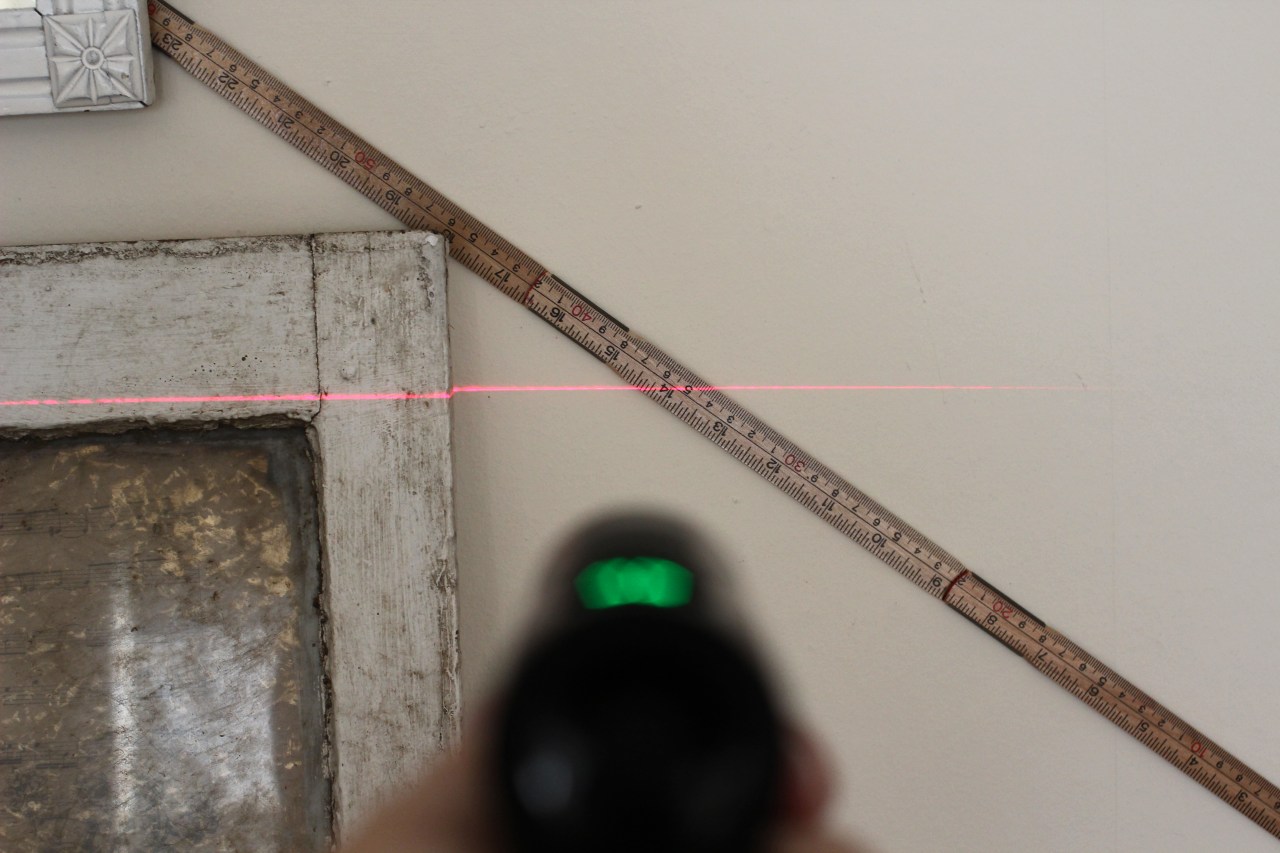
Operation has been simplified, too. They wanted this one to simply be recording or not. So you slide the big top slider forward and it records, slide it back and it stops. The button on the back lights up the battery indicators and fires a laser level for keeping your shots straight. The one I’ve got seems skewed a bit counter-clockwise, so you might want to check that before you record.

The battery is built-in, which means you won’t be able to quickly switch it out, but hey. The lens is still nice and wide and fairly flush with the body (helps water and dirt off it), and it rotates 90° in one direction and 180° in the other, meaning it can pretty much be mounted anywhere.

So what do you give up for this lower price? Well, you can’t use Contour’s cool Bluetooth pairing app that lets you see what the camera sees live. And the image processor and lens aren’t of the same quality as the other cameras. Less configuration options. And there’s no GPS. That said, the construction feels as solid, and the video must be as good as the version I reviewed a while back, which is to say over-compressed but sharp and colorful.

It’s shipping today. Pick one up at Contour or your local electronics place.


PS3 & 360 In One Unit

TimofiedPS3Xbox.jpg

We have featured a multiple gaming console hack before, but I haven’t seen one that does it with modern day consoles.

Reddit reader Timofiend found a slick way of cramming his Xbox 360 and PS3 into a single PC case to minimize the footprint. This isn’t as pretty as some of Ben Heck’s mods, but if you are looking to consolidate space this is a cheap and easy way to go about it.

TimofiedPS3Xbox_03.jpg

Currently both machines can run simultaneously. I don’t think that would wear well on the hardware without some sort of liquid cooling. Both os those units running at once generates a lot of heat, a RROD just waiting to happen.

Maybe Ben Heck could take a shot at making a custom case for it or how about cramming a Nintendo Wii in as well. Could make one awesome gift for a gamer.

tech.nocr.atPS3 & 360 In One Unit originally appeared on tech.nocr.at on 2011/09/08. Reproduction of content not allowed without consent.

© tech.nocr.at 2011 | Permalink | Comments |
Read more in Gaming | Explore more in: , , | Add to del.icio.us | Stumble it | Reddit


S3 Krypton Laser – Will Fry Satellites

392-600x450.jpg

The Spyder 3 Krypton laser is the world’s brightest handheld laser, Currently under review by Guinness World records, the S3 is over 8000 times brighter than the sun. I’m not sure why you would want a laser than can travel 85 miles besides the fact that you might want to fry UFOs that might be sniffing around our atmosphere.

As you can see from the video, this isn’t your average meeting pointer laser (unless your plan was to burn a whole in the wall) so be careful with this kids. If your wondering how dangerous this laser is, Wicked Lasers advises:

Warning: This laser’s brightness is potentially hazardous to pilots’ vision and satellite sensors. NEVER point it at an aircraft or a satellite. The S3 Krypton is too powerful to be used as a laser pointer or a gunsight. Never point it at another person, an animal or a vehicle.

They might want to add: tress, buildings, concrete, helicopters, appliances, furniture, well, you get my drift. If you still feel like living dangerously be prepared to fork out about $300 for this and probably a red flag with the Department of Homeland Security just for purchasing one.

[Link to Spyder 3 Krypton Laser]

tech.nocr.atS3 Krypton Laser – Will Fry Satellites originally appeared on tech.nocr.at on 2011/09/08. Reproduction of content not allowed without consent.

© tech.nocr.at 2011 | Permalink | Comments |
Read more in Gadgets | Explore more in: , | Add to del.icio.us | Stumble it | Reddit


TechCrunch As We Know It May Be Over

Screen Shot 2011-09-06 at 12.18.57 AM

This is a post I never thought I’d have to write. Unfortunately, I do. And the worst part about it is that it should be Michael Arrington writing this post, not me.

But he can’t.

TechCrunch is on the precipice. As soon as tomorrow, Mike may be thrown out of the company he founded. Or he may not. No one knows. And if he is, he will be replaced by — well, again, no one knows. No one knows much of anything. Certainly no one at TechCrunch. This site is about to change forever and we’re in the total fucking dark. I’ve been able to piece together little bits of information here and there, and it’s not looking good. Hence, this post.

By now, if you read TechCrunch, you likely know about the nuclear situation that has exploded over the past several days. Mike unveiled an investing entity known as the “CrunchFund” with full AOL support — so much support, mind you, that they’re the largest backers of the fund — only to have his legs kicked out from under him due to what can only be described as nonsensical political infighting and really poor communication. To make matters worse, some Journalists (with a big “J” and even bigger senses of entitlement) have proceeded to pile on, despite having no real knowledge — at all — of the way TechCrunch actually works. And now here we are.

Earlier this evening, I wrote a post on my personal blog attempting to explain to those outside our company how TechCrunch actually works from an editorial perspective. The notion that Mike, or anyone else, investing in a company would dictate some sort of giant conflicted agenda is laughable. Literally. If Mike tried to get me to write some unreasonable post about a company he had invested in, I would laugh at him. But he would never do that. Ask Loic Le Meur. Ask Kevin Rose. Ask Shervin Pishevar. Ask Airbnb. Ask countless others. He didn’t get to where he is by being an idiot. He has gotten to where he is by being honest with his readers. Even if everyone doesn’t always agree with him, he has been honest. And he’s brought forth information that no one else has, even when it’s probably not in his best interest to do so.

AOL may be on the verge of changing all of that.

Again, none of us know for sure — including Mike — but I have a really bad feeling. In my post earlier, I wrote, “These things tend to flare up every few months, and they ultimately end up meaning nothing.” That was premature. These situations have arisen in the past — multiple times — and they always have led nowhere. But now I think this time actually may be different. Arianna Huffington is already on record as saying she’s looking for a new Editor-in-Chief to replace Mike (who technically was co-Editor along with Erick — even though the title has never meant much). And there are conflicting reports as to whether or not Mike actually works for AOL — let alone TechCrunch — anymore.

As someone who has helped build TechCrunch into what it has become, this entire situation is insulting. I can only imagine how Mike feels.

The point of my earlier post was twofold: 1) to dispel the assertions being made by The New York Times and others about our brand of reporting. 2) To provide everyone with some insight as to how TechCrunch actually works. If we have anything close to a trade secret, that’s it. The magic at TechCrunch happens because the writers have very little oversight. Instead, the emphasis is placed on hiring the right writers in the first place and putting them through a trial-by-fire to see who emerges. Those that have, my peers, are the best at what they do. And that’s why TechCrunch has soared.

Mike Arrington has enabled all of this. He brought in Heather, he brought in Erick, he brought in the rest of us. He built TechCrunch out of thin air. He’s made enemies along the way. He rubs some people the wrong way. But there is no question that the entire space is better because of what he’s built. And there’s also no question that what he’s built needs him.

Could TechCrunch survive without Mike Arrington? Probably. We’re doing so many pageviews now, and the machine is so profitable, that you can plug in other parts and it will run. But without him, it will not be the same. You might not think you’ll miss what he brings, but you will. Quite often, you never even see what he brings. But it permeates the entire site.

If AOL tries to bring in their own Editor-in-Chief to run TechCrunch, it will be a colossal fucking mistake. The old adage: “if it ain’t broke, don’t fix it” — if AOL throws out Mike and tries to install their own despot, it will be breaking it just so they can fix it. And they might not like the end result. It may run, but it will never purr with the precision at which we purr right now.

I can’t believe this is even a possibility. But it is. And so I’m writing this at the eleventh hour to let you, our readers, know before you find out via a press release. I don’t know, maybe I’m hopeful that the collective voice of millions of loyal readers can change a company’s mind. Maybe that’s naive. But it’s worth a shot. We owe that to Mike.

AOL seems to think that by cutting off the biggest conflicts — ones so big that they’d obviously have to be disclosed — that they’ll be a bastion of integrity in the editorial landscape. What a bunch of horse shit. The conflicts we need to worry about are the ones not disclosed. They’re far more prevalent and they do actually deceive readers because they’re far more subtle. But that’s an impossible task. AOL can’t fix that — no one can. So instead they’ll slaughter the lamb everyone can see to gain puffery amongst the old media peers who also live to die another day.

It has almost been exactly one year since AOL acquired us. At the time, they promised not to interfere with the way we do things. For 11+ months, they’ve kept their word, and things have run beautifully from our end. Our business is one of the few sterling ornaments on their mantel. Now they may break their promise to us. And if that promise is broken, it will break TechCrunch.


Company:
TECHCRUNCH
Launch Date:
11/6/2005

TechCrunch, founded on June 11, 2005 by Michael Arrington, is a network of technology-oriented blogs and other web properties.

Learn more


The New York Times’ David Carr Is Wrong About TechCrunch, But It’s Not His Fault

800px-Nytimes_hq

There should be a word for an op-ed that is so ambiguous that all sides are able to use it to support their argument. A “failure” perhaps.

When I wrote my post criticizing Tim Armstrong and Mike Arrington’s handling of the CrunchFund launch, I thought I’d made my point pretty clear. My point being that, while there was no suggestion that TechCrunch would write favourable editorial about CrunchFund companies, there would still be a damaging perception to the contrary.

But then, in today’s New York Times, David Carr (no relation) wrote a piece entitled “A Tech Blogger Who Leaps Over the Line” in which he accused Mike of a variety of ethical violations, and then quoted me as follows…

‘One of the sharpest critiques of this conflation came from Paul Carr, who happens to write for TechCrunch (and is no relation to me). He savaged Mr. Armstrong for fumbling the announcement and sacrificing TechCrunch’s editorial credibility, and said he was worried that “investors will gain influence over how CrunchFund-backed companies are covered on TechCrunch.”’

No. No. No.

I have a huge amount of respect for David Carr. He’s one of the good guys in media criticism and 9.5 times out of 10, he gets it right. This was not one of those times. Here’s what I actually wrote in the post…

“The investors in the fund know they’re on to a good thing — by investing in the ‘CrunchFund’ they get to at the very least piggyback on TechCrunch’s reputation to get deal-flow. At best, if it turns out we are as ethically flawed as our critics would like to think, those investors will gain influence over how CrunchFund-backed companies are covered on TechCrunch.”

The key phrase there was “if it turns out we are as ethically flawed as our critics would like to think”. My suggestion, of course, being that we’re not. But just in case that was unclear, I later added…

“Again, TechCrunch writers have no involvement with the fund, and Mike has always been most critical of the companies he’s closest to. But the important thing is that there’s a perception of risk in not taking money from the fund. And there’s a perception that taking investment from the fund will result in positive coverage. The fact that neither is true is not the point.”

In fact, there were a whole bunch of other errors in Carr’s piece, including describing Robert Scoble as a VC and using incorrect dates to imply that Mike encouraged TechCrunch writers to plug companies in which he’d invested without disclosing the fact. For much of today, Mike and those who support him have been demanding corrections — as well they might.

In particular, Mike is delighting in the irony of a New York Times writer attacking TechCrunch for a lack of disclosure when the Times regularly covers the Boston Red Sox without disclosing that they have a minority stake in the team. One might also note that the Times and the Huffington Post Media Group (as represented by Bill Keller and Arianna Huffington) have been at war over ethics for months now.

The main allegation in Carr’s piece – that Mike has behaved unethically with regards to disclosures – is flat wrong, and it should be corrected. And yet, tempting as it is to fight fire with fire, I’m not sure it’s fair to make Carr the enemy of the piece here or to conflate Carr the writer and the New York Times the organization. To do so is to risk appearing hypocritical.

For one thing, TechCrunch has been guilty — at least once — of using duff evidence to make allegations of wrong-doing against an innocent company. When it happened, we took steps to correct the piece — just as David Carr and the New York Times are (slowly) correcting the errors in their piece. Also, just as Carr is incorrect to assume that TechCrunch staffers write puff pieces about companies their boss invests in, there’s no evidence to suggest that Carr wrote his attack on Mike at the behest of Bill Keller. Finally, it’s hardly David Carr’s fault that the New York Times doesn’t disclose its interest in the Red Sox any more than I am to blame for everything that happens at TechCrunch.

No, if we should be criticizing Carr for anything (and we most certainly should) it’s for trying to cover a Silicon Valley publication from New York, and for failing to understand what makes TechCrunch such a unique editorial beast.

Carr’s assumptions about TechCrunch are based on how just about every other newsroom in the world works. In most other news organizations, the editor wields a huge direct influence over what appears in print or online. There’s a daily – or at least weekly – editorial meeting in which stories are approved and there is at least one level of editorial oversight before something is published. Certainly there are very, very few editors who will permit — let alone encourage — even senior staffers to write posts opposed to the publication’s party line. If TechCrunch were an organization like that, it would be perfectly logical to infer wrongdoing when a contributor writes glowing things about a company in which the editor-in-chief has invested.

But TechCrunch is not an organization like that.

For one thing, TechCrunch writers edit and publish their own stories. We don’t have a morning editorial meeting in which Mike — or anyone else — signs off on stories; we don’t have an editorial work flow at all in fact. Generally speaking, Mike doesn’t see stories until they appear on the site and if he has any input on what’s written it’s given after the fact. I have never, ever known Mike to tell even the most junior writer what line to take on a story. A personal example: I once wrote an extremely negative post about a company in which one of Mike’s friends is a significant investor. I heard nothing from Mike when I posted the piece. It was only months — literally months — later that he mentioned to me in passing how many calls he’d received complaining about the piece and demanding that he “do something” about me. Mike had laughed them all off: he doesn’t interfere with his writers.

In terms of disclosures, this hands-off approach will inevitably lead to perception problems. TechCrunch writers generally hear about Mike’s investments around about the same time that readers do. For that reason, it’s perfectly possible (likely, even) that one of us will write and publish a favorable (or negative) story about an Arrington investment without realizing it. That’s what appears to have happened in at least one of the examples that Carr cites as so damning.

In fact, in every single case where the writer of a piece has been aware of a conflict, it has been disclosed. And in every case where Mike is aware that a contributor is working on a story about one of his investments, he’s either remained absolutely silent on the story, or he’s immediately disclosed the fact to the writer. The only real ethical conflict at TechCrunch comes where Mike writes a post about a company in which he is an investor. Of course he’s going to be biased — which is precisely why he goes out of his way to over-disclose his interest.

(Incidentally, Carr’s mention of LikeALittle in his piece is particularly amusing given how vocal I’ve been about how much I hate that stupid company. I learned about Mike’s investment a couple of weeks ago and it goes without saying that next time I mention them – perhaps in a post entitled “What the fuck were you thinking, Mike? They’re AWFUL” – I’ll be sure to disclose the relationship.)

Still, as I wrote last week, the founding of the CrunchFund does raise serious problems with the perception of conflict; and that perception threatens to tar us all. For that reason it’s only right and proper that Mike relinquishes his editorial role and chooses a successor — something he agreed to do, even before this madness exploded.

But here’s the thing that David Carr doesn’t understand, that Arianna Huffington doesn’t understand; that no-one except those who have actually worked at TechCrunch can possibly understand: TechCrunch is not a publication with a single voice. TechCrunch is a collection of writers, brought together by Mike Arrington to write about the technology industry as they see it. Mike’s brilliance as editor has been to give writers everything they need to do their jobs — an office, a platform, a salary and the confidence that he has their back if everything goes to shit — without ever once demanding they share his opinions or his biases. If you wonder why I, and other writers at TechCrunch have so much loyalty for Mike; that’s why.

That’s also the reason that, even had Mike stayed as editor-in-chief, I can’t imagine a world in which he would exert pressure on any TechCrunch writer to take a particular line on a story. Nor can I conceive of a universe in which he would punish — so much as grumble at — a contributor who wrote something that embarrassed him.

By contrast — and you can quote me on this, David — I just about zero confidence that either of those statements will be true for whoever Huffington Post Media Group might nominate to replace him.

[Last minute update: As if summoned by the Gods to prove my point about TechCrunch’s lack of central control and discussion, it turns out that MG Siegler (who was also mentioned in David Carr’s piece) was busy posting while I was still busy writing.  On his personal blog, he’s written a great piece rebutting Carr, explaining how TechCrunch really works and calling out those who make wrong-headed assumptions based on other organizations. Go, read.]

[Image credit: Haxorjoe]