Google Soon To Release Source Code For Ice Cream Sandwich

Screen shot 2011-10-20 at 7.49.05 PM

Well, developers, it looks like Google will soon be releasing the code for Ice Cream Sandwich to the Android Open-Source Project. Thanks to a Google+ post penned by Jean-Baptiste Queru, the Technical Lead of the Android Open Source Project, and his link to an email written by Google engineer Dan Morrill, we do indeed have confirmation that Android 4.0 source code will see the light of day.

“We plan to release the source for the recently-announced Ice Cream Sandwich soon, once it’s available on devices”, Morrill said in his Google Groups post.

This week, Google officially announced Android 4.0, a.k.a. Ice Cream Sandwich, at an event in Hong Kong, in which it revealed the sexy new Samsung Galaxy Nexus, the first phone to run ICS. You can check out Greg’s mega-video here for more.

While Ice Cream Sandwich may usher in a new era of awesomeness for Android, developers were quick to note that the introduction ceremony (so to speak) was lacking in the release of any and all Ice Creamy source code. Some wondered if Google would take the same approach to Android 4.0 that it did to its predecessor, Honeycomb, and avoid releasing the source code to the public.

At the time of its release, Google decided not to make Honeycomb available due to its being targeted at tablets, and, as Google VP of Engineering Andy Rubin told BusinessWeek: “To make our schedule to ship the tablet, we made some design tradeoffs … we didn’t want to think about what it would take for the same software to run on phones”. Google didn’t want to take a chance of “creating a really bad user experience”, so it kept Honeycomb’s code out of public hands.

Google also explained in its own blog post today that it will be publicly documenting its calendar and text-to-speech APIs for Ice Cream Sandwich. Which will mean some changes for those who have been using undocumented APIs. For more on that, see the post here.

And here’s Morrill’s post.

More to come.


Company:
Google
Website:
google.com
Launch Date:
July 9, 1998
IPO:

NASDAQ:GOOG

Google provides search and advertising services, which together aim to organize and monetize the world’s information. In addition to its dominant search engine, it offers a plethora of online tools and platforms including: Gmail, Maps and YouTube. Most of its Web-based products are free, funded by Google’s highly integrated online advertising platforms AdWords and AdSense. Google promotes the idea that advertising should be highly targeted and relevant to users thus providing them with a rich source of information….

Learn more

Product:
Android
Website:
code.google.com
Company
Google

Android is a software platform for mobile devices based on the Linux operating system and developed by Google and the Open Handset Alliance. It allows developers to write managed code in Java that utilizes Google-developed software libraries, but does not support programs developed in native code.

The unveiling of the Android platform on 5 November 2007 was announced with the founding of the Open Handset Alliance, a consortium of 34 hardware, software and telecom companies devoted to advancing open standards…


Learn more


Amazon Throws A Minor Curveball With HTML5-Powered Kindle Format 8

bookhtml5

Amazon has announced an update to the Kindle file format integrating many HTML5 tags and CSS attributes. Many expected a concession by Amazon in the form of an EPUB-compatible upgrade, and this comes as a slight surprise — but it’s a natural evolution of the format, really, and of course everyone is already familiar with the toolset.

In a way this makes Kindle formatted books nothing more than extremely long webpages, but that’s really a matter of perspective. Flexible layouts and well-known rules for handling text, fonts, images, and so on mean that the file format is adaptable to many devices, zoom levels, resolutions, and so on.

The full list of new tags and such can be found here; there’s no video or audio tag, tellingly, but apart from that it seems a fairly normal collection of HTML elements and CSS stuff.

It’s probably a good thing that they’re leaving behind the venerable MOBI format, and their choice upon moving away from it was either to join the enemy ranks (EPUB), build a new format from scratch (tedious), or embrace a buzzword that just happens to fill most of the requirements of an ebook file format. Add a few hooks for Kindle-specific functions, change the extension, and you’ve got yourself a versatile new format for rich bookmaking.

This naturally occurs after the release of the Fire, which will benefit more than any other e-reader from this decision. Children’s books, comics, and textbooks seem to be the most obvious applications.

As for the e-ink devices, Amazon says that in the next few months “our latest generation Kindle e-ink devices” will have access to the format as well. I think that leaves out everything up until the latest batch. But their publishing tool will apparently make a copy (if possible) that will work on the older devices, presumably in the old format and lacking any HTML5-powered bells and whistles. Tablet and PC Kindle clients (like their Cloud Reader) will be able to take full advantage.


Andreessen Horowitz, BBC, Greylock Put $20M In International Video Site ViKi

viki

ViKi, an international video site for world TV series and movies translated in 100+ languages by its community, has raised $20 million in new funding from SK Planet, BBC Worldwide, Greylock Partners, Andreessen Horowitz, Charles River Ventures, Neoteny Labs and others. This brings ViKi’s total funding to $25 million.

For background, ViKi is an open-source-like solution for video, and acquires the rights to TV shows and movies. The site then puts it on one of its channels and within the first 24 hours an organized, volunteer community subtitles the content using ViKi’s software.

The site has gained considerable traction in the past year. Currently, ViKi is seeing 8.5 million unique visitors and 36 million total visits in the past month, which is four times the traffic that ViKi has seen from last year.

To date, 150 million words have been subtitled in 160 languages by the ViKi community, and the site features 5,000-plus hours of content. And in terms of content, ViKi is working on adding more premium content, including new licensing deals with BBC Worldwide, NBCU and A&E. ViKi also just launched and international TV series on Netflix  with subtitles, and is expanding content on Hulu.

The company just debuted an iPhone app (with in-stream ads), and will contain TV series, movies, and entertainment news from around the world, with subtitles created by fans. The app currently includes movies from Japan, India’s Bollywood, Egypt, Indonesian and TV series from Hong Kong, Venezuela, Russia, Korea and the UK (e.g. Hotel Babylon & Mistresses from the BBC).

ViKi is also partnering up with Samsung Southeast Asia to develop an Android app for the company’s tablets. The app will be launching later this year in Southeast Asia. The partnership is expected to expand to other regions early next year.

What’s interesting about ViKi is that the model allows content owners to open up to new international markets. Clearly content partners like the BBC and top-tier investors are betting that ViKi is the future channel for international distribution and translation.


Microsoft Talks Portrait Mode For Windows 8

landy

Most people right now think of Windows 8 as Microsoft’s big tablet effort. But I wonder whether it will ever actually be installed on more tablets than traditional laptops and desktops. After all, it’s not just Windows 7 Tablet Edition — it’s the next version of Windows, period.

But there’s an wrinkle on tablet systems that has to be addressed that rarely, if ever, comes up on laptops: orientation. While very few people use their display in portrait mode, it’s extremely common to do so on tablets. Many apps and webpages work better when displayed vertically. So far, so normal for a tablet interface, but it must be just a little demoralizing to be working on something that a majority of users will never once encounter. Still, it must be done and they seem to be doing it well.

The stylized look of the Metro interface means it’s no small task to redo some apps, but they understand the usage scenarios and make things work. I like that things are optimized for thumb work in portrait mode, since it’s more likely you’ll be holding it with both hands in that situation (as opposed to it sitting in a stand or on a table, when it is more likely to be in landscape).

But I don’t really agree with this sentiment here:

We’ve received questions and feedback about whether Windows 8 is “landscape first” or “portrait first.” Our point of view is that both portrait and landscape orientations are important, and experiences can be great in either orientation. Rather than picking a posture and orientation for optimization, we designed an experience that makes sense regardless of how the device is held, one that feels tailored for the app and its content.

While choice should certainly be allowed, it seems like they’re prohibited from making some strong design decisions by refusing to take sides on this. I’m not saying every app should be locked into one orientation, but at the same time, I think it’s useless to pretend that some won’t work better in one or the other. But then again, there’s no accounting for user preference, and people would likely be frustrated if they tried to turn their favorite app on its side and only got an indication that this wasn’t possible.

Even if the experience is “worse,” it’s a user choice that can’t be ignored. That’s the kind of restriction Apple is willing to Make, but not Microsoft (unless they have to) — it’s two schools of design, and both have their advantages.

In the post, they also reveal that the minimum resolution that will support all of Windows 8′s UI features (multitasking, charms, etc) will be 1366×768. The way things are going, that many pixels could be fit onto a 5″ screen before long. I’m not sure I’d want that, exactly, but it’s a fun idea.


HP’s Chief Strategy And Technology Officer Shane Robison To Step Down Nov. 1

Shane Robison

HP has just announced that its executive vice president and chief strategy and technology officer Shane Robison will be retiring, effective Nov. 1.

Robison, an 11-year HP veteran, also served as a member of the company’s Executive Council. In his role, he was responsible for shaping HP’s corporate strategy and technology agenda. He helped lead HP’s research and development and has led many of the company’s largest merger and acquisition activities. HP also announced that it will not be replacing the role of chief strategy and technology officer.

He was one of four principal architects of HP’s merger with Compaq. Previously, Robison was senior vice president and chief technology officer of Strategy and Technology at Compaq. Prior to joining Compaq, Robison was president of Internet Technology and Development at AT&T Labs.

“Shane has been a powerful innovator for our business groups and other corporate divisions,” said Meg Whitman, HP president and chief executive officer. “His passion for research and development has ensured that innovation continues at HP.”

While he is retiring, Robison’s departure comes amidst turmoil and and transition at the company. HP just laid off some software developers and Whitman took the helm as CEO with Leo Apotheker out. Whitman apparently has an agenda and strategy to get HP back on track and perhaps this didn’t include Robison.


The Scourge Of Pentile Returns With The Galaxy Nexus

8-buttons

As a man once said: “Fool me once, shame on — shame on you. Fool me — you can’t get fooled again.” How true that saying is regarding the promises of high-definition mobile screens. Samsung fooled me once with the Galaxy S series, the Pentile-based display of which gave me headaches just to look at. And now, after they fix that problem with the Galaxy S II, I hear they’ve brought it back for the Galaxy Nexus? Can’t get fooled again, Samsung. Can’t get fooled again.

If you’re not familiar with Pentile displays, here’s a quick rundown: in traditional LCDs, each pixel is made up of one red dot, one green dot, and one blue dot or sub-pixel. If you look closely at the screen from some angles, you can usually make them out. A Pentile display, however, lets pixels share dots by using a different dot layout and algorithms for determining what pixel gets which dot and when. The end result is technically a higher resolution, since you can get more pixels out of the same number of dots:

No better demonstration of this than the Galaxy Nexus itself: the total number of red, green, and blue dots in its screen is 1,843,200. Coincidentally, that’s the exact same number of sub-pixels as the iPhone 4. But those sub-pixels are making up 1280×720 = 921,600 pixels on the Galaxy Nexus, and 960×640 = 614,400 pixels on the iPhone. Does it seem logical to you that a display can increase the number of pixels created by a number of sub-elements by a third and suffer no ill effect?

They couldn’t do it on the Galaxy S, and it was visible to the naked eye. Text and borders had a sawtooth effect from the way dots were shared between pixels. The Galaxy Note shows a polychromatic artifact effect on high-contrast things like black-on-white text. Will it be the same with the Galaxy Nexus? I haven’t held one in my hand so I can’t be sure, but I’m guessing that the combination of Pentile sub-pixel layout and a larger pixel pitch to begin will indeed make it visible.

Some people don’t notice, and some don’t care. But if you’re picky about the quality of your display, make sure you set eyes on this thing before you buy it. For me personally, it’s a dealbreaker sight unseen. A man’s got to have principles.


RIM Already Having Legal Woes Over BBX Trademark

BBX Logo

Poor RIM. They just can’t catch a break. Just two days after the official unveiling of their new BBX platform (the company’s last bullet, so to speak), they’re already having legal papers thrown in their face.

As it turns out, the BBX name (while rather fitting, given that it’s a merger of BlackBerryOS and QNX) wasn’t free for the taking. BASIS International, a software development company out of New Mexico, claims the trademark is theirs and that they’re willing to fight for it.

BASIS International’s claim to the trademark lays in a product called BBx (short for Business BASIC eXtended), which they’ve been building since 1985 as an interpreter for the Business BASIC programming language. Never heard of it? Don’t worry — you’re not the only one.

BASIS International isn’t filing their lawsuit just yet. They say they’ve given RIM until October 31st to respond to a cease and desist, essentially requesting that RIM stops using “BBX” immediately (read: they won’t.) And if RIM doesn’t comply? The company says they’ll “take the next logical legal step”.

Meanwhile, RIM tells Reuters that they haven’t received the complaint — and even once they do, they see no problem. “We do not believe the marks are confusing, particularly since our respective companies are in different lines of business”.


Website:
rim.com
Launch Date:
October 21, 1984
IPO:

NASDAQ:RIMM

Research In Motion (RIM) is a Canadian designer, manufacturer and marketer of wireless devices and solutions for the worldwide mobile communications market. The company is best known as the developer of the BlackBerry smart phone.

RIM technology also enables a broad array of third party developers and manufacturers to enhance their products and services with wireless connectivity to data.

RIM was founded in 1984. Based in Waterloo, Ontario, the company has offices in North America, Europe and Asia Pacific.

Learn more


Verizon Lights Up 22 New Cities With 4G LTE Coverage

verizon_logo

Get ready, Verizon subscribers. You may have reason to upgrade to a brand new LTE-capable device — like the freshly announced Motorola Droid RAZR — now that Verizon has extended its 4G LTE coverage to 22 new cities.

The LTE extension into these 22 new cities will bring Verizon’s 4G coverage to a total of 165 cities today, with 13 more areas lighting up on November 17.

New cities getting the LTE love today include:

Birmingham, AL; Modesto and Stockton, CA; Bloomington, Elkhart, Evansville, South Bend, and Terre Haute, IN; Sioux City, IA; Hagerstown, MD; Tupelo, MS; Albuquerque and Sante Fe, NM; Buffalo, NY; Asheville, NC; Bartlesville, OK; Jackson and Martin, TN; Greater Hampton Roads and Richmond, VA; and Green Bay, WI.

Verizon also extended its existing 4G LTE coverage in Los Angeles, San Diego, Washington D.C. and Erie, PA. With today’s roll out and another one scheduled for November 17, Verizon’s 4G LTE network will cover a total of 178 cities in just under a month. By then, Verizon said it would offer at least 13 LTE-capable devices to customers.


Company:
Verizon
Website:
verizon.com
IPO:

VZ

Verizon Communications Inc. delivers broadband and other wireline and wireless communication innovations to mass market, business, government and wholesale customers. Verizon Wireless operates America’s largest wireless network that serves nearly 102 million customers nationwide. Verizon’s Wireline operations include Verizon Business and Verizon Telecom, which brings customers converged communications, information and entertainment services over Verizon’s fiber-optic network.

Learn more


Microsoft Revenue Up 7% To $17.37B, Earnings At $0.68 Per Share

microsoft

Microsoft just reported its first quarter 2012 earnings with revenues of $17.37 billion, an 7% increase from the same period of the prior year. Microsoft’s operating income was at $7.20 billion, its net income was $5.74 billion and its diluted earnings per share were at $0.68, a 10% increase from last year.

Microsoft attributed this revenue growth to the demand of several key products,”We had another strong quarter for Office, SharePoint, Exchange, and Lync, and saw growing demand for our public and private cloud services including Office 365, Dynamics CRM Online, and Windows Azure,” said Microsoft COO Kevin Turner. Notably, Microsoft’s acquisition of Skype was also completed during this quarter.

The company beat Wall Street’s revenue estimates, which were at $17.25 billion, and hit EPS estimates, which were at $0.68 a share, square on the nose.

The Business Division and Windows Live Divisions continued to be the company’s biggest assets, with $5.62 billion and $4.8 billion in revenue and $3.25 billion and $3.66 billion in operating income respectively. Microsoft’s Online Services Division, a.k.a. Bing, continued to operate at a loss despite 19% revenue, at $494 million lost versus $558 million in the same quarter last year.

Microsoft’s earnings call will be at 2:30PM today, and you can follow it live here.

@alexia
Alexia Tsotsis

Seriously just thought, with a pang of excitement, "I hope Ballmer is on the earnings call."


Company:
Microsoft
Website:
microsoft.com
Launch Date:
April 4, 1974
IPO:

NASDAQ:MSFT

Microsoft, founded in 1975 by Bill Gates and Paul Allen, is a veteran software company, best known for its Microsoft Windows operating system and the Microsoft Office suite of productivity software.

Starting in 1980 Microsoft formed a partnership with IBM allowing Microsoft to sell its software package with the computers IBM manufactured.

Microsoft is widely used by professionals worldwide and largely dominates the American corporate market.

Additionally, the company has ventured into hardware with consumer products such as the Zune and…

Learn more


(Video Demo) Bill Gross Chimes In

chime.in

Earlier this week, UberMedia (and Idealab) CEO Bill Gross launched a new product at the Web 2.0 Summit called Chime.in. It is an interest stream for following people and things you care about. You can even follow part of a person (only what they share about tech, and not what they share about cats). Gross gave me a demo of the iPhone app, which you can see above.


:
Website:

Learn more

Bill Gross is a lifelong entrepreneur and proponent of solar power. While still in college, Mr. Gross founded Solar Devices, a firm that sold plans and kits for solar energy products. As the CEO of the technology incubator Idealab, Mr. Gross has founded several extremely successful companies, including Overture (acquired by Yahoo!), CarsDirect, and Picasa (acquired by Google). Idealab recently moved into the renewable energy market with Energy Innovations, a sister company to eSolar that focuses on the retail…

Learn more


Google Reader Getting Overhauled, Removing Your Friends

Google_reader

Today Google announced its long-ignored RSS app Google Reader is getting an update. Most notably, it’s getting a fresh new design along the same lines as Google’s other products, like Docs, Maps, Search and Gmail. While I’m not entirely thrilled about this change (I prefer the utilitarian look for the service), I understand Google’s need to maintain user interface consistency across its online products.

What really bothers me, however, is Google’s casual decision to remove all of Google Reader’s “social” features, including friending, following and shared link blogs.

Look, I get that there’s probably only ten of you out there reading this who care much about changes to Google Reader. For mainstream news consumers, that Google is now streamlining and beautifying this neglected product is probably welcome news. But for those of us who use Google Reader regularly as a utility – as a place to track, follow, archive and search dozens of sources of information from favorite blogs to company feeds and more – any change to Reader has the equivalent impact as an overhaul of Gmail. In other words, proceed carefully or prepare for an earful.

And in this particular case, here comes the earful: I’m going to miss the “social” features Google Reader delivers.

Wait, don’t laugh!

To be clear, I don’t really consider or use Google Reader as “social” product like Facebook, Twitter or Google+ (hence the quotes). I don’t comment much on feeds, or friend and follow dozens of users. But I do enjoy reading the shares from a select group of heavy-duty RSS consumers who are consistently sharing interesting items. When I’m behind on the day’s news, all I have to do is read TechCrunch, TechMeme and this carefully constructed “human curated” list of shares. It is, and will be up until the day it disappears, one of the most regular and enjoyable news consumption behaviors I engage in every day.

Although there are many other services out there that promise to bubble up relevant content based on my interests, the best product I’ve used to date was the human curation of my Google Reader friends. Not only did my group consistently share the top tech news I’d want to read, they also share those oddball but interesting stories from outside of tech, including humorous cartoons, popular videos, space and science news, parenting tips and other news completely unrelated to tech, but still compelling.

Of course, there were probably only a handful of us really using this feature, so of course, like all those other services Google is shutting down, it’s getting axed too. But Google, if you think I’m going to “Circle” this group in order to continue reading their shares, you’ve got another thing coming. You can’t force me into using Google+ by stealing pieces of Google Reader. That’s not how that’s going to work.


Opinionaided Brings Mobile Q&A App To Android

opinionaided

Startup Opinionaided is bringing its mobile Q&A app to Android phones with the launch of a new native app. Opinionaided previously offered an iOS app and web platform to allow users to get advice and opinions on the fly.

Within the app, users can input a question, determine a category (i.e. relationships, politics) and submit it for other Opinionaided users to answer. You can also publish your questions to Facebook and Twitter. After a question is posted, fellow Opinionaided users can comment on the question, thumps up or thumbs down qursions, and the app will calculate the percentage of users that responded positively or negatively. From there, consumers can reply back to the comments or create a new question for peers to vote on.

The startup says there is a range of types of questions users are asking include: “Are these shoes appropriate for an interview?” “What do you think of this photo I took on vacation?” “Should I join the army?” To reward good feedback, the Opinionaided community can give gold stars to their peers, and those with a history of providing great advice become top advisors on that topic.

Feedback is broken-down by the percentage of those who responded positively or negatively, and a separate list of all user comments. While the full comments are private to the person seeking advice, everyone sees the current thumbs up and thumbs down percentages after they answer a question.

On average, responses start to arrive only six seconds after being shared and users receive between 50 and 100 responses overall. The company is finding that its user base consists of people who are augmenting their traditional social networks, such as Twitter and Facebook, with its opinion-based community. And Opinionaided’s userbase spends an average of over three and a half hours using the app each month. Last weekend alone, the app generated 10 million responses to 250,000 questions.


Company:
Opinionaided
Website:
opinionaided.com
Funding:
$6.74M

Opinionaided is a platform that helps users get opinions from friends, family, and the public in the flow of everyday life.

The platform includes an iPhone app, website, and social integration with Facebook, Twitter, email, and mobile contact list.

Learn more


Toshiba Shows Mobile LCD With 2,560 × 1,600 Resolution And 498PPI Density

Picture 6

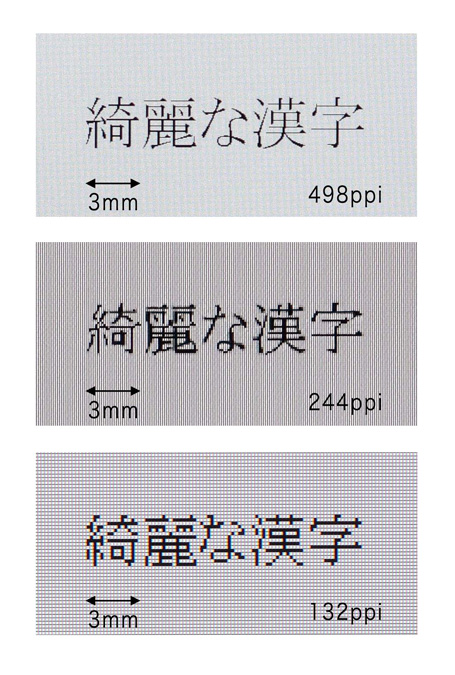
If you thought the 4.5-Inch LCD screen with 720×1,280 pixels resolution Hitachi showed three weeks ago is cool, think again: Toshiba today took the wraps off a mobile LCD that’s even better. Sized at 6.1 inches, it boasts 2,560×1,600 pixels resolution and 498 pixels-per-inch density.

Needless to say, the direct-view-type screen is the first of its kind. It has a contrast ratio of 1,000:1, displays 16.7 million colors and offers a 176° viewing angle (horizontally and vertically).

Here’s how a set of Japanese characters looks like with different PPI:

Toshiba plans to showcase the LCD next week at the FPD International 2011 exhibition in Yokohama, Japan.

In August, the company announced it will merge its small LCD business unit with those of Sony and Hitachi.


Gmail Gives An Accidental Peek At Its Upcoming Redesign

convosmall

A video inadvertently posted to Google’s YouTube account has given a sneak peek at some of the changes that will be coming to Gmail in the very near future. It was quickly taken down, but not before a few screenshots were snagged by Google Operating System.

The new UI is obviously based on the Gmail ‘preview’ theme that it began offering back in June, which has more whitespace and options for tweaking how densely you want your conversations listed.  The biggest change seen in the video is the conversation/reply view, which looks a lot more like Facebook Messages — each person in the conversation has their photo shown, and it’s easier to read previous messages in the thread.

Another key change: Gmail will start surfacing its advanced search features as soon as you click the search box. Before now these haven’t been as easily accessible — you’d have to either click a ‘show search options’ link, or use search operators (“sent:”, “has:attachment”, etc.). Now these options will pop up immediately, and you can also create a new filter from your search query on the fly.

There are some more minor tweaks as well. Some buttons are now represented with visual icons reminiscent of those seen in Android Honeycomb/Ice Cream Sandwich. You can now manually adjust the size of the Labels and Chat windows. And there’s a new slick effect: as you resize your browser window, Gmail will dynamically adjust its layout so that everything fits.

They’re nice improvements, but, as someone who lives in Gmail all day, there are still a lot of changes I’d like to see. In particular, there are some features that Hotmail (yes, that Hotmail) recently launched that I’d love Gmail to reproduce. For instance, in Hotmail it’s now possible to automatically delete certain messages after a few days (there’s no reason to let all those expired deals clutter your inbox, after all).

Update:
Google took its video down, but here’s a mirror, again via Google Operating System:


Company:
Google
Website:
google.com
Launch Date:
July 9, 1998
IPO:

NASDAQ:GOOG

Google provides search and advertising services, which together aim to organize and monetize the world’s information. In addition to its dominant search engine, it offers a plethora of online tools and platforms including: Gmail, Maps and YouTube. Most of its Web-based products are free, funded by Google’s highly integrated online advertising platforms AdWords and AdSense. Google promotes the idea that advertising should be highly targeted and relevant to users thus providing them with a rich source of information….

Learn more


Nearly Half Of Leica Sold Off To Blackstone Group For Rumored $179 Million

leica2

Comparing Leica and Kodak is an interesting exercise. While they’re not the same by any stretch of the imagination, both rode the wave of photography throughout the 20th century and, come the age of digital imaging, both stumbled. Kodak is starting to leverage its IP and Leica has found a new prosperity in its high-end digitals.

But Kodak is still in its crisis period and Leica appears to be well past. So much so that they’re selling nearly half of the company in order to make a big push in emerging markets. What use “emerging markets” have for $5000 cameras, clearly Leica knows better than I.

44% of the company was sold to Blackstone Group LP, which considers it a “medium- to long-term investment. The price was not disclosed, but the Wall Street Journal cites a source close to the matter who put the purchase at $179 million. If true, that would put their valuation at just north of $400m. That’s a far cry from the $82m Andreas Kaufmann paid for the nearly the entire company back in 2004, but with $250m and yearly sales and $36m in net income, it easily passes the smell test.

They’ve shown steady growth over the last few years, but that’s been primarily in Europe and the US, markets already familiar with the brand and, generally speaking, quite rich. The investment by Blackstone gives Leica some capital to work with in expanding their business to Asia, the Middle East, and Latin America. Their plans were not detailed beyond that.

That kind of money is sufficient to fuel research and development of an entirely new camera system. Is this Leica signaling that the M system is going to have a new sibling soon? It’ll be a while before the deal goes through and the money is put to use, but I’d say that’s a fairly good bet.

[via Leica Rumors and PetaPixel]