Farmstead, a grocery startup with a focus on software, raises $7.9M

Farmstead, a startup that operates an online grocery business while also selling software to other grocers, is announcing that it has raised $7.9 million in Series A funding.

While there’s been plenty of demand for grocery delivery this year, the major players like Instacart are making purchases and deliveries from existing supermarkets. Farmstead co-founder and CEO Pradeep Elankumaran said that this model puts a big constraint on the number of possible deliveries, which is why you may be struggling to get a delivery slot.

There have been fewer success stories around the Farmstead approach, where a company sells groceries from its own warehouse (and in Farmstead’s case, employs its own warehouse staff and drivers).

In fact, Elankumaran said that when the company started in 2016, “The warehouse model was incredibly unattractive to everyone else,” because of the operational headaches and expenses.

To address these issues, Elankumaran said Farmstead has built software to “re-orchestrate” warehouse operations and make them more efficient. The startup says it’s been able to reduce food waste by 3-4x, while also serving thousands of orders per day across a 50-mile radius, with no delivery fees, from each warehouse “hub.” In fact, in the startup’s first market of San Francisco, Farmstead is supposedly “marching towards profitability, and we’re very close at this point.”
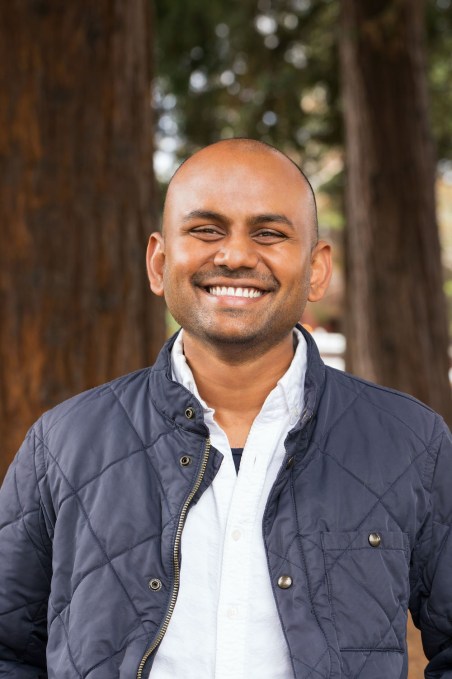
Pradeep Elankumaran at Farmstead

Image Credits: Farmstead

Next up: Geographic expansion, starting in North Carolina, with Charlotte and Raleigh-Durham (where Farmstead just opened its wait list). Elankumaran said he’s hoping to launch between 15 and 30 new markets in the next 12 months.

“A better way of putting it is: Two years ago we were not ready [to expand], and right now we are ready,” he said.

In addition, Farmstead has started selling its Grocery OS software to other grocery businesses that want to move online. Elankumaran said that in some cases, the grocer may simply buy the software, while in others, Farmstead could also work with them to operate the warehouse. Either way, he said the key is the need to “fork the demand,” so that offline shoppers are going to one store, while online orders are being fulfilled from a separate location.

“You cannot get this industry online unless the capacity increases,” he said.

Elankumaran also said that while it can cost $10 million of dollars to open a new supermarket location, Farmstead can launch a hub in four to six weeks, at a cost of $100,000.

As for whether grocery stores have any hesitation about buying software from a potential competitor, Elankumaran said that the opposite is true — they trust Farmstead more because of “the fact that we’re not a B2B software company that has not operated a grocery store.”

Farmstead has now raised a total of $14.7 million. The Series A was led by Aidenlair Capital, with participation from Y Combinator, Gelt VC, Duro, Maple VC, Heron Rock, 19 York, Red Dog Capital and others.

Abacus.AI raises another $22M and launches new AI modules

AI startup RealityEngines.AI changed its name to Abacus.AI in July. At the same time, it announced a $13 million Series A round. Today, only a few months later, it is not changing its name again, but it is announcing a $22 million Series B round, led by Coatue, with Decibel Ventures and Index Partners participating as well. With this, the company, which was co-founded by former AWS and Google exec Bindu Reddy, has now raised a total of $40.3 million.

Abacus co-founder Bindu Reddy, Arvind Sundararajan and Siddartha Naidu. Image Credits: Abacus.AI

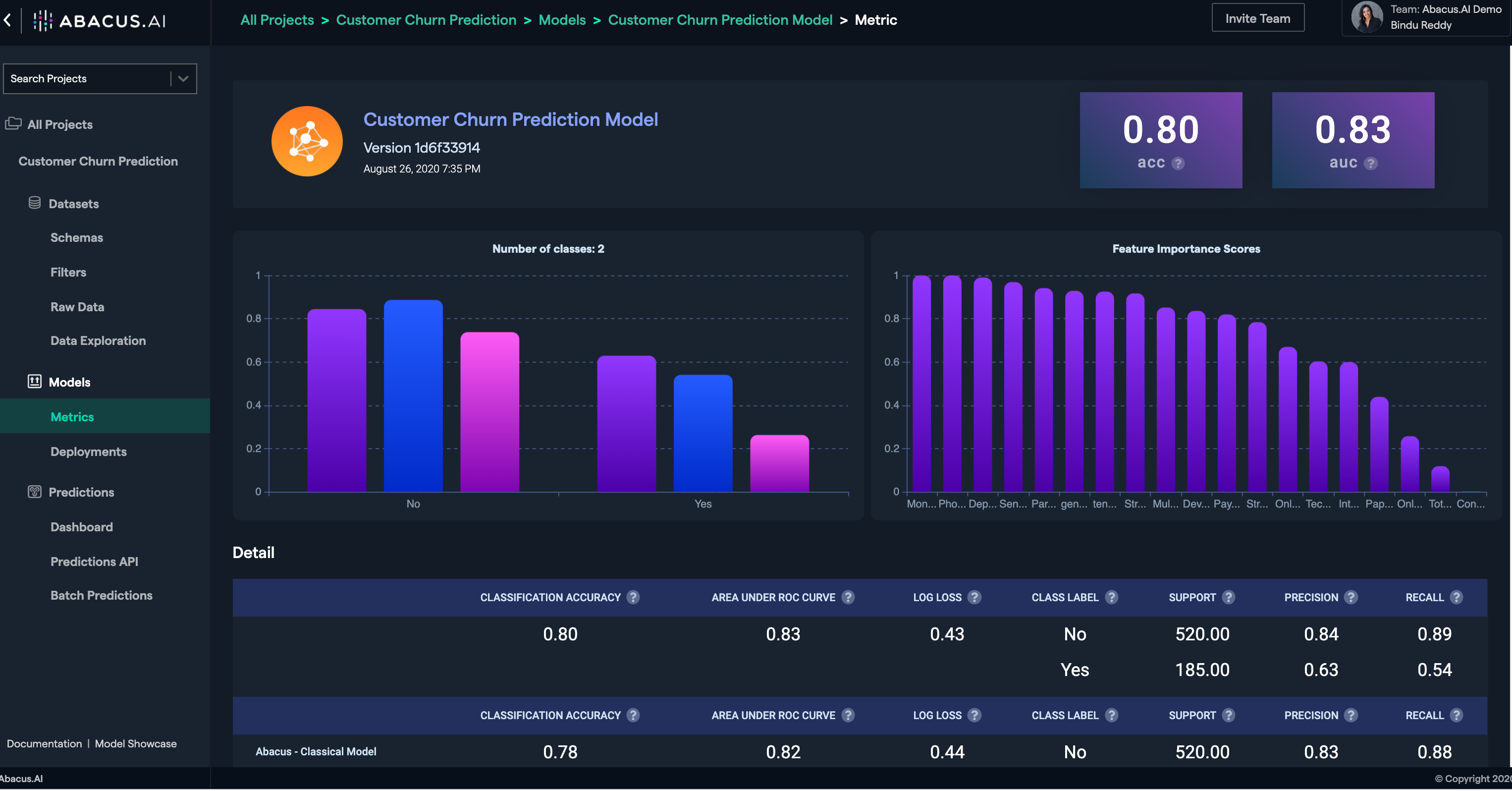
In addition to the new funding, Abacus.AI is also launching a new product today, which it calls Abacus.AI Deconstructed. Originally, the idea behind RealityEngines/Abacus.AI was to provide its users with a platform that would simplify building AI models by using AI to automatically train and optimize them. That hasn’t changed, but as it turns out, a lot of (potential) customers had already invested into their own workflows for building and training deep learning models but were looking for help in putting them into production and managing them throughout their lifecycle.

“One of the big pain points [businesses] had was, ‘look, I have data scientists and I have my models that I’ve built in-house. My data scientists have built them on laptops, but I don’t know how to push them to production. I don’t know how to maintain and keep models in production.’ I think pretty much every startup now is thinking of that problem,” Reddy said.

Image Credits: Abacus.AI

Since Abacus.AI had already built those tools anyway, the company decided to now also break its service down into three parts that users can adapt without relying on the full platform. That means you can now bring your model to the service and have the company host and monitor the model for you, for example. The service will manage the model in production and, for example, monitor for model drift.

Another area Abacus.AI has long focused on is model explainability and de-biasing, so it’s making that available as a module as well, as well as its real-time machine learning feature store that helps organizations create, store and share their machine learning features and deploy them into production.

As for the funding, Reddy tells me the company didn’t really have to raise a new round at this point. After the company announced its first round earlier this year, there was quite a lot of interest from others to also invest. “So we decided that we may as well raise the next round because we were seeing adoption, we felt we were ready product-wise. But we didn’t have a large enough sales team. And raising a little early made sense to build up the sales team,” she said.

Reddy also stressed that unlike some of the company’s competitors, Abacus.AI is trying to build a full-stack self-service solution that can essentially compete with the offerings of the big cloud vendors. That — and the engineering talent to build it — doesn’t come cheap.

Image Credits: Abacus.AI

It’s no surprise then that Abacus.AI plans to use the new funding to increase its R&D team, but it will also increase its go-to-market team from two to ten in the coming months. While the company is betting on a self-service model — and is seeing good traction with small- and medium-sized companies — you still need a sales team to work with large enterprises.

Come January, the company also plans to launch support for more languages and more machine vision use cases.

“We are proud to be leading the Series B investment in Abacus.AI, because we think that Abacus.AI’s unique cloud service now makes state-of-the-art AI easily accessible for organizations of all sizes, including start-ups,” Yanda Erlich, a p artner at Coatue Ventures  told me. “Abacus.AI’s end-to-end autonomous AI service powered by their Neural Architecture Search invention helps organizations with no ML expertise easily deploy deep learning systems in production.”


Former WeWork China exec launches a ‘startup studio’ for real estate

The real estate industry has been slow to adopt technology compared to many other sectors. So when Dominic Penaloza left his job at WeWork China as the head of innovation and technology this spring, he decided to focus on proptech in Asia.

Instead of building a startup himself or investing in one, Penaloza combines both objectives by launching a “startup studio” called REinvent (“RE” short for “real estate”). The industry jargon refers to an organization that builds startups with an in-house team, hence it’s also referred to as a “startup factory” or “venture builder.” A famous example is Rocket Internet, which is credited for building Lazada in Southeast Asia and Jumia in Africa.

Penaloza, a serial entrepreneur who exited his co-working startup Naked Hub to WeWork China in 2018, now runs a team of 45 across Shanghai, Taipei and Singapore, most of whom he has worked with at WeWork and Naked Hub. The studio is organized into what the chief executive calls product “squads” consisting of the likes of product managers, designers, engineers, and artificial intelligence experts, and has the capacity to work on four projects at one time.

The founder also brought onboard heavyweight investors to help the startup studio tackle a sector with deeply entrenched players. Among REinvent’s backers are JustCo, a major co-working company in the Asia Pacific backed by some of Asia’s biggest property owners, such as the Singaporen sovereign wealth fund GIC; multi-national property developer Frasers Property; and one of Japan’s leading real estate firms Daito Trust.

REinvent has full ownership in the ventures it launches, while the three investors own equity in it. The company declined to disclose how much it has raised from its investors so far.

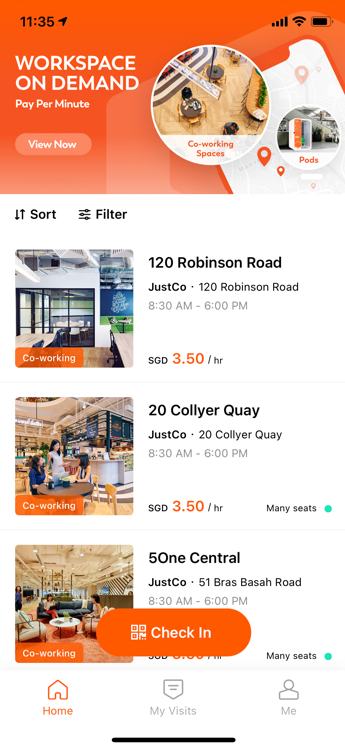
The financiers also importantly contribute strategic resources, Penaloza told TechCrunch in an interview. Started in May, REinvent has already launched two ventures, including one called Switch that lets individuals and enterprises book workspace and pay per minute, similar to how bike-sharing works. The difference is that Switch is a marketplace with third-party landlords like JustCo and Frasers, while bike-share companies often supply and operate the bikes themselves.

Screenshot of the Switch app

The marketplace today has a growing network of 2,500 desks at over 20 locations across Singapore, including small office booths that have sprung up across malls. It’s proposing on-demand workspace at a time when the whole world is forced by the coronavirus pandemic to rethink where to work physically.

“Real estate companies are all figuring out how to react to COVID, how to help organizations survive COVID and to prepare for the next pandemic so the impact on business would not be as big as this time,” said Penaloza.

Meanwhile, flexible work pods are an attractive proposition for mall owners, especially those in China looking for new tenants as e-commerce encroaches into offline retail.

“E-commerce was eating up the traditional retail model even before COVID. Developers in China are trying to repurpose some of their malls… There are now a lot of F&B, experiential stores, cafes, and even co-working space inside malls,” observed Penaloza.

Penaloza tested an early version of his on-demand workspace vision back at WeWork China where he made the firm’s public space available to customers without a membership, capturing professionals who use Starbucks for meetings and remote working but providing a quieter environment and better WiFi.

The other product REinvent has introduced is SixSense, software for spatial analytics and social distance detection.

“Real estate is something not many people think about, but it’s one of the biggest industries on earth,” noted Penaloza. “Proptech in Asia and China is very early-stage but it is picking up.”

SpaceX and NASA successfully launch four astronauts to space for first operational Dragon crew mission

SpaceX has become the first private company to launch astronauts to the International Space Station, marking the culmination of years of work in partnership with NASA on developing human spaceflight capabilities. At 7:27 PM EST (4:27 PM PST), NASA astronauts Shannon Walker, Victor Glover, and Michael Hopkins, and JAXA astronaut Soichi Noguchi left launch pad 39-A at Kennedy Space Center in Florida bound for the ISS.

SpaceX’s human launch program was developed under the Commercial Crew program, which saw NASA select two private companies to build astronaut launch systems for carrying astronauts to the ISS from U.S. soil. SpaceX was chosen alongside Boeing by NASA in 2014 to create their respective systems, and SpaceX’s Dragon capsule and Falcon 9 rocket became the first to achieve actual human flight certification from NASA earlier this year with the successful completion of its final, Demo-2 test mission, which flew to the ISS with two U.S. astronauts on board.

To get to this point, SpaceX had to complete a number of milestones successfully, including a fully automated uncrewed ISS rendez-vous mission, and a demonstration of both a launch pad abort and post-launch abort emergency safety system for the protection of the crew. During the Demo-1 mission, while all actual launch, docking and landing was handled by SpaceX’s fully autonomous software and navigation, astronauts also took over manual control briefly to demonstrate that this human-piloted backup would operate as intended, if required.

So far, Crew-1 is proceeding as expected, with a picture-perfect takeoff from Florida, and a successful recovery of the first-stage booster used on the Falcon 9 rocket used to launch Dragon. Crew Dragon ‘Resilience’ also departed from the second-stage of the Falcon 9 as planned at just after 10 minutes after liftoff, and there will be a 27 hour trip in orbit before the Dragon meets up with the ISS for its docking, which is scheduled to take place at around 11 PM EST (8 PM PST) on Monday night. Once fully docked, the astronauts will disembark and go over to the station to begin their active duty stay, which is set to last until next June.

From left, the crew of Crew-1: NASA’s Shannon Walker, Victor Glover and Michael Hopkins; JAXA’s Soichi Noguchi Image Credits: SpaceX

Three of the four astronauts on this mission have been to space previously, but for pilot Victor Glover, it’s his first time. These four will join NASA’s Kate Rubins, and Roscosmos cosmonauts Sergey Ryzhikov and Sergey Kud-Sverchkov on the station, bringing the total staff complement to seven (an increase from its usual six that NASA says will free up more time for the astronauts to perform experiments, as opposed to their tasks related to regular daily maintenance of the station).

This is the first time that astronauts have launched to space during a regular operational NASA mission since the end of the Shuttle program in 2011. It marks an official return of U.S. human spaceflight capabilities, and should hopefully become the first in many human flight missions undertaken by SpaceX and Dragon – across both NASA flights, and those organized by commercial customers.

Sales readiness platform MindTickle raises $100 million led by SoftBank Vision Fund 2

MindTickle, a startup that is helping hundreds of small and large firms improve their sales through its eponymous sales readiness platform, said on Monday it has raised $100 million in a new financing round.

SoftBank Vision Fund 2 led the Pune and San Francisco-headquartered startup’s new financing round, which is a combination of debt and equity. Existing investors Norwest Venture Partners, Accel Partners, Canaan, NEA, NewView Capital, and Qualcomm Ventures also participated in the round, which according to a person familiar with the matter, valued the eight-year-old startup at roughly $500 million, up from about $250 million last year.

The vast majority of this $100 million fund is equity investment, said Krishna Depura, co-founder and chief executive of MindTickle, in an interview with TechCrunch. He declined to disclose the specific amount, however, or comment on the valuation.

We used to live in a seller’s world, where buyers had a small selection of choices from which they could pick their products. “You wanted to buy a car, there would be only one new car model every four years. Things have changed,” said Depura, noting that customers today have no shortage of companies trying to sell them similar lines of products.

While that’s great for customers, it means that companies have to put more effort to make a sale. Regardless of what these firms are attempting to sell, they are competing with dozens of other companies, if not more, and trying to reach customers whose patience is dropping at an alarming level.

A decade ago, as Depura watched Facebook and gaming firms like Zynga develop addictive products and services, he wondered if some of these learnings could be baked directly into modern age sales efforts. That was the inception of MindTickle, which now helps companies train their customer-facing teams.

MindTickle, whose name is inspired from the idea of gamifying mindsets, allows companies to train and upskill their salespeople at scale, and uses role playing methods to help them practice their pitch, and how they should handle a customer’s queries.

MindTrickle helps companies train their salespeople in a way that makes the learning feels like a game. (MindTrickle)

Depura said the platform helps salespeople measure their improvement in revenue metrics and offers feedback on the calls they made. The platform utilizes machine learning engines to serve personalized remediations and reinforcements to salespeople, he said.

More than 200 enterprises, including more than 40 of the Fortune 500 and Forbes Global 2000 firms, are among MindTickle’s clients today — though, citing confidential agreements, the firm said it can’t disclose several names. Some of the names it did share include MongoDB, Nutanix, Qualtrics, Procore, Square, Janssen, Cloudera, Dexcom, Merck & Co., and Benetton Group.

More importantly, its clients have publicly praised the startup’s platform. As of this writing, MindTickle is ranked as the top product for enterprises and fifth best product for sales on G2, a popular marketplace for software and services.

As for the business side, the startup said its revenue has grown by over 170% in the past year and it is hopeful to end the year at an annual recurring revenue of more than $30 million. Like several other SaaS startups, MindTickle has also been immune to the virus.

In fact, it has seen a surge in its customer base and usage in recent months as firms shut offices and moved work to remote platforms to avoid their exposure to the coronavirus, said Depura. “Today, our platform is being used in ways we had not even envisioned,” he said, adding that at some firms, finance departments and HR teams have also moved to MindTickle. “We are seeing a major shift.”

“MindTickle’s track record of growth, quality of product and marquee customer base highlights their strengths,” said Sumer Juneja, Partner at SoftBank Investment Advisers, in a statement. “By delivering engaging and personalized training to users, MindTickle is uniquely placed to support businesses to increase revenue generation and extend critical capabilities within their existing workforce.” The Japanese investment group, which began conversations with MindTickle about three months ago, says it is exploring more investments in SaaS categories.

The new fund will allow MindTickle, which employs about 400 people in the U.S., Europe, and India, to further establish this new category, said Depura. The startup is also developing new product features and will deploy the new funds to further grow in Europe, and the U.S., which is already one of its key markets.

Original Content podcast: ‘The Vow’ offers a muddled look at the NXIVM cult

“The Vow” is a fascinating documentary, but we can’t quite recommend it whole-heartedly.

As we discuss on the latest episode of the Original Content podcast, HBO’s new docuseries tells the story of NXIVM (pronounced nex-ee-um), a self-improvement company that was subsequently revealed as a sex cult, with its leader Keith Raniere sentenced to 120 years in prison.

The core story is both compelling and horrifying. And “The Vow” features an astonishing amount of footage showing Raniere and other high-level NXIVM members at work — for that reason alone, the series is worth watching for anyone interested in the NXIVM story.

However, it’s also hampered by some unfortunate storytelling choices. For one thing, by parceling the story out over nine hour-long episode, the series often feels unnecessarily drawn out and repetitive.

And by focusing on a handful of high-ranking NXIVM members who subsequently became important whistleblowers and critics (including Mark Vicente, the filmmaker responsible for a great deal of that behind-the-scenes footage), “The Vow” has also opened itself up to criticism that it downplays the stories of Raniere’s true victims and obscures the extent of his crimes (unlike the Starz documentary “Seduced”) .

In addition to reviewing the series, we also discuss the latest Disney+ growth numbers and the new season of “The Bachelorette.”

You can listen to our review in the player below, subscribe using Apple Podcasts or find us in your podcast player of choice. If you like the show, please let us know by leaving a review on Apple. You can also follow us on Twitter or send us feedback directly. (Or suggest shows and movies for us to review!)

If you’d like to skip ahead, here’s how the episode breaks down:
0:00 Introduction
0:45 Disney+ discussion
7:40 “The Bachelorette” discussion
30:48 “The Vow” review

Watch SpaceX launch its historic first NASA astronaut crew mission live

SpaceX and NASA have spent years working towards today’s Crew-1 mission, which is set to launch from Florida at 7:27 PM EST (4:27 PM PST). This is the first time that SpaceX’s Dragon capsule and Falcon 9 rocket will be officially used as a spacecraft certified by NASA for human flight on a regular astronaut transportation operation. NASA astronauts Mike Hopkins, Victor Glover and Shannon Walker, along with JAXA astronaut Soichi Noguchi, will also be aboard the Dragon spacecraft and, barring any weather delays, on their way to the International Space Station later Sunday night.

SpaceX has already flown people using Dragon – NASA astronauts Bob Behnken and Doug Hurley had the honor of being the first humans ever to be launched to the ISS aboard a commercial spacecraft when they took part in SpaceX’s Demo-2 mission earlier this year. That was obviously a historic achievement, but it was also technically the last stage in SpaceX’s test and demonstration program for Dragon and Falcon 9, whereas today’s Crew-1 launch no longer qualifies as a test. Think of it this way: If Demo-2 was akin to the Wright Brothers’ Kitty Hawk flight, Crew-1 will be the equivalent of the first U.S. scheduled commercial airline flight in 1914.

Crew-1 will be the first time that a full complement of astronauts are flown on Dragon (there are six total seats but NASA has said it will only ever fly a max of four of its and partner agency crew to the ISS on these flights). The astronauts will join the existing crew on the ISS for a regular tour of performing experiments, maintaining and upgrading the station, which will also see the active ISS population swell by one additional astronaut for the first time during a standard rotation, which means more science can get done according to the agency.

The launch system is designed to work in a completely automated way, which means that it requires no action on the part of the crew on board from launch all the way through its docking with the ISS. That’s also true of the return trip, which will take place sometime around next June.

SpaceX will also be attempting a recovery of the first stage booster used during this launch, using its autonomous drone landing ship in the Atlantic Ocean.

Everything should get started closer to the liftoff target time, but NASA will also have programming all day related to the Crew-1 mission, the Dragon program and much more via the livestream above.