Instagram’s Kevin Systrom On International Expansion, Instagram Video, Funding Rumors And More

With over 100K weekly downloads coming in just from China, Instagram co-founder Kevin Systrom had a lot to say during his TechCrunch Disrupt Beijing talk, tackling head-on the issue of how to approach social in China’s unique market as well as what exactly to do about the multitudes of clones.

We chatted with Systrom after his talk backstage, and found out a little bit more about where the company sees themselves in the future. Instagram is currently focused on Asia, with its second biggest market being Japan. And Systrom isn’t afraid of the clones, “There might be 10 clones here, [but] there are also 20 clones from the United States right? You know, being copied is something that I think that every successful company will go through. Our biggest defensible asset really is our community, and I think that’s the thing that you’re not going to find on any of these replicas.”

The hardest part about adjusting to China for most Internet companies is that social networks like Facebook and Twitter are censored, leaving apps like the social-heavy Instagram to reckon with Chinese equivalents Weibo and Renren. “It’s a matter of resources and time,” Systrom said, “And I think that we’re really excited, actually, in the near future to add support for a bunch of Japanese social networks, Chinese social networks, Korean social networks. Because it’s really clear that the top five social networks that we list today in the app aren’t necessarily the top five in other countries.”

When asked if accumulating these resources involved Instagram raising another round of funding (as currently rumored across the Valley), Systrom said that the six-person company was focused on “staying as lean as possible.” “It’s not really a priority right now to raise more money,” he told me, “When I think the company starts scaling both on the people front and even more the network front then I think there will be an opportunity to raise more money for the company, but it really doesn’t make sense right now.”

Systrom also hinted that Instagram Video was (somewhere) on the horizon, “Video makes sense to do. I will say it’s a very interesting area. We really want to go after something bigger than filtered photos. Our job and our vision is to allow you to tell the story of your life, and whatever tools that may be for video, we’ll end up making them. I’m not sure if that includes filters for video or not, but we’ll definitely consider it.”


Company:
Instagram
Website:
instagram.com
Launch Date:
June 10, 2010
Funding:
$7.5M

Instagram is a free photo sharing application that allows users to take photos, apply a filter, and share it on the service or a variety of other social networking services, including Facebook, Twitter, Foursquare, Tumblr, Flickr , Foursquare and Posterous.[2] The application is compatible with any iPhone, iPad or iPod Touch running iOS 3.1.2 or above.

Instagram, in an homage to both the Kodak Instamatic and Polaroid cameras, confines photos into a square shape. This is in contrast to the…

Learn more

Person:
Kevin Systrom
Website:
systrom.com
Companies:
Instagram, Google, Nextstop, Odeo

Kevin Systrom is a co-founder of Instagram, a photo sharing application for the iPhone. He also founded Burbn, an HTML5-based location sharing service.

Kevin graduated from Stanford University in 2006 with a BS in Management Science & Engineering—he got his first taste of the startup world when he was an intern at Odeo that later became Twitter. He spent two years at Google—the first of which was working on Gmail, Google Reader, and other products and the latter where…

Learn more


Niklas Zennstrom: “Peer-To-Peer Is Not Disruptive Today”

Last week at Disrupt Beijing, Sarah Lacy interviewed Skype co-founder and Atomico investor Niklas Zennstrom. (You can watch the full fireside chat in the video above.) Zennstrom was a pioneer in building a series of startups on peer-to-peer technology (Skype, Kazaaa, Joost), but towards the end of the interview he says, “Peer to peer is not disruptive today.”  Sometimes it makes sense to use it, sometimes it doesn’t.  Many networks are hybrid.  But what was originally a competitive advantage and a way to get around bandwidth bottlenecks is no longer so crucial.  Zennstrom learned that with Joost when broadband costs plummeted and made it more economical to just stream videos directly to users.

The other reason Joost failed was because “the incumbents did a fantastic job” of competing with Hulu.  Joost never could get the best content for its third-party network.

Skype was always big in China, and he explains how Skype cracked the market.  He also talks about how the venture business needs to change on a global basis.  ”The market has changed from an investor’s market to an entrepreneur’s market,” he says, recalling back when he was pitching Skype to VCs and nobody really getting it, especially in Europe.  ”What needs to change is that traditional venture capital investors are very local,” he says, “but the tech industry is  a global industry today.  You tend to see companies become global leaders or regional losers.”  It is very binary.


Niklas Zennström is an internet entrepreneur who co-founded Skype, Kazaa, Joltid and Joost among other high-profile technology companies, before founding Atomico, the international technology venture capital firm based in London.

He serves as CEO and Founding Partner of Atomico, overseeing its strategy and overall management in addition to sourcing new investments and working with portfolio companies.

He currently serves on the boards of Fon, Jolicloud, Rovio and Rdio.

Prior to forming Atomico, he held the position of CEO at Skype from its…

Learn more

Company:
Skype
Website:
skype.com
Launch Date:
January 8, 2003
Funding:
$68.8M

Skype is a software application that allows users to make voice and video calls and chats over the Internet. Calls to other users within the Skype service are free, while calls to both traditional landline telephones and mobile phones can be made for a fee using a debit-based user account system. Skype was founded by Niklas Zennstrom and Janus Friis who were also the founders of the file sharing application Kazaa.

Skype has also become popular for its additional…

Learn more

:
Website:

Learn more


Angry Birds’ Peter Vesterbacka: If Disney Were Alive Today, He Would Be Making Games For The iPhone

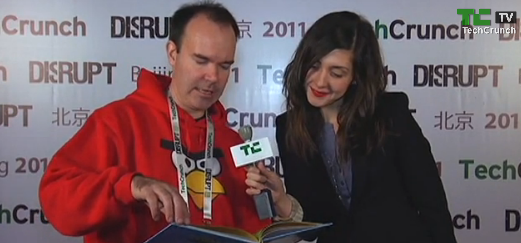
In a little over two years of existence, the smartphone game Angry Birds is now a household name. A lesson in horizontal brand extension, Rovio “Mighty Eagle” Peter Vesterbacka wore an Angry Birds sweater and carried around a bouquet of Angry Birds mylar ballons, on not just one, but all days of the TechCrunch Disrupt Beijing conference.

He is in China because the sprawling country is Rovio’s second biggest and fastest growing market, and Vesterbacka is attacking it full force; opening an office in Shanghai and Angry Birds retail stores in the country shortly. The game itself has had over 50 million downloads in China, and Vesterbacka hopes to hit 100 million by the end of the year. “We want to be the leading Chinese entertainment brand,” he says.

Vesterbacka describes Angry Birds as the “most copied” brand in China and plans on dealing with the piracy by making better copies than the pirates; “It would be even worse if nobody copied us, because it would me that nobody cares about the brand.”

Vesterbacka has extended that brand to stuffed animals, cookbooks and even a movie! “If you have a popular loved brand it will take physical form, ” he explains, “In our case books are happening as well. We’re doing animation … we’re making movies.”

Not surprisingly, Vesterbacka views Walt Disney as a role model, ” If Walt Disney was alive today, he would be making games for the iPhone … We’re just using the tools of the trade [available] today to build a brand. Back in the day you had animation and you had black and white cartoons.” Nowadays you have iOS.

So is Vesterbacka too ambitious? “Mickey Mouse is a tiny little mouse but a huge pop culture icon.” Enough said.


:
Website:

Learn more

Product:
Angry Birds
Website:
rovio.com
Company
Rovio Mobile

Angry Birds is a puzzle video game developed by Rovio, a developer based in Finland. Since its release for Apple’s iPhone and iPod Touch devices, over 6.5 million copies of the game have been purchased, and versions have appeared for other touchscreen-based smartphones.

In Angry Birds, players take control of a flock of birds that are attempting to retrieve eggs that have been stolen by a group of evil pigs. The pigs have taken refuge on or within structures made…

Learn more


Weekly Wrist Watch Round Up

P4

The “Virgin” king Sir Richard Branson teams up with Bulova for a special limited edition watch. 46mm wide and done in titanium, the watch features a GMT hand and world time function.

May the high-end watch world’s fascination with digital mechanical watches never end. The newest drool-worthy mechanical creation is a watch with the simple name of 2LMX. It features a highly complex mechanical movement with a vertical tourbillon, and the time told in 24 hour format on a series of revolving drums.

Created with the help of a watchmaker/mathematician the new Zenith Captain Winsor Annual Calendar Chronograph watch offers a slew of useful features at a glance. It also has a smooth classic look that offers a timeless feel – appropriate for most any man.

We are excited about this March LA.B AM1 40 Automatic watch giveaway. The AM1 40 is inspired by the look and feel of classic American muscle cars and has a modern, yet totally retro feel.

Orient has offered well-priced mechanical watches made in Japan for a long while. Japan in general is probably the best source for good mechanical watches that won’t break the bank. Reviewed here is Orient’s newer M-Force Diver watch.

Click to view slideshow.


Facebook Tests Home Page Redesign That Moves Ads To The Top

Facebook Ads Above Ticker

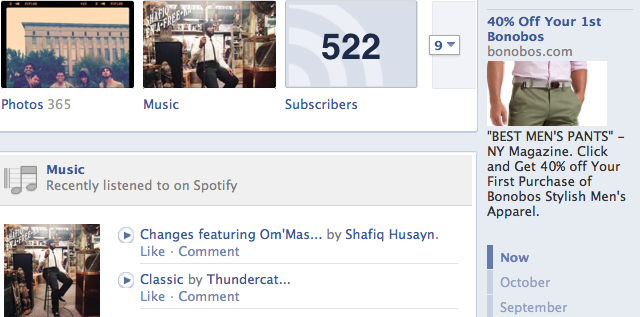
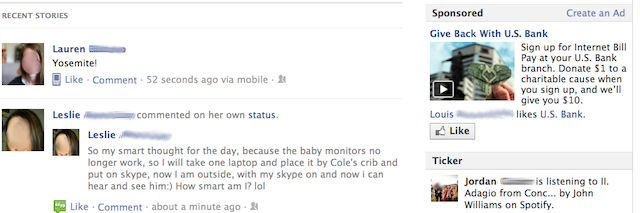
If you check Facebook today for real-time updates in its Ticker feed, you may find yourself staring at ads instead. Some Facebook users are now seeing a redesigned version of the home page that places ad units at the top of the right sidebar. Ticker, Events, and birthdays have been moved down beneath these ads. Similarly, some now see ads relocated above the Timeline profile’s navigation column in the right sidebar. Those in the test with windows wide enough for Ticker to be snapped to the far right see ads above everything else in the sidebar.

By making ads more prominent on some of the most frequently browsed parts of the sites, users may be more likely to click through or at least see them. If Facebook rolls out this redesign to the entire user base it could significantly increase the value of the site’s premium home page and profile ad inventory. Alternatively, by dynamically rearranging the home page and profile sidebar, Facebook could consistently trick users into looking at ads where they were expecting to see the Ticker or navigation column. Either way, the changes could allow it to charge advertisers more and increase revenues.

Facebook rarely places its bottom line above the interest of the user experience but here it has done so quite literally. The whole point of the Ticker was to allow users to consume real-time updates without having to switch to a separate “Most Recent” tab of the news feed. By burying Ticker below ads, users are less likely to notice a friend asking for someone to go to dinner with or a conversation developing around a posted link. They’re also less likely to notice they have Events or friends with birthdays that day.

On Timeline, the redesign makes more sense. By lowering the Timeline navigation column, it sits closer to the feed of updates that actually moves when users click to view content from last month or last year. Cleverly, if users do scroll down the Timeline such that the ads would be obscured, the ads suddenly reappear beneath the navigator and begin to float so they stay visible.

Only a limited set of users are currently seeing these redesigns, so they could disappear as quickly as they showed up. However, the fact that Facebook is even testing them indicates it may be loosening up in terms of the real estate it’s willing to give advertisers. Classically, Facebook has taken a long term approach to monetization, making ads as unobtrusive as possible to keep users addicted to the site. With the company expecting to IPO in 2012 though, it might be interested in juicing its ad revenues to court investors even if it slightly degrades usability.


:
Website:

Learn more


Siri And The iPhone’s Physical Keyboard

treknobabble50_1

The backlash was inevitable.

Siri has had a bit of an image problem this past week. Just like all technology propelled by the tailwinds of hype, it hit the inevitable wall of tech punditry. This magically turned the stream of largely positive stories into a river of negative stories under the guise of things like: “the voice of reason” or the “wake up call”. It’s the oldest trick in the book and it never fails to generate massive pageview energy. It happens 100 percent of the time. But it’s important not to lose sight of the bigger picture.

First of all, the downtime issue is a total red herring. Yes, Siri has been wonky on and off for the past few days. God forbid that a service explicitly labeled as “beta” behave like a service still in beta. I understand that this is a bit of a tough concept to understand since companies like Google leave software in beta for the better part of a decade, thus castrating the term. But look no further than how rarely Apple actually labels something as “beta”. They basically never do it. They only do it when they expect a service to be less than spectacular 100 percent of the time.

That’s why stories demanding an explanation for Siri’s downtime are comical. Siri is behaving exactly as Apple has said that it would. Perhaps their only mistake was using the “beta” tag, which again, apparently means nothing anymore. And running a commercial touting the beta feature may not have been the best play right now either.

The more interesting angle of the backlash goes after what Siri is and what Siri is not. A few days ago, Jordan wrote a post entitled “Siri, Why Are You So Underwhelming?” In it, she brings up a few key points that I think are reflective of some frustrations many are having in this post-hype phase. While the broader notion is a bit silly: No, Siri cannot be a full replacement for a human assistant — nor do you have to pay Siri tens of thousands of dollars a year, provide it with health insurance, etc. Some of the smaller points definitely ring true. Siri can’t add contacts. Siri can’t open apps. Siri can’t play TV shows. Etc. But there’s a keyword missing in each of these:

Yet.

Again, see: beta. All of that is coming, I have no doubt.

The key is when Jordan also complains that she can often type faster than Siri can think. That’s undoubtedly true. But the thinking here has to extend beyond the present and your own self. It reminds me a bit of the people who used to say that they needed a physical keyboard on their phone. And that Apple would eventually have to add one to the iPhone. It was a certainty. BlackBerry FTW.

Now all of those people seem to happily be using iPhones (or Android phones) without physical keyboards without problems. BlackBerry? Yeah…

What Siri represents is an extension of computing by utilizing something that (most) everyone has: voice. It’s the same thing with the touchscreens on the iPhone and iPad. They also utilize something that (most) everyone has: fingers. “If you see a stylus, they blew it,” Steve Jobs once famously said. And he was right. Why create something to distance yourself from the machine? In the past, these crutches were needed. We’re getting to the point where they aren’t anymore. Forget the mouse and keyboards, it’s touch and voice.

Everyone is amazed now when they see children interact with the iPad in such a natural way. And they’re even more amazed when they see a child with a physical magazine and it’s extremely foreign to them. The same thing will one day be true with Siri (or any comparable voice technology). What’s easier, teaching a child to type on a keyboard or letting them speak to a computer? There’s a reason why basically every science fiction author in the last century envisioned a future in which we speak to our computers. And there’s a reason why every major technology company has been working on speech technology for the past few decades. It’s a natural thing to do. And it makes sense that eventually it becomes a computing norm. Again, just like touch.

But we’re not there yet. And that’s why we’re seeing some of this backlash. Is Siri perfect? Of course not. It’s probably 1 percent of where it should be if we’re to use it as a regular computing input. But I’m always amazed when people seem to completely discount the fact that the technology will get better over time — and quickly.

But maybe it’s hard to blame them. Again, these are the people who wanted iPhones with physical keyboards. We want what we know. We don’t know voice as a primary method of computing. It’s awkward. It’s foreign. But it won’t be forever. And it especially won’t be for children who grow up learning to speak to computers. Our hesitance to speak to our machines will seem awkward to them.

Does that mean speech replaces text input entirely? Of course not. There are some times where typing is better — when you’re in a noisy room, for example. Or in a place you need to be quiet. Or if you’re saying something private. But there’s also a reason why humans don’t stand with one another and quietly pass notes back and forth.

My point is simply that you should take the Siri backlash with a grain of salt. We’ve seen such backlashes before, we’ll see it again. Everything is “stupid” and “useless” until it’s everywhere.

[image: CBS]


Company:
Apple
Website:
apple.com
Launch Date:
January 4, 1976
IPO:

November 6, 1980, NASDAQ:AAPL

Started by Steve Jobs, Steve Wozniak, and Ronald Wayne, Apple has expanded from computers to consumer electronics over the last 30 years, officially changing their name from Apple Computer, Inc. to Apple, Inc. in January 2007.

Among the key offerings from Apple’s product line are: Pro line laptops (MacBook Pro) and desktops (Mac Pro), consumer line laptops (MacBook) and desktops (iMac), servers (Xserve), Apple TV, the Mac OS X and Mac OS X Server operating systems, the iPod (offered with…

Learn more


(Founder Stories) Houston: “In 18 Months, You Are Going To See Little Dropbox Buttons Everywhere”

Ooyala Backlot Web-6

By any measure Drew Houston and his Dropbox team are having a hugely successful run. In Houston’s final Founder Stories episode with TechCrunch editor, Erick Schonfeld, Houston says he plans to maintain this momentum by focusing on mobile, and just about everything else.

Houston says Dropbox has secured a new agreement with HTC, where it “is going to be baked into tens-of-millions of [Android] phones” and like Facebook, Dropbox plans to stamp its product on everything. “In 18-months you are going to see little Dropbox buttons everywhere.”

But will Dropbox’s strategy be strong enough to fend off popular sites like Instagram and Twitter, which also store digital content submitted by large user communities? Or put more bluntly “five years from now, will I even need Dropbox?” asks Schonfeld.

Houston believes the answer to both questions is yes.

“We can help you get stuff out of each of those little silos or little boxes and put them all in one place so that all that content can be more useful to you and we can help you share it and we can help you see it on your iPad or see it on your TV.”

We’ll see how it all plays out.

Until then, make sure to watch episodes III and III of Schonfeld’s interview with Houston.

Past episodes of Founder Stories featuring Eric Ries, Julia Hartz and Christopher Poole are here.


Company:
Dropbox
Website:
dropbox.com
Launch Date:
January 1, 2012
Funding:
$257M

Dropbox was founded in 2007 by Drew Houston and Arash Ferdowsi. Frustrated by working from multiple computers, Drew was inspired to create a service that would let people bring all their files anywhere, with no need to email around attachments. Drew created a demo of Dropbox and showed it to fellow MIT student Arash Ferdowsi, who dropped out with only one semester left to help make Dropbox a reality. Guiding their decisions was a relentless focus on crafting a…

Learn more

Person:
Drew Houston
Website:
Companies:
Dropbox, HubSpot, Accolade, Bit9

Drew Houston is CEO and Co-Founder of Dropbox, and has led Dropbox’s growth from a simple idea to a service relied upon by millions around the world. Drew leads Dropbox’s activities, and is actively involved in its business and product decisions.

Before founding Dropbox, Drew attended MIT where he studied computer science. He took a quick leave from school to form Accolade, an online SAT prep startup, and also worked as a software engineer for Bit9.

After graduating from…

Learn more

Person:
Erick Schonfeld
Website:
Companies:
TechCrunch, Time Warner

Erick Schonfeld is the Editor of TechCrunch. He oversees the editorial content of the site, helps to program the Disrupt conferences and CrunchUps, produces TCTV shows, and writes daily for the blog. He is also the father of three adorable children.

He joined TechCrunch as Co-Editor in 2007, and helped take it from a popular blog to a thriving media property. When TechCrunch founder Michael Arrington left in 2011, Schonfeld became Editor.

Prior to TechCrunch,…

Learn more


Keen On… Justin Dillon: Is The Internet to Blame for Contemporary Slavery? (TCTV)

Dillon

Of course not. And yet, as a key cause and effect of globalization, the Internet does play an important role in enabling the conditions that produce today’s 27 million slaves around the world. But it’s also the vehicle with which we can fight this slavery. That’s the opinion, at least, of Justin Dillon, the CEO of Slavery Footprint, a State Department funded organization launched at the 2011 Clinton Global Initiative, which is focused on exposing and fighting contemporary slavery.

The Internet, indeed, is now becoming an essential tool for not only fighting slavery but also raising our awareness about how prevalent it is in many of the products that we consume. As Dillon explained when he came into our TechCrunchTV studio, Slavery Footprint has released an Android and iPhone mobile app which will enable us to find out how much slavery is contained in products that we buy.

Dillon reminded me, for example, that it takes an average of 3.2 forced laborers to produce the average smartphone. Doesn’t that seem like an awfully high price to pay for being connected?


Person:
Justin Dillon
Website:
Companies:

Justin Dillon has been a musician all his life. Justin’s band, Tremolo, was featured on television shows, “The Mountain” and “North Shore,” as well as a variety of MTV shows including Pimp My Ride, Newlyweds, Bands Reunited, and Dismissed. With the release of their first album, Love Is the Greatest Revenge (2005, Flagship/Universal Records), Tremolo did something unique: they committed to donating fifty percent of the royalties to charities selected by their fans.

Dillon came across the issue of Human…

Learn more


52 Pick-Up, or, Where I Went Wrong

52_pickup

Happy anniversary to me: I’ve now been writing this here weekly column for exactly one year. In that time I have opined, prescribed, and predicted many things. And now, as part of my one-man crusade for greater opinion-journalism accountability, I’m going to take a moment to go back and look at what I got right … and where I went horribly, hilariously wrong.

With luck this will be an annual event. I mean, assuming Erick doesn’t take a look at this track record and decide to can me on the spot.

(cracks knuckles)

OK, then: without any further ado, and leaving out posts too recent to be judged or those that didn’t contain forward-looking statements, let’s see what I said over the last 52 weeks, and why…


November:

  • My very first post was How RIM’s PlayBook Could Have Succeeded, six months before RIM even released it. Fortunately for me, I was dead right: it was an unmitigated flop, at least in part for the reasons I cited.
  • In Dear Foursquare, Gowalla: Please Let’s Stop Pretending This Is Fun, I suggested they stop making check-ins a game and just offer users coupons instead. Foursquare has increasingly done just that; Gowalla has actually pivoted to become a travel guide.
  • Pretty good so far! But then I predicted the death of Bump. Boy, did I get that one wrong. Mostly because I wildly overestimated how fast widespread NFC adoption would occur. (And the lack of NFC in the iPhone 4S has probably pushed it back by another year.) But as I wrote in that post, I actually really like Bump; so if I was going to be wrong about anything, I’m glad it was this.
  • I then asked Can Anything Stop The Facebook Juggernaut? Short answer: no. Facebook has become to the social web what Microsoft is to the desktop: mindbogglingly gargantuan, relentlessly mediocre, and almost inescapable, I wrote, and so far I’ve been right.

December:

  • In Here Comes The Wetware, I predicted the rise of thought-controlled computing. Hasn’t happened yet, but that was more of a long-term call anyway.
  • Then I plaintively asked Google eBooks: Is That All There Is? and, indeed, so far Google’s eBookstore is nothing special and has had virtually no effect on the publishing world.
  • I called a bubble in It’s A Mad, Mad, Mad, Mad, Mad App World. Is it? Maybe. But the fight for good talent has gotten even fiercer since. My most important prediction there is a long-term one; that even if this is a bubble, the subsequent boom as the smartphone revolution hits the developing world will ultimately dwarf it. We’ll see.
  • In The Future Ain’t What It Used To Be, I predicted that Android would conquer the developing world, and that tech there will start to evolve faster than it does here, thanks to their blank-slate advantage. Seems I was dead right about that first one; jury’s out on the second.

January:

February:

  • In The End Of History, Part II, I took on Malcolm Gladwell and claimed that social media were, in fact, a really big deal in the Arab Spring and the like. It’s a view that more and more people seem to support these days.
  • In Quora vs. StackExchange: Why, Joel, Why? I suggested that while StackExchange’s expansion strategy was good, their tactics were flawed. I stand by that.
  • In Burning Chrome I lauded Google for their canny strategy of slowly and iteratively replacing the operating system with the browser. I’m happy to stand by that too.

March:

  • I returned to poor RIM with RIM Finally Sees The Light. Unfortunately, It’s An Onrushing Train – Or Is It? in which I suggested that maybe they would do something really subversive and disruptive, and fork Android. Got that one dead wrong … but that is exactly what Amazon did, for the Kindle Fire, which is already a success beyond PlayBook’s wildest revised dreams. Oh, RIM. You never miss an opportunity to miss an opportunity.
  • Then an embarrassment: I wrote The Walled Garden Has Won, in which I argue that Android is really just as controlled a platform as the iPhone, only to issue a subsequent mea culpa because I got a crucial fact wrong.
  • In How The Mainstream Media Is Failing Us With Its Nuclear Hysteria, I took the stance that the Fukushima disaster and associated nuclear terror was horrendously misreported and exploited by the world’s mainstream media, considering that nobody died there and it was part of a disaster that killed 20,000 people. The jury will be out on this one for a generation, but it’s worth noting that all the predictions of imminent doom turned out to be wrong.

April:

May:

June:

  • I went travelling through East Africa and North India and wrote a bunch of pieces from the road, including This Is Where The Magic Happens. No predictions there; it was straight reportage, not opinion; I’m just mentioning it here because I’m particularly proud of it.

July:

September:

  • Finally, my most negatively received post, by some distance, was The Tragic Triumph Of The MBAs. I’ll concede that it was a broad-brush piece, and I could have conveyed my nuanced point with more precision. But I stand by its central thrust. I think business types are often unaware of, or at best underestimate, the profound suspicion and mistrust in which they are frequently — or even generally – held by techies, and they would do well to consider why that is.

Hmm. All things considered, I seem to have mostly done rather well this year. Put down that axe, Erick! Looks like I might just stick around.


Gillmor Gang 11.5.11 (TCTV)

Gillmore Gang test pattern

The Gillmor Gang — Robert Scoble, John Taschek, Kevin Marks, and Steve Gillmor — returned to the Social Wars with renewed vigor courtesy of two weeks of material. These issues included the Klout algorithm crisis, more fun with iOS 5 push notifications, the incredible shrinking Google+ numbers, and @scobleizer’s fabulous Verb Wall aka Spotify Motel where data goes into Facebook and never comes out.

Personally, I’m not too worried about Facebook leaving money on the table, or how Netflix suddenly validated a ton of value with their supposed social mistake. Instead I see an ever-expanding set of social services creating new opportunities for sharing realtime hints about what we will find interesting and valuable just in time. Oh, and Twitter just keeps on rocking. Now back to my movie, @Mention Matinee with nobody you have heard of yet.

@stevegillmor, @scobleizer, @jtaschek, @kevinmarks


Robert Scoble is an American blogger, technical evangelist, and author. He is best known for his popular blog, Scobleizer, which came to prominence during his tenure as a technical evangelist at Microsoft.

Scoble joined Microsoft in 2003, and although he often promoted Microsoft products like Tablet PCs and Windows Vista, he also frequently criticized his own employer and praised its competitors like Apple and Google.

Scoble is the author of Naked Conversations, a book on how blogs are changing…

Learn more

Person:
Kevin Marks
Website:

Kevin Marks is a software engineer. Kevin served as an evangelist for OpenSocial and as a software engineer at Google. In June 2009 he announced his resignation.

From September 2003 to January 2007 he was Principal Engineer at Technorati responsible for the spiders that make sense of the web and track millions of blogs daily. He has been inventing and innovating for over 17 years in emerging technologies where people, media and computers meet.
Before joining Technorati,…

Learn more

Person:
John Taschek
Companies:

John Taschek is vice president of strategy at salesforce.com. He is responsible for corporate product strategy, corporate intelligence and market influence. Taschek came to company in 2003, bringing over 20 years of technology evaluation experience.

Taschek currently is also the editorial director for CloudBlog – an independent blog run as an adjunct to salesforce.com’s web properties. He occasionally is on Steve Gillmor’s The Gillmor Gang enterprise web video-cast.

Previously, Taschek ran the testing labs at eWEEK (formerly PC Week) magazine….

Learn more

Steve Gillmor is a technology commentator, editor, and producer in the enterprise technology space. He is Head of Technical Media Strategy at salesforce.com and a TechCrunch contributing editor.

Gillmor previously worked with leading musical artists including Paul Butterfield, David Sanborn, and members of The Band after an early career as a record producer and filmmaker with Columbia Records’ Firesign Theatre. As personal computers emerged in video and music production tools, Gillmor started contributing to various publications, most notably Byte Magazine,…

Learn more


In Defense of Reed Hastings

Hastings f8

Writing in 2002, Peter Drucker, the great management consultant, foresaw the future. “In the next 30 years,” he wrote, “power will shift to the customer – for the simple reason that the customer now has full access to information worldwide.” And the stage for Drucker’s great power shift – from the corporation to the consumer – is, of course, the radically transparent Internet, where nobody, it seems, can hide anything from anyone.

But is this power shift to the customer good for today’s digital economy?

One supporter of today’s radically transparent marketplace is Dov Seidman, the CEO of the consultancy firm LRN. As Seidman told me when he appeared on my TechcrunchTV show last weekend, this transparency will force companies to behave more ethically thereby creating both a fairer and more efficient economy.

But what Seidman and many of the other apologists for radical transparency miss is the destructive economic cost of all this openness. Today’s customer-centric Internet may be radically transparent, but it isn’t either radically fair or radically efficient. The problem is that power has shifted so dramatically from the producer to the consumer that it is becoming harder and harder to build viable, long-term companies in today’s fast moving and increasingly unforgiving digital economy.

Take, for example, Reed Hasting’s Netflix, which, in 90 nightmarish days, has been transformed from one of Silicon Valley’s most impressive paragons of innovation into a company on the verge of a nervous breakdown. Just last March, MG Siegler was rightly gushing  that Neflix was about to “shift” the entire cable television industry with its strategy of streaming originally produced content. But six months later, having increased its price by 60% for some customers earlier this summer, followed by a poorly communicated attempt to split the company into an analog and digital operation, Netflix has lost 800,000 customers and $12 billion in market value in 90 days – including a stunning $2.3 billion in one black day earlier last week.

Some people are thrilled by this hyper-democratic run on Netflix, arguing that it reflects the general will of a consumer that will no longer put up with any kind of corporate ineptitude or doublespeak. One so-called “customer service guru”, John Tschohl, even came on my TechcrunchTV show to crow that the arrogant Reed Hastings has got everything he deserved in this all-too-public humiliation.

I’m not going to defend the undefendable and make excuses for Netflix’s poorly executed strategic shifts this summer. But the problem with consumer and market reaction to corporate screw-ups in our age of radical transparency is that they lack any kind of scale. Up until this summer, Netflix ranked highly on customer service and was the poster child of innovation, offering an alternative business model to both iTunes and the cable providers. But today, with the company’s market valuation tanking and with its continued hemorrhaging of customers, Netflix’s focus is on its own survival rather than innovating an increasingly archaic industry.

In the old days, before Drucker’s great shift in power from the corporation to the consumer, a young promising company like Netflix would have had shelter from the intolerant storm of public opinion. And while I’m not arguing that we should (or could) go back to a pre-digital economy in which corporations are infinitely more powerful than consumers, we do need to discover a better balance between the almost instant destruction of today’s digital marketplace and a consumer culture which is more forgiving of corporate screw-ups.

So here’s the solution. My message to all those dissatisfied Netflix customers who care about the future of the culture business:  stop whining, show some generosity of spirit and foresight, and forgive Reed Hastings for his mistake. Uncancel your Netflix subscription and pay that extra couple of bucks a month for a service that is still unrivalled in its efficiency and still offers the most effective vehicle for building a 21st century customer-friendly subscription model. That way, Netflix can continue to innovate – which, in the long run, will be of incomparable value to consumers everywhere who want to enjoy high quality video entertainment on their digital devices.


Company:
Netflix
Website:
netflix.com
Launch Date:
November 6, 1997
IPO:

NASDAQ:NFLX

With more than 23.3 million members in the United States and Canada, Netflix, Inc. is the world’s leading Internet subscription service for enjoying movies and TV shows. For $7.99 a month, Netflix members in the U.S. can instantly watch unlimited movies and TV episodes streaming right to their TVs and computers and can receive unlimited DVDs delivered quickly to their homes. In Canada, streaming unlimited movies and TV shows from Netflix is available for $7.99 a month. There are…

Learn more

Person:
Reed Hastings
Website:
Companies:
Netflix

Reed Hastings co-founded Netflix in 1997 with then CEO Marc Randolph and launched the subscription service in 1999. He currently serves as Chairman and CEO of the movie-rental company.

In 2005, Time magazine added Reed to its “Time 100” list of the one hundred most influential global citizens. In March 2007 Reed was appointed to Microsoft’s board of directors.

Earlier in his career, Reed founded Pure Software, which was acquired by Rational Software in 1997 after a successful IPO and numerous…

Learn more


How Entrepreneurs Can Create Their Own Luck

horseshoe

Editor’s noteJames Altucher is an investor, programmer, author, and entrepreneur. He is Managing Director of Formula Capital and has written 6 books on investing. His latest book is I Was Blind But Now I See. You can follow him @jaltucher.

I’m in even worse trouble now. A few weeks ago I had to speak at Barry Ritholz’s conference but that turned out to be “only” a panel. It was a great panel but I knew I would only have ten minutes of time so wouldn’t need to prepare much although even then I was worried.

Now I’m speaking for one hour at Defrag in Boulder, Colorado next week on November 9 and I’m terrified. For one thing, all of the other speakers are smarter than me. Right before me is Roger Ehrenberg speaking about “big data”. I’m not even sure what “big data” is so right off he’s smarter than me. Then Paul Kedrosky is speaking later in the afternoon about god knows what. Paul has an excellent blog obsessed with everything from economics to weather data. So despite my expertise in speaking I’m finding I’m a bit nervous.

I could open up with the same line I used on Barry’s panel, “When I was walking over here I had an erection. Not so easy for a 43 year old without any stimulation whatsoever.” But this might not be the exact crowd for it.

Technically, the title of my talk is “Success is a Sexually Contagious Disease” but I only gave them that title because it sounded neat and it was the title of a blog post I then published. But I have no idea if that’s what I’m going to talk about or if that’s something people will be interested in.

The conference itself is about entrepreneurship. But I always am plagued by the fact that I’ve gotten somewhat lucky on this issue. My first company happened during the internet boom and I happened to be one of the few people around (at the time) who knew how to make a website. The second company I had, where Yasser Arafat was an investor, went down in flames in the Bust. The third company I sold was a venture firm. We were only sold because our top investor was so disgusted with us he wanted to buy out our ten year contract. And the third company I sold was Stockpickr.com, which I sold to thestreet.com that I already had a great relationship with. Another company that I made a decent living off was trading for hedge funds and then starting a fund of hedge funds. Everything else I did (about 16 other attempts at businesses) failed.

So I guess right now I can see if it was luck or if I learned some lessons.

1) Luck is similar to “being at the right place at the right time”. So you can easily position yourself there. We know that the right place for right now is somewhere in social media. There are still many niches (plumbers, diamond wholesalers) that aren’t using social media correctly. The big agencies are ignoring them and they are too small and focused to understand how to use direct marketing via social media. If I were starting a business right now I’d either do lead generation via social media for a small but focused niche (diamond wholesalers, small restaurants) or I’d provide financing/lending for companies that are doing this and have established records of turning profits on money spent. I know several companies doing the above but it’s an incredibly wide, open, gaping hole in the industry.

If I were a banker I’d look to buy companies all over the country in this space and then bring the combined entity public in the IPO boom that’s about to start happening.

2) My venture firm being sold I learned one thing: have at least one partner who is a great negotiatior. “Be bad” and someone will be willing to buy you usually doesn’t work. I was lucky there. Although, I will say, I had good, professional partners that knew how to negotiate very well. The one guy’s main technique was to act like we always had alternatives when we never did. And he would ignore the other party for a day or so while they got desperate. It’s a gutsy way to negotiate but it worked. Here’s part of the reason it didn’t work out for me as a big VC.

3) The mental health facility I sold I learned some very important things. Quantity, persistence, and story-telling. You need to hit everyone and then call everyone back twice. We must’ve made 30 calls and then 30 follow-ups to make sure we spoke with the right person. And then with each person we pushed to have a phone call with the company. Then once we had a potential buyer on the phone we had to make sure we told at least three different stories: how the was company doing (and was going to do ), the reasons why growth was a lock, and the reasons why management was incredible. Then we got the deal done. Which was a story unto itself. (Here’s my prior post on TechCrunch on how to best sell a company).

4) Stockpickr, as I mentioned before was a matter of being both proactive, and having friends in the right places. But it also was a matter of vigilance. I had a particular passion about how a financial community could develop with no news. I hate the news. It also was a matter of nourishing relationships built up over a five year period of non-stop work in the financial media space.

So here’s how you “Create your luck”:

A) As Wayne Gretzky says, “skate to where the puck is”. Don’t start a soft drink company competing against Coca-Cola. Start a company in a fast growing industry that has a wide, gaping hole in it. It’s not hard to identify those industries and holes.

B) If you can’t create the company in that space, can you arrange financing for companies in that space through some of the techniques roughly described above. This still allows you to profit from the growth of the sector.

C) Learn how to negotiate.

D) Quantity. You’re never going to win if you depend on one potential buyer or one potential customer. The first time I tried to sell my company, Reset, I tried to sell it to HBO. I had only one potential buyer. No good and it didn’t work out. But the next time I tried I made sure I had ten potential buyers. Ever since then I almost get a reflux reaction in my stomach when I realize I’m back down to the one buyer-one customer model, which is never good.  Create a market for what you are selling.  The price will go up.

E) Persistence. When we were selling the mental health facility there was one time we got a wrong number when we called a public company. We got switched to the wrong person in the company repeatedly. My business partner, Dan, kept calling until he finally convinced the operator she was connecting him to the wrong person. This was one of only 30 companies he was calling so he could’ve just left a message and given up. Instead he got someone on the phone eventually and she was the one who coughed up $41.5 million in cash, three times the closest other offer.

F) Story-telling. Everyone is a little boy or girl at heart. We all want to sit on the floor and bounce a ball and watch Saturday morning cartoons. A story has a beginning, middle, and end. Make sure your story is down pat when you are talking with anyone about your idea, your company, your self (on a date, for instance). It doesn’t have to be so “planned”. But make sure you are constantly improving your storytelling abilities. For instance, before I gave a talk last week in Arizona I watched 30 minutes of Ellen Degeneres and Jon Stewart. Comedians are excellent story-tellers with perfect timing.

G) Nourish relationships. The size of your network increases your luck exponentially. But relationships take Time to nourish. When I wrote here two weeks ago about “the 9 Skills for Becoming a Super Connector” I mentioned that I forgot why “Time” was on my list. Now I know: over time relationships get nourished. A simple connection becomes a friend, becomes family, becomes someone who actively wants you to succeed. That takes weeks/months/years to happen. Important to note: expressing gratitude across your network is the surest way to strengthen it.

H) Passion. Luck will always follow your passion. Warren Buffett was, of course, extremely lucky that his passion was investing in 1950. But almost every passion can be used to make money if you have all of the above. Even if your passion is just “how do I meet the love of my life” and you apply all of the above you will “get lucky”, so to speak, and find success at your endeavor.

I’ve had a lot of bad things happen to me in the course of being an entrepreneur. And sometimes I get down about it and it’s hard to pull myself away from the nightmare alley where the light at the end just becomes a fire that pushes me back. But when I do get to the end of the nightmare, and I apply these lessons, luck comes shining through and I can see again.

Photo credit: Flickr/egazelle


With 4S Now Tops Among Big 3, Apple Grabs 52% Of Industry Profits; Doles Out Huge Bonuses

2056761663_d72dc7399d

As you’ve likely heard, there’s been a lot of upside that’s been reported of late when it comes to Android’s mobile OS. Thanks to Nielsen, we know that, yet again, Android is leader among mobile OSes, now accounting for 43 percent of U.S. smartphone marketshare, up from 39 percent in July; while Apple’s iOS remained at 28 percent over the same period, placing it in distant second.

Of course, Apple has a little bit of vertical integration going on, and in spite of their lagging well behind Google in mobile software market share, iPhones are used by a full 28 percent of smartphone customers, making them top manufacturer for yet another quarter. Hardware leans significantly in Apple’s favor.

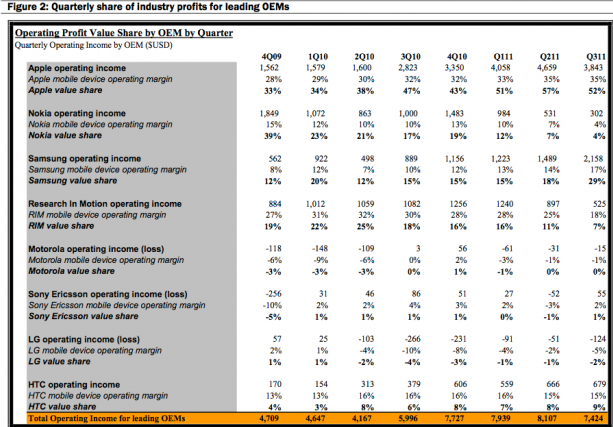
So, while the iPhone made up a relatively small 4.2 percent of the mobile handsets shipped in Q3 2011, it seems that Apple is now accounting for over half of the industry’s profits. Yep. According to Canaccord Genuity analyst Mike Walkley, of the top eight cell phone vendors across the globe, Apple owns over 52 percent of the total operating income. And while that may seem impressive, that number is down from 57 percent in the second quarter.

In comparison, Samsung owns 29 percent of profits among the top vendors, up from 18 percent last quarter, while HTC accounts for 9 percent, RIM comes in at 7 percent, with Nokia at 4 percent. Though Apple’s 52 percent share of the operating profits of the top eight vendors is impressive in spite of the relatively small percentage of iPhones shipped, Samsung’s meteoric rise is certainly worthy of note.

According to Walkley, Samsung gained 11 points of value share thanks largely in part to the Android Galaxy S II, while RIM and Nokia continued to slip. Of course, while most groan over RIM’s future, at least Nokia is making a play at Windows Phone, hoping that its play into the U.S. market can turn a sinking ship around.

That being said, the analyst (and firm) found that Apple’s new iPhone 4S was the top selling phone for AT&T, Sprint, and Verizon (the three largest carriers in the U.S.), with the iPhone 4 — in spite of its next-in-line now being sold — remaining a top selling model for each of those carriers. As 9to5Mac says, the phones get older, the margins seem to get better. And with the popularity of these phones increasing, Walkley projects that Apple may ship as many as 29 million iPhone handsets in Q4 2011.

And that’s not all, as this succession of SEC filings shows, Apple’s executives are now reaping the rewards of a strong fiscal year (in which the company passed the $100 billion mark in revenue). The company awarded 1 million shares of stock to seven top execs, which will see bloated wallets for those of that remain with the company through 2016. The recently promoted SVP of Internet Software and Services Eddy Cue received 100,000 shares of stock in the form of a restricted stock units. 25 percent of Cue’s shares turn into freely tradable stock in September 2014, with the remainder vesting in September 2016.

Each of the remaining six executives received 150,000 shares of restricted stock, with 50 percent vesting in June of 2013 and the remainder vesting in March of 2016. Based on the current price of Apple stock, that works out to a payday of approximately $60 million each for the execs who received the 150,000 shares. (Which includes: Scott Forstall, Senior Vice President, iOS Software, Bob Mansfield, Senior Vice President, Hardware Engineering, Peter Oppenheimer, Senior Vice President and CFO, Phil Schiller, Senior Vice President, Worldwide Product Marketing, Bruce Sewell, Senior Vice President and General Counsel, and Jeff Williams, Senior Vice President, Operations.)

While Apple’s new CEO Tim Cook wasn’t mentioned in these new filings, he was awarded 1 million shares of stock upon his appointment as CEO, with 50 percent vesting in August 2016 and the remainder vesting in August 2021 (should Cook remain an employee of Apple).

So, while Google continues to rise in mobile software, it seems that thanks to Apple’s hardware and its dominance around the world thanks to the iPhone 4 (and now the 4S), both Apple and its executives are cashing in.

Thanks to Alistair Israel for the image


Company:
Apple
Website:
apple.com
Launch Date:
January 4, 1976
IPO:

November 6, 1980, NASDAQ:AAPL

Started by Steve Jobs, Steve Wozniak, and Ronald Wayne, Apple has expanded from computers to consumer electronics over the last 30 years, officially changing their name from Apple Computer, Inc. to Apple, Inc. in January 2007.

Among the key offerings from Apple’s product line are: Pro line laptops (MacBook Pro) and desktops (Mac Pro), consumer line laptops (MacBook) and desktops (iMac), servers (Xserve), Apple TV, the Mac OS X and Mac OS X Server operating systems, the iPod (offered with…

Learn more


PageLines To Launch An ‘App Store’ For WordPress Drag & Drop Sections, Plugins And Themes

111062v2-max-250x250

A year ago, at BlogWorld Expo in Las Vegas, PageLines announced the release of Platform, a drag and drop design framework for WordPress. The product offered some cool CMS design options, a drag-and-drop layout editor, and a fully configurable template builder for creating custom websites. PageLines’ Platform has since been downloaded 400,000 times and has become one of the most popular frameworks on WordPress.org over the last year.

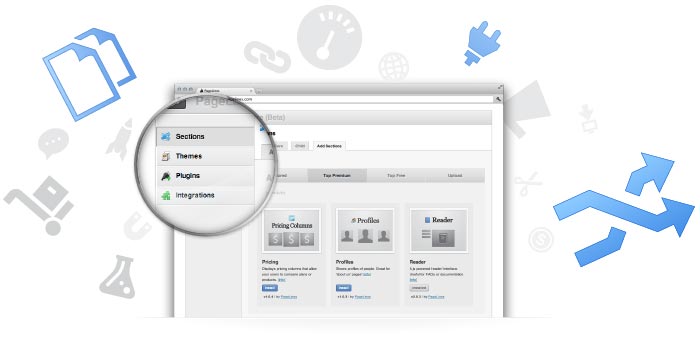
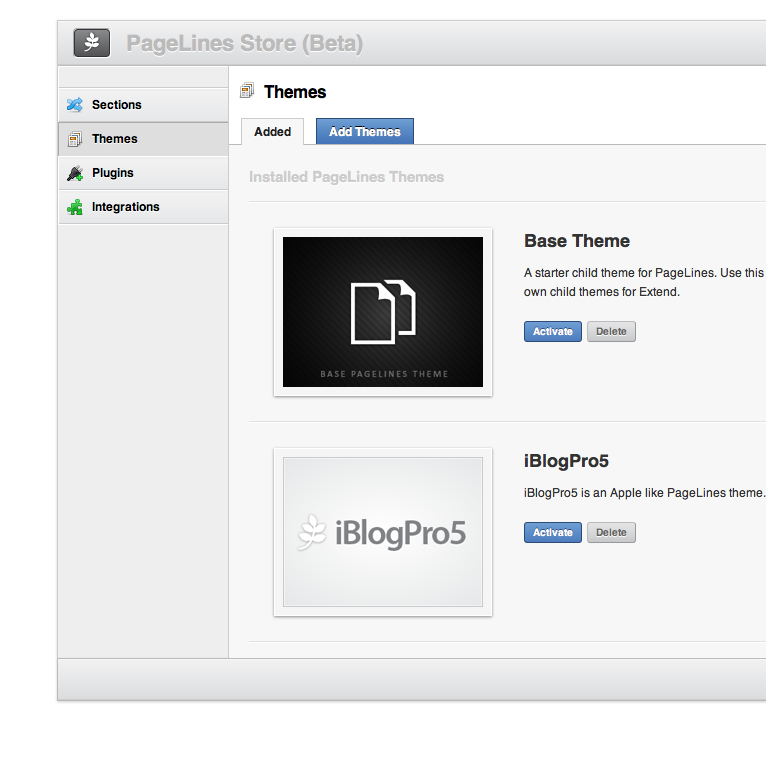
Back at BlogWorld Expo today, PageLines announced today that it will launch version 2.0 of its framework on December 8th, which will include a nifty new marketplace: The PageLines Store. For developers, designers, or people who want to build cool websites without worrying about coding, this should be of interest. The store is basically an app store for “drag & drop” sections, plug-ins, sections, and themes — all of which have been built by developers for the PageLines community. Apps in the store will range from drag and drop sections that customize the style of a website to an integrated system for eCommerce or a community forum and other functionality.

For developers, the PageLines Store offers the opportunity to get exposure to several hundred thousand users, while taking a 70 percent cut of every sale. And developers get to set the price.

The startup is also announcing the PageLines Developer Community, Workshops and LeContest, which will all be “focused around educating and helping designers and developers become successful with PageLines”, according to the startup’s blog post. In terms of the contest, all developers have to do is build a cool plug-in, drag & drop feature, etc., and PageLines will select a few of the best entries to launch at LeWeb ’11 in Paris this December. For more info, check the contest out here.

As for PageLines v2.0, the new framework will include an improved layout editor, an intuitive UI, responsive design, dynamic color handling, and improved performance, says PageLines CEO Andrew Powers. The new framework will be sold via PageLines’ website, and the cost for a regular license will be $197. The developer version, which will include integrations for Mediawiki and Vanilla forum software, will be available for $397.


Company:
PageLines
Website:
pagelines.com
Launch Date:
October 1, 2009

PageLines sells and supports professional web-software for the self-hosted WordPress platform.

PageLines is based in SOMA San Francisco, California (USA) and launched in mid 2009.

Learn more