Quora Gamifies: Credits And “Ask To Answer” Suggestions Live For Everyone

Screen Shot 2011-11-14 at 2.13.01 PM

After five months of beta testing, Quora has made its Quora Credits and “Ask to Answer” User Suggestions live for everyone today.

All users can now earn credits for a variety of positive and user engagement-magnifying Quora behaviors like answering questions they’ve been asked to answer, getting votes on answers to questions they’ve solicited through “Ask to Answer” and getting votes on their answers to other questions. Users can also give each other credits, which is awesome and can be managed through the Credit interface here.

This is all fine and good, but what exactly does Quora expect you to spend credits on? Especially since you can’t cash them in? Well Quora expects you to “pay” important people to answer your questions obviously.

For example, I can earn 45 Credits if I answer the question, “Which business model would be better for a “find a co-founder” website: Match.com or eHarmony?” An answer from Quora CEO Adam D’Angelo, who is an order of magnitude more important than me, to my “What are the key differences between “Normals” (normal mainstream users) and tech early adopters?” question costs a pricey 960 credits.

To reinforce this user hierarchy, Quora will now suggest topic experts after you ask questions — For example I was given a host of User Interface expert options like 37Signals Product Manager Ryan Singer after I tagged my question “UI.” Users can also now send reasons when they decline a question they’ve been asked to answer and use more credits to ask a question when they feel like upping the ante, two features that have been added since the beta.

So is Quora just trying to tack on gamification to see if it’ll stick? Well after using credits for a bit I can definitely say it’s sticky enough. My test question got 17 solid answers in a period of less than 24 hours, with the Credits and “Ask to Answer” elements definitely creating a positive feedback loop; It seemed like more people wanted to answer because they saw that “influencers” like Quora designer Rebekah Cox were answering.

Says resident Quora power user Semil Shah, “Personally, I love Quora credits. Not because I count them or try to accumulate a bunch…but mainly because when I have a question I’d like a range of opinions on, instead of just hoping someone answers or asking people directly, I can request an answer of a certain finite number of users  (who have already written answers in those categories) from my experience, the response rate has been really amazing.”

And as we have written before, Quora is still working out the kinks on the whole value proposition thing (not to mention monetizing). I mean what’s more valuable, getting answers or answering? It’s not so cut and dry.

Credits is a thorough attempt to quantify the Quora value exchange, so users know (more) exactly where they stand. Sure it’s complicated, but it just might work, especially if it’s an intermediary step in some Mahalo-esque plan to eventually pay people — with actual money — for their efforts.

“We are going to monetize but this launch is focused on getting more good answers for people’s questions,” Quora co-founder Charlie Cheever tells me,  ”The results from our credits beta were really promising, so I expect so I expect this will do well and we’ll keep extending and evolving Quora Credits.”


Google Open Sources Android 4.0, Ice Cream Sandwich

ics-android

The code for the latest version of Android — 4.0, also known as Ice Cream Sandwich — is now in the wild.

According to a post from Jean-Baptiste M. “JBQ” Queru, a software engineer on the Android Open Source Project, the code is still in the process of being uploaded, and developers are advised to wait til it’s fully complete before they start downloading it themselves. But it’ll be available very soon.

This is a huge deal for a few reasons.

For one, Android 4.0 includes some major improvements over both Gingerbread and Honeycomb, which are the versions of Android that are shipping on current Android devices. These include new API calls, performance improvements, and more.

But more important: it’s the first time Google has open-sourced a version of Android that’s optimized for tablets as well as phones. Now, obviously devices running Android 3.x Honeycomb have been around since early this year. But Google opted not to release the source code for Honeycomb. The reason? It had been thrown together quickly, and Google had to take some shortcuts to get it out the door (they were also concerned that third parties would try to port Honeycomb back to phones, which it isn’t suited for).

The open sourcing of ICS will allow manufacturers who aren’t working directly with Google to pump out tablets of their own (there are some low-cost tablet devices out there shipping with Gingerbread, simply because they couldn’t use Honeycomb). And it also means that custom ROM developers like CyanogenMod can tweak the code, port it to older devices, and more.

A couple of other interesting notes: the version of ICS that’s being open sourced is 4.0.1, and developers can download an image of the Galaxy Nexus, which has the build target full_maguro.

Oh, and if you really want to look at the Honeycomb source, it’s in there too (since it is an ancestor to Ice Cream Sandwich). But Google is discouraging anyone from actually using it.


Siri Cracked Open, Theoretically Opening It Up To Other Devices (Or Even Android!)

siri

Serving as a stark reminder that there are people on the Internet who are way, way too damned clever, the guys over at the iPhone design/development house Applidium claim to have cracked open Siri to take an unsanctioned look at its (her? his?) inner workings. In a rare (but quite welcome. I mean, by us. Probably not by Apple) move, they’ve gone on to do a rather detailed debriefing of how they got through.

So, what does this mean to you? Theoretically, it means that support for Apple’s voice-powered portable assistant could be hacked not only onto devices like the iPhone 4, but to anything from laptops to Android phones as well. As the italics on “theoretically” imply, though, there’s a bit of a catch.

The catch: in the end, anything attempting to communicate with Siri’s backend needs to have a valid iPhone 4S identification string, unique to each 4S. In one-off experiments like this one, spoofing that string with one pulled from an actual 4S is somewhat simple — Apple wouldn’t (/couldn’t) ever really notice.

If someone were to hack together an Android app and distribute it, though, the massive influx of requests all originating from the same unique ID would almost certainly trigger a blacklisting. Unless the app had a massive pool of authentic unique IDs to rotate through, the fishy activity would be pretty easy to discern.

I’d highly recommend reading Applidium’s full rundown of the process, but here’s the tl;dr breakdown:

  • By connecting Siri to a local router and then dumping data as it came through, they realized that Siri was sending all of its data to a server that we’ll refer to as “Guzzoni”.
  • All trafic sent to Guzzoni was sent through the HTTPS protocol. With the “S” in HTTPS standing for “Secure”, this traffic wasn’t subject to simple packet sniffing. So they had a new idea: make a fake Guzzoni server, and see what came through on the other end.
  • After a good bit of ridiculously clever SSL certificate trickery, they got Siri sending commands to their fake server. With each command comes the “X-Ace-Host” string, which appears to be unique to each iPhone 4S.
  • After figuring out how Apple was compressing (read: not encrypting) the data, Applidium was able to decompress it and parse out a rough sketch of exactly what was being sent (including which audio codec Apple was using), and what Siri expected in return.

With that process done, Applidium attempted to talk to Siri without any iPhone 4S in the equation. Their first challenge? Speech-to-text from a laptop running a custom script. Sure enough: it worked. Siri chewed through the sound file (a recording of them saying “autonomous demo of Siri”), didn’t bat an eye (as their tool was using their iPhone 4S’ actual unique ID), and returned a mountain of data detailing what Siri heard and how sure it was about each word.

Incredible. The Applidium guys have provided a few tools for others to recreate their steps — but, as it currently stands, there’s not much that can be done to take this beyond a rather cool proof-of-concept.


Bag Week Review: The Incase Alloy Series Compact Backpack

bagweek-bug

What is it?
Happy Bag Week everyone, and please kindly meet the Incase Alloy Series Compact Backpack. I’ve been reviewing this bag for a while now, and I have to say I much prefer it to anything I actually own. I’ll be sad to see it go. However, it happens to look like some sort of space pack you’d see in Battlestar Galactica with its metallic finish, so it’s definitely a love-it-or-hate-it design.

Aside from the silver metallic finish (that you can’t help but notice), the backpack itself is pretty plain with no extra bells or whistles. Size-wise it was everything I could ask for. Compact enough to be comfortable and look like it actually fits my body, but big enough to fit most everything I’d need for a day on the job or at play. It fits up to a 15″ MacBook Pro, and still leaves plenty of extra space for an iPad, camera, change of clothes, or whatever else it is you tote around day to day.

Made of nylon, the Compact Backpack (it doesn’t have a cool name like the Yalta) is super light, which made it that much easier to pack it full of gadgets. Thanks to breathable mesh padding along the shoulder straps, back, and top-loading handle, this Alloy series pack was super comfortable for all-day use.

The Incase Alloy Series Compact Backpack

Type: Backpack
Dimensions: External – 18.5″ x 11.75″ x 4.3″ / Laptop compartment size – 14.8″ x 10″ x 1.8″
Pockets: Laptop sleeve, secondary sleeve, internal pouch, front pocket, wallet-sized “hip” pocket
Features: Dedicated faux-fur lined iPod pocket, nylon construction, metallic lining
MSRP: $99.95
Product Page


Accessibility, on the other hand, wasn’t such a breeze. To start, the Compact Backpack has more than enough pockets, one of which is severely misplaced. Incase included a dedicated iPhone/iPod pocket square in the middle of the top of the backpack. The problem is that an iPod or iPhone is something you get out and use frequently in your travels, but you literally have to take the backpack off and hold it in front of you to effectively get anything out of that pocket. Another case of the bright idea gone awry.

A bevy of other pockets await you with the Alloy Compact Backpack, including a faux fur-lined laptop sleeve, a secondary iPad/journal sleeve, that dedicated (poorly placed) iPod pocket, a wallet-sized pocket on the lower portion of the left strap, a small pocket on the front, and an internal pouch for pens and such. In fact, only one pocket is missing, though it may not be missed by everyone. I tend to walk or take the train everywhere (which means no cup holders), which means I really appreciate a water bottle pocket. Granted, adding one would probably invalidate the whole “Compact” bit, but it was still dearly missed.

Who is it for?
Anyone who wishes they were in any syfy series set in space. Anyone looking for a light, spacious primary bag that doesn’t necessarily go with everything (but you can’t see it when you’re wearing it so who cares, right?). Anyone who puts comfort and durability before style, or conversely anyone who has very, um, unique style.

Do I want it?
The tell-tale question, no doubt, and one which I don’t have a very clear answer to. The truth is I use this bag a lot, and get compliments on it all the time. It does what I need it to (save for store my bottled water), and is pretty comfortable, too. But that one pocket up top (for your never-to-be-accessed iPod) really irks me. I’d say 85 percent of me wants it, and the other 15 percent thinks I can do better.

Click to view slideshow.


Watch An iPad Survive A 1300 Foot Drop

extreme-sleeve1

Here’s your daily dose of viral marketing courteous of G-Form. These guys make device cases that can seemingly survive anything — including in a drop from 500 feet and taking a bowling ball to the face. The company took two iPads skydiving, started playing back a movie and then when at 1300 feet, let them go, protected only by their Extreme Edge and Extreme Portfolio cases. Both survived as if they landed into a pool of silicon implants. Awesome.


Battery Breakthrough Could Improve Capacity And Reduce Charge Time By A Factor Of Ten Each

paperheader

It’s no secret that batteries are holding back mobile technology. It’s nothing against the battery companies, which are surely dedicating quite a lot of R&D to improving their technology, hoping to be the first out of the gate with a vastly improved AA or rechargeable device battery. But battery density has been improving very slowly over the last few years, and advances have had to be in processor and display efficiency, in order to better use that limited store of power.

Researchers at Northwestern University claim to have created an improved lithium ion battery that not only would hold ten times as much energy, but would charge ten times as quickly.

It’s probably safe to call it a breakthrough.

Inside Li-ion batteries, there are innumerable layers of graphene, a one-atom-thick sheet of carbon atoms. Lithium ions fill the spaces between these layers, and when the battery is being charged, these atoms must creep their way physically to the edge of the sheet in order to get down to the next layer and make room for more ions. The rate of recharge is limited by how fast these ions can go from layer to layer. One solution tried before was replacing the carbon sheets with silicon, which for some chemical reason can hold many times the lithium ions — but the silicon would expand and contract with the charge cycles, quickly breaking.

Professor Harold Kung, researcher at NWU and lead author of the paper (published this month in the journal Advanced Energy Materials), has discovered not just one, but two techniques for improving this charge process. His lab decided to combine the strengths of both materials, carbon and silicon, by populating the area between the graphene sheets with silicon nanoclusters. These little clusters greatly increase the amount of ions that can be kept in the battery, and because they are small and the graphene is flexible, their size changes are manageable. Thus, the charge capacity of the battery was improved by, Kung says, a factor of ten.

But that’s not all. Kung’s lab also thought of perforating the graphene sheets, allowing ions to take a “shortcut” to the next layer. They call these 10-20nm holes “in-plane defects,” and they essentially rust them out. The result? Charging is ten times faster.

A possible downside is a faster degradation process; after 150 charges and discharges, the batteries showed only a 5x improvement to capacity and charge speed. Of course, those 150 charges would be the energy equivalent of 1500 charges of today’s batteries.

Naturally this huge leap in battery power and efficiency won’t be in your phones next week; they estimate they could be on the market in three to five years — cold comfort to iPhone 4S owners who are only getting seven or eight hours of on time. But the process is changed enough that existing manufacturing techniques are likely insufficient.

The full paper, In-Plane Vacancy-Enabled High-Power Si-Graphene Composite Electrode for Lithium-Ion Batteries, is available to subscribers here.


Salesforce Acquires Social And Mobile Cloud Computing Consultancy Model Metrics

model-metrics

Salesforce.com has announced the acquisition of cloud computing services startup Model Metrics. Financial terms of the deal, which is expected to close in the fourth quarter of 2011, have not been disclosed.

Model Metrics consulting firm that helps enterprise organizations accelerate the adoption of cloud computing. Specifically, Model Metrics focuses on helping companies adopt mobile and call center technologies, social enterprise solutions, business processes and more. In fact, Model Metrics has completed 1,000+ Salesforce deployments for mid-sized and Fortune 1000 companies. The company also helps businesses create custom mobile solutions for iPad and Android.

Founded in 2003 and based in Chicago, Model Metrics, which has raised $6.5 million in funding, has partnered with Salesforce, Amazon Web Services, Adobe, Apple, and Google. Clients include Abbott, Boeing, Chicago Mercantile Exchange, L’Oreal, Morgan Stanley, and NBC Universal.

Salesforce says that the addition of Model Metrics will “empower partners to develop their social enterprise practice.” The CRM giant’s strategic services team will have more mobile and social capabilities with Model Metrics.

Recent Salesforce acquisitions include Assistly, and Radian6.


The Death Of The Spec

a

Earlier today, my colleague Matt Burns wrote a post noting that most tablet makers may be largely failing because they’ve sold their soul to Android and are now just in the middle of a spec war, which no one can win. I’m gonna go one step further in that line of thinking: the spec is dead.

There have been a few key stories from the past couple of weeks that highlight this new reality. Barnes & Noble unveiled the new Nook Tablet. Consumer Reports looked at the iPhone 4S. And the first reviews came in about the Kindle Fire.

On paper, the Nook Tablet is the Android-based reading tablet to buy. It has twice the RAM of the Kindle Fire, twice the built-in storage space, a better battery, and it’s lighter to boot. Yes, it’s $50 more expensive, but come on, the RAM difference alone is worth well more than that. Clearly, this is the better value for your money.

And yet, the Nook Tablet will not outsell the Kindle Fire. That’s the thing: “on paper” doesn’t matter anymore. What matters is that the Kindle Fire comes with Amazon’s content ecosystem attached to it. Perhaps more importantly, it will be peddled like no other on the all-important Amazon.com homepage. The specs are secondary in this race at best. The reality is that they will be an afterthought. Or again, the Nook would win.

Next up, Consumer Reports’ take on the iPhone 4S. Hey, this time, they actually like it! And thank god, because as everyone saw the last time around, their damning report really hurt iPhone 4 sales — to the tune of all-time record sales of the device, leading Apple to their most profitable year ever.

More on that in a second. First, it’s important to note that while Consumer Reports liked the device, they didn’t like it as much as a few other Android devices. Why? Specs. Marco Arment ripped this apart last week already, but the thing reads like a bad joke. For example, they love the LG Thrill’s ability to capture stills and videos in 3D. This is one step short of knocking the iPhone 4S because it doesn’t have frickin’ laser beams mounted on the top of the device.

And such comparisons show just how clueless Consumer Reports has become. Last year, they milked “Antennagate” for the pageviews, not realizing that it could actually undermine their own credibility if the device still sold well. “Sold well” ended up being a major understatement. So in effect, they themselves highlighted that no one cares about Consumer Reports anymore. And why not? Because they Consumer Reports largely cares about specs. And consumers do not anymore.

The NPD Group just released their latest numbers. The number one selling smartphone last quarter was the iPhone 4. The over-a-year-old phone which Consumer Reports refused to endorse over a year ago, remember. Meanwhile, the number two phone for the quarter? The two-year-old iPhone 3GS. Does anyone really think that the LG Thrill is going to outsell the iPhone 4S this quarter? What about the Motorola Droid Bionic? Maybe the Samsung Galaxy S II?

Consumer Reports now matters just as much as specs do. Which is to say, not at all.

Finally, we have the Kindle Fire. This is likely to be the final nail in the coffin for the spec. By pretty much all accounts, this is a cheaply-built device. Spec-wise, it’s pretty ho-hum. But it’s a cheaply-built device that comes at a cheap price. That matters more — especially when paired with Amazon.com, as I previously mentioned.

The Kindle Fire outselling the Nook Tablet, even though the latter wins the spec argument, will be one thing. But if sales compete with the gold standard of tablets, the iPad, that will really be something. So far, no other tablet device has come close to remotely competing with the iPad. The Kindle Fire should. They’re clearly different devices — the iPad is a much larger form factor and a price that is more than double the Kindle Fire — but I have no doubt that for many people, the Kindle Fire will be a good enough tablet that they’ll at least wait on an iPad 3 (or iPad 2 HD, or whatever it will be called).

That’s a key thought: “good enough”. None of the initial reviews say that the Kindle Fire is better than the iPad — because it isn’t. It can’t match Apple’s product in either specs or polish. But it is $199 versus $499. That matters far more than any spec. You’re paying for something that’s perhaps half as good as the iPad, but it’s less than half of the cost. There’s at least perceived value there.

And “good enough” also speaks to where we’re at in the broader computing world. I used to get excited for Sunday inserts in the local paper so I could see what new machines were available at Best Buy, Circuit City, or CompUSA. The only thing I cared about were the specs. Which Intel chip did it have? What was the clock speed? How much RAM? How big was the hard drive? How fast was the CD burner? How much cache? Those things mattered.

Then three things happened. First, computers kept going more mainstream — the above listed specs look like gibberish to most people. Second, the web took over and most computers quickly became more than fast enough for the majority of users. Specs became a thing that PC gamers cared about. This contributed to the rebirth of the Mac, because it was never much of a gaming machine throughout the years — especially in the PowerPC years when it was getting smoked by Intel chips (which Apple, of course, eventually adopted). And third, buoyed by the first two things, new platforms arose.

During the PC years, specs also mattered because there was one common dominant force in computing: Microsoft. Because Windows was everywhere, you could fairly reliably gauge the performance of one machine against another. But with the rise of the Mac and more importantly, smartphones and tablets, you can’t as easily stack machines up against one another performance-wise.

My MacBook Air doesn’t have the specs of a brand new HP PC laptop — but it still feels faster. Maybe it’s OS X, or maybe it’s the solid state drive. Point is, consumers don’t and shouldn’t care. They care about which machine will boot faster and which will be easier to navigate. Time to web matters.

And now connected ecosystems matter more than specs. This again helps Apple and Amazon. Does the machine seamlessly integrate with the iTunes ecosystem? Does it have access to the App Store? Can it access the Kindle Bookstore or Amazon’s streaming video service?

We’re starting to see backlash against reviews of products that just do spec-by-spec rundown. Because really, who cares how the device sounds on paper? It’s how it feels that matters. Is the Kindle Fire smooth? Is the Nook Tablet fast? Is the iPad a joy to use? Drew Breunig spoke to these things last week in a post entitled “Device Specs have Become Meaningless“. Dustin Curtis put this more succinctly in two tweets last night:

@dcurtis
dustin curtis

Electronics should always be reviewed from the user experience point of view, not the technology point of view… yet no one does that.
@dcurtis
dustin curtis

The section headings for a Kindle Fire review should not be "battery, internals, screen;" they should be "reading, surfing the web," etc.

I agree. Why base reviews around specs when specs don’t matter?

You could certainly argue that Apple is the company which has ushered in this post-spec era. They’ve flourished in recent years despite (and maybe because of) being cagey with most spec information on their newer devices. Does the iPhone 4S have 512 MB or RAM or 1 GB? Apple refuses to say. But who cares? It’s the fastest iPhone yet. (It’s 512 MB, for the record.)

Apple is more traditional with the Mac when it comes to specs (undoubtedly due to legacy), but they still mostly bury that information. Whereas PC sites often trumpet the processor and other specs on the main landing page for their products (HP laptops, for example), Apple instead focuses on natural language descriptions: “The new, faster Macbook Air”.

But the post-spec era works both ways. If the iPad specs don’t matter when going up against the Motorola Xoom, they also don’t matter when going up against the Kindle Fire. What matters is how the device performs, the ecosystem, and the price. In other words, the way you compete in computing now is to do so by focusing on things that human beings understand. On things that matter.


T-Mobile May Headline Google Music Event On Wednesday

tmobileinvite-1

Last week, we got an invite for a mysterious Google press event that’s being held in Los Angeles this Wednesday. The event didn’t give any details as to what we could expect, but it’s widely believed to feature the launch of an improved version of Google Music. And the invitation also contained another clue: an image of a warehouse that includes a small T-Mobile sign, among other things.

Now we’ve just received a second invitation — this time to “Experience The World of T-Mobile & Google”, complete with guest appearances by several big-name music artists: Drake, Maroon 5, Busta Rhymes, Dirty South, and R3HAB. This is obviously the after-party (it starts at 9PM, while the other invite is for 2PM). But the fact that T-Mobile is featured so prominently seems to indicate that it will play a major part in the news earlier in the day as well.

The other clue from the original invite: the event is going to be livestreamed via the Android YouTube Channel, which isn’t surprising given that tight Google Music integration is a key feature on Android. But perhaps T-Mobile has some more Android-related news on the way as well. A T-Mobile version of the Galaxy Nexus seems like a strong candidate.


Did The BBX-Powered BlackBerry London Just Break Cover?

bb_london_the_verge2

RIM has been caught in rough waters for the past few months, and RIM has made no secret of the fact that their hopes for the future are pinned on BBX and their new BlackBerrys. The Verge has managed to get a picture of what may be the company’s first BBX-powered BlackBerry, and — to my surprise — it’s a handsome piece of kit.

Code-named “London,” the device bears a slight resemblance to the heinous, Porsche-designed P’9981 that debuted last month because of its seemingly metallic body.

Thankfully, the London’s clean lines steer clear from that gaudy territory and impart it with an understated, premium look that previous BlackBerrys have never managed. The Verge also reports that the body is slightly boxy, much like the Future BlackBerrys we’ve seen RIM dream up already.

Unfortunately, the London’s specs don’t quite match up to the high bar its design has set. It reportedly sports a 1.5GHz TI OMAP processor, 1GB of RAM, 16GB of internal storage, an 8-megapixel rear camera and a 2-megapixel front facer. While it’s an improvement over RIM’s current BlackBerrys, the London’s specs would have been bleeding edge a few months ago. As it stands, the London may end up looking downright quaint when its reputed June 2012 launch window rolls around.

On the software front, the device’s UI is reminiscent of the BlackBerry PlayBook — not exactly a surprise, due to their shared QNX underpinnings. The color scheme seems to have gotten a bit of a revamp, as do a few of the device’s icons, but nothing is set in stone yet. According to The Verge’s sources, the device itself is a non-functional dummy, so it’s still anyone’s guess as to what RIM will really trot out next year. Here’s hoping whatever it is will be worth the wait — otherwise, RIM may not be able to keep their heads above water.


Sell Simp.ly Wants You To Buy, Sell, And Donate Direct On Twitter (From Any Device)

Screen shot 2011-11-14 at 11.02.11 AM

Brands are increasingly turning to Facebook both as a place to advertise and as a complementary platform by which to build their online presence — and begin conducting social commerce. There are a number of solutions, for example, that allow big and small operations alike to operate retail storefronts on Facebook, sell their wares, and, to a degree, manage their transactions.

But what about that other popular social network, Twitter? The “micro-blogging” platform has certainly become a vehicle for celebrities and brands looking to hawk their products, stir up brand awareness, and interact with their customers, so the question becomes: Why can’t Twitter, too, offer some of the same eCommerce functionality as Facebook?

There are a number of reasons for this, but for starters, Twitter has been largely focused on doing one thing well above all others: Building the best realtime communication platform the Internets has to offer. There’s also the fact that Twitter has privileged a “consistent user experience” and hasn’t always had the best relationship with third-party developers.

Thus, brands have typically used Twitter as a somewhat indirect broadcast platform, listing items for sale, but only doing so in a way that is intended to lure customers away from Twitter to their own eCommerce platforms. (Facebook has also struggled to keep commerce and transactions happening on its platform, rather than suffering from redirection to retailers’ homepages.)

But Chris Teso sees a big opportunity for direct eCommerce on Twitter, which is why, in July, he launched Sell Simply — a simple way to enable consumers and brands to buy, sell, and transact on Twitter. Essentially, Sell Simply turns Twitter into a eMarketplace, allowing users to buy and sell anything over Twitter by replying “buy” to any listing Tweet.

Users can list an item for sale on Sell Simply, or import their items from other commerce platforms, like Etsy, Ebay, Craigslist, ArtFire, or Bonanza, and automatically tweet those items out for sale. All users have to do is connect their Sell Simply accounts with Twitter and PayPal, so when someone responds to that tweet with “buy”, Sell Simply facilitates the transaction through PayPal, enabling users to buy and sell an item with one tweet. (Re-tweets, too, are transactionable.)

Beyond allowing consumers and brands to sell directly to their customers on Twitter, the startup also offers its users the opportunity to create their own storefront. Through Sell Simply’s “Simple Shop”, users can aggregate all the listings for items being sold on Twitter so that users can find them all in one place. They can also add descriptions, tags, photos, and edit a number of other fields for each listing. What’s more, the platform has a fully automated shipping calculator, which allows sellers, for example, to set their own shipping options in prices so that shopping costs can be included in the listing price, or can be set for “local pickup only”, etc.

And, as mentioned above, Sell Simply has a Chrome extension to make it easy for those already selling items on Etsy, Ebay and more to import their listings.

To make the process of buying and selling direct on Twitter device agnostic, Sell Simply has launched Chirp, which now allows users to pay anywhere with any device. To make a Chirp payment, all users have to do is send a tweet that says something like “@SellSimply #pay @ThePayee $200 for [said item]“. Users can make payments that are as little as $1 or as high as $2,000. (And this is how Sell Simply makes money: The startup charges a 2 percent transaction fee on every one of those purchases.)

This allows brands and sellers to collect money in under 1 minute, direct to their PayPal accounts. Detailed PayPal receipts are then automatically sent to the buyer via direct message so that they have an extra way of making sure that the transaction has been completed.

And, in terms of security, since all transactions take place through PayPal, customers have no liability for unauthorized purchases when they meet PayPal’s requirements, and, in turn, can take advantage of refunds for incorrect orders or items that never arrive.

Since launching in July, the platform has racked up over one thousand members listing over 10,000 items for sale on Twitter, and Teso says that 75 percent of Sell Simply’s members have connected their PayPal and Twitter accounts to the platform, which he sees as encouraging evidence that people are ready to take that leap of faith and begin using Twitter as a direct sales platform. So far, the average transaction price has been $35 and the most common items being sold are vintage clothing and photography, (as many users are coming from Etsy), but he expects the merchandise to diversify as more people begin connecting to the platform.

As for the road ahead, Teso plans to launch a “T-commerce” platform designed to expand Sell Simply’s possible uses for brands, with features that will include integration with back office e-commerce workflow, analytics, and a recommendation engine that will suggest items based on what a user Tweets about, for example. For brands interested in this kind of functionality, Teso said, there will be a licensing fee.

Obviously, for brands, the value proposition both for Sell Simply’s current offerings and the marketplace features that will be launching by the end of the year could be huge. If you’re a brand, Twitter is the perfect platform on which to broadcast flash sales and time-sensitive deals, and Sell Simply’s buy-with-one-tweet service will make that even easier.

And for non-profits, Sell Simply uses the same formula for transactions to turn Twitter into a donations platform as well, allowing people to donate their charities of choice with one tweet.

Just as brands hope that using Facebook as a social commerce platform can help create scale so that a larger audience will see cool products or sales because users post those items on their wall or share them with friends, Teso said that he sees a similar opportunity for eCommerce on Twitter.

If one happens to be selling their bike on Twitter through Sell Simply, there’s a good chance that a user’s friends will re-tweet the listing, and their followers may follow suit. If those people then, in turn, re-tweet to their followers, well, you get the point. Suddenly your listing might be reaching the eyeballs of someone in a fifth degree of separation, to which they can reply and instantaneously purchase the item. And with Chirp, that can all happen while you’re on the go.

It’s like Square, but you don’t need an extra device (a Square) — or a credit card. Pretty cool.

Check out Sell Simply at home here and let us know what you think.


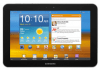
AT&T To Launch The 4G Samsung Galaxy Tab 8.9 (And Six New LTE Markets) On Nov. 20th

lte

I don’t know many people who are chompin’ at the bits for the launch date info on yet another Galaxy Tab, but I know you’re out there somewhere. For you, kind soul: AT&T has just announced that the LTE/4G-compatible version of the 8.9″ Samsung Galaxy Tab will be launching on November 20th.

What’s that, you say? AT&T hardly has any LTE coverage for such a device to ride on? Correct! With that said, they’ll be launching it in six new markets (bringing the total up to 15) on the same day: Charlotte, Indianapolis, Kansas City, Las Vegas, Oklahoma City, and San Juan, Puerto Rico. It’s still a drop in the bucket — but hey, you’ve gotta start somewhere.

The Specs on the Gal Tab 8.9:

· 4G LTE backed by 4G HSPA+
· Android 3.2 (Honeycomb)
· 15.9 ounces light, 8.6mm thin
· Brilliant 8.9” HD widescreen
· 3.2 megapixel rear facing camera with LED flash, 2 megapixel front facing camera
· Tabbed browsing, Adobe Flash and HTML support
· Snapdragon 1.5 GHz dual core processor
· 16 GB internal memory and expandable up to 32 GB via accessory option
· 1 GB RAM
· TouchWiz® UX
· Dimensions: 230.9 x 157.8 x 8.6 mm

The Galaxy Tab 8.9 will set you back $479.99 on a two-year soul sign.


Students Hack The Kinect To Allow Blind To Navigate

The Kinecthesia is a Kinect wired to a set of motors that allows the blind to navigate a room or open space, relying on feedback through the motors to assess objects in their path. The project, created by University of Pennsylvania students Eric Berdinis and Jeff Kiske, is worn like a belt and can sense objects in 3D space.

Obviously this is a bit clunky – the Kinect isn’t quite wearable just yet. They’re working on 2.0 of the project, using a slimmed-down Kinect removed from its case and a new processor, the Beagleboard (rather than the Beagleboard XM). The project is so unique and clever that I’m surprised no one has made something similar before although I’m sure there are proprietary solutions that cost thousands.

The guys did a great job at Google Zeitgeist Americas this year, including getting interviewed by Chelsea Clinton – a high point for any sane start-up founder.

Project Page via Medgadget


Shopping Discovery App Zoomingo Raises $1.3 Million

smartphone-pics-237

The newly launched shopping discovery app Zoomingo announced today it has secured $1.3 million in funding from early-stage VC firms Naya Ventures and Benaroya Capital along with several prominent angel investors. Previously self-funded, Zoomingo says it will use the additional capital to enhance its current mobile application, build a retailer platform and grow its community through expanded outreach to customers and retailer partners.

With this funding, Dayakar Puskoor, managing director of Dallas-based Naya Ventures, will also join Zoomingo’s board of directors.

For background, Seattle-based Zoomingo was founded by language learning service Livemocha’s co-founders, Shirish Nadkarni (Zoomingo CEO) and Krishnan Seshadrinathan (CTO). Nadkarni said he had the idea for the service when he noticed that his wife (an avid shopper, he says) was having trouble locating nearby sales using her mobile phone. So many of today’s apps focus on barcode scanning, deals and offers or price comparisons, but none simply rounded up all the nearby sales at local retailers in one easy-to-access mobile application.

Hence, Zoomingo.

The app pulls in sales data from major retailers using a combination of manual and automated means as well as crowd-sourcing via its “Deal Scouts,” who are positioned in several major U.S. cities. Zoomingo now provides access to 70,000 retail outlets in the U.S., and growing.

The app is available on both iPhone and Android.


The Kindle Touch Feels Good

The text-based e-reader isn’t ready for the dustbin of history quite yet.

The Amazon Kindle was supposed to be slaughtered by the advent of the multi-use touchscreen tablet. And next to today’s shiny glass slates, the original Kindle, now four years old, looks as antiquated as, oh, the first iPod.

But like the iPod, the Kindle sparked a revolution, feeding a hunger few of us knew we had. As such, it has remained miraculously resilient and amazingly relevant.

Kindle Touch
Wi-Fi-only with ads, $100
Wi-Fi-only, no ads, $140
Wi-Fi/3G with ads, $150
Wi-Fi/3G, no ads, $190

The new Amazon Kindle Touch resembles the original Kindle in function only. It now has a touchscreen. Gone, finally, is the keyboard, which seemed out out of place even on the first model (though in the pre-tablet era, it presciently provided the owner with a way to make a brief pit stop, dashing off a mail or checking out a link). Gone as well are the page-turning buttons as users, even infants, assume and insist the screen be the sole interface.

The Kindle is the last of the three major e-readers to switch to touchscreens. Kobo was first, followed by the Barnes & Noble Nook. But this is not a space where being first matters. It’s the other stuff — the subtle enhancements that solve little problems, and the impressive ecosystem of content you use to fill it — that elevates a device.

These are the things that create a critical mass, and these are the reasons why you should consider an Amazon Touch instead of a touchscreen Nook or a touchscreen Kobo.

Let’s start with the biggest of the little things: the lack of page-turning buttons. Kobo eschews them, and uses each edge of the “page” to go forward or back. But two hands, really, are required for this. Nook uses two configurable buttons on the each edge of frame, so that you can also advance and retreat one-handed. But … isn’t this about being a touch device?

The Kindle Touch re-maps the e-ink page so that touching a thin, one-inch strip of the screen on the extreme left serves up the previous page. Touching any part of the rest of the screen, from the edge of that first inch all the way over to the right edge of the screen, goes to the next page. If you’re holding the Kindle with your left hand, it’s an easy stretch of the thumb.

Yes, we all switch hands, and going back a page while holding it right-handed becomes more complicated. But we go forward a page much more often than we go back a page, so going right-handed as your “resting” mode means this is a giant leap forward. And it’s not hard to imagine a next small step: a software upgrade making left/right implementation an on-the-fly user option.

There’s a thin strip at the very top of the screen which brings up a pop-up menu. Within that menu is another differentiating feature: Amazon’s X-ray service.

When you load up a book (some books, not all), additional data about proper-noun-type references like people, places and events, are loaded as well. All this data is held invisibly in the background inside a small, pre-loaded file. You can call up that info at any time while reading by touching the screen. So, if you’re reading Walter Isaacson’s Steve Jobs and you want to know more about Joanne Simpson, just tap on her name. Within a click or two are a comprehensive bio and a list of the other places in the book where she is mentioned. Amazon culls this data from Wikipedia and Shelfari, and since it’s pre-loaded, you don’t need an internet connection to access the goods.

This is a godsend when you have put a book down for a while and forget who the players are — even if the book includes a section for cast of characters, pop-up trumps look-up every time.