Zite Personalized Magazine

Whereas Flipboard populates your screen with stories from news sources and social networks you specify, Zite relies solely on your selected topics of interest — world news, science, tech — then displays relevant articles. Tap a thumbs-up or thumbs-down button on individual items and the app will learn your preferences.

WIRED Analyzes Twitter feeds and Google Reader for quick personalization.

TIRED Look is more neighborhood newsletter than glossy monthly. No way to block specific sources.

NYTimes

Nothing fancy here, just straightforward access to great journalism. Smartphone users get a neat list of clickable headlines; the iPad version presents a more newspaper-like layout with photos and several article previews per page. The free app offers a dozen top news stories each day, but to see all articles you need a subscription.

NYTimes

WIRED Can automatically cache items for offline reading.

TIRED Even subscribers face occasional full-screen pop-up ads.

CNN

Though CNN on a smartphone doesn’t look much different from any other news organization, its iPad app is singular, delivering three powerful ways to browse the day’s stories: View items as an image grid, a list of large-text headlines, or a full-screen photo slide show. The vivid multimedia enhancements and bold color scheme feel like an advanced control panel for news rather than a typical newspaper or website. The curation tends toward the sensational, and the reporting doesn’t match the depth of more venerable sources like The New York Times or the BBC. But in terms of visual presentation and navigation, CNN is without peer.

WIRED One-touch access to CNN’s live TV feed. Save stories for offline reading. Pulls up local news on GPS-enabled phones. Hourly audio updates from CNN Radio.

TIRED Crash-prone. Image-heavy interface can be cluttered and slow. Subscription to supported cable or satellite TV service required to access live feed.

CNBC Real-Time

Turn your device into a full-blown stock-market command center, with real-time quotes from Nasdaq and the NYSE, historical charts, and commodities and currency pricing. CNBC packs data into every available pixel, but you can keep tabs on favorite stocks with customizable watch lists.

CNBC Real-Time

WIRED Trend charts go back five years. Stream CNBC shows like Mad Money With Jim Cramer. Omnipresent ticker in tablet version.

TIRED Distracting banner ads. Kind of cluttered.

Weather HD

If your idea of checking the weather is looking out the window, this is your app. Instead of dinky icons and dew-point readings, Weather HD presents a full-screen animation overlaid with basic data like temperature and chance of rain. On a hot, clear day, you might see a smoldering sun or windmills spinning under a blue sky; for a thunderstorm, a clip of lightning bolts and thunderheads.

WIRED Fun to look at for its own sake.

TIRED Repetitive weather means repetitive animations.

Ski & Snow Report

Lift tickets are too expensive to justify a day on shallow bases and icy groomers. Create a list of ski resorts and get daily updates on base depths, new accumulations, and surface conditions. The main view offers a quick look at the basic data; tap on one to get full details.

Ski & Snow Report

WIRED Comments and photos from skiers on the slopes. Powder alerts when your favorite mountains are getting dumped on.

TIRED Trail maps and ticket prices would be welcome. Provides photos only for select spots.

Yahoo! Sportacular

Getting busted every time you check your phone under the dinner table for the latest scores? This efficient app may help. Pick your favorite leagues to get all the results in a quick, easy-to-read list. If you can spare a few more glances, tap a game for stats and summaries.

Yahoo! Sportacular

WIRED The big-three US ball sports, plus international options. Android widgets for favorite teams.

TIRED Lacks some geekier stats like the series count for playoffs. No news or league standings on iPad.

The New Yorker Magazine

Banish that guilt-inducing stack of New Yorkers on your bedside table with one of the best-executed magazine apps out there. Your tower of back issues is now a tidy gallery of thumbnail covers, and with slightly wider columns and shorter pages, the digital version is less intimidating than its print counterpart. Aesthetically, the app stays true to The New Yorker’s no-frills layout, signature typefaces, and scattered cartoon surrealism, but there are occasional photo slide shows and bits of audio commentary. Print subscribers get full access, with weekly notifications when the next issue is ready to download. But it’s still up to you to read it all.

WIRED Elegant thumbnail navigation for jumping between stories. Full-screen view for cartoons. In-app utility for entering the weekly caption contest.

TIRED Process for linking online account to print subscription — required for full digital access — is a bit muddled.

ESPN ScoreCenter

ESPN’s news app puts scores, stats, and news front and center. Create pages for your favorite teams, leagues, and sports — from hoops to mixed martial arts to auto racing — then swipe to cycle through them. Don’t care about baseball? Leave it out. It’s a sports section designed just for you.

WIRED Videoclips of highlights. Push alerts for breaking news and scores.

TIRED Annoying ads for other ESPN properties. Pages are a little slow to load.

Apple Had A Better Black Friday Than It Expected

apple-inventory1

The Black Friday madness has finally come to a close. Well, almost. We all still need to live through Cyber Monday — a much safer version of our public displays of consumerism — but for the most part Black Friday is behind us. People camped out all night, were pepper-sprayed, and hopefully walked away with some new gear for a cheap price.

Apple, which seemed to have the weakest discounts of almost any gadgets retailer, posted some strong numbers from its Black Friday one-day sale. According to a 9to5Mac source inside Apple, the company had originally expected to do four times the sales it usually does. By 7pm on Friday, however, Apple had blasted past its original goal and had its biggest sales day to date.

The source added that iPad and MacBook Air sales were strong, though we haven’t been given access to any of the actual figures, so we’ll have to take his word on that.


The Cambrian Explosion In Startups

cambrian

The sheer number of new startups forming and getting funded these days is dizzying. It’s never been easier to start a company to harness new technologies and turn them into products. Traditional venture capital may not even be able to keep up with it. We are at the beginnings of what may very well become a Cambrian Explosion of startups, which will have implications well beyond the technology industry to the entire economy.

We’ve spent the last 15 years building out the tethered web. The next 15 years will be about connecting the web, and the broader internet, to the physical world. And mobile is just the start.

We will soon be able to shrink fully-functional computers into almost anything—mobile phones and tablets today, TVs, car dashboards, and wearable devices tomorrow. And they will all be connected to the network. The only limit to what can be done with these connected computing devices will be what entrepreneurs and engineers can dream up.

The Cambrian Explosion is a useful metaphor. During the real Cambrian Explosion, of course, many new species were created. But how many of them thrived? How many quickly became extinct? It was a period of rapid evolution, with new species both emerging and dying off quickly. In the end, the world was better off from an evolutionary perspective, but not every new animal survived, just like every new startup won’t survive.

Early evidence of this Cambrian Explosion is already showing itself. Last year, for instance, there were more than 1,100 seed/angel funding rounds, up from 855 in 2008, according to Crunchbase. That was a 33% increase in just two years, and 2011 looks like it will surpass 2010. Why are there so many more early stage startups? I believe there are two reasons. The barriers to creating a startup are falling away, and the market opportunities have never been greater. (This is tempered by the current global economic malaise, and serious concerns about how many of these early stage startups will make it past the seed stage, which I will address later on).

Let’s talk about the lower barriers to startup creation. First, there is less capital required than ever before, while at the same time there is more capital available (at least for seed stage companies). The advent of cloud computing, open source software, and plug-and-play APIs for every web platform means that 3 coders can create a product for a few hundred thousand dollars instead of the few million it would have cost just ten years ago. They can start lean, learn from their early customers, and improve the product along the way.

On the opportunity side, the potential online audience is bigger than it’s ever been before, with 2 billion people online, and even more of them are moving to mobile. The Internet is no longer just the desktop Web. It is apps for mobile phones and tablets which pull data from the internet but never launch a browser. It is connected devices like Jawbone’s Up bracelet that monitors your physical activity. And that is just scratching the surface.

There are whole industries yet to be seriously touched by the Internet, but which could benefit from better information: health, education, transportation, energy consumption—to name just a few. The consumer internet has basically zero barriers to entry, which is why we see so much action there, but brave entrepreneurs are beginning to take the same principles and apply them elsewhere. In health, for instance, where there are regulatory requirements or in education, where institutions hold the keys to the kingdom, internet startups are beginning to make some serious headway.

The internet is today’s steam engine. Anyone can tinker and build an app or a web business. The pace of innovation is similar to what was seen during the tail end of the industrial revolution in the late 1800s when anyone with a barn (the garage of its day) could apply steam engines to all sorts of practical uses, including machinery and vehicles. The barriers to experimentation were similarly low back then. But now the engine is the internet itself. Any product or service that is not connected to the internet is dead in the water.

Today’s most productive machine is the computer. But that machine is increasingly useless if it is not connected. What is the first thing you do when you turn on your computer? Launch a browser or check your email. Imagine a Kindle Fire or iPad as a standalone device. You wouldn’t be able to download any apps, books, or movies. Tablets and smartphones are merely interfaces to the network.

It’s not just that the network is the computer. The network is society, the market, and politics all rolled into one. We live our lives connected to the network at practically all times through various devices.

What seems frivolous in one context (using mobile technologies to organize a night out with your friends) can literally overturn governments in another (the Green Revolution in Iran, which gave rise to the Arab Spring, used Bluetooth-connected phones as its basic organizing network). Mobile, social, and local technologies are having a much deeper impact across the world than being able to offer up local deals on your mobile phone.

The internet is at its core an information network and a communications network. The ideal of better information, of perfect information, changes everything it touches. And while that creates new opportunities, it also creates new challenges. Every single industry, every single business that profits from information asymmetries, will be challenged.

Technology is not a panacea. It might very well be eliminating jobs faster than it can replace them. Technology makes industries more efficient, yes, but that also means they need to employ fewer people.

Just look at the data. Economic growth and employment growth used to go hand in hand, but now it appears as though they have been decoupled. Apple’s big new server farm in North Carolina, for example, employs only 50 people.

The Cambrian Explosion not only created millions of new life forms, it eliminated many of the weaker species that preceded it. They just couldn’t compete. I believe we are going to see a similar phenomenon in the coming decades on the economic front. The question is not whether it will happen. It is what side of the evolutionary divide do you want to be on?

Image via Ecology and Evolution


Deadpool Watch: After Raising $10M, Social TV Startup BeeTV Falters

beetv

Back in early 2009, I wrote about an Italian startup called BeeTV, which showcased some impressive TV recommendation technology. The goal was to sell that technology to telcos and cable operators, but this proved to be a very difficult task for a small, scrappy upstart. This led to BeeTV changing course and trying its hand at making consumer-focused products, like an iPad app for watching and sharing TV experiences with friends. They also secured more funding, bringing its total raised to over $10 million.

Alas, this morning CEO Yaniv Solnik informed me that they’ve failed to gain significant traction with the new strategy, and that they’ve subsequently ran out of cash.

The company will be ceasing operations soon.

Solnik also says BeeTV’s main co-founder unexpectedly passed away last year, and that his death was -understandably – a huge shock to everyone at the company.

BeeTV will be shut down, but the company has put its assets up for sale; including a patented recommendation engine for TV and a consumer-focused social TV service that encompasses iPad, iPhone and Web clients. So maybe this isn’t the definitive end of the road for BeeTV.

I told Solnik that this ‘failure’ means he can now move on to the next startup, and he quickly responded to me, saying that he can’t help it and that he will keep trying. Good.


WI Harper Group, Matrix Partners Invest $12.5 Million In Social Games Maker SNS Plus

snsplus

Matrix Partners and WI Harper Group, a Chinese VC, this morning announced that they’ve pumped $12.5 million into SNS Plus, an international publisher and distributor of games with a focus on the Asian market. As of June 2011, the company has published more than 60 games on Facebook, and more than 15 games on other platforms such as Zingme, iOS, Friendster and more.

SNS Plus, which was founded in 2009, boasts offices in China, Taiwan, and Thailand.

Its specialty, the company says, is “bridging mainland game studios to overseas markets”.

Related: Matrix Partners Closes $650M Funds To Invest More In China, India


Japanese Company Shows Robot Co-Working With Humans (Video)

nextage feat

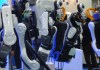
We’re one step closer to the Robocalypse: Japan-based Kawada Industries has developed a humanoid robot that’s specifically designed to work alongside human beings. The so-called Nextage is certainly not the first robot of its kind, but his specs are pretty impressive, and he’s already commercialized, too.

Nextage is equipped with a high-speed stereo-camera and two arms that have 12 joints each and can be positioned within 30 microns. When a human worker gets near, the robot stops working immediately for safety reasons.

Kawada explains:

We’ve created these robots to work alongside people, and to cooperate with people in the same environment. Work done by people doesn’t involve handling large objects or moving very fast. Our aim is for industrial robots to do human work like that, so people can be more productive by working together with robots.

In the video below however, you can see three networked Nextage robots at an exhibition in Tokyo assembling objects by themselves (and showing the finished products to the crowd) – no human help needed:

Video courtesy of Diginfo TV


Amazon: Kindles Are Flying Off The Shelves (But We’re Still Not Sharing Numbers)

fire

Amazon this morning pounded itself on the chest once more for selling Kinde devices as if they were hotcakes, particularly during last (Black) Friday. According to the company, it was the “best Black Friday ever” for the Kindle family, with Kindle sales “increasing 4x over last year”. As usual, don’t expect Amazon to share hard sales numbers, because they never do.

We’ll have to do with analyst estimates, which I’m sure will be rolling in during the course of this week (today is Cyber Monday and will likely result in another sales spike for Kindle devices). The number does run in the millions, of course, and Dave Limp, Kindle VP, is quoted as follows:

“Even before the busy holiday shopping weekend, we’d already sold millions of the new Kindle family.”

Amazon also reiterated, again, that its tablet computer, the Kindle Fire, is its bestselling product on Amazon.com. In fact, they say this has been the case for the past 8 weeks now, since the device was introduced on September 28.

Related: Black Friday E-Commerce Spending Up 26 Percent To A Record $816M; Amazon Most Visited Retailer