Situationist

Situationist prompts interactions between strangers. When you’re close enough to another logged-in player — in the same bar, for instance — the app will give you a photo of your target and a mission, from the silly (“Tell me I’m beautiful”) to the silly (“Give me all the money in your left pocket”). Of course, there’s always a chance that you’re the target.

WIRED Choose situations you’re comfortable with from a predefined list.

TIRED Limited user base. Name’s a bit Jersey Shore.

Crackle

Stream TV shows and feature films to iPhones and iPads for free, no sign-ups or subscriptions required. The content — mainly from Sony Pictures Entertainment, Crackle’s owner — includes movies like The Patriot, Men in Black, and The Da Vinci Code and a handful of old TV episodes like Seinfeld and News Radio.

WIRED High-quality streams over Wi-Fi and 3G. It’s free and simple; just download and go.

TIRED A bit ad-heavy. Some listings in the TV section are only clips, not full episodes.

Unwanted Guest

Enjoy a new and untraditional twist on a Yiddish folktale. Each page of this ebook delivers a striking animated scene — simple and spooky, sort of like a Tim Burton rough draft — as a voice actor reads the text. The result is an entirely new experience, part book and part short film.

Unwanted Guest

WIRED Automatic page-turning for hands-free reading. Record your own narration. Includes audio in English, Spanish, and French.

TIRED Text can get lost against the animated backgrounds.

IMDB

The all-important power to answer anywhere, at any time: “What else was he in?” This official app of the exhaustive database of movies and movie people is far easier to navigate than either the regular or mobile versions of the website.

IMDb

WIRED Offers trailers, entertainment news, and showtimes in addition to the standard trivia.

TIRED Those additional features tend to clutter the interface. No advanced search for, say, finding a film by entering two costars’ names.

NPR Music

Browse NPR’s rich and quirky music coverage by genre, in-house blog, or on-air program. Explore everything from modern indie rock with The Record to 1960s Argentinean folk music with Alt.Latino, or queue up All Songs Considered for some curated background music.

WIRED Includes video of select concerts. Introduces you to music you’d never hear anywhere else.

TIRED So many different categories, it starts to feel disorganized. No way to save content for offline listening.

8Tracks

Why let an algorithm control what you’re listening to (ahem, Pandora) when you can stream less-predictable playlists from amateur DJs around the world? Browse by categories like hip hop and ambient or by popularity. Star songs you want to return to, or consult track listings for artist and song info.

8Tracks

WIRED Easy icon-based interface. Mix Feed feature lets you listen to songs posted by your favorite users.

TIRED Can’t create mixes or view starred tracks in-app.

StreamToMe

Apple’s iOS has a velvet-rope policy. If your media isn’t coded in a format approved for iTunes, it’s not getting in. Enter the neutral doorman. StreamToMe translates more than 40 file formats — ACC, AVI, OGG, FLAC, etc. — and streams them to your device through a server app installed on your computer. It works for folders of random MP3s, codec-requiring movies from the web, and caches of DSLR home movies in formats that iTunes would throw to the curb. The utilitarian interface won’t win any beauty pageants, but browsing shared folders is plenty straightforward. Add the ability to access files remotely over 3G, or send videos to your large screen via Apple TV, and the app becomes a must-have for any media junkie.

WIRED Finds iPhoto albums and iTunes libraries automatically. Adjusts stream quality to get the most from your connection.

TIRED Buttons for changing folder settings and turning on Shuffle are impractically tiny.

Brushes

A nearly perfect painting app for iPhone and iPad, Brushes manages to be both beginner-friendly and robust enough for serious artists. Hell, it’s been used to make eight New Yorker covers. It comes with 19 adjustable brushes, and each work can be rendered with up to six compositional layers on the iPad.

WIRED Animate your sessions with video replay. Set brush size or opacity to vary with swipe speed.

TIRED No blend or smudge tools. Pricier than competing titles.

Nursery Rhymes

For business travelers with young kids, there may be no better app than this gorgeously designed storybook. Interactive features let you shear the black sheep’s wool or try to put Humpty Dumpty back together again. But the killer feature: Parents can connect to their kids’ reading sessions remotely via Game Center from anywhere in the world.

Nursery Rhymes

WIRED Never miss another bedtime story.

TIRED Includes only the opening verses of most stories. Have to buy the app on each device for remote use.

SketchBook Mobile

Built for art directors and serious doodlers, this drawing app maximizes your smartphone’s canvas by keeping its dozens of brushes, color wheels, and layer editors out of sight. When it’s time to pull up your tools, they’re organized in a circular menu in the center of your screen — perfectly positioned for quick thumb access. Start out tabula rasa or import a photo, then use one of 45 customizable brushes, including pens, pencils, and markers. Move to an area of detail, zoom in, then double-tap a corner to return to full-screen view. Precise pressure sensitivity means brushes that lay it on thick in the middle of the stroke will trail into wisps as you ease off. Tap the home button to save a work in progress, or send your finished masterpiece in an email.

WIRED Every brush is customizable. Ten-level undo. One-button return to your most recently used brush.

TIRED Nonadjustable canvas size of 1024 x 682. Limited to six layers.

The $99 TouchPad Sale Overwhelms Ebay As Consumers Snatch Up The Discontinued Tablet

newpalm-2118

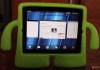
And like that they’re gone. $99 TouchPads hit ebay right on schedule and were gone within minutes. But that’s to be expected, really. It’s not often that a solid piece of hardware like the TouchPad is available for so cheap. And thanks to HP’s recent moves, the tablet’s operating system, webOS, will be around at least in some capacity for as long as there’s a demand (and developers).

The sale started at 7pm EST on HP’s ebay store like the memo we leaked indicated. Both the 16GB and 32GB models were available for $99 and $149, respectively. I watched the 16GB model disappear from ebay within 10 minutes. As of this post’s writing, 2 hours after the sale began, only one SKU of the $150 32GB TouchPads are still available although those will likely be gone soon as well. But good luck as ebay is still flaky hours after the sale started. Twitter and forums sites quickly relayed the troubles of many buyers shortly after 7. Ebay was crashing. PayPal was lagging. The whole thing was a mess. For a short moment in time, HP’s tablet was anything but an unwanted iPad clone.

Some what surprisingly, consumers could buy more than two TouchPads. The original memo indicated only two SKUs, which as interpreted as two TouchPads per person. But there were several SKUs for each the 16GB and 32GB. Some buyers likely took advantage of this and bought up a gaggle of TouchPads.

This land rush of sorts reaffirms that consumers overwhelming want a tablet but are seemingly turned off by the current prices. The iPad dominates the $499 and higher price point and Apple has encountered little trouble selling units even at that price. Competitors have not been so lucky for a number or reasons. However, instead of fighting the iPad directly with competitive hardware, Amazon and Barnes & Noble are undercutting the current champion with low-cost hardware and a curated (some would say walled) user experience. It’s working.

The $199 Kindle Fire was the top seller on Amazon for weeks before it was even released. Likewise, B&N managed to ship more than a million Nook Tablets in just a month. Consumers want a low-cost tablet device — something Arrington and others tried to produce starting in 2008.

Tonight’s fire sale might be the last HP webOS hardware the world sees for a while. But webOS isn’t dead. HP stated last week that there will be new hardware in 2013. As for the operating system itself, HP is releasing it under an open source license, effectively releasing a domesticated animal into the wild. But for a very short time that puppy was loved. Unfortunately, it’s owner (Palm) didn’t have the room to let it grow so the dog was sold to HP who, as it turns out, didn’t have the patiences or the time for proper development — you know, metaphorically. But now that webOS is open, or will be shortly, the TouchPad has a real shot at living a full life.


Sean Parker And Shervin Pishevar At Le Web: “If You Don’t Fail, You Haven’t Tried Hard Enough” (Video)

Last week at Le Web, Alexia interviewed Sean Parker and Shervin Pishevar onstage in what turned out to be one of the most-buzzed about sessions. Here is the full video for your weekend watching pleasure. It’s a great discussion that ranges across the state of startups, venture capital, music, and politics .

Parker bemoans the surplus of venture capital  for its effect of diluting the talent in the tech industry, a point he’s made before. “It prevents the aggregation of talent around great ideas,” he says. He emphasizes the need for a great team from the get-go. “People are the greatest asset class,” Pishevar agrees.

The conversation quickly turns to Gowalla, which recently was acquired by Facebook, and why it failed to take on Foursquare. “If you don’t fail, you haven’t tried hard enough,” says Pishevar. He warns against “success amnesia.” Behind every great success there are failures. Learn from them. ”The product was too similar to Foursquare,” says Parker, noting the obvious. He thinks that “there were things they could have done,” which he suggested to the team at the time, but “they did not want to consider alternatives.” Both however say they are happy with the outcome (Parker is a big Facebook shareholder).

Speaking about his own failures, Parker says, “We failed with Napster to build a legal licensing model. As a result, we watched the industry we loved collapse.” But “the biggest failure we made there was hiring. We built the wrong team.” He warns that when you have a startup with a lot of hype, “it inevitably attracts a certain breed of parasitic leech that if you do make the mistake of hiring, you have to realize your mistake quickly and eradicate it like you would any kind of insect.”


Navarrow Wright: There Is A Diversity Problem In Silicon Valley

Race and Silicon Valley has been in the news lately, especially after CNN used an out-of-context clip of TechCrunch founder Michael Arrington to promote a documentary on the subject. Lost in that gotcha moment was a more substantive discussion of the issues. Namely, is Silicon Valley a true meritocracy or does it have a diversity problem?

Navarrow Wright, the co-founder of Global Grind and current CTO of InteractIve One, which operates BlackPlanet.com and other sites, came into the TCTV studio to have “the race conversation” with me.

“It is a meritocracy at some level,” Wright acknowledges. “I think the challenge is how do you get involved in that ecosystem.” In his view, one of the biggest factors keeping the number of black tech entrepreneurs down is that not enough people from his community are trying to become entrepreneurs. There is a “perception problem in the minority community,” he says, that “it is easier to become a celebrity or athlete than an entrepreneur.”

How do we change that? Watch the video.


comScore: U.S. Online Holiday Spending Surges 15 Percent To A Record $25 Billion

com2

comScore just released its U.S. online holiday spending numbers for the season to-date, and as predicted, consumers continued to spend online in record amounts. For the first 39 days of the November to December 2011 holiday season, $24.6 billion has been spent online, which is a 15 percent increase compared to the same days last year.

The most recent week ending Dec. 9 reached $5.9 billion in spending, up 15 percent with 3 days surpassing $1 billion in spending. For the holiday season-to-date, six individual days have surpassed the billion dollar threshold, led by Cyber Monday at $1.25 billion.

To put this in perspective, seven individual shopping days have surpassed $1 billion in spending, and the majority of these took place this year. Cyber Monday 2011 leads with $1.25 billion in sales, and Monday, December 5, 2011 now ranks as the second heaviest spending day in history at $1.18 billion.

So why are so many people flocking online? It’s partly due to more emphasis on coupons and deals as well as an increased amount of free shipping offers by retailers. Another interesting factor to consider is how much mobile helped contribute to this year’s surge in online spending. More and more consumers are using price comparison apps, and making purchases on their mobile phones both from their couches, desks and from inside brick and mortar stores. E-commerce companies are quickly catching on to this trend, and are even offering strong incentives (i.e. Amazon) to use and buy via mobile apps.

And there are still more big spending days on the horizon.

Tomorrow brings Green Monday. The term “Green Monday” was coined by eBay in 2007 to describe the Monday occurring around the second week of December, which has tended to be the heaviest online spending days of the year, as it is one of the last days of the week where consumers can purchase and still receive shipping by the holidays. Over the past six holiday shopping seasons, “Green Monday” has consistently ranked among the top spending days of the season.

Free Shipping day is also this week, which is a marketing event that takes place Friday, December 16, and is also one of the last days when merchants offer free shipping with delivery by Christmas Eve. comScore says that in past years Free Shipping Day has helped boost online spending activity later into the season. Last year’s Free Shipping Day, for example, was the third heaviest online spending day of the year at $942 million, a 61 percent increase from 2009.

With more spending on the horizon, clearly e-retailers are in for a very merry holiday season.


Y Combinator Vs TechStars: Whose Companies Are Bringing In More Funding?

all graphs

[Here’s a look at how startups backed by Y Combinator or TechStars compare in terms of funding, based on the data available in CrunchBase. The guest post below is written by Edmar Ferreira, a data scientist and founder of a data analysis startup called EverWrite. He writes about making data work on makeandthink.com.]

Y Combinator and TechStars are two of the first seed-stage venture funds, and they’ve each had some successful companies. But how can we analyze how they’re doing so far? One way is acquisitions, but there’s not always complete information about who sold or for how much (and anyway, most of them haven’t sold yet). Another metric would be valuations — are companies becoming more valuable over time? — but we also don’t have good access to that.

What we can do is look at the amount of money raised by the companies that participated in these programs. This is not a perfect metric of success, but it’s an interesting enough signal because most of these companies need funding during their early stages as they build their products and find markets. If they are making enough progress, investors will put in more money.

Here’s a closer look, using data from CrunchBase. Note that both programs have been operating for rougly the same span of time — Y Combinator in 2005 and TechStars in 2006.

Total Companies

Y Combinator is growing the size of its classes almost every year. There are two times more companies at it than at TechStars companies, based on the dataset. Quantity does not necessarily reflect in the quality of the portfolios, so let’s keep digging.

Y Combinator: 135 TechStars: 72

Total Raised By Companies

Raising a lot of money is not my definition of success, but it’s a good indication of the health of a startup in a lot of cases. Y Combinator companies as a whole raised ten times more money than TechStars companies, according to the data.

Part of the reason for this great distance are the massive rounds raised by DropBox and AirBnB. Those companies distort the data, yes, but that’s quite relevant: seed-stage investors want the huge hits.

Y Combinator: $627 million TechStars: $61 million

Total Rounds Raised

But in terms of how more typical startups do, the ability to raise rounds of funding shows they’re both doing about the same. While Y Combinator has more total rounds raised, but it also has more startups.

Y Combinator: 231 TechStars: 131

Money Raised After Seed Funding

To look at how the average company does, though, we need another metric. So, we computed the median amount raised by companies in the subsequent round after the acceleration process. Half the Y Combinator companies raised more than $800,000 in the next round and half raised less. Half of TechStars raised more than $500,000, half less. In other words, Y Combinator companies appear to be valued more highly than TechStars by early-stage investors.

Before you read too much into that, remember that other factors can impact this metric, too — the types of companies funded by each accelerator, the proliferation of deal-hungry angels near the program, etc….

YCombinator: $ 800,000 TechStars: $ 500,000

Conclusion

Y Combinator beat TechStars in many of these metrics, but none of these numbers translate to which (if either) is the best fit for your startup. That’s for you and them to figure out. If you can think of other analysis and other data that we can use, please let us know. Of course, in at least one important metric, TechStars has a huge advantage: