Tech Comes To The Real World

realworld

2011 saw many interesting developments in the virtualization of goods. The growth of app stores continued unabated, aided by huge sales of iOS devices and Android handsets, and media of all kinds continued the move to a totally non-physical state for the end user: Netflix, Spotify, and other services make the idea of storing your things, whether on your hard drive or in stacks by the TV, seem very… 2010. Widespread adoption of non-physical media is sparking new industries and setting fire to old ones.

But we also are seeing increasing frustration with the limitation of our digital acts to affecting digital things, and vice versa. The cutting edge of technology seems to be confined to the borders of our screens. People don’t freak out about the Nest or the Little Printer because they’re really such revolutionary devices – they aren’t. People are excited because these things portend the fulfillment of the promise technology has unwittingly made: that it will change the way we live, not just the way we consume.

Because as much as the media we consume entertains and to an extent defines us, it is only one facet of how we live, yet the delivery mechanisms of these media have borne the great majority of visible improvements in the internet and mobile revolution. What has been left behind? The way we create things, move and adjust things in “real life,” the way we interact with each other outside of our devices, the way we cook and sleep and run. Some small advances have been made here (things like Nike+ cross over, and the popularization of photo and location sharing apps to some extent), but how far have, say, refrigerators, or beds, come in the last ten years – compared with the way we experience music, or keep in touch with our friends?

This order of things was inevitable: naturally, there are some things that will be more easily and fundamentally changed by the addition of mobiles and broadband, media delivery among them. You wouldn’t expect baby carriages to be leading the charge of connected devices. Yet why shouldn’t your perambulator record the distance it travels, track the weight of the child, network with other nearby prams to determine parental hot spots? Such things sound frivolous, but frivolity makes up the majority of our application of tech, and the more we use it, the more indispensable it becomes. A digital compass on your phone, for instance. A novelty at first, but after a few years, a standard part of the modern tech-user’s toolkit.

For many, it smacks of excess, of tacky Skymall Frankendevices for the lazy and easily distracted. But it’s just the next step in the dance we’ve all been doing since we got our first modems. Breathing the principle of interconnectedness into things for which the benefits of doing so are not obvious is creating a new class of devices, and we crave them because our experience of technology is so limited.

This isn’t to say that tweeting microwaves are to deliver us from an evil prison of consumption-oriented technology. It’s just that the future is, and always has been, banal. The leading edge of tech is an exciting place, but the trailing edge cuts a wider swath. The Jetsons had flying cars, sure, but they also had space-age plant pots and dog collars.

The next year will have more of the same stuff, of course: bigger TVs, cooler tablets and phones, and increasing capacity for everything, everywhere. But it also will showcase the quieter, more wide-reaching changes that come when these new capabilities begin to infiltrate the vast empire of banality. And in a few years, when your oven messages you to say the roast has reached 160 degrees, or the shower recognizes your face and adjusts the temperature accordingly, you will wonder how you ever lived without it. And this miracle oven will be more relevant to many millions of people than, say, the empowerment of the oppressed and destitute to communicate freely or access the knowledge of the ages. No, it’s not pretty; it’s progress. And we’ll be seeing a lot of it.


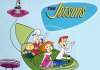
It’s 2012 Already So Where Are All The Jetsons Flying Cars

the jetsons

As we enter 2012, shouldn’t we all be traveling around in flying cars by now? That was the prediction in the Jetsons cartoon tv show. The futuristic series, first produced by Hanna-Barbera in 1962, was set in 2062, exactly 50 years from today. 2012 is the halfway point, so we’ve still got some time before we are all driving around in flying cars. But, many other technology advances from the Jetsons are already with us.

The Jetsons represented an optimistic view of technology and the future. As Jeffrey Tucker writes, “it was neither utopian nor dystopian” and “technology was the best (but of course it still malfunctions, same as today.)”

The Jetsons was created at a time almost technologically unimaginable today. Television was still partly black and white. The Jetsons was the first program to be broadcast by ABC in color. No personal computers, no cell phones, and of course, no Internet. But, let’s see how well some of the Jetsons vision of the future has worked out so far.

The flying car: The design of the Jetsons flying car was inspired by a 1954 Ford concept car, the FX-Atmos, notable for its all-glass bubble canopy, dashboard radar screen and jet-plane-like tail fins. We are not quite there, but the car/plane called Transition, made by Terrafugia, made its debut flight 2 years ago.

There have been dozens of other flying cars built, but most people have never seen one overhead. While George Jetson actually drove/flew his car, we do have Google’s self driving car.

RUDI, George’s “Referential Universal Digital Indexer” work computer: We have Yahoo, “Yet Another Hierarchical Officious Oracle” and the digital index that is Google. And we also can ask questions and get answers from Siri.

Video Chat: George would see and speak with his boss and family from this screen. We have lots of that including Skype video calls, Google+ Hangouts, Cisco TelePresence and many more.

The Televiewer: At home, George could read the news off this screen. In the 1960s, this was a strange concept to actually get information off a screen. Now, it’s the primary way.

George Jetsons’ 3 hours a day, 3 days a week workweek: Tim Ferris has already achieved that and more with his popular book, The 4-Hour Workweek.

George’s job is pushing buttons: In the original 1960s episodes, George’s work involves pushing buttons, knobs, dials, and switches. More episodes were made in the 1980s, and George’s desk was upgraded to flat buttons and brightly lit consoles. While not quite a console, how many of us push buttons on a keyboard all day?

Spacely Space Sprockets: Forbes magazine jokingly valued Spacely Sprockets at $1.3 billion, on their “The 25 Largest Fictional Companies” list. Apple’s market cap is around $376 billion today.

Robot Vacuum Cleaner: iRobot’s Roomba vacuum cleaner.

Rosey, the household robot: TechCrunch wrote about the ReadyBot in 2008, a robot that picks up toys and empties trash. There’s also a slight resemblance to the Anybots robot.

Didi, Judy’s digital diary: Judy’s diary was private, so this analogy isn’t perfect, but now Judy might share information about her life on Facebook. There are also many private diary diary applications.

Moving walkways: Moving walkways are pretty common at airports, but not as widespread as they were in the Jetsons world. But, this proposed moving Chinese bus that lets traffic pass underneath seems right at home in that world.

Mr. Spacely tells George Jetson “You’re Fired”: No need to explain where we’ve all heard that one before.

A big part of future technology that the Jetsons totally missed is emailing and texting. Perhaps by 2062 those forms of communication won’t exist.

For more, PhoneTVInternet.com has a list of 10 comparisons between the Jetsons and Modern Technology.


As Good as Good Enough Gets

<< Previous
|
Next >>


The 2012 Honda Civic Hybrid

<< Previous
|
Next >>

Forget the Corvette. Ignore the F-150. The Honda Civic Hybrid may be the most quintessentially American car on the road.

I say this after a weekend spent in Ottawa, the capital of Canada. Like Cambridge, San Francisco or Seattle, the city may have a latté dispensary on every corner and no fewer than five restaurants serving farm-to-table organic charcuterie. But unlike similar cities stateside, there’s nary a hybrid to be found amidst the miniature Mazdas, Pontiac hatchbacks and diesel Vee-Dubs crowding the Queensway at rush hour. As a Bostonian, it was utterly disconcerting for me to hear cars idling at stoplights.

The car relies on Honda’s Integrated Motor Assist, which adds electric power on acceleration and recaptures energy through regenerative braking. Since it augments a smaller, lighter engine, the Civic Hybrid gets the same mileage on the highway as around the city.

I’m no sociologist, but it’s easy to understand one reason why hybrids haven’t caught on in the Great White North. The average Canadian drives 8.8 miles to get to and from work, usually commuting from dense suburbs close to city centers — er, centres. The average American travels almost three times that distance. Even with the Dominion’s higher gas taxes, Canadians could all drive ‘59 Fleetwoods to work and still come out ahead.

In the U.S., we don’t like densely populated towns. In the postwar housing boom, we clamored for land, lots of land, only to get fenced in by rings of densely populated highways. We also dislike taking public transportation, funding public transportation, paying for gas, driving small cars, looking like we’re wasting gas when we’re wasting gas, finding a place that sells diesel or making any sort of compromise whatsoever.

Enter the 2012 Honda Civic Hybrid. Redesigned for 2012 with a new lithium-ion battery pack, it’s a uniquely American car, created for those who want to have their half-baked cake and eat it, too. It’s a pleasure to drive among hybrids, but anodyne compared to a TDI. It’s not expensive, but it’s not as cheap as a car without batteries. It’s a fuel-sipper, but a Prius uses less gas. By default, it’s the least-worst choice.

The 2012 Civic’s exterior update has had a lukewarm reception at best. The prior generation was as stylish as it was ubiquitous, but the new car only excels at communicating just how much money Honda saved through the redesign.

Inside, multiple LCD screens are canted towards the driver, like some sort of automotive Bloomberg terminal. On the tester I drove with leather and navigation ($26,750), those displays worked together about as closely as the 2011 Red Sox. For instance, the same glowing rectangle was responsible for displaying the radio tuner and navigation, but song titles were buried in a menu on another screen entirely. Replacing a tuning knob with a mini joystick makes scrolling through satellite radio channels a laborious task. And I’ll never understand why Honda wastes prime dashboard real estate by putting a tachometer right behind the steering wheel on a hybrid with a CVT.

Honda’s already got so much flak over the Civic’s interior that they’re in the process of drawing up a redesign. If their engineers want an example of how to better display relevant information, check out Lexus’ CT 200h, which offers such gems as an unobtrusive gauge that combines a tachometer and a fuel economy display.

Aside from all the screens, the car has a surprisingly low-tech vibe. The nav system’s display has a font cribbed from a serial killer’s ransom note, the seat heater switches are pure Heathkit and the shifter is straight out of a mid-’90s Accord. Prius aficionados will immediately note the absence of keyless ignition.

On the road, the car shines. The car relies on Honda’s Integrated Motor Assist, which adds electric power on acceleration and recaptures energy through regenerative braking. Since it augments a smaller, lighter engine, the Civic Hybrid gets the same mileage on the highway as around the city.

Despite my averaging 41.4 mpg, there was little feedback to indicate the Civic Hybrid’s duality of propulsion. Acceleration felt more brisk than a Prius, braking felt less grabby than most hybrids, and the car handled as competently as a regular Civic. My only complaint is how digital and detached the electric steering felt, as if the wheels must only turn at even-numbered angles.

Acceleration felt more brisk than a Prius, braking felt less grabby than most hybrids, and the car handled as competently as a regular Civic.

It’s a good car overall, but the balance of battery-electric power has changed. Where the old Civic Hybrid just had to be better than the Toyota Prius, the new car is competing against offerings from Ford, Hyundai and Kia, plus a spate of VW diesels and low-emissions compacts. Price and performance-wise, the new Honda straddles an awkward middle-ground between Priuses that lease for $200 a month and loaded Ford Fusion Hybrids that sell for remarkably close to the upper limit of the Civic’s asking price. By comparison, the Civic Hybrid is a compromise, a kludge, a slice of Americana.

The Civic Hybrid’s toughest competition, however, is in the same showroom.

First, a little lesson in marketing: Toyota’s Prius became the hybrid poster child because the automaker added utility to the Prius that none of their other vehicles have. If they’d just stuck batteries in a Corolla, the customer could immediately see how little value a hybrid would add. But the Prius has a funky dashboard, a huge hatch and a lot of personality for an A-to-B appliance. You might love it, you might hate it — but you probably won’t find yourself sweating bullets in a Toyota dealership, dithering over its financial merits versus a Matrix. Similarly, Ford started the Lincoln MKZ and MKZ Hybrid at the same base price to avoid that conversation.

Aside from a hybrid drivetrain and standard Bluetooth, the base Civic HF is almost identical to the base Civic Hybrid. Sure it has an EPA rating of 29 city/41 highway, but it also sells for almost $4,600 less. I’ll do the well-worn hybrid premium math: Assuming that gas is $3.50 a gallon and that you’re driving 12,000 miles a year with a lead foot in city traffic, it’ll take nearly nine years to make up the difference between a Civic Hybrid and Civic HF in fuel costs alone. About the only rational rationale for buying the Hybrid over the HF is the two fewer tons of carbon dioxide the battery-boosted car emits over its ICE-only stablemate. Coincidentally, that’s the same amount of carbon dioxide a human emits each year just from digesting food. Go on a juice diet, and there’s no reason to get the Hybrid.

Or, you could just move closer to work and potentially halve your carbon footprint, but that would be downright un-American.

WIRED 44 mpg highway, 44 mpg city. Improved lithium-ion battery pack. Nimble on the open road. So! Many! Screens!

TIRED Interior could use an update. Less value than other hybrids. Steering is too robotic.

Photos courtesy of American Honda Motor Co., Inc.

Gear of the Year

<< Previous
|
Next >>


Apple iPad 2

We have to admit it, our jobs are pretty cool.

We get to test all the latest gear, usually before everyone else gets their hands on it. We break in the newest products — phones, tablets, cars, shoes, earphones — for a week or so, pressing all the buttons and getting it dirty. Then we write up our impressions to help you decide whether it’s something you should consider buying.

With that last bit comes a huge level of responsibility, and often some anxiety. But for the most part, it’s a really fun way to earn a living. Granted, there are heaps of sucky products to wade through, but when you get to test a real gem, it’s a rush.

Listed here are our favorite products we tested in 2011. Not necessarily the best-rated, or even the best-in-class, but the products that stood out in our minds and made lasting impressions on us — the stuff we most enjoyed surrounding ourselves with this year.

Apple iPad 2

It’s hard to find a corner of the computer industry the iPad didn’t affect in some way — touchscreens, software distribution, processors, sensors, web design, materials. Regardless of how you feel about Apple’s products or its business practices, you cannot deny that the iPad has proven to be a very big deal.

With the introduction of the iPad 2, Apple slimmed down and sped up the original design, making it easier for us to slot one into our lives. Researchers, students, gamers and musicians are all flocking to the device, finding new ways to incorporate it to their workflows.

And of course, consumers have a new platform for watching videos, sending e-mails, playing games and just tapping around the web on the couch. It’s not an essential device — we already have laptops that do all of these things well, and $500 is a lot of money — but it’s a damn cool addition to the quiver.

Read Brian X. Chen’s review of the iPad 2.

Photo by Jim Merithew/Wired

<< Previous
|
Next >>

Apple’s Terrific And Tumultuous 2011

118931_Papel-de-Parede-Apple-Logo-Colorido_1920x1200

It was the best of times, it was the worst of times…

Those words seem to encapsulate Apple’s 2011 perfectly. The year saw the company both became the most valuable company in the world and lose its founder, savior, visionary, and leader.

Earlier, Erick published his roundup of the bigger stories and themes in tech this year. Topping that list is the passing of Steve Jobs, a story so big that it far transcended typical tech news. But even without that sad news, 2011 was all about Apple. There was certainly enough news to constitute its own roundup. So here we go.

January

Though January has historically been a huge month for Apple where key products were unveiled at Macworld, 2011 marked the second year of Apple marching to its own beat.

January marked the first time the company surpassed a $300 billion market cap. The only public company ahead of them in that regard was Exxon. And that wouldn’t last…

On January 6, the Mac App Store officially opened for business, phase three of Apple’s plan to kill of the optical disc. The Mac App Store also offered an early taste of OS X Lion, which would come later in the year.

On January 7, Verizon sent out mysterious invites to an invent in New York City. The fact that I was invited said something. Sure enough, Verizon took the stage with then-Apple COO Tim Cook to unveil the Verizon iPhone. Finally.

And of course, January saw the beginning of the iPad 2 rumors

On January 17, Apple announced that Steve Jobs would be taking another medical leave of absence, and released Jobs’ letter to the company. As with his past medical leaves, Tim Cook would step in to the lead the company day-to-day, but Jobs would retain his CEO title (and remain involved). Sadly, this time, the situation was not temporary.

Apple’s Q1 earnings were the best ever for the company, with $26.7 Billion in revenue, $6 Billion in profit on 7.33 Million iPads and 16.24 Million iPhones sold.

At the end of the month, the App Store hit 10 billion downloads.

February

The month kicked off with controversy after Sony’s eReader app was rejected by Apple. The issue wasn’t that Apple changed their App Store rules, it’s that they started enforcing them (around in-app purchases) which jumpstarted a shitstorm.

Part of the App Store tweaking was due to the fact that Apple was about to launch full-on subscriptions starting with News Corp’s The Daily, which launched on February 2 — incidentally, the same day Google unveiled Android Honeycomb, the first version of their OS built for tablets.

The iPad 2 rumors continued. And rumors of the iPad 3 started! And so did new rumors about an “iPhone nano”. And, of course, the iPhone 5.

Meanwhile, Apple’s stock continued to soar — they became the most valuable tech company by over $100 billion dollars.

When Apple formally launched in-app subscriptions in the middle of the month, the shitstorm hit new highs. It sure looked like all kinds of apps ranging from Dropbox to Pandora were in danger of having to drastically alter their business models to work with Apple.

Work on OS X Lion was wrapping up — and a developer preview hit. Work on a new Final Cut Pro version was also believed to be nearing completion.

Whispers of new MacBook Pros started, potentially with something called “Thunderbolt“. A few days later, they hit.

March

It started out with a bang as Apple hold an event with a special guest — Steve Jobs. He wasn’t about to let his medical leave let him miss the iPad 2 unveiling.

One of the cooler new elements of the iPad 2: the Smart Cover.

On March 11, the iPad 2 went on sale in the U.S. and a handful of other countries. A few weeks later, it went on sale in 25 more countries.

On March 23, Apple announced that Bertrand Serlet, the SVP of Mac Software Engineering, was leaving the company. He had worked with Steve Jobs for 22 years. Craig Federighi, the driving force behind OS X Lion, took his place.

Word started to get out that iOS 5 would be pushed to the fall, instead of a summer release. But the good news was that it sounded like Apple’s new cloud service would be launched at WWDC.

Apple set the WWDC dates for early June. But it seemed clear this year would be different, with the fall playing a key role for iOS products instead of the summer.

April

News hit that an official Steve Jobs biography was being written and would be released in 2012. Of course, that plan changed later in the year.

Apple announced the new Final Cut Pro X at NAB with a very attractive new price (thanks in part to the new Mac App Store distribution): $299.

Meanwhile, left for dead, rumors of the white iPhone began to resurface. I even saw one at dinner one night in San Francisco. It became official on April 28.

Apple earnings were a blow-out again with $24.67 billion in revenue on 18.65 million iPhones, 4.69 million iPads, and 3.76 million Macs sold in Q2. Apple’s quarter was so good that they actually surpassed Microsoft in terms of profitability, something which hadn’t happened in a couple decades.

There was a flare up over location tracking information found in iOS (and Android phones). But it was largely overblown.

May

Apple kicked off the month by refreshing the iMac product line with better chips, graphics, and cameras.

We started our reports on Apple and Nuance, which would turn out to be important later in the year when Siri was unveiled.

Apple and Google were forced to defend themselves about location privacy in front of the Senate.

A lot of talk started circulating that Apple was finalizing a deal with the record labels for a cloud music service.

The name “iCloud” started gaining a lot of steam — and for good reason. On May 31, Apple actually pre-announced it ahead of WWDC. Weird.

Meanwhile, we started hearing an interesting rumor: there would be Twitter integration in iOS 5.

Talk also started picking up about an upcoming bid for Nortel patents…

June

On June 6, Apple held their WWDC keynote. OS X Lion, iOS 5, and iCloud were the main areas of focus. Among the more notable things: iMessage, Newsstand, and the aforementioned Twitter iOS 5 integration. Oh, and iTunes Match. There was nothing about a Nuance partnership however, that would come later.

On June 7, Steve Jobs (still on medical leave) went to Cupertino City Hall to pitch Apple’s plan for a massive new headquarters in the city — one that looked like a spaceship.

Amid pressure from multiple sides, Apple quietly backpedaled from their new (and not yet fully implemented) App Store in-app purchase and subscription rules. It was the right move.

Apple’s stock continued its run. By June 13, Apple was worth more than Microsoft, HP, and Dell — combined.

Nokia and Apple settled a patent dispute — after Apple agreed to pay up. Meanwhile, Apple’s patent war with Samsung continued.

On June 21, Apple released new Time Capsules and released Final Cut Pro X into the Mac App Store. Massive backlash started immediately about the latter.

Rumors of an actual Apple Television started popping up again. And with the WWDC no-show, new rumors about the next iPhone(s) started.

July

On July 1, it was revealed that not only had Google lost the Nortel patent bidding, but a familiar foe won them: Apple (along with others like Microsoft).

The App Store hit 15 billion downloads.

Apple destroyed earnings estimates once again in Q3 with record revenues, profits, iPhone (over 20 million), and iPad sales. As a result, Apple shot past $400 a share on the stock market.

On July 20, Apple updated the Mac Mini, the MacBook Air, and their displays (now with Thunderbolt power).

Also released: OS X Lion.

By late July, Apple had more cash (and cash equivalents) on its books than the U.S. government.

August

Apple quietly launched the ability stream television shows from their cloud.

Google got really mad about Apple and Microsoft’s patent strategy.

On August 9, Apple pushed past Exxon to become the most valuable (in terms of market cap) public company in the world. For the rest of the year, they would go back and forth.

The launch of Steve Jobs’ biography was pushed up to November of 2011 (up from 2012).

Referencing the success of the iPad, HP shocks the world by saying they’re not only giving up on tablets, but looking to get out of the PC game as well (they would later backtrack on this after a CEO change).

Talk suggests the next iPhone will be a GSM/CDMA dual-mode one. Meanwhile, talk starts to circulate that Sprint will be getting the next iPhone as well (though the stuff about an iPhone 5 exclusive turns out to be nonsense).

On August 24, a shockwave is sent around the Apple universe when Steve Jobs formally steps down as CEO. While he had been on medical leave since January, this was a clear sign that he didn’t think he would ever feel well enough to return fulltime. Jobs asks the Apple Board to appoint Tim Cook as CEO (which they do) and asks to stay on the Board as well (which he does).

September

“iPhone 5″ rumors hit a fever-pitch but not much actually happens in the month leading up to October…

October

Apple holds an event on October 4 to unveil the iPhone 4S.

But the star of the show is Siri, the new iOS 5 feature exclusive to the iPhone 4S. Also new to iOS 5 is Find My Friends.

With the 4S, the iPhone 4 price goes to $99 (with a contract). And the iPhone 3GS goes free (with a contract).

Apple announces that 6 million copies of OS X Lion have been sold, outpacing Snow Leopard. They also announce that iTunes now has over 20 million songs which have been downloaded 16 billion times. Apple also announces that 300 million iPods have been sold in 10 years. Tim Cook also says that 250 million iOS devices have now been sold.

On October 5, just one day after Apple’s iPhone 4S event, Apple announces that Steve Jobs passed away earlier that day. Worldwide, tributes to Jobs begin to appear and this lasts for weeks.

After days of mourning, Apple starts iPhone 4S pre-orders, which top 1 million in just 24 hours.

On October 12, iOS 5 is released.

Two days later, the 4S goes on sale and in the first weekend alone, over 4 million units are sold — double the pace of the iPhone 4.

Apple’s Q4 numbers were a bit of a surprise for many, because for the first time in several years, they actually missed on Wall Street’s expectations.

Apple’s stock plunged as a result of the miss, and Tim Cook did something odd: he went on the record predicting record iPhone and iPad sales in the upcoming quarter (Apple’s holiday quarter).

Following Jobs’ passing, the release date of his biography was moved up again, to October 23.

Leading up to the day, several excerpts from the book were leaked. The most intriguing one revolved around Jobs’ comment about Apple finally “cracking” the television market.

On October 24, Apple quietly updated the MacBook Pro line again (though very subtly). They also tweaked the Smart Cover colors.

By the end of the month, many iPhone 4S users are experiencing battery issues (Apple begins work on a software update to fix them).

November

On November 8, Adobe announced they’ll be winding down support for Flash on mobile devices. This was long a sore point between Apple and Adobe, to say the least.

Five years after it was released, Apple recalled the first generation iPod nano.

On November 14, iTunes Match officially finally launched — it had been promised by October.

Rumors of a 15-inch MacBook Air (or thin Pro) begin. More rumors of a “Retina” iPad 3 also surface. And the talk of a larger-screen iPhone 5 starts up again.

December

Talk starts to pick up again that Tim Cook is open to the idea of Apple issuing a dividend to shareholders as their cash supply approaches $100 billion.

The patent nonsense continues. Depending on which country you select, Apple or one of their rivals may be banned from importing their devices. But not really since there will be endless appeals.

Apple announced their “iTunes Rewind” apps of the year awards. Instagram wins for the iPhone, Snapseed for the iPad.

Apple announced 100 million downloads from the Mac App Store in less than a year.

In mid-December, it’s reported that Apple bought flash memory company Anobit, for several hundred million.

The iPad 3 unveiling is rumored to be weeks away…

Business as usual despite a crazy year. 2012 should be the most fascinating one yet.


RED Sues Arri Over Email Hacking, False Advertising In HD Camera Dust-Up

redlogo

Upstart digital cinema company RED, which has been the bane of many established camera companies for several years now, has filed suit against Arri, a leading camera manufacturer. They allege that Arri employed one Michael Bravin, a former employee of camera kit maker Band Pro, who hacked the email account of his former employee and stole confidential information relating to RED — and astroturfed for Arri on the official forums to boot. They also take exception to some claims Arri made in advertising disparaging RED’s cameras.

You can read the specifics below in the court filing, but the gist is that Bravin continually accessed the email of Amnon Band, founder of Band Pro, and was aware of acquisition talks in 2009 and 2010. He was hired by Arri in 2010 and allegedly provided them details of business and R&D at RED. He also posted on RedUser about how great Arri’s new camera, the Alexa, is. And there’s no question that it’s a great camera — but he posted under a fake name, and there were other circumstances. It’s questionably legal (and questionably illegal), but they are taking him to task for it anyway.

RED also says Arri made some claims in advertising regarding how their camera, sensor, and format were superior to others. Again, generally what advertising is for — but there is a little bit of untruth mixed in there, apparently. I like this little zinger:

In advertising specifically targeting RED customers, ARRI identifies films that have been shot on the Alexa. Among others, it lists the movie “I Hate You, Dad.” In actuality, this movie was shot on RED.

Burn! Who doesn’t like a little camera drama?

RED is seeking unspecified damages, but if the allegations turn out to be true, shelling out some cash would be the least of Arri’s worries. Photographers and cinematographers are very brand-loyal in general, but if they don’t feel they can trust that brand, they’ll leave like rats from a sinking ship. No indication of when the trial will be.


Aol Employees Make Zombie Video About Talent Exodus

Screen Shot 2011-12-30 at 4.05.52 PM

In case you haven’t noticed ;), it’s an especially slooooooooooooooooooooow time for the tech industry. So slow that some Aol employees — the only one I recognize is Sol Lipman — made a video about the recent Aol talent exodus, using ZOMBIES as a metaphor for all the people who’ve decided to leave Aol.

If I understand the video correctly, the zombie attack was apparently sparked by some design changes made to the Huffington Post (rimshot), which turn recent departures Brad Garlinghouse and Kiersten Hollars into zombies, who in turn zombify the rest of Aol’s Palo Alto HQ.”We should have quit when Maser left!” is a reference to Aol VP Mike Maser, who was formerly at Digg.

While the video honestly isn’t that funny, it is sort of endearing, as the employees come to realize that the only way to fend off the zombie attacks (/talent exodus) is with “quality” Aol products like Editions — which literally kill zombies in the movie.* Using the acronym MAMA (Mail Aim Mobile About.me) to fight of the undead, the Aol* survivors proclaim 2012 as the year the company turns around, “Our friends may have been eaten by Zombies, but we’re still going to have a lot of fun.”

Awwwwwwwwww.

* Which is weird, because they’re inadvertently comparing Aol products to a bullet to the head, but I digress.

*Yes, I know it’s officially AOL (not Aol), but I just write it this way to piss off Robin — who for some reason is really stubborn about us spelling it in all UPPERCASE.


A Web Of Apps

iPhone Apps

It is remarkable to think that we’re in the early days of the app era, when there are already close to 600,000 iOS applications and nearly 400,000 on Android (source: Distimo). The growth of these app ecosystems has been rapid, exponential and shows no signs of slowing down. As well it shouldn’t: the untapped, addressable market for mobile apps involves hundreds of millions of users.

And yet, app discovery remains a challenge. Whether in an app store, on the device itself, or via a third-party service. Whoever cracks the nut of app discovery will have the potential to be the next Google: the search engine of the modern age. The search engine for a web of apps.

App discovery is a key focus for a number of startups. Off the top of my head: Chomp, Quixey, Xyologic, Appolocious, AppsFire, Kinetik, and Crosswa.lk are approaching the challenge of app discovery in new ways. (And yes, you too, millions of companies I neglected to mention).

While that’s a rich topic for examination, it’s not one that can be summed up in a single post. So for today, one aspect of building a web of apps: connectivity.

Why do I keep referring to a web of apps? Apps are not like the web – they are not hyperlinked creations that allow you to move seamlessly from one operation to another…or are they?

Perhaps not yet. But they could be, if more developers chose to implement this functionality. Using something called “app URL schemes,” apps can communicate with each other. For example, on the iPhone, iOS developers can call up the built-in apps, like the Messaging app, Email app and the Phone app. Apple’s URL schemes are published in developer documentation, but all apps have URL schemes available.(On Android, something similar can be accomplished via “intent filters.”)

Apps can launch other apps. Apps can connect to other apps.

It’s still somewhat rare to see this in action, but it’s starting to happen. Facebook is probably the most high-profile example of this. In the iOS app, on the left-hand side an “apps” section will link to Facebook apps which also exist as iOS applications. Tap the app in the list and Facebook launches the app on your phone. If you don’t have the iOS version installed, it launches the App Store instead.

Clever.

Facebook as a portal to the mobile “app web.”

But there are lesser known use cases, too. For example, PhotoAppLink, an open source initiative that aims to simplify photo editing by tying multiple photo-editing apps together. Currently, in order to edit a photo in multiple apps, you have to save the edited photo to the camera roll each time as you move in between applications. But with PhotoAppLink-enabled apps, you simply select another app to use from within your current app.

Another example (actually, a potential example): the educational startup KinderTown offers an iOS app that’s a actually a curated version of the iTunes App Store. Designed to help parents discover kid-friendly, educational apps, KinderTown directs you to the iPhone’s App Store for downloads when you tap the app in question. Imagine if it could also help you find, filter and launch the apps you already have installed on your phone instead of just those you’ve newly discovered.

Meanwhile, at AnscaMobile, a recent tutorial for developers took the concept of app URL schemes a step further. Being able to launch an app using a URL scheme is great, wrote  on the company blog, but what’s even better is being able to tell your app to do something in response to being opened via a URL scheme.

“Think for a moment just how powerful this can be,” he says. “You could tell your app to do different things, or start in a different state depending on the URL string that was used to launch your app.”

Indeed, powerful stuff. And sadly under-utilized.

The possibilities for inter-connected apps using app URL schemes are endless, but actually connecting them together is still a challenge. The problem stems from the fact that there isn’t a simple way to discover the custom URLs for the apps you would want to link to.

This summer, a company called Zwapp attempted to address this situation by launching OneMillionAppSchemes.com, an initiative which aims to open source the unpublished custom URL schemes for iOS applications. Using a downloadable tool, Zwapp scans your iTunes library to locate the custom schemes for your apps then uploads those to the website. The goal, as you may have guessed by the name, is to collect one million of these app schemes. It’s not quite there – only 15,066 have been submitted to date.

Despite the Zwapp’s outreach and call-to-action in the app developer community, what it has implemented is really more of a hack – a way to workaround for the fact that there aren’t better tools available.

Whether the usage of URL schemes will ever really take off is unknown. While it’s one thing to launch your own app in creative ways, developers seem to balk at the concept of linking out to other apps. (Send my app’s users, which I fought so hard to acquire, to another app? No thank you!)

But just like hyperlinks allowed users to begin surfing through what’s now a seemingly infinite number of pages on the web, linking apps could prove to be a way to  overcome today’s app discovery challenges, too.

Top image: Daniel Y. Go


Damn It Google, Where Are My Magic Android Lightbulbs?

lightbulb

Back at Google I/O in May, members of Google’s Android team unveiled a new initiative that’s going to extend the mobile OS beyond smartphones and tablets — and take us one step closer to Back to the Future II.

Dubbed Android@Home, the project aims to bake special hardware and software into a variety of gadgets, which will allow users to control these devices from their Android phones. Think alarm clocks that fade in with your favorite music, lighting systems that blink based on events in the game you’re playing, and more. Eventually the @Home project will include everything from home stereos to dishwashers, but the first planned device was something a bit more modest: the lightbulb.

At the event, Google said that it had partnered with LightingScience to launch Android@Home LED lightbulbs by the end of 2011. I’ve been waiting patiently since then, scowling each time I had to get up out of bed to flick off one of my ‘dumb’ lightbulbs when I should have been able to simply tap a button on my phone. I may have even boasted to my iPhone-toting friends about my impending luminescence superiority.

Alas, LightingScience and Google have failed to keep their promise. We are now at the end of 2011, and there are no such lightbulbs in sight. Nor, for that matter, is anything else Android@Home-related. At I/O, Google said we’d be hearing more about the project in the next few months (we didn’t).

Given the amount of stage-time Google gave to the project and the huge potential here, I strongly doubt that @Home has gotten the axe. But it’s disappointing all the same. Google seems to have fallen into the nasty habit of showcasing impressive technology at I/O that’s still a long ways off (Google Music first made its debut at I/O 2010, and didn’t launch in beta until a year later).

Google declined to comment on the current status of the lightbulbs.

Photo by Richard Rutter


A New Era For Social Interest Sites: Twitter, Tumblr And Pinterest Go Big In 2011

Screen Shot 2011-12-30 at 2.43.54 PM

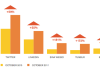
One of the most interesting trends in comScore’s 2011 social networking report is the new growth of social sites that cater to users’ interests, rather than their real-life social graphs. In particular, according to comScore data, microblogging platforms Twitter and Tumblr have had break-out years, and they’ve been joined by new online pinboard site Pinterest.

But all this growth doesn’t seem to be coming at the expense of Facebook. That site’s traffic growth has only appeared to slow (but not fall) in places where it is running out of new users to add. The site that has been taking a beating is MySpace. It may be that users who previously used that site to express themselves and follow the celebrities they care about are now doing the same thing across these other sites.

Twitter has the most fascinating story here. The short-form messaging service hit the mainstream in early 2009, and received an amazing amount of media hype — but third-party measurement firms like comScore mostly showed flat traffic in the US since then, with monthly visitor numbers ranging between 20 million and 25 million, according to comScore.

And even this year started out slow. In April, the company had 24.5 million unique visitors. But, from May through November the company grew to 35.5 million. Twitter’s worldwide numbers have looked just as strong. In the past 12 months, it has grown from 103.0 million uniques to 167.9 million overall. Yes, this growth was likely in part due to its integration with iOS 5, which the company recently said has led to a 25% increase in sign-ups. However, the integration only went live in October, which doesn’t explain all the new usage over the summer.

What’s even more interesting is that the company itself has consistently said that third-party services undercount its traffic. In September, for example, it announced that it had grown to 400 million unique visitors worldwide based on its Google Analytics stats, up from 250 million at the start of the year. Many of its visitors don’t actually tweet, or aren’t even signed up. At that point it said it had 100 million active users (and it reiterated the same number in December).

So, the comScore visitor numbers don’t exactly match up with the internal ones, but the trend is the same: more people are reading tweets than ever before. The five year old company appears to have finally made it past the ups and downs of the hype cycle, and become a solid and growing part of how mainstream people use the web.

Tumblr, which will turn five early next year, has also been coming of age. From November of 2010 to last month, it has grown from 6.9 million unique visitors to 15.9 million in the US. Worldwide, its new traffic is just as pronounced, going from 18.6 million to 44 million in the same period.

A new interest-oriented site has also gotten into the mix: Pinterest. Although the company has been around since 2008, it only began sending out invites in early 2010. It has taken off this year, going from less than a million in May, according to comScore, to more than 6 million uniques worldwide in November.

MySpace may not be losing users directly to these pseudo-rivals, but it’s definitely continuing to hurt. Worldwide, it has fallen from 81.5 million to 61.0 million from November to November. And in the US, the drop is even more pronounced, dropping from 54.4 million to 25.0 million.

Based on all these numbers, 2011 is looking like a banner year for the next era of public self-expression and sharing. The ugly, hacked-up MySpace user profiles of past years are less popular than ever, and users are busy sharing through their beautiful Tumblr themes, through Twitter’s simple 140-character messaging service, and through their online Pinterest pinboards.

What can we expect in 2012? Can Facebook’s new public sharing features like its Subscribe button tap into all the attention these other sites are getting? Early signs indicate  yes. And just where is all this usage going? It may be that 2011 is just the start of a new era, where the average internet user is comfortable sharing everything they think is interesting with the public, and following the people who are most interesting to them, not just friending those they meet in real life.

[Top graphic, which I should note is October to October not November to November, is via comScore’s 2011 social network report, which you can download here.]


AngelPad Looks Back: 37 Companies, 31 Funded, $25 Million Raised

angelpad-logo

AngelPad, the startup incubator launched by seven ex-Googlers in August 2010, is taking a look back at how far it’s come in the months since and the lessons they’ve learned along the way. So far, AngelPad has helped 37 companies get off the ground, but it wasn’t until this year that things really got going: 29 of those 37 startups emerged from AngelPad’s incubator in 2011 alone.

Out of the 37 companies, 31 have received funding, totaling just over $25 million.

According to one of AngelPad’s founders, Thomas Korte, the average funding amount for its startups is around $750,000. Of course, he admits that averages don’t always give the most accurate picture since a few highs and lows can distort things. MoPub, for example, is on the high-end, having raised over $7 million. There were a couple of others with high numbers over a million, too, Korte says.

But the vast majority of the startups have raised somewhere in the $500K – $1 million range, and 10 AngelPad companies have raised over $1 million each in 2011. Also, among a handful of acquisition offers, only one took the bait: Hopscotch sold to Sosh. However, both companies were so young, it was really more of a teaming up on their parts.

Not all companies make it, though. AngelPad has seen three companies fail out of the 37 launched – something that Korte says was not due to lack of funding or traction. “In early stage startups, the number one reason for failure is the founder relationship, he explains, “all three failed because of a founder breakup.” He says the program now looks at the founders applying to see how long they’ve known each other, if they’ve worked together and what sort of issues they’ve overcome in the past.

There are few other insights the AngelPad team gained over the past year and half of operation. One is that founders need to have an extremely large vision. ”And not an artificially inflated vision, but truly a great vision of what you want to do,” says Korte. “That’s when a lot of investors, and people who want to work for you, and even advisors, get excited about your company.”

But a vision alone is not enough. You also have to have the first tangible steps. Korte says he often sees startups with the tangible steps and a smaller vision, or people with a huge vision, and no tangible steps as to how to achieve it. You have to have both those things together.

He also stressed that growing a company takes time. It seems an obvious point, but in today’s instant gratification age (and corresponding news cycle, ahem), what’s often not reported is how long it took for a company to achieve its success, funding, or whatever other metric is being touted. “We don’t see how much work or how much time has gone into it – we don’t see how many iterations it took, how many years it took, how long it’s being going on,” says Korte. And it’s a problem that’s affecting everyone. “Investors become impatient, founders become impatient, employees become impatient…but building great companies takes time.”

Finally, Korte says that AngelPad learned that even a small amount of money early on can have a big impact on how founders approach the product. It takes the pressure of raising money off founders’ shoulders, allowing them to focus not on impressing VC’s with what’s being built, but more on building the product itself. Of course, AngelPad knows this impact first-hand: this summer, two VC firms ponied up $50K each, providing each startup with an additional $100K – something that will continue in the new year.

As for what’s next for 2012? With any hope, it’s more of the same. The incubator plans to start interviewing companies in January for the session starting in March. Applications are closing on January 1st, so if you’re a startup thinking of applying, time is almost up. Get busy.


Verizon Wireless Cancels Plans To Charge $2 “Convenience” Fee

vzw

Well, that didn’t take long. Less than 24 hours after word got out that Verizon Wireless planned to introduce a painfully ironic “convenience” fee of $2 for anyone paying their bill online, the carrier has just officially confirmed that such plans have been cancelled.

Why? Because the Internet more or less exploded in their face. We called it a joke immediately. An army of armchair protestors rallied almost instantly, with a petition against the fee hitting 50,000 signatures in a matter of hours. By this morning, the F.C.C was already investigating the fee.

What’d they expect? The masses went absolutely bonkers went Netflix hiked their fees up a few bucks, and that’s something people actually like to pay for. Charging them a convenience fee for paying online? Yeah, they’ll just love that.

Verizon’s official statement on the matter:

“At Verizon, we take great care to listen to our customers. Based on their input, we believe the best path forward is to encourage customers to take advantage of the best and most efficient options, eliminating the need to institute the fee at this time,” said Dan Mead, president and chief executive officer of Verizon Wireless.


Keen On… Marian Salzman: What Were The Top Trends in 2011?

Screen Shot 2011-12-29 at 10.30.49 PM

It’s the last Friday in 2011 and the new year is imminent. So what were the top technological, cultural and economic trends in 2011? What shaped a year that some are saying is one of the most significant in the last couple of centuries?

The queen of trendology is Marian Salzman, a global marketing executive, who publishes an iconic annual trends report about the world. So what were the leading trends in 2011, I asked Marian, when she came into our New York studio. Her answers are both stimulating and controversial. From men being the new women to technology defining the new hope agenda to the emergence of a public mycasting system, Marian’s observations about 2011 are bound to provoke discussion. So is she right? Will 2011 really be remembered as the year that the tablet revolution became the “ultimate transportation device” that finally enabled us to live in the cloud?

This is the first in a two part interview with Salzman. Early next week, she reveals her top trends for 2012.


2011: The Year In Tech

2011

Okay, last workday of the year. It’s nostalgia time. Let’s take a quick glance in the rearview mirror at the year in Tech, before we speed forward again in 2012. There were defining moments, epic battles, new product introductions, and major corporate screw-ups. Mobile and social drove many of the changes in tech, and we’ve certainly gone through our own major transition here at TechCrunch (but I’ll save that for another post). Below is our list of 11 events in tech that made 2011 memorable.

1. End Of An Era: Steve Jobs Passes Away
The defining moment of 2011 which transcended tech was the passing of Steve Jobs. It shook the world not because it was unexpected, but because Jobs was at the height of his creative arc and his work was far from finished. He had pulled the tech industry into the post-PC era with the iPhone and iPad leading the charge, and the rest of the industry following. But Jobs always liked to surprise people with “one more thing,” and he set up Apple to keep creating those things far into the future. It is telling that his last public appearance was in front of the Cupertino City Council outlining his plans for a futuristic new Apple headquarters. (Other tech luminaries no longer with us include Dennis Ritchie, Bob Galvin, and Ken Olsen).

2. Google Goes Social
After many previous half-hearted attempts to take on Facebook, Google finally got serious about social in 2011 with the launch of Google+. Larry Page, who took over as CEO this year from Eric Schmidt, put it front and center by weaving it into Google’s other products and pushing it to an estimated 65 million people. With its Circles and Hangouts, G+ is forging its own distinct identity. The more that social threatens search as the way people find things in the Web, the more important G+ will become to Google.

3. The Kindle Lights A Fire
Amazon entered the tablet race this year with the Kindle Fire, a media tablet based on Android that serves as a window into all the digital media Amazon is trying to sell us—books, movies, music, apps. The $200 Kindle Fire is the best-selling Android tablet out there. Amazon sold more than 4 million total Kindles over the holidays (including the E-Ink versions). Amazon just wants to get as many Kindle Fires into people’s hands as possible so that it can deliver digital books, movies, and apps right into our hands.

4. The Year Of The Pivot
The one thing startup founders learn very quickly is that failure is okay as long as they learn from it. With the cost to create a product lower than ever before, lean startups can afford to try again. This is known as the “pivot,” an over-used term which became a survival strategy for some, even fat startups (see, Color). The two most successful pivots which come to mind are Turntable.fm (formerly Sticky Bits) and Fab.com (which went from gay social network to design-oriented e-commerce site).

5. Netflix Screws Up
This was a tough year for Netflix. Its stock went from $300 to $70 as it tried to speed its transition from a DVD rentals business to streaming online video. Along the way, it introduced price hikes to some of its customers and tried to split off its DVD-by-mail business before backing off and apologizing to customers. (Although, the price hikes remained). Viewers are spending more time watching Netflix movies streamed over the Internet, but the company still has a lot of work to do to repair its once-shiny brand image.

6. Tech IPOs Come Back (Sort Of)
After several years of almost no activity, 2011 was a big year for tech IPOs. We had LinkedIn, Pandora, Groupon, Yandex, and Zynga. And don’t forget about Chinese Internet IPOs like Tudou and Renren. Most of these didn’t perform that well for public investors after initial pops, and even some private investors got burned (Zynga priced below its last private round). Now all eyes are on Facebook, which is planning to IPO in 2012.

7. The Private Billion-Dollar Club Gets Bigger
One reason tech IPOs aren’t performing so well is that much of growth in value is now captured before the IPO by private investors. Tech companies are pushing off going public further and further into the future, and raising huge rounds of funding from the same types of growth investors—DST, T-Rowe Price, Fidelity—who a dozen years ago would have waited for an IPO. As a result, many private tech companies are raising money at $1 billion valuations. We saw this trend take off in 2011 with Airbnb, Dropbox, Gilt Groupe, Square, and Spotify. And it’s not limited just to the U.S.

8. Google Buys Motorola, Microsoft Buys Skype, And Other Big Deals
2011 wasn’t just a big year for IPOs, it was also a big year for M&A. While the biggest tech deal of the year, AT&T’s proposed $39 billion merger with T-Mobile, was squashed by the government on antitrust grounds, some of the biggest tech deals of the last decade did go through. Google bought Motorola Mobility for $12.5 billion, Microsoft called in Skype for $8.5 billion, and eBay acquired GSICommerce for $2.4 billion. Other notable large deals included HP-Autonomy ($10.2 billion), RightNow-Oracle $1.5 billion), PopCap-Electronic Arts ($1.3 billion), ITA Software-Google ($700 million), Anobit Technologies-Apple ($450 million), Admeld-Google ($400 million), Efficient Frontier-Adobe ($400 million), Radian6-Salesforce ($326 million), Huffington Post-AOL ($315 million), and Kobo-Rakuten ($315 million).

9. The Patent Wars Get Ugly
The patent system is broken. Patents are increasingly used to block innovation in courtrooms rather than create innovations in the marketplace, and we saw this problem reach epic proportions in 2011. Patent trolls continued to extort tech companies large and small. But the patent wars spilled over to the major industry players themselves as everyone pointed their patent arsenals at Android. In July, Google failed to win a bid for more than 6,000 of Nortel’s patents, which went to an anti-Google consortium for $4.5 billion. Google responded by buying patent-rich Motorola Mobility for $12.5 billion. Microsoft started demanding patent licensing fees from Android handset manufacturers, which led to a very public tussle with Google which never seemed to end. And Apple did its part by continuing to sue Android manufacturers, including HTC and Samsung, for patent infringement. It’s a mess.

10. Android And Apple Win The Mobile Internet
All of this fighting is for a very high stakes game—the future of computing, which is mobile. Apple and Android emerged as the two superpowers of the mobile Internet (with 76 percent combined mobile OS share in the U.S.). RIM is in shambles. Windows Phone is still nowhere to be seen (except in TechCrunch writer Robin’s pocket). So far, tablets are all iPad, but the Kindle Fire is coming out punching to become a serious contender.

11. Social Media Fuels Social Protests
Whether it was the Arab Spring or Occupy Wall Street, social protest movements around the world were fueled by social media like Twitter and Facebook. Protesters self-organized using Twitter, Facebook, mobile phones and any other communications system available to them, which also functioned as a way to broadcast the protests around the world. These realtime technologies make it much easier to start revolutions, but they don’t make it any easier to finish them.

Image via Shutterstock/ivosar


LG To Debut Second Intel-Powered Smartphone At CES 2012

lg-intel

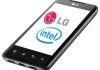
“If at first you don’t succeed, try try again.” It looks like LG and Intel have taken that old adage to heart, if a new report is to be believed. The Korea Times reports that LG will debut an Intel-powered smartphone at CES 2012, but the bigger question is whether or not the device will ever make it to market.

LG and Intel’s first mobile partnership yielded an Android smartphone running on Intel’s Moorestown chipset for CES 2011, but the device was ultimately scrapped. The reason for its premature demise? As the story goes, the device died because of it’s “lack of marketability.”

LG’s brass certainly thinks their Intel smartphone is viable — according to one of the Times’ executive sources, the device could be released as soon this March. Still, the original LG-Intel phone was pegged with a 2011 release date, so take those claims with a grain of salt for bow.

Hopefully LG’s second swing at an Intel-powered phone fares a little better — it’s said to run on Intel’s next-generation Medfield system-on-a-chip, and early tests have yielded some pretty impressive benchmarks when compared to NVIDIA’s Tegra 2 and Qualcomm’s Snapdragon MSM8260 SoCs.

Of course, the real competition is yet to come, as nearly every player in the mobile chipset market is hard at work on their next-generation platforms. Intel has a lot of brand recognition when it comes to PCs, but their lack of presence in the mobile market to date could mean that Medfield could drown in a sea of established ARM-based chipsets.

That’s why the partnership with LG is so critical — despite their handset division spending a few quarters in the red, LG is still the number two handset OEM in the U.S. Having a major hardware vendor taking a chance on their new platform could establish Intel as a real player in the mobile space, and right now Intel’s mobile efforts could use all the visibility they can get.