Samsung’s DV300F Dual-View Camera Brings WiFi Into The Mix

samsungdv300f

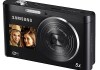
Many of you may remember that I was straight-up infatuated with Samsung’s MV800 point-and-shoot. And why wouldn’t I be? It’s absolutely the best point-and-shoot if your favorite subject to shoot happens to be yourself. While Samsung’s latest camera isn’t quite as narcissistic, the new DV300F announced today still has a pretty awesome trick up its sleeve.

This is one of Samsung’s Dual-View offerings, meaning it sports a 1.5-inch screen up front to accompany the usual 3-inch LCD display (which doubles as a viewfinder.) What sets the DV300F apart, however, is its WiFi capabilities. You’ll be able to share pics and clips directly to Facebook, Picasa, YouTube, etc.

If you’re not in the mood to go public right away, you’ll also be able to upload the entirety of your SD card to your PC with the Auto PC Backup tool. The 16-megapixel camera is capable of 5x optical zoom and comes equipped with a 25mm wide-angle lens. You’ll also find the expected microSD slot present.

Color flavors include black, silver, navy and red and each can be had for $199. Shipping is expected to begin in March.


On Facebook, Obama Has The Most Fans, Ron Paul The Highest “Viral Reach”

socialbakers2

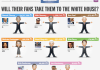
Social media analytics firm Socialbakers has tracked more than 10 million Facebook Pages and Places plus billions of individual user interactions in order to determine who the most popular, engaging and influential presidential candidates are on Facebook. Not surprisingly, incumbent Obama has the most Facebook fans, which is one way to measure “popularity.” That’s not necessarily the fairest way in this case, given that many of those supporters arrived during Obama’s previous campaign efforts.

To determine its findings, Socialbakers tracked interactions between December 1st and 31st to measure engagement and changes in online candidate popularity for all eight Democratic and Republican presidential political candidates on Facebook. The company plans to do the same for January’s New Hampshire primary, upcoming debates and other newsworthy events.

Below, are the firm’s key discoveries.

TL;DR: Obama has the most fans, Ron Paul currently has the highest viral reach, Michelle Bachmann leads in person-to-person interactions, but Obama leads with 50% of total interactions. 

Viral Reach (The total reach for each candidate when people “like” and comment, multiplied by the average number of friends per Facebook user to provide a comparable number)

  • Ron Paul has the highest overall viral reach, followed by Mitt Romney and Rick Perry
  • Ron Paul leads with 59,554 “people talking about” him this past week (second to Obama)
  • Rick Perry has the most engaging single-post amongst all candidates, followed by Jon Huntsman and Newt Gingrich
  • Obama’s most engaging post was a family portrait, yet had the lowest overall engagement rate* when compared to the other candidates
  • Ron Paul increased engagement rate by 69 percent, followed by a near tie between Rick Perry and Newt Gingrich, with a 58-percent increase and 57-percent increase respectively
  • Rick Santorum decreased engagement rate by -7 percent

Peer-to-Peer Interaction (all debates, comments, conversations to each other’s posts on candidate’s page)

  • Michelle Bachmann leads in person-to-person interactions among Facebook users, followed by Ron Paul and Jon Huntsman
  • Obama leads with 50 percent of the total interactions. Ron Paul leads the Republican Party with 19 percent, which is 2x and 3x higher than Mitt Romney and Rick Perry.

Candidate’s Facebook Fans:

  • Obama is leading with the most number of fans at 24 million, followed by Mitt Romney at 1.3 million, Ron Paul with 672,483 and Michelle Bachmann with 460,336.
  • Rick Santorum has the fastest-growing fan base throughout the last 30 days (23-percent growth) surpassing Jon Huntsman’s growth (18-percent growth).

More details on each candidate are available on Socialbaker’s new microsite for the elections, which includes details on each candidate.


Chart: How Google And Apple Won The Smartphone Wars

Goog-Apple smartphone share

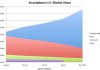
What a difference just one year can make. In our Year in Tech post, I pointed out that 2011 was the year that Apple and Google won the smartphone wars. I put together the chart above from comScore U.S. mobile subscriber estimates to illustrate the dramatic shift in market share in the smartphone market. In less than 18 months, Apple’s and Google’s combined market share of U.S. mobile subscribers for iPhones and Android phones went from 43.8 percent to 75.6 percent between August, 2010 and November, 2011.

During the same period, RIM’s Blackberry tumbled from 37.6 percent to 19.7 percent (an almost 18-point drop). Microsoft’s mobile share was also nearly cut in half from 10.8 percent to 5.7 percent. And Palm, which had almost 5 percent share 18 months ago, basically disappeared (comScore stopped reporting its share).

In the space of little more than a year, Android and Apple gobbled up three quarters of the smartphone market in the U.S. Combined, they gained 31.8 points in market share over this period. When you drill down further, almost all of these gains went to Android, which added 27.3 points of market share versus a more modest 4.5 points for Apple. There is some evidence that Android growth is slowing in the U.S. (nothing can keep growing this fast forever). But the fact that market dominance can shift so rapidly (a year ago, Blackberry was still the single largest smartphone platform in the U.S.) is quite startling.

Shift happens, and it is happening faster than ever. I’d be surprised if there was ever a year when PC market share changed so dramatically.


Beta Raspberry Pi PCs Draw Big Bids On eBay

raspberry_pi_model_b_ebay

The pint-sized Raspberry Pi computer is due to hit doorsteps and developing markets any time now, but that hasn’t stopped some ardent fans from igniting an eBay bidding war over some pre-production units.

So far, the Raspberry Pi Foundation has put four pre-production models on eBay, and all of them command a pretty hefty premium over the vaunted $35 price tag that their mass-produced brethren will sport.

At time of writing, the first Raspberry Pi to be put up for auction (number 10 of 10) has attracted bids as high as £1,750 ($2714). Subsequent models haven’t garnered quite as much attention, but even the most recent addition to the auction block has netted an impressive £565 ($875) bid.

If you’ve managed to miss our coverage of the Raspberry Pi, it’s a lilliputian computer that sports some decidedly last-decade specs — think 700 MHz processor and either 128 or 256 MB of RAM. All of the beta units currently up for auction are the slightly flashier “B” variant, which sports double the RAM of the base version, along with a 10/100 wired ethernet connection.

It certainly won’t replace your typical desktop, but the vision behind the project is to get this into the hands of clever children and enthusiasts the world over. And hey, it’s more than powerful enough to introduce a whole new generation of children to the joys of Quake III.

The auction will continue for another week or so, until all ten beta units have been sold. Here’s hoping that these big bids continue to roll in — all proceeds from the auction will go toward the Raspberry Pi Foundation’s goal of promoting computer science education in schools.


WhatsOutt Gives You The ETA On Everything

whatsoutt

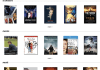
If you’re familiar with a site called VideoETA, which tells you when a movie will arrive on DVD, then you’ll get the concept behind the new website called WhatsOutt.com. It’s basically VideoETA for everything. The site keeps track of new and upcoming releases for movies coming to theaters, DVDs, books, music, and games.

Everything on WhatsOutt is organized by week, defaulting to the current week. You can also browse back to a week ago if you need to get caught up, or look ahead up to two weeks in the future. For additional convenience, there’s a mailing list feature which you can activate by hitting the big red button at the top of the page.

Each item featured on the site provides links where you can purchase, preview or pre-order. For example, movie listings link out to Fandango and Apple’s movie trailers. Links for albums go to Amazon and iTunes. Books can be pre-ordered on Amazon. Etc., etc.

The site, barely two weeks old, is a 100% bootstrapped, labor of love from Wesley Asbell, a web designer and self-confessed “startup junkie” who’s currently working at security solution provider IronKey. He said there wasn’t a resource that put everything that’s coming out on one, simple, easy-to-use website, so he made one himself.

While similar to WhatsOutt, VideoETA, ComingSoon, and others are limited in their focus on just movies and/or DVDs. Retailers, like Barnes & Noble, for example, may list new and upcoming releases for a single category (e.g. “books”). IGN does games. And so on.

But let’s face it, a lot of these standalone efforts are kinda ugly. WhatsOutt instead keeps the site pretty bare, clean and simple. Personal preference? I like it. You might too.


Palm Software Director: “We Just Weren’t Able To Execute”

shutterstock_77073529

Hindsight, as they say, is 20/20 and Brian X Chen has a great tick-tock detailing the initial fall – and continuing fall – of webOS. The interviews are quite telling, including a quote from Paul Mercer:

“Palm was ahead of its time in trying to build a phone software platform using Web technology, and we just weren’t able to execute such an ambitious and breakthrough design,” said Paul Mercer, former senior director of software at Palm, who oversaw the interface design of WebOS and recruited crucial members of the team. “Perhaps it never could have been executed because the technology wasn’t there yet.”

The most important line there is “the technology wasn’t there yet.” Considering a number of other OSes, including, most notably, WinPho 7, are able to do what webOS was supposed to do including social network contact control, status updates, and web-technologies-based UIs, I find this as a bit of a cop out.

The Pre came out in 2009 to much fanfare and was in a face-off against iOS and Android for most of its life cycle. The primary problems outlined in the article – lack of developer support, a speedy, nine-month build time, and general failures to secure key talent – sound like good excuses in retrospect but I think the lesson learned here is that Palm tried to play by start-up rules in an established game. Nine month programming jags to produce shipping code is fine when you’re doing a social network for goat lovers. It’s not so fine when you’re selling phones to a mass market.

I don’t miss webOS. Palm overshot and failed to convince a jaded public that it was worth switching. Palm died because the core audience – the “anything but iPhone crowd” – never received a clear, compelling reason to switch. Then HP bought it and, well, we all know what happened there.

In the end, Palm couldn’t build momentum or a product that worked. There are, oddly enough, still Pre fanboys out there who point to a great webOS open source renaissance but that’s about as likely as the average user caring enough about their Android phone to install Cyanogenmod: there is some impetus there, to be sure, but most people just want to check email, make calls, and buy a phone that will work for, at minimum, two years until the next big thing comes along.

[Image: jocic/Shutterstock]


Sony Slashes Tablet S Price By $100

sonytablets

Apple’s iPad still dominates the tablet market, and it would seem that competing tab makers are realizing how tough it is to go head-to-head with Apple’s tablet. The latest proof: Sony has just slashed $100 off of the price of its Tablet S. In other words, the 32GB Tablet S just went from $600 to $500, while the 16GB model has dropped from $500 to $400.

As of right now the greatest threat to Apple’s tablet empire is Amazon’s $200 Kindle Fire. Why? Well, aside from the fact that it’s a solid little tablet with access to all of Amazon’s media platforms, it also happens to be pretty cheap. This leaves just about anything Android-powered that falls between the iPad 2 and the Fire in a very difficult position.

Figuring out a comfortable price relatively early is a smart move by Sony. The company is clearly trying to learn from its competitors. No one wants their tab to go the way of the TouchPad.

Check out our full review of the Sony Tablet S, and if it sounds right for you head over to the Sony Store and get the ball rolling.


They’re Alive! Pics Of Unannounced Asus Eee PC Flare Netbooks Leak

asus-design-award_2011_EeePC-Flare-1025-1225

Asus clearly didn’t get the memo that netbooks are dead. Tablets killed them. Or rather so goes the popular narrative. In real life consumers will continue to look for low-cost alternatives to traditional notebooks and Asus will clearly be there, ready with new models to fill this increasingly niche demand.

The pics here come by way of ASUSDesign, a Asus site dedicated to highlighting products that won various awards, describes the PC Flare 1025/1225 as a “revolution of the Asus EeePC.” The quick blurb also talks about “perfect flowing curves” and “high taste of simple” but fails to mention the projected announcement schedule. And unlike other items on the Asus website, there isn’t a link to netbook’s product page. Still, with CES next week, it’s probably a safe bet that these netbooks will officially debut at the massive consumer electronic trade show.

Asus has always been the netbook champion. Its Eee PC line made Asus a serious consumer brand. The company is not going to simply close up shop and walk away from a product type that it help pioneer. The expensive groundwork of marketing and consumer brand recognition is done. Why not keep the store open a few more hours and hope for the best. Besides, Intel is not done with netbooks either.

Intel’s next-gen netbook platform is said to bring better battery life and increased performance to the sub-notebooks. Code-named Cedar Trail, the next player in the Atom line, will likely headline many netbook announcements at CES 2012. Asus won’t be the only company announcing new netbooks. If Internet rumors are believed, look for Cedar Trail netbooks from Acer, Toshiba, Lenovo, Samsung, and, of course, Asus.

These latest models seem to be from the same mold as the Asus Transformer Prime. They share many of the same lines although the netbook is slightly more curvy. The model numbers, 1025/1225, state that there will be a 10- and 12-inch model.

It’s unlikely that netbooks will ever be as popular as they were a few years back. Tablets will see to that. But with Intel’s next-gen platform righting many of the netbook’s wrongs, the mini notebooks seem like they’re dying right as they’re getting interesting.


Wikimedia Foundation Raises $20 Million From 1 Million+ Donors

wiki

Wikimedia Foundation, the non-profit organization that operates Wikipedia and other sites, this morning announced that they’ve raised $20 million from more than a million donors, shattering a record once again. The organization says donations have risen every year since its global fundraising campaigns began in 2003.

Wikimedia Foundation claims its sites now serve more than 470 million people every month. Wikipedia, which will celebrate its 11th anniversary in about two weeks, now boasts over 20 million articles in 282 languages.

The organization says more than 100,000 volunteers work on Wikipedia and sister projects.

The foundation employs approximately 80 people full-time.

From the press release:

The annual fundraiser is how the Wikimedia Foundation pays its bills. Funds raised in this campaign will be used to buy and install servers and other hardware, to develop new site functionality, expand mobile services, provide legal defense for the projects, and support the large global community of Wikimedia volunteers.

The Wikimedia Foundation’s total 2011-12 planned spending is 28.3 million USD. The bulk of that is raised during the annual campaign, and the remainder comes throughout the year in the form of grants from institutions such as the Sloan Foundation, and many other small donations year round.

If you’d like to learn more about the organization’s annual plan for 2011-2012, start here.

Also read:

A Personal Appeal TO Wikipedia Founder Jimmy Wales

Wikipedia Programmer: We Do The Funny Portrait Placement Thing Because It Works


Sleep Buster: Japanese Company Develops Anti-Sleep Driver Seat Sheet

juki feat

There are quite a few systems and gadgets on the market already that prevent people from falling asleep whilst driving, but Japan-based Juki has developed an entirely new one: a sheet [JP, PDF] that can be mounted on the driver’s seat and triggers an alarm when you’re about to doze off.

The way the so-called Sleep Buster works is that it measures signals from the heart and aorta through a built-in sensor. A piece of software called “Human Tachometer” then visualizes the condition of the driver on a controller: apart from fatigue or drowsiness, users can also check their level of concentration or how distracted they are, for example.

Juki says the Sleep Buster measures the driver’s bio signals every 18 seconds and can warn drivers about 10 minutes before they fall asleep – enough time to find a place to rest (and to prevent possible accidents).

Juki plans to start selling the Sleep Buster next month (price in Japan: US$2,000 – including the sheet, controller, and a power module). The company is also active in the US but hasn’t said yet whether the device will be sold outside Japan, too.

Via Asiajin


6 Big HealthTech Ideas That Will Change Medicine In 2012

HealthTech

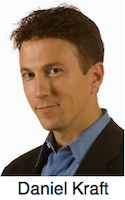
“In the future we might not prescribe drugs all the time, we might prescribe apps.” Singularity University‘s executive director of FutureMed Daniel Kraft M.D. sat down with me to discuss the biggest emerging trends in HealthTech. Here we’ll look at how A.I, big data, 3D printing, social health networks and other new technologies will help you get better medical care. Kraft believes that by analyzing where the field is going, we have the ability to reinvent medicine and build important new business models.

For background, Daniel Kraft studied medicine at Stanford and did his residency at Harvard. He’s the founder of StemCore systems and inventor of the MarrowMiner, a minimally invasive bone marrow stem cell harvesting device. The following is rough transcript of the 6 big ideas Kraft outlined for me at the Practice Fusion conference

Artificial Intelligence

Siri and IBM’s Watson are starting to be applied to medical questions. They’ll assist with diagnostics and decision support for both patients and clinicians. Through the cloud, any device will be able to access powerful medical AI.

For example, an X-ray gun in remote africa could send shots to the cloud where an artificial intelligence augmented physician could analyze them. Pap smears and some mammograms are already read with some AI or elements of pattern recognition.

This has the potential to disintermediate some fields of medicine like dermatology which is a pattern based field — I look at the rash and I know what it is. Soon every primary care doctor is going to have an app on their phone that can send photos to the cloud. They’ll be analyzed by AI and determine “oh that mole looks like a dangerous melanoma” or “it’s normal”. So the referral pattern to the dermatologist will slow down.

On the plus side, there are consumer apps like Skin Scan where for $5 you can take a picture of lesion and send it to the cloud, and it will at least give you an idea if it’s dangerous or not. If it is, it can help you find a nearby doctor, which could help dermatologists get more business. Many fields are going to change because of artificial intelligence, pattern recognition, and cheaper tests.

Big Data

We’re gaining the ability to get more and more data at lower and lower price points. The primary example is the human genome and genomic sequencing. It cost a billion dollars or more 10 years ago to get a complete human sequence. However, the cost and speed of getting that data has dropped faster than Moore’s law to the point where it’s less than $5,000 when ordered online. From 23andMe you can now get a cheap snip test, and it has a pilot program for $999 for a whole exam.

Maybe there were 10,000 patients sequenced last year. Next year it could be 100,000 and soon millions. A genome sequence could be the cost of a blood count today.  When that information becomes queryable in an a crowdsourced and cloudsourced way we can be more predictive about what you’re more likely to get based on your genomics. You can then take preventative steps or get screened more often.

So we’re pulling in huge data sets from low-cost genomics to proteomics (analyzing the proteins in the blood) to quantifiable self. The challenge is to make sense of that data and make it actionable information without making the patient or doctor overwhelmed.

I think we need to make smart dashboards like they have for fighter pilots. They would piece together data from ubiquitous sensors, like those made by GreenGoose, and Microsoft Kinect that can measure your activity around the house. It would be like the OnStar for your body that could give you clues about when you’re about to get in trouble, and it could call for help or guide you to appropriate therapy.

3D Printing

3D printing has been around for a while but now it’s being applied to medicine in ways such as being able to scan the remaining leg of a patient that’s missing one from an accident. It can then build a prosthetic leg with skin and size that matches. 3D printing is integrating with the fast-moving world of stem cells and regenerative medicine with 3D ink being replaced by stem cells. In the future we’ll probably use 3D printing and stem cells to make libraries of replacement parts. It will start with simple tissues and eventually maybe we’ll be printing organs.

Social Health Network

Social networks have the ability to change our behavior. When you wireless weight scale shares metrics with your friends, you get praised for success and pressured if you’re not maintaining your diet. Social networks are also quite powerful for tracking and predicting disease. James Fowler, co-author of the book Connected is now working with Facebook to look at health data. Not surprisingly, the more friends you have, the earlier in the flu season you’ll get influenza. This could help predict when you’ll get the flu and let you take steps to avoid it.

We’re in the Facebook era, and are more open to sharing information in the healthcare spectrum. Individuals will share their whole history through services including PatientsLikeMe and CureTogether where patients with similar problems from migraines to Lou Geghrig’s disease will consolidate health information. This will enable improvements in clinical trials.

Genomera is trying allow for low-cost web-based clinical trial around any question. Practice Fusion can also crowdsource that data from its electronic medical records. By collecting data from all the patients within a hospital or a region you can see trends and almost run clinical studies on the fly. For example you could see all the patients that have this gene and that are taking this drug, and determine if that drug is effective for them or not.

Communication With Doctors

New communication platforms similar to a Skype or FaceTime will help you communicate differently with your clinician. Many of these things are basically already here. The challenge is often not the technology but the regulatory and reimbursement markets around them. If you’re going to be talking with your clinician on your iPhone you may need to do that in a HIPAA privacy protected way. The physician is also going to want to be paid for that in some way. They’re not going to want to get all your data every time you have a hiccup or look at your iPhone pictures of your rash unless there’s a way to get paid.

The regulatory system needs to adapt towards to becoming Accountable Care Organizations, which reward clinicians and healthcare plans for keeping patients healthy opposed to paying them to do extra procedures. This contrasts with a model of paying them for service like putting in stents and doing things after a problem has already progressed. Incentives need to be aligned and reimbursement needs to change to enable some of these new technologies to actually enter the clinic.

Mobile

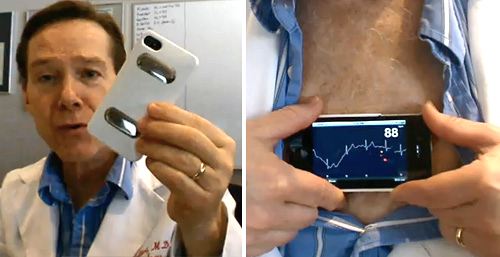
The ability to have your phone tie to your healthcare record and track medical metrics will have vast repercussions. Though some aren’t cleared for sale in US yet, devices like the Alivecor electrocardiogram can monitor your heart in realtime, send the data to the cloud, and allow your cardiologist to look at it instantly. Other devices are turning phones into otoscopes for looking in your ears, or glucometers for monitoring blood sugar.

Quantified self devices like the Fitbit, Jawbone Up, and more medically themed devices will take what you used to do dsin a clinic or hospital and bring it home. This will allow therapies to be tuned much more effectively than scribbling data on a piece of paper and bringing it in to your doctor months later.

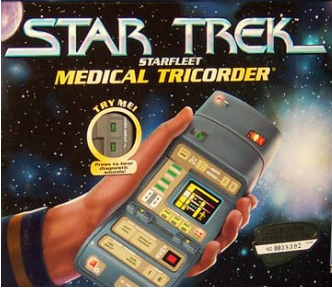
Eventually these devices will converge into the equivalent of Star Trek tricorder that can perform a wide variety of medical functions. There’s even an $10 million X Prize proposed to reward the inventor of the first functional tricorder.

Unfortunately, the strict regulatory system and entrenched, interested of the United States are pushing innovation offshore. A lot of the work for using mobile phones for health care is happening in Africa and India. Since there are few physicians in some of these areas mobile health and telemedicine are taking off. For example, microfluidics allows multiple tests to be done on a small chip at pennies per test, with the ability to connect to the web for analysis. The US will need to find a way to solve these regulatory problems while keeping patients safe, otherwise jobs and revenue could slip abroad.

To learn more about what’s happening next in healthtech, check out Singularity University’s FutureMed 2020 program, watch Daniel Kraft’s Ted Talk, and browse our healthtech channel.

[Image Credits: Guiacirugiaestetica.com, shopping.com]


GymPact Launches To Help You Keep Your Fitness Resolutions (By Paying If You Don’t)

gympact-logo-final

If you’re anything like me, one of your New Years Resolutions may have been to get in better shape. There’s no doubt that many of us could stand to live healthier lives, and it’s no mistake that devices, services, and tools that help us achieve healthier lifestyles and decreased body masses are on the rise. (See John Biggs’ predictions for hot gadgets in 2012 — you’ll notice two fitness gadgets at the top of the list.)

Americans spend $50 billion each year on products and services designed to help us lose weight and get in shape. We’ve seen a host of startups proposing alternative methods to encourage us to stick with out fitness regimens, and today GymPact is launching a website and iPhone app that uses those old behavioral economics to help us to do just that.

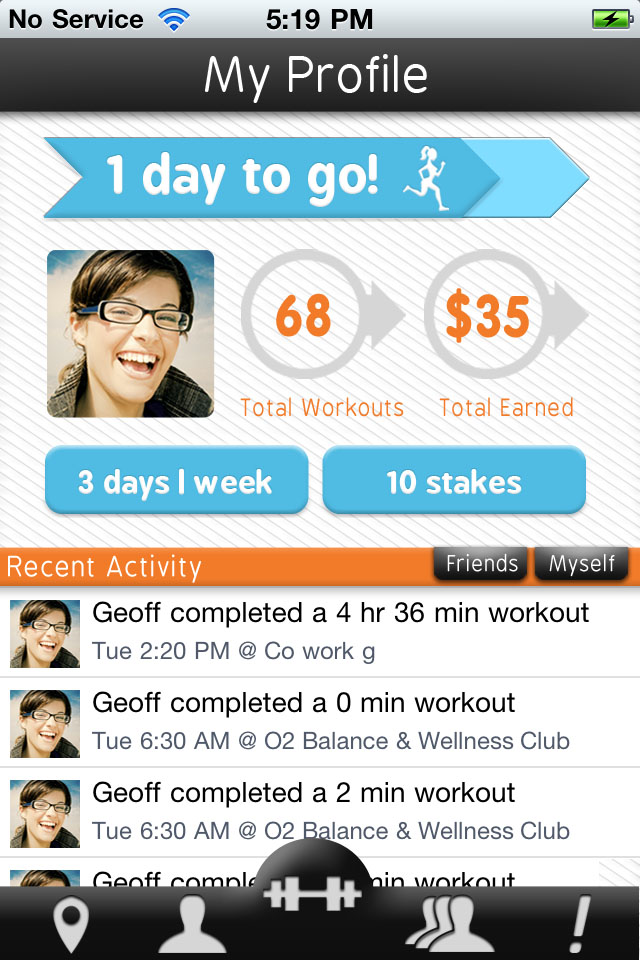
Simply put, GymPact is a check-in app that offers cash incentives to get you off the couch and into the gym. The service gets you to create a “Pact” over how many times you’ll make it to the gym over the course of a given week, and how much money you’ll be willing to fork over if you don’t meet that goal. When users live up to their pacts (by way of checking in at the gym on their phone), they earn cash rewards, paid for by those lazy people who didn’t fulfill their quotas. If they don’t, they pay that $10 to the community.

If you do meet your goals, the startup gives you cash rewards from the collective pot of those who didn’t meet their goals, with GymPact taking a 3 percent fee based on those transactions. And to discourage drive by check-ins, users must stay at the gym for at least 30 minutes for their check-ins to count. However, Pacts are made on a weekly basis, and users can change or freeze their pacts until Sunday night, when GymPact tallies your total attendance.

The idea for GymPact came out of a behavioral economics class Co-founders Yifan Zhang and Geoff Oberhofer took while at Harvard, which led them to run a 6-month trial of their idea starting in early 2011, beginning with a handful of gyms in Boston. Over the course of the trial, the founders received messages from interested parties across the country asking to bring GymPact to their city. At which point, Zhang said, that the team realized that they wouldn’t be able to scale fast enough by partnering with gyms, so they decided to become a platform company, allowing users to check-in to any gym via GPS verification from their iPhones.

Zhang said that the team has found that fitness apps tend to fall into three buckets: Data trackers (like Fitbit and Runkeeper), virtual trainers (like Gain Fitness, which we covered last month), and motivators. Being of the last category, Zhang said that she has been meeting with other fitness entrepreneurs over the last year, and thinks that GymPact can be a great complement to data trackers and virtual trainer apps by incentivizing people to actually get up and go to the gym (or yoga, to the pool, or spin class).

“Right now, getting people to take action — the first step toward fitness,” she said, “is the unfulfilled need.”

So, rather than focusing solely on rewards like badges, points, prizes, or even cash, GymPact is betting that the real driver of behavior is negative motivation — that people are motivated more by loss than by gain. Pavlov and I, on the other hand, just prefer to ring a bell. And ply with treats. However, through this negative approach, GymPact saw its users going to the gym on 80 to 90 percent of their committed days during its six-month trial. Apparently, just a $5 commitment is enough to get people to the gym three or four days a week, Zhang says. And the $1 average for cash rewards isn’t much, but it’s enough to reinforce that achievement. That small change can add up.

Of course, that’s reasoning meant to assure you that you won’t have to put a whole lot of money down on GymPact or your own fitness; in other words, that it won’t bankrupt you. (On top of what you already pay for gym membership.) So I’d like to see a little more in the way of assurance that users won’t be subject to fraud, or false check-in crap. And just how precise they can be in determining whether or not users stay at the gym for 30 minutes at a time, and in what location? Have they discovered something that other check-in LBSes haven’t? If not, it’s a slippery slope.

GymPact’s approach is similar to another startup we wrote about recently, called HealthRally, which also seeks to offer motivation through cash incentives, yet instead by way of peer, er, social pressure. Excuse me, “incentive”. Users make pledges to their close friends and family by way of social networks, with the idea being that you’re more likely to get in shape when your loved ones are scrutinizing your plans — and offering rewards.

Though HealthRally is still in private beta, these two startups are experimenting with flip sides of the coin, and it will be interesting to see which idea users find provides them with more motivation: Social pressure, or the prospect of “losing” money. Both are enough to scare me into doing some sit ups, that’s for sure. But HealthRally is in the advantageous position of being able to watch and see how users react, and adjust accordingly. We shall see.

Check out GymPact on the Web here, or on the App Store here, and let us know what you think. GymPact will be rolling out on other mobile platform in the coming months. Stay tuned.


Uber’s New Year’s Eve Surcharges Demonstrate The Harsh Reality Of Dynamic Pricing

Photo Credit: Creative Commons Flick / Dave Fayram

I woke up this morning to tweets from Uber customers nationwide who felt taken for a ride, literally and figuratively, after requesting an Uber on one of the busiest nights of the year. Despite the fact the company said as such on their blog and communication channels, riders were apparently not expecting the surcharges to be so exponentially high, ranging between three to over six times the normal fares.

In exchange for providing cars on demand, Uber used its system to find equilibrium within a market where demand outstripped supply, especially a few hours before and midnight. (I’m not a frequent Uber customer, but I used them three times over my recent holiday trip, and each time was flawless; I’ll continue to use the service when I need to.)

Uber’s hangover this morning is more of a harbinger for consumers in general, especially when it comes to goods and services delivered online. Uber’s “surcharges” last night were a classic example of dynamic pricing, or adjusting the price of something relative to the demand and supply, down to the minute or second. The more data a provider has on these inputs, the more likely they are to leverage that data to extract more value from providing equilibrium between supply and demand. Most every consumer is aware of this through searching for and buying airline tickets online, where fares seem to change magically, even mid-search.

Over the past few years, dynamic pricing provided value to consumers, for example, through daily deals. Companies providing these deals help vendors manage inventory and excess supply, using the power of discounting to gin up demand. Starting now, consumers should also prepare to experience the underbelly of this phenomenon, a world where prices for goods and services that are in demand, either in quantity or at a certain time, aren’t the same price for each of us.

Online, dynamic pricing is gaining momentum. eBay auctions and Priceline hidden bids are the overt expression of this. More subtly, items in my Amazon shopping cart went up a bit each day as the holidays approached. Imagine the intricate data companies like Groupon and Living Social have as it relates to how quickly a hot deal “sold out.” All that data could be used just as the airlines have for years, and potentially with even more economic precision. Tickets to Broadway musicals are being sold this way. The National Hockey League is doing it. Companies such as TellApart and HotelTonight, for instance, are already doing this kind of stuff, and upstarts like Black Locus and Predictive Edge are also in the hunt.

In the not-so-distant future, consumers may see more routine goods and services readjust to dynamic pricing. Want a dinner reservation at a specific time at a choice restaurant? Want to book a room on Airbnb in Austin during SXSW, right now? Want to see The Dark Knight Rises opening night, on IMAX? Or, simply, do you want an Uber right away at 8pm every Saturday night, when demand peaks? It’s becoming increasingly apparent that for items with spiked demand around specific times are all susceptible to these kind of extractive calculations.

This reality is the other side of the daily deal market, one not driven by discounts and demand, but rather premiums for things that are scarce. Which brings it all neatly back to Uber. Some riders last night wanted the combination of a guaranteed ride at a time of their choosing, but also at a price that they deemed “reasonable.” Unfortunately, since everyone else also wanted rides around 10pm and 2am last night, the demand so far outstripped the supply that what seem to be gross surcharges were actually automatically generated to make sure a consumer’s willingness to pay matched the good offered. You can’t have your Uber on New Year’s Eve and eat it, too, folks — unless you’re willing to pay up. Brenden Mulligan analyzed the communication breakdown and makes a reasoned, design-inspired case that Uber’s in-app notification of surcharges should have been cleaner, more direct and easier to read.

Uber will no doubt try to make sure this doesn’t happen again (the tweets are not pretty), and people nationwide will continue to use the service, though will now be more careful. Uber still has a strong brand with a loyal following and a strong team. However, this is also a wakeup call for consumers, those who use Uber and in general. As devices and ecosystems enable us to share more and more data about our location and what we truly want at any given time, time-based pricing is simply a natural extension of this grand bargain and is coming to a theater near you. Happy New Year!

Photo Credit: Creative Commons Flickr / Dave Fayram


Still Looking For A New Year’s Resolution? How About Learning To Code …

Screen Shot 2012-01-01 at 2.30.03 PM

After eating something greasy to get rid of last night’s Jello shot-induced hangover, many of you are probably in the middle of writing your New Year’s resolutions. Well, here’s a good one (especially considering that the tech sector seems to be the only bright spot in a sort of lackluster economy) … Learn to code.

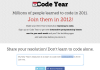
The folks at Codecademy  have teamed up with a number of partners like Girl Develop It, Techstars and YCombinator to help make coding skills a reality for those that wish they had them, with Code Year, a program designed specifically for those that want to make 2012 the year they build technical skills.

Signing up for the free service will hook you up with a new programming course each week. Codecademy co-founder Zach Sims tells me that the courses will be a mix of everything so people have “well-rounded basics,” beginning with Javascript and then continuing to server-side languages like Ruby and Python. He hopes that the curriculum will turn people into competent developers by the end of the year.

“People should make their New Year’s resolution something that can improve their quality of life,” says Sims, “We’re giving them new skills and actually helping them keep their resolutions. This is just the beginning of our big effort to get lots of people to recognize the importance of learning to code.  I think 2012 can be the year we finally get programming to start entering the mainstream.”

*Signs up for Code Year*