Watch 2012 Super Bowl Commercials Now With Facebook + USA Today’s Ad Meter

Facebook USA Today Ad Meter App

Want to watch the big budget Super Bowl commercials, but can’t wait till Sunday or don’t care about football? Facebook and USA Today have just launched Ad Meter, a Facebook app where you can watch many of the TV spots right now. Then from kickoff until Tuesday night you can vote for your favorites. Traditionally an offline poll done live with handheld meters, USA Today has finally brought Ad Meter online so you can judge ads both in real-time and post-game.

Facebook tapped Involver to build the app, and has secured early previews of roughly 20 commercials. The rest of the ads will become available through the app at game time. On Tuesday night at 6pm EST the results of the voting will be announced.

Several Internet companies have plopped down the big bucks this year in an attempt to court the mainstream. Arrested Development’s Gob plugs Hulu, and Teleflora.com touts the lovin you might get if you use it to send a Valentine’s Day gift. Etrade, Careerbuilder.com,

Investing in Super Bowl ads makes more and more sense for web services as the general public becomes more internet savvy. They should tread cautiously, though, considering past ads from Salesforce, Groupon have been voted most disliked and caused PR crises. Let’s hope no one gives our industry a bad wrap this time around. Oh wait, GoDaddy’s ads filled with body-painted models and angels in the cloud are just as sexist as ever.


Pokki Gives Quick Access To Madden NFL Superstars, Just In Time For The Big Game

maddenshot

It’s the Super Bowl season, when a host of services and apps debut just in time for the biggest television event of the year. And, if you’re a fan of Madden’s NFL Superstars (a web app that’s available through Facebook), then you’ll like this launch: the game is now available as a Pokki right here.

Pokki, for those that haven’t used it, is a platform that lets you install lightweight apps that live in your Windows Taskbar (a Mac version is on the way). Each app gets its own icon — click on it, and the app will pop open immediately, click away and it’ll hide itself, and when you click it again, it’ll pick up right where you left off.

The point is to give you quick access to apps without having to deal with browser tabs or standalone windows, and it works well.There are other apps and services that do something similar (Mac users may want to check out Fluid), but Pokki’s platform features apps that are specifically designed for its quick, pop-over design.

Pokki has landed two major gaming companies so far: Kabam and, with this launch, EA, and it seems likely that more will follow suit (the platform is well-suited for quick sessions of gaming throughout the day). And there are other apps available as well, including Gmail and eBay.

The company says that Pokki is still in beta and hasn’t yet focused on marketing, but that its early numbers are very promising — so far they’ve seen “hundreds of thousands” of app installs, with users who have used the apps “tens of millions of times”.

The platform is also seeing strong traction with its built-in app market: 60% of users are browsing and installing two new apps per month.

Pokki is one of two main products from SweetLabs — their other major product is OpenCandy, which lets developers include targeted ads within their application’s install flow.


Arianna Wants To Put A Nap Room In TechCrunch HQ. LOL.

alexi2

This funny little piece of email just got forwarded to me …

From: “****, ***”
Date: February 3, 2012 10:11:04 AM PST
To: Greg Barto [@ TechCrunch]
Subject: NapQuest

Hey Greg

It is one of our goals to get a “nap room” set-up in every location. Basically, it’s a closed room where we would put a chaise or couch, darken the windows and allow people to nap as the [sic] like. This is high on the priority list for Arianna and your office is one of the few where we don’t yet have it in place.

When I visited your office on Wednesday, I looked around. It strikes me that the room (3rd office from the back corner) might be a good choice?

There are currently a couple of desks in there we would need to remove. Then I would purchase the furniture and arrange to have the window glass tinted.

What do you think? I just need your agreement to move ahead and I will coordinate making it happen. Let me know.

Thanks,

**** ****
Sr. Facilities Manager, PA/SF
Corporate Services, AOL Inc.
395 Page Mill Road Palo Alto, CA 94306

After making a bunch of “nap room” jokes and laughing uncontrollably like a hyperactive child around the office, I’ve finally figured out why this “high Arianna priority” (LOL) strikes me as so funny — other than the fact THAT IT IS ACTUALLY CALLED NapQuest.

This is Silicon Valley, where we herald founders like Jack Dorsey for working 16 hour days (at not one, but two! companies). People at startups are never not working.

Silicon Valley absolutely, positively doesn’t need a nap room because in theory we don’t sleep, let alone nap (and if we do need to nap — like in an emergency — we take that shiz home, far far away from hungry competitors!).

Please Aol Mr. Sr. Facilities Manager, take that money and buy us a bunch of Diet Coke to drink late at night or that great beef jerky we used to have or a copyediting slave intern or passes to Burning Man or anything but a room specifically designed for being less productive.

Oh sure, it could be worse. At least they’re not trying to install one of these things. 

Update: PandoDaily founder Sarah Lacy weighs in on the tragic potential fate of her old office.

Image: Roger Jegg – Fotodesign-Jegg.de


Fear Not: Google Will Still Support The Verizon Galaxy Nexus

gn

Earlier this afternoon Droid-Life noticed something strange: the Android developer devices page had been modified to remove the Verizon Galaxy Nexus, leading the site to question whether Google may have removed support for the device because of its spat with Verizon over Google Wallet.  Which would stand to infuriate a lot of new Galaxy Nexus users (including myself), who are looking forward to receiving device updates directly from Google and not having to wait for Verizon to get around to pushing their own releases.

Thankfully, we’ve confirmed this isn’t the case: Google says it will indeed be updating the Verizon Galaxy Nexus in the future.

Turns out Droid Life made a bit of a logical leap, as the page stated that No CDMA Devices were supported any more, and other devices including the Sprint Nexus S 4G had been removed as well. In response to the post, Google has written a clarification to the Android Contributors group, in which it explains that CDMA devices are being removed from the Android Open Source Project site because they need carrier-signed .apk files (which users can’t generate). Here’s the post:

Hello! This is a quick clarification about support for CDMA devices.

For various technical reasons, recent CDMA Android devices implement core telephony functionality in .apk files provided in binary form by the carriers. To function correctly, these .apk files must be signed by the so-called “platform” key. However, when an individual creates a custom build from the AOSP source code, they don’t use the same signing key as these CDMA flies were signed with.

The result is that these files don’t work properly, and pure AOSP builds running on these devices can’t place calls, access mobile data, and so on. Because we aim to make sure that we are as clear as possible about the degree of support that devices have, we updated the docs over at source.android.com to reflect this reality.

We will still make available as many as possible of the closed-source binaries for these devices, and Nexus devices will continue to have unlockable bootloaders. And, of course, GSM/HSPA+ devices are still supported, as are any other devices we’re able to support. We’ve simply updated the documentation to be clearer about the current extent of CDMA support.

We are of course always working to improve support, and we’ll keep everyone updated as we make improvements. Thanks as always for your interest in AOSP!

– Dan


U.S. Government & Military To Get Secret-Worthy Android Phones

hardware

The amount of stuff we trust to fly in and out of our smartphones is astounding. Just look at what happened when a couple of reporters got access to an unwitting (and rather unlucky) Apple employee’s iMessages alone — within days, they learned more about him than most people know about their closest friends.

Now, imagine all the stuff that could fly in and out of a government official’s phone, or that of a highly-ranked member of the military. Forget saucy texts and booty pictures — we’re talking about state secrets, here.

Looking to keep their secrets underwraps while on the go, the U.S government is working on a build of Android custom-tailored to meet their security requirements.

Word of the project comes from CNN, who notes that U.S. officials/soldiers aren’t currently allowed to send any classified data over their smartphones. If they need to transmit anything that might sink ships (so to speak), they currently need to find a secured (generally meaning hardwired) line hooked to an approved device.

Here’s the gist of the project:

  • A limited number of soldiers will get the phones first, then federal agencies, then possibly contractors
  • The U.S. won’t be building their own hardware — that’d be too expensive. Instead, they’ll be buying commercially available devices and reflashing them.
  • They hoped to be able to offer iOS devices, but it’s not going to happen. CNN notes that federal officials met with Apple to request that they share their source — as you’d probably guess, Apple wasn’t too cool with that idea.
  • Surprisingly, users of the handsets will be able to install new applications, though the handsets will put a specific emphasis on exactly what information the application can access and what it’s currently sending. Seems unlikely that they’d give these things full Android Market access, though — that’d be rather silly.
  • The project is being funded by DARPA, with the NSA evaluating it as they go (while working on a version of their own, curiously.)

Most of the project’s details are still underwraps, but this is all still rather interesting. What hardware might they use? If DARPA makes any substantial security improvements to Android’s kernel, might that work make it back to the official branch? Might this work eventually be monetized (remember, Siri was born as a DARPA project) and offered to enterprises looking for a locked-down version of Android — and what does that mean for RIM/BlackBerry?


Apple Kicks Chart Topping Fakes Out Of App Store

App Store Fakes Removed

Temple Jump, Tiny Birds, Numbers With Friends. These are not the apps you love. They’re fakes designed to scam you out of $1.99 when you go to buy Temple Run, Tiny Wings, or Words With Friends. Today Apple took a stand against plagiarism, kicking these rip-offs out of the US App Store. Good riddance, but how can platform owners stop these developers before they rob users of thousands or even millions of dollars?

This morning, The Guardian wrote about how Anton Sinelnikov who made the fakes listed above and other scam developers are essentially stealing money from hardworking independent studios like Imangi and Andreas Illiger, as well as industry giants like Zynga. Temple Jump even reached the top of the paid app chart.

Apparently that was the last straw, and since then Apple has removed many of Anton’s apps so they’re no longer available for download. This morning, Keith Shepard, found of Temple Run maker Imangi Studios tweeted that several other rip-offs had been removed as well.

https://twitter.com/#!/kshepherd/status/165449912270589953

In the past, Apple has gone after developers who cheated the review system, booting 1000 apps by one developer back in 2009. The problem has continued, though, with scam developers relying on curiosity stemming from outraged tweets and Facebook messages to drive sales, as seen in this off-hand graph submitted by developer Kode80.

The App Store and Android Marketplace are too big to be entirely policed without the help of users. That’s why Apple needs a new predefined option in its “Report A Problem” button shown on App Store apps.

Right now there’s only “This application has a bug”, “This application is offensive”, “My concern is not listed here”, and an open comment field. “This app is a fake version of another app” should be added. Android, Facebook, and other platform owners should ensure they have similar ways to specifically report fakes. But where is the line drawn between copying another app’s gameplay and releasing an out-right fake?

Zynga was itself accused of copying developer NimbleBit’s Tiny Tower with its app Dream Heights. But Dream Heights has a distinct name, typography, and logo. It’s trying to win users with similar game mechanics, not by duping them into thinking they’re downloading Tiny Tower.

paaidContent wrote about Cut The Birds, a now removed mashup of Angry Birds and Fruit Ninja that topped the free App Store chart. While it has unique gameplay, it originally used an icon and characters with a blatantly copy of Rovio’s birds. Cut The Birds has returned with a 3D version that doesn’t steal Rovio’s designs. In addition to games, apps and whole websites are also being ripped off. The Next Web reports that Google was commendably quick to pull a fake “Siri for Android” app, and then there’s the Samwer brothers and their Pinterest clone.

Platform owners needs to lay out clearer rules around the issue, and create a transparent system for enforcement. For example, a developer whose app receiving a certain threshold of “fake” reports, with names and logos that reach some threshold of similarity should be given a warning and certain number of days to clear up infractions before being removed from the store. Facebook launched a new anti-spam enforcement system in July after apologizing for sudden app takedowns by its automated system.

By giving users an easier way to report fakes and having an enforcement protocol they can point to, platform owners could protect users and honest developers, and make pirates walk the plank.


Micron CEO Dead At 51

thumb_appleton%20(1)

The CEO of Micron Technology, Steve Appleton, died in a small plane crash today in Boise, Idaho. He was 51.

Appleton worked at the company since 1983, starting on the night shift production line. He died piloting a Lancair experimental aircraft around Boise.

He is survived by his wife Dalynn and his children.

Micron is a major semiconductor supplier and most notably built a number of memorable laptops and hard drives during the early days of the dot com years. The company currently produces the Crucial and Lexar memory lines, among other hardware.

via Micron


The Zen Table Practices Mindfulness So You Don’t Have To

Remember those little Zen rock gardens they used to sell for desks? So you could take a minute of your busy day to contemplate the void? Thanks to the magic of Kickstarter, you can build your own automatic, desktop-based Zen garden that will rake itself into endless patterns.

The toy is a little pricey – $999 for the “table” kit, half that for the desktop version – but the concept is pretty cool. It’s basically a robotic Etch-a-Sketch with a few tricks built in. To wit:

An optional 3G modem can be built into your table to receive new programs for sculpting via the cellphone network, along with a service plan subscription that will push new designs to the table as they are created

Hello? This is Zen Table?

The coffee table version is 56″ x 39″ x 19.5″ while the desktop version is 13″ x 9.5″ x 2 1/2″. Created by video game developer Simon Hallam, the Zen table lets you draw nearly anything into the silicone sand, allowing you to complete your mandala without having to get off from work. They’re about $4,000 below their funding goal, so get over there and get zenning!

Project Page


OnSports Mobile App Battles Its Way Up A Tough League Ahead Of The Super Bowl

onsports

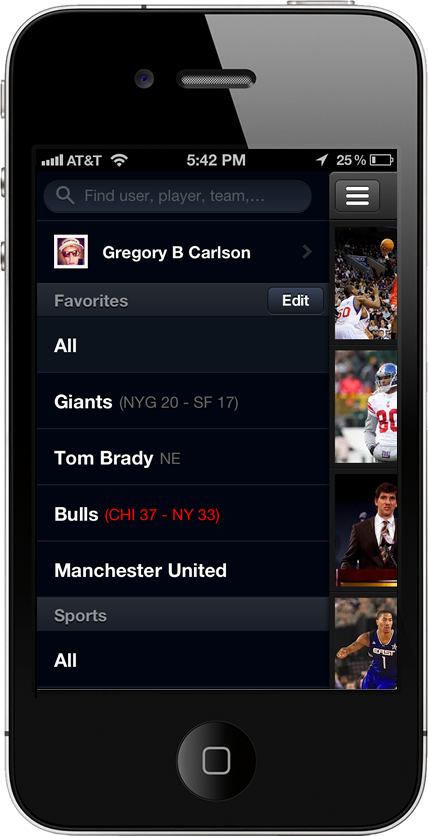
Most popular mobile sports apps are trying to feed you scores and news, or show you fantasy numbers. OnSports, by HitPost, is in a smaller class of apps that’s focused on users running the discussion themselves. And now, ahead of the Super Bowl this Sunday, viral growth and featured spots on the Android Market and the iTunes App Store are helping it step up against larger competitors.

The app, which lets users make their own reports and polls with professional photos, is now #2 on the Android Market free sports app section, and climbed to #13 in the iTunes version of the category since yesterday. This has translated to around 50,000 daily active users, chief executive Aaron Krane tells me, with 60% of new users returning within 24 hours. He says the app, which makes it easy to share activity to Facebook and Twitter, is generating 30,000 posts to Facebook each day, and 300 tweets per hour on Twitter. OnSports is also sending about 3000 SMS messages per day.

Some of these metrics are of the vanity variety — and they’re certainly not of the scale of social mobile games — but they all indicate an engaged group of core users, in an immature category of mobile usage.

Most significant sports apps, including ones from ESPN and major sports leagues, are focused on broadcasting scores and professional news to users; while they may have social features for commenting and sharing, the focus is not as heavily about user interaction. However, Bleacher Report and SB Nation — two web sites that rely on user-generated content — also have mobile apps. The influx of user web content into devices makes them more immediate competitors.

OnSports is notably sticking to the thesis of being mobile first… that users will want to do to more and more of their social activity on the devices they carry around with them rather than their computers. The company has been trying to figure out exactly how to make this idea materialize over the last year or so. With the new visibility to users ahead of the biggest sporting event of the year, it could be on its way to winning in the big leagues of consumer mindshare.


Ansca Mobile Accuses Partner PapayaMobile Of Copying Its Code

ansca-logo-orange

Ansca Mobile, the Palo Alto-based mobile development company and makers of the popular Corona SDK, is accusing its partner PapayaMobile of ripping off parts of its SDK  for use in PapayaMobile’s Social Game Engine. According to Ansca Mobile COO David Rangel, his company recently discovered that Papaya’s engine is what he calls a “blatant copy” of some aspects of the Corona SDK.

In addition, says Rangel, some of PapayaMobile’s syntax and sample code is identical to Ansca’s, and the company is using graphic assets it took from the code on the PapayaMobile website.

The code PapayaMobile is being accused of copying is available here in the Corona SDK, a free download from the Ansca Mobile website.

You can also see that the image above the “Physics Demo” on this page of PapayaMobile’s website (as of the time of writing) is an image from Ansca’s sample code packages. It even has the Ansca logo.

If you were to download the sample code, you would see that it’s very similar to Ansca’s code, Rangel says. What this means, he explains, is that they “clearly based how their physics engine works very closely on ours.”

Ansca hasn’t yet settled on legal action, but Rangel says “we do think it’s egregious and is worth calling out.”

The situation is a strange one because Ansca and PapayaMobile announced an official partnership back in August which allowed PapayaMobile’s SDK to be integrated into Corona. This made it easier for mobile game developers to add social elements to their games.

Stranger still are the accusations that Ansca reached out to PapayaMobile to try and resolve the situation, but never heard back. PapayaMobile, meanwhile, claims to not have heard of these accusations until this morning, when we contacted them for comment.

As of right now, PapayaMobile doesn’t have an official comment on the situation. The company says it needs more time to research matter in order determine what’s really going on. They’ll let us know when they have more information.

Note: We’ll update this post with that info, when it becomes available. 


Some Refurbished Xooms Could Put Personal Data In The Wrong Hands

motorola-xoom-tablet.jpeg (800×515)-2

Maybe it was too thick, maybe it was too heavy, maybe you just didn’t like Honeycomb. Regardless of your reasoning, you may want to keep your eyes peeled on your credit score if you bought and returned a Motorola Xoom between March and October 2011, because your personal information may be in someone else’s hands.

That’s the story from Motorola, anyway. As it happens, the standard refurbishment process that occurs when a customer returns a piece of hardware didn’t go exactly as planned for some devices. Motorola estimates that out of batch of 6,200 refurbished Xoom Wi-Fi tablets, about 100 of them weren’t properly erased before they were resold in batches on daily deals site Woot.com.

Though the odds are in your favor that you weren’t affected, I doubt that same line of reasoning will provide much comfort to someone who was.

Motorola doesn’t go into much detail about how exactly the process went awry. Were the tablets simply not wiped before they were resold? Did some glitch cause user-stored data to remain on the device even after a factory reset? According to them, the “information that may be accessible to the purchasers of the impacted refurbished tablets may include any information that the original user elected to store on the tablet.”

That could potentially include media like photos and video, as well as “user names and passwords for email and social media accounts, as well as other password-protected sites and applications.” With tablets supplanting notebooks and PCs for a growing number of users, this sort of snafu is the last thing Motorola needs as they and bounce back from a disappointing fourth quarter, though they’ve been pretty forthcoming about the whole mess.

If you were one of the people who returned a Xoom between March and October 2011, let Motorola know — they’ll be setting you up with a free 2-year subscription to Experian’s ProtectMyID identity theft alert service. They would also like to have a word with you if you bought a refurbished Xoom from Woot, so mosey on over to their returns site to see if your new old tablet is one of the troublemakers.


Tumblr Now Lets You Highlight Your Favorite Posts For A Dollar

tumblr

Tumblr is introducing a new feature today that lets its users pay a dollar in order to have their post featured on the Tumblr Dashboard. The option is called “Highlights,” and it’s now available right from the new post page on Tumblr. With Highlights, you can choose a special icon that will appear next to the post along with an optional message that points out why the post is important.

“Every now and then, a post comes along that’s meant for big things. It could be pulling the wraps off your new project, promoting your next show, raising awareness for a cause, or just sharing a truly incredible photo,” wrote Tumblr’s David Karp on the company blog this morning.

In typical Tumblr cutesy style, the Highlights option includes six icons: a lightning bolt, caution sign, heart, megaphone, unicorn (!) or cheeseburger (uh…what?).

There are also dozen of messages to choose from, like “help!,” “urgent!,” “watch this!,” “cool!,” etc. Some messages pertain to events (“save the date!”) while others refer to news (“today only”), products (“buy this!”) or even questions (“answer this!”).

In addition to being marked and annotated, the highlighted post is slightly larger and has bigger font, too.

Before publishing a post with a Highlight, you’ll be prompted to fill in your credit card info or make the $1.00 payment via PayPal. Whether or not the option really brings in more eyeballs and clickthroughs remains to be seen, especially since the low barrier to entry could see the feature used so regularly that Tumblr users end up with Highlight-blindness.

But for now, the trick is working. (Oh hey, BuzzFeed has an awesome new iPad app? Brb).


The Wheel: What Is The Foxconn Debate Really About?

scaledwm-img_3792

Thirty spokes meet at a nave;
Because of the hole we may use the wheel.
Clay is moulded into a vessel;
Because of the hollow we may use the cup.
Walls are built around a hearth;
Because of the doors we may use the house.
Thus tools come from what exists,
But use from what does not.
– Tao De Ching

There’s a carousel in a small Cape Cod town that we visited this summer and the kids rode it a few times. The carousel is quite old and quite handsome and it makes a great diversion of an evening. I’m reminded now of trying to take pictures of the kids while they rode the carousel. For a while I’d wave and try to get their attention as they roared past, their laughter dopplering around the edge of the curve, and then, after four or five tries I’d give up and just watch. It’s a wheel, an endless circle, designed to delight and enthuse and distract.

Reading the recent back and forth between Stephen Fry – an Apple apologist – and Mike Daisey – an Apple user/abuser – I’m reminded of that carousel. The gist is this: Mike Daisey woke up the NPR-listening world with his long piece of Foxconn for This American Life. It was a great piece – dramatic, educational, and eye-opening – but it’s definitely nothing we haven’t seen before. Some could say that it was The Jungle of Chinese manufacturing, a tell-all with just enough outrage to make us rethink a great horror. But the problem is this: Daisey is an actor and knows how to bring out the story, just as John Steinbeck was a writer and knew how to populate the Dust Bowl with Christ figures. That doesn’t make the story less effective – it makes it more so – but it does make the story less true.

The problem is the endless circle of blame and apology. Daisey is correct in many of his assumptions, but offers a way forward that is currently unenforceable. But if you argue against Daisey’s points, you’re an apologist. But, as Paul Krugman writes:

Such moral outrage is common among the opponents of globalization — of the transfer of technology and capital from high-wage to low-wage countries and the resulting growth of labor-intensive Third World exports. These critics take it as a given that anyone with a good word for this process is naive or corrupt and, in either case, a de facto agent of global capital in its oppression of workers here and abroad.

We keep going over the same ground here. The argument can be delineated like this: Foxconn is an evil sweatshop. Apple is a huge Foxconn customer. They should change things. Two of those things are true, a third is false.

To be clear, I’m with the crowd that says that Apple is, at best, ignorant of Foxconn’s problems and at worst ignoring them. I agree things must change and Apple is in a great position to do it. But I don’t agree with the first point. I’ve seen sweat shops and Foxconn is a factory. If many of the major brands (I recall that Ford was a customer at one factory I visited) knew that their promotional USB keys were made in a building that looked like a gulag, they’d be skewered. Here’s hoping they are, one day. However, Daisey’s Foxconn story – written outside of the factory – and my own research, written inside the factory – don’t jibe. His discoveries that people get sick or are injured in factories are naive and I suspect his sample size of employees who approached him is far smaller than we realize. To go into the Foxconn factory is to see a place staffed by college-age kids and engineers who work 10 or so hours a day building electronics. There is no great Dickensian work house nor are there sad-eyed madonnas of the assembly line chained to the soldering irons. This isn’t the mundanity of evil – this is just mundanity.

Nor am I saying that Daisey’s interviewees are malingerers with an axe to grind. I’m sure their lives are ruined or much harder thanks to Foxconn. The value of Daisey’s efforts is his ability to give these people a voice in an environment that would normally quash that voice. He’s doing what artists must do – reflecting a time and place through his own lens.

My own opinion is simple: Apple needs to do more for the people in its manufacturing chain. I will not pretend that Apple can simply wave a magic wand and make every Foxconn employee rich and happy, but it has the cash and the wherewithal to further disrupt the Chinese supply chain and improve the lot of Foxconn’s employees. But I also agree with what one Gawker commenter said: “I believe Tim Cook will do more good for those employees (and already has, in point of fact) than Mike Daisey ever will.” Apple on the aggregate couldn’t care less about our existence nor does it deserve our undying respect and admiration. On an personal level there are plenty of folks inside Apple working and worrying about worker’s rights in China, but as an entity we are talking supply chains and price management. Apple makes excellent tools for our digital age, that’s it. To defend or excoriate the company is like screaming into the wind. However, through their constant rejiggering and improvements, they have essentially created a Western, ISO-compliant factory environment in a corporate culture that used to force underperforming employees to stand outside wearing a sign that said “I am a bad worker.”

What Daisey did is made us think. Did he do it the right way, using the right tools? Absolutely not. Will he improve the lot of the workers he interviewed? I doubt it. But will his efforts – and the efforts of many who came before him – help bring the Chinese worker out of penury? Sure, eventually.

I opened this piece talking about a carousel in Cape Cod, a delightfully bourgeois setting for a piece on poverty wage labor practices. I get to go to Cape Cod and put my kids on a carousel because my job involves dicking around on the Internet all day (I suspect Daisey’s does too). My one wish is that every Foxconn employee, at some point in their lives, will be able to sit down to an unhurried meal, chat with family, and maybe ride a carousel. I think it’s in Foxconn’s best interests to ensure that that happens – and soon – and I think that we’re nearly there. Things will get better, I’m sure of it, and I also feel that they already have.


Peter Thiel Invests (Again) In Xero’s $16.6M Round

xero

Online accounting software maker Xero has raised $16.6 million in new funding from existing investors — including PayPal co-founder Peter Thiel, whose most famous investment, Facebook, just filed for an IPO,

Thiel first invested $3 million in New Zealand-founded Xero back in 2010, with the aim of fueling expansion in the United States. The company says that’s also the reason for the latest round. This time, Xero also notes that it recently doubled its US team, from three employees to six, and hired Jamie Sutherland (formerly vice president and general manager at Sage Software) as the president of US operations.

Other investors in the round include Sam Morgan and MYOB co-founder Craig Winkler. The company says it has 60,000 paying customers and 240,000 users. It partners with Yodlee to bring automatic bank feeds into the service, with 5,000 feeds in the US.

“Xero transforms the way small businesses handle their accounting,” Thiel said in the press release. “Where conventional accounting software is cluttered, slow, and anchored to a desktop, Xero’s cloud-based services and intuitive design simplify an impressive suite of financial tasks. We’re excited to see Xero grow throughout the U.S.”