German Court Upholds Previous Ruling, Says The Reworked Samsung Galaxy Tab 10.1N Can Be Sold

samsung-galaxy-tab-10-1n-10

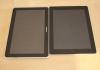
Mark one up for Samsung. After months of legal and PR battles, the South Korean company is finally able to sell and market their iPad clone in Germany. Just don’t call it an iPad clone anymore. The Samsung Galaxy Tab 10.1N (pictured left) is slightly different from the iPad — but that’s all that matters.

Samsung released the Galaxy Tab 10.1N late last year. This version features a silver boarder around the screen’s black bezel. The speakers were also relocated in a stereo configuration and now flank the screen. The original GalTab 10.1 was a blatant iPad ripoff. This version at least looks slightly different.

The Dusseldorf Regional Court said there are “clear differences” between the 10.1N and Apple’s iPad, essentially clearing it for retail sale. This ruling shoots down Apple’s request for a preliminary injunction. No doubt Apple’s all-star legal team will fight the decision, but they’re quickly losing support. The reworked 10.1N at least appears to be significantly different from the iPad — at least to the point that any 10.1 slate can look different from another one.


Oracle Buys Talent Management Solutions Company Taleo For $1.9 Billion

taleo

Oracle this morning announced that it is acquiring cloud-based talent management solutions provider Taleo for $46 per share or roughly $1.9 billion, net of Taleo’s cash and debt. Taleo’s solutions basically help organizations attract, motivate and retain human capital, and will serve to boost Oracle’s Public Cloud offering.

The transaction is expected to close in the Summer of 2012. Here’s how Oracle pitches the buy:

Together, Oracle and Taleo expect to create a comprehensive cloud offering for organizations to manage their Human Resource operations and employee careers.

The combination is expected to empower employees and managers to effectively manage careers throughout their entire employment, enable organizations to retain talent and optimize costs, and improve the employee experience through faster on boarding and better collaboration with team members via social media.

Until the deal closes, Oracle and Taleo will continue to operate independently. According to Taleo, more than 5,000 organizations use its solutions today.

Its stock price closed at just south of $39 yesterday.

Also see:

SAP Will Buy SuccessFactors For $3.4 Billion

Salesforce Buys Social Performance Platform Rypple; Will Launch ‘Human Capital Management’ Unit Successforce


Glam Media Cooks Up Newest Content Vertical With Foodie.com

foodie

Glam Media, one of the largest publishing and advertising networks on the Web, is debuting its newest branded vertical—Foodie.com. As its name indicates, Glam’s newest vertical is aimed at covering all things food, and features a combination of content from food critics, bloggers, chefs, restaurateurs and other “food influentials.”

For background, Glam’s various publishing verticals have a reach of 200 million unique monthly visitors globally, and is particularly popular amongst female audiences. Glam Media has more than 2,500 publishers organized across multiple vertical categories online including Glam.com for Women, Glam Entertainment for Adults, Brash.com for Men and Bliss.com for health and wellness. Glam also announced the acquisition of Ning in September.

As Glam CEO Samir Arora explains, there’s a large opportunity in providing quality content on recipes, restaurant reviews and tends in one place. And food has been one of the fastest growing ad verticals on Glam’s network of sites (Betty Crocker is an advertiser on Foodie.com).

Foodie features content from 100 food authors such as Inspired Taste, Kitchen Confidante and The Bakery Spot and includes more than 1,000 recipes at launch. Foodie also offers a recipe finder app that allows consumers to find and follow top food editors and chefs, and includes vertical recipe search, along with social integrations with Facebook and Twitter. Additionally, Foodie aims to be a social network for food-lovers to post recipes, photos, review other recipes and more.

As a part of the launch, Foodie is also creating a panel of culinary experts, including acclaimed food critics and celebrity chefs to help drive an authoritative perspective on recipes, restaurants, ingredients and cooking techniques. Among the culinary experts who will be a part of the Foodie community include newest Iron Chef winner, top chef Geoffrey Zakarian and the former New York Times and International Herald Tribune food critic and leading food author, Patricia Wells.

Food seems like a logical next play for Glam considering its focus on lifestyle media and content. There are a plethora of food-focused recipe verticals, such as AllRecipes, Food52, Gojee and many others. Glam hopes to differentiate itself by becoming a one-stop-shop for recipes, reviews, quality content and more. Foodie actually resembles more of an online food magazine, but with more social and interactive features.


Samsung Tackles the Tween-Book

When it’s time to shop for a new laptop, everybody wants an ultrabook. But few remain quite so excited when they see the often-limited performance and inflated price tags.

Samsung’s solution: Jam a standard, 14-inch laptop into what is essentially an ultrabook case, giving you (in theory) the best of both worlds.

The 14-inch Series 7 Chronos does look like just another ultrabook. Its footprint (12.8 inches x 8.8 inches) is actually smaller than the 13-inch MacBook Air’s (at 12.8 x 9.0 inches). But thanks to its super-skinny bezel, Samsung has squeezed a full 14-inch LCD into that space. The display doesn’t cut corners, either: At 1600 x 900-pixel resolution, the screen gives you a huge playground to work with, and it’s very bright, to boot. Also, just to confuse you, the Series 7 Chronos also comes in several 15.6-inch versions under this same model name.

Specs look good: a 2.4GHz Core i5 processor, a 750GB hard drive, 6GB of RAM, and switchable graphics so you can go integrated or turn on the ATI Radeon HD 6490M.

Unfortunately, the Chronos didn’t really show up for our benchmark tests. Scores were middling, and I experienced more than my fair share of lag and delay when launching apps and waiting for complex tasks to complete. The Chronos made up for some of its issues on graphics tests, though, with surprisingly solid framerates on most games — two or three times what you’d see with an ultrabook. Available ports include HDMI, a flip-out Ethernet port, two USB ports (one 3.0, one 2.0), SD card slot, and a mini-VGA port (including dongle).

The Chronos borrows more from the ultrabook world than just the form factor: The large, buttonless clickpad and backlit island keyboard are stock gear for ultras. The backlight effect on the keyboard, which has the exposed sides of each key light up along with the character on top, is especially impressive.

What’s not to like? In a word, stability. The Chronos was especially crash-prone, probably in part due to a surfeit of shovelware with a propensity for pop-ups. Samsung also claims a proprietary caching system aids with boot and load times. It shaved about 15 seconds off the machine’s boot times, but it didn’t do much for app loading. In fact, all the hangs made me suspect it was causing more trouble than it was worth. The clickpad is touchy and flaky, too, missing far more clicks than it should have.

At 4.6 pounds, the Chronos 7 occupies an abruptly unfilled niche between 3-pound ultrabooks and 6-pound 15.6-inch laptops. It’s too bad Samsung didn’t ratchet performance up along the way.

WIRED Is a better feature set worth an extra pound and a half? I think so. The slot-loading DVD is so well-integrated that I didn’t even realize it was there until accidentally hitting the eject button on the keyboard. Nearly $500 cheaper than Samsung’s Series 9 ultrabook.

TIRED Ultra-flat keyboard makes touch-typing surprisingly difficult. Average, unimpressive general app performance. Crash-prone. Could use an extra USB port or two. Weak battery life (barely 4 hours under load).

Photos: Ariel Zambelich/Wired

Rdio’s Android Player Gets a Much-Needed Update

If you’re an Rdio fan with an Android phone, you’ve been on the losing end of things for quite some time — stuck with a clunky mobile app and waiting around for a long-promised refresh. Meanwhile, Rdio’s players for iPhone and iPad are slick and pretty, and have been for many months.

Well good news for you: The streaming music service has just released a completely redesigned Android app that fixes all of the little annoyances.

As of Monday, the new version of the free Rdio player is available in the Android market and as an update for existing users. If you’re an Rdio subscriber, you should download it immediately. If you’re not a subscriber, you can try out the service free for a week before biting the bullet — the $10-a-month plan gives you unlimited streaming to any device (including your mobile) and the $5-a-month plan restricts you to only listening from your PC’s desktop.

Rdio offers native apps for all the major mobile platforms, as well as an excellent web-based player. But the iPhone and iPad apps in particular are elegant and easy to use, and they really stand out among streaming players for mobiles. So, it’s odd that the Android app has lacked polish for so long. It played music just fine, but the old version was missing key features found in its iOS counterparts, like some of the social discovery tools and a strong search engine.

I first caught a sneak peek of Rdio’s new Android app at CES in January. Last week, the company gave me a pre-release build to test, and I’m happy to report it’s been improved in every way. The fit and finish of the UI now closely resembles the iOS versions. On the main navigation screen, all the top-level menu items are laid out in a simple grid of icons, much like the home screen of Facebook’s mobile apps. There’s a new icon for new releases and one for recommendations. Searching and browsing the results are greatly improved. There’s a new persistent player — the widget that pops up from the bottom of the screen with a single tap from anywhere in the app, bringing up the current track and all the player controls. If you’re running Ice Cream Sandwich, the player’s controls and the album art will show up on your lock screen, so you can skip tracks or pause the audio without unlocking the device.

The split between Spotify and Rdio among my friends is just about half-half. Both services are the same price, they’re closely matched on selection (though neither has everything), they both do playlists well, and both let you sync songs for offline listening.

For me, the music discovery features and the attention to UI design are the big reasons I chose Rdio over Spotify. But I’m primarily an iOS user, and I doubt I would have subscribed to the service if I’d been stuck using the old Android player all the time. Now that the Android app is on par with the iPhone app, maybe more people will be drawn to it.

Real Augmented Reality Google Goggles In Prototype Stage?

Ducreux1

There have been whispers in the past of augmented reality goggles or glasses, but generally we have been able to dismiss them as exaggerations or concepts. The technology, while it isn’t unrealistic, simply isn’t quite there yet.

Apparently that hasn’t stopped Google: a new report is appearing corroborating earlier ones that they are working on a pair of augmented reality glasses. They’d piggyback on your phone’s connection and overlay information like directions, news, and so on.

Whether you think it’s a good idea or not, this kind of thing is going to come eventually, so it’s natural that Google would want to start girding itself for the approaching augmented glasses wars of 20XX.

The 9 to 5 Google report says they look something like a pair of athletic glasses, with a forward-facing camera and flash. The augmented reality bit is actually not a transparent display over one or both eyes, but a single opaque display on the side of one eyepiece (which eyepiece, and which side, were not specified). You operate it with voice or by moving your head around to navigate or select menu options.

Yes, not exactly the future we were expecting. I guarantee these things don’t look cool, either. But like I said, the technology isn’t there yet: cameras and processors aren’t small or fast enough, batteries can’t provide enough power, displays aren’t built for them, and computer vision isn’t good enough. Some of these things Google can work on, some they can’t. But the best way to have a product ready when the tech is there is to try to build one when the tech isn’t.

The glasses are apparently nowhere near done, unsurprisingly, and Google isn’t sure how to make anything out of them. A pilot program could be in the works, or it could continue to be an underground project, metamorphosing again and again until the market is ready. As it is, these things would be weird, expensive, and not particularly useful. In a couple years, though, who knows?


Halliburton Dumps RIM, Chooses iPhones For 4,500 Employees

happle

To say that RIM has had a tough time these past few months is an understatement, and today’s news probably won’t help raise the morale around Waterloo. According to AppleInsider, oilfield services giant Halliburton will soon be migrating their BlackBerry-toting workforce to run exclusively on a new fleet of iPhones.

I can also imagine the conversation now. “Sorry RIM, it’s not you, it’s us… alright, fine, it really is you.”

The news was sent out via an internal newsletter, which mentions that the reason for the switch was because the company “determined that the iOS platform offered the best capabilities, controls and security for application development.” It goes on to offer a basic timeline for the process — all 4,500 of Halliburton’s employee-operating BlackBerrys will be swapped for iPhones over the course of the next two years.

So what does this development mean for RIM? Not much at all, if Halliburton was the only company to jump ship. It’s clear that they’re not the only ones in search of some greener pastures — Apple CFO Peter Oppenheimer pointed out during the company’s Q1 2012 earnings call that nearly all of the top Fortune 500 companies “now approve and support iPhones on their networks,” including Credit Suisse, Kimberly Clark, St. Jude Medical, and Nike.

Of course, that hardly means that all or even most of them will transition their workforce from one platform to the other. Still, it clearly shows that these companies are considering different, more compelling mobile options to help conduct their business. And with the first BlackBerry 10 device not slated to ship until much later this year, RIM may not have too many chances left to show off what they’re really capable of.

In the meantime, RIM continues to illustrate how serious they are about the enterprise market with the launch of initiatives like BlackBerry Cloud Services, which allows businesses using Microsoft Office 365 more fine-grained control over devices and their data. It’s clear that RIM isn’t going to give up their hard-won enterprise segment without a fight, but if their recently leaked roadmap is any indication, they’re running awfully low on bullets right now.


Groupon Buys eCommerce Data Targeting Startup (And Angelpad Alumnus) Adku

Screen Shot 2012-02-06 at 1.22.09 PM

I love the smell of acquisitions in the morning! We’ve just heard that Groupon has acquired Adku, a stealth startup that uses big data in order to personalize the online shopping experience for people visiting eCommerce sites like eBay, Amazon and Zappos.

The company built their personalized targeting technology in three months, and have basically been in stealth since they launched at the Angelpad Demo day a year and a half ago. Adku is backed by Greylock Partners, Battery Ventures and True Ventures in addition to being an Angelpad startup.

Although CEO Ajit Varma and several members of the six person team are former Googlers, from what I’m hearing this wasn’t a talent acquisition or acqhire but a team + technology play  – with a price beyond $10 million. Varma would not disclose what the team will be working on when they get to Groupon.

While it’s not clear what the technology will be applied to, the acquisition makes sense on a lot of levels, especially because a personalized experience is where most of eCommerce is headed. Greylock VC David Thacker now runs product for Groupon, so that couldn’t have  hurt either.

Wrote Varma in a blog post, “We started talking to Groupon to bring our technology to more customers and quickly realized that we wanted to be a deeper part of a company that people love and is empowering merchants and customers in a way that’s never been done before.”

Stay tuned!

OK @adku (three former Google engineers) is a company that Techcrunch will slobber over. Dynamic content. Interesting company.—
Robert Scoble (@Scobleizer) November 11, 2010


Lip Reading, 3D Desktops, And NUI: Microsoft Plans To Reinvent User Interaction

kinect_out

Deep in the skunk works of its Research and Labs divisions, secreted around the Seattle area, Microsoft is working on totally reinventing the way people interact with their computers. Very little is out in the open or in more than a prototype form, but the work is unquestionably being done.

Last week it transpired that Microsoft is working on building Kinect into the bezels of laptops, and after that, presumably, tablets and eventually mobile phones. But it’s not just about building out the install base for Dance Central 3. It’s enabling the next generation of awareness in our electronics. The iPhone ushered in an era where our devices know when we touch them. Microsoft is working on the next one, in which our devices will simply know us.

How do you, as a person, experience the world around you? You mostly see and hear, and to a lesser extent you touch, taste, smell. Our devices, however, are largely restricted to an extremely limited sense of touch. Why shouldn’t they be more like us?

There’s a good reason, actually: computers don’t need to be like people because computers aren’t people. For years this has held true: the computer’s primary purpose for decades was to sit still and perform calculations humans couldn’t do. Interaction with a computer was strictly input, output. You didn’t interact so much as instruct, and wait for the result.

But mobile phones and touchscreens and laptops began changing the idea of a computer into something more personal, more interactive, more two-way. And technology exists to let our devices become more human. Why not let them?

Microsoft wants to. Despite their reputation among tech enthusiasts as a sort of stodgy blue-chip still coasting on the PC explosion of the late 90s and early 2000s, their R&D sections are world-class and put out actually innovative ideas and devices all the time. The trouble, briefly stated, is that implementing these ideas as products that fit into the Microsoft ecosystem isn’t easy, and even if it were, Microsoft has no talent for it.

But this work on “Natural User Interaction,” or NUI, is more promising. People have embraced the idea in gaming: the Wii led the way and the Kinect brought the future into your living room, though the future is a little laggy and the voice controls spotty. People are simply interested in new ways of interacting with their content and devices. For years the promise of a different kind of interaction has been dangling, in the form of sci-fi shows and movies usually, and people have always been intrigued by it.

So people want it — and Microsoft wants to make it — and they have the technology. Purchasing the IP behind the Kinect was an extremely smart move, maybe smarter than they know. What started out as a way to cash in on the market the Wii had created has snowballed into an entirely new form of interacting with computers, and a way for Microsoft to differentiate itself meaningfully for years to come.

It was reported to me that one of the things the new Kinect/depth/IR sensors will do is read lips. At first it sounds silly. Why? Maybe so it can better interpret your words from across the room, or in a loud environment. You won’t have to turn the music down to search and navigate the web on your TV or tablet.

And then it becomes clear that it’s just part of a larger suite of “senses” the device would have. The new devices are to have face recognition and voice recognition, so your password will be you saying your password in your own voice, not someone else, and not a print-out of you. They’ll be able to pick you out of a crowd, say a small party, and will be able to tell when you’re giving it a command — because you make eye contact and move your lips. Again, it sounds perfectly ridiculous until it starts sounding perfectly natural.

Another feature described was a sort of 3D desktop on which you could actually grab files and place them here and there. This has been tried before, of course, and Windows 8 is looking decided two-dimensional, so it’s probably more of a research project than anything. But it’s still interesting. Think of the basic gestures you might be able to make. One was described as pulling out a drawer. In the surprisingly resilient desktop metaphor of files and folders, what could be more natural? Or perhaps raising your hand palm up to show the task bar or dock? Trace your finger in a counter-clockwise circle to undo, clockwise to redo?

User experience reflects both the needs of the user and the capabilities of the device. For a few years now we’ve been satisfied with running our fingers along a slab of glass, producing an electrical signal interpreted as a point or blob — mainly because capacitive screens got good and cheap, and nobody wants to plug a mouse into their phone. But there are many other ways of interacting with our new mobile objects and information. Soon the glass touchscreen will seem as quaint as the command-line interface.

And yet, some are no doubt thinking, we still have some command-line interfaces in use. Sure. And mice and keyboards are still better for productivity, and a pen and paper is better for sketching out ideas, and headphones are better for listening to music in public. There are countless use cases and potential applications of technology, but it’s good to recognize when one should give way or simply isn’t applicable.

Microsoft is working hard at this, and you’d better believe that Apple is too, though they aren’t nearly as open about their research. And for once, they seem to actually be missing a piece of the technology pie: Microsoft has a head start on them in the world of NUI, having purchased and developed depth and personal sensors for at least two years now. Apple can always throw money at the problem, but it’s pretty clear that Microsoft has perceived this rare advantage and will be using it as a wedge wherever possible.

This shouldn’t be taken as an indication that Windows 8 is going to be anything other than advertised, but I think it will be a test bed for some major changes coming down the line. Microsoft wants to change the way people interact with computers because it sees, hopefully not too late, that the old way, the PC way, treating a computer like a box that computes things, is on its way out in a hurry. So if computers are going to be a part of the real world, they need to be able to live in that world. Eyes, ears, and who knows what else. It’s only creepy until you can’t live without it.

[images: Matthew Fisher/Stanford, Wolfgang Herfuntner]


Backplane To Hold Music Hackathon At SXSW, With Top Industry Managers As Judges

backplaneshot

A few weeks ago we wrote about Backplane — a platform for creating interactive, highly visual communities — that counts Lady Gaga as one of its backers, along with plenty of the Valley’s most well-known investors.

Now the company is harnessing its star power to hold a unique (and potentially awesome) event at SXSW: the SXSW Managers Hack — a hackathon that will be judged by some of the most accomplished managers in the music industry, including: Scooter Braun, best known for facilitating Justin Bieber’s rise to fame; Jay Brown, President of Jay-Z’s Roc Nation; and Troy Carter, manager of Lady Gaga (Carter is also one of Backplane’s cofounders).

Developers are being asked to hack together “apps, platforms, and technologies designed to advance the future of digital music distribution” — where they’ll be judged by the people who actually decide which apps and platforms their artists will use. In order to attend the event, you’ll need to apply for an invitation, which you can do right here.

The event will take place on March 11 2012, from 2 PM til 10 PM, and will also be live streamed by R to Z Studios, Randi Zuckerberg’s new social media firm (she’ll be hosting the stream as well). Note that while the event will revolve around music, it’s being held during the ‘Interactive’ portion of SXSW (SXSW Music begins on the 13th).

Music-themed hackathons have been held before (check out Music Hack Day if you’d like to find one that’s coming up in your area), but the presence of top industry managers at this one will likely help make it especially interesting. It’s also another sign that the industry recognizes the potential that startups and hackers can bring to the table — which is a lot better than the innovation-squelching lawsuits that the record companies have slung around before.

The event also fits in line with Backplane’s stated goal of attracting the best developers around (they’ve previously discussed their aim to foster an engineering-focused culture).

Oh, and Backplane fittingly promises that ”live music and DJs will jam throughout” the hackathon.


‘Transparent Screen’ Android App Lets You Text And Walk Without Fear

transparentscreen

I used to scowl when I saw people walking down the street with eyes locked on their phones, but necessity has gotten me in the habit of doing it too. Thanks to a new app called Transparent Screen though, now I can do it free from the fear of falling into an open manhole or into a large fountain.

No, that’s not a hastily Photoshopped image you see here, that’s more or less exactly what you’ll see when the app is running. I say “more or less” because while all of the Android UI goes translucent upon launch, you’re afforded with quite a bit of a control over how dramatic the effect is. It’s in your best interest to get familiar with the settings if you plan on using Transparent Screen for a while too, because you’ll soon have some choices to make.

If you’re a fan of texting while sprinting for example (which I don’t condone, for the record), crank the camera resolution down to keep that forward view going as smoothly possible. Alternately, crank it up you’re more a fan of slow, meandering walks while you tweet about the wonders of nature.

The big issue, as Android Police points out, is that you’d be hard-pressed to find a configuration that works well while bouncing between your favorite apps. Still, that’s a pretty minor concern — Transparent Screen seems like an app best used occasionally, when you absolutely have to fire off a message while on the move. Sure, there’s nothing that says you can’t have it running nonstop, just be prepared to watch your remaining battery life disappear in front of your eyes.

Interested? Mosey on over to the Android Market, where Transparent Screen can be had for the low, low price of free.


Can Startups Learn Anything From Linux?

Image (1) tux.jpg for post 194399

Linux is the world’s largest collaborative software development project. People from all over the world have influenced the Linux kernel code, and it runs on everything from mainframe computers to wristwatches. Linux, and free software development in general, provides some tremendous insights into what makes a successful project. Can today’s startups learn anything from the history of Linux?

The history of Linux proves that collaborative development speeds true innovation. If Linus Torvalds were left to work on Linux alone, there’s no way it would be the success it is today. A great many of the things that Linux does today are a direct result of people scratching their own itches, and then contributing their work back upstream to Linus. Many people focusing on their own little (and not-so-little) problems have made Linux the powerhouse that it is today.

It might not make sense for every startup to develop their project in public, but they can certainly avoid reinventing many wheels by using existing free software projects wherever possible. Many smart people are working all day every day to improve the building blocks of
innovation, and startups should be a part of that communal effort.

Certainly startups should focus on their own “secret sauce”, but they can also participate in the larger free software ecosystem. For example, there’s no long-term competitive advantage to a startup if they make improvements to Apache, or MongoDB, or other “plumbing” aspects of the Linux stack. Any such improvements can — and, in my opinion, should! — be shared upstream to benefit everyone.

In a similar vein, though, if there’s some home-grown technology that helps your startup but isn’t fundamental to its success, why not release it in order to leverage the global body of free software developers? Facebook releases free software. LinkedIn releases free software. Google releases free software. All of these releases are obviously used internally, but they’re not fundamental to the success of the company. I think there’s a lot to learn from the big players in this respect.

As Ubuntu‘s Technical Architect Allison Randal said, “Free Software is a fundamentally superior model for developing software.” Jim Zemlin, the Linux Foundation‘s Executive Director, says, “Free your technology and see it spread and do things you never even imagined were possible.”

Another lesson that startups can learn from Linux: when you disrupt the status quo you attract enemies. When Linux was gaining traction through the 90s, it was the target of intense attack from established industry players. Many of those early detractors are now contributing to the Linux kernel, as well as many other free software projects.

Zemlin points to Facebook as a shining example of what “the Linux community has been practicing for years: first – don’t do it for the money, second maintain the hacker way. And, the money follows.” He goes on to observe that there “is no coincidence that one of the greatest entrepreneurial success stories of the last decade is deeply rooted in one of the greatest technology innovations of the last two decades: Linux and open development.”


Appoxee Raises Funding, Helps Mobile App Developers Boost User Engagement

appoxee

Israeli startup Appoxee has raised an undisclosed amount of funding from early-stage investment firm Cyhawk Ventures.

The company offers a service that helps app developers and publishers increase user engagement through rich push notifications and helps them with things like audience segmentation, targeting, analytics and reporting.

Read more over at TechCrunch Europe.


WWJD? The CEO Every Healthcare Leader Should Learn From

Innovator's Prescription

Editor’s note: This guest post was written by Dave Chase, the CEO of Avado.com, a patient portal & relationship management company that was a TechCrunch Disrupt finalist. Previously he was a management consultant for Accenture’s healthcare practice and founder of Microsoft’s Health platform business. You can follow him on Twitter @chasedave.

As healthcare goes through massive changes, health system CEOs would be well advised to study what newspaper industry leaders did (or perhaps more appropriately, didn’t do) when faced with a similar situation. In the late 90′s, the following dynamics were present:

  • Owning printing presses was a de facto barrier to entry allowing newspapers unfettered dominance.
  • Newspaper companies bought up smaller newspaper chains and took on huge debt.
  • Newspapers were comfortable as oligopoly or monopoly enterprises allowing for slow, plodding decisions. Their IT infrastructure mirrored this with expensive and rigid technology architectures.
  • Newspaper leaders knew full well that dramatic change was coming and even made some nominal moves, but didn’t fundamentally rethink their model.
  • Depending on one’s perspective, it was the best of times or the worst of times to be a leader of local media enterprise.

Before long, owning massive capital assets and crushing debt became unsustainable. The capital barrier to entry turned into a boat anchor while nimble entrants created a death-by-a-thousand-paper-cuts dynamic. Competitively, newspaper companies mistakenly worried about other media companies or even Microsoft, but their undoing was driven by a combination of craigslist, monster.com, cars.com, eBay, and countless other marketing substitutes for their advertisers and there were easier ways to get news than newspapers. Generally, the newspaper’s digital groups were either unbearably shackled or marginalized so that the frustrated digital leaders left to join nimble new competitors. The enabling technology to reinvent local media didn’t come from legacy IT vendors who’d previously sold to newspaper companies, but from “no name” technologies such as WordPress, Drupal and the like.

The parallels with health systems today are striking. Consider the present dynamics:

  • Until recently, complex medical procedures had to take place in an acute care hospital setting. Now they are being done more and more in specialty facilities that can do a high volume of particular procedures at a much lower cost. [See article graphic.]
  • Health systems have been aggressively buying up other healthcare providers and frequently taking on debt in the process. At the same time, health systems often have capital project plans that equal their annual revenues even though no expert believes the answer to healthcare’s hyperinflation is building more buildings. Consider the duplicative $430 million being spent in San Diego to build two identical facilities just a few miles apart as Exhibit A of the problem. Looking at the history of other countries that shifted from a “sick care” to a “health care” system, more than half of the hospitals closed. They simply weren’t needed or weren’t appropriate.
  • Just as newspapers were implementing multimillion dollar IT systems while nimble competitors were using low and no cost software to disrupt the local media landscape, health systems are similarly implementing complex systems to automate the complexity necessary in a multi-faceted system. Meanwhile, nimble competitors are implementing new models at a fraction of the cost and time. For example, it’s well-known that a healthy primary care system is the key to increasing the health of a population. Imagine if a fraction of the 100’s of millions being spent by mission-driven health systems on automating complexity was redirected towards the reinvigoration of primary care.
  • The pace and scale of innovation at most health systems isn’t up to the enormity of the task. The vast majority of health system innovation teams are constrained by how they have to fit innovation into an existing infrastructure. That approach rarely leads to breakthroughs, as its true intent is to make tweaks to a current system rather than a rethink from the ground up.

Compared to newspapers, the scale and importance of the challenge is far greater for health systems so they must aggressively take action or risk their future viability.

Prescription for Healthcare From a Newspaper Industry Executive
In the midst of the newspaper industry carnage, there is one particular bright spot from an individual who has gone against the conventional wisdom that newspapers are doomed to fail. His name is John Paton and he’s reinventing local media. I’ll highlight some of what he’s done to turn a bankrupt (financially and creatively) enterprise into a profitable, dynamic and rapidly growing enterprise attracting the all-stars of the industry.

There has been an expression in traditional media that analog dollars are turning into digital dimes. Rather than lament that, here’s John Paton’s response:

“And it is true that print dollars are becoming digital dimes to which our response at Digital First Media has been – then start stacking the dimes. All of that requires a big culture change. A change that requires an adoption of the Fail Fast mentality and the willingness to let the outside in and partner. Partnering is vital to any media company’s growth whether it is an established media company or start-up. We are going to marry our considerable scale with start-up innovation to build success.”

It’s worth noting that those “digital dimes” are often more profitable than the “analog dollars” of the past because much less overhead is required.

The following is John Paton’s 3-point prescription for reinvention that led to a 5x revenue increase and halving of capital expenses. This resulted in his organization going from bankruptcy to $41 million in profit in two years.

  1. Speed to market: One new product launched per week [See Related Article: The Rise of Nimble Medicine]
  2. Scaling opportunity: Sourced centrally, implemented locally. Ideas can come from all over. Identify the best ideas/people from all over
  3. Leverage partners – Feed the firehose of ideas from outside.

Unfortunately, before John Paton was able to affect this level of change, scores of newspaper employees lost their jobs while traditional newspaper executives dawdled. It is the rare leader that can create the sense of urgency necessary to affect this scale of change before the enterprise is a hair’s breath from extinction. As the old oil filter ad says, “you can pay now or pay later” – of course, the cost is much greater if change is put off. The only question is whether health system leaders will have the courage to make the change before the inevitable crisis hits with full force.

Applying Reinvention Lessons into Healthcare
The following are some ideas and examples of how this approach can be applied to tackle the enormous challenge facing health system leaders. [Disclosure: The company where I’m CEO, Avado, provides enabling technology for some of the organizations mentioned which is why I have a view into their projects.]

Fresh, Outside Perspective is Imperative
As John Paton brought in outside advisors such as Jeff Jarvis and Jay Rosen, health systems would be well-advised to do the same. They can go a step further and partner with innovators driving new models. They can be project managers or partners. Examples follow:

  • Mike Berkowitz has been a pioneer in telehealth including running his own business, Telehealthcare.com. Large and small healthcare providers are hiring him to develop and implement their telehealth programs.
  • Dr. Samir Qamar founded MedLion as a mass-market version of primary care. MedLion works with healthcare providers to transition from a “do more, bill more” model to a patient-centric, accountable model that is affordable yet produces impressive outcomes and a dramatically better bottom-line than a standard practice.
  • Ken Erickson is the CEO of Employer Direct Healthcare. He’s working with providers to deploy bundled case rates. That is, rather than getting scores of bills from various providers and the accompanying morass, they enable a single, transparent cost for procedures. This also enables healthcare providers to tap new distribution models for their services.

Communication is the Most Important Medical Instrument of the Future
John Paton has demonstrated an unprecedented level of communication in redefining the culture of his organization. This approach has set the tone for his organization. Imagine if that tone was set by healthcare leaders for their organizations. I have heard it said that between 80% and 93% of what a doctor says to a patient is forgotten. In a world where provider reimbursement is based on outcome, rather than activity, this is a recipe for reimbursement disaster. Communications is the antidote to that avoidable disaster.

Like local media executives in the late 90’s, healthcare leaders can view the present situation as either the best or worst time to be in their role. The health system leaders who believe it’s the best of times would do well to ask WWJD – What Would John Do? John Paton demonstrates how a strong leader can reinvigorate and reinvent a lumbering giant into a nimble organization.

Related articles
Why it’s Good News HealthIT is so bad
Moneyball for Medicine – Business Models for Healthcare


Circuit Playground App Helps Makers Build Electronics

id492487671-1

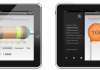
If you don’t know a resistor from a Mister Mister, this is the app for you. Built by Adafruit, creators of DIY Arduino gear, Circuit Playground is a $2.99 app designed to help you identify and understand various electronic components. For example, the app includes a resistor identification system based on the colored bands painted on the casing as well as a field guide to many electrical components.

The rest of the tools – including converters, calculators, and datasheet storage systems – just makes things a little bit easier when you’re building an electronics project. I’m terrible at this stuff so it would be a boon for me and my slow-witted monkey mind.

Decipher resistor & capacitor codes with ease
Calculate power, resistance, current, and voltage with the Ohm’s Law & Power Calc modules
Quickly convert between decimal, hexadecimal, binary or even ASCII characters
Calculate values for multiple resistors or capacitors in series & parallel configurations
Store, search, and view PDF datasheets
Access exclusive sneak peaks, deals & discounts at Adafruit Industries

The app is available now for the iPhone and iPad.

Product Page