“Etsy For Eco” Ethical Community Raises $300,000+ In Seed Funding

ethicalcommunity-logo-high-res-

Ethical Community, an online, eco-friendly marketplace (which has plans for a snazzier name in the works!), has secured a £200,000 ($316,640 USD) round of seed funding from a syndicate of angel investors, the company is announcing today. Founded in 2009, the marketplace has signed up over 850 sellers from around the world, who have now listed over 7,000 eco-friendly, organic and natural products including clothing, jewelry, health and beauty products, food and drink items, pet items and more.

The new investors include AlertMe.com CEO and ASOS.com board member Mary Turner, founding partner at Alchemy Partners, Robert Barnes, venture investor Kelvin Au, and CEO of Orange Advertising Networks, Giuliano Stiglitz.

The company was started by entrepreneurs Liam Patterson and Jason Dainter, who had the idea to connect customers to sellers in a more personal way. People want to hear the stories behind the products, explains Patterson. “To conscious shoppers, this story is more important than the visual appearance of the product,” he says.

As someone who is often the recipient of gifts like handmade, dye-free soaps and homemade jewelry, I know from first-hand experience that it’s the story that convinces the eco-friendly shopper to make their purchase. I never receive just the item in question as my gift, I also receive the card telling me about the story behind the product, as well as a personal anecdote regarding the item’s makers.

To be able to make that same one-on-one connection on the sometimes more impersonal platform of the web is a challenge, but one that seems worth the attempt. To personalize the experience, sellers can now create blog posts on the Ethical Community website to share their stories and interests, as well as post videos from their homes or workshops.

Ethical Community, which is based in the startup-friendly Shoreditch area of London, says it will use the seed funding to grow its seller and shopper base, continue its expansion plans, and launch an improved version of the site in the spring.

Admits co-founder Dainter, the focus until today has been acquiring great sellers, but now they’re working on rebranding. “To be honest, the name and brand needs a revamp, and the funding will help in that respect. Structurally, we have a lot of changes coming.”

One of those changes will involve making the video system a more predominant part of the site, and integrating it more heavily into the social feeds.

“Our brand is very much about the personal connection with buyers and sellers. Video is a great way to do that, so we’re intending to build on that,” Dainter says.


Brightcove Shares Pop Over 30 Percent On First Trade; Valued At Nearly $400M

brightcove

Online video service Brightcove has just made its public debut on the NASDAQ under the symbol ‘BCOV’, with an opening trade of $14.50. This is up over 30 percent from the company’s original pricing of $11 per share, after setting the range of $10-$12 per share. At $14.50 per share, Brightcove is valued at $382 million.

Brightcove sells online video publishing and distribution services, including Brightcove Video Cloud, an enterprise-friendly online video hosting and management platform, and Brightcove App Cloud, a software application development and management platform designed to help customers publish and distribute video through software apps across multiple Internet-connected devices.

Brightcove, which raised $55 million in the offering, filed for the IPO back in August. Brightcove has raised over $100 million from Accel Partners, General Catalyst Partners, Allen & Company, AOL, The New York Times, Maverick Capital, IAC and Hearst Ventures, among others.

The company says it had 3,872 customers as of Dec 31, including The New York Times Company, Oracle, AOL, Philips Electronics, Macy’s, Bank of America, the U.S. Army and Honda. Brightcove’s revenue grew in 2011 to $63.6 million (from $43.7 million in 2010), but still showed a loss of $17.8 million. Thanks to plans to “continue to invest in the growth of our business and operations,” Brightcove says it expects to see losses until the end of this year at least.


Real Estate Site VivaReal Raises Cash To Be The Zillow For Brazil

vivareal

VivaReal.com.br, a real estate marketplace in Brazil, has raised an undisclosed amount of funding from a number of angels and investors, including Greg Waldorf, Simon Baker, Shaun Di Gregorio, Wences Casares, Micky Malka, Ariel Poler, Gordon Rubenstein, 500 Startups, Jeff Fluhr, Errol Damelin, Florian Pass, Monashees Capital and Kaszek Ventures.

As co-founder Brian Requarth tells me in more developed markets like the U.S., property searchers have the option to find almost all the inventory for sale or rent online. In Brazil, a fraction of the listings are available online and it is still a highly fragmented marketplace. In the U.S., we have the MLS, which is a centralized database for rental and for sale listings, but in Brazil there’s no such mechanism in place.

With 57,000 real estate brokers in Brazil, the country’s real estate market is largely offline, Requarth explains. And property searchers are under served since there is a dearth of buyers’ agents in Brazil. There is an information gap, which Requarth says can be filled with an online portal.

Similar to how Craigslist, Zillow and Trulia function, VivaReal connects buyers and sellers with properties for sale and rent. Users search for and/or list properties by location, size, rental vs. sale, and more. The company also focuses on helping expats and investors find properties in Brazil with an English version of the site. And the startup plans to deploy mobile optimized versions of VivaReal.com.br for smart phones and tablets this year.

After two years, the company is seeing 1 million monthly unique visitors in Brazil, says Requarth. And currently, the site lists properties in 15 cities in Brazil and will be expanding over time.


As Social Bookmarking Reignites, Venture-Backed Clipboard Acquires Clipmarks & Amplify

clipboard

Clipboard, the web clipping service founded by former Overture vet Gary Flake, has just completed the acquisitions of two competitors, Amplify and Clipmarks. The startup, which is taking on the challenge of reviving social bookmarking, is backed by many top notch investors, including Andreessen Horowitz, Index Ventures, SV Angel, Betaworks, DFJ, First Round, CrunchFund (note: TechCrunch founder Michael Arrington is a founding partner in CrunchFund) and others.

Current Amplify and Clipmarks users will be invited to join Clipboard via email, but anyone else can request an invitation to the Clipboard private beta directly from the the service’s homepage.

As per usual, terms of the acquisition are not being disclosed, but users are in the process of being notified now. An official blog post will also go up later today, serving as “official notification.”

For those unfamiliar, both Amplify and Clipmarks served similar interests: social bookmarking. To be clear, Amplify is actually owned by Clipmarks, LLC, but functions as a separate service. Amplify allows users to clip excerpts from an article, photos, videos, and other content, and then share those items across social media. It was more of a utility for posting content to multiple networks at once (e.g., Twitter, Facebook, Tumblr, WordPress, etc.). Meanwhile Clipmarks, an older service, did much of the same, but focused more on publishing clips to your blog, emailing items to friends or even printing them out. It also once included a Digg-like feature that allowed the most popular bookmarks to “pop” up to the top of the site.

In 2007, TechCrunch reported Clipmarks may have been acquired by Forbes, during a time when Delicious still reigned in the social bookmarking space. But instead of improving on the original Clipmarks product itself, Forbes spun it back around as a new service called Amplify.

Although social bookmarking once seemed to be a bit of a holdover from the Web 2.0 era, the recent success of startups like Pinterest have shown that there’s still life in this category yet, especially if you leverage the social backbone of Facebook to go viral and combine that with a more appealing, visual user interface.

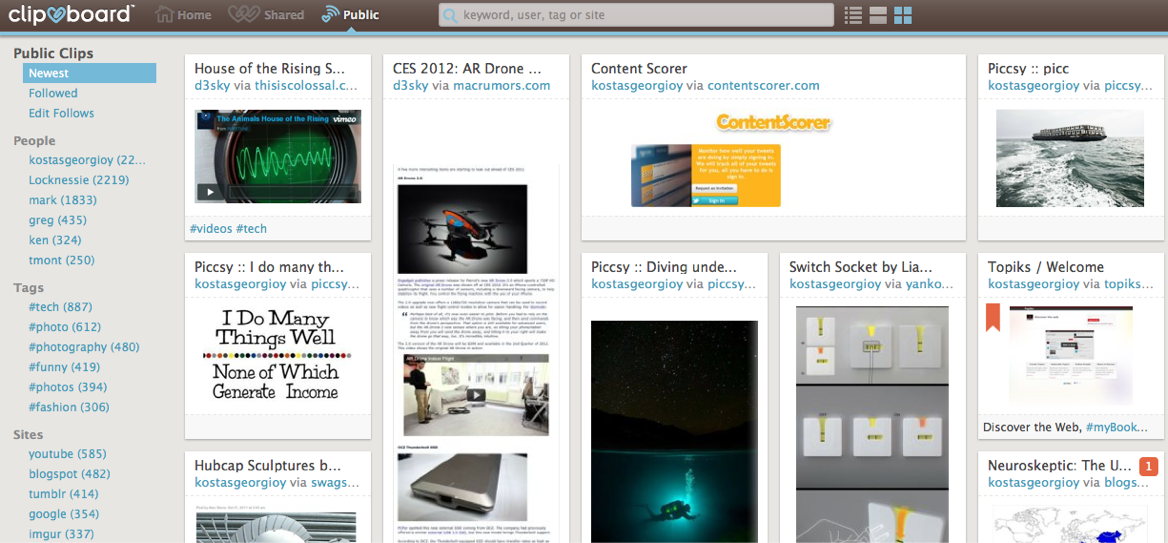
On that front, Clipboard announced a design refresh earlier this month that clearly puts it in Pinterest’s territory. Web clips now appear as tiles with thumbnail previews, action counters and annotations (hashtags), and are laid out on the page as tiled boxes of varying sizes.

The most intriguing thing about Clipboard at present, however, is its current list of investors: Andreessen Horowitz, Index Ventures, CrunchFund, DFJ, SV Angel / Ron Conway, Betaworks, First Round Capital, CODE Advisors, Founder’s Co-Op, Acequia Capital, Vast Ventures, Ted Meisel (former CEO of Overture and now at Elevation Partners), Blake Krikorian (former CEO of Sling and now an Amazon board member), and Vivi Nevo.

Clipboard isn’t the only startup outside of Pinterest working to revive social bookmarking, others in this space include Snip.itSnipi, and the newly relaunched Delicious.


Motorola Droid 4 Review: This Keyboard Rocks, But That’s About It

OLYMPUS DIGITAL CAMERA

Short Version

The Droid 4 doesn’t look much like its other Droid siblings, but it does promise the same stellar keyboard and a solid construction. At $199 it won’t break your wallet, but it will offer most of the same specs we’re seeing go for $300, including a 4G LTE radio. If thin and light is important to you, the Droid 4 probably isn’t what you’re looking for, but keyboard purists should start getting excited… right… now.

Features:

  • 4-inch 540×960 display
  • Verizon 4G LTE
  • Android 2.3.6 Gingerbread
  • 1.2GHz dual-core processor
  • 8MP rear camera (1080p video capture)
  • 1.3MP front camera (720p video capture)
  • Sliding 5-row QWERTY keyboard
  • MSRP: $199.99 on-contract

Pros:

  • The backlit QWERTY keyboard is solid and comfortable
  • Much better design than old Droids
  • Highly print resistant, comfortable rear surface

Cons:

  • Low quality photos
  • It chugs a bit if you push it
  • Battery’s a bust

Long Version

Hardware/Design:

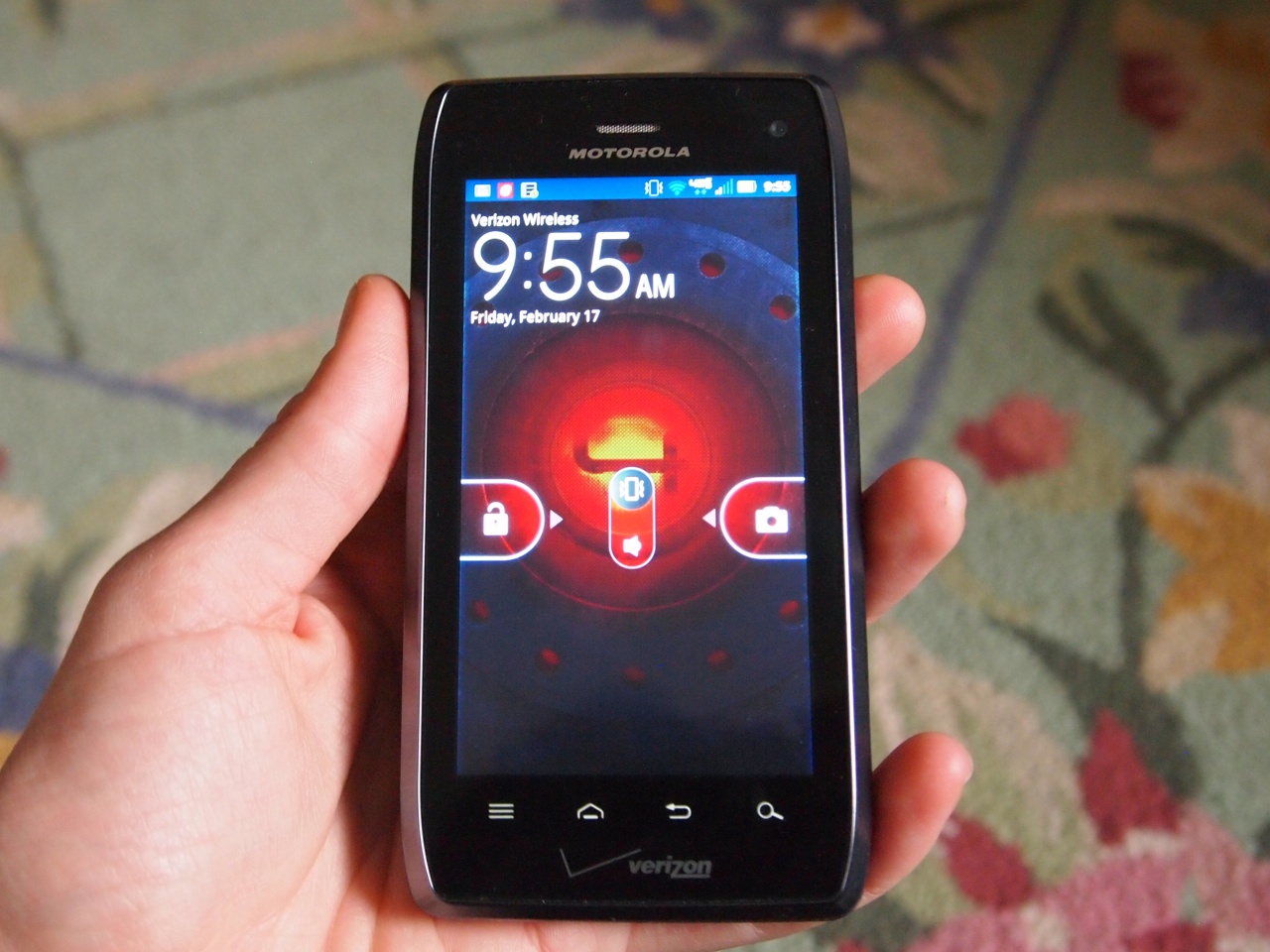
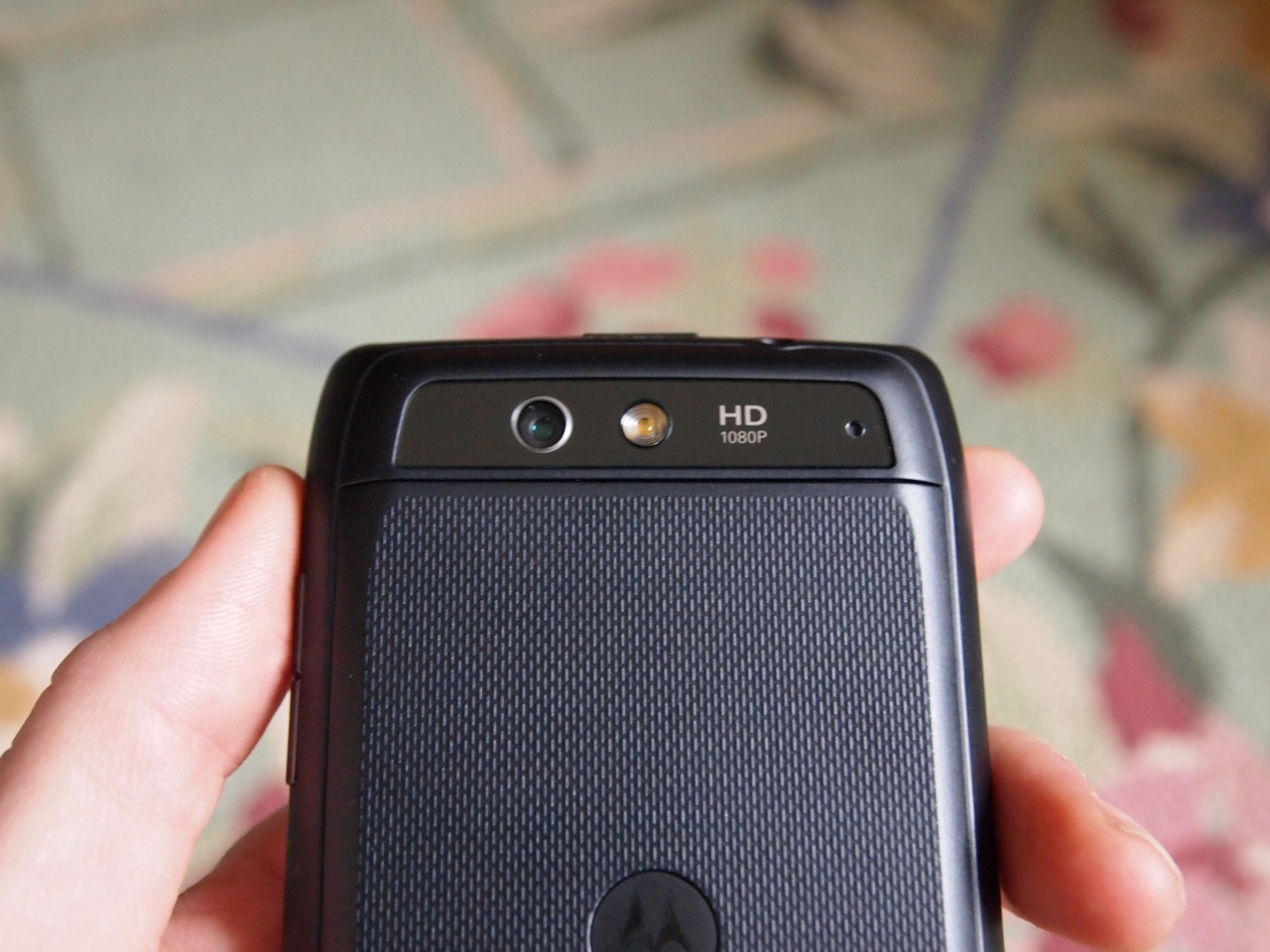
The Droid 4 feels great in the hand, and in my honest opinion it sports a far superior design than its predecessors. It actually looks quite a bit like the Razr, save for a textured plastic back panel and the obvious added heft. Still, the same black bezel and boxy metal edges remain.

I wish that both the lock button and the volume rocker had depressed a bit more when pushed, but Moto got it right where port placement is concerned — both the HDMI out and microUSB are on the lower left hand edge. That shouldn’t bother anyone who’s tooling around while plugged in (and trust me, you’ll be plugged in quite a bit (more on that later)).

The removable battery door has a nice feel to it and is surprisingly resistant to prints, though for some odd(/stupid) reason Moto won’t let us get at the battery itself.

The size of the phone didn’t bother me at all. Obviously if thin and light are important to you than you won’t enjoy this, but it felt nice and solid to me. I prefer the 4-inch screen to stuff like the Nexus and Note’s giant displays, and the .5-inch waist line wasn’t that much of a bother either. See, the phone’s weight actually lends itself to a more premium feel in the hand and I wouldn’t have even minded an extra .1 inch if it meant a removable battery (hint hint).

Keyboard:

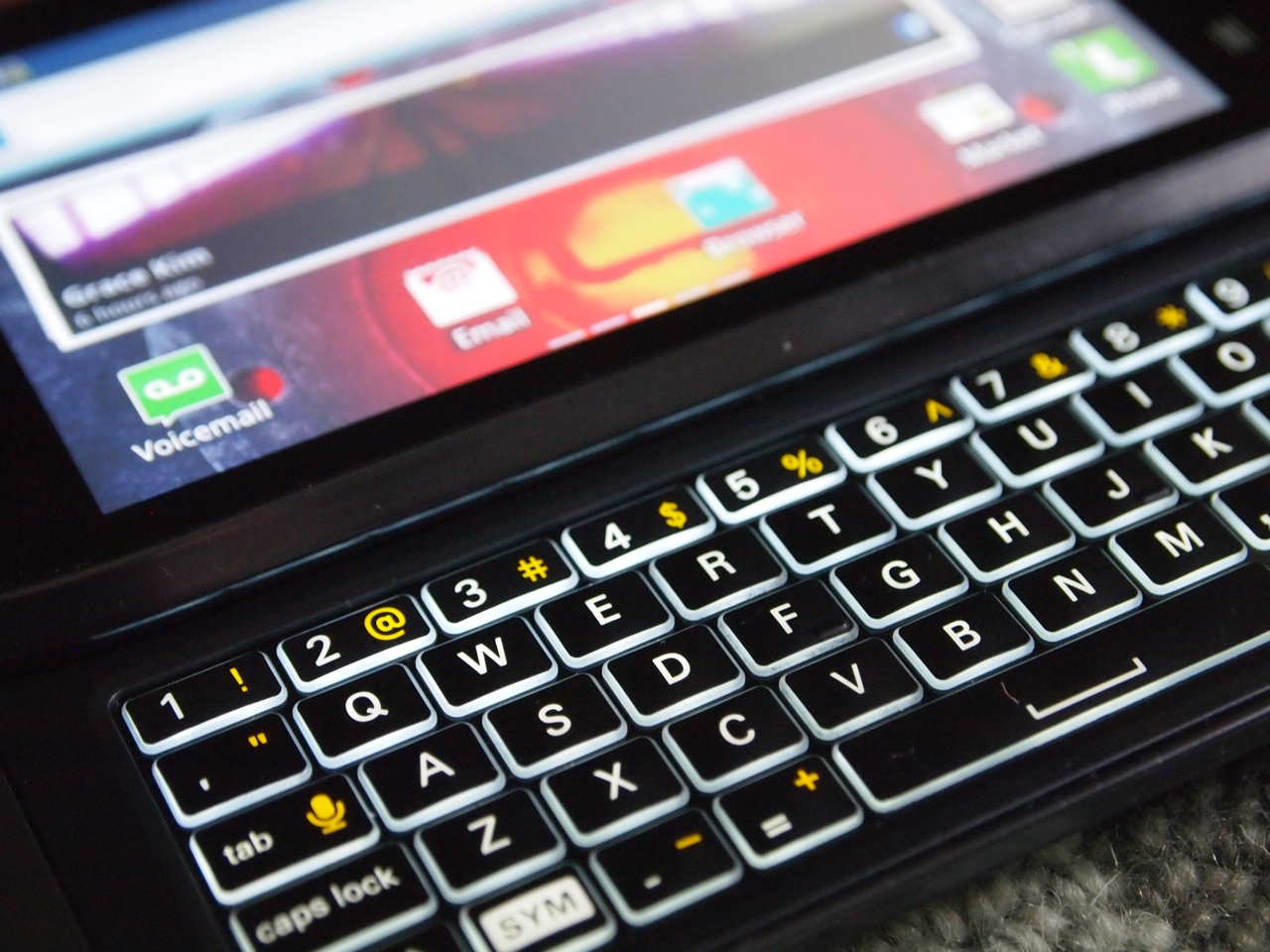
The Droid 4 keyboard isn’t going to give you any problems on the durability front. It slides in and out nicely and doesn’t seem to bend or crack at all when pressured. There is a little friction there when sliding it back and forth, but after a little getting used to I prefer that more than those ultra slippery sliders — feels a bit sturdier.

The buttons themselves lay nearly flush with the phone, which certainly looks nice, but I’d appreciate just a bit more of a hump or bump to help feel my way around. They’re non-slick keys which is nice on its own, but what’s even better is that they don’t seem to get all grubby and sticky either.

The buttons are placed well, with just enough space in between to at least feel a tiny groove (which is basically necessary since the buttons are so flat). They also offer a nice tapping noise and some solid tactile feedback when pressed, though textaholic teens may have some trouble going unnoticed in a classroom.

I still find the iOS virtual keyboard and Swype to be faster than this physical 5-row QWERTY (for me, at least), but keyboard purists likely won’t find anything better on the market.

Software:

The Droid 4 runs Android 2.3.6 Gingerbread along with some version of a Motorola overlay. It’s not MotoBlur exactly, but it’s certainly not pure Android.

The UI doesn’t seem terribly obtrusive, but it’s also not very useful either. The apps/widgets have this “flashy” effect when you swipe between home screens, which results in an annoyance at best and a headache at worst. There are social hubs and stuff, which is (how can I put it…) whatever, but the value proposition of the UI just isn’t good enough. Now that Googorola is almost in the bag we might start seeing a few more vanilla devices out of Moto, but that’s probably just a dream.

MotoCast is along for the ride here, which offers up a solid option for any cloud syncing/streaming you may want to do between phone and PC. You’ll also find Netflix, a lite version of Madden NFL 12, Kindle Reader, NFL Mobile, and Mog Music present and accounted for, along with a handful of bloatware apps from Verizon and Motorola.

Camera:

The camera on the Droid 4 didn’t live up to my expectations. The app itself is swell, on the other hand. There’s a little drop-down tab on the side that gives you access to plenty of settings, scenes, and modes. Not all of them are as useful as the others, but they’ll at least make for a good time playing around and taking pictures.

However, none of that really matters if the picture quality itself happens to blow. I tried to give it a few chances, switching between low-light and outdoor settings, but no matter what images just seemed to fall flat. I took the same shot with both my iPhone 4S and the Droid 4 and the difference in image quality is staggering.

Take a look:

Display:

The Droid 4 uses a TFT LCD qHD (960×540) display that measures 4 inches diagonally. Size-wise it feels just right. Since the phone itself is a bit thick, a screen any larger might make one-handed actions more difficult. Serious mobile gamers might be a little peeved at the smaller display, but if you’re a serious mobile gamer the Droid 4 probably isn’t right for you anyway.

In terms of quality I’m not all that impressed. Everything seems a bit fuzzier than it should. On the other hand, the Droid 4 screen allows for a nice wide viewing angle, but with a screen so small it’s doubtful you’ll be gathering around the 4 to watch a flick with friends. Could come in handy for the occasional group visit to YouTube, though.

Performance:

Call quality on the Droid 4 was just fine, though I did have a few issues whenever I tried to use microphone-equipped headphones. The usual Android lag is present, and this custom overlay (albeit lighter than TouchWiz) doesn’t help anything. For example, swiping between home screens packed with widgets and even scrolling in a the browser is choppy most of the time.

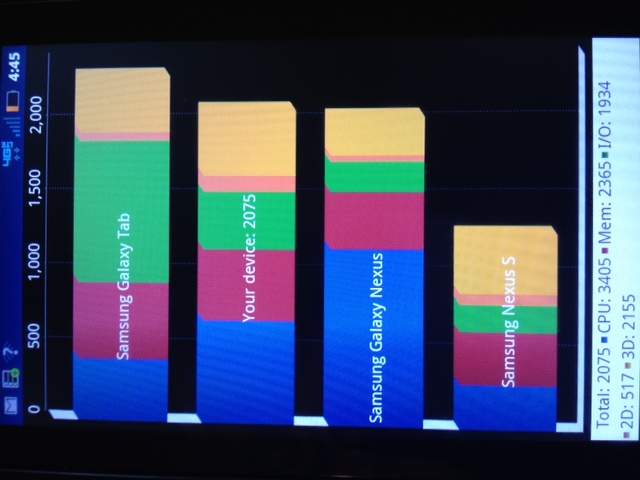
On the other hand the Droid 4 handled its benchmark testing rather well. Quadrant, which tests just about everything, gave it a score of 2430 on average. It scored an average of 86,544 on Browsermark, which benchmarks browser performance based on hardware. For some perspective, the Galaxy Note scored an averages of 2703 and 48,610 on Quadrant and Browsermark respectively.

Battery:

Unfortunately, the Droid 4 falls short in the battery life department. We test battery life on phones by running them through a program that simply performs a Google Image search each time a page loads. At any time we can pop out of that program and do other things, but the phone is always in use without sleeping from 100 percent battery life until it dies.

The Droid 4 lasted just three hours and forty-five minutes. For some perspective, the Droid Razr gave me a solid four and a half hours, while the Razr Maxx lasted for an impressive eight hours and fifteen minutes. Now, the Droid 4 didn’t seem to have such awful battery life when I let it breathe every once in a while, and the Razr Maxx’s main feature is its massive battery, but this Droid 4 battery life just isn’t adequate.

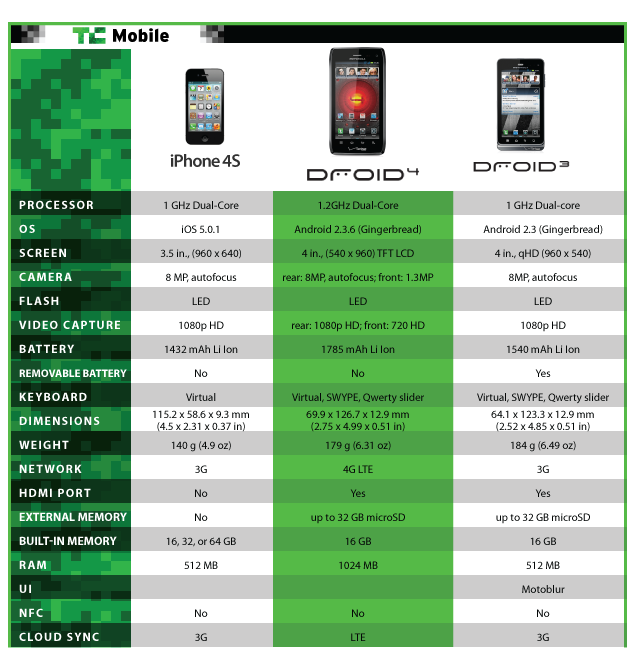
Head-To-Head With The Droid 3 And iPhone 4S:

Check out our thoughts on this match-up here.

Hands-On Video: Initial Impressions

Conclusion

Here’s the deal.

If you absolutely, 100 percent, beyond-a-shadow-of-a-doubt must have a physical keyboard on your phone, then yes, the Droid 4 is probably the best phone you’ll find. It’s far superior to any BlackBerry or QWERTY-sporting Android that I’ve ever come into contact with. But (and this is a big but)… I wouldn’t recommend the Droid 4 to just about anyone else.

The screen’s not all that impressive, the camera can’t hang, and the battery life won’t get you through the day. It’s pretty, that’s for sure, but simply not good enough unless your insistence on a keyboard is worth more than having a solid smartphone.

Remember, this is the next two years of your life. Who knows how awesome the virtual keyboards will be by then (or if we’ll even be typing with our fingers anymore)? Do you really want to be not one, but (probably) two steps behind everyone else?


Check out all of our Droid 4 review posts here.


Google: Unlocking The Door For More Android Originality?

door locked

It sometimes feels like an absurd story without an ending, trying to track who is attacking whom in the mobile patent game, and who is “winning.” But Google has now secured one patent that may just demonstrate that companies are figuring out ways of getting around would-be infringement issues — and possibly lead to producing more differentiated products in the process.

A Google patent, published by the U.S. Patent and Trademark Office, looks like it could pave the way for a new way of unlocking a mobile device. The news comes just as Android-handset maker Motorola, which Google is in the process of acquiring, got a ruling against it in Germany for another mobile unlock patent, in an ongoing case filed by Apple.

Apple’s case in Germany rests on the slide-to-unlock gesture, something that Apple has been enforcing against other handset makers as well, such as Samsung — filing a case against the Korean handset maker in California just earlier this week.

In Germany, a court in Munich yesterday determined that Motorola violated those same Apple slide-to-unlock patents in its Android-based smartphone devices — although its Xoom tablets, for what it’s worth, were spared in the ruling.

Florian Mueller notes the ruling carries the possibility of a permanent injunction on it — although it will be up to Apple whether it decides to enforce it, and Motorola has already said it would appeal the decision and that it did not think the decision would have a material impact on sales. It could also modify this feature in its devices though a software update.

If what Motorola says is true — that sales would not be affected by this ruling — what else is at stake here?

There is an argument to be made that there are still too many features that are similar between different, competing smartphones. Android has so far been the clear winner in smartphone market share — with the operating system accounting for the majority of smartphone sales worldwide at the moment. But most individual device makers are not creating distinctive enough products to sell at volumes that compete with Apple and the very biggest of the Android makers, such as Samsung.

At the moment, with Android, some of the most distinctive implementations have been those where handset makers “fork” the OS, although that leads to fragmentation and difficulties further down the development chain.

That’s where Google’s new patent comes in handy. New methods for unlocking will include moving icons from one screen to another, text inputs and voice commands. But as Patently Apple notes, these elements could run together or separately.

This is the direction that Google will hopefully keep moving. If and when this patent gets implemented, it presents one more building block for Android handset makers not only to get around Apple’s legal complaints — but for them to figure out ways of making their products different from each other’s, while still remaining in Google’s ecosystem and not straying too far from the Android flock.

(Image: Glenn, Flickr)


Feel Free To Run Samsung’s New Memory Cards Over With A Truck

samsungcards

There’s little doubt that Samsung knows how to put together a handsome television or smartphone, but to produce a stylish memory card — well that’s another story entirely. Samsung’s certainly willing to give it a shot though, and the end result is their new line of brushed metal SD and microSD cards.

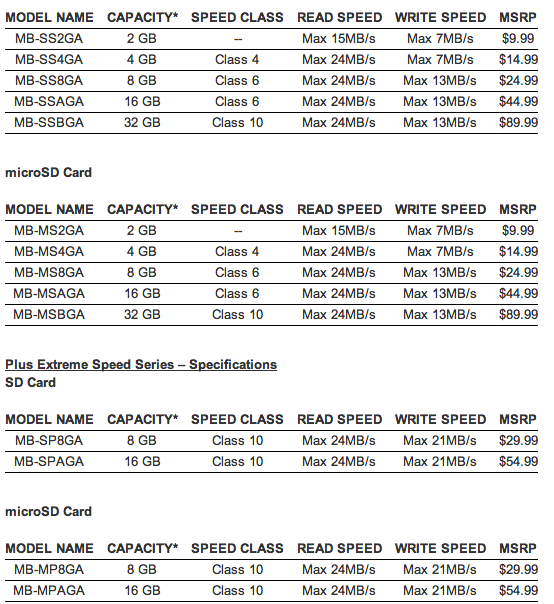
I doubt I’m the only one who doesn’t care what my memory cards look like so long as they get the job done, especially because they spend 95% of their time nestled inside a camera. Still, these fashionista-friendly cards will certainly do the trick in your device of choice — the High Speed Series cards range from Class 2 to Class 10, with read and write speeds in the latter class reaching as high as 24MB/s and 13MB/s respectively. The Plus Extreme series, meant for more demanding photogs, can hit write speeds up to 21MB/s.

Now that’s all well and good, but I can’t help but think Samsung went a little overboard with these things.

The cards can apparently survive being submerged in water for 24 hours, as well as withstand up to 3,200 pounds of pressure. In short, these cards seem more geared toward James Bond’s typical use cases than Joe Blow’s. Frankly, this whole thing seems like something of a challenge to me — I’m almost tempted to buy one just to do stupid, outlandish things to it in hopes of pushing it over the edge. The cards are available now, so if you’re filled with the same sort of strange, destructive impulse I’m feeling right now, check the chart below for pricing details.


Imitation Is The Sincerest Form Of Stealing Someone’s Design: HipChat vs Messages

wtf

Clearly there needs to be a workshop or CBT or something on trademark in Cupertino because Apple simply cannot stop infringing! As you see here, the handsome icon for the Messages app looks a lot like a reversed version of the icon for HipChat’s group chat service. HipChat CEO Pete Curley took it in stride, assuming that they would be the ones who would have to change their logo in order to appease the great Moloch of West Coast.

“I doubt we’re on Apple’s radar, but it sucks that we’ll probably have to change our icon because of this,” he said.

Knowing that I had a scoop on my hands, I pressed him for more information.

“What are you guys going to do?” I asked.

“I was thinking of releasing a new version of our app with this as the icon.”

Chin up, Pete. We’ll keep using you until they sue you into oblivion.


ProView Is Suing Apple Over The Rights To An iMac Clone

ppad

Patent trolls – mere shells of companies that go after potential infringements in order to rack up some hefty legal fees and maybe a settlement or two – don’t have an institutional memory. Take the great iPad in China debacle. What you see above is ProView’s “iPad.” The eagle-eyed among you will note that it bears more than a passing resemblance to the old iMac, circa 1998.

The device, according to the ProView literature, is a development that “constructs on the dream of technology founded human spirit.” This device appeared a few years after the original iMac.

ProView is attempting to extort up to $2 billion out of Apple on this claim even after Apple settled with the company in 2010 for about $50,000 per country in order to secure the iPad trademark. It is impossible to understand how ProView could be so wildly ham-handed in regards to all of this but presumably the statute of limitations is up on their original look and feel infringement and so the dead husk of ProView can keep pounding at Apple’s doors with little success.

MIC Gadget did a little digging and found that ProView is currently owned by a number of banks in China and owes over a billion dollars in liabilities and overdue loans.

All of the Proview International assets, including the trademark ‘IPAD’, have been seized as mortgage to eight banks — Bank of China, Minsheng Bank, China Development Bank, Guangdong Development Bank, Bank of Communications, Shanghai Pudong Development Bank, Huaxia Bank and Shenzhen Ping An Bank. On November 1 2011, the eight creditor banks of Proview convened a meeting to discuss the negotiation with Apple on the trademark dispute. Since Proview’s assets have been frozen by the banks, the eight banks become the beneficiaries of the iPad trademark.


Foxconn Increases Wages, Raises Pay By 16-25% For Chinese Workers

0525-OSUICIDE-China-Foxconn_full_600

Foxconn is under increased scrutiny as of late. The nearly 40-year old company assembles a big portion of the world’s electronic goods but many are questioning its treatment of workers. But nothing calms a troubled soul like cash. The company just released a statement indicating pay raises for Chinese workers just before the Fair Trade Association is set to interview employees about life at Foxconn.

The base pay of junior level worker in Shenzhen is now at 1,800 yuan ($290) per month and, if the worker passes a technical examination, it will be raised to 2,200 yuan. Three years ago the base pay was just 900 yuan per month.

“As a top manufacturing company in China, the basic salary of junior workers in all of Foxconn’s China factories is already far higher than the minimum wage set by all local governments,” the statement said. “We will provide more training opportunities and learning time, and will continuously enhance technology, efficiency and salary, so as to set a good example for the Chinese manufacturing industry.”

Foxconn is often viewed as a good entry-level job in China. The work is hard, no doubt, but the pay is fair for the region and job seekers often line up by the thousands for a chance to work at Foxconn. Not only is the pay a good deal higher than the required minimum but the company also provides dorms, meals, and recreational facilities for its workers. Foxconn is viewed as a way to move from the fields to the city.

But the company is facing some serious accusations. Apple recently announced that the Fair Labor Association will conduct special voluntary audits of several Apple assemblers including Foxconn where they will interview thousands of employees about their living conditions, pay compensation and corporate communication. It’s hard to say whether this pay increase was already on the books or a sort of short-term ploy to garner better marks on these employee interviews.


More Backpedaling: Netflix Brings Back the $7.99 DVD-Only Plan

Reed-Hastings-2

Netflix is looking to make things right again. The company just reintroduced its DVD-only subscription plan. Consumers are finally able to sign up for this plan without also paying for (or trying) Netflix streaming. As Softpedia points out, this option briefly disappeared last fall as the company was trying to realign after the Qwikster disaster.

Netflix experienced a fall from grace in 2011. The once star of Wall Street, the company could seemingly do no wrong. But then they did wrong: prices increased by up to 60%. Next, the company spun off its legacy DVD business in an effort to focus greater on streaming media. Netflix’s stock plummeted and quickly lost more than one fifth of its value.

But don’t count Netflix out. The company’s stock price has doubled since its 52-week low of 62. This latest move, while seemingly pro-consumer, will also allow Netflix to leverage DVDs again. Streaming is still Netflix’s future, but DVDs are still big business — even if the company’s CEO sees DVD subscribers decreasing until they’re all gone. Until that happens, though, Netflix is back in the business of delivering movies and TV shows to consumers no matter how they want it.


For All The Phones In China, Apple Actually Lost Market Share In Q4

chinapple2

Apple has an undeniably big opportunity in China, but it is still facing some considerable challenges. As the iPhone maker claimed the top spot as the world’s biggest smartphone vendor in the last quarter (October-December), it actually slipped in the rankings in China and is now in fifth position after ZTE.

But with Apple only kicking off sales of the iPhone 4S in China this January, it’s arguable whether we will see a delayed reaction from the launch of the new device, or whether longer term this is simply a market that will ultimately gravitate to local brands and cheaper devices in the longer term.

The news comes as Proview — the financially-troubled computer maker that is claiming ownership of the iPad trademark in the country (for a device that looks weirdly like an old iMac) — is starting to demand compensation for its troubles. The company has yet to put a figure on how much it would ask for, but one of its creditors suggested $2 billion.

Meanwhile, Apple has seen a huge amount of attention for the launch of its newest iPhone, the 4S, but that hasn’t been shown to have an affect on its sales in the market just yet. According to regional figures from Gartner (via Reuters), in China, Apple accounted for 7.5 percent of sales in Q4, down from 10.4 percent the quarter before.

That put it into fifth position. Ahead of it: Samsung in the lead with more than 24 percent of sales; Nokia now slipped down to second with less than 20 percent compared to 40 percent a year ago; and ZTE with 11 percent.

Analysts, for now, seem to think that the iPhone 4S will not have as big an impact on sales in China as it has in other markets, where the launch of the device in Q4 catapulted Apple to the top of the charts.

One of the key issues is price: the rule of thumb is for a handset to cost about 70 percent of the average monthly salary; the iPhone, selling for 4,988 yuan ($792), is twice the monthly salary. This pricing metric is not one that has gone unnoticed by companies like Huawei, whose smartphones can sell for a quarter of that amount.

Another has been the fact Apple is still only shipping with one carrier — China Unicom — limiting distribution and, crucially, the amount of devices that are getting sold with carrier subsidies on that price. There have long been reports that the country’s third-largest carrier, the CDMA carrier China Telecom, will soon get added to that list.

This is all still, ultimately, a moving target that will need more time to be played out: China now has 1 billion mobile users, but only around 102 million of them are using smartphones. That means there’s still a long way to go before this market saturates, slows down, and becomes more predictable.


Smarter Cover: This Vest Switches Into a Jacket Using Magnets

<< Previous
|
Next >>


Scottevest Transformer

<< Previous
|
Next >>

Boasting more secret compartments than a drug mule’s Suburban, Scottevest‘s apparel is made to turn you into a walking home office. The company’s new Transformer takes one of its famously geek-friendly jackets and turns it into a drop-top — the sleeves are removable, and they come off easily, without fuss, since they’re held in place using only magnets.

This isn’t one of those zippered convertibles where you need to take the whole jacket off to remove the sleeves. The one-piece arms-and-shoulders assembly attaches via a series of magnets sewn into the cuffs around the shoulders. You can pull off and reattach the sleeves in seconds, all without taking off the vest. It comes in handy if you want to cool off a bit, but you don’t want to ditch the $1,500 worth of gear stashed in your jacket.

The sleeves are removable, and they come off easily, without fuss, since they’re held in place using only magnets.

And yes, you really can stash a huge hardware payload in here. The Transformer Jacket sports Scottevest’s trademark myriad pockets: dual touchscreen-friendly smartphone pockets, secure ID pockets, a side pocket with a water bottle holder, a tablet (a freaking tablet!) compartment, a camera pocket, a sunglasses pocket with cleaning cloth (deep breath), a keychain clip, a cord management system and a stuff sack for the sleeves. There are so many pockets, the jacket comes with a map outlining the location and intended use of each pocket.

All Scottevests can be used as covert tech smugglers, but the Transformer’s removable sleeves are a feature unique to this new jacket. If it starts getting too warm, just pop the sleeves off and stuff them into the designated interior pocket (still got that map?). You can either pull the sleeves off from the front, tugging the upper arms toward the wrists, or you can reach back, grab onto the flap of material between the shoulders, and pull forward over your head. To put the sleeves back on, there’s no need to try to line everything up carefully. The magnets are placed well and the sleeves seem to find their way home without much help, snapping right on.

I was first skeptical about the need for a vest like this. Or, more accurately, whether any normal human has enough devices to warrant all those pockets. But I do hate having to cram my jeans with my wallet, my keys, my iPhone and other necessities when I’m traveling. It turns out the internal pocket system is very well-thought-out, and that the cord management system is excellent. When you listen to your MP3 player or the iPad in your pocket, the cords run through a series of loops up to a felt-lined collar that folds down over the cords and keeps everything from tangling up. And when you’re done listening to whatever, there are even individual bud pockets on the inside of the jacket, just below the ears, to stash your earpieces.

I was able to walk around carrying my iPhone, iPad, wallet, sunglasses, a GoPro HD Hero camera, spare SD cards, my keys and my travel docs in my jacket, all at once. I loved the earbud feature — it pretty much eliminated the untangling and earbud wrangling that I loathe.

My one main complaint is that when the jacket is fully loaded, it looks pretty bulky, and it feels that way, too. It’s hard to ignore an iPad digging into your liver when you bend over to tie your shoes. That said, I am pretty eager to see if Scottevest will ever put a MacBook Air pocket somewhere in there.

WIRED Zillions of pockets allow you to carry everything short of a desktop in your jacket. Just about renders backpacks obsolete. Converts from a jacket to a vest and back with ease.

TIRED Otherwise-handsome gear junkies might not look good in a vest. May send jocks into a rage when they see what a nerd you are.

Photos by Ariel Zambelich/Wired

Time to Dispose of the Disposable Water Bottle

The Bobble Mini is one of several bottles we tested with an integrated carbon filter. Photo by Ariel Zambelich/Wired

We live in one of the countries where easy access to clean, safe drinking water has long been the norm. Compared to some parts of the world, we’re spoiled silly. And yet, for some reason, we still buy a whole lot of bottled water.

According to data from the Beverage Marketing Corporation released in September 2011, Americans drank 8.75 billion gallons of bottled water in 2010. That’s roughly 28 gallons per American, and a 3.6 percent rise over 2009. Of course, the vast majority of it comes in single-use plastic bottles. These are a waste — they cost a dollar or two each, the contents have to be transported long distances, and the bottles themselves aren’t always recycled properly.

The Environmental Protection Agency developed new guidelines in 2010 for drinking water that made it safer and better-tasting. But many Americans just can’t swallow the facts, insisting their tap water lies beyond the threshold of drinkability.

Several companies are making affordable reusable bottles with active carbon filters inside. For $10 or $15, you can buy a bottle that can remove chlorine and other contaminants from tap water, improving the taste while reducing the fiscal and environmental burden associated with single-use disposables.

How do we wean these nay-sayers off the cursed disposable plastic bottle? Try giving them a bottle with an integrated filter.

Several companies are making very affordable reusable bottles with active carbon filters inside. For $10 or $15, you can buy a bottle that can remove chlorine and other contaminants from tap water, improving the taste while reducing the fiscal and environmental burden associated with single-use disposables. Replacement filters are as cheap as $2 or $3 each.

I had the opportunity to review four filter-enabled water bottles that are made for use with tap water. Mind you, these aren’t designed to purify water from a lake, stream or other natural source that’s potentially contaminated with Giardia or some other nasty bug, so keep your inner outdoorsman at bay.

My first specimen was the Bobble Mini, which looks like a baby bottle. It comes in three sizes — 34 ounces ($13), 18.5 ounces ($10), and 13 ounces ($9) — and the smallest one, which I tested, certainly feels like a baby bottle. The plastic body is soft, so much so that Bobble warns against squeezing it too hard. But the body’s hourglass design looks modern, and it’s easy to grip. The filter and pop-up cap come in an array of vibrant colors, too.

Before you drink from it, you have to fill it up once and squeeze the water out to remove the carbon dust from the filter. This initial rinse is standard practice with carbon filters. After that, the water tasted great, although getting enough of it with each squeeze was difficult. I found myself having to suck on the Bobble’s cap with a little extra force to get the amount of water I wanted each time. Not exactly problematic, but it felt like more effort than should be necessary with a water bottle. Bobble says each filter is good for 40 gallons, or about two months.

Next, I tried the CamelBak Groove, which comes in 20 and 25-ounce versions ($25 and $27). It sports a beautiful, rigid plastic body you can buy in a variety of muted colors. There are also stainless-steel versions ($35 to $37) which would be right at home on a hiking or camping trip. All the CamelBak Grooves come with an integrated loop handle so you can carry it with a finger or attach it to a pack.

If Investors Want More Voting Rights, They Should Have Invented Facebook

Mark Zuckerberg

Guess who knows what’s best for the future of Facebook? It’s certainly not public investors looking to cash in on “social” 8 years after Facebook started. That’s why those same investors should actually be happy about a warning from Institutional Shareholder Services noting that Facebook’s CEO Mark Zuckerberg will own roughly 57% of the company after the IPO. He’s a lot more likely to steer the company to long-term mega-profitability than they are.

For background, ISS is a proxy advisor that tells common stockholder clients how to vote when companies they invest in need to make decisions. Reuters reports that ISS is in a huff because the corporate governance structure of Facebook gives Zuckerberg 10 votes per share and the sole ability to appoint directors, limiting the impact of ISS recommendations.

The thing is, Facebook is not a typical company. It’s not about ruthless efficiency and hammering out supply lines in order to maximize short-term profits. It trades on the transformative power of authenticated identity on the Internet — a concept that hardly existed a decade ago and that many technologists still don’t fully understand. There’s one guy who understands the power of identity better than anyone, and that’s Mark Zuckerberg.

He turned a fad into an essential utility by helping us express ourselves. He turned down premature buy outs. He shipped features everyone was scared of, aiming for the needs of tomorrow instead of giving into the demands of today.

Sure, there’ve been privacy slip ups, but they’ve primarily resulted from pushing the future too soon. And there’s big threats like Apple and Google’s dominance in mobile. But no army of analysts and researchers will see clearer than the visionary and his court. Facebook will honor investors, they’ll just need to be patient and believe.

Honestly, if I wasn’t a journalist and had to choose between investing in a version of Facebook where outside investors had a big say in the direction of the company, or one completely controlled by Zuck and his lieutenants and that’s protected from hostile takeover, I’d put my money in Zuckbook hands down.

There is a degree of inherent risk in giving Zuckerberg so much power. There’s always the chance he’ll become some Mad King, succumbing to erratic rule somewhere down the line. Still, that’s less risky but than letting outsiders grind down the value of Facebook in the name of immediate financial gain.

Potential investors should be relieved. They won’t have to pretend to see the future, or worry their peers will screw up trying. They can relax and watch the money pile up as the best man for the job does the work.