Tesla Further Responds To Battery Claims, Calls The “Bricking” Report An Unfounded Rumor

tesla-roadster-2-620x413

A single blogger recently relayed comments made by a single Tesla service tech who reportedly knew of five Teslas that were “bricked” by owners who left them off the charger too long. This single unverified report spread like wildfire across the blogosphere. Tesla came out and acknowledged that it was possible to destroy the Roadster’s battery pack by keeping it unplugged but Tesla has employed numerous counter-measures to prevent that from happening. The company responded further today in a lengthy blog post titled “Plug It In.

Here’s a key excerpt from the blog post,

A plugged-in Tesla is not only charging its battery, it is also keeping key systems within the car functioning properly. Tesla owners around the world keep their cars charged on a daily basis without any issues at all. If ever the battery in your Tesla runs low, the car is designed to let you know with repeated visual and audible warnings. If you continue to ignore the warnings, they will persist and increase. The vehicle also protects the battery itself by communicating with other systems in the car to conserve energy when the state of charge gets too low. Starting with Roadster 2.0, owners can also elect for their car to contact Tesla headquarters once the state of charge falls below a specified level, and we can then contact the owner.

For what it’s worth Autoblog, our sister site in our Aol Huffington Post Media Group, did a little Googling and discovered that the random blogger and apparent Tesla owner are long-time business partners and not random acquaintances as the original blog post would have you believe.

Tesla’s service is legendary. I’ve spent a lot of time following the company over the last four years and have only heard extraordinary reports. I’m not saying the company is perfect, and it is totally possible to brick a Tesla, but the company has taken reasonable steps to prevent that from happening. But sometimes morons slip through the cracks.


TC@MWC: What To Watch For At Mobile World Congress

mwctc

It’s hard to believe that Mobile World Congress is right around the corner, but here we are with just under two days to go until the festivities begin.

TechCrunch’s MWC delegation is ready to bring you the latest and greatest in mobile tech straight from the heart of Barcelona from the moment MWC kicks off, but there’s going to be gobs upon gobs of nifty stuff on the show floor. Just for your reference, here’s a quick recap of some of the things you should see once we touch down and head into the breach.

LG

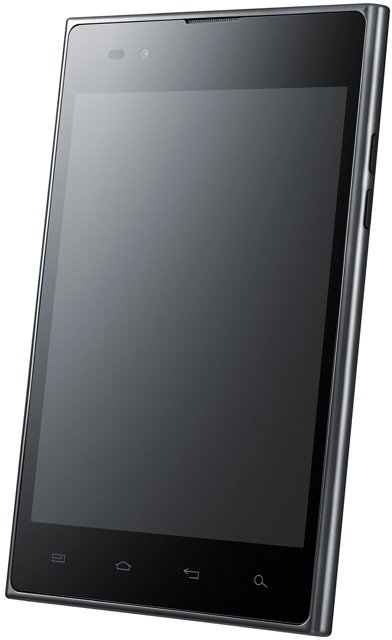
LG’s handset business has seen better days, which is why the company seems so intent on making a splash at MWC. In addition to the (peculiar) Galaxy Note LG Optimus Vu the company has announced something like seven new Android smartphones to be released this year — here’s a quick rundown:

Optimus 4X HD: This Ice Cream Sandwich-powered handset sports a 4.7-inch 720p display and 1.5GHz quad-core Tegra 3 processor. Expect this bad boy to be LG’s flagship going forward.

Optimus 3D MAX and 3D Cube: Remember the LG Optimus 3D/Thrill? Meet its new brothers, which both happen to pack a 4.3-inch 3D display, a 1.2GHz dual-core processor, and NFC support into a 9.6mm thick body. The big difference between the two? Well, the MAX ironically only has 8GB internal memory while the Cube has 16GB; the Cube also sports a NOVA IPS display panel while no mention of the MAX’s screen tech has been made.

L-Style Series: Despite some recent twists and turns, LG is fully capable of designing and producing some striking phones (the Chocolate series, anyone?). This new line of Android phones consists of three devices meant to strike at premium, mid-range, and low-end niches, and aspire to five lofty “aesthetic elements.”

While these are all interesting in their own right, I’m personally looking forward to the possibility of an LG phone running on Mozilla’s Boot-To-Gecko mobile OS.

Nokia


The success of Nokia’s first Windows Phones already propelled them to the top of the vendor heap, and the folks at Espoo are looking to keep it that way with the introduction of two new devices.

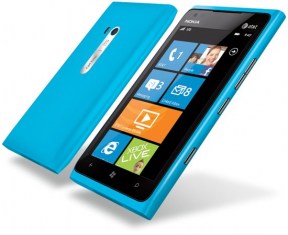
Well, maybe just one new devices. The Lumia 900 already got a bit of spotlight when it debuted at this year’s CES, and Nokia is expected to unveil a Europe-bound version (sans LTE support) at the show. Nothing new here.

Meanwhile, the Lumia 610 is reportedly a new budget-conscious offering that’s expected have the specs to match the price tag. It always seemed to me as though the 710 was meant to plug that particular hole in the market, but with the Windows Phone Tango update poised to target developing markets, more low-cost hardware certainly couldn’t hurt.

Nokia also took to teasing us with a video hyping their Pure View camera technology, which only begs a new question – which phone will it end up in first?

Samsung


Samsung surprised many of us when they announced that they wouldn’t hold a keynote at the show that previously saw the announcement of their flagship Galaxy S II. Don’t count Samsung out just because they’re not packing a new Galaxy successor though — they’ve got more than a few gadgets that will probably enjoy their turn in the spotlight.

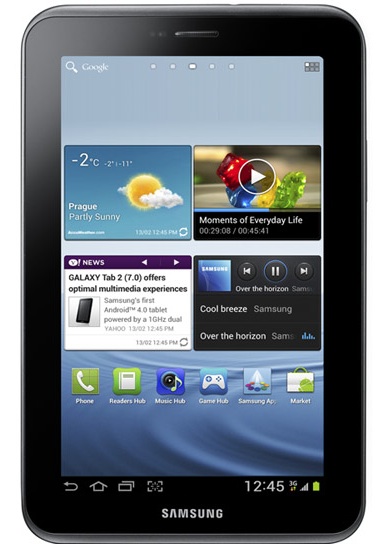
The new 7-inch Galaxy Tab 2 (pictured right) is likely to be one of them, as well as Samsung’s speedy new spate of quad-core Exynos processors. And who could forget handsets like the Galaxy Ace 2 and the Galaxy Mini 2? (I just did, honestly.) If nothing else, it’ll tide us over until the separate event scheduled later this year where the Galaxy S III is expected to be unveiled.

HTC


We’ve already taken a look at what HTC will be bringing to the Barcelonian table, but here’s a quick recap in case you don’t much feel like clicking. The Taiwanese company is expected to unveil three new handsets, all sporting the One-series moniker.

The slim One X (previously known as the HTC Edge/Endeavor) looks to be the flagship model in the line, while the even-slimmer One S (aka the HTC Ville) shoots for the mid-range. Meanwhile, the music-oriented One V (which is expected to be a twist on the HTC Rhyme) is expected to round out the trio.

Those three handsets could be joined by the HTC One XL tablet, which previously made the rounds under the guise of the HTC Whatever. If the tablet does indeed materialize on the show floor, don’t expect a follow-up anytime soon — HTC has said they will be reducing their presence in the tablet market at least for a while.

Microsoft:

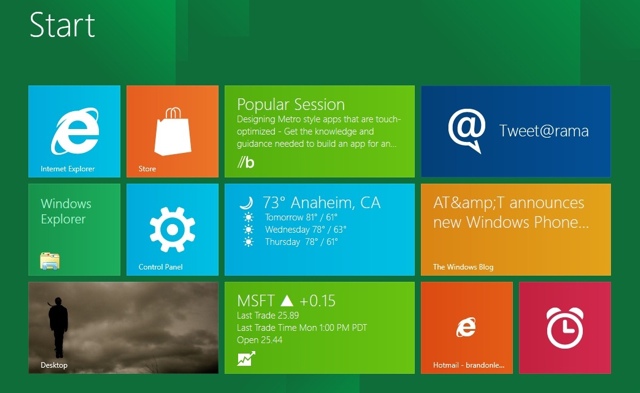
Windows 8. Windows 8. Windows 8.

Yep, if you haven’t heard, the Windows 8 Consumer Preview will be launched and demoed on the 29th.

Oh, and expect Microsoft to spend some time talking up their forthcoming Windows Phone updates – Windows Phone Tango is meant to run on less-robust hardware making it an ideal fit for low-end, high-volume devices, while Apollo should pack support for LTE, multiple screens, and considerable integration with Windows 8.

Asus

After CEO Jonney Shih’s legendary unveiling of the company’s Padfone, I’ve long wondered when this magical (and more than a little ridiculous) thing would see the light of day. The answer, it would seem, is at MWC 2012.

Asus also teased us with their “Twice The Detail” video, which points pretty markedly at a high-resolution tablet of some sort. It’s very possible that the company’s high-res Transformer Prime TF700T tablet will be making an appearance on the show floor, but I’m hoping that Asus has something new and shiny for us to drool over.

The Rest Of The Pack

  • Motorola: Reps from the company told PCMag specifically not to expect much this year, although some news related to their partnership with Intel on mobile processors wouldn’t come out of left field.
  • Sony: This will be Sony’s first MWC after their public divorce from Sweden-based Ericsson, and they’ve managed to keep things buttoned up tight. The smaller Xperia U will likely be on display, and if we’re very very lucky, we may end up seeing a Sony-made Windows Phone. I’m keeping my fingers crossed for that one.
  • ZTE: The other Asian hardware vendor with a three-letter name will be in attendance with a whopping eight smartphones in tow. ZTE is definitely trying to make a big push into the high-end smartphone market, so here’s hoping their eclectic mix of Android devices and Windows Phones does the trick.

If this seems like a lot of gear to keep tabs of, you don’t know the half of it. This is just a fraction of the stuff to be seen at MWC, and I have a feeling that some of the best stuff is yet to come. Stay tuned!


So Much For Bouncer: New Android Malware Uses Facebook To Spread

android-logo170

Even though Google recently introduced a malware-blocking system called Bouncer to keep the Android Market safe from malicious software, crafty spammers and fraudsters are still managing to find ways around the restrictions to get their software onto users’ phones. The latest example? A malware program disguised, innocuously, as an Android app called “any_name.apk.” And it appears the malware is using Facebook’s app on Android phones in order to spread.

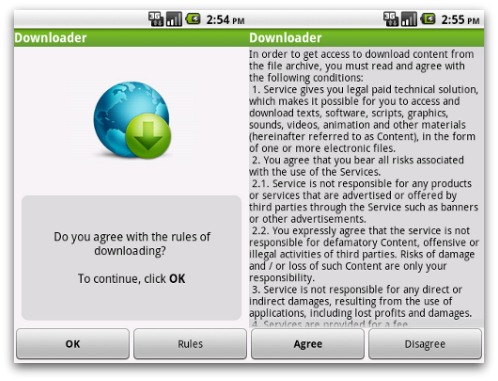
The software was discovered by security firm Sophos, which came across the malware after receiving a Facebook friend request. When checking out the user’s profile, the researcher, Vanja Svajcer, found a link posted to the requester’s Facebook profile page that, when clicked, directed the browser to a webpage which started an automatic download of an unknown software application to the device.

The software installed and downloaded immediately, without any request for authorization or input from the end user. However, although Svajcer doesn’t mention this in his analysis, for software to automatically install from outside the Google Android Market, the phone’s default settings must have been changed. Typically, Android phones are shipped with a setting switched on that prevents mobile apps from installing from sources besides the official Android Market. Many savvy Android users switch this setting off, though, because they enjoy the freedom that Android provides in discovering apps from alternative app stores and download locations – like the treasure trove that is the XDA Developers forum, for example.

Unfortunately, malware like this is the nasty side effect. And there’s nothing Bouncer can do about it. The link the researcher clicked did not appear to be an APK file by nature of its URL, just a typical website. And it was placed into the user’s About Me section on Facebook, as if it was a link to that person’s homepage.

Of course, many folks would simply ignore a friend request from someone they didn’t know, but curiosity often gets the better of us. (Do I know them? Did we meet at some point, and I forgot?) One errant click, and oops, you’re infected.

In this particular case, the malware in question appears to be a program designed to earn money for fraudsters through premium rate phone services, a scam popular outside the U.S. for the most part, which involves having unsuspecting users send out text messages to premium rate numbers (those that charge). The scammers, who are operating the numbers, end up collecting the money from the victims’ accounts.

The app attempts to associate itself with the Opera browser, and an encrypted configuration file contains the dialing codes for all the supported countries where the premium rate numbers are hosted.

As a side note: a few days later, the researcher visited the same URL, but was directed to an all-new website where another APK file was automatically downloaded (hilariously called “allnew.apk”). This one was functionally similar, but different on the binary level, indicating it was a new variant of the same malware.

Maybe it’s time for Android’s Bouncer guy to get pre-installed on handsets, too?

UPDATE: We spoke to Google about this issue, and they’re telling us that the software installation process portrayed in the Sophos video could not have occurred as demonstrated. Even with an off-market, malware-ridden APK file, the app would have downloaded to the device, but additional user-initiated steps would need to have taken place before the software installed and ran as shown. We’re still awaiting a response from Sophos on that front.

To be clear, Bouncer is a good first step towards protecting Android users, but regardless of what methods are used to lock down the Android Market, spammers and scammers can always find another way in.

UPDATE #2: We reached out to the researcher, and here is his response.

The malware is downloaded but not automatically installed. That’s why the video just shows the download. But for ordinary users it could still be a serious attack. In my experience, they rarely check the permissions when they install an app.  Simple social engineering tricks could be used to then trick them into installing the app. 
 
 So, although this does not exploit some Android vulnerability, it is an interesting combination of a web based attack that caters for Android devices.  And it is, of course, interesting to see Facebook being used by Android malware purveyors in this way. 


Intelligent Design And The Modern Cellphone

large

I’ve been mulling this concept over for a long while and it took Josh Helfferich’s single image to bring the concept into sharp focus. My thesis (and you won’t like this) is that every major “flagship” phone in the Western market is now made in the same mold, with the same trade dress, with one goal in mind: to fool the casual observer into thinking that everything is an iPhone. While you can argue on the outliers, the truth is right there. Every major phone released in the past four years has cleaved to this design for dear life. The trend began, popularly, with the Nokia 5800 (some would argue that Meizu M8 was the first) and hasn’t stopped since.

The manufacturers’ fear is palpable and it’s time this parade of phones, designed to mimic one major phone, stopped. It’s bad for the consumer, it’s bad for the carrier, and it’s bad for the manufacturer.

Before iPhone (BI), manufacturers were fat and sassy, designing phones that came in odd cases and featured whimsical Java stacks. No phone looked like any other and every year designers would pick up cues from each other in terms of popularity. One year it was rugged, the next year it was piano black, the next year it was dark red. Phones came and went and they all looked different.

Except for a few lower-end exceptions, going into a phone store now is an exercise in futility. There is no differentiation nor is any phone better than any other. Just as every tablet looks strikingly like every other, every phone looks and works strikingly like every other. The results of this marketing nightmare are clear. You have advertisements that tout meaningless clock speed numbers – as if you’re going to play Angry Birds faster on your Nexus vs. a Samsung Fascinate. Programmers are forced by the vagaries of software to design for the lowest possible system specs. The result, then, is a marketplace cluttered with the same phone, over and over, with various bursts of nervous energy spent championing one identical handset over the rest… until the next model comes out.

This constant churn is what is stagnating the mobile industry. For two years after the iPhone the common refrain was “Why don’t manufacturers hire three (or thirty) really good guys, put them in a room for a year, and make them make the best cellphone ever.” This happened exactly once – at Palm – and never happened again. The closest to this vision, I would argue, is HTC, and they’re no great shakes.

Apple has done their thing. They’re going to keep doing their thing. They are, to continue the evolutionary metaphor, like a very specialized bird with a beak evolved to eat, say, termites. The rest of the birds saw that the termite bird was thriving so they developed a beak to eat ants – they aimed at exactly the wrong target and now each manufacturer is falling over itself – and starving – as it goes after the well-hunted ants in a non-diverse ecosystem.

Samsung, HTC, RIM, LG, Nokia: stop it. Play to your strengths. Reduce your lines to low, mid, and high-end phones. Streamline. The manufacturers took what matters least about the iPhone – the trade dress – and made that an obsession. Take what matters most – Apple’s consumer-focused clarity of vision – and see where that gets you.


Vayable Expands Your Horizons Through Unique Travel Experiences (TCTV)

Vayable

Ever wish you could explore Paris on a Vespa? Or how about a tour of Santa Barbara wineries from a local? Vayable connects you with guides around the world who offer unique experiences in their city.

In the interview above, Jamie Wong, Co-Founder and CEO of Vayable, talks about why she started Vayable, who the guides are, how she built a community and some notable experiences listed on the site including the controversial homelessness tour.

While Jamie was living in New York, friends came to her for travel tips and occasionally she would show them around the city Her travel tips became a blog and that led her to realize there were others like her that would be willing to give tours around their cities. So, she created Vayable to be a platform that connects you with locals who offer some kind of experience you ?nd interesting. Categories include arts & culture, food & wine, adventure, and more.

There are plenty of interesting experiences listed on the site, but one stands out. A homelessness walking tour in San Francisco. You can even see what it’s like to go homeless for a day. Tim Ferriss said it gave him “a much needed perspective/ appreciation reset.”

Vayable has the opportunity to facilitate cultural learning in places you visit or even in your own city. Unlike most travel experiences or tours, you can see and leave reviews for your guide. And guides are passionate about the experiences they list. That beats signing up for a more lackluster experience you’d ?nd advertised on sites like Orbitz or local tour companies.

Like AirBnB, Vayable is helping its guides earn extra income. If you’re someone who has a passion like hiking or local art, you can take travelers on your adventure and charge a price you see ?t. As with similar marketplaces, Vayable takes a 15 percent cut of everything booked through the site.

So, now you too can explore the side of Los Angeles most usually never see or ?nd out what island life in Bocas really is like (hint: it apparently involves scuba gear and dancing shoes). The choice is yours.


Cloud Security: DataLocker Lets You Encrypt Your Sensitive Dropbox Files For Free

Screen shot 2012-02-22 at 8.39.09 PM

We’re all becoming increasingly reliant on consumer cloud services, as cloud storage providers like Dropbox make it easy to share and store files, folders, images, sync between platforms, and more. They make our lives easier, but because they store an enormous amount of potentially sensitive data, there are some inherent risks. While Dropbox is for personal use, it and services like it are increasingly being used by businesses — another example of the ongoing consumerization of enterprise and IT.

It’s also true that most people want their data in their cloud service to be synced across all platforms on which they have the app installed, mobile, desktop, etc. So, with individuals and companies storing sensitive data in the cloud, cross-sync can make for some potential security problems, and it’s not really something you want to do at work.

That’s why virtualization provider AppSense has created DataLocker, a set of mobile and desktop apps for iOS, Windows and Mac that enable users to encrypt sensitive information in their Dropbox accounts for free — without giving up the convenience of cross-platform syncing.

DataLocker is the first product from “AppSense Labs,” the company’s new research arm, which is dedicated to building consumer-friendly solutions around cloud, mobile, and data that work within traditional IT infrastructure. As the boundaries between personal and professional computing are blurring, AppSense Labs will look to ride that wave with new products that capitalize on this transition, making it easier on consumers and enterprise, piece by piece.

And to that point, DataLocker is a great first step in alleviating some of the worry over the security of our personal information as it moves about the cloud. With the advent of Apple’s iCloud and Microsoft’s SkyDrive, businesses will have to decide whether these proprietary clouds are something they want to adopt. In iCloud’s case, user accounts are tied to Apple not to businesses, which may lead to some businesses balking at using the service to share sensitive company information.

This is where DataLocker could really come in handy. For now, it’s focused on Dropbox, but there’s potential for it to move beyond Dropbox, even if iCloud/SkyDrive integration isn’t in the cards. Businesses want to use friendly cloud services, and encryption of sensitive data is key to encouraging further adoption.

As to how the app works? It’s fairly straightforward, users simply install the app and link it to their Dropbox accounts, at which point they can upload new files, protect them instantly, while browsing and viewing existing and protected Dropbox files.

AppSense raised $70 million from Goldman Sachs a year ago today.

For more, check out the iOS app here.


Report: Video Accounts For Half Of All Mobile Traffic; Android Biggest For Mobile Ads

Screen shot 2012-02-23 at 05.21.31

Mobile video now accounts for half of all mobile traffic; and on some networks, that number is as high as 69 percent — a testament to the rise of smartphones and tablets as the mobile devices of choice for consumers, and their growing interest in using these devices to do a lot more than just make phone calls.

The data, from quarterly report on mobile data usage out today from mobile analytics firm Bytemobile, also found that Android is generating more mobile ad volume than iOS devices, and that Google now accounted for 75 percent of ad-generated data across all platforms.

Bytemobile says it has collected this data from a cross-section of its mobile carrier customers. It focuses on usage of two main platforms, Apple’s iOS and Google’s Android.

As many have already suspected, tablets are driving significantly more data traffic than smartphones. On Apple’s iOS platform, an iPad user generates three times as much traffic as someone using an iPhone; while on Android, the figure is twice as much when comparing Android tablets and handsets.

This is not too surprising: tablets’ bigger screens are that much more conducive to consuming video and other content than the smaller screen of a smartphone; and in the case of something like video, those tablets will require higher resolutions, which also translates to heavier data use.

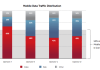
Indeed, video, along with other streamed services, are proving, once again, to be bandwidth hogs. The most-used application on iOS, for example, is Safari, accounting for 61 percent of all transactions. But when it comes to what takes up the most data volume? Bytemobile says it’s the Media Player, with 47 percent of all volume:

The same goes for individual applications. Although users spend slightly more time per session on Facebook than they do YouTube — 9.06 versus 8.51 minutes, respectively — YouTube generates, on average, 40 megabytes per session, compared to 120 kilobytes for Facebook or 170kb for Twitter. Twitter’s average session usage is 4.57 minutes.

Bytemobile also took a look at where mobile advertising is sitting in the mix. As ad networks have also been demonstrating for the last several quarters, Android devices are edging out over Apple’s iPhone and iPad in terms of generating mobile advertising traffic.

Yes, part of that is because collectively there are more Android devices on networks than iPhones — Android now accounts for half of all smartphones worldwide, says Gartner.

But perhaps just as importantly, those Android devices appear to be generating more ad impressions and engagement — collectively called “transactions” by Bytemobile. On Android, some nine percent of all data transactions were ad-related, while on iOS the proportion was five percent.

Why is that? It could be down to the fact that Android generally has less paid apps in the Market than Apple’s App Store, and those more popular free apps are pulling more ads down from networks when they get used.

But if you are reading this and starting to worry about how mobile ads are draining your monthly data allowances on your contracts, save your worries for the future: Bytemobile notes that ads accounted for only two percent of data volume on Android, and only one percent on iPhone.

As with online, Google dominates the mobile ad space with its owner of AdMob, AdSense and DoubleClick holdings. Together, these accounted for 75 percent of all ad data. But when it comes to the single-most consuming ad network, that dubious honor goes to Apple’s iAd: its video-rich ad units generate nearly 16 MB of data per transaction, while the lowest were AdMob’s display units, which generated less than 4MB.


Clothes Horse Wants To Solve The Biggest Problem With Online Shopping: Finding Clothes That Fit

clotheshorse_site_screenshot

Clothes Horse, a fashion technology company based out of New York, is publicly launching its platform today in an attempt to address one of the biggest challenges facing online shoppers: buying clothes that fit. Through the use of a customizable widget that merchants add to their own websites, Clothes Horse can determine within just 30 seconds how the retailers’ items will fit any customer. The goal is not only to decrease shopping cart abandonment, but also the rate of returns due to ill-fitting clothes.

The problem with shopping for clothes online is that customers have gotten burned by their past experiences. “Instead of being excited about this great new thing you’re about to buy,” explains Clothes Horse co-founder Vikram Venkatraman, “you think about the last time you had to return something, or you start wondering if it’s really going to be as nice on you as it looks in the picture.”

It’s those points of hesitation that cause 70% of shopping cart abandonment, he says. Not only that, but 60% of the time customers return clothes they bought online, it was because of fit issues.

Retailers, of course, know the challenges surrounding fit – it’s why they provide measurements and size charts for all their clothes on their websites. But just because you can zip something up, that doesn’t necessarily mean it fits well. To address these issues, Clothes Horse provides a quick, user-friendly product that helps online shoppers determine, in about thirty seconds, whether something will actually fit in real life.

The product is a white-labelled Q&A system that enables shoppers to build a profile based on their answers to questions, which don’t have to involve measurements. Although retailers can customize the system to suit their needs, the idea is to go beyond things like height and weight, and find out about a customer’s body type, preferred brands, comfort in a given brand, and more.

For example, a men’s clothing site might ask “What brand’s dress shirt fits you best?” to which the shopper could choose “Ralph Lauren,” “Calvin Klein,” “DKNY,” etc. They could also describe how well that brand fits, answering “it’s perfect,” “it fits well,” or “it doesn’t fit very well.”

After a handful of questions like this are answered, the Clothes Horse widget then tells you what size to buy, and, most importantly, how it will fit (e.g. “tight around the chest,” “just right in the collar”).

“Now you know what trade-offs you have to make, if any,” explains Venkatraman. “You know what to expect given your lifetime of shopping. It lets you put this new thing that you’re shopping for in a context that you’re used to, so you know a little bit about it,” he says.

In early tests with Clothes Horse beta customer Bonobos.com, use of the new system delivered a 13% sales boost, results which the retailer has called encouraging. Heck, it may even be able to help you find jeans that fit!

Behind the scenes, Clothes Horse has a large database of human measurements which they’ve combined with measurement data from around 50 brands, six of which are live now on the web (Bonobos, Modus Man, Duke & Winston, Five Four Jeans, Frank & Oak, and one undisclosed customer). The startup is also in talks with several large retailers, who are reportedly very interested in the platform.

Finding fit is really only phase one of Clothes Horse’s grand scheme. Further down the road, it plans to support Facebook integration to help users build a shopping profile based on brands they “like” and what their friends like. This profile will function as a portable identity that moves with you from site to site. A mobile experience that ties offline shopping to the online profile is also in the works.

Besides Venkatraman, a former Deloitte consultant, entrepreneur and author, the other two co-founders are V Bespoke co-founder Dave Whittemore and software engineer Will Charczuk.  The team has an undisclosed amount of seed funding from Contour Ventures, and angel funding from Mark Wachen, Ben Ling, DreamIt and others.


The Winners Of This Year’s $100,000 TechFellow Awards Are…

TechFellow Awards Logo

Tonight, Silicon Valley’s heroes gave competition a rest and joined together at the third annual TechFellow Awards to celebrate the spirit of innovation. An all-star committee of industry moguls carefully considered your nominations of visionaries in the fields of engineering, product design and marketing, general management, and disruptive innovation. They chose 5 leaders per category and awarded them each a $100,000 grant to invest in a startup of their choice.

Supported by Founders Fund, TechCrunch, and New Enterprise Associates (NEA), the awards ceremony was hosted by Jim Parsons, the Emmy-award winning star of nerdy television comedy show The Big Bang Theory at San Francisco’s Museum Of Modern Art. Mayor Ed Lee spoke, Facebook engineer Mark Slee DJ’d, and past winners toasted the future of our industry.

Thanks to everyone for submitting your nominations. Here are the 5 winners for each category of this year’s TechFellow Awards:

Engineering Leadership
Presented by: Sandy Jen, co-founder of Meebo

Product Design & Marketing
Presented by: Dave Morin, co-founder and CEO at Path

General Management
Presented by: Aaron Patzer, founder of Mint

Disruptive Innovation
Presented by: David Friedberg, CEO at The Climate Corporation


San Francisco Launches The 2012 Innovation Portfolio, From Open Taxi Data To Beta Tests In City Hall

San-Francisco-1

San Francisco may not have intended to be become the startup mecca that it is today, but now the city government is working hard to make itself as friendly as possible to tech entrepreneurs. Makes sense, considering that there are 1,539 tech companies and 30,000 tech jobs in the city now — a number that’s been growing fast as older industries like high finance continue to suffer through the recession.

What that means is this. Mayor Ed Lee, who came to power last year with heavy support from the local tech scene, is announcing a new initiative today at the TechFellow awards ceremony, that has some intriguing ideas for making the city itself more relevant to the booming industry within it.

Broadly, the so-called 2012 Innovation Portfolio is trying to do everything from helping founders making it easier to complete the paperwork for creating a company, to giving developers new access to city data, to introducing new ways for citizens to share their opinions with the city, to actually testing out tech products at City Hall itself. A number of other cities in the US and around the world have been working on similar initiatives, so as a resident I can personally say that I’m happy to see this happening.

Especially because the city’s awful taxi system is getting opened up to innovation.

Here’s a closer look at key pieces of the portfolio, based on documents provided to me from the city — plus my own editorializing.

Business One-Stop: Having been through the awful state and federal paperwork for founding a company myself, this one sounds very helpful. The city will launch an online service that allows businesses to “answer simple step-by-step questions and be presented with a clear roadmap of the required steps and forms to complete” founding paperwork online. It’s not clear if this is only for companies that make California their federal home — that might be an issue for tech companies, which normally federally incorporate in Delaware due to its business-friendly bureaucracy. The city is aiming for at least one section of the new site to be online by the end of this year.

ImproveSF: Slated for this spring, the site will let any citizen provide answers to major civic problems — budget savings (which the city has struggled to make happen), and revitalization plans for the middle part of Market Street are two examples.

Open Taxi Access: “In our City, 50% of taxis sit empty, many concentrate downtown and at SFO, and central dispatch doesn’t work, so we want to work with you in solving this problem,” the city states frankly in its presentation on the initiative. Exactly. In fact, this type of problem has helped Uber’s town car service become a hit with residents. To kick this effort off, the city is planning an event for February 24 and 25 “to help the City redefine taxi access and help us define next steps.” Look for TechCrunch to be all over this project.

Hackathons 2.0: Similar to the taxi initiative, the idea here is to bring “hackathon” developer events put on by tech organizations to specific city issues. It promises “user-centered” hackathons for civic topics like veterans services, payments, and transportation. Events are already planned with the California College of Art, Black Founders, Mozilla and GAFFTA.

Open Data: In addition to taxis and the hackathons, the city is more generally trying to make all sorts of other data available to developers — it says it already has 60 apps built on its data, according to its presentation. The broader data plan includes working for legislation that will make information more easily available to the public, and providing more than 200 of its own data sets online. “As part of this effort, the City is moving to a cloud-based data sharing service for launch in March” — I’m not sure what that means, but I guess a central online repository for the data sets? I’ll update if I find out more.

SmartPDFs: In parallel with the open data efforts listed above, the city also wants to make paperwork easier for all of its citizens. This means moving paper-based processes online so you don’t need to print and fax and mail everything. The pilot launch has started and look for deployment across city agencies over the year.

Separately, the city says it’s beginning to test out new technology at City Hall — including Yammer, and Cozybit and 802.11s mesh networking.

You can find more details on the city’s “Innovation” site, here. Partners include sf.citi (which we covered more here), along with Code For America, CCOL, the San Francisco Office of Economic and Workforce Development, and SPUR.

[San Francisco cityscape photo via Mr. Thorngren’s social studies blog.]


OnLive Adds “Cloud-Accelerated Browsing” To Its Streaming-Desktop Stable

yodawg

You’re probably familiar with OnLive, the company that made its mark by streaming brand new console and PC games to whatever devices could support a high-bandwidth video stream. Many doubted its technology to begin with (including yours truly – Is OnLive OnCrack?) but they’ve more or less delivered on their promises, and have also been expanding the services they offer. Most recently they introduced OnLive Desktop, which streamed a Windows 7 desktop to your iPad.

That was mainly focused on productivity – Office apps and such. Now they’ve added web browsing to the table. Yes, they will stream live video of a web browser running in a datacenter to your device, which almost certainly already has a web browser.

If that sounds crazy, it’s probably because it kind of is. But maybe it’s crazy like a fox. Their accelerated browser is a full-on desktop browser running on a gigabit connection. It can load files and display them to you in the video stream faster than you can load them on your own device. And of course it has Flash. It’s certainly more capable than, say, Safari on iPad, but is it really better?

The problem is that the average consumption experience doesn’t really benefit from being streamed. Flash is rarely critical to use from a tablet (though it can be nice), and big attachments are often virtualized already – big PDFs and video files can be viewed or streamed online without a tedious download process. The few cases where a window into a high-speed but generic browser is better than the built-in one are probably overshadowed by the inevitable downsides of interacting with a virtual, video desktop: lag and occasional poor image quality.

You’ll have to shell out to give it a try; the iOS app is free and you can access productivity tools (if they have the spare bandwidth for you), but for the browser and desktop you’ll need to drop $5 per month. Soon you’ll also be able to pay $10 per month for extra space and custom desktop apps. It’s the beginning of something cool, but at the moment it seems a hard sell.


Browser Shootout Shows Minor Variations In Performance – It’s Still A Matter Of Taste

pushing-the-finish-line

The browser wars are in a tense state of suspension right now. The once-obvious advantages of one and disadvantages of another can’t be counted on as much as they could a year ago, and fast-changing standards and interaction methods have produced a sort of uneasy détente while everyone awaits the browser equivalent of the Manhattan Project to catapult them into the atomic age.

Tom’s Hardware just did a nice, thorough examination of the available browsers on Windows 7 and Ubuntu, and the findings are really mixed. It used to be that Firefox always won, and we could all make fun of IE. Then Chrome came and won all the speed benchmarks. And then there was Opera. Now it’s a mess. How do you pick the browser that’s best for you? Easy: you flip a coin.

The benchmarks are what you’d expect: standards compliance, HTML5 stuff, Javascript speed, hardware acceleration. It’s such a mixed bag of victories and losses by various parties that you can barely draw any conclusions. In the end, the winner (Firefox) is far from decisive, and is often “weak” in things at which the runner-up, Chrome, excels. And vice versa. Meanwhile Opera takes a few wins home, IE is the best at memory management (but little else), and Safari cleans up in page load times (but little else).

So why do I say you can flip a coin? Because first of all, don’t use Safari. It’s just not good enough, and unless you are compelled to use it for some purpose, it has no advantage over the rest and plenty of disadvantages. And don’t use IE (except for testing), because it still has trouble rendering properly, despite some interesting features. You can use Opera, but if you are, you’ve already made that decision and aren’t likely to go back on it any time soon. But for “regular” users who want to use popular plugins, ensure compliance with various webpages and apps that may or may not be built properly, and be sure of a very regular update schedule, Firefox and Chrome are really your only options.

And which should you choose? If you really don’t know, flip a coin. If you try to argue against it when it lands on Firefox, install Chrome. If you don’t like it, install Firefox. Or use both. The fact is right now, for the average user, it doesn’t matter much, and both browsers are great. I use Firefox for reasons that are trivial, yet nonetheless more important than performance or under the hood differences. But I wouldn’t recommend it over Chrome for anyone but myself.

Don’t get me wrong: there are differences between the browsers, and the results are worth going through if the browser is a mission-critical item for your work or you are seriously worried about a certain type of performance. Of course, in a couple months, all these positions might be reversed. So you’ll have to take that coin out again.


As Journalists And Video Bloggers Are Killed, SyriaPioneer Lives On

Rami

It goes without saying that the death of veteran Sunday Times war correspondent Marie Colvin and the French photographer Remi Ochlik – after an artillery shell hit their makeshift press centre in the Syrian city of Homs – is tragic. It’s also testament to the lengths to which journalists often go to get the story. But equally, the use of new technology by ‘citizen journalists’ has been equally significant in documenting the deadly acts of the Syrian government against its own people.

Among those killed in yesterday’s attack on the journalists’ position were three activists. One of those was video blogger Rami Ahmad al-Sayed, who was also known as “Syria Pioneer“. Ahmad al-Sayed had uploaded over 200 videos to various platforms of the killing and destruction in his area. We wrote about him and his video only this week when the Syrian government blocked Bambuser, the live video platform he was using.

Colvin was a decorated foreign correspondent. Ochlik had won a World Press Photo award. Obviously al-Sayed / Syria Pioneer had not had the chance to win such accolades. But his live broadcasts, using the startup video platform Bambuser did their part in showing the world what was going on in Syria.

His footage of the bombing of Homs was aired all over the world by BBC World, SkyNews, Al Jazeera and many more. Live video from the roof where Rami and his friends positioned their camera was broadcast all over the world. A collection of some of that output is contained in a tribute at Storyful. Be warned, much of it is harrowing to watch.

We know from Bambuser that Rami was accompanying three people to a civil hospital when he died. The car was believed to have been the target of mortar fire. While the others died instantaneously, Rami was badly injured but died from his wounds later in the hospital.

Born in 1985, father of a little girl aged a year and a half called Marym (pictured), his last message for his friends was sent to Bambuser:

“Babaamr is facing a genocide right now. I will never forgive you for your silence. You have all just given us your words but we need actions. However, our hearts will always be with those who risk their life for our freedom. I know what we need! We need campaigns everywhere inside Syria and outside Syria, and now we need all people in front of all embassies all over the world. In a few hours there will be NO place called BabaAmr and I expect this will be my last message and no one will forgive you who talked but didn’t act.”

But although a family has lost a husband and father, Syria Pioneer lives on, bringing live footage from inside Homs: because Rami’s friends and colleagues have resumed using the account.

Rami’s pioneering work, using the platforms of the new technology world, will not have been in vain.

You can get Syria Pioneer’s live channel on Bambuser right here.


Apple, Google, And Others Agree To Mobile App Privacy Policy Guidelines

cal-ag

Though Apple, Google, Microsoft, RIM, Amazon, and HP don’t always see eye-to-eye, the six of them have entered into an agreement brokered by California Attorney General Kamala Harris to take a tougher stance on the issue of mobile privacy.

Going forward, the six companies involved must provide users with a privacy policy if the app in question collects personal information. Though the move will affect the app submission and downloading process for users the world over, it was designed to bring those six companies into compliance with California state law.

“The majority of mobile apps sold today do not contain a privacy policy,” Harris said. “By ensuring that mobile apps have privacy policies, we create more transparency and give mobile users more informed control over who accesses their personal information and how it is used.”

It isn’t just enough for these companies to provide app-specific privacy policies to their users; they must also do it before the user downloads it, creating a much-needed means for them to opt-in. Apple and company also need to be consistent in how they display that information, as the agreement Harris brokered called for “a consistent location for an app’s privacy policy on the application-download screen.”

On top of that, users will also be given tools to help police their respective app stores. The terms of the agreement note that the platforms in question will allow users to report non-compliant apps, which could bring about some welcome change in some respects — while the Android Market already allows users to flag questionable apps, the iOS App Store and the Windows Marketplace don’t give users that power.

The past few weeks have made the mobile privacy issue a hot-button topic outside of the tech sphere, and the attention doesn’t just end with California’s AG — two congressmen sent a letter to Apple CEO Tim Cook posing questions about user data privacy, and the White House will be holding an online meeting tomorrow to accompany the release of a white paper on online privacy. Regardless of how this privacy discussion began, don’t expect for the talk to subside any time soon.


First Floor Labs Sold A Company To Facebook, Graduated Three YC Startups, And Is Accepting Applications

Screen Shot 2012-02-22 at 2.31.51 PM

Last Friday I visited the Aol* building on Page Mill Road in Palo Alto. But instead of the stench of death and decay you would normally find at a dying company, I found joy and the hustle and bustle of youth. More importantly, I found startups, tens of startups with founders eager to show me around the various VC firms (SoftTech, Morado) and incubators occupying the building’s first floor.

Because someone brilliant at Aol decided to give away the space to startup incubators instead of renting it out to other dead men walking companies, it was filled with light and life. Whoever you are, you’re a genius.

Anyways, on the first floor of this huge Aol building, in addition to StartX and education-focused incubator Imagine K-12, is a modest accelerator called First Floor Labs.

Founded by Stanford MBA and Former Facebooker Maisy Samuelson and Aol Ventures dude Adam Smith, First Floor Labs basically provides office space and amenities like a kitchen and a gym to pre-Series A teams of between one to four people — startups that would otherwise work out of coffee shops or apartments. Thanks to an Aol Ventures sponsorship, the space is free for six months to all accepted startups without further obligation or any equity transferral.


Samuelson says that she and Smith are in it because they are passionate about startups and the tech community (In Smith’s case having early access to hot startups never hurts a VC), “I love working with an established company to help the next generation of entrepreneurs succeed. It’s amazing to have so much talent and energy in one room. “

“Smoopa grew from 20,000 downloads to more than 100,000 downloads while we were in First Floor Labs and it’s been great to have smart people around to help us scale,” First Floor Labs resident and Smoopa co-founder Mendel Chuang told me, “The amount of knowledge and expertise in this community is incredible.”

Already one startup, Digital Staircase, has gone to Facebook, while three (stealth) others made it into the current YCombinator class (only three applied).

Applications for First Floor Labs spring session, which will house 15 startups instead of 10, are due on March 9th. Also, I’m going to try work out of there every Thursday from now on, so if you’re around, come say hi!

*Disclosure: TechCrunch is owned by Aol, in case this is your first time visiting the Internet. I think they write it ‘AOL’ though.