Millennial Media Aims For Smaller Advertisers with Self-Service Launch

millennial media

Mobile ad network Millennial Media says that it’s now making its self-service advertising product mMedia available to the general public.

The company filed for an IPO last month with documents stating that it reached 200 million unique users in December 2011, and that it was nearly profitable (losing $417,000) in the first nine months of the year. Adding a self-serve option should expand its usage among smaller advertisers without having to significantly grow its sales team.

Millennial says it started testing mMedia in January. The company’s announcement says mMedia provides “a comprehensive dashboard” where advertisers can control their bids, targeting, and creative. It also highlights a “hyper-local targeting feature,” where advertisers can draw a virtual fence around their desired area, and only deliver ads to users in that area.

The ad network already offered a self-service option for smaller app developers, called mmDev. Millennial says the new mMedia ads will be available to developers through the same portal.


Reply Relaunches MerchantCircle As A More Consumer-Focused Merchant Marketplace

merchant

As we reported last year, Reply acquired online marketing network for small business owners MerchantCircle. Merchant Circle which provides a business directory for merchants in smaller towns and currently lists over a million small businesses has long targeted merchants in small locales versus catering towards the consumers, as sites like Yelp and CitySearch do. Today, Reply is relaunching MerchantCircle has a more consumer-focused destination.

Basically, the newly redesigned site allows consumers to find qualified providers in their local area, receive quotes and find expert advice, while giving merchants tools for servicing their local markets. Consumers can search for and find providers across all business categories, including home repair and improvement; health and beauty; financial and professional services; construction and real estate services; restaurants; and more. Currently the site has more than 1.2 million active member merchants.

Consumers can request a quote from providers, access ratings and reviews, get questions answered by a community of experts, and find discounts and special offers from local merchants. As the company explains, MerchantCircle is trying to compete with the giant in the space, Yelp, by allowing consumers to move from search to transaction.

For example, consumers searching for “roof repair” in their local area will be presented with the option to connect to the best local roofers and/or “request quotes” from multiple local providers.

On the merchant side, MerchantCircle now offers a “LeadStore”, which gives local merchants the ability to purchase relevant local leads for their business on an on-demand basis; and is debuting a “DealStore,” to increases the visibility of merchant’ deals, coupons and other promotions.

The transition over to becoming a consumer focused-site is certainly a challenge but could be interesting considering MerchantCircle is trying to help consumers actually connect to merchants and service providers. MerchantCircle is similar in some ways to home services marketplace RedBeacon, which was recently acquired by Home Depot.


Ginger Software Raises $6.3M For Its ESL Writing Tools; Adds Former Facebook Exec As CEO

GingerLogo

Ginger Software, the makers of contextual grammar and spell-checking tools, announced today that it has raised $6.3 million in series D financing, led by Israeli investment firm, Vaizra Ventures. Founded in 2007, Ginger has raised $15 million to date from investors which include serial entrepreneur and Lightspeed partner, Yoni Hefetz, and well-known Israeli angel investor Zohar Gilon, who has funded companies like Radvision, Ceragon Networks, Metalink, Radware, and Outbrain. As a result of its new investment, Shlomo Kalish of Vaizra will be joining the startup’s board.

In conjunction with its funding announcement, the Israeli and Massachusetts-based company is announcing today that former Facebook and AOL executive Net Jacobsson will be joining Ginger as its new CEO and as a board member. Jacobsson was, among other things, formerly the director of business development at AOL in the early 2000s, before going on to join Facebook in 2007, where he led international business development and user acquisition for nearly two years. The entrepreneur and exec is also an advisor to and shareholder in both the open source mobile/social gaming network, OpenFeint, as well as social games developer CrowdStar.

Jacobsson brings his social gaming and international business development experience to a company that is looking to expand its footprint overseas and capitalize on what it sees as an underserved market. For those unfamiliar, Ginger Software’s contextual spell-checking and grammar tools target both those learning English as a second language as well as those suffering from Dyslexia, providing its users with an online service that automatically corrects text as they type.

For the billions of ESL learners and the more than 50 million people with Dyslexia in the U.S. and the U.K. alone, Ginger’s patent-pending technology allows them to produce error-free documents, emails, and so on and learn to communicate as a native speaker — with support for Microsoft Office products as well as IE and Firefox.

The company’s “Proofreader” product, for example, corrects both spelling and grammar mistakes based on the context around the typed words, learning from each error the user makes, before offering personalized educational tips, lessons, and quizzes based on those miscalculations through its “Personalized Tutor.”

Ginger’s technology was developed by a team of natural language processing experts, statisticians, linguists, educators, and more, who created a text-correction algorithm to automatically analyze the context of errors written in English and to select the most appropriate semantic and grammatical correction.

“Initially, I quickly dismissed Ginger as boring software for grammar correction,” the company’s new CEO said, “but after digging much deeper into the technology, the platform and the potential usages, I realized that I had just seen the tip of the iceberg and that perhaps the company just did not have the right positioning and message.”

Giving it the right message, the former Facebook exec continued, is a meaningful challenge, considering the billions of people around the world who want to learn English (China, in particular, has 325 million English learners), but struggle to maintain their proficiency because they don’t live in an English-speaking environment and thus lack that level of immersion.

Thus, the new CEO believes that Ginger’s software not only has serious market opportunity, but that it has potential to be scaled across technologies, as the company currently has a text-to-speech product as part of its premium offering, but has not yet productized around the the technology’s capabilities to contextually help users search for images, videos, etc.

As of now, the CEO says that the company’s technology can eliminate up to 95 percent writing errors common to people with dyslexia, as well as those learning English for the first time.

For more, check out Ginger at home here.


TC Interview: Nokia CEO Elop On Phablets, 41 Megapixels And Competition

1Smaller

It was over a year ago that Nokia and Microsoft announced their partnership to make Windows Phone the primary operating system for Nokia’s smartphones. But the real test in the consumer market starts now, the first full year of Nokia selling its new handsets, with a portfolio of four models shipping in a range of markets, including China.

Stephen Elop, the CEO of Nokia, is all too aware of the challenge ahead. Although his company is still the world’s biggest handset maker, its leadership is now much more narrow, at 23 percent, according to Gartner. And its fightback strategy on Windows Phone is effectively starting from scratch: Windows Phone accounted for only 1.9 percent of smartphones sold in Q4 2011, a decline on the 3.4 percent it took in the same quarter in 2010.

We got a chance to sit down with Elop earlier today, in a meeting room at the top of Nokia’s ginormous MWC stand, to talk about some of the challenges and opportunities the company is facing up ahead, and how its news this week will play into that:

On innovation and whether Nokia is moving fast enough to change its ways and adapt to a new world dominated in mindshare and market share by Android and iOS. “We have absolutely changed the clock speed of Nokia,” Elop insisted, citing the Lumia 800 and 710  introduced in October, and the 900 and 610 that have come out since. “The pace we’re accomplishing this, including the next builds of the WP software, will continue at an accelerating pace.”

He says it’s a two-way street: with the lower-priced Lumia, the 610, and its aim for the Chinese market, actually helping influence how Microsoft was developing the OS. “That’s a good example of that collaboration working.”

On that 41 megapixel camera, and why it is that Nokia put it into a Symbian device rather than its line of Windows Phones. Elop says it’s because Nokia wanted to introduce the product as soon as possible; then work out the engineering to get it on to a Windows device.

“This is the type of innovation that Nokia has traditionally been known for,” he said. “It was more important to bring that to the market, and to see what works and what needs to be improved.” He says that the technology will make it into its Windows devices, too: “This will live on in the future,” he said. Unlike Symbian, he might have added.

On tablets. Recall that yesterday Nokia introduced, Reader, which will be its first foray into e-reading and possibly one of the surest signs yet of what it needs to get in order before it really launches a tablet. Today he would not be drawn out on whether Nokia will be making one and when. The software from Microsoft is getting more uniform across screens: “That is something really interesting to us.”

The future of Symbian. So many rumors that Nokia is pulling out of Symbian altogether, and that what they’ve announced there this week (the 808 Pureview, with the 41 megapixel lens), could be their last. No answer to that, but Elop is also aware of alienating those who have remained loyal to that platform. Indeed that is a tricky line to play because those are his first natural customers for the new devices.

What’s next in line for innovation, after the camera? Location-based services, he says, citing the rise in citizen journalism, and people walking around and photographing and documenting events, as a mark of that. “I think you will see more innovation around that activity. A big part of our strategy going forward will be location-based services.”

That makes sense, given how many assets Nokia already has in this area: Nokia Maps, Nokia Drive and Transport among them. What’s interesting is that Nokia is keen to spread as much of that to other OEMs building on Windows Phone as for itself — which of course can help the services gain better critical mass.

Going cheaper and smarter. Elop says that the 610, the least expensive yet of Nokia’s Lumias, at $250, is probably just the first step before we see devices that are priced even lower. He calls this model the “realistic first step.” He notes that the more expensive 710 is being offered for $50 on contract in the U.S. With this phone priced substantially lower, that could imply free Lumias.

On Motorola and Google. He’s in the dark on what happens next. “They now have in their hands a hardware platform.” It’s a mark, he says, of how “the Android ecosystem has shifted quite a bit over the last year… It’s a hard one to predict.”

He notes that he doesn’t see the Google/Motorola deal impacting Nokia. “Whatever goes on there will be activity in Android. But just think if we made a decision to go Android instead of Windows Phone, how would we feel right now?”

On following an Apple (few) versus Samsung (many) model for handsets. “If you think of Nokia a few years ago where there was a large number of devices, we will be a lot more pared down going into the future. It’s not a single device strategy but there will be a paring down.”

On competition from other Windows Phone makers. He welcomes the likes of ZTE, HTC, Samsung and others making devices on the same platform as Nokia’s because “The principal competition is Android, and then Apple.” He notes that “a factor of the perceived success of Windows Phone” will be whether those many handset makers develop and sell those devices:

“When it comes to competing because there are too many Windows Phones? That would be a nice problem to have.”

The “phablet” devices like the Galaxy Note from Samsung, that straddle the break between tablets and smartphones. “Tablets are an opportunity, and smartphones up to a certain size are an opportunity,” he says. “We are looking at closely [at the phablet market] and looking to see whether it will catch on.” He says he likes the form factor of the Lumia 800 the most because he can reach across the whole screen with his thumb. “But different things for different people in different markets.”


HBO GO Finally Lands On Xbox 360 On April 1 (And No, It’s Not A Joke)

hbogoxbox

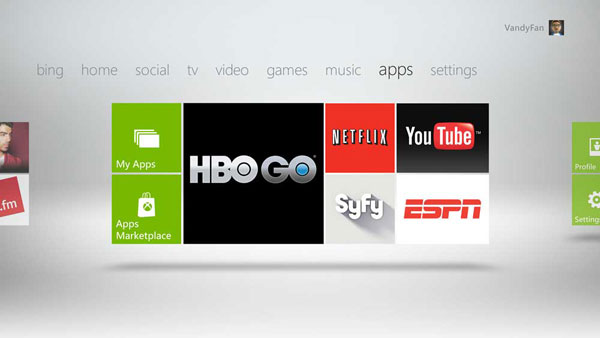
I remember back when HBO GO first launched, and it was only available to Verizon Fios subscribers. All that True Blood, and so very few viewers to enjoy it. But in the past year, HBO GO has extended itself to the far reaches of our Internet-connected universe, and according to a report out of Engadget, it’ll stretch even further.

HBO co-president Eric Kessler said at an HBO event last night that HBO GO would come to the Xbox 360 on April 1. Unfortunately, we have no way of deciding whether or not this is legit or a very calculated April Fools joke that is already in pre-production. I’m leaning toward its validity, though.

According to a video released by Microsoft, the Xbox 360 has seen over 66 million sales. If even half of those people get on board with HBO GO, it’ll put the service on an entirely new level.


Samsung Stabs SMS In The Heart, Ports ChatON Messaging Client To The Web

chaton

Samsung is quietly killing text messages. The company’s cross-platform messaging app launched last October on the Android Market and then came to the App Store in January. But Samsung is looking to replace text messaging on more than just Android and iOS devices. It wants to kill text messages dead and just released a web version of the messaging client that should work on most feature phones and computers.

This wide-scale launch has been in the pipeline the whole time. Samsung made it very clear when it announced ChatON that it will be a cross-platform service. Now, with the web app, the crusade is seemingly complete. ChatON users can easily communicate using either their platform’s app or just a web browser. Accounts are linked, so no matter what device you’re rocking, you’ll be available. See ya later, text messages!

ChatON supports a variety of features. On feature phones, the service allows for text, images, calendar appointment and contact sharing. But on smartphones, users have a few extra options, such as the ability to comment on each other’s profiles, send multimedia messages that combine text and audio, and view their own “Interaction Rank,” which displays how active they are on the ChatOn network.

The new web-based app allows users to group chat, have 1:1 conversations, and supports attachments, emoticons and more.

Carriers are reportedly losing major revenue from services like ChatON that use a data connection rather than traditional messaging rates. Plus, while text messages are essentially locked into a 2003-ish feature set, apps like Samsung’s ChatOn and Apple’s Messages are free to roll out innovative features to users anytime. I say good riddance. Death to SMS and it’s crazy cost.


GraphScience Promises To Turn Facebook Commerce Into A Moneymaker

graphscience

Whenever I hear brands talking about advertising on social networks, one of the most common questions is, “Well, what’s the actual return?” Now a startup called GraphScience says it has turned measuring and optimizing that return into, well, a science.

The company is officially launching today, but it’s one of those startups that has been in stealth mode for a ridiculously long period of time. GraphScience was founded in 2010, and launched many of its services in 2011. And the company already counts jewelry site Ice and fashion site HauteLook among its customers.

GraphScience’s SocialEngine technology taps into the Facebook ads API. SocialEngine was originally built as an engine to drive e-commerce. Whether a purchase happens in a Facebook store or on a business’ website, SocialEngine can tell if it was prompted by a Facebook ad, and it makes recommendations on which Facebook users should be target to drive the most purchases.

For example, founder and CEO Raymond Rouf said GraphScience found certain ads would do well if they were directed at Facebook users who “liked” the Bible — in fact, the ads were similarly effective if they were targeted at people who liked other holy books like the Koran. (Yes, it felt a little weird to be talking about the relative conversion rates of the Bible and the Koran.)

Earlier this month, Bloomberg reported on the closure of Facebook stores from retailers like Gamestop and J.C. Penny. Most memorably, it quoted Forrester analyst Suchin Mulpuru as saying that Facebook commerce didn’t work, because it was “like trying to sell stuff to people while they’re hanging out with their friends at the bar.” When I asked Rouf about the Bloomberg story, and he countered that failing stores were “lackadaisical efforts that were not being strategic about what will work and what won’t.”

And yes, there are other systems for monitoring and targeting Facebook ads, but Rouf argued that most of them come from search companies who ported their services over to social — unlike GraphScience, which he says was designed specifically for Facebook.

As for GraphScience’s customers, the company says its customers saw an average 4-8x increase in their return on investment (ROI) from their Facebook ads. And while its initial focus was e-commerce, GraphScience expanding beyond that to serve more traditional consumer packaged goods companies and other advertisers. A laundry detergent company, for example, might not care about selling detergent from its website. Nonetheless, GraphScience can provide valuable data about who’s looking at and engaging with its ads, which in turn helps the company understand whether those ads are paying off.


Forget About Android 4.0! Google Exec Hints Android 5.0 Will Launch In Fall Of 2012

Android-Jelly-Bean

Android is force that will not be stopped. Google’s Andy Rubin announced yesterday that there are 850,000 daily Android activations, excluding devices like the Kindle Fire that don’t use Google services. Now, even though only one handset is currently sold with Ice Cream Sandwich, Jelly Bean might launch later this year.

Speaking to Computerworld, Hiroshi Lockheimer, vice president of engineering for mobile at Google, suggested Android 5.0 will launch in the fall. He stated “In general, the Android release cadence is one major release a year with some maintenance releases that are substantial still.” Android 4.0, Ice Cream Sandwich, launched in November 2011 and it seems that Google is set to release the next version around the same time this year. Fragmentation much?

This is actually the second rumor in as many weeks concerning Android 5.0. Digitimes reported two weeks ago that Jelly Bean would launch in the second quarter of 2012 primarily to assist in Google’s tablet movement.

This move, if it does happen, shows the stark contrast between Google and Apple. Google is trying to outpace Apple, with team of mighty engineers churning out innovations and updates on a pre-set schedule. However, this schedule is seemingly not on the same pace as handset makers which often move at a much more strategic pace.

Apple controls both the hardware and the software and can better time and coordinate launches based on the market’s needs.

Ice Cream Sandwich is still in its very early stages of life. Only the Galaxy Nexus is sold with the operating system. Hell, most flagship handsets from late 2011 won’t even get Android 4.0 until late spring or early summer — just months before Android 5.0 is said to launch.

Google might argue that this is its target strategy. It’s giving consumers and handset makers choices, they could say. But it’s still wacky. Instead of blindly pumping out major revisions every year, how about delegating some engineering might to assist makers in transitioning between Android platforms? That’s pro-consumer.


TC@MWC: Hands-On With The Surprisingly Solid Asus Padfone

padfone1

The Padfone is a peculiar beast, to be sure. Given the right accessories (and enough money, I suppose), Asus’s newest smartphone can easily transform into a tablet and a faux-notebook in the blink of an eye, but how well does the thing work? Asus was kind enough to let us play with one for a short while in their booth here at Mobile World Congress, and we’ve put together a quick video tour for your viewing pleasure.

As far as the Padfone phone itself is concerned, I have a feeling people will either love it or hate it. At 8.9mm thick it’s a very slim device (though not the thinnest we’ve seen over the past few days), and a surprisingly lightweight one too. I personally wasn’t a fan of the Padfone’s feel — I thought it felt sort of chintzy and inexpensive, though the latter probably won’t turn out to be true. Your mileage may vary on that front though, as I’m generally a fan of devices with a bit more heft to them.

The rationale behind the Padfone’s design seems pretty clear here — with the Padfone meant to dock into another into a tablet frame, Asus had to make the phone itself as slim and light as possible so as not to give the tablet a hunchback. I’m happy to report that the docked Padfone tablet indeed manages to avoid the Quasimodo route, though the bulge is still very noticeable.

Once docked in the so-called Padfone Station, users are greeted with a slightly retooled UI meant to take advantage of the 10.1-inch display running at 1280 x 800. All of the Padfone’s functionality remains intact when docked, including the ability to make and receive phone calls thanks to a little help from Asus’s Stylus Headset. The keyboard dock doesn’t require much explanation — it sports its own battery like the tablet dock, and the keys were well-spaced and had good travel.

One thing that has become very clear to me over the past few days is that it’s very hard to judge a device’s performance in these conditions. Without any benchmarking apps (or any third-party apps at all) on hand, there isn’t much to go off of, but the Padfone’s 1.5 GHz dual-core Snapdragon S4 processor and 1GB of RAM were more than enough to deliver smooth navigation of menus and websites. I suspect that it’s more than enough horsepower for most users too, though we’ll have to see how well it stacks up after more time with it.

Note: I mistakenly referred to the Padfone’s processor as clocking in at 1.4GHz in the video when it’s actually 1.5. Whoops, sorry about that.

On the software front, Asus did exactly what I had hoped they would: they left it (mostly) untouched. Asus opted to leave Ice Cream Sandwich almost entirely alone on the Padfone aside from a few new widgets and a new Pad Apps section in the app launcher. I’ll admit that manufacturer-specific UIs have undergone a huge jump in quality lately (I’m looking at you Sense 4.0), but I’m still a fan of simple, clean, unfettered Ice Cream Sandwich when all is said and done.

In the end, it’s a great concept from Asus, and it’s been executed far better than I had expected. Hardware preferences aside, Asus did a solid job of taking an off-the-wall idea and making into an actually (some would say compelling) product. Still, the real question remains: how many people would ever actually buy one of these things?


Gnzo Is Instagram For Video And A Flashy Multi-Video Viewer In One

Gnzo_Logo_single_1229

Gnzo, the video startup that made its debut at TechCrunch Disrupt in September 2010 (it was called Gunzoo then), has its first consumer-oriented product ready. Named after the Japan-based maker itself, Gnzo (pronounced gun-zou) is an iOS application that can best be described as “Instagram for video” and a (pretty cool) multi-video viewer rolled into one (free download in English/Japanese).

Users can shoot six-second videos, upload the them to Gnzo, and share them with friends on Gnzo itself, Twitter or Facebook in just a few seconds. It’s also possible to tag videos, leave comments, “clip” videos you like, or follow what friends are posting (there is also a “public” screen where new videos are getting uploaded constantly).

However, Gnzo doesn’t offer filters or other effects to add to content. As opposed to apps like Vlix, Viddy or Recood (to name just a few), a key selling point here is the multi-video viewer that allows users to arrange videos in a matrix as a group related to a specific tag or user.

Here’s how a Gnzo matrix looks for keywords like “color” and “sky”:


What’s cool is that Gnzo plays all videos (up to 30 of them on a single screen) simultaneously, meaning that in the app, the thumbnails you can see above aren’t images but “mini videos”. Users can continuously scroll down the feed to see additional sets of 30 videos: a tap is enough to view a specific video in full-screen mode (see below).

This how-to video shows the app in action:

Gnzo’s core technology is an impressive piece of video technology called ”fabric video”, which was developed by Prof. Kasai’s Lab (Prof. Kasai is a Gnzo co-founder) at the University of Electro-Communications in Tokyo. (At said TechCrunch Disrupt event, Gnzo was pitched as an alternative way to search for and organize video content, mainly for businesses like device manufacturers, video ad providers, or web platforms like YouTube. Watch this video for more.)

Gnzo, which is currently in beta, is available on iOS only at the moment, but the eponymous startup says other versions (for Android and tablets, for example) are planned.

Here is another Gnzo demo:

More information and Gnzo videos can be found on the app’s Facebook page and the corporate website.


MTV Mobile Moves Into Social TV With Digital Agency AKQA

MTV_Press_3UP_72dpi

Viacom’s MTV is making one more move into trying to capture the youth market on the platform where it’s increasingly spending most of its time: the broadcaster, in partnership with digital agency AKQA, has launched “Under The Thumb,” a new social TV app.

MTV and Viacom are calling this a “world first” in that it will let users watch MTV content on mobile devices, share it on the go with others, and then watch those on-demand programs simultaneously with those friends. It builds on a pretty extensive business that MTV has already established in Europe, including its own mobile service.

The service, developed by Viacom International Media Networks and AKQA in Viacom’s European HQ in Berlin, is available today as an Android and iOS app. It will initially be available for free, and ad-funded in Europe, but it will also introduce paid sections with premium content. MTV says it currently has some 2.7 million users of its mobile products across seven countries in the region.

“This is designed as a platform for the future,” said Ben Jones, European director of technology at AKQA, who points to the fact that young “millennial” users are no longer watching much traditional TV, but they are watching TV content on a number of other screens like PCs, tablets and handsets.

There is some interesting integration that MTV and AKQA are putting into the app to bridge the mobile experience with what they are doing on their computers. That speaks to the idea of multitasking and viewing content on more than one screen. The “co-viewing” feature, as MTV and AKQA calls it, will let users not only watch the content on both on its mobile and PC devices, but users will also be able to tap friends and watch the same on-demand content simultaneously.

MTV is integrating the app with Facebook to connect into the service, but interestingly it hasn’t chosen to use Facebook for the messaging system: it has created its own chatting service for the service so that they come in as real time, without interference from other services that might be part of a person’s Facebook stream.

MTV is also putting in its newsstream into the service, which runs entertainment news from the company’s site.

“I know of another large broadcaster that has claimed to want to do this in the past but has not been able to, otherwise it’s a world first,” said Jones.

MTV said that the main part of the service ‘Tiny Thumb’ which offers celebrity news and MTV highlights, as a limited selection of episodes to watch, will be free to use. ‘Super Thumb’ unlocks further shows, seasons and content to subscribers on a monthly basis for €2.99, and those who pay up €29.99 annually will have access to everything — that content is only available to those users who take contracts with MTV Mobile, the company’s mobile service.

But apart from the business push, the new platform is a single way for MTV to distribute its content on mobile: the company has up to now had various apps and this now brings several services onto a single platform.

For now, Under The Thumb will only be available in Europe, with no plans to launch it in MTV’s much bigger market of the U.S. “But of course the U.S. is aware and is following what we are doing. All the content is cleared and we have buy-in from at the Viacom level but no short term plans to launch it there,” said Michel Dupont, SVP of MTV in Europe.


Sofa Surfers: 4 Universal Remotes Tested and Rated

<< Previous
|
Next >>


Basics and Buying Advice

Cut the coffee table clutter and rule your A/V empire with an all-in-one remote—whether it’s a traditional clicker or an app on your smartphone.

The Basics

With all these new smartphone systems, why would anyone choose a hardware remote?

Buttons. Even if you’re used to pecking at a touchscreen, physical buttons are always nicer—especially on a remote control, where the tactile feedback lets you bump up the volume without taking your eyes off the screen. Some remote-control apps try to address this by assigning swipe gestures to various actions, but it’s still a big adjustment.

If I go the smartphone route, will I have to take off my protective Domo-kun case?

Probably not. Early attempts at turning smartphones into all-in-one remotes involved bulky external cases, but those are mostly gone. New app- based remotes break down into two types: those that involve plugging a small IR blaster into your phone’s charging port and those that communicate wirelessly with a separate IR blaster. Either way, you just pull up the control interface as you would any other app and you’re in business.

Do smartphone remotes work with as many A/V components?

Absolutely. App remotes draw from a constantly updated library of device definitions, and when said definitions aren’t available, manual programming options cover the rest.

Buying Advice

The more people in your household, the more a hardware remote makes sense. (Do you really want the kids waking you up to unlock your phone for Saturday morning cartoons?) But if you live alone or just love tweaking every little thing, a smartphone remote is for you. These systems let you customize things right down to individual button placement. They’re also better for controlling multiple zones: You’d never lug a stand-alone remote from room to room, but your phone is generally in your pocket.


<< Previous
|
Next >>

What to Drive if You Can’t Take a Day Off

Generational heresy alert: I’ve always hated Ferris Bueller’s Day Off.

Maybe I’m a killjoy, but I thought the titular character was a spoiled brat who needed to learn that actions have consequences. Plus, even a replica of a Ferrari 250 GT California doesn’t deserve to end up in a ravine.

It was with great satisfaction, then, that I watched Honda’s Super Bowl commercial. A grown-up Matthew Broderick played hooky and sleepwalked through some Ferris-style hijinks. His car of choice? A Honda CR-V. Talk about accepting responsibility. Ask any CR-V owner why they decided to put one in their driveway and the answer will invariably include the phrase, “after our youngest was born,” or “good in the snow.” You can’t outrun Mr. Rooney forever.

Ask any CR-V owner why they decided to put one in their driveway and the answer will invariably include the phrase, ‘after our youngest was born,’ or ‘good in the snow.’

I got a chance to drive a 2012 CR-V AWD EX-L (Honda apparently glued down the caps lock keys in their marketing department), an all-wheel drive model featuring a leather interior and an in-dash navigation system. It’s not a midday romp through the Art Institute of Chicago, but it’s no lecture on the Smoot-Hawley Tariff, either. You’ll definitely feel like you’re getting away with something when you look at the window sticker, too: Fully loaded, the CR-V tops out at about $30,000, and the base model starts at just $22,295.

Like the Civic, the CR-V got a conservative redesign for 2012. While the refreshed sheetmetal won’t have valets wondering if Abe Froman is in town (last movie reference, I promise), it does make the Honda crossover look approximately 80 percent more like an Isuzu Axiom. The rear doors open wide, though the rear liftgate isn’t powered.

Inside, Honda panders to the kids-in-tow crowd like a candy shop on a Disney Cruise. My first clue that I wasn’t in the CR-V’s target demographic was the storage cubby on the headliner: It folds down to hold sunglasses, but also reveals a trick fisheye mirror for keeping a close watch on anyone in the back seat — proof that this crossover is made for trips to Toys”R”Us.

If you’re bringing home a new bike or an extra-large dollhouse, the back seats easily split and fold down with a single pull. In the upright position, they’re big enough for adults to get comfortable, though younger kids who entertain themselves on long car trips by kicking the front seatbacks with their Stride Rites may be disappointed their legs won’t reach. An optional rear DVD player may solve that problem, but it’s only available if you skip factory navigation.

The Beauty and Tragedy of Hungary’s Supple Stringbike

<< Previous
|
Next >>


Stringbike

<< Previous
|
Next >>

The Csepel neighborhood of Budapest is a 2,000-acre sprawl of working-class apartments and factories. A large swath of the district used to be solely the domain of heavy industry, where each street took its name from the goods produced inside the mostly abandoned brick buildings lining its curbs.

It is here, in a nondescript building on Bicycle Street, blocks from Power Station Street and Petroleum Street, where a handful of engineers are building a bicycle from another world.

The Stringbike is a cat’s cradle of alien beauty, a vehicle devastating in its mechanical elegance. Mounted on a sinuous white frame (it also comes in black) the Stringbike’s drivetrain is made up of a triangular aluminum swinging arm connected via colorful Dyneema strings to spring-loaded hubs mounted on the rear axle. You pedal it like you’d pedal a regular bike, and the weird shape of the inside of the swinging arm converts your circular pedaling into a horizontal back-and-forth motion. This force is relayed to the rear by the Dyneema strings, which pull on the hubs and rotate the rear axle.

There are two identical drivetrains on each side of the bike, offset by 180 degrees so the pedals can provide continuous power. There’s a complete lack of gears, chains and oil stains.

The Stringbike company is run as a skunkworks inside the Schwinn-Csepel bicycle factory, which also makes conventional bikes. On a tour of the factory, Robert Kohlheb, the 46-year-old co-inventor of the Stringbike, can’t help but roll his eyes when I compare the signature visual component of his avant-garde bicycle drivetrain, the triangular aluminum swinging arm, to the triangular cast-iron rotor of a Wankel engine.

But the comparison is inevitable. Felix Wankel invented his internal combustion engine in 1929, half a century after Nikolaus Otto designed the gasoline-powered four-stroke engine, and while the Wankel is smaller, lighter, simpler and fabulously more elegant than the Otto, it is still the latter which powers the vast majority of cars today. The Wankel was instead relegated to vintage German sports saloons and hot Mazdas. It came to the scene too late.

“Too late” is not what you think when you first see a Stringbike in the flesh. The term that more quickly comes to mind is “beautiful.” It is at once simple and headache-inducingly Goldbergian.

On a test ride, my first pedal strokes are ungainly and self-conscious as I leave the factory. The road into the city is rough and potholed. Then, within a few minutes, a magical transformation happens. I realize that pedaling a Stringbike is much like pedaling any other bike. Once I stop thinking about the uncanny mechanism beneath and behind my feet, I pick up speed and I’m soon pedaling just as I would on every bike I ride: like a maniac. It’s only when I glance at my feet that I get a slight sense of vertigo from all the weirdness down there, the aluminum swinging arms going back and forth, blue strings unwinding and pulling back.

I head out of noisy Csepel, bombing down one of Budapest’s boulevards toward the city’s 19th-century velodrome. The route takes in a section of the 1930s Grand Prix circuit. During the ride, the Stringbike is strong, supple and, most of all, silent. There are no chains and gears to clack and rattle. The only sound is the soft clicking of the spring-loaded rear hubs. I’m told it’s normal. There are 19 gears, operated with a regular, handgrip-mounted gearshift, which moves the Dyneema strings’ anchor points on the swinging arms.

I love the Stringbike. It’s wildly original, it’s beautiful and it requires very little maintenance — if you somehow manage to break one of its super-strong Dyneema strings, each costs only a few dollars to replace and you can do it yourself. But it’s expensive enough (prices start at around $3,500) to preclude it from becoming a regular city bike, and it’s a microscopic drop in the vast sea of bicycles out there. At the time of my visit to the company last fall, two dozen bikes had been sold.

It wouldn’t be a terrible fate for the Stringbike to achieve the same cult status as Mazda’s Wankel-powered sports cars. It’s a bicycle for those who love out-there designs, and who don’t mind shelling out used-car money for something that rides pretty much like a regular bicycle, but which looks and feels like the promise of a world where clever engineering always trumps the status quo.

If it gets the cold shoulder, it won’t be for lack of determination from the company. It’s already working on a carbon fiber frame that would cut a full ten pounds from the Stringbike’s current 28-pound curb weight. Hungarian ultramarathoner Ferenc Sz?nyi is going to ride it in the insane Race Across America.

WIRED Stunning avant-garde looks. Zero learning curve. Will make people stop you and talk about it.

TIRED Slightly too expensive. Uncertain future. Will make people stop you and talk about it.

Photos by Peter Orosz/Wired. Videos courtesy of Stringbike.