Crocodoc Debuts HTML5 Document Embedding Technology; Partners With Dropbox, Yammer, SAP

crocodoc

Y Combinator alum Crocodoc is debuting a new technology today that aims to bring an enterprise-grade HTML5 document embedding service for Microsoft Office and PDF files to web-based products.

Crocodoc launched in 2010 to kill off Acrobat. The startup’s initial Flash-based technology allowed you to upload a PDF, and receive a version of the same document in your browser, which you could then share with coworkers and annotate with notes, highlighting, text, and a pen tool, with changes that show up to other users in real-time. Last year, Crocodoc launched this technology in HTML5 for mobile embedding.

Today, Crocodoc is debuting a new version of this HTML5 embedding technology specifically designed for the scale and demand of consumer and business web and mobile applications. The startup says that using Crocodoc, documents can be embedded into any web or mobile app using a simple iFrame or JavaScript library (no plugins, downloads, or desktop software required). The technology features fast, crystal-clear rendering, and advanced security, including 256-bit document encryption, on-premise storage options, and multiple deployment options including SaaS and private cloud.

Customers can also customize the appearance and behavior of Crocodoc’s viewer and access built-in commenting, highlighting, and drawing tools.

Already, Dropbox, LinkedIn, Yammer, and SAP are using the startup’s document embedding technology. For example, Dropbox uses Crocodoc’s HTML5 document viewing solution to allow their users to view documents in their web browsers and mobile devices without having to download large files or use desktop software (you can see an example here). Via LinkedIn’s Recruiter product, Crocodoc enables recruiters to upload candidates’ resumes in Word and PDF format without having to download files and open them using desktop software.

Founder Ryan Damico explains that licensing the technology was an afterthought last year, but the company become inundated with requests from companies to use the embedding technology. The startup saw a larger opportunity to go after a licensing model with companies like Dropbox and others.

Crocodoc has raised funding from Y Combinator, SV Angel, Paul Buchheit, Joshua Schachter, Dave McClure, Steve Chen and XG Ventures.


Hardware Startups: Join Us In Hardware Alley At TechCrunch Disrupt NY

tcdisrupt_web-001-5

TechCrunch Disrupt is all about shining the spotlight on exciting startups. But starting at this year’s New York show, we’re including hardware startup in the mix. After an initial call over the weekend, spots are filling up quickly, but there is still room for several more.

Hardware Alley will run alongside Start-Up Alley on the last day of Disrupt, May 23rd. We’re looking for promising hardware startups. Got a disruptive Kickstarter project? An innovative take on beer kegs? Perhaps a modern-day ornithopter. Whatever it is, we want to give you a chance to show it off to the best and brightest in the tech world.

Hardware Alley will be up and running on May 23rd. Hardware start-ups will be provided a 24-inch cocktail table, WiFi, power and two passes to the show for that day.

For pricing and more information, contact me at [email protected] with the email subject of I Want To Be In Hardware Alley. Be sure to include a brief description of your product and link to more information. Act quickly. There are only a limited number of spots.


Jitterbug.tv Launches First Subscription Music & Video Service For Kids

ipad5

Parents looking for a curated selection of music and videos that’s a little more kid-friendly than YouTube have another option now, thanks to the launch of Jitterbug.tv. The new iPad app is the first subscription-based music service for kids, and is targeting the 2-7 age range. Included in the app are videos and music from top kids artists like 23 Skidoo, The Jimmies, Laura Veirs, Milkshake Music, The Verve Pipe (yes, they’re a kids’ band now), Recess Monkey, and Gustafar Yellowgold.

I know, I know. If you don’t have kids, you’re like who the heck…wait, Verve Pipe? What? But if you are a parent of a young one, you’ll recognize at least a few of those names. (Sadly).

The app is reminiscent of another one we briefly reviewed, called Happly for iPad. Like Happly, the new Jitterbug app serves up a curated selection of videos, but Happly is focused on more educational fare pulled from YouTube, which it combines with other content, like stories and games. Jitterbug, meanwhile, is all about the music.

It’s also not entirely free. The app itself is free to download and try for 15 days, but continued usage requires a $3.99/month subscription. That payment gives you, well… your kids, access to ad-free music from rock, pop, hip hop, folk and acoustic genres, and the revenue generated through the app is shared with the artists featured on the platform. (In other words, it’s not just a slapped together selection of stuff from YouTube). In addition to videos, audio content is available as well. And both are accessible on the iPad or on the web.

As far as the app itself goes – the experience is OK. Once signed in, videos and music are in separate sections, laid out with easy-to-browse thumbnails, and play controls are simple enough for young users. The biggest complaint, besides the fact that the app lacks a true native feel, is that you can’t register for an account from the app itself – you have to sign up first on the website. No, scratch that – the biggest complaint is the lack of offline streaming. (That may not be a concern if you have a 3G/4G iPad, however).

If you’re wondering why something like Jitterbug makes sense for parents, then you’re either A) not one or B) haven’t stumbled across the YouTube horrors that are Elmo telling baby “f*** you,” holding a knife, exploding, or generally terrorizing kids. Hilarious, sure…until you spend the next few months dealing with your kids’ nightmares. Is your sleep worth $3.99/month? That’s the real question you should ask yourself.

Jitterbug LLC was co-founded in 2008 by Grammy winning music mixer Dan Gellert and Randall Green, previously the CEO of Spanish-language video service Butaca.tv and co-founder of Butaca.tv parent Veranda Entertainment. The company is based in L.A.


Confirmed: Etsy Buys Artisanal Goods Seller Trunkt, Moves Into Wholesale

Big_The_Etsy_Logo

Etsy has become the go-to site for people looking for home-made crafts and vintage items from independent artisans — and for artisans wanting to sell them, and it now counts some 39 million monthly unique visitors, 13 million items and 800,000 storefronts within its virtual walls.

Now it looks like Etsy wants to expand into serving a new class of buyers and sellers: the company has bought Trunkt, which specializes in selling artisanal goods wholesale.

The announcement came in a very indirect way: Adam Brown, Etsy’s head of PR, noted it in a comment at the bottom of a post about Etsy on the Pando Daily blog.

He notes that Trunkt is effectively a one-person operation, and that the acquisition is “an investment in a really talented person who has a deep understanding of an area of business that impacts a number of our sellers.” Financial terms of the deal were not disclosed.

This is not Etsy’s first acquisition but it is one of very few. In 2009, the company bought a digital advertising company Adtuitive, also for an undisclosed sum, and it also bought Etsy Lovers in 2011 but never seemed to have made that public. “Both were talent acquisitions at heart,” a spokesperson told me.

To date Etsy has raised some $51.7 million in funding, and most recently reported $62.8 million in sales for the month of March.

No official word yet on how Etsy will be leveraging Trunkt (“we have more details coming up about that soon,” Brown notes), but if you go to Trunkt, you’ll see that Etsy is already using it as a platform for its members who do offer wholesale products to sell them there. (Update below details more plans…)

The idea of offering wholesale, which presupposes the idea of mass production, hits a current bone of contention among Etsy sellers. Some of them have been getting increasingly upset over how the site is letting in more “artisanal” creators, who are in reality larger manufacturers rather than independents who make hand-made crafts. As Pando Daily points out, as the site continues to grow, it’s not surprising that the lines between homemade/independent and manufactured/made by machine are getting blurred and possibly harder to police.

So it comes as no surprise that one thing Etsy seems to want to make clear already is that buying Trunkt is not about Etsy selling out or becoming a platform for the kinds of big manufacturers that upset the business model for the independents who have become the lifeblood of Etsy’s existing marketplace.

“If and when we do pursue wholesale tools on Etsy, it will be in service of bringing new channels to existing Etsy sellers to meet their needs, not working with large manufacturers,” Brown says. Indeed, for some long-time Etsy sellers who do have the bandwidth to create items in quantity — even if it’s not Costco or Walmart quantities — the Trunkt move could be a great opening.

While Etsy has yet to comment officially — and we have reached out ourselves now, too, in case this is an elaborate hoax — some Etsy users have picked up on the Pando story and have started their own discussion thread on the Etsy site — with many a colorful response in the growing list of comments.

Update: Etsy’s official response, confirming the move into more wholesale services for its members, and that the Trunkt founder has started at Etsy as of today. Still no details about financial terms of the deal.

“Our acquisition of Trunkt is about exploring how we can better support the thousands of Etsy sellers (and buyers) already doing wholesale business on Etsy — and enabling many more who aspire to it. We’re really excited to start to deliver on a long-time request from our community. Wholesale does not presuppose mass production. Take a look at our Quit Your Day Job series or the sellers currently on the Trunkt platform, and you’ll see it that these are independent, creative artisans. It’s our mission to support those businesses and empower them to change the economy. Trunkt is built off our API and 95% of its sellers are on Etsy already, so it’s a logical fit. Dev Tandon [founder] has a really deep knowledge base and can start to lay out a roadmap for us. We’re really happy that he’s here for his first day at Etsy today, and we’ll be communicating more about it to our sellers soon.”


Two New Threes

The 2012 328i. Photo by Basem Wasef/Wired

“Something’s different,” my friend grumbles from behind the wheel of my 2012 BMW 3-series test car.

He should know. His garage houses a last-gen BMW 330i and the cultishly track-focused Honda S2000. My buddy is cursed with a freakish attention to detail and an enthusiast’s acuity for stuff like steering feel and pedal feedback. He doesn’t use words like “delicious” and “transparent” when describing said qualities — that’s a job for scribes like me — but it’s just as well.

My response is quick: “Electric steering,” the modern alternative to a good ol’ fashioned hydraulic arrangement. While more energy efficient, the new setup isn’t flawless. Electric steering can denature the impression of how front tires address pavement, convey the texture of the road below, and relay the rubber’s ever-changing compositional characteristics, which vary as temperatures rise, compounds soften, and adhesion limits decline under hard cornering loads. All that cerebral data filters into a seat-of-the-pants, tactile impression we call steering feel. It’s the sort of thing that gets the automotive press — and the lunatic enthusiast fringe — all riled up.

Despite mildly reworked body panels — a nip here, a tuck there for a cohesive, if inoffensive look — the updated 3 is also loaded with other less-controversial updates. It stretches 3.6 inches in length and creeps closer to 5-series territory, though BMW also managed to trim 88 pounds of mass, appeasing the ever vocal peanut gallery. The 335i‘s twin-scroll, twin-turbocharged inline-6 carries over from the previous car, pumping a nice round 300 hp and 300 pound-feet of torque. But the new 328i, with its new turbocharged 2.0-liter four-cylinder that’s good for 240 hp and 260 pound-feet of torque, steals the show. The four-banger, first seen in the Z4 sDrive28i and spreading through the BMW portfolio like wildfire, saves 133 pounds of curb weight and ekes out 33 mpg on the highway.

The 328i comes across as the lighter, more tossable of the two, while the 335i’s power delivery is a tad more silky and seamless.

Both models receive a new 8-speed automatic transmission, as well as BMW’s so-called Eco Pro setup that encourages fuel-saving driving habits by displaying how many miles of range have been gained by your light-footed restraint. Stop/start functionality also aids the eco-conscious effort, and the system can be easily disabled by tapping a small key next to the engine start button. A six-speed manual gearbox can also be ordered on both iterations.

While autocrossers will gravitate to the three-pedal setup, aesthetes will likely fixate on which trim package to select: Sport, Modern or Luxury. Sport ($2,500) offers stiffer suspension, black exterior trim, two-spoke 18-inch wheels, more aggressively bolstered seats, and an avant-garde, red matte aluminum interior trim. Modern ($2,100) includes more conventional matte chrome exterior details, 18-inch turbine wheels, and Scandinavian-style interior textures like open-pore wood and plenty of pale finishes. Luxury ($2,100) is a bit more orthodox, with multi-spoke 18-inch wheels and chrome exterior bits, and glossy wood paired with contrast stitching and earth-tone leather hues.

And so, back to the pesky question of steering feel. Two days prior to the aforementioned third-party observation, I was flirting with the 3-series’ performance limits on the banking, climbing and spiraling surfaces of Mazda Raceway Laguna Seca in Monterey, California. I’d like to say I was wrestling with the ragged edge of car control, but really, there was hardly any melodrama to speak of behind the wheel of either vehicle.

Photo by Basem Wasef/Wired

HTC One S Review: I Give It A Fly

IMG_0053

Short Version

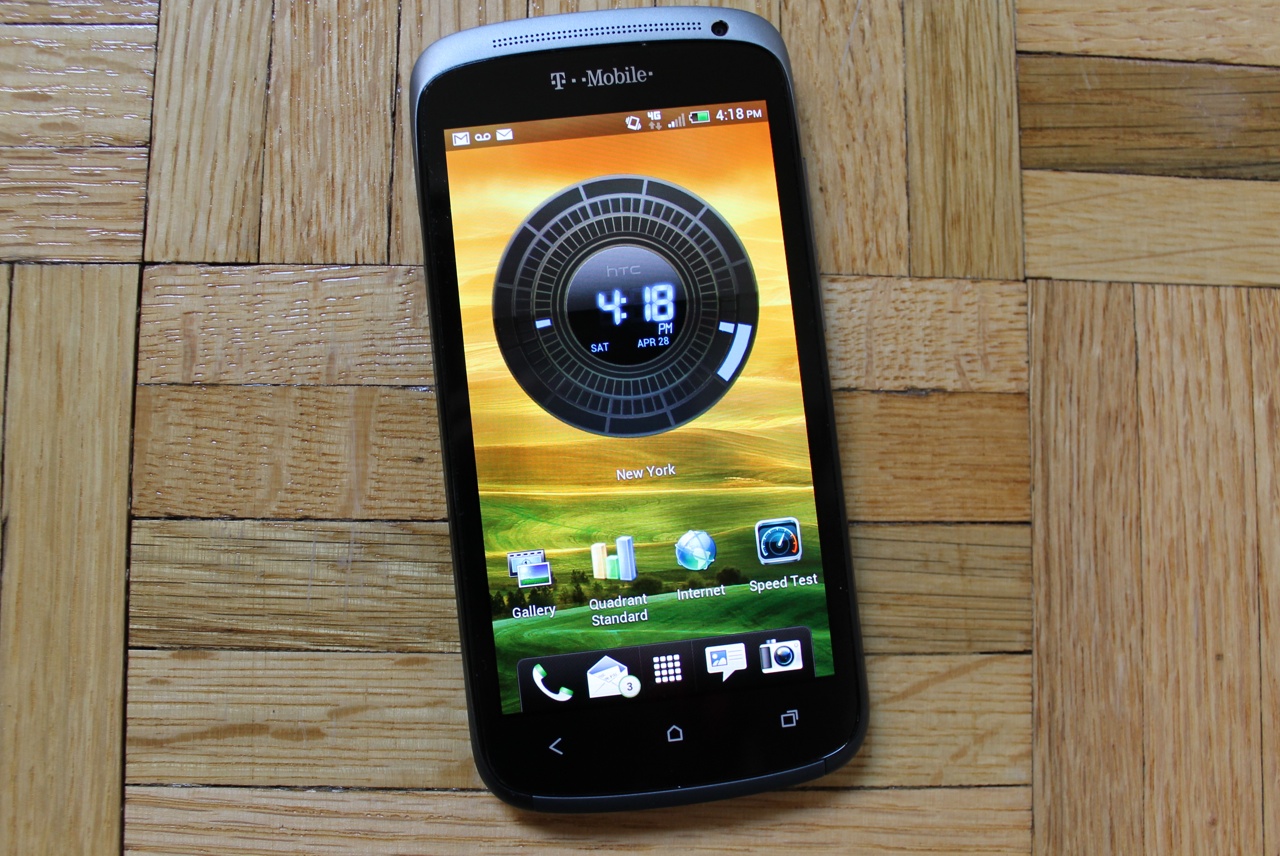
Despite the fact that there’s no real wow factor here, it would be entirely unfair to say that HTC’s One S isn’t a great phone. It is. The hardware is some of the best I’ve seen in a long time, Sense 4 is quite nice albeit a touch heavy for my taste, and the specs are right in line with what we’re seeing on the market today.

Truth be told, anyone at T-Mobile would be lucky to have one. S. (Lawl.)

Features:

  • 4.3-inch 960×540 Super AMOLED display
  • T-Mobile “4G” 42Mbps HSPA+
  • Android 4.0.3 Ice Cream Sandwich
  • 1.5GHz dual-core processor
  • 8MP rear camera (1080p video capture)
  • 0.3MP VGA front camera
  • Sense 4
  • MSRP: $199.99 on-contract

Pros:

  • The hardware is truly impressive
  • Super thin and light
  • Solid battery life

Cons:

  • Sense adds to Android’s usual lag
  • No real wow factor

Long Version

Hardware/Design:

As I’ve said twice already, I’m truly impressed with this hardware. It sports an aluminum unibody frame, with a soft-touch finish. The back fades from a lighter to a darker grey, and when all is said and done, it’s a stunning device. Android phones these days are so plastic-y, too light to feel premium, and seem to be thrown together.

However, it’s clear with the One S that HTC spent time on design and build quality. The phone is super thin with a .37-inch waistline and weighs in at just 4.22 ounces. I usually don’t spend a lot of time talking about weight and dimensions because most phones are actually quite similar in that respect, but HTC hit the nail right on the head with the One S. Here’s why: if a phone is too thin, and thus too light, it begins to feel cheap — especially when it’s made entirely from plastic.

Since the One S is made of aluminum, it’s able to maintain a thin profile while still having a balanced, solid heft to it. This allows the phone to feel way more high-end than most of its competition. The phone is relatively flat on both the front and back, though all the corners and edges are slightly rounded. As I said, it has a beautiful design and solid hardware.

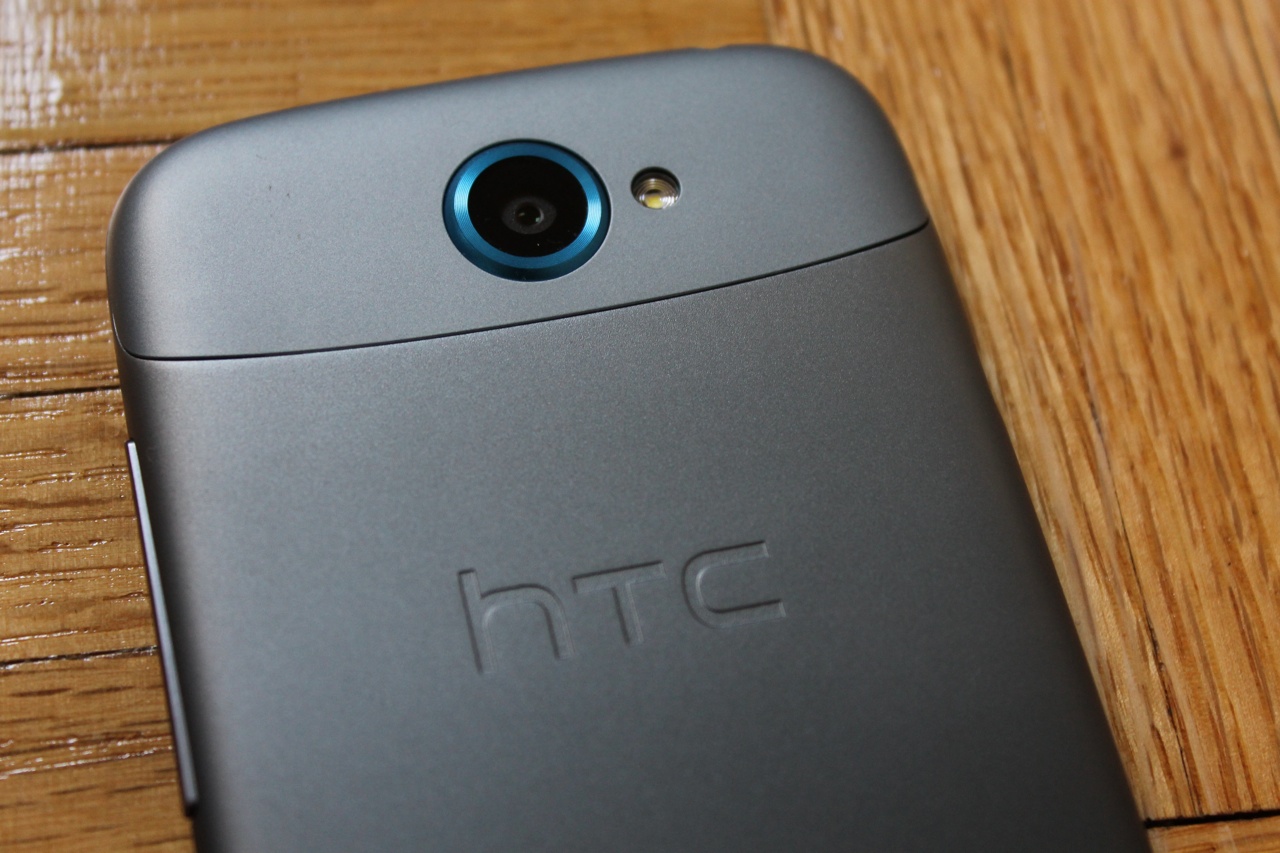
The camera sits square on the back of the phone and sports a nice little blue trim to add a little style to a rather grey device. If you like a pop of color, you’ll surely appreciate the detail. Along the left edge you’ll find an MHL-style micro-USB port, which also doubles as HDMI out, and on the right edge you’ll find the volume rocker. A 3.5mm headphone jack and the lock button share space on the top edge of the phone.

Software:

The HTC One S runs Android 4.0.3 Ice Cream Sandwich, though you’d be hard-pressed to recognize it. Sense is one of the heaviest OEM skins on the market, and it completely dominates the phone. That said, Sense is actually a pretty beautiful UI. Sense 3 and all of its iterations was way too much. 3D animations abounded, frills and flourishes were everywhere, and most of it was entirely arbitrary.

Much of that has been cleaned up to actually serve a purpose. See, as John and I mentioned in our Fly or Die episode with the One S, Android has become a platform that pumps out phones from hundreds of vendors that ultimately look like “just another Android phone.” The skins become critical to manufacturers in terms of differentiation, but they also have to be careful to leave Android alone in many respects. Android fans love Android, not Sense or TouchWiz or whatever else.

Still, I think HTC did a good job of reigning in all the creativity and letting Sense be useful rather than overly beautiful. The camera app is quite wonderful, which I’ll discuss more in a second, and the widgets provided make it easy to customize the One S to suit you specifically. I’m using a pretty bad ass analog clock right now on my main homescreen that I’m quite proud to show off.

Camera:

The One S camera is quite capable. In fact, you’ll probably really like the images you capture with it. At the same time, I wouldn’t say the camera is all that good at keepin’ it real, if you know what I mean. Colors seem to be saturated and brightened to make images more beautiful, especially yellows and reds.

If you take a look at the comparison shot below, you’ll notice that the iPhone 4S makes my food look a little bland. (It’s delicious, in case you’re wondering.) But when I hold both phones up next to the food, the iPhone 4S clearly captured reality way better than the One S.

In terms of software, the Sense camera app may be my favorite of all the Android phone makers’ camera software variations. It has a variety of filters that are built right in to the app, and I’d say some of them (like Vintage) rival those of Instagram. There are also plenty of settings for ISO, White Balance, etc.

Comparison shot between the One S (left) and the iPhone 4S (right):

Display:

I have very few complaints when it comes to the One S display. At 4.3-inches, it’s absolutely the perfect size to be comfortable in the hand while maintaining a nice pixel density. qHD — or 960xb540 — is perfectly acceptable on a 4.3-inch display. And the Super AMOLED quality only adds to that.

You really don’t notice any pixel-to-pixel differentiation, and images and videos look great. I did notice that when the phone fires up, there’s a small, rectangular block on the top right of the phone where the screen displays that the software is loading up. It looks like any other progress bar you’ve seen before, but when the progress bar disappears that little block of pixels is much whiter than the rest of the start-up screen.

This is a minimal, if not entirely unimportant, issue. It makes no difference whatsoever, as that same block doesn’t show any weird coloration or pixelation when the phone is turned on and working.

Performance:

Wow!

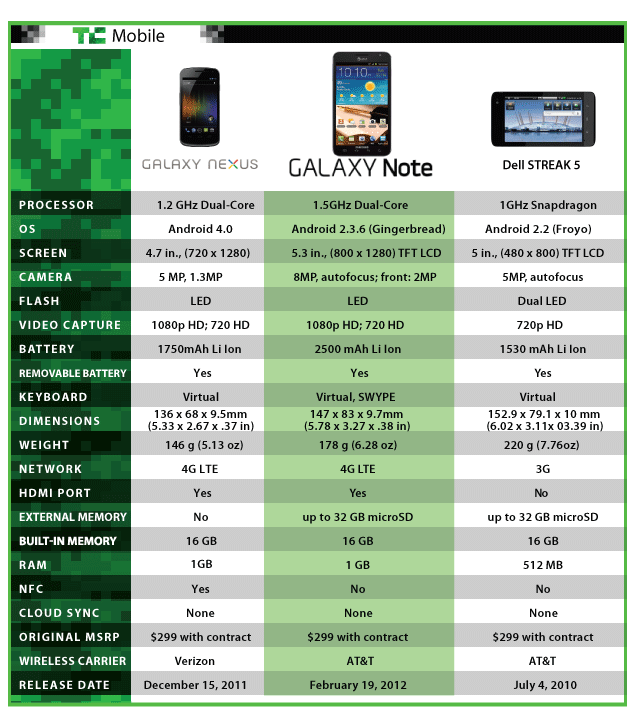
The One S has tested better than the Note, the Droid 4 and the LG Spectrum in both Browsermark and Quadrant. Quadrant tests everything from the CPU to the memory to the graphics, and while all three of the aforementioned Android phones stayed well below the 3,000 mark, the One S scored an impressive 4,371.

Same story applies in the browser-based Browsermark test. The Spectrum, Droid 4, and the Note all scored below 60,000, while the One S hit 100,662. I’m totally impressed, but not by the numbers.

True, there’s a general lag that comes along with Android, especially in the browser. Pinch-to-zoom and scrolling simply aren’t as smooth as they are on iOS, or even on Windows Phone for that matter, even if it’s minimally. But the One S felt more frictionless than I’m used to on Android, and I never experienced a freeze of any kind. It’s a nice change from most Android reviews.

Speed test was a bit of a different story. Of course, in different parts of the city, I had my highs and lows in terms of a speedy network. But during testing Speedtest only saw an average of 2.11Mbps down and .73Mbps up.

Battery:

I’m pretty impressed with the One S battery. Around the mid-way point of testing I had a bad feeling. The phone displayed about a quarter of juice in the little battery icon, but it lasted another two hours or so. I’m thinking the icon itself is off, to be honest with you.

Our testing includes a program that keeps the phone’s display on at all times, while Google is constantly performing an image search, one after the other. It’s an intense test, and at any point I can hop in and play a game, browse the web, send a text, make a call, etc.

All in all, the One S lasted 4 hours and 51 minutes. T-Mobile 4G was on the entire time. To be honest, the phone got a bit warm during the battery test, but it didn’t slow things down or create a lag by any means. Plus, you’re probably not as much of a power user as our battery test is.

In real world scenarios, the One S should surely stick with you all day.

To give you a little context, the Droid 4 only hung in there for three hours and forty-five minutes while the Droid RAZR Maxx (Motorola’s battery beast) stayed with me for a staggering eight hours and fifteen minutes.

Head-To-Head With The One X And iPhone 4S:

Check out our thoughts on this match-up here.

Hands-On Video: Fly or Die

Conclusion

As I expressed during Fly or Die, I think the One S will owe a lot of its success to its carrier. T-Mobile is a fine operator and I applaud the company for trying to rebrand and build up its selection. But without any competition from the iPhone, the One S gets a bit of a freebie. It’s a fine handset, but it has no real wow factor, as I’ve mentioned over and over.

The Samsung Galaxy Note has its massive screen and an S-Pen (and might actually compete with the One S on T-Mo shelves), the Droid 4 has its superior physical keyboard, and the Lumia 900 (which also might be T-Mobile-bound) has Windows Phone. The One S has none of that — it’s just another Android phone.

But that’s ok, because it’s an excellent Android phone. It has all the right dimensions, a comfortable weight, a premium feel in the hand, and a stunning design. It’s rather quick for an Android phone, and comes loaded with tons of fun software.

I give it a fly.


Check out all of our One S review posts here.


Lane Becker On How To ‘Plan Serendipity’ In Tech And Business [TCTV]

Screen Shot 2012-04-28 at 12.23.13 PM

Lane Becker has been a familiar figure in the Silicon Valley tech scene for years, as the co-founder of startups such as Adaptive Path and Get Satisfaction, an advisor at early-stage venture capital firm Freestyle Capital, and a generally good guy to know.

Yesterday, Becker added “New York Times Bestselling Author” to his list of descriptors, when the book “Get Lucky: How to Put Planned Serendipity to Work for You and Your Business” which he wrote with his Get Satisfaction co-founder Thor Muller debuted at the number six spot on the NYT’s best seller list for hardcover advice and miscellaneous books (which is generally where business books are ranked.) It is also holding the number three spot on the Wall Street Journal’s hardcover business best seller list.

So we were very pleased to have Lane Becker drop by the TechCrunch TV studio this week for an interview. Watch the video above to hear about what “planned serendipity” really is (you can’t plan to win the lottery, alas), how Steve Jobs literally architected good luck into Pixar and Apple, how luck plays into Amazon’s current status as a tech product hit factory, and how even rank-and-file employees can “storm the gates” to make their companies more open to success.

Want more “Get Lucky” stuff? Becker’s co-author Muller wrote a guest post for TechCrunch which you can find right here.


The Seven Forces Disrupting Venture Capital

shift key

Editor’s Note: TechCrunch columnist Semil Shah currently works at Votizen and is based in Palo Alto. You can follow him on Twitter @semil

For the past few years, I have read over what seems like hundreds of blogs and thousands of tweets that either directly claim or indirectly hint at a disruption of traditional venture capital. For some, the factors relate to the economy, that limited partners and institutional investors were reviewing their investment approaches. For others, it seemed as if there was too much money in the asset class, that there was too much money chasing too few real opportunities. There seemed to be a long laundry list of why venture capital was undergoing this shift, but never any thread that could lay out all the factors and synthesize just how each factor contributed to shift, until now…

(Note: 1. Since “venture capital” is applied to many different industries with vastly different economic structures, this post will focus on software startups. 2. I am not going to list examples below because there are too many and I don’t want to exclude any particular companies.)

First, we have Amazon: It’s cheap to build, host, test, and optimize software. Amazon Web Services, for instance, reduce operational costs for young companies, directly impacting a startups’ burn rate. Whereas in the past a not insignificant part of an investment may be allocated to hosting, Amazon’s innovation has helped entrepreneurs better manage costs and dampened the need for venture capital investors to help out early with operational expenses.

Secondly, Angel Investors: Once a products gets to some proof of concept, an entrepreneur can raise seed funding from an incredibly wide range of sources. Those that are either connected or lucky can solicit checks from family, friends, former bosses and colleagues, or they join incubators (more on this below), or reach out to relatively obscure or more well-known angel investors, all the way up to small institutional funds, what some people refer to as “Super Angels” or “MicroVCs,” or websites dedicated to pairing investors with investment opportunities (more on this below). The flood of early-stage capital has triggered some venture capital firms to also invest in the seed stage, where they have to compete directly with smaller funds or vehicles, though a small handful of firms have resisted and focused on Series A-style investments.

Third, we have AngelList: Simply one of the most disruptive forces to the venture industry, the folks behind AngelList have created extremely useful social software that pairs investors with investment opportunities. For angel investors, AngelList provides an asynchronous way to scout, monitor, track, and communicate with potential investment; for startups, the system provides an opportunity for them to network, build reputation and good signals, and connects them to a wider range of potential funders. The disruption AngelList provides to venture capital is that the system could theoretically be used for larger Series A and B fundings, and in some cases, probably has. It remains to be seen if it can scale across to this level, but given how much it has accomplished in a few years, it’s not out of the question.

Fourth, we have Kickstarter and crowdfunding: For some particular startups that aren’t able to secure seed funds, either from angels, super angels, angel-focused software, or venture capitalists that make seed investments, they can leverage crowdfunding platforms like Kickstarter to tap into an even wider pool of available funds. And now with the JOBS Act, which will allow for crowdfunding of certain startups in certain situations, new companies can now raise small amounts of money from many different people, just as a political candidate may use small online donations from a large base to raise funds.

Fifth, there’s Y Combinator: While there seems to be an incubator popping up weekly nowadays, the system, network, and brand built by the partners at Y Combinator has, in a relatively short period of time, captured significant power in the early-stage ecosystem by attracting, vetting, and training technical entrepreneurs on the ins and outs of how to start technology companies. Each class in Y Combinator prepares for their Demo Day, and each company has the option to accept $150,000 in convertible debt — and not just from anyone (more on this below). Having this cash on hand affords these companies a bit more time and runway should they need it, and gives them some negotiating leverage when talking to larger investors who are keen to invest, sometimes resulting in higher valuations that venture capitalists have to compete against.

Sixth, is “New” Venture Capital: The money given to these YC companies isn’t just normal money — it’s in part from a new style of venture capital pioneered by firms like Andreessen Horowitz (A16Z) and DST. While DST has made big bets and partnered with YC, A16Z has also raised large funds with a relatively small partnership, choosing instead to challenge the traditional venture capital personnel structure by operationalizing services across functional areas such as business development, recruiting, public relations, and sales. For a founder, the services offered in this model are strong, and this has motivated some other venture capital firms to change their own structures in an effort to provide more services to their companies. Additionally, the A16Z investment thesis, which seems to be designed around a belief that this is a particularly unique period of opportunity for transformation both on the web and in mobile and that a small share of winners in these categories will produce outsized returns. As a result, they seem to be willing to pay higher prices, which either forces traditional venture to compete or wait for the next thing.

And, finally, seventh are secondary markets: Now that early-stage shareholders (investors, founders, employees) of certain companies can sell their shares on these secondary markets, such as SecondMarket or SharesPost, they are able to access liquidity much earlier in the past. On the flip side, larger venture capital funds that may have missed out on the next big thing because the new company was incubated, or crowdfunded, or funded via a social network or small or large angel investors may have a chance to own a piece of the entity through these markets. In some cases, venture capital firms have been quite opportunistic to buy and sell shares of larger web companies in a short period of time, making a quick flip and marketing to the world that they, too, have invested in a particular company. While these markets provide venture capital with access, they also have to compete with a larger number of  firms for these deals, a factor that could drive up prices and thereby affect returns.

All of these forces combined, and each individually in their own way, have altered the landscape for traditional venture capital in software. It is on average significantly more difficult to for traditional firms to find early-stage opportunities because there is more competition for those investments, and once a company does breakout and require more institutional funding, the prices for those rounds may not look like they have in the past. Some of this is reflective of the competitive forces that set market prices for private companies, or, depending on where you sit, is simply the new price to pay in order to own a piece of these coveted assets.

And while we’re able to analyze what has happened so far, I have no clue what the next few years will hold. Will the next big breakout originate from an incubator, will it be funded by software platforms, or will it be discovered by a small set of angels and venture capitalists, as it has for so many years to date? In the great race to find incredible talent before others, and the great race to own shares in private companies, there are more questions here than answers, but there’s no denying that it will be fascinating to see unfold.

Photo Credit: Slack Pics / Creative Commons Flickr


Cyberpunks Rejoice: Kickstarter Project Aims To Resurrect Shadowrun

Screen Shot 2012-04-28 at 1.41.07 PM

If you spent any time in high school thinking about ley lines and bio-implants, you were probably a Shadowrun player. The game, which petered out after a disastrous run as a PC/Xbox game in 2007, brought the high-tech of William Gibson to the magical realms of Mr. Gygax. It was, in short, pretty cool.

A Kickstarter project aims to bring back all that fun in video game form, adding lots of what you missed about Shadowrun back to the PC. This new version will be a RPG involving the Shadowrun world complete with various character types – elves, samurai, humans – and, although this is discouraged, deals with dragons. $15 gets you a copy of the game while $60 gets you a t-shirt and some in-game perks.

Pledge $10,000 and the real magic happens:

Previous rewards + Mike Mulvihill, who led Shadowrun game development at FASA Corp., will COME TO YOUR TOWN TO RUN A TABLETOP GAME OF SHADOWRUN FOR YOU AND FIVE OF YOUR FRIENDS. (He’ll even buy some snacks.)

You can read about the game here or fund it over at Kickstarter. The game has already gained pledges of $2 million on a $400,000 goal, so there’s a good chance it will get made.


Gillmor Gang: The Teddy Bear Bubble

Gillmor Gang test pattern

The Gillmor Gang — John Borthwick, Danny Sullivan, John Taschek, and Steve Gillmor — took the bait and played the Are We in a Bubble game. With Apple’s stock price in free fall, the mobile giant reported another blowout What Me Worry quarter that sent the stock right back up. Meanwhile, Google announced, no, shipped Gdrive, and sent shivers down the collective cloud storage spine.

What Gdrive really does is consolidate Google Office under an attractive layer of collaborative unification, borrowed first from Ray Ozzie’s Mesh service and now emulated by a raft of smaller players bubbling up from Startupville. While we’re all twisting slowly in the Apple wind, the real action is taking place in what the chat room somehow called the Teddy Bear Cloud. It’s the new binky.

@stevegillmor, @dannysullivan, @borthwick, @jtaschek

Produced and directed by Tina Chase Gillmor @tinagillmor


They Ain’t Making Any More of Them: The Great Engineering Shortage of 2012

3483548677_3dc371b216_z

Editor’s note: This post is authored by guest contributor Jon Bischke. Jon is a founder of Entelo and is an advisor to several startups. You can follow Jon on Twitter here.

Corner any up-and-coming Kevin Systrom wanna-be and have a heart-to-heart about the challenges of building a successful company and at some point you’ll likely wander into the territory of bemoaning how tough it is to hire people with technical skills. At a party recently a startup founder told me “If you could find me five great engineers in the next 90 days I’d pay you $400,000.” Which is crazy talk. Unless you stop to consider that Instagram’s team (mostly engineers) was valued at almost $80 million per employee or that corporate development heads often value engineers at startups they are acquiring at a half-million to million dollars per person. $400,000 actually might not be so crazy for a basketball lineup’s worth of guys who can sling Ruby or Scala code.

So with all this widespread talk about the value of hiring great engineers and the apparent dearth of technical talent in the market, college students must be signing up to computer science classes in droves. This is the next California Gold Rush is it not? The era in which a self-taught programmer can emerge from relative obscurity and land a mid-nine figure payday. Engineering enrollments surely must be at an all-time high?

Au contraire, mon frère. Consider this (from the Marginal Revolution blog):

In 2009 the U.S. graduated 37,994 students with bachelor’s degrees in computer and information science. This is not bad, but we graduated more students with computer science degrees 25 years ago!

Coding is as hot as it’s ever been and yet we graduated more students with CSci degrees in The Year of Our Orwell as we do today? What’s going on here exactly? A little more from the same blog post:

In 2009 the U.S. graduated 89,140 students in the visual and performing arts, more than in computer science, math and chemical engineering combined and more than double the number of visual and performing arts graduates in 1985.

We are raising a generation of American Idols and So You Think You Can Dancers when what we really need is a generation of Gateses and Zuckerbergs. According to the Bureau of Labor Statistics (PDF download) computer and mathematical occupations are expected to add 785,700 new jobs from 2008 to 2018. It doesn’t take a math major to see that we’re graduating students at a far lower rate than required to meet demand.

But what’s important is not just what is happening but also why it’s happening. If there’s both security on the downside (computer science majors experience rock-bottom unemployment rates) and untold riches on the upside, it seems the rational economic choice for people to flock to majoring in computer science and engineering. And yet, that’s not what’s taking place.

Let’s look at a few of many theories as to why people might be choosing to study drama and music instead of C++ and algorithms.

People don’t get excited by technology. The glamour and glitz of Hollywood that attracts thousands of Midwestern prom queens every year is undeniable. And the stereotype of the lone coder sitting alone in a cube somewhere can’t quite match up to the thrill, however unlikely, of one day performing in front of Steven, Randy and Jennifer.

But that doesn’t seem entirely logical. After all, Sorkin did his best to put nerds front and center with The Social Network and show the rags-to-riches possibilities associated with tech entrepreneurship, at least to the extent that you’re allowed to ever consider a Harvard undergrad as a “rags-worthy” starting point. Furthermore, you need look no further than the Forbes 400 to see alpha geeks racing yachts and buying sports teams. And of course there has never been a time in history when technology was more ubiquitous, with all of us carrying an incredibly powerful computing device in our pockets.

Technology is hard. OK, now perhaps we’re getting a little closer to the truth. It’s not that learning how to program has gotten noticeably more difficult over the years. If anything, frameworks like Rails for Ruby make it easier. But there is a basic level of understanding that, if you don’t have it, drastically reduces the likelihood that you’ll become an engineer.

Indeed, at each level of our education there’s a chance to miss out on fundamental knowledge that, if not acquired at that point, becomes progressively more difficult to pick up later in life. Salman Khan said it best in his TED talk that should be mandatory viewing:

“…you fast forward and good students start failing algebra all of a sudden and start failing calculus all of a sudden, despite being smart, despite having good teachers, and it’s usually because they have these Swiss cheese gaps that kept building throughout their foundation.”

There’s likely, in part at least, an education challenge here. But it’s doesn’t appear to be just that. There’s something else important here.

There’s little incentive, early in one’s career, to choose to go into computer science or engineering. At the time you’re choosing your career path, say around 20 years of age, you often haven’t fully digested that the rational economic choice for your studies is something in the STEM disciplines. And when all things are the same “price” (i.e., a degree in the humanities costs the same as a degree in engineering) if you don’t internalize that the net present value of that diploma with a computer science major is significantly greater than the net present value of that diploma with a drama major then maybe drama isn’t such an irrational choice.

Therein lies the problem. If a drama major costs society substantially more than a computer science major (e.g., drama majors pay less taxes, draw more unemployment benefits, etc.) then perhaps a drama major should be more expensive than a computer science major? While this sounds, no pun intended, dramatic, it’s worthwhile to consider that China is canceling majors they don’t deem to have good employment prospects.

Or maybe there isn’t a big problem here after all. Before we completely overhaul the incentive process around how students choose their major perhaps there’s another thing worth considering and that’s the rise of self-directed learning services and websites such as Codecademy, CodeLesson, General Assembly, Dev Bootcamp, Treehouse and Udemy (Disclosure: I’m an advisor to Udemy) make the lower numbers of college graduates with computer science degrees less disconcerting. After all, the important thing is that people are acquiring these skills, not necessarily that they are majoring in the discipline.

There is a lot to think about here and no easy answers but a dialogue on the topic seems important. After all, some of the most innovative companies on the planet are starved for talent while at the same time job prospects for new college graduates are pretty bleak. What will it take to resolve that paradox?


How Great Entrepreneurs Create Their Own Luck

696

Editor’s note: This post is authored by guest contributor Thor Muller, a New York Times best selling author. His latest book, “Get Lucky: How to Put Planned Serendipity to Work for You and Your Business” is available now.

This is the story of how a young Irish fine artist accidentally became a materials scientist, founding a high-growth company that created a whole new product category. It’s also a parable for how great entrepreneurs systematically create their own luck.

Jane ni Dhulchaointigh is the founder and CEO of Sugru, a London-based startup that makes an amazing moldable adhesive for repairing any physical object. It’s a cross between silly putty and duct tape, a space age rubber that can be molded into any desired shape by hand, and that sticks to a vast array of surfaces. With customers in over 100 countries, and all seven continents, Sugru has taken the world by storm.

What we see in Jane’s journey, so far from California’s tech startup scene, is the same thing we see in virtually all startups that work: the ability to harness serendipity, the unplanned discoveries, large or small, that end up being the turning points in careers and businesses. Hard work, training and process may be the foundation of success, but serendipity is where the magic happens. And even though serendipity is by definition unpredictable, its appearance is anything but random.

Jane’s stunning rise is the result of her mastering what we call the skills of planned serendipity, a set of behaviors that have allowed her, over and over again, to generate the chance discoveries, recognize the good ones, and take action on those that matter most.

Here’s how it happened, and what we can learn from her breakout success.

Start With A “Geek Brain” 

Jane originally studied to be a sculptor, an interest that had possessed her for years. She returned to school in 2003 to study commercial product design at the Royal College of Art. It seemed a prudent career move given the high demand for designers (and the lack of jobs for sculptors), but it was a switch that proved difficult. Her impulse was to follow her own interests over solving the narrowly defined product problems discussed in class. Before long, her background in sculpture combined with her insatiable curiosity led her to begin experimenting with new materials.

Jane was equipped with one of the great advantages in cultivating serendipity, a geek brain–what we define as an obsessive curiosity in an area of interest and the ability to notice anomalies, overcoming the conventional wisdom that constrains others. The geek brain gave Jane distance from the rote conventions of design school, allowing her to connect ideas from across domains in unusual ways.

Find Space to Play 

Having a mindset geared for recognizing unexpected ideas is rarely enough on its own—Jane needed an environment that allowed her to explore and put this geek brain to good use. The workshop at her college served this purpose well:

I was destroying things and putting them back together: chipping blocks of wood apart and putting them back together with other materials…One experiment I did was combining silicone caulk with very fine wood dust from the workshop. From that combination I made these fancy wooden balls. I found it fascinating that you could make something that looked like wood but had other properties—if you threw them on the floor they’d bounce.

Jane’s early explorations with her strange rubbery material was driven by a fascination with the possibilities of what she could make, rather than any specific purpose to which it could be put. This is the hallmark of a true exploratory mode, as premature focus can kill good ideas before they ever emerge. Still, as her discovery started to take shape, she began to spend more and more time wondering what it might actually be good for.

Be Opinionated 

Jane’s boyfriend noticed that she had been using her funny rubber to repair or customize things around the house—enlarging a sink plug that was too small, or making a more ergonomic knife handle. It had been so natural for her to use the rubber in this way because she personally believed in the value of repairing her things rather than running out and buying a replacement. The instinct was so natural, in fact, that she hadn’t even consciously registered what she was doing. It was only when her boyfriend drew her attention to it that she saw the opportunity in a flash.

Jane had stumbled on a product idea that mapped perfectly to a deeply held conviction: she hated waste. She was fed up with it and knew she wasn’t alone. “In the past, some people would have thought that repairing something is a compromise because you couldn’t afford to buy it new again,” Jane says. “But now there are increasing numbers of people who would rather repair or reuse than throw something out and needlessly buy something new because of the waste involved.”

Her insight was that this space-age rubber she’d invented could be an essential innovation in this cause. She saw the potential in her chance discovery only because she had an overriding purpose that gave her a unique perspective. “Every granny who finds it hard to open a jam jar can manipulate this material,” she said. “Anyone who has a stiff part on their bike can adapt it to be whatever the bike needs.”

Project the Possibility

The only problem was that the material didn’t actually exist yet. The makeshift rubber Jane had been playing with had all kinds of problems: it didn’t adhere to enough surfaces, it had a terribly short shelf-life, and it was too high maintenance to make a successful commercial product.

This was the do-or-die moment. As an artist, there was every reason in the world to give up—she had no business thinking she could solve this incredibly technical problem. Instead, Jane pulled a Jujitsu serendipity move: employing only her faulty prototype and her storytelling skills, she projected her vision as broadly as she could, telling anyone who would listen about it. Early stage entrepreneurs like Jane don’t always know what exact outcomes to expect, but they are willing to publicly put their ideas into the world, allowing them to connect with the as yet unknown people and opportunities that make their products possible.

It worked. Attention followed from the strength of her vision, attracting local press mentions, a set of science advisors, and a grant from the National Endowment for Science, Technology, and Arts.

Follow Unplanned Paths

The grant wasn’t huge, a mere £35,000, but it was enough to start testing materials—as long as Jane did the testing herself. To do that, she realized, she would have to do something that was not only unexpected, but would have seemed absurd a few months before: she’d have to diverge from her career path and be trained as a lab technician and set up her own laboratory. She wasn’t waiting around to find a CTO who knew better. This former art student must learn to be a materials scientist.

It took her two years of painstaking trial-and-error, but eventually she created a brand new, patented class of silicone that worked for her aims. Only Jane’s immovable sense of purpose kept her going through month after month of laborious formulation and failure, long before her work would bear fruit. This is a recurring paradox of serendipity: stick-to-itness—the ability to stay committed to a purpose—is often the very thing that allows new paths to be recognized and taken.

Design Openness into the Product and Company

Initially there was tremendous pressure to fit the new product into a well-worn category that the traditional business world would understand. Then it struck Jane that she could create a brand designed to activate the creative spark in people. She could leave the product’s purpose intentionally open—the tagline would become “Hack Things Better”—so that customers could use their own imagination. One of the first things she did after launching the product was create an online community for customers to share their ideas. Creating permeability at the edge of her company allowed new directions and opportunities to serendipitously emerge.

As a result the company and its customers have developed a truly symbiotic relationship. That “perfect fit” Jane had been seeking for her unusual rubber years ago? Her customers are telling her what it is—or rather, all of the perfect fits they’ve found. Repairing computers, cables for laptop chargers, phones, and outdoor equipment have emerged as the leading uses for her one-of-a-kind product. Jane is finding the company being pulled by customers in directions she could never have imagined during those years of painstaking materials research, but in each case the path is perfectly aligned with the company’s purpose.

The Kind of Luck That Matters

Entrepreneurs often cite “luck” as a key ingredient of success, yet this means far more than just being in the right time, right place. The luck that builds careers and companies is the kind that unfolds gradually, choice by choice, as people recognize and seize surprise opportunities, attracting others to them long before it’s obvious that their business is the next big thing. These skills of planned serendipity are not vague, metaphysical concepts; they can be mastered by any of us, and can shape how we run our startups as they grow.

We can learn how to make our businesses luckier.


Book Excerpt: Bruce Perry’s Fitness For Geeks

Screen Shot 2012-04-27 at 8.53.27 AM

This is an excerpt from Bruce Perry’s Fitness For Geeks, a blueprint for getting healthy in a connected world. In this section, he outlines the typical day for someone who wants to get healthy without gym memberships, expensive diet plans, and odd tactics.

And Now for Something Completely Different

Try this: you wake up without an alarm sometime soon after sunrise, with plenty of time to spare to make it to work.

It was a good sleep; you went to bed just after nine o’clock after having a snack consisting of coconut milk blended with blueberries and a little whey powder. You’re already savvy about getting enough REM sleep, but now you aim to bump up your deep sleep, or restorative NREM. You might even check out the wave chart your Zeo produced.

The first thing you do is pour a cup of black tea or coffee and go outside to this pool of sunlight you’ve noticed out your window.

You bask and reflect in it for a minute, perhaps followed by a few Tai Chi moves, push-ups on the lawn, or pull-ups on the jungle gym across the street from your apartment. You sip a bit more coffee and return to your living space to get ready for the commute.

Technically speaking, as you gazed up into the sky and basked in that sun, the light rays touched your retinas and were transduced by the hypothalamus and pineal gland in your brain, which has now helped set your circadian rhythms for the day.

Mindfulness

The sun you got wasn’t much, not like spending the morning on the beach in the British Virgin Islands (gotta do that someday…), but it had the effect of lightening your mood, clearing your head, and kick-starting the day. You’ve sent the message to your body and your brain, “It’s morning and I’m well rested and ready to go.”

Every other day you stop at an intervening fitness facility to lift a few weights or do a 300-yard swim interspersed with a handful of 25-yard sprints—nothing too much, but today you’re biking to the train station, where they’ve thoughtfully included a place to lock your rig.

The train ride into the center of the city (Boston, New York, San Francisco, Seattle, Portland, Vancouver, Montreal; Zurich, Frankfurt, Copenhagen, London, Sydney, Wellington, Tokyo, Osaka, Kyoto…) takes 35 minutes, and you stand for most of it, just because it feels better.

Geek Gear

You kind of want to rack up more activity points on this web-connected, motion-sensitive, stair-counting altitude calculator you’ve clipped onto your belt (yeah, it’s called a Fitbit), although gear isn’t strictly necessary this morning. It’s just fun, in a geeky kind of obsessive way. You like quantifying and logging your exercise. This act itself seems motivating. The web charts your gear generates later are actually quite impressive. They can show your oscillating movement throughout the day, and pinpoint the days when you need more.

Gathering data is not useless when you act upon it.

The tool for adding up your daily motion mileage works with an odd “tail wagging the dog” effect; you seem to move more when you’re wearing it. Further, you never really knew that ordinary movement could equate to that much mileage during the day. More than six miles sometimes, even though your walks were broken up into several smallish ones. Plodding along on a treadmill just isn’t necessary anymore. You love looking at the stats at the end of the day. Just keep moving, you say to yourself. Seek the sun.

Hard-Boiled Eggs to Go

Breakfast today was two hard-boiled eggs (eggs bought the previous weekend at a farmer’s market), a piece of Swiss cheese, a bite of salmon left over from last night, and two plums plus an avocado (also purchased at the market). Yesterday, you fasted through breakfast, and that felt fine. Actually, the bit of coffee plus “intermittent fast” kept you pretty perky throughout the morning.

You’ve got a little plastic bag in your backpack containing the rest of the salmon, a mixture of almonds and walnuts, an apple, and a square of 85% high-cacao chocolate. In a pinch, there’s a good salad place near work. It only took a couple of weeks not to miss that bagel anymore, and especially all that crappy margarine (you go for really yellow butter now)—the sluggishness and lack of satiety it seemed to leave you with, and the way it seemed to take half the morning to digest it and the donut and scone you piled on top of it.

Hopping off the train, you walk about 30 minutes the rest of the way to work, on the sunny side of the street, even though you could have dipped into the subway or hopped on a bus.

Dude, Take the Stairs

Work is on the third floor of a tall building, but you take the stairs, walking briskly past a line of people waiting at the elevator. Their auras are uniformly glum, as if someone else is pulling their strings. You have never taken the elevator, including that time your supervisors were standing in front of it with expectant looks, suggesting they had an axe to grind.

You take the stairs two at a time, simply because the heft in your upper leg feels good. Your heart rate gets going, but not that much; you’ve noticed that improvement over the months.

OCD About Health

The morning goes on and you switch between sitting and standing in your cubicle—standing most of the time. You have a pretty good stand-up workstation setup. Besides, the standing for hours bumps up those motion and- mileage numbers, which no one else could possibly care about, except other users fidgeting with their tracking devices and apps and going online afterward with the data. You don’t mind having an obsessive-compulsive disorder involving healthy habits. You also don’t mind going without your gear for a day or two. No big deal.

About every hour or 90 minutes during the day, you head down those stairs again and back outside into the sun. When you get blocked on a sticky piece of code or logical problem, this brisk walk helps almost every time. Often, you experience casual moments outside that you always will remember and never would have experienced if you’d stayed in your cubicle all day, like that majestic hawk that hovered in the blue sky before it alighted on the ledge of a distant building. You tried to estimate its wingspan as it hung frozen in the cerulean blue.

Hey, He Likes Me!

That handsome dude or attractive woman with the healthy glow who spoke to you out of the blue that time when you were both sitting on a bench, chilling— that hadn’t happened to you in a long while; it’s usually just awkward silences and departures, ships passing at night. You’re going to see him/her again sometime; you’re going to swap phone numbers.

You take longer walks sometimes in the city, until you find yourself drifting around with a relaxed aimlessness, kind of like Owen Wilson in the movie Midnight in Paris.

You have the usual “meetings” (the quotation marks question their purposefulness) in the mid-morning and afternoon. You stand during both, and it seems to have a contagious effect. Two other people stood up during the second meeting, and you could have sworn both confabs went a little faster. You’re beginning to get a rep as “that healthy guy” around the office.

Knock Off Some Bench Presses

By the end of the day you’ve climbed about 12 floors and maybe walked a couple of miles or more (the number of miles you cover in a day, counting everything, always surprises you). A formal workout in the middle of the day is not necessary. But sometimes you duck into the company fitness facility on a rainy day and knock off some bench presses, pull-ups, and inverted push-ups. Sometimes it’s just a dash on a treadmill, or some karate kicks followed by Tai Chi. It takes no more than about 30 minutes.

Your workouts almost never exceed that length of time. When they do, horsing around would be a better way to describe them than workouts or training sessions: playing catch using a winged Nerf football with your son or a friend, or gliding along a country road on a mountain bike.

It All Adds Up to Something Good

Are you getting the point here? You’re able to shoulder a pretty hard job and commute, while staying healthy, mindful, and reasonably content. The days seem to flow more, instead of banging together like an extended train wreck, with you occupying the middle passenger car. Who could argue with that? You even get the monthly $50 bonus they pay at work to the employees with the fewest sick days!

The intent of the last assemblage of paragraphs wasn’t to get all vainglorious and virtuous about healthy lifestyles—although it was fun to write—as much as to paint a narrative about surviving the Digital Age and emerging from your days mostly unscathed (maybe an occasional bruised ego, but it comes with the territory, right?). This chapter has introduced some basic fitness concepts that the rest of the book will cover in sometimes extensive detail:

• Living in the Digital Age, where culture, data, and networks never sleep, but still incorporating the sun, lots of walking, and outdoor experiences— living closer to the imperatives of our preloaded software (our very deep past).

• The benefits of whole, non-processed, real food—and even a bit of “intermittent” fasting every week.

• The advantages of incorporating ordinary exercise regimes like stair climbing, lengthy, aimless walking (no matter how cold it is!), sprints, jumps, and hill-climbing extemporaneously, when you can.

• Using useful tracking tools and personal metrics to augment your fitness, share your progress with friends, help others work through some physical glitches or sleep issues, or for just plain time-wasting fun (when you have that time, that is).

• The importance of sleep and de-stressing; they could save your life.

• The advantages of other lifestyle tactics like freezing swims, saunas, and fasting, not to mention moderate exercise and a good drink now and then. These are examples of “hormesis,” or good stress (see Chapter 11). Unlike many faddish weight-loss and fitness schemes, the changes just described do not involve any expensive program or club fees, or drastic dietary changes (like “zero carb or fat”), except for the optional purchase of a few fun and useful gadgets or tools when you have a little extra change.


Interview: John Robb

panama-birds

John Robb is an astronautical engineer turned US Air Force Special Operations pilot turned Forrester lead analyst turned startup CTO/COO turned military theorist and author, to oversimplify. His writing has heavily influenced my own (eg you’ll find his phrase “open source insurgency” several times in my novel Swarm.) He blogs at Global Guerrillas and edits Resilient Communities.

Q: Your writing has focused on three themes: global guerrillas, resilient communities, and, more recently, drone disruption. Could you give the quick nutshell summaries of each of those?

Sure. The general theme of my work is to be at the center of the information flow in the place the world is changing the fastest. I did that four times (tier 1 spec ops, the Internet, Internet Finance, blogging) in the past. I think these topics are where the change is happening fastest now:

Global guerrillas (the blog and the book, Brave New War) is about open source warfare and systems disruption. Open source warfare is a new form of guerrilla warfare that works exceedingly well in the modern, connected environment. It’s loose and highly effective. It worked in Iraq during the insurgency and in Tunisia/Egypt to topple dictators. Systems disruption is about taking sabotage to a new level. Systems disruption is how individuals and small groups can topple critical networks with very small attacks. These attacks are so successful–I have plenty of examples–they can generate returns on investment over one million to one! This area of my work has lots of fans in US special operations, the CIA, the NSA, guerrilla groups around the world.

Resilient communities is a topic where I spend most of my time. Why? There are two globally systemic threats we can’t solve. Finance and the environment. Both systems are deeply broken and they are going to do considerable damage to all of us over the next decades. The only way to get ready for that is to build networked resilient communities. Resilient Communities efficiently produce most (not all) of the food, energy, water, and products we use daily. These communities reduce our vulnerabilities to the future’s inevitable disruptions (that will damage/impoverish those that don’t transition), reduce complexity to a human scale, and improve the quality of our lives. Since these communities network with the global system, they don’t lose any of the complexity/value we enjoy in the current intellectual environment. My bet, and it is the reason I started the resilient community newsletter, is that the most successful, happiest people on the planet in twenty years will be living in resilient communities.

Drones. Robots are transforming the US military and warfare. I’m a former military pilot. I have seen first hand what drones are doing to the Air Force. Already more than half of all of the people going through pilot training end up flying drones. There are more military drones flying right now than manned planes. We’ve also seen the development of the last manned fighter (the F-35) and I doubt anybody anywhere will produce a new one. Around the world, drones are being deployed permanently (eliminating the need for soldiers) and they are being used frequently (they kill thousands). Unfortunately, this makes sense. Drones are nearly costless. They don’t generate any public push back (no US casualties) and they are much less expensive than people (no retirement/health/etc.). They can also be controlled from Washington. What makes them really scary is how fast they are becoming autonomous, smaller, and less expensive. It’s easy to envision a 10 million drone swarm pacifying a 30 m person city in 20 years time (completely controlled by just a few people at the top).

Q: A common assumption among all three, it seems, is that increasing economic and technical connectivity will lead to increasing military/political instability, which in turn will reveal the fragility of our existing infrastructure. What would you say to those who argue that this is excessively apocalyptic, and that the West’s existing society and infrastructure are already plenty robust?

There’s a simple answer to that: the financial crisis of 2008 and the EU meltdown. Another is climate change, which is another runaway train of a disaster. Why aren’t these fixable? Finance and the environment are truly global systems and there isn’t anybody at the lever.

Q: Technology and creativity are becoming increasingly crowdsourced: not just open-source software, but also Kickstarter, Thingiverse, Ushahidi, etc. Do you view these as steps in the direction of resilient communities, or do you think something qualitatively different needs to be done to get there?

Yes. I think crowd funding is the wrong term. People don’t put money into just anything. They put money and time into things they care about. As such, this is more community financing than crowd financing.

So, does community financing (via the JOBS act and other methods) make it easier to build resilient communities? Yes. Building out food, water, and energy infrastructure at the local level will require that type of financing. I think people are going to find that investing locally in these efforts is a much better way to fund a retirement than investing in broken financial products that have no intrinsic value.

Q: Your writing deals extensively with “open-source insurgencies.” Can you give a couple of concrete example of those insurgencies, how they work, and how they’re enabled by modern technology?

We had a hot open source insurgency in Iraq. Lots of different groups: Baathists that supported Saddam, Baathists that didn’t, nationalists, different flavors of Jihadi, criminals, tribal groups. All of them came together to develop an open source project: to fight the US occupation and keep the Iraqi government in a state of disarray. It worked for years, despite incredible odds. One of the reasons it worked so well is that the rate of innovation in open source insurgencies is extremely fast. IEDs (improvised explosive devices) designs improved extremely quickly. They were able to defeat US counter-measures weeks after they were deployed.

Another example is Egypt (and the other insurgencies/protests of the Arab Spring). The reason the protest worked was that it used an open source framework. It didn’t have a fixed leadership cadre and its goals were extremely simple. The only people that were able to gain credibility as leaders were those people that moved the protest forward. If they tried to insert their own agenda, they were quickly discarded.

Q: You believe drones, and in particular autonomous swarms of drones, will soon revolutionize warfare and military thought everywhere. How do you see this happening over the next ten years, and what milestones do you think will be reached along the way?

It’s already underway. Drones already are killing thousands. They are so easy to use, they are the first option in any plan.

Much of the rest of the military that isn’t directly employed in the service of deploying and managing drones, is an expensive legacy that will take years to scale down and mothball.

Q: What steps do you think nation-states will take to ensure that drone military power will remain their exclusive preserve? (I’m thinking of Cory Doctorow’s The Coming War On General-Purpose Computing.) Do you think they’ll ultimately succeed, or will that technology metastasize to insurgents (open-source or other) and other non-state groups? If so, what will the geopolitical effects be?

I personally believe that nation-states are in the process of becoming hollow shells of what they once were. Global systems are hollowing them out, reducing their ability to control events or their finances. Most states are going to end up being mere conduits for extracting wealth to send to the global financial system (think Greece, Ireland, and soon Spain). They won’t deliver any meaningful services and their focus will be on control of the countryside (probably through drones/robotics that makes it possible for people in Washington to non-lethally put down riots in LA with a flip of a switch). Also, will we see robotic pirates and terrorists? Yes, probably.

So, given that this is a likely future, I’d rather have the genie out of the box and working on our side.

Image: DronesHawks swarming over Panama City, by yours truly.


Facebook’s Patent Acquisitions? They’re More About Google Than Yahoo

Screen Shot 2012-04-27 at 6.57.55 PM

Editor’s Note: Leonid (“Lenny”) Kravets is a patent attorney at Panitch, Schwarze, Belisario and Nadel, LLP in Philadelphia, PA. Lenny focuses his practice on patent prosecution and intellectual property transactions in computer-related technology areas. He specializes in developing IP strategy for young technology companies and blogs on this topic at StartupsIP. Follow Lenny on Twitter: @lkravets and @startupsIP.

In the past few months, Facebook’s patent portfolio has grown exponentially as a result of acquisitions of patent portfolios from IBM and Microsoft. After acquiring 650 AOL patents and patent applications from Microsoft, the company now has approximately 1,400 patent assets. Amazingly, only 46 of these assets (24 issued patents and 22 published applications) were originally filed by Facebook.

In recent years, Facebook has consistently looked to the outside to augment its IP holdings with strategic acquisitions of patent assets. The company paid 40 million for the Friendster social networking patent portfolio, acquired a group of patents from Walker Digital, and another from Hewlett-Packard. These deals expanded the portfolio to approximately 160 patent assets prior to Yahoo’s lawsuit being filed. After Facebook’s IPO decision, and the subsequent patent suit by Yahoo, Facebook has kicked its patent acquisition program into overdrive.

Many point to the Yahoo lawsuit as the reason for the Microsoft and IBM acquisitions. The the AOL portfolio could useful to Facebook in defending itself against Yahoo. However, now Yahoo is trying to have other patents Facebook bought after being sued by the web portal invalidated because Facebook purchased them specifically to use in a retaliatory counter-suit. In any case, it would have been significantly cheaper for Facebook to settle with Yahoo instead of taking this aggressive approach.

So who is Facebook so worried about that it would spend so much on buying intellectual property? The types of patents being acquired tell part of the story. Facebook has emphasized acquiring older assets, which it could not have developed on its own. Facebook’s oldest patent was filed in 2004, the same year the company was created. A typical patent application currently takes approximately 3-4 years to be issued. Developing a patent portfolio in the social networking space is challenging because the popularity of social networking companies has resulted in the space being littered with both patent and non-patent prior art. As a result, companies, such as Facebook, that initially largely ignored growing their IP portfolios, cannot rely on filing its own applications to develop a substantive IP portfolio.

The IBM and AOL patent acquisitions give Facebook access to IP that is significantly older than Facebook’s own IP. Older patents are subject to fewer prior art, making them more difficult to defend against. In addition, older patents provide leverage for the asserting party by allowing collection of up to six years of damages from the infringer. Such patents are therefore especially helpful in dealing with established parties having significant resources and sophisticated legal teams.

The technology areas of the IBM and AOL patents are also telling. The patents Facebook acquired from IBM are rumored to be in the networking and software space. AOL’s patents are largely directed to email, instant messaging, web browsing, search, ads, mobile, & ecommerce. Together, these are technology areas that Facebook likely never expected to find itself competing in when the company was first founded because it may not have realized that their product would evolve into the messaging/advertising/ecommerce platform that it is today. These are also technology areas that are core to Google, one of Facebook’s biggest threats.

In the past year, Google introduced Google+, a direct competitor and challenger to Facebook. While Google+ has only had moderate success to date, Facebook likely felt exposed against Google’s significantly larger and ever-expanding patent portfolio. These patent acquisitions provide Facebook with some protection as the competition between the two companies heats up. In addition, the rumors of an Android-based Facebook phone have been revived, which could bring Facebook directly into the litigious mobile space, where Google is one of the main players.

Interestingly, this is not the first time that Facebook and Microsoft have worked together with Google in mind. In October 2007, the two companies entered into an Internet advertising partnership. That deal was seen as a way for Microsoft to counter Google’s Internet advertising position. It makes sense that the two companies would again collaborate to respond to a potential threat from Google.

Thus, while the acquisitions may be helpful to Facebook in dealing with Yahoo, it is likely that these acquisitions have less to do with Yahoo than with Facebook’s anticipation of future litigation. Specifically, Facebook appears to be preparing for increased competition with Google. It bears watching whether the companies will look to their patent acquisitions as part of this strategy. Of course, such protection has the added benefit of helping to increase Facebook’s IPO value, making this decision a no-brainer for the company.