Slightly Off-Target

The new Impreza 5-door hatchback. Photo courtesy of Subaru of America, Inc.

Subaru has always been a bit of a niche player in the U.S. market. Building no-nonsense cars with all-wheel drive gets you a loyal following of snowbound northerners, weekend rally drivers, triathletes and Yankee cranks. Outside of those demographics, Subaru is a non-entity: Only those with dissociative identity disorder have ever cross-shopped a Legacy and a Lexus, and the Arkansas Subaru Dealers’ Association could have their annual meeting in a single booth at Shoney’s.

Once you fall down the Subaru rabbit hole, however, the cars on offer are quite diverse. In election-year parlance, that’s called “microtargeting” — tailoring a particular combination of a candidate’s attributes to appeal to extremely specific audiences, which is why you’ll undoubtedly see the Romney campaign aim TV ads specifically at gun-owning dressage competitors who live in Ohio.

It’s also why Subaru’s all-new 2012 Impreza evolved separately from the performance-oriented WRX lineup, to appeal to a wider group of consumers. The cars got a new look inside and out, a stiffer chassis and lighter curb weight. A new 2.0-liter all-aluminum engine lost horsepower and displacement from the previous generation’s 2.5-liter mill, but Subaru claims the new, lighter engine is actually more sprightly than its predecessor. Most importantly, the Impreza can now be ordered with a new continuously variable transmission (CVT) that helps to boost fuel economy by a whopping 36 percent, up to 27 mpg city and 36 mpg highway.

Style-wise, the smallest Subie has come a long way from its bug-eyed youth.

To reflect that repositioning, the Impreza’s advertising campaign got a slight tweak, too. There are still the usual spots with bearded thirty-somethings, dogs and bicycles, but there are also ads targeted at those first-time new car buyers who might find the other small, affordable, high-mpg offerings a little too ubiquitous. In other words, the new Impreza is a hipster Corolla.

I got two weeks with two Imprezas — one an entry-level Premium hatchback, the other a fully loaded Limited sedan, both equipped with CVTs — and came away from the experience with mixed impressions. Everything that makes a Subaru a Subaru — the all-wheel drive, the hose-it-off interior, the boxer engine — still shines, but some of the changes that cater to new fans may end up making some enemies.

Style-wise, the smallest Subie has come a long way from its bug-eyed youth, and flared fenders make the family resemblance to the larger Legacy more clear. Bonus: Windows you can actually see out of. In both sedan and hatch form, the Impreza has a tall greenhouse with plenty of glass, negating any need for blind spot sensors and back-up cameras. It’s an intentional improvement, and a welcome one among the embrasures that pass for auto glass these days. Just set your mirrors and go. On the hatch, you can even see your tail lamps in the rear-view mirror.

Inside, no-nonsense Luddites will find plenty to love. The center stack is made up of knobs and dials — just like Dad’s Heathkit! — and acres of hard, textured plastic. Cars equipped with navigation also use a touch screen to control the radio, but virtual “buttons” are big and easy to see. There’s plenty of legroom in the back, but the front seats lack support for long drives. Both our testers also featured noticeably loud blower motors, as if Fuji Heavy Industries had pulled parts from some Swedish junkyard.

The new Impreza 5-door hatchback. Photo courtesy of Subaru of America, Inc.


AT&T Introduces Digital Life: IP-Based Home Automation And Security System With 24/7 Monitoring Centers

digitallife2

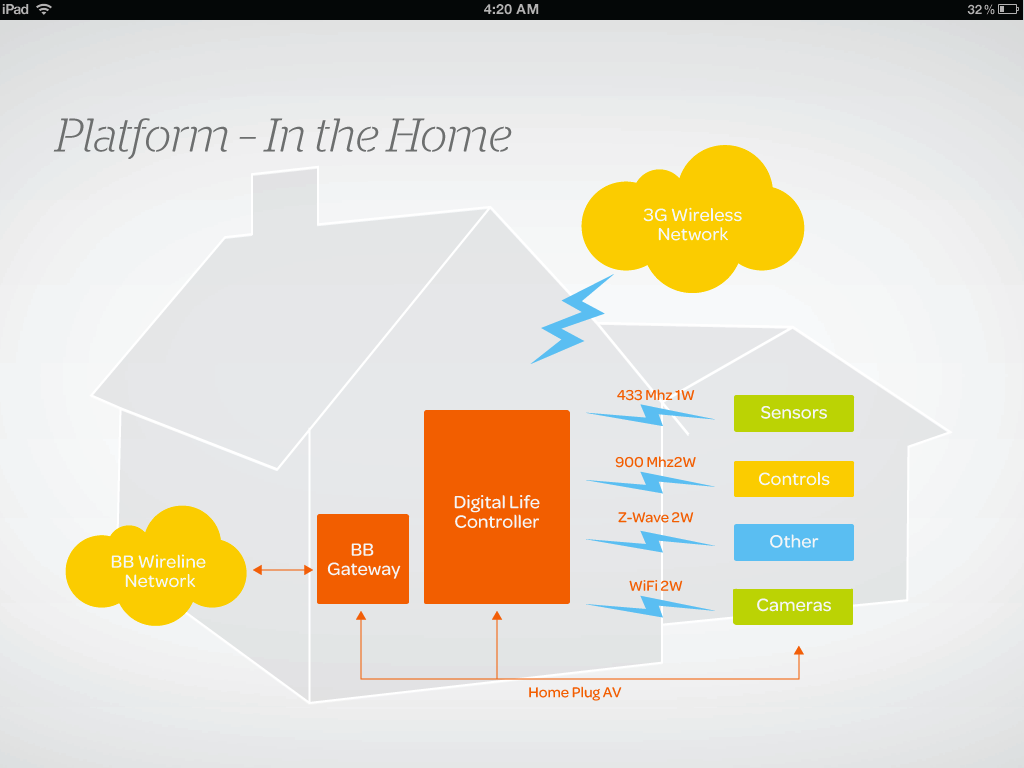
AT&T has just announced a new security and home-automation system called Digital Life, which will be an IP-based platform that allows users to monitor and detect activity throughout their house remotely, and “take action” (as AT&T put it) on devices like PCs, tablets, and smartphones.

AT&T actually goes so far as to say “there are no capacity limits to the number and variety of devices [they] can connect to and integrate,” since it’s an all-digital system.

Functions include access to automation, energy and water controls, and security systems. AT&T will thus be introducing a new branch called the Digital Life group, which will work in “AT&T owned-and-operated 24/7 security monitoring centers.”

You’ll be able to “try before you buy” at an AT&T store or through other unspecified AT&T distribution channels, and no matter your current wireless provider, you’ll still be able to get in on the service. That is, of course, if you live in Dallas or Atlanta, where the first round of trials will begin.

Just a few weeks ago, we got a chance to check out the AT&T Research Labs, and it’s clear that AT&T has high hopes for pushing itself into every corner of your life. They already have a major share of the pie when it comes to wireless subscribers in the US, but then there’s AT&T U-Verse and now AT&T Digital Life.

In the labs, developers are already working on ways of registering who’s approaching a home through bio-acoustical transmission (the detection of vibrations in the bones through sensors in a phone or wrist watch) and having the home automation system decide whether or not to automatically unlock the door or announce a guest.

And AT&T wants access to your car, too. We saw prototypes for Got My Stuff, a system that scans the car for a list of pre-determined and RFID-tagged items to see if you’ve remembered them. The idea is that a customizable dashboard would be available via an app across multiple devices.

AT&T is already working on “the car of the future” in collaboration with Porsche, QNX, and Panasonic, so a push into the home right now only makes sense in preparation for a push into our automotive lives.


Mobile Could Be What Makes Private Social Networks Succeed

path5.6.12

Photos, location, professional networking, or all your real-life friends… Instagram, Foursquare, LinkedIn and Facebook lead social networking today because they’ve found existing the types of networks to connect users around.

Now a new generation of startups has been showing up in recent months, trying to nail another type of networking that so far has yielded no big success: small, very personal networks. Like you how use texts with your closest friends.

These companies are looking pretty healthy — almost too healthy, if you look at some of their valuations versus their user numbers — and it’s because of how they’re using mobile.

Path is the market leader here, even if the overall market is small today. Having relaunched last fall as mobile-only network for close friends that provides a cool spinny menu feature for actions like photos and check-ins, the company has shown enough progress that it was able to raise $30 million at a $250 million valuation. It reportedly had around three million users as of the April funding, with a half a million people on it multiple times per day.

So, not that big. But it’s quality engagement, particularly for a mobile non-gaming app.

Pair, which launched last month, may have finally nailed a social network for the monogamous. As of its marquee-investor funding round last week, it had 220,000 downloads (not bad for an app that is the opposite of viral). United Kingdom-based Cupple and Korea’s Between have already offered similar apps, with both claiming larger user numbers.

High-quality smartphones seem to have set this new class of apps off: great photo and video recorders make the content  you share higher quality, and location and other device features help you easily show your friends what you’re up to every day. Designed properly, these mobile features can provide the intimacy that a previous generation of privacy-themed sites didn’t do on the web.

Some top examples ended up as small acquisitions. Drop.io focused on files, and sold to Facebook in a talent acquisition, The Fridge went to Google, and a variety of others gradually faded away.

But it’s easy to see a bubble in this set of niches. They’re all small by many measures. Facebook is at more than 900 million people. Instagram is somewhere around 50 million. Networks designed for as few people as possible naturally grow slower. So while Facebook is making money with relatively low-performing ads because it has so many users, that same possibility is further off for these apps.

The photo filters on Path are one example of an alternative revenue stream, but one suspects this won’t be how the company ends up making its investors money. And yet, there is a world of possibilities. It’s easy to see deals targeted at anniversaries or happy hours be valuable to users. Or mini-games that come with virtual currencies built in.

Will Facebook or other more mature networks compete directly? So far, the market leader has messed around occasionally with list features, but has avoided creating specialized networks. Its mobile app is bloated, it doesn’t pull together social and mobile features in a way that can compete against the mobile-first apps. But it already has a great asset in this contest: Messenger. The Beluga-derived mobile messenging app that keeps getting quality upgrades.

All in all, the quality of the apps and the growth they’re seeing suggests that 2012 could be the year that private sharing networks finally came of age.


DJ Platform Dubset Becomes Thefuture.fm, Doubles User Base To 100K

TF_Logo_Long_Whitebg

Naming your company Thefuture.fm is kind of a bold move. Sure, it’s fun at first, but if things go badly, you’re setting yourself up for lots of bad puns (“No future for Thefuture.fm,” etc.). Luckily, the site seems to be off to a good start.

Founder and CEO David Stein says the service first launched about eight months ago as Dubset, which he now describes as a beta test. After refining and iterating on that initial version, the site relaunched on April 25 under its current, awesomer name. In the first three days after the launch, Thefuture.fm claims to have doubled its user base to more than 100,000.

The goal was to create “a place where people can relive the experience that they got seeing a great DJ in a club,” Stein says, by allowing DJs to share their mixes. There are other sites for sharing music mixes, but Thefuture.fm makes the process easy for DJs, thanks to audio fingerprinting technology that it’s calling mixSCAN. DJs can just upload their full mix without worrying about track listings, because mixSCAN supposedly identifies all of the songs automatically, including where they start and stop in a mix. That allows Thefuture.fm to handle all of the rights and payments issues. (mixSCAN partners include BMI, SoundExchange, ASCAP, SESAC, NARM, and Sony Gracenote.)

The site is completely free for now, although you’re prompted to create an account after you’ve been listening for a few minutes. Eventually, Stein plans to move to a “freemium” model, where users have to pay for things like mobile access. There are some opportunities for advertising, like matching up advertisers with DJs who can create a brand- or campaign-specific mixes.

And the monetization strategy goes beyond the site itself, because Stein says he’s also looking at licensing the mixSCAN platform to others.

All in all, it looks like Thefuture.fm has a bright fu —

No, I can’t do it.


The MB&F HM3 Goes To The Moon

MBF-Moonmachine-watch-7

No self-respecting gadget lover can deny that MB&F’s very high-end artistic wrist machines are overall cool. Most of us can’t afford them, but items like this certain stir our ambitious sides. Recently MB&F released a new limited version of their Horological Machine Number 3 (HM3) watch that was designed and produced in collaboration with a boutique Finnish watch maker named Stepan Sarpaneva. This isn’t the first time that MB&F (Max Busser & Friends) has collaborated with artists and watch makers on even more limited editions of their already limited watches.

Based on a limited edition version of the HM3 called “The Frog,” (due to the eye-like hour and minute indicator domes), the MoonMachine watch incorporates Sarpaneva’s iconic grimacing moon face (you can hear more about Sarpaneva here) which he uses for his moon phase indicators. The replaced the date disc and can be seen through an open sapphire crystal window over a spinning automatic rotor which powers the mechanical movement. MB&F watches are purposefully avant garde, and for the right people are a blast to wear. There will be three versions of the HM3 MoonMachine watch with each being limited to just 18 pieces. Price is $98,000 each, but they’re small so you should pick up two.


The Era Of The Porn Superstar Might Be Coming (Hah!) To An End

Screen Shot 2012-05-06 at 12.31.33 PM

The Internet is a lot like the American Dream. It’s this huge opportunity for anyone who wants to make something of themselves — a nearly ubiquitous platform to showcase skills and talents. Yet, it is so incredibly saturated with people trying to do exactly the same thing that the opportunity gets smaller and smaller, shrinking to the size of a pin point as more people hop online.

Countless industries have seen this saturation play a role in who rises to the top, and who fizzles out as one of the millions of never-will-be stars. And porn isn’t exempt from this rule.

A new poll taken by XBIZ, “the adult entertainment industry’s leading social network”, shows that less than half of the respondents polled (47 percent) believe there will be another mainstream porn superstar, like Jenna Jameson. Meanwhile, 27 percent say that the era of the porn superstar is over thanks to the Internet, with the other 27 percent saying that only moderate success can be achieved by porn performers.

It makes sense. Think about how many people have actually made it big from YouTube, compared to the number of people who have tried. It’s the exact reason why startups like TalentSplash are working to offer a platform for hopeful talent to showcase their skills. Granted, I don’t watch as much porn as say, John Biggs, but I can’t think of really any porn superstars outside of Jameson.

The real end of the porn superstar may be due to the democratization of porn production. With cheap video cameras and editing equipment, anyone can give it a shot. It’s not that porn is any less popular. It’s likely much more so. But attention is now divided across thousands of demi-stars with their own websites and Twitter accounts.

While the Jenna Jameson’s of old might have made just a dollar or so per sale of a big studio porn movie they’re featured in, today’s demi-stars could rake in the same revenue by keeping most of $30 monthly site subscription fees from their hardcore (pun intended) fans. Up and comers (hah!) like Bree Olson and Sasha Grey (who left the porn biz altogether last year) seem to have achieved modest success through utilizing their Facebook and Twitter followings. But will that eventually amount to Jenna Jameson level success?

The results of the XBIZ poll are a tad optimistic considering the landscape. It reminds me a bit of forthcoming iPhone rumors: “It’ll support holographs!” “It will fly!”

All of that is just wishful thinking, and certain industry top dogs seem to share in that hopeful optimism.

CEO and co-chair of Vivid Entertainment Steven Hirsch believes that “there absolutely will be another superstar as big as Jenna. How she gets there remains to be seen but it certainly will happen.”

Digital Playground co-founder Joone shares the sentiment. “I think there will always be porn superstars,” said Joone. “The fans are always looking for that next ‘it’ girl. It’s all about the right girl with the right company behind her to let the world know.”

Even the more realistic responses are speckled with a hint of hopeful naivety. Hustler founder Larry Flynt claims that “the days of the porn superstar will return when the quality of the movies being produced are improved.”

Still other big names in the adult entertainment biz see things differently. Jenna Jameson’s long time co-star Ron Jeremy has a fittingly cocky response:

There’s so many things that I did that are almost impossible to follow. The work I’ve done outside of porn has dwarfed what I’ve done in porn. There are other people who have done good work in the same arenas, but keep in mind it gets tougher and tougher as so many medias get involved, between computers and cell phones and DVDs and pay-per-view and video-on-demand. There will not be another Jenna Jameson any time soon. It could happen, but I wouldn’t stake my life on it.

Kayden Kross, another award-winning adult entertainer, seems to have a grasp on reality:

I think when Jenna Jameson became Jenna Jameson, no one had become Jenna Jameson yet. It was still very taboo to be a porn star and she really made that a more mainstream thing. Then there were others that came up, not to her level, but came up around that time. And now, it’s just like anyone can be a porn star. It’s over-saturated.

It’s interesting to see how different answers from industry executives and former performers are. The performers know the perils of making it big as talent, whereas the executives are likely desperate to bank on an up-and-coming star as big as a Jenna Jameson.

Only time will tell if the porn industry can adapt to our almost entirely digital lifestyles. The camera industry failed, publishing is struggling big time, and both the music and movie industries are holding on to their traditional business models with cold, lifeless fingers.

But the question isn’t whether or not the “talent” exists. The question is whether or not we want another “it” girl. Jenna was great, but is she any better than having millions of free (and paid) titillating vids to enjoy over a bit of spit and Kleenex?


SF Climates iOS App Offers Neighborhood Specific Weather Reports

Screen Shot 2012-05-06 at 5.31.14 PM

As a resident of NYC, I find little use for the SF Climates iOS app that all of my San Francisco-based friends (read: social media whores) are boasting over today.

But a lot of you do live there, so you might find it useful. Let’s say you live in the Marina and for some reason need to go to the Dogpatch or vice versa but you’re unsure what the weather is like. Or maybe the grit of the Mission is getting to be a bit much and you want to hang out with a bunch of babies in Noe Valley. Do you pack a sweatshirt or put on shorts?

From personal inexperience, I’ve never been able to layer properly in San Francisco and this would have come in handy last week. Powered by Weather Underground, the free app boasts current temp, wind (speed and direction) and forecast for each of the City by the Bay’s 17 different microclimates (read: neighborhoods).

If only they’d launch one for NYC. *sigh*

Since the app has been in the wild for three weeks, there’s bound to be a few of you who have been using it. If so, have you found it useful?

SF Climates [Apple App Store]


Eat the Document

eatthedocument

With all the press releases masquerading as news, Techmeme has felt more like Craiglist for articles in the past few months, or is it years. But recently we finally got some real news, when Google of all people released Gdrive. We knew of course that it was coming, but not how it would actually feel when it got here. I haven’t signed up yet, but already it’s a big deal for me.

I haven’t signed up because the iOS versions are not done, or ready, or whatever imminent means. When they are shipped, I’m there. Gdrive is the kind of disruption that lurks beneath the surface, behind the marketing campaign, irrespective of even Google’s position in the market. It is like Gmail was when it started, a harbinger with real muscle that marks the beginning of something bigger than a single vendor.

First of all, it kills Google Docs by inserting those features as menu items in Gdrive. This is a real dagger in Microsoft’s heart, the first direct evidence of a post-document model. Naturally the anklebiters will say documents are not dead, etc. But they are. Where are documents on the iPad? You can get to them through some circituitous route through iTunes or whatever, but really there is no file system exposed to us except at the export level, via email or iCloud or Bluetooth maybe. I kid because Apple is, or has been, serious about this no-USB thing.

The only place this has been a problem for me is when I write this column for Techcrunch and come to the add a picture part of the post creation process. If I come in through the WordPress site via the so-called HTML hole (the Web), the only way I can add a graphic to the library is via the file system. You know, file open oh yeah there is no file open. Luckily I’ve discovered a workaround, namely using the WordPress iPad app to add a photo from the Camera Roll. I have no control over placement or the custom settings Techcrunch uses, but I can go back in through the Web and move things around.

Now look at what Gdrive did to Google Docs. It basically said: there is no such thing as a word processor, or a spreadsheet, or a presentation program. There are only these triggers here that look like file names, locations in virtual space aka the cloud. When I “write” it goes to the cloud, when I “edit” it comes back from the cloud, when I “share” it is replicated out in multiple similar relationships to the cloud. You could say it’s a document that’s being worked with, or you could say the idea or the image or the communication or the consensus exists as an object composed of data and metadata about how the object works.

In other words, the list of things I don’t care about just got longer. I don’t care about the file name, because it is now wrapped in a container that includes the services I can access in addition to the information itself. I don’t care about the metadata, not the names of the people who have access to it or the sharing model that controls that, because it’s dynamic and subject to change as the universe continues to expand or contract or whatever. And I don’t care about the abstraction of the document, the parent object, because all I want to know is what this is about, not how it got here or where it’s going next.

The abstraction I do care about is the push notification. Not coincidently, this is an Android feature that Apple has adopted, one in which I am training myself to trust that if I tap on a notification, it will be smart about what services I want to consume it with. A tweet opens to a post, consuming the citation and identifying the social authority to the advantage of my filter process, whether that’s automated or “manual” or self-learning or socially aware. Not only do I not know the filename or the website of the citation or even whether it’s a post or a video or an application trigger, that lack of knowledge is an asset rather than a limitation. I’ve got an app for all of that, or soon will.

So when Gdrive takes that same approach and renders the features of Google Office irrelevant, they render Office irrelevant too. This is a lesson I’ve learned from my children, who use texting and Skype for communications and the abstraction of Facebook for email. Email for them is a lot like Word docs are for me; I’ll use them if necessary but prefer not to know what the format is or especially what the document type is or ultimately that it is a document at all. When my youngest comes to dinner, she doesn’t hang up because it’s not a call. She’s got a Mindcraft connection piggybacked on Skype and she just tells them she’s going to have dinner. BRB.

Imagine what happens when Gmail gets sucked into the Gdrive vortex. Google has had some problems with this called Buzz and Zap or whatever that Australian thing was (Wave), but Gmail was this thing that was being integrated with other things like social and realtime. Instead, what gets absorbed into Gdrive is the value proposition of Gmail: the idea that you don’t throw anything away, you just find it when or if you need it again. You don’t look for the document, you look for the clues to that idea, that connection, that breadcrumb that leads to the trail of breadcrumbs.

I’m writing this on Word on a Mac, and my wife wants to know whether I want to come with her to drop our youngest off at a dance. Right now I have to email this to myself so I can open this up on my iPad if I want to continue. Gdrive should let me store this directly to the cloud, thereby bypassing the need to know any of those details. If I store my Word documents on Gdrive, they should open up on the Mac in Word. Or maybe in Pages on the iPad. Or in WordPress in the post.

Right now there are interchange issues, and business issues where Apple wants me to stay in iCloud and Google in Gdrive and Microsoft in whatever Mesh is now called. But I don’t care about any of that, and apps will appear that erase those distinctions, at least from my awareness. I will pay for the value of not knowing. Lots of us will.


Spotify Plays Can Increase iTunes Sales. Here’s Proof!

Spotify Drives iTunes Sales

Despite fears that streaming access cannibalizes sales, classical music record label X5 tells me when it launched an app within Spotify and saw streams of one album increase 412% in a month, that album’s iTunes sales shot up 50%. The Swedish label’s “The 50 Greatest Pieces of Classical Music” soon reached #1 on the iTunes Classical charts, and broke into the iTunes Top 200 album charts for the first time, hitting #152.

The stats back up claims by some record labels and Spotify’s CEO Daniel Ek that there’s no evidence of Spotify or other streaming services negatively impacting music sales. More data like this could encourage artists and labels to promote their streaming music presences, and push acts like The Black Keys and Paul McCartney who’ve pulled their catalogues from Spotify to come back.

X5′s CEO Johan Lagerlof explains to me what’s happening: “People use the Spotify free service as a discovery tool and then go to iTunes for buying their music. The recent sales spike for ‘50 Greatest Pieces of Classical Music’ follows the same trend we have seen in Sweden, where there is a positive correlation between Spotify streaming and digital sales.”

Streaming musics critics have said the tiny per song stream royalties aren’t enough to support artists or recoup the sales they cannibalize. However Lagerlof’s statements align with Ek’s, who told the Telegraph in February that “the vast majority of the artists are getting between 50 and 60 percent of all their income from Spotify”.

Those more optimistic about the influence of streaming access believe services like Spotify make it easier for listeners to discover artists and fall in love with them. Though recorded music sales dropped significantly from the CD era to today’s digital age, that lost revenue could be replaced with concert ticket and merchandise sales.

So how did X5, which was founded in 2005 as a digital-only label, improve the discoverability of its catalogue and boost sales? Not through paid marketing, which X5 wasn’t doing. Spotify opened an app platform in November to let developers build new ways for listeners to find and play music. X5 released its Classify app that lets you browse an intelligently organized library of classical music by composer, era, mood, or genre as part of the second batch of Spotify apps launched in March. Rather than having to search across Spotify’s immense library for history’s top symphonists, Classify curates them for quick browsing.

Lagerlof believes Spotify users who were streaming the album, especially ad-supported free users, then went to iTunes and bought it. (Yes, the stats are a correlation, but there aren’t any other known factors beyond Spotify that could lead to a sudden spike in sales of the album, which was originally released in 2009).

X5′s collection and “The 50 Greatest Pieces of Classical Music” may be especially well poised to benefit from Spotify. That’s because they contain well-known songs that may be hard for younger, digital music-loving  demographics to discover through search due to their long, obscure titles. Oh, and most of their artists are dead so they aren’t actively promoting themselves. Still, Spotify now has over 18 million users, there’s ears out there for any label or artists to grab.

They may be misunderstanding how streaming and digital sales revenue cycles are different, though, Lagerlof tells me. “With a streaming service, artists get paid every time you listen to something, not just once upon download. The revenue is spread out much longer.” So, an artist may earn less from streaming than sales in the first few weeks after an album release, but over their lifetime, fans playing those songs over and over could rack up more revenue than a one-time purchase. “For some marketers it’s probably better, for some it’s probably worse”.

So while Spotify and other streaming services like MOG and Rdio may be a boon for labels like X5, they’ll need to produce stats showing they can have the same benefit for current mainstream artists. You know, ones that are alive.

[Image Credit]


TC Cribs: Inside Box’s Bigger And Better New HQ – Slides, Scooters And All

Screen Shot 2012-05-06 at 11.07.13 AM

After a long vacation, TechCrunch Cribs is back! But as TechCrunch alum Jason Kincaid left us with some pretty big shoes to fill, for our first installment we decided to start with a company that knows the Cribs drill already — enterprise cloud storage company Box.

It was just eight months ago that Box last got the Cribs treatment, but lots has changed since then: Its employee count has doubled in size to a staff of 400, they dropped the “.net” from their name, and they moved into a bigger and better new headquarters in Los Altos, California.

Watch the video above to see Box CEO Aaron Levie and enterprise general manager Whitney Tidmarsh Bouck give us a tour of all three floors of Box’s new office: We took the elevator and steps up, the slide back down, and a scooter all the way back home.


Editing Text On Your iPad? Speed Up The Process With SwipeSelection

More than a few people have been clamoring for Daniel Hooper’s thoughtful iPad text editing concept to become a real thing since his video started making the rounds, and now all you mobile text editors have reason to celebrate.

Thanks to the efforts of an intrepid iOS hacker named Kyle Howells, that awesome vision of quick-and-painless text editing has been realized with a new (and free) iOS tweak called SwipeSelection.

Even if you aren’t a seasoned grammarian (or a beleaguered copy editor), SwipeSelection strikes me as terribly useful tool to have at your disposal. Instead of having to poke at precisely the right point in a word or sentence to fix an error, SwipeSelection allows you to drag a single finger across the iPad’s keyboard to place your cursor.

Need a bit more speed? Drag with two fingers to add some extra oomph to the process, which comes in especially handy when you’re grappling with a more than a few paragraphs.

Useful as SwipeSelection is, it’s worth nothing that it’s not a one-to-one manifestation of Hooper’s vision. As it turns out though, that may have been for the best. Hooper’s original video has users holding down the Shift key while dragging their fingers in order to select text — hardly a dealbreaker, but why use two fingers when just one will suffice? Howells instead chose to have users select snippets of text by starting their drag from the Shift key, making the editing process even quicker.

It probably goes without saying, but here I go anyway — your iPad (or iPhone, or iPod Touch) won’t be able to handle usefulness of this magnitude unless it’s jailbroken. If you’ve already taken the plunge though, SwipeSelection is free and waiting for you in Cydia as long as you have access the BigBoss repository added.

[via iDownloadBlog]


Think You Deserve To Be Called a CEO?

Facebook_the-social-networks-front1

Editor’s note: Alexander Haislip is a marketing executive with cloud-based server automation startup ScaleXtreme and the author of Essentials of Venture Capital. Follow him on Twitter @ahaislip.

Congratulations. You’re the CEO of a startup. You’re doing the hardest job in business. You’ve raised money from venture capitalists and turned down better-paying jobs elsewhere. You’ve mastered complicated things such as capitalization tables and common things, such as payroll. You’ve fought with competitors, coworkers, friends and even yourself without losing your way or your wits. You’ve inspired others to work beside you each day to make your dream a reality. I salute you.

Now, everybody else calling himself or herself a CEO—listen up, this is for you: stop it. Just stop calling yourself a CEO.

Stop putting “CEO” on the business cards you printed last week at Moo.com for YourLastName Consulting LLC. Take it off your LinkedIn page. Remove it from the résumé you’re passing around in hopes of getting hired. Self-titling as CEO is an atonal homage to structurally mandated social hierarchies, not a statement of your iconoclastic self-determination.

Maybe it’s generational. Steve Jobs’ early business card read: “Vice President, New Product Development,” in part because he recognized he didn’t have the skills to run the company he wanted to build. At least not yet. Bill Gates went with the classic and somewhat understated “President.” But today’s tech titans have opted for something much more conspicuous. If you were one of the folks to get an early Mark Zuckerberg card, you may remember the supercilious line: “I’m CEO, Bitch.” Way to stay classy, Zuck.

Facebook aside, title inflation is bad for business. Calling yourself the CEO will label you as either an egoist or someone with confidence compensation issues. That will make people less willing to work with you or help you. Taking the top title in a company also suggests a limited vision of what your company can become. Ask yourself: would you still be CEO if it were a $100 billion business or would you require what’s euphemistically called “adult supervision?”

So stop pretending to have attained a title you didn’t earn and start doing what you need to do to get to where you want to be. Here’s how:

Attract Awesome People

Jobs had Wozniak and later, MarkkulaClark had Andreessen. McNeally had Bechtolsheim, Joy and Khosla. A remarkable CEO should be like the moon, illuminated by the reflected light of all the stars he or she has brought into orbit. Awesome people act as accelerants to whatever you’re doing. They push ideas forward, execute with aplomb and challenge you to new heights.

If you can hire, hire. If you can’t hire, bring them into your orbit as advisors, friends and fellow travelers. Get them to invest their creativity and energy.

To get the true benefits of awesome people, focus on diversity. You want to have as many different perspectives on a problem as you possibly can, so bring on the best people from as wide array of backgrounds and from different generations. They’ll learn from each other and the confluence of their experiences will be the basis of company creativity for years to come.

Most importantly, attracting awesome people to your company precludes retreat. You carry too valuable a cargo of energy and confidence invested by others to turn back.

Build an Experience, Not a Product

Eric Ries has put the concept of the minimally viable product (MVP) front and center in the minds of Silicon Valley startups. But this focus is somewhat misguided. Products give you utility and then may be discarded. Products are the one-night stands of business. Experiences give you memories and good experiences will bring you back for more, it engenders a long-term relationship. The best CEOs know this instinctively and do all that they can to create and cultivate an attractive experience for their customers.

Once you’ve got a good experience, cement it with the bond of buying. A funny thing happens when people buy your product: they invest their energy into the choice and will find reasons to justify their action. In the early days of Apple, customers loved their computers because they had to pay a boatload of money for them. They found aspects of the experience they could rave about just to justify their purchase to others.

That price tag is valuable to you too. It focuses the mind tremendously and forces you to deliver a unique and memorable experience of real value. When you offer a product for free, you aren’t forced to justify your existence to customers or show a useful benefit. That’s why we see half a dozen Instagram clones.

A CEO doesn’t market a product to users. A CEO sells an experience to customers.

Learn Finance

If you wanted to be a rock star, you’d have to learn to read music and if you wanted to be an award-winning novelist, you’d have to learn basic grammar. It should not come as a surprise that if you want to be the CEO of a business you should learn finance. Yet we regularly see founders blowing off finance or outsourcing major financial decisions to hired guns.

There’s no secret to learning finance. There are plenty of good books that can take you through the basics of accounting up to the execution of liquidity preferences under preferred stock agreements. Interview friends that have run their own companies, worked in banking or had P&L experience for a division in a larger company. Start using QuickBooks. Today it’s easy to find help online from corporate finance communities such as Proformative.

For startups, there’s one important financial metric that matters more than any other: months left to live given your current burn rate. Real CEOs know this number and manage it religiously.

Define a Big Goal and Take Small Steps

Plenty of wannabe Silicon Valley CEOs have read Jim Collins and will tell you about their BHAG (That’s their Big, Hairy, Audacious Goal). They’ll tell you that they want to revolutionize the datacenter, or change the face of mobile payments, or create a new paradigm for social sharing, or something equally nebulous. That’s great. But it’s the ability to both set that goal and show how you’re going to achieve it that marks a real CEO.

Successful CEOs balance aspirations with operations. They focus on things that can be done today to secure customers and growth over time—not on the title they put on their business cards.


Under New JOBS Act, More IPO Prospects Consider Filing Confidentially

ipo

SolarCity, the cleantech company backed by Tesla and SpaceX CEO Elon Musk, filed for an IPO this past week. But there’s hardly been a peep about it compared to most offerings.

That’s because under the recently passed JOBS Act, SolarCity didn’t have to publicly share anything about its financial performance when it filed. This is unlike LinkedIn and Pandora, which had to publicly release three years of data in filings that were more than 150 pages long. In SolarCity’s case, the company merely put out a two-paragraph statement saying that it had confidentially filed with the SEC and planned to have an IPO.

This is the new world under the JOBS Act, which was hastily passed last month. SolarCity qualifies as an “emerging growth” company, or one that’s had less than $1 billion in total revenues in the most recent year. If SolarCity does move forward with an IPO, it won’t have to release data to the public until 21 days before the investor roadshow. On top of that, those documents won’t have to meet the same auditing requirements that more mature publicly-held companies have to address. It will also only have to show two years of data, instead of three.

At least two other CEOs I’ve talked to who run later-stage companies and are planning to file in the next three to 12 months say they would consider it. But they’re leaning toward the old route because they’re concerned about how investors will perceive confidential filings. (The SEC FAQ on confidential filings is here.)

Are the changes good? Are they bad? Honestly, it’s hard to say because regulation usually has long-term ripple effects that are hard to see without hindsight.

So let’s consider. The JOBS Act was really a mix of several ideas: crowdfunding, loosening the 500-shareholder rule and the relaxing some of the post-Enron, Sarbanes-Oxley rules that made it expensive for smaller companies to go public.

It gives companies more flexibility in staying private or going public. On the one hand, it’s less difficult to become publicly-traded. But it’s also easier to stay private too since a company doesn’t have to release financials until it has more than 2,000 shareholders excluding employees, up from the previous 500-shareholder limit.

Net-net, it’s hard to say how this will affect the average time-to-IPO. While private secondary markets have become more important over the last five years, they are simply not large or liquid enough to give venture firms the exits they need right now. So companies still need to tap public markets. This could change over the next 10 years though. Who thought founder liquidity would have become as widespread as it is a decade ago?

The downsides to confidential filings are obvious: The public gets left in the dark for a little bit longer (though not forever). The two years of financials, instead of three, means less data to show the kind of hockey-stick growth curve that investors usually like to see. Giving “emerging growth” companies a five-year grace period to adjust to new auditing requirements means fewer controls to prevent the kind of disastrous accounting restatement that Groupon had to make earlier this year. (No, the current rules did not prevent the Groupon snafu, but does that mean we should make them even weaker?)

Now let’s go onto the positives. So first, an IPO candidate can covertly test market appetite. If there isn’t as much demand as they thought, they can pull out without the negative publicity. Secondly, if the IPO window suddenly shuts down because of market volatility like last August, the company’s not left dangling out in the open for the better part of a year.

The world has also changed quite a bit since 80 years ago, when the original legislation establishing these rules was passed. Three weeks is eons in an interconnected world where bad news spreads faster than you can say “tweet.” There are also plenty of investors like Yuri Milner’s DST and other individual accredited investors who have stepped up in secondary markets on the belief that the modern online and social media provides more than enough information to make educated investment decisions. (But Milner gets special access given how much he invests and SecondMarket usually requires the company to make some disclosures, but the company gets to choose what and with whom they share their information.)

Overall, confidential filings don’t seem bad in and of themselves, so long as the public eventually gets the information before they can trade the stock.

But as we loosen regulations, we should always remember that the system only works if investors have trust in the companies and documentation they’re seeing. What people forget is that what we have now was born out of the Great Depression, when regular people lost or were swindled out of untold fortunes. When the original Securities Act was passed in 1933, president Franklin D. Roosevelt wrote a letter to Congress, saying that the “issue of new securities to be sold in interstate commerce shall be accompanied by full publicity and information.”

He went on to say that the old Latin saying, “Caveat Emptor,” or “Buyer Beware,” should be expanded to read “Let the seller also beware.” He said, “It puts the burden of telling the whole truth on the seller.”

That burden isn’t, well, so burdensome in private markets. For pre-IPO companies, the reality is that most of the sources that journalists and the public have access to are people who are highly incentivized to make the company seem better than it really is. It’s no coincidence that most of the media attention on Groupon before it revealed its financials was all rah-rah all the time. Most every source that journalists had access to were investors or employees. These were the people who plowed nearly $1 billion into the company thinking it would be a quick 2 or 3X return by the time the lock-up ended.

In fact, in several cases so far this year like Groupon and Zynga, private secondary markets — which have less information and are much less liquid — have been far more generous with the valuations they award.

Ironically, in this tech “blubble” or whatever you want to call it, it’s the public markets that have been more judicious.


7 New Educational Startups Founded By Minorities in Tech

800px-Math_lecture_at_TKK

Editor’s note: Wayne Sutton is an Entrepreneur, Advisor and Partner of NewMe Accelerator, a residential technology start-up accelerator/incubator for businesses that are led by under-represented minorities in the technology industry.

One of today’s most challenging yet promising markets is the educational system. If you want to see startups hungry to disrupt an industry, look no further. Founders are trying to solve the problems plaguing our education system: including reconciling student debt, providing students with the skills required to land a job both before and after graduation, and offering the best course material online regardless of age, location and educational level.

Millions of people are headed to the Internet to learn. And now everyone, from professors to entrepreneurs, are looking to launch a platform to solve the problem of a broken traditional educational system  – And many believe that Silicon Valley will have the answers.

If you look at the demographics (high school dropout rates, high unemployment and the number of people taking online courses) you’ll find a common denominator; minorities are leading in three categories. In 2011, only 57 percent of blacks and Latinos graduated from high school, compared to 80 percent of Asians and 78 percent of whites. While data reports that only 1% of tech startups are founded by African Americans, you’ll find a significant number of educational startups founded by minorities (women, Hispanics and African Americans) in the now-increasing 1% of minority tech startups.

So where are all these startups hiding you ask? Well here are seven up-and-coming educational startups founded by minorities that I believe will have an significant impact in the educational space  – not just for minorities but for anyone looking to learn online, current students and teachers alike.

1. UniversityNow
The mission of UniversityNow is to help ensure that affordable, high quality post-secondary education is available to people everywhere. To accomplish this, UniversityNow is building a network of the most affordable and accessible accredited universities in the world, starting with the launch of New Charter University.
Gene Wade, Co-Founder

2. Houlton Institute
Houlton packages courses into credentialed and non-credentialed programs targeting adult learners. By revenue sharing with partnering institutions, partners are able to monetize their expertise. Houlton creates one-of-a-kind online programs from its unique and exclusive partner network, which are disseminated via Houlton’s scalable, personalized, web-based learning platform.
Dennis Robinson and Dan Merritts, Co-Founders

3. Demo Lesson
Demo Lesson is a revolutionary online hiring platform that gives teachers the power to market themselves.
Mandela Schumacher Hodge and Brian Martinez, Co-Founders

4. Qeyno Labs
Qeyno Labs works with local partners and schools to bring technology-enabled career discovery into under-served classrooms using game-like rewards and mentorship from successful professionals.
Kalimah Priforce, Co-Founder

5. StockOfU
StockOfU allows individuals and businesses to buy “shares” of college students in order to help subsidize a student’s education costs.
Ty McDuffie, Founder

6. Pathbrite
Pathbrite delivers next-generation solutions that help students and learners of all ages collect, track and showcase a lifetime of achievement, and recommend pathways for continuous success.
Heather Hiles, Founder and CEO

7. Code Academy
Code Academy is an 11-week program that teaches people how to build web applications.
Neal Sales-Griffin and Mike McGee, Co-Founders

With these seven startups, and many, many more launching shortly, the educational system is ready for disruption. And after that, the real question is “What impact will these educational startups will have on our economy?”  And “Will they prepare students to land qualified jobs after graduation? Or provide them the skills to launch their own businesses?”

Do you see the educational system being changed by these new startups?


Startups Live & Die by These 5 Street-Smart Laws of Advertising

d97ba5987ae3a4572833e96436889e7e

Editor’s note: Evan Peelle is a Los Angeles-based marketer with experience in web-based startups and conducting online marketing campaigns, including PPC, mobile, and search marketing.

“Money alone isn’t enough to bring happiness . . . happiness [is] when you’re actually truly ok with losing everything you have.” – Tony Hsieh, Delivering Happiness: A Path to Profits, Passion, and Purpose

Disclaimer: This article’s sole purpose is to address the core principles of advertising in a new and edgy  way. This is not for the faint of heart or those highly sensitive to socially charged public issues. So suck it  up and buckle up. You’re about to be taken to school (of hard knocks). Class is now in session.

Everyday we surge past the homeless never stopping to consider the power they possess to  advertise effectively with no budget(literally). Startups could learn a thing or two from these highly misunderstood band of street-smart entrepreneurs.

Seriously, they ARE testament to the fact that you and I have hard-wiring to market to others in attempts to meet our survival needs(both in business and in life). Carefully observe how these 5 use cases display the 5 levels of advertising power.

Note: You’re probably working at a business right now that’s been founded on one or more of these five principles. Observe carefully.

The Screamer

“The truth isn’t the truth until people believe you, and they can’t believe you if they don’t know what you’re saying, and they can’t know what you’re saying if they don’t listen to you,. . . unless you say things imaginatively, originally, freshly.” – William Bernbach (1911 – 1982), Founder of DDB Int Agency.

The Screamer curses yelling absurdities to get attention. His audience doesn’t understand his message no matter how loud) and they avoid him like the plague. To survive in business it’s essential to have at least ONE clear message. Lack of empathy for prospects could cost us our lunch.

Hype works the same way, it’s divorced from a target audience and falls short of connecting with target audiences and what’s meaningful to them.

The Beggar

“Advertising is a tax for having an unremarkable product.” -Robert Stephens, Founder of the Geek Squad.

Begging is the oldest profession. He’ll get face-to-face asking directly for what he wants. “Change please?”, or the more ambitious, “Got five dollars”. He gets results by asking clearly for what he wants. Though his business is severely limited by the steep investment of time and energy.

It’s easier to receive payment when you can ask clearly and directly… if you ask enough people.

The Cardboard Holder

“Make it simple. Make it memorable. Make it inviting to look at. Make it fun to read.” – Leo Burnett (1891-1971), Advertising Executive, Named New York Times 100 Most Influential Men of the 20th Century.

These guys invented automated advertising. He finds heavy traffic(literally) and posts his message (Ad) for the world to see. The message gets leveraged across 1000’s of eyeballs everyday with little to no effort on his part. As a business using leverage to his benefit. His message appeals to an almost infinite number of people. He’d make a kick-ass Search Engine Marketer.

His strategy is to present clear compelling messages in front of large audiences.

The Street Performer

“Let us prove to the world that good taste, good art, and good writing can be good selling.” – William Bernbach (1911-1982), American advertising creative director.

The street performer presents his talent to a captive audience. He salts the crowd, incites interaction, and gets involvement, making them a part of his own show. Using juggling, strumming, and dancing as sweat equity he demonstrates entertainment value. All the while risking lighting himself on fire (risk liability). As a business he’s a step above, understanding the power of giving value up front and then asking for money after delivering. This keeps them coming back for more, over and over again.

The talent model is one of exhaustive effort yet generates customer loyalty through participation.

The Funnel Builder

“What really decides consumers to buy or not to buy is the content of your advertising, not its form.”- David Ogilvy  (1911-1999), Dubbed The Father of Advertising

These kids were tossing money off the pier. They were playing a game made by a homeless guy. He had made it out of cardboard, cups, and a blanket. People tried to get their money into the various cups ‘winning points’ in hopes to sink one into the elusive jack-pot!

It was a cash(coins) machine(asset), accumulating wealth while he was on the beach getting tan sipping mojitos somewhere. It was a funnel that attracted prospects with a value proposition. A perfect example of a user driven experience (giving the audience tools to play the game.)

Building an automated funnel that generates cash while you’re not around (no labor, low overhead) is the zenith of entrepreneurship. Do this and your golden ticket to financial freedom is guaranteed.

Live Your Own Dream

Does that sound familiar to any of us? The entrepreneur’s dream; raking in dough while sipping margaritas on the beach. Here’s the recipe to turning your startup into an automated advertising cash machine.

  1. Listen to your customer carefully.
  2. Use one clear and direct message to speak to their needs.
  3. Find out where your prospects already are, then place your messages in front of them.
  4. Give value up front. Incentivise them to take action.
  5. Build your product around their secret hopes / desires or fears / frustrations.

Follow these timeless and proven laws of advertising to supercharge your start up, blow past your break even point, and wiggle into profit. Live it up my friends and make an asset that will pay you in your sleep (on the beach).