U.S. Launches Digital Roadmap To Open Up Government Data And Court Developers

digital_gov

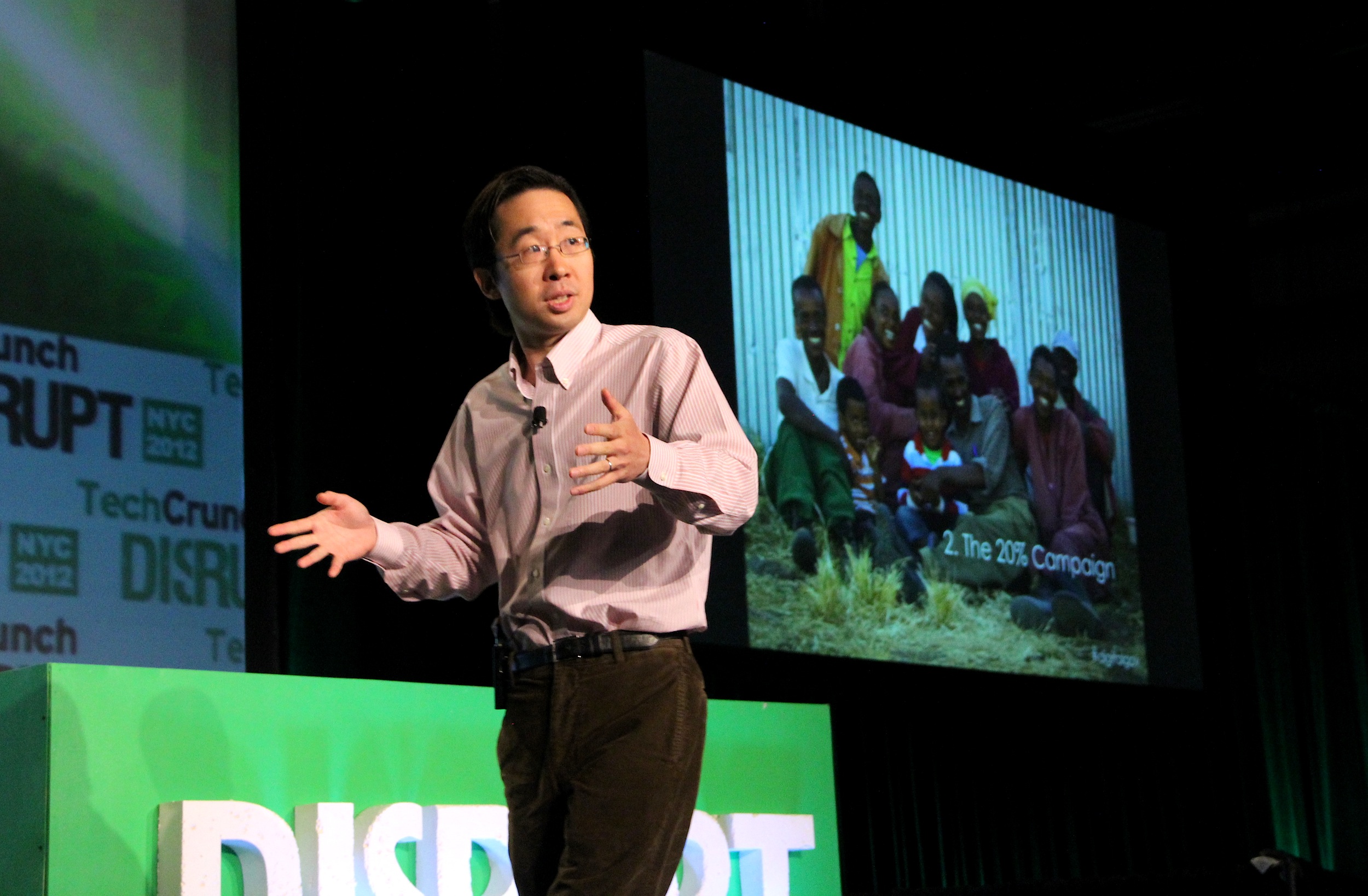
There’s all sorts of data that the government has, but very little of it is actually accessible by developers. But the U.S. Government is trying to change that: Wednesday at TechCrunch Disrupt, U.S. Chief Technology Officer Todd Park and Chief Information Officer Steven VanRoekel announced a new initiative within the government to open up data that was previously locked up in government documents and arcane backend systems. That will allow developers to create new applications and services based on that data.

The digital road map is based on the following five ideas:

  • Open Data as the new default
  • Anywhere, anytime on any device
  • Everything should be an API
  • Make government data social
  • Change the meaning of social participation

With the launch of the new digital roadmap, the U.S. government is hoping to increase the way that users can access data in many different ways. It’s also designed to decrease inefficiency in government and to allow developers to build applications that the government would never have dreamed up.

It’s also built around the idea that government data has to become less sprawling. As a result, it is going to stop building new .gov websites, and ensure that all agencies which already have a website need to have a /DEVELOPERS page. The government has also been pushing innovation by sponsoring meetups, hackathons, and “datapaloozas” through which developers can show off new apps that they’ve built.

And here are the first five projects that Park and VanRoekel announced as part of the initiative:

  • The launch of a portal called MyGov, aimed to be a user-friendly website for government services.
  • The launch of the 20% Campaign, a way to move from cash payments to mobile payments overseas.
  • Introduction of a program called RFP-EZ, which will let startups that don’t usually compete for government projects have access to them.
  • The launch of Blue Button for America, which will let developers create apps to allow U.S. citizens to have access to their own health data.
  • Open data for access from new industries, including energy, education, non-profits, and safety.


Qwiki Launches A Publishing Platform For ABC News And Others

qwiki publisher platform

Qwiki, the startup that won Disrupt in 2010, is announcing a new platform today for bloggers and other online publishers.

The company’s initial product basically assembled a multimedia “story” around Wikipedia articles, with images, videos, maps, and more. But the vision was bigger — to present a new kind of information experience.

Now Qwiki is pitching its platform as a way for publishers to quickly and easily create short, interactive stories, which can be embedded on the publisher site and also featured in a “channel” on Qwiki. Initial partners include ABC News, which is embedding Qwikis throughout its website, and fashion publisher Stylecaster. You can watch some of the sample ABC News Qwikis here. In some ways, they look like regular news broadcasts, but presumably assembled with much less time and effort thanks to Qwiki’s technology, and with a layer of light interactivity (allowing viewers to drill down on individual topics).

“What interested us in being the first media organization to use Qwiki’s innovative new video format is the ease with which reporters and producers can create informative and creative video content in almost no time,” says Maya Baratz, senior product manager at ABC News. “We plan to use Qwikis regularly on ABCNews.com and Goodmorningamerica.com on Yahoo!”

Qwiki seemed to have a bumpy 2011. It raised $9 million from big-name investors including Lightbank (the investment fund of Groupon co-founders Brad Keywell and Eric Lefkofsky) and Facebook co-founder Eduardo Saverin, then released an impressive iPad app that took off quickly. However, it also lost its famous co-founder Louis Monier (who founded search engine AltaVista) and other technical executives.

This might look like a new direction, but a Qwiki spokesperson tells me, “This isn’t a pivot.” He says the startup will continue working on its consumer products, while also making this platform available to consumers soon.

Qwiki will be demonstrating the platform at Disrupt this afternoon.


Mint.com App Update: Now Split Transactions

iPad-split

Mint.com iOS users now have the ability to create and (more importantly) edit budgets directly on their iPad/iPhone. Previously, editing functionality was only available at the main Mint website. Additionally, users can also split transactions, giving them a better more granular look at their financial picture.

The main thrust of this update includes:

  • Create and edit a budget while out and about: Set up budgets from your iPad or iPhone and edit them — wherever and whenever you want. Also, the new budget slider lets you set more realistic budgets in increments for more control of your finances.
  • Split transactions: Shopping for multiple things from different budgets at one store. Get a more accurate view of your spending by easily separating out purchases from one transaction into different categories, right on your mobile device.

I’m sort of a fan of the later update enabling the splitting and categorization of purchases. I’m somewhat concrete in how I manage my finances, and can really appreciate being able to categorize individual purchases from the same merchant. I would find great utility in that functionality.

More info at Mint.com


ZocDoc CEO Cyrus Massoumi’s Advice To Startups: Stay Lean, Don’t Listen To The Nay-Sayers & Hire The Right People

zocdoc2

This morning at TechCrunch Disrupt NY 2012, Chris Dixon, co-founder and partner at Founder’s Collective (and co-founder of SiteAdvisor and Hunch, acquired by McAfee and eBay, respectively), sat down with ZocDoc CEO Cyrus Massoumi to talk about ZocDoc’s road to success. The company, for those unfamiliar, is a professional booking platform for doctors. Users go online to search, find and book a doctor, dentist or other health care professional, and can even make same-day appointments thanks to ZocDoc’s real-time access to doctors’ schedules.

Although ZocDoc has now raised $95 million in funding to date, it didn’t necessarily have many early believers.

For a reminder of the kind of nay-saying that ZocDoc faced back in the beginning, this video from TechCrunch 40 several years ago should strike a chord with any entrepreneur who’s had their vision dismissed outright from industry notables. “Honestly, it would just never occur to me to go to any site to pick a doctor,” proclaimed Guy Kawasaki at the time. (Oops.)

ZocDoc didn’t win the TechCrunch competition – that was the year that Mint.com won, and perhaps deservedly so. But ZocDoc is proof that not winning doesn’t translate into failure by any means. And neither does bad press, as it turns out. Massoumi noted that while there were many great articles about ZocDoc post-launch, there were some negative ones, too. He recalled in particular when press called out ZocDoc for not getting a doctor search quite right. Why is it showing me doctors on the lower east side of New York, when I did a search on the upper east side?, people said. Meanwhile, recalls Massoumi, others said ZocDoc was ”overly ambitious to think it could change the way people access healthcare in America.” (Ouch).

But the company kept their heads down, he says, and kept being persistent. Trying to grow their business during a poor economic environment also forced them to stay very lean. They raised a little money from another startup competition which helped them to finally launch in their first markets outside of New York (D.C. and San Francisco), thereby proving wrong those who said that ZocDoc wouldn’t really work outside of the city.

Massoumi also shared some tips he learned over the years in terms of growing the business. For starters, he said that it really helps to have people in the city they’re rolling out to. While not all startups have a large enough staff to do that, doing so cut the time to market in half, he said. Getting the right people in place to manage the roll-outs was very important, too. In fact, he advised startup founders to be especially conscious of the first twenty people they hire, as they set the tone for the business.

ZocDoc, now 260 people, up from 100 a year ago, puts an incredible emphasis on the hiring process. The entire management team spends half their time interviewing, said Massoumi, and he admitted he probably even spends more than that himself. And those hires have come from some surprising places, he added, recalling how ZocDoc has hired people they met on the plane while travelling and once, they even found an incredible waitress in Chicago and moved her out to New York. ZocDoc employees are also encouraged to refer people to the company and are rewarded with a new iPad if those people are hired.

Another focus for this morning’s chat had to do with why there aren’t many startups working in the healthcare space. “Most people don’t realize that healthcare is a $2.7 trillion dollar industry in the U.S.,” said Massoumi, but it’s been under-represented by startups. This is probably because many people have been burned in the past – likely due to a greater emphasis in solving problems for the patients instead of the doctors, he said. Having grown up around doctors, he remembers dinner conversations about the problems doctors faced in trying to deliver great care while also running an efficient business. It’s increasingly difficult for doctors to have a profitable business, he said.

Finally, Massoumi advised startups to work as leanly as possible. “Don’t have a crazy burn rate,” he said, be able to “afford to fail and iterate.”

As for ZocDoc itself, this advice has translated into the company’s continued growth. Earlier this month, ZocDoc rolled out to an 18th market in the U.S. (Tampa Bay). And just yesterday, it launched in its 19th market (Denver). With the coming changes to health care under the Obama administration, some 30 million new patients will be coming into the system, which will greatly impact the growing shortage of physicians in the U.S. “Access to healthcare is one of the greatest challenges to our generation,” said Massoumi. It’s a statement which other entrepreneurs could take as a call-to-action to help solve some of the problems in the industry. After all, we have enough photo-sharing apps for the time being.


Startup Alley Is Doin’ It, And Doin’ It, And Doin’ It Well

Crookbutcher

Every time I think TC Disrupt’s Startup Alley can’t get any better, it does. TC Europe Editor Mike Butcher and I ventured into the chaos, accosted at every turn by startups from across the world. We even had a startup, iLiftOff, fly all the way in from Mumbai on a 21-hour flight.

It’s almost a shame that we can’t have all the Startup Alley companies in the Battlefield, but at the same time, the beauty of the alley is that we can talk to them for far longer than six minutes. And we often do.

In this particular video, we checked out LocalBonus, LiveAll, Jaxx, ScreachTV, iLiftOff, ColourDNA, Snoozy, and Speaktoit. You can view all of our Startup Alley companies right here.


Rubicon Project Acquires Mobsmith To Expand Into Mobile Ads

rubicon project logo

Online advertising company Rubicon Project just announced that it’s getting into the mobile market by acquiring a startup called Mobsmith.

The financial terms of the deal were not disclosed in the announcement, but AllThingsD is hearing that the price was $10 million.

Rubicon does say that it will be combining Mobsmith’s technology with its own to create “a single platform and marketplace for buying and selling of both display and mobile ad inventory.” Rubicon Project founder and CEO Frank Addante describes Mobsmith as “the best product we have seen on the market” with “the strongest product and engineering team.” The 10-person Mobsmith team will remain in San Francisco, becoming Los Angeles-headquartered Rubicon’s SF office.

Formerly known as NearbyAd, Mobsmith launched last April with a platform to create and target rich media ads for mobile websites and apps. It raised $575,000 from Blumberg Capital, XG Ventures, and various angels.

Rubicon, meanwhile, claims to be the advertising platform with the largest installed base among comScore 500 publishers, with a reach of 650 million unique users. It says this is its fourth ad tech acquisition in three years.


Target Rolls Out Shopkick Integration Nationwide

target logo

shopkick, the location-based shopping app backed by Greylock and Kleiner Perkins Caufield & Byers, is having its biggest rollout yet — Target says it’s making the service available in its stores nationwide.

Target was already announced as a shopkick partner, but until now, it was limited to testing integration in seven cities. Now, thanks to what the company says were “rave reviews,” it’s expanding its shopkick integration to all of its 1,764 stores in the United States, making it the largest shopkick retailer.

shopkick uses smartphones to give stores and brands a new way to interact with shoppers. By entering partner stores and scanning specific products, users earn “kicks” which can be redeemed for gift cards, deals, and other rewards.

The company says its other large retail partners include American Eagle Outfitters, Best Buy, Crate and Barrel, Macy’s, Old Navy, Simon Property Group, The Sports Authority, Toys“R”Us, west elm, The Wet Seal, and ExxonMobil. It claims to have driven $110 million in revenue for brands and retailers last year.


Lenovo’s New ‘Ivy Bridge’ Laptop Is Stuck in Troubled Waters

Lenovo. Photo by Ariel Zambelich/Wired

We’re finally receiving laptops featuring the third-generation “Ivy Bridge” processor. This CPU, still named under the Intel Core series conventions, isn’t just shrunken down using a new 22nm process, it’s also a 3-D chip that has stacked components, the first time this technology has been used in a mass-produced CPU.

Of course, if you don’t care about semiconductor advances, all of that nets out to the usual promises chipmakers offer every time a new CPU generation is launched: Faster performance and lower power consumption, the key selling points for any laptop.

Lenovo’s IdeaPad Y480 is an update to last year’s Y470. It remains built as a do-it-all traveling companion for consumers who want a laptop with a reasonably sophisticated configuration plus lots of bells and whistles, but who don’t want to spend a lot of money along the way.

The big sell with Ivy Bridge is performance, so let’s start there. Despite the Core i7-3610QM CPU, the Y480 doesn’t really have it. While I wasn’t aghast at the numbers, benchmarks were below those of numerous second-generation Core i5 laptops we’ve recently seen, and I had noticeable delays launching apps and even waiting for the Wi-Fi to connect. Boot-up was not noticeably faster, despite a “Boot Optimizer” system included, either. The results were curious enough that I asked Lenovo what was up. A company rep guessed that the 5400rpm hard drive was the bottleneck.

The other big sell with Ivy Bridge is battery life, and the Y480 flubs it there, too. I got just three hours of DVD playback and a mere two hours of running time using the Powermark benchmark. Neither is impressive and, with the intended audience for this laptop, this is likely a deal-breaker.

Lenovo is moving all of its laptops to island-style keyboards. Photo by Ariel Zambelich/Wired

The 14.1-inch LCD offers 1366×768-pixel resolution and is powered by an Nvidia GeForce GT 640M. Though it’s surprisingly dim, the screen is clear and crisp, and enhanced by clean and loud JBL speakers.

In addition to the third-gen Core, you get 8GB of RAM and a 750GB hard drive. A DVD burner is standard, but Blu-ray is available as an option. Port-wise, you get two USB 3.0 ports, two USB 2.0 ports, an SD card reader, and HDMI, VGA, and Ethernet ports. Not much change since last year, but the fourth USB port is certainly welcome.

This year, Lenovo is moving all of its laptops — including ThinkPad — to the island-style keys it used here, and the jury’s still out on the design. Sure, it looks better (though the backlight leaks an awful lot from the sides of the keys when it’s turned on) than a traditional design, but it’s still just neither as comfortable for typing, nor as accurate.

Like its predecessor, the Y480 looks good and has a solid build, but the world this laptop finds itself in has changed, as performance has received a heavy focus in the industry. Sure, the price is right, but comparison shoppers will likely find they can do significantly better.

WIRED Merciful respite from the crapware on last year’s Y-series. Improved clickpad performance over previous IdeaPads. Decent graphics performance. Lots of ports, including dual USB 3.0.

TIRED General performance and battery life both disappoint. Very heavy at 5.1 pounds. Still not sold on the keyboard.

The brushed finish of the case is handsome, and the JBL speakers produce clear, loud sound. Photo by Ariel Zambelich/Wired

TC/Gadgets Webcast: Live From Disrupt NYC

webcast

This week we recorded live from the show floor at Disrupt NYC. We sat through 24 hours straight of hot-rod hacking at the Hackathon and now we’re preparing for the main show and, most important, the brand new Hardware Alley where we’ll have loads of great hardware start-ups for you guys to check out.

In this episode we talk about Disrupt, the new EVO 4G LTE, and the rumors of the four-inch iPhone. We also talk about the “thumb touches anywhere on the screen” iPhone chestnut, how good the battery life is on some Android phones, the late night Nerf wars at the hackathon, and my horrible sausage fingers.

Tune in today and look for another episode next week from the show floor.


From A Disrupt Win To $18M In Funding And 4M+ Downloads, Soluto Tells All

soluto-logo

Disrupt NYC 2012 begins in approximately 12 hours (tickets here).

But it’s been two years since Soluto, the software that will make your computer simply run better, took home the Disrupt Cup at the TC Disrupt NYC Battlefield in 2010. The company entered the competition with a total of $7.8 million, and after walking away with the $50,000 round, secured another $10.2 million in Series B from Index Ventures for a total of $18 million in funding under their belts.

It’s been a wild ride, starting with about 400 users as the then-stealth company stepped on stage, and only a few days later they were dealing with hundreds of thousands of users. In fact, CEO and co-founder Tomer Dvir said that the platform almost had trouble dealing with all the data being sent back by the flood of new users.

But, in his own words, “Disrupt is one of the best ways to release.”

Here’s the interview I had with Mr. Dvir in its entirety:

TechCrunch: What was it like to launch your product on stage at Disrupt?

Soluto: The amazing part was that we had about 400 users when we launched. It took a really long time to develop the product because it’s complicated and hardcore. It’s something that sits deep inside the OS. That 400 users was mostly friends and family and people we asked to install the product.

But just one minute after we came off the stage we turned it on, and suddenly were bombarded with quantities of users we couldn’t imagine before that. It was way beyond anything we were prepared for. It’s not just jumping into deep waters, it’s being pulled down into the deep water.

We weren’t really ready for that. We thought we were, but reality struck and we realized we had never learned to scale before. The challenge with our system is that every user’s machine starts sending us data. We were flooded with way more data than we had imagined. We knew that coming to Disrupt would get us some traction, and we expected maybe tens of thousands of users.

It ended up being around 50 times more than that.

It was a pretty awesome experience, launching on stage at Disrupt. We went from being with less than 1,000 users to several hundreds of thousands in a matter of days or maybe a week. We went from being nameless — no one knew what we were doing — to being known. We felt like stars at the show. People got connected to the idea, to the vision.

TechCrunch: You guys obviously won at Disrupt. It’s been two years, so what’s happened since, and how did Disrupt shape the past two years of your company history?

Soluto: I guess we learned what it means to be a company. Without Disrupt, it would have been the same growth but much, much slower. We might have gotten press here or there, but suddenly Disrupt was like a leap. A shortcut. I can’t even estimate how much time and money it would have taken to get to that state as quickly as we did.

Our biggest challenge since then has been scaling. We had to understand how to grow and not gradually, because on Day One it was already crazy.

We wanted to grow the company and get the right people. We got some amazing support, kept developing, and kept progressing and re-writing stuff.

We also had to learn how to answer reporters. We had to accelerate all processes in a company including growing our talent. We were around 20 people at launch, and now we’re at 50 employees.

Outside of the technical part, it was the first touch of the company with the press and blogosphere. The New York Times approached us. Everyone was suddenly approaching us. On Day One we were swimming with the big fish, and dealing with the press was just another thing we had to learn quickly.

TechCrunch: Do you think that winning Disrupt made it easier for you to get funded and/or bring in new talent?

Soluto: Winning or participating won’t get you funded, but it gets you the exposure you need to get there. If you have a good company you can get funded, but Disrupt works as a good foot in the door because you aren’t so nameless. VC’s meet a thousand companies a year, and after launching or winning at Disrupt you become one of the more interesting hundred or fifty, instead of just one of thousands.

TechCrunch: It seems that launching your product on a stage at a huge conference like Disrupt might be a little intimidating. Were you worried or do you think it served the company well?

Soluto: It may not fit everyone, but it was an awesome experience for us. There are several advantages.

The first is that you have a concrete deadline. It’s a good thing for a company to have something you can’t move. You can always move PR and even a TechCrunch post, but Disrupt is a freaking competition which people are trying to get into and people have bought tickets to. It’s going to happen no matter what, so you need to be ready on time.

In terms of timing, we came close to being able to release a product a few months before Disrupt and then we heard about the conference and it all aligned. It was perfect.

I don’t know if I would postpone a release for three months if it wasn’t the perfect opportunity.

Getting an on-stage launch also sends a company into the extreme. It forces you to be ready for an unexpected amount of users.

There’s also the advice you’re getting. Having Marissa Mayer and Michael Arrington see your product and give feedback, and sometimes tear it apart, it only pushes the entire company to get some awesome results on time.

It’s one of the best ways to release, I can’t think of anything to compare.

TechCrunch: I find the Battlefield to be intensely emotional. Obviously a lot of good came out of it for Soluto, but how did you feel up there on stage?

Soluto: All of us are going to remember it as a once-in-a-lifetime experience. It took two and a half years to release the product. Working so long and putting it out into the world in a single day is an amazing experience.

TechCrunch: Care to share any user/download numbers with us?

Soluto: Well, currently we have two products. The original product was a local download, and since launch we’ve hit 3 million downloads. We’re not sharing numbers around our web product right now, but it’s been only four and a half months and we’re definitely impressed with the numbers. We’ve really had no paid marketing, ads, or PR, so we’re certainly pleased.

TechCrunch: What advice would you give to people about to present their products at Disrupt NYC 2012?

Soluto: Acknowledge that you’re sitting in front of senior people that see good and bad companies. You have to be humble. You’re listening to people who have a shallow view of the product, but they have instincts and insights, so you must be in listening mode.

Don’t think you have all the answers. It’s fine if you don’t. Try to give your insight but really, really listen and see if there’s something they might say which is smart. Some of the smartest people around are the ones who listen.

We saw many companies present before us and they were looking for fast answers. We thought about that and felt that it wasn’t the way. Listen, be open, and make sure they understand the service and product that you’ve shown and then it’s up to you to think about the different angles.

Disrupt NYC is set to be one of our biggest shows yet, with returns from Michael Arrington and MG Siegler, along with a variety of big names like Marissa Mayer, Sarah Tavel, Fred Wilson, and David Lee and more. It’s going to be huge.

If you’re interested in checking out Disrupt and/or the Hackathon yourself, tickets are still on sale here and info on the Hackathon can be found here. Companies who want to join the Battleground can apply for the last remaining spots in Startup Alley. You can find the full agenda here.


How Android Developers Can Thrive With Google Play

fiksu-graphic

Craig Palli is vice president of Client Services & Business Development at Fiksu (@fiksu), which helps brands boost iOS and Android mobile app ranking and secure large volumes of loyal users. You can find him on Twitter @cpalli.

Thriving with Google Play
Apple’s planned phase-out of the UDID has introduced considerable angst in the app marketing community. The UDID provides a standard, widely supported method for attributing performance of advertising campaigns. Unfortunately, there’s no single solution to replace the UDID and it appears the iOS market is fragmenting, with multiple technologies vying for developer attention. This is making it difficult for app developers to allocate their resources.

With all this uncertainty, some marketers are looking more closely at Google Play to fuel their continued growth in mobile. Unfortunately, many marketers are sidestepping Android development based on several published reports indicating that Apple’s iOS monetizes significantly better. Savvy marketers know that high-level statistics often mask a much more complex reality. While we’d never suggest that the iOS market be ignored, once you do the math you may find that Android represents a much more compelling (and profitable) opportunity than you thought.

Here’s why and how you can thrive with Google Play.

Bigger yet cheaper…
For sheer size, the Android platform has no equal. According to Nielsen, Android has more than 48 percent of the smartphone market, versus 32 percent for iOS. Google indicates there are 850,000 Android device activations per day and total Google Play app downloads have reached more than 15 billion. App search firm Xyologic reports that in March 2012 there were 617 million app downloads on Android versus 393 million app downloads on iPhone in the U.S.

Android also provides more advertising inventory, and at a lower cost. A recent analysis Fiksu did of available impressions concluded Android is able to deliver 12 percent more ad inventory than iOS. Further, the estimated cost of those impressions was 40 percent lower.

Android Advantages
Android also has a number of practical advantages over iOS that make it a great environment for market testing and quick rollout. Since there is no app approval process, you can quickly iterate your design and determine what features or offers work best. Updating an app can take weeks with iOS due to Apple’s submission and approval process.

In some ways, Google Play is also a more accessible market. Competition in the iOS sphere is extremely intense. Marketing any app is challenging, but the explosion of new apps and changes in Apple policy have made breaking a new app into the iOS market a much tougher hill to climb. Xyologic reports they “have seen the momentum of iOS for app publishers slow down considerably in the last 5 months. Several key performance indicators we track are down, especially the amount of new apps which make it to the Top 100. We view this as evidence of the new challenges the Apple environment puts on app marketers.”

Unlike iOS, where rank is critical and often expensive to attain, Google Play has a strong search engine that makes it easier for interested users to find your app. Our experience is that 80% of the organic users in Google Play come from searches.

Finally, Android also solves the problem of marketing attribution, since it provides referrer information that anonymously identifies the source of a download. This is a single industry-wide solution that provides reliable data, yet balances the need for user privacy.  You know exactly where your ad dollars go. You know exactly what is and isn’t working. And there’s none of the data ambiguity or user experience issues seen with some iOS tracking solutions.

What About Monetization?
Of course, the big concern about Android is monetization. There’s clearly a gap: an oft-quoted post last December by Peter Farago of Flurry indicates Google Play monetization is roughly 24 percent of that of iOS.  It’s important to note that the gap is closing. Flurry notes that the biggest factor behind the gap is payment mechanisms, and expects this situation to improve with the integration of Google Wallet and Google Checkout. Evidence of improvement has already surfaced: app research firm Distimo indicates it saw an 80 percent improvement in average daily revenues for the top 200 US apps between December 2011 and March 2012. Furthermore, in a post titled Treat Android as a first-class citizen… it’ll pay off!  TinyCo noted that Average Revenue Per Paying User (ARPPU) for Google Play and iTunes is about the same as iOS, and found that Amazon performance surpassed that of iOS by a significant margin.

Beating the Averages
One problem with the monetization statistics on Google Play is that they cover the “average” experience. We’ve seen that if you target users effectively and you employ the right development strategy, Android apps convert and generate loyal users at roughly the same rate as iOS apps. More significantly, they do so at a lower acquisition cost.

In Q1, Fiksu conducted a study of six clients running the same apps on both iOS and Android to determine differences in acquisition cost and loyal usage conversion rates. (Loyal users are those who return repeatedly to an app and are most likely to monetize.) The cost of acquiring an install was 24 percent lower for Android than iOS. Given the monetization issues noted above we expected a higher conversion from installs to loyal users for iOS. Instead, what we saw was that once a user was acquired, the loyalty rate was exactly the same for both platforms. The only difference was that the cost of acquiring those users on Android was 24 percent lower.

There are, however some exceptions where iOS does beat out Android. For example tablet based shopping apps are an area where iOS excels. Other than the Kindle Fire, there is no Android-based tablet that can challenge the iPad. Further, payment processing is stronger on iOS. Fiksu data shows that for such apps loyalty is far stronger on iOS. However, these issues are being addressed in the market and those shopping apps that move to Android now will have a significant early mover advantage since Play’s algorithm rewards total downloads and usage.

How to Thrive with Google Play
It’s clear that there are many apps that are struggling in the Google Play environment, yet some are doing extremely well. Here are factors that we’ve found have made for a successful Android implementation:

Good design has its rewards: A key to rising above the averages is simply to design for Android. Many developers port iOS apps to Android as an afterthought, resulting in a sub-optimal or even buggy user experience. ESPN for example, shared during a recent webinar that their ported apps originally did not perform to expectations. When they took the approach of developing specifically for each environment, they found that performance was on par with iOS.  Another example is game developer TinyCo. who specifically ascribes its aforementioned success with Android to taking “the Android pledge” to treat Android as a first class citizen. The result was that TinyCo doubled its market opportunity.

Prioritize device and OS support: With the large number of form factors in Android, developers can find themselves stretched trying to determine what devices to support. Fortunately, a subset of roughly 20 devices makes up about 80 percent of the volume for Android, so the problem is more manageable than one might suspect. Similarly, more than 90 percent of Android devices are addressed by supporting OS version 2.2 and later.

Look forward: In hockey, there’s a saying “skate where the puck is going” (not where it is now.) The monetization issue that has received so much press is being addressed as more consumers adopt Google payment mechanisms. As noted above, there are already indications that this situation is improving rapidly. In addition, Google’s rank algorithm benefits longevity yielding an early mover advantage for apps debuting on Play sooner.

Leverage lower customer acquisition costs: The enormous scrum of developers scrapping over the iOS marketplace has resulted in higher acquisition costs.  Android presents an opportunity to develop market share and test new strategies at a lower cost.

Best Practices
The following best practices will maximize the return on an Android implementation. Here are some practical tips for success:

  • Maximize search potential in your app title: identify your most successful keywords and make sure to include them in your app title.  In fact, this is so critical to success (potentially 80 to 100 places in your search ranking), that you should seriously consider removing your app name from your title and focus your description on the best keywords. Include the app name in the body of the app description – users will still be able to find it by name. Unlike iOS, the body description is searched under Google Play.
  • Use, but don’t overuse, keywords: try to use the best keywords at five times the body of your app description. This can affect search ranking from 10 to 20 places.  Anything over five times has no additional benefit, so don’t overdo it.
  • Test your search parameters: the above recommendations are guidelines based on accumulated experience, but search results can vary based on many factors.
  • Steady efforts work best: Google Play’s ranking algorithm is tilted towards long term user acquisition – apps that acquire and retain satisfied users are rewarded with higher ranks.  Advertising campaigns should be run over a longer term and sustained over two to three months, as opposed to the short bursts of activity often seen in the iOS market.
  • Use closed loop attribution and target long term users:  since retained users have an important impact in ranking, use closed loop marketing to ensure you are identifying and utilizing ad sources that bring loyal users.
  • Don’t be afraid to experiment and test market your strategy with Android. You can apply these learnings to your iOS versions and reduce your costs and risks.

Conclusion
The ecosystem continues to provide an unprecedented growth opportunity for mobile app brands. While there are several options that iOS-centric developers may explore to maintain their growth in the wake of UDID deprecation, perhaps the biggest opportunity has nothing to do with iOS at all. Android offers a bigger overall market, increased amounts of marketing insight, lower user acquisition costs and, in many cases, users who are at least as engaged as their iOS counterparts. Perhaps it’s time that we all thrived with Google Play.


Silicon Valley Can Do Better Than Facebook

704px-1601californiaavelobby

Editor’s Note: Alexander Haislip is a marketing executive with cloud-based server automation startup ScaleXtreme and the author of Essentials of Venture Capital. Follow him on Twitter @ahaislip.

Congratulations to Facebook for going public. Congratulations to the employees that are now millionaires. Congratulations to the founders who are now billionaires. Congratulations to the bankers, lawyers and investors who have added to their already considerable wealth. You’ve grasped the brass ring we’re all reaching for.

Yet the company that’s been created isn’t what I want from Silicon Valley.

Let’s lay aside for a minute the foibles of the founders: Mark Zuckerberg’s hacking Harvard’s servers and the email accounts of journalists, his decision to “fuck” the Winklevii “in the ear” and Eduardo Saverin’s ridiculous tax dodge. Let’s forget about the Facebook Beacon “mistake” or the comment censorship thing. Let’s forget about the privacy implications. Just take anything that makes you queasy about the company and put it in a box for one minute to consider Facebook objectively.

Facebook sells advertising—it may be the most effective advertising platform since Google, or not—but that’s not the best use of the brightest minds of our generation. Advertising doesn’t improve our balance of trade. It doesn’t lift people out of poverty. It doesn’t employ the modestly skilled. It doesn’t extend life expectancies or take away pain. It doesn’t improve our standard of living.

Silicon Valley is at its best when it uses its unique combination of talent and capital to advance society, to create even better tools for creation, to unlock the potential of people not just here, but across the globe.

Where Facebook Falls Short

There’s an old gambling saying that if you don’t know who is the sucker at the table, it’s you. The same might be said of online businesses these days: if you don’t know what’s been sold, it’s you. Facebook sells your content, your connections, your time, your attention, your personal information to advertisers. The company is only a conduit for what you do. Its value, set by the market on Thursday, is a reflection of the worth of what you’ve contributed and created.

Yes, each time you sign in to Facebook, you’re going to work for Mark Zuckerberg. Each time you update your status, post a video, check in or just sit and watch everybody else do it, you line his pockets.

And I wouldn’t mind that a bit. In fact, I would applaud it, were the product of these hours more profitable.

The fact is that much of the time spent on Facebook is wasted. The company says in its S-1 that users spent an average of 175 million hours per day on Facebook in February 2012. That’s a lot. Compare that to say, the 100 million hours Clay Shirky and a researcher at IBM calculate it took to create all of Wikipedia.

What’s Wikipedia worth? I think it’s priceless, but back in 2008, Business Insider estimated that if it were to become a commercial enterprise, Wikipedia would be worth $7 billion. Say it’s just half that—adjust for the Henry Blodget factor—and you’d see that the value of contributions to Facebook, were they as valuable as the time spent contributing to Wikipedia, ought to be worth $6.125 billion per day.

But it’s not. Contributing to Wikipedia increases the availability of the world’s knowledge. “Liking” Starbucks contributes only to the knowledge advertisers can use to better target you.

It’s much better to watch television. Television, like Facebook, gets paid by advertisers for your time.When advertisers pay TV channels, the money flows to many different pockets. There’s the TV stars, of course, but there’s also the crew: the craft-services, the set designers, the costumers, the line producers, the sound engineers, electricians, gaffers, writers and key grips. All the people who make the TV show get a slice of that advertising dollar and these are good jobs, many unionized, that don’t require a fancy Stanford computer science degree. And each person employed making TV shows pays taxes and pumps their salaries back into the economy.

And the product of their work can be exported. When the U.S. sells movies and TV shows abroad it improves our balance of trade and helps make the products we import, such as iPads and oil, less expensive.

When advertisers pay Facebook, the money goes into the pockets of Facebook shareholders, employees and computer makers. Most of Facebook’s stock is held by a single person and only a small, select group of highly skilled programmers can secure a spot on the payroll. The wealth created by Facebook gets concentrated into the hands of a few—some of whom have refused to pay taxes on their gains—instead of being recycled into the greater economy. And the computer makers that supply Facebook rely on components imported from other countries, sending capital abroad and weakening our balance of trade.

Facebook’s rise is great for Zuck, but unless you’re among a privileged few, it isn’t good for you.

There’s one other important difference between television and Facebook. Great television approaches art. I’ll remember the drama of The Sopranos and the laughs from 30 Rock long after I’m done looking at those pictures of your niece’s baby.

We Can Do Better

The Facebook fans are quick to defend the company’s value. It empowers connection! It brings people closer to each other! You can’t put a price on that! It helped organize the Arab Spring, for goodness sake.

Facebook enhances loose connections and keeps you in contact with the people you wouldn’t invest the time to call or write an email to. Seeing pictures of a friend’s ultrasound may be priceless, but the value comes from you, your connection to the friend and the miracle of life, not the service that delivers the image. Facebook did help people organize in advance of the Arab Spring, but so did Twitter, email, SMS and many other vectors. And there certainly were revolutions before Facebook and will likely be revolutions long after Facebook powers down its last server.

Facebook isn’t bad. It is just a low-value use of time that doesn’t contribute much to the economy beyond enriching the rich. What more valuable things could be done with the time, energy, effort, creativity and capital invested in its making and daily usage?

There are startups doing amazing things here in Silicon Valley still. Sure there are the electric cars, robot butlers, space rockets and a bunch of hyper-ambitious projects. But you can have a positive contribution to the economy and the world without curing cancer or feeding starving people in Africa (there is a venture firm in San Francisco working on sustainable agriculture if you do want to make a difference in the subcontinent). I’m often impressed by people working to prevent outbreaks of nasty viruses with rapid vaccination development or others creating systems to radically improve the energy efficiency of large buildings. These companies’ goals are obtainable, their achievement would be beneficial and the products would be the world’s envy.

With Facebook public, perhaps the past half-decade of social networking, casual games, virtual worlds, MMORPGs, app stores, avatars and “pokes” will give way to a renaissance of startup companies that make real products of tangible value that employ regular people. Such a return to Silicon Valley’s roots could reinvigorate the American economy and once again put this unique place at the heart of human progress.


Introducing Our 2012 Disrupt NYC Hackathon Winners: Thingscription, PoachBase, And Practikhan!

scaled-8549

After nearly 24 hours of fighting fatigue and crafting code, our Disrupt NY 2012 Hackathon is finally drawing to a close. Not a moment too soon — I think some of our hackers are about ready to keel over at this point.

Nevertheless, we just got an eyeful of 92 projects that our wonderful hackers have been slaving away on through the night, but only three teams will be able to show off their work on the main Disrupt stage this Wednesday afternoon. In addition to that, our API sponsors — about.me, CityGrid, Microsoft BizSpark, Mobli and OpenTok — have offered up prizes of their own to the groups that made best use of their services, so there will be plenty of winners here today.

Our panel of judges have carefully sifted through these 92 submissions, but who exactly decided the fates of these hackers? The panel of judges include Tarikh Korula of Mahaya, Christina Cacioppo of Union Square Ventures, Kip Voytek of MDC Partners, David Tisch of TechStars, Dinesh Moorjani of Hatch Labs, Nora Abousteit of Kollabora, and Dave Jagoda of Andreessen Horowitz.

So, without further ado, meet our newest Hackathon winners!

Thingscription

A service that tracks user impressions to figure out what products to offer as a recurring subscription to customers.

PoachBase

A recruiting service that uses Crunchbase data to determine which startups may soon fold, and who’s worth swiping away from them.

Practikhan

A platform that lets teachers create their own online quizzes to share with their students.

Can’t get enough of the Hackathon? I don’t blame you — here are a few more photos of the closing festivities to tide you over until next time.

Click to view slideshow.

Disrupt NYC is set to be one of our biggest shows yet, with returns from Michael Arrington and MG Siegler, along with a variety of big names like Marissa Mayer, Sarah Tavel, Fred Wilson, and David Lee and more. It’s going to be huge.

If you’re interested in checking out Disrupt and/or the Hackathon yourself, tickets are still on sale here and info on the Hackathon can be found here. Companies who want to join the Battleground can apply for the last remaining spots in Startup Alley. You can find the full agenda here.


Twitter Back Up In Pakistan After An Order From The Prime Minister

pakistan flag

A temporary solution to the drama that unfolded this morning when Twitter was blocked in Pakistan — some believe over representations of the Prophet Mohammed and Twitter’s refusal to block these images; and some believe while it was testing an image filtering service. Whatever it was, the site is now back up –after an order from Prime Minister.

Pakistan’s Express Tribune is reporting that Prime Minister Yousaf Raza Gilani made the decision after the site was down for the day on a mandate from the Pakistan Telecommunication Authority. But it is still not clear why the authorities shut down access in the first place.

As we reported earlier today, some reports — still unconfirmed directly by any Pakistani authorities (we have reached out on this) — said that the government was concerned about images of the Prophet that were being tweeted as part of an activist campaign in support of the freedom of expression among Muslims and in Muslim countries.

A move to quash sites that facilitate Muslim activism is not unprecedented, so it is very plausible here. However, others have raised an issue about whether it might be something else: they allege that authorities were testing an image-blocking service. In other words: potentially equally restrictive, but different from the specific Prophet drawing campaign.

The whole event sparked off a huge amount of negative response both within Pakistan and further afield. In the country itself, more technically savvy / better equipped users were able to continue accessing the site: it still worked on the Opera Mini browser via the mobile Internet, according to several reports. But otherwise, access across the country was denied.

Since we still don’t know why access was denied in the first place, it’s hard to say whether the public outcry had a role to play here. Nevertheless, it’s a very encouraging sign when you see people coming together so quickly around an issue.

We’ll continue trying to figure out what exactly happened and for those in Pakistan returning to the Twitterverse, welcome back!

[Image: TakeBackPakistan, Flickr]


New Project, Roominate, Offers A Fully-Wired Dollhouse For Kids

4704485_orig

Teaching kids – especially little girls – about electronics is a hard job. First, there’s the electricity. Then there’s the sense that soldering, wiring, and lining up LEDs is considerably less fun than watching Tangled. This project, called Roominate, aims to change the way girls think about electricity.

The kit consists of a set of tiny furniture with built-in wires and switches. You can wire up your dollhouse however you like, adding lamps and switches. $49 gets you one regular room and $95 gets you a “duplex.”

One Roominate Kit includes: 2 wooden walls, 1 wooden floor, interchangeable wooden building pieces to construct at least 3 pieces of furniture, 1 complete circuit, and assorted decorations to get you started.A Deluxe Decoration Pack includes: tons of additional decorations so that you can adorn your creation over and over again!

They’ve hit $13,000 of a $26,000 target and if it helps little girls think more clearly about science and electronics, I’m totally backing it. The project ends on June 16 so there’s still plenty of time to slowly replace the Barbie Dream House with a decidedly more DIY dollhouse.

Project Page