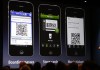
The Apple Store Is Back Up, With New MacBook Pro, Air In Tow

Screen shot 2012-06-11 at 12.49.43 PM

It was a big day for Apple at the WWDC, as Apple announced iOS 6, a new MacBook Pro, cross-platform iMessage, its Google Maps competitor, oh, and a whole host of Siri updates that are seeing the iPhone’s virtual assistant slip into a little more functionality. She now speaks 60 languages, lives on the iPad, in your car, and probably soon in your will.

You may not have noticed it, because it’s always going down, but this morning Apple’s Store was again down and out in preparation for WWDC. But the store has just gone back up, and it has most of the new products in tow. The new $2,200 MackBook Pro with retina display has arrived on the store, while the 17-inch Pro of yore, has quietly been given the axe.

As to the new MacBook Pro, as Matt outlined earlier today, the new laptop comes with quad-core Intel Core i7, and even so, Apple promises “fantastic battery life.” The screen is 15.4-inches with a 220 ppi at 2800 x 1800, making it the first retina displaying notebook. And, hey, it apparently reduces glare and reflection by 75 percent. Which is great, because I have to look at my face while I type this on the previous generation. And no one wants that.

“Everything inside has been reinvented,” Shiller said at WWDC. Surprised he didn’t add “again” after that bit.

The Apple Store going back up also brings the new MacBook Air that now have 3.2-GHz Intel Core i5 processors with 512GB of SSD storage and 500MBps read speeds. The new Airs also use Intel’s Ivy Bridge architecture, and come in 11- and 13-inch sizes, starting at $999 for the 11-inch. Air here.

And, last but not least, there’s a new Mac Pro and a rear-covering iPad smart case.


Apple Quietly Kills The 17-inch MacBook Pro

no-more-mbp

Talk of the 17-inch MacBook Pro was strangely missing during Apple’s WWDC keynote today. But apparently there’s a good reason for it. Apple just axed the 17-inch MacBook Pro. Good night, sweet giant.

Introduced in 2006 the 17-inch MacBook pro was always a true mobile workstation. It generally shipped with the best standard specs and also the highest price. The fact that the 17-inch MacBook Pro was the least popular likely lead to its demise. During Apple’s last earnings call, it was announced that the 17-inch model only captured 1.7% of all Apple notebook sales in the preceding financial quarter.

For the immediate future Apple is going small with their notebook lineup. Starting with the MacBook Air, users will be able to pick up models ranging from 11- to 15-inches with the new Retina display likely targeting those that would have otherwise bought a 17-inch.


Apple Announces Minor Mac Pro Updates

Screen Shot 2012-06-11 at 3.29.46 PM

Apple just announced an updated Mac Pro with with a processor bump to 3.06GHz Intel Xeon X5675 and an ATI Radeon 5770 or 5870 graphics card. Dual solid-state drives round out the package as well as Firewire and USB 2.0 ports. No USB 3.0 ports are attendance.

The new model includes 801.11n and Bluetooth and will be Mountain Lion compatible. The machine is shipping now and will start at $2,499.

This is quite clearly a minor improvement to ensure that new Mac Pro buyers will be Mountain Lion compatible and to encourage stragglers to upgrade now rather than later.

Product Page


Apple Quietly Releases The Rear-Covering iPad Smart Case

smart_case

As it turns out, not every new addition to Apple’s product lineup got a mention on-stage at the Moscone Center today. The Apple Store website is slowly coming back to life, and with it comes a new Smart Case for their latest iPad.

The biggest difference, of course, is that the Smart Cover now covers the iPad’s vulnerable rear end. While the magnet-laden front flap remains largely the same, the iPad’s back is now covered in a thin sheet of polyurethane — it’s apparently thin enough to keep the entire package from feeling too bulky, but thick enough to handle being laser engraved should you go that route.

The more chromatically-conscious among you will be glad to know that the Smart Case comes in six colors (light and dark gray, blue, green, pink, and red specifically). Oh, and if you haven’t yet upgraded to the Retina Display-packing new iPad yet, you’ll also be able to throw an iPad 2 into a Smart Case without too much trouble.

The Smart Case is available in the Apple Store now for $49.99 — don’t forget your free engraving before you check out though, otherwise no one will know whose snazzy iPad is whose anymore.


First Pics Of The Redesigned MacBook Pro

mbp-1

Apple unveiled the next generation of the MacBook Pro today. Encased in a thinner chassis, this MacBook Pro is a serious machine with a Core i7 CPU, a Retina display and reported seven hour battery life.

The new models hit the Apple Stores today but Apple had several on display here at the Moscone Center today. However, they’re behind glass, not allowing for many snap judgments or pretty pictures. But there shouldn’t be many surprises with this new model. It seems to be housed in a similar, albeit a bit thinner casing than that of the outgoing MacBook Pro.

Prices start at $2199 for a 2.3GHz Core i7, 8GB of RAM and GeForce GT 650 but of course can skyrocket once upgrades are selected. And since they ship today, you can probably hit up your local Apple Store maybe as soon as today for a little hands-on action yourself.

Click to view slideshow.


With “Flyover” 3D Rendering And Yelp/Siri Integration, Apple Maps Makes Google Maps Look Like Child’s Play

Screen Shot 2012-06-11 at 11.49.18 AM

Are you listening Mountain View? We all knew it was going to happen, but Apple just launched its own, stunning, Maps product, with “Flyover” or Apple’s incredible new 3D maps display which quite honestly makes Google Maps look antiquated.

“We built an entire new mapping solution from the ground up,” Forstall said while demoing the product, “It is beautiful. We did all the cartography ourselves.”

In addition to the 3D display, Maps will have Siri integrated turn-by-turn directions. Crucial to the new Maps product is local search and Apple has taken in 100 million local businesses so far, in addition to partnering up with Yelp to provide the listings.

The company is also building a Waze-like traffic service, so users can see where slow traffic is and see accidents — Apple will use using anonymous crowd-sourced real time data from iOS users to keep this up to date.

All the new Maps will be vector-based; which means that users can rotate views, angles and drill down into buildings. While it’s still got a firm grip on Android and the web, it’s no surprise that Google’s stock is now down $8.


Apple Announces New Passbook App To Store Movie Tickets, Retail Cards, And Boarding Passes

passbook

Apple just announced a new iOS app on-stage at WWDC called Passbook that aims to store all of your “passes” — a category that includes boarding passes, store cards, and movie tickets. This could be a boon for consumers, but bad news for Square and other startups.

The idea is to create one app that replaces a lot of the clutter in your wallet (or, if you’re an early-adopter, unifies an experience that was spread across multiple mobile apps). So you can open up Passbook whenever you need to board a flight, get into a movie, or get a discount at the store — it looks like the passes are mostly, but not exclusively, redeemed using QR codes.

The examples included a Starbucks card, where the user’s balance is automatically updated with each payment. On the airline side, the app can alert you if the gate changes for your flight. Passbook also integrates with the phone’s lock screen using time and location information, so you can bring up (say) a Fandango movie ticket that will pop up as soon as you arrive at the theater. You can also delete passes, which are then virtually shredded.

It’s not clear yet how many partners partners Passbook will launch with, or how easily other businesses will sign up, but this could have pretty big repercussions for other companies. For example, I’ve seen a flood of startups who jumped on the loyalty bandwagon and tried to replace the physical punchcards and memberships in your wallet. It could also compete with the loyalty features in Pay by Square, and with some of the storage capabilities in Evernote.


Dawn Of The Mac Button? Siri Comes To BMW, GM, Land Rover, Audi, Toyota, Honda & More

Screen shot 2012-06-11 at 11.55.26 AM

Siri is getting a whole mess of new updates, and she looks to be a whole lot smarter than she used to be. Beyond her ability to open apps and arrival on the iPad, soon Siri will also be your co-pilot while you’re riding in your whip. “We want to integrate Siri even better in the car,” Scott Forstall said on stage at WWDC today.

To that point, an important tidbit that was buried in the keynote today: Siri is getting its own button on BMW, GM, Mercedes, Land Rover, Jaguar, Audi, Toyota and Honda cars, right on your steering wheel. When you press a switch on your steering wheel, Siri will pop up on your phone (via Bluetooth) and assist you on the road, like your very own AAA agent.

While presumably the car companies aren’t in bed with Apple deep enough to offer a dedicated, logo-branded button on their valuable steering wheel real estate, it’s clear that the value proposition offered by a deep Apple/manufacturer relationship is definitely compelling.

Apple is lucky: Hardware partners line up to be part of their licensed program. However, this is much different. For the entrenched and staid car companies to offer a literal Siri button in their vehicles is a wild departure.

Obviously Microsoft Sync is already part of some vehicles, but imagine the cost savings associated with a simple button versus a hardware solution that car manufacturers have to install, update, and maintain through the life of the car.

Apple’s partnership with car manufacturers riffs on “Hands Free,” as the company is calling Siri In The Car “Eyes Free.” There’s no word yet on whether or not when Eyes Free cars will make into dealerships near you, but Forstall did say that it expects its partners to have this integration live and driving within the next year.

Reporting contributed by John Biggs


With iOS 6, The iPhone Becomes An Even Better Phone

dnd

Good news for those of you who actually use your iPhone to, oh, let’s say, make phone calls, perhaps? Apple just announced that the iPhone’s phone app is getting a major update with the new version of iOS 6, which will actually make the iPhone more useful as a telephone. Imagine that!

The phone app will receive new features including reminders, do not disturb settings, call screening and more.

These features are going to particularly thrill business users to whom making phone calls, not texting and Facebooking, is still the most critical feature offered by their phone of choice. And the update brings many of the settings you would find in corporate phone systems today.

If you’re in a meeting and see an incoming call, you can now slide a new control on the phone in order to set a reminder to call that person back later or send them a message. There are also buttons for quick replies like “call me later,” which you can use, too. What’s more interesting is that the reminders feature has been smartly location-enabled, meaning that you can trigger your reminders to launch as you exit your current location (e.g., your meeting, office, appointment, home, etc.)

Also new is “Do Not Disturb,” a setting commonly found on landline and VoIP systems, but not on mobile. When this is switched on, you won’t get calls or see push notifications appear on the screen (they’ll be in the pull-down menu, though).

You can also screen calls, ignoring or answering calls from people as you choose. People can be “whitelisted,” too,  meaning you can select important individuals (the boss, e.g.) from your contact list, ensuring they always get through, regardless of your phone’s current setting. The person will have to call twice to get through, however.

Your phone number is now also being unified with your Apple ID, so if someone calls you on FaceTime, you can answer it on your iPad or Mac. And Apple is doing the same thing with iMessage, as well. FaceTime calls will finally work everywhere, too, including both 3G and 4G networks – not just Wi-Fi, as before.

The new version of iOS 6 is due out this fall.


Snapchat Has Shared 110M Self-Destructing Photos, Hires Devs To Build Android App

Snapchat Logo 100 Million

Snapchat hopes to outgrow its bad rap as a sexting app, but first it’s outgrowing the Stanford dorm room where it started. Today it announced it has hired a community manager and two engineers, and has now been used to share 110 million photos that each disappear after a set time limit.

Now its shooting to release a big iOS update by the end of June that will include “password recovery, bug fixes, a faster camera and drawing”. And to appease it younger core demographic who might not be able to afford iPhones, it’s building out an Android version.

Snapchat burst into the tech scene’s consciousness last month thanks to a New York Times article. But that piece framed its ability to let a photo’s sender select to have their picture disappear seconds after being received as being primarily for sending nude photos.

However, co-founder Evan Speigel refuses to be pigeon-holed. He told TechCrunch “I’m not convinced that the whole sexting thing is as big as the media makes it out to be. I just don’t know people who do that. It doesn’t seem that fun when you can have real sex.” With $485,000 in seed funding and a growing team, Snapchat is determined to graduate into a real business.

I spoke with Spiegel recently and he was skeptical about multi-faceted web-first social networks getting mobile right for the next generation. You’ll notice Snapchat’s blog post didn’t mention a huge set of new features. It wants to keep the experience quick and concise, and hold true to its mission to be “the fastest way to share a moment.”

Snapchat is currently available for iOS


Why Is Gizmodo Paying People To Harass Zuckerberg?

zuck

Gizmodo posted a “story” yesterday entitled “We’ll Pay You for Photos of Mark Zuckerberg.” Desperation aside, this is as crazy as it is stupid (And we’re not even sure it’s legal).

See, Mark Zuckerberg is the CEO of a company. Sure, that company is all about sharing with friends, but when you have more than 14 million people subscribed to your page, sharing a photo or a link on Facebook becomes an entirely different beast. He’s scrutinized on everything that he’s ever publicly shared. Just take a look at the IPO hoodie bonanza.

So it makes sense that a CEO, a businessman in its truest sense, wouldn’t want to be splashed across magazine covers and speculated about on gossip columns (which is essentially what Gizmodo’s media network, Gawker Media, is centered around). He kept his wedding fiercely private because marrying your long-time girlfriend, and likely one of the only women you can trust, is an intensely private affair.

So why bother him? I mean, if I (as a reporter) witnessed Zuck beating his dog or something totally insane, I would probably snap a picture and send it to my editors. It’s our job to expose the truth even if the truth is messy. It’s not, however, our job to sick the wild masses onto CEOs so we can rake in clicks from pictures of Zuck walking his dog. (From what I’ve heard, most public sightings of Zuck consist of him and Priscilla walking the dog — thrilling, I know.)

There are a couple of things to consider here:

Everybody cares about Zuckerberg, so these photos are sure to bring in some traffic. He’s a fascinating fellow, who changed the world in a very real way. Plus, he’s hella rich, and rich people are interesting. The same was true for Steve Jobs — people prodded into his life as they could, taking pictures of his car and perhaps too fiercely delving into his medical history. But did he like it? No.

Did he deserve it? Hells no!

Now, I understand that media can get a little cut-throat. Hell, Gizmodo basically ruined its reputation as a real tech blog the moment it paid for that iPhone 4 and got into a spat with Mr. Jobs. Sure, the site probably saw more traffic that day than it ever has (or ever will again), but now it’s a tech culture blog that never gets invited to any Apple events.

And guess what? They’ll never be invited to any Facebook events either once they get a picture of Zuck picking his nose.

Just like any of us, Zuck has the right to keep his private life off of Facebook. And Gizmodo’s price of $20 per photo is even more desperate than their story’s headline.

I’m disappointed, Giz.

Good luck dodging amateur photographers, Zuck. (And buy yourself a nice hat and some sunglasses. Looks like it’s going to be a long, weird summer.)


It’s Not A Bursting Bubble. It’s a Correction And It Will Take Awhile.

bubble-popping

After disappointing post-IPO performances from Facebook, Groupon and Zynga, there’s been a clarion call from top investors like Union Square’s Fred Wilson, Y Combinator’s Paul Graham and Kleiner Perkins’ Mary Meeker for everyone to simmer down with valuations.

But from what we can tell, any adjustment is going to take several months. For the very hottest late-stage companies like Fab.com, growth investors don’t seem to be taking any heed from public market skepticism yet. I asked around about impact on different stages of the market and this is what I got:

Secondary Markets

This is tricky. In theory, you’d think that Twitter should be down by a proportional amount in private secondary markets given Facebook’s decline. But secondary markets can be so illiquid that it may take months before this is reflected in secondary market pricing (or ever, if the public market rebounds in the meantime).

For one, you can’t short shares. Plus, private exchanges like SecondMarket do everything with the consent of the company. If the company gives its blessing, they’ll arrange quarterly or annual sales of stock and the company has full control over who sees their financial data and how the offering is priced. I can’t imagine many companies in their right mind would be eager to do an offering right now. You’d think that the market would freeze.

But there have actually been two tenders on SecondMarket since the Facebook IPO, although SecondMarket couldn’t tell us which companies did them or what the prices were. One was for a gaming company and both offerings matched the prices arranged before Facebook’s debut. A third tender was signed this week and SecondMarket says that inquiries about arranging auctions have actually increased recently.

Twitter may also be able to grow into its valuation with improved revenues, even if the surrounding market performs poorly. The over-the-counter market doesn’t seem affected for the moment, but my sources on this are a little biased! “Twitter is still in play at $8 to 10 billion,” says one longtime shareholder, who says his broker is continuing to send him buying inquiries at that range, even post-Facebook IPO.

Twitter had been considering another share auction this summer on behalf of employees, according to a source who arranges sales of stock for privately-held companies. It will be interesting if they move forward or not. A private share auction last year valued the company at $7.7 billion. They didn’t respond to a request for comment on this.

The other thing to note is that the muppets who lost money on pre-IPO Facebook shares were the ones who bought them after the company filed its S-1 and shared its financials. Facebook’s last trade on SecondMarket before the company filed in February was $31.50, and its four-year average was $28.50 when factoring in stock splits, according to the company. That’s really close to the $27.10 price Facebook is trading at right now. Only in the months right before the IPO did Facebook shares climb to a peak of $42.72.

Maybe it was a panicky, “train is leaving” effect where buyers rushed in. So don’t get emotional. You’ll get burned.

Late-Stage Fundraising

Fab, Spotify and Square are all on the market raising at valuations that top a billion dollars. We hear that Fab is oversubscribed on a $120 million round with a lot of competition for the deal. We said earlier they were raising $100 millionFab said this week that they’re on track to do $140 million in sales this year. One late-stage venture investor tells us all of the good, companies are still getting bid up “like insane.”

Square is still out there. They haven’t settled on a lead investor but they may come in at $2.5 or $3 billion instead of $4 billion, we’re hearing from multiple sources. But the pricing matches what was discussed prior to the Facebook IPO, so there is not really an effect here either. Square didn’t comment on this.

Spotify may be in more of a difficult position. The company says it has 3 million paid subscribers. A back-of-the-envelope calculation gets you to about $450 million in annualized subscription revenue assuming an average $12.50 monthly rate (although exchange rates screw with this). Then there’s ad revenue too. A source familiar with the company’s financials tells us Spotify has a 30 percent gross margin, but when you factor in sales, marketing, administrative and development costs, they go into the red. If an institutional investor were to go in on them at a $4 billion valuation, they would have to believe that the company has a chance of eventually being worth $12 billion or more.

There are institutional investors who have been burned by the last wave of growth rounds. So they may be more reluctant to participate this time around. T. Rowe Price is in the red on Zynga after investing in February 2011 at $14.03 a share. Zynga now trades at $6.05. Late-stage Groupon investors are also close to a world of pain. Investors who went in right before the IPO put nearly $1 billion into the company at the equivalent of $7.90 a share. Groupon’s now at $10.70.

“You can’t be comfortable at 1.3X,” an earlier venture investor in Groupon said. “Like Icarus, they got too close to the sun.”

But overall, the top companies seem to be unaffected for now. If a company is profitable and has growth that would make a hockey stick jealous, there shouldn’t be a problem. It’s the companies that fall just short of this that will feel downward pressure. It’s the same dynamic as in overall venture market. Even though the total amount of capital allocated toward the VC industry has shrunk over the last 10 years, the very best funds continue to do well.

The best companies might even do better in a down market. There will be fewer me-too rivals backed by less savvy money and fewer companies stealing away the best talent.

Early-Stage

The impact on the early-stage market is the hardest to predict since these companies are valued more subjectively. Pricing in these rounds also matters a lot less to the bigger funds, because at the end of the day, if you truly believe you’ve found the next Facebook, who cares if it’s worth $20 or 30 million?

If you look at the market activity at this level before the Facebook IPO, aggressive seed stage valuations were a phenomenon that was largely limited to Y Combinator and a handful of other companies. For the vast majority of early-stage startups, fundraising has been challenging.

The e-mail warning that Paul Graham sent to Y Combinator companies this week was probably a necessary one — even without the Facebook IPO. There was a bit of investor angst (some merited, some not) over the last batch of YC companies. Basically, it was just very pricey with an average valuation cap of $10 million on convertible debt for a class of about 65 companies. That’s fantastic for founders, but it started to rub certain investors the wrong way. And this is an issue that has come up in conversation with investors from about a dozen firms, from early-stage to top-tier, over the last month.

One investor in Pair told me they were frustrated when they found out everyone else was allowed in on the round with different valuation caps. They said the company hadn’t been straightforward with them about this until there was a priced round. In the past, Graham has talked about offering different caps to different investors if they take more risk by investing first or add more value than others. He’s called this “high-resolution” fundraising. It makes sense. But the issue here wasn’t different caps. It was transparency. (To be fair, a different investor in Pair told me they were informed about the variable caps.) I’ve reached out to Pair and they haven’t responded yet.

Two other super-angels from two different funds said they were more conservative with investing in the last YC batch because of the valuations. Sequoia also didn’t invest in the last batch, but said they would consider doing follow-on funding later.

This is partly just natural market behavior. When things get super-hot, it’s smart to look elsewhere for less obvious opportunities. Another thing to consider is that the feeling might also be mutual as YC has its own private internal system where founders can review different investors. The ones that don’t get high marks may have a harder time participating in future batches. So maybe this is just sour grapes. It’s hard to say. I obviously wasn’t in any negotiations myself, but I just sensed a lot more tension this year compared to previous batches.

Even before the Facebook IPO, Graham and other Y Combinator partners like Harj Taggar had already been telling founders not to blindly pursue the highest valuations. They also encouraged founders not to take on too much convertible debt. Although pricing lower than your original cap isn’t technically a down round, it might be perceived that way.

Another YC founder, 42 Floors’ Jason Freedman warned founders to act respectfully toward investors because the market could quickly turn. Back in 2009, he said that no YC company could get more than a $3 million valuation right out of the gate. “Times are good now but the trough of sorrow awaits,” he said in a widely shared blog post.

“If your company blows it out of the water, you’ll be just fine no matter what,” he added. “But if you’re like the 80% of companies that are in the middle, then you run the risk of having a priced round down the line that is below the cap.”

The next Airbnb or Dropbox will be fine, but the future OMGPOPs of the world need breathing room and supportive investors before they find their homerun. Having too high a valuation or cap could prematurely doom them if and when the market turns. As Peter Thiel said in a recent lecture at his Stanford class, “Companies are essentially broken the day they have a down round.”

So the valuation issue was already an ongoing conversation that YC was having with its portfolio companies. The Facebook IPO was just a good catalyst for reinforcing it.

Lastly, for the love of God, it was never a bubble.

If the market settles down by the fall, that’s actually a good thing. Bubbles, which happen when prices get wildly misaligned with fundamental value, often end with an abrupt and extreme contraction — the kind with devastating socioeconomic impact. I may have nerded out on Kindleberger’s Manias, Panics and Crashes before the Facebook IPO — just in case! And historical bubbles from the 17th century to 2008 have all sorts of bizarre characteristics. They tend to include masses of normal, unsophisticated investors and draw out unscrupulous and fraudulent actors.

But it’s hard to see an abrupt contraction happening here. If Facebook’s shares stay at the same range for awhile, being 30 percent over-valued is not that big a deal. This isn’t Pets.com or even this clusterfuck of an IPO from the original tech bubble. The ecosystem can stomach it. There won’t be scores of laid-off engineers in bread lines by August (…. barring a disorderly exit by Greece from the EU, which triggers panic and contagion into the global banking system and maybe a crisis of confidence in government bond markets. Haha. Gulp.)

Macro-apocalyptic thinking aside, the long-term trend of technology becoming embedded into every facet of life and industry continues. Plenty of capital is still coming in too. The bigger firms are raising a billion dollars or more. Sequoia is raising $1 billion. Andreessen Horowitz just raised $1.5 billion. NEA is out raising a potential $2.5 billion.

Then there are about 10 or so early-stage funds that have either recently closed or are raising right progressively larger funds right now. Dave McClure’s 500 Startups just raised a $50 million fund while Felicis just closed $70 million. First Round just closed another $135 million. True Ventures closed $205 millionKleiner Perkins’ Aileen Lee is also starting a $50 million fund. In an interview two weeks ago at TechCrunch Disrupt, Michael Arrington prodded David Lee into a non-denial that SV Angel was considering raising a bigger fund worth up to $400 million.

There is still plenty of capital around at multiple life stages. But it’s better to correct now, rather than later when it could become a really dangerous bubble. We’ll all be better off for it.


Where The Hell Are All The Rants?

Screen Shot 2012-06-08 at 4.50.54 PM

Hear that noise? That’s the sound of a hundred press releases and announcements being ground to a pulp, the pulp being formed into a sort of hollow, vapid blog arrow, and that arrow being aimed squarely at Techmeme.

I don’t know, but ever since some of our most prolific writers left the blog game to either a) become entrepreneurs or b) become investors, the tech blogosphere has been quiet — too quiet. And by quiet I mean so noisy that its difficult for anything of any substance (or signal) to come through.

Gone are the days of “Facebook PR: Tonight We Dine In Hell!” or “How The Hell Is This My Fault?” or “SXSWi: Because Hell Doesn’t Have Enough Promotional Stickers“ or “Delta Flight 1843 From JFK To Hell” or any TC post with “Hell” in the title really.

Instead, the TechCrunch homepage has become so tame the most controversial thing on there right now is “Online Seniors: Tech-Savvier Than You Think” (sorry Frederic, I’m sure it’s a very interesting post). And its not just us … our competitors are drowning in a soup of slow news day posts like “Zuck Joins [Insert Web Service Here]” always using the excuse, “WELL MAYBE HE’S GOING TO BUY IT …” to prove its newsworthiness.

Well, here’s some news: Zuckerberg joining an online service doesn’t necessarily mean he’s going to buy it — And seriously how can you extrapolate that? You might as well also write “Zuck Buys Some Milk” or “Zuck Hasn’t Had A Poop In Three Days.”

Though I actually don’t mind embedding demo videos in posts as long as the videos are well done, I agree with Sarah Lacy here:

“Savvy PR folks — largely taking advantage of an obsession with volume and speed — have pushed journalistic standard practice from multi-source stories to single source stories, then to re-written press releases, then to cut and paste. And now, they have top industry blogs embedding actual commercials for the products.”

This is an accurate description of the current tech media landscape. And all we writers have to fight back with are our faculties of critical thinking. And, unlike old media organizations, our freedom to rant.

A culture of ranting encourages pushback, it encourages writers to fight back on the blog when PR people are bullying them into a story (and trust me, there are PR people out there who are huge bullies, you know who you are). Rants keep the companies and people in power in check and are part of our ecosystem’s system of checks and balances.

So it’d be a shame to see them die, buried in the mire of hurriedly written, PR sanctioned “write-ups.” Because a blog shouldn’t be a write up, it should be a war, or at least interesting — I wish it were legal to slap each TechCrunch writer who looked uncritically or apathetically at a press release or a news story and did a post on it anyways.

Instead, I’m just going to encourage them to write more rants, and I will write more rants as well, starting with this one.

So what do you guys want to rant about?

Image via


Enterprise Cloud Security Firm Qualys Files For $100 Million IPO

Screen shot 2012-06-08 at 3.35.03 PM

The initial public offering fever that seemed to be sweeping over the tech industry has cooled noticeably in the weeks since Facebook’s much-buzzed-about (and potentially botched) stock market debut. But it’s not a deep freeze in IPO land quite yet. Qualys, a Silicon Valley company that specializes in cloud security software for the enterprise, has just filed its S-1 with the Securities and Exchange Commission announcing its intent to hold an IPO and sell up to $100 million worth of its stock.

Qualys isn’t exactly a trendy company, but it works in a valuable space: Web security. According to Qualys’ website, it makes a suite of software as a service products that “enables businesses to continuously identify security risks, automate compliance and protect their IT infrastructure from ever-evolving cyber attacks.” It was founded in 1999 and is headquartered in Redwood Shores, California.

Qualys made $1.9 million in profits on $76.2 million in revenue last year, according to the filing. That’s not the biggest profit margin, but top-line growth is on the rise: Qualys made $21 million in revenue during the first quarter of 2012, up nearly 20 percent from its first quarter 2011 revenues. During Q1 2012 Qualys dipped into the red on the bottom line with a net loss of $285,000, which the company attributed to spending more on sales and marketing. Before that, Qualys had been profitable for several years, and it has $30 million in cash on its books.

Qualys has 313 full-time staff, 237 of whom are based in the United States. According to its website, the company’s investors include ABS Ventures, GRP Partners, the Hewlett-Packard Company, Trident Capital and VeriSign. The filing shows that the company’s single biggest shareholder, however, is its longtime CEO Philippe Courtot, who owns 39 percent of the company’s shares; Trident Capital holds 27 percent.

Qualys plans to trade under the stock ticker “QLYS”; it hasn’t yet selected a stock exchange. J.P. Morgan Securities and Credit Suisse Securities are acting as joint bookrunning managers for the offering, and RBC Capital Markets, Pacific Crest Securities, Robert W. Baird, JMP Securities, Lazard Capital Markets, and First Analysis Securities Corporation are acting as co-managers.


Browse Instagram, Facebook, and Twitter All From One App: The Updated MyPad

MyPad Instagram Integration

Omni-social reader MyPad has just released updates that lets its three million daily users browse and interact with Instagram photos in addition to reading and posting to Facebook and Twitter. MyPad’s free and premium iPhone and iPad apps now let you browse Popular and your network’s Instagrams plus leave feedback; batch upload, filter, and edit photos for publishing to Facebook ; access Twitter DMs, search, and trending topics; check in, listen to free music from Hype Machine, and more.

MyPad’s 10 million registered users are definitely digging the update, as sharing is up nearly 10x in the last few days. What was once a substitute for the missing official Facebook iPad app has blossomed into a bridge between our fractured social graphs.

This is the first update for MyPad’s iPhone app in eight months, and also brings Airplay mirroring so you can watch Ken Burns slideshows of photos from all your social networks on your TV. The iPad version meanwhile scores new Retina graphics.

All that data MyPad collects about what a user interacts with and what their friends share is powering its emerging business model as a mobile app discovery platform. If users slide past navigation bar’s Facebook, Twitter, and Instagram buttons, they’re shown recommendations of apps to download.

These suggestions seem accurate as MyPad developer Loytr’s founder Cole Ratias tells me 0.5% of people that see them download an app (that’s pretty high), and developers pay MyPad on a for each click to the App Store. Loytr is even talking to ad networks and servers like MoPub about using its data to power recommended app ad units on other properties.

Those partnerships could lure investors to the Series A Loytr is now raising. MyPad is proving itself a great example of how a nimble startup can survive by differentiating when the big dogs steam roll your value-add. Now it will be competing with Flipboard, though with deeper functionality and a familiar layout rather than a stylized one.

Stitching several full-featured social networks together in one app is a huge design challenge. Authorizing Facebook, Twitter, and Instagram in a row can feel like an endless cascade of permissions. And if you think Facebook’s mobile apps feel bloated, MyPad has 14 different feature tabs, though at least they’re all available with a tap from its navigation bar.

But if you’re experiencing app overload as Facebook spawns standalones like Messenger and Camera, or don’t want to turn to Path so you can cross-post to Facebook and Twitter simultaneously, MyPad could be the answer. So keep friending and following, your whole social life now fits in one app.

Click here to download MyPad+ for iPhone ($0.99), MyPad for iPad (free), or MyPad+ for iPad ($0.99).