Benchmark Capital Invests $5.5M In thatgamecompany To Take Emotional Gaming Beyond The Console

tgc-logo

thatgamecompany has made a series of critically acclaimed games for the Sony PlayStation 3, but with its three-title contract fulfilled, it’s now looking to produce games for other platforms independently. To do that, it’s raised $5.5 million from Benchmark Capital to help finance its bold new direction, and adding Benchmark General Partner Mitch Lasky to its board of directors.

The Santa Monica-based game studio is best known for flOw, Flower, and Journey, a series of games that aim to go beyond male-dominated shoot-em-up blockbusters and provide a whole new emotional component to gaming. The idea for TGC has always been to make games accessible to a much broader audience than the hardcore console audience, to make gaming as a form of entertainment equal to watching a movie or listening to music.

The new funding comes as the company is trying to figure out its next steps. TGC producer Robin Hunicke and co-founder Kellee Santiago decided to leave the company earlier this year. And now that its Sony deal is concluded, TGC is trying to determine which platform it will start developing for next.

TGC founder Jenova Chen told me that the studio doesn’t know whether it will build for the desktop, online, Facebook, or the iPad next. It’s looked at all those platforms in its review process. The one thing that is clear is that TGC wants to look beyond the the console market, where it will be able to reach everyone, not just hardcore gamers.

Meanwhile, the startup picked Benchmark and Lasky to help it along the way. Chen told me a big reason for that is Lasky’s experience in the gaming market: Previously an executive vice president at Electronic Arts, he’s one of the few VCs out there who has actually worked at a major gaming studio and knows how real high-fidelity games get made.

The important thing for Chen, and for TGC, is that the team will be able to remain independent and develop whatever games it wants to, without having to worry about the demands of certain platforms or publishers.


Business-Focused Social Network XING Announces Dividend Of €0.56 Per Share; Total Payout Around €3 Million

Image1 for post XING Launches OpenSocial App Assault On LinkedIn

XING, a social network for business professionals, is the latest to hop on the dividend train. The company announced this morning that, following a meeting of the XING AG Executive Board, the company has approved its first-ever payment of a dividend. XING shareholders are now entitled to receive a dividend of €0.56 per share on June 15, 2012, which equates to a total dividend payment of about €3 million.

The proposal was first submitted to the Supervisory Board at a meeting held on February 29th, 2012, which fell under XING’s 2011 fiscal year. Today the proposal was approved, allowing the dividend to be paid out to shareholders.

Although XING’s name is overshadowed by Facebook and business-focused LinkedIn here in the U.S., the social network boats over 12 million members worldwide who use it to network for job-related purposes. However, XING hasn’t grown by much over the past couple of years. In September 2010, for example, the company announced it had hit 10 million members, to give you an idea. That said, XING still has a foothold in various places throughout Europe, especially German-speaking countries, given its German roots.

Members on XING can search for jobs, assignments, for their colleagues and co-workers, partners, and can collaborate on business ideas. There are also 50,000 groups on XING dedicated to various industries and niches.

XING AG, founded in Hamburg, Germany in 2003 currently operates XING. It has publicly listed since 2006, and has been listed on the TecDAX since September 2011. In December 2010, XING acquired amiando AG, a Munich-based provider of online event management and ticketing. The deal, for €10.3 million, was aimed at boosting XING’s events platform.

Today, the company is the latest to join a growing crowd of dividend payers in the tech industry, following Apple, Dell and HP, most notably.


FuzeBox Launches A Powerful Video Conferencing App For The iPhone

iphone_video_conf

FuzeBox has squeezed its online meeting experience into a new iPhone app called Fuze Join for iPhone.

The company already has an iPad app that Apple named one of the best business apps for 2011. In fact, it even had an earlier iPhone app, but CEO Jeff Cavins says the company realized that it wasn’t as good as it needed to be, so the team took the app down last year and started working on a new one.

“We just wanted to do something completely different and much more advanced,” he says. “We want to put personal telepresence in the palm of your hand.”

So what’s changed in the new version? Well, FuzeBox added what is perhaps the key feature, the ability to broadcast and view video. It also rethought the interface, allowing users to control the app with just five buttons.

Cavins took me through a demo of the new FuzeBox app — joining a meeting, viewing video feeds from other participants, starting text chats, and sharing our own slides and documents. There were lots of nice touches, for example the ability to tap a point on a slide on the iPhone screen and having that point get highlighted with a red dot on everyone else’s screen. We could also to get video from telepresence systems offered by other companies like Polycom and Cisco/tandberg.

What was most impressive, however, was the speed and responsiveness. We were able to watch high-quality streaming video (which Cavins says was 1080p resolution) over a cellular network connection in downtown San Francisco, and it was perfectly synced up with what was shown on the other computers in the meeting. Cavins was able to scroll through all the slides in a presentation from his iPhone, and again, the screens of the other participants followed virtually instantaneously.

One limitation on this front is the fact that you can “only” watch four video streams at once, so that the app doesn’t tax the iPhone too heavily. FuzeBox meetings can actually be much larger than that, so when you go over four streams, the remaining participants are represented by a still image at the bottom of the screen. You can move participants from one area to another, so if someone important joins late, you can still tell the app you want to see their video feed (it just means someone else will get bumped).

Fuze Join for iPhone is available to FuzeBox customers as part of its overall meeting service. You can download the app here.


500 Startups-Backed Bombfell Helps Nerds Get Stylish, For Just $69 A Month

bombfell-logo-1

If you live in the San Francisco Bay Area, you know how horrendously unfashionable guys can be these days. Offices and coworking spaces from Sunnyvale all the way up to the city are filled to the brim with dudes in jeans, t-shirts, hoodies, and sandals, all kind of looking like they’re about to spend the rest of the day hanging out, getting drunk, and watching TV.

Subscription commerce startup Bombfell believes things don’t have to be that way. And it’s attempting to cure our aversion to dressing well with a monthly subscription service that will send users at least one piece of fashionable clothing per month for just $69 dollars.

Bombfell isn’t the first subscription commerce startup targeting the male fashion market, and it won’t be the last, but it combines an ease-of-use, affordability, and personalization that few others can match. When you sign up for the service, you provide the site with your measurements, body type, a list of brands that you wear, and some general information about the type of styles you prefer, as well as those you wouldn’t be caught dead in.

The startup then selects one piece of clothing a month to send to you, based on your preferences, and charges you $69 for it. Currently the startup touts a system which takes into account all the info that you’ve submitted, as well as past orders, and then passes it on to a stylist, who makes the final determination of what to send. That’s one way it’s able to continue scaling, even though it’s very quickly adding new users.

Bombfell doesn’t just send leftover, off-brand clothes that no one would want to wear, either. It buys high-quality clothing from big brands you’ve heard of, like Ben Sherman, Original Penguin, French Connection. It also hunts down up-and-coming designers that are normally found in boutiques — names like BTNS, Maker & Company, and Farm Tactics. And since Bombfell operates on a pretty forecastable monthly subscription model, it doesn’t have to carry a ton of inventory month-to-month to support its growth.

But what if you don’t like what they send? Or if it doesn’t fit? Just send it back (free shipping’s included), and Bombfell will give you your money back and take the return into account the next time it picks something out for you.

Bombfell launched in private beta last spring and opened up to the general public in November, allowing anyone to sign up for its monthly clothing delivery service. It’s already backed by 500 Startups (It’s part of this summer’s Accelerator program), as well as angels that include David Shen, Galen Ward, Diane Loviglio, and Kavin Stewart.

Despite not being around for that long, it’s already sporting some pretty impressive metrics. The average lifetime value of one of its users is more than $500, which means that they’re typically staying signed up for at least six or seven months. It’s getting some help from some major tech companies in the Valley, with Facebook, Twitter, and Google all offering Bombfell discounts to their employees. But despite its initial partners in the tech scene, the service is available to all guys in the U.S. with a credit card and a desire to not dress like a slob.

Anyway, in preparation for Father’s Day, Bombfell put together this photo of “dads in tech,” showing off what they could look like if they signed up and started getting their own monthly packages of clothing shipped. That includes 500 Startups founder and Sith Lord Dave McClure, KISSmetrics CEO Hiten Shah, and Glenn Allen, co-founder of Pocket Labs and OpenTable. And I mean, Dave McClure didn’t dress up to meet Hillary Clinton, so any startup that can get him looking snazzy probably has something going for it.


Pulse Goes Beyond Text, Launches New Video Channels With Over 30 Partners

Pulse - Video

Pulse, the popular free mobile news reader for iOS, Android and Windows Phone, just announced that it is adding more video to its platform. The company is launching over 30 new video channels on its platform and is partnering with the likes of ESPN, Fox Sports, the White House, The Daily Beast, College Humor, The Today Show, and National Geographic to bring their shows to its apps. Broadly, the new channels fall into three categories: sports, TV news and humor.

As Pulse co-founder Akshay Kothari told me yesterday, the company mostly focused on text and images until now and is obviously proud of the partnerships it has built with premium publishers around the world. Along the way, though, the Pulse team realized that stories with short videos in them were doing very well on its platform. About 4 months ago then, the team decided to put more emphasis on getting more and better video content onto its service.

The new video channels should be live in Pulse now. They will only work in the latest version of the app, however, so make sure you have recently updated your install. For the time being, the new video channels will only appear in the iOS and Android versions of the app.

Just like with its text-focused partnerships, today’s announcement is about content syndication. Video providers on Pulse will still be able to show their own video ads and Pulse won’t take any of this revenue away from them. For the most part, Pulse is getting these videos either through YouTube or its partners’ APIs.

Pulse, which just moved out of its Palo Alto offices and into a larger space in San Francisco, currently has about 20 employees. The team is working hard on version 3.0 of the app. Kothari didn’t say much about what we can expect from this update, though he did note that we should expect it to arrive later this summer.


Spun Out Of Evri With $3.5M From Paul Allen, SportStream Brings Its Social Sports Platform To The iPad

game dashboard

The Web is noisier than ever before. Content is being produced en masse, in realtime, making it increasingly difficult to separate the signal from the noise. Evri, the realtime content discover engine, aims to help you find the signal by indexing millions of news sources, turning that unstructured data into topic-based channels to let you more easily follow subjects that interest you, rather than just following the same old news sources.

Last year, the startup really accelerated its shift to mobile, differentiating its own apps from the umpteen news-aggregating iPad ‘zines out there by not only by letting you follow your interests, but by using its engine to determine the relevance of a topic based on how much it’s been covered, the coverage’s velocity, and the rate of sharing on social networks.

And what creates more noise, sharing, and inspires more loyalty than sports? Sports content is inherently suited to topic based consumption. We all have our allegiances to sports teams, and we want to consume our coverage accordingly. Web readers and surfers want their content personalized and targeted. Bleacher Report gets this.

General news aggregation is a crowded space, but sports? Not so much. Not one to miss an opportunity, last year Evri began expanding into the sports world with a suite of apps for iOS and Android called SportStream, which basically ported its social and topic-based discovery engine to sports content.

Its first app allowed fans to access realtime news from a whole mess of sources, integrate their social feeds, tweet highlights, view in-game scores, and personalize their feeds based on their favorite teams, players, or topics, like injuries and trades.

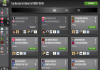
Today, the free social sports platform is launching on the iPad to give users more a interactive and personalized way to share and participate in live sports. SportStream offers a second-screen experience for watching live sports by putting friends, followers, curated social media streams, real-time stats, and chat inside the touchscreen interface.

SportStream also offers Facebook authentication to let users quickly find the games their friends are watching and join them. And, based on the teams and players you “like,” it provides a customized experience by following games you will likely find interesting. The app only shows relevant social content to a particular game or event, while letting users hop into chat rooms to talk about a game, or begin a conversation on social networks.

Obviously, SportStream is riding a changing trend in the way that people are viewing and consuming live sports content. Social media platforms and additional screens have transformed the viewing experience from passive to interactive. In fact, Forrester recently reported that 85 percent of tablet owners use their devices while watching TV.

Proving just how big of an opportunity it thinks the sports market is, Evri spun out SportStream, turning it into its own company a few weeks ago. Not only that, but the newly minted startup closed a $3.5 million series A funding round from Paul Allen’s Vulcan Capital shortly thereafter. And who better to have your back than the guy who both co-founded Microsoft and owns the Portland Trail Blazers and the Seattle Seahawks?

The crazy number of tweets generated every second at this year’s Super Bowl proved that there’s a ridiculous amount of realtime engagement and sharing happening around big sporting events, but it still largely remains noise. It’s unstructured data. So, by creating a platform where fans can go to find info that’s relevant to them, interact with other fans, chat, etc., SportStream hopes to become the go-to solution for sports consumers.

But, with Pulse, Taptu, Bleacher Report and others moving into sports (and fantasy sports) content aggregation, personalization, and socialization, Evri and SportStream better gird themselves for some serious competition. The ways in which sports content is being consumed is continuing to change fast, and as more and more people cut the cord, mobile and connected TV solutions will pick up the slack.

SportStream on the iPad here.


Amazon Web Services Announces Price Cuts On Premium Support, Free Basic Support For All

AWS Free Usage Tier-3

Amazon Web Services (AWS), the cloud computing business run by internet retailer Amazon, today announced a revamp to its support offerings. The company cut the prices for its premium (paid) support offerings, while also automatically enrolling its customers in the “Basic” support tier for free. In conjunction with the changes, AWS also rebranded its support tiers from Bronze, Silver, Gold and Platinum to new, more descriptive names: Basic, Developer, Business and Enterprise.

For enterprise customers, there comes another big change, too: support pricing is now being based on usage as opposed to a flat fee, which could potentially translate to cost-savings for some customers as it now offers levels of pricing below the previous flat 10% fee.

All of the plans announced today include support for an unlimited number of cases, are contact-free and are available worldwide.

The new, free Basic support offering available now to all customers includes 24/7 customer service for account and billing issues, and technical support for system health issues.

The full description of the revamped plans is below:

  • Basic (Expanded free tier): Upon signup for AWS, all customers are automatically enrolled in Basic support for free. Added features in this tier include immediate, around-the-clock access to customer service by email or phone for billing and account issues, and technical support for system health issues. Customers continue to have access to technical FAQs, best practices guides, the AWS Service Health Dashboard, and the AWS Developer Forums, which are monitored and responded to by AWS support engineers.
  • Developer ($49/month and 1:1 customer support): Previously called the Bronze tier, the Developer tier includes all components of the Basic tier, plus the following: 12-hour response time to support cases submitted, 1:1 customer support for any AWS-related question, and access to AWS Technical Support Engineers via email through the AWS online support center during local business hours to help configure, operate, and maintain core AWS services and features. The Developer plan is $49 per month.
  • Business (Access to AWS Trusted Advisor): Previously called the Gold tier, the Business tier includes all components of the Basic and Developer tiers, plus the following: one-hour response time to support cases submitted and support engineers available 24/7 via phone, chat or email. In addition to chat capabilities, new features include access to AWS Trusted Advisor, a program that monitors AWS infrastructure services, identifies customers’ usage patterns, and notifies customers when opportunities exist to save money, improve system performance, or close security gaps. Customers also receive support for the most common third-party software running on AWS. The Business tier minimum pricing has been reduced from $400 to $100 per month and a 3% usage-based pricing tier has been added to the existing pricing tiers of 10%, 7%, and 5%.
  • Enterprise (New pricing based on usage vs. flat fee): Previously called the Platinum tier, the Enterprise tier provides customers with all of the features of the Business tier, plus 15-minute response time for mission-critical issues, and a dedicated Technical Account Manager who is intimately familiar with the customer’s specific AWS architecture. Technical Account Managers will also conduct periodic business reviews for infrastructure planning, report metrics, collaborate on launches, and connect customers to AWS Solutions Architects as needed. The Trusted Advisor program is also available to all Enterprise tier customers. The Enterprise tier minimum pricing has been reduced from a flat 10% usage fee to usage-based pricing tiers of 10%, 7%, 5% and 3%.

In January, Amazon added its Trusted Advisor service to its Gold and Platinum offerings, which monitors customers’ use of AWS and recommends configuration changes and new services that may help them save money, improve system performance, and close security gaps. You’ll notice that Trusted Advisor still remains only available to those in the top two tiers today, however.

Amazon’s move to cut support pricing is an important change in terms of its ability to remain competitive in an increasingly crowded cloud computing business, especially in terms of keeping enterprise customers happy. And by cutting prices on a key area like support, enterprise and business customers will be less likely to jump to a competitor’s product.

More details on the new pricing options are available here.


Give Some To Get Some: Karma Makes Your HotSpot Connectivity Social

Karma Logo

Sharing isn’t something we like to do with our data. Stealing, however, is. Knowing someone is on your WiFi network slowing you down is bad news bears, whereas hopping on an open network when your ISP lets you down is no problem whatsoever. That said, a new pay-as-you-go hotspot package fresh out of TechStars NYC Demo day is looking to make the most of that dynamic, and it’s called Karma.

Karma is amazing in that it not only offers a pay-per-use model with a 4G mobile Hotspot, but it offers something called social bandwidth. Here’s how it works:

I own a Karma hotspot. It costs me $69 for the hardware, which has a 4G connection courtesy of Clearwire and lasts up to eight hours on a single charge. By buying the hardware and signing in to the network with my Facebook ID, I automatically get 100mb of free data. From there, I can buy as many GB of data as I want for $14.99 each.

So now I’m set up, and I head off to a Starbucks to get some work done. My Karma network is an open one, so people in Starbucks can try to hop onto the network and steal some bandwidth. Little do they know, Karma is giving them a free 100mb of data as well for using the network if they sign in with Facebook (they can’t get on otherwise). More importantly, I also get 100mb of free data for every person that uses my network. Give some to get some — that’s what my mom always says.

The idea is that the network thief, let’s call him Kevin, doesn’t even need to buy his own hotspot to be a part of the Karmic action. He now has 100mb of free data attached to his Facebook ID, so he can use the rest of it the next time he sees a Karma network. He can also purchase 1GB of data without owning a hotspot and continue using Karma networks as he sees them.

Karma has raised close to $1 million in funding thanks to angels like Werner Vogels, Kal Vepuri, Chang Ng, Jerry Neumann, David Tisch, David Cohen, Collaborative Fund, BOLDstart Ventures and 500 Startups.

Karma has also just announced a deal with American Airlines, which will offer free Karma hotspots to frequent fliers.

Check out all of the cool stuff coming out of TechStars NYC Demo Day here.


Lua Organizes Any Mobile Workforce With (Duh!) A Mobile App

TS_small_lua

Lua, a company focused on enhancing communication and project management within mobile workforces, has just launched today at the Techstars NYC Demo Day. The software allows any mobile workforce, from a production crew on a film set to construction workers to salespeople, to communicate throughout the day on their smartphones. It’s a messaging platform, at its core, that facilitates one-way messaging, two-way messaging, conference calling and document sharing among every member of a crew.

So let’s paint a little picture.

A director or producer on a film set has about a million different teams to work with. There’s hair and makeup, wardrobe, talent, camera crew, sound crew, and probably a whole bunch of other ones that I don’t know anything about. Not all of them need to see or hear the same messages, so Lua allows the admin to categorize people into specific groups, either from the app or from a web dashboard.

From there, the admin can make an announcement and see read receipts for each individual to make sure that the message has been heard loud and clear. The admin can also require an actual response as a confirmation of receipt, in which case the workers see a Copy That button.

Messages can be sent to the whole crew, specific groups, or one-to-one, and conference calling is also available within the app itself.

Lua has already signed on clients like the Batman production crew, the Mets baseball team, and American Idol, and today announces a partnership with YouTube who is taking Lua to the Olympics this year. Lua is available on iOS and Android with an SMS app plug-in allowing every phone to get in on the action.

Click to view slideshow.

Check out all of the cool stuff that came out of TechStars NYC Demo Day here.


Pickie Is A Personalized Shopping Magazine Based On Your Friends’ Social Mentions

TS_small_pickie

Today at the TechStars NYC Demo Day, Pickie launched onto the scene. At its core, it’s an iPad magazine that is totally personalized based on all brand mentions from friends and the people you follow. Nothing’s stronger than the power of word of mouth, and with social networks abounding, bringing those personal recommendations online only makes sense.

On Pickie, shopping with the help of your favorite blogs and friends becomes super simple. The layout is somewhat Pinterest-esque, with category tiles for Home Goods, Arts, Gadgets, Furniture, Crafts, Gifts, and Clothing. Once you’ve clarified the categories you’re interested in, Pickie pulls in only viable products that have been recommended or mentioned by your friends.

Content is broken up into four different verticals. Social content is only the content your friends have been chatting about, whereas trending content offers up the most popular items within your categories. Pickie also includes editorial pages compiled by the Pickie team, along with a Discover page. The more Pickie learns about you, the better the Discover page will look to you.

In essence, product data and social data are coming together within the well-designed app to make purchasing that much easier. Any product you click on will display a price, availability, and anything your friends have said about it.

The service is launching on the iPad, where 90 percent of mobile shopping goes down. Revenue comes in through sponsored products, marketing in a natural way to users without being intrusive.

Pickie is currently in the process of raising a $1 million seed round.

Check out all of the cool stuff that came out of TechStars NYC Demo Day here.


10Sheet Will Cut The Bookkeeper Out Of Your Financial Equation

10s-logo

One thing small businesses struggle with most is bookkeeping — it’s tedious, time-consuming, and it can be really confusing come tax season. Because of this, most folks turn to bookkeepers to do the dirty work for them, at a cost of hundreds of dollars a month. That’s where 10sheet comes in.

The old model, which involves a traditional bookkeeper, leaves people hauling stacks of paper to their bookkeeper and wrangling together shoeboxes full of receipts. With the new model, it’s as simple as hopping online.

You set up your financial accounts the same way you would with Mint.com, and you have two routes for sending in your receipts. You can either snap a photo and send them in through the app, or book a FedEx pick-up direct from within the application to have your receipts messengered back to 10sheet.

Through machine learning and computer vision techniques, 10sheet has a rather powerful automation tool that takes care of most of the heavy lifting. This includes categorizing transactions and matching up receipts to bank statements and credit card statements. Every user is also assigned a real-life bookkeeper who works out of 10sheet’s NY office. The bookkeeper is on-call to answer any questions via phone or email, and check that everything matches up properly.

It’s this mix of software and service that keeps 10sheet way ahead of the competition in terms of pricing. Whereas you’d spend at least a couple hundred dollars a month using a traditional bookkeeper, 10sheet only costs $69 per month, saving small businesses quite a bit of cash. That goes a long way in this economy.

Lauching out of TechStars NYC Demo Day, 10sheet is available now to anyone. So if you’re interested, check out 10sheet now and get started.


PopTip Offers Real-Time Twitter Poll Result Tracking, Hashtags And Correct Spelling Not Required

Poptip-Logo

More often than not, a crowdsourced answer is the right one. Just take a look at Estimize — the anonymous user base of 6,500 users is more accurate than Wall Street 67 percent of the time when estimating the trajectory of a company’s stock. So it only follows that brands would want to harness this type of data, which is why PopTip has just launched into existence at TechStars NYC Demo Day.

The service offers real-time polling for any question and can handle misspelled words or responses that haven’t been hashtagged.

From there, pollers can see results fly by in real-time, and check out organized reports of each results page, which can then be shared. To ask a question, you simply write out a question (like “Who makes the best hardware?”) followed by possible answers with hashtags (like “#Apple #RIM #HTC #Motorola #Samsung #Sony #LG #Nokia), and cc/ #poptip. Whether you’re tweeting from the PopTip dash or Twitter the results will be tracked and sent straight back to PopTip.

For now the service only works with Twitter, but eventually PopTip will head to Facebook and be able to give brands more knowledge around long-term engagement and specific demographic data. This is the main differentiator between TwitPolls and PopTip.

Here’s a look at how it works:

Poptip Product Walkthrough from Poptip on Vimeo.

Check out all of the cool stuff that came out of TechStars NYC Demo Day here.


Skype For Mac Update Brings Improved Contact List, Video Calls & Screen Sharing, But No “Conversation Ads” Just Yet

Mac58

Skype just announced a new version of its Mac software which brings changes based on user feedback, including the return of the resizable contact list and improvements to video calls and screen sharing features. The news follows yesterday’s announcement from the company which said that Windows users on Skype’s free service would now see advertisements in the software. However, no mention of the same was made in detailing today’s new feature set for Mac.

That’s not to say that the ads won’t come to Mac. After all, Skype is now owned by Microsoft – it was probably just easier for them to start the ad integrations on Windows first. But it’s unlikely that they would worsen (yes, that’s what the ads do) the user experience on their own platform, while keeping Mac ad-free.

But until now, a reprieve.

As always, here in blogger land, we take careful notice of Skype’s updates for Mac because a) the majority of us use Macs and b) we’re heavy Skype users. So today’s update of Skype for Mac deserves a quick run-through of what’s changed.

According to the Skype blog, a feature users have asked for – the slim contact list – is making a return with the update to Skype 5.8 for Mac. You’ll now once again be able to resize and reposition your contact lists however you like. (Pictured)

Video calling has also been improved between the Mac client and mobile devices. When someone on  Skype for iPhoneSkype for iPad or Skype for Android rotates their screen, that change will now reflect in the Mac software. (Windows Phone was already supported).

Screen sharing, which lets you share your desktop or show your photos to a friend, has been tweaked, too, but only for paying subscribers. It will now display your live video alongside your shared photos, so you can share content and watch a friend’s reaction at the same time. This will work in both one-to-one screen sharing sessions and group sessions, says Skype.

The new version of Skype is now OS X Mountain Lion ready as well, and is backward-compatible to Leopard. The company notes that other features, including the ability to open chats in separate windows, are still in the works.

Skype for Mac 5.8 is available for download here.


The Climate Corporation Raises $50M For Big Data Driven Weather Insurance

Screen Shot 2012-06-14 at 8.21.00 AM

???????????

Formerly known as Weatherbill, The Climate Corporation is announcing its $50 million Series C round today, led by new investor Founders Fund and followed on by existing investors Khosla, Google Ventures, NEA, Index Ventures and Atomico. The round comes after another formidable $42 million raise from the aforementioned group sans Founders Fund.

While on the surface The Climate Corporation seems like a weather insurance company, CEO and former Googler Dave Friedberg explains (video above) that it is actually a big data play, using a complex relationship of data sources and machine learning algorithms in order to predict the weather and other agribusiness conditions.

Currently the company monetizes by optimizing custom insurance plans for farmers based on this data, and, unlike traditional weather insurance companies, uses its data measurement system to pay out farmers if bad/out of the ordinary weather happens.

The Climate Corporation’s “Total Weather” insurance plans cost $30 an acre, and pay out around 10x if a covered weather event like rain or drought happens. The insurance costs are around 3% of an average farmer’s revenue according to Friedberg, who views the potential size of the market at $3 trillion globally.

Friedberg tells me he will use this fresh funding to expand The Climate Corporation internationally, and underscores why this is important by referencing an incident where 2000 Indian farmers committed suicide when expected monsoons did not arrive on time. With these expansion efforts, the company will be hiring another 50 people, a combination of engineers, researchers and data scientists.

“We like to tackle and solve some of the world’s most challenging problems,” Friedberg says, on what’s next for The Climate Corporation beyond insuring farmers, “A farmer is about as analog as it gets. To be able tell a farmer this is what’s going to happen at the end of a season, that’s mind-blowing.”


iOS 6 Includes Gay And Lesbian Couple Emoji

photo copy

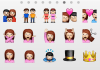
Now this is nice: Apple has updated their Emoji collection to reflect reality. They’ve added a lesbian and homosexual couple to the usual collection of goofy faces, monkeys, and weird skulls.

The new Emoji will appear in iOS 6 but to access the keyboard now in iOS 5 just pop into “Settings>General>Keyboard” and click International Keyboards. Add a new keyboard and select Emoji. Now, when you type, press the globe button near the keyboard and you’ll see a selection of icons for your perusal.

The company also added some very cute Sanzaru monkeys and, most important, a gust of wind Emoji that I intend to use for a very different purpose.

via