Awesome Camera, Agonizing Everything Else

<< Previous
|
Next >>


Nokia 808 PureView smartphone

Photos by Ariel Zambelich/Wired
<< Previous
|
Next >>

The Nokia 808 PureView is the most exciting smartphone on the market that you shouldn’t buy.

The phone generated a ton of buzz at February’s Mobile World Congress, not because it sports a stunning display or has the latest software features — in fact, the 808 PureView runs on Symbian, an outdated operating system Nokia has openly dismissed in favor of Microsoft’s Windows Phone OS.

The 808 PureView is captivating because of one feature, and one feature alone: the on-board 41-megapixel camera.

The PureView 808 is captivating because of one feature, and one feature alone: the on-board 41-megapixel camera.

Most highest-end smartphones, including Apple’s iPhone 4S, Samsung’s Galaxy S III, and HTC’s One X, have 8-megapixel cameras. Compared to those cameras, a 41-megapixel camera sensor seems totally over-the-top and unnecessary. But what Nokia has developed with its homegrown PureView imaging technology is, by far, the best camera I’ve seen on a smartphone.

That doesn’t mean it’s a good phone. It’s actually a pretty terrible phone with an outstanding camera. You should only consider buying the 808 PureView if you really love mobile phone photography. Even then, you’re probably better off waiting until Nokia’s PureView technology comes paired with a better OS, like Windows Phone (and Nokia confirmed to Neowin Sunday that PureView will arrive in its Windows-powered Lumia phones “very soon”). Also consider that, in the U.S., the phone is currently only available as an unlocked device for AT&T and T-Mobile networks at the high, unsubsidized price of $700.

The 808 PureView is no shining example of industrial design. With its giant camera protruding awkwardly from the back of the shell, it’s chunky and top-heavy. It’s a full 13.9 millimeters thick. Holding the 5.96-ounce 808 PureView brings back memories of the old Nokia bricks of the early 2000s.

Speaking of ancient history, Nokia has a long record of building truly awesome camera packages into its smartphones — big sensors, Carl Zeiss optics and full-featured imaging software — the most recent examples being last year’s N9, and the N8 before that.

The curved edges and matte polycarbonate back make the phone easy to grip, an important quality for a phone dedicated to shooting photos.

As much as I initially balked at the PureView 808′s heft and strangely shaped back, I quickly grew accustomed to holding it. The curved edges and matte polycarbonate back make the phone easy to grip, an important quality for a phone dedicated to shooting photos.

Along the right side of the phone, there’s a volume rocker, a spring-loaded lock/unlock switch, and a dedicated camera button. On the top, you get a headphone jack, a micro USB port, and a micro HDMI port.

The phone’s 4-inch display features edge-to-edge Gorilla Glass, with the exception of dedicated buttons for the menu, making a call, and ending a call. It’s only a 640×360 pixel screen, so if you’re used to an iPhone’s Retina display, you’ll be sorely disappointed. It’s an unfortunate drawback considering the device is centered around digital imaging.

It may not be the best device for viewing photos, but it completely outperforms other smartphones in actual photo-taking.

More megapixels doesn’t always mean you’re going to have better photos, but in this case, it absolutely does. The 808 PureView combines a high-end Carl Zeiss lens and advanced software to produce images that look significantly better than other smartphone cameras (yes, even the iPhone) and is comparable to point-and-shoots.

One thing to note: You don’t actually shoot 41-megapixel photos. In fact, the highest resolution photo you can take is a 38-megapixel photo at 4:3 aspect ratio in full-resolution sensor mode. The way the PureView technology works is that it uses pixel oversampling, essentially packing up to seven pixels worth of data into one pixel area. The results? Sharp, clear images with little to no noise. And the 41-megapixel sensor also makes it possible to zoom into photos 3x without losing any of the clarity.

Most of the time, I was shooting in PureView mode at 8 megapixels and getting just-as-impressive photos as I saw with full resolution. The only advantage to shooting in full resolution mode is that you can zoom in more without losing details in the image. The Camera app, which you use to take all of your photos, is designed specifically for the PureView camera. And it’s the best app on the Symbian platform, showing a lot more maturity than apps like Mail and Maps. It’s clear that the PureView team spent a lot of time making the camera software user-friendly.

Lenovo’s Winning IdeaPad Ultrabook Gets Upgraded to Ivy Bridge

Lenovo’s refreshed U-series ultrabook is an improvement over last year’s model, and it’s much cheaper, too. Photo by Peter McCollough/Wired

Barely seven months ago, Lenovo released its excellent IdeaPad U300s, the company’s consumer-friendly entry to the ultrabook market. Now Lenovo is back with an update, the U310.

To the casual eye, not a lot appears to have changed. It’s still a 13.3-inch aluminum slab of a laptop with a 1366×768-pixel resolution screen. The island keyboard still offers a great layout and good action (though the keys now feel a touch small in comparison to some recently reviewed machines), and the huge clickpad has finally had the kinks worked out of it.

The biggest switch under the hood is the move to Ivy Bridge, with Lenovo subbing in a 1.7GHz third-generation Core i5 for the old 1.7GHz second-generation Core i7. There’s a substantially better port selection now, too, with an extra USB port (bringing the total up to three, two 3.0 and one 2.0), wired Ethernet, and an SD slot. The HDMI port from the U300s stays as-is.

Surprisingly, the U310 I reviewed performed almost identically in benchmark tests to the U300s I reviewed in November. That’s interesting, because the prior machine featured a 256GB SSD, and the U310 features a slow, 5400rpm 500GB traditional hard drive. It seems the faster CPU and slower hard drive manage to cancel each other out in the end. At about 4 hours, 20 minutes of video playback, even battery life is almost the same as it was last time around. But there is a catch: At just $800, today’s U310 is a whopping $700 cheaper than the U300s.

Lenovo has worked the kinks out of the IdeaPad’s trackpad and the keyboard. Photo by Peter McCollough/Wired

The U310 isn’t without some drawbacks, though, the biggest of which is some apparent binging that now has the laptop topping the scales at a beastly 3.6 pounds, versus 2.9 pounds for the U300s. (The switch from SSD to HDD is responsible for only a tiny fraction of that.) Once a competitor on the weight front, the U310 is suddenly one of the heaviest 13.3-inch ultrabooks on the market. And while the metal shell makes it impressively sturdy on the whole, I was far from thrilled with the plastic bezel surrounding the LCD. A fingernail will easily pry this flimsy piece up, and I’m concerned that these bezels coming off will eventually be a big problem for U310 owners.

As a budget consumer ultrabook, the weight issue isn’t likely to be a deal-killer for the target buyer Lenovo has in mind. And I’m happy enough with the rest of the package to still give it a solid recommendation.

WIRED Awesome value, with solid performance. Trackpad problems resolved. Screen bezel notwithstanding, remarkably sturdy. Now available in pink.

TIRED IdeaPad got fat. LCD remains dim, with washed out colors if you aren’t viewing head on. Still no keyboard backlighting.

It’s gotten a little bulkier, but it’s sturdier, too. Photo by Peter McCollough/Wired

Hike to the Waterfall Without Looking Like a Hippie

These new Tevas repel both water and hacky sacks. Photo by Ariel Zambelich/Wired

While it may be effective in the field, most technical footwear makes you look like a tool the second you step indoors. Nobody wants to see you rocking a pair of waders at the brew pub.

Thus, one of the most welcome trends in the outdoor goods market is the emergence of technical gear that also looks good when you head back to civilization. Footwear company Teva has a new offering in this category, the Fuse-Ion shoe. It attempts to blend innovative outdoor performance with a good amount of style points, and it succeeds.

Each pair is protected with Teva’s “Ion Mask” treatment, an almost imperceptibly thin coating that renders the shoes completely water-repellent.

Designed as a “casual” water shoe, the Fuse-Ions are tailor-made for the wet stuff. They have plenty of traction on wet and moss-covered rocks, and they dry quickly, making them perfect for a hike to a waterfall or keeping you comfortable during and after a downpour. Best of all, they still look good when you’re walking around town.

While good looks are a matter of opinion, the first two data points can be judged on merit.

The uppers are protected with Teva’s ‘Ion Mask’ treatment, an almost imperceptibly thin coating that renders the shoes completely water-repellent on a molecular level. The shoes don’t dry off quickly, because they never actually get wet. To test the water-repellent claims, I walked through creeks and pushed off from boat ramps, and water just fell right off of the shoes as soon as they exited the water. Whenever I spilled water or beer on the shoes, it invariably rolled right off. While the shoes’ material is totally waterproof, the shoes themselves are not. If you splash (or even pour) water on the shoe itself, you’ll stay dry, but if you submerge your whole foot, water’s going to get inside, though it’ll drain almost immediately. This is fine as long as you’re not wearing socks, because while your shoes shed water well, your socks most likely won’t.

The sole is made of a material Teva calls Spider Rubber. Photo by Ariel Zambelich/Wired

The second technological innovation is the extremely grippy rubber outsole, which provides an almost surreal amount of traction. Originally designed for kitchen staff working on greasy floors, Teva’s “Spider rubber” sports flexible ridges on the sole that act like windshield wipers, cutting through whatever hazards I could find and planting a firm grip on the surface underneath. The sole worked well on a variety of slippery surfaces — Mt. Bachelor’s ice-covered parking lot, submerged river rocks on a mountain trail, and my kitchen’s linoleum floor after I sprayed it with Pam.

A quick note on rock-hopping: the highly flexible sole was especially effective on the river rocks, as the material was able to conform to the rocks’ contours for more surface contact and grip. However, for people who require more support, that thin, flexible sole may be a pain in the foot. If you’re not used to flatter-soled shoes, longer hikes could lead to some seriously sore arches.

The shoes look just as stylish indoors as out, with their low-profile colors and faux-canvas exterior. They’re designed more like a neo-Converse shoe than those strappy Teva sandals you may remember from your days on Dead tour. And trust me, that’s a good thing.

WIRED Gecko-like traction on slippery surfaces. Water literally falls off and out of the shoe. Collapsible heel for easy on/off. Great for the boat as well as the yacht club.

TIRED Not much support. Water can creep in through gaps in material. Too narrow for wider feet.

The heel collapses for quick slip-on and removal. Photo by Ariel Zambelich/Wired

Report: Project Oscar, UK’s Multi-Carrrier Mobile Payment JV, Could Get Regulator Nod This Summer

How Visa Plans To Dominate Mobile Payments, Create The Digital Wallet And More | TechCrunch

Orange, Deutsche Telekom, Vodafone and Telefonica’s O2 are all pushing ahead on their own mobile payment services, but in a bid to outpace companies like Apple and Google that may disintermediate them completely, these carriers are also working together. Now, a carrier JV in the UK, code-named Project Oscar, which would create a common mobile payments platform for all of them, is apparently nearing the final stages of regulatory approval.

The FT, citing two separate sources, notes that the okay could come this summer from antitrust regulators, with “few or no remedies” required for the approval. This is a turn of events, considering that the project has already been delayed by regulators a couple of times, scuppering plans to have the service ready by the Olympics in London this summer. Subsequently, carriers are beginning to prepare for a launch of the platform that would enable retailers, banks and others to link into the service to give it the kind of scale that many believe mobile payments will need if they are to succeed as a consumer service.

We have contacted the carriers for a comment on the story and the joint response has been a universal no comment: “Everything Everywhere [itself a JV for T-Mobile and Orange in the UK], Telefonica UK and Vodafone UK cannot comment on rumour or speculation regarding discussions with the EC concerning their proposed m-commerce joint venture,” a spokesperson told me..

Up to now, the party standing most in the way of Project Oscar, first announced over a year ago, has been Hutchison Whampoa-owned Three, the smallest of the mobile carriers in the UK. Three says that it has been shut out of the process of creating the platform, and all further developments since it has been announced. On the side of the bigger carriers, they have never ruled out offering the platform to other mobile service providers — but haven’t spelled out how that would work, either.

The significance of Project Oscar is that it does not appear to preclude the development of any operator-specific mobile payment services. Those individual developments have covered not just point of sale services, but also those for payments within apps. Among them, Vodafone is working with Visa, Deutsche Telekom has signed an agreement with MasterCard; France Telecom is driving hard on NFC on SIMs; and Telefonica, which has a strategic investment in Boku, just last week announced it it would be enabling carrier billing for content from Facebook, Google, Microsoft and RIM’s app store.

The idea with Oscar, however, is that by creating a platform where individual services can interoperate, the prospect for merchants and payment providers of investing in making their products mobile-purchase-friendly will become significantly more attractive — and subsequently consumers will be more likely to use them, too. Or so the thinking goes.

Since announcing the JV in June 2011, the project has been in limbo while getting investigated by the European Commission’s antitrust authority. The report in the FT seems to be based on initial positive feedback.


Mind Candy Acquires Origami Blue Games Studio To Become Its Labs Arm

Screen Shot 2012-07-09 at 12.10.04

Mind Candy, the company behind the successful Moshi Monsters online kids game and character franchise, has acquired a games studio, Origami Blue, to power a new initiative being dubbed ‘Candy Labs’. The move marks another twist to the Mind Candy playbook which has seen it develop into comic books, music and toys. The team joins as full-time Mind Candy employees.

‘Candy Labs’ will be an R&D studio to spin up new ideas around entertainment for children, as is Mind Candy’s focus, though they are keen to stress than some will be digital and some non-digital concepts. “Some of the new concepts will be acquired from third parties, but most ideas will originate in-house,” said a spokesperson.

Origami Blue has until now been known as a small studio originally set up by ex-Disney Blackrock studios creatives Edd Smith, Mark Knowles-Lee and James Ovnik. They set out to create character animations, but most notably they developed augmented reality gaming applications for large corporates. They’ve also been working with a team of educational psychologists to develop a state-of-the-art touch-typing system for children.

In a statement Michael Acton Smith, CEO and Founder of Mind Candy commented: “We clicked creatively with the Origami Blue guys from the outset and are hugely excited to bring them onboard. Developing new IP has always been part of the plan to expand Mind Candy. We have lots of ideas bubbling away and can’t wait to see the new visions come to life.”


NewsWhip Scores Angel Funding To Use Social Signals To Surface The News

155367v2-max-250x250

NewsWhip, a service that surfaces the latest news based on social signals from Facebook and Twitter, has raised an Angel round from Hal Philipp, founder and former CEO of Quantum Research Group (which was acquired by Atmel in 2008) and who is now a partner with Meridian Growth Capital, and Shane Naughton, a founder and former CTO of TaxStream (which was acquired by Thomson Reuters in 2008).

Details of the investment remain undisclosed, although sources tell TechCrunch that it can be considered a seed round and is in the “under $1 million” range.

A sort of alternative to Google News (and also reminiscent of Tweetmeme), NewsWhip also saw a redesign this week as the company prepares to release native mobile/tablet apps that will put also it up against the likes of Flipboard. That said, the Dublin-based startup’s approach is different from most social news apps in that it’s taking social signals from the entire crowd — Tweets and Likes — rather than a user’s specific social growth.

“We work off what everyone is sharing within a given topic (like Fashion, Business, Tech). Less echo chamber of your social graph, more wide open view of the world’s conversation”, explains co-founder Paul Quigley.

Alongside NewsWhip’s consumer-facing service, the startup has a professional product called Spike that will eventually be subscription-based and is currently being trialled with newsrooms.

“Spike is a dashboard for newsrooms, showing which stories are trending – or are about to trend – from thousands of sources”, says Quigley. It’s been developed with input from the BBC, MSNBC, Buzzfeed, the Huffington Post and others.

In addition to today’s Angel funding, NewsWhip is a graduate of the incubator-style NDRC Launchpad program from which the company has taken €35k.


Gartner: Enterprise IT Spend Will Pass $3.6 Trillion In 2012, Cloud Investments Rise To $109B

Bowl of clouds | Flickr - Photo Sharing!

Gartner has updated its forecasts on IT spend worldwide: spend in areas like hardware, software, and IT services are going to drive total investment of $3.6 trillion into IT overall. Gartner calls that number “lackluster,” in that it’s only slightly higher than Gartner projected last month, and only three percent more than 2011′s $3.5 trillion figure. However, what’s noticeable is that we are continuing to see a strong appetite for cloud computing. It will reach $109 billion in 2012 and will almost double in value by 2016 to $209 billion.

The survey canvases activity from over 75 percent of Gartner’s Global 500 list of top companies, and the analysts say that factors that are hemming in growth include the eurozone crisis, a slowdown in China and a weaker-than-expected recovery in the U.S. — all ongoing issues for the world economy. ”There has been little change in either business confidence or consumer sentiment in the past quarter, so the short-term outlook is for continued caution in IT spending,” notes Richard Gordon, research vice president at Gartner, in the report.

Gartner’s forecasts do not include consumer spending on cloud services — a significant market that has been propelled by the rise of media-friendly but storage-shy smartphones and tablets, as well as better networks. That area is growing, too: back in March, Gartner predicted that by the end of next year (2013) more than 90 percent of all connected consumer devices will have cloud services integrated into them. Consumers, it says, will spend $2.2 trillion on digital technology products this year.

Key names in the consumer segment include Apple’s iCloud, Dropbox and Box, with the latter selling storage services direct to consumers as well as in bundles with other consumer products like mobile devices. Meanwhile, popular streaming media apps like Spotify not only drive consumer usage of cloud services but also increased enterprise spend for Spotify to enable the services to exist.

While cloud services are, relatively speaking, still only a small part of all enterprise IT spend — that $109 billion is only three percent of $3.6 trillion — it’s one of the faster-growing segments, says Gartner.

In the enterprise segment, Gartner says that the “vast majority” of cloud investment will be in the area of business process as a service — for example billing systems that run in the cloud — but it notes that areas that are actually growing faster right now are software as a service, and infrastructure as a service — with the latter including not just storage but the replacement of equipment that was traditionally on a customers’ premises, such as a phone service (this is an area where companies like Skype and Twilio have the chance to be particularly disruptive).

Gartner — which itself makes money on consulting services — says that services like consulting will drive IT services spend to $864 billion this year, up by only 2.3 percent from 2011. It notes that consulting is less about business strategy today than it is about technology, driven by the need to make better sense of how to harness analytics and big data innovations.

And although there are Skype’s, Twilio’s, Rebtel’s and more looking to upset the carriers’ apple cart, their portion of IT spend remains the largest: it will account for nearly $1.7 trillion of IT spend, although it will also be growing the slowest this year:


Never Mind The Hype, Conversocial’s Latest Hire Points To Real Signs Of Growth In ‘Silicon Roundabout’

104394v3-max-250x250

Naysayers of ‘Silicon Roundabout’ (or Tech City, to use its UK Government-sanctioned name) can certainly point to some of the giddy PR surrounding the area as evidence of hype. But when you join up the dots, there’s a definite sense that we’re beginning to see signs of real growth for this tech cluster in the east end of London.

And so it is that news comes today of what looks like another impressive hire for a Silicon Roundabout-based startup: Matthew Brazil, who was previously VP of Business Development for Radian6 (which exited to Salesforce for $326m) has joined social customer service outfit Conversocial as VP of Sales. This follows the recent hiring by neighbouring Songkick of former Googler Dan Crow as its CTO.

Newly hired Brazil will lead Conversocial’s sales and marketing efforts as it gears up for a more aggressive push into the U.S. — which is particularly noteworthy given his links to Radian6, whose offering has plenty of overlap with Conversocial’s own Twitter and Facebook-based customer service tool. In fact, Brazil can be considered responsible for growing Radian6′s UK operation via 6consulting, which he co-founded and that was acquired by the company in 2011 (not long before itself being gobbled up by Salesforce).

But back to Conversocial and the topic of growth. Around a year ago the DFJ Esprit-backed startup claimed just 5 employees, while head-count now stands at over 20. Its clients include B&Q, Barclaycard, Cafe Nero, Groupon, Net A Porter, Odeon, River Island, Sephora, Tesco, and Waitrose. States-side, the company has around twenty customers and is currently hiring out of its New York office.

Conversocial co-founder and CEO Joshua March tells me that “we’re starting to see Silicon Roundabout growing up”, not just in terms of how many companies in the area have VC-backing, but also how many are now “commercially successful, and growing and recruiting fast”.

On the specific issue of hiring, March says that events like Silicon Milkroundabout combined with the press coverage that the area has been getting, and the financial slow down, has made startups a more viable option in the eyes of developers.

“We’ve found it’s actually got easier to hire top developer talent over the last few years; but we’re also in the lucky position that there isn’t a start-up bubble (like there is in Silicon Valley and even New York to an extent) that has driven up start-up salaries to astronomical rates”, he says.

However, “senior talent” with startup experience is still hard to find in London, although March thinks that will change rapidly “over the next couple of years”.

As for the naysayers, he has this to say:

“Huddle, Moo, Mind Candy are just a few that have really broken out and are becoming major companies, but there’s also an increasing number at the stage just before, like us. It’s not just about a load of hackers renting a few desks with big dreams, but significant companies winning major customers around the world and expanding quickly, including to the US.”


Knowledge Tree Raises $4.75 Million To Advance SaaS-Based Document Management

icon1

Knowledge Tree started as an on-premise software company. In 2010, the company pivoted to the cloud. Today, the software-as-a-service (SaaS) company originally from South Africa announced a $4.75 million Series B round of venture capital investmen from River Cities Capital Funds, Core Capital Partners, Hatteras Funds, and lead Series A investor Hasso Plattner Ventures Africa.

Knowledge Tree provides a twist the normally mundane task of document management by using social technologies to help in the authoring and subsequent collaboration around documents within a structured environment.

The structure comes in its workflow technology and features that include audit trails, activity histories, threaded comments and versioning.

Knowledge Tree’s social features combine social discovery with elements of game mechanics. It now has plug-ins to Microsoft Word to collaborate on documents. It plans to offer its own Web-based authoring environment that will allow co-editing, similar to Google Docs. Features also include a leader board on the dashboard that lists the authors who have developed the best content.

Knowledge Tree is used by legal and financial teams in mid-market companies. It competes with companies such as Microsoft Office 365 and Spring CM.

Chief Executive Officer and Co-Founder Daniel Chalef credits Hasso Plattner Ventures in helping his South African company make the journey to the Southeast United States where it has settled in Raleigh, NC. The company started looking to expand to North Anerica from Cape Town after it started getting calls from Silicon Valley venture capitalists. Hasso Plattner’s VC firm provided the initial $2.2 million in funding to make the move.

It’s a good story and shows the leverage that SaaS plays have in the market. Ten years ago, on-premise software companies would have been the ones making moves from overseas. Today, it’s the SaaS players most sought after. The enterprise market is shifting Investors are looking worldwide for companies that work int he cloud more so than installed on a server in a corporate data center.


Recruiting Rules Everything Around You

Hong.Quan

Editor’s note: Hong Quan is a recruiter at Quantum Startups, which connects people with startups in Silicon Valley. He is also the founder of Prong Motors and designed a unique three-wheeled vehicle. He is also a Mentor-in-Residence at 500 Startups and for the Thiel Foundation’s 20 Under 20 Fellowship.

Recruiters suck! On this we can all agree. You don’t need to set up a honeypot to know the majority are just lurking LinkedIn and spamming software engineers for their next lottery ticket. Most people think recruiting is about “hiring talent”, but founders should be actually building a cult.

Now that you’ve raised some money – Congrats! – the first thing your new bosses will ask is that you “grow the team”. We’ve got the future to build! And it’s gonna require a lot of bodies. And that’s why you’ll fail.

Recruiting isn’t about filing seats. By the time most founders think about recruiting – approximately 3-6 months after funding and not being able to hire anyone – it’s too late. You need to create a solid recruiting process that reflects your unique personality and company culture, and one that’s scalable and repeatable. Oh, you’ve already been using external recruiters? Or you’ve got someone doing recruiting but not delivering results. Now you have to call in a specialist to fix everything wrong with your recruiting process, do what I call ‘catch-up-recruiting’ and that’s a really rough road. I’ve done it. And it’ll cost you more (time and money) for me to clean up someone else’s mess.

So how should you think about recruiting? Well let’s go back in time…

Stages of Growth

1) 0 to 2 – You’ve got an idea and you’ve got a partner (or two). Most startups end up in divorce. Marry well. The core/founding team is your foundation and every subsequent hire will reflect this. This is why VCs like to fund Founders from Stanford, Harvard or MIT.

2) 2 to 20 – Building the base, hire all your friends! Search your natural network until it’s tapped out. Then go outside your comfort zone.

3) 20 to 100+ – Create the recruiting machine, keep it running, feed the beast. Don’t let HR take over. No, it’s not the same thing as recruiting.

You got Recruiting Problems

And I feel bad for you son. I got 99 engineers and you all want one. “Just get us one.” That’s what the emails all say. We just need one Google Engineer, one Facebook Hacker, one ex-YC Founder who almost made it and is now dead broke. If you think about recruiting one hire at a time, you’ll never build a proper team. There are some common pitfalls that Founders fall into, and they are:

1) Hiring too slow. Talent > Capital. VCs breathing down your neck. I’ve never met a startup that’s hiring “on plan”. Even the most popular startups with awesome teams and unlimited press mentions have trouble recruiting quickly while maintaining the highest quality that made them the hot startup in the first place.

2) Hiring too fast. Scaling before you’re ready. More engineers != more code shipped. Founders who brag about the size of their team are doing it wrong. More people means more burn, which requires more money, which usually means fundraising, which puts you on the hook for more hiring. Having 5 engineers in the earliest stage pre-funding doesn’t actually mean you’ll code 5x as fast, or ship product that’s 5x better. Don’t grow before you’re ready, but be ready to grow at all times.

3) Hiring poorly. This will be the death of your startup, guaranteed.

Save us from ourselves.

So what do we do now? No one’s doing recruiting right. If you’re not a big company, why are you using big company recruiting? Pipeline, filters, resumes, reviews, phone screens, code challenges and interviews. Volume doesn’t naturally bring quality. Once HR is involved your startup is now a “company” for better or for worse. “But Google hires the best engineers!”, you’ll protest. Okay, but does your startup do *anything else* exactly like Google?

1) Always Be Recruiting. It’s Job #1 for Founders. People join your startup because of you, not because of salary, funding, equity or perks.

2) Recruiting is too important to be left to Recruiters. How many recruiters do you need? Well how many employees do you have? It’s everyone’s job to grow the company. Give them the tools and responsibility to do so.

3) Build strong teams. Strong teams get stronger over time, weak teams get weaker.

Retention is half the battle in this current “war for talent”. Even your friends and Co-Founders will leave you. Make sure you’re okay with that. Better yet, plan for it.


How Pebble And Other Product Phenomenons Killed It On Kickstarter

Screen shot 2012-07-08 at 6.31.09 PM

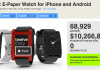
It’s a good time to be Kickstarter. The crowdfunding platform has had a blockbuster year, breaking into mainstream consciousness with campaigns that raised millions of dollars, like the Pebble e-paper watch above.  The platform has seen almost $275 million pledged to some 63,000 projects to date, with $231 million going towards successful fundings.

As Devin wrote at the time, before February, no Kickstarter project had ever raised over $1 million, but since then, seven projects have surpassed $1 million, including the current #1, Pebble, which raised an astonishing $10 million. And this growth applies to multiple categories, not just sexy wrist watches. Prior to February only one gaming project had reached $100K in funding. Since then? 37. Even something as niche as webcomics saw its number of pledges double in February.

A lot of people came to Kickstarter for the first time as part of the buzz around those seven projects that surpassed $1 million, and to the startup’s delight, a lot of them have gone on to fund other projects, resulting in a positive net effect both for the platform itself and for project founders.

The long-term question/caveat to this, of course, is whether new users coming to Kickstarter tend to just end up amplifying the projects that are already blowing up, or whether they’re actually spreading the love and helping other projects reach their goals that might not have otherwise. After all, when you launch a Kickstarter project, the odds are against you; 56 percent of Kickstarter projects fail to find funding — with some 32K projects in total having failed, compared to the 25K projects that succeeded.

The company hides the failures as a gesture to creators, and to help users focus on the projects with traction. To further boost its transparency, Kickstarter also launched a stats page in June, which provides daily updates on metrics like dollars pledged, success rates, etc., broken down by category. Check it out here.

A 44 percent success rate ain’t bad. Considering there have been seven $1 million-plus projects since February and that today 82 percent of projects that raise more than 20 percent of their goal go on to become successfully funded, the overall trend is positive. However, keep in mind that 62,711 projects have launched in three years, and only seven have hit $1M. That means your chances of reaching $1M are a fraction of one percent.

What’s more, few of the Kickstarter projects that are successfully funded go on to become real, revenue-generating businesses. Many of those projects naturally go on to create eCommerce stores to sell their wares. As a number of those projects have used Shopify to open their storefronts (including the $10M baby, Pebble) the startup has taken an interest in this growing trend.

Shopify’s marketing and PR guru, Mark Hayes, even decided to profile the creators of some of Kickstarter’s most successful projects to ask what they’d learned and to get them to share some of the secrets of their success. (You can check the post out here.)

As Kickstarter grows, and more and more companies opt to use it as a launchpad and a means to validate their product and measure market demand, learning from those who’ve found success provides an awesome guide future founders. So, piggy-backing on Hayes’ work, herein we’d like to offer a glimpse into what the most successful projects have done right — and what they did wrong.

For starters, it’s good to know what areas (or categories) you should be focused on based on past Kickstarter data. It turns out that “Theater” and “Dance” projects have the highest success rates at 64 and 69 percent, respectively — good to know for all you theater and dance geeks out there. Yes, there are people who will fund your avant garde, dance-heavy rendition of “A Confederacy of Dunces.” (Best to do it now in the event Zach Galifianakis beats you to it.)

Of course, only 3,256 Theater-related projects have been launched, which is on the lower end, when you compare it to the 18,263 Film & Video projects and the 14,906 Music-related projects that have launched on Kickstarter. These two categories are by far the most popular, having raised over $100 million “successful dollars” between them. While there is far more competition for dollars among these categories (and in Publishing), of the more popular categories, Music projects have the highest success rate at just over 54 percent. Meanwhile, I’m sorry to say, readers, but Technology ranks near the bottom with only 1,236 projects launched and the second lowest success rate at 29.25 percent.

Now that you’re aware of what categories are most popular on Kickstarter, let’s dive into some examples.

Ministry of Supply

Ministry of Supply is a good place to start. (You can read our recent coverage here.) Borrowing technology from NASA (with a dollop of Under Armour), the startup has designed a next-gen line of dress shirts, called “Apollo,” that adapt to your body to control perspiration, reduce odor, stay wrinkle free and looking a badass. Plus, everything from the fabric to the packaging is made right here in the U.S. of A.

Ministry of Supply set out to raise $30K and has raised $288K to date, sneaking up on the $291K raised by Flint & Tinder for their men’s underwear — currently the most-funded fashion project on Kickstarter.

So, why has Ministry of Supply been so successful? Well, there’s less competition in Fashion and it also happens that the top three most-funded projects in the category tackle menswear and offer either a next-gen, wrinkle-free, durable product or focus on bringing manufacturing jobs to the U.S.

For Ministry of Supply, it also helps that working stiffs like you and me who need dress shirts, and futuristic dress shirts that solve all the problems of what’s currently out there (wrinkles, pit stains, etc.) are certainly appealing. Especially when they advertise the fact that they’ve borrowed from the same technology that NASA uses in its space suits.

All that makes for a sexy product that solves a real problem, plus there’s a movement to help get the U.S. back on track by keeping manufacturing jobs here. “We used to make things,” you might’ve heard an American lament. There’s also the fact that the founders used to work at companies with recognizable names, like SpaceX, Lululemon, IDEO, and Apple.

The founders also attribute their success to focusing on an iterative process, developing a product, releasing it to a small group of testers, taking the feedback to make it better. They made dozens of test runs on Apollo before launching their Kickstarter project. And, for those who are lucky to exceed their goals, the founders tell us that it’s important to keep people engaged with the project page by offering updates.

Ministry of Supply has posted videos and updated the text of their Kickstarter page numerous times since reaching their initial goal, as a way to thank their supporters and talk about their plans going forward. They also said it’s important to add further goals. For example, if they become the most-funded fashion Kickstarter project, they’re going to launch their backers’ names into space on a “ridiculous weather balloon.” This keeps people coming back, checking in on their progress, and sharing the concept with friends.

Coffee Joulies

Dave Jackson and Dave Petrillo, two mechanical engineers from New Jersey, were tired of the foibles inherent to coffee drinking. Baristas seemingly love to use lava to heat coffee, which makes for burned tongues and hands. Plus, there’s the fact that coffee tends to stay at a pleasant, warm, drinkable temperature for less than 30 seconds. So, the engineers developed a stainless steel coffee bean that you can put in your cup. The bean absorbs excess heat, bringing your coffee down to a drinkable temperature — and not only that, but when it starts to get cold, the bean releases heat to keep your coffee warm. Sweet. (Read our coverage here.)

The team set out to raise $9,500 but brought in over $300K and is one of the top 15 Design projects on Kickstarter to date. As to their tips for success? The engineers told Mark Hayes of Shopify that the smartest thing they did was to allow potential customers to opt-in to their email list as their project came to a close. Kickstarter brought a ton of referrals to their site, but because they were busy filling orders, they weren’t able to pre-sell their Joulies for several months.

For successful Kickstarter campaigns this can be a huge problem. Teams are small and they inevitably have to go into overdrive and rush to fill orders. If they’re not prepared, they can lose a ton of customers as a result. “Instead, we had a compelling opt-in email box that would notify customers when Joulies were ready to order, so that when the time came to sell again, sending emails to the list was easy — and of enormous value,” they said.

In describing what went wrong with their project, we find a good lesson both for project creators and for Kickstarter itself. Founders need to be ready for traffic, and Kickstarter needs to get better at providing its companies with more guidance and transparency into traffic and metrics.

Here’s Petrillo’s explanation:

We didn’t know what our real traffic numbers were like on Kickstarter, and we also didn’t really have a clue what levels of hosting were required to host and protect against traffic spikes since it was all behind the scenes during Kickstarter. When we did get spikes, like when a story about us got syndicated on Yahoo! homepage for 12 hours, our ‘unlimited’ shared hosting crashed within minutes and we lost hundreds of thousands of unique viewers. Bummer.

Ramos Alarm Clock

The Ramos Alarm Clock was developed by a team of engineers in NYC. It’s an old-school, neat-looking clock that displays time in a funky way and includes a wireless alarm deactivation panel that forces you to get out of bed to turn off the alarm. The team set out to raise $75K, but made double that and was even teased on Saturday Night Live.

The Keys to success? The founders said that it’s all about creating a product that solves a real problem, finding an idea that people can relate to and want to use every day. That should sound familiar to entrepreneurs. They also found Kickstarter to me a much better launch platform than just going it alone or trying to reach out to press themselves. “Kickstarter served us well in being a reputable, visible platform to start from … I don’t know if we could have generated that much buzz launching ourselves, or elsewhere,” said co-founder Paul Sammut. He also recommended that companies be ready with their own storefront as soon as their projects expire on Kickstarter.

What didn’t work? Easier said than done when the future of your idea is uncertain, but Sammut said that founders should be realistic about what they can achieve in a short period of time. In other words, be careful of over-promising and under-delivering. “We offered things to customers at the onset of the project that seemed easy to do, but ended up adding a great deal of complexity to the manufacturing process,” the co-founder told Hayes. “I would recommend a serious analysis on how to simplify your product and keep variations to a minimum when starting out,” especially if you’re attempting to launch something that will need to be mass-produced. If you’re a small team, even handling communication and customer support for a couple hundred people can be a bear.

ZPM Espresso

Kickstarter also apparently loves coffee. ZPM Espresso, the makers of a high-tech espresso machine called the Nocturn, set out to raise $20K, but made nearly $370K on Kickstarter. The machine offers PID controls, programmable presets, adjustable temperature and pressure settings, and open-source software to boot — to the delight of coffee geeks everywhere.

What worked? ZPM Espresso co-founder Janet Tambasco said that the key to their campaign was focusing on being extremely responsible to questions and feedback. What’s more, when asking for money on a crowdfunding platform (i.e. you’re hitting up strangers for money), she said that the key is being both passionate and transparent. Be honest about your product and what you expect to accomplish.

Tambasco said that the team made sure to respond to the thousands of emails they received during their campaign, talked to people who work in the coffee industry about planning next steps, and posted frequent updates on their blog and on their Kickstarter page.

As to what didn’t go right? Even if you’re worried about being able to meet your manufacturing (or production goals) at scale, don’t try to slow things down. Roll with it, and don’t be afraid to try to amplify the publicity for your product yourselves — through press and otherwise. Plan for scale in advance in the event you’re lucky to find it. “In retrospect, more funds always helps,” she says, “so we should’ve tried to gather as much momentum as possible, rather than trying to slow things down while we tried to figure out logistics.”

Pebble

Pebble is the most-funded Kickstarter project to date. The project set a goal of $100K and raised over $10 million. Whoah. (Read our coverage here.)

Pebble is an infinitely-customizable smartwatch that is water and scratch resistant and comes with a neat ePaper display (i.e. Kindle-like). Its battery lasts for seven days and can be charged by USB. Users can connect the watch to their smartphones to sync calendars, alerts, emails, and even calls. Essentially, it’s the watch of the future. It makes my Casio calculator watch of yore look like an abacus attached to a sundial that can be worn around the wrist.

What worked? Pebble Founder Eric Migicovsky says that (besides all the kickass technology — my words, not his) the key to its Kickstarter campaign was finding effective, demonstrative ways to describe its use cases, which they laid out on their page. “We knew that no one really wakes up in the morning with a desperate urge to buy a smartwatch,” he told Hayes, “so it was our job to figure out exactly how to explain to future users how they will be able to use Pebble.”

To do this, he recommends testing out your pitch on people who aren’t going to be your core user base or audience. In fact, he turned to, among others, his mom. Find the best way to pitch every day people and then expand on that to describe your product — advice that has broad/general application, too.

And to that point, his other piece of advice echoed that from many others: Above all, one should listen to their users, take care to hear their problems and react accordingly. Be responsive, quick to react, and transparent, and do whatever you can to resolve those pain points as you iterate and go through your product cycle.

Amanda Palmer

Amanda Palmer has the most-funded Music project on Kickstarter to date. She set a $100K goal and made over $1.1 million. Amanda’s goal was pretty simple: It was to raise money to release her new album. Kickstarter wrote a lengthy description of Amanda’s milestone (becoming the first musician to reach $1M), so we won’t re-hash the whole thing here. But, in case you missed it, there’s plenty that applies to this discussion — and echoes what’s been said by other project founders.

Amanda wasn’t famous or particularly well-known before her Kickstarter campaign blew up, which should be encouraging to other fledgling musicians out there. But what we can take from her success is that, for starters is that, when strangers offer up their cash to help you meet your goals, they love being rewarded with experiences just as much — if not more than — items or things. This may not apply to every category, but a significant portion of the money pledged to Palmer’s campaign was for experiential rewards. She offered backer-only performances, or for $5K, she offered to play a show at her funders’ houses, or the chance to have dinner with her in which she would paint you your very own portrait.

Backers ate these rewards up, something that’s reminiscent of Ministry of Supply’s offer to send their backers’ names into space on a weather balloon if they become the most-funded Fashion project. As a result, they’re almost there. As Kickstarter says in its post, “traditional marketplaces restrict fans to being customers, but Amanda’s project invited people to participate.” With the evolution of the web to a discovery and entertainment-driven medium, this kind of interactivity is huge.

Transparency also came up again in the discussion of the musician’s success, and, for what it’s worth, Kickstarter likes to think that backers reward artists and campaigns that “step out from behind their industries’ protective walls.” If we can agree that the creative economy is in shambles, then it is likely true that fans are eager to support people who are willing to challenge the status quo and take risks. Even if that means you have to paint your investors’ portraits.


Track Record In China Sets Cisco’s “TOS” Scandal In A More Sinister Light

Cisco Logo

Cisco did some apologizing this past week. The networking giant apologized for all the confusion about Cisco Connect Cloud and the suspect terms of service that many people viewed as a way for the company to monitor behavior and potentially cut off their router if they infringed.

Cisco Connect Cloud is a service that updates a router automatically for customers. It’s part of Cisco’s effort to connect all the “things,” in your home, be it your PC, tablet, appliances and anything else you can think of. It limits the owner’s capability to control the router itself.  The advantage, Cisco claims, is it gives you the ability to manage your router no matter where you are.

Issues surfaced last week when customers upgraded the firmware on their routers and were directed to a page that asked them to update to the Cisco Connect Cloud service.

Ars Technica’s Jon Brodkin experienced the issue himself after buying a Cisco Linksys EA3500 dual-band wireless router. Soon after installing it, he was notified of a firmware update. A sign up page appeared for Cisco Connect Cloud when he tried to access the browser’s internal administrative Web interface.  After signing up for Cisco Connect Cloud he had limited ability to manually administer the device.

Brodkin:

In exchange for the convenience of Connect Cloud, you have to agree to some pretty onerous terms. In short, Cisco would really hate it if you use the Web to view porn or download copyrighted files without paying for them.

The story soon spread. Cisco has since backed off and has changed the terms of service.  I did a search for “pornography,” and did not find any references.
Update: A Cisco spokesperson said the company has comprehensively rebutted allegations that it monitors personal Internet use. The spokesperson said Cisco has similarly comprehensively rebutted allegations that the company has in any way modified its technology to aid with surveillance in China. The spokesperson said Cisco has a company policy that prohibits selling such technology for public infrastructure projects in China. He referred to a blog post from Cisco’s general counsel on the subject. The spokesperson alsop said Cisco’s terms of service contained errors which have been comprehensively addressed.  He noted  that Cisco did not change its ervice or policy. Instead, it corrected errors in a document.

This all may not seem like a big deal to many people. It ties into the belief that companies can be trusted with our data or that nothing will ever happen to them even if they do have it. Also, companies generally have pretty restrictive terms of service. Legal departments demand it.

But Cisco is a bit different. Here’s why.

Cisco is in the business of surveillance. It provides Internet and video surveillance technology to law enforcement organizations, national governments and any number of government agencies. ISPs and service providers throughout the world use Cisco’s “Lawful Intercept,” technology to conduct electronic surveillance.

Cisco’s surveillance technology is used throughout the world. But it’s the work Cisco does in China that raises the most questions about its ethical practices.

The Human Rights Law Foundation filed suit last year in federal court, arguing Cisco helped customize its networking equipment to monitor members of the Falun Gong group. They argue that with the help of  the Cisco technology, the Chinese kidnapped, detained, imprisoned, tortured and subjected group members to forced labor. There are reports that the Chinese harvested organs from Falun Gong members they took into custody.

From the Weekly Standard:

The financial excitement of a wired China quickly led to a proliferation of eight major Internet service providers (ISPs) and four pipelines to the outside world. To force compliance with government objectives — to ensure that all pipes lead back to Rome — they needed the networking superpower, Cisco, to standardize the Chinese Internet and equip it with firewalls on a national scale. According to the Chinese engineer [that the publication spoke with], Cisco came through, developing a router device, integrator, and firewall box specially designed for the government’s telecom monopoly. At approximately $20,000 a box, China Telecom “bought many thousands” and IBM arranged for the “high-end” financing. Michael confirms: “Cisco made a killing. They are everywhere.”

Cisco vehemently denies the charges.

I am sure many of you will say that the people complaining are overwrought with conspiracy theories. I have no special knowledge of Cisco’s intentions, but I do believe Cisco’s policies about monitoring an individual’s use of their home routers is relevant to its corporate focus on surveillance and interests in China.

There may not be a connection at all between this and the iffy TOS, but the TOS is certainly is a reminder of how Cisco allegedly helped China use its technology as a tool for repression. In similar fashion, is Cisco now using a questionable firmware update to lock users into terms that could be used to restrict customer freedoms? The terms have been updated but it still forces the question about Cisco’s policies.

Here’s a closer to look at the terms of service I mentioned earlier.

Until last week, Cisco’s terms of service for Cisco Connect Cloud meant access to your apps, browser history and more. Here’s an excerpt that has been quoted widely by Brodkin and others:

When you use the Service, we may keep track of certain information related to your use of the Service, including but not limited to the status and health of your network and networked products; which apps relating to the Service you are using; which features you are using within the Service infrastructure; network traffic (e.g., megabytes per hour); internet history; how frequently you encounter errors on the Service system and other related information (“Other Information”).

What would Cisco do with that information? That’s the big question. The reports of Cisco being willing to help the Chinese government snoop calls into question its own practices with its own customers.

Now, let’s take it a step further. What if you are active in the conservation movement or involved in a political campaign ? I don’t care if you are as left-wing as Marx or out in the parking lot with John Wayne. It’s this excerpt from the terms of service that makes you pause:

You agree not to use or permit the use of the Service: (i) to invade another’s privacy; (ii) for obscene, pornographic, or offensive purposes; (iii) to infringe another’s rights, including but not limited to any intellectual property rights; (iv) to upload, email or otherwise transmit or make available any unsolicited or unauthorized advertising, promotional materials, spam, junk mail or any other form of solicitation; (v) to transmit or otherwise make available any code or virus, or perform any activity, that could harm or interfere with any device, software, network or service (including this Service); or (vi) to violate, or encourage any conduct that would violate any applicable law or regulation or give rise to civil or criminal liability.

That’s a pretty broad terms of service. It’s curious for a few reasons.  It’s a questionable restriction on free speech. It puts Cisco in control of your own hardware. It gives Cisco the ability to share your data with third parties. And it sets the stage for more hooks and potential packet sniffing.

Now compare it to what we know about the Golden Shield Project, China’s master database and firewall that it uses to censor Chinese society. Like Golden Shield, Cisco’s terms of service made it clear that they were monitoring what you do. They did not say they were censoring you. They just made it abundantly aware that they could take action if need be.

Brett Wingo, vice president and general manager for Cisco Home Networking said in a blog post that the service has never monitored customers’ Internet usage, nor was it designed to do so.

How we ultimately judge Cisco depends on how it wields its power. Cisco has issued an apology. It says it will not use your data against you. It maintains it will not arbitrarily disconnect customers from the Internet.

But can it be trusted?


Impermanent Data Apps, The Newest Weapons In The War For Messaging

age of empires j

Earlier this week, Josh Constine wrote an epic piece on Facebook, Google and Apple’s impending messaging war. As Constine explains, we have most likely reached “peak SMS,” that is, text messaging is on the decline and another form of messaging will take its place.

But as the major empires wage total war for glorious messaging spoils, there are far smaller, distant tribes that will make their own windfall of riches from the battle. Man, I miss playing Age of Empires.

As these tech giants extend their reach even further, it is quite possible that users will seek to regain control over their information and embrace applications that quickly erase or encrypt their messages and pictures. Especially if the companies’ battle reduces their respect for users’ privacy—like Facebook’s aggressive email change last month.

The real gold mine for these impermanent apps is that they aren’t in the war. None of them can come close to these giants and none should try. But while the big three will likely engage in a winner take all battle, one or multiple apps can win side battles.

Take a look below at three popular iOS apps and the different ways they are filling the impermanent data space:

Wickr

Dear sources, Let’s Wickr on sensitive intel going forward. Please download: An App That Encrypts, Shreds, Hashes… nyti.ms/LCs08G

— Nicole Perlroth (@nicoleperlroth) June 29, 2012

An app that sends text, picture and video messages with military-grade encryption and allows users to set a time limit for when the message erases itself, Wickr is probably the most secure app out there.

“Email is for traceable and Wickr is for untraceable,” co-founder Nico Sell tells Venturebeat. “We have won the big fight once all online communications are untraceable by default.”

Burst

A mobile video and picture-sharing app designed for families, Burst recently raised $3.45 million in angel funds. The app lets users un-send pictures and videos at any time, revoking access to the recipient.

Snapchat

Snapchat, an app that allows users to send photos with a time limit (1-10 seconds) for the recipient to view the photo before it erases, announced in early June that users had sent over 110 million photos on the site.

“It seems odd that at the beginning of the Internet everyone decided everything should stick around forever,” Snapchat co-founder Evan Spiegel, my former classmate, tells me in May. “I think our application makes communication a lot more human and natural.”

Of course, it’s strange to think now: Why would I want to have text messages or pictures that erase themselves when my iPhone keeps all of my texts with my best friend, pictures from my cousin, and more? But think about if this was how other communication worked.

What if your cellphone recorded all of your phone calls? How would that change the way you use it?

Text messaging is inherently different from email and even online chats like gchat and Facebook chat. It makes sense to store emails and go back and look them up. But as people talk on the phone, and even in person, less, the importance of quick messaging has risen. Text messages are the closest thing to real-life conversations and, in many cases, it doesn’t make sense for them to be stored permanently.

Whether it’s Wickr, Burst, Snapchat or other companies, the spectrum of impermanent data apps will grow and become more competitive in the coming years. But there’s one giant uncertainty that I haven’t mentioned yet. Astute readers are probably wondering:

What happens if one of the giants integrates impermanent options into their messaging services?

Facebook messaging, Gchat or iMessage with an option for encryption, or an expiration date, or the ability to revoke access to pictures or messages. That would be a game changer for the battle between the big three and for the impermanent data app landscape.

(Age of Empires photo via Fickr/CLF)


Your Mobile Phone Is The Least Social Device You Own

phonestack

Editor’s note: Jack Krawczyk is Senior Product Marketing Manager at StumbleUpon, the discovery platform. Jack was a founding member of Google+ and tweets about stuff @JackK.

No buzzwords are more prominent in today’s Silicon Valley lexicon than social and mobile. They’re so big that they have their own love-child buzzword, SoLoMo (social-local-mobile, the nerd equivalent of Brangelina). Sadly for buzzwordians: mobile is not really social, in the consumption context anyway. Building for mobile requires us to dig deeper into the role it fills in our life.

When we gather around a movie, TV or even use a desktop, we are carving out time and personally allocating our focus. Mobile does not get the same luxury. Mobile fills the gap of 2 minutes when your date leaves the dinner table; it fills the gap when we have brief moments of downtime.

As we have personalized our media, we have decreased the number of people viewing it together. The fewer people who consume media together spend less time with it. This turns mobile into a less physically social experience, and more into a quick transaction optimized for better connection with others.

Build for Bursts – The New Mobile Way

The unique nature of mobile requires us to develop for bursts in usage, rather than sustained usage as we have built for in other media. Because mobile users have a 1-to-1 relationship with their device, it primarily serves as a gap filler. Developing your mobile application should be rooted in that concept.

In the past two years, mobile has grown from zero to nearly 25% of all usage of StumbleUpon. As we’ve built the product we’ve learned some key lessons on how to get the best out of the most personal of devices:

1) Build only 1-2 core use cases; build them really really well
Mobile products have to be designed for the quick hit. The average mobile app session is about one minute long. The attention span of your user is already inherently limited, so why bog down their usage time with making a decision for which use case to execute?

Secondary use cases should be treated as power user features. Take a look at Facebook, for example. There are only two things you can do when you log into your mobile FB app: read your friends’ posts or make your own update. Think of all the other prominent navigation you see on desktop: messages, events, (gasp) groups, all in the main home screen. On mobile: they’re not a main quick hit, so they’re made secondary.

2) Personal benefit is the key to social connection
If you provide the right personal consumption experience, your users will reward you with social connectivity (i.e., sharing with their friends). We use services like Path, Foursquare, and Twitter as a means for expressing our thoughts and locations, but they are valuable because people read them. Consuming the content becomes the ultimate use case with a personal flair.

Providing personalization goes beyond just highlighting and recommending personally relevant content, it also includes presenting it in a quickly digestible format. At StumbleUpon, there are two core factors that dictate our user retention: quality of content recommendations and latency for providing those recommendations.

One major disadvantage mobile experiences against desktop is that 3G/4G connections are relatively slow as molasses. This manifests itself often in retention efforts when building for iOS and Android audiences. Instead of making the core focus of StumbleUpon’s mobile development to be in content recommendations, building latency improvements takes top billing on mobile for its retention impact.

Latency improvements make that quick hit even quicker for our users, which drives to more usage. More usage means more connection with personally relevant content. Those content connections drive 65% of our users to share out to social platforms.

3) Ads are a waste of time, build native monetization
The largest rumor floating around the SoLoMo space has been that there is a monstrous untapped opportunity for mobile advertising. Don’t waste your time in your development efforts by figuring out how to install mobile ad networks: they’re antithetical to your user experience.

When someone is using an app for an average of 71 seconds, the last thing on their mind is going to be whether they want to buy the latest detergent that’s hit the market. Many developers have realized that and placed a price on downloading their app. This strategy often best serves non-media based apps, though if you are going to be building a media-based app with a “free” price tag, go down the native route.

Native monetization consists of connecting advertisers (or distributors) with your users through the main use case of your product. Social apps have built this into their DNA. On Facebook you consume posts, and from that yield sponsored stories. On Twitter you consume tweets, and from that yield promoted tweets. On StumbleUpon you consume web pages, and from that yield sponsored stumbles.

While it becomes difficult to scale your media business until you reach a sizable audience, native monetization units are critical to maintaining the integrity of your user experience while balancing true value for advertisers and distributors. For this reason, if you’re building media-based apps, building your userbase first is critical before natively monetizing; slapping in ads is a short term solution that stunts your organic user growth.

Testing the Limits
We are all still very early on this frontier of mobile development. Prior to mobile phones fitting in your pocket, we never had a device that stayed with us at all times of the day (and by our bedside at night). The opportunity to uncover new companies is motivating. The entire development community will continue to learn from new developments, but one thing is for sure: we’ll consume them for ourselves, most likely on the go.