Investors double down on tech stocks in massive DoorDash, Airbnb, C3.ai IPOs

Editor’s note: Get this free weekly recap of TechCrunch news that any startup can use by email every Saturday morning (7 a.m. PT). Subscribe here.

Maybe it is a stock market bubble, or a tech-stock bubble at least. And maybe DoorDash, Airbnb and C3.ai and their bankers should have priced higher regardless to take advantage of all of the enthusiasm. It’s hard to avoid reactions like that, after DoorDash, for example, doubled its final private share price to $102 for its public debut on Wednesday — only to see the price climb to $175 at the end of the week.

Or maybe none of this will matter, because the future is way bigger and the companies are going to get there regardless. That’s what Saar Gur tells Connie Loizos this week about DoorDash, which he had invested in many years ago:

I actually started my career at Lehman Brothers on the investment banking team, and so having seen the IPO process, while I can appreciate [frustration that a] company left some money on the table based on the pricing, the tactical challenge [is that] it’s very hard to predict. You know what the market will bear once it moves to retail investors.

What’s exciting to me is [that] DoorDash is raising money because they are just getting started. I do think this could be a $500 billion-plus company. There’s so much to be excited about. As for the capital-raising event, I think it’s hard for the bankers to know where it will land with the broader market, so I’m not as negative as maybe some others.

Here’s the blow-by-blow coverage of the craziest tech IPO week in the craziest (IPO) year in decades, resuming from where I left off last Friday:

DoorDash amps its IPO range ahead of blockbuster IPO (EC)

The IPO market looks hot as Airbnb and C3.ai raise price targets (EC)

Wish wants to be the Amazon for the rest of us; will retail investors buy it?

DoorDash said to price at $102 per share, doubling its final private price

Airbnb said to price IPO between $67 and $68

While several marketplace unicorns prepare IPOs, a VC digs into the data (EC)

DoorDash, C3.ai skyrocket in public market debuts

How DoorDash and C3.ai can defend their red-hot IPO valuations (EC)

Airbnb’s first-day pop caps off a stellar week for tech IPOs (EC)

In public and private markets, cloud earnings and valuations heat up (EC)

Photo via Natasha Mascarenhas

Meet Natasha Mascarenhas, your future Startups Weekly newsletter author

The year is coming to a close for my time writing this newsletter, too. I’m going to be returning full-time to my regular job editing Extra Crunch and stuff in the back offices here at TechCrunch virtual HQ. My colleague Natasha Mascarenhas will be taking over starting next week.

You’re in good hands. In fact you may have noticed many of her articles and her weekly contributions to Equity showing up here already. Since joining us from Crunchbase News earlier this year, she’s been covering early-stage startups and the San Francisco tech scene in general, with a big focus on edtech. We have a lot more planned across Equity, Extra Crunch and more, and she’ll be able to tie it all together around her daily coverage. Stay tuned for an action-packed 2021 (and follow her on Twitter in the meantime).
How to bootstrap to $200m+ in revenue

Alex Wilhelm hears from one startup founder who has taken a bit of an alternative approach to building a SaaS company. Here’s more:

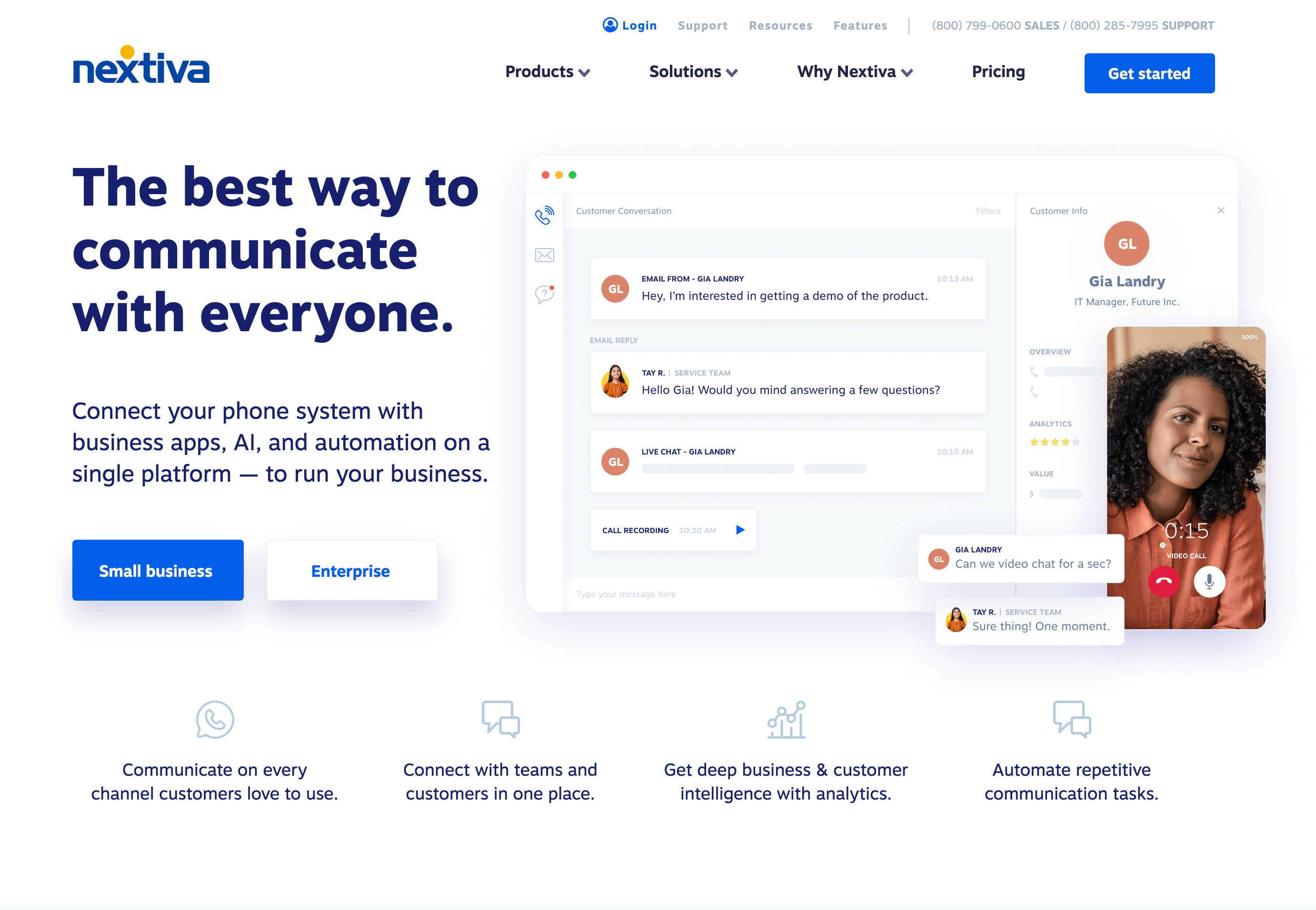
Now north of $200 million in revenue, [Nextiva] is a quiet giant and, notably, has not taken venture capital funding along its path to scale. Chatting with CEO and co-founder Tomas Gorny, I got to dig a little under the skin of the company’s history. It goes a little something like this: After moving to California in 1996 at the age of 20, Gorny eventually founded a web hosting company in 2001 after working for tech companies during the dot-com boom. The web hosting company wound up selling to another company called Endurance International in 2007, which sold as a combined entity for around a billion dollars in 2011, later going public before being taken private last month for $3 billion — you can read this TechCrunch piece that mentions Endurance from 2010 for a bit of the historical record.

Gorny founded Nextiva in 2008, focused on what it describes today as “UcaaS,” or unified communications as a service. The startup grew to about $40 million in annual recurring revenue (ARR), at which point it ran into issues with a third-party system that would integrate hardware, and support and services software, which sparked a shift in its thinking. The company set out to build a platform.

Nextiva expanded horizontally, adding CRM software, analytics and other functionality to its broader suite as it scaled. And it grew efficiently; starting with money from its founding team, Gorny told TechCrunch that even if he had used someone else’s money, he would have built the company in the same manner.

digitally generated image of money tornado.

So why does TechCrunch cover so many early-stage funding rounds, anyway?

Here’s Natasha’s take, from a little explainer we did this week following some Twitter conversations:

The reason I love writing about tech and do the sometimes formulaic funding-round story is because I meet people who are crazy enough to bet their entire legacy on a napkin-stage idea. That’s the story, and the surprise and the tension. The dollar sign is just the first way in.

Having raised fundings that got covered in TechCrunch, and having written many many funding round articles over the year, I agree. The funding round is often the only way to prove that you have traction, if you are trying to get more attention.

Klarna CEO and co-founder Sebastian Siemiatkowski

Image Credits: Bryce Durbin / TechCrunch

The Klarna founding story

Swedish fintech decacorn Klarna pioneered new ways for users to buy online without credit cards over the decade, and is now battling rivals large and small across the world. How did it all happen? Steve O’Hear sits down with founder Sebastian Siemiatkowski for an exclusive in-depth interview that Extra Crunch subscribers have been eating up this week. Here’s his description:

In a wide-ranging interview, Siemiatkowski confronts criticisms head on, including that Klarna makes it too easy to get into debt, and that buy now, pay later needs to be regulated. We also discuss Klarna’s business model and the balancing act required to win over consumers and keep merchants onside.

We also learn how, under his watch and as the company began to scale, Klarna missed the next big opportunity in fintech, instead being usurped by Adyen and Stripe. Siemiatkowski also shares what’s next for the company as it ventures further into the world of retail banking after gaining a bank license in 2017.

Here’s a painfully fascinating excerpt from Siemiatkowski:

One of the drawbacks that we had at the company was that none of the three co-founders had any engineering background; we couldn’t code. We were connected to five engineers that by themselves were amazing engineers, but we had a slight misunderstanding. Their idea was that they were going to come in, build a prototype, ship it, and then leave for 37% of the equity. Our understanding was that they were going to come in, ship it, and if it started scaling they would stay with us and work for a longer period of time. This is the classic mistake that you do as a startup.
Facebook logo and FTC seal

Image Credits: TechCrunch

Those Facebook antitrust lawsuits

It seems that the US government has finally had enough of Facebook’s aggressive expansion and acquisition practices. After years of light regulation, the Federal Trade Commission and, separately, 49 state attorneys general are suing to break up social networking company. You can find lots of commentary about the details on TechCrunch and elsewhere.

But here’s my take for you to remember, as you watch headlines about this continue into next year: Facebook was always ready. I covered the company closely during its early years, and even back then it was talking about being the operating system for the internet, like Microsoft Windows was for desktop. The implied and whispered goal was to get as big as possible before regulations inevitably hit, like what Microsoft did. Here we are, with Facebook in a leading market position, with a massive army of lawyers who have been preparing for years. Without getting further into the lawsuits or political landscape where it’s all happening… I don’t expect a breakup. But maybe new restrictions on acquisitions or something could limit growth potential? Its big wins this decade have been from acquisitions.

One boring scenario I don’t see discussed much is simply that its products remain the phone book of the era for much of the world. Somewhat regulated this way or that way in various jurisdictions and banned outright in some — and very big and successful still.

Around TechCrunch

TC Sessions: Space 2020 launches next week

Announcing the final agenda for TC Sessions: Space 2020

Don’t miss the university research showcase at TC Sessions: Space 2020

Hear the latest from Kayhan Space and Firehawk Aerospace at TC Sessions: Space

Give the gift of Extra Crunch for 25% off

Extra Crunch Partner Perk: Find peace of mind with ‘Spotify for Mindfulness & Sleep’ app Aura

Across the week

TechCrunch

Survey: Americans think Big Tech isn’t so bad after all

Despite the pandemic, small business optimism persists

Mixtape podcast: Making technology accessible for everyone

Macron promotes European tech ecosystem in an interview with Zennström

Equity Monday: Airbnb pricing, Sequoia makes money and early-stage rounds

Extra Crunch

What to expect while fundraising in 2021

3 ways the pandemic is transforming tech spending

Why Sapphire’s Jai Das thinks the Salesforce-Slack deal could succeed

China watches and learns from the US in AR/VR competition

Is 2020 bringing more edtech rounds than ever, or does it simply feel that way?

#EquityPod

From Alex:

Hello and welcome back to Equity, TechCrunch’s venture capital-focused podcast (now on Twitter!), where we unpack the numbers behind the headlines.

What a week, yeah? Instead of the news cycle slowing as the year races to a close, things are still as hot as ever. We have funding rounds big and small, IPOs, first-day extravaganza and more.

Luckily we had the whole crew around — Chris and Danny and Natasha and me. Here’s the rundown:

And that’s that! If you aren’t tired, have you even been paying attention?

Equity drops every Monday at 7:00 a.m. PST and Thursday afternoon as fast as we can get it out, so subscribe to us on Apple PodcastsOvercastSpotify and all the casts.

This Week in Apps: Apple scolds adtech, Facebook hit with antitrust suits, Twitter buys Squad

Welcome back to This Week in Apps, the weekly TechCrunch series that recaps the latest in mobile OS news, mobile applications and the overall app economy.

The app industry is as hot as ever, with a record 204 billion downloads and $120 billion in global consumer spend in 2019. Not including third-party Chinese app stores, iOS and Android users downloaded 130 billion apps in 2020. Consumer spend also hit a record $112 billion across iOS and Android alone. In 2019, people spent three hours and 40 minutes per day using apps, rivaling TV. Due to COVID-19, time spent in apps jumped 25% year-over-year on Android.

Apps aren’t just a way to pass idle hours — they’re also a big business. In 2019, mobile-first companies had a combined $544 billion valuation, 6.5x higher than those without a mobile focus.

Top Stories

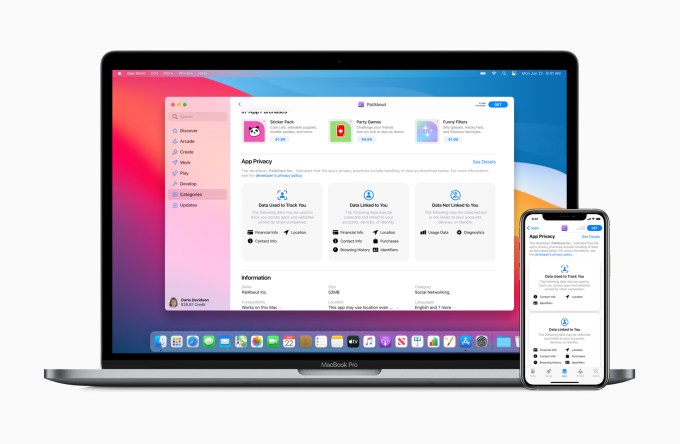
Apple defends its consumer privacy moves

Image Credits: Apple

Apple SVP Craig Federighi took aim at the adtech industry in a speech to European lawmakers this week, where he downplayed and dismissed the industry backlash against the forthcoming app tracking changes as “outlandish” and even “false.” He said that online tracking is privacy’s biggest challenge and that Apple’s forthcoming App Tracking Transparency (ATT) is the front-line of defense.

“The mass centralization of data puts privacy at risk — no matter who’s collecting it and what their intentions might be,” Federighi said, reiterating that Apple aimed to have as little data on its customers as possible.

This has been the company’s line to date, and it’s not necessarily the whole truth. Apple has so far characterized its decision to allow consumers to opt-out of being tracked as one that’s solely focused on consumer privacy. It positions Apple as consumers’ savior and the only one fighting for our privacy. But the changes are also an example of Apple leveraging its platform power, potentially in an anticompetitive way, to give itself a seat at the table of a multi-billion-dollar market today dominated by its competitors Google and Facebook.

In this case, Apple is inserting itself in the world of mobile advertising by forcing a shift from IDFA to its own SKAdNetwork, which limits the individualized data advertisers can access. This is good for consumers who don’t want to be targeted and tracked just because they’re using an app. Publishers, however, have argued they won’t be able to charge as much for ads where users opted out of tracking. This could have a snowball effect of hurting ad-supported businesses beyond the tech giants like Facebook.

Meanwhile, Apple does get to collect a lot of consumer data which it uses to personalize ads. Its own App Store and Apple News apps personalize ads unless consumers opt out in their iPhone’s Settings (and not through a scary pop-up warning like third-party apps have to display). Apple says what it does in terms of personalization doesn’t count as “tracking” because it doesn’t share the data with others or follow customers around websites and apps.

But as Apple moves into its own services businesses, the amount of data that can be used to personalize its own ads grows. Today, Apple’s ad targeting system includes users in segments based on the music, books, TV shows and apps they download, as well as in-app purchases and subscriptions. It also tracks users as they search the app search with keywords and tap to read App Store stories, and tracks location if permission has been granted to Apple News or the App Store.

In related news, Facebook-owned WhatsApp criticized Apple’s forthcoming privacy label requirements this week, saying that the labels are anti-competitive because they won’t apply to first-party apps, like iMessage, that come pre-installed on iPhones. WhatsApp also argued that they don’t allow companies to share enough details about the measures they’re taking to protect consumer data.

Apple responded by saying labels for its own apps will be on its website for those apps not distributed through the App Store.

Facebook antitrust lawsuits

Image Credits: TechCrunch

Forty-eight attorneys general across 46 states, the territory of Guam and the District of Columbia have filed an antitrust lawsuit that accuses Facebook of suppressing its competition through monopolistic business practices. The states are asking the court to restrain Facebook from making further acquisitions in excess of $10 million without notifying the plaintiffs, and is asking for additional relief, including “the divestiture or restructuring of illegally acquired companies, or current Facebook assets or business lines.”

The FTC also voted to pursue its own antitrust suit against Facebook at the federal level.

While the lawsuits are much larger than an app story alone, they do have the potential to impact the app ecosystem if the plaintiffs prevail, as they ask for the acquisitions of Instagram and WhatsApp, and maybe others, to be retroactively judged to be illegal and divested. This would allow for increased competition among the social app market, where Facebook leverages its power to maintain its dominant position. For instance, Facebook just integrated its messaging platform with Instagram’s, meaning users can now message friends across two of the largest social platforms via just one app — either Messenger or Instagram. WhatsApp could be integrated in the future, as well.

Twitter buys Squad

Image Credits: Twitter

Twitter on Friday announced the acquisition of the screen-sharing social app Squad. The startup’s co-founders, CEO Esther Crawford and CTO Ethan Sutin, along with the rest of Squad’s team will be joining Twitter’s design, engineering and product departments. The Squad app, which had heavily relied on Snap’s Snap Kit developer tools, will shut down.

Twitter may be shuttering Periscope as well, code reveals, which leaves some wondering what Twitter’s plans are in terms of streamlining its services. The company has more recently been experimenting with its own version of Stories, aka Fleets, and an audio-based networking product for group conversations.

This Week in App News

Platforms: Apple

  • Reminder: Apple’s App Store Holiday shutdown is coming. The App Store will not accept new apps and app updates from December 23-27 (Pacific Time) for its annual holiday break.
  • Reminder: App privacy questions requirement starts December 8.
  • The iOS 14.3 Release Candidate arrives, adding support for the new ProRAW photo format on iPhone 12 Pro and iPhone 12 Pro Max, a new Apple TV+ tab that makes it easier to find Apple’s Originals, readies the platform for Fitness+, and makes a change to bypass launching the Shortcuts app when using custom app icons, among other things.
  • Apple Watch Family Setup arrives in Canada on December 14.
  • Apple Fitness+ launches December 14.

Platforms: Google

Image Credits: Google

  • Google is working on an ambitious project to improve GPS accuracy in apps. In dense urban areas, it’s often hard to get an accurate GPS reading — leading to issues like wrong-side-of-the-street and even wrong-city-block errors, which greatly impact ridesharing and navigation apps. Google’s new solution uses 3D mapping-aided corrections, comprised of 3D building models, raw GPS measurements and machine learning. Its Pixel Feature Drop in December adds these corrections to Pixel 5 and Pixel 4a (5G), which Google says will reduce wrong-side-of-street occurrences by approximately 75%. Other Android phones (Android 8+) have version 1 implemented in the FLP (Fused Location Provider API), which reduces those occurrences by around 50%. Version 2 will be available to the entire Android ecosystem (Android 8 or later) in early 2021.
  • Google Play Pass arrives in 7 new countries, including key Latin American markets. The subscription-based apps and games service came to Brazil, Chile, Colombia, Mexico, Peru, Russia and Saudi Arabia. This brings the total number of markets where the service is live to 42.
  • Google’s Pixel Feature Drop adds Adaptive Sound, Hold for Me (where Google Assistant waits on hold for you), Extreme Battery Saver Mode, screen sharing on Duo calls and more.

Gaming

Image Credits: Microsoft

  • Microsoft confirms its Xbox cloud gaming service will launch on iOS in 2021. However, the company will route around the App Store rules by bringing the service to the iPhone and iPad in a web browser. This cuts Apple out of any revenues the game service can generate. Amazon’s Luna and Google’s Stadia are also planning to use the web browser on iOS to avoid the App Store. 
  • Google’s cloud gaming service Stadia is rolling out YouTube live streaming, allowing gamers to share their gameplay to YouTube. 
  • Apple asks for Epic Games’ Fortnite lawsuit in Australia to be thrown out because Epic had promised to settle disputes and litigation in the U.S. District Court for the Northern District of California.

Government and policy

  • The U.S. National Weather Service just saw a record year of weather-related disasters like the busiest Atlantic hurricane season on record and California’s wildfires. Now the agency says it’s running out of Internet bandwidth and will need to throttle the amount of data its clients and users can access. The move would impact weather consumers who get their weather from apps on their smartphones, as much of the forecasts and alerts they receive are based on Weather Service output and data.
  • California’s CA Notify contact-tracing app for COVID-19 now reaches the full state. The app uses Apple and Google’s exposure notification API.
  • Cydia files anti-competition lawsuit against Apple. Third-party App Store maker Cydia, home to jailbreak apps that often added functionality beyond what Apple permitted through its terms, is suing Apple for using anticompetitive means to destroy its rival app store. There are good examples of how denying third-party app stores a home on iOS may have been anticompetitive, but Cydia’s lawsuit may not be it. The store in its early days distributed pirated apps, not just those that fell outside Apple’s rules.

Augmented reality

Image Credits: Instagram

  • Instagram partnered with museums in the U.S. and France, including the Smithsonian, Palace of Versailles and Le Grand Palais, to bring AR versions of their exhibits to its camera’s AR effects lineup.
  • Snap partnered with the Los Angeles County Museum of Art on a multi-year augmented reality project, “LACMA x Snapchat: Monumental Perspectives.” The initiative will pair local artists chosen by the museum to create site-specific monuments and murals that can be viewed in AR in the Snapchat app.

E-commerce & food delivery

Image Credits: Instagram

  • Instagram launches shopping in Reels, its TikTok rival. The feature is now one of many ways users can shop via video, including through video in Feed, Stories, Live and IGTV. Facebook Pay powers checkout for many sellers, allowing Instagram to generate revenue through transaction fees.
  • WhatsApp adds carts to make shopping easier. Facebook-owned WhatsApp added a new shopping feature that lets consumers buy multiple items from a business, and makes it easier for sellers to track orders.
  • DoorDash shares popped 92% in their trading debut to reach as high as $195.50 after raising $3.37 billion during its IPO.
  • E-commerce app Wish to price IPO between $22-$24 per share at up to $14 billion valuation.

Fintech

  • Robinhood is losing thousands of day traders to China-owned Webull, reports Bloomberg. Founded by Alibaba alum Wang Anquan, Webull has increased brokerage clients by 10x in 2020 to reach more than 2 million by offering free stock trades. Robinhood has 13 million, for comparison. Webull is expected to raise a round from private U.S. investors and expand into roboadvisor services.

Travel

Image credits: Phillip Faraone/Getty Images for WIRED25

  • Vacation rental app Airbnb began trading this week on public markets. After raising its range, the company opened at $146 per share on Thursday, more than double its $68 IPO price and valuing the company at over $100 billion. The stock closed at nearly $145.
  • China’s Cyberspace Administration of China (CAC) announced it was banning 105 mobile apps for violating Chinese regulations. The majority of the apps were made by Chinese developers but the U.S.-based travel booking and review site Tripadvisor was also on the ban list, causing its shares to drop. Tripadvisor works in partnership with Nasdaq-listed Chinese travel firm Trip.com (previously called Ctrip).

Social & Photos

Image Credits: Twitter

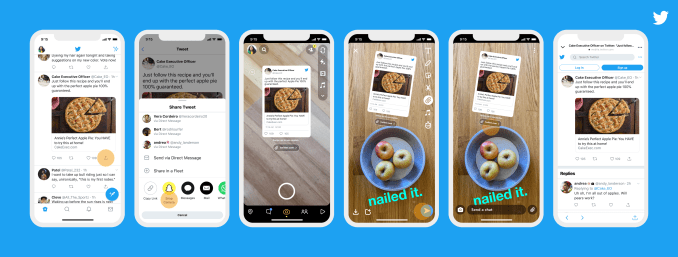
  • Snap and Twitter worked together to make it possible for users to post their tweets to Snapchat through a native integration instead of screenshots. When Twitter users who are logged into Snapchat now share a tweet using the Snapchat icon from the share sheet in Twitter, they’ll be able to share, react or comment on the post, then send it to a Snapchat friend or post to their Story. The feature is live on iOS with Android in the works.
  • Triller says it can reach 250 million users through partnerships with Samsung and others. The app, which hosted a Pay Per View boxing match between Mike Tyson and Roy Jones Jr. this year, is planning more events for 2021, including a concert with K-pop group Blackpink.
  • A second federal judge rules against the Trump administration’s TikTok ban, saying the government “likely exceeded IEEPA’s [the International Emergency Economic Powers Act] express limitations as part of an agency action that was arbitrary and capricious.”
  • Instagram partnered for the first time with lyrics site Genius on “Lyric Reels,” a sort of variation of Spotify’s “Behind the Lyrics” feature. The addition will see artists break down their songs’ lyrics and meanings. Participants include Megan Thee Stallion?, ?24kGoldn and ?Tate McRae.
  • Tinder makes it easier to report bad actors who use “unmatch” to hide from victims. Rival Bumble had just done the same. But in Tinder’s implementation, it’s only making it more obvious how to access its help documentation while Bumble had included a button for reporting users who had already unmatched you.
  • Google’s Photos can now sync your “Liked” images with Apple’s Photos service on iOS.

Streaming & entertainment

  • Netflix’s StreamFest, a free trial weekend in India, boosted installs by 200% week-over-week, reaching approximately 3.6 million global installs, reports Sensor Tower.
  • Stitcher, recently acquired by SiriusXM, revamped its app for the first time in years. The new version offers a dedicated “My Podcasts” tab, better search filters, result sorting, user-curated groups of shows and more.
  • HBO Max is fastest-growing SVOD in U.S. According to Apptopia, the app hit a lifetime high for daily downloads three days after its debut, at 225,000. Since its May launch, DAUs have grown 242%.
  • Spotify had to reset an undisclosed number of user passwords after a software vulnerability exposed private account information to its business partners, including things like “email address, your preferred display name, password, gender, and date of birth.”

Health & fitness

  • Nike Run Club app adds home screen widgets for iOS 14+. The widgets can show your Run Level, post-run progress and make it easier to start your next run.

Productivity

  • Google Drive users on iOS and Android will be able to see and re-run desktop and mobile searches; view and select intelligent selections as they type, including suggestions for people, past searches, keywords and recently accessed files. 

Funding and M&A

Image Credits: Calm

  • Meditation app Calm raises $75 million more at $2 billion valuation, in a round led by prior investor Lightspeed Venture Partners.
  • Twitter buys video app Squad. (see above) 
  • AI financial assistant Cleo raises $44 million Series B, led by EQT Ventures. The app and chatbot aimed at Gen Z connects to bank accounts to give proactive advice and timely nudges.
  • Mexican challenger banking app albo raises $45 million to expand into lending and insurance products.
  • Sweden’s MTG acquires mobile racing game studio Hutch Games, based in London, for up to $375 million. The studio produces titles like Rebel Racing, F1 Manager and Top Drives.
  • Seattle’s Freespira raises $10 million for its therapeutic device for panic attacks PTSD that worked with a connected app and proprietary software.
  • Banking app for teens GoHenry raises $40 million to build out its business in the U.S. and U.K.
  • Retail loyalty app Fetch Rewards raises $80 million Series C led by Iconiq Growth. The app offers rewards to users who scan their receipts after shopping.
  • Pear Therapeutics raises $80 million in a round led by SoftBank’s Vision Fund 2. The company makes prescription apps aimed at treating substance use disorders, schizophrenia and multiple sclerosis. The FDA has already approved its treatments for substance abuse, opioid use and insomnia.
  • Reface raises $5.5 million in seed funding led by a16z for its viral face-swapping video app.

Downloads

Google Health Studies

Image Credits: Google

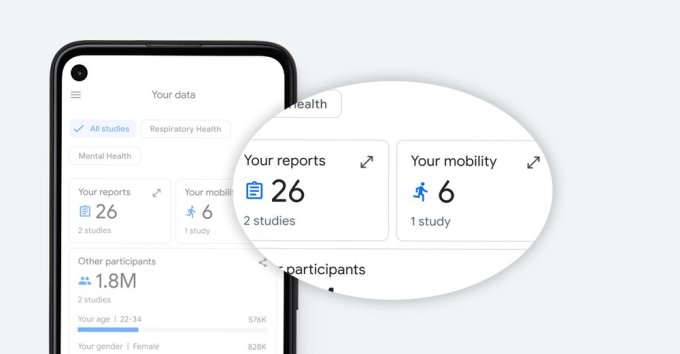
Google takes on Apple’s Research app with an alternative for Android users. The new Google Health Studies app will work in partnership with leading research institutions, which will connect with study participants through the app. The first study is timely, as it focuses on respiratory illnesses, including the flu and COVID-19. The study will use federated learning and analytics — a privacy technology that keeps a person’s data stored on the device.

Google Look to Speak

Google launched an accessibility-focused app, Look to Speak, that lets people use their eyes to choose pre-written phrases for their phone to say out loud. To use the app, people have to look left, right or up to select what they want to say from the phrase list and navigate the app. Look to Speak can also be personalized by letting users edit the words and phrases they want to say and adjust the gaze settings to their needs.

Retro Widget

Image Credits: Retro Widget 2

Gaming via a home screen widget? The fun Retro Widget 2 ($1.99) has been updated to bring the classic Snake II game from old Nokia handsets to the iPhone’s home screen. The app includes five mazes and nine levels and lets you play Snake II using the 1, 3, 7 and 9 keys.

Barter

Barter is an app designed for app developers alone. From the maker of the HomePass and HomeCam apps, Barter offers a way for app developers to view their app sales in a widget on iOS 14+ devices. The app includes no analytics or tracking beyond what Apple builds in to protect developer data. In the future, Pearce says he’ll expand the app to be able to show things like downloaded units, by product and more. The current version was an MVP to see if Apple would allow the app to pass App Review. Since it passed, it will soon be upgraded.

Introducing Barter, the best way to view your App Sales in a widget.https://t.co/SXh4G5Jeyf pic.twitter.com/iFqX0HEJSH

— Aaron Pearce (@aaron_pearce) December 7, 2020

FDA grants emergency use authorization for Pfizer’s COVID-19 vaccine, distribution to begin within days

The U.S. Food and Drug Administration (FDA) has granted an Emergency Use Authorization (EUA) for the COVID-19 vaccine developed by Pfizer and its partner BioNTech, the New York Times first reported on Friday night, and later supported by The Wall Street Journal. This EUA follows a recommendation by an independent panel of experts commissioned by the FDA to review Pfizer’s application and provide a recommendation, which the panel unanimously supported earlier this week.

Following this authorization, shipment of the vaccine are expected to begin immediately, with 2.9 million doses in the initial shipment order. Patients in the category of highly vulnerable individuals, which include healthcare workers and senior citizens in long-term care facilities, are expected to begin receiving doses within just a few days not was the EUA is granted.

This approval isn’t a full certification by the U.S. therapeutics regulator, but it is an emergency measure that still requires a comprehensive review of the available information supplied by Pfizer based on its Phase 3 clinical trial, which covered a group of 44,000 volunteer participants. Pfizer found that its vaccine, which is an mRNA-based treatment, was 95% effective in its final analysis of the data resulting form the trial to date – and also found that safety data indicated no significant safety issues in patients who received the vaccine.

On top of the initial 2.9 million dose order, the U.S. intends to distribute around 25 million doses by the end of 2020, which could result in far fewer people actually vaccinated since the Pfizer course requires two innoculations for maximum efficacy. Most American shouldn’t expect the vaccine to be available until at least late Q1 or Q2 2021, given the pace of Pfizer’s production and the U.S. order volume.

Still, this is a promising first step, and a monumental achievement in terms of vaccine development turnaround time, since it’s been roughly eight months since work began on the Pfizer vaccine candidate. Moderna has also submitted an EUA for its vaccine candidate, which is also an mRNA treatment (which provides instructions to a person’s cells to produce effective countermeasures to the virus). That could follow shortly, meaning two vaccines might be available under EUA within the U.S. before the end of the year.

Daily Crunch: Hyundai acquires 80% stake in Boston Robotics

Hyundai takes a controlling stake in an iconic robotics company, Twitter acquires a screen-sharing startup and we round up some security-themed gift ideas. This is your Daily Crunch for December 11, 2020.

The big story: Hyundai acquires 80% stake in Boston Robotics

Boston Robotics is behind a number of impressive robots, including the dog-like quadruped Spot. Over the past decade, it’s changed ownership several times, with Google acquiring it in 2013, then selling it to Japanese investment giant SoftBank in 2017.

After today’s deal, which values Boston Robotics at $1.1 billion and is subject to regulatory approval, SoftBank will still own a 20% stake.

Boston Dynamics will benefit substantially from new capital, technology, affiliated customers, and Hyundai Motor Group’s global market reach enhancing commercialization opportunity for its robot products,” Hyundai said in a press release.

The tech giants

Twitter acquires screen-sharing social app Squad — The entire Squad team is joining Twitter, while the Squad app will be shut down tomorrow.

Europe urged to block Google-Fitbit ahead of major digital policy overhaul — Shoshana Zuboff, the Harvard professor who wrote the defining book on surveillance capitalism, has become the latest voice raised against the $2.1 billion deal.

Twitter app code indicates that live video broadcasting app Periscope may get shut down — If Periscope does get shut down, it would be the end of a five-year run.

Startups, funding and venture capital

Gorillas, the on-demand grocery delivery startup taking Berlin by storm, has raised $44M Series A — Gorillas delivers groceries within an average of 10 minutes.

Sweden’s Tink raises $103M as its open banking platform grows to 3,400 banks and 250M customers — Tink aggregates a number of banks and financial services by way of an API.

Benchmark fills out its, yes, bench, with Miles Grimshaw — From his post as a general partner with New York-based Thrive, Grimshaw sourced deals in Lattice, Mapbox, Benchling and Airtable.

Advice and analysis from Extra Crunch

Cloud-gaming platforms were 2020’s most overhyped trend — The future of the technology is bright, but much less sexy.

General Catalyst’s Katherine Boyle and Peter Boyce are looking for ‘obsessive’ founders — We sat down with Boyle and Boyce to discuss what they look for in founders, which sectors they’re most excited about and how business has changed in the wake of the COVID-19 pandemic.

What to expect while fundraising in 2021 — DocSend CEO Russ Heddleston peers into a post-pandemic future.

(Extra Crunch is our membership program, which aims to democratize information about startups. You can sign up here.)

Everything else

Gift Guide: 9 security and privacy gifts to keep your friends and family safe — It’s a good time to evaluate how you’re keeping your data safe, and to help others in your life do the same.

Disney+ has plans for 10 Marvel shows and 10 Star Wars shows in the next few years — The company announced an ambitious slate of streaming originals.

Give the gift of Extra Crunch for 25% off — Speaking of Extra Crunch, TechCrunch readers can send an annual membership as a gift to a friend, family member or co-worker for 25% off.

The Daily Crunch is TechCrunch’s roundup of our biggest and most important stories. If you’d like to get this delivered to your inbox every day at around 3pm Pacific, you can subscribe here.

Oracle is headed to Texas now, too

Austinites, watch out; another tech company is headed into town.

Just days after Tesla CEO Elon Musk revealed during an interview that he has moved to Texas, and less than two weeks after HP Enterprise, a spin-out of the iconic Silicon Valley company Hewlett-Packard, announced that it is separately moving to Texas, yet another of the Bay Area’s best-known brands — Oracle —  is pulling up stakes and headed east to Texas, too.

The news was first reported by Bloomberg. Oracle confirmed the move in a statement sent to TechCrunch, saying that along with a “more flexible employee work location policy,” the company has changed its corporate headquarters from Redwood Shores, California, to Austin. “We believe these moves best position Oracle for growth and provide our personnel with more flexibility about where and how they work.”

A spokeswoman declined to answer more questions related to the move, but Oracle says that “many” of its employees can choose their office location, as well as continue to work from home part time or full time.

HPE and Oracle aren’t the first major tech companies to plot such moves in recent times. Late last year, the brokerage giant Charles Schwab said it was leaving the Bay Area for Texas as it was announcing its $26 billion merger with TD Ameritrade, though it chose Dallas, about 200 miles away from Austin.

Tech giants Apple and Google have also been expanding their presence in the state. Apple announced in 2018 that it was building a $1 billion campus in Austin. Meanwhile, Google, which opened its first Austin office 13 years ago, said last year that it was beginning to lease far more space in the city.

Taxes, a more affordable cost of living for employees, a lower cost of doing business and less competition for talent are among the top drivers for the companies’ moves, though there is also a growing sense that culture is a factor, as well.

While California is led by Democrats, Texas is led by Republicans, and as the divide between the two parties grows, so does the divide between their respective supporters, with even self-described centrists saying they feel alienated.

Oracle co-founder and Chairman Larry Ellison has notably been one of few top tech execs to openly support President Donald Trump.

Meanwhile, Joe Lonsdale, a co-founder of the venture firm 8VC and Palantir Technologies (which itself recently headed to Denver from Palo Alto), recently explained his own move this year to Texas from California in the WSJ, writing: “Politics in the state is in many ways closed off to different ideas. We grew weary of California’s intolerant far left, which would rather demonize opponents than discuss honest differences of opinion.”

In a similar vein this fall, in conversation with reporter Kara Swisher, Musk suggested he was also outside of Democratic circles, describing his political views as “socially very liberal and then economically right of center, maybe, or center? I don’t know. Obviously I’m not a communist.

While Austin is becoming a go-to spot for many of California’s wealthiest contrarians, others are headed to Florida. Coincidentally or not, Florida is another Republican-controlled state that, like Texas, does not collect state tax.

Keith Rabois, a Founders Fund investor who recently left the Bay Area for Miami, contributed to the NeverTrump PAC in 2016 and said his first choice for U.S. president this year was Democratic contender Pete Buttigieg. But he has also worried openly about democratic socialism, of which the GOP has long accused Democrats of promoting.

Venture capitalist David Blumberg, a Trump supporter, is also headed to Miami, he announced recently. Blumberg said he had it with “poor governance at the local level in San Francisco and statewide in California.” Yet he seemed to have grown frustrated with the Bay Area some time ago.

As Blumberg told Vox last year, he believes that tech platforms are biased against conservatives. He also told the outlet that the Valley was home to many more Trump supporters than might be imagined, and that “we generally keep our heads down” because “people who go out publicly for Republicans and for Trump can get business banned or get blackballed.”

Impetus notwithstanding, a longer-term question is whether these moves — particularly for those individuals and smaller outfits that are relocating — will prove permanent.

At least one tech exec, Twitter and Medium co-founder Ev Williams, has returned to the Bay Area after moving away — in his case, to New York. Williams, who was largely “looking for a change,” made the move with his family late last year after spending 20 years in the Bay Area, he recently told TechCrunch. Then COVID struck.

“I had never lived in New York and thought, ‘Why not go? Now seems like a good time.’ Turns out I was wrong. [Laughs.] It was a very bad time to move to New York.”

Here comes the Faraday fabric

You don’t have to buy into 5G conspiracy theories to think that you could do with a little less radiation in your life. One way of blocking radiation is a Faraday cage, but this is usually a metal mesh of some kind, making everyday use difficult. Researchers at Drexel University have managed to create a Faraday fabric by infusing ordinary cotton with a compound called MXene — meaning your tinfoil hat is about to get a lot comfier.

Faraday cages work because radiation in radio frequencies is blocked by certain metals, but because of its wavelength, the metal doesn’t even have to be solid — it can be a solid cage or flexible mesh. Many facilities are lined with materials like this to prevent outside radiation from interfering with sensitive measurements, but recently companies like Silent Pocket have integrated meshes into bags and cases that totally isolate devices from incoming signals.

Let’s be frank here and say that this is definitely paranoia-adjacent. RF radiation is not harmful in the doses and frequencies we get it, and the FCC makes sure no device exceeds certain thresholds. But there’s also the possibility that your phone or laptop is naively connecting to public Wi-Fi, getting its MAC number skimmed by other devices, and otherwise interacting with the environment in a way you might not like. And honestly… with the amount of devices emitting radiation right now, who wouldn’t mind lowering their dose a little, just to be extra sure?

That may be much easier to do in the near future, as Yury Gogotsi and his team at the Drexel Nanomaterials Institute, of which he is director, have come up with a way to coat ordinary textile fibers in a metallic compound that makes them effective Faraday cages — but also flexible, durable and washable.

The material, which they call MXene and is more of a category than a single compound, is useful in lots of ways, and the subject of dozens of papers by the team — this is just the most recent application.

“We have known for some time that MXene has the ability to block electromagnetic interference better than other materials, but this discovery shows that it can effectively adhere to fabrics and maintain its unique shielding capabilities,” said Gogotsi in a news release. You can see the fabric in action on video here.

Image Credits: Drexel University

MXenes are conductive metal-carbon compounds that can be fabricated into all sorts of forms: solid, liquid, even sprays. In this case it’s a liquid — a solution of tiny MXene flakes that adhere to the fabric quite easily and produce a Faraday effect, blocking 99.9% of RF radiation in tests. After sitting around for a couple years (perhaps forgotten in a lab cupboard) it kept 90% of their effectiveness, and the treated fabric can also be washed and worn safely.

You wouldn’t necessarily want to wear a whole suit of the stuff, but this would make it easier for clothing to include an RF-blocking pocket in a jacket, jeans or laptop bag that doesn’t feel out of place with the other materials. A hat (or underwear) with a layer of this fabric would be a popular item among conspiracy theorists, of course.

It’s still a ways from showing up on the rack, but Gogotsi was optimistic about its prospects for commercialization, noting that Drexel has multiple patents on the material and its uses. Other ways of infusing fabric with MXenes could lead to clothes that generate and store energy as well.

You can read more about this particular application of MXenes in the journal Carbon.

General Catalyst’s Katherine Boyle and Peter Boyce are looking for ‘obsessive’ founders

General Catalyst has made early bets on some of the biggest companies in tech today, including Airbnb, Lemonade and Warby Parker.

We sat down with Katherine Boyle and Peter Boyce, who co-lead the firm’s seed-stage investments, to discuss what they look for in founders, which sectors they’re most excited about and how business has changed in the wake of the COVID-19 pandemic.

This conversation is part of our broader Extra Crunch Live series, where we sit down with VCs and founders to discuss startup core competencies and get advice. We’ve spoken to folks like Aileen Lee, Mark Cuban, Roelof Botha, Charles Hudson and many, others. You can browse the full library of episodes here.

Check out our full conversation with Boyce and Boyle in the YouTube video below, or skim the text for the highlights.

Which personality traits are most important in founders

Katherine Boyle: I look for what I would call this obsessive trait, where they are learning more about the regulatory complications, where they are constantly trying to figure out how to solve a problem.

I’d say that the common theme among the founders that I support are that they have this sort of obsessive gene or personality, where they will go deeper and deeper and deeper. When we invest in these companies, it becomes very clear that they often have sort of a contrarian view of the industry. Maybe they are not industry-native. They come at it from a different perspective of problem solving. They’ve had to defend that thesis for a very, very long time in front of a variety of different customers and different people. In some ways, that makes them much stronger in terms of the way they approach problems.

Peter Boyce: I think the first would be being magnetic for talent. It ends up influencing the speed of learning and development. Really incredible founding teams that can be magnetic for talent and learning just kind of spirals out of control in really good ways over time. I really look for the speed and the sources of learning. And can folks be really intentional? Can they get the right set of advisors and teammates around them?

The second would be the personal connection to the problem space. It’s like there’s this kind of deep-seated source of energy and fuel that actually isn’t going to run out. Catherine and I’ve been lucky to work across a number of different particular thematic areas, but the thing they have in common is just this personal connection to how and why their business needs to exist. Because I just think that that fuel doesn’t run out, you know what I mean? Like, that’s renewable.

On fundraising and building trust remotely

Boyle: If you’re someone who’s comfortable presenting on Zoom, making connections on Zoom, or using Signal and using Twitter and being very online, then I 100% think that you can make investments, build community and build connections through digital worlds and digital platforms. If you really like that in-person connectivity, then you might consider staying in a tech hub, or you might consider sort of these distanced walks until things go back to normal.

Give the gift of Extra Crunch for 25% off

This holiday season, TechCrunch readers can send an Extra Crunch annual membership as a gift to a friend, family member or co-worker for 25% off. 

The gifting feature can be found here.

Extra Crunch is our membership program that helps you spot technology trends and opportunities, build better startups and stay connected. It features thousands of articles, including weekly investor surveys, daily private market analysis and expert interviews on fundraising, growth, monetization and other work topics. Learn more about the types of articles in Extra Crunch here.

Membership also gets you access to our weekly video Q&A series Extra Crunch Live, exclusive newsletters, and an experience on TechCrunch.com that’s free of banner ads. A 20% discount for any TechCrunch event is also available exclusively for members. More on our 2021 events schedule can be found here.  

The discounted rate will only be available until the end of 2020, so don’t miss out on the savings. For questions about the deal, please contact our customer support team at [email protected].

Give the gift of Extra Crunch here.

Not interested in gifting Extra Crunch? We have A TON of other ideas here in our holiday gift guide.

What to expect while fundraising in 2021

Russ Heddleston
Contributor

Russ is the co-founder and CEO of DocSend. He was previously a product manager at Facebook, where he arrived via the acquisition of his startup Pursuit.com, and has held roles at Dropbox, Greystripe and Trulia. Follow him here: @rheddleston and @docsend

At the end of 2019, no one would have predicted what an unpredictable and difficult year it has been for both startups and VCs in the fundraising world. Now we are staring down the end of 2020 and looking toward what we all hope is a better, safer 2021. What will this new year bring? With an end-of-year sprint to close deals, the anticipation of a new presidential administration and the hope of a COVID-19 vaccine on the horizon, startups and VCs know that change is on the horizon — but how much of that change will be positive?

As 2020 proved, no one can say for sure what 2021 will bring, but I’d like to put a few predictions on the table based on DocSend’s data and research, including the DocSend Startup Index, as well as some trends I’ve seen and my own experiences. These predictions center around how we’ll fundraise post-pandemic, how the funding divide may widen for some, what fundraising activity could look like into 2021, a few sectors we think will fare well and will incorporate some tips on how to succeed in the new year, no matter what comes our way.

We’ll interact through a mix of the old and the new

The pandemic forced all of us to drastically change how we work and interact with colleagues and clients. When the pandemic subsides and vaccines are widely available, in-person meetings and gathering back at the office will definitely resume, but it’s safe to say the old ways of networking and fundraising won’t shift back 100%. Founders and VCs alike have navigated the ups and downs of remote networking and fundraising interactions and will stick to what works and what doesn’t.

Is traveling to a conference the best way for a founder to have a chance at meeting the VC who is right to support their business? Will a VC want to drive an hour through Bay Area traffic for an in-person status update meeting on their latest investment? Zoom fatigue aside, video conference calls do have some benefits — efficiency, no travel time — although not all meetings are best conducted virtually.

No matter what 2021 has in store, founders can still take proactive steps to help them succeed in their fundraising efforts.

The extent to which businesses go in-person or stick to virtual meetings could depend directly on what round of fundraising they are working toward or have completed. Businesses in the pre-seed round might stick with more Zoom meetings in order to conserve resources.

Founders in the seed round will likely split between video and in-person meetings as they are under pressure to show traction in this round, as we found in our report on seed fundraising, yet will also need to conserve resources and time. For Series A, they might have to meet less in person because they have established relationships with their investors. Series B might see more in-person meetings as their business has reached a level of complexity that is difficult to communicate via a deck or video conference.

The funding divide may widen for those outside Silicon Valley

Benchmark fills out its, yes, bench, with Miles Grimshaw

Benchmark, the storied venture firm, has brought aboard a fifth general partner: 29-year-old Miles Grimshaw, a Yale graduate who joins the outfit from Thrive Capital, where he similarly joined a team of four other partners back in 2013, helping them raise the firm’s fourth and fifth funds (per Forbes).

From his post as a general partner with New York-based Thrive, Grimshaw had sourced deals in some of today’s buzziest startups and served on their boards, including Lattice, Mapbox, Benchling and Airtable, getting to know fellow investors at Benchmark in the process.

He represented Thrive on the board of Benchling — whose software helps lab scientists manage their biotech research — with Eric Vishria, a former entrepreneur and operator who joined Benchmark as a general partner in 2014.

Grimshaw also represented Thrive on the board of the cloud collaboration software company Airtable with Peter Fenton, who became the longest-serving general partner at Benchmark this year, as famed VC Bill Gurley began transitioning out of an active role at the firm. (Fenton was poached from Accel back in 2006.)

And Grimshaw has been serving on a board with Benchmark’s Sarah Tavel, who was herself poached by the firm in 2017, from Greylock. That company is Supergreat, a two-year-old, New York-based site for beauty enthusiasts that’s building a community of visitors who become reviewers, who then become shoppers.

Supergreat is among Benchmark’s newest bets. It was announced earlier this month that Benchmark led the startup’s $6.5 million Series A round.

Before hiring Grimshaw, Benchmark’s newest general partner was Chetan Puttagunta, who joined the firm in 2018 from New Enterprise Associates, where he spent more than seven years.

Benchmark has done better than some firms when it comes to succession, even while many of its general partners remain involved in startups long after they move on from the firm’s day-to-day operations.

Firm cofounder Bruce Dunlevie, for example, joined the board of WeWork back in 2012. He’s now part of a lawsuit alleging fellow WeWork investor SoftBank of breach of contract and breach of fiduciary duty, after SoftBank abandoned a tender offer to buy out earlier shareholders following WeWork’s pulled IPO last year.

Reportedly, Matt Cohler — a former Facebook exec who was left an active role as a general partner with Benchmark in 2018 after a decade with the firm — also helped Benchmark secure its spot in summer as the lead Series A investor in Popshop Live, a live-streaming e-commerce platform. According to The Information, Cohler agreed to join the startup’s board of directors to help seal the deal.

In addition to Cohler and Gurley, who’ve stepped back in recent years, Mitch Lasky, who joined the firm in 2007, also stepped away from its core team in 2018.

Benchmark made it known this summer that it was looking to bring aboard a fifth partner, one who likely completes the firm’s roster for now. As Fenton told us in September when he sat down with us at our TechCrunch Disrupt event, Benchmark “can’t scale. When we’ve gotten above six partners, the firm doesn’t work so well.”

Fenton talked at some length about how Benchmark views the composition of its team. We also talked about that WeWork deal. If you’re curious to learn more, you can watch that interview below.

Cloud-gaming platforms were 2020’s most overhyped trend

It was an unprecedented year for [insert anything under the sun], and while plenty of tech verticals saw shifts that warped business models and shifted user habits, the gaming industry experienced plenty of new ideas in 2020. However, the loudest trends don’t always take hold as predicted.

This year, Google, Microsoft, Facebook and Amazon each leaned hard into new cloud-streaming tech that shifts game processing and computing to cloud-based servers, allowing users to play graphics-intensive content on low-powered systems or play titles without dealing with lengthy downloads.

It was heralded by executives as a tectonic shift for gaming, one that would democratize access to the next generation of titles. But in taking a closer look at the products built around this tech, it’s hard to see a future where any of these subscription services succeed.

Massive year-over-year changes in gaming are rare because even if a historically unique platform launches or is unveiled, it takes time for a critical mass of developers to congregate and adopt something new — and longer for users to coalesce. As a result, even in a year where major console makers launch historically powerful hardware, massive tech giants pump cash into new cloud-streaming tech and gamers log more hours collectively than ever before, it can feel like not much has shifted.

That said, the gaming industry did push boundaries in 2020, though it’s unclear where meaningful ground was gained. The most ambitious drives were toward redesigning marketplaces in the image of video streaming networks, aiming to make a more coordinated move toward driving subscription growth and moving farther away from an industry defined for decades by one-time purchases structured around single-player storylines, one dramatically shaped by internet networking and instantaneous payments infrastructure software.

Today’s products are far from dead ends for what the broader industry does with the technology.

But shifting gamers farther away from one-off purchases wasn’t even the gaming industry’s most fundamental reconsideration of the year, a space reserved for a coordinated move by the world’s richest companies to upend the console wars with an invisible competitor. It’s perhaps unsurprising that the most full-featured plays in this arena are coming from the cloud services triumvirate, with Google, Microsoft and Amazon each making significant strides in recent months.

The driving force for this change is both the maturation of virtual desktop streaming and continued developer movement toward online cross-play between gaming platforms, a trend long resisted by legacy platform owners intent on maintaining siloed network effects that pushed gamers toward buying the same consoles that their friends owned.

The cross-play trend reached a fever pitch in recent years as entities like Epic Games’ Fortnite developed massive user bases that gave developers exceptional influence over the deals they struck with platform owners.

While a trend toward deeper cross-play planted the seeds for new corporate players in the gaming world, it has been the tech companies with the deepest pockets that have pioneered the most concerted plays to side-load a third-party candidate into the console wars.

It’s already clear to plenty of gamers that even in their nascent stages, cloud-gaming platforms aren’t meeting up to their hype and standalone efforts aren’t technologically stunning enough to make up for the apparent lack of selection in the content libraries.

Gift Guide: 9 security and privacy gifts to keep your friends and family safe

Welcome to TechCrunch’s 2020 Holiday Gift Guide! Need help with gift ideas? We’re here to help! We’ll be rolling out gift guides from now through the end of December. You can find our other guides right here.

For many of us, being home a lot more right now also means being online a lot more. It’s a great time to evaluate how you’re keeping your data safe — and to help others in your life do the same.

Whether it’s teaching them to use things like physical security keys or just convincing them to stop writing their passwords on sticky notes, there are LOTS of little ways to nudge your friends and family in a safer direction. We’ve put together an array of gift ideas that’ll help them keep things locked down without breaking the bank (and, if you’re the one they’d call to help clean up after a security incident, probably save you some time in the end).

Much of what we wrote for our 2019 guide still holds true. There are some timeless security essentials that you can’t miss out on, and we’ve searched around for the best deals. But we also have a few more fun gift ideas up our sleeves for the holiday season.

This article contains links to affiliate partners where available. When you buy through these links, TechCrunch may earn an affiliate commission.

Timeless security essentials for your friends and family

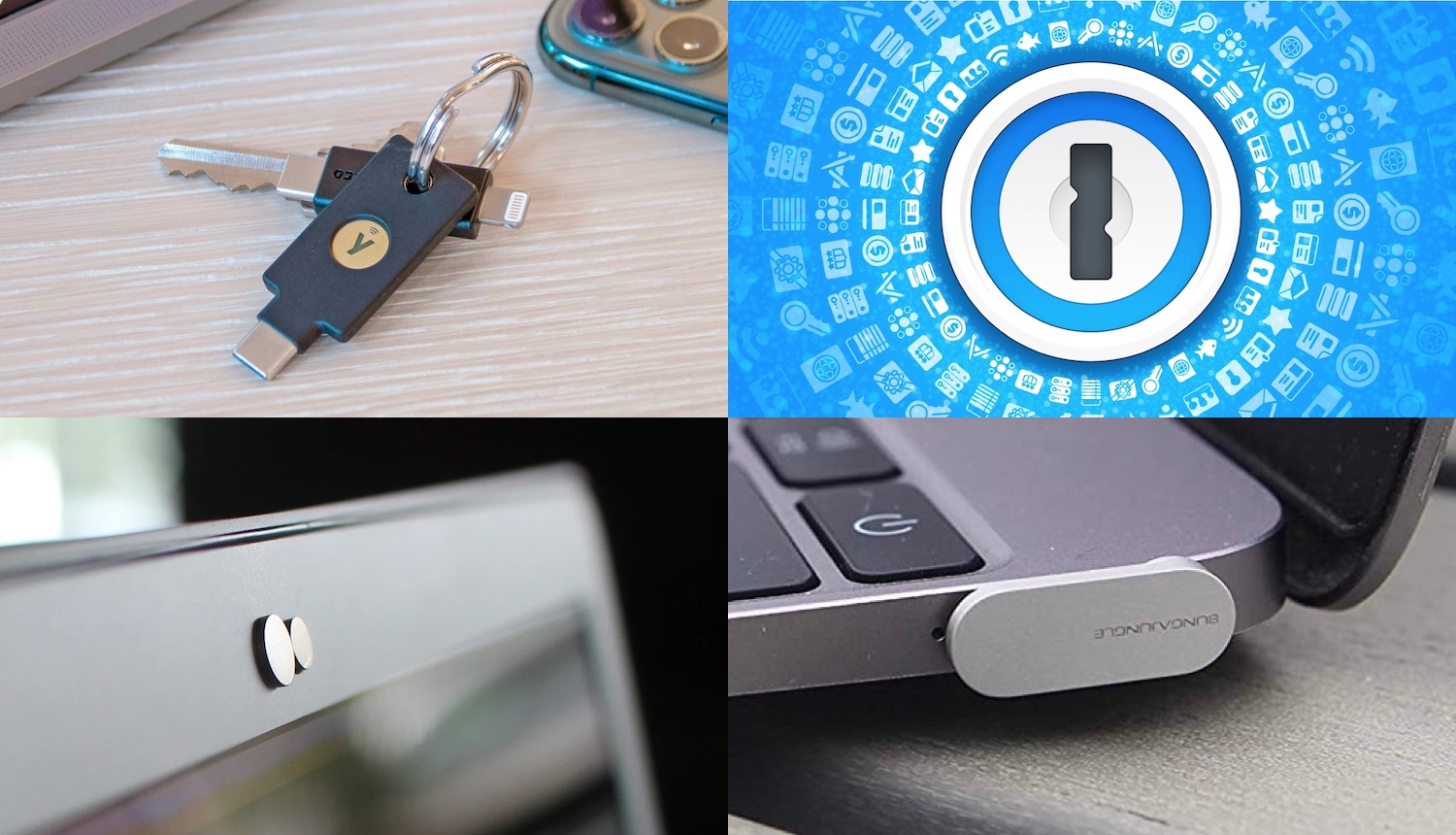
(Images from top-left clockwise: Yubico, 1Password, Amazon and Amazon)

A password manager subscription

Password managers are a real lifesaver. One strong, unique password lets you into your entire bank of passwords. They’re great for storing your passwords and other secrets, but also for encouraging you to use better, stronger, unique passwords. And because many are cross-platform, you can bring your passwords with you. Plenty of password managers exist — from LastPass, Lockbox and Dashlane, to open-source versions like KeePass. Many are free, but a premium subscription often comes with benefits and better features. And if you’re a journalist, 1Password has a free subscription just for you.

Price: Many free; premium offerings start at $36 – $45 annually
Available from: 1Password | LastPass | Dashlane | KeePass

Don’t forget about a physical two-factor key

Your online accounts have everything about you and you’d want to keep them safe. A security key is a physical hardware device that offers far greater protections than a two-factor code going to your phone. A security key plugs into your USB port on your computer (or the charging port on your phone) to “prove” to online services, like Facebook, Google and Twitter, that you are who you say you are. YubiKeys are by far our favorite and come in all shapes and sizes. The latest YubiKey 5 series has something for everyone, no matter what kind of devices they have. They’re also cheap. Google also has a range of its own branded Titan security keys, one of which also offers Bluetooth connectivity.

Price: From $25 – $55, depending on device type, from Yubico Store or Google Store

A webcam cover to protect your privacy

We’re all living through this pandemic together, and most of us are still working from home. If you, like me, have accidentally joined a video call by mistake, you’ll be more thankful for your webcam cover than you could ever know. Webcam covers slide open when you need to access your camera, and slides to cover the lens when you don’t. It’s that easy. You can buy webcam covers from practically anywhere — just make sure you get a thin cover that supports your device so as to not damage its display when you close the lid. You can support local businesses and nonprofits — you can search for unique and interesting webcam covers on Etsy or from your favorite internet rights group.

Price: from $5 – $10.
Available from: Etsy | Electronic Frontier Foundation

A microphone blocker to prevent hot mics (and malware)

Now that you have your webcam cover, what about your microphone? Just as hackers can tap into your webcam, they can also pick up on your audio. Microphone blockers contain a semiconductor that tricks your computer or device into thinking that it’s a working microphone, when in fact it’s not able to pick up any audio. Anyone hacking into your device won’t hear a thing. Some modern Macs already come with a new Apple T2 security chip which prevents hackers from snooping on your microphone when your laptop’s lid is shut. But a microphone blocker will work all the time, even when the lid is open.

Price: from $7$20 on Amazon


More gifts for the security and privacy minded

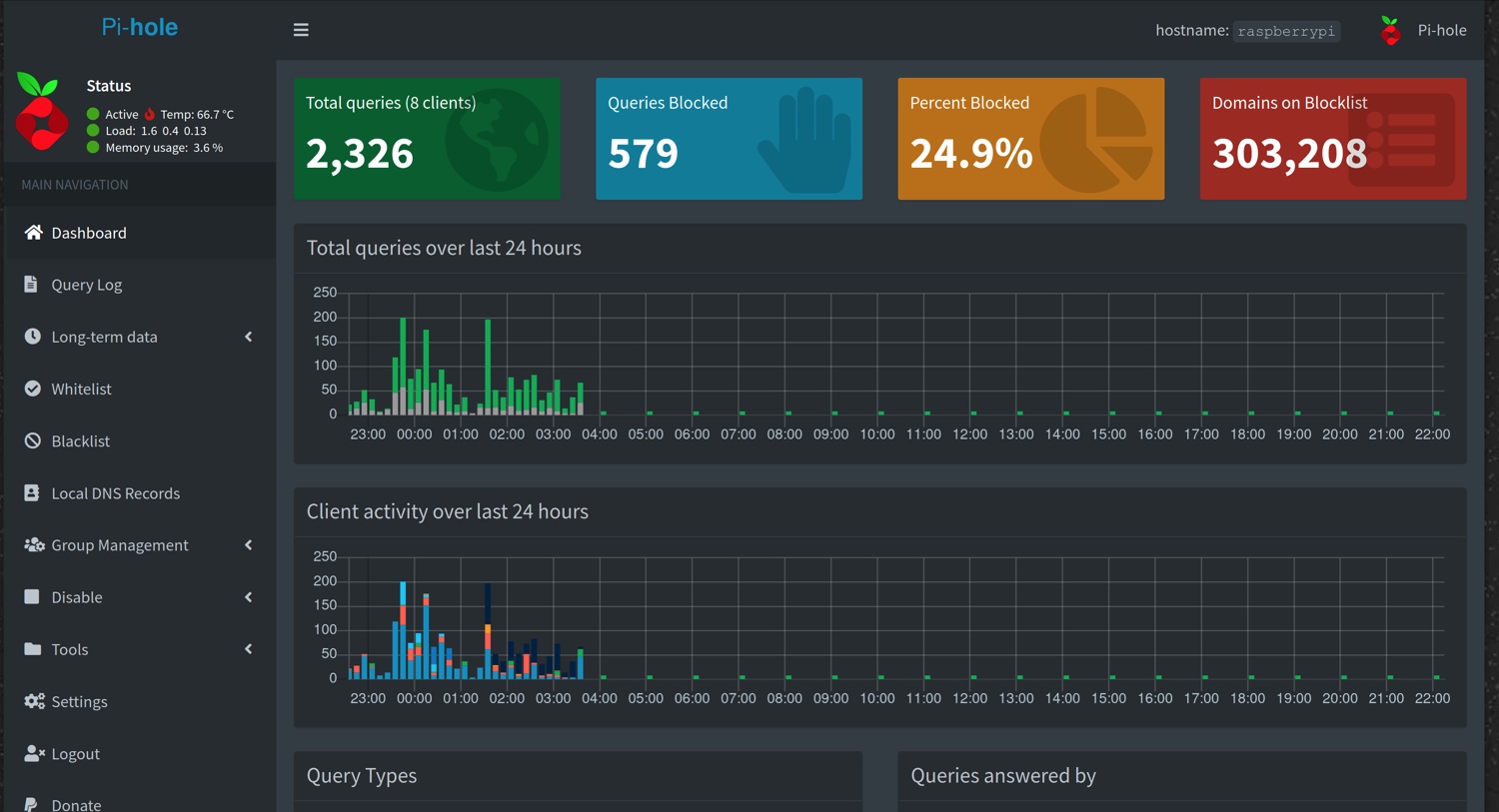
A Pi-hole to block pesky ads and online trackers

(Image: Pi-hole)

Think of a Pi-hole as a “hardware ad-blocker.” A Pi-hole is a modified Raspberry Pi mini-computer that runs ad-blocking technology as a box that sits on your network. It means that everyone on your home network benefits from ad blocking. Online ads generate revenue for websites but are also notorious for tracking users across the web. Until ads can behave properly, a Pi-hole is a great way to capture and sinkhole bad ad traffic. The hardware may be cheap, but the ad-blocking software is free. Donations to the cause are welcome.

Price: from $35.
Available from: Pi-hole | Raspberry Pi

Get your computer or phone a privacy screen

(Image: Amazon)

How often have you seen someone’s private messages or documents as you look over their shoulder, or see them in the next seat over? It’s not as much of an issue when we’re all at home — but we’re also all getting pretty comfortable with having whatever on our screens right now, which might not be the best habit to develop. Privacy screens can help protect you from “visual hacking.” These screens make it near-impossible for anyone other than the device user to snoop at what you’re working on. And, you can get them for all kinds of devices and displays — including phones. But make sure you get the right size!

Price: from about $17 and up, depending on display size
Available from: Amazon

Find a perfect fit with authentic hacker apparel

(Image: Zero Day Clothing)

Ditch the stereotypical hacker hoodie and get some decent hacker apparel instead. Zero Day Clothing has some excellent t-shirts and other clothing for your hacker or security-minded friends, from celebrating Diffie-Hellman encryption, fearing the botnet or designing your own — there’s something for everyone. We’re particularly a fan because the company supports a ton of causes, from net neutrality all the way to freedom of speech and LGBTQ+ rights and fair access to knowledge and education.

Available from: Zero Day Clothing

A Raspberry Pi 400 computer for tinkering

(Image: Romain Dillet/TechCrunch)

The micro-computer maker has a new product, the Raspberry Pi 400, a personal computer kit built into a keyboard and mouse. Connect it to a display and you can get started almost immediately. The device is more powerful than a Chromebook, and allows you to build, develop and tinker to your heart’s content.

Price: $70
Available from: Raspberry Pi

Test your hacker skills with the Backdoors & Breaches card game

(Image: Black Hills Infosec)

Backdoors & Breaches is a security-focused card game, developed by Black Hills Infosec, designed to help you conduct incident response exercises while learning about attack tactics, tools and techniques. It’s a great way to learn more about how to respond after a breach. Don’t worry if you can’t play in person any time soon — you can still play virtually, thanks to an active Discord channel.

Available from: Shopify

Don’t miss these breakout sessions at TC Sessions: Space 2020

Ready to blast off and join thousands of attendees around the world at TC Sessions: Space 2020 on December 16-17? The event, focused on space technology and dedicated to helping early-stage startups succeed in this exciting yet daunting industry, features panel discussions and interviews with the top leaders, visionaries and makers on the planet.

Want to save $50? Buy your pass before Tuesday, December 15 at 11:59 p.m. (PT) to lock in the Late Registration price before rates increase.

While you’ll find many of these brilliant experts speaking from the Main Stage, don’t miss the focused programming we have lined up for the Breakout Sessions. That’s where you’ll find our partners sharing their in-depth expertise on a range of topics. Check out these breakouts waiting to drop a galaxy’s worth of knowledge on you.

Wednesday, December 16

(all times in PST)

9:00 – 10:00 a.m.

Fast Money — SMC Space Ventures, AFWERX and Space Force Accelerators

Learn how SMC Space Ventures, AFWERX and Space Force Accelerators work together to connect startups to government organizations and resources in the space industry.

10:00 – 11:00 a.m.
Sponsored by SP8CEVC

Introducing the launch of the World’s First Space Technology and Human Longevity focused Rolling Fund in partnership with AngelList

Fireside chat with the general partners and team from SP8CEVC covering the verticals of Space Technology and Human Longevity.

11:00 – 11:30 a.m.

Fast Money — Working with the Army to Operationalize Science for Transformational Overmatch

Learn about DEVCOM Army Research Laboratory and the xTech Program of prize competitions that accelerate innovative solutions that can help solve Army challenges.

11:30 – 12:30 p.m.

Pitch Feedback Session

Join us for a pitch feedback session open to all startups exhibiting at TC Sessions: Space 2020 moderated by TechCrunch staff.

1:00 – 1:50 p.m.
Sponsored by The Aerospace Corporation

University Showcase — Boldly Innovating in Space, for Space (Part One)

Technologies to Go Boldly in Space — For the past half century, space exploration and technology has been earth-centric. We’ve studied the earth, orbited the earth and sent images of distant places back to earth. In the coming decade, we’ll embark on a new commitment: We’re going to space to stay. We’re committing to space commerce, space habitation and space exploration in order to not just stay in space, but to extend our human footprint into this solar system. To be successful, we need bold people and new technology to build and deploy the next generation of space capabilities. We need to capture these space opportunities, avoid potential threats and deliver on the promise of a multi-planet human race. This session showcases our partners USC and MIT, as they provide insight into their space programs. They are joined by university partners UCLA, ASU and Caltech, showcasing a range of emerging space technologies. Working with the Aerospace Corporation, these emerging capabilities can be evaluated and integrated into government space-faring missions for communicating, navigating and exploring in space with NASA, NOAA and the Air Force.

Thursday, December 17

9:00 – 9:30 a.m.

Cislunar Space: Building a Self-Sustaining Lunar Economy

We are standing on the threshold of a post-scarcity human future. Cislunar space, the area between the Earth and the moon, holds the keys to a tremendous wealth of opportunities.

9:30 – 10:00 a.m.

Fast Money — Advancing Space Technology with NASA SBIR

Learn about the Small Business Innovation Research (SBIR) and the Small Business Technology Transfer (STTR) programs powered by NASA.

10:00 – 10:30 a.m.

Fast Money — NAVWAR SBIR/STTR Primer: The SBIR/STTR is a robust program designed to help small businesses address government needs while promoting commercialization. This session is dedicated to providing a primer on the program with tips on getting involved and getting engaged with the Naval Information Warfare Systems Command (NAVWAR).

10:30 – 11:00 a.m.

Fast Money — Introduction to In-Q-Tel’s investing activities in the commercial space sector: In-Q-Tel is a strategic investment firm that works with the national security community of the United States. For 20 years, In-Q-Tel has served one mission: to deliver the most sophisticated strategic technical knowledge and capabilities to the U.S. government and its allies through its unique investment model. Over the past decade, In-Q-Tel has been one of the most active investors in the commercial space sector, with a broad investment thesis that touches many aspects of the sector. This session will provide an overview of In-Q-Tel as a whole, as well as a discussion of the firm’s activities in the commercial space sector.

11:00 – 11:30 a.m.

Fast Money — Enabling a dual-use business model with Defense Innovation Unit (DIU)

Learn how you can take a part of DIU’s development of on-demand access to space, persistent satellite capabilities and broadband space data transfer

11:30 – 12:30 p.m.

Starburst x TechCrunch — Pitch Me to the Moon: Starburst Aerospace and TechCrunch are teaming up to launch a pitch competition like no other – Pitch Me to the Moon. Think “Startup Battlefield,” but for space. Ten promising early-stage space startups (selected by Starburst) will have an opportunity to present their innovations live to a panel of high-profile judges from across the industry.

1:00 – 1:50 p.m.
Sponsored by The Aerospace Corporation

University Showcase — Boldly Innovating in Space, for Space (Part Two)

Bold Missions — For the past half century, space exploration and technology has been earth-centric. We’ve studied the earth, orbited the earth and sent images of distant places back to earth. In the coming decade, we’ll embark on a new commitment: We’re going to space to stay. We’re committing to space commerce, space habitation and space exploration in order to not just stay in space, but to extend our human footprint into this solar system. To be successful, we need bold people and new technology to build and deploy the next generation of space capabilities. We need to capture these space opportunities, avoid potential threats and deliver on the promise of a multi-planet human race. This session showcases our partners USC and MIT, as they provide insight into their space programs. They are joined by university partners UCLA, ASU and Caltech, showcasing a range of emerging space technologies. Working with the Aerospace Corporation, these emerging capabilities can be evaluated and integrated into government space-faring missions for communicating, navigating, and exploring in space with NASA, NOAA and the Air Force.

Whew, talk about a great lineup. You might say it’s out-of-this-world — which raises the question: Can you hear a rimshot in space? Don’t forget to peruse the rest of our programming in the event agenda and start planning your schedule now.

Pro Tip: Say goodbye to FOMO. Our virtual platform makes it easy to toggle between the Main Stage and Breakout Sessions. Plus, you’ll have access to video on demand, so you won’t miss a beat (excluding the Expo Ticket).

Remember, late registration savings end on Tuesday, December 15 at 11:59 p.m. (PT). We also offer discount passes for groups, students and government, military and nonprofit employees. Buy the pass that’s right for you today!

Is your company interested in sponsoring TC Sessions: Space 2020? Click here to talk with us about available opportunities.


Twitter acquires screen-sharing social app Squad

Today, Twitter announced that it is acquiring Squad and that the team from the screen-sharing social app will be joining Twitter’s ranks. Squad’s co-founders, CEO Esther Crawford and CTO Ethan Sutin, and the rest of the team will be coming aboard inside Twitter’s design, engineering and product departments, Twitter tells us. Crawford specifically notes that she will be leading a product in the conversations space.

What isn’t coming aboard is the actual Squad app, which allowed users to share their screens on mobile or desktop and simultaneously video chat, a feature that aimed to find the friend use case in screen-sharing beyond the enterprise use case of presenting. The app will be shutting down tomorrow, Twitter confirms, an unwelcome surprise for its user base largely made up of teen girls.

Twitter declined to share further terms of the deal.

Image via Twitter

The app’s functionality seems like a natural fit for the service, though the company did not confirm whether any tech was coming aboard as part of the deal. Twitter hasn’t been keen to keep separate apps functioning outside of the core Twitter app. Vine was infamously shut down, upsetting users who likely later rallied behind TikTok, a massive success story and perhaps one of the biggest missed opportunities for American social media companies. Meanwhile, Periscope which has largely bumbled along over the years, is in a particularly fragile place with app code emerging just today that indicates an impending shutdown for the app.

Squad was notably partnered closely with Snap and was an early adopter of many of the company’s Snap Kit developer tools. Building so much of the app using Snap’s developer tools could have made porting the tech to Twitter’s infrastructure a more complicated task, especially when considering how often Snap Kit apps are tied quite closely to the Snapchat user graph.

Squad raised $7.2 million in venture capital from First Round, Y Combinator, betaworks, Halogen Ventures, ex-TechCrunch editor Alexia Bonatsos’s Dream Machine and a host of other investors. Squad was in the right place at the right time in early 2020. When the pandemic first struck, CEO Esther Crawford told TechCrunch that usage of her app spiked 1,100%.

Crawford spoke at length about the challenges of scaling a modern social app while avoiding the pitfalls of toxicity that so often seem to come with reaching new heights. In an interview with TechCrunch last year, she told us her team was “trying to learn from the best in what they did but get rid of the shit.”

In a Medium post, Crawford also took the opportunity of her startup’s exit to lobby investors to start backing more diverse founders.

“I hope that our exit will tip the scale a bit more toward convincing investors to put money into diverse teams because each success is another proof point that we, the historically under-capitalized and underestimated founders, are a good bet,” Crawford wrote in a Medium post. “Invest in women and people of color because we will make you money.”

In public and private markets, cloud earnings and valuations heat up

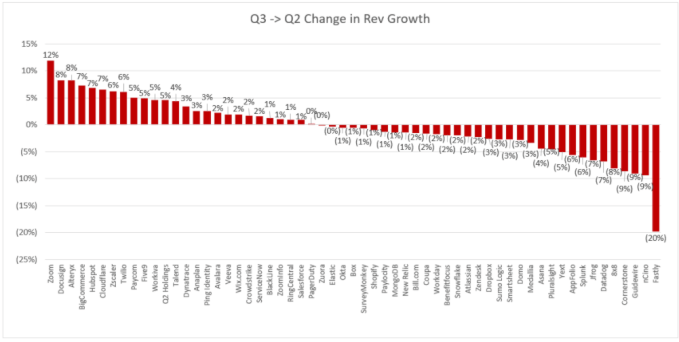
This quarter, strong earnings results from public cloud companies were overshadowed by a seemingly endless IPO cycle. Another moment we somewhat missed over the last few weeks was the stock market pushing the value of public cloud companies to all-time highs.

These events are connected. And they bode well for startups working on SaaS and API-delivered software, which are keeping the climate for cloud venture investment warm and valuations stretched by historical norms.


The Exchange explores startups, markets and money. Read it every morning on Extra Crunch, or get The Exchange newsletter every Saturday.


The earnings results that have made Wall Street content include a growing number of cloud companies that are seeing revenue growth accelerate from Q2 2020 to Q3 2020, according to a recent analysis by Redpoint’s Jamin Ball.

Astute readers will recall that The Exchange chatted with Ball after the Q2 earnings cycle, a conversation that included puzzling over how to square a nearly uniform deceleration in revenue growth from Q1 to Q2 in the software sector, which, at the very same time, was supposedly undergoing a boom in demand thanks to the pandemic and a suddenly remote workforce.

One hypothesis Ball offered was that deals signed in Q2 by SaaS companies would not show up much until Q3 if they were signed in the back-half of the quarter. Regardless of the reason, Q3 featured a far-stronger crop of cloud results that imply a strengthening sector.

For us startup watchers on the hunt for a hint of what is going on in opaque private markets, this is a useful data point. If you’ve been slightly befuddled as to why the venture capital space has seen deals accelerate with time-to-conviction falling from weeks to minutes — and pre-emption the new normal — this is part of the why.

As the future has been pulled forward when it comes to digitizing the American and global economies, it’s a good time to be a software company. This was visible in SaaS company Smartsheet’s earnings this quarter. The Exchange chatted with CEO Mark Mader about his company’s recent earnings results that beat expectations and led to the company’s shares rising. Analyst upgrades have followed.

This morning, let’s examine the data regarding how many cloud companies are seeing revenue growth accelerate, dig into Smartsheet’s results to see what we can learn (hint: SMBs matter), and then apply all our findings to the startup market itself so that we can go into the weekend as informed as possible.

Public acceleration

At the risk of being cheeky, I’ve embedded Ball’s chart concerning Q3 revenue acceleration from cloud companies below. (If you are into similar data sets, he’s worth following on Twitter.) Here’s the data:

Image: Jamin Ball

This chart shows Q2’s cloud year-over-year growth rates subtracted from Q3’s own; a result greater than one shows that a company’s year-over-year growth accelerated from the second quarter to the third. The higher the number of cloud companies that wind up with a result of 1% or greater in the above chart, the faster the cloud market as a whole is accelerating.