Delta Sends C&Ds To Startups Tracking Airline Rewards; MileWise, AwardWallet & Others Affected

delta-sucks-525x420

Delta is joining American Airlines and Southwest Airlines as the third major brand to deny travel startups access to users’ frequent flyer accounts for the purpose of tracking airlines’ miles and rewards. Startups affected include TripIt (reportedly*), MileWise, and AwardWallet (confirmed) and others. Here’s the situation in a nutshell: the airlines think your rewards data is theirs. Users think they own their own data. Imagine that!

What’s worse is that airlines are actually pissing off some of their most important customers – frequent flyers – when they do things like this. It’s a group that’s critical to airlines’ bottom line.

According to MileWise founder Nick Meyer, 25 percent of frequent flyers contribute to 7o percent of an airline’s revenue. That’s because the majority of miles are sold for cash, not accrued by members flying on the airline. Banks, which offer cards linked to airline rewards programs, are the primary buyers of airline miles. In 2010, the largest buyer was Citibank, which paid an estimated $1 billion+ for miles accrued by cardholders.

Airlines Cite Security Concerns, System Performance Issues When Startups Access Users’ Rewards

Back in March 2012, when American Airlines shut off Award Wallet’s access to users’ frequent flyer mileage, it made the case that it was a “security issue.” The airline had previously shut off access to several web services that would log into your account for you for the purpose of offering a variety of tracking tools. At the time, American said that it was concerned about the security issues that could arise from a third party having access to a customer’s username and password:

Because travelers’ AAdvantage account numbers and passwords can be used to claim AAdvantage mileage awards out of their accounts and access personal details, American will always protect this information. We simply cannot permit websites that have not satisfied our security requirements the access needed to track AAdvantage balances or any other function that is otherwise secured behind AA.com login credentials.

And here’s what Delta is now emailing to customers who are complaining about its block of AwardWallet:

Thank you for your e-mail to Delta Air Lines inquiring about blocking Award Wallet website. We regret any inconvenience.

While we can understand how you’ve become accustomed to using this tool, Delta does not have a contractual business relationship with this organization. The use of information from delta.com was unauthorized and employed automated screen scraping techniques that we don’t allow as it can hinder system performance.

We appreciate the utility of looking at multiple people’s reservations and will consider that for a future mobile release. We are also working on improving app notifications. The Fly Delta app has been highly rated by our users and we plan to continue offering highly useable information for your travel experience in the future, but we know there’s room for improvement. We will take your feedback into consideration.

Truth: Airlines Don’t Want To Lose Eyeballs, Mindshare

Don’t fall for it. Explains airline expert John E. DiScala (aka “Johnny Jet” online), Delta and others’ moves are definitely not about security issues or anything else. “The airlines just want to be in control,” he says. “They especially don’t want to lose traffic to their websites, so they can’t sell advertising and money-making travel-add ons like hotel, car, cruise, and package deals.”

Travis Katz, founder of social travel site Gogobot, agrees, saying that the airlines’ websites are free marketing channels where the airlines can convince passengers to spend more and engage more with their own brand. But it’s also about keeping the revenue for ticket sales to themselves. “This can make a big difference to their bottom line when customers book directly on their site, as opposed to booking through an aggregator (e.g. Expedia or Orbitz) where they have to pay a bounty on each booking,” he explained to us via email. “Ask Southwest – they made a choice not to list their site on any of the booking engines, and they have some of the best margins in the business.”

At the end of the day, the airlines aren’t convinced that services like AwardWallet and MileWise will send them more referrals than those they take away. It’s a short-sighted reaction, but unfortunately, one that isn’t likely to change anytime soon.

Building Brand Loyalty? Trying Sucking Less

“Rewards programs are by far the most effective tools that airlines have to build brand loyalty, and they are rightfully protective about it,” says Frederic Lalonde, CEO at travel planning startup Hopper. “This is particularly true in the U.S. domestic market, where consumers have a lot of options and pricing is competitive almost to the point of parity.”

But here’s a suggestion to the airlines about building brand loyalty: stop sucking so much. Granted, the airlines have had a tough go of it due to the recession. As their profits fell, so did their customer service. Meals discontinued. Blankets MIA. Extra bag fees. Less legroom. Overbooking. Full flights.

Breaking apart air fares into a la carte pricing works, but consumers tend to see this as price gouging a captive audience. They get angry. Angry customers make the airline reps burn out faster. (No one should have to deal with the public 24/7 like that anyway – humans aren’t programmed for it. They lose their inability to treat people like individuals or empathize.) Customers get more defensive and more surly, because they know they’re going to have a difficult time getting help from uncaring agents. Southwest, which tries to build fun into its brand, went so far as to shoot a reality show about its airline. I caught one episode where people wanted meal vouchers after being stranded. Southwest wouldn’t do it, but a group of adamant customers stayed behind to complain. They got the vouchers. Message received: bitching works. (They actually aired this on TV!)

Flying is an awful experience, and has been continuously getting worse. Airlines would do better to foster a little innovation that makes their customers’ lives better, but they won’t change until it affects their bottom line. And customers don’t always have much choice in how they fly (i.e. their company only books the lowest fares or they need specific times or routes). But when you do have a choice, you should choose an airline that sucks a little less. It’s the least you can do.

* TripIt wouldn’t confirm receipt of a C&D from Delta, but provided this statement:

In line with TripIt’s mission to make life easier for travelers, our goal is to give TripIt Pro users access to as many of their loyalty programs as possible, in one place. However, there are differing opinions among the airlines about how their customers’ loyalty program accounts are accessed by third parties. Unfortunately, this is causing service interruptions in point tracking for TripIt Pro users. We hope that together with travel industry partners, we can come up with a solution that works for everyone, and that travelers can ultimately decide who they share their account data with.

Image credit: Barron of Blog (I think)


It’s Outage Week: Cloudflare Went Down This Morning

cloudflare-logo

Apparently not wanting GoDaddy and GitHub to have all the outage fun this week, Cloudflare confirmed on Twitter that it had “issues” this morning. Many users found their sites unavailable, and some sites may still be experiencing trouble. However, I’m here that not all users of the service were affected.

An upstream provider issue caused issues for sites across our network this morning. Should be fixed now and clearing.Our sincere apologies

— CloudFlare (@CloudFlare) September 15, 2012

Cloudflare provides security for websites by acting as a sort of firewall between users and the servers where sites are actually hosted. This allows it to filter malicious traffic before it ever hits its target. It also means that if the Cloudflare servers go down, so do the sites they protect.

The company has experienced explosive growth. “Collectively, the startup now sees 70 billion page views per month and 600 million uniques — more traffic per month than Instagram, eBay, Amazon, Aol, Apple and many more, combined,” Rip wrote earlier this week.

It’s done an amazing job scaling quickly, and the outage was relatively brief. But what we’ve been seeing with the outages this week, and what we see whenever other high-profile services like Amazon Web Services go down, is just how many other sites and services can be affected by an outage at a single company.

Update: See comments for an explanation from Cloudflare.


Apple’s Stream Dreams: The History Of A Potential Pandora Killer

iTunes-Match

Apple is rumored to be prepping a Pandora-like service providing virtual radio stations to users, according to the WSJ, and though it didn’t debut at this past week’s Apple event, I think there’s still a strong chance it’s coming. It’s not the same as an on-demand streamed music delivery like Spotify or Rdio, but it’s another step in that direction, and one that Apple has been slowly moving toward since it began offering digital music through iTunes in the first place.

Apple must, like the rest of us, see the writing on the wall for locally-stored tunes, and while convincing its licensing partners that the future is all-streaming might be a Herculean task, Pandora-style delivery is a natural progression for the iPhone maker in an attempt to get labels to swallow their medicine, bitter-tasting as it may be in the short term.

Just look back at how far Apple’s come, and the pattern becomes clear. In 2003, iTunes started selling music, having been just a music management tool for existing files since its introduction in 2001 before that — though it actually first shipped with support for Kerbango Internet radio, which was one of the earliest Pandora precursors (it still boasts its own selection of streaming radio stations, introduced in iTunes 2.0). It was a radically different way of consuming music, focused on the single track instead of on entire albums or EPs. Convincing labels to get on board with that, and with more or less uniform pricing, was one of Steve Jobs’ earliest and best magic tricks. It paved the way for all other online digital music sales models to come after it, including Amazon’s service, which is now a cornerstone of that company’s burgeoning approach to the competitive device market.

Just three years later in 2006, the iTunes store had sold 1 billion tracks, and then in 2007 EMI was the first label to go DRM-free on the store. There were still quite a few noteworthy hold-outs to the one-track-at-a-time purchase model back then, including Metallica, who got over it in 2006, and Radiohead, who gave in in 2008. And in fact some notables held out longer, including Jobs’ favorite The Beatles who came on board famously in 2010, and Bob Seger who came around in 2011.  But the EMI decision to go DRM-free by and large started the flood: The entire iTunes catalog going DRM free in 2009, paving the way for still more freedom to open up just a few years later in terms of what users could do with their music.

Apple has allowed re-download of tracks purchased through the iTunes Store that were lost for one reason or another for a while now, although it was largely on a case-by-case basis. In March, it eased personal-use restrictions a little more with Home Sharing, where you could play back your local iTunes library on other devices attached to a local WiFi network. Then in June 2011 Apple introduced iCloud, with unlimited re-downloads of past purchases of iTunes Music, as well as optional Automatic Downloads across devices where you were signed in with your iTunes account. That likely wasn’t easy to sell to labels; in fact, in May 2011 I suggested that Apple was using the then-rumored service as a way to ease its label partners into the more dramatic idea of cloud-based music streaming.

Of course iCloud was just the foot in the door for iTunes Match, Apple’s cloud-based music locker that also seemed to act as a kind of paid legitimization service for users with lots of pirated content (though some noteworthy pirates disagreed on that point). It still wasn’t really a streaming service in the way that Spotify is; users could store their libraries in the cloud, but to play them back on their device simultaneously transferred them to local storage. It’s not clear whether that’s a feature, or a last concession to labels still gun shy of a 100 percent streaming service. On the desktop, however it does stream tracks, indicating that maybe Apple had the in-transit state of mobile devices and subsequent spotty wireless service in mind when it enforced downloads rather than anything else. Other recent developments that show a changing attitude toward streaming include free previews of entire albums, like Bob Dylan’s Tempest, which became available for full-length preview playback just over a week ago.

Still, iTunes Match wasn’t the streaming service many had predicted and hoped for. And a Pandora service isn’t quite that either, since it would provide radio — possibly with advertisements — customized for a user’s taste. And yes it would be streamed, but not the all-you-can eat access to the massive iTunes library that’s been a fever dream at least since Apple acquired Lala back in 2009. Make no mistake, Apple’s playing a long game here with labels, and the goal is iTunes everywhere, on a streaming, subscription basis. Framed in the context described above, a Pandora-style service makes perfect sense as Apple’s move toward that ultimate conclusion.


The Verbal Elegance Of Apple And Nintendo

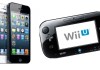
Apple and Nintendo

Editor’s Note: Tadhg Kelly is a game designer with 20 years experience. He is the creator of the leading game design blog What Games Are, and consults for many companies on game design and development. You can follow him on Twitter here.

Companies often shout in the games industry. They yell with videos, music, press events with booth babes and the monster that is E3. They hustle and go balls-to-the-wall for attention. They make big noise in order to get you to notice what they’re up to and write about it. Everyone, that is, except the two companies that have probably been most crucial to the last few years of the industry: Apple and Nintendo.

Just this week, both Apple and Nintendo made big news with new product launches. For Apple, it was the usual Tim-then-Phil-then-Scott-then-Tim show. It was quiet stage presence — “just look at how incredible this is” — some very mild jabs at the competition, and the whole “best work of their lives” routine. They could, at this point, phone that performance in.

Meanwhile Nintendo out-dorked its usual dorky self with its Wii U announcements on Nintendo Direct, showing (in the EU edition) Satoru Iwata teleporting into the most stilted initial presentation anyone has ever seen in the history of history. This was followed by Satoru Shibata sitting at his desk explaining all the things Nintendo is about to launch with the flair of a high school counsellor. You could not get more lo-fi.

Both companies have the air of the about-to-be-written-off for many journalists. With all the shiny new toys that their competitors seem to be showing off, bloggers seem to feel that neither can go on indefinitely. With Lumia 920′s a-go-go and who knows what console magic from Microsoft and Sony on the horizon, the arguments against both Apple and Nintendo are about conservatism, lack of muscle and so forth. All of which is just inside baseball.

Ultimately it amounts to nothing. The iPhone 5 is already sold out, and Nintendo Wii Us are very suddenly  hot, with the old Mario and Zelda alongside the exciting new Bayonetta 2. With the former we’ve gone from leaks-akimbo and dismissals on Monday to slack-jawed amazement at figures by Friday. And for the latter, a sudden jolt of anticipatory frenzy. Despite supposedly being out of touch, Apple and Nintendo have likely won all over again while their competitors are forced to yell and play second fiddle.

But why?

While most of their competitors are in the business of loudly selling content and (some) innovation, Apple and Nintendo are in the business of selling verbs.

Verbs

The language of game design is confusing because it is a battleground. A lot of people who write about games (me included) find themselves defining new words that don’t have wide acceptance, or using old words in ways that don’t 100% agree with everyone else. Even a term as seemingly innocuous as “game mechanic” is fraught with peril. You often have to provide glossaries of what you mean (for reference: here’s mine) to get any useful discussion off the ground.

So I can only tell you what I mean by “verb”: A verb is a physical thing that you do when interacting. It’s what you do on this side of the glass to effect change in a digital world. Clicking, swiping, pressing, twisting, flipping, pinching, speaking, tilting, typing, holding and shaking are all examples of verbs. However, punching, kicking, accelerating, dodging, leaping, commanding, running, sorting, cutting, pasting, deleting, slotting and so on inside the screen are not verbs. They are “actions.”

You use one or more verbs to create an action. So pressing a button is a verb and causing your avatar to kick is its action. Control-clicking on your Starcraft 2 marines and then clicking on a position in a map is a combination of verbs that form one action: You command a unit to go over there and shoot the enemy.

There are many kinds of actions, but not many verbs. Verb invention is really hard to do and requires a strong aptitude for elegance, very deep thinking about people physics and and an eye for the simple machine with a thousand uses. It also often requires the development of software that works with those ideas to show them at their best. However the companies that invent — or steal, reinvent, and popularise — those verbs attract the most ardent fans. And everybody else pretty much copies them.

That’s the position that both Apple and Nintendo have occupied twice. It was Apple who invented the popular form of the mouse, the graphical user interface, the laptop form factor that worked, the iPod scroll wheel and the touch-screen verbs. Meanwhile it was Nintendo who invented the digital joypad, the analog stick, the stylus touch-screen game controller and the gestural controller. Other companies have basically rushed to fill in the categories that Apple and Nintendo have defined.

In the last few years especially, a flurry of verbal inventions has helped bring Apple and Nintendo to the fore, and consequently to win. Apple entered into the phone market very late, but swept aside the competition in an almost derisory fashion. Nintendo brought the Wii, a console that many assumed would fail due to a lack of graphical power, and then went on to dwarf its competitors.

Both leverage online live blogs and video to send their message. So do their competitors. Both also have a fan base and marketing story that their competitors would kill to have. Both are in the position of true greatness, because they define their respective markets, and both will continue to win for the near and medium future.

And yet…

The End of Verbal Discovery?

In the mid-90s both Apple and Nintendo had hit the skids before launching incredible comebacks. They had always had loyal followers, but companies who were better at partnerships, distribution, and playing well with others were in the lead. Sony and Microsoft were good at collaboration in a way that both Apple and Nintendo were not, and this horizontal approach paid off.

Nowadays everyone is striving to be vertical because Apple and Nintendo show that it works. Everyone wants their big play for the living room, has their tablet in the works, their phone, their TV and their online service. A number of giant vertical ecosystems (Sony, Microsoft, Amazon, Google, Facebook as well as Apple and Nintendo) are jostling for position, but none can ever achieve dominance because of a lack of interoperability. The wind is with Apple and Nintendo (and perhaps Facebook, but for other reasons) because they keep redefining the verbal landscape. But what happens when the verbs run out?

Many of us are coming to the conclusion that the iPhone may well be an apex product with nowhere left to go, and iPads likewise. As for Nintendo, the Wii U is in many ways bold, but its GamePad controller could also be read as everything-but-the-kitchen-sink. A sort of final solution for video game play.

If we end up back in the kind of fairly stable space that characterised the 90s, won’t this flip the switch back toward companies who know how to share? Won’t horizontal partnerships come back into vogue (as Nokia and Microsoft are doing), and won’t software and services start to matter more? In these areas Apple has learned some lessons (the App Store), but is also very weak in other areas (iCloud). Meanwhile Nintendo is still very difficult to really want to work with, and perhaps over-protective of its platforms.

We’ve had a great decade of invention in the verbal space and can now interact with our gaming devices in ways previously thought to be pure science fiction. But I wonder whether the next decade of games is really going to be about who can play well with others rather than tell everyone else how it’s going to be.


Jay Adelson Is Recruiting On Facebook. Is It For His Own Startup?

3312787213_81074eaf0f_z

For anyone who has followed Silicon Valley for the past 10 years, Jay Adelson is a name that you know quite well. He’s best known for his work with Digg during its heyday, as well as Revision3. After moving into the CEO position at SimpleGeo, which has since been acquired by Urban Airship, we’re told that Adelson is ready to make another run at a startup.

Multiple sources tell us that Adelson posted in a private Facebook group for former Digg employees last night, suggesting that he’s re-entering the startup world, and is doing some recruiting as well.

We’ve reached out to Adelson for comment, and if you’ve heard anything, please send it over to [email protected].

If Adelson is indeed working on a new startup, it will be interesting to see which vertical he settles in on. Having done quite a bit to democratize news with Digg as CEO, video publishing and production, working on data infrastructure and geo-location, something equally big isn’t out of the question. So it’s stealth mode for now until we’re told differently.

I for one am happy to see Adelson back in the game.

UPDATE: We connected with Jay Adelson directly, and he has no comment to share at this time.

[Photo credit: Flickr]


Stan Lee Teams Up With Moonshark To Create His First Mobile Game: Verticus

Verticus_postcard_front

Moonshark, a startup backed by Qualcomm and talent agency CAA, teams up with big-name creative talent to create mobile games and apps. For its first game, it partnered with Jennifer Lopez. For its second title, it’s working with a star of a very different type — Stan Lee, the comic book writer who co-created (with artists Jack Kirby and Steve Ditko) most of Marvel’s biggest characters, including Spider-Man, and who’s now chairman and chief creative officer at POW! Entertainment.

Lee is supposed to take the stage at the Comikaze Expo (or, to use its full title, Stan Lee’s Comikaze Expo) this morning, where he’s going to announce his partnership with Moonshark and show a brief trailer of the upcoming game, which will be called Verticus. I got on the phone with Moonshark CEO Matt Kozlov yesterday to get some of the details.

Kozlov says the company doesn’t expect its partners to be game designers. Instead, Moonshark pairs up the big names with independent game developers (in this case, Dallas-based Controlled Chaos Studios). Lee helped to create and design the characters and plot — Kozlov speaks admiringly of Lee’s enthusiasm, and says that when he’s 89, he hopes to have “half the wit and energy” that Lee does.

The story concerns a group of evil aliens set on destroying the Earth called the Obliterators. The player takes on the role of the hero Verticus, who has to dive through the Earth’s core in order to save the planet. Kozlov says that it’s a superheroic spin on the concept of an “endless runner” — he calls it an “infinite faller.” Lee has had cameos in most of Marvel’s films, so he also appears as a character in Verticus, namely the commander who gives Verticus his mission.

The game will launch sometime this fall, Kozlov says. He also reports that Moonshark’s first game DancePad was a hit, becoming the No. 1 music game on the iPad and the No. 2 on the overall gaming charts.

“It showed that our model works,” Kozlov says. “By putting great Hollywood talent together with great games, we get to the top of the charts.”


Gillmor Gang: Positively 5th Street

Gillmor Gang test pattern

The Gillmor Gang — Robert Scoble, John Taschek, Kevin Marks, and Steve Gillmor — split right down the middle on the new iPhone 5. Well, @scobleizer did. He was bored by the announcement, impressed by the Apple ecosystem, and unable to come up with a good reason why we should buy anything else. @kevinmarks and @jtaschek won’t be buying it, but I already have.

The Gang touched on the news from Disrupt: Zuck v. HTML 5, @Benioff teasing next week’s Dreamforce, and @scobleizer’s brain trust of Normal People. But like clockwork as Verizon sold out its allotment in 60 minutes, Apple proved once again that what we once called a reality distortion field has been unmasked as just plain reality.

@stevegillmor, @scobleizer, @jtaschek, @kevinmarks

Produced and directed by Tina Chase Gillmor @tinagillmor


Being More Accessible

nas12s

Editor’s note: Nasir Jones is co-founder of 12Society and a multi-platinum recording artist. Follow him at NasirJones.com and on Twitter: @Nas.

On July 24, I found out that my newest album hit No. 1 on the Billboard 200. This isn’t my first time around the block, but it’s one of the most satisfying. I started as a hungry MC from QB, but now I am trying to give back to the hip hop community that made me. So as I stepped to the mic on “Jimmy Kimmel Live” that night, wearing a special 12Society t-shirt that I designed, a pair of jeans, and some Timbs, I can say I was on top of the world.

More than ever, entertainment is about self-promotion — using the power of your fans through social media to market live shows and new business ventures and move a few records. The direct connection to the fans is not just freeing artists from the old corporate structure; it’s redefining the relationship between creator and audience.

When piracy hit the entertainment industry, artists were distraught and began distrusting their own fan bases. In truth, it was a response borne from confusion rather than logic. The passion the fans had for what we were creating never went away; we just had to evolve to survive in the new digital world.

A huge aspect of that evolution is offering a glimpse into your lifestyle — being more accessible. The power that Twitter, Facebook, YouTube, and Instagram offer is immense. Being an artist today is not only about being creative in what you produce, but finding creative ways to show people what you’re doing. Artists everywhere took notice when Louis C.K. sold his stand-up special and show tickets without a network backing him on the promotion and distribution. That truly was innovation at its best.

To me, that’s inspirational. That’s bringing things full circle and is the kind of independent triumph that will allow artists to create freely and reap the full benefit of their craft.

It is this same type of innovation that has defined and revolutionized the landscape of Silicon Valley, especially within the confines of e-commerce. I truly believe we are at an incredible inflection point in the consumer retail experience: Just how Amazon and eBay opened the railways to a new universe of available products, and Groupon allowed for the discovery of local activities to become accessible and affordable, new resources are changing the entire game once again.

We now live in a world where, instead of subscribing to a GQ or Vogue to read about what’s new, everyday people can substitute this reading for experiencing, and have goods delivered to them based on their likes and personality. It’s style-made-easy, and will change the way we shop forever. Companies like Five Four Club and Trunk Club are taking the difficulty out of discovery by making personal styling a painless and fun exercise in exploration, expertise, and a bit of surprise.

I started 12Society in June with the hopes of bringing this generation the new wave of commerce. Providing my fans with access to products, brands, and technology that they haven’t seen before. Increased accessibility and visibility has always been the future, and finally, that time is now.


The Path To Starting A Startup

Scott Weiss

Editor’s note: Scott Weiss is a partner at Andreessen Horowitz and the former co-founder and CEO of IronPort Systems, which was acquired by Cisco in 2007. He blogs at http://scott.a16z.com, and you can follow him on Twitter @W_ScottWeiss.

People often ask me what the best path to becoming a successful entrepreneur is: “Should I go try and start a company now? Or go to grad school? How about working at a large tech company for a few years?”

I spent five years at a large technology company, two years at business school, and then two years in consulting before I went to a startup. Even with that experience, I still believe I was too green to jump right in and start a company. It’s not that those experiences weren’t valuable — it’s just that the most valuable lessons for successfully running a startup come from actually working at a well-run startup. I’d go even further to assert that the startup should be based in Silicon Valley and backed by venture capital.

You could just start a company without any startup experience, sure, but you will have a significantly higher chance of success if you already know how to navigate a startup’s unique challenges, including: raising money, changing product direction, and cultivating a culture. These are hard things to learn on the job, and you may have only one shot at the crucial “friends and family” round to get you started.

Why a Silicon Valley, VC-backed startup? If you just graduated from college, you probably haven’t developed the experience or instincts to judge whether a startup has a great team, a differentiated product or is going after a large enough market. While certainly not perfect, the VCs have done a lot of this important vetting for you, and their decision to invest can be considered a boost of credibility and resources for the company. Also, within each technology region, there is a dense network of specialized talent, financiers, and service organizations (e.g. legal, PR, recruiting) that form a startup ecosystem. Silicon Valley is by far the largest ecosystem and therefore holds the most potential for job opportunities and the strongest network.

What about grad school or establishing a foundation at a large company? It comes down to relevance. The responsibilities, roles, contacts, context, culture, communications, risks, and instincts you need to develop to eventually run a successful startup are best found at a startup.

If you’re trying to prepare yourself for entrepreneurship — the same two to four years at a startup isn’t even comparable to the equivalent time spent in school or a large company. There are probably five to ten times more lessons and relevance at the startup.

The next step involves finding the right startup to join. As it turns out, I moved out to Palo Alto from Boston in 1996 with virtually no connections or contacts and more than $100,000 in school loans from business school. A few things I did are surprisingly still relevant today:

Prepare for a long haul. You’ll need to move out here without a job while most of your friends have jobs locked up well before graduation. If you don’t have enough savings, you may need to get a part-time job while you job hunt. If this step makes you nervous at all, you may want to reconsider the entrepreneurial job choice.

Research. Start by downloading the last four venture capital surveys from the San Jose Mercury News website. These PDFs summarize the last year of companies that have been funded by VCs. Included are the company name, amount raised, VC involved and headquarters city. This is a great list to start with because all of these companies have recently raised capital and are therefore likely in hiring mode. Build a spreadsheet, start researching and then rank these companies by your level of interest. Go to the VC websites, check all the online publications (e.g. TechCrunch, AllThingsD, etc.), and look up the company name URLs. While you are on the VC websites, you should look through all of the companies on their “portfolio” tab to see if any should be added to your list.

Focus. There are many different types of startups and many different jobs within a startup. If you can code, there will be obvious roles within engineering, sales engineering or quality assurance. If coding isn’t for you, you’ll need to figure out the best entry-level role to position yourself. Perhaps in customer care, product management, finance, inside sales, or business development. It will also help to choose between the type of startup: enterprise or consumer. The more you begin to focus, the more credible you’ll become as you deep dive into the differences between the roles and the way the different companies go to market. You’ll want to be as knowledgeable as possible before you start networking.

Make a target list. After doing all this research, narrow it down to 20 to 30 target companies and make a market map or web of every possible link to the company — names of the investors, management team, PR firms — every potential connection (I’m thinking similar to an FBI board targeting a mafia family, but not quite that creepy). Your best chance of getting an interview is if you have a “warm” referral into the company (i.e. someone you’ve met who can refer you to someone inside the company they already know). That’s the goal. Continue to research the companies, the roles, the competitors, and the market so that you start sounding like you know what you’re talking about.

Start networking. I pulled out the Harvard Business School alumni directory, the University of Florida alumni directory, and the McKinsey alumni directory. I sent emails to guys 15 years older than me with “Hey Steve, I’m a fellow Florida grad, blah, blah, blah, can we have coffee?” I went to every meet-up that had the word “Stanford” in it. Before I knew it, one coffee led to another and after awhile I started asking smarter questions and got stronger referrals.

I cannot overemphasize the importance of preparation and persistence throughout the process. It took me four hard months of preparation, research, focus, list-making and networking until August, 1996, when I received a warm referral into a little, 12-person startup named Hotmail. It ended up being the best job experience of my life and I was completely hooked.


TechCrunch Disrupt SF 2012 Day 1 Video Highlights (TCTV)

IMG_9246

Want to catch up on some of our Disrupt conference highlights that you might have missed? This weekend, we’ll be posting videos from each day of Disrupt.

Monday’s agenda featured a keynote from Twitter and Square Co-Founder Jack Dorsey telling the audience he “never wanted to be an entrepreneur.” Ben Horowitz, of Andreessen Horowitz warned about how IPOs can change a company. We also heard from Greylock partner and LinkedIn Founder Reid Hoffman, Path’s Co-Founder Dave Morin, Newark’s Mayor Cory Booker and The Honest Company Founders Jessica Alba, Brian Lee plus many other founders and tech leaders. Check out the 2 video players below.

The first three sessions of our Startup Battlefield were also held Monday, beginning with a demo from runnerup, Lit Motors, maker of a fully-electric self-balancing vehicle that looks like its from the future.


The Mobile/Social/Local/Cloud Land Grab Is Over

E

This was my second TechCrunch Disrupt, and what a difference a year makes.

Not this year. I mean the year that began in July 2006, when Twitter launched. Two months later, Facebook finally opened up to everyone worldwide; in June 2007, Dropbox was founded; and one month after that, the first iPhone went on sale. Since then nearly everyone else has been playing in the space opened up by those four pioneers.

Oh, I’m not saying they were the first social networks, or the first cloud-service startup, or even the first smartphone. But they were the first to win truly mass appeal, the first to reveal the riches available in whole new continents of unclaimed territory — mobile! social! local! cloud! Since then, legions of copycats and competitors have rushed in to stake their own claims in these undiscovered countries where the streets seemed paved with gold.

Not any more. That land rush is over. And this is a very good thing.

Oh, there may be a few Shangri-La valleys left in the more obscure and inaccessible regions–for instance, increasing battery life will open up new space for always-on apps like Highlight and Chronos–but the vast majority of this new territory has now been mapped, surveyed, claimed, and occupied. It’s not nearly enough just to take an existing market and go after it with an app and/or a cloud service powered by social-media-crowdsourced data. Not any more. Because over the last five years, the free market has worked its magic, and what was once terra nullius is now thick with incumbents.

Last year I wrote, “Facebook, Twitter, Apple and Android have opened up whole new territories of innovation, including a new crop of low-hanging fruit, and we shouldn’t be surprised that most ambitious young startups are trying invade and harvest that space rather than tackling harder problems.” Well, if you’ll pardon the mixed metaphor (and the uncomfortable neocolonial overtones of land grab), that low-hanging fruit is gone. Software startups now have to start climbing the tree.

Which in some sense is bad news for them. They’ll have to work harder, and be smarter, and struggle longer, and they may need more people. The days of one-(wo)man-band operations like Instapaper and DuckDuckGo may be over…although I’m less certain about this, seeing as how the tools of development do keep getting simpler, better, faster and more powerful.

Regardless, it’s good news for the rest of us. I’ve been lamenting sugar-water startups for some time now, and I am pleased to report that the prospects for such nonentities are finally beginning to get grimmer and grimmer. The last five years of software startups have (mostly) been little more than the shockwave emanating from the big bangs of 2006-07. Now, at last, we can start getting ready for the next eruption.

Because there’s a new one coming. Software continues to eat the world–but I believe the name of the next big boom is hardware. Somebody a few years hence will write an article much like this one, looking back on the incredible hardware boom, and it will begin with a brief history of Arduino, MakerBot, and TechShop. We saw it simmering at Disrupt this year; Lit Motors won runner-up, and I found Hardware Alley more interesting than almost all the software startups. The hardware cycle is slower than that of software, so its boom may take ten years to peak, rather than three or four…but it’s coming. My advice is to get in and stake your claim now.

Image courtesy of Wikimedia Commons


Why You And Your Favorite Web Sites Will Feel The Pain If “Do Not Track” Passes

EricWheeler

Editor’s note: Eric Wheeler is CEO and co-founder of 33Across. He has 20 years of experience leading successful Internet businesses. Follow him on Twitter: @ericwheeler.

Much has already been discussed in the media regarding the threat that the $300 billion advertising industry faces if Congress passes a strict interpretation of Do Not Track. Most of the discussion has focused on how “adtech” companies would get hurt: ad networks, third-party data providers, DSPs, and marketers.

However, what has gotten far less attention is that many of the web publishers that consumers enjoy on a daily basis would also have their businesses severely squeezed if such legislation were enacted.

Those vulnerable range from seemingly invincible Fortune 500 tech behemoths such as Facebook and Google, to myriad small online publishers. Essentially, any company that relies on partners to help drive revenue from advertising that accesses anonymous, third-party cookie data could be severely exposed. Moreover, we as consumers would suffer. While Do Not Track was conceived in order to protect consumers, it would actually make our time on the Internet a noticeably worse experience by forcing us to watch untargeted, annoying ads aimed at getting our attention (think “Lose Weight Now!”) versus receiving relevant ads that better align with our interests. It could take the industry back 12 years in terms of consumer experience with the DNT privacy notice pop-ups appearing with almost every click.  And worse, Do Not Track puts us all on a path to paying subscription fees to visit sites that today we freely consume (thanks advertisers!).

Most of the content we like would go away, because these publishers won’t be able to survive on subscription fees alone…ask The New York Times. Do Not Track actually threatens the very existence of the “Free Internet.” With our economy in such disrepair, is this the time to put the screws to small businesses and industries that drive domestic innovation?

Even A 950 Million-Strong Community Relies On 3rd-Party Data

Prior to its IPO, Facebook got away with setting its own rules for advertisers. But that has all changed. With intense pressure from Wall Street to boost earnings – as well as from large advertisers who have long clamored for more effective forms of advertising from the social network – Facebook has sought out new revenue streams. The recent introduction of the Facebook Exchange provides great promise, as it will allow brands to appeal to Facebook users with significantly more targeted and measurable advertising. As TechCrunch’s Josh Constine noted, “Facebook has been generally viewed as a home for institutional or brand advertising. However, it’s seen as much less useful to direct marketers than search ads because users on Facebook haven’t shown purchase intent as when they search for a related keyword on engines like Google. Facebook Exchange could change all that.”

But, here’s the rub: If Do Not Track becomes law– one that would, by default, opt consumers out of behavioral advertising – the Facebook Exchange would be rendered virtually useless overnight. Why? Because the Facebook Exchange needs anonymous cookie data about consumers who browse off Facebook in order to target them with relevant ads on Facebook. And what’s more, advertisers mandate being able to measure the online ads they run on Facebook in the same way they measure performance on other sites. Doing so requires utilizing anonymous third-party cookies.

Of course, Facebook isn’t the only behemoth first-party data company that relies upon third-party data. The same is true of Yahoo with its Right Media Exchange and AOL with its Advertising.com. Even Google’s bottom line would be hit hard as its advertising businesses are predicated on serving and measuring relevant ads based on interest and demographic information gathered from third-party cookie data. While Do Not Track wouldn’t necessarily spell the end for some of tech’s biggest giants, you can bet that their bottom lines would take a massive hit. Along with your retirement savings if you have invested heavily in some of these companies.

Small Publishers Are Especially Vulnerable

If flat-out threatening entrepreneurism weren’t enough, how about the hundreds of thousands of small publishers whose revenues are fully reliant on behavioral advertising? The authentic, user-generated content that we love so much would quickly wither and die without the premium ad revenue they get from behavioral advertising. To this point, a Borrell Associates study from earlier this year found that targeted display advertising will represent 45 percent of the total local/social spend by small to medium sized businesses by year’s end. Which, frankly, shouldn’t shock anyone. So unless you’re NBC or Microsoft and have a brand that’s been long established, Do Not Track will make it nearly impossible to build a small publishing business.

The Ultimate Victim: Consumers

A Do Not Track approach that automatically “opts out” consumers would harm virtually everyone who uses or earns a living from the Internet. If advertisers and publishers can no longer utilize targeted advertising, it’s hard to see a scenario that doesn’t result in a pay-for-content model. Just for a moment, imagine a future where a “Free Internet” no longer exists: In addition to paying to get online each month, you would find yourself paying for most every piece of content you access on the Web. So only those with disposable incomes can afford to pay for online content? Suddenly the Internet seems a lot less egalitarian, doesn’t it?

The Internet Should Not Be A Luxury

Nearly everyone, especially TechCrunch readers, recognize that data is incredibly valuable, drives innovation, and is the foundation for a broad range of industries. And we all agree that the industry should continue to take every step to project users and disclose how data is used. But it’s time to move beyond inflammatory debates to a rational discourse.

My conclusion: the Internet economy is already highly respectful of consumer privacy. And any fears consumers have to the contrary are certainly not centered on third-party anonymous data. Their concerns are about first-party sites with which they share personal information such as their credit card numbers and email and physical addresses. The online advertising industry has been aggressive about opt-out standards and that won’t change. Hopefully innovation, “Free Internet” content, and continued economic growth won’t change either.

[Image: 33Across]


Alibaba VP In Response To Google Smackdown: ‘Will Someone Please Ask Google To Define Android?’

41621v6-max-250x250

While Marissa Mayer is busy trying to figure out what to do with Yahoo’s new $4.5 billion in cash — recently gained from selling 20 percent of its holdings in Alibaba back to, well, Alibaba — the Chinese web and eCommerce giant has recently been in a heated exchange with Yahoo’s old pal, Google.

The fun apparently began after Taiwanese PC maker Acer cancelled the launch of its new phone in China — an event for which there was quite a bit of anticipation. As things progressed, it became clear that, in fact, Google was at least partially responsible for delaying the launch of the phone. Why? Long story short: Google objected to Acer using a rival OS in its new phone, according to the WSJ.

The rival OS in question is, of course, Aliyun — Alibaba’s first self-developed mobile operating system. Naturally, Alibaba was none to happy about Google’s apparent interference. In frustration over the exchange, Alibaba VP John Spelich told TechInAsia: “Will someone please ask Google to Define Android?”

I like to picture this quote in caps lock, preceded by an exclamation like “GAH!” and a double-handed cheek smack. Not just because I’m a member of the media and I enjoy good drama (no, you can’t have any of my popcorn), but also because I think there are a number of people who might agree — if not with this statement — with the sentiment. Maybe this will be impetus for Android to take a page out of Firefox’s book and get trademarked (while remaining open sourced).

But, wait, what’s the backstory here? Well, I’m glad you asked. In the same WSJ story referenced before (unfortunately and somewhat ironically, it’s behind a paywall), but Google’s reason for meddling in Acer’s Aliyun launch was, of course, that Acer had totally given it a promise ring and because Aliyun is playing fast and loose with Google’s mobile things (i.e. it’s not compatible):

[Acer has] committed to building one Android platform and to not ship non-compatible Android devices … Compatibility is at the heart of the Android ecosystem and ensures a consistent experience for developers, manufacturers and consumers. Non-compatible versions of Android, like Aliyun, weaken the ecosystem.

So, basically what Google is saying is that Aliyun is running a non-compatible version of Android. And, hey, if that’s true, Google has a very good reason to rain on Acer and Aliyun’s parade. Clearly, trying to take the high road, Android published this nicely written little run-down of compatibility earlier today. The biggest takeaway: The most important external factor that, in Google’s words, can weaken the Android ecosystem as a whole is “incompatibilities between implementations of Android.”

And, again, this makes sense. The chain is only as strong as the weakest link, if some developer implements a utility function poorly, then apps don’t run as well across devices, consumers get a bad user experience, developers leave — you get it, the thing falls apart.

Okay, so the blog post is a veiled way of saying, “Quit making the system suck.” Of course, it does betray a little sour grapes from Google, which doesn’t make any money yet from Google Play in China, and was clearly not happy with one of its OEM partners using a competitive OS, even if “incompatible.”

Android Top Dog Andy Rubin weighed in tonight on his Google+ profile (which is getting ridiculous, by the way … thank god Dick Costolo doesn’t respond to every question in a tweet), saying that he/Google were very surprised by Alibaba’s CSO Zeng Ming quote that Aliyun “wants to be the Android of China,” especially when, Rubin says, the “Aliyun OS incorporates the Android runtime and was apparently derived from Android.”

Take that, Aliyun. Rubin 1, Aliyun 0. He might as well have just said, “but wait, Android is going to be the Android of China, whether you like it or not.” After all, Android already has 68 percent of smartphone sales there.

Rubin continued:

Based on our analysis of the apps available at http://apps.aliyun.com, the platform tries to, but does not succeed in being compatible.

It’s easy to be Android compatible, the OHA supplies all the tools and details on how to do it. Check out this blog post that explains how we think about compatibility and how it relates to the ecosystem we worked hard to build. [He then links to the “compatibility” blog post.]

Google victory, right? Well, er, sort of.

Apparently, Google had been pressuring Acer to call off the event for awhile, as this wasn’t the first phone that launched with the supposedly forked Android OS. Also of note here, apparently Acer (as an OHA signatory) agreed not to market/implement an Android fork that is not Android-compatible. SO, there’s that. Not a surprise then that Acer’s attempt to launch an Aliyun smartphone didn’t sit too well with Google and that it would try to enforce this agreement.

Of course, at the root of this is the compatibility issue, and whether or not Aliyun is an offender to begin with — whether or not it’s actually a forked Android OS at all. To that point, Aliyun claims that its OS is built from the ground up and is Linux-based, so it’s technically not part of the Android ecosystem. Meaning, then, that it wouldn’t be beholden to dealing with OHA regulations/requirements.

As John Spelich said in response to Google’s statement and then later added to his thoughts in a quote in TIA:

Aliyun OS is not part of the Android ecosystem so of course Aliyun OS is not and does not have to be compatible with Android. It is ironic that a company that talks freely about openness is espousing a closed ecosystem.

This is like saying that because they own the Googleplex in Mountain View, therefore anyone who builds in Mountain View is part of the Googleplex.

Of course, Aliyun is trying to play both sides — remain separate from the Android ecosystem, while being Android binary-compatible. Although it does say its focus is on web apps. Obviously, what tipped off Rubin (as he alludes to in his Google+ post) and Google was the fact that Aliyun is running Android apps. It can’t have it both ways, so if it drops the APK, perhaps Google wouldn’t block the rim…

It’s obviously somewhat of a mess, and Google certainly doesn’t seem to be eager to back down, and Aliyun is staying firm in the fact that it’s NOT actually a forked Android OS and therefore Google is being unreasonable in its demands. If you side with Aliyun in this debate, given Google’s tireless championing of “open” technology, it would be hard not to see the company’s actions as at least a little bit hypocritical in this context. Especially given that this makes Google look like it’s trying to “control” its ecosystem. Probably because it is. Understandable? Yes. As “open” as Google claims? Probably not.

As Jon mentions, Google’s policy on incompatibility is, at the very least, inconsistent. If you take the opposing view, that Aliyun is actually guilty, then one could contend that Google should have enforced the same takedown for Haier, which could be subjet to the same “Android forked OS” (or incompatibility) accusation.

At any rate, I think we can now be sure that Samsung won’t be bringing its own forked OS to the table anytime soon.


How To Disrupt Petty Inconveniences

probs

Depending on who you ask, Jack Dorsey started off the latest Disrupt on either a very controversial or a very non-controversial note. “We need revolution, not disruption,” he said, words that would be easy to characterize as platitudes if he were not working hard at uprooting a few global institutions. Even so, the sentiment did not entirely match the tone of the conference that was to follow.

Whether you want to call it a bubble or not, it’s not controversial to say that there are millions upon millions of dollars going to ideas, services, and sites that will be dead or irrelevant in a year or two. The metaphor of the Cambrian explosion has been employed, of course. Tellingly, the Wikipedia article for it reads “most organisms were simple, composed of individual cells occasionally organized into colonies.” What a marvelously apt description of the creatures I saw on display this week!

A great number of the startups (a word that is beginning to lose all meaning, by the way) that I saw were aimed at solving problems so trifling that the first objective of many pitches was to alert the audience that they exist. Is this healthy? Yes and no.

A mixed bag

Now, I don’t want to slander the conference or the many interesting and promising startups that were also there, of course (really, there were a lot; the graphic above is mostly for satirical purposes). And this isn’t one of those occasional posts suggesting everyone quit their job and go volunteer in the Peace Corps. But those single-cell organisms were not some rare exception. I’m not going to lie; I frequently overheard pitches and product descriptions that made me fear for the sanity of the industry. Yet when I tried to argue (in an earlier draft of this article, in fact) against the existence of these grotesques, my reasoning faltered.

The thing is that trying to establish the lunacy of location-based speed dating, or geofenced task lists, or voice-activated ticket purchases, or cloud-based lecture note marketplaces, is that there’s really nothing wrong with these ideas. No more, anyway, than with the millions of products and services that have fallen by the wayside over the last century — three-wheeled cars, BeOS, personal neck-cooling devices. Some disappear harmlessly, some are vindicated years later. At worst they are unnecessary, and at best they are ahead of their time.

And how will dating, or to-do lists, or buying tickets, or study groups, advance in this era of instant communication and dynamic networks, if not through the same things that have advanced everything from cave axes to particle physics: experimentation, mistakes, and the occasional total catastrophe? They won’t. Progress is like a jigsaw puzzle that extends forever, and occasionally something like the internet or iPhone drops a huge batch of new pieces on the table. The players start sorting, testing, and rearranging, and, like a real puzzle, a few false starts are to be expected.

So it’s not that small problems don’t need solving, or that the wrong problems are being solved. Then whence this instinctive disgust I felt, besides from my natural loathing of the conspicuously unnecessary?

Lazy architecture

Here’s the real problem: a lack of ambition.

I don’t mean pecuniary ambition. There was no shortage of that. You would think presenters were hosting an episode of Cosmos as they described the constellations of riches that are, they assured us, there for the taking. Billions and billions!

Nor is it that they think their product will have no effect. As usual, everything was a “revolutionary” new way to [fill in the blank]. (One company, very promising, actually, was in fact literally a revolutionary new way fill in the blank.)

No, it was their means that repelled me. The way so many were going about their job of fitting those puzzle pieces together. Instead of working diligently to assemble something truly worthwhile (a subjective judgment, to be sure, and I am calloused from long exposure, but let us be honest), they took two or three of the nearest pieces, or the latest ones to fall on the table, and mashed them into each other — making them “fit” the way a toddler might. Now, random recombination is a great way for evolution to occur over millions of years, but intelligent design it ain’t. It is depressing and distressing to see grown men and women approaching problems with such an unsophisticated and, frankly, opportunistic method.

I saw it in needless social integration, in feature bloat, in shoehorned API usage, and occasionally in a new phenomenon whereby the product itself seems to have been created in order to fit the constraints of the just-clever-enough portmanteau they chose for a name. Just because “location” kind of sounds like “Loc-Asian” doesn’t mean there should be a service that lets you find nearby Thai and Chinese food. Nor should you make “Fellaphone,” a service that solicits bids from local handymen for a designated task (I could make these up all day). And so on. These solutions to perceived needs are so rigidly constructed and precise that, like so many things on the web, their life is just a countdown to irrelevance.

It’s because I care so much about how technology and culture serve and affect one another that I find these chimaerical creations offensive. Of course I admire the craftsmanship they exhibit, but brickwork, no matter how neat, is only one aspect of the edifice. A poor idea may be handsomely executed, but criticism may still be directed at the architect.

I won’t belabor the point more. All I wanted to say was that there’s a specific disorder I saw on display, and hopefully we can treat it before it grows any worse. The experimentation must be done — but rationally, with tact and foresight. Not with the primitive zeal of an ape with a new bone.


Twitter Bug Randomly Swaps Out Avatars For Some Accounts, Profile Settings Now Disabled

4911233302_34a1663d89_z

Well here’s a Twitter bug that is kind of alarming. Apparently, for some verified accounts, avatars were swapped out with other random users’.

Currently, the profile settings are disabled for all users, so you’re stuck with what you have now. Can you imagine trying to tweet and seeing some random Joe in your place? Yeah, weird.

Here’s what the company had to say on the matter a few hours ago:

We're investigating an issue with background images and profile photos on @verified accounts. We'll get this resolved ASAP.


  (@Support) September 14, 2012

We have temporarily disabled profile settings changes for all users. Our apologies for the inconvenience. Thank you for bearing with us.


  (@Support) September 15, 2012

Digg was affected:

I’m pretty positive that this isn’t 500 Startups’ Dave McClure:

Here’s what you see if you try to enter the profile settings area:

All kidding aside, this is a very serious issue. It’s flat-out odd to think of a time where you could be potentially locked out of your Facebook settings, so this is pretty sad to see from Twitter.

A Twitter representative tells us that the company is indeed “looking into it.”

This is developing.

UPDATE: How about this? He figured out who his avatar was:

UPDATE 2: …Aaaaand normal services have resumed.

h/t Dan

[Photo credit: Flickr]