Hoover’s Founder Launches Online Health Care Concierge Service, First Stop Health

fsh_home.jpg

Hoover’s co-founder Patrick Spain launched a new venture today, aiming to provide an online, subscription health care service to the U.S. First Stop Health provides individuals and families immediate, 24/7 phone access to its more than 250 on-call physicians.

The service also delivers access to health care advocates, electronic health records, tools and information resources that help patients better manage their health care.

The idea behind First Stop Health is that it could help avoid waiting for hours in an ER only to be told you could have cured an ailment with Tylenol or another over the counter medicine. Alternatively, the site provides a resource where you could get a second opinion on a medical issue from a certified specialist. You pay a monthly or yearly subscription fee and you’ll receive 24/7 access to a physician for any medical question.

First Stop health also provides a WebMD-like online database of medical information. You can also research symptoms, conditions, and treatments and find doctors and medical facilities using search tools and a database of 780,000 physicians and 8,000 facilities.

Premium Memberships to First Stop Health range from $240 per year for individuals with infrequent medical needs to $600 annually for families that need more regular access to First Stop Health physicians and health care advocates. All Premium Memberships include unlimited calls to physicians for advice and information.

Depending on which level of Premium Membership members select, patients can also access health care advocates for help with navigating complex issues, such as understanding insurance (policies, payments, treatment coverage, etc.).


RIM Employee’s OOO Reply This Week Is Both Epic And Inspiring

blackberry_jam_america_2012-e1348599790388

RIM is holding its yearly developers conference this week, playing host to over a thousand developers still dedicated to the BlackBerry platform. The company detailed several novel features to BlackBerry 10 scheduled for release in early 2012. And yes, there was this bad music video, too.

Anyway, a fellow TC editor strangely posted a RIM employee’s OOO reply earlier tonight. He called it both epic and sad. He stated it was delusional, yet awesome. He then laid into this random employee for having a positive outlook and faith in his struggling employer.

This RIM employee deserves better. Much better. He (or she) deserves a pat on the back for sticking to the mission in spite of all the mud that’s been flung. Sure, the OOO reply was a bit over the top, but that’s what it’s going to take to save RIM. And RIM is worth saving.

Hello my friend. I am travelling to San Jose for the biggest mobile developer event of the year – BlackBerry Jam Americas 2012.

If you are in the San Jose/San Francisco are and would like to attend the developer event of the year, please send me an email with the subject of “I want to go to BBJam” and I will get back to you ASAP.

For up to the minute BlackBerry Jam Americas action, please follow us @BlackBerryDev.

Otherwise, if you need me urgently, please feel free to BBM me and I will respond immediately if not sooner. Emails will be dealt with at a later time – most likely by me hitting CTRL-A and deleting them. If it was really that important, you’d BBM me. Or call. Or send me a message on Twitter.

If you don’t need something urgent – then I will respond to this email as soon as possible.

Have a great week!

Let’s take a closer look at this.

…BIGGEST MOBILE DEVELOPER EVENT OF THE YEAR – BLACKBERRY JAM AMERICAS 2012

Simply put, BlackBerry Jam is not the single biggest mobile developer event of the year. RIM tells me 1,500 are in attendance this year. But BlackBerry Jam is the largest BlackBerry event of the year. More telling, attendance is up from last year and nearly double that from previous years. RIM takes a unique approach to developers conferences in that it travels around the world, meeting the developers in their area. The company went on a sort of world tour last year, selling out nearly every venue on its 26 stops.

Besides, there’s nothing wrong with a little excited exaggeration on a random OOO reply.

“I WANT TO GO TO BBJAM”

This might seem strange, but Blackberry apps make money. In fact according to a recent study, BlackBerry apps make more money than Android or iOS apps. Plus, RIM guarantees developers will make $10,000 on their BlackBerry 10 apps within the first year — or it will pay the difference. The company revealed more details about this program at BlackBerry 10 Jam this week. So yeah, devs chasing money probably want to go to BlackBerry Jam.

FOR UP TO THE MINUTE BLACKBERRY JAM AMERICAS ACTION, PLEASE FOLLOW US @BLACKBERRYDEV.

A quick glance at twitter shows that people believe in RIM and are excited to be at BlackBerry Jam. There’s no reason to hate.

This is why developing for BlackBerry is so amazing! RT @asaunders: Wow! This is humbling. #bb10believe http://t.co/bsW9A1A3


 Kyle Smith (@kylesweather) September 26, 2012

Thank you to all the people at #RIM for fighting to bring this technology to the world, especially when most said you couldn't. #BB10


Trish Crompton (@AussieBerry) September 25, 2012

#BlackBerry10 looks amazing can't wait to buy a #BB10 device. Wish Thorsten Heins was better at giving presentations 😛
goo.gl/mAixL


Ryan Meghdies (@RMeghdies) September 27, 2012

As stated earlier today, though this wasn’t in the OOO, I think it’s very telling as to where the company stands today:

We have a clear shot at being the No. 3 platform in the market. Carriers want other platforms. And we’re not just another open platform running on another system. We’re BlackBerry.

This is what RIM CEO Thorsten Heins told the world yesterday. He hasn’t given up. He’s not overselling the company or product. He’s setting a realistic and obtainable goal that will still make everyone involved money. Honesty is a powerful motivator.

A positive attitude goes a long way. This RIM employee should be commended, not berated. He (or she) is excited about RIM and its developers. Hell yeah! Sure, he might have drank the Kool-Aid, but I would rather work with a loyal and dedicated employee than a talented asshole.

None of us here at TechCrunch have any dog in the mobile platform race, yet it’s often perceived differently. It really doesn’t matter to us if Google dominates Apple or if Samsung overtakes Nokia. We don’t care if OS X has a bigger market share than Windows 7. But we do care when companies die.

RIM messed up. They were very late to the game. BlackBerry 10 will hit the market six years after the iPhone debuted. BlackBerry 10 might be too late as Wired says. But that story is old. We’ve told it before. It’s time to move forward, which is exactly what RIM is attempting to do and at least Wall Street is encouraged. And it’s clear RIM’s employees attempting to save the company actually care.


Zeebox Partners With Comcast, NBC Universal, & HBO To Launch Companion TV App In The US

zeebox_logo

Since being launched in the U.K. last year, second-screen TV app Zeebox has gradually been making its way to other geographies. About a month ago, I reported that Zeebox would be coming to the U.S. market with investment from Comcast. Today that’s finally happening. The companion TV app is now available to iOS and Android users in the U.S., and it’s launching with strategic investment not just from Comcast, but also from NBC Universal. In addition, the startup has partnered with HBO to provide customized experiences around its shows.

The startup was founded by former EMI executive Ernesto Schmitt and former BBC iPlayer CTO Anthony Rose in 2011, and has slowly launched its second screen companion TV app in various markets over the last several months. First it launched in the U.K., where it received a strategic investment from satellite TV provider BSkyB. Later, Zeebox formed a joint venture in Australia with broadcaster Network Ten for its launch Down Under.

Zeebox has built native companion apps for the iPhone, iPad, and Android smartphones and tablets. It also has a web experience for those without smartphones. But really, the app is where it’s at.

Some things have changed since the last time I spoke with CTO Anthony Rose. I got a chance to test out Zeebox and to check out some of the features of the iPad and iPhone apps. The app is designed to help users discover new shows and strike up discussions about what’s on TV. On the discovery front, Zeebox has a number of ways to sort through shows that are on right now. There’s a “What’s Hot” tab, a tab for social activity, as well as a more traditional program guide for sorting through current and upcoming shows.

The What’s Hot tab is filled with featured and popular shows, interspersed with occasional star tweets or suggested shows. And the activity tab highlights shows that all Zeebox users are tuning into, as well as those being watched by a user’s friends. In all cases, though, the social aspect is front and center — even the guide, which has the same sort of layout as your typical cable box, also shows the buzz and Zeebox audience tuning in to any given show.

Click through to any program, and you’ll get detailed info about the cast and crew, as well as social commentary fed in through the Twitter firehose and news related to the show. With participating providers, users will be able to switch channels and set notifications for future viewing. They can also chat inline inside the app, or add their own comments through Twitter. Show pages also include live “zeetags,” which provide additional information about cast members and related subjects.

And that’s where Zeebox’s new U.S. partnerships come into play. Zeebox has taken strategic investment from both Comcast’s cable business, as well as NBC Universal. For Comcast customers, the Zeebox app will be available as a universal remote control, allowing users to quickly switch over to shows that they discover in the app. On the programming side, Zeebox will have enhanced pages for 307 shows across 28 different NBC Universal networks.

Zeebox has also partnered with HBO to enhance pages for that premium cable network, as well as its sister cable channel Cinemax. This isn’t the first companion app that HBO has worked with — in fact, at one time or another it’s tried out pretty much all the big ones, including GetGlue, Miso, and Viggle. HBO SVP of Digital Platforms Alison Moore said the partnership is just one more way that the network is trying to promote its content wherever its viewers are.

Comcast, NBCU, and HBO are the first partners to connect with Zeebox, but the startup says they won’t be the only networks to leverage its platform. To make it easier for others to do so, Zeebox will open its OpenBox API platform so other content owners can build more custom experiences in the app. That includes adding their own custom branding, exclusive content, and ability to monetize the second screen.

So what’s actually in it for partners? In addition to being able to control and customize their own show pages, they’ll also have new ways of interacting with fans and new ways to monetize their show content. That includes using Zeebox as a platform for running ads simultaneously on TV and on the companion app, and also the possibility of introducing e-commerce through the app as well. Since Zeebox is aware of what people are watching or interacting with, programmers will have an unprecedented ability to target ads and provide direct links to additional content and commerce.

The big question is, “Will it work?” I’ve seen a ton of second-screen apps over the years, and Zeebox seems as likely as any to win the social TV crown as any. That said, I’m pretty bearish on the idea that people want to have an app open with all sorts of distracting crap on it while they’re watching TV. But then, I don’t watch a ton of live TV, so what do I know about what the average user wants?

For what it’s worth, Zeebox’s Schmitt tells me that the app gets opened about 27 times each month per user in the U.K., with each session lasting somewhere between 20 and 30 minutes apiece. If it sees usage remotely close to that in the U.S., where people watch five-plus hours of TV a day, it could be onto something.

Anyway, check out this video of Zeebox CTO Anthony Rose walking through the app earlier this year. Or download the app for yourself.


Errand Outsourcing Startup Exec Tests Out A Faster, More Expensive Cleaning Service

exec cleaning

Exec, a startup that allows you to instantly hire local workers to perform basic jobs, is testing out a new version of its cleaning service. In the future, cleaning with Exec should be a higher quality, faster experience, and it will come with a higher price tag to match.

Until now, everything in Exec came at a standard price of $25 per hour. For the new cleaning service, the per-hour rate has more than doubled to $65. That doesn’t mean you’ll actually pay twice as much — Exec is now sending two people to do the job, so it should take less time.

Co-founder Justin Kan (formerly the Justin of Justin.tv) tells me this is very much an experiment. Cleaning is one of Exec’s most popular services, and he says the company noticed that it was doing a lot of work behind-the-scenes to improve the experience. So the team decided to go all out, asking itself, “If we could make this the best possible experience, what would we do?” The answer involves Exec-trained cleaners, eco-friendly cleaning supplies from the company, key pick-up and drop-off, and laundry service.

Exec is currently beta testing the system here. It plans to phase out the old cleaning system, and during the transition period, it’s only charging $50 per hour.

If Exec is willing to break away from the $25 per hour model for cleaning, can we expect it to do the same in other areas? Kan says that for the “near future,” he only plans to apply this model to cleaning: “I like to take things one step at a time.” But eventually, he says, it’s possible that Exec might start offering improved or “streamlined” experiences and charging more for them.


Poke War! Facebook Pokes Now Update In Real-Time

Facebok Real-Time Pokes

In case Facebook Poking wasn’t addictive enough, the Pokes page recently began updating in real time. That means you can leave your finger on the trigger and poke back the instant a friend pokes you.

I’ve heard from a Facebook employee that the feature was built by an intern, and bless their soul. Or curse it if you have something important to do, because you’d be surprised how quickly you can get sucked into a real-time poke war.

Before you drop your latest smartphone in rage about why we’re covering this inanity, let me just say that Pokes are kind of important. Why? They teach Facebook who we want to see more of in the news feed, and help us feel more connected to our friends. But also they’re one of the longest-standing features on Facebook. You might not use them, but they’re quite popular in certain circles and countries, and these people would have a fit if the feature ever disappeared.

So what changed? Previously, getting poked would generate a notification plus a little heads-up bubble in the bottom left of Facebook. But the Pokes page where you monitor your current battles would stay static until you refreshed.

There was some worry Facebook might kill off the Poke when it buried it in the gear drop-down when the profile was redesigned as the Timeline. It’s ambiguous, and now we have chat. Does a poke mean someone likes you? Wants your attention? Is being playful? Or just creepy?

Regardless, some Facebook employees apparently still love the little bugger, and breathed new life into it. Now as soon as you’re Poked, the Pokes page updates in real-time just like the real-time Facebook commenting system Facebook rolled out in February 2011.

The true joy of real-time poking becomes apparent when you and a friend are both looking at the Pokes screen. Getting poked unlocks the ability to immediately poke someone in return, spiraling into an epic back-and-forth battle to see who gets the last poke. You can watch below as TC writer Drew and I get into a vicious battle to decide who wastes more time on social media.


Airbnb Is Raising A Big Third Round, Aiming For A Valuation North Of $2B

Screen Shot 2012-09-26 at 5.26.14 PM

It’s the darling of “sharing economy” startups, Y Combinator and a good portion of Silicon Valley’s top investors, and a symbol of consumer web startups moving beyond entertainment to solve real life problems. Now we’re hearing short-term room-renting site Airbnb is also something else — one of the very few name-brand startups raising a massive new round of funding these days.

We slipped this rumor into a panel discussion at Disrupt a couple weeks ago, actually, but we’ve been busy collecting more details. Here’s what we’ve got so far: the San Francisco company is raising around $100 million in a third round of funding at a valuation “north of a billion” between $2 billion and $3 billion. While many of its lengthy list of current investors are considering participating, we’re told, a new firm is coming in to lead the outside round.

What’s the attraction, in the troubled-tech-IPO reality of today? The kind of revenue growth that investors want to see. The company takes an average of 10% on every transaction, according to sources familiar with the business (corroborated by various other sources over the years). Bookings have been doing the old hockey-stick: 2 million total in June of 2011, 5 million in January of this year, and 10 million this past June, the company has announced over time.

Assuming that the company can retain the same growth momentum, if one makes the conservative assumption that cheaper listings are more popular — say, an average night’s stay at $70 — it could be grossing annual revenue of around $168 million. If you go higher, say by estimating an average rental rate of $100 (like what Reuters reported in July 2011), you get $240 million.  These revenue estimates bode well for the raise, as the company can justify a solid valuation and good terms.

If bookings continue to grow like they have, the company could hit a total of around 29 million bookings, including 24 million this year.

Our back-of-the-envelope calculations aren’t precise, of course, but they tell the story that matters. Demand for the product (easy, socially verifiable short-term listings) has continued to grow with its ambitious plans for expansion, with the company able to extract a reliable amount of money from each additional booking. The challenges of this mainly international expansion means it’ll need more cash in its coffers, and hence a new raise.

The company has already amassed a total of $120 million at a valuation of more than $1 billion as of its second round.

Romain Dillet contributed to this article. 


Apple’s A6 CPU Is Faster Than Previously Reported, Clocked At 1.3GHz With Latest Geekbench Build

iphone

Speaking of trusting early reports, it seems that the A6 used in the iPhone 5 runs at 1.3GHz rather than 1GHz as previously reported. This comes from the latest build of the iOS benchmarking software, Geekbench, which just released its iOS 6 version today. Earlier builds clocked the iPhone 5 at 1GHz. But now that the software is compiled for iOS 6, it seems the A6 is slightly faster, and both CPU cores run at 1.3GHz.

As Primate Labs’ John Poole states, the latest build of the app includes “a dramatically improved processor frequency detection algorithm, which consistently reports the A6′s frequency as 1.3GHz.”

Early Geekbench tests seemed suggest the A6 ran between 1GHz to 1.2GHz. But per a conversation with Engadget, Poole indicated Geekbench wasn’t properly measuring the clock speed before. “Earlier versions of Geekbench had trouble determining the A6′s frequency, which lead to people claiming the A6′s frequency as 1.0GHz as it was the most common value Geekbench reported,” he stated.

Tests have found the iPhone 5 to be the fastest, most powerful smartphone to date. Teardowns revealed the A6 is a custom chip with dual CPU cores and three GPUs. The A6 also have roughly 33 percent more peak memory bandwidth than the A5 used in the iPhone 4S. However, Apple has yet to, and likely won’t, confirm or reveal many of the nitty-gritty technical details. All that’s known is the iPhone 5 is really powerful. And that’s how Apple likes to keep it.


More Maps Backlash? Uber Tells Drivers To Hold Off On Updating To iOS 6 Until Next Week

uber

There’s been plenty of complaining from consumers about the often-inaccurate new maps in iOS 6, and it sounds like Uber isn’t too happy about the update either.

Uber drivers tell us that the company sent out a text message telling them that if they haven’t updated their iPhones to iOS 6 already, they should hold off until next week. It makes sense that Uber would have problems — after all, dealing with inaccurate maps and directions is pretty inconvenient in any situation, but it’s particularly rough when you drive for a living, and when a lot of that driving takes you to and from new locations.

In fact, even before I’d heard about the message, one of my Uber drivers (who had already updated) complained to me about how terrible the new maps were. He said that when he came to pick me up, the Uber app (using the Apple map) had led him to a different street. Most of my other rides have proceeded without incident, probably in part because some of the drivers hadn’t updated yet. Another used his Android phone for directions. But we’ve heard about similar things happening to other customers.

The real question is: What’s happening next week? Has Uber found some sort of workaround? Or is Apple going to update its maps in a way that circumvents the worst problems? I guess we’ll find out.

I emailed Uber for comment this morning, and again this afternoon, but I haven’t heard back. I’ll update if I do.


RIM Employee’s OOO Reply This Week Is Both Epic And Sad

sadberrys

RIM is holding some sort of developer conference this week somewhere in North America. It’s unclear what they actually announced or revealed because everyone keeps talking about this dumb music video. (If you’re having a bad day, you should really watch it. But be warned, your ears will bleed and you may want to gouge your eyes out before/during/after.)

Anyway, a friend of TC forwarded the following out of office reply from a RIM employee. I’m only sharing because it’s quite possibly one of the most delusional yet most awesome OOO replies I’ve ever seen. Look, we all drink the Kool-Aid, but this is neither funny nor accurate in any way:

Hello my friend. I am travelling to San Jose for the biggest mobile developer event of the year – BlackBerry Jam Americas 2012.

If you are in the San Jose/San Francisco are and would like to attend the developer event of the year, please send me an email with the subject of “I want to go to BBJam” and I will get back to you ASAP.

For up to the minute BlackBerry Jam Americas action, please follow us @BlackBerryDev.

Otherwise, if you need me urgently, please feel free to BBM me and I will respond immediately if not sooner. Emails will be dealt with at a later time – most likely by me hitting CTRL-A and deleting them. If it was really that important, you’d BBM me. Or call. Or send me a message on Twitter.

If you don’t need something urgent – then I will respond to this email as soon as possible.

Have a great week!

Let’s take a closer look at this.

…biggest mobile developer event of the year – BlackBerry Jam Americas 2012

Hmm. You have roughly 105,000 apps in BlackBerry App World. Compare that to Android’s 675,000 and Apple’s 700,000 apps. Hell, even Windows Phone has roughly 100,000 apps at this point, and they haven’t even been around for two years. Not to mention the fact that devs can now build apps for both Windows 8 and WP8 simultaneously. How long have you been around, RIM? You can’t even get through a demo.

“I want to go to BBJam”

I’m sure people were clamoring to get in. Also, ROFL.

For up to the minute BlackBerry Jam Americas action, please follow us @BlackBerryDev.

A quick glance at this stream and it seems as though folks are having issues with BB10. A couple examples below:

For those that were having trouble updating their Dev Alpha devices yesterday, instructions have been updated: bbry.lv/SzRTIy
Research In Motion (@BlackBerryDev) September 26, 2012

@BlackBerryDev the problem has been happening since yesterday—
Ben Smith Bortey (@BensmithB) September 26, 2012

You had to update the instructions?

Though this wasn’t in the OOO, I think it’s very telling as to where the company stands today:

“We have a clear shot at being the No. 3 platform in the market. Carriers want other platforms. And we’re not just another open platform running on another system. We’re BlackBerry.”

This is what RIM CEO Thorsten Heins told the world yesterday. He’s already given up, and I don’t blame him, but why would you want to work for someone who tells the entire world that third place is good enough? What motivation do you have to kick ass at your job? Also, this.

What sane IT manager or consumer is going to wait until Q1 of next year for a BB10 device? Your stock price can’t possibly dip any lower than it did earlier this week, so I guess that’s a plus.


It’s Official: Digsby, Owned By Social Network Tagged, Is Now Open Source And Living On GitHub

digsby screens

A new chapter today for Digsby, the social/instant messaging client bought by social network Tagged in April 2011 and effectively put into an idle state soon after: it has now been taken open source, with its code now living on GitHub. The intention to make Digsby open source was first announced in July of this year, but TechCrunch understands that it’s only been in the last day that the source code has been completely migrated.

The move gives a new lease of life to Digsby, which integrates different messaging and email clients into a single, unified view. Back when Tagged bought the company — the first-ever acquisition for the 330-million-member, 225-country social network — it was intended partly as an aqui-hire and partly as a tech purchase. All seven employees of developer dotSyntax were joining the company and the idea eventually was to incorporate features of Digsby into Tagged, which, unlike, Facebook is primarily about meeting new people (similar to Badoo) than it is about reconnecting with those you already know.

“They have expertise and technology in real-time communications which we want to use to push into instant messaging, group chat, video chat, etc. IM is our most requested feature on Tagged,” said Tagged’s CEO Greg Tseng at the time.

But fast forward to today, and none of Digsby itself ever made it into Tagged.

“The Disgby product has remained its own entity since its acquisition and is not integrated into Tagged,” a spokesperson confirms. However, the team’s expertise did make it in. “The Digsby team was deployed into various areas within Tagged, including mobile offerings, internal tools development and other site features. “ Digsby’s founder, Steve Shapiro, is now Tagged’s director of product management.

The plan today is to keep evolving the Digsby product “as its own entity,” without any commercial intentions — for now at least. “Right now we’re just focused on enhancing the Digsby experience, but down the road we might consider additional monetization opportunities,” the spokesperson said.

When Digsby was acquired by Tagged, it had some 3 million users of its messaging client — a number that the company says is now higher and “definitely growing.” Putting the source code out there for others to use might mean that more applications and functionality might get developed for those users, at a time when Tagged does not want to invest resources in developing it as a standalone product.

“As a team of passionate open source users, we felt that Digsby’s bright future should be driven both by Tagged and the development community that has so often sung its praises,” says Tseng. Indeed, it was some frustrated parts of that community that had been requesting an open source Digby for some time now.


Details Of Sharp’s Emergency Plan Emerge: The Company May Withdraw Solar Panel Unit From US, UK

Image (1) sharp-logo-br.jpeg for post 168046

Times are tough at Sharp and the 100-year old company is desperate to turn things around. A Japanese news outlet revealed yesterday that massive layoffs are looming, and Sharp plans to relieve itself of several overseas ventures and manufacturing facilities.

Reuters is reporting that part of the plan could be to shrink its solar panel business, closing assembly units in the US and Europe. It would also consolidate several Japanese production facilities into just one site.

Sharp previously revealed it would layoff 5,000 workers in early October. Then, just yesterday, Kyodo News received documents detailing as many as 11,000 jobs could be eliminated as the company attempts to return to profitability by April 2013. The company is expected to sell off various assets — likely these solar panel facilities — as well as offload its subsidiary and shares in Toshiba Corp.

But don’t worry about the people at the top. The former CEO is now heading up the emergency management committee.


Snapjoy Prepares For Full Launch, Adds Brilliant “Copy” Feature To Its Photo Offering

Snapshot 9:26:12 4:40 PM

I’m a huge fan of taking photos. Let’s just get that out of the way. The problem that I’ve always had is that I don’t have one central place to put those photos. Sure, there’s Flickr and iPhoto, but I haven’t found a great solution that lets me host photos and share them in a useful way.

I met the Snapjoy team over a year ago. The young group of guys from Boulder set out to solve a huge set of problems, mostly because they wanted the service for themselves. Where do you put all of your photos, and how do you interact with them once they’re in one place? That’s what Snapjoy, a Y Combinator product, has done with its service.

One of my favorite features of Snapjoy is “Shuffle,” which lets you go through all of your photos one at a time, randomly. Sounds simple, but it’s pretty amazing. Another new feature has been released called “Copy.”

What Copy does is allow you to pull in photos shared with me on my Snapjoy Timeline. Mind you, Snapjoy nailed the Timeline concept way before other big companies did. Ahem, Facebook.

Once you pick the photo shared with you that you like, simply click copy and you’ll be able to save it as your own. Only thing is Snapjoy hosts one photo, not multiple copies. This is a great feature for when you’re on vacation or hanging with friends. Simply copy the photos you want to keep for your own collections and bam…done. No downloading. No importing.

Here’s a quick video demo of the feature:

Anyone can sign up right now, but the future pricing plans aren’t available yet. Once they are, I think that you’ll be very impressed. You can import your photos from Flickr, Picasa, Instagram, or upload them yourself, and it’s honestly a work of art once you get everything imported.


YouTube Rolls Out Android Update, Offers More Features, New UI To Froyo And Gingerbread Devices

youtube

Froyo and Gingerbread might be the Windows 98 and XP of the Android world, but Google has not given up on the aging, but still very popular platforms. The latest YouTube app serves up new features and a different UI to devices running older installs. And for good reason, too.

Android’s update scheme often older hardware running older software. Gingerbread, released 2010, accounts for over half of all Android devices with a 57.5% market share among the Android versions. Froyo comes in third with 14% as Ice Cream Sandwich accounts for 20.9%. But now, this update finally provides 71.5% Android devices with the latest YouTube UI.

The new app also allows users to add videos to their YouTube TV queue from their mobile device — like a watch later option for those using YouTube TV.

The release notes also notes that there are more channels available from Channel Store but fails to details exactly what’s new.

Get the update from the Google Play app or web interface.


Myspace’s iLike Rises From The Dead To Block An Apple Trademark Request

ilike

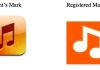
The icon on the left represents iOS’s music app. The icon on the right is for a now-shuttered Myspace service called iLike. Apple introduced the Music app to iOS in 2007 with the iPod touch. iLike was founded in 2006, granted its trademark 2008, acquired by Myspace in 2009 and then shutdown earlier this year. But in a recent decision by the Trademark Trial and Appeal Board, Apple cannot trademark the icon for the iOS Music app. The reasoning? The marks and services are too similar and would likely cause confusion.

Born out of Garageband.com, iLike was a social music discovery site that allowed users to download and share music. But then Myspace bought the site for $20M and eventually shut it down earlier this year. The iLike url no longer resolves nor redirects to Myspace Music.

Per the document below, Apple applied for its Music trademark in April 2010, two months before previewing iOS 5 to the public. Prior to iOS 5, Apple’s mobile platform used an iPod icon to signify the music locker system. Apple indicated within its trademark application that the Music app is “computer software for use in reviewing, storing, organizing and playing pre-recorded audio content, sold as a feature of handheld mobile electronic devices…”.

However, an examiner for the US Patent and Trademark Office denied Apple’s request. And so it went to the Trademark Trial and Appeal Board.

Last Tuesday the TTAB upheld the original ruling despite Apple’s argument that no one ever has nor will confuse the two services. The TTAB sees it differently stating although there are differences between the icons, “we find that the basic similarities in the marks outweigh any specific differences that might be apparent upon a side-by-side comparison. The differences in the details of the respective depictions of the double musical notes and their background designs do not suffice to distinguish the marks in terms of their overall commercial impressions. Regardless of the differences which might be apparent in a side-by-side comparison, both marks depict a double musical note in an orange rectangle.”

The board also notes that Apple and iLike’s services are very similar, thus, combined with the similar icon, could confuse the average consumer.

GigaOM notes that Apple can appeal the ruling. So, at this point, Apple will either fight it out in the courts or roll out a new app to the gazillion iOS devices, which will ironically likely confuse the average consumer as well.


Headshot Science: Faces Too Close Perceived As Less Attractive, Trustworthy, And Competent

1524035

Your makeup, hair, and clothing look fabulous, and the lighting is just right. But that neatly planned headshot or cute self-pic may ignore an important factor in how people judge trustworthiness, attractiveness, and competence: distance from the camera. “It turns out that faces photographed quite close-up are geometrically warped, compared to photos taken at a larger distance,” says graduate student, Roonie Bryan, who published the findings soon to be quoted in every campaign and cosmetic shop in the country in this week’s issue of open-access journal, PLoS ONE.

It has long been known that consciously imperceptible differences in facial perfection, such as Brad Pitt’s gorgeously symmetric face, are a cognitive marker for beauty. The new science, for instance, helped unearth newly minted model, Florence Colgate, who was found to have the most “scientifically” beautiful face in an international search.

The new findings show that the facial distortion caused by pictures taken too close to the lens can cause similar distortions from perfection (neurologically speaking). The researchers asked participants to play hypothetical monetary trust games and conduct ratings of faces that were artificially distorted to mimic a lens at various lengths from a person’s face (so that they could control for things like lighting). Consistently, the researchers found, faces too close to the lens caused negatively perceived distortion.

Before readers freak out below in the comments section, I am not saying whether this is biologically determined or whether it’s healthy for a society to be beauty-obsessed. Just, that if you spend some time planning a picture, distance is one thing you may want to take into account, according to this interesting piece of research.

[Via ScienceDaily]