Silicon Valley Telecom Entrepreneurs Pivot: New Business Models Win 58% Of VC Investment And Carrier Revenues

Steve Patterson

Editor’s note: Steve Patterson’s observations and writing are based on his 20 years working in the primordial ooze of start-ups in Boston and the San Francisco Bay Area. He graduated from Boston College with a degree in Mathematics. A contributor to organizations such as Network World, MHT, Byte and RH he is interested in the convergence of mobile and cloud.

Silicon Valley leads the nation with more than 50 percent of telecom venture investments, and its share is growing. The reason for this is that companies such as Google, Apple, VMware and Salesforce have redefined the meaning of the telecom carriers business to include Internet, mobile and cloud with wireless, terrestrial and satellite transmission of voice and data.

In turn Silicon Valley telecom entrepreneurs have pivoted from capital-intensive hardware infrastructure with expensive and long telecom carrier sales cycles to less capital-intensive, software-based products and services with shorter telecom carrier sales cycles.

The top 10 quarterly telecom venture investments in Silicon Valley reported for the second and third quarters of 2012 by PricewaterhouseCoopers Moneytree demonstrate this change in product orientation. The new business models are usually based on services that can be hosted on standard data center server hardware and software stacks and delivered to enterprises and consumers by carriers through Internet-leveraged sales campaigns. Nicira Networks, a software-defined network infrastructure company recently acquired by VMware for $1.2 billion, is an example of this new model.

Beyond attracting venture capital, the concentration of innovation has also attracted carriers to Silicon Valley. AT&T, Sprint, China Mobile, France Telecom/Orange and Swisscom are representative of the many large and small American and international carriers that have offices in Silicon Valley. All share the common goal to accelerate R&D and product delivery cycles with innovation acquired from startups.

Carriers are struggling for relevancy because their brand identities are often diluted by the likes of Apple, Google, YouTube or other apps or services that are consumed by individual and commercial customers of the underlying carrier telecommunications services. If they succumb to the struggle, carriers will be destined to a future of commodity competition for the lowest cost mobile and Internet data services.

Carriers, like venture capitalists, are risk-averse to investing in or buying from telecom hardware infrastructure startups. But there are many startups that don’t present these risks because they deliver over-the-top services, network efficiency and consumer products and services without large capital commitments.

Examples of agile carriers Swisscom and Bouygues, as well as startups Devicescape and Ooyala, illustrate how startups can quickly win revenues and investments from carriers seeking innovation.

Ursula Oesterle, vice president of innovation at Swisscom (Palo Alto), draws an insightful distinction about risk and return. “The lifecycle of infrastructure and services is very different. Services that run over-the-top of our networks can be quickly prototyped and co-created with innovative companies with less risk and smaller investment compared to infrastructure. We are able to increase Swisscom’s return on R&D investment and shorten time to market by actively seeking, discovering and working with small innovative Silicon Valley companies.”

Ooyala (Mountain View) delivers video streaming and analytics that power video that is personalized for every viewer, location and device. Confirming the opinion of Swisscom’s Oesterle, Ooyala’s CEO Jay Fulcher reported that “Australian carrier Telstra licensed Ooyala video platform within 8 weeks of first meeting because the investment and risk of a service is limited and because of Telstra’s imperative to accelerate innovation and entrepreneurship by leveraging start-up R&D.” Telstra also led Ooyala’s recent $35 million round. Telstra’s deployment and investment commitments speak to the commercial importance of start-up innovation within a large carrier.

Devicescape Software (San Bruno, Calif.) CEO Dave Fraser says carrier adoption cycles have become consumerized. “Carriers selling cloud apps, consumer products and services, and serving advertisements have to be much more nimble and innovate faster.” Devicescape rolls together millions of distinct, free amenity-based Wi-Fi networks to offload mobile carriers’ 3G and 4G networks to save them money. The company initially focused on tier-2 mobile carriers, such as U.S. Cellular and MetroPCS. “This type of smaller carrier by necessity has more experience leveraging its own R&D budget with start-up innovation and adopting disruptive technology more quickly,” explained Fraser. Devicescape’s first sale took about a year. Since then Fraser has found that “carriers are beginning to act on imperfect information where risk is manageable.”

French mobile carrier Bouygues reached agreement with Devicescape in only six weeks. Stephane Allaire, who heads the Silicon Valley office of French carrier Bouygues Telecom, sponsored Devicescape’s deployment. Allaire believes that “taking smart risks with startups is a great source of innovation.”Allaire, who has sourced 15 Silicon Valley innovation relationships, thinks that “we have to take risks with small companies to go faster, and we can work with much smaller companies earlier in development than Devicescape when innovation presents itself.”

Sharing perspectives gained from organizing more than 150 meetings and events between carriers and startup innovators, Liz Kerton, president of the Telecom Council of Silicon Valley, said, “In recent years our membership of new and returning carrier sponsors has increased, as has carrier search for external innovation from startups.”

Silicon Valley is an advantage to telecom entrepreneurs: Their close proximity to Internet, mobile and cloud leaders gives them a unique product-development perspective and greater access to capital. Close proximity to innovation-hungry carriers with an interest in buying and/or investing in startups improves the likelihood of a telecom startup’s success.


Qik Founder’s Story: Taking Mobile Video Out Of The Garage And Putting It Into The Hands Of Skype

qik_logo

Editor’s note: Bernard Moon is co-founder and CEO of Vidquik, a new web conferencing and sales solutions platform, and co-founder of SparkLabs, a recently launched startup accelerator in Seoul, Korea. Follow him on Twitter

I met Qik co-founder Ramu Sunkara through the University of Wisconsin-Madison alumni network while seeking advice for Vidquik. Listening to his story about Qik’s voyage from its founding in 2006 in Ramu’s garage to being acquired by Skype in January 2011 for $150 million was inspiring, so I decided to interview him for everyone  building the next new thing. We met in his garage — “Suite G” — in Los Altos, Calif., where Qik was founded.

Bernard: How did Qik get started?

Ramu: We started the company in this garage in 2006. Three of us started this company, Bhaskar Roy, Nikolay Abkairov and myself. They worked with me at Oracle and we would say, “I want to see what you see now” so we decided to do something in video. We had three founders, and then the fourth founder was Vijay Tella. Vijay gave us seed capital, worked with us from the start and joined full-time after Series B was closed in March 2008.

YouTube was just starting out, so I said let’s figure out what we can do in video. Nikolay was in Moscow, Bhaskar was in Santa Clara and we would use my garage in Los Altos to meet. We wanted to see what Nikolay was seeing in Moscow or vice versa, so the first thing we prototyped was live video from PCs to any web site. You log into a website and see what the other person is now streaming.

Bhaskar was very good in marketing. Nikolay’s expertise was in technology, Vijay was exceptional in strategy and built another startup — Tibco — and I had both the mixture of product, technology and go-to market. Above all we had a trust between us before we started out.

Once we took the first round of funding, we saw that the PC market was too crowded. We said we needed to get out of that market. Our investors funded us expecting us to build a PC-based video-streaming product for the MySpace community.

Bernard: How much did you raise initially?

Ramu: Our Series A was $900K. After we took the funding, we all got together and agreed that the PC space was crowded and we had to move to mobile. Most of the founding team was excited to jump into mobile, and we told our investors we’re going mobile and that’s how we pivoted in 2007.

We built live-streaming technology and applied it to the mobile space. Mobile networks are disparate and the bandwidths keep changing. We built the IP so our product could understand all the real-time variants in the network. This was much more suited for the mobile world than the desktop broadband world.

What we realized in 2007 was there was only one Nokia phone on the market with a front-facing camera. Most smartphones had only a back camera, and the networks weren’t there yet. So we said, “Let’s enable people to stream with you from the back camera of the phone.” Remember there was no iPhone or Android at that time.

We started to think of a name for the product and Bhaskar did some research and came up with “Qik,” which means instantaneous. We all agreed, so our name became “Qik.” We bought the Qik domain for $5,500 and that was our marketing budget.

The Qik garage team, from left to right: Alexander Markow (first engineer), Nikolay Abkairov (founder), Bhaskar Roy (founder), Alexey Timanovsky (chief architect), Ramu V. Sunkara (founder).

Bernard: How did you launch your product?

Ramu: Well, we were three guys and none of us had a mobile background. But we did have a product, so we let the customers download the app from our website. This was pre-App Store days. Previously, all the mobile app companies were going and lining up to pitch the wireless carriers. We decided that we didn’t want to go to the mobile operators (AT&T, Verizon, Sprint, etc.) to distribute Qik. This played to our advantage. We didn’t spend any time talking to a wireless carrier and put the app on the Qik website for Nokia users to find it and download it.

Bernard: How did you market to those initial users?

Ramu: One of our early beta users went to the Apple Store in Burlingame, Calif., and presented to a gentleman called Robert Scoble. Scoble said, “I can stream live video to the Internet using my cell phone?” The Qik user took his cell phone and streamed Scoble live. He saw himself on the monitors in the Apple Store. On Dec 17, 2007, he announced to the world that he could stream live video from the phone. This was how the product got launched.

It was made clear to everyone that if you wanted to break news, you should use Qik to do so. You press a button on the phone and you are live on the Internet.

Bernard: And you guys were the first ones?

Ramu: Yeah, we were the first ones. There were a couple of companies trying to talk about it but they didn’t have a product. At the Consumer Electronics Show, several media outlets wrote about us. BBC first covered us in the World Economic Forum and said, “This is how we’ll connect the world to us.” From BBC to the World Economic Forum to global media and blogging sites, we rolled out to the world in less that six weeks!

When the word went out that Friday, we actually ran out of money. Our data center was at capacity because people were downloading the product from the website and streaming video. I knew Marc Benioff since he and I worked together at Oracle, so I immediately reached out to him via our mutual friend. Then Marc Andreessen and Ben Horowitz sent me an email: “Hey let’s talk.”

That Monday, I closed a round for $3 million, our Series B, and gave them the valuation a little later. They gave me the money. This sort of thing can only happen in Silicon Valley, i.e. just a demo and no pitch!

Bernard: So what happened next and what did you do with the $3 million?

Ramu: News was spreading all over the world about our disruptive technology. Senators in the U.S. started using it, the Prime Minister of Singapore, and Congressman John Culberson from Austin, Texas. The buzz just went around and around. The buzz got us, too. We were spending $90,000 a month before Series B and we ramped up the expenses to half a million a month. We grew the team and operations and then we ran out of money.

Along the way we won every single award given to a mobile company in 2008. The Wall Street Journal named us a “Top 10 Mobile Application”; Variety Magazine gave us the “Top 10 Innovators Award”; so on and so forth. When the iPhone 3G was announced, it couldn’t do video then. People were jail-breaking iPhones to install Qik. Then we launched the Qik product for iPhone about 24 hours ahead of any of the competitors. So that 24 hours made a big difference.

We kept our edge up. When there was an opportunity we just jumped at it. That’s how we beat the competition with the iPhone phenomenon. We took the market by storm in 2008, but in October, we ran out of money. We burned through it really fast — we had absolutely no money in the bank. This is when I learned the value of having a great mentor during times of crisis. Such people are God-sent because they have been through the process before. They can really help you. For me, this was Ben Horowitz.

When we ran out of money, in 2008, that’s when I borrowed $200,000 every month for eight months and kept the company going. We had a very good team. We didn’t lose a single person despite the financial turmoil. They were focused and stayed with the original product evolution map. Ben was critical in keeping us balanced and helped weather the storm.

Bernard: Wow, they all stayed with Qik during this period?

Ramu: Yes, they all stuck it through. We had a phenomenal product but hadn’t found a revenue model yet. Venture Funds was trying to give us money earlier in summer 2008. This was because the product was getting so much free publicity. I didn’t take any money then. People were giving us 4x term sheets in August and I was saying, “No, no, no. We’ll build the product further, get more users and we’ll close later.” Then the market collapsed in late fall 2008. So the lesson I learned was you should take money when it’s given to you.

Bernard: True. So true. What was your mindset during this time? Because that’s pretty admirable. You believe in your product and company, but as each month went by there must have been doubts creeping in.

Ramu: Yes. It made us think hard and focus on revenue. The reason we didn’t get funding for nine months was because the product, which won so many awards in 2008, still didn’t have a revenue model. No one was funding us because every investor in the financial crisis wanted to see the revenue model. This forced us to think — where could the revenue come from? This led us towards a premium model and distribution revenues with partners. We figured out both in 2009.

Bernard: Is that when you focused on doing the distribution deals with the wireless carriers?

Ramu: Yeah. That’s when we focused on distribution deals with carriers. The first deal was Sprint, the next deal was T-Mobile, and the next was ….. you get the idea. Sprint made the Qik service as their best application in 4G launch nationwide in 2010.

Bernard: Got it. So when you finally did one of those first deals you got your investor money?

Ramu: Yes. As the deals were closing the investors said, “Okay, this is how the company can make money.”

Bernard: How big was your team at the time?

Ramu: We were about 25 people.

Bernard: Twenty-five people. And you said all stayed?

Ramu: All stayed together.

Bernard: How did you keep the team focused during the financial crisis? I assume there were doubts.

Ramu: The team always had doubts but we kept motivation up by continually communicating our vision and what we were going to do. Every time we had a term sheet, an investor meeting, or important discussion, we kept everything very transparent to both teams in the U.S. as well as in Moscow.

It was challenging because our team was distributed between Redwood City and Moscow. We had to have good communication to make sure that both these teams understood where we were. Having a good founding team with solid mutual trust was critical and worked to our advantage. 

The third thing was that they [teams] were all passionate about solving problems. There were very hard technical problems doing live video from the phone. Along the way iPhone and Android came, constantly presenting new technical challenges for us. 

Bernard: So when you were recruiting, was that one thing you were looking for? 

Ramu: Both passion in the mobile space and the product. We had product engineers building software on different mobile platforms, and that was only about a third of the team. Another third were working on cloud-based infrastructure for video because video was pretty bulky to manage once it went to the cloud. Then the last third was building the web infrastructure for integrating into social networks, building reports, and all the other stuff.

Ramu: Not taking funding was the big mistake we made in 2008. We learned a lot and we survived only for two reasons: We had a great team and I had a great mentor, Ben Horowitz. Marc Andreessen and Ben also stepped in at the right times [as investors]. This was before they started their own fund. Those were the toughest nine months. And we had great investors like Camp and Quest Ventures and all the friends and family participated in the next round, Series C, in May 2009.

This forced us to think hard, “How do we make money on this product?” At the end of 2009, we started making money in distribution revenues with Nokia, as well as a priced product in the Apple App Store. We persevered through the tough times and survived. Most of the competitors were gone by then. We had competitors from Israel, Canada and in the U.S. You need solid investors to help when things are not going well.

Bernard: You mentioned your competitors not evolving fast enough. How did Qik’s product evolve?

Ramu:  Initially, it was streaming to the Internet, video archiving, video sharing, then two-way video calling and finally video messaging. Qik was all the things that were required to capture any moment on your phone that you wanted to share with your friends on Internet or mobile or share live, and all of it was archived.

Bernard: As you evolved, did your user base change?

Ramu: Yes, our user base changed. Our initial sweet spot was journalists/bloggers who wanted to break news to their community using Qik, but we realized there was no revenue in the market because journalists needed more high-quality videos than what the phones could produce. For them, video quality was paramount to the real-time nature, because newsworthy items require pristine videos. Today, all of us watch HD videos not cell phone videos. We realized very quickly that there was a good go-to market approach, but not to secure our success. So we made the switch and became a consumer company. This is when we started getting the mainstream adoption, mainstream distribution and mainstream revenues. We became a personal sharing service for smartphone users.

Bernard: Your product evolution also coincided with the users and revenue?

Ramu: Yes. Our user base, active users and revenue were growing 10x year to year. When people started downloading and signing up, the usage of the product and revenue was all growing 10x.

Bernard: What was unique about Qik’s technology?

Ramu: We built a smart streaming cloud that understood the different types of cell phone videos and the frames that were missed from going to the cloud. It intelligently transcoded the video and made sure the consumer doesn’t see the choppiness or the missing frames. This was our own proprietary technology. We built all the servers and phones, maintained one or two TCP/IP connections to the cloud, and managed everything on them unlike Skype’s peer-to-peer infrastructure. This was a required architectural decision as we went further along, because PCs have more capacity than mobile devices and don’t work off a battery. This is an important tradeoff when you’re building a product for mobile consumers.

The cloud infrastructure we built takes any kind of video from any mobile device and puts it out on any device and/or on the Internet in real-time.

We had built technology in four different areas. How do we do this video in real time without giving up on quality? The first area was real-time video quality. The big tradeoff here was you stream a little less just to fit through the pipe, but if you stream more, it jams the pipe. How do we do this without compromising quality? That’s where we had six patents. Then we had technology, which worked across disparate smartphones. When we started with Nokia it forced us to think of all variances between phones. So we built our client-side technology that could go with all phones and leverage the best quality video and consume the least amount of battery.

We also built our IP with the idea that video should never be lost. When you take a video, your cell connection could drop, your phone battery runs out, and so on. This is where we said: “We have to build technology where our video is never lost.” Our initial users were all journalists and they were really upset if their video was lost. We maintained a journal on the device and the cloud, did periodic checkpoints and a phased commit to ensure the video is archived in its entirety.

Bernard: Was there any specific feature from your product that made it stickier or people more loyal to your product?

Ramu: The biggest competition or feature that really forced people to start taking us more seriously was when FaceTime was launched. Apple made video calls cool. Everyone said we had to have this product too. We were the best product that was doing it across Apple, Android, Nokia and other phones.

Bernard: How did you distribute your product?

Ramu: Towards the end of 2010 we had distribution agreements with operators in North America and abroad. In South Korea with SKT, as well as Softbank in Japan and so on. This was where we figured out the distribution revenues for Qik. During 2010, the entire world was seeing FaceTime on iPhones. And for all the Androids, a FaceTime feature wasn’t a priority, so we became the product of choice for Android OEMs (mobile phone manufacturers). All Android operators and OEMs wanted to get FaceTime parity they had to take Qik, and we worked with them to have Qik pre-loaded on 55+ devices.

Bernard: That’s great and obviously you get…

Ramu: We get distribution revenues. We’re making good distribution revenues, new and active users, and revenues went up 10x each year from 2009 to 2010 to 2011.

This continued upwards towards 2011 when we merged with Skype. When Skype acquired us we had distribution relationships with 13 carriers in the world and all the top 10 OEMs. So this was where all things were falling into place for us in terms of distribution and revenues.

I learned that if you had other people evangelize the product, it works much better than you pitching your own product. We had Nokia’s support and evangelism. Excellent commercials and marketing. Also Sprint was promoting us when they were launching the first 4G network. Sprint used Qik as the killer application and a reason why you needed to get 4G. Walmart/T-Mobile too, started selling two smartphones for Qik Video Chat among families.

Bernard: What factors do you think drove Skype to acquire Qik?

Ramu: We complemented what Skype already had. Skype was a desktop VoIP and video product and we were mobile-centric. Our design emphasis since the beginning was “how do you build a product for the mobile world?” Qik was completely cloud-based infrastructure and not peer-to-peer. The second thing was we were doing all these premium services like video messaging and video chatting. The cloud video infrastructure Qik built did automatic archiving of videos, which was hard for Skype to do because it was peer-to-peer. It was a synergy in terms of product and Skype’s future plans. The other synergy they also had was that Skype had R&D operations in Tallin, Estonia and Qik had operations in Moscow.

What also drove the merger was our mistake in summer 2008 when investors wanted to give us money. We didn’t take it and almost killed the company. This time around we said, “let’s take it.”

Bernard: How did the interest first come from Skype?

Ramu: Skype looked at the Qik roadmap. They saw what they wanted to make. Skype was a premium model. Qik had exactly the same premium model, direct to mobile consumers. Second thing was Skype’s mobile ambitions and Qik’s footprints were identical. What Skype needed to build, Qik already had in the market. So when we were working on a partnership, they realized that what they wanted to build, Qik already had. And we had the distribution relationships with all operators and OEMs.

In North America, Sprint, T-Mobile, AT&T all went with Qik, and Verizon was evaluating Qik in their labs. So they thought, you know, you cannot have two video products on your phone. So they had to acquire Qik.

Bernard: So they initially approached you on a partnership deal and then it just accelerated?

Ramu: It accelerated pretty quickly. Within a week or so, they made an offer. I can’t say exactly when but very quickly they came around with a revised offer that was acceptable to the Qik board. In another four weeks the deal was closed and announced at 2011 CES. All this happened over Christmas and New Year holidays.

Bernard: Wow, that’s really fast. So I assume when they made their first offer, it was their best offer.

Ramu: They made a second offer, which was accepted by the Qik board. They bought the company for $150 million. It was a good roadmap for all engineers at Qik. It was a great merger for both companies going forward and now Microsoft.

Bernard: What are some lessons you would tell other entrepreneurs?

Ramu: The three things that worked for us: No. 1 – The team has to have a good working relationship. I think the team has to get along well because you don’t know what’s coming in the future. You pivot at different points, run out of money, and make a lot of hard decisions. The team has to really work together.

No. 2 – The idea has to be disruptive. When we started Qik we didn’t know anything about distribution to mobile or monetization with mobile consumers. Things like that you can figure it out. When iPhone and Android came to the market in 2007, our adoption accelerated. If the idea is disruptive, it gives you more time to figure these things out because the market is trying to figure it out. Use the time to get more awareness and more buzz and at the same time figure out your distributions and revenue models.

The last thing is execution. You just stick it through. Sometimes it gets bleak, but focus and push through it. Execution also becomes a little easier if you have a good mentor. I was really lucky in my case and a good set of investors who stuck through in trying times.

Bernard: Do big opportunities remain in mobile video?

Ramu: There are still big opportunities in mobile video. Today, we do not have universal voice calling which works with all phones and all operators. We have texting plans that work with all phones and operators but we don’t have anything with video. There are solutions such as Skype (and Qik), Apple FaceTime and Google Hangout. They have built their own video experiences and work in their own ecosystem. If someone can build a product that can work out the economics with the operators and is available on all video-enabled endpoints, I think there is a good business to be had. The challenge is the economics have to work out in the mobile eco-system of operators, OEMs and the video service provider.

Bernard: I’ll circle back with you later on what your next startup is. Thanks a lot for your time and insights, Ramu.

Ramu: No problem. I enjoyed sharing my story and lessons from Qik.


New Jersey Allows Voting By Email And Fax For Hurricane Victims

images (24)

Wow. Registered voters in New Jersey displaced by Hurricane Sandy will be permitted to vote by fax or email in the upcoming election. New Jersey, along with about a dozen other states, already permit overseas and military voters to return signed ballots electronically. “To help alleviate pressure on polling places, we encourage voters to either use electronic voting or the extended hours at county offices to cast their vote,” said Lt. Gov. Kim Guadagno. Voters can apply to have a ballot sent to them online and when it is returned, election officials will print it out and cross check the information to authenticate the voter’s identity.

Due to security concerns, there are a few countries in the world that have dared to experiment with electronic voting, including Canada, Latvia, and Sweden. Only Estonia permits universal electronic voting, thanks to a sophisticated national ID system that can match ballots to a verified identity. Even with the most advanced national identification system on the planet, some experts maintain that electronic voting isn’t secure. “Online voting is a very unsafe idea and a very bad idea and something I think no technological breakthrough I can foresee can ever change,” argues Johns Hopkins computer science professor, Avi Rubin.

In New Jersey’s case, voters who opt for electronic voting will have to waive their right to privacy, since election officials will have to check the name printed on the ballot against the voter and registration rolls (to avoid duplicates, among other possible sources of fraud and mistakes).

Fraud is unlikely to be a problem for the presidential race in New Jersey, given that Obama is polling, on average, 10 points higher than Romney. However, with the hurricane chaos, anything is possible, and if the vote ends up being close, it’s unclear how officials would be able to accurately double-check all of the votes.


Fine-Tune Your Outbound Sales Formula To Help Save Your Startup

SteliEfti

Editor’s note: Steli Efti is the Co-Founder/Chief Hustler of ElasticSales and an advisor to several startups and entrepreneurs. Follow Steli on Twitter.

One of the most common questions startups ask me is how to handle B2B outbound sales. They often ask this question in a state of desperation, hoping I respond with the magic formula. Quite frankly, there is no magic formula. An outbound sale is hard work, and it requires an extraordinary amount of effort to get it right.

But why would you even want to do outbound sales for your startup?

The stories all sound the same: When a startup begins selling their product, it’s all about the low-hanging fruit. Inbound, press coverage, the community, and the founder’s personal networks are the majority of a startup’s customer base. Things seem great, because the founders believe that they are on their way to finding a product-market fit and massive traction.

Barring the rare Cinderella story, this is never the case. What happens when the well dries up? What happens when they have to pitch their product to businesses that have never heard of them before? These questions are what cause a startup to cautiously turn to outbound sales.

Every product or service that can be successfully sold via outbound sales has a different scalable and profitable formula to it. The first goal of your outbound sales team is to find that formula. The first questions that need to be asked and tested are: “What mix of research, lead generation, cold emails and cold calls equal satisfying results?” and “Where and how will you get an ongoing stream of quality leads?” It’s impossible to answer these questions without actually trying and testing a lot of things.

Below are four things you need to keep in mind in order to develop a sustainable outbound sales campaign of your own.

1. Compiling Outbound Leads

Keep your lead lists manageable and targeted. Stay away from trying to compile a massive list. Sales reps will have less of an incentive to fully investigate every lead and will waste time trying to cherry pick. Focus on smaller lists with defined attributes, and try selling to them one at a time. This will make it easier for your sales team to learn more about the vertical and how the market reacts to your product. The results from the different lists will allow your team to analyze conversion rates and make decisions on which type of targets to go after more than others.

It’s not often that you will find quality corporate leads with a paid list or database; however, that does not mean they aren’t useful. Look at these lead sources as a starting point. Use a lead generation team if you can to call those leads and confirm what your sales team will be dealing with. Don’t sell them anything; just gather more information. Once you have your “cleaned” lead lists, have the sales team create a custom pitch for each vertical that has a higher probability of directly addressing the client your contacting.

2. The Cold Call

Cold calling is not always a sustainable action for outbound sales. Many times you want to reach out via email first before setting up sales calls. In rare cases, cold calling can be incredibly effective. It all depends on the market that your startup is selling to. Either way, cold calling can be a powerful tool for you to learn about what the marketplace really looks like.

One of the biggest mistakes sales reps make on cold calls is trying to mask the fact that they are cold calling. Think of it as knocking on the door to someone’s house. You don’t just barge through the door and start talking, you ask for permission to come in first. Do the same in cold calls. State your reason for the call and ask permission to continue the conversation. Using phrases like “Did I catch you at a bad time?” or “Do you have a few minutes to talk about this?” will grant you permission to speak and take the next step in the conversation without friction.

3. The Cold Email

The cold email is often times your best bet when it comes to selling a product or service to a startup or technology business. We recommend using the Predictable Revenue approach to cold emails, which is sending an email to a person senior to the actual target you want to sell to, and asking for a referral from this person.

The referral approach has a higher chance of engaging your prospect, because an insider with seniority will be introducing them to your product – not you.

Don’t spam people. Don’t send bulk emails to thousands of business leads. Think quality over quantity.

4. The Answer Is In The Data

The formula for a scalable and profitable outbound sales process can only come from data. Not hunches, assumptions, or guesses. Make sure all of your strategies are tracked and documented. Once you have a good sample of data to evaluate, your goal should be to build a set of expectations for results by the week or month.  You can use a “reverse funnel” approach to building a successful outbound formula by answering these questions in order:

  1. How many deals do you need to close each week/month to be profitable?
  2. To get that many closes, how many new opportunities in the pipeline do you need to generate per week/month?
  3. To get that many opportunities, how many conversations do you need to have per week/month?
  4. To have that many conversations, how many leads do you need to contact per week/month?
  5. To contact that amount of leads, how many leads do you need to generate per week/month?

If the answers to four and five are mind-boggling, your expectations for closed deals are too high (at least in the beginning). Adjust your expectations, and concentrate on improving the conversion rate at each point of the funnel.

It’s important to remember that an outbound sales process needs to be proven before you can even think of scaling (like any other thing in your startup). Throwing more resources at outbound sales won’t solve your problems. Start small, try everything, and then look at the data. Once you have the formula, you then have a set of expectations for your team to execute. If you can find the formula to outbound sales, the growth and scale of your startup can be massive.


After U.K. Court’s Handslap, Apple Gets Less Cheeky In Samsung “Apology”

Screen Shot 2012-11-03 at 2.04.43 PM

Apple had to tone down the attitude in a re-issued “apology” it published today to its U.K. website after losing an appeal in a patent infringement case against Samsung. A U.K. judge smacked down its previous apology for being “incorrect” and “untrue” on Thursday. Above is the pared-down version that appears in a link at the bottom of the company’s U.K. homepage.

And then, here’s the old version (which you’ll note contains several paragraphs praising Apple’s design aesthetic from the ruling). Basically, it just had too much attitude:

On 9th July 2012 the High Court of Justice of England and Wales ruled that Samsung Electronic(UK) Limited’s Galaxy Tablet Computer, namely the Galaxy Tab 10.1, Tab 8.9 and Tab 7.7 do notinfringe Apple’s registered design No. 0000181607-0001. A copy of the full judgment of the Highcourt is available on the following link www.bailii.org/ew/cases/EWHC/Patents/2012/1882.html.

In the ruling, the judge made several important points comparing the designs of the Apple and Samsung products:

“The extreme simplicity of the Apple design is striking. Overall it has undecorated flat surfaces with a plate of glass on the front all the way out to a very thin rim and a blank back. There is a crisp edge around the rim and a combination of curves, both at the corners and the sides. The design looks like an object the informed user would want to pick up and hold. It is an understated, smooth and simple product. It is a cool design.”

“The informed user’s overall impression of each of the Samsung Galaxy Tablets is the following. From the front they belong to the family which includes the Apple design; but the Samsung products are very thin, almost insubstantial members of that family with unusual details on the back. They do not have the same understated and extreme simplicity which is possessed by the Apple design. They are not as cool.”

That Judgment has effect throughout the European Union and was upheld by the Court of Appeal on 18 October 2012. A copy of the Court of Appeal’s judgment is available on the following link www.bailii.org/ew/cases/EWCA/Civ/2012/1339.html. There is no injunction in respect of the registered design in force anywhere in Europe.

However, in a case tried in Germany regarding the same patent, the court found that Samsung engaged in unfair competition by copying the iPad design. A U.S. jury also found Samsung guilty of infringing on Apple’s design and utility patents, awarding over one billion U.S. dollars in damages to Apple Inc. So while the U.K. court did not find Samsung guilty of infringement, other courts have recognized that in the course of creating its Galaxy tablet, Samsung willfully copied Apple’s far more popular iPad.

At the time the U.K. judge, Robin Jacob, handed down the order, Bloomberg quoted him as saying, “I’m at a loss that a company such as Apple would do this. That is a plain breach of the order.” He ordered Apple to remove it within 24 hours and replace it with a compliant notice within 48 hours.

Last month, Apple lost an appeal against a ruling in a U.K. High Court, saying that Samsung’s Galaxy Tab did not infringe upon the iPad’s design. The original ruling by Judge Colin Birss said Samsung’s tablets were not cool enough to be confused with Apple’s because they lacked the “extreme simplicity” of the iPad.

In the October ruling, the court said that Apple had to run notices on its U.K. website and in several print media outlets specially saying that Samsung did not infringe upon Apple’s designs. Given that Apple’s iconic founder Steve Jobs famously said he was willing to go “thermonuclear” on rivals like Google (and the handset makers that Android relies upon), it’s understandable why Apple would be reluctant to run such a statement on its own homepage.

Yet having to rescind and then re-issue a statement seems really too silly.


Drew’s Mom Reviews “Startups: Silicon Valley”

Screen Shot 2012-11-03 at 3.11.47 PM

Editor’s Note: We had Lynda Harrison, writer Drew Olanoff’s mom, review an advance copy of the first episode of Bravo’s “Start Ups: Silicon Valley,” premiering Monday, November 5th. Because we can. Harrison, a nurse who loves to sew, lives in New Jersey and tweets at @sw33ti3.

I really wanted to watch this program with an open mind, despite the fact that it is on Bravo, which is slowly devolving into a network of unreal reality shows. I wanted to like it because I find brilliant people in high-pressure situations fascinating. I wanted to know what it is like to be creative, intense and articulate in the world of tech. But that’s not what “Start Ups: Silicon Valley” delivered.

Where do I start? Does everyone in Silicon Valley look like Sarah Austin, Kim & Hermione? Are all the guys wasted and hung over like Dwight? Where are the Wozniaks and Jobses? I am absolutely sure there are smart plain or even ugly people who live and work there. Perhaps they are all kept in the basement hunched over their computers doing the hard work while the “beautiful people” have all the marketing and camera time.

What I saw in “Start Ups: Silicon Valley” was a weird amalgamation of “Big Brother,””Jersey Shore” and any high school on any day. I could watch the movie “Animal House” if I wanted that type of entertainment. Where was the substance? I would have liked to see some actual work highlighted; meetings, strategizing, brainstorming versus the glorification of a vapid, decadent party lifestyle.

Where was the tech? Where was the science behind the apps? Honestly, if I had to see Dwight Crow or Ben Way take off their shirts one more time, I was going to throw up. Yes, brains and beauty can coexist, but they sure don’t in “Start Ups: Silicon Valley.”

Even with all of that said, I am sure there is an audience for this program. The same people who can’t miss an episode of “The Bachelor” or “The Real Housewives of Wherever” will watch to see if Dwight makes a further fool of himself or if Sarah and Hermione get into a cat fight. And what about Ben and Sarah, can their fledgling relationship survive amidst the estrogen-powered strife?

This is one-dimensional escapist fare which can be fun to watch. As long as consumers clamor to keep up with everything Kardashian, there will be a ready audience for this program. But it will not appeal to those who want an inside glimpse of what drives the tech industry and the talented people who inhabit this world.

If the show’s makers want to garner a broader audience, they should include the real creative process. Where do startup ideas come from? What research is done to get them off the ground? What happens when an idea fails or there is no funding? There is real drama in actual life situations. If, as the show states, 90% of start-ups fail what happens to those people? Do they develop new ideas, continue to party like there’s no tomorrow or do they move in with Mom and Dad and get “regular” jobs.

My final take away from this show: If this really is Silicon Valley reality then I’m getting on a plane and fetching my son home from California before it is too late.


Yahoo’s Homepage Isn’t Raising Enough Money For Hurricane Sandy Relief, Let’s All Step Up

6947146193_64809ae323_z

We’re just now learning what level the devastation that Hurricane Sandy caused on the East Coast, specifically in New York City and New Jersey, and people are starting to send the wagons around to raise money to assist those in need. We learned yesterday that mentions of blood donation and the Red Cross skyrocketed on Twitter during the peak of the storm, and other organizations are starting to get involved.

According to Wikipedia, Hurricane Sandy has caused 110 fatalities with one person missing, and an estimated $50 billion in damage. Katrina cost $108 billion to recover from, and some areas and folks haven’t been afforded the chance to even recover.

Silicon Valley is slowly getting into gear, with Yahoo! doing its normal fundraising on its homepage. There’s only one problem, though: It doesn’t seem like the site is raising that much money. Now mind you, any money during this time is fantastic, but if you look back to 2005 during Hurricane Katrina, Yahoo! performed quite well for fundraising during that period.

Let’s look at Yahoo’s homepage today, which features the donation page and tracks how much money has been raised. I believe this is fantastic and it’s something every major site should add, maybe including ours:

According to Yahoo!, 15,968 people have donated $860,679.

Let’s look back at September 5th, 2005, during the Hurricane Katrina aftermath:

Katrina made its second landfall in Louisiana on Monday, August 29th. As I mentioned, the screenshot above was from September 5th, and it shows that 338,360 donors raised $48,259,665.

Why the massive disparity? I have no idea, but I have two ideas.

1. Does anyone visit Yahoo’s homepage anymore?

Without doing a deepdive into traffic stats from sources that aren’t accurate, one could wonder out loud if people even visit Yahoo’s homepage as much as they used to. Katrina was seven years ago and Yahoo! was in a way better place then. Sure, Marissa Mayer is on board now, but the company is trying to pull off a dramatic turn-around. For the umpteenth time.

Even if the traffic to the Yahoo! homepage isn’t down, I suspect that it’s not as trusted as it once was. What I mean there is that during Katrina, the site was a trusted source for news and information. Therefore people threw down money to help their brothers and sisters out. Since Yahoo! had great coverage, people were willing to donate through their site.

Today? Not so much. The people I know who visit Yahoo’s homepage go there for celebrity news and trashy videos about…celebrities. Yahoo! is no longer a trusted source for serious news, and this fundraising effort, or lack thereof, reflects that. Don’t believe me? Check out the current “trending” topics on Yahoo!

But what do I know, right?

2. Are people full of apathy?

People are hit up for donations on every site they visit these days. Facebook just introduced what I believe is a fantastic addition to its Gift product, which allows you to donate money in someone’s name for their birthday. Red Cross included. But are we just numb to all of this now? Do we feel that tweeting and retweeting about a major horrific life event is “enough” and monetary donations are no longer needed?

When I think back to my own fundraising efforts through #BlameDrewsCancer, I honestly believe that if it was out there today, it wouldn’t have been as successful. People are fundraising so hard online, for every little thing, that when a major event happens, we’re simply out of money and sympathy. That hurts me deeply.

The fact that the presidential election is days away doesn’t help, either. I personally get 3-5 emails a day from the Obama campaign asking me for money. If I’ve given so much to his campaign, how will I have money to give to a charity or to relief of Hurricane Sandy?

Look at CNN’s homepage and see if you can spot the hurricane coverage:

Look at this grouping of news that is basically hidden on its site:

It’s silly, and it’s saddening.

What needs to happen

Those in a position to do so need to step up and do something big. Celebrities do concerts and events to raise money, but what do we do in the Valley? Nothing much so far. If Yahoo’s homepage can’t carry us like it did in 2005, who will do something big?

Facebook is doing something and Google is trying to help with information, but who is actively out there trying to raise funds and resources for those in New York City, New Jersey, Pennsylvania and other areas who need it the most?

I’ve talked to numerous friends who are dealing with food and gas shortages in the city. They can’t get from one place to another because of the subway problems and because their apartments are without power. We don’t fully know the impact that the storm had as of yet, as the city still seems to be in crisis mode. The NYC Marathon was cancelled, which should tell you something. A friend of mine has had to stay in an expensive hotel for a few days and is running out of money because of it. I spent my childhood at the Jersey shore and it’s demolished. It’s just a really bad situation.

I don’t know what to do exactly, and if you have an idea, I’m all ears.

Let’s step up together, myself included.

Until then: Text Red Cross to 90999 – Donate $10 to the Red Cross.

[Photo credit: Flickr]


Get Your Ass To Metro (Windows 8)

wpid-Photo-3-Nov-2012-1201.jpg

Editor’s note: Tadhg Kelly is a game designer with 20 years experience. He is the creator of leading game design blog What Games Are, and consults for many companies on game design and development. You can follow him on Twitter here.

Love it or hate it, Windows 8 is a big deal and it’s only going to get bigger. Particularly the Metro side. The Windows Store will bring app store economics to the PC in a way that most users have never experienced before, and that represents a golden opportunity for developers. However they will have to move incredibly quickly to get ahead of the rush.

In the physical world of shops and car parks, something weird happens around Wal-mart. The company establishes a big presence in the area, a store where everything happens under one roof with a measure of quality control and consistency. This proves so attractive that shoppers travel from near and far to buy their goods at Wal-Mart, and it becomes the king. So much so that it kills the centres of many small towns, leaving it as the default choice. (It’s even called the Wal-Mart Effect).

Software services often do something similar. Google owns searching of the entire Internet and is not about to let that go. Facebook has placed itself at the heart of private communication between groups of friends, and Twitter does likewise for public communication and news. Amazon had the foresight to realise that it could be the Wal-Mart of the Internet and own shopping (and also ebooks). Then there’s iTunes, which does the same for music, and the App Store for games.

The reason that one service dominates is because it becomes the obvious access point, the one with everything under one roof. Most people have a hard time remembering – or caring about – a bunch of names and places that they could go to get what they want, and they’d rather just have one general access point. For many people Google is the Internet, and they navigate to sites they know by googling them rather than entering URLs. So the one that becomes the default access point wins.

Owing to the effects of platform amnesia, this effect presents a golden opportunity for content providers who dominate that access point early in the cycle. Zynga made its bones largely on being an early mover on Facebook. Rovio did something similar in mobile. But these opportunities have a half-life, and if you miss them when they show up, you’re not likely to get a second chance. The “rush” aspect of a gold rush is just as important as the gold itself.

The last five years have seen an explosion in new platforms, means to distribute software and resets of user expectations. Even software itself has undergone something of a rebranding, from application to app. Everything has seemed new all over again. Tablets and phones have largely driven this supernova of excitement, but their next five will be more about expanding upon those early successes. Macs have had the same experience with the Mac App Store, but it’s been muted somewhat by the Mac not knowing whether it wants to be an iOS-like machine or not.

On Windows the app-store effect has largely been absent. For those in the know there is Steam, but Steam is just the wrong side of geeky for many normal users to get behind. So this whole new way of buying software for the PC is about to be a revelation for many. With Windows 8 and its Windows Store, it’s about to be a gleeful time in PC-land. Users will buy lots of new games just to try them out. They will explore to see what new casual game they can find. They’ll transact at volume, get into free-to-play gaming on the desktop, and otherwise form the next gold rush.

All of which leads me up to saying this: You should be developing or retooling your games and apps for the Windows Store right now. And also this: You don’t have long.

I don’t think that Windows 8 is a great operating system. Last year I wrote an article in which I tore into its interface and explained why I thought it was pretty for presentation but poor in the real world. I faulted its reliance on hidden UI elements and user memory, as well as its lack of effective task switching. I also bemoaned its implementation on Xbox 360 and the wisdom of Microsoft’s one-UI-to-rule-them-all strategy. These criticisms are still valid.

However, irrespective of personal opinions, Microsoft sold at least 4 million copies of Windows 8 since launching it last week. With 670 million Windows 7 installs out there already, it is likely to sell a whole lot more. That means that the Windows Store is going to be highly visible to a whole lot of eyeballs. It’s also positioned to become a default option, because developers will not be able to sell apps on Windows without it. Oh, sure, there’s still that desktop option – but do you really expect that to last?

In short, Microsoft is poised to apply a Wal-Mart Effect to PC software (including games) in a way that not even Steam can match (and Steam may well be doomed). Pretty soon that store is going to be filled to high heaven with millions of apps, its shelves groaning with choices. It’s likely to have mountains of cheap casual games, converted free-to-play games and tonnes of indie games all jostling for position. It will be a giant market, probably bigger than iOS in the long run. And right now there are only 10,000 apps there. So the time to strike is now before the rush becomes a torrent.

The thing is that, unlike mobile, there are already a ton of PC-compatible games out there, and this is why the time pressure is so tight. At a time when PCs are supposedly out of fashion, Steam goes from strength to strength. Valve continues to expand the service, adding new features like Big Picture and the possibility of selling applications. Gamers, for the most part, love it and – while sales of the PC platform in general are down – few people seriously expect the gaming PC to go away.

Many game makers are already developing their games in cross-platform engines like Unity. Many others have games which are already built to work on PC and likely need some adaptation for Metro. Remembering that W8 is a tablet operating system as well as a desktop one, there are also many opportunities to consider in touch gaming as well as mouse and keyboard (with the caveat that Surface RT probably isn’t The One).

The point is – regardless of your personal feelings for Windows vs Mac, etc. – for the daring developer this represents a golden opportunity, but also one that needs to be moved on very quickly. PC developers can be just as conservative as everyone else in their estimations of whether to get on board a new train. But they will, eventually, and when they do they will do so by the metric tonne. Then it will be too late.

So move your ass. The Windows Store is likely to be the last opportunity of its kind for quite some time.


Quick, Tie The Rafts Together

gricau1

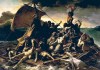
To continue to operate in the 21st century as if it is still the 20th is certain death for most businesses. Not instant, but certain. And it was certainly this existential crisis that is leading the publishers to cling together. The resulting business will have to change just the same, but it will be easier to navigate these waters as a single raft (of the Medusa variety, but a raft nonetheless) than as a flotilla.

“Penguin Random House” will be the decidedly non-euphonious result of the proposed merger of two of the largest publishing houses in the world. Some people are terrified, but of what? The move is clearly being made because the companies have been backed in a corner and are now forced to combine resources in order to survive.

Now, questioning whether the big publishers should survive at all is a red herring, and the product of a cruel mind (shame on you). Publishing houses, like recording labels, movie studios, and other purveyors of media, have contributed hugely to culture despite the greediness and inertia that are found in any entrenched business. Publishers are a good thing, because they publish.

But they’ve gone from good to necessary to necessary evil as business overtook mission, and now is a chance for them to go back to good. Because they sure aren’t going to be necessary, evil or not.

What’s the use of a big publishing house in the days when the Internet levels the playing field and gives any connected person an equivalent or superior reach? Really, now you are being obtuse! You may as well ask what the use is of Universal Studios now that you can shoot good-looking video on consumer cameras.

Infrastructure isn’t all dead weight. The power of publishers doesn’t consist entirely in their ability to print and distribute books. There are thousands of people scouting full-time for new talent, working with authors who have no idea how to structure a biography, fact-checking because no one else can be bothered, laying out text and figures in ways that will be harmonious with multiple formats, promoting to TV and other media, handling security around pre-release reviewing, and a dozen other jobs that reflect the complexity of making a book, periodical, or other wordy work.

I know, I can’t believe I’m defending the publishing industry either. But doing things wrong doesn’t mean what you do is unnecessary. The MPAA is fighting the future tooth and nail, but that doesn’t mean that hundreds of thousands of industry gaffers, editors, VFX artists, lighting designers, and so on are unnecessary to the creation of a movie. The publishing industry has its valuable people and services as well. Not every aspect of the publishing process was obsoleted over the last ten years.

Starvation, dehydration, cannibalism and madness

That said, we can safely predict that the fate of the major publishers, hurriedly lashing their drifting fragments of wood together, will follow that of the crew of the Medusa, pictured above. The Wikipedia article (for the painting, not the actual ship) succinctly describes the 147 passengers and crew set adrift as undergoing “starvation, dehydration, cannibalism and madness” — not necessarily in that order, or one at a time.

By the end of their journey, the survivors numbered 15; everyone else had been eaten or thrown overboard. Publishing, like the other media companies, may have some indispensable parts, but there are hard times ahead and the cannibalism is already starting. (I’m tempted to extend this metaphor even further, because the story of the Medusa is interesting, but I’m trying to combat this particular type of urge, as it tends to inflate word counts beyond what a normal reader can be reasonably expected to tolerate. As do these self-referential asides.)

The big publishers are going to need to embrace lower profits (no more price fixing and middle men) and reduced responsibilities (no more bullying stores, authors, and customers), but in return for this they get their survival. It’s a hard bargain, but they aren’t in a position to negotiate. If they fight it for long, they’ll be abandoned for the intractable dinosaurs they are and leaner, more forward-thinking organizations will take their place. Luckily for the publishers, the encroachment of technology on their business model came several years after the moment of truth of the music and movie industries, so hopefully they have learned vicariously through their degenerate brethren.

Conglomeration is a good start, because this way they can move with one body (though it be postponing the inevitable) and strike with one fist (though the blow be misplaced). With luck and good sense, in ten years they’ll be well on their way to embracing the future, while still providing for the necessities of the present. Paperbacks will still be needed, as will press junkets, copy editors, dust jackets, and so on — and in addition to providing such services, these theoretically-reasonable publishers (or publisher, if they continue subsuming one another) will preside over powerful and lucrative new platforms that reflect both the new capabilities of the author and his persistent shortcomings.

The future of publishing is exciting for authors, so it should be exciting for the industries created to enable and monetize those authors. There is still a need and a desire for publishers as tastemakers, central nodes for activity and networks, and gathering places for certain vocations. After the honeymoon period for self-publishing — in which we revel in our own genius and the ability to project our brilliance into the wide world — is over, we may realize that there is more to the process than we thought. We will seek to augment our inadequacies.

But there is no guarantee that Penguin Random House, or Harper MacPenguin House & Schuster, will be the one to perform this duty. The merger is only the beginning of the beginning, but the end may come, despite all their strategizing, if they fail to acknowledge the bleak reality and take appropriate measures. If the devil we know abdicates the future (as the RIAA and MPAA among others have done), what fills the void they should have occupied will be the devil we don’t know. Which is worse? We’ll find out soon.


Do We Need Another Angel List? NOAH Insider Seems To Think So

logo

Many would say Angel List has become an indispensable resource for investors and startups to find, connect and recommend each other. This almost altruistic effort has taken Silicon Valley to the world, and, increasingly, the world to Silicon Valley. Slowly but surely European-based startups have also started using it over the last couple of years, and, used in combination with CrunchBase, it can be pretty powerful. However, not all think this. And only this week, a new player emerged with an attempt at its own land grab: NOAH Insider.

Created by NOAH Advisors, a boutique corporate finance house, which, over the last couple of years, has become a key player in the European M&A market, NOAH Insider quite clearly owes a few debts in appearance and structure to Angel List. Indeed, one might almost say it confirms the old cliché about European clone companies.

NOAH founder Marco Rodzynek has been the driving force behind the annual NOAH conference, which has become a well-placed event for mid and late-stage startups to ply their wares amongst VCs and private equity houses. I asked him why he decided to create NOAH Insider, given that it is almost a full-blown clone of Angel List?: “Because too few are using it in EU” he says simply.

His partner Yoram Wijngaarde is more effusive: “We believe that having the goal of bringing Europe’s fragmented eco-systems closer together requires a Pan-European focus. Also, it isn’t a pure clone since we are combining Angel List-like functionalities with an events functionality, which enables startups and event organisers to create events across Europe. This is a powerful combination.”

That’s all very well and good; the main question is if they will get enough critical mass of users. Will investors flock to NOAH Insider because of its European focus? It’s hard to say and I haven’t exactly seen the social media wires running hot about the site as yet.

That said, it may be a useful, focused addition to the scene. European investors and startups are only a short flight away from each other – even if you include a quick four-hour trip to Moscow or Tel Aviv. It makes sense to have something more geographically focused. And the launch has already been supported by Index Ventures, London’s Tech City Investment Organisation, Summit Partners, Holtzbrinck Ventures and many angel investors across Europe.

NOAH Insider will be opened up to a wider audience at the next NOAH conference in London due this month. And they promise more development and improvements and to build out more features so that users have strong reasons to invest their time on the platform.

Meanwhile, I am still getting requests for recommendations from European companies on Angel List…


Gillmor Gang: Shaken Not Stirred

Gillmor Gang test pattern

The Gillmor Gang — Robert Scoble, John Taschek, Kevin Marks, and Steve Gillmor — stumbled through and upon the possibilities of an orbiting metadata cloud. Mark our words, Instagram’s success with the pre-teen set sets the table for powerful social graphs where photos share equal weight with GPS, swipe, and realtime contextual data.

While we detoured slightly in anticipation of the social impact on the election, Obama and Chris Christie banishing the toxic politics of partisan nitpicking for some basic working together was a sight for sore eyes. Maybe Google and Apple can take a page from at book.

@stevegillmor, @scobleizer, @jtaschek, @kevinmarks

Produced and directed by Tina Chase Gillmor @tinagillmor


The 20 Most Innovative People In Democracy 2012

democracy

Ironically, technology has radically democratized nearly every social institution and industry except democracy itself. A handful among us are pioneering ways to bring transparency and interactivity to the process of self-government. On the eve of America’s political new year, Election Day, we highlight this year’s most innovative people in democracy.

Titans

Barack Obama
Once described by a senior advisor as having a “high geek quotient,” the most powerful man in the world has made innovative governance one of his cherished side projects. Before he was even elected, Obama’s groundbreaking use of social media secured him the Democratic nomination against a formidable insider. As President, one of his first executive orders created a senior level position tasked with developing creative technological solutions to problems of the federal government. The unprecedented opening of government data, YouTube town halls, and tracking federal spending online have been hallmarks of the Obama presidency.

Eric Schmidt
Each one of the Google billionaire founders have their own mad scientist pet projects. Executive Chairman Eric Schmidt has directed his own army of Googlers toward the cause of Internet transparency, accessibility and social welfare. Google Ideas develops tools to prevent epidemics, disrupt illicit trade networks of weapons and slaves, and monitor election fraud. While admitting that Google’s policy of engagement with China was not successful, it seems to be working within the authoritarian Middle East, where Googlers played an important role in the Arab Spring, and demand for Gmail dampened Iran’s Internet censorship plans.

Toomas Hendrik Ilves
Estonia President Ilves (“ill-viss”) presides over the most technologically advanced democracy on Earth: citizens vote online, enjoy universal access to medical records, and can perform most government services without leaving their laptops (Estonians filed their taxes online long before it was popular in the U.S.). So impressed with Estonia’s track record, the European Union now consults him on how to rework its own fledgling attempts at an electronic medical sysem.

Congressman Darrell Issa (CrunchGov Grade: A)
Better known for being Obama’s conservative arch-rival as chairman of the House Oversight Committee, Congressman Darrell Issa moonlights as a champion of bleeding-edge legislative innovation. As an engineer and former President of the Consumer Electronics Association, he personally helped develop Congress’s first legislative crowdsourcing utility, Project Madison. He also live-streams every Oversight hearing and is developing ways for the public to interact with members of Congress during the otherwise opaque process of subcommittee meetings (where most legislation gets written). If that weren’t enough, he also introduced the DATA Act, a bill to make all federal funding trackable online. Proof of his nerd cred: The day he indicted Attorney General Eric Holder for contempt, he was at a wonky open government conference, the Personal Democracy Forum, while every political reporter was begging for access to him.

Julian Assange
Few journalists can inspire mass fear in both dictators and first-world leaders with the mere mention of a pending story. As founder and Editor-in-Chief of Wikileaks, he has pushed the boundaries of government transparency, and, in his own anarchical, brute-force way, proved that liberated information can do more to advance democracy than decades of back-door diplomacy. His unwieldy methods have endangered lives and tossed the Middle East into uncertainty, but his stamp on history and the future of media cannot be denied.

Hometown Heroes

Cory Booker
Newark Mayor and part time superhero, Cory Booker, has redefined what it means to hold executive office in the age of social media. Booker’s million-strong Twitter feed spouts everything from dense nuggets of inspiration to real-time problem-solving with his constituents. Famously, he shoveled Newark driveways in response to tweets of help during a snowstorm. This Fall, Booker debuted a new social media platform, #waywire, as well as details on Facebook founder Mark Zuckerberg’s $100 million gift to Newark’s school system. Booker’s remarkable eloquence in 140 characters could do to Twitter what Shakespeare did to the once drab English language.

Michael Bloomberg
The outspoken media mogul and New York Mayor has committed the Big Apple to digital openness. Antiquated telephone booths are being transformed into public Wi-Fi; Chief Digital Officer Rachel Hoat has been charged with opening up government data; and the city was among the first to invite civic hackers to develop better city services. The mayor has overseen quite possibly the most innovative program in public education, P-Tech, a five-year high school that awards an associates STEM degree and a path to favored employment at a partner technology firm (New York’s P-Tech first partnered with IBM).

Tony Hsieh
The soft-spoken CEO of Zappos has committed a whopping $350 million of his own piggy bank to create a model city in the dingy center of downtown Vegas. Hsieh’s rather simple idea is that community brings out the best in humanity. Indeed, one of Political Science’s most famous studies, conducted by Harvard’s Robert Putnam, found that prosperity, health, and government efficiency was dependent on the density of citizens’ informal interactions (book clubs, bowling leagues, etc). Hsieh is terraforming downtown Vegas for friendship and serendipity, where coffee shops and a thriving tech scene inspire locals to share knowledge. Should Hsieh be successful, his easily replicable model could have an extraordinary global impact.

Jennifer Pahlka
To someone holding a hammer, everything looks like a nail. To Code For America Founder Jennifer Pahlka, who holds an army of civic hackers, every frustratingly poor government service is just a line of code away from fixing. Code For America has been hailed as the 21st century version of the Peace Corps, where programmers take up residency in a city and dedicate time to finding technological solutions to local government problems. They have recently expanded into the nascent civic startup space, a new industry based on providing state services better than the government can do alone. May this new industry thrive.

Global Citizens

Alec Ross
As America’s premier digital diplomat, Hillary Clinton’s senior technology advisor has overseen many watershed moments in technology and democracy: his team contacted Twitter to postpone maintenance during the Iranian uprising and championed text donations for Haitian earthquake relief (which raised somewhere north of $32 million). In addition to greatly expanding embassy outreach and local tech sector development, the State Department has boldly partnered with companies developing anti-authoritarian tools, such as a panic-button for cell phones that automatically wipes incriminating content during government raids. In the controversial U-turn from cowboy diplomacy under Bush to global citizenship under Obama, Ross has been the tip of the digital spear in the advancement of global interdependence.

Pirate Party
They’re less fun than a boat full of drunken sailors, but more influential in Germany than many third parties are in the United States. After winning 15 parliamentary seats in Germany, the Pirate Party has developed an intriguing crowdsourced platform of decision-making known as “liquid feedback.” The trust-based voting system permits members to leave decision-making to those they know are more knowledgeable, while preserving the inclusiveness of direct democracy. The Pirate Party is currently expanding its ranks throughout the globe.

Democratic Scientists

Tiago Peixoto
As one of the foremost authorities on digital direct democracy, Peixoto (pe’-sho-to), the Brazilian World Bank consultant, has helped Brazil discover the secrets of successful online participatory budgeting and wiki-legislation. The Internet, theoretically, holds the key to mass involvement in policymaking, not seen since Democracy began as a humble community experiment in the rolling hills of Athens, Greece. Unfortunately, crowds can be as spiteful, partisan, and stupid as they can benevolent, open-minded, and brilliant. Peixoto’s research is paving the way for technology to bring out the better parts of democracy.

James Fowler
When everyone else waxes philosophical about the benefits of interconnectedness, James Fowler, a professor of medical genetics and political science at the University of California, San Diego, is developing the scientific framework to measure it. The Connected co-author is the only researcher to have employed sound experimental research to prove that Facebook, in fact, has a meaningful impact on voter turnout.

Media Pioneers

Jason Russell
Thanks to the co-founder of anti-child soldier nonprofit, Invisible Children, the most viral video in Internet history has no cats, pop stars, or drugged-up children. “Kony 2012” ultimately led President Obama to sign military authorization to go after infamous Ugandan warlord, Joseph Kony. Nor were Invisible Children one-hit wonders: In 2009, Invisible Children utilized social media to organize a sit-in outside Senator Tom Coburn’s office, which unblocked Congressional legislation for military action. After a debilitating public meltdown that would have paralyzed an ordinary organization, Russell and his team have resurfaced and are planning on marching in D.C.

Jason Rzepka
MTV’s Senior Vice President of Public Affairs is charged with activating America’s most apathetic demographic: 18-29 year olds. With a global audience of half-a-billion youngsters, MTV’s social good arm is perhaps the only institution that can turn this otherwise political inconsequential group into a powerhouse. This year, Rzepka revamped the old “Choose or Lose” campaign for a Fantasy Football-style game, “Fantasy Election“, where users compete with friends to assemble rag-tag virtual teams of honest, substantive, and popular candidates. More recently, he coordinated a Presidential interview, fielding questions from MTV’s massive Facebook followers.

Super Staffers

Matt Lira
Majority Leader Eric Cantor’s senior advisor, Matt Lira, has an infectious optimism for how technology can make Congress more responsive to the people. Under Lira’s admirable bi-partisan lobbying, Congress has agreed to place legislation online for three days prior to voting, has experimented with direct democracy through cell phones (YouCut), and is on the verge of releasing vital legislative data for use by government watchdogs. Congress and Silicon Valley have become closer, literally, because Lira has helped organize frequent trips to Northern California for the Republican leadership and organized a Facebook developers conference inside the Capitol building.

Team Obama
Macon Phillips
When Obama tweets, Macon Phillips is likely nearby. As White House Director of New Media, he’s gotten the president to embrace social media as a more direct alternative to the otherwise exclusive circles of the White House press corp. Petition platform WeThePeople binds the White House to give official response to popular questions, and Obama has personally responded to users on Google+, Reddit, and YouTube.

Todd Park
America’s most enthusiastic bureaucrat and second Chief Technology Officer came out of the gate swinging, launching five programs just months after being appointed by President Obama: an electronic fund transfer system for foreign aid, a small-business-friendly government procurement process, and an expansion of open government datasets for health, safety, and education. Mindful of the transient nature of White House gigs, he set up a (potentially) permanent program for White House fellows to continue innovative tech work regardless of who holds power.

Steven VanRoekel
The federal Chief Information Officer wants the government to function like tech giants, directing agencies to develop guidelines around prize-based innovation and open data. In some cases, the Silicon Valley-ification of government will come by brute force: VanRoekel has set up a hiring system to flood agencies with young tech-savvy employees.

Seamus Kraft
Behind Congressmen Darrell Issa’s groundbreaking open government agenda is Digital Director Seamus Kraft. On top working on legislation to make federal spending transparent, making room for open source software in the government, and helping to liberate congressional data, he’s now heading up the Open Government Foundation to spread Project Madison, a crowdsourcing legislative utility, throughout Congress.

Snooki
The controversial reality star exposed millions of civically apathetic TV-watchers to the world of politics during a frank Twitter exchange with former presidential candidate, Senator John McCain. More importantly…we’re just kidding.

As with any list, we surely left out many brilliant people. Please list any notable individuals in the comments below. May next year’s list be even harder to compile.

[Illustration: Bryce Durbin]


3D Printers Are Not Like 2D Printers: A Rant

printer-smash

The last time I wrote about 3D printers, an appalling number of people in the comments – including VCs who really, really should know better – kept writing things like: “Nearly identical comments were made about personal computers, desktop printers, color printers, laser printers…” and “just like printing at home” and “Let’s use the traditional paper printer as an example” and “it will follow the same trend as 2D printing” and and and and and.

Recently the very same thing happened to me in casual conversation. And so, this rant:

People. Listen. 3D printing is not just 2D printing with another dimension added on. Yes, the names are very similar, but their uses are not even remotely analogous. We may reasonably conclude, therefore, that 1) 3D printing will not recapitulate the history of 2D printing, 2) as soon as you make an argument along those lines you lose all credibility and look like an idiot.

Why? Because paper, I think you’ll agree, is used almost exclusively as a medium of information. Exceptions like Nicole Aptekar’s stunning paper art only serve to prove this rule. This is true even of photo printers: if it can be digitized, it’s information. Whereas 3D printers generate stuff. And our relationship to stuff is thoroughly, extremely, fundamentally different from our relationship to information.

(Yes, 3D designs are information, of course; but they’re the map, not the territory.)

Now, 3D printing is indeed revolutionary. Just ask, well, potential revolutionaries. Or the U.S. military. Or Panda Robotics, who cancelled their PandaBot Kickstarter because it was trumped by a sudden eruption of institutional interest in their product. Or the EFF, out in front of the big issues as usual. Today’s 3D printers are the nascent edge of a technology that will ultimately entirely transform our collective relationship with stuff. They are a big deal.

But at the same time, their use cases, adoption rates, economic impact, etc., will be nothing like those of the 2D printers you know and love (or, more likely, hate). Yes, even though the names are so similar. Shocking, isn’t it? So please, Internet, I beg you, please please please stop using that ridiculous and thoroughly inaccurate analogy.

That said, there is one, small, extremely limited way in which it does almost hold. If Nathan Myhrvold — who is increasingly becoming a caricature of himself, and/or the Dr. Evil of the Internet — were to register a patent for technology that would prevent 2D printers from printing out copyrighted work, you would probably find that incredibly creepy and disturbing and Orwellian. Which is exactly how you should feel about his company Intellectual Ventures’ move on “object production rights.”

But that is all. That is the extent of the remit of the “3D printing is like 2D printing” analogy. Otherwise, please, just, no. Stop it now. Thank you. This has been a public service announcement.


EFF: Calling All Geeks – Help Explain To Judges Hearing Oracle v. Google Appeal Why Copyrighting APIs Is Such A Bad Idea

EFF

The Electronic Frontier Foundation (EFF) is asking for help in explaining to the federal circuit why copyrighting APIs is such a bad idea.

The EFF’s request comes after a victory earlier this year when U.S.District Court Judge William Alsup ruled in the Oracle v. Google case that an API cannot be copyrighted. The ruling drew a sigh of relief from the tech community, but the victory was short-lived. Oracle has since appealed and now a three-judge panel will decide if Alsup’s ruling should stand.

Alsup was that rare judge who actually learned how to do computer programming. It’s doubtful that the three judges will share such a deep knowledge of how applications work and integrate with APIs.  This increases the stakes considerably. The EFF puts it this way when Alsup made his ruling:

Treating APIs as copyrightable would have a profound negative impact on interoperability, and, therefore, innovation. APIs are ubiquitous and fundamental to all kinds of program development. It is safe to say that all software developers use APIs to make their software work with other software.

The EFF needs help from software engineers, developers and those who benefit from APIs. They are looking for people who fall into either of the following two camps:

  • People who have integrated third-party APIs, made calls to APIs or used APIs for interoperability, competition, or innovation.
  • Those who have implemented an API that helped the API provider increase its user base or otherwise benefitted its developer community.

You can share your stories with the EFF through this email address: [email protected]. The EFF will use the stories to explain to the judges why they should follow Judge Alsup’s lead and rule that APIs are not copyrightable.

Copyrighting APIs is ridiculous. Polymorphic Ninja compares it to someone saying they own the right to tomatoes. Tomatoes in themselves hold value, but if they were copyrighted it would be pretty damn hard to make tomato sauce.

Furthermore, while I think that APIs are creative efforts, they are merely components of the bigger picture.  On their own, they don’t do much.  If one were to make an analogy to cooking, the ingredients to a recipe would be APIs, and the dish would be the application.  And like ingredients, APIs can be home grown, or bought from a vendor.  But no single vendor has the right to claim they invented tomatoes and that nobody else can grow them, even if they were to somehow convince everyone they were the first to figure out how.  And if they could, how do you suppose that would impact the price of tomatoes?  How many suspicious allegations would get thrown about if someone came up with a fruit that’s similar, whether it was done honestly or not?  And how many great dishes that depend upon tomatoes would have never been invented because of the controlled availability and fear of legal action?  Or what if an artist could prevent other artists from using a particular brush stroke because they “invented it”.  APIs are nearly on that level of abstraction and expression.

In tech terms, copyrighted APIs would make it very hard for companies to innovate. It would isolate apps, making it difficult to develop a service like Box or Dropbox. It would be unlikely that apps could get integrated like they do now. Let’s just hope these federal judges will listen to what people have to say. If they don’t the result will be one gigantic mess where pretty much everyone is a loser.


3 iPad Mini Design Considerations For Developers

Boris Chan Xtreme Labs

Editor’s note: Boris Chan is a principal at Xtreme Labs who leads product development and innovation efforts. Follow him on Twitter

Apple finally unveiled the iPad mini last week. Perhaps its main selling point is that it runs the same apps as the iPad and works just as well with the same screen resolution despite its smaller size. However, a new device on the market means there are many issues developers must take into account. Here are three important considerations for delivering a great experience on the iPad mini.

1. One-handed usage. The smaller size of the iPad mini enters the market of one-handed tablets. Now developers need to consider how users will navigate an app with only have one hand. With this in mind, developers will need to design content that is easier to interact with via one-handed simple gestures. Where pinching and zooming motions once flourished on the iPad, the iPad mini will need to rework gestures so they can be performed with one hand. I imagine developers will employ more tapping, double tapping and scrolling to accommodate for single-handed use. The Letterpress word game is a great example, as it can easily be played with one hand.

I expect to see fewer paging designs by default. Much like iBooks’ scrollable theme, there will be a preference among developers to create longer pages that require more scrolling as opposed to shorter pages that require a user to move from page to page. Being able to flip through content with a simple gesture is universal, though—Flipboard will be great on all form factors.

2. Portrait by default. A number of current iPad apps are set to landscape view by default. Since one-handed use will predominate with the iPad mini, this trend will shift. If they aren’t doing so already, I see an added need for developers to support orientation changes so that consumers can use an app in both portrait and landscape. The portrait view should also support all the primary functions of the app without requiring landscape. For reading apps specifically, developers must support the ability to turn off rotation. Path, newly released on the iPad, takes full advantage of landscape/portrait differences.

Something to avoid: just making a bigger iPhone app bigger. Even though the iPad mini is smaller, developers still need to build an iPad app. For example, with the Nexus 7 and smaller tablets, many apps are not tablet-ready; rather, they are just enlarged versions of the phone app. Avoid this temptation and create a much better user experience by designing iPad mini apps specifically for the tablet form.

3. Glance-ability. The iPad mini will be used on the go. That’s a given. But more interfaces will be designed for shared usage. I think we’ll see an uptick in apps like customer surveys and restaurant menus, where developers have an opportunity to reach situations where people are showing and sharing content on a single device.

Outside of that, I see more frequent usage while people are out and about, given the portability of the device. This means there’ll be more scenarios where users are only looking at an app in passing. I see navigation for directions/maps as a space where this is especially interesting. Smaller tablets are easier to use passively in the car or while out on the road. Waze and Google are some standout examples of apps that work well. Waze has an awesome and easy-to-understand map view on the go, and Google offers an instant dictation view for voice search.

I also expect more people will use more iPad mini features while they’re out, including camera/video recording and location-based features that have cross over into the tablet market. Developers should take this into account when building apps specific to the new device.

Overall, it may seem like developing for a smaller iPad with the same resolution should be easy. Yet, developers should be taking into account these unique use cases for the iPad mini and make the necessary design changes to their apps to keep users happy.