Gift Guide: Our favorite headphones of 2020

Welcome to TechCrunch’s 2020 Holiday Gift Guide! Need help with gift ideas? We’re here to help! We’ll be rolling out gift guides from now through the end of December. You can find our other guides right here.

Headphones! They make a pretty solid gift any year, but they’re an even better option when so many of us are stuck at home. It’s hard to think (much less get anything done) when the background track of your life is a cacophony of conference calls and Zoom school.

We spent a lot of time with a lot of different headphones this year, so we thought it’d be good to highlight some of our favorites. As with all things audio-related, “best” is deeply subjective — but these ones all absolutely earned our stamp of approval. Between over-ear, on-ear, in-ear and gaming headsets, we’ve got the bases covered.

This article contains links to affiliate partners where available. When you buy through these links, TechCrunch may earn an affiliate commission.

Over-ear and On-ear Headphones:

Marshall Major IV
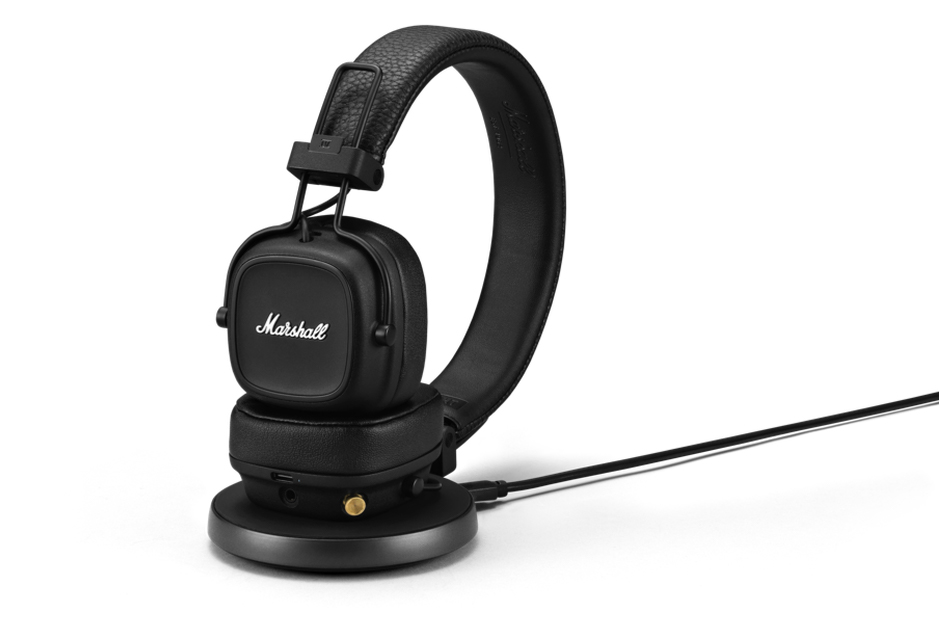
Image Credits: Marshall

Darrell writes:

Marshall’s latest on-ear headphones combine great sound with a lightweight design, and some unique benefits — including over 80 hours of playtime on a single charge. They also charge either via USB-C or wirelessly with most standard chargers, by folding them up and resting them on their right ear cup. The on-ear design means no noise cancellation and noise isolation is minimal, so they’re not great for commutes but a very solid choice for the home office. For the price, they’re a great deal, and a stylish accessory, to boot.

Price: $129 from Marshall

Sony WH-1000XM4
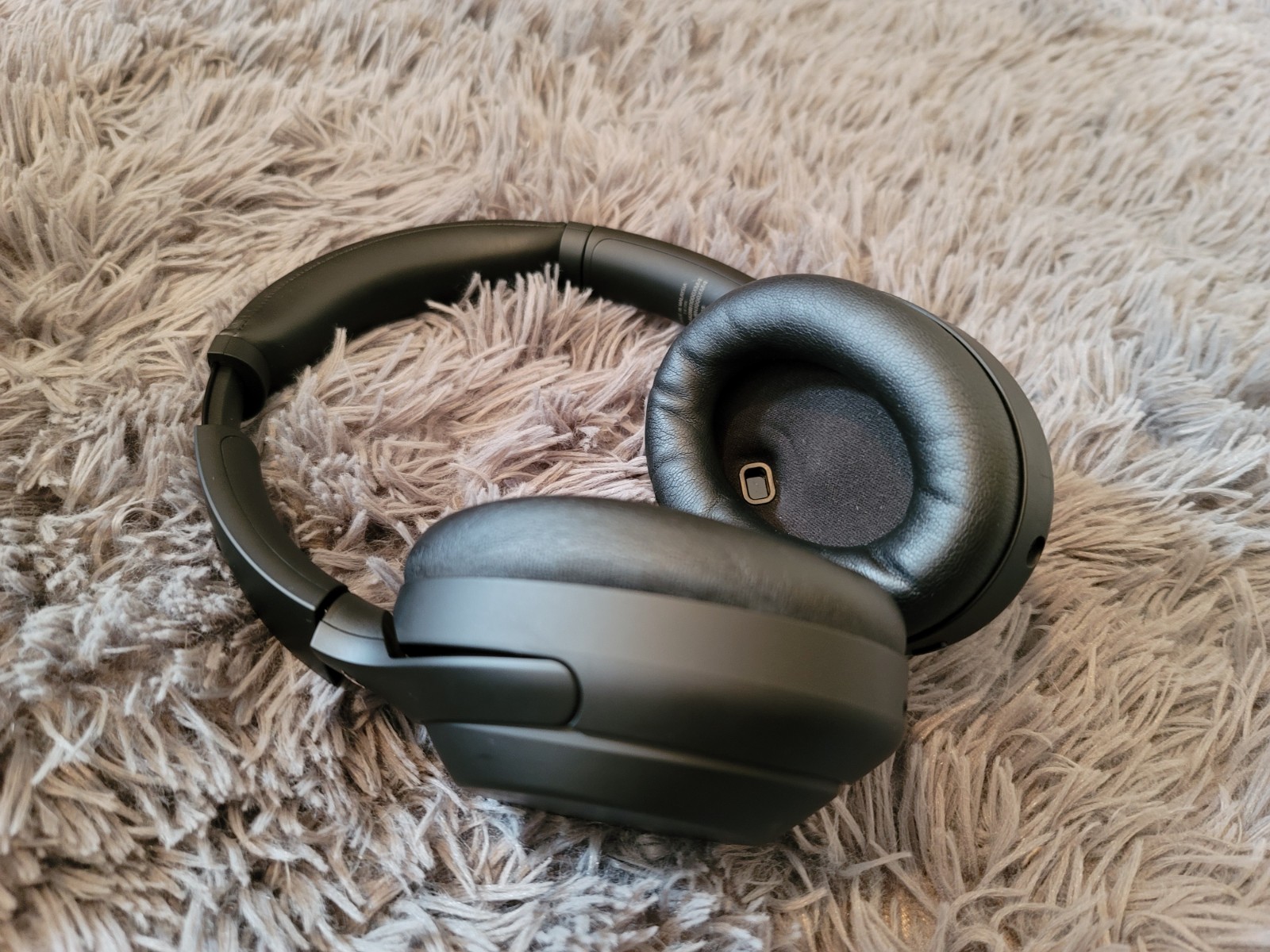
Image Credits: Brian Heater

Taylor writes:

If you need really serious noise canceling and you aren’t willing to sacrifice on sound quality, Sony’s WH-1000XM4 over-ear headphones are a no-brainer.

Widely regarded as the best at what they do, these headphones actually do quite a few different things very, very well. The sleek over-ear design and sophisticated active noise canceling means they can create a totally silent work environment if that’s what you want. And if you’re just in it for Sony’s signature killer, punchy sound, that’s enough of a reason to buy them too. (Bose’s Noise Cancelling Headphones 700 are another top-tier pick for over-ear noise canceling if you prefer their look or Bose’s more neutral sound.) For a budget pick, Sony’s last-gen Sony WH-1000XM3 offer the same sound quality and noise canceling with a few fewer bells and whistles.

Price: $278 from Best Buy

Master & Dynamic MW65
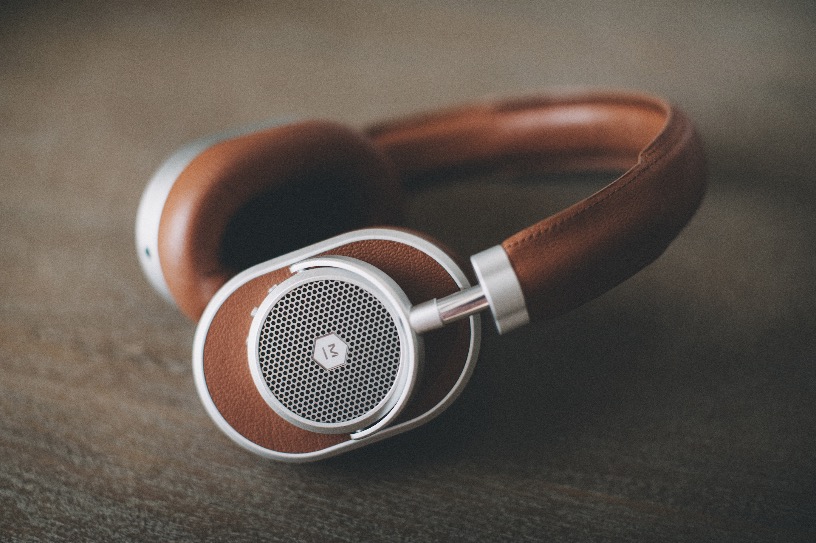
Image Credits: Veanne Cao

Veanne writes:

The MW65s are Master & Dynamic’s wireless over-ear noise-canceling model. Between deejaying at dirty underground raves in my early twenties and editing videos for the next decade, I have probably gone through about two dozen headphones. By far, the MW65s are my favorite. 

They’re beautifully designed, and well-constructed with lightweight anodized aluminum and premium leather. The 40mm beryllium drivers deliver clarity throughout the spectrum and audiophiles will love their natural sound profile. The memory foam ear pads already do a decent job of muffling out garbage trucks and police sirens, but the ANC is great for shutting out the world — on high mode, it’s eerily silent. The MW65s work wirelessly via Bluetooth 4.2 with 65+ feet of signal range — a must-have for grabbing snacks from the fridge while on important Zoom meetings or to avoid accidentally yanking the laptop off the table. Bonus feature: Google Assistant integration. 

They’ll cost you a steep $400+, but they’re solid headphones and you’re ultimately paying for luxury.

Price: Currently $400 on Amazon


In-ear Headphones:

Sony WF-1000XM3
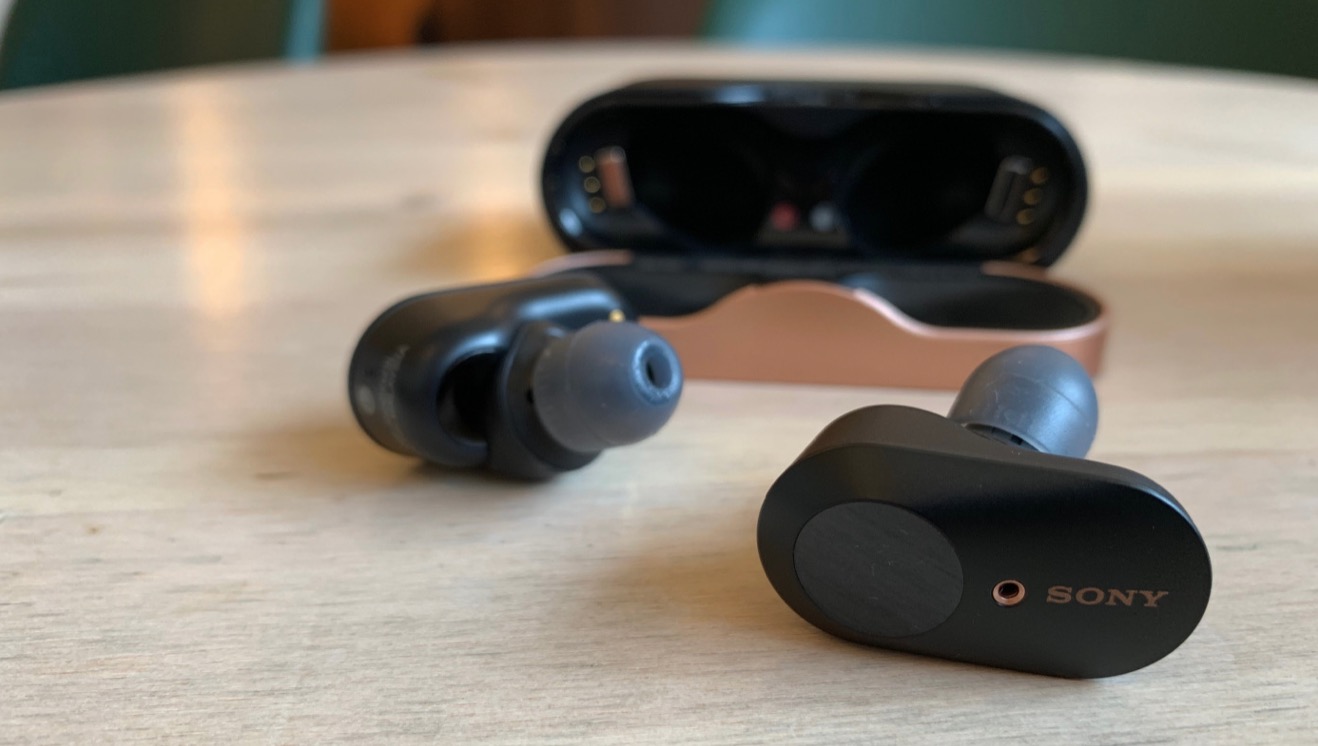
Image Credits: Brian Heater

Taylor writes:

It should come as no surprise that Sony’s prowess in over-ear noise canceling translates extremely well to a smaller form factor. Earbuds can’t match the sweet silence that over-ear designs provide, but if you don’t like big ol’ headphones, the compromise is likely worth it. Sony’s earbuds are a great choice, tuning out a shocking amount of outside noise in a very small package. Like the Sony over-ear pick, they have incredible sound, a very attractive design and come with a huge selection of rubbery caps of different sizes and textures to make them comfortable in different ears. If you value Apple connectivity above all else, pick the AirPods pro. If sound quality or silence matter more, you won’t be disappointed here.

Price: $158 from Best Buy

Also great: Sennheiser’s Momentum True Wireless 2 ($269) earbuds keep pace with Sony’s earbuds, and depending on your sound/fit preferences they’re also a great pick (especially if you find them on sale.)

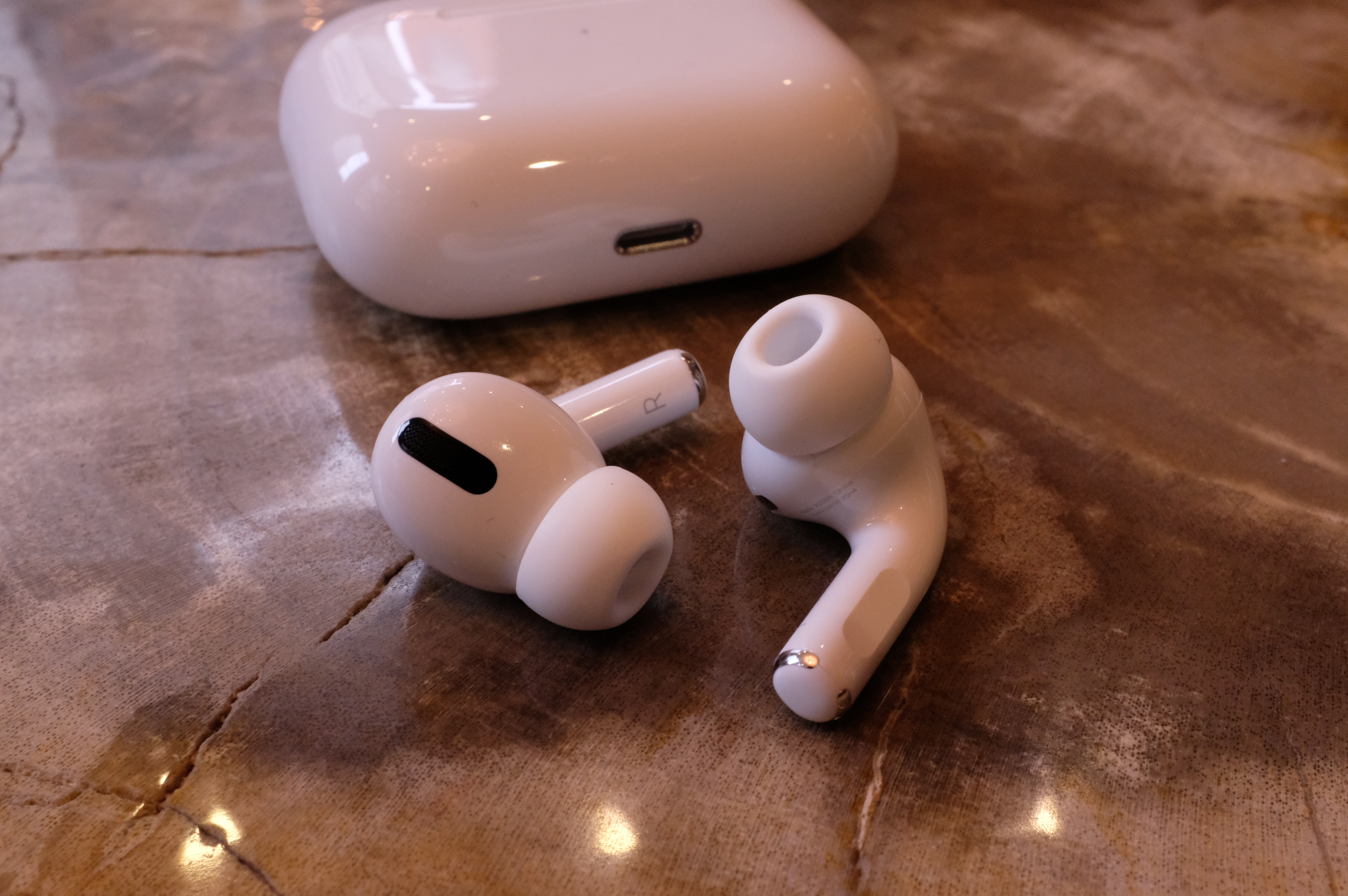
For the Apple devotee: AirPods Pro
Airpods Pro

Image Credits: Brian Heater

Lucas writes:

Though Apple is now positioning the $249 AirPods Pro as the mid-range product in the AirPods line with the introduction of the ludicrously priced $549 AirPods Max, they are still Apple’s headphone product that seems to have the biggest lead over mainstream competitors.

Features like passthrough mode and spatial audio are nice but are likely features you will use pretty infrequently depending on your setup. As with the less expensive non-Pro AirPods, you’ll be sure to find better sound quality in Bluetooth headphones at this price, but you won’t find a better total package that involves so little troubleshooting, a tight package and such quality noise cancellation. The AirPods Pro are a finessed product that just work in a way that makes using other wireless buds comparably painful.

Retailers are really looking to move product this holiday season, so if you’re prodigious, you’ll likely be able to score a good deal on these headphones, so if you’re plotting an upgrade or trying to see what all the buzz is about, I recommend you take the plunge.

Price: Currently $199 from Amazon


Gaming Headsets:

SteelSeries 7P (for PlayStation) or 7X (for Xbox)

Image Credits: Devin Coldewey

Devin writes:

Whether you’re planning on playing games on a PC or any console out there, the SteelSeries Arctis 7 gets an unreserved recommendation from me. These headphones have amazing sound in a surprisingly large soundstage, making them suitable for any gaming or media. They’re also light and comfortable while offering decent isolation (and can pipe in surrounding noise if you want). Plus there’s a built-in telescoping mic for chatting. There are two versions, one for PlayStation and one for Xbox consoles, though both work with PC.

Their downsides are a cluttered physical interface — there’s a lot going on on the undersides of the earcups — and a corded, multi-part (rather than USB key shaped) wireless dongle. But these are minor issues considering what you get for the $150 price.

Price: $150 from SteelSeries

Budget pick: Razer Kraken X USB
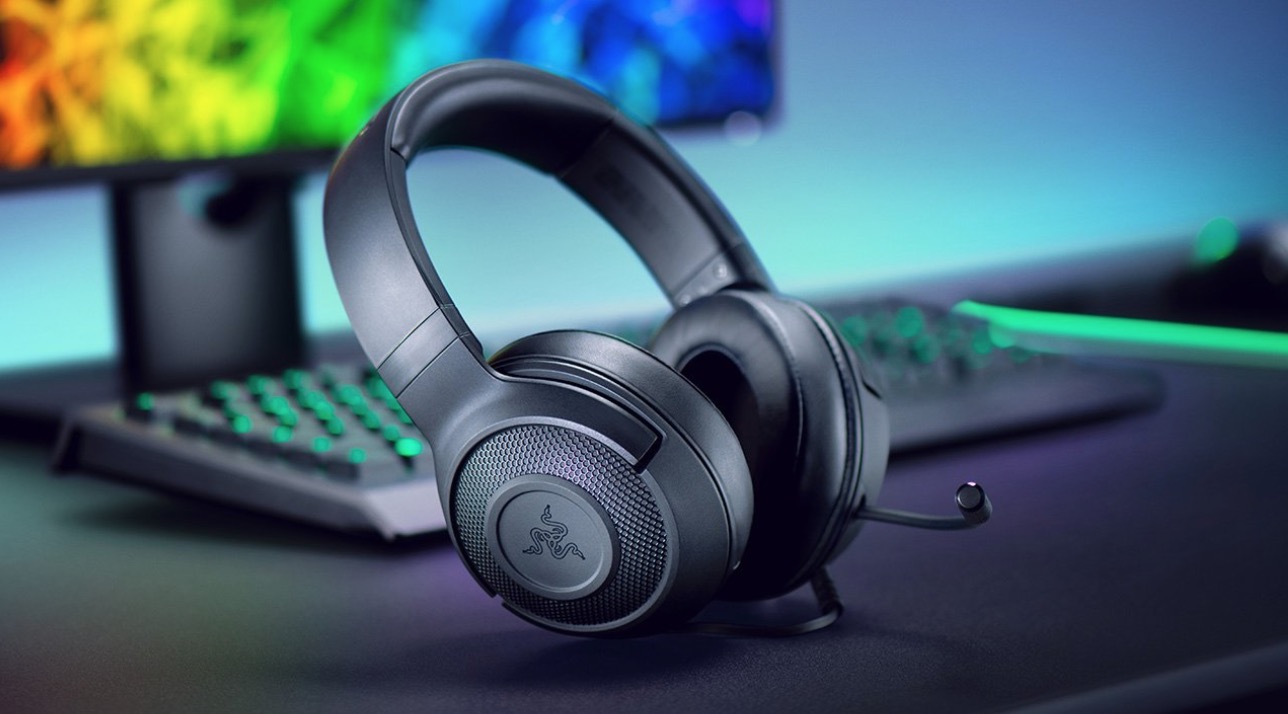
Image Credits: Razer

Devin writes:

This is my go-to headset for when friends need something solid but inexpensive. The sound is a bit bass-heavy and it’s not wireless, but I used these personally for quite a while and found them comfortable, reliable, and the built-in mic is easily operated.

Price: $44 from Amazon

Upgrade pick: SteelSeries Arctis Pro Wireless
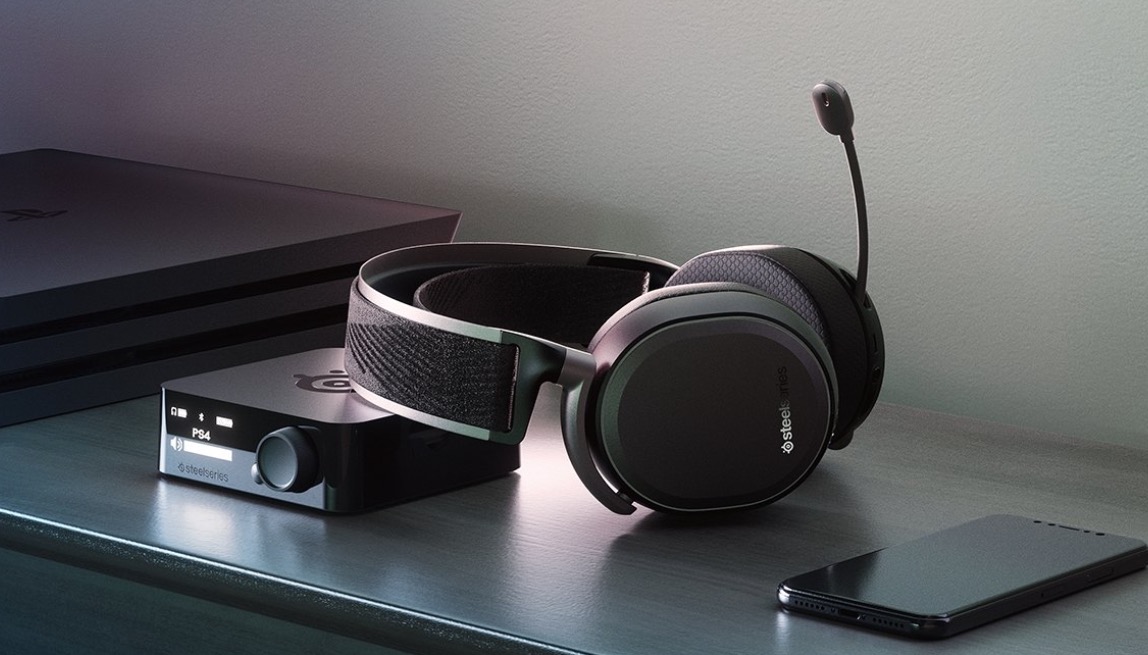
Image Credits: SteelSeries

While on the pricier end for a gaming headset, SteelSeries’ Arctis Pros are outstanding. They’re extremely comfortable largely thanks to a ski-goggle inspired suspension headband, and swappable rechargeable batteries (one in the headset, one charging in the base station) help ensure you’re never caught scrambling for a charging cable mid-battle. A dedicated mixer helps you tweak the sound to your liking even in games where it’s otherwise locked, and a very visible mute indicator on the tip of the microphone makes it clear whether you’re on air or not. One catch: they’ll work with PC, Mac and PlayStation (including PS5 with an upcoming firmware update), but not Xbox.

Price: $326 from Amazon

Orbital refueling and manufacturing go from theory to reality in 2021

The idea of satellites and other spacecraft being able to refuel, repair or even add new capabilities while in orbit has generally seemed like a “nice in theory” one, but as leaders from Maxar, Astroscale and Orbit Fab explained at TC Sessions: Space, 2021 will be the year that theory becomes reality — or at the very least, realistic.

Once they go up, satellites are generally considered fixed assets that only depreciate, become obsolete or reach the end of their fuel supply and inevitably deorbit. But with a bit of coordination many of these phenomenally expensive spacecraft could have their lives extended in a number of ways, and considering the costs involved in lofting a new one, the prospect may be an attractive one.

“Launch costs are going down, but also launch frequency, the cadence in which things are being sent up into space is also going up,” pointed out Lucy Condakchian, GM of robotics at Maxar Technologies . “So if you can launch smaller subsystems payloads and whatnot, and then be able to assemble things in space, maybe change out a certain aspect of what that satellite is doing… Why can’t we go up and actually change out a power subsystem, change out a camera mechanism, a computing element, whatever the case may be?”

That’s what Maxar and NASA will be demonstrating next year with OSAM-1, formerly called Restore-L, in which a spacecraft will attempt to service, assemble and manufacture items (hence the name) while on orbit.

“Just being able to demonstrate something in space shows that we can do that, proves the point of ‘Yes, it is possible,’ and hopefully it opens up much further opportunities down the road,” said Condakchian. The company’s robotic arms for Martian landers have shown their versatility, as well, and there’s no reason to think that satellite arms won’t be as broadly useful.

While Maxar is aiming to equip future spacecraft, Ron Lopez, president of Astroscale US (the original company is Japan-based), sees an opportunity in today’s aging space infrastructure.

“There are a lot of companies that are developing on orbit inspection services. That’s for the satellites that are already out there that don’t have those robotic capabilities, or can’t afford to have them in the future when the product owner-operator decides not to put them on,” he explained.

“There’s any number of different use cases for this kind of capability,” he continued. “Insurance claims if there’s an anomaly on a satellite, and it needs to be determined what it was that happened, etc., or space situational awareness. Of course, we know that this is a big concern for everybody with the increasing number of objects in space, understanding what’s where, doing what and is it a threat to other objects in space, is very important.”

Astroscale, which recently raised a $51 million Series E, is about to launch a mission in just a few months that will demonstrate orbital debris detection and removal. That doesn’t mean spare screws dropped by ISS spacewalks — more likely dead satellites that have been left to drift and deorbit on their own time, which could be years from now. All they need is a little push and low-Earth orbit is that much safer and cleaner.

Daniel Faber, CEO and founder of Orbit Fab, wants to prevent that situation from occurring in the first place by building what he calls “gas stations in space.” It’s a bit different from the terrestrial ones, closer perhaps to in-flight refueling of jets, but you get the idea.

“The future that Orbit Fab sees is a fully cooperative and bustling in space economy, we don’t think that that can be achieved by relying on robotics on every spacecraft, there’s always going to be a need for tow trucks, there’s always going to be a need for complex robotic servicing when things go wrong, and things break down. And right now, nothing has been designed to be serviced. So you need a tow truck for any of these type of things,” he said.

“We failed to build a satellite gas tanker because we couldn’t find the fueling port. So we built one,” he said, referring to the company’s RAFTI connector, which dozens of partners are now looking at including in their spacecraft. “We’ve had to develop other products and technologies as well to make refueling accessible to our customers.”

The tanker will have its first orbit tests — you guessed it, next year. A recently announced investment, bringing their seed total to $6 million, should help make that happen. 2021 is looking to be a big one for many areas of space, but in this particular sector it will be the moment where the capability is proven out, perhaps leading to a major expansion the following year.

That was just a fraction of what we talked about on the panel. If you missed it live, don’t worry — Extra Crunch subscribers get access to all the on-stage content from TC Sessions: Space and every other event as well. Sign up here.

Amazon’s Halo fitness tracker raises privacy concerns for Amy Klobuchar

After reading a review of Amazon’s new fitness tracker, Minnesota Senator Amy Klobuchar penned an open letter.

“Recent reports have raised concerns about the Halo’s access to this extensive personal and private health information,” the lawmaker wrote to U.S. Department of Health and Human Services Secretary Alex Azar. “Among publicly available consumer health devices, the Halo appears to collect an unprecedented level of personal information.”

The senator is far from the first critic to express concern about the fitness tracker — the Halo raised eyebrows the moment it was unveiled in August. She is, however, one of the few critics in a position to actually do something about the device, which features both an always-on microphone and asks wearers to perform a full body scan.

“I’m wearing my Fitbit,” Klobuchar says in an interview with TechCrunch. She takes a moment before correcting herself. “Oh, I didn’t put it on this morning. That’s very bad. I wear a Fitbit nearly every day. I sometimes have gone years without doing it, but since, I’d say, about February I’ve been wearing it.”

The senator’s not alone, certainly. According to a January 2020 report from Pew, roughly one-in-five U.S. adults regularly wear a smartwatch or fitness tracker. I’m wearing one as I type this, and chances are pretty good you’re wearing one as well. The Halo may cross a line for some, but the device is far from the first tracker to raise concern among privacy advocates. Klobuchar says that while the Halo’s specific level of data collection, “just cries out for some kind of rules and regulations in place,” stronger scrutiny and regulation is needed for the category across the board.

“I really do think there’s got to be rules in place,” she says. “The reason I’m writing HHS is because they should play a larger role in ensuring data privacy when it comes to health, but between the HHS and the Federal Trade Commission, they’ve got to come up with some rules to safeguard private health information. And I think the Amazon Halo is just the ultimate example of it, but there’s a number of other devices that have the same issues. I’m thinking there’s some state regulations going on and things like that, and we just need federal standards.”

The letter lays out four questions for Azar and the HHS, pertaining to the department’s role in safeguarding health data. Amazon’s defense of the product is two-fold: body scanning and speech collection are optional, and the company does not have direct access to this locally stored data.

Asked for response to the letter, the company tells TechCrunch:

We have been in touch with Senator Klobuchar’s office to address their questions about Amazon Halo. Privacy is foundational to how we designed and built Amazon Halo. Body and Tone are both optional features that are not required to use the product. Amazon does not have access to Body scan images or Tone speech samples. We are transparent about the privacy practices for this service and you can read more in the Amazon Halo privacy whitepaper.

“[The letter is] specifically about that they’re safeguarding the private health information, they’re ensuring security and privacy,” Klobuchar tells TechCrunch. “And even if Amazon Halo is saying they’re doing all of this, we need to have rules of the road in place for any company that does it.”

Health privacy concerns have been top of mind since Google announced plans to acquire Fitbit for $2.1 billion in November 2019. At the time, the deal was expected to close at some point in 2020. That timeline has since proven overly optimistic. In a filing with the Securities and Exchange Commission in August, Fitbit said the closing date could be pushed as late as May 2021.

The COVID-19 pandemic may well have played an issue in that delay, but Google’s biggest hurdle thus far has been government approval. A number of groups and individuals have raised concern over the deal, including Amnesty International. In August, the EU posited that the deal could “further entrench Google’s market position in the online advertising markets by increasing the already vast amount of data that Google could use for personalization of the ads it serves and displays.”

After launching an investigation into the deal, the Commission greenlit the deal earlier this week — with major caveats. At the top of the list is Google’s 10-year commitment to not use Fitbit health data for ad targeting. The E.U. has also reserved the right to extend the safeguard by another 10 years beyond that.

Klobuchar says she believes the privacy caveats were necessary. “I think the decision about if they’re sufficient or not should be made in the U.S. by our own regulators based on the facts. I am glad they created the data silo. […] And I think we need to greatly up our examination of mergers. We should use those mergers to either say ‘no, because they’re so anti-competitive,’ or to put conditions on them.”

Increased antitrust scrutiny has been a key project for the senator. In August 2019, she introduced the Monopolization Deterrence Act with Connecticut Senator Richard Blumenthal. Klobuchar says she hopes to get the bill passed after the new president takes office.

“This new session will be the moment,” she tells TechCrunch. “The Trump administration actually brought these major cases. They were late in the game, but they actually did their job here at the end. But the president wasn’t organized enough in terms of his focus to be able to actually get legislation done on monopolies. And so I think this is going to be incumbent on the Biden administration and the next AG to do that.”

Any meaningful effort to reduce the size and influence of tech corporations will have to go further than simply increasing regulatory scrutiny at the point of acquisition, however. In many cases, that bridge was crossed long ago.

“It’s not just future monopoly mergers being considered,” Klobuchar says. “It’s looking back at what’s happened. That’s what the Facebook suit is. That’s what the Google suit is in a different way. There’s still stuff about DoubleClick and everything, but mostly it’s about how they’re using their monopoly power. So you can be sued for looking back at mergers (that’s what they’re doing at Facebook), but you also can be sued for what we call ‘exclusionary conduct,’ for things that you’ve done that are anti-competitive.”

The Fitbit-wearing senator is quick to close by adding that she’s not anti-technology, per se. “I think the innovations are great. I use them all the time, even though I’ve had some hilarious online ordering experiences, including when I now have six two-pound things of maple yogurt. I mistook it and I thought they were small yogurts in my refrigerator. I think that they’re great, but I think that they can still be great with allowing from our competition, they’ll be better.”


The big Google DOJ antitrust case probably won’t go to trial until 2023

The Justice Department’s historic lawsuit against Google is moving along — albeit very, very slowly. In a status hearing Friday, U.S. District Judge Amit Mehta set a tentative date for the case. The good news and the bad news for both parties involved is that it’s more than two years away.

As CNBC reports, Mehta chose September 12, 2023 as the first day of the trial, which is expected to last weeks. That date could change, but with both the Justice Department and Google agreeing to that timeline it’s a pretty good estimate.

It might be years before the trial, but the DOJ’s lawsuit against Google, filed in October, is already hanging over Silicon Valley’s head. The suit focuses on Google’s search and ads business and accuses the company of maintaining illegal monopolies in those markets. A date in 2023 gives Google plenty of time to sharpen its defenses and do what it wants until then, but it also means the specter of a major regulatory threat will loom large for the foreseeable future.

States are also pursuing their own aggressive efforts to regulate the search giant, with two separate major multistate lawsuits similarly focused on Google’s search and advertising power filed this week. Last week, the state of California also asked to join the Justice Department’s lawsuit, with Michigan and Wisconsin following suit on Thursday.

“Their proposed joinder, along with the separate complaint filed today by a coalition of state Attorneys General, underscores the broad and bipartisan consensus that Google’s practices in search and search advertising need antitrust redress,” Deputy Attorney General Jeffrey A. Rosen said of the states deciding to join the suit.

The historic case is the first major federal antitrust action to hit a technology company since the U.S. pursued a case against Microsoft more than two decades ago. That case was settled in 2001, just three years after Google’s founding.

With few regulations in place to rein it in, the tech industry exploded over the course of the last 20 years. Silicon Valley’s innovations are now woven into every market and corner of society imaginable, making the era of the Microsoft antitrust saga looks downright quaint in comparison.

TechCrunch Early Stage is coming back in a big way in 2021

What’s next? That’s the question we ask ourselves here at TechCrunch every day for the past 15 years. The answer, more often than not, comes from the earliest-stage founders. That’s why last year, we introduced a new event called TechCrunch Early Stage.

TC Early Stage is all about providing founders access to the top experts across all the core competencies involved in entrepreneurialism, from fundraising to marketing to operations. It quickly became one of the most beloved offerings from TechCrunch, so it should come as no surprise that we’re doubling down in 2021.

Next year, we’ll host two TC Early Stage events (virtually) one on April 1 & 2 and one on July 8 & 9, with different perspectives and content at each.

Here’s how it works:

Experts in fundraising, marketing and operations will give presentations to the audience with plenty of time for live Q&A. These workshops will span the entire startup experience, with speakers that include early-stage investors (lots of investors), legal whizzes, growth gurus, product-market fit wallahs, tech stack experts, recruiting aces and much more, including workshops on pitch breakdowns.

TechCrunch’s goal is to provide founders with insights and new relationships on par with what an accelerator experience provides, only in a single day, and with a much greater variety of experts and investors.

TC Early Stage is designed for founders who are in their early innings, anywhere from pre-seed through Series A, when entrepreneurs need all the guidance they can get. With that in mind, the event’s heart is dozens of breakout sessions run by experts and curated by TechCrunch editors. The breakouts will be long on attendee questions and conversation, and the event is structured so that attendees can easily get to six to eight different breakouts over the course of the day.

Last year, we had sessions on:

And that’s just the tip of the iceberg. We’re not in the business of reinventing the wheel and have no plans to fix what ain’t broken. Expect more like this from our 2021 Early Stage events going down on April 1 & 2 and July 8 & 9. You can get a single event ticket at the Early Bird rate of $199 if you’re an early-stage founder and $299 if you are a later-stage founder, investor or just want to add some more tools to your knowledge kit. But you can save more when you book the dual two-event ticket — there will be different speakers and topics for each event so you won’t want to miss out on both!

Can’t wait to see you there!


WorkWhile raises $3.5M to bring more flexibility and benefits to hourly work

While there’s been plenty of recent debate around the gig economy, Jarah Euston argued that it’s time to rethink a bigger part of the workforce — hourly workers.

Euston, who was previously an executive at mobile advertising startup Flurry and a co-founder at data operations startup Nexla, told me that although 80 million Americans are paid on an hourly basis, the current system doesn’t work particular well for either employers or workers.

On the employer side, there are usually high rates of turnover and absenteeism, while workers have to deal with unpredictable schedules and often struggle to get assigned all the hours they want. So Euston has launched WorkWhile to create a better system, and she’s also raised $3.5 million in seed funding.

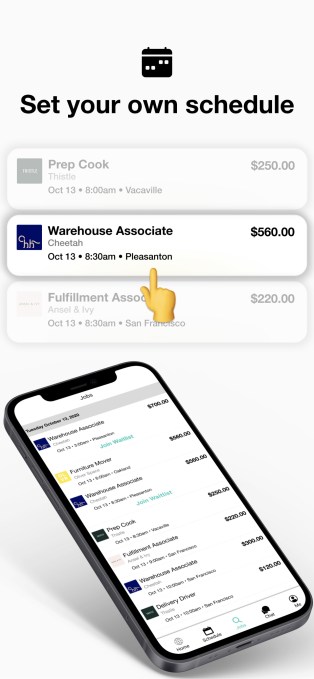
WorkWhile, she explained, is a marketplace that matches hourly workers with open shifts — employers identify the shifts that they want filled, while workers say which hours they want to work. That means employers can grow or shrink their workforce as needed, while the workers only work when they want.

“By pooling the labor force … we can provide the flexibility that both sides want,” Euston said.

WorkWhile screenshot

Image Credits: WorkWhile

WorkWhile screens workers with one-on-one interviews, background checks and tests based on cognitive science, with the goal of identifying applicants who are qualified and reliable.

Employers pay WorkWhile a service fee, while the platform is free for users. And because the startup aims to build a long-term relationship with its workforce, Euston said it will also invest by providing additional benefits, starting with sick leave credits earned when you work and next-day payments to your debit cards.

“It’s hard to find a job that works with you and doesn’t give you a take it or leave it schedule,” said Michael Zavala, one of the workers on the platform, in a statement. “WorkWhile was exactly what I was looking for with the ability to create your own schedule for full time.”

The startup is launching in the San Francisco Bay Area, Los Angeles, Orange County and Dallas-Forth Worth.

Given the broader economic and employment trends during the pandemic, there should plenty of people looking for more work, while Euston said she’s seen a “feast or famine” situation on the employer side — yes, some companies have had to freeze or cut staff, but others have grown rapidly, including WorkWhile customers including restaurant supplier Cheetah, meal delivery service Thistle and horticultural e-commerce company Ansel & Ivy.

The funding, meanwhile, was led by Khosla Ventures, with participation from Stitch Fix founder and CEO Katrina Lake, Jennifer Fonstad, F7, Siqi Chen, Philipp Brenner, Zouhair Belkoura and Nicholas Pilkington.

“The majority of hourly workers are honest and reliable but some have difficult personal circumstances they need help with,” Vinod Khosla said in a statement. “Companies treat these employees as high turnover and expendable but, if given respect and appropriate support, they can become longer-term, model employees. WorkWhile wants to help solve this problem.”


Bumble reportedly filed confidentially for an IPO

Today Bumble, a popular dating-focused startup, was reported by Bloomberg to have filed IPO documents, albeit privately.

The news that Bumble is pursuing an IPO is not a surprise. TechCrunch covered the story in September, noting the huge revenues that its rival Tinder has managed to accrete, possibly indicative of a sufficiently large market to support two public dating players.

That Bumble has privately filed puts it, along with the crypto-focused Coinbase, as far along the IPO path before we can see their numbers. When they make their S-1 filings public the two companies will provide the market a look into their financial results.

Bumble and Coinbase are preceded in making such disclosures by Roblox, Affirm and Poshmark. The five companies will join others in seeking IPOs over the next few months.

According to a recent interview with GGV’s Hans Tung — an investor in Affirm and Airbnb and other unicorns — TechCrunch understands that quarters one, three and four in 2021 could prove to be active IPO periods. Bumble joining the fray in the final weeks of 2020 underscores how active the start of the year could be for highly priced private companies seeking liquidity while public markets trade near all-time highs.

TechCrunch reached out to Bumble for comment on the IPO report. The company declined to comment.

Bloomberg reports that Bumble could target a valuation of between $6 and $8 billion. This squares with prior reporting. How much revenue the market will require of Bumble to reach those prices, and at what pace of growth, is not clear.

But with the company reaching 100 million users earlier this year, perhaps all the math will pencil out.

Unicorn travel startup Hopper is facing a pandemic-fueled customer service nightmare

Mobile travel app Hopper has been hit hard by the COVID-19 pandemic as consumers canceled their trips and airlines dropped their flights. But the complications around getting airline credits and refunds have since turned into a customer service crisis for the airfare prediction and ticket booking startup, which had been valued at $750 million back in 2018 before reaching unicorn status thanks to an undisclosed round it closed amid COVID lockdowns this year. Currently, hundreds of Hopper customers are trashing the app in their app store reviews, calling Hopper a scam, threatening legal action and warning others to stay away.

The key complaint among many of these users was not only how their flight was canceled by an airline and that they couldn’t get a refund, but that there was no way to get in touch with someone at Hopper for any help. There wasn’t even a phone number to call, the user reviews said.

These complaints on the app stores have been harsh and a PR disaster for Hopper’s brand.

To give you an idea of what’s being said, here’s a small sampling:

  • No phone number to reach and takes a week or more to get back to an email.”
  • “No way to contact customer service no [one] has responded to my inquiries at all. The help tab just sends you in a constant loop.”
  • “Warning. This company will take your money. They give zero refunds and there is no one to talk to.”
  • “Customer service continues to be an absolute joke. We…put support requests in a week ago, zero response.”
  • “Hopper is great if you want your flight cancelled and money never refunded. There is LITERALLY no customer support.”
  • “I understand there is a lot of traffic on the app due to COVID, but having to post a review in order to receive any sort of attention and being unable to reach out through the app for my issue was very frustrating.”
  • “There is no way to contact anyone. The Contact Us page is just a Q&A page.”
  • “I was never refunded and when I reached out to their ‘need help’ I received the generic email which stated someone will get back with me. I waited a week and sent another message and I still have not heard anything. Hopper took my money on a flight that was cancelled by the airline and never notified me.”
  • “Not [sic] existing customer support. If you need help your [sic] only option is ‘read a post.’ Buyer beware. It’s a total scam.”
  • “I’ve reached out multiple times regarding a flight a credit from April of 2020 and they have yet to provide me with any details or help me with using the credit.”
  • “This company is a fraud! Do not use Hopper! I will be getting a lawyer!”
  • “Can’t say enough bad things about this service…Have to wait 15 days for response. Unbelievable.”
  • “I booked a flight back in June that I still haven’t been refunded for because the airline will only refund the agent directly. Non-existent customer service.”
  • “I spent over 3K and 3 months later, still no refund.”
  • “I have been waiting seven months for a refund.”

To date, users have left more than 550 one-star reviews on iOS and 302 on Android, per Sensor Tower data. Hundreds of these are visible when you sort by “Most Recent” reviews on iOS, which is damaging to what had been, before the pandemic, a trusted and respected travel brand.

@.sp2020##hopper is getting trashed — no customer support? Can’t get refund? ##covid ##travel? Trouble’s Coming – Royal Blood

Hopper, to its credit, openly admitted to TechCrunch it’s been massively struggling with what it referred to as “unprecedented volumes of customer support inquiries since the start of the pandemic began,” or 2.5X its normal rate.

The company says it’s currently receiving over 100,000 inbound support requests per month, as consumers and airlines alike changed and canceled their flights. Since April, it’s seen over 980,000 inbound customer service requests.

A number of the inquiries are from customers asking for refunds due to COVID-related cancellations. Typically, airlines offer a modified flight when they make a schedule change, and many consumers will take this modification. Some customers, however, will want a refund so they can rebook a different flight or because they’ve chosen to cancel their travel plans entirely. The pandemic has exacerbated this problem, driving cancelation rates around five times higher than usual, Hopper says.

Another point of confusion is who should handle these refunds. Hopper says customers can either reach out to the airline directly for a refund for help rebooking or they can ask Hopper to handle it. It also noted a small number of airlines don’t allow refunds, only travel credit. The airlines dictate these policies, which means Hopper can’t just offer to refund everyone — it would have lost too much money to survive, if it did so.

“We would have had to put out about half a billion dollars,” explains Hopper CEO Frederic Lalonde, describing the situation to TechCrunch. We had reached out to understand the situation, given the sizable customer backlash against the previously popular app.

“The way the airline system works is if I refund you as a customer who booked from us, I’m not going to get that money back. We would have put ourselves out of business,” Lalonde says.

In addition, Hopper doesn’t generally receive the refunds itself. They go directly from the airline to the customer. And many customers had to wait on refunds this year due to COVID issues. But there are some exceptions. For a few low-cost carriers, like Frontier, Spirit and others, Hopper does have to process the refund from the airline and then return these to the customers. So in these cases, Hopper’s non-responses to customer support inquiries left customers without options. (We’re documenting how the airlines are responding to our inquires about Hopper refunds here. It’s confusing, to say the least.)

But the root of Hopper’s customer service nightmare wasn’t the chaos caused by the pandemic and the airlines’ cancellations themselves. It was how Hopper approached handling the situation.

“We failed our customers,” Lalonde admits. “We had a bunch of people that trusted us.”

He said Hopper has now addressed many of the customer complaints and issues. But many more still remain. “There’s no universe where that’s what we set out to do,” he adds.

During the course of the year as the customer service crisis escalated, Lalonde says his personal email and mobile phone was published on the web. He’s since opened up several thousands — or maybe even tens of thousands — of emails and voicemails of customers in need of assistance.

In hindsight, one misstep Hopper made is that it didn’t hire more customer service agents to deal with what the pandemic would bring. In fact, Hopper did the opposite — the company furloughed agents in an effort to cut costs and stay in business. At the time, Lalonde explains, there was just too much uncertainty to hire. Stores were out of toilet paper. The Western world had closed for travel. Vaccines had typically taken years to create. This was looking like a long-term, worst-case scenario.

“We had to build an operational plan of zero dollars of revenue for four years. That’s what I gave my board,” Lalonde says.

When lockdowns lifted and travel started to come back, so did some of Hopper’s agents. But the customer service issues, by then, had skyrocketed as airlines canceled and changed schedules at high rates, and began to issue Future Travel Credits (FTC). Instead of adding more agents to help solve customer service problems, Hopper decided to apply automation, with a goal of allowing customers to solve more themselves. During the course of 2020, Hopper automated exchanging flights in the app, redeeming FTC issued by airlines, managing schedule changes, adding self-serve cancellations, and it rolled out follow-up emails to customers after they requested a cancellation.

Lalonde had believed automation would ultimately be more critical to long-term survival than hiring more agents.

“Would it have made a big difference [to add more agents]? Honestly, I don’t really think so. I think it would maybe have gotten 10% more done,” says Lalonde. “Could you find thousands of customers that would have gotten [help] sooner? Yes. But would it really have moved the needle on the millionth inbound request we got? No.”

Another area where Hopper fell short was on customer communication.

This is most apparent from the App Store complaints.

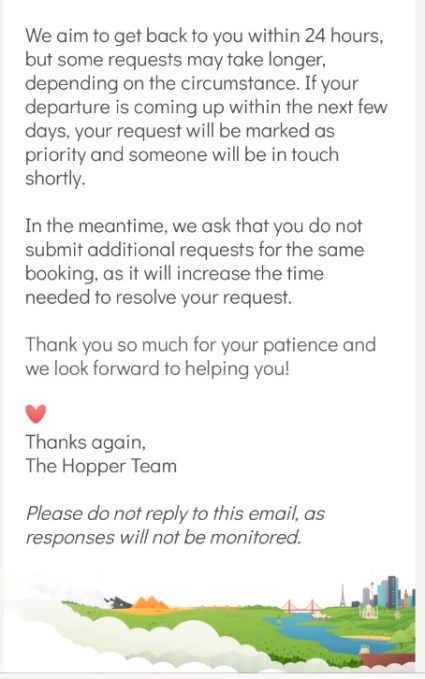
Customers may be expressing frustration over refunds, but they’re even angrier that they can’t get in touch with anyone. And Hopper didn’t necessarily do itself any favors here by sending out emails which said it was aiming to get back to customers within 24 hours — an entirely unrealistic promise (see below).


Image Credits: Hopper email (provided by customer) / Hopper email (provided by customer)

Hopper also chose to shut down its phone line when it realized that 80% of customers were waiting on hold for 45 minutes, even though, arguably, some customers would have preferred that to nothing at all. Instead, it rolled out an online structured triage system that helped prioritize incoming complaints. It even had a button to push if users were stuck at the airport so they could get more urgent assistance.

The problem was customers couldn’t find Hopper’s help features.

“Was our communication strategy broken? Yes,” admits Lalonde.

He says he decided to put the team on actually dealing with the FTC and the refunds, and not talking to people. “That made us look a hell of a lot worse, optically, but we got through a lot of work…because at the end of the day, after the fifth repetitive email, people got just as angry [as when they were ignored].”

Hopper has since apologized to customers and sent out an additional $1.5 million in travel credits to its customers, in addition to the refunds it has now processed, to help make up for its issues. It’s still working through the backlog of customer service issues. And it expects another good six months of chaos as the vaccines shipping now aren’t immediately going to solve the airlines’ travel problem.

Over the next two months, Hopper also says it will be increasing its support team by 75% now that the future looks more certain. It also plans to roll out in-app updates including a resolution center, escalation path, status check to prevent duplicate requests and add in-app structured requests, in addition to more communication updates involving email campaigns, better in-app messaging, and website access to check on booking status.

It’s a wonder how a company in this nightmare situation could even survive, much less raise funds, when its brand is being dragged through the mud and hundreds — or even thousands — of customers have been unsatisfied.

As it turns out, Montreal-headquartered Hopper will survive, at least in the near-term, thanks to a Canadian government bailout.

In early May, Hopper raised $70 million from both institutional and private investors. The Canadian government chose to save promising tech business impacted by the pandemic with direct financial support. The largest portion of the $70 million round (more than half, but not, say, 99%) included funds from the Business Development Bank of Canada (BDC) and Investissement Quebec. In addition, all of Hopper’s existing investors returned, joined by new investors Inovia and WestCap.

The Canadian government — which Lalonde describes as “more like socialists than you would think” — helped by de-risking the other investors by leading venture rounds into tech businesses that had been doing well pre-pandemic.

“They did this at a very large scale and it’s stabilized the tech sector in Canada,” he says. The new funds now value Hopper “right at unicorn level” in U.S. dollars, Lalonde adds, meaning the business is valued around $1 billion.

One reason why Hopper may have struggled with how to proceed during the pandemic was the sizable uncertainty around the U.S. market, which Lalonde says was “very scary.”

“We never knew what was going to happen. If there had been a better plan there, we probably would have been able to provision a bit more. But we had no idea. The lockdowns were at the state level,” he explains. “If you’re trying to figure out how aggressive you want to be on investing, spending, emergency injections, or how things are going to recover, the more predictability there is at the government level, the easier it is to make a decision. The U.S. wasn’t the most predictable environment,” Lalonde says.

While Hopper’s business is saved for now, the app’s brand reputation has taken a huge hit.

The question now is whether that, too, is recoverable?

“I don’t know,” says Lalonde. “I’ll tell you this, the only right way to approach that is just keep doing the right thing, one customer at a time.”

Watch Space Force commander Gen. John Raymond explain public-private partnerships for space defense

General John “Jay” Raymond spoke at TC Sessions: Space earlier this week, where he touched on a variety of subjects. The talk came on the eve of Space Force’s first birthday, having been founded on December 20, 2019.

The Space Force commander explains how the new military service operates like a startup and gave advice how startups can learn from the Space Force. The service only has 2,400 people and, according to Gen. Raymond, this lean team is possible as he’s actively working to flatten the management structure and empower decision makers. Likewise, he also explained the current geopolitical landscape, saying, in part, “China has got from zero to 60 really quickly” in regards to operating in space. As such, Gen. Raymond is seeking partnerships with allied nations and startups within their borders.

ExtraCrunch subscribers and TechCrunch Session: Space ticket holders can watch the 20-minute interview below.


Space Force commander explains how the new military service operates like a startup

The latest branch of the U.S. military was founded just a year ago and will celebrate its first birthday on December 20. General John W. “Jay” Raymond spoke at TC Sessions: Space and explained how the youngest military branch operates like a startup.

“In some ways, we’re a startup as well,” Gen. Raymond said. “The National Defense Authorization Act provided us a great opportunity. And that’s to be bold, think differently, start with a clean sheet of paper and build processes that work for us as needed to operate in the domain we’re responsible for.”

Gen. Raymond explained one of his mantras is “big is slow.” “And if you’re going to be a big organization, you’re going to be a slower organization,” he said, explaining that his team has worked hard over the last year to “flatten the bureaucracy, reduce layers of command, get the experts that are operating our capabilities, close to a decision-maker, or better yet pushed the decision making down to that to their level.

To this end, the Space Force is tiny compared to other branches of the military. Last week, Gen. Raymond presided over the Space Force’s first basic training graduation. This was a class of seven, who joined the 2,400 servicemen and women who make up the Space Force’s ranks.

“I couldn’t be more thrilled with how our organization construct is played out,” Gen. Raymond said. “I’ve had the opportunity to visit a couple of our units where we have done this, and it is already paying dividends. They’re moving at a speed that we would not have been able to do in the past. I would just say every step though — every step of the way — you have to root out bureaucracy and be conscious about making sure that wherever that decision needs to be made, those folks are empowered to make that decision.

Since its founding, it’s been clear the Space Force has taken a strong stance on gender and racial equality. Gen. Raymond explained why: “We think diversity is a strength.” This doesn’t appear just to be lip service. The Space Force has so far received accolades for its gender and racial balance. The Space Force’s small size allowed Gen. Raymond to stand up a new human capital strategy “that leverages all the authorities that are out there that are that are currently largely left untapped.”

“We have an opportunity to build diversity in from day one, which we think will be a strength,” Gen. Raymond said.

Several other military officials spoke at TechCrunch Sessions: Space. Lt. General John Thompson spoke on how startups can best interact with Space Force, where he oversees research, design, development and acquisition of satellites and their associated command and control systems for the U.S. Space Force. The general is the Commander of the Space and Missiles Systems Center.

Dr. Will Roper spoke about the evolution of the procurement practices that would put money into the coffers of emerging tech companies developing solutions to the most pressing problems the military sees in the skies. He’s trying to pry open the piggy bank so more of the $60 billion he manages flows into the bank accounts of entrepreneurs and startups.

How should SaaS companies deliver and price professional services?

Roger Hurwitz
Contributor

Roger Hurwitz is a founding partner at Volition Capital. He focuses primarily on investments in software and technology-enabled business services.

The global software as a service (SaaS) industry is sustaining its steep growth trajectory, but developing and pricing professional services is oftentimes a difficult proposition for SaaS companies.

Gartner recently forecast that SaaS revenue worldwide could surpass $140 billion by 2022, which would represent a 40% increase over 2019’s roughly $100 billion. These are heady figures for an industry that gained its footing only 20 years ago.

As someone who has led many investments in SaaS companies, there is clear consensus within boardrooms, assuming compelling sales efficiency metrics: The more ARR the better. It is also clear that looking across the SaaS industry, there is strong consistency in overall software gross margins, generally landing in the 60% to 80% range.

There is clear consensus within boardrooms, assuming compelling sales efficiency metrics: The more ARR the better.

What is much less obvious is how to charge customers for professional services, whether for implementations, consulting work or training.

While historically, in the perpetual software days, such offerings were billed on a time and materials basis or for a fixed fee with a targeted gross margin of say 10%-30%, fast-forward to the recurring revenue model today and these services can be equally profitable but also result in big losses given wide differences in how companies charge for these services.

Looking at SaaS companies, one can see 50-point margin swings, or more, on services revenue, from -30% to 20%. Why do we see such differences in margins for professional services, and what are the implications of these differing approaches for a SaaS company’s strategy?

Are professional services a profit center or a loss leader?

We can start by asking why a company would accept a single-digit or even negative margins on its professional services. For some, it’s a strategy to accelerate its ARR by covering part of that expense by foregoing, say, an implementation fee for a higher annual subscription amount. The view here is to remove some friction out of the sales process by reducing any services fees. This will accelerate new logo velocity, resulting in higher ARR, and thus stronger growth, which should translate into higher stock price appreciation.

To execute this strategy, a SaaS company may increase its subscription price, although not by much. While this allows the provider to offer such services without detailing its cost in a separate line item, is this really the right answer? As with so many questions, the answer depends on many variables, such as: Does it expedite the sales cycle? Would charging for such services make clients more responsive and result in quicker implementations? How much costs do you need to cover such services? What is the impact of doing so on the cash position, profitability and financing needs of the business?

Two professional services pricing strategies

Let’s compare the three-year impact of two professional services pricing strategies, and the resulting impact on the financing needs:

  • Company A: Provides professional services with an annual value of $10 million with a -20% gross margin, resulting in a $2 million annual loss. Total losses over the three-year period are $6 million.

Peter Beck on Rocket Lab’s expanding orbit

Just a few years ago it seemed like Rocket Lab was going to be an up-and-comer in the launch world, and so they are today — in addition to going reusable, creating a low-cost satellite platform, and planning a mission to Venus. CEO and founder Peter Beck, speaking at TC Sessions: Space, talked about how he and the company have taken on ever more responsibilities without burning out.

The company just had a successful launch earlier this week, and a month ago demonstrated its first-ever recovery of an Electron vehicle’s first stage.

“It was a really great flight, we got way further than we thought, and the stage looks in fantastic condition,” he said of that accomplishment. “The next phase for us of this program is to do the mid-air capture with the helicopter, so we don’t dunk the stage in the water.”

Reusable rockets could change the economics for small launch, he said.

“The economics of small launch against larger rideshares are always going to be different, because you have a much smaller launch vehicle to amortize your costs over,” he explained, “However, this is the reason that small dedicated launch is so valuable, you get your own rocket and all the things that comes with that. But if you can get that and have a platform that’s closer to rideshare costs, then that’s really transformational for the industry.”

Regarding the loss of a vehicle in July, Beck said that it was tough but not unexpected in this industry.

“It’s the day that you wish never comes, but it’s the day that will always come,” he said. “The thing about Rocket Lab — this is the magic, right? — no more than seconds after we realized that we had an anomaly on our hands, the team was already working it. It was an incredibly stressful time within the company, and a lot of people were sleeping under their desks, but this is the thing with this team, if you throw something hard at us, we’re just going to work harder. And that was exactly what happened.”

Indeed, Rocket Lab had concluded its investigation to the satisfaction of authorities shortly afterward, and exactly four weeks later had its next launch.

All the while they’ve been planning an ambitious mission to Venus, which Beck called “the most underrated planet in our solar system.”

“I managed to convince the board to hand over a rocket and spacecraft, and we’re going to go to Venus as a private mission and look for life,” he said. “So 2023 is when we’re going to head on out there and see what we can find.”

The exact details of the mission and spacecraft will be made more clear in time, but Beck did emphasize that this is a serious undertaking: “Look, it’s a no joke mission. I thought the moon was hard — you want to go to Venus, that’s a whole other level. But the way I view this is, if you have the resources to try, it’s just unacceptable to not. I don’t want to leave this planet knowing that I had a chance at answering arguably one of the biggest questions in the universe and didn’t try.”

With all these new responsibilities it’s amazing that Rocket Lab has been able to grow smoothly with no major upsets. Beck explained that while it may look like they’re just constantly adding new things to the lineup, it’s all part of a master plan.

“Everybody in Rocket Lab knows the plan. And the plan wasn’t to just build a launch vehicle, the plan wasn’t to just build spacecraft, there’s a much bigger plan here that we’re all trying to execute on.” he said. “I guess it looks like we’re jumping into lots of different things. A good example is… there’s a very good reason why the kick stage looks remarkably similar to a satellite — it’s because that’s what was designed on day one. Quite frankly I was shocked that the moment we announced the kick stage everybody didn’t go, ‘oh, Pete’s building a satellite.’ Internally we have a very clear plan on what we want to try to achieve. If I had to sum up the people that work at Rocket Lab, they’re just pure executors. The team we’ve created is just incredible.”

“We have a clear path and a great team, so we’re just getting on with it,” he concluded.

If you missed TC Sessions: Space, don’t worry — Extra Crunch subscribers have access to everything that happened on stage there and at all our events. You can sign up here.

Tips for applying an intersectional framework to AI development

Kendra Gaunt
Contributor

Kendra Gaunt (she/her or they/them pronouns) is a data and AI product owner at The Trevor Project, the world’s largest suicide prevention and crisis intervention organization for LGBTQ youth. A 2019 Google AI Impact Grantee, the organization is implementing new AI applications to scale its impact and save more young LGBTQ lives.

By now, most of us in tech know that the inherent bias we possess as humans creates an inherent bias in AI applications — applications that have become so sophisticated they’re able to shape the nature of our everyday lives and even influence our decision-making.

The more prevalent and powerful AI systems become, the sooner the industry must address questions like: What can we do to move away from using AI/ML models that demonstrate unfair bias?

How can we apply an intersectional framework to build AI for all people, knowing that different individuals are affected by and interact with AI in different ways based on the converging identities they hold?

Start with identifying the variety of voices that will interact with your model.

Intersectionality: What it means and why it matters

Before tackling the tough questions, it’s important to take a step back and define “intersectionality.” A term defined by Kimberlé Crenshaw, it’s a framework that empowers us to consider how someone’s distinct identities come together and shape the ways in which they experience and are perceived in the world.

This includes the resulting biases and privileges that are associated with each distinct identity. Many of us may hold more than one marginalized identity and, as a result, we’re familiar with the compounding effect that occurs when these identities are layered on top of one another.

At The Trevor Project, the world’s largest suicide prevention and crisis intervention organization for LGBTQ youth, our chief mission is to provide support to each and every LGBTQ young person who needs it, and we know that those who are transgender and nonbinary and/or Black, Indigenous, and people of color face unique stressors and challenges.

So, when our tech team set out to develop AI to serve and exist within this diverse community — namely to better assess suicide risk and deliver a consistently high quality of care — we had to be conscious of avoiding outcomes that would reinforce existing barriers to mental health resources like a lack of cultural competency or unfair biases like assuming someone’s gender based on the contact information presented.

Though our organization serves a particularly diverse population, underlying biases can exist in any context and negatively impact any group of people. As a result, all tech teams can and should aspire to build fair, intersectional AI models, because intersectionality is the key to fostering inclusive communities and building tools that serve people from all backgrounds more effectively.

Doing so starts with identifying the variety of voices that will interact with your model, in addition to the groups for which these various identities overlap. Defining the opportunity you’re solving is the first step because once you understand who is impacted by the problem, you can identify a solution. Next, map the end-to-end experience journey to learn the points where these people interact with the model. From there, there are strategies every organization, startup and enterprise can apply to weave intersectionality into every phase of AI development — from training to evaluation to feedback.

Datasets and training

The quality of a model’s output relies on the data on which it’s trained. Datasets can contain inherent bias due to the nature of their collection, measurement and annotation — all of which are rooted in human decision-making. For example, a 2019 study found that a healthcare risk-prediction algorithm demonstrated racial bias because it relied on a faulty dataset for determining need. As a result, eligible Black patients received lower risk scores in comparison to white patients, ultimately making them less likely to be selected for high-risk care management.

Fair systems are built by training a model on datasets that reflect the people who will be interacting with the model. It also means recognizing where there are gaps in your data for people who may be underserved. However, there’s a larger conversation to be had about the overall lack of data representing marginalized people — it’s a systemic problem that must be addressed as such, because sparsity of data can obscure both whether systems are fair and whether the needs of underrepresented groups are being met.

To start analyzing this for your organization, consider the size and source of your data to identify what biases, skews or mistakes are built-in and how the data can be improved going forward.

The problem of bias in datasets can also be addressed by amplifying or boosting specific intersectional data inputs, as your organization defines it. Doing this early on will inform your model’s training formula and help your system stay as objective as possible — otherwise, your training formula may be unintentionally optimized to produce irrelevant results.

At The Trevor Project, we may need to amplify signals from demographics that we know disproportionately find it hard to access mental health services, or for demographics that have small sample sizes of data compared to other groups. Without this crucial step, our model could produce outcomes irrelevant to our users.

Evaluation

Model evaluation is an ongoing process that helps organizations respond to ever-changing environments. Evaluating fairness began with looking at a single dimension — like race or gender or ethnicity. The next step for the tech industry is figuring out how to best compare intersectional groupings to evaluate fairness across all identities.

To measure fairness, try defining intersectional groups that could be at a disadvantage and the ones that may have an advantage, and then examine whether certain metrics (for example, false-negative rates) vary among them. What do these inconsistencies tell you? How else can you further examine which groups are underrepresented in a system and why? These are the kinds of questions to ask at this phase of development.

Developing and monitoring a model based on the demographics it serves from the start is the best way for organizations to achieve fairness and alleviate unfair bias. Based on the evaluation outcome, a next step might be to purposefully overserve statistically underrepresented groups to facilitate training a model that minimizes unfair bias. Since algorithms can lack impartiality due to societal conditions, designing for fairness from the outset helps ensure equal treatment of all groups of individuals.

Feedback and collaboration

Teams should also have a diverse group of people involved in developing and reviewing AI products — people who are diverse not only in identities, but also in skillset, exposure to the product, years of experience and more. Consult stakeholders and those who are impacted by the system for identifying problems and biases.

Lean on engineers when brainstorming solutions. For defining intersectional groupings, at The Trevor Project, we worked across the teams closest to our crisis-intervention programs and the people using them — like Research, Crisis Services and Technology. And reach back out to stakeholders and people interacting with the system to collect feedback upon launch.

Ultimately, there isn’t a “one-size-fits-all” approach to building intersectional AI. At The Trevor Project, our team has outlined a methodology based on what we do, what we know today and the specific communities we serve. This is not a static approach and we remain open to evolving as we learn more. While other organizations may take a different approach to build intersectional AI, we all have a moral responsibility to construct fairer AI systems, because AI has the power to highlight — and worse, magnify — the unfair biases that exist in society.

Depending on the use case and community in which an AI system exists, the magnification of certain biases can result in detrimental outcomes for groups of people who may already face marginalization. At the same time, AI also has the ability to improve quality of life for all people when developed through an intersectional framework. At The Trevor Project, we strongly encourage tech teams, domain experts and decision-makers to think deeply about codifying a set of guiding principles to initiate industry-wide change — and to ensure future AI models reflect the communities they serve.

Tap Network raises $4M for its customizable rewards program

Tap Network is providing a new approach to loyalty rewards programs that it describes as “rewards as a service.”

You may recognize the Tap Network name, as well as its co-founder and CEO Lin Dai, from Hooch, a startup that offered a drink-a-day subscription service before shifting focus to a broader rewards program. Dai told me he “learned a lot from the Hooch experience” but ultimately “decided that Tap is a much bigger opportunity, we’re really looking at rewards in general.”

So Tap Network is a new startup, one that recently raised $4 million in funding from investors including Revelis Capital, Nima Capital, the Forbes family office, Warner Music Group, Access Industries, Bill Tai, Bob Hurst, Edward Devlin and others.

Dai said that normal rewards programs are only accessible to the top 10% or 20% of a company’s customers. So in his view, businesses have an opportunity to “super serve the average customers who 40 years ago might not have been considered important customers, but who today could be building a loyalty behavior pattern.”

Tap Network

Image Credits: Tap Network

He added that making rewards programs accessible to more customers has an added benefit for many businesses, because “whether it’s a major bank or major travel company, they are starting to accrue billions of dollars that are locked up in these wallets.” Those points might never be redeemed, but they’re still considered liabilities from an accounting perspective.

Tap Network aims to solve this problem by allowing customers to spend those points through a broader network of rewards, which can usually be redeemed at a lower point level. It’s offered as a white-label addition to an existing rewards program, with each program choosing the rewards that might be the best fit for their customers.

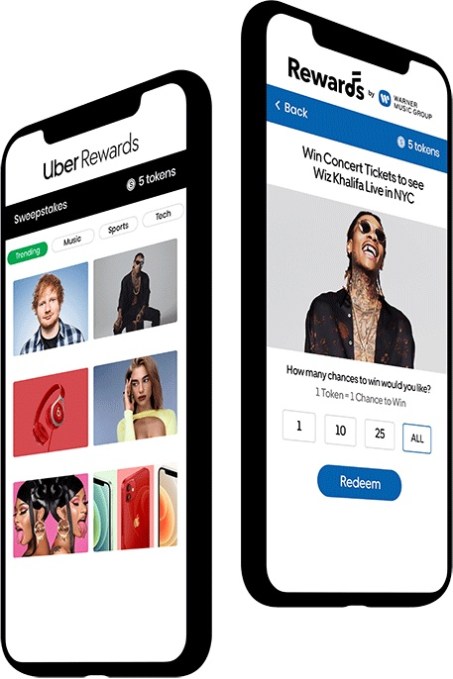
For example, Uber recently worked with Tap Network to expand its Uber Rewards program, offering new Tap Network-powered rewards like free Apple Music or HBO Max, as well as the option to donate to causes like World Central Kitchen. And the minimum number of points needed to claim a reward fell from 500 points to 100 points.

Other companies using Tap Network include Warner Music Group (which, as previously mentioned, is also an investor) and privacy-focused browser company Brave.

Dai said that in the future, Tap could even allow consumers to combine rewards points from different programs: “If I want to redeem something, I might be able to take a little bit of my Uber points, a little bit of my Warner points, a little bit of points from another program,” and combine them.

Watch Space Force’s Lt. Gen. John Thompson speak on sourcing tech to secure space

Lt. Gen. John Thompson of the United States Space Force spoke at TC Sessions: Space earlier this week on the importance of working with startups. The general is the Commander of the Space and Missiles Systems Center, where he oversees research, design, development and acquisition of satellites and their associated command and control systems for the U.S. Space Force. His role puts him in direct contact with some of the most ambitious and innovative startups.

Gen. Thompson spoke extensively on the importance of working with American business, specifically startups, where he sees many producing innovative products that fit within Space Force’s missions. He gave tips on how startups can interact with Space Force.

ExtraCrunch subscribers and TechCrunch Session: Space ticket holders can watch the 30-minute interview below.