Mathematicians have long pondered a deceptively easy puzzle about the reach of a goat tied to a fence. Until now, they’ve only found approximate answers.
Category: Tech news
hacking,system security,protection against hackers,tech-news,gadgets,gaming
15 Tips and Hidden Tricks for the PS5 (You Lucky Dog)
If you’re one of the lucky few to score Sony’s newest game console this holiday, check these features out for the best experience.
The Worst Hacks of 2020, a Surreal Pandemic Year
From ransomware schemes to supply chain attacks, this year melded classic hacks with extraordinary circumstances.
Better Than Nothing: A Look at Content Moderation in 2020
The pandemic and the election forced social media platforms to police false information like never before—but we have no clue if that solved anything.
What startups can learn from this dumpster fire year
Want this newsletter in your inbox every Saturday morning? Sign up here.
Remember when it was news that venture capitalists were open for business? Or when Zoom investing was only done by that one guy in Ann Arbor (ha, I kid!)? These past few months have felt busier than ever, with no holiday slowdown in sight when it comes to startup growth, hot IPOs and new financings.
Even with a distracting bull market, I wanted to reflect and see how the youngest startups are faring. Alex Wilhem and I dove into data, provided by Pitchbook, to see if the next DoorDashes and Airbnbs are getting their first financings.
The answer is that seed investing flourished but in a complicated way. COVID-19 shook up which startups were considered attractive by private investors. And that changeup came at risk to certain sectors and people.
Here’s how two investors explained the dynamics:
Freestyle’s Jenny Lefcourt:
I think seed prices are being driven up by the larger [venture] firms playing earlier and feeling like they cannot afford to miss the next DoorDash. I think the larger firms have so much capital to put to work and feel they are better off burning some [cash] at seed for the upside of being in the right [startups] where they can double, triple, 10x down on their winners.
Eniac Ventures’ Nihal Mehta:
Because you can’t meet in person, investors felt way more comfortable investing in ‘proven’ entrepreneurs that had pre-existing connections to their social circle.
The long-term ramifications of this tunnel vision means that female founders lost out during this time, since social circles in venture capital are largely white and male. From a sector perspective, e-commerce and edtech have had an easy time raising, but at the cost of travel and hospitality.
The data brings a sort of dissonance to startup-land: Even though seed investing has never looked more busy and fruitful, this is good news for some, and bad news for others. It’s a healthy reminder that a boom and bust can be true at the same time.
How’s that for a 2020 sign-off? We’ll be off next week but in the meantime, two bits of homework: take advantage of this Extra Crunch holiday sale and send me tips and thoughts to [email protected] or tweet me @nmasc_ in between your holiday treats.
I’ll chat with you all in the New Year.

Image Credits: Getty Images
Edtech’s biggest challenge in 2021
No sector has had a year quite like edtech. The sector attracted $10 billion in funding globally, and remote learning went from a tool to a necessity.
Here are my favorite edtech stories I wrote this year:
- Edtech investors are panning for gold
- Teachers are leaving schools. Will they come to startups next?
- Edtech is surging, and parents have some notes
- Edtech startups prepare to become ‘not just a teaching tool but a necessity’
- Will edtech empower or erase the need for higher education
Finally, in my end of year op-ed for TechCrunch, I propose that the ubiquity of remote learning surely brought a boom to new users, but it may have in fact limited the sector’s ability to innovate in lieu of fast, easy scale.
Here’s my biggest tip for the year ahead:
For edtech in 2020, flexible and scrappy was a survival tactic that led to profits, growth and most of all, aha moments that technology was needed in the way we learn. Now, as we enter the rest of the decade, the sector will have to shake off its short-term-fix mentality to evolve from tunnel vision to wide-pan ambition.

Image: Bryce Durbin / TechCrunch
A $16B checkbook for space startups
Funding for space startups is defying odds – which is the poetic flair we need once in a while. As part of our TC Sessions: Space 2020 event, a number of TechCrunch reporters dove deep into what kind of money is going into … the space.
- Some think that space startup funding didn’t slow, despite the economic downturn, because of government involvement providing a budget buffer.
- The man who handles the money for the Air Force’s $16 billion checkbook wants startups to slide into the DMs.
- Three VCs talk about space junk, sustainability, and the merits of space manufacturing.
Chris Boshuizen of the venture firm DCVC and a co-founder of Planet Labs notably said:
We don’t yet live in the sci-fi future, where you can just fly up, grab a piece of debris and bring it back. That’s really, really hard — I think probably five years away — but something we want to support and see happen.
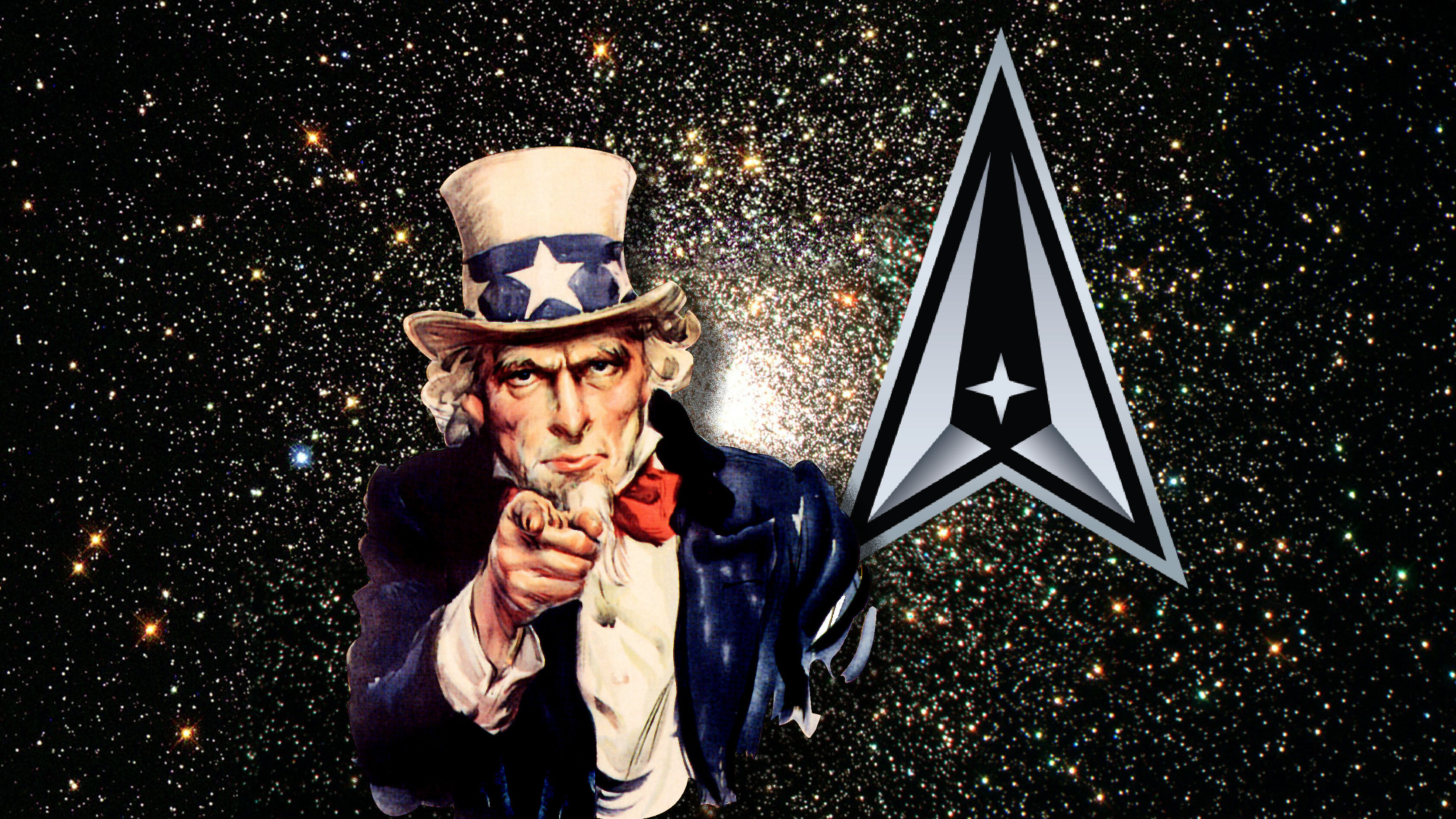
Image of Uncle Sam floating in space with the Space Force logo above his left shoulder.
Remembering the startups we lost in 2020
Building a startup is always difficult, but the pandemic was a plot twist that led to a not-so-happy ending for many companies this year. So, as part of an annual TechCrunch tradition, we paid homage to the startups we lost in 2020.
Here are my takeaways:
- This is not a fun list. Failure is hard, but you can learn a thing or two when you sort through the ashes. For example? Big names, big plans, and a boatload of money isn’t a replacement for actually making money.
- List includes short-form video app Quibi, to lawyer tech startup Atrium, to a slew of travel startups which fell apart as the virus dragged on.
- While some businesses chalked up failure to COVID-19, the cracks and fundamental business flaws were often peeking through far before the pandemic began.

Around TechCrunch
TechCrunch’s Favorite Things of 2020
Gift Guide: Last-minute subscriptions to keep the gifts going all year
Video: TechCrunch editors choose their top stories of 2020
Across the week
Seen on TechCrunch
Snoop Dogg’s Casa Verde Capital closes on $100 million as the cannabis industry bounces back
Activism platform actionable helps users be proactive about the causes they love
Letterhead wants to be the Shopify of email newsletters
Telegram, nearing 500 million users, to begin monetizing the app
The Biden administration can change the world with new crypto regulations
Seen on Extra Crunch
With a $50B run rate, can anyone stop AWS?
Looking ahead after 2020s epic M&A spree
Dear Sophie: What’s ahead for US immigration in 2021?
The built environment will be one of tech’s next big platforms
@EquityPod
Finally, Equity is ending the year with two holiday episodes. This week, we’ve got reflections on this dumpster fire year. I teamed up with Danny, Chris and Alex to just sit back and think about this eventful year. We also got five venture capitalists who we got to leave us their notes as well.
The goal for this episode was to sit down and think a year that no one could have ever predicted, but with a specific angle, as always, on venture capital and startups.
We asked about the biggest surprise, non-portfolio companies to watch, and trends they got wrong and right. There was also banter on Zoom investing (Alex came up with Zesting, not me) and startup pricing.
Equity drops every Monday at 7:00 a.m. PST and Thursday afternoon as fast as we can get it out, so subscribe to us on Apple Podcasts, Overcast, Spotify and all the casts.
Put Your Gift Cards to Use With These After-Christmas Sales
Got some new cash to spend? Some of our favorite gadgets and gizmos we’ve tested and recommend are still discounted.
Original Content podcast: ‘The Mandalorian’ season two goes deep into Star Wars mythology
“The Mandalorian” just wrapped up its second season on Disney+, with an action-packed and surprise-filled finale.
In many ways, it feels like a seamless continuation of the first season’s storylines, with the titular bounty hunter searching for a Jedi who can take responsibility for the alien moppet known to the internet as Baby Yoda, while the pair is pursued by the sinister Moff Gideon.
But as we explain on the latest episode of the Original Content podcast, where the first season of “The Mandalorian” felt accessible to anyone, regardless of their level of Star Wars fandom, season two deepens its ties to the rest of the fictional universe.
That includes bringing in live action versions of characters from the animated “Clone Wars” series, as well as setting up the many other Star Wars shows that are in the works for Disney+. This approach prompted very different responses from your podcast hosts — Darrell was delighted since he understood all the Ester Eggs, Jordan was exhausted trying to keep up and Anthony was happy to let many of the references go over his head.
At least the show’s other virtues remain intact, with enjoyably grungy and tactile space opera settings, spectacular big budget battles and an adorable baby Jedi.
In addition to reviewing “The Mandalorian,” we also discuss HBO Max’s arrival on Roku (which somehow prompts Anthony to explain his disappointment in the new Christopher Nolan movie “Tenet”), and Darrell and Jordan offer their latest thoughts on “The Bachelorette.”
You can listen to our review in the player below, subscribe using Apple Podcasts or find us in your podcast player of choice. If you like the show, please let us know by leaving a review on Apple. You can also follow us on Twitter or send us feedback directly. (Or suggest shows and movies for us to review!)
And if you’d like to skip ahead, here’s how the episode breaks down:
0:00 Intro
4:14 HBO Max/”Tenet” discussion
13:35 “The Bachelorette” discussion
28:42 “The Mandalorian” Season 2 review
50:40 “The Mandalorian” spoiler discussion
Chatroulette Is On the Rise Again—With Help From AI
The hottest app of early 2010 faded quickly when it was flooded with unwanted nudity. Smarter content moderation is helping to revive it.
A ‘Bulletproof’ Criminal VPN Was Taken Down in a Global Sting
Plus: Dozens of reporters get hit by an iMessage exploit, continued fallout from the SolarWinds hack, and more of the week’s top security news.
Can the Paris Agreement Still Avert Climate Chaos?
As the Trump era wanes, there is a sense of optimism about what the accord could achieve, five years in—but only if countries meet their targets.
The Video Games WIRED Loved Most in 2020
These are the games, both old and new, that we relied on to blow off steam, to hang out online, or just to feel better this year.
Music made 2020 better, but we failed to make 2020 better for musicians
“Are you okay?”
I don’t have a good answer to the question. Knowing full well that I’m talking back to an algorithm — even one asking the same question of everyone with a different band mad-libbed in — doesn’t soften the blow. Am I? Are we? Is anyone, really?
In this case, it’s referring to Waxahatchee. I mean, yeah, I totally listened to a lot of Waxahatchee this year. Waxahatchee is good. Saint Cloud was one of my favorite albums of the year. Katie Crutchfield’s music doesn’t exist in the Elliott Smith, Leonard Cohen bin for me. It’s not time to send up the signal flares when you see the band all over my Spotify social feed.
The Spotify roasting AI that’s been making the rounds this week is a fun exercise in music snobbery. It also may be brushing against some larger truth here. Something I think we all considered at least in passing this year when Spotify offered its annual “Wrapped” year in review.
What’s the soundtrack to the worst year, ever? What do we listen to while the world burns? In 2009, a former CNN intern stumbled across a video tape in the archives labeled with the title, “Turner Doomsday Video.” The minute-long video features a band playing, “Nearer My God To Thee,” believed to be the final song played by the band on the Titanic. It carried the explicit instructions, “HFR [Hold for Release] till end of the world confirmed.”
Barring any sort of last-minute surprise, it seems likely we’ll make it through 2020 shy of a full-on apocalypse (in spite of, perhaps, the best efforts of some). But for me, Spotify’s year in review was a testament to hell year, just as my Apple Watch exercise bars saw a zeroing out in late-March and April, as the pandemic bore down on my home of Queens, New York and I dealt with some personal health issues.
What was pitched as a celebratory aggregation of my listening habits over the previous 12 months exited the machine as a testament to the long stretches of time where engaging with music felt like an impossibility. Ambient music and post-rock got me listening again when lyrics seemed like too much to process. And I’m sure I’m not alone in having listened to some comfort tracks with an alarming frequency.
Looking back is a useful reminder of the role music played in what undoubtedly qualifies as the worst year to date for many. It would be an overstatement to suggest that music saved my life in 2020, but it certainly cushioned the blow of one too many emotional gut punches.
“Music can lift us out of depression or move us to tears – it is a remedy, a tonic, orange juice for the ear,” the late-neurologist, Oliver Sacks wrote. “But for many of my neurological patients, music is even more – it can provide access, even when no medication can, to movement, to speech, to life. For them, music is not a luxury, but a necessity.”
Louis Armstrong put it even more succinctly: “music is life itself.”
It’s a cruel irony that, in a year when music has meant so much to so many, most musicians have struggled to make ends meet. The musical field certainly isn’t unique in that respect this year, but their struggles have been pronounced in an era when streaming revenues offer fractions of cents what musicians make in record sales, and touring has become the most important revenue stream for all but the biggest names. For the past 10 months, that all but dried up.
“The pandemic utterly decimated the live-music industry,” Wilco frontman Jeff Tweedy noted in a recent interview. “There’s been almost an entire year now of absolutely zero revenue.”
In May, a survey from the Musician’s Union noted that 19% of musicians said they might end up giving up their careers due to the impact of COVID-19. Seven months later, one wonders whether that figure might have been optimistic.
Tweedy adds, “There will be places to play. But the landscape won’t ever look the same. I imagine that a lot of the more intimate music venues will be gone, just like a lot of small businesses and restaurants.”
Bandcamp has been a beacon for many. The service’s “Bandcamp Fridays,” which waive its revenue cut, have raised $40 million to date. The site has promised to continue offering the feature at least through May of next year.
This year’s struggles have served to highlight concerns over streaming royalties. Spotify has understandably been the focal point for this conversation, all while the company has spent hundreds of millions to bolster its podcast programming. CEO Daniel Ek didn’t do himself any favors in July when he noted, “Some artists that used to do well in the past may not do well in this future landscape, where you can’t record music once every three to four years and think that’s going to be enough.”
In October, Justice at Spotify rep (and Galaxie 500 member) Damon Kurkowski told me “[R]esponse from certain corners of the industry has been as cold as we expected: ‘You’re just musicians and don’t understand business,’ is the basic gist of it. To which I would say: The problem we are calling attention to is precisely that musicians have been left out of the conversation! We always come last in payment and in consultation — even though our work is what the streaming business is built on.”
The struggle to survive on music is nothing new, of course. Jazz genius Thelonious Monk famously had a benefactor in Baroness Pannonica de Koenigswarter. But just because we’ve failed musicians in the past doesn’t mean we can’t and shouldn’t do better.
Am I okay? I’m still not sure, but listening to music seems to help.
Daily Crunch: Alibaba faces antitrust probe
Chinese authorities investigate an e-commerce giant, Google may be tightening its grip on research and VCs weigh in on the year’s biggest surprises. This is your (briefer than usual) Daily Crunch for December 24, 2020.
The big story: Alibaba faces antitrust probe
China’s State Administration for Market Regulation said that it’s investigating the e-commerce giant over a policy that forces merchants to sell exclusively with Alibaba and skip rival platforms JD.com and Pinduoduo.
“Alibaba will actively cooperate with the regulators on the investigation,” the company said in a statement. “Company business operations remain normal.”
Meanwhile, Chinese authorities have already called off the initial public offering of Alibaba affiliate Ant Group, and the company has now received another “meeting notice” from regulators.
Holiday grab bag
Google reportedly tightens grip on research into ‘sensitive topics’ — Reuters, citing researchers at the company and internal documents, reports that Google has implemented new controls in the last year, including an extra round of inspection for papers on certain topics.
Five VCs discuss what surprised them the most in 2020 — The latest episode of Equity reflects on a year that no one could have predicted.
Gift Guide: Last-minute subscriptions to keep the gifts going all year — They’re easy to order at the very last minute, easy to give from afar and they’ll spread the gifting fun out over weeks and months.
Advice and analysis from Extra Crunch
The built environment will be one of tech’s next big platforms — An in-depth look at Sidewalk Labs’ abandoned Toronto waterfront project.
US seed-stage investing flourished during pandemic — According to a TechCrunch analysis of PitchBook data and a survey of venture capitalists, a few trends became clear.
Use Git data to optimize your developers’ annual reviews — Three metrics can help you understand true performance quality.
(Extra Crunch is our membership program, which aims to democratize information about startups. You can sign up here.)
The Daily Crunch is TechCrunch’s roundup of our biggest and most important stories. If you’d like to get this delivered to your inbox every day at around 3pm Pacific, you can subscribe here.

Not even 5G could rescue smartphone sales in 2020
This was going to be the year of 5G. It was going to be the year the next-generation wireless technology helped reverse some troubling macro trends for the industry — or at the very least helped stem the bleeding some.
But the best laid plans, and all that. With about a week left in the year, I think it’s pretty safe to say that 2020 didn’t wind up the way the vast majority of us had hoped. It’s a list that certainly includes the lion’s share of smartphone makers. Look no further than a recent report published by Gartner to answer the question of just how bad 2020 was for smartphone sales.
It was so bad that a 5.7% global decline year-over-year for the third quarter constituted good news. In a normal year, that wouldn’t qualify as good news for too many industries outside of wax cylinder and asbestos sales. But there are few standards by which 2020 was a normal year, so now we’ll take some respite in the fact that a 5.7% drop was a considerably less pronounced drop than the ~20% we saw in Qs 1 and 2.
Some context before we get into the whys here. A thing that’s important to note up front is that mobile wasn’t one of those industries where everything was smooth sailing before everything got upended by a pandemic. In 2019 I wrote a not insignificant number of stories with headlines like “Smartphone sales expected to drop 2.5% globally this year” and “Smartphone sales declined again in Q2, surprising no one.” And even those stories were a continuation of trends from a year prior.
The reasons for the decline should be pretty familiar by now. For one thing, premium handsets got expensive, routinely topping out over $1,000. Related to that, phones have gotten good. Good news for consumers doesn’t necessarily translate to good news for manufacturers here, as upgrade cycles have slowed significantly from their traditional every two years (also an artifact of the carrier subscription model). Couple that with economic hardships, and you’ve got a recipe for slowed growth.
This March, I wrote an article titled “5G devices were less than 1% of US smartphone purchases in 2019.” There was, perhaps, a certain level of cognitive dissonance there, after many years of 5G hype. There are myriad factors at play here. First, there just weren’t a ton of different 5G models available in the States by year’s end. Second, network rollout was far from complete. And, of course, there was no 5G iPhone.
I concluded that piece by noting:
Of course, it remains to be seen how COVID-19 will impact sales. It seems safe to assume that, like every aspect of our lives, there will be a notable impact on the number of people buying expensive smartphones. Certainly things like smartphone purchases tend to lessen in importance in the face of something like a global pandemic.
In hindsight, the answer is “a lot.” I’ll be the first to admit that when I wrote those words on March 12, I had absolutely no notion of how bad it was about to get and how long it would last (hello month nine of lockdown). In the earliest days, the big issue globally was on the supply side. Asia (China specifically) was the first place to get hit and the epicenter of manufacturing buckled accordingly. Both China and its manufacturing were remarkably fast to get back online.
In the intervening months, demand has taken a massive hit. Once again, there are a number of reasons for this. For starters, people aren’t leaving their homes as much — and for that reason, the money they’ve allotted to electronics purchases has gone toward things like PCs, as they’ve shifted to a remote work set-up. The other big issue here is simple economics. So many people are out of work and so much has become uncertain that smartphones have once again been elevated to a kind of luxury status.
There are, however, reasons to be hopeful. It seems likely that 5G will eventually help right things — though it’s hard to say when. Likely much of that depends on how soon we’re able to return to “normal” in 2021. But for now, there’s some positive to be seen in early iPhone sales. After Apple went all in on 5G this year, the new handset (perhaps unsurprisingly) topped sales for all other 5G handsets for the month of October, according to analysts.
The company will offer a more complete picture (including the ever-important holiday sales) as part of its earnings report next month. For now, at least, it seems that thing are finally heading in the right direction. That trend will, hopefully, continue as the new year sees a number of Android launches.
Perhaps 2021 will be the year of 5G — because 2020 sure wasn’t.
Elon Musk says SpaceX to double launch pad usage for Starship tests, Super Heavy flights coming in a ‘few months’
SpaceX is set to significantly ramp up its Starship development program in the new year, in more ways than one. SpaceX CEO and founder Elon Musk noted on Twitter on Thursday that the company will seek to make use of both of its two launch pads at its development facility in Boca Chica, Texas with prototype rockets set up on each, and that it will begin flight testing its Super Heavy booster (starting with low-altitude “hops”) as quickly as “a few months” from now.
Recently, SpaceX set up its SN9 prototype of Starship (the ninth in the current series) at Pad B at its Texas testing facility, which is on the Gulf of Mexico. SN9 will be next to undergo active testing, after SpaceX successfully flew its predecessor SN8 to an altitude of around 40,000 feet, and then executed a crucial belly flop maneuver that will be used to help control the powered landing of the production version. SN8 was destroyed when it touched down harder than expected, but SpaceX still achieved all its testing goals with the flight — and more.
SN9 will now undergo ground tests before hopefully doing its own flight test later on. That’ll provide the team with even more valuable data to carry on to further tests — with the ultimate goal of eventually achieving orbit with a Starship prototype vehicle. Musk’s tweet that two prototypes will be stood up next to each other on Pad A and Pad B at the Boca Chica site could indicate the pace of these test flights might speed up, to match the fast clip at which SpaceX is constructing new rocket iterations.
Meanwhile, news that Super Heavy could be undergoing testing soon is also reason to get excited about 2021 for SpaceX and Starship. Super Heavy is the booster that SpaceX will eventually use to fly Starship for orbital launches, and to eventually help propel it to deep space — for destinations including Mars. Super Heavy will be around 240 feet tall, and will include 28 Raptor engines to provide it with the lift capacity needed to break Earth’s gravity when it’s stacked with a Starship loaded down with cargo.