
All previous Chromebooks have been unapologetically utilitarian — cheaply priced, cheaply built, and a bit crude. But the Pixel is different than all the rest.
Blancer.com Tutorials and projects
Freelance Projects, Design and Programming Tutorials
hacking,system security,protection against hackers,tech-news,gadgets,gaming
All previous Chromebooks have been unapologetically utilitarian — cheaply priced, cheaply built, and a bit crude. But the Pixel is different than all the rest.

With the ability to process three parameters at once, this iPad-sized MIDI controller adds an extra dimension to your electronic music production rig.

The streamlined and super-compact ThinkPad Tablet 2 is one of the best Atom-based Windows 8 slates we’ve tested so far.

Google Glass is here but its reality in the workplace is not quite here yet. What it will eventually do to the way we live and work reminds me of Steampunk illustrations of a person with a mechanical eye, who works according to what appears in the medium of the display, entirely programmed by software.
It’s a vision of man as a node, receiving and transmitting data. Just as the data center is one giant node so will we someday act in a similar way. We will use our unique capabilities to do certain forms of work, much of everything else automated, abstracted by machines that speak in their own language that they understand but we can’t.
Google Glass is the vision of a programmable human. In the future, it’s entirely possible that the eye will get connected to a new kind of brain, augmented to process large amounts of data streaming before us. We will communicate with each other and the networks that connect to different parts of our bodies; the people in our different relationships and the machines that we manage.
This all sounds quite freaky as I sit here listening to Chopin, pecking on my MacBook Pro, a cup of tea and my #phablet on the edge of the desk.
But consider that I am listening to music on Pandora, streamed from some data center and the concept of Google Glass and the ramifications of wearable computing do not seem so extreme. Pandora is an app based upon complex algorithms that use the concepts of the ” human genome,” to know what music to play. It will continue to play music that is similar to Chopin, based upon what I like and what other people listen to as well. The Note II beeps when I have a new message. The MacBook Pro is a stationary console of its own that I stare into for attaining some, any form of wisdom.
To me, this shows that a future of man and data is already here but the past has to be dealt with in order for futuristic tools like Google Glass to have relevance.
Google Glass demonstrates how in business we will continue to use technologies of the future along with those of the past.
Consider the dynamics of today’s IT:
And then consider the direction we are heading:
But Google Glass will make its way, despite its current shortcomings:
The vision for how Google Glass applies to business are numerous and mostly just blind speculation. It will change the way we live and work but only as much as we live and learn to adapt then to the items and ways of our past.
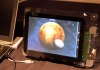
Flash back a month or so to CES — NVIDIA CEO Jen-Hsun Huang officially pulled back the curtain on the company’s new Tegra 4 chipset, and called it the “world’s fastest mobile processor.” It was a hell of a claim to make, but company did little to justify it at the time aside from pointing to its array of Cortex A15 CPU cores and its “72 GPU cores.”
Fortunately, NVIDIA is much chattier here at MWC, and was eager to take show off rather impressive benchmarks for its latest and greatest mobile chipset.
Well, maybe “eager” isn’t exactly the right word — NVIDIA really hates playing the mobile benchmark game. I don’t blame them. In many ways the sorts of numbers that these tests spit out just don’t accurately reflect the experience that users will actually have. During our early testing for instance, the Nexus 4 consistently put up some strangely anemic Quadrant scores — which its cousin the Optimus G handily blew past — despite working like a dream.
All that said, benchmarks are largely are for the most part inescapable, and the Tegra 4 SoC does a rather nice job on them anyway. Quadrant is one of our go-to mobile benchmarking tools, and the Tegra 4 did not disappoint — it scored in the mid-16,000s, topping out at 16,591. To put that in a little perspective, Samsung/Google’s Nexus 10 (which itself is powered by a relatively new dual-core 1.7 GHz Samsung Exynos chipset) usually scores in the mid-to-high 4,000s. Asus’ Transformer Pad Infinity TF700 (powered by a 1.6GHz quad-core NVIDIA Tegra 3) fared about the same, if not a hair higher.
The results were much the same when we looked at AnTuTu scores — while tablets like the Nexus 10 and Asus’ TF700 will yield scores in the mid-8000s to low-9000s, the Tegra 4 demo tablet consistently hit scores above 36,000.
Curious about how the Tegra 4 compares in your preferred benchmarking suite? You can see the full gallery of Tegra 4 benchmark results below:
One of NVIDIA’s most prominent competitors these days is Qualcomm, and NVIDIA Product Marketing director Matt Wuebbling was eager to chat about the performance differential when I let slip the Q word.
When asked about how much NVIDIA knows about Qualcomm’s updated Snapdragon chipsets, he replied simply enough: “we know a lot.” By his count, the Tegra 4 is about two to three times faster than Qualcomm’s Snapdragon 600 (used in devices like the new HTC One). He went on to say that the top-tier Snapdragon 800 is about 25 to 35 percent faster than the 600, with the implication that the Tegra 4 still comes out on top.
Though his response has based on Qualcomm’s published Snapdragon claims, I’d still advise you to take that comparison with a grain of salt. That’s nothing against Wuebbling, but these sorts of simple comparisons don’t always paint the most accurate picture. I couldn’t reach Qualcomm for response at time of writing, but I’ll update if/when they respond to these claims.
You would think that this sort of horsepower would suck a battery dry in jiffy, but that doesn’t appear to the be the case. Another Tegra 4 demo had a video running at full resolution on a small 1080p display, an exercise that never drew more 1 watt of electricity at the most. Power consumption typically fell within the 900-950 milliwatt range — devices like the Droid DNA for instance tend to draw around 1.2 watts for similar tasks.
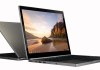
The Chromebook Pixel is the best Chromebook ever made. As with all Chromebooks, that may mean nothing to you if you don’t like ChromeOS, but there can be little doubt that the Pixel is a beautiful piece of precision engineering that feels like a premium laptop that wouldn’t be out of place in any line-up of $1,000+ laptops. And that’s before you even look at the 12.86″ touchscreen with the unusual, but very useful, 3:2 aspect ration, which beats Apple’s Retina displays in terms of pixel density.
If there is a controversy around the Pixel, it’s not about whether this is a great piece of hardware, because it unquestionably is. The question is whether it is worth the $1,299 Google charges for the Wi-Fi version and $1,449 for the LTE-enabled version. If the other Chromebooks, which start at more than $1,000 less than the Pixel are semi-disposable machines that you can easily replace when they break and which are making their inroads into classrooms and enterprises because of this, the Pixel is basically the Chromebook for the C-suite and the superintendent.
Let’s look at the device itself before jumping to too many conclusions, though. On the outside, it only has a very muted appearance, with its dark aluminum body and silver piano hinge that features an understated Chrome logo. It’s a bit on the heavy side and at 3.35 pounds, it obviously has a bit more heft than a 13 inch MacBook Air, though given its touchscreen, it may actually be fairer to compare the Pixel to something like the Lenovo Yoga 13, which weighs just about the same as the Pixel.
The coolest feature on the outside, must be the slim LED bar that lights up in a light blue when the machine is on and displays the full range of the Pixel’s signature colors when you open it and shut it down. There’s nothing useful about this, but it’s a good example for the thoughtful design that makes the Pixel stand out from its competitors.
The Pixel actually features many of these small little features that would definitely appear on a slide at an Apple keynote. The power brick has a little groove that you can run your cable through, makes it a bit easier to keep it halfway organized. The backlight on the keyboard dims when you play a video in full-screen mode. Indeed, the chiclet keyboard, too, feels just right and after a few days with the Pixel, I would argue that it’s better than what Apple is currently shipping on its MacBooks. Of course, it also features Google’s standard Chrome keyboard layout, which does away with Caps Lock and other underused keys in favor of a search key (which brings up the apps menu on the Pixel) and a tighter layout.
As for the other specs, the Pixel features a dual-core Intel i5 processor, has two USB ports, a mini display port for adding an external display, dual-band Wi-Fi, Bluetooth 3.0 and a built-in SD/MMC card reader.
This is a Chromebook, so on-device storage is very limited (32GB for the Wi-Fi model, 64GB for the LTE version). To make up for this, Google offers Pixel users a full terabyte of free Google Drive storage for the next three years. It’s not clear what will happen after this time, which Google says is the expected lifetime of a laptop these days.
In the end, the Pixel is all about the screen, though. When it comes to touchscreens, Windows 8 Ultrabooks have the market to themselves right now and I’m not aware of any of those having the kind of pixel density as the Pixel ( 2,560 x 1,700 at 239 PPI). Google pre-installs a version of the TimeScapes trailer (which was originally shot as a 4k video) on every Pixel to show off the quality of the display and that alone makes for a pretty stunning experience. As everybody who has ever used a laptop with a Retina display knows, text also looks great on such a high-DPI screen and going back to a regular screen just feels like a major step back.
Just like Apple, Google uses those more than 4 million pixels to simulate a significantly lower resolution than the screen is capable off (I’m guessing it’s about 1280 points wide). This allows it to use font smoothing that goes a few steps further than what hardware developers are capable of with regular displays. Here is a screenshot of what the desktop looks like in its full 2,560 by 1,700 glory.
Google says it chose a display with a 3:2 aspect ratio because most content on the web is not designed for widescreen displays, so going with a 3:2 screen gives you more horizontal screen estate. This, however, also means you can’t really put two browser windows side-by-side. ChromeOS solves this by using a Windows-like snap-to-edge gesture that automatically expands the active window to cover mot of the screen when you drag it to the edge of the display. Do this with two windows on each side of the screen and you can easily switch back and forth between them – or you could just use Ctrl-Tab to switch between browser tabs.
Talking about the edge of the screen, it looks like the top and bottom of the glass that surrounds the display is also touch-enabled. Currently, you can only use this to swipe the taskbar into view at the bottom of the screen, but there is an option in the chrome://flags settings that allows you to enable “bezel touch actions.” That setting doesn’t seem to do much right now, but that could change in upcoming versions of ChromeOS.
At first, touching the screen feels a bit weird. It’s just not something you’re supposed to do. Unlike the Yoga, you also can’t fold it back 180 degrees and just use it as a tablet, so the keyboard is always between you and the screen (and there is no on-screen keyboard anyway). Still, when you sit back and read, scrolling down the page with your fingers on the left or right hand of the screen actually starts making sense after a while.
The same goes for using Google maps or full-screen visual experiences like 100,000 Stars. My guess is that 95 percent of the time, you will just use the trackpad (which also feels great, by the way). When you’re just kicking back and want to read a 1,500 word review on TechCrunch, using the touchscreen to scroll down the page starts making sense. First, though, you have to get over the taboo of touching the screen. Once I got past that point, I often found myself reaching out to the screen to close a tab instead of using the trackpad or to click a bookmark. I’m not sure if that’s worth the premium, though, and that’s something you obviously have to decide yourself.
The big tradeoff of having this high-res screen, though, is that it needs quite a bit of battery power, something Google freely admitted when it revealed the Pixel during a mystery-shrouded press event last week (even the fact that there was a press event didn’t leak out). Google says the battery should last about five hours, and judging from my experience with the Pixel, that sounds about right, especially if you keep the screen brightness somewhere around the middle. Playing high-res videos (the 4k videos on YouTube clearly taxed the CPU and Intel 4000 GPU a bit too much and wouldn’t play without stutter, by the way) and 3D games (there are quite a few of those available in the Chrome Web Store now) will obviously drain the battery quite a bit faster.
Google says the Pixel is meant to be a premium device for those who already live in the cloud. If that’s you – and you have some cash to burn – the Pixel may just be for you. In the end, though, the fact that it has a touchscreen may be irrelevant to most users and given that you can buy a Macbook Air or touch-enabled Windows 8 Ultrabook for significantly less than a Pixel, will make it a hard sell despite its amazing screen.
If you are that person who lives in the cloud, the Pixel may just be an option for you (especially once Google lets you edit all your old-school Microsoft Office documents with Quickoffice for Chrome in the coming months). For virtually everybody else, though, this is going to be a hard expense to justify. The hardware is amazing (and did I mention the screen?), but unless you want to use it as a premium Linux laptop with a very limited hard-drive capacity, ChromeOS will still regularly get in your way of getting things done.
It’s hard not to look at the Pixel, which was designed by Google itself, without thinking about the ill-fated Nexus Q media player the company introduced at Google I/O but never brought to market. The Q was Google’s first attempt at making its own hardware, and it, too, was a great, solid piece of hardware, but it was let down by the software that was running on it.
In its current state – and at its current price – the Pixel is essentially a Nexus-like reference design for what a high-end Chromebook should look like (though Google definitely isn’t positioning it this way). It’s a beautiful machine that would look good in any laptop manufacturer’s lineup, and it shows that Google hasn’t just found its design chops in software, but can now also produce great hardware. The only thing holding it back is ChromeOS…

A calendar is a tool created many millennia ago, a tool that is vital to our very functionality as intelligent beings. Yet, when technology has ventured far beyond a simple grid of numbers, the Calendar applications we use haven’t seemed to evolve beyond that.
Sunrise, a new application built by ex-foursquare engineers, finds a way to turn a traditionally consumptive tool (the calendar) into a to-do list of sorts, not unlike the way Mailbox turns the inbox into a to-do list. In this episode of Fly or Die, John and I both agree that the beautiful yet simple UI is clearly superior to the standard iOS Calendar app.
The upper portion of the home display, showing two weeks at a time, easily expands into a full calendar view when pulled down, while a streamed list of events scrolls along below. And our approval isn’t all about surface appearances, either. The app pulls in information from Facebook, Google and LinkedIn to ensure you have directions to any appointments, access to communications with other attendees, and even displays the weather in case you need help choosing an outfit.
It takes the calendar, an often isolated application, and loops it in with all of the apps that it would need to be useful on its own, such as social, weather, etc.
The one caveat (and it’s a big one) is that Sunrise surprisingly does not integrate with iOS or OS X Calendar directly. Calendar enthusiasts will have to export all their data into Google in order to sync with Sunrise, but in the app’s defense, the team describes Sunrise as a Calendar app for Google Calendar users.
If that sounds like you, the iOS only app should be a nice addition to your homescreen. Otherwise, you may want to wait until Sunrise hooks into Apple’s Calendar offerings.

Editor’s note: Ross Rubin is principal analyst at Reticle Research and blogs at Techspressive. Each column will look at crowdfunded products that have either met or missed their funding goals. Follow him on Twitter @rossrubin.
Kickstarter has seen its share of campaigns that spin out of control, but it’s a lot more impressive when spin is in control. Seeing that potential, a trio of tethered toys has recently cropped up on the site, with each appealing to different levels of rotational robustness. Here’s the spin on how they’ve turned out.
Whacked: Your Personalized Yo-Yo. His name is Ed Davidson, but you may know him better as YoYoSwing. And while he may not have put much effort into his line-drawing avatar, he is the creator of custom lathed yo-yos formed into unique shapes and covered with intricate designs. Seeking a broader audience, Davidson sought the narrative aid of an Xtranormal character. The animated Pilgrim makes the case for getting into mass personalization by pressing user-submitted designs into a glass dome adorning the side of a yo-yo.
Rewards ranged from $30 plastic implementations to $100 handmade personalized yo-yos using a choice of woods such as rosewood, yellowheart, tulipwood and osage orange.
Perhaps because it’s unclear why Davidson, who already has set up shop for custom yo-yos, would need funds up front, this dog has failed to walk. With about 10 days left, the campaign has attracted no backers toward its $3,000 goal.
Backed: Civility Yo-Yo. As the web grew, it started to become more obvious that there would eventually be a website for virtually any interest and learning virtually anything. A great example of this is YoTricks.com. Once visited by Eliot Spitzer who quickly realized he mistook the site’s purpose, it is a leading destination for learning advanced yo-yo manipulations of all sorts. And while you can go around the world with any old Duncan or Yomega, the site sought a product optimized for the tricks it taught.
The result was the Civility yo-yo. Designed by Colin Leland, whose yo-yo swings wide in the world of yo-yo designers, the Civility is crafted of aluminum. It’s been expressly designed for the most advanced tricks taught at the site at which the toy was conceived.
Backers didn’t string the project along, raising nearly $23,000, six times the original $3,500 goal. Those 320 yo-yo aficionados are slated to receive a number of rewards between March and May, including a $50 wood yo-yo inspired by the Civility. The real aluminum deal was available for $75, but over 100 backers opted for the kit, which comes with 10 strings, lube and a stylin’ belt holder for impromptu trick requests at $85. Still, that’s less than the $90 that YoTricks.com expects to sell the physics-defyer to the body civic.
Whacked: Unidentified Flaming Object. Moving further up the exclusivity chain, the Unidentified Flaming Object (UFO) is not your father’s swinging object, that is, unless your father had some flame in his game. Brought to you by an individual with the carnival-themed nickname Sideshow Joe, the UFO is a spinning disk that’s even hotter than a Habanero pizza. As its creator notes, “I build things I can set on fire.”
The UFO is described by its creator as “the perfect blend between rope dart, yo-yo, levi wand and Frisbee.” And lest you stinkin’ intellectual property thieves have designs on claiming it as your own, be aware that Sideshow Joe has not sidestepped the U.S. Patent Office in applying for protection. Be also aware that he knows how to throw flaming metal objects with a high degree of precision.
The performer has offered a range of flammable rewards to backers, including pairs of fire nunchuks, a fire staff, fire snake wicks and double chain fire snakes up to 16″ long. The UFO itself begins at $175, with much of the funding going to purchase wicks in big spools, as well as chains, clamps and other materials potentially reclaimed from dungeons. However, up to this point, the fire sale has not been going well. With about 10 days left in the campaign, Joe has attracted only about $1,100 of the $6,000 for which he has asked. Despite the rewards being built-in compliance with guidelines from the North American Fire Artists’ Association and Joe’s aiming it at the “large fire-spinning community,” this campaign is on track to flame out.
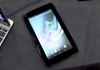
HP surprised more than a few people earlier tonight when it officially revealed the Slate 7, a $169 Android tablet that’s set to ship in the U.S. for $169 in April. It struck me as a safe move for HP, especially after it whiffed so profoundly with its ill-fated TouchPad. After all, people are buying plenty of Nexus 7s, so clearly there must be a market for a cheap, small tablet.
I got the chance to muck around with the Slate 7 at Pepcom earlier tonight though, and to be quite honest, I’m not convinced HP has a winner on its hands.
One of the first things you’ll notice about the Slate 7 is its elongated 16:9 display, and the thick black bezel that runs around it. It’s actually rather reminiscent of Samsung’s 7-inch Galaxy Tab 2.0, another underwhelming Android tab that banked on its price tag to sell. The screen itself (running at 1024 x 600) was decent enough — it was generally very bright, but the colors displayed seemed dull and lifeless.
The Slate 7 seems to have been designed to be as inoffensive as possible. That’s not completely a bad thing — the stainless chassis and the soft-touch plastic that the Slate’s rear is swathed in are rather nice — but there are precious few other design niceties to be found here. Those looking for a little splash of color may be interested to know that a red version will also be available. The Slate 7 is also apparently loaded up with Beats Audio support, a trait it shares with its notebook cousins, but I couldn’t get a feel for it amid all of the noise of Pepcom.
As far as performance goes, what else is there to say? It works just about as well as you would expect a $169 tablet to: not that great. Swiping between home screens could be a little jerky (if it worked at all; quick swipes didn’t always get the job done), and there was a bit of delay as I went to fire up new apps — though some non-final software probably has something to do with that. The Slate 7 has a dual-core 1.6GHz processor and 1GB of RAM to work with, which is usually enough to tackle stock, unfettered Android 4.1 without too many hiccups, but I’m willing to chalk all this jerkiness up to a pre-production lack of polish for now.
While we’re talking about performance, HP’s booth representatives didn’t have many specifics on the dual-core processor, but a quick look at the settings revealed an option called “Rockchip system updates,” proving nicely that HP sourced the processor from China’s illustrious Fuzhou Rockchips Electronics company. Now I couldn’t care less who the chip came from if it does the job admirably, but the internals here don’t do much to wow. When asked about how HP was able to produce such an inexpensive tablet, HP’s pitchman pointed to economies of scale — order enough parts and the end product shouldn’t cost too much — but opting to go with a SoC from a largely unknown Chinese company probably didn’t hurt either.
What almost certainly will hurt HP, though, is the crowded playing field it’s diving into. There’s the Nexus 7 to compete with of course, but don’t forget devices like the Kindle Fire HD and the Nook HD. Each of them brings higher resolution displays into the mix, as well as tight access with each of their respective media environments for only $30 more out of pocket. That’s not to say that HP won’t work to solidify the ties between its new tablet and the rest of the HP ecosystem — the Slate 7 comes with the ability to wireless print to compatible HP printers.
For better or worse (my money’s on the latter), HP just doesn’t seem concerned with trying to differentiate the Slate 7 from any other Android tablet out there. To its credit, HP isn’t trying to position the Slate 7 as anything other than what it is: a very cheap mass-market play. I’m not convinced that this thing is going to be able to pull away from the pack just by undercutting the competition on price, but I could be wrong — the Slate 7 may be the right tablet with the right price tag at the right time.

I was happily surprised to see Hunter Walk interview Jason Kincaid, one of the first TechCrunch employees. The interview is here and I’m reprinting it below.
Jason joined TechCrunch when it was still being run out of my house (before the city of Atherton kicked us out). Even after “retiring” he’s still no. 11 on the all time tech writers list.
Jason broke a lot of big stories. But he also has the rare ability to write thought pieces that shape Silicon Valley culture and thinking. From the moment he joined he was part of the core backbone of TechCrunch. From the article I wrote when he resigned in 2012:
Jason has the rare ability in a writer to both break big stories on his own, as well as write strong opinion articles on the topics of the day. Younger writers (who were often older than him) looked to him for leadership and guidance. He could have quite easily run TechCrunch entirely after we left.
Jason also became, as he says in the interview, a counter voice to many of the editorial and other decisions we made internally. Jason is not the kind of person who would just go with the flow. If he disagreed with something he’d immediately speak up. We often changed plans based on his input.
Anyway, this interview is interesting because it talks about some of the things that happened early on, things that became part of the mythology of TechCrunch. It was great to see this.
Early Employees: Jason Kincaid & the Rise of TechCrunch
Jason Kincaid, early TechCrunch reporter (@jasonkincaid)
Q: When did you join TechCrunch and how did you originally get connected to the team?
A: I usually tell a sanitized version of this story, but what the hell.
It was March 2008, and I’d just graduated from UCLA with a B.S. in biology, a minor in ‘society and genetics’, and zero sense as to what I wanted to do with my life. My good friend Ed McManus (now cofounder of Yardsale) invited me to a party being thrown by an investor in honor of Scribd’s (the ‘YouTube for documents’) first birthday.
The party was unlike anything college had prepared me for — and the likes of which I haven’t seen since. Caviar and vodka shots. Sculptures made of seafood. A basement that had been overhauled to resemble a vintage gas station. Waiters who walked around with endless glasses of champagne, deftly swooping in as soon as one hit empty. I’d had a few — and sure, I sampled the vodka — but the single stair, running the full length between the living room and a hallway, really should not have been there. It was too easy to forget about. I’d have remembered if there were, say, *two* stairs. But the one slipped my mind.
I tripped. My champagne glass fell, and the explosion — louder than any that had come before it — echoed through the halls. I bolted. Down the hallway, straight out the front door. I don’t even remember running, honestly. I stood there in the driveway, trying to catch my breath and staring at the mob of catering trucks, with a vague sense that I was now a Silicon Valley pariah — which I could handle — and that Eddie was going to kill me, which I felt badly about.
A few minutes passed and I reentered the house as stealthily as I could. No trace of the glass. Nobody was waiting to dole out further humiliation My heartbeat was still pounding in my ears. I sat on a couch in the now-deserted living room and considered how post-college life had really gotten off on the wrong foot.
Eventually a friendly guy I didn’t know named Mark Hendrickson came over and we started talking. He was a writer at TechCrunch, which I read sometimes, and I was waiting to hear back from The Economist about an internship I’d just interviewed for. He said to ping him if that fell through.
Two weeks later (“Bad news I’m afraid. You haven’t got it.”) I shot Mark an email. I had an interview with TechCrunch founder Michael Arrington and CEO Heather Harde that afternoon (my writing sample was my Letter of Introduction made out to The Economist). They said they’d try me out for a month and see how things went. As I left Mike told me to make myself irreplaceable. I sure tried.
Q: What phase was TC in at the time – still at Mike’s house? Who had been hired already?
A: TechCrunch was already a major force in the Valley, but we were still in Mike’s rented house in Atherton and very much a startup ourselves. On any given day there were four to eight of us, plus or minus some interns. Our desks took up the living room (which contained Heather’s pseudo-office), the foyer, the hallways, and two bedrooms. The only space Mike kept for his own was the master bedroom.
My desk was just outside Mike’s bedroom door, which meant I was the first person he saw some mornings. He’d open the door, stand in the doorway — groggily rubbing his tired eyes — and I’d already be halfway through telling him about another embargo train-wreck. Sometimes he’d walk straight back into his bedroom and slam the door. I couldn’t blame him. I don’t know how he did it for so long — I’d have gone bonkers.
I remember being excited that my checks said I was employee 0007 (MI6 has yet to call). I was less excited that my desk was near the ‘office’ bathroom.
The employees when I first joined: Michael Arrington (founder/editor), Heather Harde (CEO), Erick Schonfeld (co-editor, working from NYC), Mark Hendrickson (writer/developer), Henry Work (developer), Gene Teare (CrunchBase PM). I had a brief overlap with Mark McGranahan (developer), Sarah Ross (marketing), and Duncan Riley (writer); writer Nick Gonzalez left just before I started. There were a few folks working remotely on TC’s sister sites, including John Biggs (CrunchGear), Mike Butcher (TC UK), and Ouriel Ohayon (TC France).
Q: At what point did you realize the impact TC was having on the tech community?
A: It was a gradual process. First came the superficial, ‘Wow, TechCrunch is a big deal’ moments. Shortly after joining I wrote what would be the first of many posts criticizing Facebook for a privacy issue — in this case, there was a notification box with some misleading wording. Facebook changed it a few days later.
I felt like a badass (my bar was pretty low). Then I published my amateurish follow-up post, which featured the most mundane headline to ever appear on TechCrunch: Facebook Rewords Mini-Feed Notification. The commenters dutifully tore me apart and my ego has yet to recover.
It wasn’t until months later, after meeting with dozens of entrepreneurs, that I better understood TechCrunch’s real impact. There are plenty of people who see TechCrunch as just another big press outlet, but there’s also a mystique to it. The founders I spoke to expressed it in different ways — some got nervous, others overly-animated, still others had an anxious pleading — but you could sense that their interest in appearing on TechCrunch wasn’t just about getting good press. It was about validation, it was part of the journey; in many cases, it helped inspire them to start a company in the first place. This is still true for many founders. I tried not to forget that.
Q: What was your most meaningful contribution(s) to TC’s success?
A: There were some big stories — Apple’s blocking of Google Voice comes to mind, as does Facebook Fax (Facebook punked us by enabling a bizarre fax-this-photo feature just for TechCrunch employees. The following day I made my debut in the San Francisco Chronicle as the reporter who had covered a Facebook feature that “Doesn’t Exactly Exist”).
But I’d like to think my most meaningful contribution was my approach to writing, which I believe rubbed off on some of my colleagues. TechCrunch had several strong voices, some of which dabbled in hyperbole from time to time. I’m guilty of some sensational stories myself, but in general I tried to take a more cautious and nuanced approach, and I think it helped balance things out.
I’m also pretty opinionated (fancy that, a tech blogger with opinions!) and wasn’t afraid of letting Mike and Heather know when I was concerned about something — they always took the time to hear me out, which I appreciated. As a result, I helped with various decisions over the years.
Q: Did you have any traditions or rituals that helped define TC’s culture?
A: TechCrunch wasn’t big on traditions (the only one I can remember was Heather’s tradition of buying us cakes on our birthdays) but it’s possible the company culture wasn’t conducive to them. We had so much going on all the time — from surprise guests, to weird stuff arriving in the mail, to Mike needing us to send him an article to verify a fact minutes before he was going to be on TV — that the culture was more concerned with holding on for the ride than it was with establishing traditions. We ate a lot of Chipotle and enjoyed playing with Mike’s dogs, but I’m not sure those qualify.
For several years running I did try to make wearing a suit to the Crunchies a company-wide tradition (I like wearing suits), but didn’t have many takers.
Q: How did you find out that TC has been sold to AOL and what were your feelings?
A: The day is a blur. Om Malik broke the news in the middle of TechCrunch Disrupt, which is a frantic time for the writing staff. I remember sitting next to a few colleagues and re-reading that post about ten times. I had friends sending me lame jokes about AOL CDs before I knew what was going on. We got most of the details at an all-hands that evening.
There was a part of me that was happy — I’d soon be getting a check that would make nearly any 25-year-old thrilled. But there was also a tinge of disappointment. I’d long thought that TechCrunch had gotten the ‘hard stuff’ right — Mike, Heather, and Erick had built up a great writing team and somehow managed to get these strong personalities to work together as a happy-ish family. But the product side was problematic: we never had enough developers, and the ones we had were constantly putting out fires and couldn’t dedicate much time to actually improving the site. I thought there was a lot of upside to be had if we could get TechCrunch’s user experience to live up to (and maybe even enhance) its content.
That said, I don’t hold anything against Mike for selling. TechCrunch was his baby and he put everything he had into it, to the point that I grew seriously concerned about his health at times. The landscape for tech blogs and other ‘new media’ is tumultuous and unpredictable — if selling seemed like the right call at the time, I can’t blame him.
Q: Today tech journalism is big business and there are multiple sites fighting for readers. Do you think TC is still the most influential – why or why not?
A: The short version: yes, TechCrunch is still the most influential, though the competition is fierce.
When I first started at TechCrunch it was relatively unknown outside of tech circles — I told people I worked at “a tech news site”. These days, some people get mildly offended if I ask them if they’ve heard of it (“Uh… yeah, of course”). Hell, they’re running ads in NYC taxi cabs. So, in that regard it’s clearly grown in influence.
AOL’s foolish decision to force Mike out, followed by the loss of some great people, obviously left a mark that has taken time to recover from. Mike (and the rest of us — but usually Mike) broke really big stories regularly. That’s hard to replace. And it takes time to establish new voices.
But they’ve been working hard, and, while there’s plenty left to do — it’s paying off. Startups still go to great lengths to try to get on TechCrunch and I don’t think that’s going to change any time soon. Of course, I’m a little biased — I’ve got my fingers crossed that I’ll see an ad for TechCrunch on a flight into space someday.

Since launching early last year, WeVideo has provided video producers with an easy and intuitive way to make their projects more attractive. Its cloud-based video-editing platform, which launched for YouTube producers before becoming generally available last year, now also has a mobile component, as the company is releasing an app in beta for select Android devices.
Ahead of the big Mobile World Conference show in Barcelona, WeVideo is rolling out its Android app to make it easier for users to create, edit, collaborate on, and publish mobile video projects on the web. The app will allow users to record video straight from their phones, and includes all the same features you’d expect from a video-editing suite: Users can trip and arrange clips together, adjust audio volume, and add themes, transitions and titles.
With the new app, WeVideo is bringing vital tools to a platform that has been largely underserved on the video editing front. Compared to the number of mobile video apps that have emerged on iOS, there is a dearth of tools for enabling Android users to make the things they shoot on their phones actually watchable.
That said, the app isn’t available to all Android users. Probably due to OS fragmentation and varying handset capabilities, the app is launching on a select group of devices in beta. It’ll be available on the Samsung Galaxy S III, Samsung Galaxy Note, Samsung Galaxy Note II, and the Google Nexus at start, with more devices coming soon.
While being able to edit on the phone is a big bonus, users can also begin projects on their phones and then access them from WeVideo’s browser-based web experience. Or vice versa — the cloud-based nature of the editing suite means they’ll be able to access projects uploaded from the web on their phones. Once done editing, users can publish and share videos in a number of places, including WeVideo, YouTube and Facebook, as well as saving to their phones.

Editor’s Note: Semil Shah is a contributor to TechCrunch. You can follow him on Twitter at @semil.
“FOR every reporter employed in America, around six people work in public relations: a few too many, some might think.” So began The Economist’s obituary for Daniel Edelman in January 2013, a sharp eulogy commemorating the life of a public relations giant. For decades, Edelman, in addition to founding and running the firm that bears his name today, successfully convinced legions of companies and brands to work with him to win the “air game” of public relations.
In Edelman’s mid-20th Century America, the ratio of PR professionals to reporters was nowhere what it is today. And, in our insular world of technology startups (and some startups aren’t “tech startups,” just so we’re clear about the facts), there are a staggering number of smart people who work in tech PR relative to the number of full-time tech reporters. I don’t have the statistics to support this claim, but having been a long-time contributor to this site, I just feel it, and I’d bet you do as well.
The first question, then, is “Why?” – Why is this world of tech startups able to support so much PR activity?
Before we answer this question, we must not conflate advertising or marketing with PR. In grossly simplified terms, marketing creates a platform for sales. Advertising is a costly technique to bring potential clients and customers to one’s marketing platform in order to make a sale. But, the work of public relations, or “PR,” is the dark art that’s impossible to measure, the craft of indirectly encouraging or persuading the crowd to seemingly engage in organic chatter about something, to somehow become a natural part of an ongoing conversation that, over time, incepts the audience to become, somewhat unknowingly, evangelists for a certain point of view. It’s Don Draper with a splash of Dominick Cobb.
Why, then, does PR still exert power in a world we were are constantly told it’s *all* about engineering, product, and design?
Let me count the ways. The current pace at which new companies form or launch makes it difficult for the crowd to sort these signals properly, and makes it difficult for tech reporters (hence, Techmeme) and investors (hence, AngelList) to keep tabs on ones that (may) matter. This pace creates enough noise to sometimes positively impact efforts around fundraising, recruiting, or partnerships. Engaging in PR, then, merits serious consideration. However, early-stage tech startups aren’t often keen to hire non-technical folks with PR-like experience to join their teams full-time, so engaging with an agency on a retainer-basis — while not cheap — becomes a viable option. To boot, many of the best VC firms funding these startups also invest in their own PR because it’s critical to their business in today’s climate, so why shouldn’t portfolio companies do the same?
It’s easy to stop here and proclaim it’s all about “product, product, and product,” and to blame the PR firms and professionals, but that would be a lazy and misguided conclusion. For many startups, PR definitely has a seat at the table. PR firms aren’t to blame. The fact is, there is real economic demand directly from entrepreneurs and investors for their expertise, so we must then ask, “Why is there demand to begin with?”
There’s demand for PR because there are too many “tech startups.” There’s demand for PR because everyone is starting something, entrepreneurship is mainstream and “cool,” and consumer attention spans are under constant attack. There’s demand for PR because acqui-hired startups and their acquirers want save face or sell a story. Even in cases where startups don’t engage with PR firms, agencies, or consultants, many actively coordinate pre-launch games to manufacture “buzz” and hits on social media to get the word out cheaply and loudly.
PR, when it hits, scales. Thoughtful content-marketing paired social media scales. The monthly line item for PR, while pricey, can be slashed in a pinch and is easier to cut than having to let go of a full-time employee. Effective PR can send the right whispers in the ears of potential investors and recruits, all of which help create real economic value for all shareholders in the event of a financing or acquisition.
The list goes on and on. Generally speaking, for early-stage tech startups in the Valley, considering PR is a complicated decision because it initially seems to buck conventional wisdom, which commands that all companies to focus primarily on product and recruiting. Yet, on the other hand, most engineering- and product-focused teams in the early-stages (meaning, up to Series B) aren’t often in the mindset to hire someone who has this type of nontechnical experience. Most of the PR talent, as a result, stays at the agencies, probably because those folks want to be in control of their workflow rather than shoulder the uncertainty that comes with being a nontechnical employee at an early-stage tech startup in 2013.
We must all be cognizant of the fact that tech PR professionals are in demand and very good at what they do. Many of them work for the companies you read about in the tech blogs or help the folks you see on stage at conferences, and many of them engage with the investment firms that fund them in the first place. As they are flush with deep relationships, a steady flow of a new business, and recurring accounts, we cannot fully understand how deep their collective influence runs because its effects are cumulative and impossible to quantify.
But, I can tell you this…for startups that have begun to enter the phases around Series A into the growth phase, PR oftentimes pays dividends over and above the monthly retainer fees. Coordinated PR has the potency to incept investors and spur them to debate the merits of and mull over a specific investment opportunity. Well-crafted PR can impact M&A. Orchestrated PR around a company’s technical brand helps attract candidates. And, PR can, over time, create a soft but constant drumbeat that spreads as the crowd continues to chatter. Behind most stories we read, there likely is a Don Draper shaping the narrative, so we must all try to channel Dominick Cobb and examine the totem we see spinning before our eyes.
Photo Credit: Leonardo DiCaprio as Dominick Cobb in Christopher Nolan’s “Inception.”
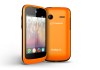
Firefox OS, the new, HTML5-friendly mobile OS from Mozilla, is today taking a big step forward in its strategy to become a viable third player in the smartphone landscape currently dominated by Google’s Android and Apple’s iOS. Mozilla is announcing that 18 carriers have now committed to its Open Web HTML5 device push; the launch of the Firefox Marketplace app store to aggregate content for the platform; and some of the first low-cost handsets coming out of its carrier partnerships that will be coming out this summer.
Telefonica — whose ZTE-made handset is pictured here — will sell its first Firefox-powered phones in Latin America and Spain; and Deutsche Telekom will debut its handsets in Poland before expanding to other markets in Eastern Europe. Other operators announcing handsets today include Latin American powerhouse America Movil (starting first in its home market of Mexico) and Norway’s Telenor, which has operations across Eastern Europe and Asia, including Malaysia, Pakistan and Bangladesh.
The idea is that carriers may have a better opportunity in markets with lower overall smartphone penetration, and a customer base interested in low-cost handsets (versus premium devices like the iPhone or a Samsung Galaxy device). “In Latin America, 82% of the population does not have a smartphone today, so we have the potential to make the market in those developing economies,” said Matthew Key, CEO of Telefonica Digital, told TechCrunch. “They’re at a different stage of development.”
The Firefox Marketplace, meanwhile, has signed on a number of early partners: Zeptolab, maker of Cut the Rope; Disney Mobile Games; EA games; Facebook; MTV Brasil; Nokia’s mapping effort HERE; SoundCloud and Twitter will all appear in the marketplace with HTML5-based web apps optimized for Firefox OS handsets. Given that popular apps are a key part of attracting users to different devices, it’s essential that Mozilla shows at this early stage that it’s picking up key brands in that area.
The 18 new carriers announced today at a press conference at the Mobile World Congress in Barcelona are Latin American giant América Móvil, China Unicom, Deutsche Telekom, Etisalat, Hutchison Three Group, Japan’s KDDI, Korea’s KT, Russian MegaFon, Qtel, SingTel, Smart, Sprint, Telecom Italia Group, Telefónica, Telenor, Telstra, Portugal’s TMN and Russia’s VimpelCom.
This is the first major update to Mozilla’s partner network since announcing an early list of seven (Deutsche Telekom, Etisalat, Smart, Sprint, Telecom Italia, Telefónica and Telenor) in July 2012, and it demonstrates that the group continues to gain ground with carriers looking for a viable third way in the smartphone market — ideally one that gives those carriers more say, and a bigger cut, in how services get deployed on new devices.
“The launch of the first smartphone in Europe with the new Firefox operating system is an important step on the way to more competition between the different ecosystems,” noted Rene Obermann, chairman of Deutsche Telekom, in a statement.
But despite the vote of confidence, it’s going to be a long, uphill battle to fight for smartphone market share in a world currently dominated by Android and iPhone. A report from Strategy Analytics estimates that Firefox OS will account for only 1% of smartphones shipped this year, with Android taking a 67% share.
“It’s no doubt that there’s going to be a long burn,” admitted Key at Telefonica. “This isn’t something that will be an instant hit on day one.” This is one reason why Telefonica is choosing to target four countries initially rather than its full footprint across 25. Those will only come “over a period of time,” he said.
The fact that Firefox OS is being used largely as a lever to target later smartphone adopters, who might be spending less on their handsets, will also put more pressure on Nokia, which has also been honing a low-cost device strategy in its Lumia line of Windows Phone handsets to compete with the likes of Huawei and ZTE, now making both low-cost Android and low-cost Firefox OS handsets.
The HTML5-based framework of Firefox OS, built on open Web standards, will mean that every aspect of the device — including even the phone dialler — is built as an HTML5 application. Firefox says that allows for faster performance compared to how HTML5 typically works on Android- or iOS-powered devices, where web apps have been often seen as inferior to native apps on those platforms.
It also gives carriers the chance to customize and localize those interfaces and services — including apps, and including the Firefox Marketplace — as they choose, a level of flexibility they cannot have with iOS or with Android (unless they decide to work on a forked version of the latter, which then cuts out access to the Google Play app store).
In the case of Deutsche Telekom, for example, the carrier says that it will be pre-loading “strategically relevant building blocks, such as those for security,” but it also adds that it is providing “a network operator’s perspective” on technical requirements for handset makers.
“Firefox OS brings the freedom and unbounded innovation of the open Web to mobile users everywhere,” said Gary Kovacs, CEO, Mozilla, in a statement. “With the support of our vibrant community and dedicated partners, our goal is to level the playing field and usher in an explosion of content and services that will meet the diverse needs of the next two billion people online.”
Although Deutsche Telekom’s biggest markets are in Germany and the U.S., as well as the UK, where it is a partner in the Everything Everywhere JV with France Telecom, these are not the markets that it will be targeting with its first Firefox OS devices — not initially, at least. Instead, its first device, the Alcatel One Touch Fire, will be launched this summer in Poland, and “further countries in Eastern Europe will follow in 2013,” the company says.
Similarly, Telefonica will be aiming its first Firefox OS handsets in three markets in Latin America — Brazil, Colombia and Venezuela — as well as Spain, a market that has shown to have a strong appetite when it comes to low-cost smartphones. Like DT, Telefonica will be rolling out the Alcatel One Touch, and added to that it will also offer devices from LG and ZTE.
We are live at the Firefox OS press conference in Barcelona and will update as we learn more.
It’s time for CrunchWeek, the TechCrunch TV show where a few of us writers take a look back at the past seven days and talk about a few of the week’s most interesting stories.
With Colleen Taylor out this week, Anthony Ha, Ryan Lawler and I discussed Sony’s bizzare PlayStation 4 launch, Google’s chromebook Pixel launch and the release of more details about the company’s wearable computer device, Google Glass; and social photo sharing startup Albumatic’s launch.
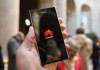
Chinese mobile maker Huawei has confirmed a new addition to its Android family: the Ascend P2. The P2 is the sequel to last year’s relatively mid-range P1 but puts more power under the hood — with a quad-core 1.5GHz chip — and pairs that power with a more modestly sized screen (4.7 inches) than the pair of phablets Huawei unboxed at CES.
The handset is powered by Android 4.1.2, running version 1.6 of Huawei’s Emotion UI. The rear camera is 13 megapixels and flush with P2′s back — an uncommon, but stylish touch. The device’s slender slab form (8.4mm thick) has rounded edges — with a “waterfall” effect at the bottom edge of the Gorilla Glass screen. The 720p screen has a resolution of 315ppi.
Also on board are NFC, a 2,420mAH battery, and the fastest variant of LTE — Cat4 — which Huawei said supports download speeds of up to 150Mbps, assuming the network you’re using also supports Cat4. While first pointing at its P-series devices as focused on “fashion” and design, Huawei was also quick to note that the Ascend P2 is the “world’s fastest smartphone.” While we’re ill-equipped to test that particular claim right now, we got some brief hands-on time with the thing and it certainly seems fairly robust — poking around the device was buttery smooth despite Huawei’s sometimes overbearing Emotion UI, and it’s got some powerful internals nestled inside its svelte frame.
The software side seems to be rather comprehensive to boot — Cloud+ allows users to store files online and find lost phones, Air Sharing lets users stream content to compatible televisions and tablets, and a built-in permissions manager could be a boon for paranoid app downloaders. All things considered, Huawei has managed to cobble together a fairly impressive (if largely responsive) case for using its hardware.
The P2 will launch globally in Q2, retailing for 399 euros.
MWC begins in earnest tomorrow but the Sunday before the show has traditionally been a battleground for mobile makers to vie to outshine each other with glitzy product launches in the hopes of grabbing a few headlines before the clamour of MWC rises to a roar. But with the likes of Samsung, HTC and Sony choosing to step away from the stage this year, the scene has been set for a newcomer to make an entrance — and Huawei is putting itself forward to claim the limelight.
Huawei has steadily been building its profile in recent years, focusing on affordable Android devices and also dabbling with Windows Phone. Canalys, IDC and Gartner all pegged the company as third largest smartphone maker in the world in Q4 — the first time it had risen to the bronze position. But despite breaking into the top three, the smartphone space remains dominated by Samsung and Apple — who between them took 52 per cent of the global market in Q4 (Gartner‘s figure) — making Huawei’s third place something of a consolation prize. ”There is no manufacturer that can firmly lay claim to the No. 3 spot in global smartphone sales,” said Anshul Gupta, principal research analyst at Gartner at the time.
Huawei will be hoping the P2 can help to raise its profile in the fiercely competitive higher end smartphone arena. Launching the P2 at a press conference on the eve of the Mobile World Congress trade show in Barcelona, Richard Yu, CEO of Huawei’s consumer device business said: “We are moving from feature phone to smartphone… [and] moving from entry tier/low tier to middle tier and high tier.”
According to Amy Lou, director of Global Brand Management, Huawei is aiming to become one of the world’s “top 100 global brand in the coming years. In order to do so, it’s going to have to make some considerable in-roads in markets that it hasn’t effectively been able to crack yet (with North America prime among them), though CEO Yu was quick to note during a brief Q&A that curious consumers in the U.S. would have to purchase the device online due to a lack of strong carrier partnerships. In that way, Huawei’s branding efforts are a sort of vicious circle — some people won’t buy Huawei because they’re a largely unknown entity, but Huawei is an unknown entity because domestic carriers and retailers can be reluctant to sell them.
The company’s value-for-money pricing strategy has helped it carve out a niche for itself in the budget Android space where value can outshine branding, but the higher end smartphone market is a much tougher nut to crack. At last year’s MWC Huawei unveiled a quad-core flagship powered by its own system on a chip, the Ascend D Quad, only for the device to suffer lengthy production delays — not shipping until Q3. It will be hoping it has put such teething troubles behind it with its new top-of-the-line devices.