Google Launches Invite System For Early Glass Explorers And Preps Updated Hardware

frankenglass

Hey Google Glass Explorers, Google thinks you’re keen. Really, they do.

So much so in fact that the company has been quietly working on an updated version of the Glass hardware, and those of you who shelled out $1,500 to be among the first to support the project will be able to swap your existing units for the second revision for free.

Of course, Google Glass is still a ways off from its general launch date – expect it to land some time in 2014 on some sort of Google barge – so naturally Google is gearing up to expand its pool of guinea pigs Explorers. To that end, existing Explorers will have 14 days to choose three acquaintances who are worthy of paying $1,500 for Google Glass.

But let’s back up for a moment. What exactly makes this new iteration so special? So far it seems like a pretty incremental upgrade – unless you’re like me and wear honest-to-goodness specs everyday. Google’s Glass team has confirmed on (where else?) its Google+ page that this version will be able to be fitted with “future lines” of prescription lenses. It’s also going to pack a mono earbud, presumably because the existing bone conducting speaker system isn’t exactly the loudest thing you’ll ever hear.

With any luck, Google will have tweaked the internals a bit too, as the existing loadout is getting pretty long in the tooth. In case you’ve forgotten, it sports a TI OMAP4430 chipset and 1GB of RAM, which essentially means that in an age of incredibly high-powered components in smartphones, current Glass owners are walking around with the equivalent of a Galaxy Nexus on their heads.

And in case you were curious, here’s a copy of the email Google is sending out to eligible Explorers, just so you know what to look out for:

Being part of the Glass Explorer program is pretty insane (good insane): let’s face it, using cutting edge technology that changes every month requires a certain sense of adventure. We’re looking for more Explorers like you to be part of the program, so we’ve opened up a few more spots and this time, you decide who gets in. We want you to invite three people to join the Explorer Program, people who you believe would make great Glass Explorers.

You have 14 days to invite 3 of the best potential Explorers you know to buy Glass.
Just a reminder that all Glass Explorers must:

  • be a US resident
  • be 18 years or older
  • purchase Glass
  • provide a U.S. based shipping address OR pick up the device in New York, San Francisco or Los Angeles

We’ve said it before and we’ll say it again: thank you for all your feedback and support. It’s because of you that Glass has come this far, and we’re truly grateful.

Apple’s Greater China Business Bounces Back, Accounts For 15% Of Q4 Revenue

apple china shanghai

Three months ago, when CEO Tim Cook was asked why Apple’s revenue from greater China sunk 14 percent year over year, he didn’t have a great answer. Apparently, there wasn’t a “totally clear” answer for the shift.

Now, poring over Apple’s Q4 earnings, the story is very different. That same region accounted for $5.7 billion of Apple’s total revenue pie (or, if you prefer, 15.3 percent). What’s more, it’s up 24 percent from last quarter, and up 6 percent from last year. And CFO Peter Oppenheimer even noted during his quarterly breakdown that 27K employees of the Aviation Industry Corporation of China were outfitted with iPhones.

So what happened? Why the turnaround? Cook was asked that very question during this afternoon’s earnings call, and he was about as understated as always. “We had a pretty good quarter in China,” he noted. “Obviously we want to do better.”

It soon became clear that there was no one reason for Apple’s bounce back in the region this quarter. Cook pointed to a closer working relationship with Chinese carriers, and the government as a whole for one, a shift that allowed Apple to China in its first wave of iPhone 5s and 5c rollouts. In case you haven’t been keeping track, that’s a first for the company and the country, and Cook hopes to keep things running smoothly on the mobile end of things.

Part of Cook’s plan to boost Apple’s performance in China comes down to good ol’ fashioned selling. He said that the company is “continuing to invest in stores” in that market (and noted that Apple recently opened a new store in Chongqing). Apple was initially very focused on rolling out in large cities, but the key to maintaining and expanding its foothold in China is apparently going to be centered around earlier launches, investing in indirect distribution and a honing of retail prowess.

We’ll see how that goes, but for now there’s little question that Apple is the underdog of the region – Android (and its various forks) reign supreme for a handful of reasons and it seems unlikely for that needle to move drastically any time soon. That said, IDC reported earlier in September that it expected Android market share in China to plateau going into 2014 and eventually give way for platforms like iOS and Windows Phone to pick up some steam, so Apple’s refined approach may put into place at just the right time.

[Photo via Flickr/kwramm]

Apple Reports Q4 Retail Sales Of $4.5 Billion With $50 Million In Sales Per Apple Store

applestoreimage

Apple reported that its fourth quarter revenues in its Apple stores were $4.5 billion, up 6 percent compared to last year. On average, the company reported that Apple made an average of $50 million per store. Apple, which has 416 stores, had 36 percent growth per store on a per week basis compared to last year.

About 76 percent of Apple’s retail revenues were from offshore. The company said it had about 99 million visitors to its stores with about 18,500 visitors per week.

The company has162 retail stores outside the United States. In the earnings call, Apple CFO Peter Oppenheimer said the company opened 30 new stores in 2013. Most of those stores are outside the United States. An emphasis will be put on the China market with its international retail expansion.

Apple: Future Versions Of OS X To Be Free, $900M Increase In Revenue Deferral Due To Free Software

apple ilife free

Today during its earnings call, Apple CFO Peter Oppenheimer confirmed that future versions of OS X would be free. Last week, Apple announced that OS X Mavericks would be available for free, but did not confirm plans for future versions of its operating system.

Oppenheimer’s statements during the call indicate that future versions of OS X will also be free. This, along with iWork updates and free copies for each purchaser of Mac and iOS hardware, would contribute to a $900 million sequential increase in net revenue deferred for software upgrade rights and non-software services in the December quarter.

Basically, a larger slice of revenue from each device will go towards ‘paying’ for those free software upgrades under a law that doesn’t allow Apple to count revenue for freebies until the products they’re housed on are delivered. Apple noted that this would be enough to affect its gross margins, using the phrase “dollar for dollar.” This indicates that its margins might have been hit by as much as 170 basis points, increasing what it has estimated for its future margins.

The market responded to the news that Apple’s margin estimates were directly affected by the deferrals, popping by a few points.

Basically, this is the market reacting to the fact that Apple’s guidance for next quarter included these deferrals. That means that what looks like a flat growth curve is actually going to be a pop in disguise in Q1 ’14.

Oppenheimer says that these new deferrals would add to those already sliced off for software updates. He notes that this is now $15-25 per iPhone and iPad beginning in September, and on Mac it increased from $20 to $40 in October.

He says that it will record those deferrals over two years for iOS devices and over Mac for four years, slipping that revenue back in to the bottom line over years rather than ‘right now’ if it were to charge. Oppenheimer says that it will “work hard” to get down the cost curves on those devices in order to compensate for those increases.

Apple CEO Tim Cook said that the primary reason for Apple to make OS X and iWork free was to “make it a part of what it meant to own a Mac and what it meant to own an iOS device…Some other folks charge $199 for each of these – the OS and the productivity apps. We wanted to make it a part of the experience.”

Apple reported a strong quarter with $37.5B in revenue, $7.5B in net profit representing $8.26 per share. Apple sold 33.8M iPhones, 14.1M iPads and 4.6M Macs in the quarter.

Apple’s Rebound Quarter In Charts

Apple Earnings Charts Thumbnail

Apple just reversed its slide, if you can call it that.

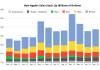
After three quarters in a row of slowing sales growth, Apple’s September quarter – reported this afternoon – shows a modest re-acceleration. See Matthew Panzarino’s post for the financial big picture, and Chris Velazco’s for the product-by-product details.

Now for the charts. You’ll note a modest uptick in Apple’s revenue and profit growth rate – though profits are still down year-over-year. The iPhone is still the heart of Apple’s business, representing 52% of sales and likely more of its profits.

Apple Sold 33.8 Million iPhones, 14.1 Million iPads, And 4.6 Million Macs In Q4 2013

iphoneapple

Well folks, Apple has just put up some mixed numbers in its fiscal Q4 2013 earnings release – $37.5 billion in revenue and $7.5 billion in net profit to be exact – but how exactly did the tech titan fare in terms of hardware sales?

This time around Apple sold 33.8 million iPhones (which it notes is a record for Q4), 14.1 million iPads and 4.6 million Macs during the quarter.

To put that in perspective, the average analyst prediction was for Apple to sell a grand total of 33.4 million iPhones in Q4, along with just under 14 million iPads and about 4.26 million Mac computers. Meanwhile, Apple sold 31 million iPhones, 14.6 million iPads, and 3.8 million Macs last quarter, and 26.9 million iPhones, 14 million iPads, and 4.9 million Macs in the year-ago quarter.

Phew.

So yes, if we’re taking those averages as gospel, Apple managed to come out ahead on every one of them. Despite that big iPhone sales boost (thanks in part to the recent launch of the iPhones 5s and 5c, iPad sales are essentially flat year-over-year – we’ll see if that trend sticks once those refreshed models start hitting shelves in November. The nature of the electronics lifecycle means that a cyclical dip or lull is to be expected though – with the holidays right around the corner, the company’s Q1 2014 earnings are going to be where the real money is.

Speaking of dips, we saw a few of them last quarter: Apple sold just 14.6 million iPads back then which was heralded as the first yearly iPad sales decline ever, and (perhaps more notably) the average selling price of the iPhone dipped from $613 to $580 sequentially.

It’s not exactly a shock then to see that both of these trends are still in effect, especially when it comes to iPhone ASPs. Apple makes it a point to never break down iPhone sales numbers by model, so at this point it’s tough to say how many 5s and 5c units have been sold (a situation that’s compounded by iPhone 5s supply constraints and the frequent assertion that people aren’t really buying the 5c). While iPhone ASP is down to $577 this time, though, it seems that the popularity of the higher-priced iPhone 5s has managed to keep the figure from eroding too much.

And what of the iPods? The music players (which eventually evolved into much, much more) were one of Apple’s first runaway hits, but the company generally seems happy to relegate them to the background. They haven’t been called out in an earnings release for the past six months, and they were conspicuously absent when Apple updated the rest of its hardware portfolio just in time for the holiday shopping frenzy. In case you were curious, though, Apple moved a hair under 3.5 million of them in Q4.

This is a developing story, please refresh for updates.


Apple’s Q4 ’13 Beats With $37.5B Revenue, $7.5B Profit And $8.26 EPS On Strong iPhone Sales

Screen Shot 2013-10-28 at 1.08.51 PM

Apple has just released its fiscal Q4 2013 earnings, reporting $37.5B in revenue, $7.5B in net profit representing $8.26 per share. That marks a year-over-year growth of 4.2 percent in revenue and 4.7 percent decline in EPS, with net profit down 8.6 percent year over year.

Apple sold 33.8 million iPhones, 14.1 million iPads and 4.6 million Macs in the quarter, which allowed it to post record Q4 revenue. Analysts had estimated 33.4 million iPhones, 14.3 million iPads and 4.3 million Macs in the quarter. iPhone sales grew 26 percent to hit another record number. iPad sales were relatively flat. Apple sold a total of 71 million iPads in fiscal 2013. Apple sold just 3.5 million iPods in the quarter.

“We’re pleased to report a strong finish to an amazing year with record fourth-quarter revenue, including sales of almost 34 million iPhones,” said Tim Cook, Apple’s CEO, in a statement.

For comparison, Apple brought in $35.3 billion in revenue last quarter, with $6.9 billion in profits at $7.47 EPS. Apple is currently down 2 percent in after-hours trading.

Apple Beats

Apple beat analyst expectations across the board for revenue, posting record Q4 numbers.

According to Fortune’s collated estimates, street analysts had projected $37.14 billion in revenue with EPS of $8.16. Estimates put year-over-year revenue growth at 3 percent and earnings growth at -6 percent. WSJ estimates had placed EPS at $7.94, which would give Apple a win in both categories as well.

Apple’s own guidance projected revenue at between $34 billion and $37 billion, with a gross margin of between 36 percent and 37 percent. Apple’s estimates have become increasingly accurate over the past few quarters, ever since it changed the way that it gave guidance. Previously, it had a reputation for severely under-estimating future quarters and it’s taken a bit of time for analysts to adjust to its new, more conservative outlook.

Apple finished the quarter with $146.76 billion cash on hand. Its projections for revenue in Q1 2014 are between $55 billion and $58 billion with gross margin of between 36.5 percent and 37.5 percent.

Apple’s gross profits fell to 37 percent, the seventh quarter in a row for such a decline. Much of that can be attributed to lower margins on devices like newer Retina iPads and lower-priced iPhones. If it hits the higher end of its Q1 ’14 estimates, it could reverse that for the first time in a while, but the lower end would mark another decline.

iPads are flat, Macs Down, iPhone up

iPod sales were down 35 percent year over year, Macs were down 7 percent over the same period and iPads were relatively flat. iTunes and software revenues were up 22 percent and accessories were up 5 percent.

Even with only a couple of weeks of iPhone sales on the charts, it still accounted for 52 percent of Apple’s overall sales. The impact of the two new models, iPhone 5c and iPhone 5s, likely won’t be felt in full until Q1 2014.

The same can be said for the iPad, whose numbers are depressed due to no new model being launched in the period. We’ll see impact from the iPad Air, Retina iPad mini and reduced cost iPad mini in Q1 2014.

The average selling price of iPad was $439 up from $436 in Q2 and iPhone ASP was $577 in Q4.

Apple specifically noted that revenue in Greater China was up 23.5 percent sequentially, and 5.6 percent year over year.

Article updated to note Apple beat both Fortune and WSJ estimates.

Image Credit: Karl Baron/Flickr CC

The Final 4 Disrupt Europe Startups: Asap54, Import.io, Lock8, Voicesphere

europe13-title

It might have been a long time coming, but the first ever TechCrunch Disrupt Europe, held in Berlin, has been a fantastic window into the burgeoning European tech startup ecosystem. Plus, it has surpassed our expectations on attendance, passing 2,000 delegates over two days.

Well known players from Silicon Valley have been rubbing shoulders with the cream of Europe’s entrepreneurs and investors, TechCrunch Writers and Editors, as well as TechCrunch Founder Michael Arrington and AOL CEO Tim Armstrong.

Rocket Internet’s Marc Samwer made a rare appearance, as did Marco Boerries of Number Four, Airbnb’s Nathan Blecharczyk, Benchmark Capital’s Matt Cohler, to name just a few.

Tomorrow, we’ll hear from more speakers such as Alexander Ljung (Soundcloud), Jose Neves (Far Fetch), Brent Hoberman (PROFounders Capital, Founders Forum), Christophe Maire (Angel Investor), Patrick Collison (Stripe) and Aaron Levie (Box), among others.

And Tuesday will also see the the Startup Battlefield grand finale….

Our expert judges and team have honed down our 15 finalists to four startups who will battle it out for a chance to win the grand prize: the Disrupt Cup and €50,000 in cash.

The Finals judges will be:

Michael Arrington (Crunchfund, TechCrunch), Bindi Karia (Silicon Valley Bank) Errol Damelin (Wonga), Klaus Hommels (Angel Investor), Neil Rimer (Index Ventures), and Dave McClure (500 Startups).

Here are the Battlefield Finals companies:

Asap54

Asap54 is an app that helps you find clothes that you like around you in the physical world. You take a picture of them with your phone, and let the app find you that exact piece, along with a bunch of others that are similar. Think of it as a Shazam for fashion.

Import.io

By allowing its users to turn any web page into an API with just a few clicks, Import.io exists to make it easy for developers to pull data from the web. At Disrupt Europe the company launched a new service that they call the “Data Factory” that should make it even easier.

Lock8

Lock8 is a smart lock paired to your smartphone, and you use its mobile app to lock and unlock the bike once the lock chain is connected and it contains six sensors to determine if an attempted theft is underway. Since the lock is unlocked via smartphone, customers can easily share their bikes with friends or even rent them out.

Voicesphere

Voicesphere is a platform for voice-enabling consumer and enterprise apps and making them available in a Siri-like environment based on natural language processing.

The Syrian Electronic Army Hacked Obama’s Twitter Links And Campaign Emails

Screen Shot 2013-10-28 at 3.12.21 PM

“Only the links within our tweets had been hacked,” an OFA official acknowledged. “At no point did they have access to the twitter handle,” the official said. Like many companies, the Obama campaign has a separate app for their unique shortened URLs, instead of relying on Twitter’s (it’s easier to track user engagement). Quartz reports that the campaign members have since beefed up their security with Google’s two-step authentication.

The formerly hacked link above about immigration has since been corrected.

This isn’t the first time the SEA has successfully gone after the president. Last spring, the SEA hacked the AP Twitter account to spread a rumor that the White House had been bombed, sending the stock market into a momentary crash.

Today’s hack was particularly sneaky because it didn’t look like anything was suspicious. But, the more important question is, why weren’t they using basic security protocol in the first place?

Germans React To Revelations That The U.S. Spied On Chancellor Angela Merkel

It was recently revealed that the National Security Agency secretly monitored European leaders and 60 million Spanish phone calls from a spying hub in the United States German Embassy, all while President Obama was reportedly oblivious to the program.

German Chancellor Angela Merkel was so discomfited that even after President Obama personally apologized, she called for a European-wide reconsideration of cooperation with U.S. intelligence agencies. The new revelations will make an already tense situation much worse.

During TechCrunch Disrupt Europe in Berlin, TechCrunch TV went out to get some reactions to gauge local sentiment regarding the news. We didn’t find any protesters in front of the U.S. Embassy in Berlin, which sits right next to the Brandenburg Gate and just about a mile away from Angela Merkel’s office.

Sadly, most people were too afraid to actually talk to us about the NSA on camera, but we found a few brave Germans who were willing to talk to us. Here is what they had to say.

In case you want to read up on the current state of this affair, here is a quick breakdown of the recent news:

From documents provided by notorious NSA whistleblower Edward Snowden, Germany’s Der Spiegel reports that U.S. spies posed as diplomats and set up spying hubs in Frankfurt and Berlin. A clandestine force, the Special Collection Service, built special permeable walls to listen to all manner of communication – “cellular signals, wireless networks and satellite communication.” German officials have ordered an investigation and are pretty angry.

El Mundo reports that the NSA collected 60 million phone calls and Internet browsing behavior in Spain (original Spanish). Glenn Greenwald, the former Guardian reporter who co-authored the story, notes that that this kind of spying is punishable under Spanish law.

President Obama was apparently oblivious to the German spying. “These decisions are made at NSA,” one official said, according to the Wall Street Journal. “The president doesn’t sign off on this stuff.” Defending the practice, John Schindler, a former NSA official, reminded the Twitterverse that 9/11 had been partly orchestrated in Germany.

If 9/11 had happened to Germany & been planned in NY not Hamburg, I'd expect GE intel to monitor USA top 2 bottom. Less would be incompetent


John Schindler (@20committee) October 27, 2013

Apple Sends Out Set Of Slick Mac Pro Posters To Some Journalists

Screen Shot 2013-10-28 at 12.39.14 PM

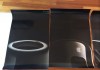
Apple sent out a set of slick Mac Pro posters to at least one journalist today. TidBITS author Jeff Carlson recieved a long black tube with 4 Mac Pro images as posters in it this morning. Other journalists like CNET’s Scott Stein and Dallas Morning News’ Jim Rossman also received the posters.

Apple sends out printed material from time to time to promote products. It recently sent journos a packet of info and a poster on the App Store’s 5th anniversary.

The posters emphasize various aspects of the Mac Pro’s design like its thermal venting, external casing and custom silicon. There is also a message inscribed on one of the posters:

It’s the computer we were insane to build. The one that turns conventional thinking on its head, then kicks the living $#&% out of it. We challenged all our assumptions. Abandoned our preconceptions. And blew away limitation after limitation. This is the new Mac Pro. It’s like no Mac we’ve created before. And we can’t wait to see what you create with it.

Here are the posters sent to Stein:

Here’s one of Carlson’s set:

You can head here to see all of the images on Carlson’s Flickr account.

We got a chance to check out the Mac Pro briefly at Apple’s event last week but couldn’t tell you much more about it but that it’s pretty warm.

Rent Management Startup Cozy Recruits Flickr Co-Founder Stewart Butterfield To Its Board

stewart butterfield gino zahnd

Cozy, an online tool for landlords and tenants, is announcing that Flickr co-founder Stewart Butterfield has joined its board of directors.

Butterfield told me that he’s actually known Cozy co-founder and CEO Gino Zahnd since they worked together at Flickr. With that relationship, and knowing Butterfield’s family background in real estate (his father worked in development, his mother was an agent), Zahnd started asking for feedback. Eventually, he invited Butterfield to join the board.

The two of them actually recorded a video talking about the news (embedded at the end of this post), in which Butterfield explains why he’s excited about the company:

I think there’s a huge opportunity here. I mean, there’s no one really working on the rental experience for the small landlords – there’s the big corporate stuff, but the vast majority of people who are renting a home, a place where they live, are renting from someone who just has a very small number of properties. … It’s also one of those spaces where the big wave of fantastic software that we’ve been seeing over the last 10 years or so hasn’t really touched yet.

Cozy’s goal is to take the old-fashioned, inefficient aspects of the rental process and move them online. Its services include the ability for landlords to collect rent online, manage payments from multiple roommates, and screen tenants, and it makes money by charging landlords a $9 monthly fee (following a 60-day free trial).

The company recently raised a $5 million Series A led by General Catalyst Partners, with participation from previous investor The Social+Capital Partnership.

Butterfield, meanwhile, said Cozy is the only board he’s serving on now. Apparently he likes being on boards because it allows him to see “the other side” and not just the founder’s perspective. (He’s currently founder and CEO at Tiny Speck.)

When asked about Cozy’s biggest challenge moving forward, Butterfield said it’s “pretty boring” – namely, distribution. Landlords, he noted, don’t really form a “natural community,” so Cozy will have to do a lot of work to make them aware of the product. (The company has already announced that it’s being used by more than 6,000 landlords and renters in more than 500 cities in the US.)

“That’s a surmountable challenge,” Butterfield said. “It’s just regular marketing.”

Flickr co-founder Stewart Butterfield joins Cozy’s board of directors from Cozy on Vimeo.

Twitter’s Attitude Toward DMs Shows Signs Of Thawing With Direct Link In Top Bar

Screen Shot 2013-10-28 at 12.11.32 PM

Twitter has been rejiggering its thinking about direct messaging recently, largely in the face of enormous messaging platforms like WhatsApp, Line, Snapchat and others. Today, the signs of Twitter’s thawing feelings about messaging have manifested as a new link in Twitter.com’s top bar which takes you right to your inbox.

Recent reports from All Things D have claimed that Twitter is working on its messaging product. The work could manifest in a revamp of the way that it operates in the main product or result in a separate messaging system. The report says that DMs were close to being on the chopping block, but recent attitudes have changed.

As someone who uses Twitter DM as probably my second-most utilized private messaging avenue, I’m fairly interested in where they’ll go here. Some folks, like our own Jordan Crook, feel that a standalone messenger app would not be the way to go. I happen to agree, and feel that Twitter is more likely to enhance the core product with improvements, but we’ll see.

Twitter previously buried the DM section under either your profile view or the settings icon at the top of the page.

From what we understand, Twitter’s next version has been in the works for months, plagued by decision-making delays. Whatever it’s doing about DMs, it seems to be showing some outward signs of attention to a feature it has neglected for years. This version is said to have a swipeable interface and other enhancements, but it’s unclear whether it will be the one that brings DM improvements.

Image Credit: Christopher Schmidt/CC Flickr

Samsung Launches Five SDKs To Lure Developers Into Its Hardware Web

samsung-devcon

Samsung kicked off its first Developer Conference in San Francisco today, and the Korean tech juggernaut is eager to show just how much it cares about the devs building apps and services for its hardware ecosystem. And really, what better way to prove it than to unleash five (yes, five) brand-new SDKs for those developers to sink their teeth into?

“We have products at every segment and every price point,” said Gregory Lee, president of Samsung Telecommunications America, in his DevCon keynote. “Your applications, your work can be reached all over the world and across all those products.”

As you can imagine, there’s plenty to dig into here, but some of these development toolsets are more straightforward than others. Samsung’s revamped Mobile SDK, for instance, consolidates a handful of existing Samsung mobile dev tools so coders and engineers can more easily create apps that take advantage of the company’s S Pen, gesture controls, and audio features (to name just a few). And the Smart TV 5.0 SDK does exactly what it promises, allowing developers to build apps for Samsung’s connected televisions, with a big focus on optimizing those apps for the company’s 2014 class of displays.

And considering the general market zeal for devices that connect and interact with each other, it should surprise absolutely no one that Samsung is trying to drive home the value of its vast portfolio of gadgetry by giving devs a way to make all of it play nice together. Consider its new Multiscreen SDK, which packs APIs that should ultimately allow users to quickly sync up smartphones and screens for simple media sharing across displays – GigaOm’s Janko Roettgers has a great take on it here.

Built on top of that is a Multiscreen Gaming SDK which Samsung developed in tandem with Unity. It’ll allow developers to craft games that functionally turn Samsung smartphones into consoles that output all the action to (what else) a connected Samsung TV. Throw in a new Knox SDK meant to help developers build secure, enterprise-friendly apps that can silo work information from personal data and you’ve got a pretty well-rounded slew of tools for coders and entrepreneurs.

Now the general thrust of these releases is to get people more invested into Samsung’s hardware web, and naturally the most prominent vector is Samsung’s huge portfolio of smartphones. You can’t really overstate the importance of smart software to Samsung’s mobile strategy. In a market where nearly every OEM is trying to push the limits of hardware innovation in parallel, fleshing out the all-important software user experience is crucial to gaining an edge over a pack of hungry competitors.

And like it or not, Samsung is damned good at loading up its devices with software. Some (myself included) would argue, though, that the company has a tendency to go overboard. There’s a distinct subsection of the Android community that prefers their Android builds to be as clean and as free of cruft as possible, but there are plenty of others who love to lord their whiz-bang features over others. But it has become clearer than ever that Samsung is using its mobile gadgetry as a Trojan Horse to make developers aware of and get them excited about the full breadth of Samsung’s hardware. Now the big question is how many developers will rise to Samsung’s challenge.

Hey, Arduino Fans! 1Sheeld Lets Your Smartphone Act As Many Different Arduino Shields

1sheeld

I loves me some Arduino. The only thing I don’t love – and I’m sure many of my fellow Arduino tinkerers would agree with me here – is buying or building a new shield (read: add-on board) every time I need to some functionality that the board doesn’t support out of the box (like internet connectivity, microphone input, or audio playback.)

1sheeld lets your smartphone act as many different shields. It’s the first product built by Integreight, an eight man team out of Cairo, Egypt.

Integreight was voted as the audience choice at Disrupt Europe this evening, plucking them from the dozens of startups exhibiting just outside of the main theater and dropping them right into the flurry that is the Disrupt Battlefield.

Your smartphone is packed with tons of sensors – many of them the same types of sensors that you might want to strap on to an Arduino by way of a shield. It’s got Bluetooth. It’s got WiFi. It’s got gyroscopes, and accelerometers, and a touchscreen that can emulate all sorts of keypads and display types. Why not let your smartphone share those capabilities with your Arduino, effectively allowing it to provide the prototyping functionality of dozens of different shields? That’s the idea behind 1sheeld.

With 1sheeld, you strap just one shield (hence the name) to your Arduino board. That shield acts as a wireless middle-man, piping data between your Arduino and your handset. On your phone, you’ve got an app running that can quickly switch 1sheeld’s behavior from shield to shield.

Want to test audio playback, but don’t want to order, wait for, and eventually build an audio shield? 1sheeld lets you pipe audio through your phone’s speaker. Want to integrate internet functionality? It can pull data from your phone’s built-in wireless receivers. Want microphone input? It’ll do it. Magnetometer and gyroscope data? Yep. Hell, it’ll act as an two-color LCD display if you don’t feel like bustin’ out the ol’ breadboard.

The idea isn’t to kill shields, of course – once you get past the early prototyping stages of an Arduino project, you’d probably want to swap in a proper, dedicated shield to do whatever you’re using your smartphone for.

Plus, there are some shields that your phone just couldn’t replace. For example, there’s no straightforward way for your phone to act as a motor shield (for, say, powering the motors of an RC car); for those cases, 1sheeld is hoping community input will tell them what functionality their base board needs. With that said, like any good Arduino shield, 1sheeld is stackable – if there’s something it just can’t do, you can always toss another shield on top.

Integreight is also working on a product they call the “Smart Breadbroad”, which allows you to hook components up to a breadboard and connect them without wires. The user draws the breadboard schematic on their computer, uploads it to the Smart Breadboard, and all the circuits are automatically configured within the breadboard itself.

Integreight plans to launch a Kickstarter campaign for the 1sheeld some time in November. Through the Kickstarter, the 1sheeld will cost just $20; after the campaign, they’re aiming to sell it for around $40 – which, really, seems incredibly cheap to me. If you’re interested in following their progress, they’ve got a sign-up page right over here.


  1. IMG_9479

  2. IMG_9481

  3. IMG_9482

  4. IMG_9483

  5. IMG_9487

  6. IMG_9492


Judge Q&As:

How much will it cost?

$20 on Kickstarter, $40 after.

What relationship do you have with Arduino?

We’re talking to them, but we have no contract with them. In the opensource world, you don’t really need that.

Are you compatible with the Raspberry Pi?

With an adapter, yes.