Pebble founder launches Beeper, a universal chat app that works with iMessage and others

Decades ago, a software program called Trillian introduced a way for internet users to interact with multiple IM networks, like ICQ, AIM and MSN Messenger, in a single window. Now, Pebble founder and Y Combinator Partner Eric Migicovsky is revisiting this concept, but this time with a focus on centralizing access to modern-day chat applications. Through the newly launched app, Beeper, users can connect with 15 different messaging services, including WhatsApp, Telegram, Signal, Instagram and Twitter DMs, Messenger, Skype, Hangouts and others — even, through a few tricks, iMessage.

Migicovsky says he first came up with the idea for a universal chat app while working on the smartwatch pioneer Pebble, before its acquisition by Fitbit.

“We really wanted Pebble to be able to send iMessages, but we could never figure out a way to do it because there’s no API for iMessage,” he explains. But the idea for Beeper came to a head two years ago when he learned about a protocol called Matrix. “All of Beeper is built on top of Matrix, which is this open-source federated, encrypted messaging protocol,” he says.

Migicovsky describes Matrix as mostly “a hacker thing,” but believes it’s starting to take off among developers. Basically, Matrix offers an API that allows developers to connect with other chat networks using a “bridge,” which relays the messages back and forth from one side to another.

“When I learned about that, I was like ‘Hey, we could build Trillion using Matrix,’” Migicovsky says.

Image Credits: Beeper

Migicovsky began to work on Beeper as a side project with Tulir Asokan, a Matrix contributor he met in a Matrix chat room.

To make Beeper (previously called Nova) work with all the different chat apps, they had to build these connecting “bridges.” This code is also open-sourced and available at Gitlab.com/Nova.

“We think it’s really important for people to know what code they’re running — so it’s all open source. People can inspect it,” notes Migicovsky.

Because of this, people also don’t have to pay Beeper the $10 per month it’s charging for access to the service. If they know what they’re doing, they can just run the bridges on their own servers, if they choose.

While every messaging platform has its own unique setup in Beeper, making iMessage work was the most complicated. And the workaround here is somewhat involved, to put it mildly.

Beeper actually ships its users an old, jailbroken iPhone (iPhone 4S, because it’s cheap) to serve as the bridge. The code installed on the iPhone reads and writes to the database file where your iMessages are stored. The iPhone encrypts the messages with your own private key and then sends it over the Beeper network. This means Beeper, the company, can’t read your messages, Migicovsky says.

This process allows Android, Windows and Linux users to use iMessage. But it’s not the only way Beeper can make iMessages work. Mac users with an always-on device can instead choose to install a Beeper Mac app to work as the bridge.

Migicovsky says he’s not afraid of any shutdown attempts or litigation by Apple.

“What are they going to do?,” he asks, rhetorically.

Even if Apple somehow stopped Beeper from providing jailbroken iPhones to users, the company could redirect their customers to acquire their own old iPhones from Craigslist instead. Meanwhile, the software itself is open source and running on an iPhone at the user’s house — so Beeper isn’t really “hacking” into iMessage itself.

“I think given the current climate of messaging freedom — I think it would be insane for Apple to start picking a fight with their own users,” Migicovsky adds. Plus, he notes that the European Commission is working on draft legislation similar to the GDPR that mandates all companies to open up messaging for other platforms.

“When that passes, they legally won’t be able to block people from doing something like Beeper,” Migicovsky notes.

Image Credits: Beeper

Beeper, of course, is not the first or only startup focused on trying to break through the iMessage lockdown. Other apps have tried to do this in the past, like AirMessage or weMessage, for example. They have only seen limited adoption, however. And Beeper is not the only startup to try to centralize chat applications, either — Texts.com is developing a similar system.

That said, signups for Beeper were bigger than Migicovsky expected, he says, though declined to share the details. He says Beeper is slowly onboarding users as a result. (For that reason, we have not been able to actually use Beeper. We can’t speak to its claims or usability.)

Despite the competition, where Beeper may have an advantage is in understanding what makes for a great user experience. Pebble, after all, sold over 2 million watches.

Today, Beeper promises features like search, snoozing, archiving, and reminders, and works across MacOS, Windows, Linux‍, iOS and Android.

Longer term, Migicovsky envisions a platform that could do more than just text and share media, stickers and emoji, like other chat apps. Instead, the team is building a platform that would allow people to build more tools and apps on top of Beeper — a system sort of like Gmail’s plugins. For example, there could be tools that would let users schedule calendar events from within their chats. Or perhaps a tool could help you see all the most recent messages you’ve had with a particular user across different platforms, like Clearbit.

Migicovsky declined also to detail how the work on Beeper is being financed but when asked if Beeper could be the next step for him — as in, a new company to work on — he replied, “possibly.”

“I’m enjoying my time at YC. It is fantastic. I was just inspired by all the companies that I work with to do this. Part of being VC is talking to all these founders who are building cool stuff and launching it. And I got a little bit jealous,” he admits.

Forsaking funding at a $1 billion valuation, Solugen preps a new green chemical product and a big 2021

Late last year, Solugen, a startup using synthetic biology to take hydrocarbons out of the chemicals industry, decided against pursuing a new round of funding that would have valued the company at over $1 billion, TechCrunch has learned.

Instead, the Houston-based bio-manufacturing company raised an internal round of roughly $30 million from existing investors and continued working on its latest project — a new bio-based manufacturing process for a high-value specialty chemical that can act as an anti-corrosive agent.

That work represents a potentially lucrative new product line for the company and charts a course for a host of other businesses that are refashioning the basic building blocks of life in an attempt to supplant chemistry with biology for manufacturing and production.

If Solugen can get its high-value chemical into commercial production, the company can follow the path that sustainable tech companies like Tesla have mastered — moving from a pricy specialty product into the mass market. And rather than over-promise and underdeliver, Solugen wanted to get the product line right first before raising big bucks, according to people familiar with the company’s thinking.

As the world looks to move away from oil and its byproducts to reduce greenhouse gas emissions and slow down or reverse global climate change, the chemicals industry is in the crosshairs as a huge target for disruption. Vehicle electrification solves only one part of the oil problem. The extractive industry doesn’t just produce fuel, but also the chemicals that make up most of the products that defined consumer goods in the twentieth century.

Chemicals are everywhere and they’re a huge business.

Companies like Zymergen raised hundreds of millions of dollars last year to develop industrial applications for synthetic biology, and they’re not alone. Startups including Geltor, Impossible Foods, Ginkgo Bioworks, Lygos, Novomer and Perfect Day have all raised significant amounts of capital to reduce the environmental footprint of food, chemicals, ingredients and plastics through synthetic biology.

Some of these companies are seeing early success in food replacements and ingredients, but the promise of biologically based chemicals have been elusive — until now.

Solugen’s new product will produce glucaric acid, a tough-to-make chemical that can be used in water treatment facilities and as an anti-corrosive agent — and the company can make it with a zero carbon (or potentially carbon negative) manufacturing process, according to Solugen co-founder and chief technology officer, Sean Hunt.

The glucaric acid from Solugen is cheaper to produce and more environmentally friendly than existing phosphonates that are used for water treatment — and the company has the benefit of competing against chemicals manufacturers in China.

Given the continuing tensions between the two countries, the U.S. is looking to make more high-value products — including chemicals — domestically, and Solugen’s technology is a good way forward to have home-grown supplies of critical materials.

Solugen still intends to raise more capital, the company just wanted to wait until its latest production plant for the acid came online, according to Hunt.

It’s also the fruit of years of planning. The two co-founders, Hunt and Gaurab Chakrabarti, first realized they could potentially use the technology they’d developed to make specialty chemicals back in 2017, according to Hunt. But first the company had to make the hydrogen peroxide as a precursor chemical, Hunt said.

“It’s advantageous for us to focus on this,” said Hunt. “As we scale, we can enter more commodity-type markets down the road.”

It’s all part of the notable strides the entire industry is making, said Hunt. “Synthetic biology has really made significant strides,” he said. “We have our commercial plant coming online this summer [and it proves] synthetic biology has gotten to the point where we can compete on price and performance.”

So the capital infusion will come as the company gets closer to the completion of these commercial scale facilities.

“It’s not like we were sitting on a term sheet and we said no,” Hunt said. “We want to make sure that we are hitting the milestones and the goals at a commensurate pace which is this year. I’m extremely bullish and optimistic of 2021.”

Solugen’s co-founder sees the path that his company is on as one that other startups working in the synthetic biology space will pursue to bring profitable products to market at the higher end before competing with more sustainable versions of commodity chemicals.

“How do you start a company that has this level of capital intensity?” Hunt asked. “You can start in the fine chemicals space where everything sells for tens to hundreds of dollars per pound. For us, glucaric acid is that specialty chemical and then we will do commodity.”

The FCC has a new acting chairwoman in Jessica Rosenworcel

The Biden administration has officially appointed Commissioner Jessica Rosenworcel acting FCC chairwoman, and she very well may be the first woman to hold the official position if she is nominated for it later this year, as many expect. With her record of standing for equal access, industry accountability and net neutrality, Rosenworcel’s FCC will be very different from her predecessor’s.

(Update: This article previously stated that Rosenworcel would be the first acting FCC chairwoman, but the formidable Mignon Clyburn briefly held the acting role in 2013 while Tom Wheeler was being confirmed. If nominated and confirmed, Rosenworcel would be the first chairwoman.)

“I am honored to be designated as the acting chairwoman of the Federal Communications Commission by President Biden.  I thank the president for the opportunity to lead an agency with such a vital mission and talented staff. It is a privilege to serve the American people and work on their behalf to expand the reach of communications opportunity in the digital age,” she said in a statement.

While Rosenworcel’s agenda will be made clear over the coming weeks and months, it is likely we will see the return of net neutrality from the shallow grave dug for it by Ajit Pai, and probably a new effort to better understand where in the country actually needs help getting broadband to those who need it, and how to do so quickly and equitably. Her first items of business, however, will likely pertain to getting internet access to those most affected by the pandemic.

(Disclosure: The FCC regulates TechCrunch’s parent company, Verizon, but this has no effect on our coverage.)

Rosenworcel first started at the FCC in 2003 and filled other federal communications regulation roles over the years. She was nominated for commissioner by President Obama in 2011 (confirmed in 2012), and was in the running for chair in 2013, though Tom Wheeler ended up taking the spot. Her second term as commissioner began in 2017.

Throughout her tenure at the FCC Rosenworcel has pushed for net neutrality and improved broadband access for schools and economically disadvantaged areas. During Ajit Pai’s tumultuous term as chairman she offered implacable resistance to what she saw as an overly hands-off approach to regulating telecoms, and a fierce indictment of the FCC’s failure to act in the best interest of the people it serves. Here are a few examples.

At the 2017 vote killing net neutrality, Rosenworcel was unsparing in voicing her fury at the shadiness of the entire rule-making process:

I dissent from this rash decision to roll back net neutrality rules. I dissent from the corrupt process that has brought us to this point. And I dissent from the contempt this agency has shown our citizens in pursuing this path today. This decision puts the Federal Communications Commission on the wrong side of history, the wrong side of the law and the wrong side of the American public.

In 2018, with an epidemic of robocalling growing by the month, she contradicted Pai’s claim that a $120 million fine (almost certainly never collected) for one offender proved there was a “cop on the beat”:

Today the FCC adopts a forfeiture order to impose a penalty on one operation that made tens of millions of robocalls two years ago.  I support it. But let’s be honest: Going after a single bad actor is emptying the ocean with a teaspoon — and right now we’re all wet.

That the industry still has not widely adopted the framework that would nip robocalls in the bud is testament to this, though they should soon after the FCC finally got in gear. (This year she also contributed a piece to TechCrunch to call for immediate action on the rollout of 5G.)

In 2019, Rosenworcel called out the agency’s seeming lack of concern about a major loophole in telecoms regulation that allowed every mobile service vendor to essentially sell real-time location data to anyone willing to pay for it:

The FCC has been totally silent about press reports that for a few hundred dollars shady middlemen can sell your location within a few hundred meters based on your wireless phone data. That’s unacceptable.

Her office released letters to the agency from the major carriers as a stopgap measure to inform people. When the FCC finally formally moved against the practice, she noted, “It’s a shame that it took so long for the FCC to reach a conclusion that was so obvious.”

In 2020, Rosenworcel raised for the nth time the FCC’s lack of good data concerning broadband deployment in the country. The problem had rankled for years but was highlighted by a spectacular failure to vet industry data provided more or less on the honor system, which ended up throwing off numbers nationally:

This should have set off alarm bells at the FCC. In fact, agency staff reached out to the company nearly a dozen times over multiple years, including after this suspect data was filed. Despite these efforts behind the scenes, on February 19, 2019, the FCC used the erroneous data filed by BarrierFree in a press release, claiming great progress in closing the nation’s digital divide. When an outside party pointed out this was based on fraudulent information, the FCC was forced to revise its claim.

An embarrassing demonstration of how poor the current system is. Of the broadband report itself she had written earlier:

This report deserves a failing grade. Putting aside the embarrassing fumble of the FCC blindly accepting incorrect data for the original version of this report, there are serious problems with its basic methodology. Time and again this agency has acknowledged the grave limitations of the data we collect to assess broadband deployment.

After all, if the FCC doesn’t know who actually is getting decent broadband and who isn’t, how can they direct funds to help bridge that gap?

Lastly, late in 2020 when Pai caved to administration pressure to reevaluate the hugely important Section 230, which limits the liability of internet platforms for the content posted on them, Rosenworcel once again summed up the situation simply and honestly:

The timing of this effort is absurd. The FCC has no business being the president’s speech police.

This abortive attempt to weaken Section 230 never had legs to begin with and will not be pursued further, according to an FCC source.

These are only a handful of the more high-profile moments of Rosenworcel’s latest term, and in fact it is something of a disservice to list just them. The work of an FCC commissioner, their staff and the bureaus they rely on, is largely obscure and technical, with moments like those listed above more the exception than the rule.

With the last-minute confirmation of Republican Commissioner Nathan Simington, the FCC is currently at a 2-2 in its normally 3-2 partisan makeup in favor of the presiding administration. Since Democrats won both Senate seats in Georgia, the feared deadlock will likely be avoided, with a fifth commissioner nominated and confirmed in short order so that work can begin. We’ll know more about Rosenworcel’s priorities and agenda soon.

How Bitcoin is helping middle-class users survive the pandemic

Leigh Cuen
Contributor

Leigh Cuen is a reporter in New York City. Her work has been published by Vice, Business Insider, Newsweek, Teen Vogue, Al Jazeera English, The Jerusalem Post, and many others. Follow her on Instagram at @leighcuen.

Regulators may still want to imply Bitcoin is merely a tool for criminals, but for many middle-class users, it’s proving to be a lifeline.

Even as politicians like European Central Bank President Christine Lagarde criticize cryptocurrency for providing “loopholes” used for “funny business,” people like Saeed, an Iranian immigrant to France, see cryptocurrency as a necessity, because of the difficulty using mainstream financial systems.

Until 2020, Saeed, who asked to be identified only by his first name, was a software engineer in Iran whose salary barely reached €300 due to rampant inflation. In 2017, he started freelancing for international clients that paid him in Bitcoin. By September 2020, he’d finally saved enough Bitcoin to go to graduate school in France. However, the pandemic made his immigration process much harder.

“I passed all that strange bureaucracy and to get to a course in France last September, with only €1,000 in my pocket,” Saeed said. “HSBC, Banque Nationale de Paris, La Banque Postale, all rejected me, declining to open a bank account. I finally found a bank after a month.”

In the meantime, Saeed used Bitcoin. He is exactly the type of person who benefits from “loopholes” in the traditional banking system.

“Many people in Iran are working with European tech companies,” Saeed said. “Maybe I can’t buy Bitcoin directly from the exchange because of my nationality.”

Saeed thinks Lagarde represents bankers’ and government interests, not average citizens, who are happy to work with him. He said stricter regulations would make his access to the financial system more time-consuming and expensive, because he’d have to pay friends and colleagues to transact on his behalf. However, Iranian migrants are hardly the sole user group relying on Bitcoin during the pandemic.

In the United Kingdom, a British expat named Paul found himself trapped in London when flights back to his Asian country of residence got canceled. Due to tight capital controls in his former country, and the challenges of repatriation during constant lockdowns, Paul was living in between regulatory systems.

“I closed down the business [in Asia] just before the pandemic started. My father passed away and it was difficult to continue my company,” Paul said. “I was in hotels and Airbnbs for weeks and didn’t have a residential address…without Bitcoin I would have been locked out of cash. I could only take money out of the ATM for a certain number of months because it’s limited to holidays.”

Luckily, Paul had a little Bitcoin from earlier that year. Unlike Saeed, he didn’t feel comfortable with the technical aspects, but he learned quickly. He used Bitcoin to buy gift cards for groceries, phone bills, hotels and Uber, plus paid a friend back in Asia to help wrap up his apartment and put things in storage.

“I think it was generally a bad idea but, at least with Brexit, thank god we won’t be subject to whatever Lagarde does,” Paul said, adding that regulation can be beneficial if it avoids restrictions for people who don’t have banking access.

Today, almost a year later, Paul still doesn’t have access to most of his financial accounts. Instead, he downloaded Monzo, a banking app that uses passports for identity verification instead of residential addresses. He pays friends in London to deposit to his Monzo account.

“It becomes really convoluted. I primarily use crypto because it’s easier,” Paul said. “One of my friends is a student from Nigeria and had a similar experience. He used Bitcoin to pay his school fees… I’ve been at my current residence for a couple of months, so I would be able to finally open a bank account. But now I don’t really see the need, especially with the news of negative interest rates.”

Meanwhile, the fiat-denominated price of Bitcoin surged over the past six months. This provided Saeed and Paul both with a little extra capital to spend time figuring out what they want to do next. For Saeed, does it make sense to do the graduate program online, with fewer networking benefits and hands-on experiences (the reason he came to France)? How does Paul move forward with his career now that his family business closed and his sector (music marketing) is in shambles? 

Buying Bitcoin could be considered a form of gambling. Indeed, many middle-class hobbyist traders accrued life-changing amounts of wealth over the past year, usually by experimenting with risky software. For people like Paul and Saeed, who generally avoid experimental trades and lack alternative investment options, Bitcoin’s price appreciation is helping them get through a period of abysmal job markets and intermittent lockdowns. People don’t need to live in a dictatorship or a country suffering from high inflation to benefit from Bitcoin. I would know; I’m one of them. 

Like many people during the pandemic, my living situation changed dramatically and I initially couldn’t work full-time from home. I was lucky to sell a few poems in exchange for cryptocurrency, usually via direct messages and Bitcoin wallets or as digital collectibles through collaborations with tech-savvy artists. Then the bull market surged again, sending those meager earnings high enough to cover some of my bills. A valet worker and student in Kansas named Hess had a similar experience. 

Quarantine helped kill his relationship of six years and he found himself needing to move out. He put his savings into Bitcoin during spring 2020, so that by December he was able to move out.

“COVID hit and I was out of steady work for four months,” Hess said. “Honestly, if it wasn’t for my decision to basically throw 70% of my net worth into Bitcoin, I don’t think I would be in as good of a place mentally and financially.”

To be clear, that is an extremely risky financial move and I would not advise it as a first resort. Yet, for many people experiencing unexpected change due to COVID-19, Bitcoin has become the lifeline it was for Hess.

Over the past year, Bitcoin donations may have gained popularity with several American communities, including some of the extremist groups involved with storming Capitol Hill. Incoming Treasury Secretary Janet Yellen echoed Lagarde’s concerns about Bitcoin being used for criminal activities.

However, so far, the analytics company Chainalysis estimates such donations add up to roughly $522,000. These numbers might also be compared to the cumulative totals managed by other subjects referenced in this article. For yet another lawful example, Lawrence Douglas, a former operations director at an event security company in California, lost his job as a result of the pandemic.

“Cash App pretty much changed my financial life,” Douglas said. “Bitcoin prices during the calendar year of 2020 provided me with lots of wiggle room, while I currently search for a new job.”

As an unemployed Black man, he was statistically less likely to have connections who could help him learn about stocks or precious metals, for example. He said Bitcoin, comparatively, has a “low barrier to entry.” In April 2020, he turned his stimulus check into a little Bitcoin nest egg. By November, he was utilizing a strategy called dollar-cost averaging, routinely buying small amounts of Bitcoin.

Douglas, like Paul, first bought cryptocurrency during the pandemic. On the other hand, when I interviewed more than a dozen Bitcoin users across Europe and North America for this article, most of them were crypto veterans who said Bitcoin gave them “peace” during the year-long crisis. Anesthesiologist Quentin Lobb, for example, said “bottom line, our net worth grew tremendously in 2020, thanks to Bitcoin. It has provided a pleasant and exciting sense of financial security.”

Yet another crypto veteran, Texas real estate agent broker Brandon Arnold, said the national political and economic situation was more “mentally taxing than ever before.” Against that backdrop, controlling a fraction of his own wealth gives him a sense of security. The price appreciation helps too, to be sure, though it’s not why Bitcoin is now so popular with middle-class users.

“If I factor in the risk of not having access to my capital, the price volatility doesn’t really matter,” Paul said. “As long as the price of Bitcoin doesn’t go to zero, it’s still more useful for me than the other options available.”


Omnipresent raises $15.8M Series A for its platform to employ remote-workers globally

Omnipresent, which helps companies employ remote-working local teams worldwide, has closed a $15.8 million Series A funding round. The fundraise was led by an undisclosed investor with participation from existing investors, Episode 1, Playfair Capital and Truesight Ventures. The company said it closed the round five months after its July 2020 $2 million seed round.

Founders Matthew Wilson and Guenther Eisinger started the company as part of Entrepreneur First’s London cohort in 2019.

Omnipresent says it ensures the process of remote-hiring costs a fraction of what it would if the company did it on their own, by using Omnipresent’s platform to onboard employees compliantly in 150 countries. It provides employees with local contracts, tax contributions, and local and international benefits such as health insurance, pensions and equity options.

In a joint statement, Guenther Eisinger and Matthew Wilson, co-CEOs of Omnipresent said: “Even before the pandemic we recognized the revolutionary potential of breaking down legal and administrative barriers of international employment. As former business owners, we had firsthand experience of what a headache it is to navigate the complexity and bureaucracy of building global teams. Now with the pandemic and the global shift toward remote working it’s confirmed that we are on the right track.”

Wilson told me in an interview: “For instance, in Canada, we have a Canadian entity and we enter into an employment relationship with that person in Canada, on behalf of our client, so they don’t have to set up any of the legal infrastructure themselves in Canada, or any of the 149 countries that we operate in. We then manage all the ongoing administration of the employment relationship, whether that’s from an HR perspective, from an employee benefits perspective, or if they want to get health care for instance.”

The company competes with other firms like Remote.com and Boundless HQ.

Carina Namih, general partner at Episode 1 Ventures commented: “While talent is evenly distributed around the world, for too long, opportunities have not been. I have experienced firsthand the challenge of hiring globally. Omnipresent has already become a crucial piece of infrastructure for global teams working across different countries.”

Joe Thornton, general partner at Playfair Capital commented: “Remote work undoubtedly represents the future of the modern workforce. The sooner companies adapt, the sooner they will reap the massive competitive advantage associated with a globally distributed workforce, including increased workforce productivity and satisfaction and a larger and more diverse pool of talent from which to recruit workers.”

Omnipresent said its own employer surveys show that over 85% of employers will be employing remote or international employees in 2021.

Instacart is eliminating the jobs of unionized workers

Instacart plans to lay off nearly 2,000 of its workers, including the 10 workers from the Kroger-owned Mariano’s who unionized early last year, Vice reports. These workers are responsible for in-store shopping and packing of groceries.

According to Vice, 10 of the workers affected unionized with the United Food and Commercial Workers Local 1546 in Skokie, Illinois. However, they have yet to negotiate a contract with Instacart, according to Vice. Instacart notified the union of the planned changes earlier this week. In the letter, Instacart said it planned to stop using in-store shoppers at Kroger-owned stores, which includes the Mariano’s store in Skokie, in Q1 and Q2 of this year, but no earlier than mid-March.

Currently, Instacart says it’s working to place the impacted employees with jobs at retailers or place them at other grocery stores that still rely on Instacart shoppers. In total, Instacart said about 1,800 employees will be affected by these changes. Those laid off will receive separation packages, according to Instacart. But according to UFCW, Instacart will provide between $250 to $750 to the workers they let go.

Instacart referenced the potential layoffs in a blog post earlier this week in a post about new pickup retailer model. In it, Instacart said it would wind down some of its in-store operations at some retail locations to switch to what it’s calling Partner Pick. Through Partner Pick, instead of relying on Instacart shoppers to pick and pack groceries, retailers will rely on their own workforces with the help of Instacart’s technology.

“As a result of some grocers transitioning to a Partner Pick model, we’ll be winding down our in-store operations at select retailer locations over the coming months,” an Instacart spokesperson said in a statement to TechCrunch. “We know this is an incredibly challenging time for many as we move through the COVID-19 crisis, and we’re doing everything we can to support in-store shoppers through this transition. This includes transferring impacted shoppers to other retailer locations where we have Instacart in-store shopper roles open, working closely with our retail partners to hire impacted shoppers for roles they’re looking to fill and providing shoppers with transition assistance as they explore new work opportunities. We’re also providing all impacted shoppers with separation packages based on their tenure with Instacart.”

This all comes as Instacart is gearing up to go public. In November, Reuters reported Instacart picked Goldman Sachs to lead its IPO at a $30 billion valuation. That would be a big jump from the $17.7 post-money valuation Instacart secured in October with a new $200 million funding round.

In a statement, UFCW International president Marc Perrone called these workers a lifeline during the COVID-19 pandemic and called on Instacart to stop these plans to fire them.

“Instacart firing the only unionized workers at the company and destroying the jobs of nearly 2,000 dedicated frontline workers in the middle of this public health crisis, is simply wrong,” he said. “As the union for Instacart grocery workers in the Chicago area and grocery workers nationwide, UFCW is calling on Instacart to immediately halt these plans and to put the health of their customers first by protecting the jobs of these brave essential workers at a time when our communities need them most.”

Spotify announces an exclusive podcast deal with filmmaker Ava DuVernay

Spotify continues to enlist big names for its podcasting efforts. The latest: Filmmaker Ava DuVernay and her arts collective Array.

DuVernay has directed theatrically released films including “Selma” and “A Wrinkle in Time,” but she also made “13th” and “When They See Us” for Netflix, and she’s been an eloquent proponent for streaming as a more accessible way of telling her stories.

Spotify says that through this multiyear partnership, Array will be creating exclusive scripted and unscripted programming for the streaming audio platform. For these productions, it will be working with Gimlet, the podcast network that Spotify acquired in 2019.

“Recognizing the undeniable power of voice and sound, I’m thrilled to extend ARRAY’s storytelling into the realm of podcasts,” DuVernay said in a statement. “The opportunity to work with [Gimlet’s head of content] Lydia Polgreen and her passionate team drew us to Spotify as a home for our audio narratives and we couldn’t be more excited to begin this new creative journey.”

In addition to acquiring Gimlet, Spotify has also signed exclusive podcast deals with Barack and Michelle Obama, Joe Rogan and Prince Harry and Meghan Markle.

Decrypted: With more SolarWinds fallout, Biden picks his cybersecurity team

All change in the capital as the Biden administration takes charge, and thankfully without a hitch (or violence) after the attempted insurrection two weeks earlier.

In this week’s Decrypted, we look at the ongoing fallout from the SolarWinds breach and who the incoming president wants to lead the path to recovery. Plus, the news in brief.


THE BIG PICTURE

Google says SolarWinds exposure “limited,” more breaches confirmed

The cyberattack against SolarWinds, an ongoing espionage campaign already blamed on Russia, claimed the U.S. Bureau of Labor Statistics as another federal victim this week. The attack also hit cybersecurity company Malwarebytes, the company’s chief executive confirmed. Marcin Kleczynski said in a blog post that attackers gained access to a “limited” number of internal company emails. It was the same attackers as SolarWinds but using a different intrusion route. It’s now the third security company known to have been targeted by the same Russian hackers after a successful intrusion at FireEye and an unsuccessful attempt at CrowdStrike.

Today, I disclosed publicly that @Malwarebytes had been targeted by the same nation state actor that attacked SolarWinds. This attack is much broader than SolarWinds and I expect more companies will come forward soon.

— Marcin Kleczynski (@mkleczynski) January 19, 2021

Facebook’s Oversight Board will review the decision to suspend Trump

Facebook announced Thursday that its newly established external policy review group will take on one of the company’s most consequential acts: The decision to suspend former President Trump.

On January 7, Facebook suspended Trump’s account indefinitely. That decision followed the president’s actions the day prior, when he incited a violent mob that stormed the U.S. Capitol, leaving American democracy on a razor’s edge and a nation already deep in crisis even more shaken.

Facebook VP of Global Affairs and Communications Nick Clegg called the circumstances around Trump’s suspension an “unprecedented set of events which called for unprecedented action” and explained why the Oversight Board would review the case.

“Our decision to suspend then-President Trump’s access was taken in extraordinary circumstances: A U.S. president actively fomenting a violent insurrection designed to thwart the peaceful transition of power; five people killed; legislators fleeing the seat of democracy,” Clegg said in a blog post.

“This has never happened before — and we hope it will never happen again.”

In its own statement on taking the case, the Oversight Board explained that a five-member panel will evaluate the case soon with a decision planned within 90 days. Once that smaller group reaches its conclusions on how to handle Trump’s Facebook status — and, potentially, future cases involving world leaders — the decision will require approval from the majority of the board’s members. After that, the pace picks up a bit and Facebook will have one week to implement the board’s final decision.

Facebook likes to say that the board is independent, but in spite of having the autonomy to make “binding” case-by-case decisions, the board grew out of Facebook itself. The company appointed the board’s four original co-chairs and those members went on to expand the group into a 20-member body.

As we’ve previously reported, the mechanics of the board bias its activity toward Facebook content taken down — not the stuff that stays up, which generally creates larger headaches for the company and society at large. Facebook has responded to this critique, noting that while the board may initially focus on reviewing takedowns, content still up on the platforms will be part of the project’s scope “as quickly as possible.”

Given some of the criticism around the group, the Trump case is a big moment for how impactful the board’s decisions will really wind up being. If it were to overturn Facebook’s decision, that decision would likely kick up a new firestorm of interest around Trump’s Facebook account, even as the former president recedes from the public eye.

The most interesting bit about the process is that it will allow the former president’s account admins to appeal his own case. If they do so, the board will review a “user statement” arguing why Trump’s account should be reinstated.

Facebook’s external decision-making body is meant as a kind of “supreme court” for the company’s own policy making. It doesn’t really move quickly or respond in the moment, but instead seeks to establish precedents that can lend insight to future policy cases. While the per-case decisions are binding, whether the broader precedents it creates will impact Facebook’s future policy decisions remains to be seen.

Bodyguard is a mobile app that hides toxic content on social platforms

If you’re somewhat famous on various social networks, chances are you are exposed to hate speech in your replies or in your comments. French startup Bodyguard recently launched its app and service in English so that it can hide toxic content from your eyes. It has been available in French for a few years and the company has attracted 50,000 users so far.

“We have developed a technology that detects hate speech on the internet with a 90% to 95% accuracy and only 2% of false positive,” founder and CEO Charles Cohen told me.

The company has started with a mobile app that anyone can use. After you download the app and connect the app with your favorite social networks, you choose the level of moderation. There are several categories, such as insults, body shaming, moral harassment, sexual harassment, racism and homophobia. You can select whether it’s a low priority or a top priority for each category.

After that, you don’t have to open the app again. Bodyguard scans replies and comments from its servers and makes a decision whether something is OK. For instance, it can hide comments, mute users, block users, etc. When you open Instagram or Twitter again, it’s like those hateful comments never existed.

The app currently supports Twitter, YouTube, Instagram and Twitch. Unfortunately, it can’t process content on Snapchat and TikTok due to API limitations.

Behind the scenes, most moderation services rely heavily on machine learning or keyword-based moderation. Bodyguard has chosen a different approach. It algorithmically cleans up a comment and tries to analyze the content of a comment contextually. It can determine whether a comment is offensive to you, to a third-party person, to a group of persons, etc.

More recently, the startup has launched a B2B product. Other companies can use a Bodyguard-powered API to moderate comments in real-time on their social platforms or in their own apps. The company charges its customers using a traditional software-as-a-service approach.

Why you should add TechCrunch Early Stage 2021 to your must-attend list

As 2020 fades into the rearview mirror of history (huzzah!), it’s time to map out strategies to transform your early-stage startup dream into reality. If there’s one thing every early founder needs it’s information, and you’ll find it in abundance at TechCrunch Early Stage 2021.

Introduced last year — and one of the most popular events in TechCrunch history — TC Early Stage provides new startup founders (pre-seed through Series A) access to top experts to help them develop and strengthen their core entrepreneurial skills.

We’re talking everything from legal issues, fundraising, marketing, growth, product-market fit, tech stack, recruiting, pitch deck teardowns and more. Think of it as a condensed accelerator experience packed with workshops and highly interactive Q&As.

This conference was so popular that we’re hosting two virtual TC Early Stage events this year. Early Stage part one (April 1-2) and Early Stage part two (July 8-9). Even better, each event stands on its own merit with different topics, content, speakers and perspectives. Attend both to double your knowledge, double your networking, double your opportunities.

We might be biased, but we’re not the only people raving about TC Early Stage. Listen to what these early-stage founders said about TC Early Stage 2020:

“I recommend going to Early Stage. The virtual aspect helps in terms of scheduling, it offers community-building through networking and it gives early-stage founders a framework for navigating the startup ecosystem. This is the stage where founders need more support, especially if they haven’t done this before.” — Ashley Barrington, founder, MarketPearl.

“Sequoia Capital’s session, Start with Your Customer, looked at the benefits of storytelling and creating customer personas. I took the idea to my team, we identified seven different user types for our product, and we’ve implemented storytelling to help onboard new customers. That one session alone has transformed my business.” — Chloe Leaaetoa, founder, Socicraft.

“Early Stage 2020 provided a rich, bootcamp experience with premier founders, VCs and startup community experts. If you’re beginning to build a startup, it’s an efficient way to advance your knowledge across key startup topics.” — Katia Paramonova, founder and CEO of Centrly.

Here’s the skinny on passes. Founder passes for either April or July event cost $199. Investors and startup enthusiasts can purchase Innovator passes for $299. Note: Early-bird pricing ends Feb 27 and May 1, respectively.

Pro Tip: Save more when you buy a dual-event pass. Attend both Early Stage events for just $299 (Founder) or $349 (Innovator). Remember: The events feature different speakers, topics and content.

Don’t miss this unparalleled, interactive opportunity to learn best startup practices from leading experts, investors and successful founders. Mark your calendar and buy your Early Stage passes today!

Is your company interested in sponsoring or exhibiting at Early Stage 2021 — Operations & Fundraising? Contact our sponsorship sales team by filling out this form.

These are the 20 companies presenting at Alchemist Accelerator’s 26th Demo Day today


The enterprise-focused Alchemist Accelerator is hosting its 26th Demo Day today, with 20 companies expected to debut.

This is Alchemist’s third Demo Day to be fully virtual due to the ongoing pandemic. Alchemist Accelerator Director Ravi Belani tells me that this virtual format has thus far “outperformed the in-person Demo Day format,” with Alchemist’s internal data indicating that follow-up meetings have increased by around 20%.

Want to watch along with the presentations? They’re scheduled to start at 10:30 a.m. PST, and you can find a livestream here.

Meanwhile, here’s a list of all 20 companies in the order they’re expected to present, along with a bit about what they’re working on based on what’s publicly available:

G-71: A system that helps prevent and track leaks by automatically marking company documents “in a way that is invisible to the naked eye.”

Tazi.ai: A platform meant to help businesses apply machine learning to their own data to make decisions with things like retail demand prediction, or customer churn prediction. Will start by focusing on tackling fraud in the insurance industry.

Impruver: A platform for rolling out and analyzing the effectiveness of “continuous improvement” strategies within a company.

Vardo: Monitors Jira and aims to predict when a project will be delayed based on a model of how each team works. Focusing first on Series B (or later) B2B startups that are hiring fast and might not have product management processes figured out.

Image Credits: Seasony

Seasony: Building a robot to automate tasks involved in vertical farming operations, such as transporting plants to the appropriate section of a farm as they grow.

EcoSync: A retrofittable solution meant to help avoid heating empty rooms in older buildings (think colleges, office buildings, etc.). Ties into your existing room scheduling system, but they’ve also built a WiFi-based occupancy sensor.

BestPlace: AI tools for retail chain optimization, meant to help businesses figure out the best location for a store or the best mix of products to sell there.

Kwali: Automated quality control for food franchises. Their example is a pizza place using cameras to check if each pizza is being made to specifications (Correct ingredients? Are ingredients evenly distributed? How thick is the crust? etc.)

BigOmics Analytics: A “self-service analytics platform” for biologists to better understand and analyze their omics data.

FotoNow: AI system for detecting mistakes/defects in manufacturing, using cameras to detect things like scratches, dents or missing parts as components move through a facility.

Predictive Wear: Smart, noninvasive wearables meant to detect dehydration in athletes, flagging it for said athletes and their coaches before it’s an issue.

Raxel: A telematics SDK for teams building apps that involve cars, scooters, etc., providing tools for analyzing driver safety, efficiency, location tracking and flagging any accidents.

Rebolet: A service meant to optimize the process of reselling your store’s returned/overstock items. You send them your returns, they analyze the condition of an item, then either sell, donate or recycle them. Focusing on Germany/Switzerland/Austria first.

Image Credits: UVL

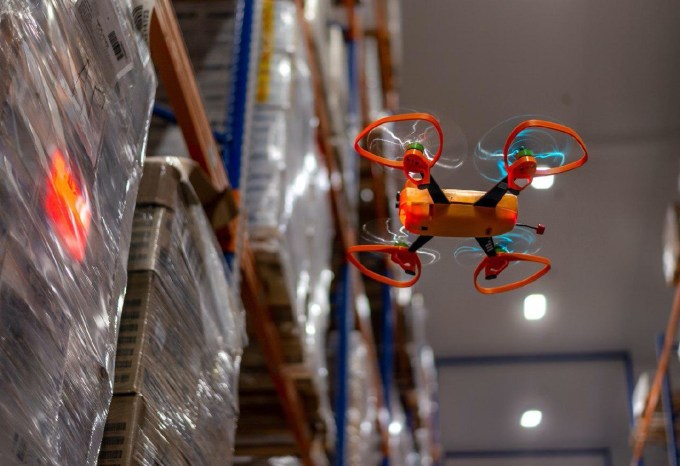
UVL Robotics: Drones purpose-built to help businesses track and count the inventory in their warehouses.

AutoCloud: A reimagined interface for monitoring and identifying outages on services like AWS, Google Cloud and Azure.

SmallTalk: AI-based tool meant to assess the language proficiency of a potential hire. They’re also building a tool to help individuals better prepare for speeches and presentations in languages they don’t speak natively, flagging any pronunciation and grammar mistakes it detects in an audio recording.

Sensegrass: A “soil intelligence” platform that uses smart sensors, satellite data and public data to help optimize crop yield.

PostureHealth: Camera-based posture correction for individuals and companies.

Apis Cor: 3D-printed buildings, including one the company says is already the largest 3D-printed building in the world.

Via.delivery: A network of brick-and-mortar stores willing to act as local pickup locations for your shipments. They say they currently have roughly 15,000 locations across 12 time zones.

Prosus Ventures leads $30 million investment in Indian agritech startup DeHaat

Once overlooked, agritech startups are beginning to have a moment in India.

On Tuesday, DeHaat, an online platform that offers full-stack agricultural services to farmers, said it has raised $30 million in a new financing round as the Indian firm looks to maintain its accelerated growth despite the pandemic.

Prosus Ventures, formerly known as Naspers Ventures, led Patna and Gurgaon-based startup’s Series C financing round. RTP Global and existing investors Sequoia Capital India, FMO, Omnivore and AgFunder also participated in it, bringing the startup’s to-date raise to over $46 million. (Dexter Capital was the advisor for this funding round.)

One of the biggest challenges farmers in India face is securing agri-input items such as seeds and fertilizers and then finding buyers after producing the yields.

DeHaat, which is Hindi for village, is solving this by bringing brands, institutional financers and buyers to one platform, which is accessible through a helpline and an app in local languages.

Only about a third of the yields Indian farmers produce reaches the big markets, according to industry estimates. It’s traditionally proven immensely difficult for farmers to find buyers for their produce.

Once the season is over, DeHaat helps farmers sell their yields to bulk buyers such as business-to-business marketplace Udaan, Reliance Fresh, and food delivery firm Zomato.

The 10-year-old startup has also developed a database of crop tests and uses artificial intelligence to provide farmers with free-of-cost personalized advisory on what they should sow in a season. DeHaat also helps farmers secure working capital through partnership with hundreds of institutional firms.

We wrote about DeHaat last year, when it had raised a $12 million financing round. The past nine months has been the story of its accelerated growth despite the coronavirus pandemic, which prompted lockdowns across the nation for several months.

The startup, which today has presence in eastern part of India — states such as Bihar, Uttar Pradesh, Jharkhand, Odisha and West Bengal — serves close to 400,000 farmers, up from about 210,000 in April last year, Shashank Kumar, co-founder and chief executive of the startup, told TechCrunch in an interview.

How the startup is tackling these challenges is equally impressive. It works with nearly 1,400 micro-entrepreneurs, up from about 400 last year, in rural areas who distribute over 4,000 types of agri-input goods to farmers from their regional hubs and then bring back the output to the same hub. “They are the ones responsible for last-mile delivery and aggregation,” he said.

DeHaat has grown on every front, including the revenue it clocks, which is up 3X to 3.5X since last year, he said.

“At the end of March, our daily volume out was around 200 metric tonne. Now it’s over 600 metric tonne. Everyday we aggregate this much from farmers and supply to FMCG players and modern retails. Similarly on the agri-input side — seed, fertilizers, and pesticide — we are processing close to 10,000 orders everyday, compared to about 2,600 in March of last year,” he said.

“Prosus Ventures invests in industries around the world where innovation can significantly address big societal needs,” said Ashutosh Sharma, Head of India Investments at Prosus Ventures, in a statement.

“DeHaat is catering to a massive market in India with the agriculture sector worth more than $350 billion to the country’s economy and consisting of an estimated 140 million+ farmers. Through its end-to-end agricultural services offerings, DeHaat will have a major societal impact in India, improving the earning potential for Indian farmers and overall yield for the sector while also enabling microentrepreneurs all over the country, including in rural areas where there is often less income opportunity,” he added.

The startup plans to deploy the fresh capital to expand to more states in India including Rajasthan, Madhya Pradesh, and Maharashtra and eventually serve 10 million farmers.

And another area where it intends to focus is hiring top tech talent. The startup has doubled its workforce since the past year, with many high-profile hires from major firms. The startup, which recently made its second acquisition, is also open to exploring more M&A opportunities, said DeHaat’s Kumar.

Once ignored, scores of agritech startups have cropped up in India in recent years — and many old startups are beginning to receive large-sized checks from investors.

Around two dozen #agritech startups have raised funds this year (till date)

Ergos
Unnati
Bijak
DeHaat
Ninjacart
Gourmet Garden
Farmers Fresh Zone
Krishitantra
Kheyti
BigHaat
VeGrow
Procol
Agro2o
Waycool
Jai Kisan
Intello Labs
Crofarm
Eggoz
Aibono
Arya
Clover
Kisan Network

— Harsh Upadhyay (@upadhyay_harsh1) October 13, 2020

Further reading: Omnivore and Accel recently co-authored a report on India’s agritech landscape.

Salesforce leads $15M investment in Asian HR tech platform Darwinbox

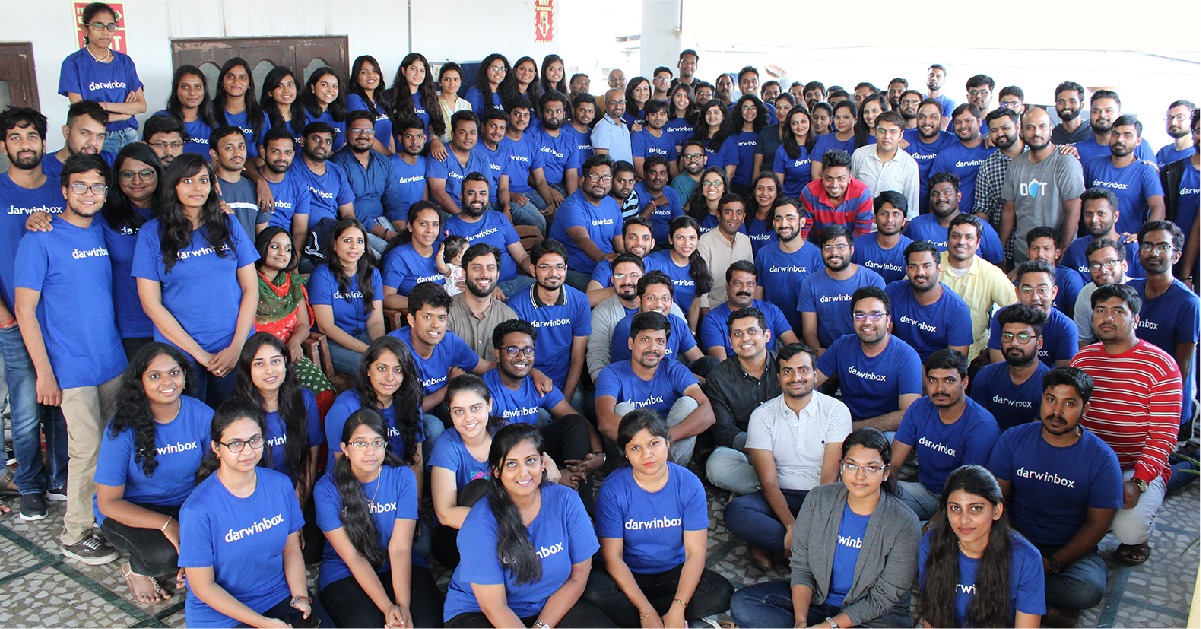
Darwinbox, which operates a cloud-based human resource management platform, has raised $15 million in a new financing round as the Indian startup looks to further expand in the country and Southeast Asian markets.

The new round — a Series C — for the Hyderabad-headquartered startup was led by Salesforce Ventures, the venture arm of the American enterprise giant. This is Salesforce Ventures’ one of rare investments in India. Existing investors including Lightspeed India and Sequoia Capital India also participated in the round, which brings the five-year old startup’s raise to-date to about $35 million.

Over 500 firms including — Tokopedia, Indorama, JG Summit Group, Zilingo, Zalora, Fave, Adani, Mahindra, Kotak, TVS, National Stock Exchange, Ujjivan Small Finance Bank, Dr.Reddy’s, Nivea, Puma, Swiggy, Bigbasket — use Darwinbox’s HR platform to provide more than a million employees of theirs with a range of features in 60 nations, up from about 200 firms across 50 nations in late 2019, said Chaitanya Peddi, co-founder of Darwinbox, in an interview with TechCrunch.

Peddi said the startup has always looked up to Salesforce for inspiration, and investment from the enterprise giant is “nothing sort of a child receiving validation from their father,” he said.

The fundraise caps the most successful year for the startup that started with uncertainty as the coronavirus spread across Asian nations. The startup initially took a hit as its customers scrambled to navigate through the global pandemic, but the last two quarters have been its best to date, said Peddi.

Overall, the startup’s revenue has ballooned by 300% since September 2019, when it last raised money, he said. “In HR tech and SaaS space, we are now only behind SAP and Oracle in India in terms of revenue,” he said.

Dev Khare, a partner at Lightspeed India, an early backer of the startup, said that Darwinbox has become the preferred human capital management solution for Asian conglomerates, governments, and high-growth businesses and multi-national corporations operating in Asia as they witness digital transformation.

Image Credits: Darwinbox

Darwinbox’s platform is built to take care of the entire “hiring to retiring” cycle needs of employees. It handles onboarding of new hires, keeps a tab on their performance, monitors attrition rate, and provides an ongoing feedback loop.

It also provides its customers with a social network for their employees to remain connected with one another and an AI assistant to apply for a leave or set up meetings with quick voice commands from their phones.

Peddi said the startup will deploy the fresh capital to expand to several more countries, especially in more emerging markets in the Middle East Asia and Africa, and broaden its offerings. “We will be leveraging the power of our platform to do a lot more. We are a product-led firm and our focus will remain on innovation in that space,” he said. The startup is also open to exploring opportunities to acquire smaller firms for inorganic growth, he said.

“India is home to one of the world’s youngest population, and by 2050, it is expected to account for over 18% of the global working age population,” said Arundhati Bhattacharya, Chairperson and CEO, Salesforce India, in a statement. “This makes technology platforms like Darwinbox, that focuses on workforces, incredibly important. I’m proud that Salesforce is supporting Darwinbox on their journey as they continue to grow and innovate in this space.”

Alex Kayyal, partner and head of international at Salesforce Ventures, told TechCrunch in an interview that the firm helps its partners in a number of ways, including exposing them to the firm’s customers, executives and their networks, and helping startups scale their business.

“We have one of the most innovative and disruptive customer bases that are looking for cloud solutions and digital transformation. So the opportunity to expose companies like Darwinbox to our customer base is something we get really excited about,” said Kayyal. Salesforce Ventures is exploring more investment opportunities in India, he said.

Singapore-based Volopay raises $2.1 million seed round to build a “financial control center” for businesses

Volopay, a Singapore-based startup building a “financial control center” for businesses, announced today it has raised $2.1 million in seed funding. The round was led by Tinder co-founder Justin Mateen, and included participation from Soma Capital, CP Ventures, Y Combinator, VentureSouq, the founders of Razorpay, Antler and other angel investors.

The funding will be used on hiring, product development, strategic partnerships and Volopay’s international expansion. It plans to launch operations in Australia later this month. The company currently has about 100 clients, including Smart Karma, Dathena, Medline, Sensorflow and Beam.

Launched in 2019 by Rajith Shaiji and Rajesh Raikwar, Volopay took part in Y Combinator’s accelerator program last year. It was created after chief executive officer Shaji, who worked for several fintech companies before launching Volopay, became frustrated by the process of reconciling business expenses, especially with accounting departments located in different countries. Shaiji and Raikwar also saw that many companies, especially startups and SMEs, struggled to track different kinds of spending, including subscriptions and vendor payments.

Most of Volopay’s clients are in the tech sector and have about 15 to 150 employees. Volopay’s platform integrates multicurrency corporate cards (issued by Visa Corporate), domestic and international bank transfers, automated payments and expense and accounting software, allowing companies to save money on foreign exchange fees and reconcile expenses more quickly.

In order to speed up its development, Volopay integrated Airwallex’s APIs. Its corporate cards offer up to 2% cash back on software subscriptions, hosting and international travel, which Volopay says are the three top expense categories for tech companies, and it in November 2020, it launched a credit facility for corporate cards to help give SMEs more liquidity during the COVID-19 pandemic.

Compared to traditional credit products, like credit cards and working capital loans, Shaji said Volopay’s credit facility, which is also issued by Visa Corporate, has a more competitive fixed-free pricing structure that depends on the level of credit used. This means companies know how much they owe in advance, which in turn helps them manage their cashflows more easily. The average credit line provided by Volopay is about $30,000.

Since TechCrunch last covered Volopay in July 2020, it has grown 70% month on month in terms of total funds flowing through its platform, Shaji said. It also launched two new features: A bill pay feature that allows clients to transfer money domestically and internationally with low foreign exchange rates and transaction fees, and the credit facility. The bill pay feature now contributes about 40% to Volopay’s total payment volume, while the credit product makes up 30% of its card spending.

Shaji told TechCrunch that Volopay decided to expand into Australia because because not only is it a much larger market than Singapore, but “SMEs in Australia are very comfortable using paid digital software to streamline internal operations and scale their businesses.” He added that there is currently no other provider in Australia that offers both expense management and credit to SMEs like Volopay.

Updated to add Antler as an investor.