
This is the iPad mini you’ve been waiting for.
     |
Blancer.com Tutorials and projects
Freelance Projects, Design and Programming Tutorials
hacking,system security,protection against hackers,tech-news,gadgets,gaming
This is the iPad mini you’ve been waiting for.
| |

Time to chalk another one up for cryptocurrency bitcoin’s reputation as a disruptor in the financial world? Today, news comes that Coinbase – the YC-incubated startup that offers a bitcoin buying and trading platform for consumers, and APIs to developers to integrate bitcoin payments into apps and websites – has had its iOS app pulled from the App Store by Apple, less than a month after it first appeared.
It’s not clear why at this point: CEO and co-founder Brian Armstrong tells us that Coinbase is still trying to find out. “We’re not sure why it was taken down and we’ve reached out to Apple to request clarification,” he said. We have also reached out to Apple and will update this post with any response that we receive.
Coinbase also has an Android app, which is still live in Google Play.
The news of the app’s disappearance was first reported by Bitcoin Blogger. Then Craig Hammell, a software engineer at Coinbase, confirmed that it was not removed by Coinbase itself.
There are some historical hints to why the app may have been taken down. The Coinbase app let users track their bitcoin activity on Coinbase, but it also worked as a “wallet” where users could buy, send and receive bitcoins.
As executive director of the Bitcoin Foundation Jon Matonis has pointed out in the past, other bitcoin wallet apps like Blockchain Wallet and BitPak have not fared well on the App Store, getting “unceremoniously evicted”, with Apple noting that they needed to “comply with all legal requirements in any location where they are made available to users.” There are still, however, apps to transact in bitcoin still in the App Store if you look for them.
(Among those taken down, some like the Blockchain Wallet are now also back in the App Store with limited functionality, with the full versions available for jailbroken devices.)
The reference to complying with laws, in any case, has been a confusing one. Right now there are no bitcoin-specific laws in countries like the U.S., although it may only be a matter of time, it seems, before these start to appear. On the other hand, while not outlawed itself, bitcoin has come to be associated with illicit transactions like buying illegal drugs, so it may be this that Apple has in mind.
The amount transacted in bitcoin – a decentralized currency generated by bitcoin-mining computers – is today small in comparison to the what is transacted globally in dollars, euros and other established, national currencies; but it’s caught the attention of enough speculators, legit users, and those who are genuinely curious, to see its price rising sharply at the moment. As a point of comparison, when Coinbase first launched its iOS app in October, the price of a bitcoin was about $200. At the time of writing this post, the buy price is $419.74 and rising.
Still, the existence of Coinbase itself is a sign of changing times for bitcoin, which is becoming an evermore mainstream service – Coinbase integrates with U.S. banks so that consumers can easily link their normal accounts with those they create on Coinbase. Right now, it says that some 12,000 merchants are using its API and that there have been some 386,000 wallets created on the platform.
And crucially, Coinbase is also increasingly getting embraced by the technology powers that be. Incubated and backed by Y Combinator, Coinbase has raised just under $7 million since 2012, with other investors including top VCs like Union Square Ventures, SV Angel and Funders Club. Fred Wilson of USV highlighted one of the key, attractive points for why bitcoin is potentially very disruptive for established payment platforms and currencies: “If I’m sending you money, why should that cost me or anyone?” he asked during an appearance at Disrupt in New York earlier this year.
Indeed, one of the big attractions with bitcoin, and Coinbase, has been the way that it circumvents some of the payment fees associated with more established currencies and payment platforms. Coinbase processes the first $1,000,000 of merchant orders for free, it says, with a flat 1% fee after that. “Combined with no chargebacks by nature in Bitcoin, this provides significant savings to merchants who are paying 3% plus to credit card fees,” the company notes.

A new report finds that U.S intelligence agencies are collecting more than data on telephone records and Internet behavior. According to the The New York Times and The Wall Street Journal, the CIA “is building a vast database of international money transfers that includes millions of Americans’ financial and personal data, officials familiar with the program say.”
The financial data on money transfers, from businesses such as Western Union, does not include transactions that are solely domestic. A majority of the records are foreign, but includes those between the U.S. and other nations. “It does include data beyond basic financial records, such as U.S. Social Security numbers, which can be used to tie the financial activity to a specific person,” according to the Journal.
Just like the National Security Agency’s spy program, the bulk data collection is authorized under section 215 of the Patriot Act, is stored in a dedicated database and requires a court order to search the records.
Western Union will spend a whopping 4 percent of its revenue in 2014 to comply with Patriot Act rules.
The program was apparently inspired by the September 11 attacks, where “al Qaeda hijackers were able to move about $300,000 to U.S.-based bank accounts without arousing suspicion.”
This is the latest bulk data collection program to be revealed, but it likely won’t be the last.
[Image credit Flickr user geographyalltheway.com]

Many members of the tech community have lent their skills to help Super Typhoon Haiyan rescue efforts in the Philippines. These include Viber, which rolled out a new feature called Viber Out, and people working with the Geeklist Corps of Developers. Now peer-to-peer mobile broadband network Open Garden and messaging app textPlus are also offering services to help Filipinos recover from the devastating storm, which killed up to 10,000 people.
Open Garden responded to a “call to arms” for hackers from the Office of the President of the Philippines by offering its flagship app to help survivors and rescue workers regain connectivity on their mobile phones. The Open Garden app, which can be sent from one Android phone to another using Bluetooth, makes connections more reliable for mobile users who still have access to the Internet and allows phones without a connection to access the Internet through devices that do.
Stanislav Shalunov, the CTO and co-founder of Open Garden, tells me that the startup got involved in the rescue effort through ICT, which has field offices in the Philippines to provide first-hand relief, and is also working with the government of the Philippines. One of the most important uses for the Open Garden app is improving Internet connectivity for rescue workers. In one field office that has a 300kb/s satellite connection, Open Garden helps conserve its battery by letting everyone check their email at the same time.
Meanwhile, textPlus, the free text messaging app, is donating free voice calls to the Philippines. textPlus users can call numbers in the Philippines for free through the textPlus app, which is available on iOS and Android. textPlus uses Wi-Fi, so users in areas where mobile networks can still use the app. For more information, see textPlus’ Web site.
Image credit: UNICEF Philippines

We thought the ultrabook craze meant the era of beastly, 9-pound gaming laptops had ended. We were mistaken.
| |

San Francisco-based Sparse makes a pair of the front and tail lights that install permanently on your bike’s headset and seatpost.
| |

Jawbone’s latest wearable activity tracker is a big improvement over the previous Up, even if it still could use a few more steps.
| |

On looks alone, you could easily mistake the Audioffice for an Apple product. But we doubt the company would ever market such a subpar speakerphone/audio dock.
| |

Cyanogen Inc. revealed a few months back that it closed a $7 million seed investment from Benchmark Capital. The vision it laid out at the time was no small one: it wants its cooked version of Android to become the third most-used mobile OS behind iOS and Android proper.
Naturally, that involves getting CyanogenMod onto as many devices as it can, and today the company took one giant leap in that direction. They’ve just made it easier for average folks to flash their software onto their smartphones with an installer app available in the Google Play Store.
If that last bit doesn’t sound like a big deal, then chances are you’ve never tried to install CyanogenMod on your own. After all, the original installation process wasn’t exactly for the faint of heart. While some devices could be coaxed into running CyanogenMod in mere moments, others required lengthy lists of instructions and some occasional finger crossing. Hardly an ideal situation for a company trying to get CyanogenMod working on as many devices as possible.
Even now, there are still some caveats to deal with. The Android app won’t do a whole lot all on its own for one, as it requires a companion Windows installer for heavy lifting so Mac users are plum out of luck at the moment. And most notably, the list of supported devices represents just a fraction of the Android gadgets currently floating around out there, so true mass-market penetration is going to take some time.
But let’s back up for a moment: why would someone want to swap their current Android build (whatever it may be) with CyanogenMod? Long story short, the Cyanogen team has been working to build extra features into their custom version of Android by way of very frequent updates. While they’ve been developing CM for a long while, it’s still very early days for Cyanogen as a company. But that doesn’t mean they aren’t making headway. The team inked a partnership with Chinese OEM Oppo to fold CyanogenMod support into its curious N1 smartphone, and with any luck, more manufacturer partnerships are in the cards, too.

Last month, a number of us TechCrunchers grabbed our passports and jetted to Berlin for our first-ever Disrupt Europe conference. The tech scene in Berlin is very hot at the moment, so while we were in town, we knocked on the doors of a couple of the city’s startups for TechCrunch TV’s Cribs series.
Now, if you were somehow under the impression that tricked-out startup offices are only found in Silicon Valley, this episode will show you just how wrong you are. The headquarters of social gaming startup Wooga in Berlin’s Prenzlauer Berg neighborhood are just as colorful and creative as any place we’ve toured – with the added bonus of being filled with a much more multi-lingual staff (and arguably better beer) than you’d find around these parts.
Check out the video embedded above to see Steve Gilmore take us on a tour to see the monsters, robots, swings, nap pods, and Neil Patrick Harris cut-outs of Wooga’s HQ.

When Photobucket redesigned its site and user experience with better uploading and new social features last fall, it did so in the hope of reestablishing itself as the go-to site for photo sharing and storage after falling in popularity relative to its competitors.
The ten-year-old company, which filed $5.67 million in equity funding in May, is now launching a mobile app that extends the full capabilities of its service to smartphone users. Recognizing that photo taking and sharing is fractured between people’s devices and services, Photobucket’s plan is to create one cohesive ecosystem to incentivize users to convert (or reconvert) to the system.
“Photobucket has a history of being an open, highly scalable [platform], and we wanted to build on that. We looked at two real market problems: photos are everywhere on multiple devices and services and platforms, and people are losing photos because it’s too hard to back them up,” said David Toner, Photobucket’s head of marketing.
Photobucket relaunched its mobile web app last month. It now serves as an onramp to the native app, which allows users to back up, edit, organize, and share their photos. While the app can serve as a quick organizational tool, users are still going to want to do major organization on the website.
In a few weeks time, Photobucket will be rolling out the next phase of their development: use as a social hub for event-specific photo uploads, for which people may be using various services like Instagram, Facebook, and Google+. They remained fairly quiet about the specifics, but the aim is to allow people to discover each other’s photos in a way that doesn’t require people to change their uploading behavior.
Photobucket’s U.S. monthly uniques stood at 20.85 million in October, up from 20.2 in September and 16.5 in April. But it still has a long way to go relative to other leading photo sites like Flickr, Instagram, Pinterest, and Shutterfly. Of those sites, it showed the highest bounce rates during April through September of this year, according to numbers from SimilarWeb – likely the result of bad traffic from search.
It’s also behind Shutterfly and Flickr in page views per visit (Instagram is too, probably because its scrolling feed doesn’t require much clicking). On average time spent per visit Shutterfly and Instagram also came out on top of Photobucket.
[Image: Flickr / Pedro Ribeiro Simões]

Sunsets? Landscapes? Latte art? Look back at your old photos and you’ll notice they’re boring unless there’s a human face in them. Now think about teens on social media. Immaturity fuels bullying and drama-filled comment reels. So RockLive has taken funding from Justin Bieber to solve these problems with Shots of Me, a self-portrait photo sharing iOS app that launches today.
Selfies – photos you shoot of yourself, often with the front-facing camera. That’s what you do on Shots of Me. Take selfies. Share selfies to the app’s Instagram-style internal social network or to Twitter (with Instagram sharing coming soon). Like Selfies from other people.
Yes, you read that right. It’s a social network entirely for selfies. The premise is simple, but it hides the amount of work and detail that went into Shots of Me.
“We were creating these games and had a good, young demographic. Always high schoolers,” RockLive CEO John Shahidi tells me. “We giggled that we knew how to market to high school girls so let’s build something even bigger,” he says.
The idea for Shots of Me came from Shahidi looking at the photo app craze and realizing “People enjoy looking at humans. Not just yourself. People like looking at other people. It doesn’t ever really get old. Looking at a coffee or salad…”, Shahidi trails off, but the implication is clear. Instagram is the home for photos of food and inanimate object photography, as the filters make them look interesting. But they’re not. And people are sick of staring at your lunch.
Does the world need another photo app? Maybe not. But if you suspend your skepticism for a moment, seeing the smiling faces of your friends more often probably isn’t such a bad thing.
RockLive’s five-person team began building Shots of Me in May and today it becomes available for download. Open the iOS-only app and you’ll find a full-screen feed of selfies from your Shots of Me friends and anyone you pull from your Twitter contacts.
In a cool chameleon design trick, the name/location and caption/likes bars above and below each photo take on the colors of the pic and change as you scroll. It’s like you’re looking through a steamy window. Shahidi proclaims “We want to be a top of the line product. You spend $500 on a phone. Does this app fit the quality of the iPhone, does this feel like a like Mercedes or a Ferrari?” That might be pushing it, but the app has number of flourishes like letting you pick the color of the navigation chrome.
To enforce the selfies-only rule, you have to take photos using the front-facing camera. And similar to Snapchat, you can only shoot Shots of Me within the app. No uploading means the emotions you see in a newly uploaded Shot Of Me is how that person is feeling right now.
What makes Shots of Me functionally unique is actually what it lacks: Comments. “People share photos because they felt so positive at that moment” Shahidi explains. “Drama kills that moment.”
If someone makes fun of your photo of the ocean, whatever. But selfies leave people vulnerable. A hateful comment about your face could really hurt, especially if you’re a sensitive teenager. So rather than comments, Shots of Me has a direct messaging system where you can ping anyone who follows you, similar to Twitter. This way, any drama stays private and randos can’t troll you.
It was this philosophy of positivity that attracted Justin Bieber to Shots of Me. The pop star was introduced to the RockLive and Shots of Me, and Shahidi says “Honestly, he loved it. He was a bit annoyed by other platforms” referring to the constant homophobic slurs and hate Justin gets on Twitter, Facebook, and other social networks.
“The commenting thing was something he really cared about. Not just for himself, but for the kids. He said ‘I want a platform where my fans don’t have to deal with this. We didn’t ask him for money. He said ‘I want to be part of this.’”
RockLive had already raised $1.6 million from Shervin Pishevar, boxer Floyd Mayweather, early Apple employee Tom McInerney and NALA investments. NALA had set terms to put in some more money, but RockLive let Bieber in at the last minute to let him contribute the majority of the $1.1 million second round.
This is Bieber’s first publicly announced personal investment without the help of his manager Scooter Braun, who he’s invested in a few startups with. Shahidi says Bieber “did a lot of due diligence. He asked a lot of questions and he calls all the time.”There’s no business model to analyze, though, as Shots of Me is focused solely on growth, which will be a tough fight.
Some will undoubtedly say Bieber has no business investing in tech, but if he can consistently sell millions of record and huge numbers of concert tickets, he must have a knack for understanding what kids want.
Overall, Shots of Me feels refreshing because every face is fascinating. There are no botched attempts at artful photos of stale scenes cluttering the feed. Sure, Shots of Me could become a vehicle for vanity, but that’s human nature. You can say it will fail. You can say it’s dumb. But it doesn’t change the fact that people are taking selfies at an alarming rate. Someone’s going to capitalize. Some say selfies are a fad, but we’ve been painting and shooting portraits for a long, long time.
The question now is whether Shots of Me’s focus on selfies, no-drama feed, and aid from the Bieber-nation will be enough to carve out an audience amongst the slew of other photo apps.
Most obviously, Shots of Me will be taking on Instagram and its 150 million highly engaged users. Then there are stalwarts Facebook and Twitter. Snapchat has become a destination for sharing silly self-portraits, and maybe the mysterious, unlaunched startup “Selfie” will seduce some users.
The biggest threat may be the recently launched Frontback, which cleverly lets you share two-photo diptychs that feature a front-facing selfie plus a rear-facing shot to show where you are. With 300,000 downloads since its launch in August and $3 million in new funding, Frontback is capitalizing on its unique format. It permits funny photo mashups, also prohibits comments, and combines eye-catching faces with added context. Beating out all these apps will be a serious challenge.
Shahidi remains confident, noting that “Taking one photo is already a lot of work” and that the non-selfie part of Frontbacks could get stale because “people are typically doing the same thing every day. If you’re in the office, the office is kind of boring”. RockLive actually considered offering the diptych style, but concluded “There’s more opportunities to take photos of yourself than figuring out the other side.”
With any luck, Shots of Me will get Bieber to share selfies exclusively on its app to attract some of his 47 million Twitter followers and 57 million Facebook fans. It could blow past Frontback if just 1 percent of those people checked out Shots of Me. Still, Shahidi hopes his product can stand on its own two feet.
“Before Instagram, there were dozens of apps that could let you take photos with filters, but Instagram was the first to create a home for your filtered pictures. You knew you were going to see elegant photos.” He hopes Shots Of Me will do the same for selfies. “People are going to enjoy seeing their life documented through the app. They’re your memories. If you’re not in the photo, it didn’t happen.”
Shots of Me is now available for free on iOS. Note the app can’t be found via iTunes App Store search right now so use this link or shots.me
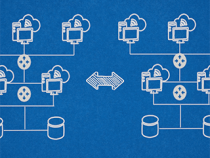
Cloud automation company Skytap has launched advanced integration capabilities with Amazon Web Services (AWS) that allow customers to develop and test on Skytap Cloud workloads that mirror AWS production environments.
The company provides a platform that has until now been used for VMware-based environments. Companies export their virtual machines to Skytap and then provision accordingly. With AWS, customers will pull Amazon Machine Images (AMIs) into Skytap and then adjust according to instance size. Once they export and set the parameters, they can then export templates. The data stored behind the scenes is AWS metadata and AWS images.
The templates can be organized into projects and then into multi-machine configurations that run on AWS. The service is designed for larger deployments, with multiple VMs doing continuous integration. With the templates, the service allows for companies to develop, test, migrate, evaluate, demo and train on new and existing applications in the cloud.
Skytap uses virtual private computing (VPC) to connect to AWS EC2 and Amazon Elastic Block storage which is connected with RESTful APIs. For continuous integration, Skytap has a Jenkins plug-in to the VPN. For example, with the Jenkins plug-in, the developer checks in code and Jenkins does a build. The customer then plugs into Skytap and creates tasks that can then be checked for bugs early in the lifecycle, avoiding hassles down the line. By spinning up environments on demand, Skytap can provide a dynamic continuous integration process.
Skytap provides the capability to move multi-tiered enterprise applications with clustering and fail-over networking capabilities into the cloud. The resulting cost savings can be significant. Companies are seeking ways to pull the bits and pieces together to build a cloud environment. Skytap automates the process.
Moving digital loads around has connections to the physical world. It’s quite a task simply to dig a hole for a new building’s foundation as much as it is a complexity to move virtual workloads from a corporate server to an elastic service like AWS.
Moving workloads to AWS makes sense for companies looking for an innovative edge. But it is the orchestration demands that make it so complex. At re:Invent this week, it can be expected that there will be announcements that are designed to automate the complexities of connecting enterprise workloads to AWS. Skytap is a window into that world and how customers will use services as a virtual middleware to connect the physical and the virtual world.
The company will showcase the integration capabilities at AWS re:Invent this week.

30% to 40% of Quora’s traffic comes from people searching for specific things, so it tells me that search ads that leverage intent make perfect sense for how it eventually monetizes its Q&A service. The news comes alongside the launch of Quora Stats, a new analytics tool that shows authors exactly how much traffic their Quora questions, answers, and blog posts are getting.
Quora has raised approximately $70 million since being founded in 2009, but has refused to share specific traffic stats or make any concrete moves towards earning money. Instead it’s been focused on growing to a wider audience of contributors and readers without diluting the quality of its content. Quora said in May that all its metrics were up 3x from a year before.
Traffic measurement services Quantcast and Compete both show Quora up over the last few months to 600,000 monthly uniques and 1 million monthly uniques respectively in September, but Compete still shows the service slightly down from a high a year ago. This may not take into account Quora’s growth on mobile, though. To get bigger, Quora needs to retain its top contributors. Hence, Quora Stats.
The new analytics tool is designed to show Quora authors that they have serious reach. The whole Q&A site, and especially the blogging platform, were built on the premise that anyone sharing great content can have a big audience on Quora. Because Quora’s home page feed highlights content from across the service rather than just people you follow like Facebook or Twitter, you don’t have to be a celebrity or have built up a personal following to make a splash.
Quora Stats aims to prove that. It replaces the very basic Quora Views tool that simply noted your total views of all your content for each month. Quora Stats, rolling out over the next few weeks, will show you breakdowns of the views for each of your questions, answers, and blog posts. As you can see above, you also get aggregate stats and a chart over time for your views, upvotes, and shares. You can slice these metrics by the last 7, 30, or 90 days or all-time.
But more interesting than the new tool may be what Quora’s Marc Bodnick told me yesterday about the site’s plan for monetization. “Advertising at a baseline is a very appealing business model. There are other potential strategies for making money, but interestingly, when you look down and see what people are doing in this database, ‘look up’ is a big part of it. So I think at a minimum, this is a pretty interesting framework for what a business model could be built around.”
Essentially, people come to Quora looking for knowledge about specific topics. What’s the best DSLR camera? Is the new Thor movie good? What’s the best SUV under $30,000? If these remind you of what people search on Google, you can probably see how Quora could monetize in a similar way. If it showed standard display ads for cameras, movies, or cars for people searching for related topics, that could work. It could also let brands pay to promote the rankings of certain answers that favored their products, though that might pervert Quora’s quest to become a neutral source of knowledge.
When pressed over email, Bodnick wrote “We have said that advertising is a very plausible direction for the company to go when we do look to ultimately monetize. This is reinforced by the high percentage of direct intent traffic on Quora, which we estimate to be at 30-40%. That said – the company has no near term plans to monetize. The best insight is probably that directly from Adam.”
[Update: This story was originally titled “Quora Confirms It’s Favoring Search Ads For Eventual Monetization, Launches Author Stats Tool” because what Bodnick told me amounts to him confirming Quora if favoring an ad model based on search ads. Now the company says he didn’t “confirm” that but “signaled” it so I’ve changed the headline to reflect that, even though they both mean the same thing: Quora views search ads as the most viable business model for when it one day decides to try monetizing.]
Bodnick concluded “ We’ve looked at the commercial internet and as portion of the traffic, it’s pretty exciting what percentage it accounts for.” When I asked “So are you hinting that search ads based on intent will be how Quora eventually monetizes?” Bodnick said with a laugh, “I’m not just hinting” implying that is in fact part of the long term strategy.

IDC published its third-quarter 2013 smartphone market share and sales estimates today. Winners this quarter are Windows Phone and Android. Apple was mixed, while BlackBerry managed to implode at a clip so incredible, it reminds me of what happened to Longhorn’s dreams.
In the third quarter, Android saw its market share surpass the 80 percent mark (global), and its total volume grow to 211.6 million devices. Windows Phone grew year over year from 2 percent to 3.6 percent market share, shipping 9.5 million devices in the quarter. That device volume is a 156 percent improvement on the year-ago quarter.
Microsoft is likely content with that figure, but it remains small compared to its two remaining rivals.
Apple grew its device volume, from 26.9 million in the year-ago quarter to 33.8 million (third quarter). However, the larger smartphone market grew 39.9 percent in the intervening year, dropping Apple’s global smartphone market share to 12.9 percent from 14.4 percent a year ago.
BlackBerry lost even more blood, something that astounds me: It’s still alive? The company lost 41.6 percent of its device volume year-over-year. It shipped a mere 4.5 million devices in the quarter, under half of its former rival Windows Phone’s volume.
So, BlackBerry is all but kaput. This means that Microsoft has cleared the path for it being the “third platform.” However, as we recently saw, Microsoft’s developer numbers remain on the weak side.
Finally, according to IDC, the average selling price (ASP) of smartphones fell 12.5 percent in the quarter, to $317. This could mean that Android and Windows Phone have space to continue absorbing more market share, as the smartphone market itself expands, because they offer cheaper handsets than Apple.
For now, things appear somewhat set: Android rules the smartphone market, Apple makes all the money, and Windows Phone is scrapping to prove that it deserves the third-place spot that it has scratched out in the game.
Top Image Credit: Flickr