Extra Crunch roundup: Digital health VC survey, edtech M&A, deep tech marketing, more

I had my first telehealth consultation last year, and there’s a high probability that you did, too. Since the pandemic began, consumer adoption of remote healthcare has increased 300%.

Speaking as an unvaccinated urban dweller: I’d rather speak to a nurse or doctor via my laptop than try to remain physically distanced on a bus or hailed ride traveling to/from their office.

Even after things return to (rolls eyes) normal, if I thought there was a reliable way to receive high-quality healthcare in my living room, I’d choose it.

Clearly, I’m not alone: a May 2020 McKinsey study pegged yearly domestic telehealth revenue at $3 billion before the coronavirus, but estimated that “up to $250 billion of current U.S. healthcare spend could potentially be virtualized” after the pandemic abates.

That’s a staggering number, but in a category that includes startups focused on sexual health, women’s health, pediatrics, mental health, data management and testing, it’s clear to see why digital-health funding topped more than $10 billion in the first three quarters of 2020.

Drawing from The TechCrunch List, reporter Sarah Buhr interviewed eight active health tech VCs to learn more about the companies and industry verticals that have captured their interest in 2021:

  • Bryan Roberts and Bob Kocher, partners, Venrock
  • Nan Li, managing director, Obvious Ventures
  • Elizabeth Yin, general partner, Hustle Fund
  • Christina Farr, principal investor and health tech lead, OMERS Ventures
  • Ursheet Parikh, partner, Mayfield Ventures
  • Nnamdi Okike, co-founder and managing partner, 645 Ventures
  • Emily Melton, founder and managing partner, Threshold Ventures

Full Extra Crunch articles are only available to members
Use discount code ECFriday to save 20% off a one- or two-year subscription


Since COVID-19 has renewed Washington’s focus on healthcare, many investors said they expect a friendly regulatory environment for telehealth in 2021. Additionally, healthcare providers are looking for ways to reduce costs and lower barriers for patients seeking behavioral support.

“Remote really does work,” said Elizabeth Yin, general partner at Hustle Fund.

We’ll cover digital health in more depth this year through additional surveys, vertical reporting, founder interviews and much more.

Thanks very much for reading Extra Crunch this week; I hope you have a relaxing weekend.

Walter Thompson
Senior Editor, TechCrunch
@yourprotagonist

8 VCs agree: Behavioral support and remote visits make digital health a strong bet for 2021

Woman having a medicine video conferencing with her doctor using digital tablet. Senior woman on a video call with a doctor using her tablet computer at home.

Image Credits: Luis Alvarez (opens in a new window) / Getty Images

Lessons from Top Hat’s acquisition spree

Image Credits: Bryce Durbin

In the last year, edtech startup Top Hat acquired three publishing companies: Fountainhead Press, Bludoor and Nelson HigherEd.

Natasha Mascarenhas interviewed CEO and founder Mike Silagadze to learn more about his content acquisition strategy, but her story also discussed “some rumblings of consolidation and exits in edtech land.”

How VCs invested in Asia and Europe in 2020

Last year, U.S.-based VCs invested an average of $428 million each day in domestic startups, with much of the benefits flowing to fintech companies.

This morning, Alex Wilhelm examined Q4 VC totals for Europe, which had its lowest deal count since Q1 2019, despite a record $14.3 billion in investments.

Asia’s VC industry, which saw $25.2 billion invested across 1,398 deals is seeing “a muted recovery,” says Alex.

“Falling seed volume, lots of big rounds. That’s 2020 VC around the world in a nutshell.”

Decrypted: With more SolarWinds fallout, Biden picks his cybersecurity team

Image Credits: Treedeo (opens in a new window) / Getty Images

In this week’s Decrypted, security reporter Zack Whittaker covered the latest news in the unfolding SolarWinds espionage campaign, now revealed to have impacted the U.S. Bureau of Labor Statistics and Malwarebytes.

In other news, the controversy regarding WhatsApp’s privacy policy change appears to be driving users to encrypted messaging app Signal, Zack reported. Facebook has put changes at WhatsApp on hold “until it could figure out how to explain the change without losing millions of users,” apparently.

Hot IPOs hang onto gains as investors keep betting on tech

A big IPO debut is a juicy topic for a few news cycles, but because there’s always another unicorn ready to break free from its corral and leap into the public markets, it doesn’t leave a lot of time to reflect.

Alex studied companies like Lemonade, Airbnb and Affirm to see how well these IPO pop stars have retained their value. Not only have most held steady, “many have actually run up the score in the ensuing weeks,” he found.

Dear Sophie: What are Biden’s immigration changes?

lone figure at entrance to maze hedge that has an American flag at the center

Image Credits: Bryce Durbin / TechCrunch

Dear Sophie:

I work in HR for a tech firm. I understand that Biden is rolling out a new immigration plan today.

What is your sense as to how the new administration will change business, corporate and startup founder immigration to the U.S.?

—Free in Fremont

Hello, Extra Crunch community!

Hello in Different Languages

Image Credits: atakan (opens in a new window) / Getty Images

I began my career as an avid TechCrunch reader and remained one even when I joined as a writer, when I left to work on other things and now that I’ve returned to focus on better serving our community.

I’ve been chatting with some of the folks in our community and I’d love to talk to you, too. Nothing fancy, just 5-10 minutes of your time to hear more about what you want to see from us and get some feedback on what we’ve been doing so far.

If you would be so kind as to take a minute or two to fill out this form, I’ll drop you a note and hopefully we can have a chat about the future of the Extra Crunch community before we formally roll out some of the ideas we’re cooking up.

Drew Olanoff
@yoda

In 2020, VCs invested $428m into US-based startups every day

Last year was a disaster across the board thanks to a global pandemic, economic uncertainty and widespread social and political upheaval.

But if you were involved in the private markets, however, 2020 had some very clear upside — VCs flowed $156.2 billion into U.S.-based startups, “or around $428 million for each day,” reports Alex Wilhelm.

“The huge sum of money, however, was itself dwarfed by the amount of liquidity that American startups generated, some $290.1 billion.”

Using data sourced from the National Venture Capital Association and PitchBook, Alex used Monday’s column to recap last year’s seed, early-stage and late-stage rounds.

How and when to build marketing teams at deep tech companies

Pole lifting rubber duck with hook in its head

Image Credits: Andy Roberts (opens in a new window) / Getty Images

Building a marketing team is one of the most opaque parts of spinning up a startup, but for a deep tech company, the stakes couldn’t be higher.

How can technical founders working on bleeding-edge technology find the right people to tell their story?

If you work at a post-revenue, early-stage deep tech startup (or know someone who does), this post explains when to hire a team, whether they’ll need prior industry experience, and how to source and evaluate talent.

Bustle CEO Bryan Goldberg explains his plans for taking the company public

Bustle Digital Group CEO Bryan Goldberg

Bustle Digital Group CEO Bryan Goldberg. Image Credits: Bustle Digital Group

Senior Writer Anthony Ha interviewed Bustle Digital Group CEO Bryan Goldberg to get his thoughts on the state of digital media.

Their conversation covered a lot of ground, but the biggest news it contained focuses on Goldberg’s short-term plans.

“Where do I want to see the company in three years? I want to see three things: I want to be public, I want to see us driving a lot of profits and I want it to be a lot bigger, because we’ve consolidated a lot of other publications,” he said.

It may not be as glamorous as D2C, but beauty tech is big money

Directly Above Shot Of Razors On Green Background

Image Credits: Laia Divols Escude/EyeEm (opens in a new window) / Getty Images

The U.S. Federal Trade Commission is not a huge fan of personal-care D2C brands merging with traditional consumer product companies.

This month, razor startup Billie and Proctor & Gamble announced they were calling off their planned merger after the FTC filed suit.

For similar reasons, Edgewell Personal Care dropped its plans last year to buy Harry’s for $1.37 billion.

In a harsher regulatory environment, “the path to profitability has become a more important part of the startup story versus growth at all costs,” it seems.

Twilio CEO says wisdom lies with your developers
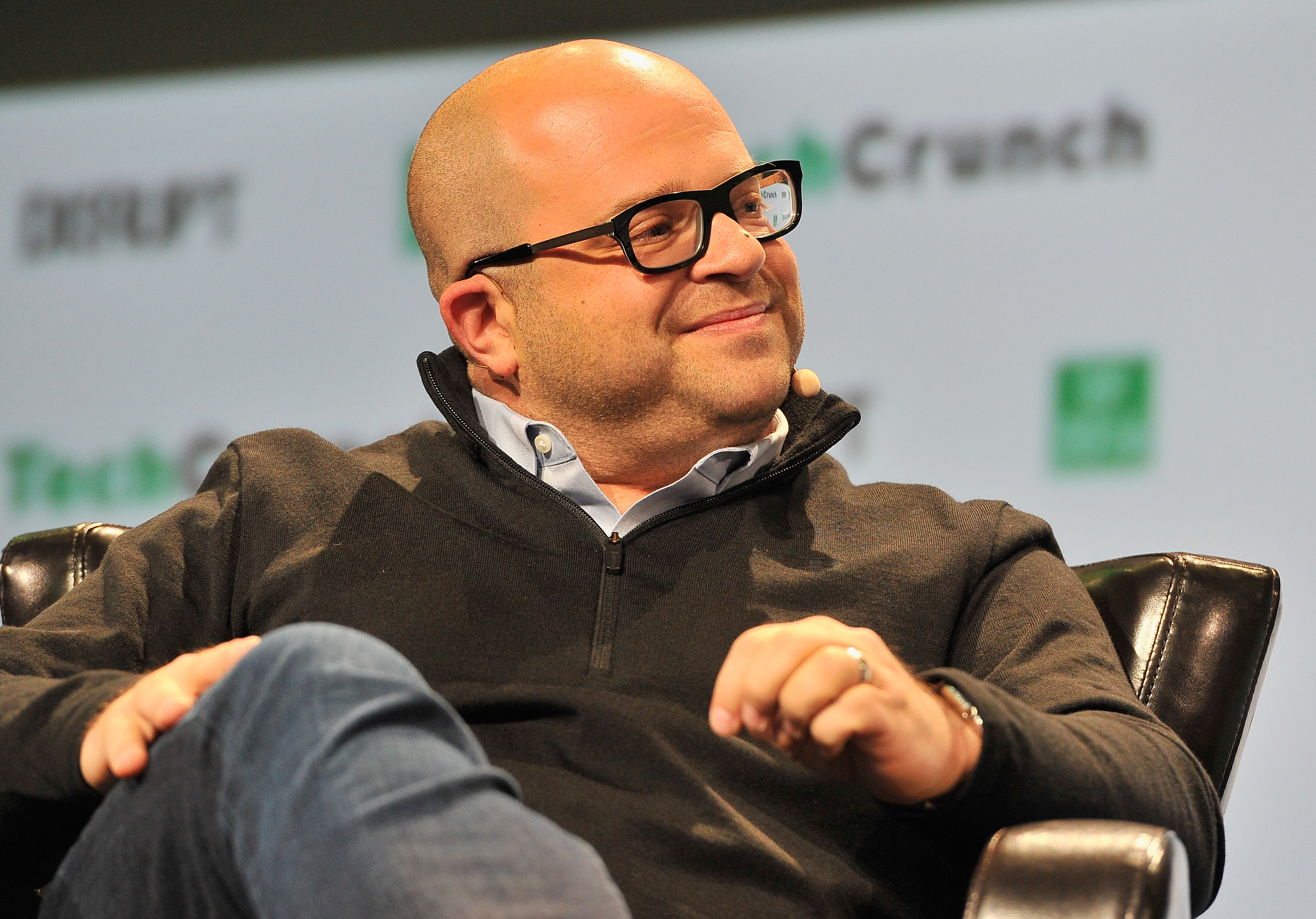
SAN FRANCISCO, CA – SEPTEMBER 12: Founder and CEO of Twilio Jeff Lawson speaks onstage during TechCrunch Disrupt SF 2016 at Pier 48 on September 12, 2016 in San Francisco, California. Image Credits: Steve Jennings/Getty Images for TechCrunch

Companies that build their own tools “tend to win the hearts, minds and wallets of their customers,” according to Twilio CEO Jeff Lawson.

In an interview with enterprise reporter Ron Miller for his new book, “Ask Your Developer,” Lawson says founders should use developer teams as a sounding board when making build-versus-buy decisions.

“Lawson’s basic philosophy in the book is that if you can build it, you should,” says Ron.
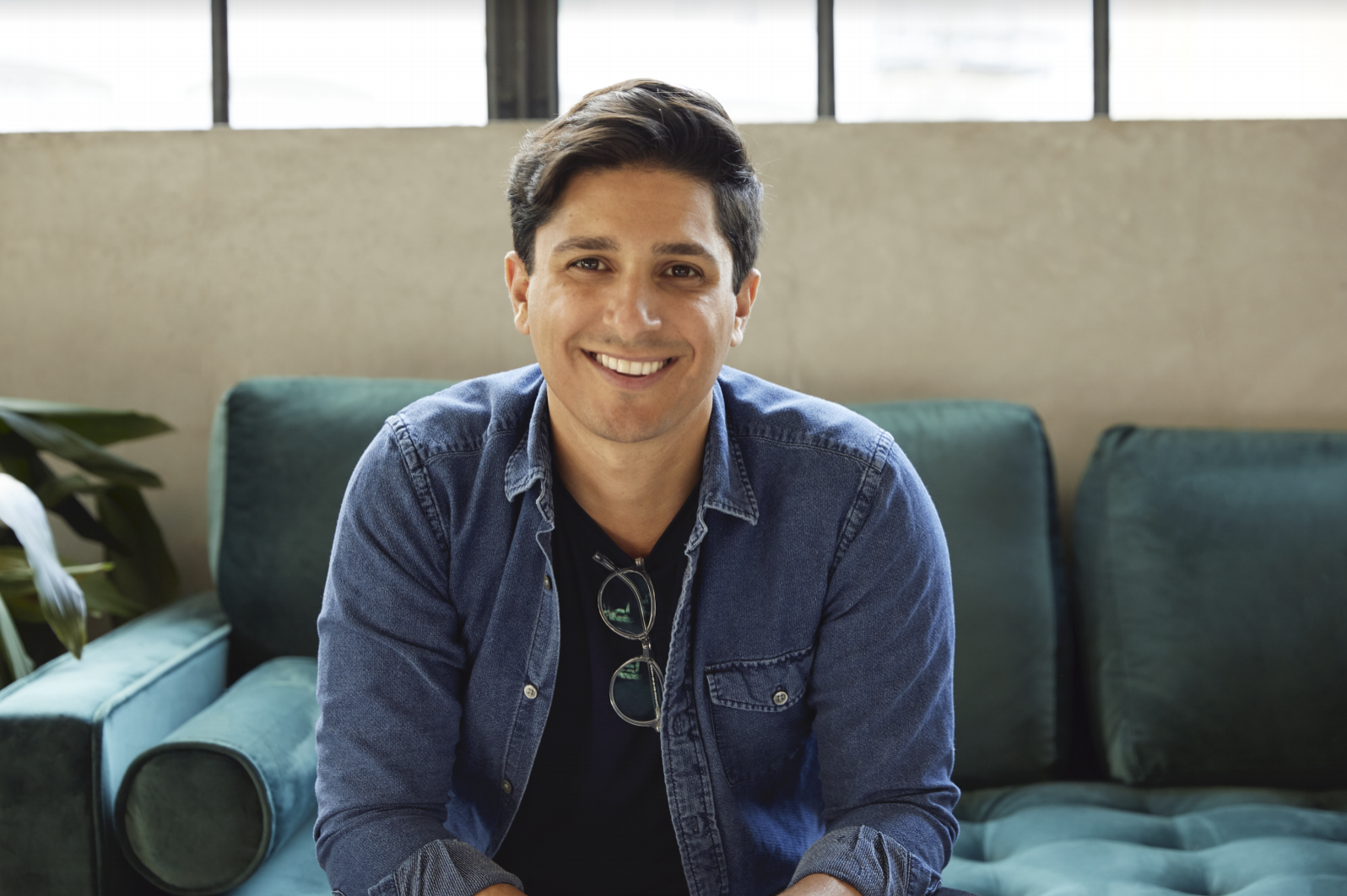
Elon Musk is donating $100M to find the best carbon capture technology

Elon Musk said Thursday via a tweet that he will donate $100 million toward a prize for the best carbon capture technology.

Musk, who recently surpassed Amazon’s Jeff Bezos to become the world’s richest person, didn’t provide any more details except to add in an accompanying tweet the “details will come next week.”  Updated: A person familiar with the plan has told TechCrunch that this will be connected to Xprize Foundation, the non-profit organization that host competitions aimed at encouraging technological development and innovation.

Am donating $100M towards a prize for best carbon capture technology

— Elon Musk (@elonmusk) January 21, 2021

The broad definition of carbon capture and storage is as the name implies. Waste carbon dioxide emitted at a refinery or factory is captured at the source and then stored in an aim to remove the potential harmful byproduct from the environment and mitigate climate change. It’s not a new pursuit and numerous companies have popped up over the past two decades with varying means of achieving the same end goal.

The high upfront cost to carbon capture and storage or sequestration (CCS) has been a primary hurdle for the technology. However, there are companies that have found promise in carbon capture and utilization — a cousin to CCS in which the collected emissions are then converted to other more valuable uses.

For instance, LanzaTech has developed technology that captures waste gas emissions and uses bacteria to turn it into useable ethanol fuel. A bioreactor is used to convert into liquids captured and compressed waste emissions from a steel mill or factory or any other emissions-producing enterprises. The core technology of LanzaTech is a bacteria that likes to eat these dirty gas streams. As the bacteria eats the emissions it essentially ferments them and emits ethanol. The ethanol can then be turned into various products. LanzaTech is spinning off businesses that specialize in a different product. The company has created a spin-off called LanzaJet and is working on other possible products such as converting ethanol to ethylene, which is used to make polyethylene for bottles and PEP for fibers used to make clothes.

Other examples include Climeworks and Carbon Engineering.

Climeworks, a Swiss startup, specializes in direct air capture. Direct air capture uses filters to grab carbon dioxide from the air. The emissions are then either stored or sold for other uses, including fertilizer or even to add bubbles found in soda-type drinks. Carbon Engineering is a Canadian company that removes carbon dioxide from the atmosphere and processes it for use in enhanced oil recovery or even to create new synthetic fuels.

Chinese esports player VSPN closes $60M Series B+ round to boost its international strategy

Esports “total solutions provider” VSPN (Versus Programming Network) has closed a $60 million Series B+ funding round, joined by Prospect Avenue Capital (PAC), Guotai Junan International and Nan Fung Group.

VSPN facilitates esports competitions in China, which is a massive industry and has expanded into related areas such as esports venues. It is the principal tournament organizer and broadcaster for a number of top competitions, partnering with more than 70% of China’s esports tournaments.

The “B+” funding round comes only three months after the company raised around $100 million in a Series B funding round, led by Tencent Holdings.

This funding round will, among other things, be used to branch out VSPN’s overseas esports services.

Dino Ying, founder and CEO of VSPN, said in a statement: “The esports industry is through its nascent phase and is entering a new era. In this coming year, we at VSPN look forward to showcasing diversified esports products and content… and we are counting the days until the pandemic is over.”

Ming Liao, the co-founder of PAC, commented: “As a one-of-its-kind company in the capital market, VSPN is renowned for its financial management; these credentials will be strong foundations for VSPN’s future development.”

Xuan Zhao, head of Private Equity at Guotai Junan International said: “We at Guotai Junan International are very optimistic of VSPN’s sharp market insight as well as their team’s exceptional business model.”

Meng Gao, managing director at Nan Fung Group’s CEO’s office said: “Nan Fung is honored to be a part of this round of investment for VSPN in strengthening their current business model and promoting the rapid development of emerging services and the esports streaming ecosystem.”

Alphabet shuts down Loon internet balloon company

Google’s parent firm, Alphabet, is done exploring the idea of using a fleet of balloons to beam high-speed internet in remote parts of the world.

The firm said on Thursday evening that it was winding down Loon, a nine-year-old project and a two-and-a-half-year-old spin off firm, after failing to find a sustainable business model and partners for one of its most prominent moonshot projects.

The demise of Loon, which assumed spotlight after the project helped restore cell services knocked out by a hurricane in Puerto Rico, comes a year after the Android-maker ended Google Station, its other major connectivity effort to bring internet to the next billion users.

Through Station, Google provided internet connectivity at over 400 railway stations in India and sought to replicate the model in other public places in more nations.

That said, Alphabet’s move today is still surprising. Just last year, Loon had secured approval from the government of Kenya to launch first balloons to provide commercial connectivity services — something it did successfully achieve months later, giving an impression that things were moving in the right direction.

On its website, Loon has long stated its mission as: “Loon is focused on bringing connectivity to unserved and underserved communities around the world. We are in discussions with telecommunications companies and governments worldwide to provide a solution to help extend internet connectivity to these underserved areas.”

Perhaps the growing interest of SpaceX and Amazon in this space influenced Alphabet’s decision — if not, the two firms are also going to have to confront some difficult feasibility questions in the future.

“We talk a lot about connecting the next billion users, but the reality is Loon has been chasing the hardest problem of all in connectivity — the last billion users,” wrote Alastair Westgarth, chief executive of Loon, in a blog post.

“The communities in areas too difficult or remote to reach, or the areas where delivering service with existing technologies is just too expensive for everyday people. While we’ve found a number of willing partners along the way, we haven’t found a way to get the costs low enough to build a long-term, sustainable business. Developing radical new technology is inherently risky, but that doesn’t make breaking this news any easier.”

The blog post characterised Loon’s connectivity effort as success.

“The Loon team is proud to have catalyzed an ecosystem of organizations working on providing connectivity from the stratosphere. The world needs a layered approach to connectivity — terrestrial, stratospheric, and space-based — because each layer is suited to different parts of the problem. In this area, Loon has made a number of important technical contributions,” wrote Westgarth.

What happens next

In a separate blog post, the firm said it had pledged a fund of $10 million to support nonprofits and businesses focussed on connectivity, internet, entrepreneurship and education in Kenya.

Alphabet also plans to take some of Loon’s technology forward and share what it learned from this moonshot idea with others.

Additionally, “some of Loon’s technology — like the high bandwidth (20Gbps+) optical communication links that were first used to beam a connection between balloons bopping in the stratosphere — already lives on in Project Taara. This team is currently working with partners in Sub-Saharan Africa to bring affordable, high-speed internet to unconnected and under-connected communities starting in Kenya,” the firm said.

Scores of firms including Google and Facebook have visibly scaled down several of their connectivity efforts in recent years after many developing nations such as India that they targeted solved their internet problems on their own.

It has also become clear that subsidizing internet access to hundreds of millions of potential users is perhaps not the most sustainable way to acquire customers.

Hims, the telehealth startup, saw its shares slip in their trading debut — and that’s fine with its CEO

Hims & Hers, a San Francisco-based telehealth startup that sells sexual wellness and other health products and services to millennials, began trading publicly today on the NYSE after completing a reverse merger with the blank-check company Oaktree Acquisition Corp.

Its shares slipped a bit, ending the day down 5% from where they started, but the company, which was founded in 2017 and now claims nearly 300,000 paying subscribers for its various offerings, has never been focused on a splashy headline about its first-day performance, co-founder and CEO Andrew Dudum told us earlier today.

On the contrary, Dudum says that while Hims might have once imagined a traditional IPO, it decided to go the special purpose acquisition company (SPAC) route because of their pricing mechanisms and because it was approached by a SPAC led by renowned money manager Howard Marks, the founder of the global alternative investment firm Oaktree Capital Management. (“We fell in love with the Oaktree team and the capital market experience and deep resources they have.”)

We talked with Dudum about that SPAC’s structure; the lockups involved now that Hims’ shares are trading; and how much of the business still centers around one of its first offerings, which was a generic version of erectile dysfunction pills. Our conversation has been edited lightly for length and clarity.

TC: You’re a Bay Area-based company selling to a mostly U.S. audience. How are you thinking about expanding that footprint geographically?

AD: We do have a small operation selling in the U.K.; we’re getting our feet wet in that market and building out a team and infrastructure and fulfillment. If you look at the regulatory landscape, there’s a huge amount of room [to grow] in Europe, Australia, Canada, the Middle East and Asia, and so in that order, we’ll start to [move into those markets].

TC: What is your average customer cost? 

AD: It has come down from $200 when we first launched, to roughly $100 last year, and we make, on average, close to $300 in the first couple of years in terms of a patient’s lifetime value.

TC: How quickly do customers churn?

AD: We break down lifetime value projections by quarter cohorts, and quarter over quarter, year over year, we’re monetizing each of these cohorts better, with high-margin profiles.

As of last quarter, the business was growing 90% year-over-year, with 76% gross margins and greater cash efficiency, and that’s because as we provide more offerings, there is more cross-purchasing. Also, word of mouth is becoming more of a dynamic, with more than 50% of the traffic to the site free at this point because we have built a brand with a young demographic.

TC: When are you projecting that you’ll turn profitable?

AD: We’ve reduced our annual burn and increased our margin efficiency and organic growth, so on a quarterly basis, we think in the next couple of years is a real possibility.

Image Credits: Hims & Hers

TC: Hims’ first wellness offerings included pills for male pattern hair loss and erectile dysfunction. How much revenue does that ED business account for?

AD: What we’ve disclosed is that roughly half [of our revenue] is that sexual health category — which includes [medicines for] generic erectile dysfunction, birth control, STDs, UTIs and premature ejaculation. The other half is predominately dermatology, including hair care [to address hair loss] and acne, and we’ve more recently moved into primary care and behavioral health.

TC: For retail investors, how do you differentiate the business from that of your rival Ro, which heavily promotes its ED products?

AD: There are a number of core differences between us and public and private players. First is our real focus on diversifying our offerings. With our focus on sexual health, dermatology, primary care and behavioral health, it’s in our DNA to quickly expand into new businesses.

We also think we’re different from most [rivals] in that we really invest time in building deep relationships with [those who represent] the future of healthcare markets — people in their teens, 20s and 30s. This demographic has a different set of tech expectations and consumer expectations than people in their 40s, 50s and 60s, and if we want to build for the future, that means building for the largest body of payers in the future.

Traditional healthcare companies monetize only the sick, but optimizing around that demographic precludes you from understanding what the next generation really needs and wants. I’ve never seen such a divergence between a patient population and legacy experience, and that’s a real advantage to us as a business.

TC: Hims just went public through a SPAC in a deal that gives the company around $280 million in cash — $205 million of that from Oaktree’s blank-check company and another $75 million through a private placement deal. How much runway does that give you?

AD: The company doesn’t burn a tremendous amount — between $10 million and $20 million a year — so a relatively long runway if we keep operating the business as is. But it does allow us to expand and grow into new businesses, too, including into big categories like sleep, infertility, diabetes and other chronic conditions.

TC: What about acquisitions?

AD: We’ll keep an eye open for strategic opportunities and consolidation opportunities. More than a dozen businesses a month come to us to be consolidated into the brand, but generally speaking, we’ve had the belief that so much is in front of us that we don’t want to be distracted.

TC: Is there a lockup period for anyone?

AD: There’s a traditional lockup for executives and employees and the board.

TC: Did your SPAC sponsors get a board seat?

AD: No.

TC: How much do they now own of the company, and can they sell?

AD: Oaktree owns a couple percent and [the syndicate they brought to do the private placement] [owns] 12%. But the very reason we went with them was the quality of the team and the organization . . . and they have the added incentive for the next year or two from a compensation standpoint for the company to succeed and to prove [out their thesis that Hims is a smart investment].

TC: Do you think the traditional IPO process is broken?

AD: The traditional IPO market hasn’t changed. It takes 12 to 18 months of preparation, which is a crazy amount of time for management to be distracted, then there’s this one-day PIPE that gives institutions a tremendous amount of money instantaneously. Maybe it makes for a good CNBC headline, but at tremendous cost to the company. It’s atrocious. If you were a founder or employee and getting diluted twice as much as you have to be, you’d be really upset. It’s no surprise to me that founders like myself are looking at other modalities with better pricing and better structures.

The only take about the future of media is that media is the future

Hello and welcome back to Equity, TechCrunch’s venture capital-focused podcast, where we unpack the numbers behind the headlines.

This week we — Natasha and Danny and Alex and Grace — had more than a little to noodle over, but not so much that we blocked out a second episode. We try to stick to our current format, but, may do more shows in the future. Have a thought about that? [email protected] is your friend and we are listening.

Now! We took a broad approach this week, so there is a little of something for everything down below. Enjoy!

Like we said, it’s a lot, but all of it worth getting into before the weekend. Hugs from the team, we are back early Monday.

Equity drops every Monday at 7:00 a.m. PST and Thursday afternoon as fast as we can get it out, so subscribe to us on Apple PodcastsOvercastSpotify and all the casts.

Daily Crunch: Apple might be working on a VR headset

A new report suggests there’s a pricey Apple VR headset in the works, Facebook’s Oversight Board will examine one of the social network’s most consequential decisions and we review the Samsung Galaxy S21 Ultra. This is your Daily Crunch for January 21, 2021.

The big story: Apple might be working on a VR headset

Apple is developing a standalone virtual reality headset that could debut in 2022, according to Bloomberg.

The headset is supposed to include a processor more powerful than the M1 chip currently included in the MacBook Air and 13-inch MacBook Pro. And it would cost more than most competing products (so possibly in the $1,000 range or more).

It sounds, in other words, like this is meant to be a specialist product, perhaps paving the way for a more mass-market device later.

The tech giants

Facebook’s Oversight Board will review the decision to suspend Trump — Facebook VP Nick Clegg called the circumstances around Trump’s suspension an “unprecedented set of events which called for unprecedented action.”

Samsung Galaxy S21 Ultra review: Camera refinements are nice, but the price drop’s the thing — The updates are mostly iterative for an already solid handset, but we won’t say “no” to a $200 price drop.

YouTube launches hashtag landing pages to all users — The company has been quietly working on a new feature that allows users to discover content using hashtags.

Startups, funding and venture capital

TripActions raises $155M at $5B valuation as corporate travel recovers from pandemic lows — The company became something of a poster-child for the impact of COVID-19 on certain startup categories.

Omnipresent raises $15.8M Series A for its platform to employ remote-workers globally — Omnipresent says it ensures the process of remote-hiring costs a fraction of what it normally would.

Soci raises $80M for its localized marketing platform — National and global companies like Ace Hardware, Anytime Fitness, The Hertz Corporation and Nekter Juice Bar use Soci to coordinate marketing across individual stores.

Advice and analysis from Extra Crunch

Eight VCs agree: Behavioral support and remote visits make digital health a strong bet for 2021 — In 2020, more of us saw our doctor on video than ever before.

Hot IPOs hang onto gains as investors keep betting on tech — Lemonade is a great example.

Decrypted: With more SolarWinds fallout, Biden picks his cybersecurity team — In this week’s Decrypted, we look at the ongoing fallout from the SolarWinds breach and who the incoming president wants to lead the path to recovery.

(Extra Crunch is our membership program, which helps founders and startup teams get ahead. You can sign up here.)

Everything else

The biggest step the Biden administration took on climate yesterday wasn’t rejoining the Paris Agreement — Instead, it was a move to get to the basics of monitoring and accounting, of metrics and dashboards.

How Bitcoin is helping middle-class users survive the pandemic — People like Saeed, an Iranian immigrant to France, see cryptocurrency as a necessity.

MIT aims to speed up robot movements to match robot thoughts using custom chips — The method results in custom computer chips that can offer hardware acceleration as a means to faster response times.

The Daily Crunch is TechCrunch’s roundup of our biggest and most important stories. If you’d like to get this delivered to your inbox every day at around 3pm Pacific, you can subscribe here.

IBM transformation struggles continue with cloud and AI revenue down 4.5%

A couple of months ago at CNBC’s Transform conference, IBM CEO Arvind Krishna painted a picture of a company in the midst of a transformation. He said that he wanted to take advantage of IBM’s $34 billion 2018 Red Hat acquisition to help customers manage a growing hybrid cloud world, while using artificial intelligence to drive efficiency.

It seems like a sound enough approach. But instead of the new strategy acting as a big growth engine, IBM’s earnings today showed that its cloud and cognitive software revenues were down 4.5% to $6.8 billion. Meanwhile cognitive applications — where you find AI incomes — were flat.

If Krishna was looking for a silver lining, perhaps he could take solace in the fact that Red Hat itself performed well, with revenue up 18% compared to the year-ago period, according to the company. But overall the company’s revenue declined for the fourth straight quarter, leaving the executive in much the same position as his predecessor Ginni Rometty, who led IBM during 22 straight quarters of revenue losses.

Krishna laid out his strategy in November, telling CNBC, “The Red Hat acquisition gave us the technology base on which to build a hybrid cloud technology platform based on open-source, and based on giving choice to our clients as they embark on this journey.” So far the approach is simply not generating the growth Krishna expected.

The company is also in the midst of spinning out its legacy managed infrastructure services division, which, as Krishna said in the same November interview, should allow Big Blue to concentrate more on its new strategy. “With the success of that acquisition now giving us the fuel, we can then take the next step, and the larger step, of taking the managed infrastructure services out. So the rest of the company can be absolutely focused on hybrid cloud and artificial intelligence,” he said.

While it’s certainly too soon to say his transformation strategy has failed, the results aren’t there yet, and IBM’s falling top line has to be as frustrating to Krishna as it was to Rometty. If you guide the company toward more modern technologies and away from the legacy ones, at some point you should start seeing results, but so far that has not been the case for either leader.

Krishna continued to build on this vision at the end of last year by buying some additional pieces like cloud applications performance monitoring company Instana and hybrid cloud consulting firm Nordcloud. He did so to build a broader portfolio of hybrid cloud services to make IBM more of a one-stop shop for these services.

As retired NFL football coach Bill Parcells used to say, referring to his poorly performing teams, “you are what your record says you are.” Right now IBM’s record continues to trend in the wrong direction. While it’s making some gains with Red Hat leading the way, it’s simply not enough to offset the losses, and something needs to change.

Judge denies Parler’s bid to make Amazon restore service

A federal judge has denied an attempt by conservative social network Parler to force Amazon to host it on AWS. As expected by most who read Parler’s ramshackle legal arguments, the court found nothing in the lawsuit that could justify intervention, only “faint and factually inaccurate speculation.”

In the order, filed in the Western Washington U.S. District Court, Judge Barbara Rothstein explained how little Parler actually brought to the table to support its allegations that Amazon and Twitter were engaged in antitrust collusion and that AWS had broken its contract.

On the question of antitrust, Parler fell far short of demonstrating anything at all, let alone collusion in breach of the Sherman Act.

The evidence it has submitted in support of the claim is both dwindlingly slight, and disputed by AWS. Importantly, Parler has submitted no evidence that AWS and Twitter acted together intentionally — or even at all — in restraint of trade.

… Indeed, Parler has failed to do more than raise the specter of preferential treatment of Twitter by AWS.

Amazon had explained in its filing that not only does AWS not even host Twitter yet, though there are plans to do so, but that there are strict rules in place to prevent discussing one client with another. This was more than enough to dispute Parler’s flimsy claim, Rothstein noted.

On breach of contract, Parler had in the course of its argument essentially admitted to breach of contract on its end, but said that Amazon had broken its side of the bargain by not giving it 30 days to fix the problem as stipulated in the customer service agreement (CSA) at Section 7.2(b)(i). Turns out that doesn’t even matter:

Parler fails to acknowledge, let alone dispute, that Section 7.2(b)(ii) — the provision immediately following — authorizes AWS to terminate the Agreement “immediately upon notice” and without providing any opportunity to cure …

So the 30-day agreement was never in play if Amazon didn’t want it to be; one imagines that the clause is for less immediately concerning causes for action. Contract breach argument denied.

Parler’s allegation that Amazon was “motivated by political animus” likewise holds no water, according to the judge.

Parler has failed to allege basic facts that would support several elements of this claim. Most fatally, as discussed above, it has failed to raise more than the scantest speculation that AWS’s actions were taken for an improper purpose or by improper means … To the contrary, the evidence at this point suggests that AWS’s termination of the CSA was in response to Parler’s material breach.

The company also made the argument that it would suffer “irreparable harm” if AWS services were not restored, and in fact Rothstein had no reason to doubt Parler’s claims that it may face “extinction” as a result of these circumstances. Except that “Parler’s claims to irreparable harm are substantially diminished by its admission ‘that much of that harm would be compensable by damages.’”

In other words, money would fix it — which means it isn’t exactly irreparable.

On other legalities and technicalities, Rothstein finds that Parler makes no case or that Amazon’s case is much stronger — for instance, that being forced to host violent and hateful content would damage AWS’s reputation, perhaps even irreparably.

As is important to note in cases like this, the judge is not ruling on the merits of the whole case, only on the arguments and evidence presented in the request for an injunction to restore services while the case proceeds.

“To be clear, the Court is not dismissing Parler’s substantive underlying claims at this time” — which is to say that it is not dismissing the substance of the claims, nor asserting that they have substance. But Parler “has fallen far short” of demonstrating what it needs to in order to justify a legal intervention of that type.

The case will proceed to its next date, if indeed Parler has not faced the “extinction” it warned of by then.

Rothstein Order on Parler i… by TechCrunch
