iPhone 5s Passes 10% Adoption; 5c Seeing Strong Uptake, Too, Compared To Past Launches

iphone-5s-5c

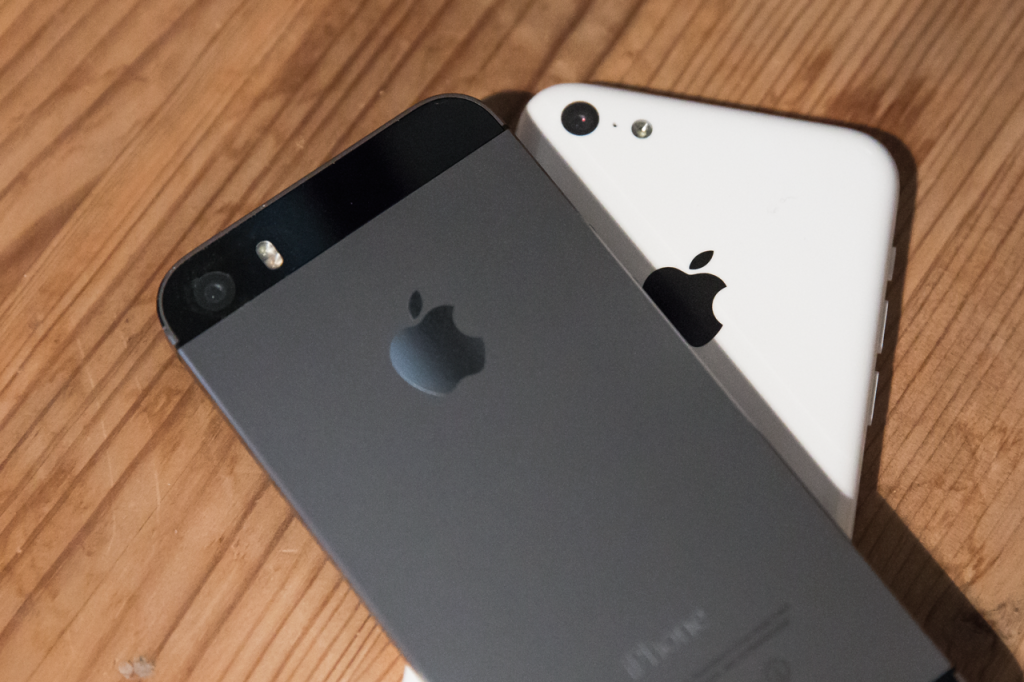
The iPhone 5s is doing pretty well in terms of sales numbers, and has just passed 10 percent usage rate among iPhone models according to mobile analytics firm Mixpanel. That’s a significant milestone, because it means that users are adopting the iPhone 5s at between two and three times the rate they got on board with the iPhone 5. And the iPhone 5c, while trailing the iPhone 5s, is actually doing better than many might expect, too.

Growth for the iPhone 5 progressed at about 0.25 to 0.5 percent per week, according to Mixpanel, and the growth for the iPhone 5s is currently trending at around 0.75 and 1 percent per week. That’s about 3x the rate of adoption of the iPhone 5c, according to the data gathered through Mixpanel’s network – which means the iPhone 5c’s growth is roughly equivalent to the general rate of adoption for the iPhone 5. Mixpanel CEO Suhail Doshi says that means the 5c is quite possibly “doing a reasonable job of taking over the mid-end part of the smartphone market.”

Screen Shot 2013-12-09 at 12.51.52 PMThe 5s is still far and away the hotter device, according to Mixpanel and other sources, which is good news for Apple in terms of average selling price since it sees relatively high margins on the manufacture and sale of those devices according to industry estimates. And the 5c’s adoption rate is in keeping with predictions that it’ll be more of a slow-burn device, getting picked up by less tech-savvy consumers who are happy to wait until their contract expires to upgrade.

Between the rapid adoption of iOS 7 and the relatively quick uptake of the new iPhone models, Apple’s doing a great job of getting everyone on board with the same platform, and on the most recent version of both software and hardware. That’s a huge boon for developers working on software for the devices, and of course it should also provide a very convincing counter argument to critics who say that Apple may have reached a ceiling in terms of how much further it can push its smartphone business growth. The really interesting numbers will come when Apple reveals its next quarterly results at the end of January.

Confirmed: Flipboard Raises Another $50 Million To Close Out Its Series C Round

flipboard

Flipboard has confirmed that it raised an additional $50 million, which will close out the Series C round of financing that it brought on in September. In addition to the new funding, Flipboard is also announcing that it has also surpassed the 100-million-user milestone.

The additional funding, which was first reported by Fortune, will also be led Rizvi Traverse Management, the investment fund run by under-the-radar Suhail Rizvi. The funding closed last week, according to a company spokesperson, and brings the total amount raised to more than $160 million.

Valuation was pegged at $800 million, which was only slightly below the $1 billion that had previously been rumored. Existing investors, which include Goldman Sachs, Kleiner Perkins Caulfield & Byers, Index Ventures, and Insight Venture Partners, also participated.

Flipboard’s raise comes as the company continues to add new users. The company now has more than 100 million users, which is up from 85 million, at the time that it confirmed the first half of the Series C funding.

It has also been working to give users more tools to build magazine-like feeds of their favorite pieces of content. In March, it launched the 2.0 version of its product, which unveiled the magazine feature. Soon after, it enabled users to share those custom feeds with their friends.

All of that was meant to attract more brand advertisers, which the company hopes will treat its content more like magazines, in terms of how much they’re willing to pay to reach Flipboard readers. By placing their ads in a clean, well-lit, and attractive space, the hope is that Flipboard can command higher premiums than one would find in a typical mobile app.

It took that one step further in November, when it launched tools to enable brands to build their own catalogs. Those catalogs are meant to evoke a better shopping (or at least browsing experience) than one would find on most e-commerce sites.

The strategy appears to be working so far. While Flipboard has declined to give out revenue numbers in the past, in November CEO Mike McCue told TechCrunch:

At a high level, the economics for ad deals on Flipboard near print, as opposed to digital CPMs – which has always been a goal of ours,” he says. “This kind of brand advertising sells for about the same as what it sells for in print pages in Vanity Fair.

To continue getting more advertisers on board, and to keep moving its product forward, Flipboard expects to hire pretty aggressively over the next year. The company has about 100 employees today, according to CTO Eric Feng, and expects that to double to 200 by the end of next year. Hires will be focused on engineering and adding to its sales team.

Counsyl Co-Founder Balaji Srinivasan Steps Up As Andreessen Horowitz’ Newest General Partner

balaji-s

Balaji Srinivasan, a Stanford academic who co-founded genetic-testing company Counsyl, is stepping up as Andreessen Horowitz’ eighth general partner.

The firm, which is just four years old, tends to pick general partners who have built or operated large companies before. So this is in keeping with that philosophy.

While teaching at Stanford, Srinivasan started Counsyl, a South San Francisco-based company that helps prospective parents test their risks of passing on genetic conditions to their future children.

While Counsyl doesn’t get as much hype as other consumer Internet or mobile startups in Silicon Valley, they are at the forefront of “big data” meeting the rapidly dropping costs of full genome sequencing. The company is testing somewhere around 3 to 4 percent of all births in the U.S. So with 4 million births per year, that would put them at around 120,000 to 160,000 tests per year. At around $500 to $600 per test (depending on whether there are insurance discounts), they’re on an annualized revenue run-rate of about $60 million to $80 million a year and we hear that the company was last valued at $1 billion in the most recent round.

What Srinivasan brings to Andreessen Horowitz is the kind of expertise that will help the firm sort out health-related deals. But he has a pretty broad range of interests. He also runs the Stanford Bitcoin group and teaches a MOOC (or a massive open online course) about startup engineering at Stanford that has reached about 125,000 students.

“I’m interested in businesses that take digital bits and turn them into interfaces for physical atoms,” said Srinivasan, who will be the firm’s youngest partner at 33. “I’m also interested in drones, Bitcoin and 3D printing.”

It took Andreessen Horowitz about six months to recruit Srinivasan.

“Marc was very persuasive with the idea that I could have leverage across a bunch of industries,” Srinivasan said. “Being a VC will definitely be different in certain ways. The biggest change is that I can’t be as hands-on in a company as I normally would be.”

The firm’s co-founder Marc Andreessen added, “We met Balaji back in the spring. He’s spent a lot of time at the firm. We’ve gotten to know him, built a great relationship so we decided to pull the trigger.”

Andreessen said that he has no plans to open any kind of health or biotech-specific funds. Instead, he’s looking for businesses that follow the firm’s “Software eats the world” theory, where more and more industries are being dramatically disrupted by software solutions. So they won’t be looking for traditional therapeutics companies, but rather quantified self, genome sequencing and health IT companies.

He also said that he feels comfortable with a natural size of six to 10 general partners for the firm, and a single fund and a single Silicon Valley-based office. The firm also has 65 other professionals or regular “partners” who help portfolio companies with recruiting, marketing and business development.

As a side note, Srinivasan is unafraid to voice sometimes controversial political views. In a recent speech at Y Combinator’s Startup School, he outlined ways that Silicon Valley could exercise newfound political power against the U.S.’s more traditional commercial and political centers in New York and Washington D.C. The speech triggered criticism from others who said that he was naively suggesting that Silicon Valley secede from the U.S.

He wrote a recent piece in Wired that was more specific, talking about how software is enabling groups of like-minded individuals to form long-lasting communities and perhaps even one day will let individuals group together to form new nation-states.

Target Experiments With A Pinterest-Powered Online Storefront, Dubbed The “Awesome Shop”

target-awesome-shop1

Target is testing an e-commerce storefront powered entirely by Pinterest recommendations, with the beta launch of a site called “Target Awesome Shop.” The site, refreshed daily, is a mashup of data from Target’s own online store and the social network. Today, it features Target products that have proven to be the most pinned items on Pinterest and have the top reviews from Target.com. The new shop may grow to include other social networks in the future, the company says.

The Awesome Shop website was hacked together in just a couple of weeks by an in-house development team called the RAD (Rapid Accelerated Development) group – a small team who can quickly build, deploy and test new initiatives like this socially powered shopping experience.

The retailer has already embraced the Pinterest platform itself, maintaining 45 regularly updated boards featuring everything from general product categories (Home, Style, Food & Drink, etc.) to those specially aimed at the Pinterest crowd in search of tips, ideas, and how-to’s. There are several seasonal boards, too, promoting holiday items and activities, as well as a “Pins You Love” board which already aggregated the top pinned items.

Asked what the benefit of sending pinners away from Pinterst to a standalone site were, Target communications manager Eddie Baeb explained the idea was to design a curated experience that also included the data from trending products (4 stars or higher) on Target.com. That’s something a third-party site like Pinterest wouldn’t have access to, so it’s telling that Target is testing this particular data set off of Pinterest, rather than within yet another Pinterest board.

Screen Shot 2013-12-09 at 12.39.44 PM

Currently, the new website is hosting over 1,000 items, some of which are flagged as “top pinned” or “highly reviewed.”

The company declined to offer details on the traffic and conversions Pinterest provides Target.com with overall, but the company previously reported a 70 percent increase in traffic in the first six weeks following the rollout of Pinterest’s “Rich Pins” earlier this year.

Generally speaking, third-party analysis of Pinterest activity has found the value of a pin steadily increasing. Today, a pin on Pinterest is worth 25 percent more in sales than a year ago, one report recently found, for example. And that revenue skyrocketed during the Black Friday/Cyber Monday shopping holidays this year, benefitting retailers who already had established a presence on the site with as much as three times the usual sales revenue.

Some retailers, like Nordstrom, have gone even further with their Pinterest activity. At that store, tests have been underway involving sales staff who carry around iPads showing trending pins, as well as in-store merchandise flagged as being popular on Pinterest.

The moves come at a time when Pinterest itself is working to implement its own advertising model, which would see retailers paying for prime spots in search results and category feeds.

As for Target, the retailer says that it will be watching to see how its customers react to the new “Awesome Shop” to determine how the service could fit in with the company’s future plans, as well as what features the site may receive next. Potentially, it could become a Target.com feature, perhaps similar to how ToyRUs.com now highlights top-pinned items within its own site.

A Need To Drive More Online Sales

But what’s also notable about the new Pinterest-powered Target shop is how quickly it was built. With Amazon’s ever-growing online footprint, major brick-and-mortar retailers like Target and Walmart have had to increase their own pace of technological innovation in-house for themselves.

Screen Shot 2013-12-09 at 12.47.43 PMIn Walmart’s case, the company runs an R&D lab in Silicon Valley called @Walmart Labs which has acquired a range of startups testing new ideas in e-commerce, ranging from cloud computing services, website optimizers, development shops, analytics providers and more. Some of these have gone on to power Walmart.com features, like Kosmix did by improving the site’s search engine, while others have been experiments that later folded.

Target, meanwhile, is in perhaps greater need to catch up – the company has seen declining sales recently, only a small amount of which are online. (Just 2 percent of its $73 billion in total sales in 2012, The WSJ recently noted.)  The company brought its e-commerce site’s management in-house in 2011. Before that, it had outsourced its operations to Amazon, a potentially critical mistake. Even afterwards, the company hasn’t always prioritized the online shopping angle, having focused more on things that get people to shop in stores, like renovations, adding additional employees to help customers, and increasing selection of fresh foods, for example.

However, the Minneapolis-based retailer has made some progress on the social front in the recent past, with Facebook integrated deals. It also has other digital initiatives underway, like its well-received mobile offers app Cartwheel, the opening of R&D labs in the Valley and elsewhere, the launch of its own video download and rental service, Target Ticket, and more.

Whether the Pinterest-powered “Awesome Shop” ever translates to something that fares well enough to be integrated into Target’s online or mobile sites in order to beef up e-commerce sales remains to be seen, though. In the meantime, it remains more of a one-off experiment to see to what extent the Pinterest effect translates when a customer leaves Pinterest.com.

Swrve Adds Dynamic Engagement Scoring To Help App Devs Better Monetize Their User Groups

2013-12-09_09h10_33

It’s a mobile world, and making money from users on the go is the question that Yahoo needs to answer and that Facebook already has. For companies in between, it’s a tough race between deciding how to price their offerings and how best to monetize their disparate user bases. As TechCrunch has reported previously, Swrve, a San Francisco and Dublin-based firm, is focused on helping companies work to answer those questions.

Today Swrve added dynamic engagement scoring to its toolset, improving its extant A/B testing offerings to better help application developers dig into their usage data and improve their apps to better fit their user bases.

I dropped by Swrve’s offices to chat with its CEO, Hugh Reynolds, about the release. Walking through the user flow, the addition makes sense: The more you can test, and the more granularly, the better choices you can make in terms of pricing and design.

More broadly, Swrve helps developers segment their user bases, offering deals and messages and discounts and like items to certain subsets thereof. So, if you want to, say, offer a coupon to your users who roller skate and have never spent a dime in your application, you can do that at 4:30 p.m. today.

Offering discounts is only one potential way to boost your mobile ROI naturally. You also want to dig through the further reaching impacts of a decision. Essentially, engagement testing lets Swrve users test more deeply, for instance tracking the revenue of four different application variants, and calculate which application decision has the highest percent chance of driving revenue.

If you’re into numbers and charts, Swrve puts on a show, showing the percent likelihood of app changes having the highest impact over time. The gist here is that Swrve wants to make app design decisions less black magic and more measurable events.

The company has to perform, given that it charges clients between $3,000 and $15,000 a month for its service. Swrve has 40 employees, and most recently raised $6.25 million in external funding. Intel Capital participated in that round, which is unsurprising given its parent company’s long-term relationship with Reynolds.

If Swrve can help its customers improve their mobile ROI, it has a product worth its salt. What’s not up for question is that making money off of mobile users is something that every content and service provider needs to conquer. Recall the story about who made more money, miners or those who sold them shovels?

Top Image Credit: Flickr

Ask A VC: Redpoint’s Geoff Yang On What Makes A Successful Entrepreneur

In this week’s Ask A VC episode, Redpoint partner Geoff Yang joined us in the studio to talk about entrepreneurship, international investing and much more.

Yang, who has backed a number of tech giants and hot startups over the past two decades, talked about what makes a great entrepreneur. He’s said in the past that successful entrepreneurs see patterns and opportunity where others see chaos. He talked specifically in the interview about some of the founders he’s worked with that fall into that bucket.

Yang also talked about the firm’s investments in Asia and beyond. Checkout the video above for more!

Flurry Raises Another $12.5M For Mobile Analytics And Advertising

flurry

Mobile analytics company Flurry has raised $12.5 million in new funding, as first revealed in a filing with the Securities and Exchange Commission and confirmed by a Flurry spokesperson.

The company started out as an app developer before shifting its focus to analytics and then using its data for advertising. It raised a $25 million round about a year ago, and at the time, CEO Simon Khalaf hinted at a possible IPO and said the company had become cash-flow positive.

Flurry told me today that 400,000 apps are using its analytics product, with 20,000 additions each month, and that it’s tracking activity from 1.2 billion smartphones and tablets. It also said that it’s working with 125,000 developers.

The company has now raised a total of $62.5 million, the spokesperson said, but she declined to identify the investors in the new round.

NSA Claims Collecting Cellphone Location Data Is Legal Under Executive Order — From 1981

2013-12-06_13h54_27

Today the National Security Agency (NSA) discussed its program that collects billions of cellphone location records each day. The NSA targets foreign phones but also absorbs data on the phones of American citizens.

“The NSA does not target Americans’ location data by design, but the agency acquires a substantial amount of information on the whereabouts of domestic cellphones ‘incidentally,’” according to the Washington Post, which broke the story concerning program based on documents provided by Edward Snowden.

Given that fact, the legal defense that the NSA outlined today for the program could be viewed as underweight. The agency cites Executive Order 12333, issued by then-President Ronald Reagan in 1981. The NSA stated that “the Agency’s EO 12333 collection is outward-facing. We are not intentionally acquiring domestic information through this capability.” The agency also has in place “minimization procedures,” according to its spokesperson.

However, as the agency does collect the location data of many Americans, its defense rests on the fact that it does so accidentally. Therefore, the “collection does not violate FISA [the Foreign Intelligence Surveillance Act].”

Citing an executive order from 1981 to legally undergird a program of immense technological complexity 32 years later may feel weak, but courts could uphold the justification.

Do They Or Do They Not

Here’s the Los Angeles Times, citing the federal government in late June when news of the phone metadata program was fresh:

The U.S. Justice Department has told a court in Florida that the government does not secretly track the location of Americans’ cellphones as part of its massive phone surveillance dragnet, but asking experts to believe that assertion has proved to be another matter.

It appears that assertion was false, as was the assertion that the NSA doesn’t collect data on millions of Americans. The defense against the above statement, regarding the Post’s recent piece, is that the NSA only meant that it doesn’t wittingly track the location of Americans’ cellphones.

However, as my colleague Greg Ferenstein pointed out yesterday:

The NSA also claims that only foreigners are targeted, but it does incidentally pick up data on potentially millions of Americans. Millions of people are connected to a target through two degrees of separation.

What will be interesting to see is if the legal foundation that the NSA cited today will be challenged, and if so, how sturdy it will prove. So far, efforts to force reform at the NSA through such means have been flat.

Top Image Credit: Flickr

Beeline Bikes Is Like A Homejoy Or Uber-For-Bike Repair

beeline-bikes

While there are thousands of small, independently-owned bike shops across the country and in bike-friendly cities like San Francisco, it’s still a pain to bring your bike in for a tune-up. There’s scheduling, and then there’s the hassle of not having a bike for several days.

That’s why Peter Buhl, a former longtime partner at BlueRun Ventures who served on the boards of companies like PayPal, had been thinking about a way to address this problem for the past 15 years.

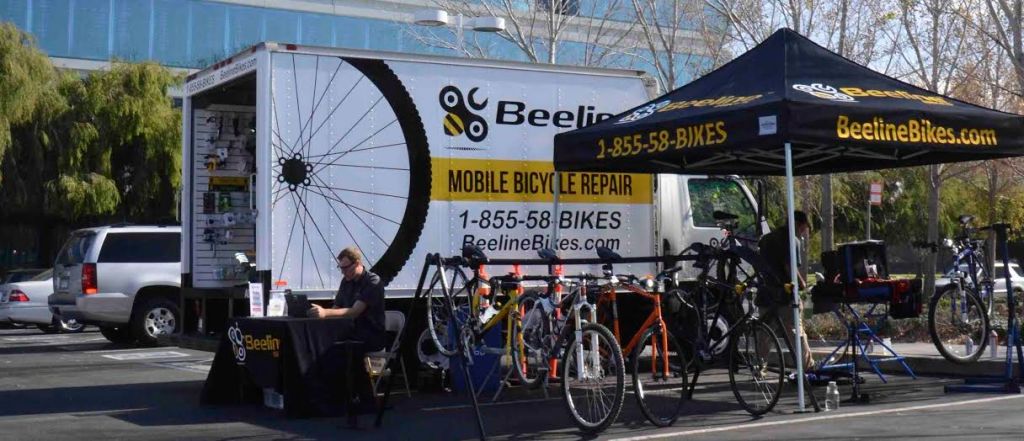
He started Beeline Bikes, which is kind of like an Uber or Homejoy for bike tune-ups. They have mobile vans, outfitted with all kinds of parts (see below) and trained mechanics that can fix up many bikes over the course of a day.

The nine-person startup has three initial vans and the plan is to cater to startups and tech companies up and down the peninsula and in San Francisco. They’ll also do housecalls to families as well.

The price for a basic tune-up is $80, but they’ll discount it to $65 with multiple bikes. Each tune-up takes about 30 to 45 minutes and they have concierge levels of service for higher-end bikes. They’ll also do other services like bike fittings and overhauls.

“Our goal is to be the virtual bike shop for all the tech companies here,” Buhl said. “This works in cycling dense areas down on the peninsula and in the Bay Area.”

He estimates that the local Bay Area market alone is worth about $6 to 10 million per year, but if you expanded the concept nationally, it could be worth $100 million.

Beeline becomes yet another services or logistics startup like Uber, Homejoy, Exec, Postmates, Instacart and others, that use mobile devices and the web to coordinate large networks of service providers. Unlike some of these other companies, Beeline does not rely on contractors. It wholly owns its vans and the mechanics are full-time employees, although they would be open to exploring a franchising model if they expanded nationally.

The company has raised a half-million dollars in seed funding from 15 angels including IronPort founder Scott Banister, Canaan Partner Deepak Kamra, Like.com founder Munjal Shah, BlueRun Ventures partners Jonathan Ebinger and John Malloy and Brian Nesmith.

truck-inside

Wisely Helps You Find Where To Shop Or Eat Based On Real Consumer Spending Patterns, Not User Reviews

Header Image

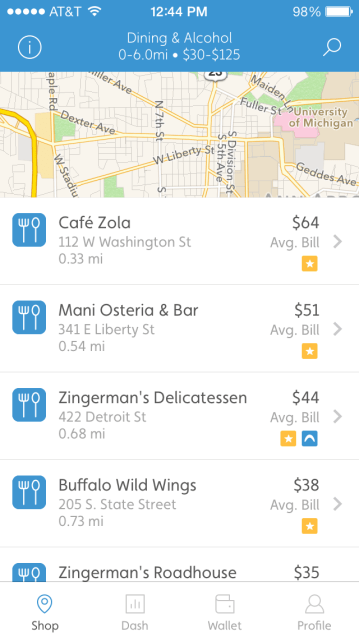
When looking for a new place to eat, drink or shop, most people turn to local recommendations services like Yelp, Google Places or Foursquare. A new mobile application called Wisely, launching today, has a different idea. Instead of user reviews, Wisely taps into actual transaction data, allowing you to filter searches by things like popularity or average bill size.

The app is the latest from a company called Glyph, which pivoted from its earlier efforts launched last year, which had been focused on helping you determine which credit card to use in order to earn better rewards. Explains CEO Mike Vichich, the company found that it was difficult to get people engaged with Glyph for a number of reasons. People use their credit cards for a number of things, he says.

Shop“But we always felt like transaction data was really important, and told a story about the world we live in,” he explains. “If you’re able to view a map of how people swipe their cards, it’s a map of the economy – it tells you which places are quality, which places are popular, how expensive places are, which places are for locals versus tourists. We thought that was something valuable that didn’t exist,” Vichich says.
In the new app Wisely, you can search for things like restaurants, shops or bars, for example, and see search results based on transaction data, not social mechanisms like check-ins or user rankings and reviews.

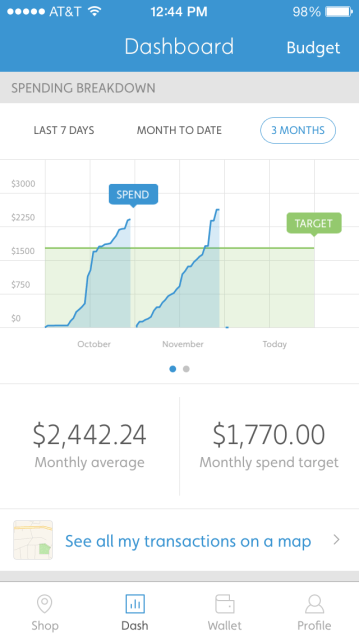
However, the app isn’t only focused on the “before” side of consumer spending – it also lets you store your loyalty and membership cards for easy access during your visits and helps you understand your spending behavior afterwards, similar to something like Mint. Like Mint and other mobile money management apps, Wisely lets you set a budget and then analyze your spending over time, examining the categories of your past purchases and even where they’re located on a map – the latter an easy way to spot a possible fraudulent transaction, Vichich claims.

At launch, Wisely only supports American Express cardholders, but it will include support for Chase and Bank of America by mid-February, and hopes to include support for 95 percent of transactions (credit or debit) in a year’s time.

Dash_3MonthSpending

The challenge here is that for each credit or debit card brought on board, the company has to write programs to clean up the merchant data, which takes some time, the CEO tells us. The end result, Wisely hopes, will be a platform for both mobile and web where anyone can access this kind of data.

“The mountain that we’re climbing is data democratization,” says Vichich. “One of our foundational beliefs is that payment data is really valuable to consumers and merchants.”

Future: Competitive Intelligence For Merchants

For consumers, the data can help them shop, travel, and dine “wisely” (get it?), but the real business model for the service is about providing this data to merchants, which the company plans to do in time as a SaaS platform. Here, Wisely would help merchants analyze what kind of spending takes place where, and even how their own sales look when compared with those of competitors.

In addition, merchants would be able to track their own customers’ loyalty in an anonymized way, and then offer their best customers some sort of reward via the Wisely platform. The merchant side of the business is something Wisely will begin to work on a bit further down the road, however.

In the meantime, the small, Ann Arbor-based company has added an undisclosed amount of funding on top of its earlier $500,000 angel round. They’re expecting to close on a seed round in Q1 2014.

Wisely is currently featured in the App Store under finance, and is a free download here.

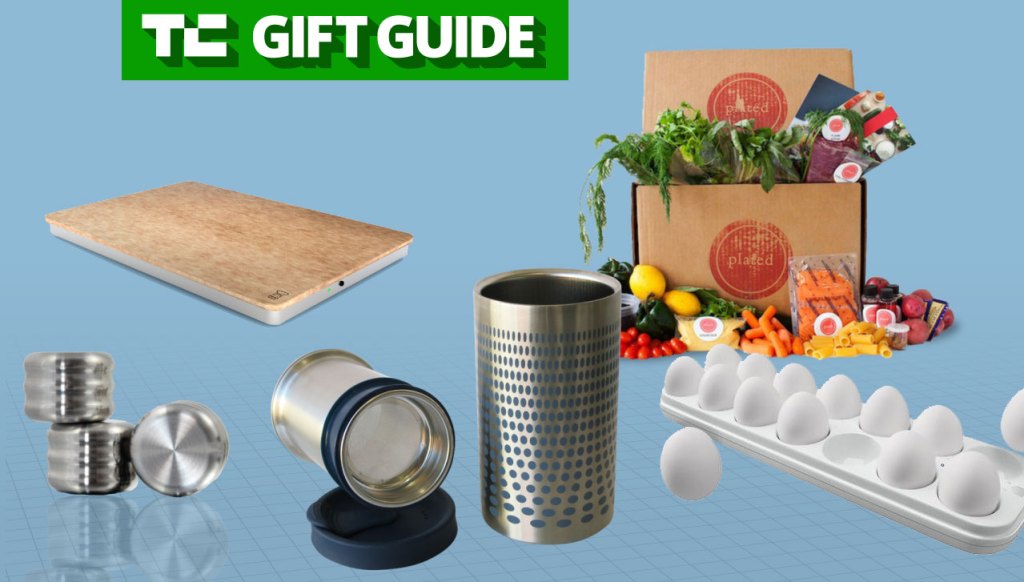
Gift Guide: Five Kitchen Gadgets Your Foodie Will Eat Right Up

giftguide-food

More food is consumed during the holiday season than at any other time. But that’s the thing with food; you can’t stay full forever. And so these gadgets, services and tools should serve your food-friendly loved ones quite handily. We’ll cover a range of products, including an ingredient-delivery service, a magical scale that measures the nutrition of your food, and one very special ice cube.

Everyone from a master chef to a home cook should have a blast with this gift guide, so let’s waste no more time and crack some eggs.

Prep Pad from The Orange Chef ($150)

Counter Top BT scales

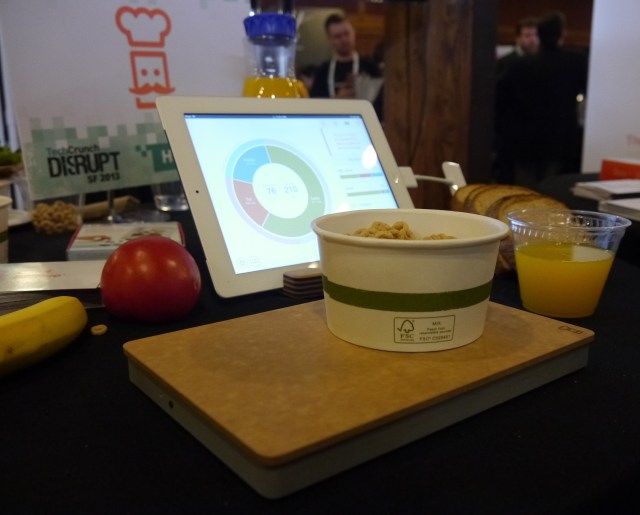
If you know or love a health nut, the Prep Pad is an easy, thoughtful gift. It’s a Bluetooth-equipped scale that measures the weight of your food as well as its nutritional value, which is then relayed to the user through an app. Simply input the type of food you’re weighing, or scan the barcode, and see a pie chart of the nutrition you’ll be consuming.

With an aluminum frame and a paper composite surface, which can be hygienically wiped down, the Prep Pad can handle any mess in any kitchen, and is accurate with the weight measurement to boot. It’s got a heavy little price tag attached, at $150, and it doesn’t ship until February, but it is worth the wait (ha!) and the cash for a chef obsessed with health.

You can pick up the Orange Chef Prep Pad here.

Impress Coffee Brewer ($39.95)

Screenshot 2013-12-06 14.05.19

Budding caffeine addicts are just one gadget away from a full-blown addiction. Meet the Impress single-cup Coffee Brewer from Gamila.

Single-cup coffee makers are becoming more popular, but those machines cost a pretty penny and take up a lot of space in the kitchen. But what if you could combine the single cup coffee maker with French press coffee-making techniques and a thermos to transport the coffee in? That would be pretty amazing, right?

Well, that’s the Impress. It’s kind of a pain to clean, as you need to scoop out the grounds and such, but it manages to keep 14 ounces of coffee warm for hours.

Plated ($15/plate)

Screenshot 2013-12-06 14.15.57

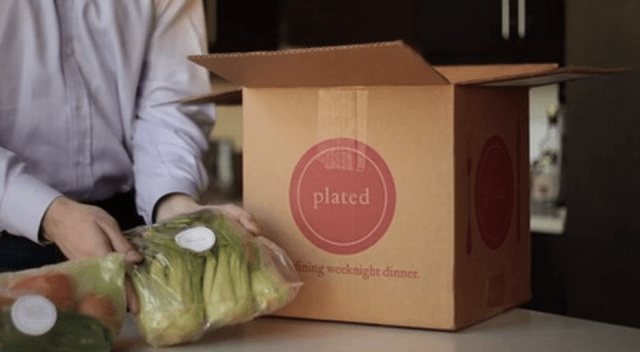
Grocery shopping, to some, is the worst part of cooking. Plated takes the guess work and leg work out of grocery shopping and cooking a nice meal. After a visit to the Plated website, you can shop around between various meals, ranging from things like Garlic-Herb Pork Chops with Roasted Sweet Potato Mash, Korean-Style Short Ribs with Asian Slaw and Sushi Rice, or vegetarian classics like Autumn Root Vegetable Chili with Cornbread Croutons.

Users are given everything they need, including ingredients and directions (but not cookware), to make an excellent meal and a fun experience. For $10/month, you can buy a membership that brings the price of a meal down to $12/plate, with a minimum of four plates per week. Otherwise meals are $15/plate with a minimum of four plates in one week.

Pucs ($19 for 3)

This is a design project that first blew up on Kickstarter and is now available for purchase in a number of different packages.

Anyone who enjoys a nice glass of whiskey on the rocks or simply hates a watered down drink should enjoy these stainless steel ice cubes. They stay at the bottom of the glass and hold temperature pretty well without watering down the drink. They even come with a handsome case you can slip into the freezer.

They’re also able to bring down the temperature of hot beverages more quickly, and then be removed. They’re a nice conversation starter to have around the house, and come at a reasonable price. Worth considering for a boss.

Egg Minder

eggminder

The Egg Minder is a product out of Quirky and GE that brings a little intelligence to the dairy section of your fridge. Bad eggs are the worst, and the Egg Minder aims to make sure you never experience them again. The smart tray indicates which egg in the tray is the oldest via LED lights, while a wireless connection to your smartphone keeps you in the loop on expiration dates. If you’re running low, you’ll get a push notification. Even better, you can check how many eggs you have and when they go bad from the grocery store.

The Egg Minder costs $69.99 and is available now.

You can check out our complete Holiday Gift Guide 2013 right here.

giftguide-banner

Bitcoin Value Loses Its Mind As Trading Lags On The Mt.Gox Exchange

2013-12-06_11h36_48

Bitcoin is acting up at the moment. Following a steep decline that saw the currency trade at prices not seen since late November, trading of Bitcoin on the Mt.Gox exchange has gone crackerdog.

It has fallen into a pattern of very rapid rises and falls that end and begin in a very tight, specific trading range. The following is a chart using one-minute ticks to track the price of Bitcoin on the Mt.Gox exchange for today:

2013-12-06_11h26_36

Trading on Mt.Gox is also seeing massive delays, with the current lag listed as almost 40 minutes. So, I doubt that anyone has an idea about what is going on.

Other Bitcoin exchanges, such as Btc-e are displaying similar prices for the currency, so the trading price on Mt.Gox isn’t itself too batty. Instead, current trading patterns themselves are inscrutable, unless we presume some sort of algorithmic allergic reaction to current trading lag. In the meantime, if you can get your trades through, there is likely a decent arbitrage possibility at play, though trading lag times could make any such activity incredibly risky.

Coinbase has Bitcoin at $848, and Btc-e at $865. The currency was over the $1,000 mark yesterday. Bitcoin: Still not that mature.

China

While Bitcoin works through whatever bug or issue is causing its current trading pattern, we need to keep in mind the broader context of the current market position of the currency. A recent decision by the Chinese government to ban financial institutions from trading in the currency cut at its potential to become a global repository for value outside of the control of nation states.

Today, news that Baidu has ceased to accept Bitcoin is pushing the currency’s value down. To lose a company like Baidu at once lowers the inherent utility of Bitcoin, and also directly contravenes the narrative that Bitcoin was starting to find wide integration into the world of e-commerce, thus granting it legitimacy, and perhaps improved stability.

Chinese demand has been a key supplier of recently robust demand for Bitcoin, comprising an increasing percentage of Bitcoin’s trading volume. If that driver slips, so too could the value, and market interest in Bitcoin.

Bitcoin has fallen from over $1,200 since the Chinese news cycle broke. That’s a steep decline — about 30 percent — in a few days. The question now becomes what will bring upside back to Bitcoin?

Top Image Credit: Flickr

Microsoft Really Doesn’t Want You To Buy A Chromebook

scroogled_chromebook

About a week after posting its first anti-Chromebook “Scroogled” video, which features the cast of “Pawn Stars,” Microsoft is now back with a second video. But instead of revisiting the humorous approach of the first one, the company has brought back its regular man-on-the-street routine for the second.

In this video, Microsoft Evangelist Ben Rudolph is tasked with walking the streets of Venice, Calif., to ask people if they would rather have a Chromebook or a Windows laptop. No surprise — nobody wants the Chromebook. Obviously, everybody he asks either needs Photoshop, Illustrator or a Microsoft Office app. None of these run on a Chromebook (assuming you leave out Microsoft’s Office Web Apps. “If that doesn’t have the capability to run Microsoft Office, it’s kind of useless to me,” one lady tells Rudolph.

As in the first ad, Microsoft also plays up the fact that ChromeOS is meant to be online most of the time, conveniently forgetting that there are plenty of offline ChromeOS apps available by now.

Instead of a cheap Chromebook, the ad tells viewers, they should rather buy an Asus T100, 10.1-inch Windows 8 machine with a detachable touchscreen. “This one is the same price, about $300 bucks,” Rudolph says. Actually, try more like $400. And running Photoshop and Illustrator on it won’t bring you much joy either. The people on the street are obviously wowed that they can detach the screen and turn it into a tablet, though people haven’t exactly been lining up to buy convertible laptops so far.

Given that Chromebooks make up about 1 percent of the PC market, Microsoft is mostly increasing mainstream awareness of these devices with its ads, as The Verge’s Tom Warren pointed out earlier today. Despite this low market share, Microsoft clearly sees Chromebooks as a threat, though, and chances are we’ll see a few more of these videos over time.