Changers Raises $1.5M To Turn Charging Your Phone Via The Sun Into An Infectious Game

Screen Shot 2014-02-21 at 22.20.58

Ever thought about what might happen if you got rewarded, not for a Foursquare check-in, but for generating electricity? Changers, a startup that allows people to turn the creation of solar power into a game that encourages green behaviour, has closed $1.5 million in Series A financing. German government-backed fund BFB Frühphasenfonds Brandenburg led the round, with participation from Heliocentris, a specialist in clean energy, alongside additional private investors.

The startup can now accelerate product, expand into the natural solar-rich markets of the Middle East and take advantage of consumers’ rising interest in energy, especialy in the wake of Google’s purchase of Nest.

Oliver Borrmann, CEO of BFP, says “We see huge potential for Changers as it combines rewards for energy-saving behavior with a proven community based on a gamified customer loyalty system.”

That’s basically code for a rather interesting new model: turning everyday green practices into the kind of game that not only rewards the consumer, but also allows solar producers to put more redundancy into the system.

Changers is known for the Changers System, a Social Energy Marketplace that enables people to produce their own energy, measure how much they produce, and convert it into a currency that can be used to buy sustainable goods and services from Changers’ commercial partners. The company markets the Changers Starter Kit, comprising a portable PV solar panel and a portable solar battery that measures how much energy it captures and stores.

It’s not been a gangbusters growth curve — only 5,000 kits in the last two years. However, that represents over 640 kWh and has saved over 6,000 kg of CO2.

But if you scale that up, the numbers start to look a lot more interesting.

And Changers has been through the wars to get there, pulling back from insolvency to get here. It has to be said that the fact that Changers is still around is a testament to the sheer grit and belief of co-founders Markus Schulz and Daniela Schiffer.

Sequoia And Jim Goetz Are Big Winners In Facebook’s WhatsApp Acquisition

facebook-whatsapp-tilt

Facebook today announced its huge, $19 billion acquisition of WhatsApp. Obviously the company has a lot to cheer about, having grown to 450 million active users over the course of the last five years. But from a pure venture perspective, the purchase represents another huge win for Sequoia Capital and partner Jim Goetz.

You can’t really blame other investors for not getting in on WhatsApp earlier, since it really only did one public round of funding. With the number of users that the company has and the purchase price it went for, it’s hard to believe WhatsApp had raised just $8 million over the course of its lifetime.

The point is that Sequoia’s investment in WhatsApp looks pretty damn smart right now. As the largest acquisition of a venture-backed company in history, that clearly puts it in the early lead for biggest single return this year.

“For the past three years, it’s been our privilege to work shoulder-to-shoulder with Jan and Brian as their close business partner and investor,” Goetz said in his post on the topic. “It’s been a remarkable journey, and we could not be happier for these talented underdogs whose unshakeable beliefs and maverick natures epitomize the spirit of Silicon Valley.”

Of course, WhatsApp isn’t the first company Sequoia had invested in before being acquired by Facebook. It led a $50 million round of financing in Instagram just days before the photo-sharing app was acquired. But it’s by far the biggest.

Assuming Sequoia held about a 10 percent stake in WhatsApp, its take is a solid $1.6 billion — or a 200x return on that initial investment. The deal by itself could provide a return on the $1.3 billion fund the WhatsApp investment came from.

This WhatsApp deal might even be considered Sequoia’s revenge, after passing on Facebook because once upon a time Mark Zuckerberg showed up to a pitch meeting in his pajamas.

Facebook’s $19 Billion WhatsApp Acquisition, Contextualized

whatsapp-money1

Facebook just announced its buying WhatsApp, a global messaging platform with 450 million MAUs, for approximately $19 billion. It’s one of the biggest tech acquisitions since HP bought Compaq for $25 billion in 2001.

It means that WhatsApp, which raised a comparatively measly $8 million since its 2011 launch, is now worth nearly $20 billion.

Remember the good old days, when we all raised our eyebrows at the $1 billion Instagram acquisition? Or Lenovo purchasing Motorola Mobility for $2.9 billion?

Simpler times.

Since $19 billion is a ridiculously large amount of money to wrap our heads around, we decided to compare that to other ridiculously valuable things, companies and people.

Enjoy, friends!

$19 billion is…

  • 4x the market cap of BlackBerry
  • Approximately one-third the market cap of Ford
  • 2.8x the market cap of GroupOn
  • Effectively equal to the market cap of The Gap
  • Slightly more than Sony’s market cap (around 10 percent)
  • Around 3/4 Delta’s market cap
  • 7.5 Mark Cubans
  • Almost precisely 1.3 of HP’s market cap
  • 2 nuclear submarines
  • 62 percent of Twitter’s market cap
  • 76,000 trips to space on Virgin Galactic
  • almost 60 percent of Sprint’s market cap
  • 25 Instagram acquisitions

The above figures are calculated using the following metrics: The full, $19 billion dollar value of the deal, which takes into account RSUs to be given to employees following its closing; market capitalization of other companies sourced from Google Finance at close, not taking into account after-hours performance. In this way, we compare fair market rates for comparison companies, and the complete cost of the deal.

Image: composite with photo from Shutterstock

Why Facebook Dropped $19B On WhatsApp: Reach Into Europe, Emerging Markets

messaging-international

With 450 million monthly users and a million more signing up each day, WhatsApp was just too far ahead in the international mobile messaging race for Facebook to catch up, as you can see in the chart above we made last year. Facebook either had to surrender the linchpin to mobile social networking abroad, or pony up and acquire WhatsApp before it got any bigger. It chose the latter.

Facebook recently said on its earnings call a few weeks ago that its November relaunch of Messenger led to a 70% increase in usage, with many more messages being sent. But much of that was likely in the United States and Canada where the standalone messaging app war is still to be won.

Internationally, Facebook was late to the Messenger party. It didn’t launch until 2011 after Facebook bought Beluga, and at the time it was centered around group messaging where SMS was especially weak.

WhatsApp launched in 2009 with the right focus on a lean, clean, and fast mobile messaging app. And while the international messaging market is incredibly fragmented, it was able to gain a major presence where Messenger didn’t as you can see in this chart above that we made about a year ago.

Unlike PC-based social networking, there is no outstanding market leader in mobile messaging. Still, WhatsApp absolutely dominates in markets outside of the U.S. like Europe and India. It’s also impossible for Facebook to acquire certain other Asian competitors like WeChat, which is the one hope of Chinese mega-giant Tencent to have a global consumer product. 

So it’s clear that WhatsApp had strategic interest to Facebook, and we know that the two talked from time to time. 

The map above is from a little more than a year ago. We made that map using data from Onavo, another Israeli-based company that Facebook acquired for — ahem — competitive intelligence. Because Facebook scooped up Onavo for more than $100 million in October, we don’t have access to active usage data anymore. The only thing outsiders can see are app store rankings, which imply download rates and not current usage.

So what happened in the last year? WhatsApp looks to have pulled so far ahead of Facebook in developing markets that there was no way to catch up. As Mark Zuckerberg said in a post today that the app was on its way to reaching 1 billion users.

We’ve heard Facebook has been interested in buying WhatsApp for two to three years. We reported in 2012 that Facebook was in talks to acquire WhatsApp. But over the past year, it became clear that Facebook couldn’t afford not to pay whatever it would take to get WhatsApp on its team.

So the answer to Facebook’s problem ended up being $19 billion.

Apparently, that’s what it took to take Jan Koum and his backers at Sequoia Capital (the fund that Zuck originally spited) out of the market. If it waited any longer, that number probably would have just gotten bigger.

Facebook Stock Falls 5% In After Hours Trading Following WhatsApp Purchase Announcement

facebook-whatsapp

Facebook today announced that it will acquire WhatsApp for a combined $16 billion in cash and stock. WhatsApp’s employees pick up an additional $3 billion in restricted stock units as part of the deal.

Wall Street investors are seemingly not pleased and have sent Facebook’s shares down 5 percent in after hours trading. They could be worried about potential dilution stemming from the deal.

Instead, it’s likely that investors are displeased that Facebook bought growth, perhaps because it had too. User growth, that is. If Facebook has to spend so heavily to acquire user growth, its own core strengths of ubiquity, and high engagement are implicitly under stress.

Here’s Facebook itself explaining why WhatsApp is worth the tectonic sums it is deploying to purchase it:

WhatsApp has built a leading and rapidly growing real-time mobile messaging service, with:

– Over 450 million people using the service each month;

– 70% of those people active on a given day;

– Messaging volume approaching the entire global telecom SMS volume; and

– Continued strong growth, currently adding more than 1 million new registered users per day.

Large number of monthly actives? Check. Huge daily engagement? Check. Big growth? Check.

Facebook continues to grow at acceptable levels. Over time, the company’s key metrics have become increasingly financial. Twitter has yet to make a similar transition, naturally. Facebook, though, is a maturing product that investors continue to expect much from in terms of both user and financial growth. There is a tension there.

When you are valued at growth multiples, any wobble in your user expansion rates implies that your future cash flows may be dramatically overvalued at current multiples. And that’s when investors hit the no button and step out. Twitter learned this the hard way in its last quarter when a surprise profit and revenue beat didn’t stop investors from dumping its shares due to weaker than expected 3.9 percent sequential quarter user growth.

So Facebook likely wanted more growth, especially in mobile and non-U.S. markets, and spent $19 billion to get some.

Facebook’s splintering into various apps makes its usage levels harder to gauge. Instagram, WhatsApp, and stand-alone Facebook apps — there are more of those on the way — make what being a ‘Facebook Monthly Active User’ somewhat doughy. But, it will be hard for anyone to complain about Facebook’s user growth with the twin engines of Instagram and WhatsApp on board; you simply have to dilute what your mind thinks of as a ‘Facebook experience’ to get there.

Call it reinvention by spare parts.

Final kicker. Yes, the deal is incredibly expensive. But, unlike with Instagram, WhatsApp has revenue (for shame!). Its subscription fee of $0.99 per user per year after their first year means the company has non-trivial top line. It isn’t hard to see the company with a nine-figure revenue, and at 1 million new users per day, that figure could tip up nicely. Expensive, but not ludicrous.

Apple And Tesla Had A Spring Fling

model-s-photo-gallery-01

Reports are out today in The San Francisco Chronicle, and just about every other tech publication, that Apple could be in preliminary talks to buy electric automobile manufacturer Tesla. With the mobile phone and tablet markets becoming increasingly competitive, Apple is interested in expanding to other markets to increase growth.

But would Apple want to buy a company valued at $25 billion at closing? With nearly $160 billion in cash, money probably wouldn’t be the primary hurdle Apple won’t clear. In fact, Apple could be the only company capable of thinking about it. An acquisition like this makes sense for Apple as it would satisfy their need to enter new markets with tremendous growth potential.

Tesla has been on a tear recently, with strong stock growth and car sales YoY. Tesla has released two cars so far — the Roadster and the Model S — and it’s crossover model, called the Model X, will begin deliveries later this year with new-reservation deliveries due next year, according to its website. Its stock is up nearly 500 percent from a year ago and investors couldn’t be happier. Tesla has also scored well with Consumer Reports, tying the highest score ever given to a car and pioneered new financing opportunities to make the Tesla affordable.

The speculation comes from a meeting that happened last spring between Elon Musk and Apple M&A executive Adrian Perica. However, most analysts have said it’s unlikely a merger is in the works, and instead point to a potential partnership around the new battery plant that Musk has alluded to in the past. As much as we’d like to believe the Apple experience could be coming to the automobile industry, it doesn’t make sense for Tesla at this point.

Do you want to see Jony Ive designing cars in the near future?

Yik Yak Is An Anonymous Messaging App Aimed At College Campuses

Screenshot 2014-02-19 15.49.42

What happens when you combine anonymous messaging with college campuses? You get 100,000 users in three months.

Yik Yak knows all about it.

The startup was launched by two Furman University students, Tyler Droll and Brooks Buffington, aiming to connect people through anonymous, location-based posts. Within a five-mile radius, the poster can choose to share with the closest 100, 250, or 500 Yik Yak users. For $.99, users can share with 1,000 people, 2,500 for $1.99, and 10,000 for $5.

We caught up with the founders at last night’s ATL Pitch-Off, and they confirmed the app is mostly used to gripe about things, people, places, classes, and/or anything else gripe-worthy. You can choose to show your general location, and from what I can see, there’s no moderation for someone who uses actual names in posts.

In other words, I could post on Yik Yak that my boss John Biggs picks his nose and no one would stop me from sending that out to a maximum of 10,000 nearby Yik Yak users.

Obviously, bullying issues abound. The company has already faced issues among various colleges, who feel the app violates anti-bullying rules.

As it stands now, posts are deleted when two or more users mark the content as inappropriate, or if someone screenshots offensive content and emails it to Yik Yak.

“We’re working on trying to find technical solutions to prevent app abuse by high schoolers, the blocks that we currently have in place aren’t working as well as we’d like them to,” said Buffington. “One thing that we have seen on the college front is that the longer a community is around the more mature and constructive it becomes. So we think that lends to some promise for the anonymous or semi-anonymous app realm.”

But despite these issues, the app has seriously picked up steam. In three months, with launches on five major southern campuses, the app already has 100,000 monthly active users. More than 15,000 messages go up each day.

Obviously, Secret and Whisper aren’t the only ones cashing in on our love of anonymity.

Currently, the app is being used at University of Georgia, Ole Miss, Clemson, University of Virginia and Wake Forest, and the team has plans to head up the east coast to schools like Penn State, Boston University, NYU, etc.

“We’ll let our competition battle it out in the Valley while we continue to gobble up schools on the East Coast,” said Buffington.

For now, the app already offers in-app purchases to expand reach, but Yik Yak sees an opportunity to run local deals, discounts and ads. But for now, the focus is growing the user base.

Yik Yak has seen investment from Atlanta Capital in the form of a $20,000 convertible note.

Facebook Buying WhatsApp For $19B, Will Keep The Messaging Service Independent

b0pJCUNTzee4Hgg07zt84AyV5Q37uTtG-Rr1v3XJ2LU

Facebook is purchasing messaging giant WhatsApp for $16 billion in cash and stock, according to a regulatory filing. The deal is being cut for $12 billion in Facebook shares, $4 billion in cash and an additional $3 billion in RSUs for employee retention.

A termination fee is attached to the deal that would cost Facebook $1 billion in cash and $1 billion in shares if the deal fails to pass regulatory muster.

Facebook has posted on its blog, detailing the reasoning behind the acquisition, as well. The post notes that WhatsApp will continue to operate independently and retain its brand. In addition, WhatsApp co-founder and CEO Jan Koum will join Facebook’s board.

Facebook notes that WhatsApp has over 450 million MAUs, with 70 percent of those active each day. In a staggering comparison, Facebook also notes that the messaging volume of WhatsApp approaches the SMS volume of the entire global telecom industry — and that it’s adding 1 million users a day.

“WhatsApp is on a path to connect 1 billion people. The services that reach that milestone are all incredibly valuable,” said Mark Zuckerberg, Facebook founder and CEO in a statement.

“WhatsApp had every option in the world,” Zuckerberg continued in a post to his Facebook page, “so I’m thrilled that they chose to work with us. I’m looking forward to what Facebook and WhatsApp can do together, and to developing great new mobile services that give people even more options for connecting. I’ve also known Jan for a long time, and I know that we both share the vision of making the world more open and connected. I’m particularly happy that Jan has agreed to join the Facebook board and partner with me to shape Facebook’s future as well as WhatsApp’s.”

WhatsApp message volume growth is still accelerating. Has probably now overtaken SMS. pic.twitter.com/KsR85Mplrt

— Benedict Evans (@BenedictEvans) January 20, 2014

Jan Koum, WhatsApp co-founder and CEO, said, “WhatsApp’s extremely high user engagement and rapid growth are driven by the simple, powerful and instantaneous messaging capabilities we provide.”

Facebook specifically calls out its deal with Instagram as a template for how it will deal with WhatsApp:

Facebook fosters an environment where independent-minded entrepreneurs can build companies, set their own direction and focus on growth while also benefiting from Facebook’s expertise, resources and scale. This approach is working well with Instagram, and WhatsApp will operate in this manner. WhatsApp’s brand will be maintained; its headquarters will remain in Mountain View, CA; Jan Koum will join Facebook’s Board of Directors; and WhatsApp’s core messaging product and Facebook’s existing Messenger app will continue to operate as standalone applications.

In a post on the WhatsApp blog, Koum elaborates on that:

Here’s what will change for you, our users: nothing.

WhatsApp will remain autonomous and operate independently. You can continue to enjoy the service for a nominal fee. You can continue to use WhatsApp no matter where in the world you are, or what smartphone you’re using. And you can still count on absolutely no ads interrupting your communication. There would have been no partnership between our two companies if we had to compromise on the core principles that will always define our company, our vision and our product.

The note about no advertising is interesting, as that’s obviously Facebook’s primary method of monetization on its main platform — and now Instagram. WhatsApp will also keep its subscription fees, which amount to $1 per user after the first year of use.

WhatsApp investor Sequoia has also posted up some information about the acquisition, specifically its very large valuation. The company notes that it only has 32 engineers — making the ratio 1 engineer to every 14 million users. It processes 50 billion messages a day across 7 platforms.

tumblr_inline_n19kcby0jA1qzzumw

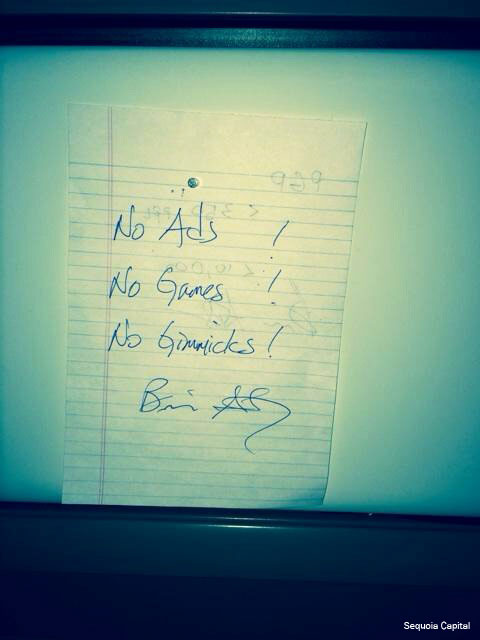
The image above is a note that Koum keeps on his desk, outlining the focus of the company on building a ‘focused messaging experience’. Sequioa’s Jim Goetz says that founder Koum’s time growing up in a communist country shaped how he developed WhasApp.

“Jan’s childhood made him appreciate communication that was not bugged or taped. When he arrived in the U.S. as a 16-year-old immigrant living on food stamps, he had the extra incentive of wanting to stay in touch with his family in Russia and the Ukraine,” says Goetz. “All of this was top of mind for Jan when, after years of working together with his mentor Brian at Yahoo, he began to build WhatsApp.”

Goetz also calls out the 450M user number and the fact that it has spent exactly $0 on marketing and doesn’t even employ a PR person or marketer; its growth all coming from users.

WhatsApp only employs around 50 people total. At 32 engineers, that’s $500M per engineer.

Facebook currently boasts 556M mobile daily active users, and WhatsApp alone already has over half of that at 350M. One particular reason Facebook could be purchasing WhatsApp is to bolster its International footprint — as exemplified by one very telling chart. TechCrunch had previously heard about some abortive acquisition talks between Facebook and WhatsApp in late 2012.

Facebook is currently down in after hours trading.

Image Credit: Bryce Durbin

Google I/O Developer Conference To Be Held June 25-26 This Year

Google io

The dates for this year’s Google I/O developer conference are June 25 and 26, Google’s Android and Chrome boss Sundar Pichai just announced on Google+ (via 9to5Google). The annual event offers up sessions on a number of topics of interest to developers, including how to maximize revenue from mobile apps, how best to use specific apps, and more.

The registration for in-person attendance this year is being done differently – it’s not first come, first serve (or first come when the servers come back online, first serve) as it has been in years past. Instead, you submit your interest to attend ahead of time, and then applications are entered into a lottery and chosen at random. Lucky winners will get a golden ticket (not literally golden) to attend in person at Moscone West in San Francisco. Registration details will be shared next month, according to Pichai.

This year, the I/O conference is only two days, compared to three full days in 2012 and 2013. The changed schedule isn’t addressed by Pichai in today’s announcement, but last year the event shifted focus back to developers and away from big consumer product news, so that could explain why it’s returning to the two day schedule last seen in 2011.

Fear not if you’re left out, however: Google will live stream the entire event to those who don’t get in, and there will be companion “I/O Extended community” events taking place at locations around the world. And of course, we’ll be in attendance, bringing you all the latest from Google, which normally takes the opportunity to show off a host of new APIs at I/O, as well as still some new products and services updates, too.

How One Scammer Manipulated Apple’s Top Charts To Earn Tens Of Thousands Daily Using A $10 GameSalad Template

red-ball

Something fishy has been going on with Apple’s App Store top charts. No, I’m not talking about “Flappy Bird” (well, maybe that too), but rather how on earth two different developers used a $10 GameSalad template to send their respective apps — one free, and one paid — into the App Store’s top charts. And more importantly, how did that paid app keep climbing the charts, earning a developer who’s clearly a well-known scammer, a lot of money?

Industry insiders noticed this was happening earlier this month, though word has spread further as the apps climbed higher and higher in the charts.

New app store insanity. 2 different developers get the same game template. 1 is free, 1 paid. same title. go figure! pic.twitter.com/akNBEVMjAv

— Ouriel Ohayon (@OurielOhayon) February 15, 2014

The GameSalad template in question is called “Red Bouncing Ball Spikes.” It’s a simple game that would appeal to those looking to ride the “Flappy Bird” wave by exploring other iOS titles that don’t require a lot of cognitive overload, but are rather designed to let you just start playing.

Also, it’s kind of a terrible game.

screen568x568

As of February 14, the free version of the game, created by “Talo Games,” had reached the No. 73 spot in the App Store’s free charts. This is the same developer behind a number of titles, including most recently, the hilarious “Flappy Bird” parody, “Flying Cyrus,” involving Miley Cyrus’s head and several wrecking balls. Talo Games’ developer, who was recently interviewed by Israeli blog Geektime, released his free version of the Red Ball game on Feb. 10, 2014, well after the paid version launched in December 2012. Obviously he’s just having some fun by taking advantage of the App Store buzz.

Meanwhile, the paid version of the game comes from a more controversial developer known as Mateen Pekan (which may not be his real name). His app reached No. 8 on the App Store’s paid charts as of last week.

At one point, the template-based title became the #2 paid iPhone app on Apple’s App Store.

#2 paid iPhone app right now “Red Bouncing Ball Spikes” is a GameSalad template http://t.co/ac8jy4HIaK

— Steven Frank (@stevenf) February 6, 2014

Now here’s where things get strange. OK, stranger.

The paid app, as noted above, was released in December 2012 and only shot up to the top of the App Store after an “update” released on Jan. 30, 2014.

If this makes you think of the trajectory of another recent App Store viral hit (aka “Flappy Bird” which the developer pulled down with little explanation) you’re not alone. “Flappy Bird” was actually released in May 2013, but only blew up this January. (For what it’s worth, a GameSalad forum member theorizes its viral effects were helped out by a video posted by popular YouTuber PewDiePie, which is one plausible explanation, though others abound.)

“Red Bouncing Ball Spikes”: A 99 Cent App From A Well-Known Scammer

As for the paid version of the “Red Bouncing Ball Spikes” game, GameSalad forum members recalled that the developer in question, “Mateen Pekan,” has been dubbed a scammer in the past. He has ripped off developers repeatedly, stolen games and source code, and been banned from forums like GameSalad itself. He is reportedly based out of Canada, young, and goes by several names, including also “Firoozeh Morady,” “Louis Leidenfrost” and maybe more.

Some basic Internet research traces Mateen to this Google Play listing as well, which is for Mooney’s Bay Computer, a computer store in Canada. Some guess this is where Mateen works, but it’s more likely he just did a little freelancing for them. He has also pushed his Red Ball game to Google Play, where it remains among other titles.

Other game developer forums, including TouchArcade, have also spotted that Red Ball is the work of Mateen, and have been calling the game’s ascension in the App Store a scam.

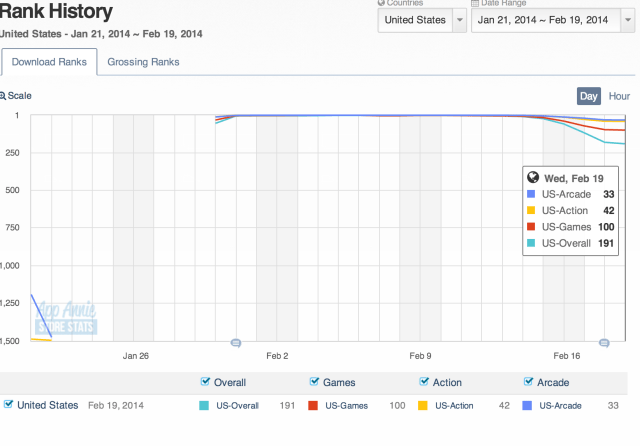
The going theory is that Mateen (or whatever his real name is) utilized a particular App Store scam that requires you to manipulate gross sales figures by, say, using your own money. As one member on the GameSalad forum points out, the Rank History on App Annie shows that when you compare the Red Ball paid app to others in the top 10, it had high gross sales but lower downloads. Generally, apps in the top 10 have both high gross sales and high downloads.

To perform this scam, a developer would have to use a network of iTunes accounts to download enough copies of the game to push the game’s gross sales to $20,000. The payday comes as the app sits in the top of the App Store for multiple days on end, earning that money back and then some.

What’s perhaps more concerning than the fact that a scammer has figured out how to manipulate the App Store algorithms for ill-gotten gains (it’s bound to happen), is the delayed response from Apple. This title has been climbing the charts all month, but it’s only recently been bumped out of the top 100. And how? Through direct intervention on Apple’s part? Did Apple’s algorithm just now catch this? We may never know.
Screen Shot 2014-02-19 at 1.48.18 PM

Developer Tries To Sell App For $250K After Hitting Top Charts

Also of interest is that Mateen apparently tried to increase his gains from the scam by attempting to sell the app on Apptopia, a marketplace for apps and templates. According to the listing, the game was described like so:

This app is in the top 5 in overall paid apps on the app store making $10,000 a day! On Febuary [sic] 5th and 6th it was the #2 app in overall paid section with very little promotions. 50,000 downloads in less than a week.

We are willing to negotiate.

Maybe Mateen listed the app because he needed to recoup his investment quickly before he was totally unmasked as a scammer? He slashed the price to $250,000 earlier this month and he tried to sell the Android version, too.

Apptopia founder Jonathan Kay tells us that they had him listed as both “Mateen Pekan” and “Firoozeh Moraday.” His company decided to remove his app from their website due to the bad press and discussions regarding his history, as well as from feedback they received on Twitter. Kay adds that they’ve only pulled listings two or three times in Apptopia’s 2.5 years, which indicates how seriously they took the problem. (Unfortunately, they can’t confirm the original listing price, but at the time of takedown, it was $250K).

But even though the game developer community and other third parties seem to be well aware of Mateen’s general M.O., and there are plenty of references to him being a known con artist, both Apple and Google have so far allowed him to maintain listings in their respective app stores.

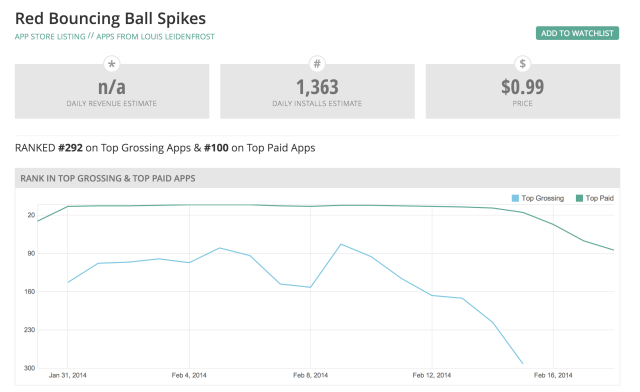
Today, Mateen’s app is no longer in the top charts on iTunes, but Appsfire CEO Ouriel Ohayon, who was among the first to spot the templated-game’s rise, reminds us that a top paid app in the U.S. market can make you “tens of thousands” per day in paid downloads.

And it had many days to do so:
Screen Shot 2014-02-19 at 3.15.40 PM

If you were suckered into actually buying this thing, get your money back from Apple. Here’s how.

CrowdTwist Brings On Two New Board Members, Coca-Cola’s Carol Kruse And Visa’s Shiv Singh

singh-kruse

CrowdTwist, a social loyalty rewards platform, has today announced two new heavy-hitting board members, Carol Kruse and Shiv Singh.

Kruse spent nearly 10 years at Coca-Cola, where she led the interactive marketing team as global vice president of Digital. She then went to ESPN and served as a senior vice president and then CMO. Currently, Kruse holds the position of CMO at Tough Mudder.

Singh, meanwhile, works as SVP of global brand and marketing transformation for Visa and was formerly the global head of digital for PepsiCo. If you’ve ever heard of the social platforms Pepsi Sound Off or Pepsi Pulse, those were Singh’s idea. Before his stint at Pepsi, Singh led the global social media team at RazorFish for 11 years.

With CrowdTwist’s focus on brands and brand engagement, these board members will surely add some extra edge to the company’s growth in 2014.

Here’s what CEO and co-founder Irvin Fain had to say about it in a prepared statement:

As the first company to extend loyalty programs beyond the traditional “spend and get” models, we’re helping marketers account for customer value in a truly multi-channel world including mobile, social media, online and offline spend and more—we’re not just capturing more data, we’re making data more meaningful for marketers. Carol and Shiv have both been at the forefront of innovative marketing technologies and forging stronger relationships with consumers. Their expertise in addition to Eric’s years of relevant experience will be instrumental in supporting our continued growth in 2014.

CrowdTwist has raised a total of $6.75 million since launching out of TechStars in 2011.

Tesla Beats In Q4 With Adjusted Revenues Of $761M, Expects 35,000 Car Deliveries This Year

Screen Shot 2014-02-19 at 12.34.09 PM

Today after the bell, Tesla reported its fourth quarter financial performance, including non-GAAP revenue of $761 million and non-GAAP earnings per share of $0.33. In the period, the company delivered 6,900 cars, a figure that it pre-announced in January.

The company’s revenue grew 26% from the preceding, sequential quarter.

The street in aggregate expected the company to earn $0.21 (non-GAAP) on GAAP revenue of $677 million. The company’s GAAP revenue for the period came in at $615 million. Investors appear unconcerned about Tesla’s non-GAAP/GAAP revenue split, or are perhaps simply more excited about the raw growth that the company has delivered, and continues to promise.

In regular trading, Tesla was broadly down, sliding around 5%. Yesterday, Tesla hit an all time high north of $200 per share. In after hours trading, following its general beat, Tesla is up more than 11%.

In GAAP terms, Tesla lost $0.13 per share on net income of -$16 million. Tesla ended the quarter with cash and equivalents of $846 million.

Expectations for this quarter ran hot. As SeekingAlpha mapped out, analyst estimates for the company’s report ratcheted up as time passed, from as little as $560 million in revenue for the quarter in November to today’s figure more than $100 million more. Releasing the cars-delivered figure early was a factor in the shifting of opinion.

Tesla expects to deliver 35,000 of its Model S cars in 2014, up 55% from 2013. By year’s end, Tesla expects to be able to manufacture around 1,000 cars weekly. For calendar 2013, Tesla had revenues just north of $2 billion, up around 5 times from the preceding year.

Investors like what they see. 

IMAGE BY FLICKR USER EDSEL LITTLE UNDER CC BY 2.0 LICENSE (IMAGE HAS BEEN CROPPED) 

Belkin Fixes WeMo Vulnerabilities With Firmware Update

wemo-baby-xl 2

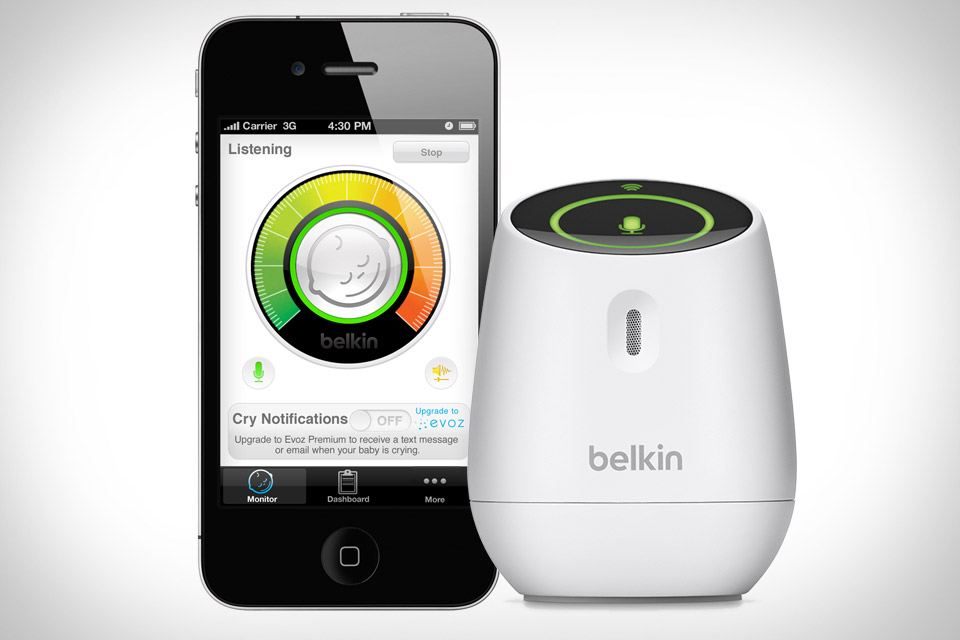
Fear not, owners of Belkin WeMo devices: you no longer have to lose sleep over the possibility that your smart plug will be hacked. Belkin has rolled out an update that patches the five vulnerabilities listed by FEMA’s Computer Emergency Readiness Team. This security hole affects up to 500,000 WeMo devices, and as CERT states, the vulnerability could result in anything from a fire to the waste of electricity.

These holes were recently discovered and announced by IOActive, Inc. As the press release states, the security company made several attempts to contact Belkin about the issues, but Belkin was unresponsive. So IOActive turned to CERT who also issued a statement. However, per a statement Belkin sent to TechCrunch (embedded below), Belkin was in fact in contact with the security research firm prior to their public statement.

Specifically, Mike Davis, IOActive’s principal research scientist, identified that through several different means, hackers could remotely access Internet-connected WeMo products, upload custom firmware, remotely monitor devices and access local networks.

The update Belkin recently issued patches these holes.

This speaks to a larger issue. As the Internet of things takes off, hackers and malicious coders have an increasing number of targets. It’s not inconsivable that in the near future, KitchenAid will have to issue a security patch for a toaster or blender.

Belkin’s Statement

Belkin has corrected the list of five potential vulnerabilities affecting the WeMo line of home automation solutions that was published in a CERT advisory on February 18. Belkin was in contact with the security researchers prior to the publication of the advisory, and, as of February 18, had already issued fixes for each of the noted potential vulnerabilities via in-app notifications and updates. Users with the most recent firmware release (version 3949) are not at risk for malicious firmware attacks or remote control or monitoring of WeMo devices from unauthorized devices. Belkin urges such users to download the latest app from the App Store (version 1.4.1) or Google Play Store (version 1.2.1) and then upgrade the firmware version through the app.

Specific fixes Belkin has issued include:

1) An update to the WeMo API server on November 5, 2013 that prevents an XML injection attack from gaining access to other WeMo devices.

2) An update to the WeMo firmware, published on January 24, 2014, that adds SSL encryption and validation to the WeMo firmware distribution feed, eliminates storage of the signing key on the device, and password protects the serial port interface to prevent a malicious firmware attack

3) An update to the WeMo app for both iOS (published on January 24, 2014) and Android (published on February 10, 2014) that contains the most recent firmware update